The daily firehose — everything the toolchain shipped today, already filtered.
We read every release from the 1309 tools on our watchlist at the source — GitHub and GitLab release notes, vendor release pages and changelogs, project blogs and feeds, vendor press releases, and the source code behind the tag. Bug-fix-only releases and non-product newsroom noise are dropped; what's left is summarized down to the new capability, how to try it, and any screenshots or videos the release itself published. Every entry links to the sources it was built from.
READ AS
Focus:What features shipped and what problems they solve, plus launches, packaging and where the market is moving.
Leaves out:Command-line flags, API-only deltas, usage examples, and releases that are only refinements.
Focus:New security controls, new APIs, and product improvements you can put to work, plus anything an upgrade breaks.
Leaves out:Launch and marketing news, governance, pricing, and documentation changes with no operational effect.
Focus:Dashboards, reporting, and anything you can quantify: metrics, coverage, risk scores, compliance impact, vendor moves.
Leaves out:Settings, flags, API and command-line detail, library bumps, and minor releases with no reporting or posture angle.
Focus:API, SDK and MCP changes, new libraries, breaking changes in what you import, and cyber tooling.
Leaves out:Governance, SOC operations, and vendor launches with no developer surface.
AMOUNT
DETAIL
ORDER
This issue came out before editions were ranked, so it shows the Standard edition in issue order.
What stands out across today's releases, grouped by what it lets you do. Every tool named links to its entry below.
protect
Rip out the eMudhra intermediates and find out who was trusting them
Codezero's Cordon adds a CA bundle refresh command and hardens its TLS verifier so the compromised intermediates are no longer accepted, which is the part most teams would otherwise hand-script across hosts. Cycode's Threat Intelligence dashboard queries turn the same incident into a list of affected assets tied back to their owning repository, so the containment work has an owner instead of a mailing-list announcement.
Keep kernel tracing policies loaded across restarts and upgrades
Tetragon v1.8.0 adds stateful and persistent tracing policies, so a policy no longer has to be re-applied after the agent cycles — historically the gap where an attacker gets a free window during a node reboot or operator upgrade. mTLSmTLSMutual TLS, an encrypted connection where both client and server present certificates to prove their identity. It helps services verify who they are communicating with. on the gRPCgRPCAn open-source remote procedure call framework from Google that uses HTTP/2 and Protocol Buffers to let services call each other's functions across a network, giving tools low-latency, strongly typed inter-process communication. server and uprobeuprobeA Linux kernel dynamic tracing mechanism that lets you attach instrumentation to any userspace function at runtime, without recompiling the target binary, giving cyber tools deep visibility into application behavior. binary digest verification also mean the event stream and the probed binaries can be authenticated rather than assumed.
Make SMS MFA abuse expensive without blocking real users
SMSSMSShort Message Service, the protocol built into cellular networks for sending text messages between phones; cyber tools use it for alerting, two-factor authentication delivery, or phishing simulation over mobile channels. Fraud Protection swaps static rate limits for exponential backoff on Phone MFAMFAMulti-factor authentication, requiring proof from different categories, such as a password and a hardware key, to sign in. It reduces reliance on a password alone., which is the right shape for toll fraud and SMS pumping: an attacker hammering a number hits rising delay while a legitimate retry barely notices. Throttled attempts land in audit logs, so you can see the attack rather than only its carrier bill.
Prove which tenant and account a compliance scan actually ran as
ScubaGear's new command confirms the account and tenant behind a scan, which sounds trivial until a multi-tenant M365 assessment produces a clean report against the wrong directory. Removes the manual credential-context check before you hand results to an auditor.
julius's probe command now flags LLMLLMA large language model, a neural network trained on large amounts of text to recognize patterns and generate language. Applications use it for tasks such as answering, summarizing and writing code. endpoints that require authentication, helping practitioners quickly separate protected services from open ones during scanning.︀︄︇︀︅︉︀︅︀︀︃︀︀︅︅︀︅︊︀︄︆︀︃︄
Simple LLM service identification - translate IP:Port to Ollama, vLLM, LiteLLM, or 60+ other AI services in seconds
julius's probe command now flags LLMLLMA large language model, a neural network trained on large amounts of text to recognize patterns and generate language. Applications use it for tasks such as answering, summarizing and writing code. endpoints that require authentication, helping practitioners quickly separate protected services from open ones during scanning.︀︄︇︀︅︉︀︅︀︀︃︀︀︅︅︀︅︊︀︄︆︀︃︄
└──▷ WHAT SHIPPED ·
1 FEATURE0 OF 1 FEATUREmost completely described firstwhat's the number?
Each feature carries 0–100 for how completely the vendor documented
it — not how big or important the work is. A major capability
described in eight words scores low, and that is the finding.
depth0–40what it does and how it works or what changed
specificity0–30names real surfaces — APIs, flags, formats, limits, numbers
actionability0–30enough to go use it — a named endpoint, flag, or config key tops this; a UI path is a starting point
Code and config rank first by construction: a documented endpoint,
flag or config key scores at the top of specificity and actionability,
so it sorts above a feature described only in prose. Under
60 the notes go thin — everything below the “thinner
coverage” line is thinner documentation, not smaller work.
Hover any meter for that feature's three sub-scores.
0100
Auth-required signal in probe fingerprint outputnew45how completely this was documenteddepth15/40specificity15/30actionability15/3045 / 100
The probe command now includes an auth-required signal in its fingerprint output, letting practitioners immediately distinguish protected LLM endpoints from open ones during scanning.︀︄︇︀︅︉︀︅︀︀︃︀︀︅︅︀︅︊︀︄︆︀︃︄
— Names the command and signal but no output format or examplev1.5.5
GitGuardian Detection Engine tightened checker requirements and refined two individual secret detectors in this release.︀︄︇︀︅︉︀︅︀︀︃︀︀︅︅︀︅︊︀︄︆︀︃︄
GitGuardian Detection Engine scans source code repositories, commits, and pipelines to detect leaked secrets such as API keys, passwords, and credentials.
GitGuardian Detection Engine tightened checker requirements and refined two individual secret detectors in this release.︀︄︇︀︅︉︀︅︀︀︃︀︀︅︅︀︅︊︀︄︆︀︃︄
└──▷ WHAT SHIPPED ·
3 FEATURES1 OF 3 FEATURESmost completely described firstwhat's the number?
Each feature carries 0–100 for how completely the vendor documented
it — not how big or important the work is. A major capability
described in eight words scores low, and that is the finding.
depth0–40what it does and how it works or what changed
specificity0–30names real surfaces — APIs, flags, formats, limits, numbers
actionability0–30enough to go use it — a named endpoint, flag, or config key tops this; a UI path is a starting point
Code and config rank first by construction: a documented endpoint,
flag or config key scores at the top of specificity and actionability,
so it sorts above a feature described only in prose. Under
60 the notes go thin — everything below the “thinner
coverage” line is thinner documentation, not smaller work.
Hover any meter for that feature's three sub-scores.
0101
Custom host requirement for eight checkersbreaking55how completely this was documenteddepth20/40specificity25/30actionability10/3055 / 100
Eight checkers now need a custom host to run, including JFrog Artifactory, AWS Cognito, Bitbucket, Jira, Azure Storage, and Okta.︀︄︇︀︅︉︀︅︀︀︃︀︀︅︅︀︅︊︀︄︆︀︃︄
Veracode's October 2026 release adds asynchronous Fire-and-Forget remediation to its CLI, expands DASTDASTDynamic application security testing, probing a running application from the outside for vulnerabilities. It checks behavior exposed through the application's interfaces. authentication and compliance evidence collection, and broadens Static Analysis Engine language support to JDK 27, Spring AI, and Scala 3.9.︀︄︇︀︅︉︀︅︀︀︃︀︀︅︅︀︅︊︀︄︆︀︃︄
Veracode is a cloud-based application security platform that scans code, binaries, and running applications to find and help remediate software vulnerabilities.
Veracode's October 2026 release adds asynchronous Fire-and-Forget remediation to its CLI, expands DASTDASTDynamic application security testing, probing a running application from the outside for vulnerabilities. It checks behavior exposed through the application's interfaces. authentication and compliance evidence collection, and broadens Static Analysis Engine language support to JDK 27, Spring AI, and Scala 3.9.︀︄︇︀︅︉︀︅︀︀︃︀︀︅︅︀︅︊︀︄︆︀︃︄
└──▷ WHAT SHIPPED ·
4 FEATURES3 OF 4 FEATURESmost completely described firstwhat's the number?
Each feature carries 0–100 for how completely the vendor documented
it — not how big or important the work is. A major capability
described in eight words scores low, and that is the finding.
depth0–40what it does and how it works or what changed
specificity0–30names real surfaces — APIs, flags, formats, limits, numbers
actionability0–30enough to go use it — a named endpoint, flag, or config key tops this; a UI path is a starting point
Code and config rank first by construction: a documented endpoint,
flag or config key scores at the top of specificity and actionability,
so it sorts above a feature described only in prose. Under
60 the notes go thin — everything below the “thinner
coverage” line is thinner documentation, not smaller work.
Hover any meter for that feature's three sub-scores.
0101
Fire-and-Forget async mode in Veracode CLInew75how completely this was documenteddepth30/40specificity25/30actionability20/3075 / 100
Veracode CLI v2.54.0 adds asynchronous Fire-and-Forget (FnF) mode for the fix command, submitting remediation requests for background processing without waiting for fixes to be generated and pull requests to be created.︀︄︇︀︅︉︀︅︀︀︃︀︀︅︅︀︅︊︀︄︆︀︃︄
Domain field for DAST HTTP basic authnew55how completely this was documenteddepth20/40specificity20/30actionability15/3055 / 100
DAST web application scans now support an optional Domain field when configuring HTTP basic authentication, enabling authentication to applications that require domain-based credentials.
Compliance evidence collection for GDPR, NIS2, DORAnew55how completely this was documenteddepth25/40specificity20/30actionability10/3055 / 100
Scans now collect compliance evidence covering cookie consent tracking, third-party data flows, destination countries, and privacy, legal, and copyright documentation, supporting GDPRGDPREU regulation enacted in 2018 that governs how organizations collect, store, and process personal data of EU residents, giving cyber tools legal obligations around data handling and breach notification., NIS2NIS2EU directive that expands mandatory cybersecurity requirements to more sectors and member states than its predecessor, giving cyber tools a compliance framework to map controls and reporting obligations against., and DORA assessments.
Static Analysis Engine v2026.10 language and framework supportnew45how completely this was documenteddepth15/40specificity20/30actionability10/3045 / 100
Static Analysis Engine v2026.10 adds support for JDK 27, LLMLLMA large language model, a neural network trained on large amounts of text to recognize patterns and generate language. Applications use it for tasks such as answering, summarizing and writing code.-powered applications built with Spring AI, and Scala 3.9.
Cycode’s Agentic Development Security Platform unites security and development teams with actionable, code-to-runtime context to identify, prioritize, and fix the software risk that matters.
Cycode shipped two rounds of Threat Intelligence dashboard queries to help teams find exposure to emerging threats: CVE-2026-111497 (node2shell/HTTP2Shell) across Node.js, Bun, .NET and Python runtimes, and the eMudhra intermediate CA compromise, with matched assets linked to their owning repository via the Context Intelligence GraphIntelligence GraphA graph database structure linking entities such as hosts, IPs, domains, and threat actors by relationship, letting cyber tools traverse connections to surface context that flat tables cannot express..︀︄︇︀︅︉︀︅︀︀︃︀︀︅︅︀︅︊︀︄︆︀︃︄
└──▷ WHAT SHIPPED ·
2 FEATURES2 OF 2 FEATURESmost completely described firstwhat's the number?
Each feature carries 0–100 for how completely the vendor documented
it — not how big or important the work is. A major capability
described in eight words scores low, and that is the finding.
depth0–40what it does and how it works or what changed
specificity0–30names real surfaces — APIs, flags, formats, limits, numbers
actionability0–30enough to go use it — a named endpoint, flag, or config key tops this; a UI path is a starting point
Code and config rank first by construction: a documented endpoint,
flag or config key scores at the top of specificity and actionability,
so it sorts above a feature described only in prose. Under
60 the notes go thin — everything below the “thinner
coverage” line is thinner documentation, not smaller work.
Hover any meter for that feature's three sub-scores.
0101
eMudhra CA compromise detection and manual remediation guidancenew93how completely this was documenteddepth35/40specificity30/30actionability28/3093 / 100
Three new Context Intelligence Graph queries in the Threat Intelligence dashboard find container images with unpatched ca-certificates, images with outdated runtimes (Node.js, Java, pip, certifi), and Dockerfiles on unpatched base images — each showing matched asset counts and linking to the originating repository.︀︄︇︀︅︉︀︅︀︀︃︀︀︅︅︀︅︊︀︄︆︀︃︄ Runtimes can be tested for continued trust in the compromised eMudhra intermediates by connecting from inside containers or CI runners to https://dv-g3b-emudhra.we-have-a-problem.com and https://dv-g3b-aaa-emudhra.we-have-a-problem.com via curl, Python's urllib.request, or Node.js fetch (a certificate error means protected, a page load means still exposed). Custom CA bundles set via SSL_CERT_FILE, REQUESTS_CA_BUNDLE, CURL_CA_BUNDLE, PIP_CERT, or -Djavax.net.ssl.trustStore are never updated by the OS and require manual removal of the 16 compromised eMudhra intermediates.
Verify from inside a container or CI runner that the curl/OS trust store no longer accepts certificates chaining to the compromised eMudhra intermediates — a certificate error is the passing result.
CVE-2026-111497 detection queries in Threat Intelligence dashboardnew83how completely this was documenteddepth35/40specificity30/30actionability18/3083 / 100
Five new queries were added to the Threat Intelligence dashboard for node2shell/HTTP2Shell (CVE-2026-111497): a 'services that accept Brotli bodies' query finding Dockerfiles on a vulnerable Node.js or Bun image that also have, in the same directory, a dependency that decompresses Brotli request bodies (Express 5, body-parser 2, Koa body parsers, or @fastify/compress); a Dockerfiles on vulnerable runtimes query finding Dockerfiles building on Node.js below 22.23.4, 24.22.1, or 26.12.1, end-of-life Node.js lines, or Bun below 1.4.4, including digest-pinned images and nvm install or NodeSource setup lines; two container image queries finding built images whose Node.js/Bun runtime is below the fixed version or which ship the vulnerable distribution Brotli library; and a code dependencies query finding projects (including indirect dependencies) on vulnerable Brotli decoder libraries — brotli, brotlicffi, and curl_cffi in Python, com.aayushatharva.brotli4j in Java, and the Ruby brotli gem. Each dashboard item links matched assets to their owning repository through the Context Intelligence Graph.
Abnormal AI is a behavioral AI security platform that protects email, identity, and AI—and stops insider threats. Trusted by 5,000 organizations.
Abnormal AI adds time-series identity posture tracking, per-signal reset risk detail, AI Data Analyst scheduling with a Report Repository, and Segmented SaaSSaaSSoftware delivered over the internet and run on the provider's infrastructure, so the buyer pays a subscription instead of installing or operating anything locally. multi-tenant isolation.
Identity Threat Protection now shows security grade and threat exposure over time, letting admins review up to 180 days of history with markers for improvements, regressions, and coverage changes, and filter identities at risk by attack scenario such as Helpdesk Impersonation, Vendor Email Compromise, and MFAMFAMulti-factor authentication, requiring proof from different categories, such as a password and a hardware key, to sign in. It reduces reliance on a password alone. Fatigue Push.
Identity Threat Protection now exposes the individual risk signals behind each Adaptive Identity Reset risk score, with per-signal ratings on a four-tier scale (Low, Moderate, Elevated, or High) and plain-language definitions alongside the identity quiz result.
AI Data Analyst adds scheduled reporting — one-time or recurring — with a Schedule as Custom Report option that derives the reporting window from a chosen frequency, plus a new Report Repository for versioned downloads and full conversation history.
AI Data Analyst adds a single multi-tenant management view for MSSPs and multi-tenant customers to manage reporting across every tenant from one place.
Abnormal adds Segmented SaaS, letting organizations create separate Abnormal tenants for business units, subsidiaries, regions, or agencies that share one email tenant, with users assigned by email domain, directory group, or a list of user principal names, and each tenant getting its own admins, views, alerts, and data over a single integration.
+1 moreshow less
AI Phishing Coach Settings page now groups every control into six tabs — Overview, Simulations, Coaching, Branding & Delivery, Exclusions, and Test — with Tenant Level / Account Level labels and a single Save across all tabs.
Plexicus reworked its AI Pentest experience with a live War Room and per-node automation testing, alongside a new Scan Modules settings page, a granular role permission matrix, a unified compliance view, and richer certification question types.︀︄︇︀︅︉︀︅︀︀︃︀︀︅︅︀︅︊︀︄︆︀︃︄
Plexicus validates security findings with evidence and helps your team fix what matters. AI Swarm Pentest, Deep Code Analysis, Remediation and XBOM.
Plexicus reworked its AI Pentest experience with a live War Room and per-node automation testing, alongside a new Scan Modules settings page, a granular role permission matrix, a unified compliance view, and richer certification question types.︀︄︇︀︅︉︀︅︀︀︃︀︀︅︅︀︅︊︀︄︆︀︃︄
└──▷ WHAT SHIPPED ·
5 FEATURES0 OF 5 FEATURESmost completely described firstwhat's the number?
Each feature carries 0–100 for how completely the vendor documented
it — not how big or important the work is. A major capability
described in eight words scores low, and that is the finding.
depth0–40what it does and how it works or what changed
specificity0–30names real surfaces — APIs, flags, formats, limits, numbers
actionability0–30enough to go use it — a named endpoint, flag, or config key tops this; a UI path is a starting point
Code and config rank first by construction: a documented endpoint,
flag or config key scores at the top of specificity and actionability,
so it sorts above a feature described only in prose. Under
60 the notes go thin — everything below the “thinner
coverage” line is thinner documentation, not smaller work.
Hover any meter for that feature's three sub-scores.
0100
AI Pentest wizard with live War Room and asset viewsimproved70how completely this was documenteddepth30/40specificity25/30actionability15/3070 / 100
The AI Pentest wizard was reworked with a live war-room board for real-time visibility during scans, per-node automation testing with data mapping, and repo-centric asset views that surface repository-level context during pentests.︀︄︇︀︅︉︀︅︀︀︃︀︀︅︅︀︅︊︀︄︆︀︃︄
Lacework FortiCNAPP is a cloud-native application protection platform from Fortinet that secures cloud workloads, containers, and infrastructure through vulnerability scanning, misconfiguration detection, and runtime threat monitoring.
Lacework FortiCNAPP's October update adds context to intrusion graphs and refines its compliance evaluation engine.︀︄︇︀︅︉︀︅︀︀︃︀︀︅︅︀︅︊︀︄︆︀︃︄
└──▷ WHAT SHIPPED ·
2 FEATURES0 OF 2 FEATURESmost completely described firstwhat's the number?
Each feature carries 0–100 for how completely the vendor documented
it — not how big or important the work is. A major capability
described in eight words scores low, and that is the finding.
depth0–40what it does and how it works or what changed
specificity0–30names real surfaces — APIs, flags, formats, limits, numbers
actionability0–30enough to go use it — a named endpoint, flag, or config key tops this; a UI path is a starting point
Code and config rank first by construction: a documented endpoint,
flag or config key scores at the top of specificity and actionability,
so it sorts above a feature described only in prose. Under
60 the notes go thin — everything below the “thinner
coverage” line is thinner documentation, not smaller work.
Hover any meter for that feature's three sub-scores.
0100
Connection-reason visibility in intrusion graphsimproved45how completely this was documenteddepth20/40specificity15/30actionability10/3045 / 100
The intrusion graph now shows why entities in a composite alert are connected, giving analysts direct context for relationships between flagged resources.︀︄︇︀︅︉︀︅︀︀︃︀︀︅︅︀︅︊︀︄︆︀︃︄
— Explains what changed but no UI path or mechanism givensnapshot-20261031
0200
Improved compliance evaluation engineimproved7how completely this was documenteddepth5/40specificity2/30actionability0/307 / 100
Lacework FortiCNAPP shipped an improved compliance evaluation engine, though no further detail on the change is provided.
— Mentioned only in summary with no detail or mechanismsnapshot-20261031
Tetragon is an eBPF-based security observability and runtime enforcement tool for Kubernetes and cloud-native environments.
Tetragon v1.8.0 introduces stateful and persistent tracing policies, mTLSmTLSMutual TLS, an encrypted connection where both client and server present certificates to prove their identity. It helps services verify who they are communicating with. for the gRPCgRPCAn open-source remote procedure call framework from Google that uses HTTP/2 and Protocol Buffers to let services call each other's functions across a network, giving tools low-latency, strongly typed inter-process communication. server, and uprobe binary digest verification, alongside a wave of new tracing-policy selectors, CELCELCommon Expression Language, an open-source expression language maintained by Google, used to embed lightweight, safe policy evaluation logic into tools without running a full scripting engine. expression operators, uprobe actions, and BPFBPFA Linux kernel virtual machine that lets programs attach small, sandboxed bytecode filters to kernel hooks — syscalls, network events, tracepoints — so cyber tools can observe or redirect kernel behaviour without writing a kernel module. sensor configuration options, plus several breaking changes to deprecated fields, actions, and metrics labels.︀︄︇︀︅︉︀︅︀︀︃︀︀︅︅︀︅︊︀︄︆︀︃︄
└──▷ WHAT SHIPPED ·
10 FEATURES4 OF 10 FEATURESmost completely described firstwhat's the number?
Each feature carries 0–100 for how completely the vendor documented
it — not how big or important the work is. A major capability
described in eight words scores low, and that is the finding.
depth0–40what it does and how it works or what changed
specificity0–30names real surfaces — APIs, flags, formats, limits, numbers
actionability0–30enough to go use it — a named endpoint, flag, or config key tops this; a UI path is a starting point
Code and config rank first by construction: a documented endpoint,
flag or config key scores at the top of specificity and actionability,
so it sorts above a feature described only in prose. Under
60 the notes go thin — everything below the “thinner
coverage” line is thinner documentation, not smaller work.
Hover any meter for that feature's three sub-scores.
0100
Tracing policy selectors and infrastructurenew80how completely this was documenteddepth30/40specificity30/30actionability20/3080 / 100
Adds matchCmdArgs, matchWorkloads, nodeSelector, and MatchCEL tracing policy selectors for filtering by command-line arguments, workload, Kubernetes node, and mixed CEL expressions, alongside new stateful tracing policies, gRPC-based persistent policies, JSON schema and CEL validation for tracing policies without Kubernetes support, an eBPFeBPFA Linux technology for running verified programs inside the kernel without changing its source. Tools use it to observe processes, enforce rules and process network traffic.-based glob library for tracing policy matching, and domain-sharded tracing policy management.︀︄︇︀︅︉︀︅︀︀︃︀︀︅︅︀︅︊︀︄︆︀︃︄
— Four selectors named but no config example shown Mechanism named for five additions but no commands shownv1.8.0
0200
BPF sensor configuration and argument typesnew80how completely this was documenteddepth25/40specificity30/30actionability25/3080 / 100
BPF sensors gain btfType and btfTypeModule argument types, support for the fd type to retrieve file*, the --sleepable-preload-size option to configure the sleepable preload size, a read-only frozen configuration map, the --execve-map-no-prealloc option to control execve map memory allocation, BPF area-specific DEBUG() rodata configuration, and support for multiple preloaded string-resolved arguments in BPF sensors.
Prevent execve map from pre-allocating memory at startup to reduce idle memory usage on nodes with many short-lived processes.
$ tetragon --execve-map-no-prealloc
— Concrete flags named, one has a runnable examplev1.8.0
0301
Deprecated tracing policy syntax removedbreaking70how completely this was documenteddepth25/40specificity25/30actionability20/3070 / 100
The deprecated sizeArgIndex field is replaced by sizeFromArgIndex in tracing policies, and policies using the old field must be updated. Previously deprecated actions have been removed entirely and policies referencing them are now rejected on upgrade.
— Exact field names given plus upgrade impactv1.8.0
0400
New uprobe actions and verificationnew65how completely this was documenteddepth25/40specificity25/30actionability15/3065 / 100
Uprobes gain a Set action with u64 argValue support, ProcessUprobe events now include symbolized user-space stack traces for uprobe Post actions that enable userStackTrace, and Tetragon adds uprobe binary digest verification.
— Named action and field but no usage example Only named in summary, no mechanism describedv1.8.0
0500
CEL expression operators and register overridesimproved65how completely this was documenteddepth20/40specificity30/30actionability15/3065 / 100
CEL expressions in tracing policies gain support for register overrides via argRegs, bit-shifting operators (lsh, rsh), 16-bit and 8-bit signed and unsigned integers, multiplication and division operators, and bitwise operators (and, or, xor, not).
— Six CEL additions named without example expressionsv1.8.0
0602
Postfix/NotPostfix length limit on kernels without large BPF program supportbreaking65how completely this was documenteddepth20/40specificity25/30actionability20/3065 / 100
matchArgs/matchBinaries Postfix and NotPostfix values longer than 87 characters are now rejected on kernels without large BPF program support.
— Exact limit and condition given, clear impactv1.8.0
0703
Metrics label changes for opcode and event typebreaking65how completely this was documenteddepth25/40specificity25/30actionability15/3065 / 100
Metrics labels changed: opcode now carries the numeric ops.OpCode value, opstr is the new label for its readable name, and event_type replaces the prior EventType labeling; dashboards or alerts keyed on the old label names will break.
— Exact label names given but no migration stepsv1.8.0
0800
Uprobe selector and override action improvementsimproved60how completely this was documenteddepth20/40specificity25/30actionability15/3060 / 100
Tracing policies can now filter uprobe selectors by the caller function in addition to the called function, and the uprobe override action gains argNew{Symbol,Addr,Offset} support plus support for multiple sopath actions.
— Thin one-line addition with no syntax or example Named fields but no example of override syntaxv1.8.0
thinner coverage below
0904
gops debug interface disabled by defaultbreaking40how completely this was documenteddepth10/40specificity15/30actionability15/3040 / 100
The gops debug interface is now disabled by default in the Helm chart.
— Single line, no reinstatement instructions givenv1.8.0
1000
mTLS for gRPC servernew25how completely this was documenteddepth10/40specificity10/30actionability5/3025 / 100
Tetragon's gRPC server now supports mTLS.
— Only named in summary, no configuration details givenv1.8.0
└──▷ BREAKING ON UPGRADE
!
The deprecated sizeArgIndex field is replaced by sizeFromArgIndex; policies using sizeArgIndex must be updated.
!
Deprecated actions have been removed; policies referencing them will be rejected on upgrade.
!
matchArgs/matchBinaries Postfix and NotPostfix values longer than 87 characters are now rejected on kernels without large BPF program support.
!
The gops debug interface is now disabled by default in the Helm chart.
!
Metrics labels are changed: opcode now carries the numeric ops.OpCode, opstr is the new label for its readable name, and event_type replaces prior EventType labeling; dashboards or alerts keyed on the old label names will break.
Sophos Protection for Linux is an endpoint security product that detects and blocks malware, ransomware, and suspicious behavior on Linux servers and workstations.
Sophos Protection for Linux adds Helm options to exclude selected processes from sensor events and selected paths from file events.
Exclude selected processes from process, connection, and DNS events by configuring a new Helm option.
Exclude selected paths from file events by configuring a new Helm option.
OpenCTI's latest release adds dashboard variable restriction modes, Hub-based custom view import, configuration bundle export/import, manual security coverage updates, a pingConnector health-reporting method in pycti, full timestamp display in tables, EE-only custom-field management, and an in-progress ingestion health monitoring system behind a feature flag.︀︄︇︀︅︉︀︅︀︀︃︀︀︅︅︀︅︊︀︄︆︀︃︄
Open Cyber Threat Intelligence Platform
OpenCTI's latest release adds dashboard variable restriction modes, Hub-based custom view import, configuration bundle export/import, manual security coverage updates, a pingConnector health-reporting method in pycti, full timestamp display in tables, EE-only custom-field management, and an in-progress ingestion health monitoring system behind a feature flag.︀︄︇︀︅︉︀︅︀︀︃︀︀︅︅︀︅︊︀︄︆︀︃︄
└──▷ WHAT SHIPPED ·
8 FEATURES0 OF 8 FEATURESmost completely described firstwhat's the number?
Each feature carries 0–100 for how completely the vendor documented
it — not how big or important the work is. A major capability
described in eight words scores low, and that is the finding.
depth0–40what it does and how it works or what changed
specificity0–30names real surfaces — APIs, flags, formats, limits, numbers
actionability0–30enough to go use it — a named endpoint, flag, or config key tops this; a UI path is a starting point
Code and config rank first by construction: a documented endpoint,
flag or config key scores at the top of specificity and actionability,
so it sorts above a feature described only in prose. Under
60 the notes go thin — everything below the “thinner
coverage” line is thinner documentation, not smaller work.
Hover any meter for that feature's three sub-scores.
0100
pingConnector for connector health in pyctinew70how completely this was documenteddepth20/40specificity25/30actionability25/3070 / 100
The pingConnector method in pycti lets connectors report errors back to OpenCTI, improving connector health visibility.︀︄︇︀︅︉︀︅︀︀︃︀︀︅︅︀︅︊︀︄︆︀︃︄
— Names exact method, usable directly in pycti code7.261030.0
0200
Ingestion health monitoring behind feature flagnew60how completely this was documenteddepth25/40specificity25/30actionability10/3060 / 100
Prepared ingestion health monitoring including event type and scope filter values, email notifications, guards, service account checks, and a UI, currently gated behind a feature flag.
— Lists components but feature is not yet enabled7.261030.0
thinner coverage below
0300
Import custom views from Hubnew50how completely this was documenteddepth15/40specificity20/30actionability15/3050 / 100
Custom views can now be imported directly from the Hub using the new import-from-Hub button in custom views.
— Names exact UI button but no further mechanism7.261030.0
0400
Configuration bundle export and importnew50how completely this was documenteddepth20/40specificity15/30actionability15/3050 / 100
Themes can now be exported as part of configuration presets, allowing platform appearance settings to be packaged and shared; a configuration bundle can also be imported from the bootstrap wizard, enabling faster initial platform setup.
— Describes two bundle actions but no format or key names7.261030.0
0500
Manual security coverage result updatesnew45how completely this was documenteddepth20/40specificity10/30actionability15/3045 / 100
Analysts can now manually update security coverage results, giving direct control over coverage data without waiting for automated runs.
— Explains benefit but no UI path or field names7.261030.0
0600
Full timestamp display in table viewsimproved45how completely this was documenteddepth20/40specificity10/30actionability15/3045 / 100
Table views can now show full timestamps (date and time) instead of date-only, with configurable display.
— Mentions configurability but not where to set it7.261030.0
0700
Custom-field definition management restricted to EEbreaking40how completely this was documenteddepth15/40specificity15/30actionability10/3040 / 100
Management of custom-field definitions is now restricted to Enterprise Edition instances.
— States the restriction without migration guidance7.261030.0
0800
Variable restriction modes for dashboardsnew28how completely this was documenteddepth10/40specificity8/30actionability10/3028 / 100
Added restriction modes to control how variables can be used within dashboards.
— No detail on what the modes are or how they work7.261030.0
Databricks is a cloud-based data lakehouse platform for data engineering, analytics, machine learning, and AI workloads, built on Apache Spark.
Databricks shipped GA real-time mode for Lakeflow pipelines with sub-5ms latency, GA native XML ingestion and parsing, beta relationship constraints between Unity Catalog metric views, new audit logging and dashboard visibility for Unity Gateway Skill usage, and Claude Code auto mode support for Anthropic and non-Anthropic models.︀︄︇︀︅︉︀︅︀︀︃︀︀︅︅︀︅︊︀︄︆︀︃︄
└──▷ WHAT SHIPPED ·
4 FEATURES0 OF 4 FEATURESmost completely described firstwhat's the number?
Each feature carries 0–100 for how completely the vendor documented
it — not how big or important the work is. A major capability
described in eight words scores low, and that is the finding.
depth0–40what it does and how it works or what changed
specificity0–30names real surfaces — APIs, flags, formats, limits, numbers
actionability0–30enough to go use it — a named endpoint, flag, or config key tops this; a UI path is a starting point
Code and config rank first by construction: a documented endpoint,
flag or config key scores at the top of specificity and actionability,
so it sorts above a feature described only in prose. Under
60 the notes go thin — everything below the “thinner
coverage” line is thinner documentation, not smaller work.
Hover any meter for that feature's three sub-scores.
0100
Relationships between metric views (Beta)new90how completely this was documenteddepth30/40specificity30/30actionability30/3090 / 100
You can now define how Unity Catalog metric views join each other — including cardinality and join condition — using ALTER VIEW ...︀︄︇︀︅︉︀︅︀︀︃︀︀︅︅︀︅︊︀︄︆︀︃︄ ADD CONSTRAINT ... RELATIONSHIP, so AI assistants and BI tools automatically select the correct join path. Requires Databricks Runtime 19 or a SQL warehouse.
Native XML file format support (GA)new85how completely this was documenteddepth30/40specificity30/30actionability25/3085 / 100
Databricks now supports ingesting, querying, and parsing XML files in batch or streaming workloads using Auto Loader, read_files, and COPY INTO, and parsing XML data in SQL via the from_xml and schema_of_xml functions. This is now generally available.
Extract structured fields from an XML column already stored in a Delta table using SQL.
sql
SELECT from_xml(xml_col, schema_of_xml('<record><id>1</id><name>foo</name></record>')) AS parsed
FROM my_table;
Real-time mode in Lakeflow pipelines (GA)new70how completely this was documenteddepth30/40specificity25/30actionability15/3070 / 100
Lakeflow pipelines now support real-time mode on both classic compute and serverless compute, enabling operational workloads such as fraud detection with end-to-end latency as low as five milliseconds. This capability is now generally available.
Claude Code auto mode for more modelsimproved40how completely this was documenteddepth20/40specificity15/30actionability5/3040 / 100
Claude Code auto mode now works with both Anthropic and non-Anthropic models hosted by Databricks, reviewing tool calls to reduce routine permission prompts.
Sumo Logic added self-service feature opt-in/opt-out controls to the Organizations UI and expanded several Automation service integrations, including custom Jira priority support for Cloud SOARSOARSecurity orchestration, automation and response, coordinating incident workflows across tools. Playbooks can gather evidence, assign work or carry out approved response actions. playbooks, new ZeroFox CTICTICyber Threat Intelligence: structured knowledge about adversaries — their tactics, infrastructure, and indicators — that tools consume to prioritize detections or enrich alerts with context. enrichment actions, and ThreatConnect tag modes, while deprecating legacy CrowdStrike Falcon Incident actions.︀︄︇︀︅︉︀︅︀︀︃︀︀︅︅︀︅︊︀︄︆︀︃︄
Sumo Logic is a cloud-native machine data analytics platform that collects, searches, and analyzes logs and metrics for security monitoring, troubleshooting, and operational insights.
Sumo Logic added self-service feature opt-in/opt-out controls to the Organizations UI and expanded several Automation service integrations, including custom Jira priority support for Cloud SOARSOARSecurity orchestration, automation and response, coordinating incident workflows across tools. Playbooks can gather evidence, assign work or carry out approved response actions. playbooks, new ZeroFox CTICTICyber Threat Intelligence: structured knowledge about adversaries — their tactics, infrastructure, and indicators — that tools consume to prioritize detections or enrich alerts with context. enrichment actions, and ThreatConnect tag modes, while deprecating legacy CrowdStrike Falcon Incident actions.︀︄︇︀︅︉︀︅︀︀︃︀︀︅︅︀︅︊︀︄︆︀︃︄
└──▷ WHAT SHIPPED ·
5 FEATURES0 OF 5 FEATURESmost completely described firstwhat's the number?
Each feature carries 0–100 for how completely the vendor documented
it — not how big or important the work is. A major capability
described in eight words scores low, and that is the finding.
depth0–40what it does and how it works or what changed
specificity0–30names real surfaces — APIs, flags, formats, limits, numbers
actionability0–30enough to go use it — a named endpoint, flag, or config key tops this; a UI path is a starting point
Code and config rank first by construction: a documented endpoint,
flag or config key scores at the top of specificity and actionability,
so it sorts above a feature described only in prose. Under
60 the notes go thin — everything below the “thinner
coverage” line is thinner documentation, not smaller work.
Hover any meter for that feature's three sub-scores.
0100
Custom Jira priority support in Cloud SOAR playbooksnew40how completely this was documenteddepth15/40specificity20/30actionability5/3040 / 100
The Atlassian Jira Cloud integration and Atlassian Jira V2 integration both now add custom priority support for Cloud SOAR playbooks.︀︄︇︀︅︉︀︅︀︀︃︀︀︅︅︀︅︊︀︄︆︀︃︄
Tenzir is a data pipeline engine for security teams that collects, transforms, enriches, and routes telemetry.
Tenzir's v6.20.1 release trims small-file overhead in its Iceberg sink, pushes more filtering work to SentinelOne before data reaches the node, and stops trusting a set of leaked CA keys.︀︄︇︀︅︉︀︅︀︀︃︀︀︅︅︀︅︊︀︄︆︀︃︄
└──▷ WHAT SHIPPED ·
3 FEATURES1 OF 3 FEATURESmost completely described firstwhat's the number?
Each feature carries 0–100 for how completely the vendor documented
it — not how big or important the work is. A major capability
described in eight words scores low, and that is the finding.
depth0–40what it does and how it works or what changed
specificity0–30names real surfaces — APIs, flags, formats, limits, numbers
actionability0–30enough to go use it — a named endpoint, flag, or config key tops this; a UI path is a starting point
Code and config rank first by construction: a documented endpoint,
flag or config key scores at the top of specificity and actionability,
so it sorts above a feature described only in prose. Under
60 the notes go thin — everything below the “thinner
coverage” line is thinner documentation, not smaller work.
Hover any meter for that feature's three sub-scores.
0100
Fewer small files from to_iceberg sinkimproved55how completely this was documenteddepth25/40specificity20/30actionability10/3055 / 100
The to_iceberg operator now writes fewer small data files, reducing object-store overhead for Iceberg table sinks.︀︄︇︀︅︉︀︅︀︀︃︀︀︅︅︀︅︊︀︄︆︀︃︄
Leaked CA keys no longer trustedbreaking10how completely this was documenteddepth5/40specificity5/30actionability0/3010 / 100
This release stops trusting a set of leaked CA keys, per the release title; no further mechanism or affected-component detail was provided in the changelog.
syzkaller is an unsupervised coverage-guided kernel fuzzer
syzkaller adds sandboxed build/git helpers, Markdown-linkified AI root cause analysis in the dashboard, and a linter rule for raw string literals.
syzkaller now exposes LinkifyHTML and LinkifyMarkdown functions in pkg/html to turn source file references (e.g. fs/ext4/inode.c:2753) into hyperlinks anchored to a given kernel repo and commit.
syzkaller's syz-linter now enforces raw string literals for all multi-line strings.
syzkaller adds RunSandboxed and WriteSandboxFile helpers in pkg/osutil, plus a SandboxedGit helper in pkg/vcs, so that git operations and kernel builds run under a sandbox.
syzkaller's pkg/aflow pipeline now runs git, kernel builds, and tools under a sandbox, and wipes cache temp dirs on startup.
syzkaller's dashboard now renders AI root cause analysis as Markdown.
oxo adds support for scanning ASNASNAutonomous System Number — a globally unique identifier assigned by regional internet registries to a network operator, letting routing protocols distinguish which organization controls a block of IP addresses. (Autonomous System Number) targets, expanding the range of scan target types it can receive and run from the scanning engine.︀︄︇︀︅︉︀︅︀︀︃︀︀︅︅︀︅︊︀︄︆︀︃︄
OXO is a security scanning orchestrator for the modern age.
oxo adds support for scanning ASNASNAutonomous System Number — a globally unique identifier assigned by regional internet registries to a network operator, letting routing protocols distinguish which organization controls a block of IP addresses. (Autonomous System Number) targets, expanding the range of scan target types it can receive and run from the scanning engine.︀︄︇︀︅︉︀︅︀︀︃︀︀︅︅︀︅︊︀︄︆︀︃︄
└──▷ WHAT SHIPPED ·
1 FEATURE0 OF 1 FEATUREmost completely described firstwhat's the number?
Each feature carries 0–100 for how completely the vendor documented
it — not how big or important the work is. A major capability
described in eight words scores low, and that is the finding.
depth0–40what it does and how it works or what changed
specificity0–30names real surfaces — APIs, flags, formats, limits, numbers
actionability0–30enough to go use it — a named endpoint, flag, or config key tops this; a UI path is a starting point
Code and config rank first by construction: a documented endpoint,
flag or config key scores at the top of specificity and actionability,
so it sorts above a feature described only in prose. Under
60 the notes go thin — everything below the “thinner
coverage” line is thinner documentation, not smaller work.
Hover any meter for that feature's three sub-scores.
0100
ASN scan target supportnew40how completely this was documenteddepth15/40specificity15/30actionability10/3040 / 100
oxo now runs ASN (Autonomous System Number) scans received from the scanning engine, adding ASN to the list of supported scan target types.︀︄︇︀︅︉︀︅︀︀︃︀︀︅︅︀︅︊︀︄︆︀︃︄
— Names new target type but no command or config detailv2.22.0
ITarian's 2026–2027 roadmap adds exposure management, ransomware protection, and security-awareness training alongside broader cross-platform endpoint, scripting, and MDRMDRManaged detection and response, an outsourced service that monitors security signals, investigates threats and helps respond to incidents. It combines specialist analysts with detection tools. integration coverage.︀︄︇︀︅︉︀︅︀︀︃︀︀︅︅︀︅︊︀︄︆︀︃︄
Streamline IT operations with ITarian’s all-in-one IT management software. Automate tasks, enhance security, and boost efficiency.
ITarian's 2026–2027 roadmap adds exposure management, ransomware protection, and security-awareness training alongside broader cross-platform endpoint, scripting, and MDRMDRManaged detection and response, an outsourced service that monitors security signals, investigates threats and helps respond to incidents. It combines specialist analysts with detection tools. integration coverage.︀︄︇︀︅︉︀︅︀︀︃︀︀︅︅︀︅︊︀︄︆︀︃︄
└──▷ WHAT SHIPPED ·
9 FEATURES0 OF 9 FEATURESmost completely described firstwhat's the number?
Each feature carries 0–100 for how completely the vendor documented
it — not how big or important the work is. A major capability
described in eight words scores low, and that is the finding.
depth0–40what it does and how it works or what changed
specificity0–30names real surfaces — APIs, flags, formats, limits, numbers
actionability0–30enough to go use it — a named endpoint, flag, or config key tops this; a UI path is a starting point
Code and config rank first by construction: a documented endpoint,
flag or config key scores at the top of specificity and actionability,
so it sorts above a feature described only in prose. Under
60 the notes go thin — everything below the “thinner
coverage” line is thinner documentation, not smaller work.
Hover any meter for that feature's three sub-scores.
0100
Cross-platform scripting and monitoring for Linux and Macnew45how completely this was documenteddepth15/40specificity20/30actionability10/3045 / 100
ITarian now supports Shell/Bash and Python 3 scripting on Linux endpoints alongside existing Windows scripting, and adds Linux and Mac monitors for cross-platform endpoint visibility.︀︄︇︀︅︉︀︅︀︀︃︀︀︅︅︀︅︊︀︄︆︀︃︄
MDR integrations for Entra, Google Workspace, and CrowdStrikenew40how completely this was documenteddepth10/40specificity20/30actionability10/3040 / 100
ITarian adds MDR integrations with Microsoft Entra, Google Workspace, and CrowdStrike.
Automatic EXDR install and auto-updateimproved40how completely this was documenteddepth15/40specificity15/30actionability10/3040 / 100
ITarian adds automatic EXDR install and auto-update for endpoint detection and responseendpoint detection and responseEndpoint detection and response, monitoring computers for suspicious behavior and providing investigation and response controls, such as isolating a device. deployment.
CTEM exposure management modulenew30how completely this was documenteddepth10/40specificity15/30actionability5/3030 / 100
ITarian adds a CTEMCTEMContinuous threat exposure management, a recurring process for finding, prioritizing and validating exploitable exposures. It connects discovery to fixes and checks whether those fixes work. (Continuous Threat Exposure Management) module for proactive exposure management.
SOC 2 and HIPAA compliance gap assessmentsnew30how completely this was documenteddepth10/40specificity15/30actionability5/3030 / 100
ITarian adds SOC 2SOC 2An auditing framework from the American Institute of CPAs that certifies a service organization's controls around security, availability, and data handling, giving buyers assurance that a vendor meets baseline trust criteria. and HIPAAHIPAAA US federal law enacted in 1996 that sets privacy and security requirements for protected health information, giving cyber tools a compliance baseline to enforce or audit against. gap assessments to its compliance tooling.
Windows ARM64 device supportnew30how completely this was documenteddepth10/40specificity15/30actionability5/3030 / 100
ITarian adds Windows ARM64ARM64The 64-bit instruction set architecture from ARM Holdings, used in modern mobile chips, Apple Silicon, and cloud server CPUs; tools target it to run natively on those platforms without emulation overhead. device support.
Iru extended Privacy Library coverage to Mac, added in-app Android managed Google domain migration, and improved the SSOSSOSingle sign-on, using one identity provider to sign in to multiple applications. It reduces separate passwords and centralizes account and access management. sign-in experience.︀︄︇︀︅︉︀︅︀︀︃︀︀︅︅︀︅︊︀︄︆︀︃︄
Iru is a device-centric platform that unifies security, IT, and compliance around devices and everything they touch.
Iru extended Privacy Library coverage to Mac, added in-app Android managed Google domain migration, and improved the SSOSSOSingle sign-on, using one identity provider to sign in to multiple applications. It reduces separate passwords and centralizes account and access management. sign-in experience.︀︄︇︀︅︉︀︅︀︀︃︀︀︅︅︀︅︊︀︄︆︀︃︄
└──▷ WHAT SHIPPED ·
3 FEATURES0 OF 3 FEATURESmost completely described firstwhat's the number?
Each feature carries 0–100 for how completely the vendor documented
it — not how big or important the work is. A major capability
described in eight words scores low, and that is the finding.
depth0–40what it does and how it works or what changed
specificity0–30names real surfaces — APIs, flags, formats, limits, numbers
actionability0–30enough to go use it — a named endpoint, flag, or config key tops this; a UI path is a starting point
Code and config rank first by construction: a documented endpoint,
flag or config key scores at the top of specificity and actionability,
so it sorts above a feature described only in prose. Under
60 the notes go thin — everything below the “thinner
coverage” line is thinner documentation, not smaller work.
Hover any meter for that feature's three sub-scores.
0100
In-app Android managed Google domain migrationnew40how completely this was documenteddepth15/40specificity10/30actionability15/3040 / 100
Admins can upgrade Android devices to a managed Google domain directly within Iru.︀︄︇︀︅︉︀︅︀︀︃︀︀︅︅︀︅︊︀︄︆︀︃︄
Acronis Cyber Infrastructure adds a command-line tool for importing StoreOnce datastores into the backup gateway, enriches workload reports with application version data, and speeds up S3 bucket cleanup with a delete-by-prefix option.︀︄︇︀︅︉︀︅︀︀︃︀︀︅︅︀︅︊︀︄︆︀︃︄
Acronis Cyber Infrastructure is hyperconverged software that pools storage, compute, and networking on commodity servers, often as a backup storage target.
Acronis Cyber Infrastructure adds a command-line tool for importing StoreOnce datastores into the backup gateway, enriches workload reports with application version data, and speeds up S3 bucket cleanup with a delete-by-prefix option.︀︄︇︀︅︉︀︅︀︀︃︀︀︅︅︀︅︊︀︄︆︀︃︄
└──▷ WHAT SHIPPED ·
3 FEATURES0 OF 3 FEATURESmost completely described firstwhat's the number?
Each feature carries 0–100 for how completely the vendor documented
it — not how big or important the work is. A major capability
described in eight words scores low, and that is the finding.
depth0–40what it does and how it works or what changed
specificity0–30names real surfaces — APIs, flags, formats, limits, numbers
actionability0–30enough to go use it — a named endpoint, flag, or config key tops this; a UI path is a starting point
Code and config rank first by construction: a documented endpoint,
flag or config key scores at the top of specificity and actionability,
so it sorts above a feature described only in prose. Under
60 the notes go thin — everything below the “thinner
coverage” line is thinner documentation, not smaller work.
Hover any meter for that feature's three sub-scores.
0100
Delete-by-prefix for S3 bucket cleanupnew55how completely this was documenteddepth20/40specificity20/30actionability15/3055 / 100
S3 bucket deletion now supports a delete-by-prefix operation, intended for buckets holding a very large number of objects.︀︄︇︀︅︉︀︅︀︀︃︀︀︅︅︀︅︊︀︄︆︀︃︄
Codezero is a aI agents, tools, apps, and pipelines use dozens of credentials with every interaction. They don't need to hold a single one.
Codezero's Cordon shipped a CA bundle refresh command to recover from the eMudhra certificate authority compromise, hardened its TLS verifier against the compromised intermediates, broadened dependency audits, and tightened Node.js and proxy support requirements.︀︄︇︀︅︉︀︅︀︀︃︀︀︅︅︀︅︊︀︄︆︀︃︄
└──▷ WHAT SHIPPED ·
5 FEATURES1 OF 5 FEATURESmost completely described firstwhat's the number?
Each feature carries 0–100 for how completely the vendor documented
it — not how big or important the work is. A major capability
described in eight words scores low, and that is the finding.
depth0–40what it does and how it works or what changed
specificity0–30names real surfaces — APIs, flags, formats, limits, numbers
actionability0–30enough to go use it — a named endpoint, flag, or config key tops this; a UI path is a starting point
Code and config rank first by construction: a documented endpoint,
flag or config key scores at the top of specificity and actionability,
so it sorts above a feature described only in prose. Under
60 the notes go thin — everything below the “thinner
coverage” line is thinner documentation, not smaller work.
Hover any meter for that feature's three sub-scores.
0100
CA bundle refresh commandnew90how completely this was documenteddepth32/40specificity28/30actionability30/3090 / 100
New cordon env --refresh-ca-bundle command rebuilds a configuration's combined CA bundle from its installed public-CA source and existing local Cordon CA, preserving the CA certificate, private key, and configuration.︀︄︇︀︅︉︀︅︀︀︃︀︀︅︅︀︅︊︀︄︆︀︃︄ Intended for use after the eMudhra CA compromise to re-establish trust without rotating the local CA or rerunning cordon trust.
After the eMudhra CA compromise, refresh each scope's CA bundle to re-establish trust without rotating the local CA or rerunning cordon trust.
Axios helper drops PAC and SOCKS proxy supportbreaking53how completely this was documenteddepth18/40specificity20/30actionability15/3053 / 100
The Axios helper no longer accepts PACPACA Proxy Auto-Configuration file, a JavaScript snippet a browser or OS fetches to decide which proxy server to route each request through, letting cyber tools intercept or redirect traffic without per-app configuration. or SOCKSSOCKSA proxy protocol that relays TCP (and optionally UDP) connections through an intermediary server, letting cyber tools route traffic through a pivot host or anonymizing layer without needing raw network access. proxy URLs; only HTTP and HTTPSHTTPSHTTP carried over an encrypted TLS connection. It protects traffic in transit and lets a browser verify the server's certificate. proxy URLs are supported.
TLS verifier distrusts eMudhra intermediatesimproved52how completely this was documenteddepth22/40specificity20/30actionability10/3052 / 100
The TLS verifier now explicitly distrusts the compromised eMudhra intermediate public keys, including cross-signed chains and installations with older system roots.
Broader dependency auditing in CIimproved40how completely this was documenteddepth20/40specificity15/30actionability5/3040 / 100
Dependency audits now include development and optional dependencies and run daily on main, with release builds preserving locked dependency resolution.
An open source, self-hosted implementation of the Tailscale control server
Headscale v0.29.7 adds a way to lock down Tailscale SSH agent and port forwarding, closes a metrics exposure gap, and hardens registration, key-expiry, and client-report handling against abuse and resource exhaustion.︀︄︇︀︅︉︀︅︀︀︃︀︀︅︅︀︅︊︀︄︆︀︃︄
└──▷ WHAT SHIPPED ·
8 FEATURES1 OF 8 FEATURESmost completely described firstwhat's the number?
Each feature carries 0–100 for how completely the vendor documented
it — not how big or important the work is. A major capability
described in eight words scores low, and that is the finding.
depth0–40what it does and how it works or what changed
specificity0–30names real surfaces — APIs, flags, formats, limits, numbers
actionability0–30enough to go use it — a named endpoint, flag, or config key tops this; a UI path is a starting point
Code and config rank first by construction: a documented endpoint,
flag or config key scores at the top of specificity and actionability,
so it sorts above a feature described only in prose. Under
60 the notes go thin — everything below the “thinner
coverage” line is thinner documentation, not smaller work.
Hover any meter for that feature's three sub-scores.
0100
Disable SSH agent and port forwarding per nodenew85how completely this was documenteddepth30/40specificity25/30actionability30/3085 / 100
Setting TS_SSH_DISABLE_FORWARDING=1 in the tailscaled service environment disables SSH agent and port forwarding for all Tailscale SSH sessions on that node, and works even on older Tailscale clients.︀︄︇︀︅︉︀︅︀︀︃︀︀︅︅︀︅︊︀︄︆︀︃︄
Lock down SSH agent and port forwarding on a node exposed to untrusted users via Tailscale SSH.
text
# In the tailscaled systemd service override or environment file:
TS_SSH_DISABLE_FORWARDING=1
— Exact env var and config file given, mechanism and scope explained.v0.29.7
0200
Metrics no longer reachable by unregistered clientsimproved85how completely this was documenteddepth30/40specificity25/30actionability30/3085 / 100
Metrics are no longer exposed to unregistered clients through the Noise protocol and are only available on the configured metrics_listen_addr; setting metrics_listen_addr to empty disables the metrics listener entirely.
Restrict Headscale metrics so they are only reachable on the local management interface, not through the Noise protocol.
yaml
metrics_listen_addr: '127.0.0.1:9090'
— Names the config key and gives a runnable config example.v0.29.7
0300
Key expiry value validationnew75how completely this was documenteddepth25/40specificity30/30actionability20/3075 / 100
Key expiry values outside the years 0–9999 UTC are now refused at registration, on the OIDCOIDCOpenID Connect, a sign-in protocol built on OAuth 2.0. An application uses identity information from a trusted provider instead of maintaining a separate password for each user. token-expiry path, and in headscale nodes expire / POST /api/v1/node/{node_id}/expire, which now return HTTP 400 for invalid values.
— Names CLI command and exact API endpoint with status code.v0.29.7
0400
Client report size limitsnew70how completely this was documenteddepth35/40specificity25/30actionability10/3070 / 100
Client reports are now bounded to the first 256 endpoints and 4096 announced routes, with oversized hostnames, requested tags, or other metadata returning a registration error or HTTP 413 on map updates, and zoned IPv6IPv6The current version of the Internet Protocol, standardized by the IETF, using 128-bit addresses to replace the exhausted IPv4 space. Cyber tools target it because modern networks run dual-stack or IPv6-only. endpoints refused; at startup Headscale trims stored hostnames, endpoints, and routes to these limits and removes zoned endpoints.
— Concrete numeric limits and error codes, but no reader action.v0.29.7
0500
Bounded capacity for pending registrationsnew65how completely this was documenteddepth35/40specificity20/30actionability10/3065 / 100
Pending interactive registrations and OIDC logins are kept at capacity rather than evicted; new requests beyond capacity get a retry response, registered nodes keep capacity reserved for SSH checks, and stored pending registration data (tags and expiry retained) is capped at 64 KiB, with oversized interactive registrations rejected.
— Mechanism and exact 64 KiB cap given, but no direct command.v0.29.7
0600
SSH policy acceptEnv fiximproved60how completely this was documenteddepth25/40specificity20/30actionability15/3060 / 100
SSH policy acceptEnv now works correctly, allowing configured environment variables to reach SSH sessions; upgrade SSH destination nodes to Tailscale v1.104.4 or newer before using acceptEnv, since older clients can disclose forwarded values.
— Names the policy field and gives a concrete upgrade requirement.v0.29.7
thinner coverage below
0701
Tighter re-registration rules for tagged nodesbreaking55how completely this was documenteddepth30/40specificity15/30actionability10/3055 / 100
Re-registering an expired tagged node now requires a valid pre-auth key, and using another user's key or login on a tagged machine now creates a new device for that user instead of re-authenticating the tagged node.
— Behavior change described but no command or endpoint given.v0.29.7
0800
Idle connection timeout for Noise tunnelsnew30how completely this was documenteddepth15/40specificity10/30actionability5/3030 / 100
A stalled request body, or a Noise tunnel with no open request, is now closed after 30 seconds.
— Brief behavioral note with a single number, no further detail.v0.29.7
RoboForm shipped a handful of small refinements this window, including automatic clipboard clearing in the Editor, broader Start Page search coverage, and updates to its encryption and desktop unlock authentication flows.︀︄︇︀︅︉︀︅︀︀︃︀︀︅︅︀︅︊︀︄︆︀︃︄
RoboForm is a password manager and form-filling tool that securely stores login credentials and automatically fills web forms across browsers and devices.
RoboForm shipped a handful of small refinements this window, including automatic clipboard clearing in the Editor, broader Start Page search coverage, and updates to its encryption and desktop unlock authentication flows.︀︄︇︀︅︉︀︅︀︀︃︀︀︅︅︀︅︊︀︄︆︀︃︄
└──▷ WHAT SHIPPED ·
4 FEATURES0 OF 4 FEATURESmost completely described firstwhat's the number?
Each feature carries 0–100 for how completely the vendor documented
it — not how big or important the work is. A major capability
described in eight words scores low, and that is the finding.
depth0–40what it does and how it works or what changed
specificity0–30names real surfaces — APIs, flags, formats, limits, numbers
actionability0–30enough to go use it — a named endpoint, flag, or config key tops this; a UI path is a starting point
Code and config rank first by construction: a documented endpoint,
flag or config key scores at the top of specificity and actionability,
so it sorts above a feature described only in prose. Under
60 the notes go thin — everything below the “thinner
coverage” line is thinner documentation, not smaller work.
Hover any meter for that feature's three sub-scores.
0100
Clipboard auto-clear after Editor copyimproved55how completely this was documenteddepth25/40specificity15/30actionability15/3055 / 100
RoboForm's Editor now auto-clears the clipboard two minutes after copying data with the Editor's Copy button, reducing the risk of sensitive data lingering in the clipboard.︀︄︇︀︅︉︀︅︀︀︃︀︀︅︅︀︅︊︀︄︆︀︃︄
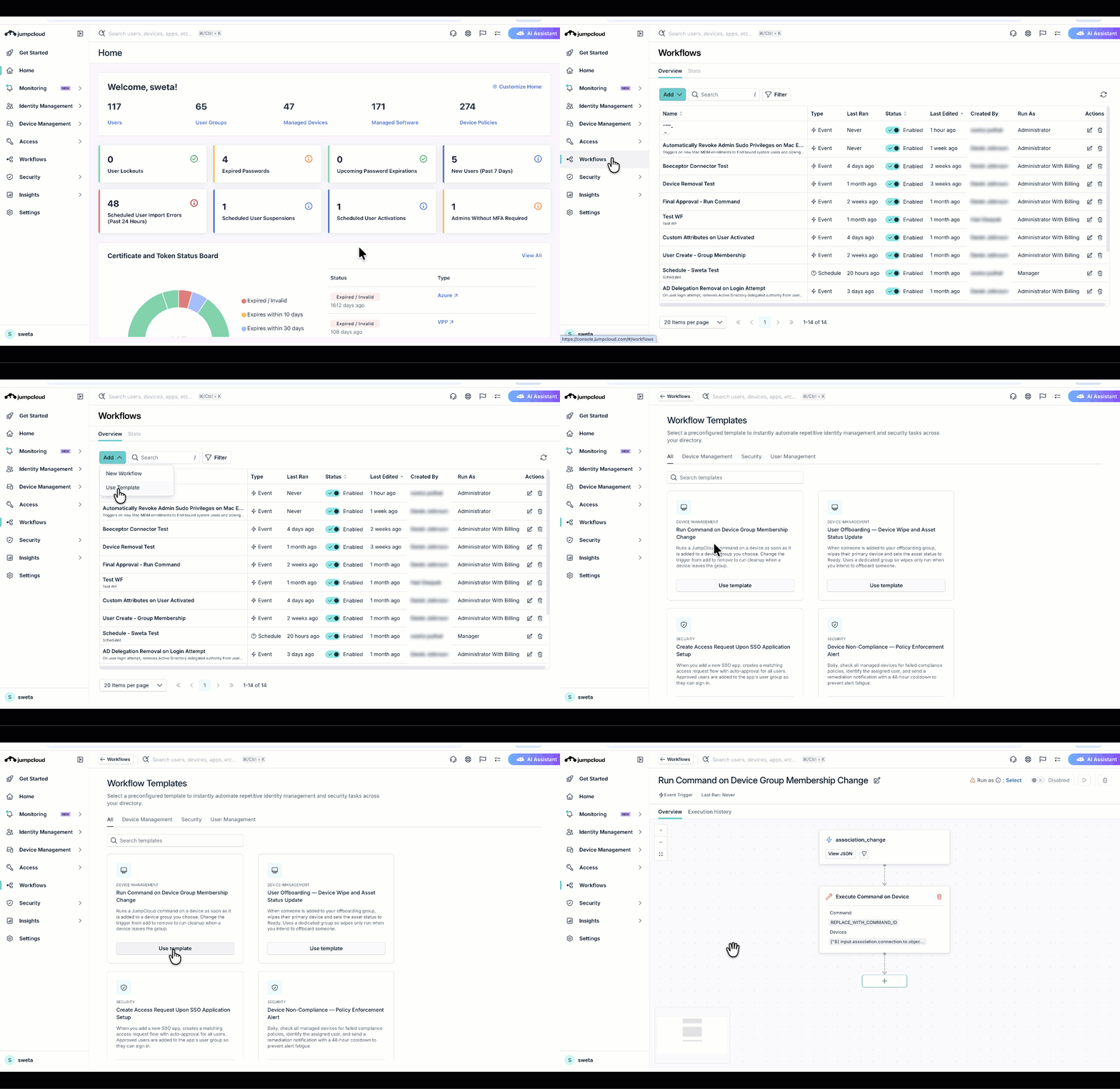
JumpCloud's biggest additions this release center on Workflows: natural-language control via MCPMCPModel Context Protocol, a standard for connecting AI applications to external tools and data sources. A compatible server exposes capabilities an assistant can use through a common interface.-enabled AI clients, OAuth 2.0OAuth 2.0An open authorization framework (IETF RFC 6749) that lets a service grant limited API access to a third party without sharing credentials, giving cyber tools a standard way to authenticate against external platforms.-secured connectors, and new automation templates, alongside App Catalog update-notification controls, device Agent Uninstall Protection with maintenance tokens, and brief mentions of SIEMSIEMSecurity information and event management, collecting logs from many systems and correlating events to find suspicious activity. Analysts use it to investigate alerts and incidents./OCSFOCSFAn open schema standard, maintained by the OCSF community under CISA and industry backing, that defines a common event format so cyber tools can share and ingest log data without per-source normalization work. export, AI agent management APIs, and custom banned passwords.︀︄︇︀︅︉︀︅︀︀︃︀︀︅︅︀︅︊︀︄︆︀︃︄
JumpCloud makes it simple to manage Windows, Apple, Linux, and Android devices and to deliver secure access with SSO, MFA, Zero Trust, RADIUS, and more.
JumpCloud's biggest additions this release center on Workflows: natural-language control via MCPMCPModel Context Protocol, a standard for connecting AI applications to external tools and data sources. A compatible server exposes capabilities an assistant can use through a common interface.-enabled AI clients, OAuth 2.0OAuth 2.0An open authorization framework (IETF RFC 6749) that lets a service grant limited API access to a third party without sharing credentials, giving cyber tools a standard way to authenticate against external platforms.-secured connectors, and new automation templates, alongside App Catalog update-notification controls, device Agent Uninstall Protection with maintenance tokens, and brief mentions of SIEMSIEMSecurity information and event management, collecting logs from many systems and correlating events to find suspicious activity. Analysts use it to investigate alerts and incidents./OCSFOCSFAn open schema standard, maintained by the OCSF community under CISA and industry backing, that defines a common event format so cyber tools can share and ingest log data without per-source normalization work. export, AI agent management APIs, and custom banned passwords.︀︄︇︀︅︉︀︅︀︀︃︀︀︅︅︀︅︊︀︄︆︀︃︄
└──▷ WHAT SHIPPED ·
6 FEATURES0 OF 6 FEATURESmost completely described firstwhat's the number?
Each feature carries 0–100 for how completely the vendor documented
it — not how big or important the work is. A major capability
described in eight words scores low, and that is the finding.
depth0–40what it does and how it works or what changed
specificity0–30names real surfaces — APIs, flags, formats, limits, numbers
actionability0–30enough to go use it — a named endpoint, flag, or config key tops this; a UI path is a starting point
Code and config rank first by construction: a documented endpoint,
flag or config key scores at the top of specificity and actionability,
so it sorts above a feature described only in prose. Under
60 the notes go thin — everything below the “thinner
coverage” line is thinner documentation, not smaller work.
Hover any meter for that feature's three sub-scores.
0100
App Catalog update notification controlsnew78how completely this was documenteddepth25/40specificity28/30actionability25/3078 / 100
Admins can control App Catalog update notifications by selecting Disable end user update notifications when adding or editing an application, and can allow users to start Required app updates from the Self Service App Catalog.︀︄︇︀︅︉︀︅︀︀︃︀︀︅︅︀︅︊︀︄︆︀︃︄
OAuth 2.0 authentication for Workflow connectorsnew70how completely this was documenteddepth30/40specificity25/30actionability15/3070 / 100
Workflow connectors now support OAuth 2OAuth 2An open authorization framework (RFC 6749) that lets a service grant limited access to a user's resources on another service without exposing credentials, giving cyber tools a standard way to authenticate against third-party APIs..0 authentication, including Client Credentials and Authorization Code with PKCEPKCEProof Key for Code Exchange, an OAuth safeguard that binds an authorization code to the client that requested it. An intercepted code cannot be redeemed without the client's matching verifier., with credentials stored in Secrets Manager and access tokensaccess tokensA credential that authorizes a client to use a service or API. It usually has limited permissions and a lifetime; anyone holding it may be able to use those permissions. refreshed automatically.
Workflow management via MCP-enabled AI clientsnew63how completely this was documenteddepth28/40specificity20/30actionability15/3063 / 100
Admins can create, modify, duplicate, and troubleshoot JumpCloud Workflows from any MCP-enabled AI client using natural language, including triggering workflows and reviewing per-node outcomes, through the existing JumpCloud MCP ServerMCP ServerA process that exposes tools, resources, and prompts over Anthropic's Model Context Protocol, letting an AI agent call external APIs or local services through a standardised interface. connection.
New Workflow templates for common automation scenariosnew60how completely this was documenteddepth20/40specificity25/30actionability15/3060 / 100
New Workflow templates cover automation scenarios including auto-suspending inactive users, blocking newly discovered generative AI apps, revoking Mac admin privileges on enrollment, detecting sensitive software installs, and managing pre-hire user groups.
Auth0 introduced SMSSMSShort Message Service, the protocol built into cellular networks for sending text messages between phones; cyber tools use it for alerting, two-factor authentication delivery, or phishing simulation over mobile channels. Fraud Protection for Phone MFAMFAMulti-factor authentication, requiring proof from different categories, such as a password and a hardware key, to sign in. It reduces reliance on a password alone. on Enterprise plans, replacing static rate limits with exponential backoff and adding audit logging for throttled attempts.︀︄︇︀︅︉︀︅︀︀︃︀︀︅︅︀︅︊︀︄︆︀︃︄
Secure users, AI agents, and more with Auth0, an easy-to-implement, scalable, and adaptable authentication and authorization platform.
Auth0 introduced SMSSMSShort Message Service, the protocol built into cellular networks for sending text messages between phones; cyber tools use it for alerting, two-factor authentication delivery, or phishing simulation over mobile channels. Fraud Protection for Phone MFAMFAMulti-factor authentication, requiring proof from different categories, such as a password and a hardware key, to sign in. It reduces reliance on a password alone. on Enterprise plans, replacing static rate limits with exponential backoff and adding audit logging for throttled attempts.︀︄︇︀︅︉︀︅︀︀︃︀︀︅︅︀︅︊︀︄︆︀︃︄
└──▷ WHAT SHIPPED ·
1 FEATURE0 OF 1 FEATUREmost completely described firstwhat's the number?
Each feature carries 0–100 for how completely the vendor documented
it — not how big or important the work is. A major capability
described in eight words scores low, and that is the finding.
depth0–40what it does and how it works or what changed
specificity0–30names real surfaces — APIs, flags, formats, limits, numbers
actionability0–30enough to go use it — a named endpoint, flag, or config key tops this; a UI path is a starting point
Code and config rank first by construction: a documented endpoint,
flag or config key scores at the top of specificity and actionability,
so it sorts above a feature described only in prose. Under
60 the notes go thin — everything below the “thinner
coverage” line is thinner documentation, not smaller work.
Hover any meter for that feature's three sub-scores.
0100
Exponential backoff for Phone MFA SMSnew70how completely this was documenteddepth30/40specificity25/30actionability15/3070 / 100
Auth0 adds SMS Fraud Protection with exponential backoff for Phone MFA on Enterprise plans, replacing static rate limits with progressive delays.︀︄︇︀︅︉︀︅︀︀︃︀︀︅︅︀︅︊︀︄︆︀︃︄ An initial buffer of immediate retry attempts accommodates typos or delivery delays before progressive wait times take effect, and throttled SMS send attempts are logged as limit_phone tenant log events, including remaining cooldown durations, for audit visibility into fraud-throttling activity.
Clerk is an authentication and user-management platform that provides pre-built UI components, APIs, and SDKs for adding sign-up, sign-in, and identity features to applications.
Clerk opened up application log access via a public Backend API endpoint, enabling programmatic querying of log events for custom tooling or AI agents.︀︄︇︀︅︉︀︅︀︀︃︀︀︅︅︀︅︊︀︄︆︀︃︄
└──▷ WHAT SHIPPED ·
1 FEATURE0 OF 1 FEATUREmost completely described firstwhat's the number?
Each feature carries 0–100 for how completely the vendor documented
it — not how big or important the work is. A major capability
described in eight words scores low, and that is the finding.
depth0–40what it does and how it works or what changed
specificity0–30names real surfaces — APIs, flags, formats, limits, numbers
actionability0–30enough to go use it — a named endpoint, flag, or config key tops this; a UI path is a starting point
Code and config rank first by construction: a documented endpoint,
flag or config key scores at the top of specificity and actionability,
so it sorts above a feature described only in prose. Under
60 the notes go thin — everything below the “thinner
coverage” line is thinner documentation, not smaller work.
Hover any meter for that feature's three sub-scores.
0100
Application logs exposed via Backend APInew75how completely this was documenteddepth20/40specificity25/30actionability30/3075 / 100
The GET /v1/logs Backend API endpoint is now public, allowing application log events to be queried programmatically from custom code or an AI agent, e.g.︀︄︇︀︅︉︀︅︀︀︃︀︀︅︅︀︅︊︀︄︆︀︃︄ curl -X GET 'https://api.clerk.com/v1/logs' -H 'Authorization: Bearer <your_secret_key>'.
Fetch recent application log events from Clerk to feed into an AI agent or custom monitoring pipeline.
$ curl -X GET 'https://api.clerk.com/v1/logs' \
  -H 'Authorization: Bearer <your_secret_key>'
Ory shipped per-stream event type filtering, letting event streams be scoped to specific event types rather than delivering everything.︀︄︇︀︅︉︀︅︀︀︃︀︀︅︅︀︅︊︀︄︆︀︃︄
Discover the latest features, improvements, and updates to Ory.
Ory shipped per-stream event type filtering, letting event streams be scoped to specific event types rather than delivering everything.︀︄︇︀︅︉︀︅︀︀︃︀︀︅︅︀︅︊︀︄︆︀︃︄
└──▷ WHAT SHIPPED ·
1 FEATURE0 OF 1 FEATUREmost completely described firstwhat's the number?
Each feature carries 0–100 for how completely the vendor documented
it — not how big or important the work is. A major capability
described in eight words scores low, and that is the finding.
depth0–40what it does and how it works or what changed
specificity0–30names real surfaces — APIs, flags, formats, limits, numbers
actionability0–30enough to go use it — a named endpoint, flag, or config key tops this; a UI path is a starting point
Code and config rank first by construction: a documented endpoint,
flag or config key scores at the top of specificity and actionability,
so it sorts above a feature described only in prose. Under
60 the notes go thin — everything below the “thinner
coverage” line is thinner documentation, not smaller work.
Hover any meter for that feature's three sub-scores.
0100
Event type filtering for event streamsnew60how completely this was documenteddepth20/40specificity20/30actionability20/3060 / 100
Event streams can now be filtered to a specific set of event types by setting event_types on the stream, instead of receiving all events.︀︄︇︀︅︉︀︅︀︀︃︀︀︅︅︀︅︊︀︄︆︀︃︄
Omada Identity's sole update this window improves operational visibility into the Cloud Application Gateway worker heartbeats shown in the Operations dashboard.︀︄︇︀︅︉︀︅︀︀︃︀︀︅︅︀︅︊︀︄︆︀︃︄
Omada Identity is an identity governance and administration platform that manages user access, entitlements, compliance certifications, and access requests across enterprise systems.
Omada Identity's sole update this window improves operational visibility into the Cloud Application Gateway worker heartbeats shown in the Operations dashboard.︀︄︇︀︅︉︀︅︀︀︃︀︀︅︅︀︅︊︀︄︆︀︃︄
└──▷ WHAT SHIPPED ·
1 FEATURE0 OF 1 FEATUREmost completely described firstwhat's the number?
Each feature carries 0–100 for how completely the vendor documented
it — not how big or important the work is. A major capability
described in eight words scores low, and that is the finding.
depth0–40what it does and how it works or what changed
specificity0–30names real surfaces — APIs, flags, formats, limits, numbers
actionability0–30enough to go use it — a named endpoint, flag, or config key tops this; a UI path is a starting point
Code and config rank first by construction: a documented endpoint,
flag or config key scores at the top of specificity and actionability,
so it sorts above a feature described only in prose. Under
60 the notes go thin — everything below the “thinner
coverage” line is thinner documentation, not smaller work.
Hover any meter for that feature's three sub-scores.
0100
Instance IDs in System Heartbeats widgetimproved55how completely this was documenteddepth20/40specificity20/30actionability15/3055 / 100
The System Heartbeats widget in the Operations dashboard now displays the instance ID next to each worker service, allowing administrators to distinguish between customer-hosted and Omada-hosted Cloud Application Gateway (CAG) instances when both send heartbeats.︀︄︇︀︅︉︀︅︀︀︃︀︀︅︅︀︅︊︀︄︆︀︃︄
Varonis shipped a new Entity ID Lookup API, CSV export support, expanded EDM classification with offline hashing, and several workflow conveniences including Microsoft Main link monitoring, in-UI classification pattern management, data source collections, and automation cloning.︀︄︇︀︅︉︀︅︀︀︃︀︀︅︅︀︅︊︀︄︆︀︃︄
Varonis is the leading data and AI security platform that proactively reduces risk, enforces policies, and stops active threats with our AI-native automation.
Varonis shipped a new Entity ID Lookup API, CSV export support, expanded EDM classification with offline hashing, and several workflow conveniences including Microsoft Main link monitoring, in-UI classification pattern management, data source collections, and automation cloning.︀︄︇︀︅︉︀︅︀︀︃︀︀︅︅︀︅︊︀︄︆︀︃︄
└──▷ WHAT SHIPPED ·
7 FEATURES1 OF 7 FEATURESmost completely described firstwhat's the number?
Each feature carries 0–100 for how completely the vendor documented
it — not how big or important the work is. A major capability
described in eight words scores low, and that is the finding.
depth0–40what it does and how it works or what changed
specificity0–30names real surfaces — APIs, flags, formats, limits, numbers
actionability0–30enough to go use it — a named endpoint, flag, or config key tops this; a UI path is a starting point
Code and config rank first by construction: a documented endpoint,
flag or config key scores at the top of specificity and actionability,
so it sorts above a feature described only in prose. Under
60 the notes go thin — everything below the “thinner
coverage” line is thinner documentation, not smaller work.
Hover any meter for that feature's three sub-scores.
0100
Entity ID Lookup APInew75how completely this was documenteddepth30/40specificity25/30actionability20/3075 / 100
The new Entity ID Lookup API translates physical folder paths into entity IDs required by the Search and Export APIs, supporting exact path resolution, bulk lookups, path discovery, and subtree resolution.︀︄︇︀︅︉︀︅︀︀︃︀︀︅︅︀︅︊︀︄︆︀︃︄
EDM classification for tabular files with offline hashingnew70how completely this was documenteddepth30/40specificity20/30actionability20/3070 / 100
Exact Data Match (EDM) classification now applies to tabular files using the same policies as non-tabular data, and EDM source data can be prepared offline by hashing files on disconnected systems and uploading only the hashed package from a connected environment.
CSV export format for Export APInew50how completely this was documenteddepth20/40specificity15/30actionability15/3050 / 100
The Export API now supports exporting data in CSV format in addition to AVROAVROA row-oriented data serialization format maintained by Apache, using JSON-defined schemas bundled with the data so tools can read it without out-of-band schema management., simplifying analysis in spreadsheet and reporting tools without requiring file conversion.
Classification pattern management in Web Interfacenew50how completely this was documenteddepth20/40specificity15/30actionability15/3050 / 100
Classification patterns can now be created, edited, tested, and managed directly in the Varonis Web Interface, integrated with classification policies and settings.
Microsoft Main link monitoringnew45how completely this was documenteddepth20/40specificity15/30actionability10/3045 / 100
Varonis now monitors and manages Microsoft Main links within SharePoint Online and OneDrive, extending analytics and policy workflow coverage to supported Main link types.
FHEVM, a full-stack framework for integrating Fully Homomorphic Encryption (FHE) with blockchain applications
fhEVM adds a relayer query option to the SDK and removes transient allowance for inputs to sender in the Solidity library.
└──▷ GET THIS VERSION
$ git clone --branch v0.14.5 https://github.com/zama-ai/fhevm.git
# already have the repo? check out this version:$ git checkout v0.14.5
Add a relayer query option to the SDK via the backported relayer query option (#4544), giving developers control over relayer selection when submitting encrypted transactions.
New supported platformRemove transient allowance for inputs to sender in the Solidity library, changing how input permissions are granted on-chain.
2 details in Everything
└──▷ BREAKING ON UPGRADE
!Transient allowance for inputs to sender has been removed from the Solidity library (library-solidity); contracts relying on this allowance behaviour will no longer work as before.
RegScale CLI 7.0.0 adds optional OpenTelemetryOpenTelemetryAn open standard and set of tools for collecting traces, metrics and logs from applications. It lets services export observability data without tying instrumentation to one monitoring vendor. and Datadog observability across all CLI commands.︀︄︇︀︅︉︀︅︀︀︃︀︀︅︅︀︅︊︀︄︆︀︃︄
RegScale is a compliance automation platform that helps organizations manage security controls, risk, and regulatory frameworks like NIST, FedRAMP, and SOC 2 through continuous monitoring.
RegScale CLI 7.0.0 adds optional OpenTelemetryOpenTelemetryAn open standard and set of tools for collecting traces, metrics and logs from applications. It lets services export observability data without tying instrumentation to one monitoring vendor. and Datadog observability across all CLI commands.︀︄︇︀︅︉︀︅︀︀︃︀︀︅︅︀︅︊︀︄︆︀︃︄
└──▷ WHAT SHIPPED ·
1 FEATURE0 OF 1 FEATUREmost completely described firstwhat's the number?
Each feature carries 0–100 for how completely the vendor documented
it — not how big or important the work is. A major capability
described in eight words scores low, and that is the finding.
depth0–40what it does and how it works or what changed
specificity0–30names real surfaces — APIs, flags, formats, limits, numbers
actionability0–30enough to go use it — a named endpoint, flag, or config key tops this; a UI path is a starting point
Code and config rank first by construction: a documented endpoint,
flag or config key scores at the top of specificity and actionability,
so it sorts above a feature described only in prose. Under
60 the notes go thin — everything below the “thinner
coverage” line is thinner documentation, not smaller work.
Hover any meter for that feature's three sub-scores.
0100
OpenTelemetry/Datadog observability for the CLInew70how completely this was documenteddepth25/40specificity25/30actionability20/3070 / 100
All CLI commands, outbound HTTP/GraphQL requests, sync item counters, and secret-redacted structured logs can now emit telemetry over OTLP/gRPCOTLP/gRPCOpenTelemetry's wire protocol for shipping traces, metrics, and logs, using gRPC as the transport; tools adopt it to emit observability data to any OTLP-compatible backend without vendor lock-in..︀︄︇︀︅︉︀︅︀︀︃︀︀︅︅︀︅︊︀︄︆︀︃︄ Enable it by installing the telemetry extra and configuring via the REGSCALE_OTEL environment variable.
Qualys Policy Compliance is a cloud-based security module that audits IT systems against configuration benchmarks and regulatory standards, identifying misconfigurations and reporting compliance gaps.
Compyl is the AI-powered GRC platform that maps one control library to SOC 2, ISO 27001, HIPAA, PCI DSS and 70+ frameworks, so you stay audit-ready year-round.
Runlayer is an MCP gateway that enforces identity-mapped permissions and detects threats across the agents and MCP servers employees use.
Runlayer adds update_skill_shares and list_skill_sharesMCPMCPModel Context Protocol, a standard for connecting AI applications to external tools and data sources. A compatible server exposes capabilities an assistant can use through a common interface. tools for managing skill access, and metric definitions on Control and Usage dashboards.
Share skills with teams or people over the Runlayer MCP using the new update_skill_shares tool, which sets permissions or removes access under the same rules as the skill's Share dialog.
Inspect current skill access over the Runlayer MCP using the new list_skill_shares tool, with share counts also surfaced in list_skills.
Every number card on Control and Usage now shows an ⓘ metric definition explaining what it counts and what the trend arrow compares to.
Runlayer adds per-run LLMLLMA large language model, a neural network trained on large amounts of text to recognize patterns and generate language. Applications use it for tasks such as answering, summarizing and writing code. spend limits ($250 default), agent-change approval flows in chat, Kubernetes audit consumer shard leasing, and in-conversation skill editing.
Agents now stop a run once it has spent $250 (or the remaining daily/weekly budget, whichever is lower) when LLM traffic flows through the Runlayer LLM gateway, with the run failing with a named limit error and the agent owner receiving a Slack DM when Budget alerts are on.
Runlayer now asks the person in a conversation to approve any agent-initiated change to its own setup (connectors, skills, instructions, subagents, schedules, triggers, webhooks, Slack settings, channel monitors, or adding a workspace connector) before applying it, including changes requested over iMessage and approved in Runlayer.
The Kubernetes audit consumer now leases its Kinesis shards using DynamoDB checkpointing; custom {instance}-audit-consumerIAMIAMIdentity and Access Management — a framework of policies and services for controlling who can authenticate to systems and what resources they are authorized to use, letting cyber tools enforce least-privilege and audit access. policies must allow dynamodb:Query and dynamodb:UpdateItem on the checkpoint table, and dynamodb:DeleteItem scoped to dynamodb:LeadingKeys = workers#*.
Handing a task to another agent now returns in about one second instead of about 20 seconds.
Agents can now create and update skills directly in conversation without requiring an explicit Runlayer connector or a ZIP file upload.
5 details in Everything
└──▷ BREAKING ON UPGRADE
!If you wrote a custom {instance}-audit-consumer IAM policy instead of using the published sample, you must now add dynamodb:Query and dynamodb:UpdateItem on the checkpoint table and dynamodb:DeleteItem scoped to dynamodb:LeadingKeys = workers#*, or the consumer will log kinesis_consumer_missing_permissions at startup and exit.
!Legacy macOS MDMMDMMobile device management, centrally configuring and managing enrolled devices. Administrators use it to apply settings, distribute applications and enforce device security policies. scripts (AI Watch and Hooks) must be regenerated and redeployed: they now run uv and the Runlayer CLI as the signed-in user instead of root and keep the enrollment key off the command line.
Democratize and productionize Gen AI across your entire org with Portkey
Portkey expanded its guardrail system to cover MCPMCPModel Context Protocol, a standard for connecting AI applications to external tools and data sources. A compatible server exposes capabilities an assistant can use through a common interface. tool calls and introduced a new pre-model lifecycle stage for inspecting traffic before it reaches a model.︀︄︇︀︅︉︀︅︀︀︃︀︀︅︅︀︅︊︀︄︆︀︃︄
└──▷ WHAT SHIPPED ·
2 FEATURES0 OF 2 FEATURESmost completely described firstwhat's the number?
Each feature carries 0–100 for how completely the vendor documented
it — not how big or important the work is. A major capability
described in eight words scores low, and that is the finding.
depth0–40what it does and how it works or what changed
specificity0–30names real surfaces — APIs, flags, formats, limits, numbers
actionability0–30enough to go use it — a named endpoint, flag, or config key tops this; a UI path is a starting point
Code and config rank first by construction: a documented endpoint,
flag or config key scores at the top of specificity and actionability,
so it sorts above a feature described only in prose. Under
60 the notes go thin — everything below the “thinner
coverage” line is thinner documentation, not smaller work.
Hover any meter for that feature's three sub-scores.
0100
Guardrails extended to MCP tool callsnew35how completely this was documenteddepth15/40specificity12/30actionability8/3035 / 100
Portkey now applies guardrails to MCP tool calls, extending coverage beyond standard model request/response traffic.︀︄︇︀︅︉︀︅︀︀︃︀︀︅︅︀︅︊︀︄︆︀︃︄
Lakera added a request latency percentiles chart to its Analytics page for monitoring Guard API performance over time.︀︄︇︀︅︉︀︅︀︀︃︀︀︅︅︀︅︊︀︄︆︀︃︄
Lakera is an AI security platform that protects large language model applications from prompt injection, data leakage, and harmful content through real-time guardrails and APIs.
Lakera added a request latency percentiles chart to its Analytics page for monitoring Guard API performance over time.︀︄︇︀︅︉︀︅︀︀︃︀︀︅︅︀︅︊︀︄︆︀︃︄
└──▷ WHAT SHIPPED ·
1 FEATURE0 OF 1 FEATUREmost completely described firstwhat's the number?
Each feature carries 0–100 for how completely the vendor documented
it — not how big or important the work is. A major capability
described in eight words scores low, and that is the finding.
depth0–40what it does and how it works or what changed
specificity0–30names real surfaces — APIs, flags, formats, limits, numbers
actionability0–30enough to go use it — a named endpoint, flag, or config key tops this; a UI path is a starting point
Code and config rank first by construction: a documented endpoint,
flag or config key scores at the top of specificity and actionability,
so it sorts above a feature described only in prose. Under
60 the notes go thin — everything below the “thinner
coverage” line is thinner documentation, not smaller work.
Hover any meter for that feature's three sub-scores.
0100
Request latency percentiles chart in Analyticsnew62how completely this was documenteddepth25/40specificity22/30actionability15/3062 / 100
The Analytics page now plots p25, p50 (median), p75, and p95 latency of Guard API requests over time, with hover-to-inspect values per time bucket and click-to-toggle visibility per percentile via the legend.︀︄︇︀︅︉︀︅︀︀︃︀︀︅︅︀︅︊︀︄︆︀︃︄
Spot tail-latency spikes in Guard API traffic by checking p95 on the Analytics page.
📍In the Lakera console, go to Analytics › Request Latency Percentiles. Hover over any point to read p25/p50/p75/p95 values for that time bucket. Click a legend entry (e.g. 95th) to isolate that percentile on the chart.
Open-source adversarial testing engine, SDK, and CLI for AI agents. Runs locally or against the Humanbound Platform.
humanbound's v2.14.0 release hardens arena gateway token handling with zero-downtime rotation and default masking, and adds structured scan-outcome reporting for hb connect.︀︄︇︀︅︉︀︅︀︀︃︀︀︅︅︀︅︊︀︄︆︀︃︄
└──▷ WHAT SHIPPED ·
4 FEATURES1 OF 4 FEATURESmost completely described firstwhat's the number?
Each feature carries 0–100 for how completely the vendor documented
it — not how big or important the work is. A major capability
described in eight words scores low, and that is the finding.
depth0–40what it does and how it works or what changed
specificity0–30names real surfaces — APIs, flags, formats, limits, numbers
actionability0–30enough to go use it — a named endpoint, flag, or config key tops this; a UI path is a starting point
Code and config rank first by construction: a documented endpoint,
flag or config key scores at the top of specificity and actionability,
so it sorts above a feature described only in prose. Under
60 the notes go thin — everything below the “thinner
coverage” line is thinner documentation, not smaller work.
Hover any meter for that feature's three sub-scores.
0100
Zero-downtime arena token rotationnew87how completely this was documenteddepth35/40specificity22/30actionability30/3087 / 100
hb arena token --rotate stops the running arena gateway, swaps in a new access tokenaccess tokenA credential that authorizes a client to use a service or API. It usually has limited permissions and a lifetime; anyone holding it may be able to use those permissions., and restarts it; only the new token is written to stdout, so the old one is immediately invalidated.︀︄︇︀︅︉︀︅︀︀︃︀︀︅︅︀︅︊︀︄︆︀︃︄
Rotate the arena gateway token in-place and immediately inject it into subsequent commands without downtime.
$ TOKEN=$(hb arena token --rotate)
hb test --target arena://my-agent
— Exact command with full before/after mechanism and example.v2.14.0
0201
Default token masking and reveal in arena endpointbreaking83how completely this was documenteddepth30/40specificity25/30actionability28/3083 / 100
hb arena endpoint now masks the access token by default so its output is safe to paste or show on screen; hb arena endpoint --show-token reveals the real unmasked token when needed. This is a breaking change — hb arena endpoint no longer prints the token, so scripts that read it from that command's output must switch to hb arena token.
Inspect the real unmasked gateway token when you need to paste it into an external config.
$ hb arena endpoint --show-token
— Names exact flags/commands plus the required migration step.v2.14.0
0300
Scan outcome reporting in hb connectnew71how completely this was documenteddepth28/40specificity28/30actionability15/3071 / 100
hb connect now reports agent scan outcomes by sending connect_scan_started before POST /scan, then scan_completed or scan_failed, carrying connection type and duration, and on failure an error type of timeout, http_error, or network.
— Names event names, endpoint, and error types but no user-facing command.v2.14.0
thinner coverage below
0400
Non-loopback gateway exposure warningimproved42how completely this was documenteddepth15/40specificity15/30actionability12/3042 / 100
hb arena serve --host <non-loopback> now warns that the access token is the only network protection in place and suggests rotating it afterwards.
— Names the flag but describes only a warning message, no further mechanism.v2.14.0
└──▷ BREAKING ON UPGRADE
!
hb arena endpoint no longer prints the access token — scripts that read the token from its output must switch to hb arena token.
Cloudflare is a connectivity cloud platform delivering internet security, performance, and developer infrastructure services.
Cloudflare's biggest change this window is a breaking shift in how Workers subrequests to BYOIPBYOIPBring Your Own IP — a cloud provider feature letting customers move their own publicly routable IP blocks into the provider's network, so traffic to those addresses routes through the cloud without renumbering. destinations report client IPs and bot signals, alongside new visibility tools for SCIMSCIMA standard for creating, updating and removing user accounts and groups across applications. It helps an identity provider keep access in sync when people join, change roles or leave. provisioning and account audit activity, a configurable delay for Durable Object code updates, and a hard size limit coming to D1 query results.︀︄︇︀︅︉︀︅︀︀︃︀︀︅︅︀︅︊︀︄︆︀︃︄
└──▷ WHAT SHIPPED ·
9 FEATURES2 OF 9 FEATURESmost completely described firstwhat's the number?
Each feature carries 0–100 for how completely the vendor documented
it — not how big or important the work is. A major capability
described in eight words scores low, and that is the finding.
depth0–40what it does and how it works or what changed
specificity0–30names real surfaces — APIs, flags, formats, limits, numbers
actionability0–30enough to go use it — a named endpoint, flag, or config key tops this; a UI path is a starting point
Code and config rank first by construction: a documented endpoint,
flag or config key scores at the top of specificity and actionability,
so it sorts above a feature described only in prose. Under
60 the notes go thin — everything below the “thinner
coverage” line is thinner documentation, not smaller work.
Hover any meter for that feature's three sub-scores.
0100
BYOIP Workers subrequest context preservationbreaking85how completely this was documenteddepth35/40specificity30/30actionability20/3085 / 100
Workers subrequests to BYOIP-proxied hostnames now preserve the CF-Worker header and cf.worker.upstream_zone field, enabling consistent security rule evaluation across same-zone and cross-zone subrequests.︀︄︇︀︅︉︀︅︀︀︃︀︀︅︅︀︅︊︀︄︆︀︃︄ Bot Management fields on BYOIP destination zones (bot scores, verified bot status, JA3JA3A method for fingerprinting TLS clients by hashing fields from the ClientHello message, producing a short string that identifies the TLS library or application making a connection regardless of IP or port./JA4JA4A network fingerprinting method that hashes observable TLS handshake fields into a short, readable tag, giving cyber tools a stable, version-agnostic way to classify clients and detect anomalies. fingerprints) now reflect the original end-user connection rather than the internal Cloudflare service connection. Cross-zone Workers subrequests to BYOIP destinations now set CF-Connecting-IP to the Workers client IP 2a06:98c0:3600::103 instead of the original client IP, while same-zone subrequests continue to reflect the original client IP; any security rule or application logic reading CF-Connecting-IP for cross-zone subrequest traffic must be updated.
Durable Objects deferred code updatesimproved65how completely this was documenteddepth30/40specificity20/30actionability15/3065 / 100
Active Durable Objects now defer code updates by default, allowing up to 5 minutes to finish work before adopting new code; the delay is configurable or can be bypassed for immediate updates.
— States default behaviour and timing but not the config keyproduct docs
0301
D1 50 MB query result limitbreaking60how completely this was documenteddepth20/40specificity25/30actionability15/3060 / 100
Beginning November 4, 2026, D1 queries that return a result larger than 50 MB will fail and return an error.
— Exact limit and effective date, no migration guidanceproduct docs
thinner coverage below
0400
Keyless SSL TLS 1.3 negotiationimproved55how completely this was documenteddepth25/40specificity20/30actionability10/3055 / 100
Keyless SSLKeyless SSLA TLS termination architecture where the private key never leaves the key owner's server; a remote process handles only the cryptographic operations that require it, letting a CDN or proxy terminate connections without holding the key. now negotiates TLS 1.3 for connections that use ECDSAECDSAThe elliptic-curve signature algorithm behind most TLS certificates, blockchains and many hardware keys. It is one of the algorithms post-quantum signatures are meant to replace. certificates when TLS 1.3 is enabled on the zone.
— Specific condition given, no setup stepsproduct docs
0500
SCIM population viewer in Cloudflare Onenew45how completely this was documenteddepth20/40specificity15/30actionability10/3045 / 100
Cloudflare One adds a SCIM population viewer that lets administrators search SCIM users and groups, inspect resource attributes, and investigate provisioning issues.
— Names the feature and its purpose, no navigation pathproduct docs
0600
Audit Logs v2 account analyticsnew45how completely this was documenteddepth20/40specificity15/30actionability10/3045 / 100
Audit Logs v2 adds account analytics to analyze account activity over time and investigate actions, actors, products, and failures.
— Describes capability with screenshot, no exact UI stepsproduct docs
0700
Regional Gateway HTTP inspection for WAN trafficnew40how completely this was documenteddepth15/40specificity15/30actionability10/3040 / 100
Cloudflare WAN traffic can now be routed through a selected Gateway processing region for TLS decryption and HTTP inspection.
— Names mechanism but not configuration stepsproduct docs
0802
Classic DNS records page retiredbreaking30how completely this was documenteddepth10/40specificity10/30actionability10/3030 / 100
The classic DNS records page has been retired; all users now use the new DNS records experience.
— Minimal detail on what changed in the new experienceproduct docs
0900
Browser Run default browser upgradeimproved30how completely this was documenteddepth10/40specificity15/30actionability5/3030 / 100
Browser Run now uses Chrome 152 as its default browser.
— Bare version bump with no further detailproduct docs
└──▷ BREAKING ON UPGRADE
!
Beginning November 4, 2026, D1 queries that return a result larger than 50 MB will fail and return an error.
!
The classic DNS records page has been retired; all users now use the new DNS records experience.
!
Cross-zone Workers subrequests to Cloudflare-proxied BYOIP hostnames now set CF-Connecting-IP to 2a06:98c0:3600::103 instead of the original client IP. Any security rule or application logic on the destination zone that reads CF-Connecting-IP to allow/block specific IPs for cross-zone subrequest traffic must be updated.
 THE CYBER TOOLCHAIN