The Cyber Toolchain — issue 068, September 8, 2026
THE CYBER TOOLCHAIN
NO. 068
Tail
THE DAILY RELEASE FIREHOSE
PUBLISHED SEPTEMBER 8, 2026 · EVERY DAY
EDITIONStail|grep|head|ls|diff|uniq
The daily firehose — everything the toolchain shipped today, already filtered.
We read every release from the 1309 tools on our watchlist at the source — GitHub and GitLab release notes, vendor release pages and changelogs, project blogs and feeds, vendor press releases, and the source code behind the tag. Bug-fix-only releases and non-product newsroom noise are dropped; what's left is summarized down to the new capability, how to try it, and any screenshots or videos the release itself published. Every entry links to the sources it was built from.
READ AS
Focus:What features shipped and what problems they solve, plus launches, packaging and where the market is moving.
Leaves out:Command-line flags, API-only deltas, usage examples, and releases that are only refinements.
Focus:New security controls, new APIs, and product improvements you can put to work, plus anything an upgrade breaks.
Leaves out:Launch and marketing news, governance, pricing, and documentation changes with no operational effect.
Focus:Dashboards, reporting, and anything you can quantify: metrics, coverage, risk scores, compliance impact, vendor moves.
Leaves out:Settings, flags, API and command-line detail, library bumps, and minor releases with no reporting or posture angle.
Focus:API, SDK and MCP changes, new libraries, breaking changes in what you import, and cyber tooling.
Leaves out:Governance, SOC operations, and vendor launches with no developer surface.
AMOUNT
DETAIL
ORDER
This issue came out before editions were ranked, so it shows the Standard edition in issue order.
What stands out across today's releases, grouped by what it lets you do. Every tool named links to its entry below.
Three unrelated things stand out. GitGuardian's AI Hooks intercept secrets on their way out through AI coding agents and MCPMCPModel Context Protocol, a standard for connecting AI applications to external tools and data sources. A compatible server exposes capabilities an assistant can use through a common interface. tool calls, the leak path that pre-commit hooks never see. Firezone now gates tunnels on an X.509X.509A standard defining the format of public-key certificates, maintained by the ITU-T, used by cyber tools to authenticate identities and establish encrypted connections over TLS and similar protocols. device certificate, not just a logged-in user. DefectDojo lets a KEVKEVCISA's Known Exploited Vulnerabilities catalog, a list of vulnerabilities with evidence of exploitation in real attacks. It helps teams prioritize fixes for problems attackers already use. or exploit-evidence flag drive rules, so triage ranks itself.
protect
Stop a secret before an AI agent writes it somewhere you don't control
GitGuardian's AI Hooks sit on the agent and MCP tool-call path rather than on git commit, closing the gap where an assistant pastes a live credential into a file, a prompt, or an outbound API call; ggshield machine setup and machine doctor mean rolling this to a laptop is one command plus a health check instead of per-repo hook plumbing. ZeroPath's org-wide toggle to redact AI-generated descriptions on secret findings addresses the mirror-image problem — the finding itself quoting the secret into a ticket.
Require a device certificate, not just a valid login, before a tunnel comes up
Firezone's X.509-backed device trust ties a Client session to a key the endpoint holds, so stolen SSOSSOSingle sign-on, using one identity provider to sign in to multiple applications. It reduces separate passwords and centralizes account and access management. credentials on an unmanaged machine no longer get network access — the check happens at connect time rather than as a posture report you read later. Auth0 moving Advanced MFAMFAMulti-factor authentication, requiring proof from different categories, such as a password and a hardware key, to sign in. It reduces reliance on a password alone. Configurations to GA lets factor policy be set per app and tenant in production instead of a global lowest-common-denominator setting.
Let exploitation evidence pick the next fix, and keep the exception without killing the scanner
DefectDojo rules can now branch on KEV membership and exploit evidence, which turns "which of these 4,000 findings actually matters" from a weekly spreadsheet pass into a condition the pipeline evaluates on ingest; the inline repository fix flow shortens the hop from finding to PR. Mend's Top Fix column collapses many findings onto the one dependency bump that clears them, and its IDE/AI-agent suppression tool records a false positive where the developer is sitting rather than in a separate console.
RAPTOR v3.1.0 adds compiler-analyzer and expanded-Semgrep scanning channels, finer sandbox audit controls, OCIOCIOpen Container Initiative standard, maintained by the Linux Foundation, defining the image format and runtime spec that container tools share so images built once run anywhere OCI-compliant./Dockerfile/tar scan substrates, a software composition analysissoftware composition analysisSoftware composition analysis, identifying third-party dependencies and checking them for known vulnerabilities and license issues. It covers software a team uses rather than writes itself. pipeline, multi-LLMLLMA large language model, a neural network trained on large amounts of text to recognize patterns and generate language. Applications use it for tasks such as answering, summarizing and writing code. provider support, and FridaFridaA dynamic instrumentation toolkit that lets developers inject JavaScript or native code into running processes on Windows, macOS, Linux, iOS, and Android to inspect and modify behavior at runtime.-based reachability integration, plus a wide set of internal pipeline additions for sink discovery, checker synthesis, and web correlation.
RAPTOR chains static analysis, binary analysis, LLM vulnerability validation, exploit generation, and patch writing into one autonomous security research workflow.
RAPTOR v3.1.0 adds compiler-analyzer and expanded-Semgrep scanning channels, finer sandbox audit controls, OCIOCIOpen Container Initiative standard, maintained by the Linux Foundation, defining the image format and runtime spec that container tools share so images built once run anywhere OCI-compliant./Dockerfile/tar scan substrates, a software composition analysissoftware composition analysisSoftware composition analysis, identifying third-party dependencies and checking them for known vulnerabilities and license issues. It covers software a team uses rather than writes itself. pipeline, multi-LLMLLMA large language model, a neural network trained on large amounts of text to recognize patterns and generate language. Applications use it for tasks such as answering, summarizing and writing code. provider support, and FridaFridaA dynamic instrumentation toolkit that lets developers inject JavaScript or native code into running processes on Windows, macOS, Linux, iOS, and Android to inspect and modify behavior at runtime.-based reachability integration, plus a wide set of internal pipeline additions for sink discovery, checker synthesis, and web correlation.
└──▷ WHAT SHIPPED ·
17 FEATURES0 OF 17 FEATURESmost completely described firstwhat's the number?
Each feature carries 0–100 for how completely the vendor documented
it — not how big or important the work is. A major capability
described in eight words scores low, and that is the finding.
depth0–40what it does and how it works or what changed
specificity0–30names real surfaces — APIs, flags, formats, limits, numbers
actionability0–30enough to go use it — a named endpoint, flag, or config key tops this; a UI path is a starting point
Code and config rank first by construction: a documented endpoint,
flag or config key scores at the top of specificity and actionability,
so it sorts above a feature described only in prose. Under
60 the notes go thin — everything below the “thinner
coverage” line is thinner documentation, not smaller work.
Hover any meter for that feature's three sub-scores.
0100
Compiler-analyzer scan channelnew90how completely this was documenteddepth30/40specificity30/30actionability30/3090 / 100
Adds --compiler-scan / --no-compiler-scan flags to enable or disable a compiler-analyzer channel using gcc -fanalyzer or clang --analyze, plus --compiler-scan-max-tus <n> (default 2000) to cap the number of translation units analyzed.
Run the compiler-analyzer channel on a C/C++ codebase alongside Semgrep, capping the number of translation units to keep the scan tractable on a large repo.
— Exact flags, tool names, default value, and runnable example.v3.1.0
0200
Expanded-Semgrep macro scanningnew85how completely this was documenteddepth30/40specificity25/30actionability30/3085 / 100
Adds --expanded-semgrep flag to re-run Semgrep rules over preprocessor-expanded views of macro-heavy C/C++ translation units, catching bugs that only appear in expanded output and that plain Semgrep misses.
Scan a macro-heavy C/C++ codebase and catch bugs that only appear in expanded preprocessor output, which plain Semgrep misses.
— Named flag, clear mechanism, and runnable example.v3.1.0
0300
Sandbox audit mode verbosity and budgetingnew80how completely this was documenteddepth25/40specificity25/30actionability30/3080 / 100
Adds --audit-verbose flag for strace-style verbose output during sandbox audit runs, and --audit-budget <n> flag to cap the maximum number of audit events collected per run.
Audit a target's sandbox behavior before enforcing — log every syscall that would have been blocked without actually blocking anything, with a cap to avoid log flooding.
CVE environment modeling packagenew45how completely this was documenteddepth15/40specificity20/30actionability10/3045 / 100
Adds cve-env as an integrated package (packages/cve_env) for CVE environment modeling (Phase 1).
— Named package path but no usage instructions given.v3.1.0
0600
Multi-LLM provider supportnew45how completely this was documenteddepth20/40specificity20/30actionability5/3045 / 100
Adds full multi-LLM provider support for the analysis dispatch layer, with Mantle and InvokeModel coexistence.
— Named providers but no configuration steps shown.v3.1.0
0700
Mechanical sink discovery in understand modulenew40how completely this was documenteddepth15/40specificity20/30actionability5/3040 / 100
Adds mechanical sink discovery and framework API detection (MAP-5f) to the understand module.
— Named module and internal ID but no usage path.v3.1.0
0800
Web correlation tier with poisoned-render oraclenew40how completely this was documenteddepth20/40specificity20/30actionability0/3040 / 100
Adds a web correlation tier with expectations, check legs, and a poisoned-render oracle for web vulnerability analysis.
— Named components but no command or endpoint given.v3.1.0
0900
Per-function validation annotationsnew35how completely this was documenteddepth15/40specificity15/30actionability5/3035 / 100
Adds per-function annotations emitted across validation stages A, B, and D via the validate module.
— Named module and stages but no interface given.v3.1.0
1000
Agentic checker synthesisnew35how completely this was documenteddepth20/40specificity10/30actionability5/3035 / 100
Adds agentic checker synthesis — the system now generates a checker per confirmed finding.
— Explains behaviour but no configuration or command.v3.1.0
1100
Software composition analysis pipelinenew30how completely this was documenteddepth15/40specificity10/30actionability5/3030 / 100
Adds a full SCASCASoftware composition analysis, identifying third-party dependencies and checking them for known vulnerabilities and license issues. It covers software a team uses rather than writes itself. (software composition analysis) mechanical pipeline with a supply-chain detector and first-party hardening.
— Described only in prose, no mechanism or command given.v3.1.0
1200
JS and Go reachability framework registrationnew30how completely this was documenteddepth15/40specificity15/30actionability0/3030 / 100
Adds JS and Go function-as-argument framework registration for reachability analysis.
— Named languages but no usage detail given.v3.1.0
1300
Frida evidence pipeline for reachabilitynew30how completely this was documenteddepth15/40specificity15/30actionability0/3030 / 100
Adds Frida evidence pipeline with full consumer wiring and reachability integration.
— Named tool integration but no usage instructions.v3.1.0
1400
Corpus runner for rule calibrationnew25how completely this was documenteddepth15/40specificity10/30actionability0/3025 / 100
Adds a corpus runner with rule evaluation and label linting for calibrating detection rules.
— Named component but no command or config shown.v3.1.0
1500
Persistent verdict-bearing coverage storenew25how completely this was documenteddepth15/40specificity10/30actionability0/3025 / 100
Adds a persistent verdict-bearing coverage store wired into the live pipeline.
— Bare description of internal store, no interface shown.v3.1.0
1600
Proxy-hosts auto-calibration for CodeQLnew25how completely this was documenteddepth10/40specificity15/30actionability0/3025 / 100
Adds proxy-hosts auto-calibration for CodeQL analysis.
— Named integration but no mechanism or usage shown.v3.1.0
1700
Source intelligence substratenew20how completely this was documenteddepth10/40specificity10/30actionability0/3020 / 100
Adds a source intelligence substrate with a minimal axis-1 rule for source-level intel gathering.
— Bare description, no mechanism or usage detail.v3.1.0
ⓘSourcesChangelog →1 release · 2026-09-08Changelog ↗RankWhy this ranktop features scored 90/85/75, +10 product media, +6 runnable example — 99.33How ranking works →
Official documentation for Invicti AppSec Platform, Invicti Platform, and Invicti Enterprise — web application security testing, DAST, API security, and vulnerability management.
Invicti brings Agentic Pentesting management and a new Vulnerability Chaining Agent into the AppSecAppSecApplication security: the practice of finding and fixing vulnerabilities in software during design, development, and testing. Cyber tools build on AppSec workflows to shift vulnerability detection earlier in the development lifecycle. Platform UI, adds rate-limit-aware scan pacing and WebRTCWebRTCA browser-native, open standard for real-time peer-to-peer audio, video, and data exchange without plugins. Cyber tools use it to tunnel traffic or exfiltrate data through connections browsers treat as legitimate. chatbot detection to the DASTDASTDynamic application security testing, probing a running application from the outside for vulnerabilities. It checks behavior exposed through the application's interfaces. engine, and expands scan-cli's INVICTI_MINIMUM_CONFIDENCE and INVICTI_IGNORE_SSL_CHECKS environment variables to behave more independently and broadly.
└──▷ WHAT SHIPPED ·
19 FEATURES5 OF 19 FEATURESmost completely described firstwhat's the number?
Each feature carries 0–100 for how completely the vendor documented
it — not how big or important the work is. A major capability
described in eight words scores low, and that is the finding.
depth0–40what it does and how it works or what changed
specificity0–30names real surfaces — APIs, flags, formats, limits, numbers
actionability0–30enough to go use it — a named endpoint, flag, or config key tops this; a UI path is a starting point
Code and config rank first by construction: a documented endpoint,
flag or config key scores at the top of specificity and actionability,
so it sorts above a feature described only in prose. Under
60 the notes go thin — everything below the “thinner
coverage” line is thinner documentation, not smaller work.
Hover any meter for that feature's three sub-scores.
0100
Broader scope for SSL check bypassimproved90how completely this was documenteddepth30/40specificity30/30actionability30/3090 / 100
The INVICTI_IGNORE_SSL_CHECKS environment variable in scan-cli now applies to all outbound platform API calls made during a scan — including DAST, Inventory, Identity, and report/export endpoints — not just the ephemeral agent.
Allow scan-cli to reach an Invicti platform instance behind a self-signed TLS certificate, ensuring all API calls (DAST, Inventory, Identity, report/export) bypass SSLSSLA cryptographic protocol for encrypting network connections, now deprecated in favor of TLS but whose name persists colloquially. Cyber tools reference it when handling HTTPS or other encrypted-channel inspection and termination. verification.
Independent confidence-based scan failureimproved85how completely this was documenteddepth25/40specificity30/30actionability30/3085 / 100
The INVICTI_MINIMUM_CONFIDENCE environment variable in scan-cli now independently fails a scan when its threshold is exceeded, without also requiring INVICTI_MINIMUM_SEVERITY to be set.
Fail a CI pipeline when scan confidence exceeds a threshold, without also gating on severity — useful when you want confidence-only quality gates.
$ export INVICTI_MINIMUM_CONFIDENCE=confirmed
# INVICTI_MINIMUM_SEVERITY is intentionally not set
scan-cli scan --target-url https://app.example.com
Empty severity threshold in CI/CD script generatorimproved75how completely this was documenteddepth25/40specificity25/30actionability25/3075 / 100
Leaving the minimum severity field empty in the CI/CD script generator now produces a script with no minimum vulnerability threshold, applying to Azure Pipelines, CircleCI, GitHub ActionsGitHub ActionsGitHub's built-in CI/CD system that runs automated workflows triggered by repository events, letting cyber tools automate testing, building, and releasing without managing separate pipeline infrastructure., GitLab CI/CD, and Jenkins.
Generate a CI/CD script in GitHub Actions with no minimum severity gate, so the pipeline reports all findings without blocking on severity.
📍In the Invicti platform, go to Integrations › CI/CD Script Generator, select GitHub Actions, leave the Minimum Severity field empty, and download the generated script.
IDOR/BOLA authentication credential improvementsimproved70how completely this was documenteddepth25/40specificity30/30actionability15/3070 / 100
IDORIDORInsecure Direct Object Reference, a web vulnerability where an application exposes internal identifiers (IDs, filenames) without access checks, letting an attacker substitute another user's ID to reach their data./BOLABOLABroken Object Level Authorization, an API vulnerability class where a server fails to verify that the requesting user owns or may access the object ID they supply, letting attackers read or modify other users' data. authentication now supports Invicti Secrets Manager credentials (API key, basic auth, and bearer tokenbearer tokenA credential that grants access to whoever presents it, without a separate proof of possession. Protecting the token matters because a stolen copy can be used by someone else. types), and the character limit for authentication values in IDOR/BOLA credentials has been increased from 1,024 to 4,096 characters.
Recon agent document importnew65how completely this was documenteddepth25/40specificity25/30actionability15/3065 / 100
The Recon agent can now import architectural diagrams and documentation files in PDF, DOCX, and MD formats, enabling discovery of non-crawlable attack surfacesattack surfacesThe exposed systems, interfaces and access points an attacker could try to use. It includes internet-facing services as well as identities, software and other reachable resources..
Attack Agents visibility and resource controlsimproved65how completely this was documenteddepth25/40specificity25/30actionability15/3065 / 100
Assessment Profiles now support input caps and credit spend limits for more granular control over agent resource use; the OCTO sitemap now supports excluding URL paths and parameters, bringing it in line with DAST scan exclusion capabilities; and the DAST Engine now appears as a distinct entry under Attack Agents so total vulnerability counts align across AI agents and traditional DAST scans.
Rate-limit-aware scan pacingimproved65how completely this was documenteddepth30/40specificity25/30actionability10/3065 / 100
The scan engine now automatically throttles request pacing when it receives Retry-After or X-RateLimit-* rate-limiting response headers, reducing incomplete coverage and false-negative findings, and applies exponential backoff with jitter when retrying requests that receive a 429 Too Many Requests response with no Retry-After header.
Agentic Pentesting management in AppSec Platform UInew60how completely this was documenteddepth25/40specificity20/30actionability15/3060 / 100
Agentic Pentesting can now be managed directly from the AppSec Platform UI, with its findings flowing into the same pipeline as standard DAST scans for unified visibility and triage.
Bearer Token and API Key header typesnew60how completely this was documenteddepth20/40specificity25/30actionability15/3060 / 100
Bearer Token and API Key are now dedicated, first-class authentication header types in target configuration, separate from functional headers, for easier authenticated scan setup.
Vulnerability Chaining Agentnew55how completely this was documenteddepth25/40specificity20/30actionability10/3055 / 100
A new Vulnerability Chaining Agent correlates individual findings to execute multi-step vulnerability chains, uncovering complex attack pathsattack pathsA possible sequence of steps an attacker could take to reach a valuable target. It connects weaknesses, permissions and reachable systems rather than treating each finding separately. that single-step analysis might miss.
Scan schedules for applications and collectionsnew55how completely this was documenteddepth25/40specificity15/30actionability15/3055 / 100
Adds the ability to create scan schedules for an entire application or collection, automatically running DAST scans across all included targets on a chosen recurrence.
SCIM2 provisioning togglenew55how completely this was documenteddepth25/40specificity15/30actionability15/3055 / 100
Adds the ability to toggle SCIM2SCIM2An IETF-standardized REST/JSON protocol for automating user and group provisioning across identity systems, letting cyber tools sync accounts and permissions without custom per-service integrations. provisioning endpoints on or off for an organization, giving administrators control over whether user and team updates or deletions through SCIM2-provisioned accounts are permitted.
DAST technology fingerprinting for Attack Agentsnew50how completely this was documenteddepth25/40specificity15/30actionability10/3050 / 100
DAST technology fingerprinting automatically shares detected technology and framework stacks with Attack Agents so exploit payloads are tailored to the target's actual stack.
Path- and input-level coverage visualizationnew45how completely this was documenteddepth20/40specificity15/30actionability10/3045 / 100
The sitemap now shows path-level and input-level coverage visualization, indicating which endpoints were analyzed by scan-wide and input-specific agents.
ⓘSourcesBlog / feed →1 release · 2026-09-07Blog ↗RankWhy this ranktop features scored 85/80/80, +15 breaking change, +6 runnable example — 102.67How ranking works →
DataDome protects web, mobile, and API applications by detecting and blocking bot and fraud traffic.
DataDome's CloudFront v3 upgrade splits exclusion configuration into dedicated environment variables, adds new default URI inspection settings, and migrates the Lambda@EdgeLambda@EdgeAn AWS feature that runs Lambda functions at CloudFront edge locations, letting cyber tools execute logic closer to users without managing servers in each region. module to ES ModulesES ModulesThe official JavaScript module system, standardized by TC39, that lets files import and export values using `import`/`export` syntax; tools adopt it for native browser compatibility and static analysis of dependencies. with async/await for Node.js 24 compatibility, while the Nginx module extends static-asset exclusions and adopts API-driven status codes.
└──▷ WHAT SHIPPED ·
5 FEATURES3 OF 5 FEATURESmost completely described firstwhat's the number?
Each feature carries 0–100 for how completely the vendor documented
it — not how big or important the work is. A major capability
described in eight words scores low, and that is the finding.
depth0–40what it does and how it works or what changed
specificity0–30names real surfaces — APIs, flags, formats, limits, numbers
actionability0–30enough to go use it — a named endpoint, flag, or config key tops this; a UI path is a starting point
Code and config rank first by construction: a documented endpoint,
flag or config key scores at the top of specificity and actionability,
so it sorts above a feature described only in prose. Under
60 the notes go thin — everything below the “thinner
coverage” line is thinner documentation, not smaller work.
Hover any meter for that feature's three sub-scores.
0101
New default URI inspection settings in CloudFront v3new85how completely this was documenteddepth30/40specificity30/30actionability25/3085 / 100
Two new request inspection settings, enabled by default: DATADOME_REMOVE_MATRIX_PARAMS strips matrix params (;) from URIs before regex evaluation, and DATADOME_ENCODED_CHAR_INCLUSION inspects static-looking paths containing encoded characters %23, %25, %2f, %3b, or %3f.
Enable encoded-character inspection to catch bots probing static-looking paths with encoded chars like %2f or %3f.
— Both settings and their exact mechanisms are named.product docs
0202
Exclusion config split into two env varsbreaking80how completely this was documenteddepth30/40specificity25/30actionability25/3080 / 100
CloudFront v3 introduces DATADOME_STATIC_ASSET_EXCLUSION (enabled by default) to hold static-asset extension exclusions separately from custom URL exclusions, and moves custom URL exclusions to DATADOME_URI_REGEX_EXCLUSION exclusively. Static-asset extension patterns must be removed from DATADOME_URI_REGEX_EXCLUSION or they will duplicate or conflict with the new variable.
Separate your custom URL exclusions from static-asset exclusions so DataDome correctly applies both independently.
— Names both env vars and the exact migration step required.product docs
0303
ESM and async/await migration for Lambda@Edge modulebreaking80how completely this was documenteddepth35/40specificity25/30actionability20/3080 / 100
The DataDome CloudFront Node.js module migrates from CommonJS (module.exports/require) to ES Module format (export/import), requiring .js files to be renamed to .mjs. The Lambda@Edge handler moves from a callback-based signature (exports.handler = (event, context, callback) => {}) to async/await (exports.handler = async (event, context) => {}), enabling compatibility with Node.js runtime 24 and later.
— Exact before/after code signatures given but no single runnable command.product docs
thinner coverage below
0400
Static asset exclusion extended to tif, tiff, pdfimproved50how completely this was documenteddepth20/40specificity20/30actionability10/3050 / 100
Nginx Module 3.1.0 extends the static asset exclusion regex pattern to cover tif, tiff, and pdf file extensions, skipping DataDome checks for those requests.
Dynamic status codes from Protection APIimproved40how completely this was documenteddepth20/40specificity15/30actionability5/3040 / 100
Nginx Module 3.1.0 replaces hard-coded HTTP status codes with values sourced from DataDome Protection API response headers, enabling dynamic status code handling for upcoming features.
Static-asset extension patterns must be removed from DATADOME_URI_REGEX_EXCLUSION; leaving them there duplicates or conflicts with the new DATADOME_STATIC_ASSET_EXCLUSION variable.
!
CommonJS .js files in the Lambda@Edge function must be renamed to .mjs and updated to use export/import syntax instead of module.exports/require.
!
Callback-based Lambda@Edge handler signature (exports.handler = (event, context, callback) => {}) must be replaced with the async/await pattern (exports.handler = async (event, context) => {}).
GitGuardian Self-Hosted is an on-premise secret detection tool that scans repositories and prevents sensitive credentials from being committed.
GitGuardian Self-Hosted sped up validity check and incident processing to real time, and extended NHI GovernanceNHI GovernanceThe policies, controls, and lifecycle management applied to Non-Human Identities — service accounts, API keys, tokens, and certificates — to enforce least-privilege access and reduce credential sprawl across systems. identity mapping to link AWS access keys stored in secrets managers, Vault, or Kubernetes to their IAMIAMIdentity and Access Management — a framework of policies and services for controlling who can authenticate to systems and what resources they are authorized to use, letting cyber tools enforce least-privilege and audit access. identity.
└──▷ WHAT SHIPPED ·
2 FEATURES0 OF 2 FEATURESmost completely described firstwhat's the number?
Each feature carries 0–100 for how completely the vendor documented
it — not how big or important the work is. A major capability
described in eight words scores low, and that is the finding.
depth0–40what it does and how it works or what changed
specificity0–30names real surfaces — APIs, flags, formats, limits, numbers
actionability0–30enough to go use it — a named endpoint, flag, or config key tops this; a UI path is a starting point
Code and config rank first by construction: a documented endpoint,
flag or config key scores at the top of specificity and actionability,
so it sorts above a feature described only in prose. Under
60 the notes go thin — everything below the “thinner
coverage” line is thinner documentation, not smaller work.
Hover any meter for that feature's three sub-scores.
0100
AWS IAM identity linking for stored secretsnew50how completely this was documenteddepth20/40specificity20/30actionability10/3050 / 100
AWS access keys stored in a secrets manager, Vault, or Kubernetes are now linked to their AWS IAMAWS IAMAWS Identity and Access Management is Amazon's service for controlling who and what can call AWS APIs, by attaching policies that allow or deny actions on resources. Cyber tools use it to scope credentials to least privilege. identity in the NHINHIA non-human identity, an account or credential used by software or a device rather than a person. Service accounts, workload identities and automation tokens need their own permissions and lifecycle controls. Governance identity map.
Real-time validity check and incident processingimproved35how completely this was documenteddepth20/40specificity10/30actionability5/3035 / 100
Validity check results and incident creation events are now processed immediately on self-hosted instances instead of being queued, reducing the delay between a secret being flagged and an incident being created.
Infisical is the open-source platform for secrets, certificates, and privileged access management.
Infisical v0.165.7 adds break-glass emergency access for privileged access managementprivileged access managementBrokering administrator sessions through a gateway instead of handing out standing credentials. Access is granted for one session, to one target, and recorded. requests and lets a single LDAPLDAPA protocol for querying and modifying directory services, standardized under RFC 4511, commonly used to look up users, groups, and attributes in corporate identity stores like Active Directory. connection back multiple directory syncs.
└──▷ WHAT SHIPPED ·
2 FEATURES0 OF 2 FEATURESmost completely described firstwhat's the number?
Each feature carries 0–100 for how completely the vendor documented
it — not how big or important the work is. A major capability
described in eight words scores low, and that is the finding.
depth0–40what it does and how it works or what changed
specificity0–30names real surfaces — APIs, flags, formats, limits, numbers
actionability0–30enough to go use it — a named endpoint, flag, or config key tops this; a UI path is a starting point
Code and config rank first by construction: a documented endpoint,
flag or config key scores at the top of specificity and actionability,
so it sorts above a feature described only in prose. Under
60 the notes go thin — everything below the “thinner
coverage” line is thinner documentation, not smaller work.
Hover any meter for that feature's three sub-scores.
0100
Multi-sync support for single LDAP connectionimproved45how completely this was documenteddepth20/40specificity15/30actionability10/3045 / 100
A single LDAP connection can now back multiple Linux and Windows syncs simultaneously, reducing connection overhead for directory-integrated environments.
— States mechanism and benefit but no concrete config surface named.v0.165.7
0200
Break-glass emergency access for PAM requestsnew40how completely this was documenteddepth20/40specificity10/30actionability10/3040 / 100
Adds a break-glass emergency access capability for PAMPAMBrokering administrator sessions through a gateway instead of handing out standing credentials. Access is granted for one session, to one target, and recorded. access requests, enabling out-of-band approval bypass in critical situations where normal approval flow would block access.
— Describes capability and purpose but no config/flag names given.v0.165.7
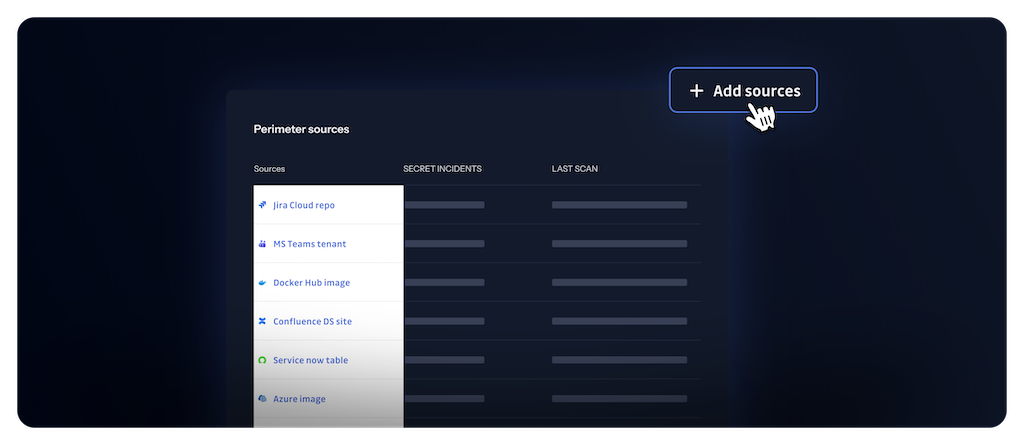
GitGuardian shipped AI Hooks that block secrets from leaking through AI coding agents and MCPMCPModel Context Protocol, a standard for connecting AI applications to external tools and data sources. A compatible server exposes capabilities an assistant can use through a common interface. tool calls, backed by new ggshield machine setup/machine doctor commands for one-step endpoint protection, alongside continuous Docker Hub monitoring, intelligent attribution beyond the monitored perimeter, six new detectors, and expanded NHINHIA non-human identity, an account or credential used by software or a device rather than a person. Service accounts, workload identities and automation tokens need their own permissions and lifecycle controls. inventory and governance capabilities.
GitGuardian SaaS is a cloud-based security platform that detects and prevents secrets leakage in git repositories and source code.
GitGuardian shipped AI Hooks that block secrets from leaking through AI coding agents and MCPMCPModel Context Protocol, a standard for connecting AI applications to external tools and data sources. A compatible server exposes capabilities an assistant can use through a common interface. tool calls, backed by new ggshield machine setup/machine doctor commands for one-step endpoint protection, alongside continuous Docker Hub monitoring, intelligent attribution beyond the monitored perimeter, six new detectors, and expanded NHINHIA non-human identity, an account or credential used by software or a device rather than a person. Service accounts, workload identities and automation tokens need their own permissions and lifecycle controls. inventory and governance capabilities.
└──▷ WHAT SHIPPED ·
18 FEATURES2 OF 18 FEATURESmost completely described firstwhat's the number?
Each feature carries 0–100 for how completely the vendor documented
it — not how big or important the work is. A major capability
described in eight words scores low, and that is the finding.
depth0–40what it does and how it works or what changed
specificity0–30names real surfaces — APIs, flags, formats, limits, numbers
actionability0–30enough to go use it — a named endpoint, flag, or config key tops this; a UI path is a starting point
Code and config rank first by construction: a documented endpoint,
flag or config key scores at the top of specificity and actionability,
so it sorts above a feature described only in prose. Under
60 the notes go thin — everything below the “thinner
coverage” line is thinner documentation, not smaller work.
Hover any meter for that feature's three sub-scores.
0100
ggshield machine setup and machine doctor commandsnew95how completely this was documenteddepth35/40specificity30/30actionability30/3095 / 100
ggshield machine setup (requires ggshield 1.53.0+) configures AI Hooks for every detected AI agent, pre-commit/pre-push git hooks in the global git configuration, and a honeytoken decoy AWS credential profile in one idempotent run. Flags --no-honeytokens, --no-ai-hooks, and --no-git-hooks selectively skip individual protections. ggshield machine doctor reports per-AI-agent hook installation status, git hook status, and token scope validity. Planting honeytokens requires the honeytokens:write scope on ggshield auth login, gated behind the workspace Manager role, while the install script provisions default honeytokens:check, endpoints:send, and ai-discover:send scopes.
Bootstrap AI agent secret blocking across an entire developer machine — covers every detected agent (Codex, Cursor, Claude Code, etc.) plus git hooks in one step.
$ ggshield machine setup
Set up all three endpoint protections (AI Hooks, git hooks, honeytoken) on a developer machine in one step, including the extra scope needed to plant the decoy credential.
AI Hooks blocking secrets in AI agents and MCP callsnew75how completely this was documenteddepth30/40specificity30/30actionability15/3075 / 100
Blocks secrets at prompt submission, pre-tool usetool useA model's ability to answer with a structured request to run a named function or API, which the application executes and returns. It is how agents take actions., and post-tool use across AI coding agents, now including Codex and Mistral Vibe alongside existing Claude Code, Cursor, Copilot CLI, and VS Code coverage; blocks surface a named secret and remediation hint. Self-hosted instances require ClickHouse to support machine scans with secrets findings, MCP tool calls, and full AI agent session recording.
NHI inventory filtering and credential groupingimproved75how completely this was documenteddepth25/40specificity30/30actionability20/3075 / 100
Adds detector, detector type, secret family, secret category, and secret provider filters and sort options to the NHI inventory. Groups multi-match credentials (e.g. PostgreSQL username, password, host, and port) as a single inventory entry rather than separate fields, and labels unmatched secrets as Unknown so they remain visible and filterable rather than dropped.
MCP transcript replay for post-compromise investigationnew65how completely this was documenteddepth20/40specificity20/30actionability25/3065 / 100
ggshield ai discover --history parses MCP tool calls from agent transcripts to reconstruct which tools an agent called, for blast-radius analysis after a suspected credential compromise.
After a credential compromise, reconstruct which MCP tool calls an agent made by replaying its transcripts — useful for blast-radius analysis.
$ ggshield ai discover --history
After a suspected compromise, reconstruct which MCP tools an agent called by replaying its transcript history.
New detectors and analyzer for Firebase, Coze, Keycloak, Fish Audio, Azure, Apify, Docker Hubnew65how completely this was documenteddepth25/40specificity30/30actionability10/3065 / 100
Adds new Firebase ID Token, Coze Access Token, Keycloak Access Token, Keycloak Refresh Token, Fish Audio API Key, and Azure Custom Vision Training Key detectors, a new Apify API tokens analyzer, and docker login --username/-u detection to the Docker Credentials detector for Docker Hub personal access tokenspersonal access tokensA personal access token, a credential used by scripts and integrations instead of a user's password. Its permissions and expiry depend on the service issuing it..
— Names every new detector, no enablement action neededproduct docs
0600
Vault secret classification via ggscoutnew60how completely this was documenteddepth25/40specificity25/30actionability10/3060 / 100
Runs the Secrets Detection Engine on every value ggscout collects, classifying vaulted secrets against 550+ detectors including multi-match detectors (ggshield 1.54.0, ggscout 0.32.0).
Detector accuracy improvements for New Relic, Scaleway, and Fastlyimproved60how completely this was documenteddepth25/40specificity30/30actionability5/3060 / 100
Extends New Relic Key and New Relic Insights Insert Key checkers to identify revoked keys via an empty POST request. Improves scaleway_token precision by rejecting node UUIDsUUIDsA universally unique identifier, usually a 128-bit value used to identify an object across systems. It is designed to make independently generated identifiers unlikely to collide. from proxy-subscription configs, and improves fastly_personal_token precision by rejecting proxy-subscription node passwords and 32-char prefixes of longer base64url values.
— Names exact detectors and logic, no user actionproduct docs
0800
AI agents and MCP inventory in Developer Endpoint Protectionnew60how completely this was documenteddepth25/40specificity20/30actionability15/3060 / 100
Adds AI agents and MCP inventory to Developer Endpoint Protection, reporting agents and MCP servers per endpoint, hook coverage, and whether an agent subscription is personal or company-owned.
AWS access key to IAM identity linking in NHI Governancenew60how completely this was documenteddepth25/40specificity25/30actionability10/3060 / 100
AWS access keys stored in a secret manager or Kubernetes now link to their IAMIAMIdentity and Access Management — a framework of policies and services for controlling who can authenticate to systems and what resources they are authorized to use, letting cyber tools enforce least-privilege and audit access. identity by AccessKeyId, showing the permissions of the stored key in the NHI GovernanceNHI GovernanceThe policies, controls, and lifecycle management applied to Non-Human Identities — service accounts, API keys, tokens, and certificates — to enforce least-privilege access and reduce credential sprawl across systems. exploration map.
Agent analysis coverage and overview for public incidentsimproved55how completely this was documenteddepth25/40specificity15/30actionability15/3055 / 100
Adds an agents overview page under Public Monitoring showing how many public incidents the agents analysed and how company-attribution verdicts break down, with one-click filtering to matching incidents. Company-attribution verdicts and risk scores are now available immediately when a public incident is created, and full agent analysis coverage is ensured on every incident, including those previously skipped.
Review how many of your public incidents the agents have analysed and drill into company-attribution verdicts.
📍In the GitGuardian console, go to Public Monitoring › GitGuardian agents to see the breakdown of agent-analysed incidents and their company-attribution verdicts, then click through to the matching incidents.
— UI path given, attribution mechanism not detailedproduct docs
1100
Intelligent attribution beyond the monitored perimeternew55how completely this was documenteddepth25/40specificity20/30actionability10/3055 / 100
Adds intelligent attribution beyond the monitored perimeter for new GitHub commits, GitHub commit history, and Docker Hub images — attributing public leaks to your company even when no perimeter rule matches, including surfacing past leaks that were never previously attributed.
— Names three sources but no control to configure itproduct docs
1200
Unified Exclusion Rules for Monitoringimproved55how completely this was documenteddepth20/40specificity15/30actionability20/3055 / 100
Consolidates source exclusions, file-path exclusions, and pattern exclusions into a single unified experience, managed under Settings > Monitoring > Exclusion Rules.
Consolidate all your monitoring exclusions — sources, file paths, and patterns — into one place to reduce management overhead.
📍In the GitGuardian console, go to Settings › Monitoring › Exclusion Rules to add or migrate source exclusions, file-path exclusions, and pattern exclusions into the Unified Exclusion Rules experience.
Per-team incident permission controls for Member rolenew50how completely this was documenteddepth20/40specificity15/30actionability15/3050 / 100
Adds per-team incident permission controls when promoting a user to Member, including bulk application across teams and post-promotion editing of team rights.
Continuous Docker Hub monitoringnew50how completely this was documenteddepth25/40specificity15/30actionability10/3050 / 100
Adds continuous Docker Hub monitoring, scanning public images daily and attributing exposures to your company as they appear after the initial historical scan.
— Describes cadence but no configuration surfaceproduct docs
1500
Perimeter-scoped historical scans with recurring schedulesimproved50how completely this was documenteddepth25/40specificity15/30actionability10/3050 / 100
Scopes historical scans to each developer's time in perimeter, excluding activity from before they joined, with support for recurring scan schedules that apply new detectors to past commits.
— Explains scoping mechanism but no command or config namedproduct docs
1600
Automatic removal of remotely-deleted sources from perimetersnew50how completely this was documenteddepth20/40specificity15/30actionability15/3050 / 100
Adds a new workspace setting that automatically removes remotely-deleted sources from team perimeters while keeping them accessible to workspace managers.
Multiple assignees and auto-assign leaker on incidentsnew35how completely this was documenteddepth15/40specificity10/30actionability10/3035 / 100
Enables assigning multiple users to incidents and automatically assigns the leaker as assignee.
— Describes behavior but no configuration detailproduct docs
1800
Decoded JWT and Base64 payload exposure in incidentsnew25how completely this was documenteddepth10/40specificity10/30actionability5/3025 / 100
Adds decoded JWTJWTAn open standard (RFC 7519) for encoding claims as a signed, optionally encrypted JSON object passed between parties. Cyber tools use it to verify identity and permissions without querying a central session store. and Base64 payload exposure in incident views.
ⓘSourcesBlog / feed →2 releases · 2026-09-07 → 2026-09-08Blog ↗RankWhy this ranktop features scored 90/85/85, +15 breaking change, +10 product media, +6 runnable example — 117.67How ranking works →
Veracode is a cloud-based application security platform that performs static, dynamic, and software composition analysis to identify vulnerabilities in code.
Veracode's headline work this window is operational rather than detection-side: new veracode.yml pipeline configuration options, a Java API Wrapper update adding pagination, retry logic, and a Findings API, and a broad expansion of Reporting API fields, filters, and a new Audit Log report. The window also adds container/IaCIaCInfrastructure as Code: the practice of defining and provisioning compute infrastructure through machine-readable config files rather than manual processes, giving cyber tools repeatable, version-controlled environment setup. scan visibility and Manual Penetration Testing flaw matching on the Platform, native GitHub integration install and scan scheduling, and two breaking changes — removal of the /healthcheck/status endpoint and the Azure DevOps Veracode Flaw Importer task rename.
└──▷ WHAT SHIPPED ·
23 FEATURES2 OF 23 FEATURESmost completely described firstwhat's the number?
Each feature carries 0–100 for how completely the vendor documented
it — not how big or important the work is. A major capability
described in eight words scores low, and that is the finding.
depth0–40what it does and how it works or what changed
specificity0–30names real surfaces — APIs, flags, formats, limits, numbers
actionability0–30enough to go use it — a named endpoint, flag, or config key tops this; a UI path is a starting point
Code and config rank first by construction: a documented endpoint,
flag or config key scores at the top of specificity and actionability,
so it sorts above a feature described only in prose. Under
60 the notes go thin — everything below the “thinner
coverage” line is thinner documentation, not smaller work.
Hover any meter for that feature's three sub-scores.
0100
New `veracode.yml` pipeline configuration optionsnew90how completely this was documenteddepth30/40specificity30/30actionability30/3090 / 100
Adds debug configuration option in veracode.yml for debugging and troubleshooting pipeline runs (GitHub Workflow Integration v1.0.6, Azure DevOps Workflow Integration v2.3.6); adds analysis_branch support so scheduled scans run against a specified branch instead of the default branch (Azure DevOps Workflow Integration v2.3.10); adds a custom agent pool name parameter to specify the agent pool used for pipeline execution (Azure DevOps Workflow Integration v2.4.3); and adds support for custom predependency commands to prepare projects before scanning (GitHub Workflow Integration v2.1.3).
Enable verbose debug output in a GitHub or Azure DevOps pipeline to diagnose scan failures without modifying pipeline code.
yaml
# In veracode.yml
debug: true
Pin scheduled ADO scans to a specific long-lived branch rather than the repo default, useful for release-branch gating.
yaml
# In veracode.yml
analysis_branch: release/2026-q3
Java API Wrapper pagination, retry, and Findings API supportnew85how completely this was documenteddepth30/40specificity30/30actionability25/3085 / 100
Adds page size support to the Platform Applications API (/appsec/v1/applications) to improve efficiency retrieving large application lists (v26.3.19.0); adds support for the Veracode Platform Findings REST APIREST APIA web API design style where clients interact with resources over HTTP using standard methods like GET, POST, and DELETE, giving cyber tools a predictable, language-agnostic way to integrate with external services. to access open and mitigated application findings (v26.2.18.0); introduces support for the paginated Sandbox REST API enabling retrieval of sandbox lists using pagination (v26.3.19.0); and implements a configurable retry mechanism for the Applications API (appsec/v1/applications) to improve handling of transient failures and timeouts (v26.2.18.0).
Healthcheck endpoint removedbreaking85how completely this was documenteddepth25/40specificity30/30actionability30/3085 / 100
The Veracode Healthcheck endpoint /healthcheck/status has been removed and now returns a 404 error; use the v2/principal endpoint in the Identity REST API instead.
Flaw Importer ADO task renameddeprecated80how completely this was documenteddepth25/40specificity30/30actionability25/3080 / 100
The Veracode Flaw Importer task (containing spaces in the task name) is deprecated and replaced by VeracodeFlawImporter in the Veracode Azure DevOps extension v3.35.0; the deprecated task is scheduled for removal in a future release.
New Reporting API fields, filters, and Audit Log reportnew80how completely this was documenteddepth30/40specificity30/30actionability20/3080 / 100
Adds the most_recent_scan filter to the Reporting API Scans report, which when set to true returns only the most recent scan per asset; adds the custom_severity filter to the Findings report; introduces a new Audit Log report with an action_type filter to query user activity from Veracode Analytics; adds the collections_list field to the Finding Reporting API response listing collection names for an application; adds the library_instance_ref field to uniquely identify the library instance tied to a finding; and adds the data_refresh_date field indicating the most recent Analytics data refresh time.
Jira Server/Data Center 9.x support endingdeprecated75how completely this was documenteddepth25/40specificity25/30actionability25/3075 / 100
Support for the Veracode Integration for Jira on Jira Server and Jira Data Center 9.x ends November 30, 2026 — organizations must upgrade to Jira 10 or later to maintain a supported configuration.
OAuth 2.0 Client Credentials supportimproved65how completely this was documenteddepth25/40specificity25/30actionability15/3065 / 100
Adds support for OAuth Client Credentials authentication with the Veracode XML APIsXML APIsInterfaces for reading, writing, or querying XML documents, provided by libraries such as libxml2 or built into language runtimes; cyber tools use them to parse structured data like configs, reports, or protocol messages reliably., previously limited to REST APIsREST APIsA convention for building HTTP-based interfaces where resources are addressed by URL and manipulated with standard verbs like GET, POST, and DELETE, giving cyber tools a predictable way to integrate with external services., and adds the ability to create and manage OAuth 2.0OAuth 2.0An open authorization framework (IETF RFC 6749) that lets a service grant limited API access to a third party without sharing credentials, giving cyber tools a standard way to authenticate against external platforms. Client credentials on the API Credentials page in the Veracode Platform.
Container and IaC scan results on the Platformnew65how completely this was documenteddepth30/40specificity20/30actionability15/3065 / 100
Makes container and IaC scan results performed from the CLI available on the Veracode Platform, with severity counts, filtering, scan history, and mitigation guidance.
Manual Penetration Testing Flaw Matchingnew60how completely this was documenteddepth30/40specificity20/30actionability10/3060 / 100
Introduces Manual Penetration Testing (MPT) Flaw Matching to correlate findings across tests for consistent flaw IDs, status values, and remediation grace period support.
Static Scan Findings filtering in VS Codenew60how completely this was documenteddepth25/40specificity20/30actionability15/3060 / 100
Adds a Current File filter to Static Scan Findings in VS Code to view findings for the file currently open in the editor, plus an option to filter and group findings by file name, with findings for each file grouped by severity (Veracode Scan for VS Code v1.16.3).
Scan scheduling from the Platform for GitHub and Azure DevOpsnew60how completely this was documenteddepth25/40specificity20/30actionability15/3060 / 100
Enables scheduling Static Analysis, SCASCASoftware composition analysis, identifying third-party dependencies and checking them for known vulnerabilities and license issues. It covers software a team uses rather than writes itself., and IaC scans for GitHub organizations directly from the Veracode Platform (GitHub Workflow Integration v2.0.0), and enables scheduling scans for every organization where the Azure DevOps Workflow Integration is installed, based on veracode.yml configuration (Azure DevOps Workflow Integration v2.3.9).
GitHub app install/uninstall from the Platformnew60how completely this was documenteddepth25/40specificity20/30actionability15/3060 / 100
Enables installing and configuring the Veracode GitHub Integration directly from the Veracode Platform, eliminating manual GitHub Marketplace installation steps (GitHub Workflow Integration v2.0.0), and adds a new uninstallation workflow on the Platform to remove the Veracode app from GitHub organizations (GitHub Workflow Integration v2.1.1).
Updated Auto-Update OWASP and CWE Top 25 rulesimproved60how completely this was documenteddepth20/40specificity25/30actionability15/3060 / 100
Updates the Auto-Update OWASPOWASPA nonprofit foundation that publishes open standards, guides, and ranked vulnerability lists—most famously the OWASP Top 10—giving cyber tools a vendor-neutral benchmark to test or report against. rule and Auto-Update CWECWECommon Weakness Enumeration, a catalog of recurring software and hardware weakness types. It describes classes of mistakes, such as injection, rather than individual vulnerability instances. Top 25 rule in application security policies to enforce OWASP Top 10:2025OWASP Top 10:2025A ranked list of the ten most critical web application risk categories, maintained by the Open Worldwide Application Security Project, used by cyber tools to prioritize detection, testing, and remediation coverage. and MITREMITREA US federally funded research and development center that maintains public frameworks—ATT&CK, CVE, D3FEND—that cyber tools use to classify threats, vulnerabilities, and defensive techniques in a common language. CWE Top 25 for 2025.
New Analytics dashboards for IDE/CLI, Firewall, and Collections usagenew60how completely this was documenteddepth20/40specificity25/30actionability15/3060 / 100
Introduces a new IDE and CLI Usage Explore and Dashboard in Veracode Analytics to visualize organization-wide IDE and CLI plugin usage; adds a Firewall Usage Explore and Dashboard surfacing metrics for Veracode Firewall; and adds Collections fields to the Applications explore, including new Collections visualizations in the Policy Compliance Overview dashboard.
Usage analytics across IDE pluginsnew55how completely this was documenteddepth20/40specificity25/30actionability10/3055 / 100
Adds usage analytics to Veracode Scan for Visual Studio (v0.8.0), Veracode Scan for VS Code (v1.16.0), and Veracode Scan for JetBrains (v1.8.0) to provide insights into plugin adoption, feature usage, and scan activity.
Region selection during VS Code OAuth authenticationnew45how completely this was documenteddepth15/40specificity15/30actionability15/3045 / 100
Adds an option to change the region during OAuth authentication in VS Code, displaying the current or most recently used region (Veracode Scan for VS Code v1.16.3).
Domain mapping to IdP for SAML SSOnew40how completely this was documenteddepth15/40specificity15/30actionability10/3040 / 100
Enables mapping multiple domains to a single identity provideridentity providerA service that authenticates users and supplies identity information to other applications. It is the sign-in authority behind many single sign-on systems. (IdPIdPA service that authenticates users and supplies identity information to other applications. It is the sign-in authority behind many single sign-on systems.) for organizations using SP-initiatedSP-initiatedA SAML or OAuth/OIDC login flow where the Service Provider redirects the user to an Identity Provider to authenticate, rather than the IdP pushing an assertion unprompted; tools use it to trigger SSO from their own login page.SAML SSOSAML SSOAn authentication protocol that lets a user log in once with an identity provider and access multiple services without re-entering credentials, by passing signed XML assertions between parties..
The Veracode Healthcheck endpoint /healthcheck/status has been removed and now returns a 404 error; use the v2/principal endpoint in the Identity REST API instead.
!
The Veracode Flaw Importer task (containing spaces in the task name) is deprecated and replaced by VeracodeFlawImporter in the Veracode Azure DevOps extension v3.35.0; the deprecated task is scheduled for removal in a future release.
!
Support for the Veracode Integration for Jira on Jira Server and Jira Data Center 9.x ends November 30, 2026 — upgrade to Jira 10 or later to maintain a supported configuration.
Mend SAST's biggest change this window is a unified vulnerability remediation experience with standardized fix logic that may reduce suggestion volume, alongside new multi-base-branch scanning, IDE/AI-agent suppression tooling, and JS/TS detection accuracy tuning across 11 CWEsCWEsA community-maintained list of software and hardware weakness types, maintained by MITRE, that gives cyber tools a standard taxonomy for classifying and communicating vulnerability root causes..
Mend SAST is a static application security testing service that scans source code for vulnerabilities and helps teams prioritize remediation.
Mend SAST's biggest change this window is a unified vulnerability remediation experience with standardized fix logic that may reduce suggestion volume, alongside new multi-base-branch scanning, IDE/AI-agent suppression tooling, and JS/TS detection accuracy tuning across 11 CWEsCWEsA community-maintained list of software and hardware weakness types, maintained by MITRE, that gives cyber tools a standard taxonomy for classifying and communicating vulnerability root causes..
└──▷ WHAT SHIPPED ·
4 FEATURES2 OF 4 FEATURESmost completely described firstwhat's the number?
Each feature carries 0–100 for how completely the vendor documented
it — not how big or important the work is. A major capability
described in eight words scores low, and that is the finding.
depth0–40what it does and how it works or what changed
specificity0–30names real surfaces — APIs, flags, formats, limits, numbers
actionability0–30enough to go use it — a named endpoint, flag, or config key tops this; a UI path is a starting point
Code and config rank first by construction: a documented endpoint,
flag or config key scores at the top of specificity and actionability,
so it sorts above a feature described only in prose. Under
60 the notes go thin — everything below the “thinner
coverage” line is thinner documentation, not smaller work.
Hover any meter for that feature's three sub-scores.
0101
Unified remediation experience with Top Fix columnbreaking70how completely this was documenteddepth30/40specificity25/30actionability15/3070 / 100
Mend Platform 26.8.2 introduces a unified vulnerability remediation experience with a Top Fix column in the Findings table, an updated Remediation tab, and standardized fix logic and metadata across the Mend Platform. The updated fix logic may result in fewer remediation suggestions per vulnerability than before, so workflows relying on the previous suggestion volume will see reduced recommendations.
— Names the UI column and behavior change, but no API/config surface given.product docs
0200
JS/TS detection accuracy across 11 CWEsimproved70how completely this was documenteddepth30/40specificity30/30actionability10/3070 / 100
The JavaScript/TypeScript analysis engine's detection accuracy was improved across 11 CWEs: CWE-22 (Path Traversal), CWE-78 (OS Command Injection), CWE-79 (XSSXSSCross-site scripting, an attack that runs malicious script in another user's browser through a trusted site. It can steal data or perform actions using the user's session.), CWE-89 (SQL Injection), CWE-90 (LDAP InjectionLDAP InjectionAn attack technique where unsanitized user input is embedded into LDAP queries, manipulating directory lookups to bypass authentication or extract data. Tools use it to test directory services for input-validation flaws.), CWE-94 (Code Injection), CWE-117 (Log Neutralization), CWE-295 (Certificate Validation), CWE-601 (Open Redirect), CWE-918 (SSRFSSRFServer-side request forgery, an attack that tricks a server into making requests chosen by an attacker. Those requests can reach internal services the attacker cannot access directly.), and CWE-943 (NoSQL/query-language injection), including tuned handling of React controlled components to reduce false-positive DOMDOMThe browser's in-memory tree representation of a web page's structure, standardized by the W3C, giving cyber tools a programmable interface to read or manipulate page content at runtime.-based XSS findings.
Suppression tool in IDE and AI agent workflownew60how completely this was documenteddepth25/40specificity20/30actionability15/3060 / 100
A new suppression tool in the IDE and AI agent workflow supports single and bulk suppression or unsuppression of findings across all scanning engines, including SAST and SCASCASoftware composition analysis, identifying third-party dependencies and checking them for known vulnerabilities and license issues. It covers software a team uses rather than writes itself., with UI updates reflecting within seconds.
— Describes scope and speed but no exact command or menu path.product docs
0400
Multi-base-branch scanning on Azure DevOps and Bitbucket Cloudnew60how completely this was documenteddepth25/40specificity20/30actionability15/3060 / 100
The Developer Platform now supports scanning multiple base branches into dedicated projects on Azure DevOps and Bitbucket Cloud, enabling security managers to monitor and set policies for each branch individually.
— Names platforms and effect but no configuration details given.product docs
└──▷ BREAKING ON UPGRADE
!
The updated fix logic may result in fewer remediation suggestions per vulnerability; existing workflows relying on the previous volume of remediation recommendations will see reduced suggestions.
ⓘSourcesBlog / feed →1 release · 2026-09-07Blog ↗RankWhy this ranktop features scored 82, +10 product media, +6 runnable example — 98How ranking works →
StepSecurity hardens CI/CD pipelines by detecting and preventing supply chain attacks through runtime security monitoring and vulnerability detection.
StepSecurity's only shipped change this window expands its Webhook Integration from a single tenant-wide webhook to up to ten independently configured endpoints, each with its own event subscriptions and repository scope.
└──▷ WHAT SHIPPED ·
1 FEATURE0 OF 1 FEATUREmost completely described firstwhat's the number?
Each feature carries 0–100 for how completely the vendor documented
it — not how big or important the work is. A major capability
described in eight words scores low, and that is the finding.
depth0–40what it does and how it works or what changed
specificity0–30names real surfaces — APIs, flags, formats, limits, numbers
actionability0–30enough to go use it — a named endpoint, flag, or config key tops this; a UI path is a starting point
Code and config rank first by construction: a documented endpoint,
flag or config key scores at the top of specificity and actionability,
so it sorts above a feature described only in prose. Under
60 the notes go thin — everything below the “thinner
coverage” line is thinner documentation, not smaller work.
Hover any meter for that feature's three sub-scores.
0100
Multiple webhook endpoints per tenantimproved82how completely this was documenteddepth35/40specificity27/30actionability20/3082 / 100
StepSecurity now supports up to ten webhooks per tenant, each with its own endpoint URL, HTTP method, headers, message format, and Envelope template — replacing the previous single-webhook-per-tenant limit. Each webhook can subscribe to any combination of four event types (Insights, Detections, Secure Registry Audit Logs, API Audit Logs) and can be scoped to a subset of repositories or to all current and future repositories, with independent delivery per endpoint so a failure at one does not affect others. The UI adds an Add Webhook control that creates additional endpoints, each shown as a collapsible card with name, endpoint, and event-type chips.
Route runtime detections to your SIEMSIEMSecurity information and event management, collecting logs from many systems and correlating events to find suspicious activity. Analysts use it to investigate alerts and incidents. and audit logs to a separate log archive without either receiver filtering unwanted traffic.
📍In the StepSecurity console, go to Webhook Integration and click Add Webhook. Configure the first webhook with endpoint URL pointing to your SIEM, subscribe it to Detections and Insights, and set the Envelope template and auth headers your SIEM expects. Click Add Webhook again, set the second endpoint URL to your log archive, subscribe it to Secure Registry Audit Logs and API Audit Logs, then click Save changes.
Mend shipped a unified vulnerability remediation experience with a new Top Fix column, multi-base-branch SASTSASTStatic application security testing, analyzing source code or compiled code for vulnerabilities without running the application. It helps developers find problems before deployment. scanning for Azure DevOps and Bitbucket Cloud, an in-IDE/AI-agent suppression tool, JavaScript/TypeScript detection accuracy tuning across 11 CWEsCWEsA community-maintained list of software and hardware weakness types, maintained by MITRE, that gives cyber tools a standard taxonomy for classifying and communicating vulnerability root causes., and several Renovate manager and datasource additions.
Traditional application security misses AI risk. Standalone AI security tools miss your code.
Mend shipped a unified vulnerability remediation experience with a new Top Fix column, multi-base-branch SASTSASTStatic application security testing, analyzing source code or compiled code for vulnerabilities without running the application. It helps developers find problems before deployment. scanning for Azure DevOps and Bitbucket Cloud, an in-IDE/AI-agent suppression tool, JavaScript/TypeScript detection accuracy tuning across 11 CWEsCWEsA community-maintained list of software and hardware weakness types, maintained by MITRE, that gives cyber tools a standard taxonomy for classifying and communicating vulnerability root causes., and several Renovate manager and datasource additions.
└──▷ WHAT SHIPPED ·
5 FEATURES2 OF 5 FEATURESmost completely described firstwhat's the number?
Each feature carries 0–100 for how completely the vendor documented
it — not how big or important the work is. A major capability
described in eight words scores low, and that is the finding.
depth0–40what it does and how it works or what changed
specificity0–30names real surfaces — APIs, flags, formats, limits, numbers
actionability0–30enough to go use it — a named endpoint, flag, or config key tops this; a UI path is a starting point
Code and config rank first by construction: a documented endpoint,
flag or config key scores at the top of specificity and actionability,
so it sorts above a feature described only in prose. Under
60 the notes go thin — everything below the “thinner
coverage” line is thinner documentation, not smaller work.
Hover any meter for that feature's three sub-scores.
0100
JS/TS detection accuracy improvements across 11 CWEsimproved70how completely this was documenteddepth35/40specificity30/30actionability5/3070 / 100
Improves detection accuracy of the JavaScript/TypeScript analysis engine across CWECWECommon Weakness Enumeration, a catalog of recurring software and hardware weakness types. It describes classes of mistakes, such as injection, rather than individual vulnerability instances.-22, CWE-78, CWE-79, CWE-89, CWE-90, CWE-94, CWE-117, CWE-295, CWE-601, CWE-918 and CWE-943, including tuning for React controlled components to reduce false positives where query parameters flowing into escaped JSX attributes were incorrectly flagged as DOMDOMThe browser's in-memory tree representation of a web page's structure, standardized by the W3C, giving cyber tools a programmable interface to read or manipulate page content at runtime.-based XSSXSSCross-site scripting, an attack that runs malicious script in another user's browser through a trusted site. It can steal data or perform actions using the user's session..
— Detailed mechanism and named CWEs but nothing for a reader to invokeproduct docs
0200
Renovate manager and datasource additionsnew70how completely this was documenteddepth20/40specificity30/30actionability20/3070 / 100
Renovate now passes --no-frozen-lockfile to pnpm when performing lock file updates in the manager/npm manager, supports optional channel options in the manager/pixi manager, and supports AWS S3 as a Helm charts repository in the datasource/helm datasource.
— Names exact flags, managers and datasource for direct config useproduct docs
0301
Unified vulnerability remediation experiencebreaking67how completely this was documenteddepth30/40specificity22/30actionability15/3067 / 100
Adds a Top Fix column to the Findings table and an updated Remediation tab, standardizing fix logic and recommendation metadata across SAST and SCASCASoftware composition analysis, identifying third-party dependencies and checking them for known vulnerabilities and license issues. It covers software a team uses rather than writes itself. findings on the Mend Platform. Because the new fix logic is more accurate, it may surface fewer remediation suggestions per vulnerability than before, reducing noise but potentially removing previously shown suggestions — existing workflows relying on the old suggestion volume should be reviewed.
Suppression tool for IDE and AI agent workflowsnew63how completely this was documenteddepth30/40specificity18/30actionability15/3063 / 100
Adds a suppression tool in Agentic Integrations supporting single and bulk suppression or unsuppression actions across all scanning engines, including SAST and SCA, with UI updates reflecting within seconds to reduce context-switching for developers working in their IDE or AI agent workflow.
Multi-base-branch scanning in Mend SASTnew60how completely this was documenteddepth25/40specificity20/30actionability15/3060 / 100
Mend SAST now supports scanning multiple base branches into dedicated projects in the Developer Platform on Azure DevOps and Bitbucket Cloud, letting security managers monitor and set policies for each branch individually.
— Clear capability and scope but only a UI/product-area starting pointproduct docs
└──▷ BREAKING ON UPGRADE
!
The unified fix logic may produce fewer remediation suggestions per vulnerability due to increased accuracy, reducing overall noise but potentially removing previously shown suggestions.
!
The unified vulnerability remediation fix logic may produce fewer remediation suggestions per vulnerability; existing workflows that relied on the previous volume of suggestions should be reviewed.
ⓘSourcesRelease page →1 release · seen 2026-09-08Notes ↗RankWhy this ranktop features scored 88/78/70, +15 breaking change, +6 runnable example — 99.67How ranking works →
AI-native SAST platform that finds 2x more real vulnerabilities with 75% fewer false positives. Automated vulnerability detection, instant fixes, and seamless CI/CD integration for modern DevOps teams.
ZeroPath consolidated all scanning configuration into a new Scanner workspace with scope-aware permission enforcement, added SLOSLOA Service Level Objective is a target threshold for a system's reliability or performance, such as 99.9% uptime or sub-200ms latency, giving cyber tools a measurable contract to enforce or report against./SLISLISite Level Indicator — a Google SRE concept for a quantitative measure of service reliability, such as request latency or error rate, used by tools to track whether a system meets its availability targets. tracking and an audit trail for service levels, and introduced an org-wide toggle to redact AI-generated descriptions for secret findings.
└──▷ WHAT SHIPPED ·
4 FEATURES0 OF 4 FEATURESmost completely described firstwhat's the number?
Each feature carries 0–100 for how completely the vendor documented
it — not how big or important the work is. A major capability
described in eight words scores low, and that is the finding.
depth0–40what it does and how it works or what changed
specificity0–30names real surfaces — APIs, flags, formats, limits, numbers
actionability0–30enough to go use it — a named endpoint, flag, or config key tops this; a UI path is a starting point
Code and config rank first by construction: a documented endpoint,
flag or config key scores at the top of specificity and actionability,
so it sorts above a feature described only in prose. Under
60 the notes go thin — everything below the “thinner
coverage” line is thinner documentation, not smaller work.
Hover any meter for that feature's three sub-scores.
0100
Scope-aware scanner permissions and authorization checksbreaking88how completely this was documenteddepth35/40specificity28/30actionability25/3088 / 100
Adds scoped permissions controlling Rules, repository context, and scan locations that surface only the actions a member or team is authorized to perform, with inline reasons when Add, Save, or Delete are unavailable. Editing or deleting a rule, repository context, or scan location set is now authorized against both the scope a definition already holds and the scope being assigned, blocking moves outside a member's granted repositories. The teams permission editor lists every grantable permission, and an organization-wide repository permission grant carries its named actions — including saving repository context or scan location sets — across all repositories; members with per-repository scanner permission see a searchable repository list under Scanner scoped to repos they can configure, and definitions linked to a repository removed from the version control host remain deletable.
Grant a team organization-wide repository permissions so automation can save scan location sets across all repositories without per-repo configuration.
📍In the permission editor, open the team's grant, select the repository permission that includes 'save scan location set', and enable the organization-wide grant — automation using that team's credentials will then be authorized to write scan location sets across all repositories.
Let a developer with per-repository scanner access configure only their own repos without exposing organization-wide settings.
📍In the main sidebar, click Scanner — members with per-repository scanner permission will see a searchable list scoped to only the repositories they hold permission on, with Add/Save/Delete showing inline reasons when unavailable.
Unified Scanner workspace with grouped settings navigationnew78how completely this was documenteddepth30/40specificity28/30actionability20/3078 / 100
Adds a dedicated Scanner workspace in the main sidebar that consolidates all scanning configuration under Configuration (scanner settings, scan locations) and Detection (repository context, rules, sources and sinks). Settings sidebar pages are now grouped by purpose — Workspace (general, members, teams, billing), Security (scanner settings, repository tags, service levels), and Connections (integrations, notifications, API keys) — and scanner settings appear across five consistent categories, General, Full scans, Pull requests, Dependencies, and Remediation, at organization, tag, and repository scope so overrides appear in the same place at every level.
Navigate to scanner detection rules for a specific repository using the new Scanner workspace sidebar.
📍In the main sidebar, select Scanner › Detection › Rules, then pick the target repository or tag scope from the scope selector to view or edit rules scoped to that repository.
Override pull request scan settings at the repository level without losing your place in the settings hierarchy.
📍In Settings › Security › Scanner settings, select the target repository scope, open the Pull requests category, adjust the threshold, and switch to another category — the edit is preserved until you save.
SLO/SLI tracking and audit trail for service levelsnew70how completely this was documenteddepth25/40specificity25/30actionability20/3070 / 100
Adds Settings → Service levels → Policies to configure SLO targets on individual policies, a Settings → Service levels → SLO / SLI section with trend charts turning SLASLAA formal agreement between a service provider and customer that defines expected uptime, response times, and remedies for failures, giving cyber tools a contractual baseline for availability and support commitments. activity into a time-series view, and an Audit trail section under Settings → Service levels to record SLA-related activity.
Set an SLO target on a policy and monitor compliance trends over time.
📍In the console, go to Settings → Service levels → Policies, select a policy, and set an SLO target. Then navigate to Settings → Service levels → SLO / SLI to view trend charts tracking compliance against that target.
— Names exact settings paths and sections, no deeper mechanism givenproduct docs
0400
Org-wide toggle to redact secret finding descriptionsnew60how completely this was documenteddepth25/40specificity20/30actionability15/3060 / 100
Adds a Hide Descriptions toggle in the Repositories & data section for organization admins, which redacts AI-generated descriptions and exploit walkthroughs for secret findings across the dashboard, API responses, webhook payloads, notifications, and exported tickets.
Prevent prose that might quote a secret value from appearing in dashboards, API responses, webhooks, and exported tickets — useful when sharing findings with contractors or exporting to third-party systems.
📍In the ZeroPath console, go to Repositories & data and click Hide Descriptions to enable the org-wide redaction toggle.
— Names the toggle and every affected surface, gives UI path onlyproduct docs
└──▷ BREAKING ON UPGRADE
!
Editing or deleting a rule, repository context, or scan location set is now authorized against the scope the definition already holds as well as the scope being assigned — members and automation moving a definition outside their granted repositories will be refused.
Try professional password recovery, data decryption, mobile and cloud forensic tools from a manufacturer with 30+ years of expertise, providing tools and training to law enforcement, financial and intelligence agencies.
Elcomsoft Quick Triage 2.2 introduces a merged timeline view, a new plugin-based architecture for artifact support, and a file system snapshot artifact, alongside extended password recovery, full-text search, and BitLockerBitLockerA full-disk encryption feature built into Windows, maintained by Microsoft, that protects data at rest by encrypting entire volumes; cyber tools use it to audit encryption status or recover keys from managed endpoints. key extraction capabilities.
└──▷ WHAT SHIPPED ·
4 FEATURES0 OF 4 FEATURESmost completely described firstwhat's the number?
Each feature carries 0–100 for how completely the vendor documented
it — not how big or important the work is. A major capability
described in eight words scores low, and that is the finding.
depth0–40what it does and how it works or what changed
specificity0–30names real surfaces — APIs, flags, formats, limits, numbers
actionability0–30enough to go use it — a named endpoint, flag, or config key tops this; a UI path is a starting point
Code and config rank first by construction: a documented endpoint,
flag or config key scores at the top of specificity and actionability,
so it sorts above a feature described only in prose. Under
60 the notes go thin — everything below the “thinner
coverage” line is thinner documentation, not smaller work.
Hover any meter for that feature's three sub-scores.
0100
Plugin architecture for artifact supportimproved40how completely this was documenteddepth20/40specificity15/30actionability5/3040 / 100
The tool introduces a plugin architecture that rebuilds artifact support as a plugin system, replacing the prior monolithic approach.
Extended password recovery, search, and BitLocker key extractionimproved25how completely this was documenteddepth10/40specificity15/30actionability0/3025 / 100
This release extends password recovery capabilities, extends full-text search capabilities, and extends BitLocker key extraction capabilities.
Snyk Container scans Docker images and container registries for vulnerabilities, misconfigurations, and malware to secure containerized applications.
Snyk Container now surfaces source repository information for locally built images by reading BuildKitBuildKitA build engine for Docker images, maintained by Moby, that replaces the legacy Docker builder with parallel layer execution, cache mounts, and secret handling — giving cyber tools faster, more reproducible container builds. metadata.
└──▷ WHAT SHIPPED ·
1 FEATURE0 OF 1 FEATUREmost completely described firstwhat's the number?
Each feature carries 0–100 for how completely the vendor documented
it — not how big or important the work is. A major capability
described in eight words scores low, and that is the finding.
depth0–40what it does and how it works or what changed
specificity0–30names real surfaces — APIs, flags, formats, limits, numbers
actionability0–30enough to go use it — a named endpoint, flag, or config key tops this; a UI path is a starting point
Code and config rank first by construction: a documented endpoint,
flag or config key scores at the top of specificity and actionability,
so it sorts above a feature described only in prose. Under
60 the notes go thin — everything below the “thinner
coverage” line is thinner documentation, not smaller work.
Hover any meter for that feature's three sub-scores.
0100
Source repository info via BuildKit metadatanew38how completely this was documenteddepth15/40specificity15/30actionability8/3038 / 100
Container scans now surface source repository information for locally built images using BuildKit metadata.
— Names mechanism (BuildKit metadata) but no command or config shown.2026-09-07-1c4c9dfc
Inspektor Gadget v0.56.0 introduces experimental Kubernetes multi-tenancy with RBACRBACRole-based access control, where permissions are assigned to roles such as reader or administrator and users receive those roles. It makes access easier to manage than individual permission lists. enforcement, moves OCIOCIOpen Container Initiative standard, maintained by the Linux Foundation, defining the image format and runtime spec that container tools share so images built once run anywhere OCI-compliant. image management to a rootless per-user store, and extends uprobeuprobeA Linux kernel dynamic tracing mechanism that lets you attach instrumentation to any userspace function at runtime, without recompiling the target binary, giving cyber tools deep visibility into application behavior. tracing to stripped Go binaries.
Inspektor Gadget is a set of tools and framework for data collection and system inspection on Kubernetes clusters and Linux hosts using eBPF
Inspektor Gadget v0.56.0 introduces experimental Kubernetes multi-tenancy with RBACRBACRole-based access control, where permissions are assigned to roles such as reader or administrator and users receive those roles. It makes access easier to manage than individual permission lists. enforcement, moves OCIOCIOpen Container Initiative standard, maintained by the Linux Foundation, defining the image format and runtime spec that container tools share so images built once run anywhere OCI-compliant. image management to a rootless per-user store, and extends uprobeuprobeA Linux kernel dynamic tracing mechanism that lets you attach instrumentation to any userspace function at runtime, without recompiling the target binary, giving cyber tools deep visibility into application behavior. tracing to stripped Go binaries.
└──▷ WHAT SHIPPED ·
5 FEATURES2 OF 5 FEATURESmost completely described firstwhat's the number?
Each feature carries 0–100 for how completely the vendor documented
it — not how big or important the work is. A major capability
described in eight words scores low, and that is the finding.
depth0–40what it does and how it works or what changed
specificity0–30names real surfaces — APIs, flags, formats, limits, numbers
actionability0–30enough to go use it — a named endpoint, flag, or config key tops this; a UI path is a starting point
Code and config rank first by construction: a documented endpoint,
flag or config key scores at the top of specificity and actionability,
so it sorts above a feature described only in prose. Under
60 the notes go thin — everything below the “thinner
coverage” line is thinner documentation, not smaller work.
Hover any meter for that feature's three sub-scores.
0101
Rootless OCI image store and commandsbreaking83how completely this was documenteddepth30/40specificity28/30actionability25/3083 / 100
Adds a --oci-store-user flag to sudo ig run so gadgets can be read from a per-user OCI store at ~/.ig/oci-store (built rootlessly) without creating root-owned files in the user home directory, and enables ig image build, ig image list, ig image inspect, ig image push, and ig image pull to run as a normal non-root user against that same store. This is a breaking change: gadgets previously built into the root-owned store will not be visible to rootless ig image commands.
— Names exact flag, path, and all five commands with migration notev0.56.0
0200
Uprobe support for stripped Go binariesnew65how completely this was documenteddepth30/40specificity25/30actionability10/3065 / 100
The uprobetracer now falls back to Go's .gopclntab section (including the Go 1.26+ .go.module format) when the ELFELFThe standard binary format for executables, shared libraries, and object files on Linux and most Unix-like systems, giving cyber tools a predictable structure to parse, instrument, or analyze compiled code. symbol table is absent, enabling uprobes on stripped Go binaries such as a production kubelet.
— Explains mechanism and gives concrete example, no runnable commandv0.56.0
0302
Kubelet socket auto-detection via /configz endpointbreaking65how completely this was documenteddepth25/40specificity25/30actionability15/3065 / 100
Container runtime socket auto-detection now uses the kubelet's /configz endpoint over HTTPSHTTPSHTTP carried over an encrypted TLS connection. It protects traffic in transit and lets a browser verify the server's certificate., requiring only the nodes/configz RBAC permission instead of the broader nodes/proxy (Kubernetes v1.33+; earlier clusters fall back to the configured socket path). This is a breaking change: v1.33+ deployments must update RBAC rules to grant nodes/configz instead of nodes/proxy.
— Names exact RBAC permissions and version requirement, clear migrationv0.56.0
thinner coverage below
0400
Kubernetes multi-tenancy with RBAC enforcementnew57how completely this was documenteddepth25/40specificity22/30actionability10/3057 / 100
An experimental multi-tenancy mode authenticates every kubectl-gadget request via TokenReview and restricts gadgets to RBAC-authorized namespaces using SubjectAccessReview, enforced server-side in the gadget service via KubeManager.
— Names mechanism (TokenReview/SubjectAccessReview) but no setup stepsv0.56.0
0500
Network namespace in trace_mount outputimproved25how completely this was documenteddepth10/40specificity10/30actionability5/3025 / 100
The trace_mount gadget now reports network namespace in its output.
— One-line addition with no further detail givenv0.56.0
└──▷ BREAKING ON UPGRADE
!
Kubernetes deployments on v1.33+ now require the nodes/configz RBAC permission instead of nodes/proxy; clusters that granted only nodes/proxy must update their RBAC rules.
!
ig image build, list, inspect, push, and pull now use a per-user OCI store at ~/.ig/oci-store instead of a root-owned store; gadgets previously built into the root store will not be visible to rootless ig image commands.
Plerion's Kubernetes collector manager is now a multi-architecture image, adding native arm64 (Graviton) support alongside amd64.
Plerion is a cloud security platform that discovers and manages vulnerabilities and misconfigurations across infrastructure.
Plerion's Kubernetes collector manager is now a multi-architecture image, adding native arm64 (Graviton) support alongside amd64.
└──▷ WHAT SHIPPED ·
1 FEATURE0 OF 1 FEATUREmost completely described firstwhat's the number?
Each feature carries 0–100 for how completely the vendor documented
it — not how big or important the work is. A major capability
described in eight words scores low, and that is the finding.
depth0–40what it does and how it works or what changed
specificity0–30names real surfaces — APIs, flags, formats, limits, numbers
actionability0–30enough to go use it — a named endpoint, flag, or config key tops this; a UI path is a starting point
Code and config rank first by construction: a documented endpoint,
flag or config key scores at the top of specificity and actionability,
so it sorts above a feature described only in prose. Under
60 the notes go thin — everything below the “thinner
coverage” line is thinner documentation, not smaller work.
Hover any meter for that feature's three sub-scores.
0100
Multi-arch Kubernetes collector manager imageimproved62how completely this was documenteddepth25/40specificity22/30actionability15/3062 / 100
The Kubernetes collector manager is now published as a multi-architecture image supporting both amd64 and arm64, enabling deployment on Graviton node pools without requiring a dedicated x86 node or nodeSelector configuration.
Tenzir is a data pipeline engine for security teams that collects, transforms, enriches, and routes telemetry.
Tenzir added Splunk HECSplunk HECAn HTTP endpoint built into Splunk that accepts JSON-formatted log and event data pushed directly from applications or agents over HTTPS, letting cyber tools ship telemetry to Splunk without requiring a forwarder agent on the sending host. acknowledgement support to the Tenzir Node, enabling confirmed event delivery.
└──▷ WHAT SHIPPED ·
1 FEATURE0 OF 1 FEATUREmost completely described firstwhat's the number?
Each feature carries 0–100 for how completely the vendor documented
it — not how big or important the work is. A major capability
described in eight words scores low, and that is the finding.
depth0–40what it does and how it works or what changed
specificity0–30names real surfaces — APIs, flags, formats, limits, numbers
actionability0–30enough to go use it — a named endpoint, flag, or config key tops this; a UI path is a starting point
Code and config rank first by construction: a documented endpoint,
flag or config key scores at the top of specificity and actionability,
so it sorts above a feature described only in prose. Under
60 the notes go thin — everything below the “thinner
coverage” line is thinner documentation, not smaller work.
Hover any meter for that feature's three sub-scores.
0100
Splunk HEC acknowledgement supportnew38how completely this was documenteddepth15/40specificity15/30actionability8/3038 / 100
The Tenzir Node now supports Splunk HTTP Event Collector (HEC) acknowledgements, enabling confirmed event delivery over the HEC protocol.
ⓘSourcesChangelog →1 release · 2026-09-08Changelog ↗RankWhy this ranktop features scored 65/62, +15 breaking change, +10 product media, +6 runnable example — 94.5How ranking works →
Google SecOps added self-service license download for Bindplane Enterprise (Google Edition) and introduced v2 feed types built on Cloud Storage Transfer Service, with a planned migration deadline for legacy feeds.
Meet your business challenges head on with AI and cloud computing services from Google, including security, data management, and hybrid & multi-cloud.
Google SecOps added self-service license download for Bindplane Enterprise (Google Edition) and introduced v2 feed types built on Cloud Storage Transfer Service, with a planned migration deadline for legacy feeds.
└──▷ WHAT SHIPPED ·
2 FEATURES0 OF 2 FEATURESmost completely described firstwhat's the number?
Each feature carries 0–100 for how completely the vendor documented
it — not how big or important the work is. A major capability
described in eight words scores low, and that is the finding.
depth0–40what it does and how it works or what changed
specificity0–30names real surfaces — APIs, flags, formats, limits, numbers
actionability0–30enough to go use it — a named endpoint, flag, or config key tops this; a UI path is a starting point
Code and config rank first by construction: a documented endpoint,
flag or config key scores at the top of specificity and actionability,
so it sorts above a feature described only in prose. Under
60 the notes go thin — everything below the “thinner
coverage” line is thinner documentation, not smaller work.
Hover any meter for that feature's three sub-scores.
0100
Self-service Bindplane Enterprise license downloadnew65how completely this was documenteddepth25/40specificity20/30actionability20/3065 / 100
Enterprise Plus and Google Unified Security (GUS) customers can now download the Bindplane Enterprise (Google Edition) license key directly from the platform console, under SIEM Settings > Collection Agents > Bindplane Enterprise (Google Edition), to activate a self-managed deployment.
Download your Bindplane Enterprise license key from the Google SecOps console to activate a self-managed Bindplane Enterprise (Google Edition) deployment.
📍In the Google SecOps console, navigate to SIEM Settings › Collection Agents › Bindplane Enterprise (Google Edition) and download your license key.
v2 feed types via Cloud Storage Transfer Servicenew62how completely this was documenteddepth25/40specificity22/30actionability15/3062 / 100
New v2 feed types use the Google Cloud Storage Transfer Service (STSSTSAWS Security Token Service, an Amazon Web Services API that issues short-lived credentials for IAM roles, letting cyber tools authenticate to AWS without storing long-term secrets.) for improved performance, scalability, and reliability. Feeds using v1 feed types will be automatically migrated to v2 starting April 6, 2026, and some feeds may require additional IP allowlist or service account permission updates before that migration.
Feeds using v1 feed types will be automatically migrated to v2 starting April 6, 2026; some feeds may require additional IP allowlist or service account permission updates before migration.
Databricks brings automatic change data feedchange data feedA stream of records describing every insert, update, and delete that occurs in a database, captured in real time so downstream systems can react to changes without polling. to general availability, letting teams track row-level changes at query time without per-table setup and with faster merge/update performance.
Databricks is a unified analytics platform for data engineering, data science, and machine learning built on Apache Spark.
Databricks brings automatic change data feedchange data feedA stream of records describing every insert, update, and delete that occurs in a database, captured in real time so downstream systems can react to changes without polling. to general availability, letting teams track row-level changes at query time without per-table setup and with faster merge/update performance.
└──▷ WHAT SHIPPED ·
1 FEATURE1 OF 1 FEATUREmost completely described firstwhat's the number?
Each feature carries 0–100 for how completely the vendor documented
it — not how big or important the work is. A major capability
described in eight words scores low, and that is the finding.
depth0–40what it does and how it works or what changed
specificity0–30names real surfaces — APIs, flags, formats, limits, numbers
actionability0–30enough to go use it — a named endpoint, flag, or config key tops this; a UI path is a starting point
Code and config rank first by construction: a documented endpoint,
flag or config key scores at the top of specificity and actionability,
so it sorts above a feature described only in prose. Under
60 the notes go thin — everything below the “thinner
coverage” line is thinner documentation, not smaller work.
Hover any meter for that feature's three sub-scores.
0101
Automatic change data feed (Auto CDF) GAnew83how completely this was documenteddepth35/40specificity28/30actionability20/3083 / 100
Auto CDF computes row-level changes at query time using row tracking, eliminating the need to manually run ENABLE CHANGE DATA FEED on each Delta Lake or Apache IcebergApache IcebergAn open table format for large analytic datasets, maintained by the Apache Software Foundation, that gives cyber tools reliable schema evolution, time-travel queries, and atomic commits on object storage or HDFS. v3 table. It makes MERGE and UPDATE operations approximately 15% faster on tables queried for changes by removing write-time overhead, and works with batch queries, Structured Streaming, and Delta Lake Sharing when using Databricks Runtime 19 LTS or above with row tracking enabled.
Give feedback to the DNSFilter team so we can make more informed product decisions. Powered by Canny.
DNSFilter overhauled its dashboard experience this window, making Dashboards the default landing view, merging its filter systems, adding live status indicators to deployment widgets, and clarifying TLDTLDThe rightmost label in a domain name (e.g., .com, .gov, .uk), maintained by IANA's root zone. Cyber tools filter or pivot on TLDs to scope scans, flag suspicious registrations, or classify traffic by geography or type. labeling in lists and logs.
└──▷ WHAT SHIPPED ·
4 FEATURES1 OF 4 FEATURESmost completely described firstwhat's the number?
Each feature carries 0–100 for how completely the vendor documented
it — not how big or important the work is. A major capability
described in eight words scores low, and that is the finding.
depth0–40what it does and how it works or what changed
specificity0–30names real surfaces — APIs, flags, formats, limits, numbers
actionability0–30enough to go use it — a named endpoint, flag, or config key tops this; a UI path is a starting point
Code and config rank first by construction: a documented endpoint,
flag or config key scores at the top of specificity and actionability,
so it sorts above a feature described only in prose. Under
60 the notes go thin — everything below the “thinner
coverage” line is thinner documentation, not smaller work.
Hover any meter for that feature's three sub-scores.
0100
Unified Filters experience in dashboardimproved65how completely this was documenteddepth25/40specificity25/30actionability15/3065 / 100
Quick Filters and Advanced Filters are merged into a single Filters experience in the dashboard Filters drawer, grouped by Source (Organizations, Sites, Roaming Clients/Relays, Users) and Traffic (Result).
Live status indicators on deployment widgetsnew60how completely this was documenteddepth25/40specificity25/30actionability10/3060 / 100
Dashboard deployment widgets (Roaming Clients Protected, Sites Protected, Relays, Users, Collections) now show a pulsating green dot with a tooltip indicating the data is live and not affected by the time range filter.
Top Level Domain labeling for bare TLD entriesimproved55how completely this was documenteddepth25/40specificity20/30actionability10/3055 / 100
Bare TLD entries (e.g. .ru, .xyz) in Allow/Block lists and the Query Log now display as Top Level Domain instead of Uncategorized, distinguishing intentional TLD-level rules from genuinely uncategorized domains.
Dashboards set as default landing viewbreaking50how completely this was documenteddepth20/40specificity15/30actionability15/3050 / 100
Dashboards is now the default landing view for all users; the legacy Overview page is retired and existing bookmarks redirect automatically to Dashboards.
Firezone added X.509X.509A standard defining the format of public-key certificates, maintained by the ITU-T, used by cyber tools to authenticate identities and establish encrypted connections over TLS and similar protocols. certificate-backed device trust across its Clients, retired the FIREZONE_NAME/-n Gateway option in favor of naming Gateways in the Admin Portal, and made smaller improvements to Gateway flow-log storage, device reporting, and update notifications.
Replace your VPN with Firezone, an open-source zero trust access platform built on WireGuard®. Connect users to anything, anywhere.
Firezone added X.509X.509A standard defining the format of public-key certificates, maintained by the ITU-T, used by cyber tools to authenticate identities and establish encrypted connections over TLS and similar protocols. certificate-backed device trust across its Clients, retired the FIREZONE_NAME/-n Gateway option in favor of naming Gateways in the Admin Portal, and made smaller improvements to Gateway flow-log storage, device reporting, and update notifications.
└──▷ WHAT SHIPPED ·
4 FEATURES0 OF 4 FEATURESmost completely described firstwhat's the number?
Each feature carries 0–100 for how completely the vendor documented
it — not how big or important the work is. A major capability
described in eight words scores low, and that is the finding.
depth0–40what it does and how it works or what changed
specificity0–30names real surfaces — APIs, flags, formats, limits, numbers
actionability0–30enough to go use it — a named endpoint, flag, or config key tops this; a UI path is a starting point
Code and config rank first by construction: a documented endpoint,
flag or config key scores at the top of specificity and actionability,
so it sorts above a feature described only in prose. Under
60 the notes go thin — everything below the “thinner
coverage” line is thinner documentation, not smaller work.
Hover any meter for that feature's three sub-scores.
0100
Gateway naming moved to Admin Portalbreaking85how completely this was documenteddepth35/40specificity25/30actionability25/3085 / 100
The FIREZONE_NAME environment variable and -n CLI flag have been removed from the Gateway; the Gateway's name must now be configured in the Admin Portal. This is a breaking change for any deployment scripts or container configs that set FIREZONE_NAME or pass -n.
Gateway flow-log storage and device reportingimproved55how completely this was documenteddepth25/40specificity20/30actionability10/3055 / 100
Gateway 1.6.1 auto-creates the /var/lib/firezone directory to ensure flow logs can be persisted, and now reports the device serial and UUIDUUIDA universally unique identifier, usually a 128-bit value used to identify an object across systems. It is designed to make independently generated identifiers unlikely to collide..
Client update notification behavior improvedimproved45how completely this was documenteddepth25/40specificity15/30actionability5/3045 / 100
Update notifications now appear once per Client launch instead of only once per new version; on Linux, update notifications also trigger the download of the new package immediately upon appearing.
X.509 certificate-backed device trustnew30how completely this was documenteddepth15/40specificity10/30actionability5/3030 / 100
Adds support for device trust backed by X.509 certificates, shipped in the Linux GUIGUIA graphical user interface, controls such as windows, buttons and menus. It lets people use software visually rather than entering commands., Windows GUI, and Windows Headless clients.
The FIREZONE_NAME flag (-n) has been removed from the Gateway; Gateways that set their name via this option must now set the name in the Admin Portal instead.
!
The FIREZONE_NAME environment variable and -n CLI flag have been removed from the Gateway; any deployment scripts or container configs that set FIREZONE_NAME or pass -n will break — the Gateway name must now be configured in the Admin Portal.
ⓘSourcesChangelog →1 release · 2026-09-08Changelog ↗RankWhy this ranktop features scored 95/81/65, +10 product media, +6 runnable example — 96.33How ranking works →
Auth0's biggest update lets Organization Admins self-serve Cross-App Access configuration via API, brings Advanced MFAMFAMulti-factor authentication, requiring proof from different categories, such as a password and a hardware key, to sign in. It reduces reliance on a password alone. Configurations to General Availability, and opens Early Access for apps to request third-party tokens and for a redesigned dashboard navigation.
Secure users, AI agents, and more with Auth0, an easy-to-implement, scalable, and adaptable authentication and authorization platform.
Auth0's biggest update lets Organization Admins self-serve Cross-App Access configuration via API, brings Advanced MFAMFAMulti-factor authentication, requiring proof from different categories, such as a password and a hardware key, to sign in. It reduces reliance on a password alone. Configurations to General Availability, and opens Early Access for apps to request third-party tokens and for a redesigned dashboard navigation.
└──▷ WHAT SHIPPED ·
4 FEATURES2 OF 4 FEATURESmost completely described firstwhat's the number?
Each feature carries 0–100 for how completely the vendor documented
it — not how big or important the work is. A major capability
described in eight words scores low, and that is the finding.
depth0–40what it does and how it works or what changed
specificity0–30names real surfaces — APIs, flags, formats, limits, numbers
actionability0–30enough to go use it — a named endpoint, flag, or config key tops this; a UI path is a starting point
Code and config rank first by construction: a documented endpoint,
flag or config key scores at the top of specificity and actionability,
so it sorts above a feature described only in prose. Under
60 the notes go thin — everything below the “thinner
coverage” line is thinner documentation, not smaller work.
Hover any meter for that feature's three sub-scores.
0100
Advanced MFA Configurations reaches General Availabilityimproved95how completely this was documenteddepth35/40specificity30/30actionability30/3095 / 100
Advanced MFA Configurations is now GA, enabling configurable Remember this device idle lifetimes (1 hour to 30 days) and absolute lifetimes (up to 90 days), OTPOTPOne-time password: a short-lived numeric or alphanumeric code valid for a single authentication attempt, generated via TOTP or HOTP standards, giving cyber tools phishing-resistant second-factor verification without stored shared secrets. lengths for SMSSMSShort Message Service, the protocol built into cellular networks for sending text messages between phones; cyber tools use it for alerting, two-factor authentication delivery, or phishing simulation over mobile channels. and email factors (4–10 digits), OTP lifetime for SMS MFA (30 seconds to 1 hour), and OTP lifetime for email MFA (5 minutes to 1 hour). Configured via Dashboard under Security > Multi-factor Auth by setting OTP Length and OTP Lifetime per factor.
Tighten MFA UX by reducing OTP length to 4 digits and capping SMS OTP lifetime to 2 minutes for a lower-friction, shorter-window factor.
📍In the Auth0 Dashboard, go to Security › Multi-factor Auth, open the SMS/Voice or Email factor settings, set OTP Length to 4, and set OTP Lifetime to 120 seconds.
Cross-App Access Requesting App (Early Access)new81how completely this was documenteddepth33/40specificity28/30actionability20/3081 / 100
Auth0 now supports acting as a requesting application in Cross-App Access flows (Early Access), built on Auth0 Token Vault using the ID-JAG (Identity Assertion Authorization Grant) protocol, letting apps fetch third-party API tokens for enterprise users without a manual Connect your account step. Supported on OIDCOIDCOpenID Connect, a sign-in protocol built on OAuth 2.0. An application uses identity information from a trusted provider instead of maintaining a separate password for each user. and Okta Workforce connections with org-aware resolution via org_id; a new Dashboard toggle enables Cross-App Access Requesting App on enterprise connections.
Enable Cross-App Access Requesting App on an enterprise OIDC connection so your app can fetch third-party API tokens for org users without a manual consent step.
📍In the Auth0 Dashboard, go to Authentication › Enterprise Connections, select your OIDC or Okta Workforce connection, and toggle Cross-App Access Requesting App to enabled.
Self-service XAA configuration via My Organization APInew65how completely this was documenteddepth28/40specificity22/30actionability15/3065 / 100
Adds self-service configuration of Third-Party Application Access and Cross App Access (XAA) through the My Organization API and Embeddable UI Components (Open Early Access), letting Organization Admins configure third-party app access, connection-level third-party access, and XAA Resource Application roles without routing changes through the Auth0 Dashboard.
Dashboard Navigation and IA Refresh (Early Access)new45how completely this was documenteddepth18/40specificity12/30actionability15/3045 / 100
A redesigned sidebar, improved information architecture, consistent breadcrumbs, and a modernized visual experience, toggled per user account from the profile menu.
Ping Identity's rapid channel release adds IGAIGAIdentity Governance and Administration: a framework for managing user access rights, roles, and lifecycle across systems, giving cyber tools a structured data source for detecting privilege abuse or access anomalies. identity and role composition certification with dedicated review views, correlation rules for unmanaged applications, Friendly Captcha and no-JS QR code options for MFAMFAMulti-factor authentication, requiring proof from different categories, such as a password and a hardware key, to sign in. It reduces reliance on a password alone. registration, alongside breaking changes to relationship validation and Google Secret Manager secret identifiers.
Read docs, explore use cases, learn best practices
Ping Identity's rapid channel release adds IGAIGAIdentity Governance and Administration: a framework for managing user access rights, roles, and lifecycle across systems, giving cyber tools a structured data source for detecting privilege abuse or access anomalies. identity and role composition certification with dedicated review views, correlation rules for unmanaged applications, Friendly Captcha and no-JS QR code options for MFAMFAMulti-factor authentication, requiring proof from different categories, such as a password and a hardware key, to sign in. It reduces reliance on a password alone. registration, alongside breaking changes to relationship validation and Google Secret Manager secret identifiers.
└──▷ WHAT SHIPPED ·
12 FEATURES4 OF 12 FEATURESmost completely described firstwhat's the number?
Each feature carries 0–100 for how completely the vendor documented
it — not how big or important the work is. A major capability
described in eight words scores low, and that is the finding.
depth0–40what it does and how it works or what changed
specificity0–30names real surfaces — APIs, flags, formats, limits, numbers
actionability0–30enough to go use it — a named endpoint, flag, or config key tops this; a UI path is a starting point
Code and config rank first by construction: a documented endpoint,
flag or config key scores at the top of specificity and actionability,
so it sorts above a feature described only in prose. Under
60 the notes go thin — everything below the “thinner
coverage” line is thinner documentation, not smaller work.
Hover any meter for that feature's three sub-scores.
0101
Unique JWK kid identifiers for Google Secret Managerbreaking90how completely this was documenteddepth30/40specificity30/30actionability30/3090 / 100
ESV secrets are now stored in Google Secret Manager using a unique name-and-version identifier as the default JWK kid; deployments where multiple secrets shared the same GSM version must set the new esv.am.secrets.gsm.stableid.version.only environment variable (esv.am.secrets.gsm.stableid.version.only=true) to retain the legacy kid value.
Preserve the legacy GSM JWK kid format in environments where existing clients depend on the old version-only identifier.
Role composition certification in IGAnew62how completely this was documenteddepth25/40specificity22/30actionability15/3062 / 100
Adds IGA role composition certification, enabling reviewers to certify role definitions including attributes, glossary data, entitlements, applications, and membership rules, with a dedicated review task view for role-composition items.
Stricter relationship property validationbreaking58how completely this was documenteddepth30/40specificity18/30actionability10/3058 / 100
Advanced Identity Cloud now rejects relationship creation requests that use a property that does not accept the referenced object type, instead of silently creating the relationship through a different valid property; existing integrations relying on the silent fallback behavior will now receive errors.
Identity profile certification in IGAnew55how completely this was documenteddepth25/40specificity15/30actionability15/3055 / 100
Adds IGA identity profile certification, enabling reviewers to certify identity records including external users and AI agents — not just access — with a dedicated review task view for identity-profile certification items.
Role request membership handling in IGAimproved50how completely this was documenteddepth25/40specificity15/30actionability10/3050 / 100
IGA role request forms now display current role membership as read-only, and each member addition or removal in the role lifecycle management screen is submitted as an individual grant or removal request.
Additional IGA administration capabilitiesnew40how completely this was documenteddepth15/40specificity15/30actionability10/3040 / 100
IGA administration gains the ability to delete certificate templates via the IGA UI, to change a campaign's title and owner after the campaign has been launched, and to create approval tasks automatically when expiration is configured with a workflow variable.
Consistent justification enforcement in IGAimproved40how completely this was documenteddepth20/40specificity15/30actionability5/3040 / 100
IGA now enforces the required request justification setting consistently across lifecycle management, request extension, and entitlement-grant requests.
Managed user updates during attribute conflictsimproved40how completely this was documenteddepth25/40specificity10/30actionability5/3040 / 100
Enables updating a managed user even when the change conflicts with generated attribute values, propagating the update to all associated workforce application accounts during queued synchronization.
Advanced Identity Cloud now rejects relationship creation requests that use a property that does not accept the referenced object type, instead of silently creating the relationship through a different valid property — existing integrations relying on the silent fallback behavior will now receive errors.
!
ESV secrets are now stored in Google Secret Manager using a unique name-and-version identifier as the default JWK kid; deployments where multiple secrets shared the same GSM version must set esv.am.secrets.gsm.stableid.version.only to retain the legacy kid value.
Certiv launched Certiv Cost in public preview, adding session-level token attribution, per-endpoint dollar budgets with tiered enforcement and rate calibration, and end-user spend visibility in Scout.
Complete visibility and control over every AI agent locally installed on the endpoint. Discover, understand, and safeguard every AI action across your organization.
Certiv launched Certiv Cost in public preview, adding session-level token attribution, per-endpoint dollar budgets with tiered enforcement and rate calibration, and end-user spend visibility in Scout.
└──▷ WHAT SHIPPED ·
3 FEATURES2 OF 3 FEATURESmost completely described firstwhat's the number?
Each feature carries 0–100 for how completely the vendor documented
it — not how big or important the work is. A major capability
described in eight words scores low, and that is the finding.
depth0–40what it does and how it works or what changed
specificity0–30names real surfaces — APIs, flags, formats, limits, numbers
actionability0–30enough to go use it — a named endpoint, flag, or config key tops this; a UI path is a starting point
Code and config rank first by construction: a documented endpoint,
flag or config key scores at the top of specificity and actionability,
so it sorts above a feature described only in prose. Under
60 the notes go thin — everything below the “thinner
coverage” line is thinner documentation, not smaller work.
Hover any meter for that feature's three sub-scores.
0101
Per-endpoint budget enforcement modes and rate calibrationnew95how completely this was documenteddepth35/40specificity30/30actionability30/3095 / 100
Certiv Cost adds per-endpoint dollar budgets with three enforcement modes: Report (logs overage, no interruption), Notify (fires alerts, work continues), and Block (stops future prompts at the endpoint before the request leaves). Organizations can enter negotiated per-model rates so thresholds are computed against actual cost rather than list pricing, and a budget simulation feature runs a proposed threshold against historical usage to project how often it would have been triggered before enforcement is turned on.
Start in Notify mode to understand real consumption patterns across your endpoints before committing to hard limits that could block legitimate work.
📍In the Certiv console, go to Cost › Endpoints, select an endpoint, set a dollar budget for your desired period, and choose Notify as the enforcement mode — alerts will fire when the threshold is crossed but prompts will continue to go out.
Switch to Block mode on high-risk endpoints once you have a baseline, so a runaway agent session is stopped at the endpoint before the prompt leaves and drains shared quota.
📍In the Certiv console, go to Cost › Endpoints, select the endpoint, and change the enforcement mode from Notify to Block — future prompts exceeding the budget are stopped before the request is sent to the model.
Use the budget simulation against historical usage to pick a threshold that would have caught past overruns without generating noise before switching an endpoint to Block mode.
📍In the Certiv console, go to Cost › Endpoints, select an endpoint, enter a proposed dollar budget, and run the simulation — Certiv Cost shows how many times that ceiling would have been triggered over the historical period.
Session-level token attribution in Certiv Costnew60how completely this was documenteddepth25/40specificity25/30actionability10/3060 / 100
Certiv Cost enters public preview with session-level token attribution that tracks spend by agent, endpoint, user, and model, plus historical trend views to surface abnormal consumption.
ToolHive is an enterprise-grade platform for running and managing Model Context Protocol (MCP) servers.
ToolHive v0.47.0 strengthens its trust and identity model with SPIFFESPIFFEAn open standard, maintained by the CNCF, for assigning cryptographic identities to workloads in dynamic infrastructure so services can authenticate each other without passwords or static credentials.-based operator CRDsCRDsA Kubernetes extension that adds a new object type to the cluster, so a tool's configuration is stored, validated and versioned by Kubernetes itself rather than in a file beside it. and cosigncosignAn open-source CLI and library, maintained by the Sigstore project, for signing and verifying container images and other software artifacts using standard cryptographic signatures or keyless OIDC-based signing. key-pinned verification for skill and plugin installs, alongside a batch of smaller auth-hardening and proxy tweaks.
└──▷ WHAT SHIPPED ·
11 FEATURES0 OF 11 FEATURESmost completely described firstwhat's the number?
Each feature carries 0–100 for how completely the vendor documented
it — not how big or important the work is. A major capability
described in eight words scores low, and that is the finding.
depth0–40what it does and how it works or what changed
specificity0–30names real surfaces — APIs, flags, formats, limits, numbers
actionability0–30enough to go use it — a named endpoint, flag, or config key tops this; a UI path is a starting point
Code and config rank first by construction: a documented endpoint,
flag or config key scores at the top of specificity and actionability,
so it sorts above a feature described only in prose. Under
60 the notes go thin — everything below the “thinner
coverage” line is thinner documentation, not smaller work.
Hover any meter for that feature's three sub-scores.
0100
Key-signed verification for skill and plugin installsnew75how completely this was documenteddepth30/40specificity25/30actionability20/3075 / 100
Skill and plugin installs are now verified against a public key using cosign, with the pinned cosign key recorded in the lock schema. The pinned key is honoured on sync and upgrade operations, and plugin pushes are signed with the lock feature gate removed.
— Names lock schema and `sync`/`upgrade` commands explicitly.v0.47.0
thinner coverage below
0200
SPIFFE trust configuration in operator CRDsnew45how completely this was documenteddepth20/40specificity15/30actionability10/3045 / 100
Adds SPIFFE trust configuration and exposes SPIFFE client-auth registration through the operator CRDs, allowing workload identityworkload identityAn identity assigned to software, such as a service or container, rather than a person. It lets the workload authenticate and receive permissions without sharing a user's credentials. to be managed declaratively.
— Names SPIFFE and CRDs but no field or command shown.v0.47.0
0300
Private CA trust for RFC 8693 trusted issuersnew45how completely this was documenteddepth15/40specificity20/30actionability10/3045 / 100
Trusts private CAs for RFC 8693RFC 8693An IETF standard defining the OAuth 2.0 Token Exchange flow, letting a service swap one token for another with different scopes, audience, or type — enabling delegation and impersonation without re-authenticating the user. trusted issuers.
— Names the RFC and issuer mechanism but no config key.v0.47.0
0400
OIDC discovery guarded against private IPsimproved35how completely this was documenteddepth15/40specificity15/30actionability5/3035 / 100
Guards OIDCOIDCOpenID Connect, a sign-in protocol built on OAuth 2.0. An application uses identity information from a trusted provider instead of maintaining a separate password for each user. discovery against private IPs.
— Names OIDC discovery but no config or example.v0.47.0
0500
Cedar delegation without upstream sessionimproved30how completely this was documenteddepth15/40specificity10/30actionability5/3030 / 100
Allows Cedar policy delegation to occur without requiring an upstream session.
— States the capability but no mechanism or config detail.v0.47.0
0600
Canonical inbound grants exposed in CRDsnew30how completely this was documenteddepth10/40specificity10/30actionability10/3030 / 100
Exposes canonical inbound grants in the operator CRDs.
— Names CRD surface but no field or example.v0.47.0
0700
Claude workflows routed through Stacklok LLM gatewaynew30how completely this was documenteddepth10/40specificity15/30actionability5/3030 / 100
Routes Claude workflows through the Stacklok LLMLLMA large language model, a neural network trained on large amounts of text to recognize patterns and generate language. Applications use it for tasks such as answering, summarizing and writing code. gateway.
— Names the gateway but no setup or routing detail.v0.47.0
0800
OAuth callback Referer header suppressedimproved30how completely this was documenteddepth10/40specificity15/30actionability5/3030 / 100
Suppresses the OAuth callback Referer header.
— Names the exact header but no broader mechanism given.v0.47.0
0900
Configurable proxy request-body limitimproved25how completely this was documenteddepth10/40specificity10/30actionability5/3025 / 100
Makes the proxy request-body size limit configurable.
— No flag or config key given for the new limit.v0.47.0
1000
Embedded auth servers without upstream MCP serversimproved25how completely this was documenteddepth10/40specificity10/30actionability5/3025 / 100
Allows embedded auth servers to operate without upstreams.
— Bare statement with no mechanism or config detail.v0.47.0
1100
GUI editor detection without PATH binaryimproved25how completely this was documenteddepth10/40specificity10/30actionability5/3025 / 100
Detects GUIGUIA graphical user interface, controls such as windows, buttons and menus. It lets people use software visually rather than entering commands. editors even when no corresponding binary is present on the PATH.
— Bare behavioural note with no further detail.v0.47.0
ⓘSourcesChangelog →1 release · 2026-09-08Changelog ↗RankWhy this ranktop features scored 90/80/80, +10 product media, +6 runnable example — 99.33How ranking works →
Connect, protect, and build everywhere.
Cloudflare's biggest changes this window are a 64 MiB unified Worker bundle limit with new deploy-time inspection flags and WSGIWSGIA Python standard (PEP 3333) defining how a web server passes HTTP requests to a Python application, letting frameworks and servers interoperate without custom glue code./ASGIASGIA Python async web server interface specification that defines how servers and applications exchange HTTP and WebSocket messages; cyber tools use it to serve high-concurrency APIs without blocking on I/O. framework support in Python Workers, alongside a substantial expansion of the Images binding and several Cloudflare One Appliance dashboard and networking improvements.
└──▷ WHAT SHIPPED ·
8 FEATURES0 OF 8 FEATURESmost completely described firstwhat's the number?
Each feature carries 0–100 for how completely the vendor documented
it — not how big or important the work is. A major capability
described in eight words scores low, and that is the finding.
depth0–40what it does and how it works or what changed
specificity0–30names real surfaces — APIs, flags, formats, limits, numbers
actionability0–30enough to go use it — a named endpoint, flag, or config key tops this; a UI path is a starting point
Code and config rank first by construction: a documented endpoint,
flag or config key scores at the top of specificity and actionability,
so it sorts above a feature described only in prose. Under
60 the notes go thin — everything below the “thinner
coverage” line is thinner documentation, not smaller work.
Hover any meter for that feature's three sub-scores.
0100
Bundle size inspection and unified 64 MiB Worker limitimproved90how completely this was documenteddepth30/40specificity30/30actionability30/3090 / 100
Adds --outdir and --dry-run flags to wrangler deploy to inspect uncompressed bundle size before deploying, now checked against a unified 64 MiB limit across Free and Paid plans (previously 3 MB / 10 MB compressed).
Check a Worker's uncompressed bundle size against the 64 MiB limit before deploying to catch oversized builds in CI without actually publishing.
WSGI/ASGI framework support in Python Workersnew80how completely this was documenteddepth25/40specificity30/30actionability25/3080 / 100
Adds wsgi.entrypoint() and asgi.entrypoint() from the workers module to support WSGI frameworks (Django, Flask) and ASGI frameworks (FastAPI, Starlette) in Python Workers.
Run a Django app inside a Python Worker by wiring Django's WSGI application into the Workers runtime entry point.
python
from workers import wsgi
from django.core.wsgi import get_wsgi_application

app = get_wsgi_application()
Default = wsgi.entrypoint(app)
Images binding gains text, metadata filtering, signed URLs and uploadsnew80how completely this was documenteddepth30/40specificity30/30actionability20/3080 / 100
The Images binding adds .text() to rasterize text into or over an image with font, size, and color style options (plus a text key in the draw array of cf.image); filter.metadata on .list() to filter hosted images by custom metadata including bounded range conditions like priority: { gte: 2, lte: 5 }; .signedUrl() to generate signed URLs for private hosted images server-side; .createDirectUpload() to create Direct Creator Upload links for client-side uploads; and a headers option on .response() to set response headers in one call, noting Content-Type is always taken from the optimized image and cannot be overridden.
Custom application traffic steering in Appliance dashboardnew75how completely this was documenteddepth25/40specificity25/30actionability25/3075 / 100
Adds a Source subnets field in Traffic Steering (Breakout traffic / Prioritized traffic) on the Cloudflare One Appliance dashboard to match traffic by source IP range when defining custom applications, and enables defining and editing custom applications directly from the dashboard under Traffic Steering without calling the API.
Add a source-subnet match to a custom breakout application on Cloudflare One Appliance so that traffic from a specific internal IP range is steered without an API call.
📍In the Cloudflare One Appliance dashboard, go to Traffic Steering › Breakout traffic, select Assign application traffic › Add, enter hostnames or IP subnets, then set Source subnets to your internal CIDR range (e.g. 10.10.0.0/24) and save.
Cursor self-hosted machines integrationnew75how completely this was documenteddepth30/40specificity30/30actionability15/3075 / 100
Adds Cursor self-hosted machines integration, running Cursor Cloud Agents on Cloudflare Containers with a Durable Object namespace, R2 bucket binding, and cron trigger via the open-source Cursor Cloudflare Workers template.
Bulk creation of Tunnel and Mesh routesnew65how completely this was documenteddepth30/40specificity20/30actionability15/3065 / 100
Supports bulk creation of Cloudflare Tunnel and Cloudflare Mesh routes in a single action using comma-separated CIDRCIDRA notation for a block of IP addresses, such as 10.0.0.0/24. The number after the slash says how many leading address bits identify the network. ranges or hostnames, with Add another staging and automatic removal of successfully created routes if the batch partially fails.
Custom DHCP options in Appliance dashboardnew60how completely this was documenteddepth20/40specificity25/30actionability15/3060 / 100
Enables configuring custom DHCP options (PXE/iPXE boot, VoIP provisioning, vendor-specific, or arbitrary option code/type/value) from the Cloudflare One Appliance dashboard under LAN configuration > DHCP server options.
Log Explorer dataset configuration refreshimproved60how completely this was documenteddepth25/40specificity20/30actionability15/3060 / 100
Refreshes Log Explorer dataset configuration with grouped field selection (with per-category counts), field data-type details, bulk select/reset controls, and ingestion filters, accessible via Add dataset or Actions > Edit.
 THE CYBER TOOLCHAIN