The daily firehose — everything the toolchain shipped today, already filtered.
We read every release from the 1313 tools on our watchlist at the source — GitHub and GitLab release notes, vendor release pages and changelogs, project blogs and feeds, vendor press releases, and the source code behind the tag. Bug-fix-only releases and non-product newsroom noise are dropped; what's left is summarized down to the new capability, how to try it, and any screenshots or videos the release itself published. Every entry links to the sources it was built from.
READ AS
Focus:What features shipped and what problems they solve, plus launches, packaging and where the market is moving.
Leaves out:Command-line flags, API-only deltas, usage examples, and releases that are only refinements.
Focus:New security controls, new APIs, and product improvements you can put to work, plus anything an upgrade breaks.
Leaves out:Launch and marketing news, governance, pricing, and documentation changes with no operational effect.
Focus:Dashboards, reporting, and anything you can quantify: metrics, coverage, risk scores, compliance impact, vendor moves.
Leaves out:Settings, flags, API and command-line detail, library bumps, and minor releases with no reporting or posture angle.
Focus:API, SDK and MCP changes, new libraries, breaking changes in what you import, and cyber tooling.
Leaves out:Governance, SOC operations, and vendor launches with no developer surface.
AMOUNT
DETAIL
ORDER
This issue came out before editions were ranked, so it shows the Standard edition in issue order.
What stands out across today's releases, grouped by what it lets you do. Every tool named links to its entry below.
protect
Catch an AWS misconfiguration when it happens, not at the next scan
Real-time detection and remediation driven off CloudTrailCloudTrailAWS service that records API calls and account activity across an AWS environment, giving cyber tools an audit log to detect anomalous or malicious actions. events, with automated policy enforcement and new checks spanning AWS, Cloudflare, GitHub and Vercel. Posture scanning has always been a polling problem — an open bucket or a loosened policy survives until the next run; event-driven enforcement shrinks that window to the API call itself.
Run mobile dynamic analysis on a real handset instead of an emulator
Physical-device Android dynamic analysis with a Frida GadgetFrida GadgetA shared library from the Frida project that embeds the Frida instrumentation runtime into a process, letting cyber tools hook and inspect code on devices where attaching an external Frida server is not possible. APK builder, plus a mitmproxy-backed live Web Traffic viewer with fuzzer replay and direct .dex.dexDalvik Executable format, the bytecode container Android's runtime loads and runs; cyber tools target it to analyze, instrument, or modify Android application logic. static analysis. Emulator-only setups miss apps that check for virtualized hardware, and getting Frida onto a non-rooted device usually means hand-patching the APK — both steps now come with the tool.
Meter how many findings reach developers, and review them first
Phoenix adds scoped per-asset fix quotas and a hold-back state so AppSecAppSecApplication security: the practice of finding and fixing vulnerabilities in software during design, development, and testing. Cyber tools build on AppSec workflows to shift vulnerability detection earlier in the development lifecycle. can vet findings before they land on an engineering backlog; Semgrep's Guardian Policies and local developer rules go GA. Both address the same failure — dumping an unfiltered scanner queue onto a team that then ignores all of it.
Pull the same live process and autostart picture off Linux and macOS
Autoruns and Process Explorer now have Linux and macOS ports. Triaging a suspect non-Windows host has meant stitching together ps, launchctl and systemd unit listings by hand; responders who know the Windows workflow can now apply it unchanged across the fleet.
Three unrelated things stand out today: Phoenix Security lets teams cap and review remediation load before it hits developers; Netcap can triage offline with signed enrichment data; Prowler can enforce AWS policy from CloudTrailCloudTrailAWS service that records API calls and account activity across an AWS environment, giving cyber tools an audit log to detect anomalous or malicious actions. events instead of waiting for the next scan.
protect
Throttle vulnerability work before it overwhelms engineering
Remediation Targets set scoped fix quotas per asset, and internal review can hold findings back before developers see them. Security teams can turn a raw backlog into planned remediation batches instead of dumping every finding into engineering queues at once.
Prowler added CloudTrail-driven real-time AWS detection and remediation with automated policy enforcement. That makes misconfiguration control less dependent on periodic scans: a risky cloud change can be caught and acted on as the event lands.
Carry trusted enrichment into offline network triage
Netcap’s signed community database system uses Ed25519Ed25519A fast elliptic-curve signature scheme with small keys, the default for new SSH keys and common in code signing. It is not quantum-safe. verification and rollback protection, with signed enrichment adding CISA KEVCISA KEVA catalog maintained by the US Cybersecurity and Infrastructure Security Agency listing vulnerabilities confirmed to be actively exploited in the wild, giving cyber tools a vetted, authoritative prioritization signal. attribution and passive web-technology detection; net triage now runs offline. Analysts can preserve provenanceprovenanceEvidence recording where a software artifact came from and how it was built, including its source and build process. It helps a consumer check that the artifact matches a trusted build. for enrichment data and keep triage moving when the investigation environment is disconnected.
Move code scanning decisions closer to the developer and the reviewer
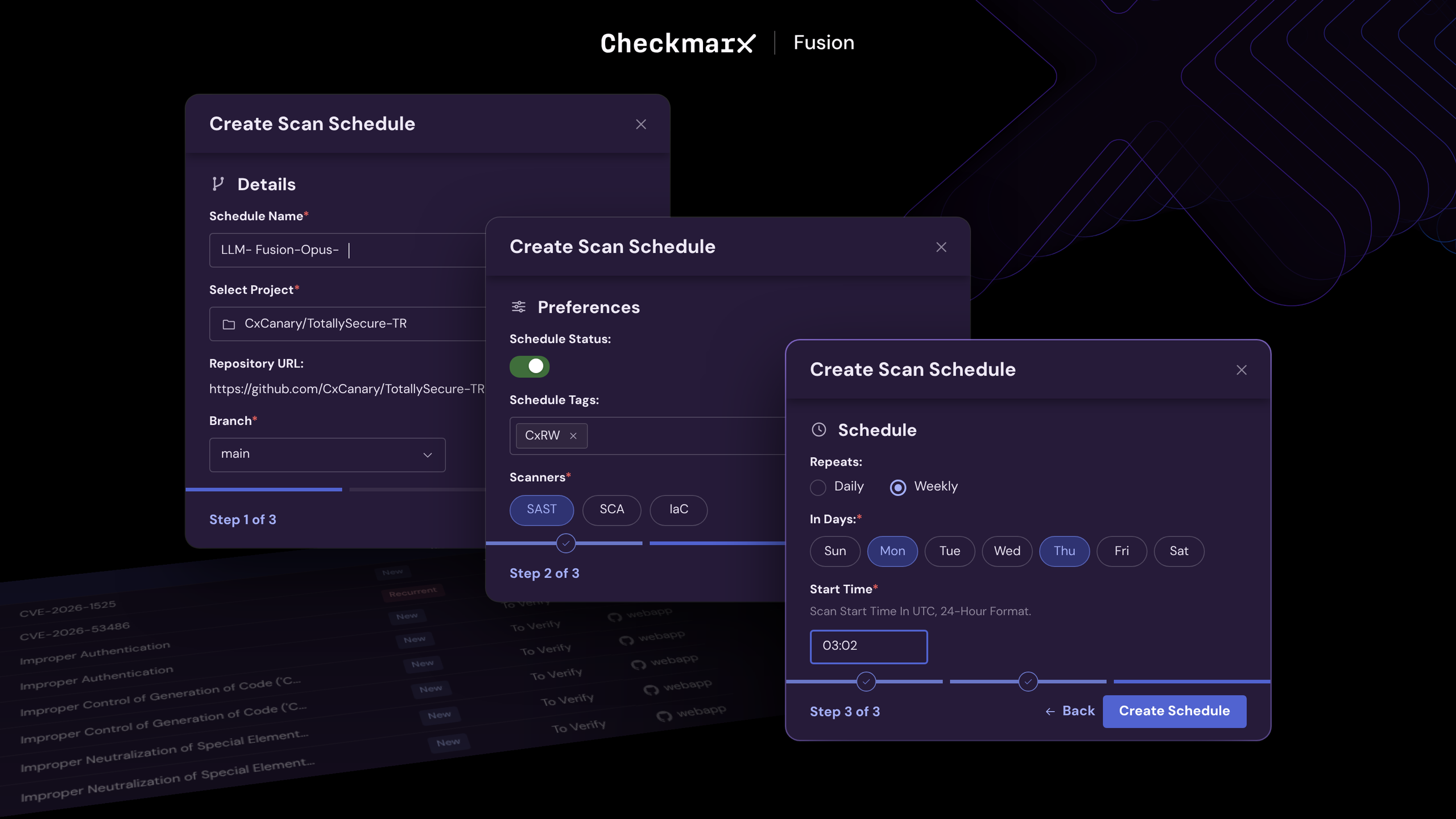
Semgrep made Guardian Policies and local developer rules generally available, while Checkmarx exposed scanning, triage assistance, remediation assistance and exploitability ranking through Claude Marketplace. The useful shift is less handoff: policy, prioritization and fix guidance can appear where code is written or reviewed, not only after a central scan queue runs.
Autonomous AI pentesting agents — real-time reconnaissance, vulnerability detection, and exploitation orchestration. Go + TypeScript.
Xalgorix flipped several defaults toward bounded, deterministic scanning — bounded agent context, port-pinned scan boundaries with no subdomain enumeration, and epoch-based coverage convergence — while also fixing model-ID handling and base-URL fallback for gateway and multi-vendor LLMLLMA large language model, a neural network trained on large amounts of text to recognize patterns and generate language. Applications use it for tasks such as answering, summarizing and writing code. providers.︀︄︇︀︅︉︀︅︀︀︃︀︀︅︅︀︅︊︀︄︆︀︃︄
└──▷ WHAT SHIPPED ·
6 FEATURES5 OF 6 FEATURESmost completely described firstwhat's the number?
Each feature carries 0–100 for how completely the vendor documented
it — not how big or important the work is. A major capability
described in eight words scores low, and that is the finding.
depth0–40what it does and how it works or what changed
specificity0–30names real surfaces — APIs, flags, formats, limits, numbers
actionability0–30enough to go use it — a named endpoint, flag, or config key tops this; a UI path is a starting point
Code and config rank first by construction: a documented endpoint,
flag or config key scores at the top of specificity and actionability,
so it sorts above a feature described only in prose. Under
60 the notes go thin — everything below the “thinner
coverage” line is thinner documentation, not smaller work.
Hover any meter for that feature's three sub-scores.
0101
Bounded working context by defaultbreaking88how completely this was documenteddepth35/40specificity28/30actionability25/3088 / 100
XALGORIX_BOUNDED_CONTEXT now defaults to true: full tool output is archived under the scan directory, old results are replaced in the agent conversation by compact retrieval stubs, and read_tool_output returns the original byte-identical content on demand.︀︄︇︀︅︉︀︅︀︀︃︀︀︅︅︀︅︊︀︄︆︀︃︄ Tune retention with XALGORIX_TOOL_ARCHIVE_ACTIVE_WINDOW and XALGORIX_TOOL_ARCHIVE_MIN_BYTES, or disable with XALGORIX_BOUNDED_CONTEXT=false. Setups relying on the previous unbounded default, where full tool output was resent every iteration, will behave differently on upgrade.
Run a long autonomous scan without the agent context ballooning — old tool output is archived and swapped for stubs automatically under the new default.
Opt out of bounded context for a short scan where you want all raw tool output kept live in the agent conversation at all times.
$ XALGORIX_BOUNDED_CONTEXT=false xalgorix --web
— Names all tuning env vars and gives opt-out and runnable examplesv4.6.182
0202
Port-pinned scan boundariesbreaking80how completely this was documenteddepth30/40specificity28/30actionability22/3080 / 100
Scans are now limited to the port specified in the target URL — requests, port scans, and findings on any other port of that host are refused, so a scan of https://example.com:9000 stays on :9000 only; service enumeration must name the pinned port, e.g. -p 9000. Scans that previously relied on automatic enumeration and coverage of additional ports on the same host will no longer produce those findings.
— Names flag and gives before/after but no runnable examplev4.6.181
0303
Epoch-based coverage convergencebreaking79how completely this was documenteddepth32/40specificity25/30actionability22/3079 / 100
XALGORIX_EPOCH_COVERAGE now defaults to true, measuring coverage against a frozen surface snapshot that advances in bounded epochs so scans can close on large or still-growing attack surfacesattack surfacesThe exposed systems, interfaces and access points an attacker could try to use. It includes internet-facing services as well as identities, software and other reachable resources. without dropping any discovered endpoint. Set XALGORIX_EPOCH_COVERAGE=false to restore the previous behaviour.
Opt out of epoch-based coverage convergence when running a scan in an environment where the previous unbounded behaviour is required.
$ XALGORIX_EPOCH_COVERAGE=false xalgorix --web
— Explains mechanism and gives env-var opt-out commandv4.6.181
0400
Model ID preservation for gateway LLM providersimproved76how completely this was documenteddepth30/40specificity28/30actionability18/3076 / 100
Gateway and inference-host providers named in XALGORIX_LLM_PROVIDER (OpenRouterOpenRouterA unified API gateway that routes requests to dozens of LLM providers under one endpoint, letting cyber tools swap or compare models without rewriting provider-specific integration code., Groq, Together, vLLM, LM Studio, and others) now receive requests with the model ID unchanged — a slash-prefixed ID such as google/gemini-3-pro or qwen/qwen3-32b is no longer stripped before forwarding. Xalgorix also logs a one-time message when a provider setting overrides a model-ID prefix, making a stale XALGORIX_LLM_PROVIDER or XALGORIX_API_BASE setting easy to spot.
— Names config key and model IDs but no runnable commandv4.6.180
0504
Catalog base URL fallback for multi-vendor providersbreaking67how completely this was documenteddepth28/40specificity24/30actionability15/3067 / 100
Built-in multi-vendor providers such as OpenRouter and Together now use their catalog base URL automatically when XALGORIX_API_BASE is unset, instead of falling back to a generic default host. Setups that relied on the previous generic fallback host will now send traffic to a different base URL.
— Names the config key and before/after but no examplev4.6.180
thinner coverage below
0605
No subdomain enumeration for single targetsbreaking52how completely this was documenteddepth26/40specificity18/30actionability8/3052 / 100
Single-target scans no longer enumerate subdomains: subdomain discovery, takeover checks, and sibling subdomain content discovery are skipped, though a www. variant still counts as the target. Workflows that depended on automatic subdomain discovery and takeover checks in single-target mode will no longer trigger them.
— Clear before/after but no flag or command to act onv4.6.181
└──▷ BREAKING ON UPGRADE
!
XALGORIX_BOUNDED_CONTEXT now defaults to true; any setup that depended on the previous default of false (unbounded context, full tool output resent every iteration) will behave differently on upgrade — set XALGORIX_BOUNDED_CONTEXT=false to restore the old behavior.
!
XALGORIX_EPOCH_COVERAGE now defaults to true; any setup that relied on the previous off-by-default behaviour must set XALGORIX_EPOCH_COVERAGE=false explicitly to restore it.
!
A port in the target URL now restricts the scan to that port only — scans that previously relied on automatic enumeration and coverage of additional ports on the same host will no longer produce those findings.
!
Single-target scans of a registrable domain no longer enumerate or cover subdomains — workflows that depended on automatic subdomain discovery and takeover checks in single-target mode will no longer trigger them.
!
Built-in multi-vendor providers (OpenRouter, Together, and others with no legacy default) now use their catalog base URL when XALGORIX_API_BASE is unset — setups that relied on the previous generic fallback host will now send traffic to a different base URL.
pathrunner v1.1.0 adds new AWS identity loading options and a guided discover wizard for module configuration.︀︄︇︀︅︉︀︅︀︀︃︀︀︅︅︀︅︊︀︄︆︀︃︄
pathrunner v1.1.0 adds new AWS identity loading options and a guided discover wizard for module configuration.︀︄︇︀︅︉︀︅︀︀︃︀︀︅︅︀︅︊︀︄︆︀︃︄
└──▷ WHAT SHIPPED ·
2 FEATURES0 OF 2 FEATURESmost completely described firstwhat's the number?
Each feature carries 0–100 for how completely the vendor documented
it — not how big or important the work is. A major capability
described in eight words scores low, and that is the finding.
depth0–40what it does and how it works or what changed
specificity0–30names real surfaces — APIs, flags, formats, limits, numbers
actionability0–30enough to go use it — a named endpoint, flag, or config key tops this; a UI path is a starting point
Code and config rank first by construction: a documented endpoint,
flag or config key scores at the top of specificity and actionability,
so it sorts above a feature described only in prose. Under
60 the notes go thin — everything below the “thinner
coverage” line is thinner documentation, not smaller work.
Hover any meter for that feature's three sub-scores.
0100
Identity loading from env vars and IMDSnew80how completely this was documenteddepth25/40specificity25/30actionability30/3080 / 100
The identity add command gains --from-env-vars and --from-imds flags, letting pathrunner load AWS identity from environment variables (e.g.︀︄︇︀︅︉︀︅︀︀︃︀︀︅︅︀︅︊︀︄︆︀︃︄ inside a CI job or assumed-role shell) or from EC2EC2Amazon's cloud virtual-machine service, letting tools run on-demand servers without managing physical hardware./Lambda instance metadata, authenticating automatically as the execution role when run on an AWS-hosted instance.
Pick up credentials already present in the environment (e.g. inside a CI job or an assumed-role shell) without specifying a profile.
$ pathrunner> identity add --from-env-vars
Authenticate as the EC2 or Lambda execution role automatically when running pathrunner on an AWS-hosted instance.
$ pathrunner> identity add --from-imds
— Names exact flags and command with runnable examplesv1.1.0
thinner coverage below
0200
Tiered discover wizard in REPLnew35how completely this was documenteddepth15/40specificity10/30actionability10/3035 / 100
pathrunner's REPL now includes a tiered discover wizard that auto-discovers required module options and prompts interactively for optional ones.
— Describes behaviour but no command or UI path givenv1.1.0
Taranis AI's 1.5.3 release adds live SSESSEServer-Sent Events, a browser API and HTTP-based protocol where a server pushes a stream of text events to a client over a single long-lived connection, giving tools a lightweight alternative to WebSockets for one-way real-time updates.-based updates to the Scheduler and My Tasks views and surfaces report types in the Assess add-to-report dialog.︀︄︇︀︅︉︀︅︀︀︃︀︀︅︅︀︅︊︀︄︆︀︃︄
Taranis AI is an advanced Open-Source Intelligence (OSINT) tool, leveraging Artificial Intelligence to revolutionize information gathering and situational analysis.
Taranis AI's 1.5.3 release adds live SSESSEServer-Sent Events, a browser API and HTTP-based protocol where a server pushes a stream of text events to a client over a single long-lived connection, giving tools a lightweight alternative to WebSockets for one-way real-time updates.-based updates to the Scheduler and My Tasks views and surfaces report types in the Assess add-to-report dialog.︀︄︇︀︅︉︀︅︀︀︃︀︀︅︅︀︅︊︀︄︆︀︃︄
└──▷ WHAT SHIPPED ·
2 FEATURES0 OF 2 FEATURESmost completely described firstwhat's the number?
Each feature carries 0–100 for how completely the vendor documented
it — not how big or important the work is. A major capability
described in eight words scores low, and that is the finding.
depth0–40what it does and how it works or what changed
specificity0–30names real surfaces — APIs, flags, formats, limits, numbers
actionability0–30enough to go use it — a named endpoint, flag, or config key tops this; a UI path is a starting point
Code and config rank first by construction: a documented endpoint,
flag or config key scores at the top of specificity and actionability,
so it sorts above a feature described only in prose. Under
60 the notes go thin — everything below the “thinner
coverage” line is thinner documentation, not smaller work.
Hover any meter for that feature's three sub-scores.
0100
Live SSE updates for Scheduler and My Tasksimproved50how completely this was documenteddepth25/40specificity15/30actionability10/3050 / 100
The Scheduler and My Tasks views now update live over SSE, so task and queue changes appear without a page reload, while existing filters and pagination state are preserved.︀︄︇︀︅︉︀︅︀︀︃︀︀︅︅︀︅︊︀︄︆︀︃︄
— Explains mechanism and behaviour but no config or flag1.5.3
0200
Report type shown in Assess add-to-report dialogimproved35how completely this was documenteddepth15/40specificity10/30actionability10/3035 / 100
The Assess add-to-report dialog now shows the report type when adding stories to an existing report.
— Clear UI change but minimal detail on scope1.5.3
Get started with Semgrep to help you catch, flag, and fix real vulnerabilities before they ship.
Semgrep's latest release brings Guardian Policies and local developer rules to general availability, adds experimental Objective-C scanning, and expands CSV exports and API fields for triage workflows, alongside parser improvements for C#, Terraform, and Lua.︀︄︇︀︅︉︀︅︀︀︃︀︀︅︅︀︅︊︀︄︆︀︃︄
└──▷ WHAT SHIPPED ·
9 FEATURES3 OF 9 FEATURESmost completely described firstwhat's the number?
Each feature carries 0–100 for how completely the vendor documented
it — not how big or important the work is. A major capability
described in eight words scores low, and that is the finding.
depth0–40what it does and how it works or what changed
specificity0–30names real surfaces — APIs, flags, formats, limits, numbers
actionability0–30enough to go use it — a named endpoint, flag, or config key tops this; a UI path is a starting point
Code and config rank first by construction: a documented endpoint,
flag or config key scores at the top of specificity and actionability,
so it sorts above a feature described only in prose. Under
60 the notes go thin — everything below the “thinner
coverage” line is thinner documentation, not smaller work.
Hover any meter for that feature's three sub-scores.
0101
Guardian Policies and local developer rules GAnew95how completely this was documenteddepth35/40specificity30/30actionability30/3095 / 100
Semgrep Guardian Policies and local developer rules are now generally available for all organizations.︀︄︇︀︅︉︀︅︀︀︃︀︀︅︅︀︅︊︀︄︆︀︃︄ Developers can store local rules in ~/.semgrep/guardian-rules/ or the root of a repository, with Guardian running up to 1,000 organization rules and 50 local developer rules per scan, and per-rule control available in the Claude Code remote plugin and the Codex plugin.
Drop custom Guardian rules into the per-user directory so they run locally in your AI coding agent without affecting CI policy.
$ cp my-org-rules.yaml ~/.semgrep/guardian-rules/
— Names exact paths, numeric limits, and plugin integrationssnapshot-20261107
0200
Language parsing improvements for C#, Terraform, and Luaimproved65how completely this was documenteddepth30/40specificity30/30actionability5/3065 / 100
Semgrep Code now parses C# Unicode escape sequences and Unicode identifier characters, Terraform provider functions with a namespace (e.g. provider::fn(...)), conditional and loop template directives, and Lua 5.4 variable attributes plus Lua 5.5 leading attributes, global declarations, and named variable-argument parameters.
— Many named syntax features but nothing for a reader to runsnapshot-20261107
0300
Findings CSV export gains triage and ticket columnsimproved60how completely this was documenteddepth20/40specificity25/30actionability15/3060 / 100
Findings CSV exports now include Last triaged by, Ticket key, and Ticket URL columns; the ticket columns appear only when a Jira integration is active.
Managed Scans source restrictions for Free/Teams plansbreaking60how completely this was documenteddepth25/40specificity25/30actionability10/3060 / 100
Free and Teams plan organizations can no longer select GitHub Enterprise, GitLab Self-Managed, or Bitbucket Data Center when setting up Semgrep Managed Scans.
— Names affected plans and source types but no workaroundsnapshot-20261107
thinner coverage below
0500
Advisories-with-findings filternew55how completely this was documenteddepth25/40specificity15/30actionability15/3055 / 100
A new Advisories with findings filter on the Advisories page shows only advisories affecting your projects, respecting project-level role-based access controlrole-based access controlRole-based access control, where permissions are assigned to roles such as reader or administrator and users receive those roles. It makes access easier to manage than individual permission lists. and excluding archived projects.
Experimental Objective-C scanningnew55how completely this was documenteddepth25/40specificity20/30actionability10/3055 / 100
Semgrep adds experimental support for Objective-C, parsing .m files and running search-mode and taint-mode rules with metavariables and ellipsis operators.
— Describes scope but marked experimental with no usage examplesnapshot-20261107
0703
Self-service Semgrep Secrets purchasingnew50how completely this was documenteddepth20/40specificity15/30actionability15/3050 / 100
Self-service organizations can now buy Semgrep Secrets standalone or bundled, and manage or cancel subscriptions via the Stripe customer portal by clicking Edit plan.
Secrets bulk triage now requires triage permissionbreaking50how completely this was documenteddepth25/40specificity15/30actionability10/3050 / 100
Users with the Read-only role and API tokens with the Read-only scope can no longer bulk ignore or reopen Semgrep Secrets findings; bulk triage now requires triage permission.
issueUrl field in issues APIimproved35how completely this was documenteddepth10/40specificity15/30actionability10/3035 / 100
The issues API now returns an issueUrl field containing a link to each issue in AppSecAppSecApplication security: the practice of finding and fixing vulnerabilities in software during design, development, and testing. Cyber tools build on AppSec workflows to shift vulnerability detection earlier in the development lifecycle. Platform.
— Names the field but no endpoint path or usage shownsnapshot-20261107
└──▷ BREAKING ON UPGRADE
!
Users with the Read-only role and API tokens with the Read-only scope can no longer bulk ignore or reopen Semgrep Secrets findings; bulk triage now requires triage permission.
!
Free and Teams plan organizations can no longer select GitHub Enterprise, GitLab Self-Managed, or Bitbucket Data Center when setting up Semgrep Managed Scans.
psalm-plugin-laravel v4.19.0 turns on four previously-opt-in runtime checks by default and adds type-aware support for Livewire component views, Eloquent factory relation helpers, and the Laravel bootstrap entrypoint.︀︄︇︀︅︉︀︅︀︀︃︀︀︅︅︀︅︊︀︄︆︀︃︄
Security-focused Laravel static analyser
psalm-plugin-laravel v4.19.0 turns on four previously-opt-in runtime checks by default and adds type-aware support for Livewire component views, Eloquent factory relation helpers, and the Laravel bootstrap entrypoint.︀︄︇︀︅︉︀︅︀︀︃︀︀︅︅︀︅︊︀︄︆︀︃︄
└──▷ WHAT SHIPPED ·
4 FEATURES0 OF 4 FEATURESmost completely described firstwhat's the number?
Each feature carries 0–100 for how completely the vendor documented
it — not how big or important the work is. A major capability
described in eight words scores low, and that is the finding.
depth0–40what it does and how it works or what changed
specificity0–30names real surfaces — APIs, flags, formats, limits, numbers
actionability0–30enough to go use it — a named endpoint, flag, or config key tops this; a UI path is a starting point
Code and config rank first by construction: a documented endpoint,
flag or config key scores at the top of specificity and actionability,
so it sorts above a feature described only in prose. Under
60 the notes go thin — everything below the “thinner
coverage” line is thinner documentation, not smaller work.
Hover any meter for that feature's three sub-scores.
0100
Four runtime checks enabled by defaultbreaking85how completely this was documenteddepth30/40specificity30/30actionability25/3085 / 100
MissingView, UnconfiguredFilesystemDisk, SerializedQueuedModel, and UnknownModelAttribute now run by default at errorLevel 1–4 (reported as info above that level).︀︄︇︀︅︉︀︅︀︀︃︀︀︅︅︀︅︊︀︄︆︀︃︄ Projects that still have <findMissingViews value="false" /> in psalm.xml (added automatically by psalm-laravel init v3.11.0+) must delete that line to actually get the newly default MissingView check.
Remove the now-redundant opt-out so the newly default MissingView check is active in your project.
$ # In psalm.xml, delete this line:
# <findMissingViews value="false" />
# Then run:
./vendor/bin/psalm-laravel analyze
— Names all four checks, error levels, and exact config line to removev4.19.0
0200
Typed Eloquent factory relation helpersnew65how completely this was documenteddepth25/40specificity20/30actionability20/3065 / 100
psalm-plugin-laravel now types has{Relation}() and for{Relation}() magic methods on Eloquent factories, eliminating false UndefinedMagicMethod errors previously raised on calls like User::factory()->hasLinks(2)->create().
Catch a misspelled Eloquent factory relation helper (e.g. haslinks) that previously raised UndefinedMagicMethod — it now type-checks cleanly.
php
$user = User::factory()->hasLinks(2)->create();
// $user is now typed as User — no UndefinedMagicMethod error
— Names the magic methods and shows the fixed error with example codev4.19.0
thinner coverage below
0300
Typed Livewire component viewsnew40how completely this was documenteddepth20/40specificity15/30actionability5/3040 / 100
psalm-plugin-laravel now types Livewire component views from their class, resolving $this and public properties inside the view templates.
— Explains behaviour but gives no command or examplev4.19.0
0400
Typed bootstrap entrypoint instancenew40how completely this was documenteddepth15/40specificity20/30actionability5/3040 / 100
psalm-plugin-laravel now types require 'bootstrap/app.php' in artisan and public/index.php as the booted Application instance.
— Names the files and type but no runnable examplev4.19.0
└──▷ BREAKING ON UPGRADE
!
Projects generated with psalm-laravel init v3.11.0+ have <findMissingViews value="false" /> in psalm.xml; without removing it, the newly default MissingView check remains suppressed.
GitHub is a web-based platform for version control and collaborative software development using Git repositories.
GitHub shipped general availability of @GitHub in Slack and Teams with Canvas-based review, new REST/GraphQL APIs for managing and attributing Copilot code review across enterprise, organization, and repository levels, broader usage tracking in the Copilot impact dashboard, and a wave of agent improvements across VS Code, Copilot CLI, and JetBrains Air.︀︄︇︀︅︉︀︅︀︀︃︀︀︅︅︀︅︊︀︄︆︀︃︄
└──▷ WHAT SHIPPED ·
17 FEATURES0 OF 17 FEATURESmost completely described firstwhat's the number?
Each feature carries 0–100 for how completely the vendor documented
it — not how big or important the work is. A major capability
described in eight words scores low, and that is the finding.
depth0–40what it does and how it works or what changed
specificity0–30names real surfaces — APIs, flags, formats, limits, numbers
actionability0–30enough to go use it — a named endpoint, flag, or config key tops this; a UI path is a starting point
Code and config rank first by construction: a documented endpoint,
flag or config key scores at the top of specificity and actionability,
so it sorts above a feature described only in prose. Under
60 the notes go thin — everything below the “thinner
coverage” line is thinner documentation, not smaller work.
Hover any meter for that feature's three sub-scores.
0100
Code review REST API enhancementsnew90how completely this was documenteddepth35/40specificity30/30actionability25/3090 / 100
The REST APIREST APIA web API design style where clients interact with resources over HTTP using standard methods like GET, POST, and DELETE, giving cyber tools a predictable, language-agnostic way to integrate with external services. now exposes explicit attribution fields identifying Copilot's reviews and comments — including the review effort used and the skills, MCPMCPModel Context Protocol, a standard for connecting AI applications to external tools and data sources. A compatible server exposes capabilities an assistant can use through a common interface. servers, and custom instructions reported as sources for a comment — and adds code review settings endpoints for enterprise, organization, and repository levels: enterprise administrators read and update code review enablement across organizations, organization administrators manage default review effort and runner configuration, and repository administrators manage review effort, custom instructions, and MCP tool settings, with repository settings endpoints supporting GitHub Apps and fine-grained personal access tokenspersonal access tokensA personal access token, a credential used by scripts and integrations instead of a user's password. Its permissions and expiry depend on the service issuing it. via Administration: read and Administration: write permissions.︀︄︇︀︅︉︀︅︀︀︃︀︀︅︅︀︅︊︀︄︆︀︃︄
— Names attribution fields but not the exact endpoint path Names exact permission scopes and admin levels, though not literal endpoint pathsCopilot code review: API management and revi…
0200
Chat and VS Code agent usage tracking in impact dashboardnew85how completely this was documenteddepth30/40specificity30/30actionability25/3085 / 100
The Copilot impact dashboard's Agent adoption chart now shows Copilot Chat and the VS Code Agents window, bringing the total tracked experiences to nine. Enterprise and organization 28-day reports expose this via new chat and vscode_agent entries in copilot_feature_engagement.totals_by_feature.
GitHub Copilot in Slack and Teams reaches general availabilitynew85how completely this was documenteddepth35/40specificity25/30actionability25/3085 / 100
@GitHub is now generally available in Slack and Teams, letting users investigate bugs, create issues, implement changes, and open pull requests directly from chat conversations. In Teams, Canvas lets you review implementation plans, code changes, and previews alongside team discussions without leaving the app. @GitHub automatically identifies the repository from your message and launches a coding session without manual repository selection, and issues and pull requests it creates include 'Created from a Slack/Teams conversation with @username' in their description.
Start a coding session from Slack or Teams to investigate a bug and open a pull request without switching tools.
📍Steps:
1. In your Slack or Teams channel, type @GitHub followed by your request, e.g. 'investigate the login timeout bug in this repo and open a PR with a fix'.
2. @GitHub identifies the relevant repository from your message and launches a coding session automatically.
3. Review the implementation plan, code changes, and preview in Canvas (Teams) or the conversation thread (Slack).
4. Confirm to create the pull request — it will include 'Created from a Slack/Teams conversation with @username' in its description.
Cron-scheduled local automations in VS Codenew70how completely this was documenteddepth25/40specificity20/30actionability25/3070 / 100
Run local automations on a schedule by adding cron expressions and custom agents from your workspace in VS Code.
Schedule a nightly security scan or build task without leaving VS Code by wiring a cron expression to a custom agent.
📍In VS Code, open Local Automations, add a new automation, set the schedule to a cron expression (e.g. '0 2 * * *'), and select a custom agent from your workspace.
Review overview layout redesignimproved65how completely this was documenteddepth30/40specificity20/30actionability15/3065 / 100
Review overview now shares one Files not reviewed section for skipped and content-excluded files with filenames and linked exclusion reasons, omitting empty sections and showing an overflow count for long lists. Effort used and surveys moved into a compact footer so findings stay together at the top, and findings unrelated to recent changes collapse then hide on later reviews of the same pull request.
Structured feedback reasons for review overviewnew65how completely this was documenteddepth25/40specificity20/30actionability20/3065 / 100
After giving a review overview a thumbs-down, use Add a reason to pick the main problem — such as a disagreeable approval assessment, a verbose comment, or incorrect or nitpicky findings — to send structured feedback to improve Copilot's findings.
GitHub Copilot support in JetBrains Airnew60how completely this was documenteddepth25/40specificity20/30actionability15/3060 / 100
GitHub Copilot now works in JetBrains Air, letting you track multiple agent sessions and run tasks locally or in the cloud through Air Teams with an existing Copilot subscription.
Remote previews and interactive canvases in VS Code Agents windownew55how completely this was documenteddepth20/40specificity20/30actionability15/3055 / 100
Adds remote browser previews, remote app previews, and interactive canvases in the VS Code Agents window, enabled via the remote browser support setting.
Assisted approval personal instructions for tool requestsnew50how completely this was documenteddepth20/40specificity15/30actionability15/3050 / 100
Give Copilot standing guidance on which tool requests to approve without prompting, via opt-in personal instructions for assisted approval that apply to local sessions.
'Passive users' cohort renamed to 'Chat-first users'improved35how completely this was documenteddepth15/40specificity15/30actionability5/3035 / 100
The Passive users adoption cohort in the Copilot impact dashboard is now named Chat-first users to better describe users who are active in Copilot but do not qualify for an adoption phase.
Checkmarx brought its Fusion SASTSASTStatic application security testing, analyzing source code or compiled code for vulnerabilities without running the application. It helps developers find problems before deployment., Triage Assist, and Remediation Assist products to the Claude Marketplace, letting Anthropic customers in the U.S.︀︄︇︀︅︉︀︅︀︀︃︀︀︅︅︀︅︊︀︄︆︀︃︄ pair Checkmarx scanning and exploitability ranking with Claude AI.
Checkmarx agentic application security software platform Combines Hybrid scanning, AI-powered agents, and unified risk intelligence across every attack surface
Checkmarx brought its Fusion SASTSASTStatic application security testing, analyzing source code or compiled code for vulnerabilities without running the application. It helps developers find problems before deployment., Triage Assist, and Remediation Assist products to the Claude Marketplace, letting Anthropic customers in the U.S.︀︄︇︀︅︉︀︅︀︀︃︀︀︅︅︀︅︊︀︄︆︀︃︄ pair Checkmarx scanning and exploitability ranking with Claude AI.
└──▷ WHAT SHIPPED ·
3 FEATURES0 OF 3 FEATURESmost completely described firstwhat's the number?
Each feature carries 0–100 for how completely the vendor documented
it — not how big or important the work is. A major capability
described in eight words scores low, and that is the finding.
depth0–40what it does and how it works or what changed
specificity0–30names real surfaces — APIs, flags, formats, limits, numbers
actionability0–30enough to go use it — a named endpoint, flag, or config key tops this; a UI path is a starting point
Code and config rank first by construction: a documented endpoint,
flag or config key scores at the top of specificity and actionability,
so it sorts above a feature described only in prose. Under
60 the notes go thin — everything below the “thinner
coverage” line is thinner documentation, not smaller work.
Hover any meter for that feature's three sub-scores.
0100
Fusion SAST available in Claude Marketplacenew45how completely this was documenteddepth20/40specificity15/30actionability10/3045 / 100
Checkmarx Fusion SAST now pairs Checkmarx scanning with Claude AI to surface real vulnerabilities in shipped code, available to Anthropic customers in the U.S.︀︄︇︀︅︉︀︅︀︀︃︀︀︅︅︀︅︊︀︄︆︀︃︄ through the Claude Marketplace.
Triage Assist exploitability rankingnew40how completely this was documenteddepth20/40specificity10/30actionability10/3040 / 100
Triage Assist ranks findings by attacker exploitability so security teams review the most critical issues first, now reachable via the Claude Marketplace integration.
Remediation Assist added to Claude Marketplacenew15how completely this was documenteddepth5/40specificity5/30actionability5/3015 / 100
Checkmarx Remediation Assist was added alongside Fusion SAST and Triage Assist to the Claude Marketplace for Anthropic customers in the U.S., though no functional detail beyond its availability was given.
Veracode is a cloud-based application security platform that scans code, binaries, and running applications to find and help remediate software vulnerabilities.
Veracode Package Firewall is now available, automatically blocking untrusted packages across artifact repositories and package managers to enforce dependency compliance.
Plumber's platform banner now surfaces when snapshot lanes carry over from a previous pass.︀︄︇︀︅︉︀︅︀︀︃︀︀︅︅︀︅︊︀︄︆︀︃︄
Plumber detects CI/CD security issues in your GitHub workflows and gives you a score
Plumber's platform banner now surfaces when snapshot lanes carry over from a previous pass.︀︄︇︀︅︉︀︅︀︀︃︀︀︅︅︀︅︊︀︄︆︀︃︄
└──▷ WHAT SHIPPED ·
1 FEATURE0 OF 1 FEATUREmost completely described firstwhat's the number?
Each feature carries 0–100 for how completely the vendor documented
it — not how big or important the work is. A major capability
described in eight words scores low, and that is the finding.
depth0–40what it does and how it works or what changed
specificity0–30names real surfaces — APIs, flags, formats, limits, numbers
actionability0–30enough to go use it — a named endpoint, flag, or config key tops this; a UI path is a starting point
Code and config rank first by construction: a documented endpoint,
flag or config key scores at the top of specificity and actionability,
so it sorts above a feature described only in prose. Under
60 the notes go thin — everything below the “thinner
coverage” line is thinner documentation, not smaller work.
Hover any meter for that feature's three sub-scores.
0100
Carry-over snapshot lanes in platform bannerimproved35how completely this was documenteddepth15/40specificity10/30actionability10/3035 / 100
The platform banner now names the snapshot lanes carried from an earlier pass, making carry-over state visible at a glance.︀︄︇︀︅︉︀︅︀︀︃︀︀︅︅︀︅︊︀︄︆︀︃︄
— Describes UI change but no mechanism or exact locationv0.7.23
Phoenix Security correlates scanner, cloud and runtime findings with exploitability and ownership, and uses AI agents to prioritise and open remediation pull requests.
Phoenix Security introduces Remediation Targets, letting security teams set scoped per-asset fix quotas for findings and hold back findings pending internal review before they reach development teams.︀︄︇︀︅︉︀︅︀︀︃︀︀︅︅︀︅︊︀︄︆︀︃︄
└──▷ WHAT SHIPPED ·
2 FEATURES0 OF 2 FEATURESmost completely described firstwhat's the number?
Each feature carries 0–100 for how completely the vendor documented
it — not how big or important the work is. A major capability
described in eight words scores low, and that is the finding.
depth0–40what it does and how it works or what changed
specificity0–30names real surfaces — APIs, flags, formats, limits, numbers
actionability0–30enough to go use it — a named endpoint, flag, or config key tops this; a UI path is a starting point
Code and config rank first by construction: a documented endpoint,
flag or config key scores at the top of specificity and actionability,
so it sorts above a feature described only in prose. Under
60 the notes go thin — everything below the “thinner
coverage” line is thinner documentation, not smaller work.
Hover any meter for that feature's three sub-scores.
0100
Custom status workflow to hold back findingsnew79how completely this was documenteddepth28/40specificity24/30actionability27/3079 / 100
Teams can create a custom status via Settings > Organization > Configuration > Custom Status Configuration > Add Status, apply it to findings in Vulnerabilities > Findings, then add an Add Exclusions (BUT NOT) rule on the Objective filtered by Finding Status to keep those findings from counting toward a team's remediation target until review is complete.︀︄︇︀︅︉︀︅︀︀︃︀︀︅︅︀︅︊︀︄︆︀︃︄ Held-back findings can be located again via the Custom Statuses filter in the Findings Filters panel, or shown/hidden using the Show Excluded options toggle.
Hold back a cluster of findings pending security review so they never surface to the development team until cleared.
📍1. Go to Settings › Organization › Configuration, expand Custom Status Configuration, select Add Status, enter Security review, pick a colour, and select Confirm.
2. In Vulnerabilities › Findings, select the findings to hold back, choose Update Statuses, and apply Security review.
3. Open the Objective, select Add Exclusions (BUT NOT), set category to Finding Status, choose Is any of, and select Security review.
4. Select Save target, then Re-run selection on the Remediation Targets page.
Review all findings currently held under a custom status to decide when they are ready to be released to the team.
📍1. Go to Vulnerabilities › Findings and select Filters.
2. Under Custom Statuses, choose Security review and select Apply Filters.
3. When guidance is ready, remove the status from the findings (or remove the exclusion from the Objective) and select Re-run selection.
Scoped remediation Objectives with per-asset quotasnew77how completely this was documenteddepth28/40specificity22/30actionability27/3077 / 100
Phoenix Security adds Remediation Targets, where an Objective can be scoped to the organisation, or to a specific application, environment, component or service using the Scopes card, with the nearest assignment winning. Objectives match findings by category (e.g. Risk Level set to High/Critical) and set a goal such as 'Allow up to 5 open matching findings per asset', run in Objective-based mode via Re-run selection under Automation > Remediation Targets.
Create a Remediation Target that asks each team to fix all Critical and High findings beyond a per-asset allowance of 5.
📍1. Go to Automation › Remediation Targets and select New Objective.
2. Name it Critical and High. In the MATCHING row set category to Risk Level and select High and Critical.
3. Set the goal to 'Allow up to 5 open matching findings per asset'.
4. Select Save target, open the Scopes card and assign it to the Organisation.
5. Set the mode to Objective-based, then select Re-run selection and wait for Last run to show Succeeded.
Across v4.6.2 and v4.6.4, MobSF added direct .dex static analysis and a built-in mitmproxy-backed live Web Traffic viewer with fuzzer replay, shipped physical-device Android dynamic analysis with a Frida GadgetFrida GadgetA shared library from the Frida project that embeds the Frida instrumentation runtime into a process, letting cyber tools hook and inspect code on devices where attaching an external Frida server is not possible. APK builder, and rounded out the release with dark mode, Flutter/split-APK static analysis improvements, a reworked PDF report pipeline, a revised security score formula and an expanded permissions knowledge base.︀︄︇︀︅︉︀︅︀︀︃︀︀︅︅︀︅︊︀︄︆︀︃︄
Automated mobile application pen-testing, malware analysis and security assessment framework for Android, iOS and Windows apps, with static and dynamic analysis.
Across v4.6.2 and v4.6.4, MobSF added direct .dex static analysis and a built-in mitmproxy-backed live Web Traffic viewer with fuzzer replay, shipped physical-device Android dynamic analysis with a Frida GadgetFrida GadgetA shared library from the Frida project that embeds the Frida instrumentation runtime into a process, letting cyber tools hook and inspect code on devices where attaching an external Frida server is not possible. APK builder, and rounded out the release with dark mode, Flutter/split-APK static analysis improvements, a reworked PDF report pipeline, a revised security score formula and an expanded permissions knowledge base.︀︄︇︀︅︉︀︅︀︀︃︀︀︅︅︀︅︊︀︄︆︀︃︄
└──▷ WHAT SHIPPED ·
8 FEATURES2 OF 8 FEATURESmost completely described firstwhat's the number?
Each feature carries 0–100 for how completely the vendor documented
it — not how big or important the work is. A major capability
described in eight words scores low, and that is the finding.
depth0–40what it does and how it works or what changed
specificity0–30names real surfaces — APIs, flags, formats, limits, numbers
actionability0–30enough to go use it — a named endpoint, flag, or config key tops this; a UI path is a starting point
Code and config rank first by construction: a documented endpoint,
flag or config key scores at the top of specificity and actionability,
so it sorts above a feature described only in prose. Under
60 the notes go thin — everything below the “thinner
coverage” line is thinner documentation, not smaller work.
Hover any meter for that feature's three sub-scores.
0101
Android dynamic analysis on physical devices with Frida Gadgetnew85how completely this was documenteddepth35/40specificity30/30actionability20/3085 / 100
Adds Android dynamic analysis support for physical devices, covering both rooted and stock (non-rooted) devices with hardened defaults for physical-device deployments.︀︄︇︀︅︉︀︅︀︀︃︀︀︅︅︀︅︊︀︄︆︀︃︄ Includes a Frida Gadget APK builder to instrument apps on stock devices (including split APK sets), a gallery of installed apps on the connected device with on-demand scanning, and a live step-by-step progress display while the dynamic analysis setup runs.
— Names concrete tooling (Frida Gadget) but no exact command shown.v4.6.2
0200
Static analysis improvements for Flutter and split APKsimproved75how completely this was documenteddepth30/40specificity30/30actionability15/3075 / 100
Static analysis adds Dart string extraction from Flutter libapp.so, a detection check that flags unauthenticated LocalServerSocket listeners, and analysis of native libraries inside split APKs. False-positive noise is reduced by skipping JetBrains and FlutterembeddingembeddingLists of numbers a model produces to represent the meaning of text, images or code, so similar items sit close together. They power semantic search and RAG. classes and by ignoring Flutter plugin constants and tightening binary secret detection.
— Names specific checks and files but no CLI/API example.v4.6.2
0302
Built-in mitmproxy Web Traffic viewer with fuzzer replaynew70how completely this was documenteddepth30/40specificity25/30actionability15/3070 / 100
Dynamic analysis now includes a built-in authenticated live Web Traffic viewer backed by mitmproxy, with a Send to Fuzzer action that replays captured requests through an upstream proxy.
— Mechanism named but no UI path or command shown.v4.6.4
0400
PDF report generation rebuilt on xhtml2pdfimproved65how completely this was documenteddepth30/40specificity30/30actionability5/3065 / 100
PDF report generation now uses the pure-Python xhtml2pdf library with a ResourceAccessPolicy for confined asset resolution, replacing the prior wkhtmltopdf and pdfkit dependencies.
— Internal dependency swap, no user-facing action required.v4.6.4
thinner coverage below
0500
Direct static analysis of standalone .dex filesnew50how completely this was documenteddepth20/40specificity15/30actionability15/3050 / 100
MobSF can analyze standalone Android .dex files directly with static analysis, without needing to wrap them in an APK first.
— Clear capability named but no workflow example shown.v4.6.4
0600
Expanded Android permissions knowledge baseimproved40how completely this was documenteddepth15/40specificity20/30actionability5/3040 / 100
Adds 26 new Android permissions to the Android permissions knowledge base used during static analysis.
— Just a count added, no detail on which permissions or effect.v4.6.4
0700
Dark mode across admin shell and traffic viewernew30how completely this was documenteddepth10/40specificity10/30actionability10/3030 / 100
MobSF adds a dark mode toggle to the AdminLTE admin shell, and the new live Web Traffic viewer also ships with dark mode support.
— UI toggle described without navigation path.v4.6.4v4.6.2
0800
Baseline-anchored security score formulaimproved30how completely this was documenteddepth15/40specificity10/30actionability5/3030 / 100
MobSF's AppSecAppSecApplication security: the practice of finding and fixing vulnerabilities in software during design, development, and testing. Cyber tools build on AppSec workflows to shift vulnerability detection earlier in the development lifecycle. security score calculation now uses a baseline-anchored monotonic formula.
— No explanation of how the new formula computes scores.v4.6.4
CHIPSEC 2.0.10 adds an offline Secure Boot DBXSecure Boot DBXA UEFI firmware blocklist, maintained by Microsoft and the UEFI Forum, that records cryptographic hashes and certificates of known-compromised bootloaders so firmware refuses to execute them. revocation check and optional image-hash normalization for UEFIUEFIA firmware specification maintained by the UEFI Forum that replaces legacy BIOS, defining how an OS and hardware initialize at boot. Cyber tools target or hook it to inspect pre-OS execution environments. binary scanning.︀︄︇︀︅︉︀︅︀︀︃︀︀︅︅︀︅︊︀︄︆︀︃︄
Platform Security Assessment Framework
CHIPSEC 2.0.10 adds an offline Secure Boot DBXSecure Boot DBXA UEFI firmware blocklist, maintained by Microsoft and the UEFI Forum, that records cryptographic hashes and certificates of known-compromised bootloaders so firmware refuses to execute them. revocation check and optional image-hash normalization for UEFIUEFIA firmware specification maintained by the UEFI Forum that replaces legacy BIOS, defining how an OS and hardware initialize at boot. Cyber tools target or hook it to inspect pre-OS execution environments. binary scanning.︀︄︇︀︅︉︀︅︀︀︃︀︀︅︅︀︅︊︀︄︆︀︃︄
└──▷ WHAT SHIPPED ·
2 FEATURES0 OF 2 FEATURESmost completely described firstwhat's the number?
Each feature carries 0–100 for how completely the vendor documented
it — not how big or important the work is. A major capability
described in eight words scores low, and that is the finding.
depth0–40what it does and how it works or what changed
specificity0–30names real surfaces — APIs, flags, formats, limits, numbers
actionability0–30enough to go use it — a named endpoint, flag, or config key tops this; a UI path is a starting point
Code and config rank first by construction: a documented endpoint,
flag or config key scores at the top of specificity and actionability,
so it sorts above a feature described only in prose. Under
60 the notes go thin — everything below the “thinner
coverage” line is thinner documentation, not smaller work.
Hover any meter for that feature's three sub-scores.
0100
Rebase-0 SHA-256 normalization in scan_imageimproved50how completely this was documenteddepth15/40specificity20/30actionability15/3050 / 100
CHIPSEC adds optional rebase-0 SHA-256SHA-256A cryptographic hash function that turns data into a fixed 256-bit fingerprint. It is used to check integrity; hashing does not encrypt the original data. normalization for PE32PE32A Windows executable file format (Portable Executable, 32-bit) defined by Microsoft; cyber tools target it because it is the standard binary layout for 32-bit Windows programs and DLLs. and TE images in tools.uefi.scan_image.︀︄︇︀︅︉︀︅︀︀︃︀︀︅︅︀︅︊︀︄︆︀︃︄
— Names module path but not the flag to enable it2.0.10
0200
Offline Secure Boot DBX check utilitynew37how completely this was documenteddepth15/40specificity12/30actionability10/3037 / 100
CHIPSEC adds an offline Secure Boot DBX check utility to verify revoked signatures without requiring a live system.
— Names capability but no command or flag given2.0.10
WinDbg-like kernel debugger for Windows, from Linux and macOS
ntoseye v0.53.0 adds minidump handle inspection, typed globals from private PDBsPDBsProgram Database files (.pdb) are Microsoft's debug symbol format, storing function names, types, and line numbers separately from a compiled binary so that debuggers and analysis tools can reconstruct meaningful context from raw addresses., per-processor selection on the memory backend, and process-scoped breakpoints, alongside five breaking changes that consolidate trace environment variables, restructure the SDK's PteWalk result, tighten dt/dl limits, realign sx event aliases, and change two environment-variable boolean semantics.︀︄︇︀︅︉︀︅︀︀︃︀︀︅︅︀︅︊︀︄︆︀︃︄
└──▷ WHAT SHIPPED ·
9 FEATURES0 OF 9 FEATURESmost completely described firstwhat's the number?
Each feature carries 0–100 for how completely the vendor documented
it — not how big or important the work is. A major capability
described in eight words scores low, and that is the finding.
depth0–40what it does and how it works or what changed
specificity0–30names real surfaces — APIs, flags, formats, limits, numbers
actionability0–30enough to go use it — a named endpoint, flag, or config key tops this; a UI path is a starting point
Code and config rank first by construction: a documented endpoint,
flag or config key scores at the top of specificity and actionability,
so it sorts above a feature described only in prose. Under
60 the notes go thin — everything below the “thinner
coverage” line is thinner documentation, not smaller work.
Hover any meter for that feature's three sub-scores.
0100
Process-scoped breakpoints and watchpointsnew90how completely this was documenteddepth30/40specificity30/30actionability30/3090 / 100
Scope breakpoints to a process with /p <pid> on bp, ba and bm — for example ba e1 /p <pid> kernelbase!GetFileAttributesExW+0x60 — without changing the current process context; the SDK's breakpoints.add(hardware=True, process=...) and breakpoints.watch(..., process=...) provide the same capability.︀︄︇︀︅︉︀︅︀︀︃︀︀︅︅︀︅︊︀︄︆︀︃︄
Set a hardware watchpoint scoped to a specific process without switching process context — handy when you are stopped in the System process or the hypervisor and want to catch an access in a user process.
$ ba e1 /p 1234 kernelbase!GetFileAttributesExW+0x60
Unified NTOSEYE_TRACE diagnostic variablebreaking90how completely this was documenteddepth30/40specificity30/30actionability30/3090 / 100
A single NTOSEYE_TRACE environment variable, set to a comma-separated list of kd, kd-bytes, gdb, step and unwind, now controls all diagnostic traces, replacing the five separate NTOSEYE_KD_TRACE, NTOSEYE_KD_TRACE_BYTES, NTOSEYE_GDB_TRACE, NTOSEYE_STEP_TRACE and NTOSEYE_UNWIND_TRACE variables, which are removed.
Enable only KD-protocol and unwind tracing for a session to diagnose stop-time problems without the noise of GDB or step traces.
$ NTOSEYE_TRACE=kd,unwind ntoseye <target>
— Runnable example plus full before/after variable listv0.53.0
0300
Handle object inspection in minidump analysisnew78how completely this was documenteddepth25/40specificity28/30actionability25/3078 / 100
ntoseye can inspect handle object information from a user-mode minidump with !handle <handle> f, surfacing thread/process IDs, TEB/PEB, priority, exit status, event/mutant/semaphore state, and section size via UserHandle.object_info in the SDK.
sx event alias additions and realignmentbreaking75how completely this was documenteddepth30/40specificity30/30actionability15/3075 / 100
ntoseye adds bpec, ssec, cce, ch, hc, wkd, aph, dbce, vcpp, clr and clrn as sx event aliases, and realigns existing aliases to WinDbg's event table: cc now maps to Ctrl+C (0x40010005) instead of the C++ exception (previously eh), asrt is now an assertion failure (0xC0000420), and bp is now the breakpoint exception alias bpe.
Processor selection on memory backendnew73how completely this was documenteddepth25/40specificity28/30actionability20/3073 / 100
Select processor N on the memory backend with ~N and ~Ns, so !idt, !gdt, !pcr and PRCB-reading commands inspect that processor as on a halted target.
— Exact command syntax but no worked examplev0.53.0
0600
PteWalk result restructured into levels arraybreaking73how completely this was documenteddepth25/40specificity28/30actionability20/3073 / 100
The SDK's PteWalk result now lists page-table entries in a levels array (root first), replacing the individual pxe, ppe, pde and pte fields.
— Exact field rename given, no migration examplev0.53.0
0700
Typed globals from private PDBs via dx/dtimproved70how completely this was documenteddepth20/40specificity25/30actionability25/3070 / 100
dx and dt now show typed globals and static variables from private PDBs — for example dx balloon!GUID_DEVINTERFACE_BALLOON reads the GUID's fields without requiring a manual cast.
Read typed fields of a private-PDBPDBA debug symbol file format used by Microsoft's toolchain that maps compiled binaries back to source code, function names, and variable types, letting cyber tools resolve symbols during reverse engineering or memory analysis. global directly — useful when debugging your own driver without having to cast the symbol manually.
$ dx balloon!GUID_DEVINTERFACE_BALLOON
— Runnable example but limited mechanism detailv0.53.0
0800
Environment-variable boolean semantics standardizedbreaking68how completely this was documenteddepth25/40specificity28/30actionability15/3068 / 100
NTOSEYE_NO_PDB_FROM_MEMORY and NTOSEYE_GDB_ON_HVF are now off when empty or 0 and on for any other value; previously NTOSEYE_NO_PDB_FROM_MEMORY=0 disabled the feature and NTOSEYE_GDB_ON_HVF was on only at 1.
The SDK's PteWalk result now lists page-table entries in a levels array (root first), replacing the individual pxe, ppe, pde and pte fields.
!
The sx alias cc now maps to Ctrl+C (0x40010005) instead of the C++ exception (previously eh); asrt is now an assertion failure (0xC0000420); bp is now the breakpoint exception alias bpe.
!
dt -a counts above 16 and dl sizes above 64 are now errors instead of being silently truncated.
!
NTOSEYE_TRACE replaces NTOSEYE_KD_TRACE, NTOSEYE_KD_TRACE_BYTES, NTOSEYE_GDB_TRACE, NTOSEYE_STEP_TRACE and NTOSEYE_UNWIND_TRACE; the old variables are removed.
!
NTOSEYE_NO_PDB_FROM_MEMORY and NTOSEYE_GDB_ON_HVF are now off when empty or 0 and on for any other value; previously NTOSEYE_NO_PDB_FROM_MEMORY=0 disabled the feature and NTOSEYE_GDB_ON_HVF was on only at 1.
AsmResolver v6.1.0 adds PE load configuration data directory support with safer relocation handling, improves .NET Core runtime path resolution, and speeds up type lookups in larger .NET binaries.︀︄︇︀︅︉︀︅︀︀︃︀︀︅︅︀︅︊︀︄︆︀︃︄
A library for creating, reading and editing PE files and .NET modules.
AsmResolver v6.1.0 adds PE load configuration data directory support with safer relocation handling, improves .NET Core runtime path resolution, and speeds up type lookups in larger .NET binaries.︀︄︇︀︅︉︀︅︀︀︃︀︀︅︅︀︅︊︀︄︆︀︃︄
└──▷ WHAT SHIPPED ·
4 FEATURES0 OF 4 FEATURESmost completely described firstwhat's the number?
Each feature carries 0–100 for how completely the vendor documented
it — not how big or important the work is. A major capability
described in eight words scores low, and that is the finding.
depth0–40what it does and how it works or what changed
specificity0–30names real surfaces — APIs, flags, formats, limits, numbers
actionability0–30enough to go use it — a named endpoint, flag, or config key tops this; a UI path is a starting point
Code and config rank first by construction: a documented endpoint,
flag or config key scores at the top of specificity and actionability,
so it sorts above a feature described only in prose. Under
60 the notes go thin — everything below the “thinner
coverage” line is thinner documentation, not smaller work.
Hover any meter for that feature's three sub-scores.
0100
DOTNET_ROOT preference in DotNetCorePathProviderimproved60how completely this was documenteddepth20/40specificity25/30actionability15/3060 / 100
DotNetCorePathProvider now prefers DOTNET_ROOT installations of the runtime/SDK to better reflect loader behavior.︀︄︇︀︅︉︀︅︀︀︃︀︀︅︅︀︅︊︀︄︆︀︃︄
— Names exact class and environment variable involvedv6.1.0
0200
Safe binary reading with TryReadX methodsnew60how completely this was documenteddepth15/40specificity25/30actionability20/3060 / 100
Added TryReadX methods to BinaryStreamReader for safer binary parsing.
— Names exact method pattern and class but no usage examplev6.1.0
thinner coverage below
0300
PE load configuration data directory supportnew45how completely this was documenteddepth20/40specificity15/30actionability10/3045 / 100
AsmResolver can now read and write PE load configuration data directories. Base relocations are deduplicated by default when reassembling PEs.
— Names the feature and a behaviour change but no API namesv6.1.0
0400
Faster type lookup in large .NET binariesimproved30how completely this was documenteddepth15/40specificity10/30actionability5/3030 / 100
Improved type lookup performance by namespace and name for larger .NET binaries.
— States the improvement but no mechanism or benchmark givenv6.1.0
A framework for secure and scalable network traffic analysis - https://netcap.io
Netcap shipped a signed community database system with Ed25519Ed25519A fast elliptic-curve signature scheme with small keys, the default for new SSH keys and common in code signing. It is not quantum-safe. verification and rollback protection, a new signed enrichment channel adding CISA KEVCISA KEVA catalog maintained by the US Cybersecurity and Infrastructure Security Agency listing vulnerabilities confirmed to be actively exploited in the wild, giving cyber tools a vetted, authoritative prioritization signal. attribution and passive web-technology detection, expanded evidence-recovery protocol reconstruction, and an offline net triage command — alongside breaking changes retiring legacy database endpoints and raising the macOS requirement for DPIDPIDeep Packet Inspection: a network analysis technique that examines packet payloads beyond headers, letting cyber tools classify traffic, detect patterns, or extract content at wire speed..︀︄︇︀︅︉︀︅︀︀︃︀︀︅︅︀︅︊︀︄︆︀︃︄
└──▷ WHAT SHIPPED ·
10 FEATURES3 OF 10 FEATURESmost completely described firstwhat's the number?
Each feature carries 0–100 for how completely the vendor documented
it — not how big or important the work is. A major capability
described in eight words scores low, and that is the finding.
depth0–40what it does and how it works or what changed
specificity0–30names real surfaces — APIs, flags, formats, limits, numbers
actionability0–30enough to go use it — a named endpoint, flag, or config key tops this; a UI path is a starting point
Code and config rank first by construction: a documented endpoint,
flag or config key scores at the top of specificity and actionability,
so it sorts above a feature described only in prose. Under
60 the notes go thin — everything below the “thinner
coverage” line is thinner documentation, not smaller work.
Hover any meter for that feature's three sub-scores.
0101
Signed community database systemnew95how completely this was documenteddepth35/40specificity30/30actionability30/3095 / 100
Install the community database bundle with net util -download-dbs or refresh it with net util -update-dbs; the layout-3 database (NVDNVDThe National Vulnerability Database, maintained by NIST, is the U.S. government repository of CVE records enriched with CVSS scores and metadata; cyber tools query it to drive vulnerability prioritization. 2002–2026 schema 2, DB-IP City/ASNASNAutonomous System Number — a globally unique identifier assigned by regional internet registries to a network operator, letting routing protocols distinguish which organization controls a block of IP addresses., IANA services, UA-parser, and HASSH from a pinned BSD-licensed source) is cryptographically signed with Ed25519 and protected against rollback, rejecting expiring updates, future timestamps, lower key epochs or sequences, and same-sequence equivocation while staying usable offline.︀︄︇︀︅︉︀︅︀︀︃︀︀︅︅︀︅︊︀︄︆︀︃︄ The database server supports keys, approve, sign, serve, candidate, and pack modes via -mode, with flags -policy, -policy-sha256, -previous-count, -key, -certificate, -sequence, -epoch, and -signed-root (also readable from NC_DBS_SIGNED_ROOT); install-time trust can be overridden for private publishers via NC_DBS_APPROVALS and NC_DBS_APPROVALS_SHA256. Windows database activation now works without symlink privileges.
Download the signed community databases for the first time on a fresh Netcap installation.
$ net util -download-dbs
Refresh an existing database installation to pull the latest reviewed and signed snapshot from the community publisher.
$ net util -update-dbs
Point Netcap at a private approved-source registry and independently pin its SHA-256SHA-256A cryptographic hash function that turns data into a fixed 256-bit fingerprint. It is used to check integrity; hashing does not encrypt the original data. for air-gapped or enterprise deployments.
$ export NC_DBS_APPROVALS=/path/to/private-approvals.json
export NC_DBS_APPROVALS_SHA256=<sha256-of-approvals-file>
net util -update-dbs
First-time install of the community database bundle, including NVD feeds and GeoIPGeoIPA database that maps IP addresses to geographic locations; tools use it to attribute traffic or alerts to countries, cities, or ASNs without querying external services. data, without any extra configuration.
$ net util -download-dbs
Upgrade an existing database installation to the latest reviewed snapshot.
$ net util -update-dbs
— Exact commands, env vars and verification mechanism all given.v0.15.2v0.14.0
0200
Signed enrichment channel: CISA KEV, web-tech detection, device cataloguesnew90how completely this was documenteddepth35/40specificity30/30actionability25/3090 / 100
Download the signed optional enrichment channel with net util --download-enrichment; it installs under NC_ENRICHMENT_ROOT (default $NC_CONFIG_ROOT/enrichment) using bounded member verification and monotonic sequence checks, and the approval chain can be overridden via NC_DBS_APPROVALS and NC_DBS_APPROVALS_SHA256 for private publishers. It adds CISA KEVKEVCISA's Known Exploited Vulnerabilities catalog, a list of vulnerabilities with evidence of exploitation in real attacks. It helps teams prioritize fixes for problems attackers already use. attributed CVE enrichment with source links (federal deadlines labeled as such, Unknown ransomware labels not treated as negative assertions), passive web technology detection with bounded origin-transaction advertisements covering WordPress/Drupal built-ins and reviewed optional Hugo/Joomla descriptors (no active probes or inferred exact versions from major-only headers), optional historical FingerBank option-55 device candidates under ODbL/DbCL and IEEE vendor prefixes (falling back to the bounded MAC fallback when absent), and popularity filtering controlled by an explicit external CSV only, off by default, with PSL-aware filtered Maltego transforms and no bundled popularity dataset. Attribution metadata can be retrieved via curl http://127.0.0.1:8080/api/enrichment/attribution.
Bootstrap the signed optional enrichment channel on a new host to gain CISA KEV, device catalogue, and passive web-tech detection data.
$ net util --download-enrichment
Store enrichment data in a custom path instead of the default location under $NC_CONFIG_ROOT/enrichment.
$ NC_ENRICHMENT_ROOT=/data/netcap/enrichment net util --download-enrichment
Retrieve enrichment attribution metadata and licence notices programmatically to verify provenanceprovenanceEvidence recording where a software artifact came from and how it was built, including its source and build process. It helps a consumer check that the artifact matches a trusted build. before ingesting enriched records.
— Exact command, env vars and an API endpoint given.v0.15.3
0302
Legacy database endpoints and schema retiredbreaking70how completely this was documenteddepth25/40specificity25/30actionability20/3070 / 100
Legacy v1/v2 database distribution endpoints are retired and now return HTTP 410, so installations using those endpoints must switch to net util -update-dbs. Schema-1 database readers must upgrade before consuming the new layout-3 database, and legacy CMSCMSA web content management system for creating and managing digital content without writing code directly; cyber tools use CMS platforms to host documentation, portals, or reporting dashboards quickly. and DHCP OS catalogues are disabled, with HASSH catalogue enrichment unavailable in this database snapshot.
— Exact retired endpoints and a migration path are named.v0.14.0
0400
File capture no longer auto-starts Web UIbreaking70how completely this was documenteddepth25/40specificity20/30actionability25/3070 / 100
File capture now exits without starting the Web UI by default when --read is set; pass --http <addr> explicitly to opt back into the old behavior.
— Exact flag to restore prior behavior is given.v0.14.0
0500
`net triage` command for offline audit summariesnew60how completely this was documenteddepth20/40specificity15/30actionability25/3060 / 100
A new net triage command summarizes existing audit output from offline captures without re-running capture, usable as net capture -read traffic.pcap -out nc && net triage --read nc.
Analyze a PCAPPCAPA packet capture, recorded network packets that can be inspected later. Analysts use it to reconstruct communication and investigate protocol behavior or suspicious traffic. offline and get a host/account summary without launching the Web UI, then optionally view full JSON output with provenance.
$ net capture -read traffic.pcap -out nc && net triage --read nc
— Runnable command shown directly in the example.v0.14.0
0600
Expanded evidence recovery and protocol reconstructionnew60how completely this was documenteddepth30/40specificity25/30actionability5/3060 / 100
Evidence recovery now reconstructs SMTPSMTPThe application-layer protocol used to send email between servers and from clients to servers; cyber tools use it to relay alerts, phishing simulations, or exfiltrated data over standard mail infrastructure., IMAP, POP3, LDAPLDAPA protocol for querying and modifying directory services, standardized under RFC 4511, commonly used to look up users, groups, and attributes in corporate identity stores like Active Directory., and NTLMNTLMA Windows authentication protocol that proves knowledge of a password through a challenge and response. Captured authentication exchanges can be abused in relay attacks when protections are absent. authentication conversations, handles request-only HTTP and SMBSMBA network file-sharing protocol developed by Microsoft that lets systems share files, printers, and named pipes over a network; cyber tools target or speak it because it is ubiquitous in Windows environments. captures and post-gap sessions with request/response attribution and SMB file reassembly, reassembles fragmented TLS and QUICQUICA UDP-based transport protocol standardized by the IETF that bakes in TLS 1.3, multiplexed streams, and connection migration, giving tools low-latency encrypted transport without head-of-line blocking. hellos and QUIC Initials while recognizing mail protocol TLS upgrades, and correlates host identity across DHCP, NetBIOS, LDAP, Kerberos, and DCE/RPC observations without assigning identities to unrelated hosts.
— Many protocols named but no invocation surface given.v0.14.0
thinner coverage below
0703
macOS version requirement raised for DPIbreaking45how completely this was documenteddepth15/40specificity20/30actionability10/3045 / 100
DPI now requires macOS 26 or later, and the nodpi build requires macOS 15 or later; installations on older macOS versions lose DPI or full functionality after upgrading.
— States the version cutoff but gives no migration step.v0.15.2
0800
Structured CPE matching for CVE findingsimproved45how completely this was documenteddepth25/40specificity15/30actionability5/3045 / 100
SQLite schema 2 now evaluates structured CPECPECommon Platform Enumeration, an NIST-maintained naming scheme that gives software, hardware, and operating systems a structured, machine-readable identifier so cyber tools can match vulnerabilities to affected products consistently. product/version applicability for CVE matching, so text-only candidates no longer produce a vulnerability finding.
— Mechanism and before/after given, no new command.v0.14.0
0900
Built-in protocol signatures replace Nmap matchingimproved40how completely this was documenteddepth20/40specificity15/30actionability5/3040 / 100
Built-in protocol signatures now replace the Nmap database reader for service identification, retiring the Nmap probe dependency.
— Describes the replacement but no config or command detail.v0.14.0
1000
Self-contained Linux archivesimproved25how completely this was documenteddepth10/40specificity10/30actionability5/3025 / 100
Linux archives now bundle the ELFELFThe standard binary format for executables, shared libraries, and object files on Linux and most Unix-like systems, giving cyber tools a predictable structure to parse, instrument, or analyze compiled code. loader and runtime libraries alongside net for self-contained deployment.
— Brief statement with no further operational detail.v0.14.0
└──▷ BREAKING ON UPGRADE
!
DPI requires macOS 26+; the nodpi build requires macOS 15+. Installations on older macOS versions will lose DPI or full functionality after upgrade.
!
Legacy v1/v2 database distribution endpoints are retired and now return HTTP 410; installations using those endpoints must switch to net util -update-dbs.
!
Schema-1 database readers must upgrade before consuming the new layout-3 database.
!
Legacy CMS and DHCP OS catalogues are disabled; HASSH catalogue enrichment is unavailable in this database snapshot.
!
File capture no longer starts the Web UI by default when --read is set without --http; callers that relied on the automatic Web UI must now pass --http explicitly.
Prowler 5.48.0 adds real-time AWS detection and remediation with automated CloudTrailCloudTrailAWS service that records API calls and account activity across an AWS environment, giving cyber tools an audit log to detect anomalous or malicious actions.-driven policy enforcement, a wave of new checks across AWS, Cloudflare, GitHub, and Vercel, and several Lighthouse AI and UI improvements including a consolidated issue side panel and early-findings streaming.︀︄︇︀︅︉︀︅︀︀︃︀︀︅︅︀︅︊︀︄︆︀︃︄
This repo hosts Prowler OSS (CLI and Local Server). Prowler is the world’s most widely used open-source cloud security platform that automates security and compliance across any cloud environment for Humans and AI Agents.
Prowler 5.48.0 adds real-time AWS detection and remediation with automated CloudTrailCloudTrailAWS service that records API calls and account activity across an AWS environment, giving cyber tools an audit log to detect anomalous or malicious actions.-driven policy enforcement, a wave of new checks across AWS, Cloudflare, GitHub, and Vercel, and several Lighthouse AI and UI improvements including a consolidated issue side panel and early-findings streaming.︀︄︇︀︅︉︀︅︀︀︃︀︀︅︅︀︅︊︀︄︆︀︃︄
└──▷ WHAT SHIPPED ·
10 FEATURES1 OF 10 FEATURESmost completely described firstwhat's the number?
Each feature carries 0–100 for how completely the vendor documented
it — not how big or important the work is. A major capability
described in eight words scores low, and that is the finding.
depth0–40what it does and how it works or what changed
specificity0–30names real surfaces — APIs, flags, formats, limits, numbers
actionability0–30enough to go use it — a named endpoint, flag, or config key tops this; a UI path is a starting point
Code and config rank first by construction: a documented endpoint,
flag or config key scores at the top of specificity and actionability,
so it sorts above a feature described only in prose. Under
60 the notes go thin — everything below the “thinner
coverage” line is thinner documentation, not smaller work.
Hover any meter for that feature's three sub-scores.
0101
Real-time AWS detection and remediation in Prowler Cloudnew85how completely this was documenteddepth35/40specificity30/30actionability20/3085 / 100
Prowler Cloud ingests CloudTrail events via EventBridgeEventBridgeAWS's managed event bus service that routes events between cloud services, SaaS apps, and custom code using rules and targets, letting tools react to state changes without polling or managing message infrastructure./SQS or a LookupEvents fallback, applying per-account policy modes monitor, pr, and auto (including dry-run support), with a new /realtime dashboard and a Manage Realtime role permission to control who can change the real-time policy.︀︄︇︀︅︉︀︅︀︀︃︀︀︅︅︀︅︊︀︄︆︀︃︄ Lighthouse AI and the MCP ServerMCP ServerA process that exposes tools, resources, and prompts over Anthropic's Model Context Protocol, letting an AI agent call external APIs or local services through a standardised interface. gain tools to manage the event feed, read detections and actions, and revert them.
— Mechanism, policy modes and dashboard path given, no CLI command5.48.0
0200
New security checks for AWS, Cloudflare, GitHub, and Vercelnew80how completely this was documenteddepth30/40specificity30/30actionability20/3080 / 100
AWS gains a bedrockagentcore service with bedrockagentcore_full_access_policy_attached, bedrockagentcore_payments_process_payment_role_separation, bedrockagentcore_runtime_vpc_configured, plus cloudtrail_agentcore_data_events_enabled for AgentCore data event coverage. Cloudflare gains 13 checks across a new account service (account_two_factor_enforced, account_member_two_factor_enabled, account_super_admins_limited, account_api_token_expiration_set, account_api_token_ip_restriction_enabled, account_api_token_recently_used), a new r2 service (r2_bucket_public_dev_url_disabled, r2_bucket_cors_no_wildcard_origin, r2_bucket_custom_domain_min_tls_secure), and a new workers service (workers_script_observability_enabled, workers_script_workers_dev_disabled, workers_script_preview_urls_disabled, workers_script_no_secrets_in_plain_text_bindings), plus zone_firewall_no_skip_all_traffic_rules. GitHub gains repository_secret_scanning_push_protection_enabled to flag repositories that accept pushes containing secrets. Vercel gains project_environment_no_secrets_with_public_prefix (flagging secret-like environment variables exposed via prefixes such as NEXT_PUBLIC_ or VITE_) and project_linked_to_git_repository (flagging projects that can only receive unreviewed CLI deployments).
— Lists all check IDs but no CLI invocation shown5.48.0
0300
Suppress Prowler Cloud promotion in CLI dashboardnew75how completely this was documenteddepth20/40specificity25/30actionability30/3075 / 100
Setting PROWLER_NO_PROMOTIONS=1 hides the Prowler Cloud hand-off note in the OSSOSSOpen-source software: code whose licence permits anyone to inspect, modify, and redistribute it. Cyber tools build on it to reuse auditable libraries without licensing fees. CLI dashboard; Prowler Cloud and Private Cloud reports never show it.
Run the local Prowler dashboard without the Prowler Cloud promotion notice, useful in automated or shared terminal environments.
Contextual Fix skill in Lighthouse AI issue panelnew55how completely this was documenteddepth25/40specificity15/30actionability15/3055 / 100
A Contextual Fix Lighthouse AI skill on the issue side panel reads open attack-path legs and findings and leads with the single change that closes the issue fastest.
Early findings visible during running scansnew55how completely this was documenteddepth25/40specificity15/30actionability15/3055 / 100
Findings from a running first scan appear on the Findings page as they arrive, with a View Early Findings action on executing scans and critical/high findings stored first.
Issue side panel replaces separate issue pagebreaking55how completely this was documenteddepth25/40specificity20/30actionability10/3055 / 100
The issue side panel now holds everything the full issue page had — Findings and Resources tabs, leg evidence, compliance frameworks, and Send to Jira — and the separate issue page is removed.
— Describes UI change and removal, no migration note5.48.0
0700
New compliance framework mappings for Azure and Cloudflarenew50how completely this was documenteddepth20/40specificity20/30actionability10/3050 / 100
A GDPRGDPREU regulation enacted in 2018 that governs how organizations collect, store, and process personal data of EU residents, giving cyber tools legal obligations around data handling and breach notification. framework for Azure maps Articles 25, 30, and 32 to existing Azure checks, and new Cloudflare mappings cover NCSC Cyber EssentialsCyber EssentialsA UK government-backed certification scheme that defines a baseline set of technical controls organizations must implement to defend against common cyber threats, giving cyber tools a compliance benchmark to assess or report against. 3.3.
— Names frameworks and articles but no usage steps5.48.0
0800
Demo sample data before first scan completesnew50how completely this was documenteddepth20/40specificity20/30actionability10/3050 / 100
Prowler Cloud shows labelled sample data from a demo AWS account on Overview, Findings, Resources, Compliance, Issues, and Attack Paths until the first scan completes.
— Names affected pages, no interactive steps5.48.0
0900
Prowler Private Cloud on AWS Marketplacenew50how completely this was documenteddepth20/40specificity20/30actionability10/3050 / 100
Prowler Private Cloud is now available on AWS Marketplace as Pay as You Go and 10- and 25-account bundles, installed in the customer's own AWS account.
Huntress shipped finer-grained control over ServiceNow notification routing and extended SAML SSOSAML SSOAn authentication protocol that lets a user log in once with an identity provider and access multiple services without re-entering credentials, by passing signed XML assertions between parties. configuration to the reseller level.︀︄︇︀︅︉︀︅︀︀︃︀︀︅︅︀︅︊︀︄︆︀︃︄
Give feedback to the Huntress team so we can make more informed product decisions. Powered by Canny.
Huntress shipped finer-grained control over ServiceNow notification routing and extended SAML SSOSAML SSOAn authentication protocol that lets a user log in once with an identity provider and access multiple services without re-entering credentials, by passing signed XML assertions between parties. configuration to the reseller level.︀︄︇︀︅︉︀︅︀︀︃︀︀︅︅︀︅︊︀︄︆︀︃︄
└──▷ WHAT SHIPPED ·
2 FEATURES1 OF 2 FEATURESmost completely described firstwhat's the number?
Each feature carries 0–100 for how completely the vendor documented
it — not how big or important the work is. A major capability
described in eight words scores low, and that is the finding.
depth0–40what it does and how it works or what changed
specificity0–30names real surfaces — APIs, flags, formats, limits, numbers
actionability0–30enough to go use it — a named endpoint, flag, or config key tops this; a UI path is a starting point
Code and config rank first by construction: a documented endpoint,
flag or config key scores at the top of specificity and actionability,
so it sorts above a feature described only in prose. Under
60 the notes go thin — everything below the “thinner
coverage” line is thinner documentation, not smaller work.
Hover any meter for that feature's three sub-scores.
0101
SAML SSO at the reseller levelnew58how completely this was documenteddepth25/40specificity18/30actionability15/3058 / 100
Configure SAMLSAMLA standard for passing signed identity assertions between a sign-in provider and an application. It lets a user sign in through their organization's identity provider.single sign-onsingle sign-onSingle sign-on, using one identity provider to sign in to multiple applications. It reduces separate passwords and centralizes account and access management. at the reseller level — not just the account level — and enforce it after a successful login verifies the configuration, via Settings > Access Management, with an Enforce SSO option.︀︄︇︀︅︉︀︅︀︀︃︀︀︅︅︀︅︊︀︄︆︀︃︄
Set up and enforce SAML SSOSSOSingle sign-on, using one identity provider to sign in to multiple applications. It reduces separate passwords and centralizes account and access management. across all accounts under a reseller, rather than configuring it account by account.
📍In the Huntress portal, go to Settings › Access Management, complete the SAML SSO configuration, verify it with a successful login, then enable Enforce SSO.
Notification-type filtering for ServiceNow integrationbreaking57how completely this was documenteddepth25/40specificity22/30actionability10/3057 / 100
Filter which Huntress notification types flow into ServiceNow by selecting any combination of Incidents, Escalations, Platform Actions, and Account Notices, and each ServiceNow record now shows its notification type for routing within ServiceNow workflows. Notifications without a severity now arrive in ServiceNow as Low instead of Critical (previously Critical).
OpenCTI's 7.261106.0 release adds configurable sighting de-duplication, structured custom fields and templates for Cases and Incidents, form-based knowledge submission for View Only users, and a GraphQL hardening switch, while retiring the MERGE_USERS feature flag.︀︄︇︀︅︉︀︅︀︀︃︀︀︅︅︀︅︊︀︄︆︀︃︄
Open Cyber Threat Intelligence Platform
OpenCTI's 7.261106.0 release adds configurable sighting de-duplication, structured custom fields and templates for Cases and Incidents, form-based knowledge submission for View Only users, and a GraphQL hardening switch, while retiring the MERGE_USERS feature flag.︀︄︇︀︅︉︀︅︀︀︃︀︀︅︅︀︅︊︀︄︆︀︃︄
└──▷ WHAT SHIPPED ·
6 FEATURES0 OF 6 FEATURESmost completely described firstwhat's the number?
Each feature carries 0–100 for how completely the vendor documented
it — not how big or important the work is. A major capability
described in eight words scores low, and that is the finding.
depth0–40what it does and how it works or what changed
specificity0–30names real surfaces — APIs, flags, formats, limits, numbers
actionability0–30enough to go use it — a named endpoint, flag, or config key tops this; a UI path is a starting point
Code and config rank first by construction: a documented endpoint,
flag or config key scores at the top of specificity and actionability,
so it sorts above a feature described only in prose. Under
60 the notes go thin — everything below the “thinner
coverage” line is thinner documentation, not smaller work.
Hover any meter for that feature's three sub-scores.
0100
GraphQL secure defaults configurationnew60how completely this was documenteddepth20/40specificity20/30actionability20/3060 / 100
Add global switches for GraphQL secure defaults via the feat(graphql) configuration to harden API behaviour without per-query changes.︀︄︇︀︅︉︀︅︀︀︃︀︀︅︅︀︅︊︀︄︆︀︃︄
— Names config surface but omits exact keys or values7.261106.0
thinner coverage below
0200
Form Intake submission for View Only usersnew55how completely this was documenteddepth20/40specificity20/30actionability15/3055 / 100
Users with View Only access can now submit knowledge via the Create knowledge via Form Intake capability, controlled by a dedicated permission.
— Names exact capability and notes it is permission-gated7.261106.0
0300
MERGE_USERS feature flag removedbreaking55how completely this was documenteddepth20/40specificity20/30actionability15/3055 / 100
OpenCTI now removes the MERGE_USERS feature flag, making user-merge behaviour available to all deployments without explicit flag enablement.
— Names exact flag and resulting behaviour change7.261106.0
0400
Custom de-duplication window for Sightingsnew33how completely this was documenteddepth15/40specificity10/30actionability8/3033 / 100
OpenCTI now supports a custom de-duplication window for Sightings, allowing operators to tune how long the platform suppresses duplicate sighting events.
— Describes the control but no config key or default given7.261106.0
0500
Custom fields and templates in Cases and Incidentsnew31how completely this was documenteddepth15/40specificity8/30actionability8/3031 / 100
Cases and Incidents now support custom fields and templates, letting analysts capture structured, organisation-specific data inside case management workflows.
— Feature described in prose only, no field names or UI path7.261106.0
0600
XTM Hub blog posts in news feednew25how completely this was documenteddepth10/40specificity10/30actionability5/3025 / 100
OpenCTI now displays blog post items in the news feed from XTM Hub.
— Bare description, no mechanism or location detail7.261106.0
Wazuh - The Open Source Security Platform. Unified XDR and SIEM protection for endpoints and cloud workloads.
CVE-2026-112341: SQL Injection in WazuhDBBackend._substitute_params — placeholder cross-contamination leaks agent secrets via blind oracle (CVSSCVSSCommon Vulnerability Scoring System, a method for describing a vulnerability's characteristics and severity. Its score is not the probability that attackers will exploit it. 6.5, affects >= 4.0.0)︀︄︇︀︅︉︀︅︀︀︃︀︀︅︅︀︅︊︀︄︆︀︃︄
CVE-2026-112340: wazuh-dashboard-plugins: authenticated user can override Manager API Authorization header via /api/request (CVSSCVSSCommon Vulnerability Scoring System, a method for describing a vulnerability's characteristics and severity. Its score is not the probability that attackers will exploit it. 8.2, affects >= 4.9.0)︀︄︇︀︅︉︀︅︀︀︃︀︀︅︅︀︅︊︀︄︆︀︃︄
CVE-2026-112339: Missing TLS certificate hostname verification in the fluent-forward module lets any certificate issued by the configured <ca_file> impersonate the Fluentd collector (CVSSCVSSCommon Vulnerability Scoring System, a method for describing a vulnerability's characteristics and severity. Its score is not the probability that attackers will exploit it. 5.9, affects >= 3.9.0)︀︄︇︀︅︉︀︅︀︀︃︀︀︅︅︀︅︊︀︄︆︀︃︄
CVE-2026-112338: WZ-2026-05 — GitHub Link next-page SSRFSSRFServer-side request forgery, an attack that tricks a server into making requests chosen by an attacker. Those requests can reach internal services the attacker cannot access directly. (CVSSCVSSCommon Vulnerability Scoring System, a method for describing a vulnerability's characteristics and severity. Its score is not the probability that attackers will exploit it. 5.9, affects >= 4.3.0)︀︄︇︀︅︉︀︅︀︀︃︀︀︅︅︀︅︊︀︄︆︀︃︄
CVE-2026-112335: Wazuh Windows Agent - Stack-Based Buffer Overflow in read_snortfull() Leads to SYSTEM-Level Code Execution Primitive (CVSSCVSSCommon Vulnerability Scoring System, a method for describing a vulnerability's characteristics and severity. Its score is not the probability that attackers will exploit it. 5.5, affects >= 1.0.0)︀︄︇︀︅︉︀︅︀︀︃︀︀︅︅︀︅︊︀︄︆︀︃︄
CVE-2026-112334: Out-of-bounds write in wazuh-execd when loading more Active Response commands than the table can hold (CVSSCVSSCommon Vulnerability Scoring System, a method for describing a vulnerability's characteristics and severity. Its score is not the probability that attackers will exploit it. 4.9, affects >= 1.0.0)︀︄︇︀︅︉︀︅︀︀︃︀︀︅︅︀︅︊︀︄︆︀︃︄
Databricks shipped three distinct capabilities this window: Maven-based JDBCJDBCA Java standard API for connecting applications to relational databases, maintained as part of the Java SE platform, letting tools query any compliant database through a single consistent interface. driver installation for Unity Catalog connections, a new Beta for collaborative Unity Catalog wikis, and general availability for metric view listings in Databricks Marketplace.︀︄︇︀︅︉︀︅︀︀︃︀︀︅︅︀︅︊︀︄︆︀︃︄
Databricks is a cloud-based data lakehouse platform for data engineering, analytics, machine learning, and AI workloads, built on Apache Spark.
Databricks shipped three distinct capabilities this window: Maven-based JDBCJDBCA Java standard API for connecting applications to relational databases, maintained as part of the Java SE platform, letting tools query any compliant database through a single consistent interface. driver installation for Unity Catalog connections, a new Beta for collaborative Unity Catalog wikis, and general availability for metric view listings in Databricks Marketplace.︀︄︇︀︅︉︀︅︀︀︃︀︀︅︅︀︅︊︀︄︆︀︃︄
└──▷ WHAT SHIPPED ·
3 FEATURES0 OF 3 FEATURESmost completely described firstwhat's the number?
Each feature carries 0–100 for how completely the vendor documented
it — not how big or important the work is. A major capability
described in eight words scores low, and that is the finding.
depth0–40what it does and how it works or what changed
specificity0–30names real surfaces — APIs, flags, formats, limits, numbers
actionability0–30enough to go use it — a named endpoint, flag, or config key tops this; a UI path is a starting point
Code and config rank first by construction: a documented endpoint,
flag or config key scores at the top of specificity and actionability,
so it sorts above a feature described only in prose. Under
60 the notes go thin — everything below the “thinner
coverage” line is thinner documentation, not smaller work.
Hover any meter for that feature's three sub-scores.
0100
Unity Catalog wikis in Catalog Explorernew70how completely this was documenteddepth30/40specificity20/30actionability20/3070 / 100
Databricks now supports wikis on Unity Catalog tables, letting data owners and stewards draft and publish documentation manually or with Genie Code, while viewers can comment on, suggest edits to, and react to published wikis in Catalog Explorer.︀︄︇︀︅︉︀︅︀︀︃︀︀︅︅︀︅︊︀︄︆︀︃︄ Account admins can control access to this Beta feature from the Previews page (Account Console > Settings > Previews > Unity Catalog wikis).
Enable the Unity Catalog wikis beta for your account so data stewards can begin documenting tables.
📍In the Databricks Account Console, go to Settings › Previews, find Unity Catalog wikis, and enable it.
Maven driver install for JDBC Unity Catalog connectionsnew65how completely this was documenteddepth25/40specificity25/30actionability15/3065 / 100
JDBC drivers for Unity Catalog connections can now be installed from a Maven coordinate instead of being uploaded to a volume. This requires serverless compute, Databricks Runtime 19 or above, or SQL warehouses 2026.43 or above.
Metric view listings GA in Marketplaceimproved45how completely this was documenteddepth20/40specificity15/30actionability10/3045 / 100
Metric view listings are now generally available in Databricks Marketplace, letting providers publish governed business metrics by adding metric views to a listing. This is available to Databricks recipients only.
N-able n-central is a secure endpoints and automate IT operations at scale. N-central delivers unified endpoint management with advanced RMM capabilities for complex environments.
ITarian's November 2026 update centers on a more configurable Service Desk dashboard with date-range and department filtering plus chart exports, alongside Excel-style ticket filtering, device list customization, and a per-device chat view.︀︄︇︀︅︉︀︅︀︀︃︀︀︅︅︀︅︊︀︄︆︀︃︄
Streamline IT operations with ITarian’s all-in-one IT management software. Automate tasks, enhance security, and boost efficiency.
ITarian's November 2026 update centers on a more configurable Service Desk dashboard with date-range and department filtering plus chart exports, alongside Excel-style ticket filtering, device list customization, and a per-device chat view.︀︄︇︀︅︉︀︅︀︀︃︀︀︅︅︀︅︊︀︄︆︀︃︄
└──▷ WHAT SHIPPED ·
5 FEATURES0 OF 5 FEATURESmost completely described firstwhat's the number?
Each feature carries 0–100 for how completely the vendor documented
it — not how big or important the work is. A major capability
described in eight words scores low, and that is the finding.
depth0–40what it does and how it works or what changed
specificity0–30names real surfaces — APIs, flags, formats, limits, numbers
actionability0–30enough to go use it — a named endpoint, flag, or config key tops this; a UI path is a starting point
Code and config rank first by construction: a documented endpoint,
flag or config key scores at the top of specificity and actionability,
so it sorts above a feature described only in prose. Under
60 the notes go thin — everything below the “thinner
coverage” line is thinner documentation, not smaller work.
Hover any meter for that feature's three sub-scores.
0100
Customizable Service Desk dashboard with filters and chartsnew78how completely this was documenteddepth30/40specificity28/30actionability20/3078 / 100
Filter the Service Desk dashboard by date range (Today, Yesterday, This Week, Last Week, Last 7 Days, Last 30 Days, This Month, Last Month, Last 365 Days, or Custom range) and by Department, with results applied together across stat cards, chart, and the Statistics table.︀︄︇︀︅︉︀︅︀︀︃︀︀︅︅︀︅︊︀︄︆︀︃︄ Switch the chart between Line, Bar, and Pie views and export the dashboard to CSV or PDF.
Ticket list filtering and display enhancementsnew65how completely this was documenteddepth25/40specificity22/30actionability18/3065 / 100
Ticket columns gained Excel-style per-column filters — select one or more values, combine filters across columns, and clear individual columns or all filters at once via Clear all. The ticket inbox can also be filtered by organization, and the top menu bar and Ticket List column headers can now be pinned while scrolling across Inbox, My Tickets, Unassigned, Overdue, and Closed views.
Iru is a device-centric platform that unifies security, IT, and compliance around devices and everything they touch.
Iru adds Remote Shell to EDREDREndpoint detection and response, monitoring computers for suspicious behavior and providing investigation and response controls, such as isolating a device. for all customers and rolls Auto Apps update notifications into a single daily digest.
Iru EDR now includes Remote Shell, available to all customers.
Auto Apps update notifications now consolidate into a single daily digest instead of individual alerts.
iDenfy's SDKs gained standalone bank card verification and new Brazilian document checks, alongside smaller Android and iOS verification UX additions.︀︄︇︀︅︉︀︅︀︀︃︀︀︅︅︀︅︊︀︄︆︀︃︄
Explore iDenfy documentation for identity verification (KYC), business verification (KYB), AML screening, fraud prevention, and more.
iDenfy's SDKs gained standalone bank card verification and new Brazilian document checks, alongside smaller Android and iOS verification UX additions.︀︄︇︀︅︉︀︅︀︀︃︀︀︅︅︀︅︊︀︄︆︀︃︄
└──▷ WHAT SHIPPED ·
4 FEATURES0 OF 4 FEATURESmost completely described firstwhat's the number?
Each feature carries 0–100 for how completely the vendor documented
it — not how big or important the work is. A major capability
described in eight words scores low, and that is the finding.
depth0–40what it does and how it works or what changed
specificity0–30names real surfaces — APIs, flags, formats, limits, numbers
actionability0–30enough to go use it — a named endpoint, flag, or config key tops this; a UI path is a starting point
Code and config rank first by construction: a documented endpoint,
flag or config key scores at the top of specificity and actionability,
so it sorts above a feature described only in prose. Under
60 the notes go thin — everything below the “thinner
coverage” line is thinner documentation, not smaller work.
Hover any meter for that feature's three sub-scores.
0100
Bank Card Verification standalone modenew55how completely this was documenteddepth25/40specificity18/30actionability12/3055 / 100
Bank Card Verification standalone mode is now available on Android 9.2.4 and iOS 9.2.9, allowing card verification to run independently of the full identity verification flow.︀︄︇︀︅︉︀︅︀︀︃︀︀︅︅︀︅︊︀︄︆︀︃︄
— Names mechanism and exact SDK versions but no integration steps.snapshot-20261107
0200
CPF and CNH digital ID checks in SDKsnew41how completely this was documenteddepth15/40specificity18/30actionability8/3041 / 100
CPF check support was added to Android 9.2.4 and iOS 9.2.9, and CNH digital ID support was added to Android 9.1.1 and iOS 9.1.1, extending Brazilian document and ID checks available to the mobile SDKs.
— Names both checks and SDK versions but no usage detail.snapshot-20261107
0300
Country mismatch dialog in Android SDKnew33how completely this was documenteddepth18/40specificity10/30actionability5/3033 / 100
Android 9.2.4 adds a new country mismatch dialog to surface document-country discrepancies during verification.
— States purpose but no further mechanism or config.snapshot-20261107
0400
iPhone Duo support in iOS SDKnew16how completely this was documenteddepth5/40specificity8/30actionability3/3016 / 100
iOS 9.2.9 adds iPhone Duo support.
— Bare one-line mention with no further explanation.snapshot-20261107
Clerk shipped grouped log entries and new email-event visibility in Application Logs, one-time authenticated browser links for AI agents, and custom per-user/device session expiry controls.︀︄︇︀︅︉︀︅︀︀︃︀︀︅︅︀︅︊︀︄︆︀︃︄
Clerk is an authentication and user-management platform that provides pre-built UI components, APIs, and SDKs for adding sign-up, sign-in, and identity features to applications.
Clerk shipped grouped log entries and new email-event visibility in Application Logs, one-time authenticated browser links for AI agents, and custom per-user/device session expiry controls.︀︄︇︀︅︉︀︅︀︀︃︀︀︅︅︀︅︊︀︄︆︀︃︄
└──▷ WHAT SHIPPED ·
4 FEATURES0 OF 4 FEATURESmost completely described firstwhat's the number?
Each feature carries 0–100 for how completely the vendor documented
it — not how big or important the work is. A major capability
described in eight words scores low, and that is the finding.
depth0–40what it does and how it works or what changed
specificity0–30names real surfaces — APIs, flags, formats, limits, numbers
actionability0–30enough to go use it — a named endpoint, flag, or config key tops this; a UI path is a starting point
Code and config rank first by construction: a documented endpoint,
flag or config key scores at the top of specificity and actionability,
so it sorts above a feature described only in prose. Under
60 the notes go thin — everything below the “thinner
coverage” line is thinner documentation, not smaller work.
Hover any meter for that feature's three sub-scores.
0100
Grouped sign-in/sign-up events in Application Logsbreaking65how completely this was documenteddepth30/40specificity20/30actionability15/3065 / 100
Clerk's Application Logs now group sign-ins and sign-ups into a single row per event, and GET /v1/logs returns these groups by default instead of individual log lines.︀︄︇︀︅︉︀︅︀︀︃︀︀︅︅︀︅︊︀︄︆︀︃︄ Callers that expected individual log lines per event will receive a different response shape without any documented opt-out.
Email events in Application Logs and Backend APInew65how completely this was documenteddepth20/40specificity20/30actionability25/3065 / 100
Email events can now be queried alongside every other event type via GET /v1/logs in the Backend API, and viewed next to other events on the Application Logs page in the Dashboard.
Retrieve recent email events from your application logs to audit delivery or debug email flows.
$ curl -X GET 'https://api.clerk.com/v1/logs' \
  -H 'Authorization: Bearer <secret_key>'
One-time authenticated browser links for agentsnew45how completely this was documenteddepth20/40specificity15/30actionability10/3045 / 100
Clerk adds agent browser sessions so an MCPMCPModel Context Protocol, a standard for connecting AI applications to external tools and data sources. A compatible server exposes capabilities an assistant can use through a common interface. server can issue a one-time sign-in link that opens a browser already authenticated as the user, letting agents perform browser-based tasks on the user's behalf.
Custom session limits per user or devicenew45how completely this was documenteddepth20/40specificity15/30actionability10/3045 / 100
Clerk adds per-user and per-device custom session expiry, settable for individual sessions via a new Backend API endpoint, with session limits also controllable through session token shortcodes.
The GET /v1/logs endpoint now returns grouped log entries by default; callers that expected individual log lines per event will receive a different response shape without opting out of grouping.
1 VPN server on a fresh Ubuntu or Debian VPS with one command. Made for networks that block WireGuard.
amneziawg-installer added a security mitigation that disables apt download retries during installation to close a package-substitution vulnerability.︀︄︇︀︅︉︀︅︀︀︃︀︀︅︅︀︅︊︀︄︆︀︃︄
└──▷ WHAT SHIPPED ·
1 FEATURE0 OF 1 FEATUREmost completely described firstwhat's the number?
Each feature carries 0–100 for how completely the vendor documented
it — not how big or important the work is. A major capability
described in eight words scores low, and that is the finding.
depth0–40what it does and how it works or what changed
specificity0–30names real surfaces — APIs, flags, formats, limits, numbers
actionability0–30enough to go use it — a named endpoint, flag, or config key tops this; a UI path is a starting point
Code and config rank first by construction: a documented endpoint,
flag or config key scores at the top of specificity and actionability,
so it sorts above a feature described only in prose. Under
60 the notes go thin — everything below the “thinner
coverage” line is thinner documentation, not smaller work.
Hover any meter for that feature's three sub-scores.
0100
Apt retry mitigation for CVE-2026-109518new88how completely this was documenteddepth35/40specificity28/30actionability25/3088 / 100
The installer now writes /etc/apt/apt.conf.d/99zz-amneziawg-installer-noretries at the start of every run to disable apt download retries and mitigate CVE-2026-109518, deleting the file on exit; --uninstall also removes it if a run was interrupted.︀︄︇︀︅︉︀︅︀︀︃︀︀︅︅︀︅︊︀︄︆︀︃︄ It also warns when apt retries remain enabled via another apt setting despite this file being in place.
Upgrade apt itself without retries on an already-installed server, to close the same CVE-2026-109518 window the installer now guards against.
The secure gateway connecting AI agents to enterprise systems.
Warden v0.22.0's headline is agent identity governance — entities, aliases, sponsors and an unknown_aliases enforcement mode — alongside an OIDCOIDCOpenID Connect, a sign-in protocol built on OAuth 2.0. An application uses identity information from a trusted provider instead of maintaining a separate password for each user. login flow, a Microsoft GraphMicrosoft GraphMicrosoft's unified REST API for accessing data and services across Microsoft 365, Azure AD, and related cloud products, giving cyber tools a single authenticated endpoint to query users, emails, files, and sign-in logs. provider, certificate/KMSKMSA managed service that creates, stores, rotates and controls access to encryption keys, usually backed by HSMs. Applications ask it to encrypt or decrypt rather than holding keys themselves.-backed Azure and OAuth2OAuth2An open authorization framework (RFC 6749) that lets a service grant limited access to a user's resources on another service without exposing credentials, giving cyber tools a standard way to authenticate against third-party APIs. authentication, and cheaper policy compilation, shipped together with a large set of breaking changes to the role, token, discovery, MCPMCPModel Context Protocol, a standard for connecting AI applications to external tools and data sources. A compatible server exposes capabilities an assistant can use through a common interface.-resources, and naming model.︀︄︇︀︅︉︀︅︀︀︃︀︀︅︅︀︅︊︀︄︆︀︃︄
└──▷ WHAT SHIPPED ·
17 FEATURES9 OF 17 FEATURESmost completely described firstwhat's the number?
Each feature carries 0–100 for how completely the vendor documented
it — not how big or important the work is. A major capability
described in eight words scores low, and that is the finding.
depth0–40what it does and how it works or what changed
specificity0–30names real surfaces — APIs, flags, formats, limits, numbers
actionability0–30enough to go use it — a named endpoint, flag, or config key tops this; a UI path is a starting point
Code and config rank first by construction: a documented endpoint,
flag or config key scores at the top of specificity and actionability,
so it sorts above a feature described only in prose. Under
60 the notes go thin — everything below the “thinner
coverage” line is thinner documentation, not smaller work.
Hover any meter for that feature's three sub-scores.
0100
Agent identity governance with entities and sponsorsnew95how completely this was documenteddepth35/40specificity30/30actionability30/3095 / 100
Manage agent identity with warden identity entity and warden identity alias, and surface ungoverned agents via warden identity entity list -ungoverned.︀︄︇︀︅︉︀︅︀︀︃︀︀︅︅︀︅︊︀︄︆︀︃︄ The unknown_aliases setting controls unclaimed agents (observe logs why deny would refuse each request, deny actively refuses unclaimed and ungoverned agents), and governed_only roles are restricted to what a claimed agent's entity groups explicitly allow. Agent sponsors — virtual groups of humans who accept an agent — are managed with warden identity sponsor, without requiring a Warden role.
Find agents that have no sponsor or entity so you can decide whether to claim or block them before switching unknown_aliases to deny.
$ warden identity entity list -ungoverned
— Full named command set and mechanism, ready to runv0.22.0
0201
Auth mount roles replaced by top-level role APIbreaking90how completely this was documenteddepth35/40specificity30/30actionability25/3090 / 100
auth/<mount>/role/* now returns 410; roles must instead be created with warden role create at sys/roles/<name> and granted by groups per request. Mount keys default_role, groups_claim, group_policy_prefix, metadata_claims, metadata_mappings, token_type, and the provider's user_auth_role are refused. Agent jwt and spiffe mounts now require bound_audiences, and max_age moves from the role to the mount. In mixed-version clusters, a v0.21.0 node cannot read PS256 capabilities, roles, or groups.
— Exact endpoint, replacement command and refused keys namedv0.22.0
0300
Human login via OIDC and built-in operator rolesnew81how completely this was documenteddepth25/40specificity28/30actionability28/3081 / 100
Sign people in with warden login through the new oidc auth method, and manage sessions with warden logout, warden role use, and warden print token. Four built-in operator roles (warden-admin, warden-provider-admin, warden-security-admin, warden-viewer) can be enabled per namespace using the enable_builtin_roles setting.
Sign in as a human operator through your IdPIdPA service that authenticates users and supplies identity information to other applications. It is the sign-in authority behind many single sign-on systems. and switch to the read-only built-in role for your namespace.
$ warden login
warden role use warden-viewer
— Named commands and roles, missing permission detailv0.22.0
0400
Memory caps for token and credential cachesnew81how completely this was documenteddepth25/40specificity28/30actionability28/3081 / 100
Set token_cache_megabytes and credential_cache_megabytes to cap how much memory Warden's token and credential caches use. At the default 100 MiB limit, the token cache holds approximately 113,000 service tokens.
Cap Warden's token and credential caches to specific memory limits so the process stays within your container's memory budget.
— Exact config keys, default limit, and runnable examplev0.22.0
0500
Certificate and KMS-backed auth for Azure and OAuth2 sourcesimproved74how completely this was documenteddepth28/40specificity28/30actionability18/3074 / 100
Azure sources can now authenticate with a certificate whose private key stays in a KMS. OAuth2 sources can authenticate with client_secret_basic, private_key_jwt, or kms_private_key_jwt, and an issuer audience can now be set on oauth2 and token_exchange sources.
— Names each method but omits the config keys to set themv0.22.0
0602
New token types invalidate prior sessionsbreaking68how completely this was documenteddepth28/40specificity25/30actionability15/3068 / 100
Token types are now identity_token and service_token (prefix wds.); tokens issued by a v0.21.0 auth mount are refused, requiring agents to log in again. Root and other cws. tokens from no-longer-present mounts will not resolve until they expire.
— Names token prefixes; migration path is only re-loginv0.22.0
0700
Microsoft Graph provider and Bedrock Runtime gateway routingnew65how completely this was documenteddepth25/40specificity25/30actionability15/3065 / 100
The new msgraph provider reaches Microsoft 365 as the calling user via the Entra on-behalf-of flow. Bedrock Runtime model calls are now routed through the aws gateway, bounded by the mount's timeout.
— Names provider and flow but no setup steps givenv0.22.0
0803
Discovery now requires credentials and caps batches at 50breaking62how completely this was documenteddepth22/40specificity25/30actionability15/3062 / 100
Discovery now requires a credential, returning 401 without one, and is capped at batches of 50; 503 is returned when no mount admitted the credential.
— Status codes and cap named, no remediation examplev0.22.0
thinner coverage below
0904
MCP `resources` family gains skills and directory methodsbreaking59how completely this was documenteddepth22/40specificity25/30actionability12/3059 / 100
The MCP resources family now covers skills/get and resources/directory/read; a contract allowing every method with no resources block now refuses those methods.
— Names methods but not how to update contractsv0.22.0
1005
hvault credential source requires auth_method, blocks wid: principalsbreaking59how completely this was documenteddepth22/40specificity25/30actionability12/3059 / 100
hvault credential source edits now require auth_method; wid: user principals are refused; impersonation and routing headers are stripped.
— Names the required field and refused principal typev0.22.0
1106
GCP and Azure forwarding restricted to allowed host suffixesbreaking57how completely this was documenteddepth20/40specificity25/30actionability12/3057 / 100
gcp and azure sources now forward only to allowed_host_suffixes, and azure refuses Microsoft Graph $batch requests.
— Names the config key and the refused request typev0.22.0
1207
Audit logging floor removes default header and body capturebreaking56how completely this was documenteddepth22/40specificity22/30actionability12/3056 / 100
Audit now has a floor: no headers or bodies are logged by default; salt_fields extends default salting; unknown paths are refused at enable time.
— Names the config key but not full salting scopev0.22.0
1308
Reserved and canonical name rules for policies and rolesbreaking52how completely this was documenteddepth20/40specificity22/30actionability10/3052 / 100
Policy names default and default-*, and role names warden-*, are now reserved and may not be used. Non-canonical policy names and percent-encoded dot or empty path segments now return 400.
— Names reserved patterns and error code, no remediationv0.22.0
1400
Built-in discovery and sponsor policiesnew42how completely this was documenteddepth12/40specificity20/30actionability10/3042 / 100
Built-in policies default-cbp, default-mcp, and default-sponsor are now available for discovery and sponsor workflows.
— Names the policies but not what they enforcev0.22.0
1509
Nested namespaces written through an ancestor were misplacedbreaking40how completely this was documenteddepth18/40specificity12/30actionability10/3040 / 100
Nested namespaces written through an ancestor were misplaced and must be recreated manually; no automated repair is provided.
— States the bug and fix but no reproduction stepsv0.22.0
1600
`request.data_plane` field in CEL policiesnew35how completely this was documenteddepth10/40specificity15/30actionability10/3035 / 100
CELCELCommon Expression Language, an open-source expression language maintained by Google, used to embed lightweight, safe policy evaluation logic into tools without running a full scripting engine. policy expressions can now use request.data_plane to distinguish data-plane requests from other request types.
— Names the field but not the distinguishing behaviourv0.22.0
1700
Policy compilation 2.7x cheaperimproved35how completely this was documenteddepth15/40specificity15/30actionability5/3035 / 100
Policy compilation is now about 2.7 times cheaper, enabling larger policy sets without a proportional latency cost.
— A number with no mechanism or benchmark detailv0.22.0
└──▷ BREAKING ON UPGRADE
!
auth/<mount>/role/* now returns 410; roles must be created with warden role create at sys/roles/<name> and granted by groups per request. Mount keys default_role, groups_claim, group_policy_prefix, metadata_claims, metadata_mappings, token_type, and the provider's user_auth_role are refused.
!
Agent jwt and spiffe mounts now require bound_audiences; max_age moves from the role to the mount.
!
Token types are now identity_token and service_token (prefix wds.); tokens issued by a v0.21.0 auth mount are refused, requiring agents to log in again. Root and other cws. tokens from no-longer-present mounts will not resolve until they expire.
!
Policy names default and default-*, and role names warden-*, are reserved and may not be used.
!
Discovery now requires a credential (401 without one) and is capped at batches of 50; 503 is returned when no mount admitted the credential.
!
The MCP resources family now covers skills/get and resources/directory/read; a contract allowing every method with no resources block now refuses those methods.
!
gcp and azure forward only to allowed_host_suffixes; azure refuses Graph $batch requests.
!
Non-canonical policy names and percent-encoded dot or empty path segments return 400.
!
hvault credential source edits now require auth_method; wid: user principals are refused; impersonation and routing headers are stripped.
!
Audit now has a floor: no headers or bodies are logged by default; salt_fields extends default salting; unknown paths are refused at enable time.
!
Nested namespaces written through an ancestor were misplaced — they must be recreated; no automated repair is provided.
!
In mixed-version clusters, a v0.21.0 node cannot read PS256 capabilities, roles, or groups; the token cache holds approximately 113,000 service tokens at its default 100 MiB limit.
Acronis Cyber Infrastructure is hyperconverged software that pools storage, compute, and networking on commodity servers, often as a backup storage target.
Acronis Cyber Infrastructure 8.0 adds single-node deployment, a guided setup wizard, VMware migration GA, API access controls, compute performance profiles, and significant storage throughput gains.
Adds a single-node deployment model: a single-node cluster with local storage, each with its own admin panel, self-service panel, and alerting capabilities.
The VMware migration service is now generally available for administrators and self-service users, with support for project-level access control, CPUCPUThe main general-purpose processor in a computer. It runs application instructions and coordinates work with memory and other hardware. and RAMRAMWorking memory that holds programs and data while a computer is running. Its contents usually disappear when power is removed. hotplug, and migration of VMs with multiple volumes.
Adds a guided initial setup wizard that lets administrators configure compute and storage services through a single guided workflow on first login.
Adds an option to control API access through user permissions, allowing administrators to specify which users can access the API and require API credentials for authentication.
Adds support for selecting a performance profile for the compute cluster, defining how much CPU and RAM compute services reserve on each node.
+4 moreshow less
Adds an option to hide the two-factor authentication (2FA) banner in the admin panel.
Improves object storage performance through metadata sharding, reducing GET and PUT request latency by approximately 10%.
Improves geo-replication performance through parallel processing, increasing write performance by up to 80%.
Improves data distribution across chunk servers with different capacities.
!Version 8.0 introduces a new OS and kernel stack based on RHELRHELRed Hat Enterprise Linux, a commercially supported Linux distribution maintained by Red Hat, chosen by cyber tools for its long support lifecycle, certified hardware compatibility, and enterprise deployment prevalence. 10; verify cluster hardware meets compatibility requirements before upgrading.
!Nodes with NVIDIA GPUsGPUsA graphics processing unit, a processor that performs many calculations in parallel. AI workloads use GPUs to speed up model training and inference. or vGPUs must have NVIDIA vGPU software driver version 595.58.03 or later installed before upgrading to version 8.0.
!Storages attached with the legacy Huawei driver must be manually switched to the new official Huawei driver version 25.3.0 after upgrading.
!CentOS 6 guest OS support is deprecated in this release.
h5i's first public release ships a plugin-based toolkit for web app red-teaming: Chromium-backed browser automation with full request auditing, an HTTP replay workbench, an endpoint-discovery recon plugin, OpenAPIOpenAPIA vendor-neutral specification for describing REST APIs in a machine-readable format, maintained by the OpenAPI Initiative. Cyber tools use it to auto-generate clients, documentation, and validation from a single source of truth.-coverage regression testing, a session dashboard, and a sandboxed execution environment.︀︄︇︀︅︉︀︅︀︀︃︀︀︅︅︀︅︊︀︄︆︀︃︄
Build, hack, and verify web apps. Find vulnerabilities through red-teaming.
h5i's first public release ships a plugin-based toolkit for web app red-teaming: Chromium-backed browser automation with full request auditing, an HTTP replay workbench, an endpoint-discovery recon plugin, OpenAPIOpenAPIA vendor-neutral specification for describing REST APIs in a machine-readable format, maintained by the OpenAPI Initiative. Cyber tools use it to auto-generate clients, documentation, and validation from a single source of truth.-coverage regression testing, a session dashboard, and a sandboxed execution environment.︀︄︇︀︅︉︀︅︀︀︃︀︀︅︅︀︅︊︀︄︆︀︃︄
└──▷ WHAT SHIPPED ·
6 FEATURES0 OF 6 FEATURESmost completely described firstwhat's the number?
Each feature carries 0–100 for how completely the vendor documented
it — not how big or important the work is. A major capability
described in eight words scores low, and that is the finding.
depth0–40what it does and how it works or what changed
specificity0–30names real surfaces — APIs, flags, formats, limits, numbers
actionability0–30enough to go use it — a named endpoint, flag, or config key tops this; a UI path is a starting point
Code and config rank first by construction: a documented endpoint,
flag or config key scores at the top of specificity and actionability,
so it sorts above a feature described only in prose. Under
60 the notes go thin — everything below the “thinner
coverage” line is thinner documentation, not smaller work.
Hover any meter for that feature's three sub-scores.
0100
Security regression testing against OpenAPI coveragenew90how completely this was documenteddepth30/40specificity30/30actionability30/3090 / 100
Run h5i test .h5i-tests/tests --target <url> --openapi <spec> --min-coverage <pct> to audit a target and enforce a minimum percentage of OpenAPI endpoints exercised before CI passes; supply --in to the test plugin to add an out-of-browser witness to the request log on a sandboxed host.︀︄︇︀︅︉︀︅︀︀︃︀︀︅︅︀︅︊︀︄︆︀︃︄
Run a full audit of a staging target and enforce that at least 80% of OpenAPI endpoints are exercised before CI passes.
$ h5i test .h5i-tests/tests --target https://staging.example.com --openapi openapi.yaml --min-coverage 80
— Runnable command with concrete flags and example valuesv0.5.4
0200
Browser automation and request loggingnew85how completely this was documenteddepth30/40specificity25/30actionability30/3085 / 100
h5i browser open, h5i browser snapshot, h5i browser requests, and h5i browser audit capture, policy-check, and log every browser request in a Chromium session driven through agent-browser, so you can inspect every request made (and what was refused) and dump the full session audit for review.
Inspect every request a Chromium session made and what was refused, then dump the full session audit for review.
— Named commands and mechanism, runnable example givenv0.5.4
0300
Recon plugin for endpoint discoverynew80how completely this was documenteddepth25/40specificity25/30actionability30/3080 / 100
Install with h5i plugin install recon --from ./h5i-recon to record endpoints, parameters, and candidate URLs a target exposes, with discoveries confirmed only when a live request answers; crawl a target with h5i recon crawl --max-requests 200.
Install the recon plugin and crawl a target to discover exposed endpoints and candidate URLs.
— Named plugin, flag, and runnable crawl commandv0.5.4
0400
Websec workbench plugin for HTTP replaynew60how completely this was documenteddepth20/40specificity20/30actionability20/3060 / 100
Install with h5i plugin install websec --from ./h5i-websec to replay, modify, and compare HTTP requests, enforced through the same policy and budget controls used by the browser automation.
— Install command named but no usage example shownv0.5.4
thinner coverage below
0500
Sandboxed environment for isolated testingnew50how completely this was documenteddepth15/40specificity15/30actionability20/3050 / 100
Start a sandboxed environment with filesystem and network restrictions using h5i box --name <name> --profile browser.
— Command and flags named but scope of restrictions unexplainedv0.5.4
0600
Local dashboard for session monitoringnew35how completely this was documenteddepth10/40specificity10/30actionability15/3035 / 100
Run a local dashboard to monitor browser sessions and agent activity with h5i ui.
— Single command named, no further mechanism givenv0.5.4
Sysinternals expanded cross-platform coverage with new Linux and macOS ports of Autoruns and Process Explorer, while also speeding up Process Explorer, adding dictation support to ZoomIt for macOS, and switching RDCMan to Credentials UI authentication.︀︄︇︀︅︉︀︅︀︀︃︀︀︅︅︀︅︊︀︄︆︀︃︄
Microsoft sysinternals is a our community is a collaborative place to learn about our products and ask questions! Check out our most popular conversations!
Sysinternals expanded cross-platform coverage with new Linux and macOS ports of Autoruns and Process Explorer, while also speeding up Process Explorer, adding dictation support to ZoomIt for macOS, and switching RDCMan to Credentials UI authentication.︀︄︇︀︅︉︀︅︀︀︃︀︀︅︅︀︅︊︀︄︆︀︃︄
└──▷ WHAT SHIPPED ·
5 FEATURES2 OF 5 FEATURESmost completely described firstwhat's the number?
Each feature carries 0–100 for how completely the vendor documented
it — not how big or important the work is. A major capability
described in eight words scores low, and that is the finding.
depth0–40what it does and how it works or what changed
specificity0–30names real surfaces — APIs, flags, formats, limits, numbers
actionability0–30enough to go use it — a named endpoint, flag, or config key tops this; a UI path is a starting point
Code and config rank first by construction: a documented endpoint,
flag or config key scores at the top of specificity and actionability,
so it sorts above a feature described only in prose. Under
60 the notes go thin — everything below the “thinner
coverage” line is thinner documentation, not smaller work.
Hover any meter for that feature's three sub-scores.
0101
Autoruns for Linux v1.0new45how completely this was documenteddepth20/40specificity15/30actionability10/3045 / 100
A new Linux port of Autoruns (v1.0) lets users view and manage boot and login auto-start configuration on Linux systems.︀︄︇︀︅︉︀︅︀︀︃︀︀︅︅︀︅︊︀︄︆︀︃︄
 THE CYBER TOOLCHAIN