The Cyber Toolchain — issue 138, November 13, 2026
THE CYBER TOOLCHAIN
NO. 138
Tail
THE DAILY RELEASE FIREHOSE
PUBLISHED NOVEMBER 13, 2026 · EVERY DAY
EDITIONStail|grep|head|ls|diff|uniq
The daily firehose — everything the toolchain shipped today, already filtered.
We read every release from the 1325 tools on our watchlist at the source — GitHub and GitLab release notes, vendor release pages and changelogs, project blogs and feeds, vendor press releases, and the source code behind the tag. Bug-fix-only releases and non-product newsroom noise are dropped; what's left is summarized down to the new capability, how to try it, and any screenshots or videos the release itself published. Every entry links to the sources it was built from.
READ AS
Focus:What features shipped and what problems they solve, plus launches, packaging and where the market is moving.
Leaves out:Command-line flags, API-only deltas, usage examples, and releases that are only refinements.
Focus:New security controls, new APIs, and product improvements you can put to work, plus anything an upgrade breaks.
Leaves out:Launch and marketing news, governance, pricing, and documentation changes with no operational effect.
Focus:Dashboards, reporting, and anything you can quantify: metrics, coverage, risk scores, compliance impact, vendor moves.
Leaves out:Settings, flags, API and command-line detail, library bumps, and minor releases with no reporting or posture angle.
Focus:API, SDK and MCP changes, new libraries, breaking changes in what you import, and cyber tooling.
Leaves out:Governance, SOC operations, and vendor launches with no developer surface.
AMOUNT
DETAIL
ORDER
This issue came out before editions were ranked, so it shows the Standard edition in issue order.
What stands out across today's releases, grouped by what it lets you do. Every tool named links to its entry below.
Three unrelated things stand out. GitGuardian SaaSSaaSSoftware delivered over the internet and billed by subscription, hosted and operated by the vendor so the buyer skips installation and infrastructure management. planted a Kubeconfig honeytoken that fires when a secret is lifted off a developer laptop rather than a repo; Nudge Security now catches a breached password at the moment of login via its browser extension; and Prowler 5.49.0 matches emerging-threat signatures against running AWS, Azure and GCP compute instances.
detect
Catch credential theft at the machine, not in the repo
A Kubeconfig honeytoken is a fake cluster credential that nobody should ever use, so any authentication attempt against it is a high-confidence signal that something read a developer's home directory — covering the leak path that repo scanning cannot see. Nudge's extension checks credentials at login, so a reused-and-breached password surfaces as an account finding instead of waiting on a mandatory rotation cycle, and the Detection Engine's new provider detectors plus Bedrock long-term key and SSH host validation improvements cut down the triage on what it does flag.
Hand out a credential for one request instead of baking it into the sandbox
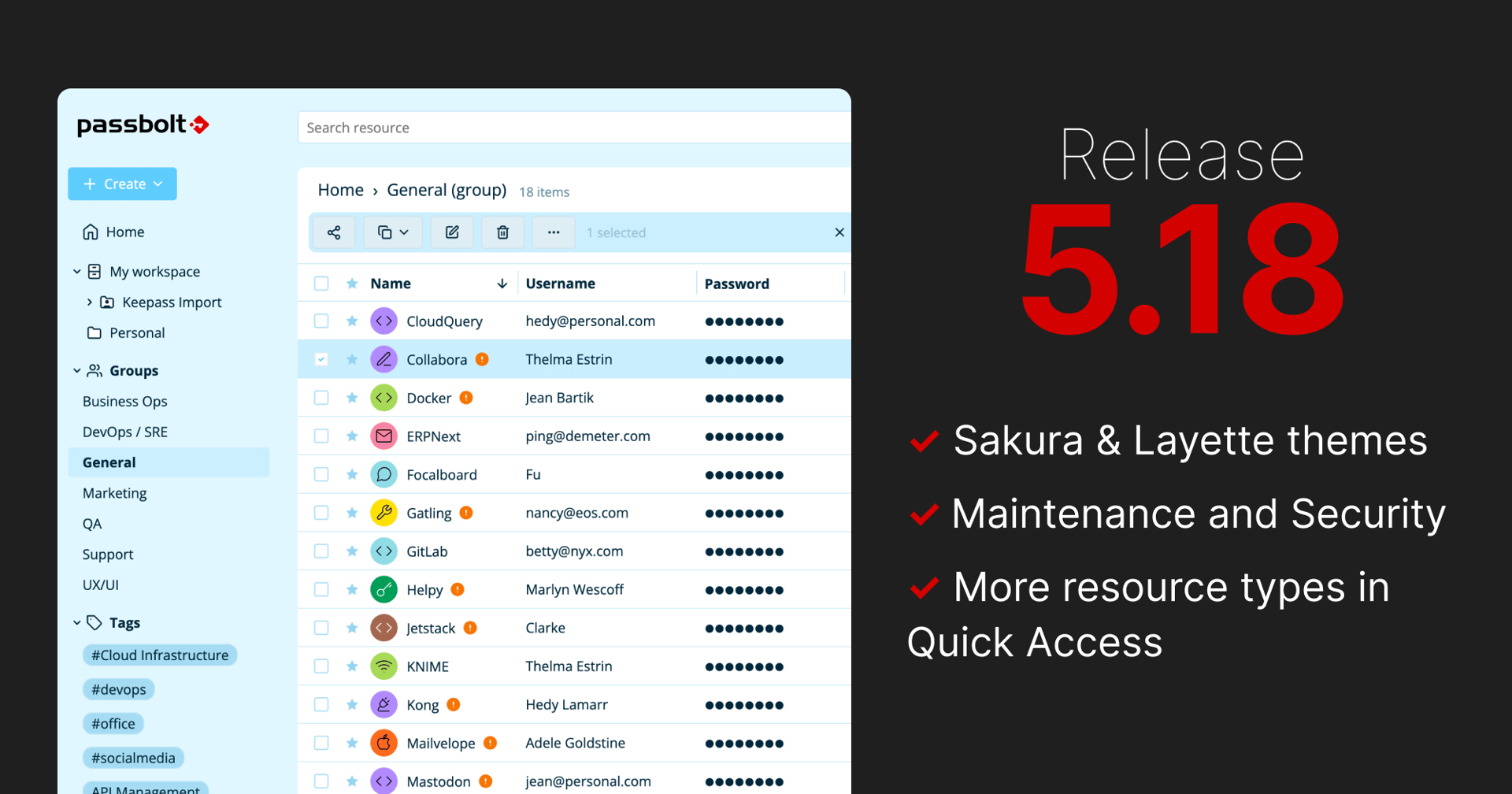
OpenSandbox 1.2.1 brokers credentials per request and enforces egress scoped to specific ports, so untrusted code gets a short-lived secret and a narrow network path rather than an environment variable that persists for the life of the VM. Infisical's JWKSJWKSA JSON Web Key Set, a published collection of cryptographic keys. Applications use it to find the public key needed to verify a token's signature. publishing lets relying parties verify KMSKMSA managed service that creates, stores, rotates and controls access to encryption keys, usually backed by HSMs. Applications ask it to encrypt or decrypt rather than holding keys themselves.-signed tokens without a shared secret, and its CRLCRLA Certificate Revocation List is a signed file, published by a certificate authority, listing certificates it has revoked before expiry so that clients can reject compromised or mis-issued credentials without contacting the CA live. controls for internal CAs make revoking an issued cert actually enforceable; Passbolt adds passkeypasskeyPhishing-resistant sign-in credentials built on FIDO2/WebAuthn: the device holds a private key and proves possession instead of the user typing a password. They sync across a user's devices.MFAMFAMulti-factor authentication, requiring proof from different categories, such as a password and a hardware key, to sign in. It reduces reliance on a password alone. and encrypted metadata, so even vault item names stop leaking to the server.
Know when a cloud instance matches a live campaign, and when an SBOM is lying to you
Prowler 5.49.0 adds emerging-threat signature matching for compute instances across the three major clouds with threat-based filtering in the Cloud API — so posture findings can be sorted by what is being exploited now rather than by generic severity. The cyclonedx-gradle-plugin's new build-safety flag fails generation when dependency resolution is incomplete, which stops the quietly truncated SBOMSBOMA software bill of materials, an inventory of the components and versions inside an application. It helps teams find affected software when a dependency has a vulnerability or licensing issue. that makes a downstream vulnerability scan look clean.
Three unrelated things stand out today: RegScale makes cloud-hosted vuln scan files easier to ingest and rerun selectively; GitGuardian SaaSSaaSSoftware delivered over the internet and billed by subscription, hosted and operated by the vendor so the buyer skips installation and infrastructure management. can plant kubeconfig honeytokens on developer machines to catch secret theft earlier; Nudge Security catches breached passwords at login, where users can still fix them.
protect
Ingest scanner output from S3 without reprocessing everything
Trivy and Grype scan files can now be pulled directly from S3, with incremental skip-and-reprocess behavior. That removes a staging step from vulnerability evidence collection and makes reruns cheaper when only some scan artifacts changed.
GitGuardian SaaS added a kubeconfig honeytoken aimed at theft from developer machines, while the detection engine added and improved secret detectors across major providers. Teams get more tripwires and broader credential recognition before leaked secrets turn into quiet cloud or cluster access.
Nudge Security now uses its browser extension to detect breached passwords as users sign in, then surfaces the issue in dashboards, accounts, and user profiles. That moves remediation from periodic reporting to the moment a bad credential is actively being used.
OpenSandbox added stricter request validation and port-scoped egress enforcement; CubeSandbox added per-sandbox QoSQoSQuality of Service: a set of network mechanisms that prioritize, throttle, or reserve bandwidth for specific traffic classes, letting cyber tools enforce latency or throughput guarantees across congested links. caps and improved CubeEgress L7L7The application layer of the OSI networking model, where protocols like HTTP, DNS, and TLS operate; cyber tools targeting L7 can inspect or manipulate traffic by content, not just IP addresses and ports. rules. The practical gain is tighter blast-radius control for code and agent workloads that need isolation but still require some network and resource access.
Xalgorix autonomous AI pentesting agents — real-time reconnaissance, vulnerability detection, and exploitation orchestration. Go + TypeScript.
Xalgorix hardened SSRFSSRFServer-side request forgery, an attack that tricks a server into making requests chosen by an attacker. Those requests can reach internal services the attacker cannot access directly. protections across both its HTTP request tools and scan configuration fields, added automatic Go memory limit scaling tied to host RAMRAMWorking memory that holds programs and data while a computer is running. Its contents usually disappear when power is removed., and made resuming paused scans more predictable.︀︄︇︀︅︉︀︅︀︀︃︀︀︅︅︀︅︊︀︄︆︀︃︄
└──▷ WHAT SHIPPED ·
4 FEATURES2 OF 4 FEATURESmost completely described firstwhat's the number?
Each feature carries 0–100 for how completely the vendor documented
it — not how big or important the work is. A major capability
described in eight words scores low, and that is the finding.
depth0–40what it does and how it works or what changed
specificity0–30names real surfaces — APIs, flags, formats, limits, numbers
actionability0–30enough to go use it — a named endpoint, flag, or config key tops this; a UI path is a starting point
Code and config rank first by construction: a documented endpoint,
flag or config key scores at the top of specificity and actionability,
so it sorts above a feature described only in prose. Under
60 the notes go thin — everything below the “thinner
coverage” line is thinner documentation, not smaller work.
Hover any meter for that feature's three sub-scores.
0100
Automatic Go memory limit scaling with host RAMimproved95how completely this was documenteddepth35/40specificity30/30actionability30/3095 / 100
The automatic Go soft memory limit now scales with host RAM: hosts up to 12 GB keep 45% of RAM (capped at 4 GB), while larger hosts get one-third of RAM with a 32 GB ceiling, overridden in that order by XALGORIX_GO_MEM_LIMIT_MB or GOMEMLIMIT.︀︄︇︀︅︉︀︅︀︀︃︀︀︅︅︀︅︊︀︄︆︀︃︄ An empty GOMEMLIMIT= is now treated as unset rather than disabling the automatic limit.
Cap memory on a 32 GB host to 8 GB instead of the automatic one-third-of-RAM limit, overriding the new scaling formula.
$ XALGORIX_GO_MEM_LIMIT_MB=8192 xalgorix --web
— Exact thresholds, env vars, and a runnable override commandv4.6.187
0201
SSRF and credential-scoping validation for scan fieldsbreaking85how completely this was documenteddepth35/40specificity30/30actionability20/3085 / 100
A scan request's discord_webhook pointing at the local machine, dashboard listener, link-local, multicast, or cloud metadata address now gets a 400 (or a WebSocketWebSocketA protocol that upgrades an HTTP connection into a persistent, full-duplex channel, letting a server push data to a client without repeated polling. Cyber tools use it for real-time event streaming and live command output.error event) instead of proceeding; webhooks already saved in queue state or schedules are checked when sent and a refused one is logged. An api_base set to a host outside the stored credential's endpoint without a matching api_key also gets a 400; supplying a per-request api_key replaces the stored key pool for that scan.
Send a scan notification to an internal relay on your LAN while confirming the webhook is accepted before the scan starts.
— Names fields, status codes and an example requestv4.6.187
0300
Predictable resume handling for paused scansimproved70how completely this was documenteddepth30/40specificity25/30actionability15/3070 / 100
Resuming a refused or still-shutting-down paused scan now behaves predictably: a refused resume answers 409 and leaves the scan resumable, and a scan resuming while still shutting down waits up to 3 seconds before returning 409 with a retry hint.
— Specific status codes and timing but no example callv4.6.187
0402
SSRF guards on http_request and send_request toolsnew60how completely this was documenteddepth30/40specificity20/30actionability10/3060 / 100
The http_request and send_request tools now refuse requests whose URLs point at the local machine or the dashboard listener, matching the rule already applied to other gated tools. Each redirect target is checked against the same local-machine rule before being followed; when a redirect is refused, the tool returns the redirect response with an explanation rather than following it.
— Describes mechanism but no runnable flag or endpoint givenv4.6.188
└──▷ BREAKING ON UPGRADE
!
A scan request that sets a `discord_webhook` pointing at the local machine, dashboard listener, link-local, multicast, or cloud metadata address now gets a 400 (or a WebSocket `error` event) instead of proceeding; webhooks already saved in queue state or schedules are checked when sent and a refused one is logged.Our best guess
A scan request that sets `api_base` to a host outside the stored credential endpoint without supplying `api_key` now gets a 400 instead of proceeding.Our best guess
Bruce is a predatory ESP32 firmware for M5Stack, Cardputer and LilyGo devices.
Bruce 1.17 adds WiFite WPS, SDRSDRSoftware-defined radio: hardware that captures raw radio-frequency signals and shifts signal processing into software, letting a single device tune any frequency or protocol a program implements. radio takeover, Wire Tools menu, compiled JS, UARTUARTA hardware protocol for serial communication between devices, transmitting data one bit at a time over two wires. Cyber tools use it to access embedded device consoles and debug interfaces without a network stack. JS API, DuckyScriptDuckyScriptA scripting language for Hak5's USB Rubber Ducky that encodes keystrokes and delays into payloads a device executes when plugged into a target machine, letting tools automate keyboard-injection attacks. DEFINE, and a new grid UI.
└──▷ GET THIS VERSION
$ git clone --branch 1.17 https://github.com/BruceDevices/firmware.git
# already have the repo? check out this version:$ git checkout 1.17
Add native WiFite (WPS) app to the Wi-Fi menu.
New supported platformAdd SDR raw I/Q takeover of the ESP32-S3 WiFi radio.
New integrationAdd a Wire Tools menu with I2C serial commands, a continuity tester, logic analyzer, SUMP logic server, and I2C bus discovery tool.
Add compiled JavaScript support.
Add JavaScript UART API.
+10 moreshow less
Enable DuckyScript DEFINE constant support in the BadUSB parser.
Add led serial command for RGB LED control.
Add show/hide toggle for masked input on touch keyboards.
Add main menu grid layout alongside the icon carousel.
Add RF waterfall SDR-style display and RF SquareWave scope trace with grid, X/Y axes, and scrollable capture.
Add TapToSelect on grid and regular menus.
Add adaptive UI.
RF Scan/copy now keeps every capture in a selectable list.
Route KeeLoqKeeLoqA proprietary block cipher developed by Microchip Technology, used in rolling-code systems for keyless entry devices; cyber tools target it to analyze or attack RF-based access control protocols..sub files to loopEmulate.
App Store now uses the new .bin version format, installable from Config → Install App Store.
pathrunner v1.3.0 adds identity export capabilities and a new interactive shell command.︀︄︇︀︅︉︀︅︀︀︃︀︀︅︅︀︅︊︀︄︆︀︃︄
pathrunner v1.3.0 adds identity export capabilities and a new interactive shell command.︀︄︇︀︅︉︀︅︀︀︃︀︀︅︅︀︅︊︀︄︆︀︃︄
└──▷ WHAT SHIPPED ·
2 FEATURES0 OF 2 FEATURESmost completely described firstwhat's the number?
Each feature carries 0–100 for how completely the vendor documented
it — not how big or important the work is. A major capability
described in eight words scores low, and that is the finding.
depth0–40what it does and how it works or what changed
specificity0–30names real surfaces — APIs, flags, formats, limits, numbers
actionability0–30enough to go use it — a named endpoint, flag, or config key tops this; a UI path is a starting point
Code and config rank first by construction: a documented endpoint,
flag or config key scores at the top of specificity and actionability,
so it sorts above a feature described only in prose. Under
60 the notes go thin — everything below the “thinner
coverage” line is thinner documentation, not smaller work.
Hover any meter for that feature's three sub-scores.
0100
Identity export subcommandnew75how completely this was documenteddepth20/40specificity25/30actionability30/3075 / 100
A new identity export subcommand is available under the identity command tree in both the REPL and CLI, letting users export captured identities to hand credentials off to another tool or preserve them outside the workspace.︀︄︇︀︅︉︀︅︀︀︃︀︀︅︅︀︅︊︀︄︆︀︃︄
Export a captured identity after a successful exploit to hand credentials off to another tool or preserve them outside the workspace.
$ pathrunner> identity export
— Names exact subcommand and use case, runnable example given.v1.3.0
thinner coverage below
0200
Interactive shell commandnew40how completely this was documenteddepth10/40specificity15/30actionability15/3040 / 100
A new shell command starts an interactive shell session directly.
— Names the command but no further mechanism or example.v1.3.0
Airgeddon this is a multi-use bash script for Linux systems to audit wireless networks.
airgeddon v12.10 adds conflict detection for wireless interfaces across concurrent multi-instance sessions and switches the multi-instance orchestrator file to a colon-delimited format.︀︄︇︀︅︉︀︅︀︀︃︀︀︅︅︀︅︊︀︄︆︀︃︄
└──▷ WHAT SHIPPED ·
2 FEATURES1 OF 2 FEATURESmost completely described firstwhat's the number?
Each feature carries 0–100 for how completely the vendor documented
it — not how big or important the work is. A major capability
described in eight words scores low, and that is the finding.
depth0–40what it does and how it works or what changed
specificity0–30names real surfaces — APIs, flags, formats, limits, numbers
actionability0–30enough to go use it — a named endpoint, flag, or config key tops this; a UI path is a starting point
Code and config rank first by construction: a documented endpoint,
flag or config key scores at the top of specificity and actionability,
so it sorts above a feature described only in prose. Under
60 the notes go thin — everything below the “thinner
coverage” line is thinner documentation, not smaller work.
Hover any meter for that feature's three sub-scores.
0101
Colon-delimited multi-instance orchestrator file formatbreaking40how completely this was documenteddepth15/40specificity15/30actionability10/3040 / 100
The multi-instance orchestrator file now uses a colon-delimited format; existing orchestrator files from prior versions may need to be regenerated or updated.︀︄︇︀︅︉︀︅︀︀︃︀︀︅︅︀︅︊︀︄︆︀︃︄
— Names format change and migration note but no file path or example.v12.10
0200
Interface conflict detection in multi-instance modenew35how completely this was documenteddepth15/40specificity10/30actionability10/3035 / 100
airgeddon now detects wireless interface conflicts when running in multi-instance mode, preventing overlapping interface use across concurrent sessions.
— Describes what it does but not detection mechanism.v12.10
└──▷ BREAKING ON UPGRADE
!
The multi-instance orchestrator file format has changed to colon-delimited; existing orchestrator files from prior versions may need to be regenerated or updated.Our best guess
Akto discovers APIs, MCP servers and AI agents, tests and red-teams them, and enforces runtime guardrails and posture management.
Akto adds scoped AI agent blocking by team/role/device/user, host and path allowlisting, guardrail violation evidence and reviewer assignment, multi-turn attack remediation guidance, and on-demand Endpoint Shield Diagnostics.
Block unapproved AI agents org-wide or scope the block to specific teams, roles, devices, or users so individual groups keep the agents they rely on.
Allow or block browser-based AI agents and apps using the LLMsLLMsA large language model, a neural network trained on large amounts of text to recognize patterns and generate language. Applications use it for tasks such as answering, summarizing and writing code. tab in Audit Data.
Permit traffic only to specified hosts and paths with host and path allowlisting — every request that does not match is blocked.
See the exact request and response evidence that triggered each guardrail violation, highlighted in the Guardrails dashboard.
Assign owners, add notes, and follow case timelines for every guardrail violation event marked for review.
+4 moreshow less
Verify red teaming scan results with Akto AI — high-confidence false positives move to Ignored and can be reopened anytime.
Get remediation guidance for multi-turn attacks, where a vulnerability only shows up across a series of prompts.
See how many scan categories ran and how many contained vulnerabilities directly in the vulnerability report with a Vulnerability Coverage Summary.
Run diagnostics on demand and review each device's diagnostic report history via Endpoint Shield Diagnostics.
Fastly is a cloud edge platform providing CDN, DDoS protection, load balancing, and real-time content delivery to accelerate and secure web applications.
Fastly CLI adds IAMIAMIdentity and Access Management — a framework of policies and services for controlling who can authenticate to systems and what resources they are authorized to use, letting cyber tools enforce least-privilege and audit access. authentication support for service backends︀︄︇︀︅︉︀︅︀︀︃︀︀︅︅︀︅︊︀︄︆︀︃︄
Infisical's v0.167.9 release adds a Jenkins secret sync integration, JWKSJWKSA JSON Web Key Set, a published collection of cryptographic keys. Applications use it to find the public key needed to verify a token's signature. public key publishing from the KMSKMSA managed service that creates, stores, rotates and controls access to encryption keys, usually backed by HSMs. Applications ask it to encrypt or decrypt rather than holding keys themselves., configurable CRLCRLA Certificate Revocation List is a signed file, published by a certificate authority, listing certificates it has revoked before expiry so that clients can reject compromised or mis-issued credentials without contacting the CA live. controls for internal CAs, and a substantial expansion of agent-vault's MCPMCPModel Context Protocol, a standard for connecting AI applications to external tools and data sources. A compatible server exposes capabilities an assistant can use through a common interface. and service capabilities alongside smaller PAMPAMBrokering administrator sessions through a gateway instead of handing out standing credentials. Access is granted for one session, to one target, and recorded. and alerting improvements.︀︄︇︀︅︉︀︅︀︀︃︀︀︅︅︀︅︊︀︄︆︀︃︄
Infisical is an open-source secret management platform that helps teams securely store, sync, and manage API keys, environment variables, and other sensitive configurations.
Infisical's v0.167.9 release adds a Jenkins secret sync integration, JWKSJWKSA JSON Web Key Set, a published collection of cryptographic keys. Applications use it to find the public key needed to verify a token's signature. public key publishing from the KMSKMSA managed service that creates, stores, rotates and controls access to encryption keys, usually backed by HSMs. Applications ask it to encrypt or decrypt rather than holding keys themselves., configurable CRLCRLA Certificate Revocation List is a signed file, published by a certificate authority, listing certificates it has revoked before expiry so that clients can reject compromised or mis-issued credentials without contacting the CA live. controls for internal CAs, and a substantial expansion of agent-vault's MCPMCPModel Context Protocol, a standard for connecting AI applications to external tools and data sources. A compatible server exposes capabilities an assistant can use through a common interface. and service capabilities alongside smaller PAMPAMBrokering administrator sessions through a gateway instead of handing out standing credentials. Access is granted for one session, to one target, and recorded. and alerting improvements.︀︄︇︀︅︉︀︅︀︀︃︀︀︅︅︀︅︊︀︄︆︀︃︄
└──▷ WHAT SHIPPED ·
9 FEATURES1 OF 9 FEATURESmost completely described firstwhat's the number?
Each feature carries 0–100 for how completely the vendor documented
it — not how big or important the work is. A major capability
described in eight words scores low, and that is the finding.
depth0–40what it does and how it works or what changed
specificity0–30names real surfaces — APIs, flags, formats, limits, numbers
actionability0–30enough to go use it — a named endpoint, flag, or config key tops this; a UI path is a starting point
Code and config rank first by construction: a documented endpoint,
flag or config key scores at the top of specificity and actionability,
so it sorts above a feature described only in prose. Under
60 the notes go thin — everything below the “thinner
coverage” line is thinner documentation, not smaller work.
Hover any meter for that feature's three sub-scores.
0101
Agent-vault MCP and service expansionnew80how completely this was documenteddepth35/40specificity30/30actionability15/3080 / 100
Agent-vault gains new capabilities: it can limit an inline MCP server to a subset of its tools, adds PostgreSQL, MySQL, and SSH services, adds hooks on services, and adds service discovery, service descriptions, and a built-in skill.︀︄︇︀︅︉︀︅︀︀︃︀︀︅︅︀︅︊︀︄︆︀︃︄ It also adds MCP templates for six more providers, makes agent-vault services project resources that can be added to access bundles, and shows request counts in session logs.
— Names many concrete additions but no exact commands or config keysv0.167.9
0200
viewSecretValue parameter on get-secret-by-ID APInew75how completely this was documenteddepth20/40specificity25/30actionability30/3075 / 100
Adds a viewSecretValue parameter to the get-secret-by-ID API, allowing the decrypted value to be included in the response, e.g. GET /api/v1/secrets/<secret-id>?viewSecretValue=true.
Retrieve a secret by ID and include its decrypted value in the response using the new parameter.
$ GET /api/v1/secrets/<secret-id>?viewSecretValue=true
— Named API parameter with a runnable example requestv0.167.9
thinner coverage below
0300
CRL validity and on-demand regeneration for internal CAsnew50how completely this was documenteddepth20/40specificity15/30actionability15/3050 / 100
Configure CRL validity per internal CA and regenerate CRLs on demand.
— Clear capability but no config key or command namedv0.167.9
0400
JWKS publishing for KMS sign-verify keysnew45how completely this was documenteddepth20/40specificity15/30actionability10/3045 / 100
Publishes sign-verify keys' public keys as a JWKS endpoint from the KMS.
— Describes the mechanism but gives no endpoint pathv0.167.9
0500
Jenkins secret sync integrationnew40how completely this was documenteddepth15/40specificity15/30actionability10/3040 / 100
Adds a Jenkins app connection and secret sync integration via feat(secret-sync).
— Names the integration but no setup steps givenv0.167.9
0600
Configurable bundle method for Cloudflare certificate syncimproved40how completely this was documenteddepth15/40specificity15/30actionability10/3040 / 100
Adds a configurable bundle method to the Cloudflare certificate sync.
— Names the feature but no options or config detailv0.167.9
0700
'My Accounts' folder in PAM accounts pagenew35how completely this was documenteddepth10/40specificity10/30actionability15/3035 / 100
Adds a virtual My Accounts folder to the PAM accounts page.
— Clear UI location but minimal explanation of behaviourv0.167.9
0800
Secret rotation failure alertsnew30how completely this was documenteddepth15/40specificity10/30actionability5/3030 / 100
Sends secret rotation failure alerts through the shared alerting module.
— States what it does but no configuration detailv0.167.9
0900
Blind index for secret scanning findingsimproved25how completely this was documenteddepth10/40specificity10/30actionability5/3025 / 100
Implements a blind index for secret scanningsecret scanningChecking files, code or other data for exposed credentials such as passwords, API keys and tokens. Findings help teams remove the secret and revoke or rotate it. findings.
TruffleHog finds, verifies, and analyzes leaked credentials across Git, chat, wikis, cloud storage, and more
TruffleHog v3.99.9 speeds up GitHub comment scanning with a new GraphQL mode, adds a Serval API key detector, introduces per-detector execution timing, and mentions a new generic source type.︀︄︇︀︅︉︀︅︀︀︃︀︀︅︅︀︅︊︀︄︆︀︃︄
└──▷ WHAT SHIPPED ·
4 FEATURES1 OF 4 FEATURESmost completely described firstwhat's the number?
Each feature carries 0–100 for how completely the vendor documented
it — not how big or important the work is. A major capability
described in eight words scores low, and that is the finding.
depth0–40what it does and how it works or what changed
specificity0–30names real surfaces — APIs, flags, formats, limits, numbers
actionability0–30enough to go use it — a named endpoint, flag, or config key tops this; a UI path is a starting point
Code and config rank first by construction: a documented endpoint,
flag or config key scores at the top of specificity and actionability,
so it sorts above a feature described only in prose. Under
60 the notes go thin — everything below the “thinner
coverage” line is thinner documentation, not smaller work.
Hover any meter for that feature's three sub-scores.
0100
GraphQL-based GitHub comment scanningnew80how completely this was documenteddepth25/40specificity25/30actionability30/3080 / 100
The github subcommand gains a --use-graphql flag that scans issue and PR comments via the GitHub GraphQL API instead of REST, speeding up scans on large repositories.︀︄︇︀︅︉︀︅︀︀︃︀︀︅︅︀︅︊︀︄︆︀︃︄ It requires a token and must be combined with --issue-comments or --pr-comments.
Speed up comment scanning on a large GitHub org by switching to the GraphQL API instead of the REST APIREST APIA web API design style where clients interact with resources over HTTP using standard methods like GET, POST, and DELETE, giving cyber tools a predictable, language-agnostic way to integrate with external services..
GitGuardian SaaS adds a Kubeconfig honeytoken to catch secret theft directly from developer machines, alongside a new secret-revoke API endpoint, expanded Public API filtering and agents-analysis fields, login lockout protection, and federated repository scanning for JFrog.︀︄︇︀︅︉︀︅︀︀︃︀︀︅︅︀︅︊︀︄︆︀︃︄
GitGuardian SaaS is a secrets detection platform that scans Git repositories and developer workflows to find and remediate exposed credentials and sensitive data.
GitGuardian SaaS adds a Kubeconfig honeytoken to catch secret theft directly from developer machines, alongside a new secret-revoke API endpoint, expanded Public API filtering and agents-analysis fields, login lockout protection, and federated repository scanning for JFrog.︀︄︇︀︅︉︀︅︀︀︃︀︀︅︅︀︅︊︀︄︆︀︃︄
└──▷ WHAT SHIPPED ·
8 FEATURES0 OF 8 FEATURESmost completely described firstwhat's the number?
Each feature carries 0–100 for how completely the vendor documented
it — not how big or important the work is. A major capability
described in eight words scores low, and that is the finding.
depth0–40what it does and how it works or what changed
specificity0–30names real surfaces — APIs, flags, formats, limits, numbers
actionability0–30enough to go use it — a named endpoint, flag, or config key tops this; a UI path is a starting point
Code and config rank first by construction: a documented endpoint,
flag or config key scores at the top of specificity and actionability,
so it sorts above a feature described only in prose. Under
60 the notes go thin — everything below the “thinner
coverage” line is thinner documentation, not smaller work.
Hover any meter for that feature's three sub-scores.
0100
Kubeconfig honeytoken for developer endpointsnew95how completely this was documenteddepth35/40specificity30/30actionability30/3095 / 100
Plant a Kubeconfig honeytoken on developer machines with ggshield honeytoken plant --type kubeconfig, which writes a decoy into ~/.kube/config and fires an alert with IP, country, user agent, and machine name on first use.︀︄︇︀︅︉︀︅︀︀︃︀︀︅︅︀︅︊︀︄︆︀︃︄ Requires ggshield 1.56+ and the honeytokens:write scope.
Add a Kubeconfig honeytoken to a developer machine's fleet job alongside an existing AWS key decoy, so any credential-stealing malware triggers a named-machine alert.
Secret revocation API endpointnew90how completely this was documenteddepth30/40specificity30/30actionability30/3090 / 100
Revoke a detected secret via POST /v1/secrets/{secret_id}/revoke, passing provider credentials in the credentials body field to override workspace defaults. Requires the secrets:write scope.
Revoke a compromised secret found by GitGuardian, supplying provider credentials so the revocation uses them instead of workspace defaults.
Check-run filtering by commit, PR and sourceimproved80how completely this was documenteddepth25/40specificity30/30actionability25/3080 / 100
GET /v1/check-runs can now be filtered by commit_sha, pull_request_number, or source_id in addition to incident_id, and each check-run response now also includes the repository's full name and source ID.
Find all check-runs for a specific pull request even when its findings have no incident yet, to audit CI scan results in a pipeline.
Login lockout after repeated failuresnew80how completely this was documenteddepth35/40specificity30/30actionability15/3080 / 100
Password login now locks out for six minutes after ten failed attempts for the same email and IP; the login endpoint returns HTTP 429 with a Retry-After header and writes a password_login_locked_out entry to the audit log.
Agents analysis fields on incidentsnew70how completely this was documenteddepth25/40specificity30/30actionability15/3070 / 100
Public incident list, detail, and CSV export now carry agents analysis fields company_related_verdict (values: related, unclear, unrelated) and agents_stage, both filterable, so a SIEMSIEMSecurity information and event management, collecting logs from many systems and correlating events to find suspicious activity. Analysts use it to investigate alerts and incidents. or ticketing tool can reproduce dashboard views.
GitGuardian Detection Engine rolled out dozens of new secret detectors across Google, AWS, Supabase, and more than a dozen other providers, improved several existing detectors (Vault host reporting, Bedrock long-term keys, SSH key validation against custom hosts, Azure subscription key recall), and renamed two Google detectors in a breaking change.︀︄︇︀︅︉︀︅︀︀︃︀︀︅︅︀︅︊︀︄︆︀︃︄
GitGuardian Detection Engine scans code repositories and developer workflows to automatically detect exposed secrets, API keys, and credentials in real time.
GitGuardian Detection Engine rolled out dozens of new secret detectors across Google, AWS, Supabase, and more than a dozen other providers, improved several existing detectors (Vault host reporting, Bedrock long-term keys, SSH key validation against custom hosts, Azure subscription key recall), and renamed two Google detectors in a breaking change.︀︄︇︀︅︉︀︅︀︀︃︀︀︅︅︀︅︊︀︄︆︀︃︄
└──▷ WHAT SHIPPED ·
9 FEATURES1 OF 9 FEATURESmost completely described firstwhat's the number?
Each feature carries 0–100 for how completely the vendor documented
it — not how big or important the work is. A major capability
described in eight words scores low, and that is the finding.
depth0–40what it does and how it works or what changed
specificity0–30names real surfaces — APIs, flags, formats, limits, numbers
actionability0–30enough to go use it — a named endpoint, flag, or config key tops this; a UI path is a starting point
Code and config rank first by construction: a documented endpoint,
flag or config key scores at the top of specificity and actionability,
so it sorts above a feature described only in prose. Under
60 the notes go thin — everything below the “thinner
coverage” line is thinner documentation, not smaller work.
Hover any meter for that feature's three sub-scores.
0100
SSH private key validation against custom hostsimproved75how completely this was documenteddepth30/40specificity30/30actionability15/3075 / 100
Private key checkers private_key_rsa, base64_private_key_rsa, private_key_elliptic, base64_private_key_elliptic, private_key_openssh, base64_private_key_openssh, private_key_generic, and base64_private_key_generic now validate SSH keys against a custom host, such as a self-hosted GitLab or GitHub Enterprise instance.︀︄︇︀︅︉︀︅︀︀︃︀︀︅︅︀︅︊︀︄︆︀︃︄
Google detector renames break existing workflowsbreaking70how completely this was documenteddepth25/40specificity25/30actionability20/3070 / 100
The Google Cloud Express API Key detector is now named Google Gemini API Key; the former Google Gemini API Key detector is now named Google Bard Session Cookie. Any workflow or filter referencing these detectors by their old names must be updated.
New detectors for Supabase, Google OAuth2, and Food Safety Koreanew60how completely this was documenteddepth25/40specificity25/30actionability10/3060 / 100
Adds the Supabase Personal Access Token detector covering classic, scoped, and sbp_v0_ variants; the Google OAuth2 Refresh Token detector covering refresh tokensrefresh tokensA credential used to obtain a new access token without signing in again. It is sent to the authorization service rather than used directly to call the protected API. alongside their client ID and secret, including gcloud application default credentials; and the Food Safety Korea API Key detector.
23 new analyzers across DeepSeek, Cloudflare, GitLab and morenew60how completely this was documenteddepth20/40specificity30/30actionability10/3060 / 100
Adds analyzers for DeepSeek API keys (reporting account balance, currency, availability, and usable models), Groq API keys (reporting usable models), Telegram bot tokens (reporting bot username and name), GitLab self-managed personal access tokenspersonal access tokensA personal access token, a credential used by scripts and integrations instead of a user's password. Its permissions and expiry depend on the service issuing it., GitLab runner authentication tokens, New Relic admin keys, New RelicREST APIREST APIA web API design style where clients interact with resources over HTTP using standard methods like GET, POST, and DELETE, giving cyber tools a predictable, language-agnostic way to integrate with external services. keys, New Relic user keys, Amp API tokens, Sourcegraphaccess tokensaccess tokensA credential that authorizes a client to use a service or API. It usually has limited permissions and a lifetime; anyone holding it may be able to use those permissions., LlamaCloud API keys, Azure Entra app secrets, Gemfury deploy, push, and full-access tokens (with and without username variants), Mercado Pago access tokens, Mercado Pago OAuth credentials, Cloudflare API tokens, Cloudflare R2 tokens, Cloudflare global API keys, Facebook access tokens, and Facebook app keys.
New Google credential detectorsnew55how completely this was documenteddepth20/40specificity25/30actionability10/3055 / 100
Adds the Google OAuth2 Refresh Token Without Client detector for refresh tokens found without their client ID, plus base64-variant detectors base64_googlecloud_access_token, base64_google_oauth2, base64_google_oauth2_refresh_token, the googlecloud_storage_hmac_key detector for Google Cloud Storage HMACHMACA keyed hash that proves a message came from someone holding a shared secret and was not altered. Webhooks and API request signing commonly use it. keys, and base64_googleaiza for base64-encoded Google API keys.
The 'Google Cloud Express API Key' detector is now named 'Google Gemini API Key'; any workflow or filter referencing 'Google Cloud Express API Key' by name must be updated.Our best guess
Detection Engine Updates Version 2.178 (2026-11-11)
!
The former 'Google Gemini API Key' detector is now named 'Google Bard Session Cookie'; any workflow or filter referencing 'Google Gemini API Key' as a session cookie detector must be updated.Our best guess
cyclonedx-gradle-plugin 3.6.0 adds a build-safety flag to fail SBOMSBOMA software bill of materials, an inventory of the components and versions inside an application. It helps teams find affected software when a dependency has a vulnerability or licensing issue. generation when dependency resolution is incomplete.︀︄︇︀︅︉︀︅︀︀︃︀︀︅︅︀︅︊︀︄︆︀︃︄
Cyclonedx-gradle-plugin creates CycloneDX Software Bill of Materials (SBOM) from Gradle projects
cyclonedx-gradle-plugin 3.6.0 adds a build-safety flag to fail SBOMSBOMA software bill of materials, an inventory of the components and versions inside an application. It helps teams find affected software when a dependency has a vulnerability or licensing issue. generation when dependency resolution is incomplete.︀︄︇︀︅︉︀︅︀︀︃︀︀︅︅︀︅︊︀︄︆︀︃︄
└──▷ WHAT SHIPPED ·
1 FEATURE0 OF 1 FEATUREmost completely described firstwhat's the number?
Each feature carries 0–100 for how completely the vendor documented
it — not how big or important the work is. A major capability
described in eight words scores low, and that is the finding.
depth0–40what it does and how it works or what changed
specificity0–30names real surfaces — APIs, flags, formats, limits, numbers
actionability0–30enough to go use it — a named endpoint, flag, or config key tops this; a UI path is a starting point
Code and config rank first by construction: a documented endpoint,
flag or config key scores at the top of specificity and actionability,
so it sorts above a feature described only in prose. Under
60 the notes go thin — everything below the “thinner
coverage” line is thinner documentation, not smaller work.
Hover any meter for that feature's three sub-scores.
0100
Fail build on unresolved dependenciesnew85how completely this was documenteddepth30/40specificity25/30actionability30/3085 / 100
Setting failOnUnresolvedDependencies = true on a cyclonedxDirectBom task causes the build to fail if a selected configuration has an unresolved dependency or artifact, reporting the affected dependencies and configurations.︀︄︇︀︅︉︀︅︀︀︃︀︀︅︅︀︅︊︀︄︆︀︃︄ Defaults to false.
Catch unresolved dependencies during SBOM generation in CI so a broken build never silently produces an incomplete SBOM.
Endor Labs is an application security platform built for AI-generated and human-written code, helping teams prioritize and fix real risk across the SDLC.
Endor Labs adds an integration with the OpenAI Daybreak Defense Factory, routing reachability analysis, SASTSASTStatic application security testing, analyzing source code or compiled code for vulnerabilities without running the application. It helps developers find problems before deployment., SCASCASoftware composition analysis, identifying third-party dependencies and checking them for known vulnerabilities and license issues. It covers software a team uses rather than writes itself., and container findings into Codex for automated fix implementation.
New integrationEndor Labs now connects to Codex Security via the OpenAI Daybreak Defense Factory, sending each finding with full-stack reachability, risk, impact, and remediation guidance so Codex can implement and test fixes.
An AI SAST agent (AURI) gives Codex evidence and remediation guidance for vulnerabilities in first-party source code.
An SCA Remediation agent gives Codex reachability evidence and remediation guidance for open source vulnerabilities across direct and transitive dependencies.
Endor Labs now provides Codex with reachability evidence and guidance to remediate vulnerabilities in container base images.
Customer-defined policies let teams prioritize which Endor Labs findings the Daybreak Defense Factory acts on first, based on organization-specific risk criteria.
JFrog introduced Boost, a free CLI wrapper in public preview that compresses noisy shell command output before it reaches AI coding agents, cutting token costs in agentic workflows.︀︄︇︀︅︉︀︅︀︀︃︀︀︅︅︀︅︊︀︄︆︀︃︄
JFrog software supply chain solutions provide an end-to-end pipeline to control your binaries from build to production. Power your software updates to the edge.
JFrog introduced Boost, a free CLI wrapper in public preview that compresses noisy shell command output before it reaches AI coding agents, cutting token costs in agentic workflows.︀︄︇︀︅︉︀︅︀︀︃︀︀︅︅︀︅︊︀︄︆︀︃︄
└──▷ WHAT SHIPPED ·
1 FEATURE0 OF 1 FEATUREmost completely described firstwhat's the number?
Each feature carries 0–100 for how completely the vendor documented
it — not how big or important the work is. A major capability
described in eight words scores low, and that is the finding.
depth0–40what it does and how it works or what changed
specificity0–30names real surfaces — APIs, flags, formats, limits, numbers
actionability0–30enough to go use it — a named endpoint, flag, or config key tops this; a UI path is a starting point
Code and config rank first by construction: a documented endpoint,
flag or config key scores at the top of specificity and actionability,
so it sorts above a feature described only in prose. Under
60 the notes go thin — everything below the “thinner
coverage” line is thinner documentation, not smaller work.
Hover any meter for that feature's three sub-scores.
0100
Boost CLI wrapper for AI agent token compressionnew80how completely this was documenteddepth30/40specificity25/30actionability25/3080 / 100
JFrog Boost is a free CLI wrapper available at boost.jfrog.com that compresses noisy shell command output from tools like ls, find, and grep before it reaches AI coding agents such as Cursor, Claude Code, or GitHub Copilot.︀︄︇︀︅︉︀︅︀︀︃︀︀︅︅︀︅︊︀︄︆︀︃︄ Truncated output is paired with an explicit [System] note and a cat_file recovery hatch so agents know results were partial and can request the full output instead of hallucinating.
Wrap grep in a Python agent tool to enforce output limits and tell the agent when results were truncated, preventing silent context poisoning.
Cloudsmith now hosts, versions, and governs AI skills and Claude Code plugins using the same repository workflows as its other package types.︀︄︇︀︅︉︀︅︀︀︃︀︀︅︅︀︅︊︀︄︆︀︃︄
Cloudsmith is a fully-managed artifact management, software supply chain security, and software distribution platform.
Cloudsmith now hosts, versions, and governs AI skills and Claude Code plugins using the same repository workflows as its other package types.︀︄︇︀︅︉︀︅︀︀︃︀︀︅︅︀︅︊︀︄︆︀︃︄
└──▷ WHAT SHIPPED ·
1 FEATURE0 OF 1 FEATUREmost completely described firstwhat's the number?
Each feature carries 0–100 for how completely the vendor documented
it — not how big or important the work is. A major capability
described in eight words scores low, and that is the finding.
depth0–40what it does and how it works or what changed
specificity0–30names real surfaces — APIs, flags, formats, limits, numbers
actionability0–30enough to go use it — a named endpoint, flag, or config key tops this; a UI path is a starting point
Code and config rank first by construction: a documented endpoint,
flag or config key scores at the top of specificity and actionability,
so it sorts above a feature described only in prose. Under
60 the notes go thin — everything below the “thinner
coverage” line is thinner documentation, not smaller work.
Hover any meter for that feature's three sub-scores.
0100
Hosting for AI skills and Claude Code pluginsnew53how completely this was documenteddepth20/40specificity18/30actionability15/3053 / 100
Cloudsmith repositories can publish and version AI skills and Claude Code plugins, reusing the existing artifact management workflows already in place for other package types.︀︄︇︀︅︉︀︅︀︀︃︀︀︅︅︀︅︊︀︄︆︀︃︄ The web app adds a repository view for AI Skills repositories, a package Overview and Files tab for individual agent skills, and a Configure upstream form for setting up an AI Skills upstream.
Cyclonedx-core-java is a cyclonedx SBOM Model and Utils for Creating and Validating BOMs
cyclonedx-core-java 13.5.0 adds the ability to serialize a BOMBOMA Bill of Materials listing every component, library, and dependency in a software project; cyber tools use it to track what is in a codebase and flag known-vulnerable components quickly. directly to binary output formats without going through a string intermediate.︀︄︇︀︅︉︀︅︀︀︃︀︀︅︅︀︅︊︀︄︆︀︃︄
└──▷ WHAT SHIPPED ·
1 FEATURE0 OF 1 FEATUREmost completely described firstwhat's the number?
Each feature carries 0–100 for how completely the vendor documented
it — not how big or important the work is. A major capability
described in eight words scores low, and that is the finding.
depth0–40what it does and how it works or what changed
specificity0–30names real surfaces — APIs, flags, formats, limits, numbers
actionability0–30enough to go use it — a named endpoint, flag, or config key tops this; a UI path is a starting point
Code and config rank first by construction: a documented endpoint,
flag or config key scores at the top of specificity and actionability,
so it sorts above a feature described only in prose. Under
60 the notes go thin — everything below the “thinner
coverage” line is thinner documentation, not smaller work.
Hover any meter for that feature's three sub-scores.
0100
Direct byte[] and OutputStream serializationnew55how completely this was documenteddepth20/40specificity20/30actionability15/3055 / 100
BOMs can now be serialized directly to byte[] or OutputStream, removing the need to convert from a string intermediate.︀︄︇︀︅︉︀︅︀︀︃︀︀︅︅︀︅︊︀︄︆︀︃︄
Feroxbuster v2.14.0 adds support for combining multiple wordlists in a single scan, deduplicating entries across them automatically.︀︄︇︀︅︉︀︅︀︀︃︀︀︅︅︀︅︊︀︄︆︀︃︄
Feroxbuster is a fast, simple, recursive content discovery tool written in Rust.
Feroxbuster v2.14.0 adds support for combining multiple wordlists in a single scan, deduplicating entries across them automatically.︀︄︇︀︅︉︀︅︀︀︃︀︀︅︅︀︅︊︀︄︆︀︃︄
└──▷ WHAT SHIPPED ·
1 FEATURE0 OF 1 FEATUREmost completely described firstwhat's the number?
Each feature carries 0–100 for how completely the vendor documented
it — not how big or important the work is. A major capability
described in eight words scores low, and that is the finding.
depth0–40what it does and how it works or what changed
specificity0–30names real surfaces — APIs, flags, formats, limits, numbers
actionability0–30enough to go use it — a named endpoint, flag, or config key tops this; a UI path is a starting point
Code and config rank first by construction: a documented endpoint,
flag or config key scores at the top of specificity and actionability,
so it sorts above a feature described only in prose. Under
60 the notes go thin — everything below the “thinner
coverage” line is thinner documentation, not smaller work.
Hover any meter for that feature's three sub-scores.
0100
Multiple wordlists in one scannew80how completely this was documenteddepth25/40specificity25/30actionability30/3080 / 100
Pass multiple wordlists to a single scan by supplying -w more than once; entries are deduplicated across all source files, e.g.︀︄︇︀︅︉︀︅︀︀︃︀︀︅︅︀︅︊︀︄︆︀︃︄ feroxbuster -u http://target.example.com -w /usr/share/wordlists/dirb/common.txt -w /usr/share/wordlists/api-paths.txt.
Combine a general directory list with a targeted API-path list in one scan without preprocessing the files manually.
Acunetix 360 scans web applications and APIs to identify security vulnerabilities through automated testing.
Acunetix 360's v26.11.0 release adds a way to flag internet-exposed targets and enriches the context attached to vulnerability findings.︀︄︇︀︅︉︀︅︀︀︃︀︀︅︅︀︅︊︀︄︆︀︃︄
└──▷ WHAT SHIPPED ·
2 FEATURES0 OF 2 FEATURESmost completely described firstwhat's the number?
Each feature carries 0–100 for how completely the vendor documented
it — not how big or important the work is. A major capability
described in eight words scores low, and that is the finding.
depth0–40what it does and how it works or what changed
specificity0–30names real surfaces — APIs, flags, formats, limits, numbers
actionability0–30enough to go use it — a named endpoint, flag, or config key tops this; a UI path is a starting point
Code and config rank first by construction: a documented endpoint,
flag or config key scores at the top of specificity and actionability,
so it sorts above a feature described only in prose. Under
60 the notes go thin — everything below the “thinner
coverage” line is thinner documentation, not smaller work.
Hover any meter for that feature's three sub-scores.
0100
Internet-exposed target settingnew35how completely this was documenteddepth15/40specificity10/30actionability10/3035 / 100
Acunetix 360 adds a setting on targets to flag which ones are reachable from the public internet.︀︄︇︀︅︉︀︅︀︀︃︀︀︅︅︀︅︊︀︄︆︀︃︄
Burp Suite is a we enable the world to secure the web. Burp Suite, the Web Security Academy, and world-leading research from PortSwigger â the AppSec communityâs home.
Burp Suite DASTDASTDynamic application security testing, probing a running application from the outside for vulnerabilities. It checks behavior exposed through the application's interfaces. introduced a beta GraphQL API endpoint for querying scan data.︀︄︇︀︅︉︀︅︀︀︃︀︀︅︅︀︅︊︀︄︆︀︃︄
└──▷ WHAT SHIPPED ·
1 FEATURE1 OF 1 FEATUREmost completely described firstwhat's the number?
Each feature carries 0–100 for how completely the vendor documented
it — not how big or important the work is. A major capability
described in eight words scores low, and that is the finding.
depth0–40what it does and how it works or what changed
specificity0–30names real surfaces — APIs, flags, formats, limits, numbers
actionability0–30enough to go use it — a named endpoint, flag, or config key tops this; a UI path is a starting point
Code and config rank first by construction: a documented endpoint,
flag or config key scores at the top of specificity and actionability,
so it sorts above a feature described only in prose. Under
60 the notes go thin — everything below the “thinner
coverage” line is thinner documentation, not smaller work.
Hover any meter for that feature's three sub-scores.
0101
Beta GraphQL API for scan datanew40how completely this was documenteddepth15/40specificity15/30actionability10/3040 / 100
Burp Suite DAST adds a new beta GraphQL API endpoint that allows users to access and query scan data programmatically.︀︄︇︀︅︉︀︅︀︀︃︀︀︅︅︀︅︊︀︄︆︀︃︄
GitHub added direct, shareable URLs for individual public monitoring alerts in the enterprise view.︀︄︇︀︅︉︀︅︀︀︃︀︀︅︅︀︅︊︀︄︆︀︃︄
GitHub is a web-based platform for version control and collaborative software development using Git repositories.
GitHub added direct, shareable URLs for individual public monitoring alerts in the enterprise view.︀︄︇︀︅︉︀︅︀︀︃︀︀︅︅︀︅︊︀︄︆︀︃︄
└──▷ WHAT SHIPPED ·
1 FEATURE0 OF 1 FEATUREmost completely described firstwhat's the number?
Each feature carries 0–100 for how completely the vendor documented
it — not how big or important the work is. A major capability
described in eight words scores low, and that is the finding.
depth0–40what it does and how it works or what changed
specificity0–30names real surfaces — APIs, flags, formats, limits, numbers
actionability0–30enough to go use it — a named endpoint, flag, or config key tops this; a UI path is a starting point
Code and config rank first by construction: a documented endpoint,
flag or config key scores at the top of specificity and actionability,
so it sorts above a feature described only in prose. Under
60 the notes go thin — everything below the “thinner
coverage” line is thinner documentation, not smaller work.
Hover any meter for that feature's three sub-scores.
0100
Direct links for public monitoring alertsnew50how completely this was documenteddepth20/40specificity15/30actionability15/3050 / 100
In the enterprise Public monitoring view, clicking an alert number now opens a page with its own direct URL, which can be bookmarked or shared with teammates who have access, instead of requiring navigation through the full list each time.︀︄︇︀︅︉︀︅︀︀︃︀︀︅︅︀︅︊︀︄︆︀︃︄
Share a specific public monitoring alert with a teammate without navigating them through the full enterprise view.
📍In your enterprise, go to the Public monitoring view, click an alert number to open it, then copy the URL from the browser address bar to share with any teammate who has access.
Teams and agents ship trusted software faster with GitLab, the intelligent orchestration platform with context and governance for the entire software lifecycle.
GitLab's Duo Agent Platform can now turn a Jira ticket directly into a draft merge request, via a new custom Jira agent that uses the Atlassian MCPMCPModel Context Protocol, a standard for connecting AI applications to external tools and data sources. A compatible server exposes capabilities an assistant can use through a common interface. server and hands work off to Developer Flow.︀︄︇︀︅︉︀︅︀︀︃︀︀︅︅︀︅︊︀︄︆︀︃︄
└──▷ WHAT SHIPPED ·
4 FEATURES0 OF 4 FEATURESmost completely described firstwhat's the number?
Each feature carries 0–100 for how completely the vendor documented
it — not how big or important the work is. A major capability
described in eight words scores low, and that is the finding.
depth0–40what it does and how it works or what changed
specificity0–30names real surfaces — APIs, flags, formats, limits, numbers
actionability0–30enough to go use it — a named endpoint, flag, or config key tops this; a UI path is a starting point
Code and config rank first by construction: a documented endpoint,
flag or config key scores at the top of specificity and actionability,
so it sorts above a feature described only in prose. Under
60 the notes go thin — everything below the “thinner
coverage” line is thinner documentation, not smaller work.
Hover any meter for that feature's three sub-scores.
0100
Custom Jira agent with Atlassian MCP servernew95how completely this was documenteddepth35/40specificity30/30actionability30/3095 / 100
A custom Jira agent can be built at AI > Agents > New agent, attached to the Atlassian MCP server for tooling, and enabled per-project through the AI Catalog.︀︄︇︀︅︉︀︅︀︀︃︀︀︅︅︀︅︊︀︄︆︀︃︄ The agent can search, summarize and comment on Jira tickets using the user's own Atlassian login, including calling tools like searchJiraIssuesUsingJql with user-written JQL and approving tool calls inside chat; the Atlassian MCP server is supported in the AI Catalog as an experiment.
Find your high-priority open Jira tickets without leaving GitLab, using the custom Jira agent and JQL.
📍Steps:
1. Open your project in GitLab and select Add new chat in the Duo sidebar.
2. Choose Jira from the agent dropdown and confirm the Agentic toggle is on.
3. Type: Which of my open Jira issues in KAN are High or Highest priority?
4. Approve the searchJiraIssuesUsingJql tool call when prompted; the agent runs the query and returns a summary table.
Developer Flow creates merge requests from Jira ticketsnew90how completely this was documenteddepth35/40specificity25/30actionability30/3090 / 100
Using /goal or the + > Goal button in Duo Agentic Chat, a user can hand a Jira ticket to Developer Flow, which runs as a CI pipeline, creates a branch, writes the change and tests, and opens a draft merge request without further approval prompts.
Trigger Developer Flow to implement a Jira ticket, create a branch, and open a draft MR — all from Agentic Chat.
📍Steps:
1. In your GitLab project, open Duo Agentic Chat and select Jira from the agent dropdown.
2. Make sure the Agentic toggle is on.
3. Select + › Goal (or start your message with /goal) and type:
Implement KAN-123: add a /healthz endpoint returning 200 and {"status":"ok"}, with a test. Create a branch named KAN-123-healthz and open a DRAFT merge request. The MR description must start with: Resolves KAN-123 - https://your-site.atlassian.net/browse/KAN-123
4. Monitor progress at AI › Sessions; the MR appears when the session shows Finished.
Jira issue integration for merge requestsnew80how completely this was documenteddepth25/40specificity25/30actionability30/3080 / 100
Connecting Jira to a GitLab project via Settings > Integrations > Jira issues makes any merge request that mentions a ticket key (e.g. KAN-123) post a comment back to Jira and surface the MR on the ticket; setup requires a Web URL, Basic authentication with Atlassian email and API token, and enabling the Commit/Merge request trigger with comments.
Enable the Jira integration on a project so MRs that mention a ticket key automatically post a comment back to Jira.
📍Steps:
1. In GitLab, open the project and go to Settings › Integrations › Jira issues.
2. Select Active.
3. Set Web URL to your Jira site, e.g. https://your-site.atlassian.net.
4. Set Authentication to Basic and enter your Atlassian email and API token.
5. Under Trigger, select Commit and Merge request, and tick Enable comments.
6. Click Test settings, then Save changes.
Per-user Atlassian account linking for agent commentsnew55how completely this was documenteddepth20/40specificity20/30actionability15/3055 / 100
Each user can connect their own Atlassian account once under AI > MCP servers so that Jira comments posted by the custom agent appear under that person's name rather than under a bot account.
Cycode’s Agentic Development Security Platform unites security and development teams with actionable, code-to-runtime context to identify, prioritize, and fix the software risk that matters.
Cycode adds three Threat Intelligence dashboard items to detect wfx-docs CI secret-stealer activity across connected GitHub repositories, including private ones.
Three new items on the Threat Intelligence dashboard query the Context Intelligence GraphIntelligence GraphA graph database structure linking entities such as hosts, IPs, domains, and threat actors by relationship, letting cyber tools traverse connections to surface context that flat tables cannot express. across connected GitHub repositories, including private ones, to surface probe pull requests, probe branches, and unreverted exfiltration workflow steps.
New detectionThe Probe pull requests detection persists results after the pull request is closed and the branch is deleted, keeping a record even when attackers clean up.
New detectionThe 'Workflow steps that still contain the script' item matches on environment variables WF_SECRETS and WF_CALLBACK and reported callback server addresses, covering branches Cycode scans.
Karton v6.0.0 introduces Karton Gateway, a new HTTP backend layer with JWTJWTAn open standard (RFC 7519) for encoding claims as a signed, optionally encrypted JSON object passed between parties. Cyber tools use it to verify identity and permissions without querying a central session store. authentication, and tightens version requirements for services and Python.︀︄︇︀︅︉︀︅︀︀︃︀︀︅︅︀︅︊︀︄︆︀︃︄
Karton is a distributed malware processing framework based on Python, Redis and S3.
Karton v6.0.0 introduces Karton Gateway, a new HTTP backend layer with JWTJWTAn open standard (RFC 7519) for encoding claims as a signed, optionally encrypted JSON object passed between parties. Cyber tools use it to verify identity and permissions without querying a central session store. authentication, and tightens version requirements for services and Python.︀︄︇︀︅︉︀︅︀︀︃︀︀︅︅︀︅︊︀︄︆︀︃︄
└──▷ WHAT SHIPPED ·
3 FEATURES1 OF 3 FEATURESmost completely described firstwhat's the number?
Each feature carries 0–100 for how completely the vendor documented
it — not how big or important the work is. A major capability
described in eight words scores low, and that is the finding.
depth0–40what it does and how it works or what changed
specificity0–30names real surfaces — APIs, flags, formats, limits, numbers
actionability0–30enough to go use it — a named endpoint, flag, or config key tops this; a UI path is a starting point
Code and config rank first by construction: a documented endpoint,
flag or config key scores at the top of specificity and actionability,
so it sorts above a feature described only in prose. Under
60 the notes go thin — everything below the “thinner
coverage” line is thinner documentation, not smaller work.
Hover any meter for that feature's three sub-scores.
0101
Karton Gateway HTTP backend with JWT authenticationnew65how completely this was documenteddepth30/40specificity20/30actionability15/3065 / 100
Karton adds Karton Gateway, an HTTP server backend that sits between Redis and all services to enforce permissions, increase observability, and simplify deployment in corporate environments — now the primary backend going forward.︀︄︇︀︅︉︀︅︀︀︃︀︀︅︅︀︅︊︀︄︆︀︃︄ Services authenticate using JWT-based tokens, with a CLI included for generating them.
— Describes purpose and mechanism but no CLI command shownv6.0.0
thinner coverage below
0200
Backend creation via get_backend factorybreaking55how completely this was documenteddepth15/40specificity20/30actionability20/3055 / 100
Backend instances must now be created using the get_backend factory function instead of being constructed directly.
Dropped support for Karton 4.x and older Pythonbreaking55how completely this was documenteddepth20/40specificity20/30actionability15/3055 / 100
Karton 4.x and older are no longer supported — services must be on karton-core 5.0.0 before upgrading — and Python 3.12 or newer is now required, as older Python versions will not work.
— Clear version requirements but no migration steps givenv6.0.0
└──▷ BREAKING ON UPGRADE
!
Karton 4.x and older are no longer supported — services must be on karton-core 5.0.0 before upgrading.Our best guess
hrtng added IDA 9.5 support and case-insensitive API name hash scanning, while disabling the AVX lifter for IDA 9.5 and later.︀︄︇︀︅︉︀︅︀︀︃︀︀︅︅︀︅︊︀︄︆︀︃︄
└──▷ WHAT SHIPPED ·
3 FEATURES0 OF 3 FEATURESmost completely described firstwhat's the number?
Each feature carries 0–100 for how completely the vendor documented
it — not how big or important the work is. A major capability
described in eight words scores low, and that is the finding.
depth0–40what it does and how it works or what changed
specificity0–30names real surfaces — APIs, flags, formats, limits, numbers
actionability0–30enough to go use it — a named endpoint, flag, or config key tops this; a UI path is a starting point
Code and config rank first by construction: a documented endpoint,
flag or config key scores at the top of specificity and actionability,
so it sorts above a feature described only in prose. Under
60 the notes go thin — everything below the “thinner
coverage” line is thinner documentation, not smaller work.
Hover any meter for that feature's three sub-scores.
0100
Case-insensitive API hash scanningimproved45how completely this was documenteddepth20/40specificity15/30actionability10/3045 / 100
Scan for API name hashes now supports case-insensitive modes (lower and upper) to match obfuscated binaries that hash API names in non-standard casing.︀︄︇︀︅︉︀︅︀︀︃︀︀︅︅︀︅︊︀︄︆︀︃︄
— Explains purpose and modes but no exact UI/flagv3.9.118
0200
IDA 9.5 supportnew30how completely this was documenteddepth10/40specificity10/30actionability10/3030 / 100
hrtng now supports IDA 9.5.
— Bare statement of version support, no mechanism givenv3.9.118
0300
AVX lifter disabled on IDA 9.5+breaking30how completely this was documenteddepth10/40specificity15/30actionability5/3030 / 100
The AVX lifter is disabled for IDA 9.5 and later.
— States the change but no workaround or reasoningv3.9.118
└──▷ BREAKING ON UPGRADE
!
The AVX lifter is disabled for IDA 9.5 and later.Our best guess
CLI to install, manage & troubleshoot Kubernetes clusters running Cilium
cilium-cli v0.20.3 adds a flag to skip the host-netns DaemonSetDaemonSetA Kubernetes object that ensures one instance of a specified pod runs on every node in a cluster, making it the standard way cyber tools deploy agents that must observe all cluster traffic or host activity. in connectivity tests and improves sysdump diagnostics collection.︀︄︇︀︅︉︀︅︀︀︃︀︀︅︅︀︅︊︀︄︆︀︃︄
└──▷ WHAT SHIPPED ·
2 FEATURES0 OF 2 FEATURESmost completely described firstwhat's the number?
Each feature carries 0–100 for how completely the vendor documented
it — not how big or important the work is. A major capability
described in eight words scores low, and that is the finding.
depth0–40what it does and how it works or what changed
specificity0–30names real surfaces — APIs, flags, formats, limits, numbers
actionability0–30enough to go use it — a named endpoint, flag, or config key tops this; a UI path is a starting point
Code and config rank first by construction: a documented endpoint,
flag or config key scores at the top of specificity and actionability,
so it sorts above a feature described only in prose. Under
60 the notes go thin — everything below the “thinner
coverage” line is thinner documentation, not smaller work.
Hover any meter for that feature's three sub-scores.
0100
Sysdump collection fixes and Gateway API discoveryimproved60how completely this was documenteddepth25/40specificity20/30actionability15/3060 / 100
cilium sysdump now collects CiliumCIDRGroups again, restoring collection that had been broken since v0.18.4 and previously left an empty ciliumcidrgroups-<ts>.yaml in the bundle.︀︄︇︀︅︉︀︅︀︀︃︀︀︅︅︀︅︊︀︄︆︀︃︄ It also now discovers Gateway API versions when collecting diagnostic data.
— Names exact fixed file and regression versionv0.20.3
thinner coverage below
0200
Skip host-netns DaemonSet in connectivity testsnew50how completely this was documenteddepth15/40specificity15/30actionability20/3050 / 100
A new flag on cilium connectivity test allows skipping creation of the host-netns DaemonSet during test runs.
— Names the command but not the flag itselfv0.20.3
Prowler 5.49.0 introduces emerging-threat signature matching for AWS, Azure, and Google Cloud compute instances, adds two new AWS checks, and extends the Prowler Cloud API with threat-based filtering.︀︄︇︀︅︉︀︅︀︀︃︀︀︅︅︀︅︊︀︄︆︀︃︄
This repo hosts Prowler OSS (CLI and Local Server). Prowler is the world’s most widely used open-source cloud security platform that automates security and compliance across any cloud environment for Humans and AI Agents.
Prowler 5.49.0 introduces emerging-threat signature matching for AWS, Azure, and Google Cloud compute instances, adds two new AWS checks, and extends the Prowler Cloud API with threat-based filtering.︀︄︇︀︅︉︀︅︀︀︃︀︀︅︅︀︅︊︀︄︆︀︃︄
└──▷ WHAT SHIPPED ·
3 FEATURES0 OF 3 FEATURESmost completely described firstwhat's the number?
Each feature carries 0–100 for how completely the vendor documented
it — not how big or important the work is. A major capability
described in eight words scores low, and that is the finding.
depth0–40what it does and how it works or what changed
specificity0–30names real surfaces — APIs, flags, formats, limits, numbers
actionability0–30enough to go use it — a named endpoint, flag, or config key tops this; a UI path is a starting point
Code and config rank first by construction: a documented endpoint,
flag or config key scores at the top of specificity and actionability,
so it sorts above a feature described only in prose. Under
60 the notes go thin — everything below the “thinner
coverage” line is thinner documentation, not smaller work.
Hover any meter for that feature's three sub-scores.
0100
Emerging threat signature detection for compute instancesnew88how completely this was documenteddepth35/40specificity28/30actionability25/3088 / 100
Supply threat signatures per scan with the threat_signatures configuration key for AWS, Azure, and Google Cloud, matching compute instances against affected image publishers, name patterns, per-branch version ranges, exposed ports, impact, and remediation.︀︄︇︀︅︉︀︅︀︀︃︀︀︅︅︀︅︊︀︄︆︀︃︄ Three new checks — ec2_instance_emerging_threat_image (AWS), vm_emerging_threat_image (Azure), and compute_instance_emerging_threat_image (Google Cloud) — flag instances running images matched by a loaded threat signature, storing matched threats in the new Check_Report.raw payload attached to each finding. On AWS, the engine clears a match when Amazon Inspector finds no active CVE finding for the threat, using the new inspector2:SearchVulnerabilities permission added to the Prowler additions policy and the CloudFormationCloudFormationAn AWS service that lets you describe and provision cloud infrastructure as declarative YAML or JSON templates, so a cyber tool can reproducibly spin up or tear down its entire AWS environment with a single API call. scan role.
— Names config key, three checks, payload field and IAM permission5.49.0
0200
Threat-based issue filtering in Prowler Cloud APInew75how completely this was documenteddepth20/40specificity25/30actionability30/3075 / 100
Filter issues by threat in Prowler Cloud with filter[threat] or search threat names and CVE IDs with filter[search] on GET /api/v1/issues and GET /api/v1/issues/overview.
List all Prowler Cloud issues tied to a specific emerging threat to see every affected host in one call.
— Names exact endpoints and filter params with a runnable example5.49.0
thinner coverage below
0300
OAM sink and Organizations delegated-admin checksnew55how completely this was documenteddepth20/40specificity20/30actionability15/3055 / 100
New check oam_sink_not_publicly_accessible reports CloudWatch Observability Access Manager sinks whose resource policy allows any AWS account to link to them. New check organizations_security_services_delegated_admin_not_management_account verifies that security services with trusted access in the organization use a delegated administrator rather than the management account.
— Names both checks but no usage detail beyond description5.49.0
Nudge Security introduced breached password detection and resolution, using the browser extension to catch compromised credentials at login and surfacing findings across dashboards, accounts, and user profiles.︀︄︇︀︅︉︀︅︀︀︃︀︀︅︅︀︅︊︀︄︆︀︃︄
Nudge Security is a SaaS security platform that discovers shadow IT assets, manages identity governance, and hardens security posture.
Nudge Security introduced breached password detection and resolution, using the browser extension to catch compromised credentials at login and surfacing findings across dashboards, accounts, and user profiles.︀︄︇︀︅︉︀︅︀︀︃︀︀︅︅︀︅︊︀︄︆︀︃︄
└──▷ WHAT SHIPPED ·
1 FEATURE0 OF 1 FEATUREmost completely described firstwhat's the number?
Each feature carries 0–100 for how completely the vendor documented
it — not how big or important the work is. A major capability
described in eight words scores low, and that is the finding.
depth0–40what it does and how it works or what changed
specificity0–30names real surfaces — APIs, flags, formats, limits, numbers
actionability0–30enough to go use it — a named endpoint, flag, or config key tops this; a UI path is a starting point
Code and config rank first by construction: a documented endpoint,
flag or config key scores at the top of specificity and actionability,
so it sorts above a feature described only in prose. Under
60 the notes go thin — everything below the “thinner
coverage” line is thinner documentation, not smaller work.
Hover any meter for that feature's three sub-scores.
0100
Breached password detection and resolutionnew76how completely this was documenteddepth32/40specificity24/30actionability20/3076 / 100
The browser extension checks employee credentials against known data-breach datasets in real time at login, and can be configured via the Browser Extension Settings to enable breached password detection and an in-browser nudge that prompts employees to change exposed passwords.︀︄︇︀︅︉︀︅︀︀︃︀︀︅︅︀︅︊︀︄︆︀︃︄ Findings are generated automatically when a breach is detected and surfaced via a new password risk findings card on the Identity & location dashboard, as well as on individual account and user pages.
Turn on breached password detection so employees are nudged in-browser the moment they log in with a compromised credential.
📍In the Nudge Security console, go to Browser Extension Settings and enable breached password detection and the browser nudge setting for breached passwords.
Plerion is a cloud security platform that provides comprehensive risk management, vulnerability detection, and threat prioritization across cloud environments and workloads.
Plerion upgraded its Microsoft Sentinel integration with richer incident handling and added a proactive warning before Sentinel client secret expiry.︀︄︇︀︅︉︀︅︀︀︃︀︀︅︅︀︅︊︀︄︆︀︃︄
└──▷ WHAT SHIPPED ·
2 FEATURES0 OF 2 FEATURESmost completely described firstwhat's the number?
Each feature carries 0–100 for how completely the vendor documented
it — not how big or important the work is. A major capability
described in eight words scores low, and that is the finding.
depth0–40what it does and how it works or what changed
specificity0–30names real surfaces — APIs, flags, formats, limits, numbers
actionability0–30enough to go use it — a named endpoint, flag, or config key tops this; a UI path is a starting point
Code and config rank first by construction: a documented endpoint,
flag or config key scores at the top of specificity and actionability,
so it sorts above a feature described only in prose. Under
60 the notes go thin — everything below the “thinner
coverage” line is thinner documentation, not smaller work.
Hover any meter for that feature's three sub-scores.
0100
Enhanced Microsoft Sentinel incident handlingimproved53how completely this was documenteddepth25/40specificity18/30actionability10/3053 / 100
Plerion's Microsoft Sentinel integration now lets workflows set an incident owner from a Plerion user or an email address, add labels to incidents, and close incidents with a classification that reflects why the alert closed in Plerion.︀︄︇︀︅︉︀︅︀︀︃︀︀︅︅︀︅︊︀︄︆︀︃︄ Findings and vulnerabilities are now sent to Sentinel with their real severity rather than a mapped value.
Databricks is a unified data analytics platform that enables collaborative data engineering, machine learning, and analytics using Apache Spark in the cloud.
Databricks expanded Genie One substantially this window — adding AI-built Artifacts/slide decks, a generally available macOS desktop app, a Chrome new-tab extension, mobile deep links, an agent connectors section, and cross-user scheduled task emails — while also shipping ABACABACAttribute-based access control, where rules evaluate facts about the user, resource and request. Access can depend on conditions such as department, data sensitivity or device status. DENY policies for AI securables, generally available OAuth on-behalf-of for service principals, AI Function tasks in Declarative Automation Bundles, GitHub Copilot configuration via Unity Gateway, and several AI/BI dashboard improvements.︀︄︇︀︅︉︀︅︀︀︃︀︀︅︅︀︅︊︀︄︆︀︃︄
└──▷ WHAT SHIPPED ·
9 FEATURES0 OF 9 FEATURESmost completely described firstwhat's the number?
Each feature carries 0–100 for how completely the vendor documented
it — not how big or important the work is. A major capability
described in eight words scores low, and that is the finding.
depth0–40what it does and how it works or what changed
specificity0–30names real surfaces — APIs, flags, formats, limits, numbers
actionability0–30enough to go use it — a named endpoint, flag, or config key tops this; a UI path is a starting point
Code and config rank first by construction: a documented endpoint,
flag or config key scores at the top of specificity and actionability,
so it sorts above a feature described only in prose. Under
60 the notes go thin — everything below the “thinner
coverage” line is thinner documentation, not smaller work.
Hover any meter for that feature's three sub-scores.
0100
GitHub Copilot configuration via Unity Gatewaynew90how completely this was documenteddepth30/40specificity30/30actionability30/3090 / 100
Unity Gateway now configures GitHub Copilot in Visual Studio Code alongside GitHub Copilot CLI — including models, default model, HTTP headers, and tracing — using ug configure --agents copilot, and lets you enable or disable Copilot in VS Code from the coding agent configuration.︀︄︇︀︅︉︀︅︀︀︃︀︀︅︅︀︅︊︀︄︆︀︃︄
Set up GitHub Copilot in VS Code and Copilot CLI together through Unity Gateway, specifying models and tracing in one pass.
Artifacts and slide decks in Genie Onenew85how completely this was documenteddepth35/40specificity25/30actionability25/3085 / 100
Genie One (Beta) can now build Artifacts — AI-generated slide decks and custom visual pages built from your data — that persist in the workspace, can be edited or updated via chat, and store a data snapshot so viewers see the data without needing access to source tables. Enable it via the Artifacts preview setting on the Previews page in workspace admin settings.
Enable the Artifacts Beta so your workspace users can ask Genie One to build and share slide decks from chat.
📍1. Sign in as a workspace admin.
2. Go to Settings › Previews.
3. Find Artifacts and turn it on.
ABAC DENY policies for AI securablesnew80how completely this was documenteddepth30/40specificity30/30actionability20/3080 / 100
DENY policies can now be attached directly to individual objects using the ON clause, covering tables, volumes, functions, models, secrets, model services, model provider services, MCPMCPModel Context Protocol, a standard for connecting AI applications to external tools and data sources. A compatible server exposes capabilities an assistant can use through a common interface. services, agent services, and skills. DENY policies can also be applied via the FOR clause to model services, model provider services, MCP services, agent services, and skills. This is in Beta.
OAuth on-behalf-of for service principalsimproved70how completely this was documenteddepth30/40specificity25/30actionability15/3070 / 100
OAuth on-behalf-of (OBO)OAuth on-behalf-of (OBO)A Microsoft OAuth 2.0 extension flow where a service exchanges a token it received for a new token scoped to a downstream API, letting cyber tools propagate delegated user identity through multi-tier call chains. for service principals is now generally available and on by default, letting you use the standard user-to-machine (U2M) OAuth flow to act as a service principal you manage without creating an OAuth secret — this requires the Service Principal Manager role on the service principal.
Pivot table, filter, and variable improvements in AI/BI Dashboardsimproved65how completely this was documenteddepth30/40specificity25/30actionability10/3065 / 100
AI/BI Dashboards now let viewers sort pivot tables by row and column, let authors style pivot table headers separately per row, column, and value field, let pivot table values wrap text to adjust height, and let authors resize the divider between columns and values. Authors can turn off associative filtering between dashboard filters, and actions on dashboard variables now support undo and redo. Genie Code can write custom calculations that reference other custom calculations in the same dataset, and Ask Genie now appears only on widgets Genie can use as context, no longer on images, filters, or older text boxes.
Connectors section in Genie Agent settingsnew55how completely this was documenteddepth20/40specificity15/30actionability20/3055 / 100
Genie Agent settings now include a dedicated Connectors section (Beta) for configuring connectors so a Genie Agent can query external data sources alongside Databricks data.
Add a connector to a Genie Agent when you want it to query external data sources alongside your Databricks data.
📍In the Databricks UI, open your Genie Agent, go to Configure settings, locate the new Connectors section, and select Add connector.
Scheduled task emails to other users in Genie Oneimproved55how completely this was documenteddepth20/40specificity15/30actionability20/3055 / 100
Scheduled tasks in Genie One can now send result emails to other users in your organization, not only the task owner; add recipients under Send email to when configuring a scheduled task.
Share scheduled Genie One task results with teammates automatically, without requiring them to set up their own tasks.
📍In Genie One, open a scheduled task, then under Send email to, add other users in your organization as recipients.
Sumo Logic introduced an AI Observability app for monitoring LLMLLMA large language model, a neural network trained on large amounts of text to recognize patterns and generate language. Applications use it for tasks such as answering, summarizing and writing code. applications through OpenTelemetryOpenTelemetryAn open standard and set of tools for collecting traces, metrics and logs from applications. It lets services export observability data without tying instrumentation to one monitoring vendor. trace data.︀︄︇︀︅︉︀︅︀︀︃︀︀︅︅︀︅︊︀︄︆︀︃︄
Sumo Logic is a cloud-native platform that provides real-time log management, security analytics, and observability to help organizations monitor and secure their applications and infrastructure.
Sumo Logic introduced an AI Observability app for monitoring LLMLLMA large language model, a neural network trained on large amounts of text to recognize patterns and generate language. Applications use it for tasks such as answering, summarizing and writing code. applications through OpenTelemetryOpenTelemetryAn open standard and set of tools for collecting traces, metrics and logs from applications. It lets services export observability data without tying instrumentation to one monitoring vendor. trace data.︀︄︇︀︅︉︀︅︀︀︃︀︀︅︅︀︅︊︀︄︆︀︃︄
└──▷ WHAT SHIPPED ·
1 FEATURE0 OF 1 FEATUREmost completely described firstwhat's the number?
Each feature carries 0–100 for how completely the vendor documented
it — not how big or important the work is. A major capability
described in eight words scores low, and that is the finding.
depth0–40what it does and how it works or what changed
specificity0–30names real surfaces — APIs, flags, formats, limits, numbers
actionability0–30enough to go use it — a named endpoint, flag, or config key tops this; a UI path is a starting point
Code and config rank first by construction: a documented endpoint,
flag or config key scores at the top of specificity and actionability,
so it sorts above a feature described only in prose. Under
60 the notes go thin — everything below the “thinner
coverage” line is thinner documentation, not smaller work.
Hover any meter for that feature's three sub-scores.
0100
AI Observability app for LLM applicationsnew75how completely this was documenteddepth30/40specificity25/30actionability20/3075 / 100
A new AI Observability app (Limited Availability) ships with preconfigured dashboards and monitors to track health, performance, cost, and behavior of AI and LLM applications, using OpenTelemetry trace spans enriched with gen_ai.* GenAI Semantic Convention attributes.︀︄︇︀︅︉︀︅︀︀︃︀︀︅︅︀︅︊︀︄︆︀︃︄ Instrumentation guides are provided for OpenLLMetry and OpenTelemetry.
Route LLM trace spans with GenAI Semantic Convention attributes to Sumo Logic so the AI Observability app can populate its dashboards and monitors.
📍In the Sumo Logic App Catalog, search for AI Observability and install the app. Then instrument your LLM application using OpenLLMetry or the OpenTelemetry GenAI instrumentation so that trace spans include gen_ai.* attributes, and configure your OpenTelemetry exporter to send spans to your Sumo Logic HTTP Traces endpoint.
Rsigma is a complete Sigma detection engineering toolkit: parser, linter, formatter, evaluator, correlation engine, conversion framework, streaming daemon, MCP and LSP servers
RSigma adds rsigma rule fmt for canonical Sigma rule formatting, with CI flags, MCPMCPModel Context Protocol, a standard for connecting AI applications to external tools and data sources. A compatible server exposes capabilities an assistant can use through a common interface. and LSPLSPLanguage Server Protocol, the standard way editors get code intelligence such as completions, go-to-definition and errors from a separate per-language server. Coding agents use it to understand code. integration, and a new rsigma-parser formatting API.
└──▷ GET THIS VERSIONDockergit
Docker
$ docker pull ghcr.io/timescale/rsigma:0.27.0
git
$ git clone --branch v0.27.0 https://github.com/timescale/rsigma.git
# already have the repo? check out this version:$ git checkout v0.27.0
published under the project's GitHub account · checked 13 Nov
Adds rsigma rule fmt to rewrite detection rules, correlations, filters, and action-chain fragments into a canonical layout, with --check, --diff, --write, and --stdout flags for CI, review, and editor workflows.
The MCP server now exposes rule formatting as the format_rules tool, accepting inline yaml or a confined path, with write: true to persist results when the server runs with --rules-dir.
The LSP now advertises document and range formatting, delegating both to the parser so an editor, the CLI, and the library produce identical output.
Adds format_yaml, format_yaml_range, FormatOutcome, RangeEdit, and FormatError to rsigma-parser behind the default fmt feature; disable default features for wasm32-unknown-unknown builds.
Protected `mcp.*` and `daemon.*` keys in `./rsigma.yaml` or `.rsigmarc` project config files are now ignored, and jq filters lose the `env` builtin.Our best guess
API silences now require an `ends_at` field and a scoped `=` matcher; `POST /api/v1/silences` returns `409` when no alert pipeline is configured.Our best guess
Tenzir is a data pipeline engine for security teams that collects, transforms, enriches, and routes telemetry.
Tenzir's Tree-sitterTree-sitterA parser-generator library, maintained by the Tree-sitter project, that builds fast, incremental, error-tolerant syntax trees for source code; cyber tools use it to parse and query code without writing a full compiler frontend. TQL parser gained support for several new syntax forms, improving editor tooling for the Tenzir Query Language.︀︄︇︀︅︉︀︅︀︀︃︀︀︅︅︀︅︊︀︄︆︀︃︄
└──▷ WHAT SHIPPED ·
1 FEATURE0 OF 1 FEATUREmost completely described firstwhat's the number?
Each feature carries 0–100 for how completely the vendor documented
it — not how big or important the work is. A major capability
described in eight words scores low, and that is the finding.
depth0–40what it does and how it works or what changed
specificity0–30names real surfaces — APIs, flags, formats, limits, numbers
actionability0–30enough to go use it — a named endpoint, flag, or config key tops this; a UI path is a starting point
Code and config rank first by construction: a documented endpoint,
flag or config key scores at the top of specificity and actionability,
so it sorts above a feature described only in prose. Under
60 the notes go thin — everything below the “thinner
coverage” line is thinner documentation, not smaller work.
Hover any meter for that feature's three sub-scores.
0100
Expanded TQL syntax support in Tree-sitter grammarimproved45how completely this was documenteddepth15/40specificity20/30actionability10/3045 / 100
The Tree-sitter TQL parser now supports optional access on top-level fields using the ? suffix syntax, such as sort key?, and also handles scientific durations, raw strings, pipeline values, and parenthesized lambdas.︀︄︇︀︅︉︀︅︀︀︃︀︀︅︅︀︅︊︀︄︆︀︃︄
Tenzir Node v6.22.0 adds lossless OCSFOCSFAn open schema standard, maintained by the OCSF community under CISA and industry backing, that defines a common event format so cyber tools can share and ingest log data without per-source normalization work. compaction via ocsf_compact, auto-computed OCSF uid fields, a version function, time zone support in parse_time, and automatic syslog framing detection.
Compact OCSF events without data loss using the new ocsf_compact operator.
Automatically compute category_uid and type_uid fields in ocsf_derive without manual lookup.
Add time zone support to parse_time for accurate timestamp parsing across locales.
Retrieve the running node version in pipelines using the new version function.
Automatically detect syslog framing without manual configuration.
+1 moreshow less
Nodes now use lower base memory and idle CPUCPUThe main general-purpose processor in a computer. It runs application instructions and coordinates work with memory and other hardware. for pipelines.
Tines is an apps, agents and automations, in the complete environment for enterprise AI.
Tines updated Condition actions to support multiple ordered paths, letting a single action replace a chain of separate conditions.︀︄︇︀︅︉︀︅︀︀︃︀︀︅︅︀︅︊︀︄︆︀︃︄
└──▷ WHAT SHIPPED ·
1 FEATURE0 OF 1 FEATUREmost completely described firstwhat's the number?
Each feature carries 0–100 for how completely the vendor documented
it — not how big or important the work is. A major capability
described in eight words scores low, and that is the finding.
depth0–40what it does and how it works or what changed
specificity0–30names real surfaces — APIs, flags, formats, limits, numbers
actionability0–30enough to go use it — a named endpoint, flag, or config key tops this; a UI path is a starting point
Code and config rank first by construction: a documented endpoint,
flag or config key scores at the top of specificity and actionability,
so it sorts above a feature described only in prose. Under
60 the notes go thin — everything below the “thinner
coverage” line is thinner documentation, not smaller work.
Hover any meter for that feature's three sub-scores.
0100
Multi-path support for Condition actionsimproved80how completely this was documenteddepth30/40specificity25/30actionability25/3080 / 100
Condition actions now support up to 10 independent paths, each with its own rules and links, functioning like a switch statement so one action can replace a series of separate Condition actions.︀︄︇︀︅︉︀︅︀︀︃︀︀︅︅︀︅︊︀︄︆︀︃︄ In a story you open a Condition action, use Add path up to 10 times, define rules per path (e.g. severity == critical, high, low), and connect each path to its downstream action; the event follows the first matching path in order.
Route an alert to different response workflows based on severity without chaining multiple Condition actions.
📍In your story, open a Condition action › select Add path up to 10 times › define rules for each path (e.g. severity == critical, severity == high, severity == low) › connect each path to its downstream action. The event follows the first matching path in order.
Trend Vision One is a unified cybersecurity platform that integrates threat detection, response, and risk management across endpoints, networks, and cloud environments.
Trend Vision One reorganized its navigation by renaming XDRXDRExtended detection and response, combining signals and investigation across endpoints, networks, identities or cloud services. It helps analysts connect activity that separate tools might miss. Data Explorer to Explorer, and added recipient-prompted password scanning for protected attachments in Exchange Online (Inline Mode).︀︄︇︀︅︉︀︅︀︀︃︀︀︅︅︀︅︊︀︄︆︀︃︄
└──▷ WHAT SHIPPED ·
2 FEATURES0 OF 2 FEATURESmost completely described firstwhat's the number?
Each feature carries 0–100 for how completely the vendor documented
it — not how big or important the work is. A major capability
described in eight words scores low, and that is the finding.
depth0–40what it does and how it works or what changed
specificity0–30names real surfaces — APIs, flags, formats, limits, numbers
actionability0–30enough to go use it — a named endpoint, flag, or config key tops this; a UI path is a starting point
Code and config rank first by construction: a documented endpoint,
flag or config key scores at the top of specificity and actionability,
so it sorts above a feature described only in prose. Under
60 the notes go thin — everything below the “thinner
coverage” line is thinner documentation, not smaller work.
Hover any meter for that feature's three sub-scores.
0100
Password-protected attachment scanning via recipient promptnew70how completely this was documenteddepth25/40specificity20/30actionability25/3070 / 100
In Exchange Online (Inline Mode), Trend Vision One can now request attachment passwords directly from recipients, enabling scanning of password-protected attachments even when the password is absent from the email body.︀︄︇︀︅︉︀︅︀︀︃︀︀︅︅︀︅︊︀︄︆︀︃︄ Configure this in Email and Collaboration Security under Cloud Email and Collaboration Protection → Exchange Online (Inline Mode) policy, setting the action for password-protected attachments to Request password from recipient.
Configure Exchange Online (Inline Mode) policy to prompt recipients for attachment passwords instead of recording those emails as unscannable.
📍In Email and Collaboration Security, go to Cloud Email and Collaboration Protection → Exchange Online (Inline Mode) policy, then configure the action for password-protected attachments to Request password from recipient.
XDR Data Explorer renamed and relocated to Explorerimproved40how completely this was documenteddepth10/40specificity15/30actionability15/3040 / 100
XDR Data Explorer has been renamed to Explorer and moved in the left navigation panel, now appearing between Dashboards and Reports and Agentic SIEMSIEMSecurity information and event management, collecting logs from many systems and correlating events to find suspicious activity. Analysts use it to investigate alerts and incidents. & XDR.
Find the renamed Explorer module after upgrading, since it has moved to a new position in the navigation.
📍In the left navigation panel, go to Explorer (located between Dashboards and Reports and Agentic SIEM & XDR).
CybelAngel is the all-in-one solution against external threats. We monitor the open, deep, and dark web to protect your assets, brand, and credentials 24/7
CybelAngel shipped three new capabilities this window: a Custom CISO Dashboard for executive reporting, a prioritized Vulnerability Intelligence view within its Unified Threat Intelligence, and Vendor Exposure Monitoring that flags supplier-targeted attacker claims.︀︄︇︀︅︉︀︅︀︀︃︀︀︅︅︀︅︊︀︄︆︀︃︄
└──▷ WHAT SHIPPED ·
3 FEATURES2 OF 3 FEATURESmost completely described firstwhat's the number?
Each feature carries 0–100 for how completely the vendor documented
it — not how big or important the work is. A major capability
described in eight words scores low, and that is the finding.
depth0–40what it does and how it works or what changed
specificity0–30names real surfaces — APIs, flags, formats, limits, numbers
actionability0–30enough to go use it — a named endpoint, flag, or config key tops this; a UI path is a starting point
Code and config rank first by construction: a documented endpoint,
flag or config key scores at the top of specificity and actionability,
so it sorts above a feature described only in prose. Under
60 the notes go thin — everything below the “thinner
coverage” line is thinner documentation, not smaller work.
Hover any meter for that feature's three sub-scores.
0101
Custom CISO Dashboard for executive reportingnew40how completely this was documenteddepth20/40specificity10/30actionability10/3040 / 100
A Custom CISO Dashboard lets teams build executive-ready dashboards tailored to the organization's indicators and share them with brand or legal teams, without exposing dark web or credential data.︀︄︇︀︅︉︀︅︀︀︃︀︀︅︅︀︅︊︀︄︆︀︃︄
Vulnerability Intelligence view in Unified TInew40how completely this was documenteddepth20/40specificity10/30actionability10/3040 / 100
The Unified Threat Intelligence view now includes a prioritized Vulnerability Intelligence list showing only CVEs that attackers are actively exploiting, letting teams focus patching on what matters for their environment.
Vendor Exposure Monitoring for supplier attacksnew40how completely this was documenteddepth20/40specificity10/30actionability10/3040 / 100
Vendor Exposure Monitoring connects attacker-channel signals to a customer's supplier list, letting teams assess impact and contact a supplier before an incident reaches their own organization.
Bbot is the recursive internet scanner for hackers.
bbot replaces massdns with blastdns 2.0, adds --custom-nameservers, dns.brute_max_resolvers, and dns.max_concurrency, and hardens custom module loading.
└──▷ GET THIS VERSIONpipxgit
pipx
$ pipx install bbot==3.1.0
# already installed? upgrade to this version:$ pipx install --force bbot==3.1.0
git
$ git clone --branch v3.1.0 https://github.com/blacklanternsecurity/bbot.git
# already have the repo? check out this version:$ git checkout v3.1.0
named in the project's README · checked 13 Nov
Set custom upstream resolvers for a scan with --custom-nameservers (or dns.nameservers in config); an invalid value now aborts during prep instead of silently returning zero results.
Control how many brute-force resolvers a scan draws with dns.brute_max_resolvers (default 600, 0 for the full list); dead resolvers are dropped at startup and pacing learned in one run carries into the next.
Tune DNS concurrency with the new dns.max_concurrency setting (default 256) alongside a raised dns.threads default of 50; on large subdomain-enum scans this halved wall time versus 3.0.2.
Allow CDNCDNA content delivery network, servers distributed across locations that cache and serve content near readers. It can reduce loading time and traffic to the original server./WAFWAFA reverse proxy that inspects HTTP/HTTPS traffic and blocks requests matching known attack patterns such as SQL injection or XSS, sitting between clients and a web application to filter malicious input before it reaches the server. port scanning (previously filtered by the removed portfilter module) by passing --allow-cdn-ports.
bbot now replaces massdns with blastdns 2.0 for DNS brute-forcing, removing the massdns dependency entirely; the brute-force path gains its own retry budget, per-query timeout, and persistent sockets.
+5 moreshow less
Control WAF probing behavior per-module with modules.lightfuzz.avoid_wafs (values: try_bypasses, always); the top-level avoid_wafs key is no longer read by lightfuzz.
Load custom module directories only as a top-level preset key module_dirs; BBOT now prompts before loading each folder and rejects world-writable paths and name collisions.
HTTP_RESPONSE events now carry a url_extension field.
FINDING events now carry an optional port field, shown as host:port in text output, for findings on TLS or TCPTCPA network protocol that delivers a reliable, ordered stream of bytes between two endpoints. It detects lost data and retransmits it. services rather than URLs.
Version output now includes the git commit hash when running from a git checkout.
The `portfilter` module is removed; CDN/WAF port filtering now happens in core by default. To restore the old open-port behavior, pass `--allow-cdn-ports`.Our best guess
`config.module_dirs` is deprecated and ignored; custom module directories must be specified as a top-level `module_dirs` key in a preset. `-S` no longer implies `-y` when loading custom modules.Our best guess
!modules.lightfuzz.avoid_wafs now defaults to try_bypasses instead of skipping WAF-tagged hosts. For the 3.0 behavior set modules.lightfuzz.avoid_wafs: always and pass -em nowafpls. The top-level avoid_wafs key is no longer read by lightfuzz.
!
`dnsdumpster` now requires an API key.Our best guess
CPE-derived technology names are now derived from the product field of the CPE; existing output consumers keying on the old name format will see different values.Our best guess
In-scope events are no longer tagged `affiliate`; presets or output consumers that filter on the `affiliate` tag will behave differently.Our best guess
Axonius is a cybersecurity asset management platform that discovers, inventories, and manages all devices, users, and cloud assets across an organization's IT environment.
Axonius adds dashboard data-scope sharing, in-place table cell editing, AI memory management from documents, and duplicate-device detection in coverage analysis.
Add organizational AI memory from a document by uploading one PDF, CSV, or TXT file (up to 10 MB); Axonius extracts up to 25 memories and discards the file.
Delete up to 200 AI organizational memories at once from the Memories table.
AI Agent coverage-gap analysis now splits missing-agent devices into 'likely the same device', weak match, and no match buckets.
Coverage Check briefings, notifications, and emails now show how many unmanaged devices likely match a managed device.
Security Findings table and asset profile now include a sortable Last Updated date and time column.
+14 moreshow less
Asset profile dashboards now have a Dashboard visibility field to restrict display to matching assets.
In-place editing of table cells now opens the editor inside the cell instead of in a separate window.
Dashboard data-scope sharing now co-shares chart and filter queries with the selected data scopes.
Change Access for multiple dashboards in one operation.
Query Wizard now keeps the entered value when you change the operator or field if the value remains valid.
Admins can archive unused predefined queries and restore them later.
Export an asset profile dashboard as a PNG image using Export > Image.
Pivot chart Format > Percent now offers a Values 0-10 option.
Text charts can now be resized down to two grid columns.
Timeline chart absolute date ranges can now end after today.
Risk Score actions in the Enforcements table are now gated by the Manage Risk Scores permission.
Creating a ticket from a recommended action now requires the Security Findings: View security findings permission.
Jira tickets created by an Enforcement Center action now immediately start Jira ticket workflows.
The Preferred Deployment Type field is now available for Devices queries and dashboards.
!The Don't split source vulnerabilities into CVEs system setting is removed; use the Security Findings: CVE and vendor IDs setting on each adapter instead.
!Creating a ticket from a Recommended Action now requires the Security Findings: View security findings permission.
!Every change to a Risk Score now requires both the Manage Risk Scores permission and the standard Action Center permission for the operation.
oxo enriched its HTTP fingerprinting output with status and redirect metadata and introduced a new message type for detecting lookalike domains during scans.︀︄︇︀︅︉︀︅︀︀︃︀︀︅︅︀︅︊︀︄︆︀︃︄
└──▷ WHAT SHIPPED ·
2 FEATURES0 OF 2 FEATURESmost completely described firstwhat's the number?
Each feature carries 0–100 for how completely the vendor documented
it — not how big or important the work is. A major capability
described in eight words scores low, and that is the finding.
depth0–40what it does and how it works or what changed
specificity0–30names real surfaces — APIs, flags, formats, limits, numbers
actionability0–30enough to go use it — a named endpoint, flag, or config key tops this; a UI path is a starting point
Code and config rank first by construction: a documented endpoint,
flag or config key scores at the top of specificity and actionability,
so it sorts above a feature described only in prose. Under
60 the notes go thin — everything below the “thinner
coverage” line is thinner documentation, not smaller work.
Hover any meter for that feature's three sub-scores.
0100
Richer HTTP fingerprint messagesimproved55how completely this was documenteddepth20/40specificity20/30actionability15/3055 / 100
The http and http.dom fingerprint messages now include status codes, redirect chains, and page metadata, giving scans more context about discovered web endpoints.︀︄︇︀︅︉︀︅︀︀︃︀︀︅︅︀︅︊︀︄︆︀︃︄
— Names exact message types but no usage examplev2.22.15
0200
Lookalike domain fingerprintingnew55how completely this was documenteddepth15/40specificity25/30actionability15/3055 / 100
oxo now emits a v3.fingerprint.domain_name.lookalikes message to surface lookalike domain detections during scans.
Installomator is an installation script to deploy standard software on Macs
Installomator v10.10 adds 160+ new application install labels, removes 29 deprecated ones, and renames npssantafull.sh to npssanta.sh.
└──▷ GET THIS VERSION
$ git clone --branch v10.10 https://github.com/Installomator/Installomator.git
# already have the repo? check out this version:$ git checkout v10.10
New integrationInstallomator now supports installing applications via 160+ new labels including checkpointsase, globalprotect62, globalprotect63, globalprotect64, netbird, protonmail, protonpass, realvncconnect, synologyactiveprotectagent, tigervnc, and zoomvdiplugin.
Retired integrationRemoves 29 deprecated labels including bartender, microsoftteams, nomad, nomadlogin, realvncviewer, skype, and vmwarehorizonclient.
Renames the label file npssantafull.sh to npssanta.sh.
The label file `npssantafull.sh` is renamed to `npssanta.sh`; any scripts or policies referencing `npssantafull` must be updated to `npssanta`.Our best guess
Iru is a device-centric platform that unifies security, IT, and compliance around devices and everything they touch.
Iru adds a Custom Declarations Library Item for deploying arbitrary Apple DDM JSON configurations, with real-time per-line schema validation.
New supported platformDeploy any Apple DDM configuration before a dedicated Library Item exists by pasting or uploading declaration JSON into the new Custom Declarations Library Item.
Iru now validates each declaration against Apple's schemas as you type, flagging errors on the exact line.
Secure your agentic enterprise with the Menlo Browser Security Platform. Get zero-day threat prevention, secure access, and data security in one unified platform.
Menlo Security launched the IRIS Browser Extension, a centrally managed layer that gives security teams visibility and control over GenAI use, third-party extensions, and data movement across any browser without requiring a browser swap.︀︄︇︀︅︉︀︅︀︀︃︀︀︅︅︀︅︊︀︄︆︀︃︄
└──▷ WHAT SHIPPED ·
7 FEATURES7 OF 7 FEATURESmost completely described firstwhat's the number?
Each feature carries 0–100 for how completely the vendor documented
it — not how big or important the work is. A major capability
described in eight words scores low, and that is the finding.
depth0–40what it does and how it works or what changed
specificity0–30names real surfaces — APIs, flags, formats, limits, numbers
actionability0–30enough to go use it — a named endpoint, flag, or config key tops this; a UI path is a starting point
Code and config rank first by construction: a documented endpoint,
flag or config key scores at the top of specificity and actionability,
so it sorts above a feature described only in prose. Under
60 the notes go thin — everything below the “thinner
coverage” line is thinner documentation, not smaller work.
Hover any meter for that feature's three sub-scores.
0101
In-session data-loss controlsnew65how completely this was documenteddepth25/40specificity25/30actionability15/3065 / 100
Adds data-loss controls in the browser session, including clipboard, print, upload, and download restrictions, watermarking, read-only pages, developer tools restrictions, and screenshot deterrence.︀︄︇︀︅︉︀︅︀︀︃︀︀︅︅︀︅︊︀︄︆︀︃︄
IRIS Browser Extension deployment and cross-browser supportnew60how completely this was documenteddepth20/40specificity25/30actionability15/3060 / 100
Menlo Security adds the IRIS Browser Extension, a centrally managed extension deployable via the Chrome Web Store, Microsoft Intune, JAMF, or other MDMMDMMobile device management, centrally configuring and managing enrolled devices. Administrators use it to apply settings, distribute applications and enforce device security policies./UEM tools, working across Chrome, Edge, Safari, Firefox, and Chromium-based browsers without replacing the user's browser.
Inline file inspection with CDRnew55how completely this was documenteddepth25/40specificity20/30actionability10/3055 / 100
Adds inline file inspection for DLPDLPData Loss Prevention: a category of controls that inspect and block sensitive data from leaving an organisation via email, web, or removable media, giving cyber tools a policy enforcement layer over data in motion and at rest. violations, viruses, and malware, with optional Content Disarm and Reconstruction (CDR) to deliver clean files instead of blocking them.
Forced authentication and centralized audit loggingnew55how completely this was documenteddepth20/40specificity25/30actionability10/3055 / 100
Adds forced authentication to the extension and centralized web logging to produce audit trails for SOC 2SOC 2An auditing framework from the American Institute of CPAs that certifies a service organization's controls around security, availability, and data handling, giving buyers assurance that a vendor meets baseline trust criteria., HIPAAHIPAAA US federal law enacted in 1996 that sets privacy and security requirements for protected health information, giving cyber tools a compliance baseline to enforce or audit against., and GDPRGDPREU regulation enacted in 2018 that governs how organizations collect, store, and process personal data of EU residents, giving cyber tools legal obligations around data handling and breach notification. reviews and cyber insurance questionnaires.
HEAT Shield AI threat preventionnew50how completely this was documenteddepth20/40specificity20/30actionability10/3050 / 100
Adds optional HEAT Shield AI for threat prevention against zero-dayzero-dayA vulnerability for which defenders have had no prior opportunity to apply a fix, often because it was previously unknown. A zero-day exploit takes advantage of that gap. phishing, social engineering, and malvertising at click time.
Enterprise extension inventory and risk scoringnew45how completely this was documenteddepth20/40specificity15/30actionability10/3045 / 100
Adds an enterprise-wide inventory of third-party browser extensions with real-time risk scores and management controls, giving security teams visibility into installed extensions across all user devices.
Web filtering and GenAI guardrailsnew45how completely this was documenteddepth20/40specificity15/30actionability10/3045 / 100
Adds web filtering and GenAI guardrails that steer users toward sanctioned tools and control what data is submitted to AI services without blocking them outright.
Passbolt's latest release adds passkeypasskeyPhishing-resistant sign-in credentials built on FIDO2/WebAuthn: the device holds a private key and proves possession instead of the user typing a password. They sync across a user's devices.-based MFAMFAMulti-factor authentication, requiring proof from different categories, such as a password and a hardware key, to sign in. It reduces reliance on a password alone. with a read-only Offline Mode, encrypted metadata with zero-knowledge mode, SCIMSCIMA standard for creating, updating and removing user accounts and groups across applications. It helps an identity provider keep access in sync when people join, change roles or leave. provisioning, and a generally available Safari extension, alongside new PIN code and notes resource types, custom fields, secret history, and in-app edition switching.︀︄︇︀︅︉︀︅︀︀︃︀︀︅︅︀︅︊︀︄︆︀︃︄
Manage and share passwords securely with Passbolt. Open source, audited and built for teams that need collaboration, compliance and control.
Passbolt's latest release adds passkeypasskeyPhishing-resistant sign-in credentials built on FIDO2/WebAuthn: the device holds a private key and proves possession instead of the user typing a password. They sync across a user's devices.-based MFAMFAMulti-factor authentication, requiring proof from different categories, such as a password and a hardware key, to sign in. It reduces reliance on a password alone. with a read-only Offline Mode, encrypted metadata with zero-knowledge mode, SCIMSCIMA standard for creating, updating and removing user accounts and groups across applications. It helps an identity provider keep access in sync when people join, change roles or leave. provisioning, and a generally available Safari extension, alongside new PIN code and notes resource types, custom fields, secret history, and in-app edition switching.︀︄︇︀︅︉︀︅︀︀︃︀︀︅︅︀︅︊︀︄︆︀︃︄
└──▷ WHAT SHIPPED ·
9 FEATURES1 OF 9 FEATURESmost completely described firstwhat's the number?
Each feature carries 0–100 for how completely the vendor documented
it — not how big or important the work is. A major capability
described in eight words scores low, and that is the finding.
depth0–40what it does and how it works or what changed
specificity0–30names real surfaces — APIs, flags, formats, limits, numbers
actionability0–30enough to go use it — a named endpoint, flag, or config key tops this; a UI path is a starting point
Code and config rank first by construction: a documented endpoint,
flag or config key scores at the top of specificity and actionability,
so it sorts above a feature described only in prose. Under
60 the notes go thin — everything below the “thinner
coverage” line is thinner documentation, not smaller work.
Hover any meter for that feature's three sub-scores.
0101
Passkey MFA and Offline Mode supportnew55how completely this was documenteddepth25/40specificity20/30actionability10/3055 / 100
Passbolt now supports phishing-resistant passkey MFA, extending QuickAccess and Offline Mode to PIN codes as well.︀︄︇︀︅︉︀︅︀︀︃︀︀︅︅︀︅︊︀︄︆︀︃︄ The new Offline Mode (beta) gives users secure read-only access and autofill for selected credentials when the server is unreachable.
SMTP OAuth for Exchange Online and PingOne SSOnew55how completely this was documenteddepth20/40specificity25/30actionability10/3055 / 100
Passbolt adds SMTP OAuthSMTP OAuthAn authentication method for SMTP email submission that replaces passwords with OAuth 2.0 tokens, letting cyber tools send mail on a user's behalf without storing credentials. support for Microsoft Exchange Online to authenticate outbound email without static passwords, and adds a PingOneSSOSSOSingle sign-on, using one identity provider to sign in to multiple applications. It reduces separate passwords and centralizes account and access management. integration for single sign-onsingle sign-onSingle sign-on, using one identity provider to sign in to multiple applications. It reduces separate passwords and centralizes account and access management. authentication.
— Names both integrations but no config steps givensnapshot-20261113
0300
Encrypted metadata with zero-knowledge modeimproved50how completely this was documenteddepth25/40specificity20/30actionability5/3050 / 100
Passbolt adds encrypted metadata with zero-knowledge mode for administrators, promoted to stable in 5.4.0, and adds shared metadata key rotation.
— Names version and key rotation but no mechanism detailsnapshot-20261113
0400
PIN code and notes resource typesnew45how completely this was documenteddepth15/40specificity20/30actionability10/3045 / 100
Passbolt adds a dedicated PIN code resource type for storing PIN credentials and a standalone notes resource type.
Auth0 overhauled the Email Templates editor with a dedicated detail page, live preview, variable search, and an agent-prompt handoff for coding agents.︀︄︇︀︅︉︀︅︀︀︃︀︀︅︅︀︅︊︀︄︆︀︃︄
Secure users, AI agents, and more with Auth0, a production-ready authentication and authorization platform built to help you ship faster and drive sign-ups.
Auth0 overhauled the Email Templates editor with a dedicated detail page, live preview, variable search, and an agent-prompt handoff for coding agents.︀︄︇︀︅︉︀︅︀︀︃︀︀︅︅︀︅︊︀︄︆︀︃︄
└──▷ WHAT SHIPPED ·
3 FEATURES0 OF 3 FEATURESmost completely described firstwhat's the number?
Each feature carries 0–100 for how completely the vendor documented
it — not how big or important the work is. A major capability
described in eight words scores low, and that is the finding.
depth0–40what it does and how it works or what changed
specificity0–30names real surfaces — APIs, flags, formats, limits, numbers
actionability0–30enough to go use it — a named endpoint, flag, or config key tops this; a UI path is a starting point
Code and config rank first by construction: a documented endpoint,
flag or config key scores at the top of specificity and actionability,
so it sorts above a feature described only in prose. Under
60 the notes go thin — everything below the “thinner
coverage” line is thinner documentation, not smaller work.
Hover any meter for that feature's three sub-scores.
0100
Email Templates editor and preview UXnew65how completely this was documenteddepth25/40specificity20/30actionability20/3065 / 100
A new Emails > Templates list in the Auth0 dashboard shows all email templates with status, and selecting one opens a dedicated detail page with separate editor and live preview tabs showing the From line, Subject line, and rendered email preview.︀︄︇︀︅︉︀︅︀︀︃︀︀︅︅︀︅︊︀︄︆︀︃︄
When iterating on a branded email template, switch to the live preview tab to see exactly how the rendered email, From line, and Subject look before deploying.
📍In the Auth0 dashboard, go to Emails › Templates, select the template you want to edit, then click the Preview tab to see the rendered output alongside From and Subject fields.
Copy agent prompt for email templatesnew65how completely this was documenteddepth25/40specificity15/30actionability25/3065 / 100
The Email Templates editor adds a Copy agent prompt button that copies a pre-built prompt including the template's variables, current body, and deploy steps, for handoff to a coding agent.
When delegating email template authoring to a coding agent, use the Copy agent prompt button to give the agent full context — variables, body, and deploy steps — in one action.
📍In the Auth0 dashboard, go to Emails › Templates, select a template, then click Copy agent prompt to copy a prompt containing the template's variables, current body, and deploy steps for use with a coding agent.
Template variables panelnew40how completely this was documenteddepth15/40specificity10/30actionability15/3040 / 100
A new Variables panel in the Email Templates editor lets users search and copy template variables, with common variables grouped together for quick access.
Clerk is an authentication and user-management platform that provides pre-built UI components, APIs, and SDKs for adding sign-up, sign-in, and identity features to applications.
Clerk expanded its MCPMCPModel Context Protocol, a standard for connecting AI applications to external tools and data sources. A compatible server exposes capabilities an assistant can use through a common interface. server so agents can now inspect organization data and directly update user records.︀︄︇︀︅︉︀︅︀︀︃︀︀︅︅︀︅︊︀︄︆︀︃︄
└──▷ WHAT SHIPPED ·
2 FEATURES0 OF 2 FEATURESmost completely described firstwhat's the number?
Each feature carries 0–100 for how completely the vendor documented
it — not how big or important the work is. A major capability
described in eight words scores low, and that is the finding.
depth0–40what it does and how it works or what changed
specificity0–30names real surfaces — APIs, flags, formats, limits, numbers
actionability0–30enough to go use it — a named endpoint, flag, or config key tops this; a UI path is a starting point
Code and config rank first by construction: a documented endpoint,
flag or config key scores at the top of specificity and actionability,
so it sorts above a feature described only in prose. Under
60 the notes go thin — everything below the “thinner
coverage” line is thinner documentation, not smaller work.
Hover any meter for that feature's three sub-scores.
0100
Organization and membership listing in MCP servernew35how completely this was documenteddepth15/40specificity10/30actionability10/3035 / 100
Clerk's MCP server now supports listing organizations and memberships from an agent, allowing agent-driven workflows to query org structure.︀︄︇︀︅︉︀︅︀︀︃︀︀︅︅︀︅︊︀︄︆︀︃︄
Keycloak - the open source identity and access management solution. Add single-sign-on and authentication to applications and secure services with minimum effort.
Keycloak's client libraries added support for OpenJDK 25 in release 26.0.13.︀︄︇︀︅︉︀︅︀︀︃︀︀︅︅︀︅︊︀︄︆︀︃︄
└──▷ WHAT SHIPPED ·
1 FEATURE0 OF 1 FEATUREmost completely described firstwhat's the number?
Each feature carries 0–100 for how completely the vendor documented
it — not how big or important the work is. A major capability
described in eight words scores low, and that is the finding.
depth0–40what it does and how it works or what changed
specificity0–30names real surfaces — APIs, flags, formats, limits, numbers
actionability0–30enough to go use it — a named endpoint, flag, or config key tops this; a UI path is a starting point
Code and config rank first by construction: a documented endpoint,
flag or config key scores at the top of specificity and actionability,
so it sorts above a feature described only in prose. Under
60 the notes go thin — everything below the “thinner
coverage” line is thinner documentation, not smaller work.
Hover any meter for that feature's three sub-scores.
0100
OpenJDK 25 support in client librariesimproved35how completely this was documenteddepth15/40specificity15/30actionability5/3035 / 100
Keycloak Client Libraries 26.0.13 now support OpenJDK 25, with automated tests updated to run against it by default.︀︄︇︀︅︉︀︅︀︀︃︀︀︅︅︀︅︊︀︄︆︀︃︄
Discover the latest features, improvements, and updates to Ory.
Ory's v26.4.16 release adds granular control over outbound HTTP request limits in Ory Hydra.︀︄︇︀︅︉︀︅︀︀︃︀︀︅︅︀︅︊︀︄︆︀︃︄
└──▷ WHAT SHIPPED ·
1 FEATURE0 OF 1 FEATUREmost completely described firstwhat's the number?
Each feature carries 0–100 for how completely the vendor documented
it — not how big or important the work is. A major capability
described in eight words scores low, and that is the finding.
depth0–40what it does and how it works or what changed
specificity0–30names real surfaces — APIs, flags, formats, limits, numbers
actionability0–30enough to go use it — a named endpoint, flag, or config key tops this; a UI path is a starting point
Code and config rank first by construction: a documented endpoint,
flag or config key scores at the top of specificity and actionability,
so it sorts above a feature described only in prose. Under
60 the notes go thin — everything below the “thinner
coverage” line is thinner documentation, not smaller work.
Hover any meter for that feature's three sub-scores.
0100
Per-feature outbound HTTP limits in Hydranew60how completely this was documenteddepth20/40specificity20/30actionability20/3060 / 100
Ory Hydra now supports configuring outbound HTTP limits per feature using default_http_client for shared settings, with feature-specific overrides available for individual features.︀︄︇︀︅︉︀︅︀︀︃︀︀︅︅︀︅︊︀︄︆︀︃︄
Varonis connects data, AI, and threat detection into one complete security platform that allows companies to keep innovating, without increasing risk.
Varonis introduces Agent Manifest, a configuration layer for defining AI agent boundaries and stopping out-of-scope actions at runtime.︀︄︇︀︅︉︀︅︀︀︃︀︀︅︅︀︅︊︀︄︆︀︃︄
└──▷ WHAT SHIPPED ·
1 FEATURE1 OF 1 FEATUREmost completely described firstwhat's the number?
Each feature carries 0–100 for how completely the vendor documented
it — not how big or important the work is. A major capability
described in eight words scores low, and that is the finding.
depth0–40what it does and how it works or what changed
specificity0–30names real surfaces — APIs, flags, formats, limits, numbers
actionability0–30enough to go use it — a named endpoint, flag, or config key tops this; a UI path is a starting point
Code and config rank first by construction: a documented endpoint,
flag or config key scores at the top of specificity and actionability,
so it sorts above a feature described only in prose. Under
60 the notes go thin — everything below the “thinner
coverage” line is thinner documentation, not smaller work.
Hover any meter for that feature's three sub-scores.
0101
Agent Manifest for AI agent boundariesnew40how completely this was documenteddepth20/40specificity10/30actionability10/3040 / 100
A new configuration layer lets you define an AI agent's purpose, expected behavior, and scope, so that out-of-scope actions are detected via runtime drift and stopped before they execute.︀︄︇︀︅︉︀︅︀︀︃︀︀︅︅︀︅︊︀︄︆︀︃︄
— Describes purpose and behavior but no config keys or UI pathsnapshot-20261113
RegScale is a continuous compliance automation platform that helps organizations manage security controls, audit evidence, and regulatory requirements in real time.
RegScale's latest release adds CLI tooling for importing Burp scans and copying risks between instances, lets Trivy/Grype pull scan files straight from S3S3Amazon's object storage service, where files are stored in named buckets and retrieved over HTTP; cyber tools use it for scalable, cheap log or artifact storage without managing a filesystem. with incremental skip-and-reprocess behavior, and introduces new Tenable.io, Wiz, JCAM and config-validation settings — alongside four breaking changes to scanner integration flags, keys and mop-up sync behavior.︀︄︇︀︅︉︀︅︀︀︃︀︀︅︅︀︅︊︀︄︆︀︃︄
└──▷ WHAT SHIPPED ·
12 FEATURES6 OF 12 FEATURESmost completely described firstwhat's the number?
Each feature carries 0–100 for how completely the vendor documented
it — not how big or important the work is. A major capability
described in eight words scores low, and that is the finding.
depth0–40what it does and how it works or what changed
specificity0–30names real surfaces — APIs, flags, formats, limits, numbers
actionability0–30enough to go use it — a named endpoint, flag, or config key tops this; a UI path is a starting point
Code and config rank first by construction: a documented endpoint,
flag or config key scores at the top of specificity and actionability,
so it sorts above a feature described only in prose. Under
60 the notes go thin — everything below the “thinner
coverage” line is thinner documentation, not smaller work.
Hover any meter for that feature's three sub-scores.
0101
S3-sourced and incremental Trivy/Grype importsnew90how completely this was documenteddepth32/40specificity28/30actionability30/3090 / 100
Trivy and Grype scan imports can now read files directly from S3 using the new --s3-bucket and --s3-prefix flags combined with an AWS profile or keys on the command line.︀︄︇︀︅︉︀︅︀︀︃︀︀︅︅︀︅︊︀︄︆︀︃︄ Imports also skip already-imported scan files automatically, with a --reprocess flag to force re-import of everything; runs that skip files no longer close findings.
Pull Trivy scan results directly from an S3 bucket using a named AWS profile, so the import runs without local copies of the scan files.
Burp scan import via CSV/XLSXnew88how completely this was documenteddepth30/40specificity28/30actionability30/3088 / 100
A new regscale burp import_burp_csv command imports Burp scan results from a CSV or XLSX file reformatted as one row per issue, with a --dry-run flag to preview the import before writing findings.
Preview a Burp scan import before writing any findings, to verify scope and issue count before committing.
Risk copy commands between instancesnew88how completely this was documenteddepth30/40specificity28/30actionability30/3088 / 100
New regscale risks export_risks and import_risks commands copy risks and their attachments between RegScale instances; risks are matched by title or with --risk_model_id, ownership can be assigned with --risk_owner_id, and re-runs do not duplicate risks.
Move risks and their attachments from a staging instance to production, assigning a specific risk model and owner.
ScannerIntegration close_outdated_findings flag renamedbreaking86how completely this was documenteddepth38/40specificity28/30actionability20/3086 / 100
The ScannerIntegration flag for closing outdated findings is renamed from close_outdated_findings to close_outdated_findings_enabled; close_outdated_findings is no longer accepted as a flag name, and passing it to set_keys or sync_findings/sync_assets raises TypeError. A class-level or instance-level close_outdated_findings = True assignment now overwrites the inherited close method with a bool, and reading close_outdated_findings as a flag returns the method (always truthy) — both fail silently, so custom scanner integration code must be audited.
Validation of removed init.yaml keysimproved76how completely this was documenteddepth28/40specificity28/30actionability20/3076 / 100
regscale config validate now detects removed init.yaml keys — including cisaKev, jiraDefaultIssueType, and jiraDefaultPriority — reporting them as removed_key and logging a warning naming what to use instead.
Databricks mop-up sync changes for CIS/CVEbreaking75how completely this was documenteddepth30/40specificity25/30actionability20/3075 / 100
In Databricks sync_findings --mop-up, a plan that already holds issues under the earlier combined source gets a second set of issues on its first run after upgrading, so operators must close or delete the old ones first. sync_assets --mop-up is now refused unless the export holds both CISCISA nonprofit that publishes consensus-based configuration benchmarks and controls for hardening operating systems, cloud environments, and software; cyber tools use it as a ready-made compliance baseline. and CVE types.
Tenable.io STIG compliance export mappingnew70how completely this was documenteddepth25/40specificity25/30actionability20/3070 / 100
DISA STIGSTIGA configuration standard published by DISA that specifies hardening requirements for a given OS, application, or device, giving cyber tools a concrete checklist to audit or enforce against. audit results from the Tenable.io compliance export can now be sent to matching control objectives by enabling the new tenableIoStigComplianceExport setting, which is off by default.
JCAM @drop field mappingimproved65how completely this was documenteddepth25/40specificity25/30actionability15/3065 / 100
Mapping a JCAM value to @drop in jcamValueMapping now silently discards it, leaving the destination field unchanged instead of writing the literal text @drop.
Xray vulnerability keys now include CVEbreaking63how completely this was documenteddepth28/40specificity20/30actionability15/3063 / 100
Each Xray vulnerability is now stored under a key that includes its CVE; the first Xray import after upgrading creates new vulnerabilities with a new first-seen date and closes the old ones.
Settings tab in CLI GUInew53how completely this was documenteddepth20/40specificity18/30actionability15/3053 / 100
The interactive terminal GUIGUIA graphical user interface, controls such as windows, buttons and menus. It lets people use software visually rather than entering commands. gains a new Settings tab to browse and edit every CLI configuration key, grouped by integration, with secrets masked.
The `ScannerIntegration` flag for closing outdated findings is renamed from `close_outdated_findings` to `close_outdated_findings_enabled`; `close_outdated_findings` is no longer accepted as a flag name, and passing it to `set_keys` or `sync_findings`/`sync_assets` raises `TypeError`. A class-level or instance-level `close_outdated_findings = True` assignment now overwrites the inherited `close` method with a bool, and reading `close_outdated_findings` as a flag returns the method (always truthy) — both fail silently, so audit all custom scanner integration code.Our best guess
On `defender export_resources`, the `-n` short flag now means `--query_name` only; scripts that used `-n` to skip the upload must switch to `--no_upload`.Our best guess
Each Xray vulnerability is now stored under a key that includes its CVE; the first Xray import after upgrading creates new vulnerabilities with a new first-seen date and closes the old ones.Our best guess
In Databricks `sync_findings --mop-up`, a plan that already holds issues under the earlier combined source gets a second set of issues on its first run after upgrading — close or delete the old ones first. `sync_assets --mop-up` is refused unless the export holds both CIS and CVE types.Our best guess
OpenSandbox is a join the world's most widely adopted, AI-powered developer platform where millions of developers, businesses, and the largest open source community build software that advances humanity.
OpenSandbox's 1.2.1 release cycle adds per-request Credential Vault Exchange, multi-version Firecracker VMMFirecracker VMMAn open-source virtual machine monitor made by AWS that runs lightweight microVMs using KVM, giving cyber tools fast startup and strong isolation without the overhead of a full hypervisor. bundles, and background-command polling in the Python MCPMCPModel Context Protocol, a standard for connecting AI applications to external tools and data sources. A compatible server exposes capabilities an assistant can use through a common interface. SDK, alongside stricter request validation, port-scoped egress enforcement, and controller leader-election tuning.︀︄︇︀︅︉︀︅︀︀︃︀︀︅︅︀︅︊︀︄︆︀︃︄
└──▷ WHAT SHIPPED ·
9 FEATURES10 FEATURES3 OF 10 FEATURESmost completely described firstwhat's the number?
Each feature carries 0–100 for how completely the vendor documented
it — not how big or important the work is. A major capability
described in eight words scores low, and that is the finding.
depth0–40what it does and how it works or what changed
specificity0–30names real surfaces — APIs, flags, formats, limits, numbers
actionability0–30enough to go use it — a named endpoint, flag, or config key tops this; a UI path is a starting point
Code and config rank first by construction: a documented endpoint,
flag or config key scores at the top of specificity and actionability,
so it sorts above a feature described only in prose. Under
60 the notes go thin — everything below the “thinner
coverage” line is thinner documentation, not smaller work.
Hover any meter for that feature's three sub-scores.
0100
Controller leader-election tuning and extra argsnew86how completely this was documenteddepth30/40specificity28/30actionability28/3086 / 100
Controllers can now be tuned via controller.extraArgs (and matching Helm chart values) plus new flags --leader-elect-lease-duration, --leader-elect-renew-deadline, and --leader-elect-retry-period, with namespace-scoped caches also added.︀︄︇︀︅︉︀︅︀︀︃︀︀︅︅︀︅︊︀︄︆︀︃︄ A 10-second API-server stall no longer forces a full re-election, and defaults are unchanged.
Pass extra controller flags at deploy time — for example to tune leader-election timings — without modifying the base chart values.
Strict validation rejects unknown request fieldsbreaking80how completely this was documenteddepth30/40specificity30/30actionability20/3080 / 100
Unknown fields in closed request objects are now rejected with a 422 response instead of being silently discarded. Ten models — image, auth, platform, volume, OSSFS, credential-proxy, and snapshot-renew requests — now use extra = "forbid", so options such as readonly: true on a volume and createIfNotExist: false behave as declared.
Background command status polling in MCP SDKnew75how completely this was documenteddepth25/40specificity25/30actionability25/3075 / 100
The Python MCP server/SDK now exposes command_get_status (running state, exit code) and command_get_logs (content and opaque cursor) tools for polling long-running background commands and streaming incremental log output.
Poll the status and tail incremental logs of a long-running background command inside a sandbox using the Python MCP SDK.
python
status = await sandbox.command_get_status(command_id)
logs = await sandbox.command_get_logs(command_id)
Poll a long-running background command for its exit code and stream incremental log output from the Python MCP server.
python
# After launching a background command, poll status and logs
status = await mcp.call_tool('command_get_status', {'command_id': '<cmd-id>'})
logs = await mcp.call_tool('command_get_logs', {'command_id': '<cmd-id>', 'cursor': None})
Multi-version Firecracker VMM bundlesnew55how completely this was documenteddepth25/40specificity20/30actionability10/3055 / 100
Managed Firecracker 1.16.1 and 1.17.0 bundles let new template builds select the highest installed VMMVMMA Virtual Machine Monitor is software that creates and manages virtual machines, abstracting physical hardware so multiple OS instances run in isolation; cyber tools use it to sandbox execution or emulate target environments safely. version, while existing artifacts restore with their exact recorded VMM version, failing explicitly if that version is unavailable.
— Clear before/after behaviour but no runnable steprelease-1.2.1
0502
Docker writable-layer disk limit enforcementbreaking55how completely this was documenteddepth20/40specificity20/30actionability15/3055 / 100
Docker now enforces resourceLimits.disk on the writable container layer, returning 400 for unsupported drivers or invalid limits instead of silently ignoring them.
— Names config key and error behaviour, no examplerelease-1.2.1
0600
Detailed download status and range APIs in SDKsnew50how completely this was documenteddepth20/40specificity20/30actionability10/3050 / 100
Detailed download APIs now expose status, headers, ranges, and partial-response detection in the Python, JavaScript, and C# SDKs without requiring changes to existing adapters; these SDKs report unknown totals when encoded lengths cannot describe decoded output.
— Names three SDKs and fields but no code samplerelease-1.2.1
0700
Port-scoped egress enforcement on Fast Sandbox networkingnew45how completely this was documenteddepth20/40specificity15/30actionability10/3045 / 100
Port-scoped NetworkRule.ports egress rules are now enforced per subject on Fast Sandbox networking — the previous 400 rejection of such rules is lifted.
SHA-256-pinned OCI template artifacts requiredbreaking30how completely this was documenteddepth15/40specificity10/30actionability5/3030 / 100
OCIOCIOpen Container Initiative standard, maintained by the Linux Foundation, defining the image format and runtime spec that container tools share so images built once run anywhere OCI-compliant. template artifacts must now be SHA-256SHA-256A cryptographic hash function that turns data into a fixed 256-bit fingerprint. It is used to check integrity; hashing does not encrypt the original data.-pinned in the expected repository.
— One-line requirement with no mechanism detailrelease-1.2.1
0900
Atomic staged uploads prevent overwrite data lossimproved30how completely this was documenteddepth15/40specificity10/30actionability5/3030 / 100
Staged uploads now reduce overwrite data loss where atomic replacement is available, protecting existing content on file replace.
— Thin description, no concrete surface namedrelease-1.2.1
1000
Docker snapshots from paused sandboxesnew20how completely this was documenteddepth10/40specificity5/30actionability5/3020 / 100
Docker snapshots can now be taken directly from paused sandboxes.
— Bare one-line capability with no further detailrelease-1.2.1
└──▷ BREAKING ON UPGRADE
!
Kotlin and C# SDK consumers must recompile and review widened credential types after the `CredentialSource` model was broadened to cover inline and exchange variants.Our best guess
microsandbox v0.7.15 adds opt-in candidate installs and publishing, and reduces per-file host operations on passthrough mounts.︀︄︇︀︅︉︀︅︀︀︃︀︀︅︅︀︅︊︀︄︆︀︃︄
└──▷ WHAT SHIPPED ·
2 FEATURES0 OF 2 FEATURESmost completely described firstwhat's the number?
Each feature carries 0–100 for how completely the vendor documented
it — not how big or important the work is. A major capability
described in eight words scores low, and that is the finding.
depth0–40what it does and how it works or what changed
specificity0–30names real surfaces — APIs, flags, formats, limits, numbers
actionability0–30enough to go use it — a named endpoint, flag, or config key tops this; a UI path is a starting point
Code and config rank first by construction: a documented endpoint,
flag or config key scores at the top of specificity and actionability,
so it sorts above a feature described only in prose. Under
60 the notes go thin — everything below the “thinner
coverage” line is thinner documentation, not smaller work.
Hover any meter for that feature's three sub-scores.
0100
Opt-in candidate installs and publishingnew35how completely this was documenteddepth15/40specificity10/30actionability10/3035 / 100
microsandbox now supports opt-in candidate installs and publishing, allowing pre-release versions to be installed and distributed through the existing release pipeline.︀︄︇︀︅︉︀︅︀︀︃︀︀︅︅︀︅︊︀︄︆︀︃︄
— Describes mechanism but no flag or command namedv0.7.15
0200
Reduced per-file host operations on passthrough mountsimproved30how completely this was documenteddepth15/40specificity10/30actionability5/3030 / 100
microsandbox now cuts per-file host operations on passthrough mounts, reducing filesystem overhead for workloads that use passthrough volume mounts.
— Performance claim without measurements or config detailv0.7.15
CubeSandbox v0.8.0 introduces a JuiceFSJuiceFSAn open-source distributed file system that stores metadata in a database and data in object storage like S3, giving cyber tools a POSIX-compatible shared filesystem without managing dedicated storage servers. copy-on-write storage backend, filesystem-only snapshots, sandbox restart policies, a scheduler plugin system, and sandbox-to-sandbox TCPTCPA network protocol that delivers a reliable, ordered stream of bytes between two endpoints. It detects lost data and retransmits it. access via port mapping, alongside new E2B-compatible v2 API endpoints, per-sandbox QoS resource caps, and CubeEgress L7 rule improvements.︀︄︇︀︅︉︀︅︀︀︃︀︀︅︅︀︅︊︀︄︆︀︃︄
CubeSandbox v0.8.0 introduces a JuiceFSJuiceFSAn open-source distributed file system that stores metadata in a database and data in object storage like S3, giving cyber tools a POSIX-compatible shared filesystem without managing dedicated storage servers. copy-on-write storage backend, filesystem-only snapshots, sandbox restart policies, a scheduler plugin system, and sandbox-to-sandbox TCPTCPA network protocol that delivers a reliable, ordered stream of bytes between two endpoints. It detects lost data and retransmits it. access via port mapping, alongside new E2B-compatible v2 API endpoints, per-sandbox QoS resource caps, and CubeEgress L7 rule improvements.︀︄︇︀︅︉︀︅︀︀︃︀︀︅︅︀︅︊︀︄︆︀︃︄
└──▷ WHAT SHIPPED ·
10 FEATURES0 OF 10 FEATURESmost completely described firstwhat's the number?
Each feature carries 0–100 for how completely the vendor documented
it — not how big or important the work is. A major capability
described in eight words scores low, and that is the finding.
depth0–40what it does and how it works or what changed
specificity0–30names real surfaces — APIs, flags, formats, limits, numbers
actionability0–30enough to go use it — a named endpoint, flag, or config key tops this; a UI path is a starting point
Code and config rank first by construction: a documented endpoint,
flag or config key scores at the top of specificity and actionability,
so it sorts above a feature described only in prose. Under
60 the notes go thin — everything below the “thinner
coverage” line is thinner documentation, not smaller work.
Hover any meter for that feature's three sub-scores.
0100
E2B-compatible v2 sandbox endpointsnew90how completely this was documenteddepth30/40specificity30/30actionability30/3090 / 100
CubeSandbox now supports the E2B /v2/sandboxes and /v2/sandboxes/{id}/connect endpoints, enabling direct sandbox create and connect for E2B SDKE2B SDKAn open-source SDK by E2B that lets a program spin up isolated cloud sandbox environments on demand, giving cyber tools a safe runtime for executing untrusted code or agents. 2.51.0 and later with no adapter layer.︀︄︇︀︅︉︀︅︀︀︃︀︀︅︅︀︅︊︀︄︆︀︃︄
Create and connect to a sandbox using the new E2B-compatible v2 endpoints without any adapter layer.
$ curl -X POST https://<cubesandbox-host>/v2/sandboxes \
  -H 'Content-Type: application/json' \
  -d '{"templateId": "<template-id>"}'

curl -X GET https://<cubesandbox-host>/v2/sandboxes/<sandbox-id>/connect
— Named endpoints with runnable curl examplesv0.8.0
0200
Force flag for stuck template deletionnew80how completely this was documenteddepth25/40specificity25/30actionability30/3080 / 100
cubemastercli tpl delete gains a --force flag that removes template metadata and artifact copies on every node when a deletion task is stuck or in a bad build state.
Force-remove a template whose deletion task is stuck, clearing metadata and artifact copies cluster-wide.
Node overcommit configuration via ops-agentnew70how completely this was documenteddepth30/40specificity25/30actionability15/3070 / 100
A new resident ops-agent process receives commands from CubeOps and updates the Cubelet config file, allowing node overcommit to be configured from the CLI or Web UI.
— Names component and config file, no exact commandv0.8.0
0500
Per-sandbox QoS resource capsnew65how completely this was documenteddepth30/40specificity25/30actionability10/3065 / 100
New QoS settings let template authors cap per-sandbox network bandwidth, packet rate, disk throughput, and IOPS at the template level, so a single sandbox cannot saturate shared host resources.
— Explains mechanism but no exact config key shownv0.8.0
0600
CubeEgress L7 rule enhancementsimproved60how completely this was documenteddepth20/40specificity25/30actionability15/3060 / 100
CubeEgress L7 rules now support a * match-all wildcard, forward WebSocketWebSocketA protocol that upgrades an HTTP connection into a persistent, full-duplex channel, letting a server push data to a client without repeated polling. Cyber tools use it for real-time event streaming and live command output. upgrade headers, and can print the sandbox ID in audit logs.
— Names three concrete rule behaviours, no exact syntaxv0.8.0
thinner coverage below
0700
Run-as user for template sandboxesnew50how completely this was documenteddepth20/40specificity15/30actionability15/3050 / 100
A template can specify a run-as user, by UID or name, so sandboxes launched from that template run as that user.
Runlayer is an MCP gateway that enforces identity-mapped permissions and detects threats across the agents and MCP servers employees use.
Runlayer 5.0.0 ships lossless SIEMSIEMSecurity information and event management, collecting logs from many systems and correlating events to find suspicious activity. Analysts use it to investigate alerts and incidents. session export with payload URIs, custom TypeScript eval scorers over MCPMCPModel Context Protocol, a standard for connecting AI applications to external tools and data sources. A compatible server exposes capabilities an assistant can use through a common interface., config-exception routing for admins, and always-on scoped agent token audience enforcement, alongside several breaking changes to TerraformTerraformAn open-source infrastructure-as-code tool by HashiCorp that provisions cloud and on-premises resources through declarative configuration files, letting cyber tools automate and version-control their deployment environments. and migration behavior.︀︄︇︀︅︉︀︅︀︀︃︀︀︅︅︀︅︊︀︄︆︀︃︄
└──▷ WHAT SHIPPED ·
13 FEATURES5 OF 13 FEATURESmost completely described firstwhat's the number?
Each feature carries 0–100 for how completely the vendor documented
it — not how big or important the work is. A major capability
described in eight words scores low, and that is the finding.
depth0–40what it does and how it works or what changed
specificity0–30names real surfaces — APIs, flags, formats, limits, numbers
actionability0–30enough to go use it — a named endpoint, flag, or config key tops this; a UI path is a starting point
Code and config rank first by construction: a documented endpoint,
flag or config key scores at the top of specificity and actionability,
so it sorts above a feature described only in prose. Under
60 the notes go thin — everything below the “thinner
coverage” line is thinner documentation, not smaller work.
Hover any meter for that feature's three sub-scores.
0101
Lossless SIEM session export via payload URIsbreaking93how completely this was documenteddepth35/40specificity28/30actionability30/3093 / 100
Export full session event bodies to <prefix>/payloads/ via the new data_payload_uri field, so oversize and chunked events are no longer truncated in SIEM destinations.︀︄︇︀︅︉︀︅︀︀︃︀︀︅︅︀︅︊︀︄︆︀︃︄ Before upgrading, SIEM export destinations must allow writes to all of <prefix>/* in the destination role or bucket policy, and consumers must filter S3-notification ingestion on .jsonl.gz (or <prefix>/year=) and dedupe on session_id + event_id + part_index.
Before upgrading, broaden your SIEM destination bucket policy to accept the new payload objects so full session event bodies export without permission errors.
$ # Allow writes to all objects under the export prefix, not just *.jsonl.gz
# Then filter S3 notifications and dedupe on session_id + event_id + part_index
aws s3api put-bucket-policy --bucket my-siem-bucket --policy '{
  "Statement": [{
    "Effect": "Allow",
    "Action": ["s3:PutObject"],
    "Resource": "arn:aws:s3:::my-siem-bucket/runlayer-sessions/*"
  }]
}'
— Names field, path pattern and exact migration requirements5.0.0 (2026-11-12)
0202
Scoped agent token audience enforcement always onbreaking90how completely this was documenteddepth35/40specificity30/30actionability25/3090 / 100
Scoped agent token audience enforcement is now always on: the agent-token-audience-enforcement flag is removed, FF_DISABLE=agent-token-audience-enforcement does nothing, and any scoped agent or on-behalf-of token used outside its scope is rejected with 403 invalid_target. Clients must request a resource that matches every server they use the token on, or request a token without resource.
Custom agent configuration exception routingnew88how completely this was documenteddepth30/40specificity28/30actionability30/3088 / 100
Set a custom agent configuration exception URL with agent_config_exception_request_url on the Terraform runlayer_organization resource, or in Settings > General under Agent configuration exceptions in the UI, to route policy-exception requests to your own GitHub repo or form instead of in-app requests.
Route agent configuration exception requests to your own form or repo instead of handling them in-app — set once in Terraform and all policy-blocked settings link there automatically.
Devcontainer LLM Gateway URL pinningbreaking88how completely this was documenteddepth30/40specificity28/30actionability30/3088 / 100
Pin the devcontainer LLMLLMA large language model, a neural network trained on large amounts of text to recognize patterns and generate language. Applications use it for tasks such as answering, summarizing and writing code. Gateway to specific URLs by setting both host and gatewayUrl on the llm-gateway Feature, so developer device keys and prompts go only to those URLs. Setting only one of the two now fails the build.
Lock a devcontainer LLM Gateway to known-good URLs so developer keys and prompts never reach unexpected hosts.
Terraform `runlayer_server` field clearing changebreaking83how completely this was documenteddepth30/40specificity28/30actionability25/3083 / 100
Removing icon_url or transport_config from a runlayer_server Terraform config no longer clears those values; to clear them you must explicitly set icon_url = "" or transport_config = {}. This requires the next Terraform provider release.
Sensitive data masked in audit trails and SIEM exportsimproved70how completely this was documenteddepth30/40specificity25/30actionability15/3070 / 100
MCP URL credentials (sign-in details and tokens) are now hidden from audit-only viewers in Shadow AI listings and MCP discovery audit events, including previously recorded events. Agent environment variable values set through the update_agent Runlayer MCP tool no longer appear in tool-call audit rows or SIEM exports, with only variable names recorded.
— Names the MCP tool and affected surfaces but no config to act on5.0.0 (2026-11-12)
0700
GitHub CLI and TLA+ tools in agent sandboxesnew60how completely this was documenteddepth25/40specificity25/30actionability10/3060 / 100
Agent sandboxes now include the GitHub CLI (gh) and TLA+ tools (tlc, sany, pcal), so agents can script GitHub workflows and model-check specs without installing anything.
Plugin table migration locks and blocks rollbackbreaking55how completely this was documenteddepth25/40specificity15/30actionability15/3055 / 100
The database migration in this release briefly locks the plugin table and does not support rollback; an older version cannot load the Runlayer Plugin after the migration runs. Roll forward to fix problems, or contact Runlayer support before attempting a rollback.
— Describes impact but no timing, duration or table name5.0.0 (2026-11-12)
0900
Offline MCP call decisions reported on reconnectnew55how completely this was documenteddepth25/40specificity20/30actionability10/3055 / 100
Offline MCP call decisions made by AI Watch on a device are now reported once the device reconnects, producing an audit log entry marked Decided on the device.
— Explains mechanism and audit marker, no navigation given5.0.0 (2026-11-12)
1000
Custom TypeScript eval scorers via MCPnew50how completely this was documenteddepth20/40specificity15/30actionability15/3050 / 100
Create, delete, and draft custom TypeScript eval scorers through the Runlayer Assistant or any MCP client using the Runlayer MCP server.
Concurrent connector onboarding in Goimproved45how completely this was documenteddepth20/40specificity15/30actionability10/3045 / 100
Connect multiple connectors in Go concurrently, with each connector card progressing from Add to Adding to Added independently and back-to-back additions batched into one reply.
Scoped agent token audience enforcement is now always on: the `agent-token-audience-enforcement` flag is removed, `FF_DISABLE=agent-token-audience-enforcement` does nothing, and any scoped agent or on-behalf-of token used outside its scope is rejected with `403 invalid_target`. Clients must request a `resource` that matches every server they use the token on, or request a token without `resource`.Our best guess
SIEM export destinations must allow writes to all of `<prefix>/*` in the destination role or bucket policy before upgrading, and consumers must filter S3-notification ingestion on `.jsonl.gz` (or `<prefix>/year=`) and dedupe on `session_id + event_id + part_index`.Our best guess
Removing `icon_url` or `transport_config` from a `runlayer_server` Terraform config no longer clears those values; to clear them you must explicitly set `icon_url = ""` or `transport_config = {}`. Requires the next Terraform provider release.Our best guess
The database migration in this release briefly locks the plugin table and does not support rollback; an older version cannot load the Runlayer Plugin after the migration runs. Roll forward to fix problems, or contact Runlayer support before attempting a rollback.Our best guess
Straiker discovers and inventories enterprise AI agents, tests them with automated red teaming and protects them with runtime guardrails.
Straiker expanded its regional hosting footprint with new AWS Frankfurt and upcoming AWS Mumbai regions, paired with customer-managed encryption keys for data sovereignty.︀︄︇︀︅︉︀︅︀︀︃︀︀︅︅︀︅︊︀︄︆︀︃︄
└──▷ WHAT SHIPPED ·
2 FEATURES1 OF 2 FEATURESmost completely described firstwhat's the number?
Each feature carries 0–100 for how completely the vendor documented
it — not how big or important the work is. A major capability
described in eight words scores low, and that is the finding.
depth0–40what it does and how it works or what changed
specificity0–30names real surfaces — APIs, flags, formats, limits, numbers
actionability0–30enough to go use it — a named endpoint, flag, or config key tops this; a UI path is a starting point
Code and config rank first by construction: a documented endpoint,
flag or config key scores at the top of specificity and actionability,
so it sorts above a feature described only in prose. Under
60 the notes go thin — everything below the “thinner
coverage” line is thinner documentation, not smaller work.
Hover any meter for that feature's three sub-scores.
0101
EU and India regional AWS hostingnew50how completely this was documenteddepth20/40specificity20/30actionability10/3050 / 100
Straiker now hosts in AWS Frankfurt (available from November 2026) to support EU data residency requirements, and is adding an upcoming AWS Mumbai region to give Indian organizations a local hosting option for agentic AI security.︀︄︇︀︅︉︀︅︀︀︃︀︀︅︅︀︅︊︀︄︆︀︃︄
Customer-managed encryption keysnew40how completely this was documenteddepth20/40specificity10/30actionability10/3040 / 100
Straiker adds customer-managed encryption keys so organizations retain control over their own cryptographic key infrastructure and can prevent Straiker from accessing or decrypting their data without authorization.
Minimal is a secure, declarative runtimes for Claude Code, Gemini, Codex, Pi and more, so you can run multiple agents safely on your stack from a verified software supply chain.
└──▷ WHAT SHIPPED ·
3 FEATURES0 OF 3 FEATURESmost completely described firstwhat's the number?
Each feature carries 0–100 for how completely the vendor documented
it — not how big or important the work is. A major capability
described in eight words scores low, and that is the finding.
depth0–40what it does and how it works or what changed
specificity0–30names real surfaces — APIs, flags, formats, limits, numbers
actionability0–30enough to go use it — a named endpoint, flag, or config key tops this; a UI path is a starting point
Code and config rank first by construction: a documented endpoint,
flag or config key scores at the top of specificity and actionability,
so it sorts above a feature described only in prose. Under
60 the notes go thin — everything below the “thinner
coverage” line is thinner documentation, not smaller work.
Hover any meter for that feature's three sub-scores.
0100
Egress control for task runsnew80how completely this was documenteddepth25/40specificity25/30actionability30/3080 / 100
min task run supports --network none and --egress flags to restrict outbound traffic during a task, so only explicitly allowed destinations (e.g.︀︄︇︀︅︉︀︅︀︀︃︀︀︅︅︀︅︊︀︄︆︀︃︄ --egress github) can leave the box.
Run a task with explicit egress control so only allowed outbound traffic leaves the box.
$ min task run --network none --egress github mybuildtask
— flags and example command given, broader scope undocumentedrelease-049c4fbd
0200
Audit trail reading with `min box audit`new75how completely this was documenteddepth20/40specificity25/30actionability30/3075 / 100
min box audit reads a box's audit trail, and min box audit --parent merges a box's parent chain so you can inspect the full audit history, including ancestor boxes, to verify no records were edited.
Inspect the full audit trail for a box, merging its parent chain, to verify no records were edited.
$ min box audit --parent mybox
— exact command given, record format/mechanism unexplainedrelease-049c4fbd
0300
Bug reports bundle telemetry spoolnew60how completely this was documenteddepth20/40specificity20/30actionability20/3060 / 100
min bug carries the telemetry spool alongside the report, with telemetry settings redacted automatically before sending.
— command named, redaction behaviour stated but no examplerelease-049c4fbd
Humanbound's v2.15.0 release adds a full CLI workflow for building and validating custom attack orchestrators, richer subscription introspection, and a new orchestrator alias for behavioral QA testing.︀︄︇︀︅︉︀︅︀︀︃︀︀︅︅︀︅︊︀︄︆︀︃︄
Humanbound is an open-source adversarial testing engine, SDK, and CLI for AI agents. Runs locally or against the Humanbound Platform.
Humanbound's v2.15.0 release adds a full CLI workflow for building and validating custom attack orchestrators, richer subscription introspection, and a new orchestrator alias for behavioral QA testing.︀︄︇︀︅︉︀︅︀︀︃︀︀︅︅︀︅︊︀︄︆︀︃︄
└──▷ WHAT SHIPPED ·
3 FEATURES0 OF 3 FEATURESmost completely described firstwhat's the number?
Each feature carries 0–100 for how completely the vendor documented
it — not how big or important the work is. A major capability
described in eight words scores low, and that is the finding.
depth0–40what it does and how it works or what changed
specificity0–30names real surfaces — APIs, flags, formats, limits, numbers
actionability0–30enough to go use it — a named endpoint, flag, or config key tops this; a UI path is a starting point
Code and config rank first by construction: a documented endpoint,
flag or config key scores at the top of specificity and actionability,
so it sorts above a feature described only in prose. Under
60 the notes go thin — everything below the “thinner
coverage” line is thinner documentation, not smaller work.
Hover any meter for that feature's three sub-scores.
0100
Custom orchestrator management via `hb orchestrators`new90how completely this was documenteddepth32/40specificity28/30actionability30/3090 / 100
A new hb orchestrators command family lets users manage custom attack orchestrators end-to-end: hb orchestrators list shows built-in and custom orchestrators including their version and description from manifest.yaml in ~/.humanbound/orchestrators/; hb orchestrators new <name> scaffolds a working single-turn attack defined in config.py and scored by an LLMLLMA large language model, a neural network trained on large amounts of text to recognize patterns and generate language. Applications use it for tasks such as answering, summarizing and writing code. judge; and hb orchestrators validate <name|path> checks a custom orchestrator's entry points, arguments and manifest without calling an LLM or agent, exiting 1 on failure so it can run in CI.︀︄︇︀︅︉︀︅︀︀︃︀︀︅︅︀︅︊︀︄︆︀︃︄
Check whether a custom orchestrator is valid before merging a PR — fails CI if any entry point, argument or manifest field is wrong.
$ hb orchestrators validate my-orchestrator
— Names exact commands, config paths and CI exit behavior.v2.15.0
0200
Subscription status in `hb orgs subscription`improved67how completely this was documenteddepth22/40specificity25/30actionability20/3067 / 100
hb orgs subscription now shows subscription status (active, past_due, unpaid or canceled), pending plan switches with their effective dates, and per-feature values such as sso: oauth and forensic_window_days: 90.
— Names command and exact field values but no workflow detail.v2.15.0
thinner coverage below
0300
Behavioral QA orchestrator aliasnew42how completely this was documenteddepth12/40specificity15/30actionability15/3042 / 100
The Behavioral QA orchestrator can now be selected with -t behavioral_qa, in addition to the already-supported -t qa and -t behavioral aliases.
— Names the flag but no further mechanism given.v2.15.0
Onyx Security extended its Secure AI Control Plane with dedicated support for Snowflake Cortex, adding both inventory/monitoring of Cortex Agents and runtime enforcement for the Cortex Code CLI.︀︄︇︀︅︉︀︅︀︀︃︀︀︅︅︀︅︊︀︄︆︀︃︄
Onyx Security is a control plane that discovers, monitors and governs enterprise AI agents inline across browsers, coding assistants, cloud workloads and MCP servers.
Onyx Security extended its Secure AI Control Plane with dedicated support for Snowflake Cortex, adding both inventory/monitoring of Cortex Agents and runtime enforcement for the Cortex Code CLI.︀︄︇︀︅︉︀︅︀︀︃︀︀︅︅︀︅︊︀︄︆︀︃︄
└──▷ WHAT SHIPPED ·
2 FEATURES0 OF 2 FEATURESmost completely described firstwhat's the number?
Each feature carries 0–100 for how completely the vendor documented
it — not how big or important the work is. A major capability
described in eight words scores low, and that is the finding.
depth0–40what it does and how it works or what changed
specificity0–30names real surfaces — APIs, flags, formats, limits, numbers
actionability0–30enough to go use it — a named endpoint, flag, or config key tops this; a UI path is a starting point
Code and config rank first by construction: a documented endpoint,
flag or config key scores at the top of specificity and actionability,
so it sorts above a feature described only in prose. Under
60 the notes go thin — everything below the “thinner
coverage” line is thinner documentation, not smaller work.
Hover any meter for that feature's three sub-scores.
0100
Cortex Code CLI runtime enforcementnew67how completely this was documenteddepth30/40specificity25/30actionability12/3067 / 100
A new Snowflake Cortex Code CLI integration automatically detects Cortex Code CLI activity and enforces runtime security controls: inspecting prompts against enterprise policies, blocking policy-violating tool calls before execution, and applying MCPMCPModel Context Protocol, a standard for connecting AI applications to external tools and data sources. A compatible server exposes capabilities an assistant can use through a common interface. server sanctioning policies to govern approved and unapproved MCP server interactions.︀︄︇︀︅︉︀︅︀︀︃︀︀︅︅︀︅︊︀︄︆︀︃︄
Snowflake Cortex Agents discovery and monitoringnew65how completely this was documenteddepth30/40specificity25/30actionability10/3065 / 100
A new integration automatically inventories Cortex Agents across a Snowflake account, mapping their connected tools, MCP servers, Cortex Search and Analyst data sources, and user access permissions. It also captures complete interaction transcripts — prompts, responses, tool invocations, and SQL calls — and evaluates them against security policies to generate alerts for unsafe or unauthorized behavior, with this visibility surfaced in the Secure AI Control Plane alongside other agent environments.
GitHub CLI v2.104.0 adds a safety flag to gh repo delete that guards against accidental deletion of private forks, which also changes behavior for existing non-interactive scripts.︀︄︇︀︅︉︀︅︀︀︃︀︀︅︅︀︅︊︀︄︆︀︃︄
└──▷ WHAT SHIPPED ·
1 FEATURE1 OF 1 FEATUREmost completely described firstwhat's the number?
Each feature carries 0–100 for how completely the vendor documented
it — not how big or important the work is. A major capability
described in eight words scores low, and that is the finding.
depth0–40what it does and how it works or what changed
specificity0–30names real surfaces — APIs, flags, formats, limits, numbers
actionability0–30enough to go use it — a named endpoint, flag, or config key tops this; a UI path is a starting point
Code and config rank first by construction: a documented endpoint,
flag or config key scores at the top of specificity and actionability,
so it sorts above a feature described only in prose. Under
60 the notes go thin — everything below the “thinner
coverage” line is thinner documentation, not smaller work.
Hover any meter for that feature's three sub-scores.
0101
Cascading deletion confirmation flag for repo deletebreaking88how completely this was documenteddepth30/40specificity28/30actionability30/3088 / 100
gh repo delete gains a new --accept-cascading-deletion-of-private-forks flag that must be passed alongside --yes to confirm cascade warnings when deleting a private or internal repository that has private forks, enabling non-interactive and agent workflows.︀︄︇︀︅︉︀︅︀︀︃︀︀︅︅︀︅︊︀︄︆︀︃︄ This is a breaking change: existing scripts that pass only --yes will now stall waiting for confirmation unless the new flag is added.
Delete a private repo that has private forks non-interactively in a CI or agent workflow without manual prompts.
— Names exact flag, command, and breaking impact with runnable example.v2.104.0
└──▷ BREAKING ON UPGRADE
!
`gh repo delete --yes` on a private or internal repository with forks now requires the additional `--accept-cascading-deletion-of-private-forks` flag to proceed non-interactively; existing scripts that pass only `--yes` will stall waiting for confirmation.Our best guess
Cloudflare shipped Terraform support for AI Security for Apps, expanded WAFWAFA reverse proxy that inspects HTTP/HTTPS traffic and blocks requests matching known attack patterns such as SQL injection or XSS, sitting between clients and a web application to filter malicious input before it reaches the server. malicious uploads detection, and added new D1, Rules, and Kitesurf capabilities across its developer platform.︀︄︇︀︅︉︀︅︀︀︃︀︀︅︅︀︅︊︀︄︆︀︃︄
Cloudflare is a connectivity cloud platform delivering internet security, performance, and developer infrastructure services.
Cloudflare shipped Terraform support for AI Security for Apps, expanded WAFWAFA reverse proxy that inspects HTTP/HTTPS traffic and blocks requests matching known attack patterns such as SQL injection or XSS, sitting between clients and a web application to filter malicious input before it reaches the server. malicious uploads detection, and added new D1, Rules, and Kitesurf capabilities across its developer platform.︀︄︇︀︅︉︀︅︀︀︃︀︀︅︅︀︅︊︀︄︆︀︃︄
└──▷ WHAT SHIPPED ·
6 FEATURES0 OF 6 FEATURESmost completely described firstwhat's the number?
Each feature carries 0–100 for how completely the vendor documented
it — not how big or important the work is. A major capability
described in eight words scores low, and that is the finding.
depth0–40what it does and how it works or what changed
specificity0–30names real surfaces — APIs, flags, formats, limits, numbers
actionability0–30enough to go use it — a named endpoint, flag, or config key tops this; a UI path is a starting point
Code and config rank first by construction: a documented endpoint,
flag or config key scores at the top of specificity and actionability,
so it sorts above a feature described only in prose. Under
60 the notes go thin — everything below the “thinner
coverage” line is thinner documentation, not smaller work.
Hover any meter for that feature's three sub-scores.
0100
AI Security for Apps managed via Terraformnew95how completely this was documenteddepth35/40specificity30/30actionability30/3095 / 100
Terraform can now manage AI Security for Apps end to end: the cloudflare_ai_security resource enables or disables it per zone (Cloudflare provider v5.29.0), the cloudflare_ai_security_custom_topics resource defines custom topics each prompt is scored against using label and topic fields, and AI Security for Apps fields inside cloudflare_ruleset let detection settings, topics, and mitigation rules live in one configuration.︀︄︇︀︅︉︀︅︀︀︃︀︀︅︅︀︅︊︀︄︆︀︃︄
Turn on AI Security for Apps for a zone and define a custom competitor-detection topic in a single Terraform configuration.
Malicious uploads detection flags boundary-bearing non-multipart headersimproved85how completely this was documenteddepth35/40specificity30/30actionability20/3085 / 100
WAF malicious uploads detection now sets cf.waf.content_scan.has_failed to true for requests whose Content-Type header includes a boundary parameter but whose type is not multipart/* (for example, application/json; boundary=example), marking the request body as unscanned.
Hash functions in Rules expressionsnew55how completely this was documenteddepth15/40specificity25/30actionability15/3055 / 100
Rules expressions now support sha1(), md5(), and sha512() functions to compute hashes directly within rule expressions.
— Named functions are directly usable, no example expression givenproduct docs
0400
D1 export of databases with virtual tablesnew50how completely this was documenteddepth20/40specificity20/30actionability10/3050 / 100
D1 databases containing virtual tables such as FTS5FTS5A full-text search extension built into SQLite that lets tools index and query large bodies of text efficiently, with ranking and phrase-match support, without an external search engine. can now be exported as a SQLite CLI-compatible dump.
— Names FTS5 and SQLite CLI format but no export command shownproduct docs
0500
Kitesurf browser engine open-sourcednew50how completely this was documenteddepth20/40specificity15/30actionability15/3050 / 100
Kitesurf, Cloudflare's experimental browser engine for AI agents, is now open source and can be run locally or deployed to a Cloudflare account.
— Names deployment options but no repo link or command givenproduct docs
0600
D1 database as AI Search data sourcenew45how completely this was documenteddepth20/40specificity15/30actionability10/3045 / 100
A Cloudflare D1 database can now be indexed in AI Search (beta) using a read-only SQL query as the data source.
— Describes mechanism but no config or command shownproduct docs
 THE CYBER TOOLCHAIN