The Cyber Toolchain — issue 140, November 15, 2026
THE CYBER TOOLCHAIN
NO. 140
Tail
THE DAILY RELEASE FIREHOSE
PUBLISHED NOVEMBER 15, 2026 · EVERY DAY
EDITIONStail|grep|head|ls|diff|uniq
The daily firehose — everything the toolchain shipped today, already filtered.
We read every release from the 1325 tools on our watchlist at the source — GitHub and GitLab release notes, vendor release pages and changelogs, project blogs and feeds, vendor press releases, and the source code behind the tag. Bug-fix-only releases and non-product newsroom noise are dropped; what's left is summarized down to the new capability, how to try it, and any screenshots or videos the release itself published. Every entry links to the sources it was built from.
READ AS
Focus:What features shipped and what problems they solve, plus launches, packaging and where the market is moving.
Leaves out:Command-line flags, API-only deltas, usage examples, and releases that are only refinements.
Focus:New security controls, new APIs, and product improvements you can put to work, plus anything an upgrade breaks.
Leaves out:Launch and marketing news, governance, pricing, and documentation changes with no operational effect.
Focus:Dashboards, reporting, and anything you can quantify: metrics, coverage, risk scores, compliance impact, vendor moves.
Leaves out:Settings, flags, API and command-line detail, library bumps, and minor releases with no reporting or posture angle.
Focus:API, SDK and MCP changes, new libraries, breaking changes in what you import, and cyber tooling.
Leaves out:Governance, SOC operations, and vendor launches with no developer surface.
AMOUNT
DETAIL
ORDER
This issue came out before editions were ranked, so it shows the Standard edition in issue order.
What stands out across today's releases, grouped by what it lets you do. Every tool named links to its entry below.
Three unrelated things stand out. Secretlint v14 drops the config-file requirement and claims 7x-24x faster scans, so secret scanningsecret scanningChecking files, code or other data for exposed credentials such as passwords, API keys and tokens. Findings help teams remove the secret and revoke or rotate it. can sit in a pre-commit hook without anyone tuning it. nono records agent sessions to replayable terminal transcripts. MobSF now decompiles Hermes bytecodeHermes bytecodeA compact binary format for JavaScript, produced by Meta's Hermes compiler, that replaces raw JS source so mobile apps start faster and consume less memory at runtime., opening React NativeReact NativeA Meta-maintained framework for building mobile apps using JavaScript and React, where UI components map to native platform widgets rather than a web view, giving cyber tools a single codebase that runs on both iOS and Android. and hybrid apps that previously scanned as opaque blobs.
protect
Scan for secrets with no config file and without slowing the commit
v14 bundles the recommended rule set into the package, so a repo gets useful coverage from a bare install instead of someone hand-assembling a rules file first — the main reason secret scanning never gets turned on. The claimed 7x-24x speedup plus a --profile flag for finding slow rules keeps it viable as a pre-commit gate rather than a nightly job.
Get real findings out of React Native, Flutter and hybrid mobile builds
Hermes bytecode decompilation plus JavaScript/TypeScript analysis means the app logic in a React Native bundle is readable to the scanner instead of being a compiled blob that static analysis skips over. Windows APPXAPPXMicrosoft's packaging format for Windows applications, used to distribute and install software with sandboxed file system and registry access, making it attractive for cyber tools that need clean, self-contained deployment on Windows./MSIXMSIXA Windows application packaging format from Microsoft that bundles an app with its dependencies and metadata for clean install, update, and removal without registry pollution or file conflicts. analysis also moves fully in-process, dropping an external toolchain dependency, and iOS entitlements and binary checks widen.
Replay exactly what an agent or operator did in a privileged session
nono adds terminal session recording with replay and transcript playback, plus new approval gates in nono proxy and AWS operation-level endpoint policy matching — so an agent's actions are both brokered at the call level and reconstructible afterward, rather than inferred from CloudTrailCloudTrailAWS service that records API calls and account activity across an AWS environment, giving cyber tools an audit log to detect anomalous or malicious actions.. RedAmon brings multi-user RBACRBACRole-based access control, where permissions are assigned to roles such as reader or administrator and users receive those roles. It makes access easier to manage than individual permission lists. with a 98-permission enforcement registry and project ownership transfer, which is what shared red-team tooling needs before more than one operator touches it.
Close the loop from a finding to a reproduction someone will act on
xalgorix attaches a ready-to-run curl command to every HTTP/HTTPSHTTPSHTTP carried over an encrypted TLS connection. It protects traffic in transit and lets a browser verify the server's certificate. finding, which removes the back-and-forth where a developer disputes a report because they can't reproduce it. Cloudsmith adds EPSSEPSSExploit Prediction Scoring System, an estimate of the probability that a published vulnerability will be exploited in the next 30 days. It helps prioritize investigation and patching. exploitability scores to vulnerability records so triage can rank by likelihood of real-world exploitation rather than CVSSCVSSCommon Vulnerability Scoring System, a method for describing a vulnerability's characteristics and severity. Its score is not the probability that attackers will exploit it. alone, and Veracode's FedRAMPFedRAMPA US government program that standardizes cloud security authorization, letting vendors get a single assessment accepted across federal agencies instead of repeating the process for each one. customers get engine version pinning so scan results stay comparable across runs.
Three unrelated things stand out today: MobSF can now inspect hybrid mobile apps and Hermes bytecodeHermes bytecodeA compact binary format for JavaScript, produced by Meta's Hermes compiler, that replaces raw JS source so mobile apps start faster and consume less memory at runtime., Semgrep makes dependency paths and AI-assisted triage cheaper to use, and Secretlint removes setup friction while making secret scans much faster.
protect
Scan more mobile app surfaces before release
MobSF added JavaScript/TypeScript and hybrid app analysis, Hermes bytecode decompilation, Flutter scanning, expanded iOS checks, and in-process Windows APPXAPPXMicrosoft's packaging format for Windows applications, used to distribute and install software with sandboxed file system and registry access, making it attractive for cyber tools that need clean, self-contained deployment on Windows./MSIXMSIXA Windows application packaging format from Microsoft that bundles an app with its dependencies and metadata for clean install, update, and removal without registry pollution or file conflicts. static analysis. That closes a common blind spot where mobile review stopped at native code or required separate tooling for packaged web and hybrid content.
Trace vulnerable dependencies to the code path that pulls them in
Semgrep added Supply Chain dependency-path tracing, while Cloudsmith enriched vulnerability records with EPSSEPSSExploit Prediction Scoring System, an estimate of the probability that a published vulnerability will be exploited in the next 30 days. It helps prioritize investigation and patching. exploitability scores. Teams get better triage inputs: not just that a package is vulnerable, but whether it is likely to be exploited and how it entered the application graph.
Make secret and web findings easier to run and verify
Secretlint now bundles recommended rules without requiring a config file, adds --profile, and reports 7x-24x faster scans. xalgorix now keeps scans to the authorized host and emits ready-to-run curl commands for every HTTP/HTTPSHTTPSHTTP carried over an encrypted TLS connection. It protects traffic in transit and lets a browser verify the server's certificate. finding, reducing the back-and-forth needed to reproduce and validate results.
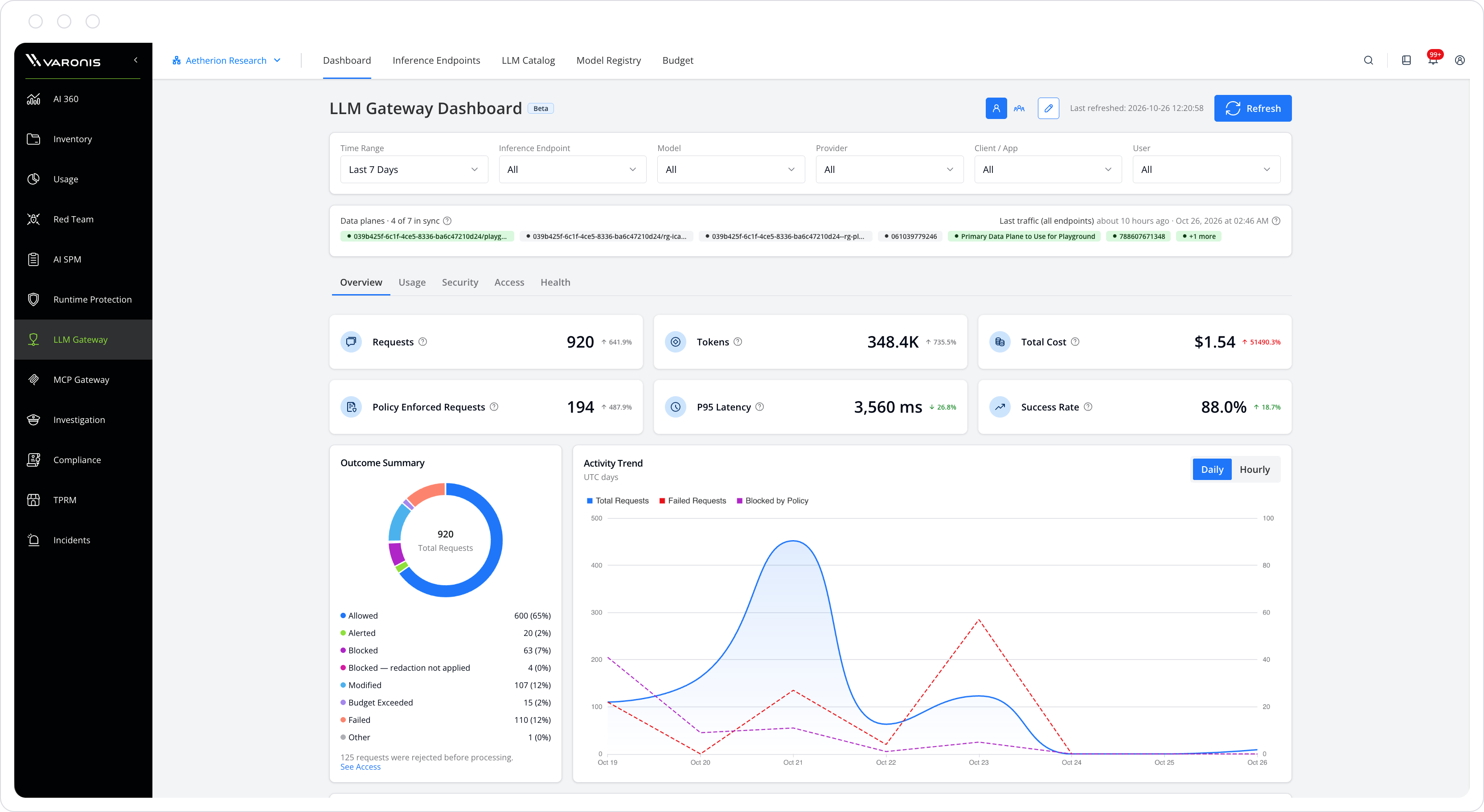
Varonis added gateways and browser-level controls for AI agent and LLMLLMA large language model, a neural network trained on large amounts of text to recognize patterns and generate language. Applications use it for tasks such as answering, summarizing and writing code. usage, giving teams a policy point for risky AI interactions instead of relying on user guidance alone. minimal added a Box Egress Proxy with client-key limits and a named-secret store, narrowing how outbound access and stored secrets are handled.
Xalgorix tightened scan scope to the authorized host and made every HTTP/HTTPSHTTPSHTTP carried over an encrypted TLS connection. It protects traffic in transit and lets a browser verify the server's certificate. finding reproducible with a ready-to-run curl command.︀︄︇︀︅︉︀︅︀︀︃︀︀︅︅︀︅︊︀︄︆︀︃︄
Xalgorix autonomous AI pentesting agents — real-time reconnaissance, vulnerability detection, and exploitation orchestration. Go + TypeScript.
Xalgorix tightened scan scope to the authorized host and made every HTTP/HTTPSHTTPSHTTP carried over an encrypted TLS connection. It protects traffic in transit and lets a browser verify the server's certificate. finding reproducible with a ready-to-run curl command.︀︄︇︀︅︉︀︅︀︀︃︀︀︅︅︀︅︊︀︄︆︀︃︄
└──▷ WHAT SHIPPED ·
2 FEATURES0 OF 2 FEATURESmost completely described firstwhat's the number?
Each feature carries 0–100 for how completely the vendor documented
it — not how big or important the work is. A major capability
described in eight words scores low, and that is the finding.
depth0–40what it does and how it works or what changed
specificity0–30names real surfaces — APIs, flags, formats, limits, numbers
actionability0–30enough to go use it — a named endpoint, flag, or config key tops this; a UI path is a starting point
Code and config rank first by construction: a documented endpoint,
flag or config key scores at the top of specificity and actionability,
so it sorts above a feature described only in prose. Under
60 the notes go thin — everything below the “thinner
coverage” line is thinner documentation, not smaller work.
Hover any meter for that feature's three sub-scores.
0100
Replayable curl command in findingsimproved77how completely this was documenteddepth30/40specificity22/30actionability25/3077 / 100
Every HTTP/HTTPS finding now includes a copy-pasteable curl command in its proof of concept, built from the finding's reported method and endpoint when the agent did not already produce one — literal ../ path-traversal segments, URL encoding, and shell-quoting are preserved so the request replays exactly.︀︄︇︀︅︉︀︅︀︀︃︀︀︅︅︀︅︊︀︄︆︀︃︄
— Concrete, runnable output with preserved encoding details namedv4.6.190
thinner coverage below
0200
Third-party domain scanning restrictionimproved53how completely this was documenteddepth25/40specificity18/30actionability10/3053 / 100
Single-host scans now skip third-party domains — CDNs, partner backends, and external APIs discovered in the target's pages, redirects, or JavaScript — noting them but not scanning them, keeping requests within the authorized host.
— Explains mechanism and scope but no config surface namedv4.6.192
RedAmon is an open-source, self-hosted AI penetration testing. RedAmon maps your attack surface into a graph, exploits it with human approval gates and opens PRs that fix it.
RedAmon's v7.8.0 release introduces multi-user RBACRBACRole-based access control, where permissions are assigned to roles such as reader or administrator and users receive those roles. It makes access easier to manage than individual permission lists. with granular on/off switches, a new IAMIAMIdentity and Access Management — a framework of policies and services for controlling who can authenticate to systems and what resources they are authorized to use, letting cyber tools enforce least-privilege and audit access. console, project sharing with ownership transfer, hostname-aware scanning modes, and a 98-permission enforcement registry — alongside several breaking security changes including plaintext secret storage, non-root MCPMCPModel Context Protocol, a standard for connecting AI applications to external tools and data sources. A compatible server exposes capabilities an assistant can use through a common interface. execution, and restricted saved graph queries.︀︄︇︀︅︉︀︅︀︀︃︀︀︅︅︀︅︊︀︄︆︀︃︄
└──▷ WHAT SHIPPED ·
15 FEATURES6 OF 15 FEATURESmost completely described firstwhat's the number?
Each feature carries 0–100 for how completely the vendor documented
it — not how big or important the work is. A major capability
described in eight words scores low, and that is the finding.
depth0–40what it does and how it works or what changed
specificity0–30names real surfaces — APIs, flags, formats, limits, numbers
actionability0–30enough to go use it — a named endpoint, flag, or config key tops this; a UI path is a starting point
Code and config rank first by construction: a documented endpoint,
flag or config key scores at the top of specificity and actionability,
so it sorts above a feature described only in prose. Under
60 the notes go thin — everything below the “thinner
coverage” line is thinner documentation, not smaller work.
Hover any meter for that feature's three sub-scores.
0101
Granular RBAC subsystem switchesbreaking95how completely this was documenteddepth35/40specificity30/30actionability30/3095 / 100
Control the five RBAC subsystems independently with RBAC_IDENTITY_ENABLED, RBAC_PERMISSIONS_ENABLED, RBAC_SHARING_ENABLED, RBAC_SHARING_WRITE_ENABLED, and RBAC_GOVERNANCE_ENABLED in .env — all default on, so the update enables them unless .env already sets them, changing access-control behaviour on existing installs; set any to false before updating to keep it off.︀︄︇︀︅︉︀︅︀︀︃︀︀︅︅︀︅︊︀︄︆︀︃︄ Downgrading to 7.7.2 drops every table and column added since, along with their data — run docker compose exec webapp node scripts/rbac-upgrade-preview.mjs --downgrade and back up the database before attempting it.
Keep RBAC sharing disabled on an existing shared server while you review legacy user grants before the rollout.
— Names all five env vars and the downgrade commandv7.8.0
0200
Hostname scanning modes for IP-mode projectsnew80how completely this was documenteddepth30/40specificity30/30actionability20/3080 / 100
IP-mode projects now add a hostname scanning mode selector with four options: IP only (default), Record hostnames, Record + scan matching, and Record + scan all — controllable via MCP with create_project and update_project_scope.
— Names all four modes and the two MCP callsv7.8.0
0302
Metasploit project console leasingbreaking75how completely this was documenteddepth25/40specificity25/30actionability25/3075 / 100
Metasploit now serves one project at a time; a project releases its console 10 minutes after the last command, adjustable via MSF_PROJECT_LEASE_IDLE_S in .env (default: 10 minutes).
— Explains mechanism and names the config keyv7.8.0
0400
Project sharing and ownership transfernew75how completely this was documenteddepth35/40specificity25/30actionability15/3075 / 100
Adds project sharing at Viewer (Read) and Analyst (Read + Raw data and files) levels with an optional end date, a note, and a Shared with me view on the Projects page; ownership transfer at the Read + Write share level moves the graph, settings, and history atomically after both parties confirm with their password; admins holding projects:oversee (Full admin or Security auditor role) can open any project read-only once sharing is active, with each read audited and shown to the owner.
— Rich mechanism but no exact command or endpointv7.8.0
0503
Named permission registry and enforcementnew75how completely this was documenteddepth30/40specificity25/30actionability20/3075 / 100
RedAmon adds a registry of 98 named permissions enforced by a single policy on every route, with MCP tokens capped to their owner's permissions; agent phase approvals now require agent:approve_phase or agent:approve_dangerous permissions.
— Names specific permission strings and scopev7.8.0
0600
Root assignment via CLI or env varnew70how completely this was documenteddepth20/40specificity20/30actionability30/3070 / 100
Set Root on the command line with ./redamon.sh set-root <email> or via ADMIN_EMAIL in a deploy environment.
Promote a specific admin account to Root from the terminal after a multi-admin upgrade.
IAM console at /adminbreaking70how completely this was documenteddepth30/40specificity25/30actionability15/3070 / 100
The header Users page is replaced by a multi-user IAM console at /admin, with sections for users, permission sets, admin profiles, every project and share, quotas, per-plugin allowlists, instance LLMLLMA large language model, a neural network trained on large amounts of text to recognize patterns and generate language. Applications use it for tasks such as answering, summarizing and writing code. providers, sharing policy, audit retention, and the audit log.
— Names every console section but only a UI pathv7.8.0
0800
Audit event forwarding to stdoutnew65how completely this was documenteddepth20/40specificity20/30actionability25/3065 / 100
Print every audit event as a JSON line for a log pipeline by setting AUDIT_FORWARD=stdout in .env.
Forward all audit events to a SIEMSIEMSecurity information and event management, collecting logs from many systems and correlating events to find suspicious activity. Analysts use it to investigate alerts and incidents. or log pipeline by printing each as a JSON line to stdout.
stdio MCP servers run as non-root uidbreaking65how completely this was documenteddepth25/40specificity20/30actionability20/3065 / 100
stdio MCP servers now run as uid 10001 instead of root; tools installed under /root must be moved to a system-wide path or their directory chowned to 10001.
Admin session security hardeningimproved60how completely this was documenteddepth25/40specificity20/30actionability15/3060 / 100
Admin sessions are now limited to 12 hours with a 60-minute idle timeout and support sign-out of individual device sessions; sign-in enforces a 12-character minimum password floor and no longer reveals whether an account exists.
— Concrete limits but no command or config keyv7.8.0
thinner coverage below
1100
Saved graph query restrictionsbreaking55how completely this was documenteddepth20/40specificity25/30actionability10/3055 / 100
Saved graph views that use shortestPath, apoc calls, or non-standard characters (such as a non-breaking space) are now refused with HTTP 400.
— Names exact refused functions and status codev7.8.0
1206
Secrets now stored in clear textbreaking50how completely this was documenteddepth20/40specificity20/30actionability10/3050 / 100
Neo4j database, graph snapshots, project exports, and the recon JSON now store found secrets in clear text; database access and exported files must be treated as credential material.
— Clear warning but no mitigation step givenv7.8.0
1300
ZAP Ajax Spider memory allocation raisedbreaking35how completely this was documenteddepth10/40specificity15/30actionability10/3035 / 100
BROKER_TOOL_MEM_BYTES was raised to 3g in 7.6.2; a lower value in .env starves the ZAP Ajax Spider.
Per-project tool image settings removeddeprecated30how completely this was documenteddepth10/40specificity15/30actionability5/3030 / 100
The 17 per-project tool image settings were removed in 7.7.0; tool images are now fixed.
— States removal only, no replacement detailv7.8.0
1500
Agent-in-the-loop and MCP server forced onbreaking30how completely this was documenteddepth10/40specificity15/30actionability5/3030 / 100
7.6.0 enables AGENT_IN_THE_LOOP_ENABLED and MCP_SERVER_ENABLED once, even where MCP_SERVER_ENABLED=false was previously set.
— Names flags but no mitigation or mechanismv7.8.0
└──▷ BREAKING ON UPGRADE
!
The five RBAC switches (RBAC_IDENTITY_ENABLED, RBAC_PERMISSIONS_ENABLED, RBAC_SHARING_ENABLED, RBAC_SHARING_WRITE_ENABLED, RBAC_GOVERNANCE_ENABLED) are on by default; the update enables them unless .env already sets them, changing access-control behaviour on existing installs.
!
The header Users page is replaced by IAM at /admin.
!
stdio MCP servers now run as uid 10001 instead of root; tools installed under /root must be moved to a system-wide path or their directory chowned to 10001.
!
Metasploit now serves one project at a time; a project releases its console 10 minutes after the last command (adjustable via MSF_PROJECT_LEASE_IDLE_S).
!
Neo4j database, graph snapshots, project exports, and the recon JSON now store found secrets in clear text; database access and exported files must be treated as credential material.
!
Saved graph views that use shortestPath, apoc calls, or non-standard characters (such as a non-breaking space) are now refused with HTTP 400.
!
Downgrading to 7.7.2 drops every table and column added since, along with their data; run docker compose exec webapp node scripts/rbac-upgrade-preview.mjs --downgrade and back up the database before attempting it.
!
BROKER_TOOL_MEM_BYTES was raised to 3g in 7.6.2; a lower value in .env starves the ZAP Ajax Spider.
!
The 17 per-project tool image settings were removed in 7.7.0; tool images are now fixed.
!
7.6.0 enables AGENT_IN_THE_LOOP_ENABLED and MCP_SERVER_ENABLED once, even where MCP_SERVER_ENABLED=false was previously set.
GitHub is a web-based platform for version control and collaborative software development using Git repositories.
GitHub adds an AI Scan REST APIREST APIA web API design style where clients interact with resources over HTTP using standard methods like GET, POST, and DELETE, giving cyber tools a predictable, language-agnostic way to integrate with external services., three new Copilot models, Dependabot pause on inactive repos, personal-account issue types, and alert direct links.
Manage AI Scan for repositories via the REST API, enabling automated governance of AI-generated code scanning at scale.
New integrationGemini 4 Hydrogen is now available as a model option in GitHub Copilot.
Gemini 4 Carbon is now available as a model option in GitHub Copilot.
Claude Fable 5.2 is now available as a model option in GitHub Copilot.
Issue types and fields are now available for personal account projects, bringing structured issue metadata to individual users.
+3 moreshow less
Public monitoring alerts now include direct links for faster navigation to specific alert details.
Dependabot alerts now pause automatically on inactive repositories to reduce noise.
GitHub dashboard now shows more informative content.
Veracode rolled out its modernized application page UI to all FedRAMPFedRAMPA US government program that standardizes cloud security authorization, letting vendors get a single assessment accepted across federal agencies instead of repeating the process for each one. customers, adding engine version pinning and in-page SCASCASoftware composition analysis, identifying third-party dependencies and checking them for known vulnerabilities and license issues. It covers software a team uses rather than writes itself. scanning while retiring the legacy UI for that region.︀︄︇︀︅︉︀︅︀︀︃︀︀︅︅︀︅︊︀︄︆︀︃︄
Veracode is a cloud-based application security platform that scans code for vulnerabilities using static, dynamic, and software composition analysis testing methods.
Veracode rolled out its modernized application page UI to all FedRAMPFedRAMPA US government program that standardizes cloud security authorization, letting vendors get a single assessment accepted across federal agencies instead of repeating the process for each one. customers, adding engine version pinning and in-page SCASCASoftware composition analysis, identifying third-party dependencies and checking them for known vulnerabilities and license issues. It covers software a team uses rather than writes itself. scanning while retiring the legacy UI for that region.︀︄︇︀︅︉︀︅︀︀︃︀︀︅︅︀︅︊︀︄︆︀︃︄
└──▷ WHAT SHIPPED ·
3 FEATURES1 OF 3 FEATURESmost completely described firstwhat's the number?
Each feature carries 0–100 for how completely the vendor documented
it — not how big or important the work is. A major capability
described in eight words scores low, and that is the finding.
depth0–40what it does and how it works or what changed
specificity0–30names real surfaces — APIs, flags, formats, limits, numbers
actionability0–30enough to go use it — a named endpoint, flag, or config key tops this; a UI path is a starting point
Code and config rank first by construction: a documented endpoint,
flag or config key scores at the top of specificity and actionability,
so it sorts above a feature described only in prose. Under
60 the notes go thin — everything below the “thinner
coverage” line is thinner documentation, not smaller work.
Hover any meter for that feature's three sub-scores.
0100
Static analysis engine version pinningnew73how completely this was documenteddepth25/40specificity20/30actionability28/3073 / 100
Customers can pin static analysis engine versions at the application profile level, a capability not available in the legacy UI.︀︄︇︀︅︉︀︅︀︀︃︀︀︅︅︀︅︊︀︄︆︀︃︄ In the Veracode Platform, open the application profile, go to application settings, locate Static analysis engine version pinning, and select the engine version to lock so scan results stay comparable across builds.
Lock a project to a specific static analysis engine version so scan results stay comparable across builds — reach this setting inside the application profile after signing in to the new UI.
📍In the Veracode Platform, open the application profile › navigate to the application settings › locate Static analysis engine version pinning and select the engine version to lock.
Upload and Scan SCA from application profilenew65how completely this was documenteddepth22/40specificity18/30actionability25/3065 / 100
Users can run Upload and Scan SCA scans directly from individual application profiles in the new UI, a capability not available in the legacy UI. In the Veracode Platform, open the application profile and select Upload and Scan SCA to initiate an SCA scan scoped to that application.
Kick off an SCA scan without leaving the application profile page — useful when you want SCA results alongside static findings for the same app.
📍In the Veracode Platform, open the application profile › select Upload and Scan SCA to initiate an SCA scan scoped to that individual application profile.
Modernized UI enabled for FedRAMP, legacy retiredbreaking40how completely this was documenteddepth15/40specificity15/30actionability10/3040 / 100
Veracode's modernized application page UI is now enabled for all FedRAMP customers, and the legacy application page UI has been retired for that region, making it no longer available to them.
Get started with Semgrep to help you catch, flag, and fix real vulnerabilities before they ship.
Semgrep shipped a hosted MCPMCPModel Context Protocol, a standard for connecting AI applications to external tools and data sources. A compatible server exposes capabilities an assistant can use through a common interface. server for AppSecAppSecApplication security: the practice of finding and fixing vulnerabilities in software during design, development, and testing. Cyber tools build on AppSec workflows to shift vulnerability detection earlier in the development lifecycle. Platform, an observe-only mode for Guardian, and bring-your-own AI provider keys for Agentic Workflows, alongside Supply Chain dependency-path tracing, expanded language parsing, and a tenfold cut in autotriage credit cost.︀︄︇︀︅︉︀︅︀︀︃︀︀︅︅︀︅︊︀︄︆︀︃︄
└──▷ WHAT SHIPPED ·
10 FEATURES2 OF 10 FEATURESmost completely described firstwhat's the number?
Each feature carries 0–100 for how completely the vendor documented
it — not how big or important the work is. A major capability
described in eight words scores low, and that is the finding.
depth0–40what it does and how it works or what changed
specificity0–30names real surfaces — APIs, flags, formats, limits, numbers
actionability0–30enough to go use it — a named endpoint, flag, or config key tops this; a UI path is a starting point
Code and config rank first by construction: a documented endpoint,
flag or config key scores at the top of specificity and actionability,
so it sorts above a feature described only in prose. Under
60 the notes go thin — everything below the “thinner
coverage” line is thinner documentation, not smaller work.
Hover any meter for that feature's three sub-scores.
0101
MCP server scanning and hosted AppSec Platform servernew95how completely this was documenteddepth35/40specificity30/30actionability30/3095 / 100
semgrep_scan in the MCP server can now scan files outside the client workspace via SEMGREP_MCP_ALLOW_SCAN_OUTSIDE_WORKSPACE=true.︀︄︇︀︅︉︀︅︀︀︃︀︀︅︅︀︅︊︀︄︆︀︃︄ A new hosted Model Context ProtocolModel Context ProtocolModel Context Protocol, a standard for connecting AI applications to external tools and data sources. A compatible server exposes capabilities an assistant can use through a common interface. (MCP) server for AppSec Platform (public beta) is reachable from Claude Code, Codex, Cursor, VS Code, or any MCP client via semgrep mcp to search and triage findings, run scans, and manage policies from an editor or terminal.
Supply Chain dependency path, exit codes, and matching rangesimproved93how completely this was documenteddepth35/40specificity30/30actionability28/3093 / 100
Supply Chain now shows the dependency path for transitive findings in Go projects when dependency paths are turned on and local builds are allowed with --allow-local-builds. Running semgrep ci --no-suppress-errors with --allow-local-builds now exits with code 2 when dependency resolution fails for a subproject, listing affected dependency sources while still reporting findings from other subprojects. Incident cards now show how many projects have matching ranges — projects whose file declares an affected Python package with a version range or without a version — in a new Potentially matching: declared in a version range section listing each project, branch, file, and declared version.
Show transitive Go dependency paths for a Supply Chain scan when running local builds, so each vulnerable transitive package is traceable to its direct dependency.
$ semgrep ci --allow-local-builds--no-suppress-errors
Guardian observe-only mode and Copilot CLI betanew80how completely this was documenteddepth30/40specificity25/30actionability25/3080 / 100
Guardian gains an observe-only mode, enabled via SEMGREP_GUARDIAN_OBSERVE_ONLY=1, letting Guardian scan as usual while hiding results from developers and coding agents so teams can audit findings before rollout. Guardian for GitHub Copilot CLI also enters public beta on macOS and Linux.
Roll out Guardian to a team in observe-only mode first to audit what it finds without surfacing alerts to developers.
Agentic Workflows AI provider keys and issue notesnew78how completely this was documenteddepth30/40specificity28/30actionability20/3078 / 100
Agentic Workflows now accept bring-your-own API keys for OpenAI, Anthropic, Google Gemini, xAI, and Microsoft Foundry, used for all model requests and AI-powered detection instead of Semgrep-managed OpenAI or Amazon Bedrock, with Microsoft Foundry (formerly Azure OpenAI) getting its own card in AI provider settings accepting a resource endpoint, an API key, and one or more deployments each with its model; and notes can now be added to Agentic Workflows issues via a New note button at the top of an issue's activity.
— Names all five providers and Foundry's config fields. Names exact UI button location.changelog-20261115-83ba9aa3
0502
Intel Mac CLI binaries discontinuedbreaking70how completely this was documenteddepth25/40specificity25/30actionability20/3070 / 100
The Semgrep CLI no longer ships binaries for Intel Macs; version 1.182 is the last release that supports them. Intel Mac users should upgrade to the semgrep/semgrep Docker image or move to Apple silicon with a native arm64 Python.
Ignore rate replaces false positive rate metricimproved65how completely this was documenteddepth25/40specificity25/30actionability15/3065 / 100
The False positive rate column in the rules table is now Ignore rate, counting findings triaged as ignored for any reason plus findings ignored with a nosemgrep comment, with per-triage-reason counts visible on hover.
Open-source dependency licenses link in CLI helpnew60how completely this was documenteddepth15/40specificity25/30actionability20/3060 / 100
A link to Semgrep's open-source dependency licenses now appears in the --help output of most semgrep commands under a new THIRD-PARTY LICENSES section pointing to semgrep.dev/cli-credits.
Parser support for Bash, Clojure, and Swift 5.9 syntaximproved58how completely this was documenteddepth20/40specificity28/30actionability10/3058 / 100
Semgrep Code now parses newer Bash arithmetic expressions such as $(( $X * 2 )), Clojure files using reader-evaluated metadata (^#=(...)) or the legacy #^ prefix, and Swift 5.9 syntax including macros, parameter packs, and if/switch expressions.
Autotriage credit cost reduced tenfoldimproved50how completely this was documenteddepth20/40specificity25/30actionability5/3050 / 100
Autotriage cost drops from 1 AI credit per finding to 0.1 credits (10 triages per credit) starting October 31, 2026, for paid plans, trials, and the free plan.
The Semgrep CLI no longer ships binaries for Intel Macs; version 1.182 is the last release that supports them. Upgrade Intel Mac users to the semgrep/semgrep Docker image or move to Apple silicon with a native arm64 Python.
Psalm-plugin-laravel v4.20.0 improves migration analysis for morph columns and adds support for @mixin \Eloquent models, while bumping its Psalm dependency requirements.︀︄︇︀︅︉︀︅︀︀︃︀︀︅︅︀︅︊︀︄︆︀︃︄
Psalm-plugin-laravel is a security-focused Laravel static analyser
Psalm-plugin-laravel v4.20.0 improves migration analysis for morph columns and adds support for @mixin \Eloquent models, while bumping its Psalm dependency requirements.︀︄︇︀︅︉︀︅︀︀︃︀︀︅︅︀︅︊︀︄︆︀︃︄
└──▷ WHAT SHIPPED ·
3 FEATURES0 OF 3 FEATURESmost completely described firstwhat's the number?
Each feature carries 0–100 for how completely the vendor documented
it — not how big or important the work is. A major capability
described in eight words scores low, and that is the finding.
depth0–40what it does and how it works or what changed
specificity0–30names real surfaces — APIs, flags, formats, limits, numbers
actionability0–30enough to go use it — a named endpoint, flag, or config key tops this; a UI path is a starting point
Code and config rank first by construction: a documented endpoint,
flag or config key scores at the top of specificity and actionability,
so it sorts above a feature described only in prose. Under
60 the notes go thin — everything below the “thinner
coverage” line is thinner documentation, not smaller work.
Hover any meter for that feature's three sub-scores.
0100
UUID/ULID typing for morph columnsimproved75how completely this was documenteddepth30/40specificity25/30actionability20/3075 / 100
The plugin now honors Schema::morphUsingUuids() and Schema::morphUsingUlids() for morphs() and nullableMorphs() columns in migration analysis: the *_id column is now typed as string instead of int when these UUIDUUIDA universally unique identifier, usually a 128-bit value used to identify an object across systems. It is designed to make independently generated identifiers unlikely to collide./ULID morph modes are used.︀︄︇︀︅︉︀︅︀︀︃︀︀︅︅︀︅︊︀︄︆︀︃︄
— Names exact methods and before/after type changev4.20.0
0200
@mixin \Eloquent model supportnew62how completely this was documenteddepth25/40specificity22/30actionability15/3062 / 100
Models annotated with @mixin \Eloquent (as written by laravel-ide-helper's ide-helper:models --write) or another custom @mixin are now supported, along with inherited #[UseEloquentBuilder], so that builder calls on these models resolve correctly.
— Names annotation and source command but no examplev4.20.0
0300
Raised Psalm dependency requirementsbreaking60how completely this was documenteddepth15/40specificity25/30actionability20/3060 / 100
This release requires vimeo/psalm^7.5.0 (previously ^7.3.1) and psalm/psalm-plugin-api^0.4.3.
— Exact version constraints given, no migration notesv4.20.0
└──▷ BREAKING ON UPGRADE
!
Requires vimeo/psalm^7.5.0 (previously ^7.3.1) and psalm/psalm-plugin-api^0.4.3.
Cloudsmith added Hugging Face Tree API support for CLI-based model downloads, enriched vulnerability records with EPSSEPSSExploit Prediction Scoring System, an estimate of the probability that a published vulnerability will be exploited in the next 30 days. It helps prioritize investigation and patching. exploitability scores, and made several CLI and logging quality-of-life improvements.︀︄︇︀︅︉︀︅︀︀︃︀︀︅︅︀︅︊︀︄︆︀︃︄
Cloudsmith is a fully-managed artifact management, software supply chain security, and software distribution platform.
Cloudsmith added Hugging Face Tree API support for CLI-based model downloads, enriched vulnerability records with EPSSEPSSExploit Prediction Scoring System, an estimate of the probability that a published vulnerability will be exploited in the next 30 days. It helps prioritize investigation and patching. exploitability scores, and made several CLI and logging quality-of-life improvements.︀︄︇︀︅︉︀︅︀︀︃︀︀︅︅︀︅︊︀︄︆︀︃︄
└──▷ WHAT SHIPPED ·
3 FEATURES0 OF 3 FEATURESmost completely described firstwhat's the number?
Each feature carries 0–100 for how completely the vendor documented
it — not how big or important the work is. A major capability
described in eight words scores low, and that is the finding.
depth0–40what it does and how it works or what changed
specificity0–30names real surfaces — APIs, flags, formats, limits, numbers
actionability0–30enough to go use it — a named endpoint, flag, or config key tops this; a UI path is a starting point
Code and config rank first by construction: a documented endpoint,
flag or config key scores at the top of specificity and actionability,
so it sorts above a feature described only in prose. Under
60 the notes go thin — everything below the “thinner
coverage” line is thinner documentation, not smaller work.
Hover any meter for that feature's three sub-scores.
0100
Hugging Face Tree API supportnew67how completely this was documenteddepth20/40specificity25/30actionability22/3067 / 100
Cloudsmith now serves Hugging Face's Tree API so hf download and snapshot_download work through Cloudsmith on huggingface_hub 1.22 and later.︀︄︇︀︅︉︀︅︀︀︃︀︀︅︅︀︅︊︀︄︆︀︃︄
Secretlint is a pluggable linting tool to prevent committing credential.
Secretlint v14 eliminates the need for a config file by bundling the recommended rules directly into the package, adds a --profile flag for performance diagnostics, and claims 7x-24x faster scans alongside a set of breaking changes to its ignore-file handling and rule plugin API.︀︄︇︀︅︉︀︅︀︀︃︀︀︅︅︀︅︊︀︄︆︀︃︄
└──▷ WHAT SHIPPED ·
8 FEATURES2 OF 8 FEATURESmost completely described firstwhat's the number?
Each feature carries 0–100 for how completely the vendor documented
it — not how big or important the work is. A major capability
described in eight words scores low, and that is the finding.
depth0–40what it does and how it works or what changed
specificity0–30names real surfaces — APIs, flags, formats, limits, numbers
actionability0–30enough to go use it — a named endpoint, flag, or config key tops this; a UI path is a starting point
Code and config rank first by construction: a documented endpoint,
flag or config key scores at the top of specificity and actionability,
so it sorts above a feature described only in prose. Under
60 the notes go thin — everything below the “thinner
coverage” line is thinner documentation, not smaller work.
Hover any meter for that feature's three sub-scores.
0100
Breaking changes to rule plugin APIbreaking85how completely this was documenteddepth35/40specificity30/30actionability20/3085 / 100
Lint results and --format json output no longer contain sourceContent; formatters now receive getSource(filePath) instead.︀︄︇︀︅︉︀︅︀︀︃︀︀︅︅︀︅︊︀︄︆︀︃︄ configFilePath returned by loadConfig() and loadConfigDescriptor() is now string | undefined instead of always a string. The enableIDScanRule option of the aws rule must now be a boolean (true), not a string ("true"). Files are linted in any order, so a rule must not keep state between files. "all" is removed from SecretLintRuleContentType, and create is now optional in SecretLintRuleCreator.
— Enumerates every API surface change with before/after typesv14.0.0
0200
Ignore-file handling: `--no-gitignore` and `--secretlintignore`breaking80how completely this was documenteddepth30/40specificity25/30actionability25/3080 / 100
--no-gitignore opts out of .gitignore cascading so files Git would normally exclude can be scanned. --secretlintignore <path> reads an extra ignore list as a path from the current directory, combined with .secretlintignore rather than replacing it. .gitignore files are now part of the combined ignore set, and a ! re-include rule only applies within the same ignore-file kind.
Scan build artifacts or other files excluded by .gitignore — useful for verifying generated output before release.
$ secretlint --no-gitignore "dist/**/*"
— Names both flags and the combined-ignore mechanism with a runnable examplev14.0.0
0301
Built-in rules bundled into `@secretlint/core`breaking80how completely this was documenteddepth30/40specificity30/30actionability20/3080 / 100
Installing only secretlint now provides all official rules bundled inside @secretlint/core — separate rule packages (@secretlint/secretlint-rule-preset-recommend, @secretlint/secretlint-rule-aws, and others) are no longer published and installed copies are ignored, with rule ids resolving from the bundle. Code that imported a rule from @secretlint/secretlint-rule-* must now import it from @secretlint/core/builtin/rules/<name>.
— Names old and new package/import paths preciselyv14.0.0
0400
`--profile` performance summary flagnew70how completely this was documenteddepth25/40specificity20/30actionability25/3070 / 100
Profile scan performance by phase, rule, pattern, and file using --profile; this now prints a performance summary instead of lint results.
Identify where scan time is going across phases, rules, patterns, and files after optimizing a large repo.
$ secretlint --profile "**/*"
— Named flag with runnable example and clear output changev14.0.0
0500
`--secretlintrc` single-file resolutionbreaking65how completely this was documenteddepth30/40specificity20/30actionability15/3065 / 100
--secretlintrc <path> now resolves exactly one config file from the current directory; parent-directory search and automatic extension appending are no longer performed.
— Exact before/after behavior for a named flag, no example givenv14.0.0
0602
Zero-config operation with recommended rulesbreaking60how completely this was documenteddepth25/40specificity15/30actionability20/3060 / 100
Running Secretlint with no configuration file now applies the recommended rules automatically, instead of exiting with status 2 as before.
Scan an entire repo with no config file — recommended rules run automatically without any setup.
$ npx secretlint "**/*"
— Clear before/after but no mechanism beyond rule auto-selectionv14.0.0
thinner coverage below
0700
Declarative rule patterns with `patterns` and `keywords`new55how completely this was documenteddepth25/40specificity20/30actionability10/3055 / 100
Write declarative rule patterns using patterns with keywords so Secretlint skips files containing no matching keyword, keeping custom rule scans fast.
— Names the config keys but no runnable examplev14.0.0
0800
Faster scanning via keyword pre-filteringimproved55how completely this was documenteddepth30/40specificity20/30actionability5/3055 / 100
Large repositories scan 7x to 24x faster through keyword pre-filtering and worker-thread file reading, without native modules or WebAssemblyWebAssemblyA binary instruction format that runs in browsers and server runtimes at near-native speed, letting developers compile C, Rust, or other languages into a portable, sandboxed module any compliant host can execute..
— Explains mechanism and gives a figure but no actionable commandv14.0.0
└──▷ ALSO FROM THESE RELEASES
└──▷ BREAKING ON UPGRADE
!
Running with no configuration file now applies the recommended rules instead of exiting with status 2.
!
--secretlintrc <path> now resolves exactly one file from the current directory and no longer searches parent directories or appends a file extension.
!
--secretlintignore <path> is now a path from the current directory and is read in addition to .secretlintignore rather than replacing it.
!
.gitignore files are now part of the combined ignore set; a ! rule only re-includes files within the same ignore-file kind.
!
The enableIDScanRule option of the aws rule must now be a boolean (true), not a string ("true").
!
--profile now prints a performance summary instead of lint results.
!
Results and --format json output no longer contain sourceContent; formatters now receive getSource(filePath) instead.
!
configFilePath returned by loadConfig() and loadConfigDescriptor() is now string | undefined instead of always a string.
!
Files are linted in any order; a rule must not keep state between files.
!
"all" is removed from SecretLintRuleContentType, and create is now optional in SecretLintRuleCreator.
!
Code that imported a rule from @secretlint/secretlint-rule-* must now import it from @secretlint/core/builtin/rules/<name>.
!
Official rule packages (@secretlint/secretlint-rule-preset-recommend, @secretlint/secretlint-rule-aws, and others) are no longer published from v14; installed copies are ignored and rule ids resolve from the bundle inside secretlint.
MobSF is an automated mobile application pen-testing, malware analysis and security assessment framework for Android, iOS and Windows apps, with static and dynamic analysis.
MobSF adds JavaScript/TypeScript and hybrid mobile app analysis with Hermes bytecodeHermes bytecodeA compact binary format for JavaScript, produced by Meta's Hermes compiler, that replaces raw JS source so mobile apps start faster and consume less memory at runtime. decompilation, brings Windows APPXAPPXMicrosoft's packaging format for Windows applications, used to distribute and install software with sandboxed file system and registry access, making it attractive for cyber tools that need clean, self-contained deployment on Windows./MSIXMSIXA Windows application packaging format from Microsoft that bundles an app with its dependencies and metadata for clean install, update, and removal without registry pollution or file conflicts. static analysis fully in-process, and expands iOS entitlements, binary and SBOMSBOMA software bill of materials, an inventory of the components and versions inside an application. It helps teams find affected software when a dependency has a vulnerability or licensing issue.-adjacent checks, alongside new malware-domain lookups, Flutter scanning and a rate limiter for threat-database updates.︀︄︇︀︅︉︀︅︀︀︃︀︀︅︅︀︅︊︀︄︆︀︃︄
└──▷ WHAT SHIPPED ·
6 FEATURES1 OF 6 FEATURESmost completely described firstwhat's the number?
Each feature carries 0–100 for how completely the vendor documented
it — not how big or important the work is. A major capability
described in eight words scores low, and that is the finding.
depth0–40what it does and how it works or what changed
specificity0–30names real surfaces — APIs, flags, formats, limits, numbers
actionability0–30enough to go use it — a named endpoint, flag, or config key tops this; a UI path is a starting point
Code and config rank first by construction: a documented endpoint,
flag or config key scores at the top of specificity and actionability,
so it sorts above a feature described only in prose. Under
60 the notes go thin — everything below the “thinner
coverage” line is thinner documentation, not smaller work.
Hover any meter for that feature's three sub-scores.
0100
JavaScript/TypeScript and hybrid app code analysisnew85how completely this was documenteddepth35/40specificity28/30actionability22/3085 / 100
Scans code with Tree-sitterTree-sitterA parser-generator library, maintained by the Tree-sitter project, that builds fast, incremental, error-tolerant syntax trees for source code; cyber tools use it to parse and query code without writing a full compiler frontend.ASTASTAn abstract syntax tree, a structured representation of parsed code. Tools inspect or transform this tree to understand expressions and statements rather than just matching text. rules and detects frameworks including React Native, Expo, Cordova/Ionic, Capacitor and NativeScript.︀︄︇︀︅︉︀︅︀︀︃︀︀︅︅︀︅︊︀︄︆︀︃︄ Decompiles Hermes bytecode files (.bundle, .jsbundle, .hbc) so AST rules, URL/domain extraction and secret scanningsecret scanningChecking files, code or other data for exposed credentials such as passwords, API keys and tokens. Findings help teams remove the secret and revoke or rotate it. work on Hermes bundles, inspects hybrid app configuration via Cordova config.xml, Capacitor capacitor.config.json and Expo app config checks, discovers React Native @ReactMethod bridges, and adds a new View JavaScript source browser and JavaScript / Hybrid Code Analysis report section for Android and iOS.
Windows APPX/MSIX in-process static analysisnew85how completely this was documenteddepth35/40specificity30/30actionability20/3085 / 100
Runs Windows APPX/MSIX static analysis in-process on any host, without requiring a Windows VM, BinSkim or BinScope. Checks PE binary hardening with lief for every packaged binary (ASLR, high entropy VA, DEP, CFGCFGControl Flow Graph — a directed graph representing all paths execution can take through a program, used by analysis tools to reason about reachability, dead code, and vulnerability patterns without running the code., SafeSEH, /GS, RWX sections, Authenticode, SDL banned APIs, including .NET IL-only assembly detection), analyses AppxManifest.xml capabilities and extensions and AppxSignature.p7x signer and publisher details for .msix, .appxbundle and .msixbundle formats, and detects strings, URLs, emails, secrets, malware domains and trackers inside the packages.
— Lists every hardening check, manifest file and package formatv4.6.6
0300
Expanded iOS security checksnew76how completely this was documenteddepth30/40specificity28/30actionability18/3076 / 100
Analyses Entitlements and Provisioning Profile security for IPA and iOS source ZIP scans, applies modern iOS binary rules covering insecure TLS validation, weak Keychain accessibility, WKWebView file access, UIPasteboard and raw SQLite API use, performs cross-platform lief Objective-C/Swift class dumps, and checks iOS Info.plist file-sharing settings and tracker detection from embedded .framework bundles.
— Names specific APIs, files and checks coveredv4.6.6
0400
Rate-limited threat database updatesimproved73how completely this was documenteddepth20/40specificity25/30actionability28/3073 / 100
The MOBSF_DB_UPDATE_INTERVAL setting (default 1 hour) rate-limits Maltrail and Trackers DB update checks so scans no longer re-download threat databases on every run.
Avoid repeated database re-downloads on busy scan servers by increasing the update interval to 6 hours.
env
MOBSF_DB_UPDATE_INTERVAL=360
— Exact config key, default value and runnable example givenv4.6.6
thinner coverage below
0500
URLhaus malware domain and IP lookupsnew25how completely this was documenteddepth10/40specificity10/30actionability5/3025 / 100
Malware domains and IPs are now checked against URLhaus alongside existing Maltrail lookups.
— Names the integration but no mechanism or scopev4.6.6
0600
Flutter project source ZIP scanningnew23how completely this was documenteddepth10/40specificity8/30actionability5/3023 / 100
MobSF can now scan Flutter project source ZIP files.
— Bare capability name, no detail on checks performedv4.6.6
sslscan 2.2.4 adds a visual warning for an obsolete post-quantum key exchangepost-quantum key exchangeA cryptographic handshake algorithm designed to resist attacks from quantum computers, using math problems like lattices that quantum algorithms cannot efficiently solve, letting tools stay secure against future quantum-capable adversaries. group in scan output.︀︄︇︀︅︉︀︅︀︀︃︀︀︅︅︀︅︊︀︄︆︀︃︄
sslscan tests SSL/TLS enabled services to discover supported cipher suites
sslscan 2.2.4 adds a visual warning for an obsolete post-quantum key exchangepost-quantum key exchangeA cryptographic handshake algorithm designed to resist attacks from quantum computers, using math problems like lattices that quantum algorithms cannot efficiently solve, letting tools stay secure against future quantum-capable adversaries. group in scan output.︀︄︇︀︅︉︀︅︀︀︃︀︀︅︅︀︅︊︀︄︆︀︃︄
└──▷ WHAT SHIPPED ·
1 FEATURE0 OF 1 FEATUREmost completely described firstwhat's the number?
Each feature carries 0–100 for how completely the vendor documented
it — not how big or important the work is. A major capability
described in eight words scores low, and that is the finding.
depth0–40what it does and how it works or what changed
specificity0–30names real surfaces — APIs, flags, formats, limits, numbers
actionability0–30enough to go use it — a named endpoint, flag, or config key tops this; a UI path is a starting point
Code and config rank first by construction: a documented endpoint,
flag or config key scores at the top of specificity and actionability,
so it sorts above a feature described only in prose. Under
60 the notes go thin — everything below the “thinner
coverage” line is thinner documentation, not smaller work.
Hover any meter for that feature's three sub-scores.
0100
Obsolete post-quantum group flagged in outputimproved45how completely this was documenteddepth15/40specificity20/30actionability10/3045 / 100
sslscan now flags X25519Kyber768Draft00X25519Kyber768Draft00A hybrid key-exchange algorithm combining X25519 (elliptic-curve Diffie-Hellman) and Kyber768 (a post-quantum KEM), giving TLS connections resistance to both classical and quantum attacks. in yellow in scan output to indicate it is an obsolete post-quantumpost-quantumCryptography designed to stay secure against a large quantum computer, which could break today's RSA and elliptic-curve keys. NIST standardized the first algorithms in 2024 as ML-KEM, ML-DSA and SLH-DSA. key exchange group.︀︄︇︀︅︉︀︅︀︀︃︀︀︅︅︀︅︊︀︄︆︀︃︄
— Names exact group but no further mechanism detail2.2.4
DOMPurify 3.4.18 adds a runtime warning to help catch a common misconfiguration when combining profile-based and explicit allowlist options.︀︄︇︀︅︉︀︅︀︀︃︀︀︅︅︀︅︊︀︄︆︀︃︄
DOMPurify - a DOM-only, super-fast, uber-tolerant XSS sanitizer for HTML, MathML and SVG. DOMPurify works with a secure default, but offers a lot of configurability and hooks. Demo:
DOMPurify 3.4.18 adds a runtime warning to help catch a common misconfiguration when combining profile-based and explicit allowlist options.︀︄︇︀︅︉︀︅︀︀︃︀︀︅︅︀︅︊︀︄︆︀︃︄
└──▷ WHAT SHIPPED ·
1 FEATURE0 OF 1 FEATUREmost completely described firstwhat's the number?
Each feature carries 0–100 for how completely the vendor documented
it — not how big or important the work is. A major capability
described in eight words scores low, and that is the finding.
depth0–40what it does and how it works or what changed
specificity0–30names real surfaces — APIs, flags, formats, limits, numbers
actionability0–30enough to go use it — a named endpoint, flag, or config key tops this; a UI path is a starting point
Code and config rank first by construction: a documented endpoint,
flag or config key scores at the top of specificity and actionability,
so it sorts above a feature described only in prose. Under
60 the notes go thin — everything below the “thinner
coverage” line is thinner documentation, not smaller work.
Hover any meter for that feature's three sub-scores.
0100
Warning for USE_PROFILES combined with allowlistsimproved45how completely this was documenteddepth15/40specificity20/30actionability10/3045 / 100
DOMPurify now logs a console warning when USE_PROFILES is combined with ALLOWED_TAGS or ALLOWED_ATTR, catching a likely misconfiguration at runtime.︀︄︇︀︅︉︀︅︀︀︃︀︀︅︅︀︅︊︀︄︆︀︃︄
— Names exact config keys but no example of the warning text3.4.18
Abnormal AI is a behavioral AI security platform that protects email, identity, and AI—and stops insider threats. Trusted by 5,000 organizations.
Abnormal AI adds an AI investigation agent to Identity Threat Protection that re-evaluates cases, can raise low-confidence compromises to medium, and produces downloadable PDF Case Reports.
Identity Threat Protection now includes an AI investigation agent that reviews user activity — including non-interactive sign-ins, email, and admin changes — after each detection, pulling signals the initial detection did not weigh.
The AI agent can raise a case from low to medium confidence when investigation supports it, triggering existing auto-remediation workflows if configured for medium-confidence cases.
Case promotion is added to the case timeline with a plain-language explanation drawn from the agent's investigation.
A Case Report consolidates the agent's verdict, key evidence, timeline, and primary indicators of compromiseindicators of compromiseAn indicator of compromise, an observable clue that may point to malicious activity, such as a suspicious file hash or domain. It is evidence to investigate, rather than proof by itself. (IOCsIOCsAn indicator of compromise, an observable clue that may point to malicious activity, such as a suspicious file hash or domain. It is evidence to investigate, rather than proof by itself.) in one view, downloadable as a PDF from the case view.
Netcap v0.16.6 expands link-layer decoding, ties LDAPLDAPA protocol for querying and modifying directory services, standardized under RFC 4511, commonly used to look up users, groups, and attributes in corporate identity stores like Active Directory. host records into its identity resolution, tightens C2 beacon corroboration, adds an NBNSNBNSNetBIOS Name Service, a legacy Windows broadcast protocol on UDP port 137 that resolves hostnames to IP addresses on local networks; cyber tools exploit or monitor it to discover hosts and capture credentials. parser, and fixes a stdin overwrite prompt.︀︄︇︀︅︉︀︅︀︀︃︀︀︅︅︀︅︊︀︄︆︀︃︄
Netcap is a framework for secure and scalable network traffic analysis - https://netcap.io
Netcap v0.16.6 expands link-layer decoding, ties LDAPLDAPA protocol for querying and modifying directory services, standardized under RFC 4511, commonly used to look up users, groups, and attributes in corporate identity stores like Active Directory. host records into its identity resolution, tightens C2 beacon corroboration, adds an NBNSNBNSNetBIOS Name Service, a legacy Windows broadcast protocol on UDP port 137 that resolves hostnames to IP addresses on local networks; cyber tools exploit or monitor it to discover hosts and capture credentials. parser, and fixes a stdin overwrite prompt.︀︄︇︀︅︉︀︅︀︀︃︀︀︅︅︀︅︊︀︄︆︀︃︄
└──▷ WHAT SHIPPED ·
5 FEATURES0 OF 5 FEATURESmost completely described firstwhat's the number?
Each feature carries 0–100 for how completely the vendor documented
it — not how big or important the work is. A major capability
described in eight words scores low, and that is the finding.
depth0–40what it does and how it works or what changed
specificity0–30names real surfaces — APIs, flags, formats, limits, numbers
actionability0–30enough to go use it — a named endpoint, flag, or config key tops this; a UI path is a starting point
Code and config rank first by construction: a documented endpoint,
flag or config key scores at the top of specificity and actionability,
so it sorts above a feature described only in prose. Under
60 the notes go thin — everything below the “thinner
coverage” line is thinner documentation, not smaller work.
Hover any meter for that feature's three sub-scores.
0100
LDAP host matching via directoryMatchesnew78how completely this was documenteddepth30/40specificity28/30actionability20/3078 / 100
Adds directoryMatches to Hosts.json entries, linking LDAP computer objects whose name equals a host's observed name, and treats a bare name and its FQDN (e.g.︀︄︇︀︅︉︀︅︀︀︃︀︀︅︅︀︅︊︀︄︆︀︃︄ web01 and web01.corp.example) as one identity instead of flagging conflicting-observations.
— Names config field, file and exact before/after behaviourv0.16.6
0200
New link-type decoders for DLT 108, 50, 117, 119new68how completely this was documenteddepth25/40specificity28/30actionability15/3068 / 100
Adds support for link types DLT 108 (OpenBSD loopback), DLT 50 (PPP in HDLC), DLT 117 (PFLog) and DLT 119 (Prism), and now routes PPP frames with the 0xff03 prefix, including DLT 9, through to transport decoders.
— Names exact DLT numbers and prefix but no further mechanismv0.16.6
0300
Corroborated c2.beacon detectionimproved68how completely this was documenteddepth28/40specificity25/30actionability15/3068 / 100
Offline c2.beacon rows now carry corroborated-by:<RecordType> when both the TCPTCPA network protocol that delivers a reliable, ordered stream of bytes between two endpoints. It detects lost data and retransmits it.-timing and HTTP-timing detectors agree on the same source, destination and port.
— Explains mechanism and field but no usage examplev0.16.6
0400
NBNS node-status decodernew65how completely this was documenteddepth25/40specificity25/30actionability15/3065 / 100
Decodes NBNS node-status (type 0x21) responses with a dedicated parser, so captures with only NBSTAT traffic now produce NBNS.ncap.gz.
— Names type code and output file, no deeper mechanismv0.16.6
0500
Stdin overwrite prompt fiximproved62how completely this was documenteddepth20/40specificity22/30actionability20/3062 / 100
Non-terminal stdin with a non-empty output directory and no -y flag now fails with a clear pass -y to overwrite error instead of printing an unanswerable Overwrite? [Y/n]: prompt.
— Names exact flag and error message, clear before/afterv0.16.6
Plerion is a cloud security platform that provides comprehensive risk management, vulnerability detection, and threat prioritization across cloud environments and workloads.
Plerion adds an Identity security dashboard for tracking open identity findings over time and prioritising them by Plerion rank across AWS, Azure, and GCP.
New detectionNew Identity security dashboard shows identity risk across AWS, Azure, and GCP, covering admin privileges, external or cross-account access, privilege escalationprivilege escalationGaining permissions beyond those an account or process initially had. It can turn limited access into administrator control or access to another user's resources. paths, long-lived credentials, and inactive identities.
Track open identity findings over time and start with the findings Plerion ranks highest.
Huntress shipped a new Trials API for managing product trials programmatically, alongside improved visibility and recovery options for pending user invitations.︀︄︇︀︅︉︀︅︀︀︃︀︀︅︅︀︅︊︀︄︆︀︃︄
Give feedback to the Huntress team so we can make more informed product decisions. Powered by Canny.
Huntress shipped a new Trials API for managing product trials programmatically, alongside improved visibility and recovery options for pending user invitations.︀︄︇︀︅︉︀︅︀︀︃︀︀︅︅︀︅︊︀︄︆︀︃︄
└──▷ WHAT SHIPPED ·
2 FEATURES0 OF 2 FEATURESmost completely described firstwhat's the number?
Each feature carries 0–100 for how completely the vendor documented
it — not how big or important the work is. A major capability
described in eight words scores low, and that is the finding.
depth0–40what it does and how it works or what changed
specificity0–30names real surfaces — APIs, flags, formats, limits, numbers
actionability0–30enough to go use it — a named endpoint, flag, or config key tops this; a UI path is a starting point
Code and config rank first by construction: a documented endpoint,
flag or config key scores at the top of specificity and actionability,
so it sorts above a feature described only in prose. Under
60 the notes go thin — everything below the “thinner
coverage” line is thinner documentation, not smaller work.
Hover any meter for that feature's three sub-scores.
0100
Trials API for accounts and resellersnew60how completely this was documenteddepth25/40specificity20/30actionability15/3060 / 100
A new Trials API lets accounts and resellers list active and expired product trials, and choose which trials to start when creating accounts via the API.︀︄︇︀︅︉︀︅︀︀︃︀︀︅︅︀︅︊︀︄︆︀︃︄
Invitation delivery status on Pending Users pagenew60how completely this was documenteddepth25/40specificity20/30actionability15/3060 / 100
Admins can now view invitation delivery status — Sending, Delivered, Bounced, or Blocked — on the Pending Users page, with hover tooltips explaining each status and recommended next steps. Admins can also resend a Bounced invitation directly from the portal after confirming the recipient's mailbox is ready.
Kasten K10 is a veeam Kasten is a Kubernetes-native platform for backing up, restoring, and migrating containerized applications and their persistent data.
Kasten K10 added HTTP(S) proxy support for restricted-egress clusters and hardened file recovery, while also shipping several breaking changes to proxy behavior and deprecating three built-in Kanister Blueprints.︀︄︇︀︅︉︀︅︀︀︃︀︀︅︅︀︅︊︀︄︆︀︃︄
└──▷ WHAT SHIPPED ·
4 FEATURES1 OF 4 FEATURESmost completely described firstwhat's the number?
Each feature carries 0–100 for how completely the vendor documented
it — not how big or important the work is. A major capability
described in eight words scores low, and that is the finding.
depth0–40what it does and how it works or what changed
specificity0–30names real surfaces — APIs, flags, formats, limits, numbers
actionability0–30enough to go use it — a named endpoint, flag, or config key tops this; a UI path is a starting point
Code and config rank first by construction: a documented endpoint,
flag or config key scores at the top of specificity and actionability,
so it sorts above a feature described only in prose. Under
60 the notes go thin — everything below the “thinner
coverage” line is thinner documentation, not smaller work.
Hover any meter for that feature's three sub-scores.
0100
HTTP(S) proxy support for restricted-egress clustersnew88how completely this was documenteddepth30/40specificity28/30actionability30/3088 / 100
Kasten K10 now supports routing backup and restore traffic through an HTTP(S) proxy for clusters with restricted egress.︀︄︇︀︅︉︀︅︀︀︃︀︀︅︅︀︅︊︀︄︆︀︃︄ On OpenShift, setting global.proxy.openshift.caCertsAutoExtraction=true pulls CA certificates automatically from the cluster-wide proxy object, while global.proxy.httpsProxy configures the proxy endpoint via Helm.
Deploy Kasten K10 on OpenShift behind a TLS-intercepting proxy so CA certificates are pulled automatically from the cluster-wide proxy object — no manual cert configuration needed.
Veeam Backup & Replication transfers bypass proxybreaking60how completely this was documenteddepth25/40specificity20/30actionability15/3060 / 100
Data transfer to Veeam Backup & Replication repositories no longer uses the proxy and always connects directly. Exports, restores, and imports fail if cluster egress is limited to the proxy until direct access to the backup server is allowed.
Deprecated Kanister Blueprints for K8ssandra, Crunchy PGO, RDS PostgreSQLdeprecated60how completely this was documenteddepth15/40specificity25/30actionability20/3060 / 100
The built-in Kanister Blueprints for K8ssandra, Crunchy PGO, and RDS PostgreSQL are deprecated and will be removed in a future release; migrate using KB4956.
Stricter security for FileRecoverySession CRimproved45how completely this was documenteddepth15/40specificity20/30actionability10/3045 / 100
The FileRecoverySession CR and file recovery pod now enforce stricter input validation, restrictive mount options, and a read-only SFTPSFTPSSH File Transfer Protocol, a file transfer standard built on top of SSH that provides encrypted upload, download, and remote file management; cyber tools use it to move files or exfiltrate data over an authenticated, encrypted channel. service.
Data transfer to Veeam Backup & Replication repositories no longer uses the proxy and always connects directly — exports, restores, and imports fail if cluster egress is limited to the proxy until direct access to the backup server is allowed.
!
The multi-cluster proxy no longer forwards the caller's session and authentication credentials to secondary clusters, no longer relays cookie-changing response headers, and no longer supports WebSocketWebSocketA protocol that upgrades an HTTP connection into a persistent, full-duplex channel, letting a server push data to a client without repeated polling. Cyber tools use it for real-time event streaming and live command output. and other protocol upgrades through the proxy.
!
On OpenShift, the console plugin proxy's plain-HTTP listener (port 8080) is no longer reachable from the openshift-console namespace.
!
The built-in Kanister Blueprints for K8ssandra, Crunchy PGO, and RDS PostgreSQL are deprecated and will be removed in a future release; migrate using KB4956.
Varonis expanded its Atlas AI security platform with new gateways for controlling AI agent and LLMLLMA large language model, a neural network trained on large amounts of text to recognize patterns and generate language. Applications use it for tasks such as answering, summarizing and writing code. usage, plus browser-level protection against risky AI interactions.︀︄︇︀︅︉︀︅︀︀︃︀︀︅︅︀︅︊︀︄︆︀︃︄
Varonis connects data, AI, and threat detection into one complete security platform that allows companies to keep innovating, without increasing risk.
Varonis expanded its Atlas AI security platform with new gateways for controlling AI agent and LLMLLMA large language model, a neural network trained on large amounts of text to recognize patterns and generate language. Applications use it for tasks such as answering, summarizing and writing code. usage, plus browser-level protection against risky AI interactions.︀︄︇︀︅︉︀︅︀︀︃︀︀︅︅︀︅︊︀︄︆︀︃︄
└──▷ WHAT SHIPPED ·
4 FEATURES3 OF 4 FEATURESmost completely described firstwhat's the number?
Each feature carries 0–100 for how completely the vendor documented
it — not how big or important the work is. A major capability
described in eight words scores low, and that is the finding.
depth0–40what it does and how it works or what changed
specificity0–30names real surfaces — APIs, flags, formats, limits, numbers
actionability0–30enough to go use it — a named endpoint, flag, or config key tops this; a UI path is a starting point
Code and config rank first by construction: a documented endpoint,
flag or config key scores at the top of specificity and actionability,
so it sorts above a feature described only in prose. Under
60 the notes go thin — everything below the “thinner
coverage” line is thinner documentation, not smaller work.
Hover any meter for that feature's three sub-scores.
0101
LLM Gateway for model usage and cost controlnew75how completely this was documenteddepth32/40specificity28/30actionability15/3075 / 100
The LLM Gateway tracks AI model usage and costs across more than 95 providers and 3,000 models, with granular policies to set model and token limits per user, group, or use case, and model-to-task policies specifying which models are allowed for specific workflows.︀︄︇︀︅︉︀︅︀︀︃︀︀︅︅︀︅︊︀︄︆︀︃︄
Browser Protection for AI interactionsnew64how completely this was documenteddepth30/40specificity22/30actionability12/3064 / 100
Varonis Browser Protection extends Atlas AI security to the browser, monitoring prompts, responses, and uploads in real time, redacting sensitive content before it reaches an AI provider, blocking unwanted interactions, and providing full session visibility including identities, policy violations, and enforcement actions.
MCP Gateway for AI agent tool accessnew60how completely this was documenteddepth28/40specificity20/30actionability12/3060 / 100
The MCP GatewayMCP GatewayA server that sits between MCP clients and one or more Model Context Protocol backends, routing tool calls and aggregating context sources so a single endpoint exposes many AI-agent integrations at once. lets teams control which tools, APIs, and applications AI agents and MCPMCPModel Context Protocol, a standard for connecting AI applications to external tools and data sources. A compatible server exposes capabilities an assistant can use through a common interface. servers can reach, using identity-aware policies that tie every tool call to a real user identity and record it in an investigation timeline.
Mock OAuth2/OpenID Connect server for JVM tests and Docker Compose. No security workarounds needed.
mock-oauth2-server 7.0.0 adds classpath-based loading of login pages and static assets, tightens OAuth 2.0OAuth 2.0An open authorization framework (IETF RFC 6749) that lets a service grant limited API access to a third party without sharing credentials, giving cyber tools a standard way to authenticate against external platforms. client enforcement across authorization code redemption, token refresh and revocation, and swaps its transitive logging dependency to a new package namespace.︀︄︇︀︅︉︀︅︀︀︃︀︀︅︅︀︅︊︀︄︆︀︃︄
└──▷ WHAT SHIPPED ·
5 FEATURES0 OF 5 FEATURESmost completely described firstwhat's the number?
Each feature carries 0–100 for how completely the vendor documented
it — not how big or important the work is. A major capability
described in eight words scores low, and that is the finding.
depth0–40what it does and how it works or what changed
specificity0–30names real surfaces — APIs, flags, formats, limits, numbers
actionability0–30enough to go use it — a named endpoint, flag, or config key tops this; a UI path is a starting point
Code and config rank first by construction: a documented endpoint,
flag or config key scores at the top of specificity and actionability,
so it sorts above a feature described only in prose. Under
60 the notes go thin — everything below the “thinner
coverage” line is thinner documentation, not smaller work.
Hover any meter for that feature's three sub-scores.
0100
Client authentication enforcement on token revocationbreaking80how completely this was documenteddepth35/40specificity25/30actionability20/3080 / 100
Token revocation now requires client authentication or, for public clients, a client_id — sending only token returns 401 invalid_client.︀︄︇︀︅︉︀︅︀︀︃︀︀︅︅︀︅︊︀︄︆︀︃︄ Revoking a token with an identified client other than the one that obtained it now returns an empty 200 but leaves the refresh tokenrefresh tokenA credential used to obtain a new access token without signing in again. It is sent to the authorization service rather than used directly to call the protected API. valid.
— Two concrete scenarios with exact status codes documented7.0.0
0200
Classpath-based login page and static assetsnew75how completely this was documenteddepth25/40specificity25/30actionability25/3075 / 100
Login pages and static assets can now be loaded from the classpath by setting classpath:login.html or classpath:static in the existing path settings, alongside existing file-path support. This works for test resources, plain jars, and Spring Boot fat jars, letting a custom login page be bundled inside a jar without unpacking it to the filesystem.
Serve a custom login page bundled inside a Spring Boot fat jar or on the test classpath without unpacking it to the filesystem.
text
classpath:login.html
— Names the exact config values and packaging scenarios supported7.0.0
0300
Client and redirect_uri enforcement on code redemptionbreaking75how completely this was documenteddepth30/40specificity25/30actionability20/3075 / 100
Authorization code redemption now requires the same client_id and, if one was supplied at authorization, the exact same redirect_uri; a mismatch returns 400 invalid_grant and consumes the code.
— Exact error code and consequence given, no runnable step7.0.0
0400
Client ownership enforcement on token refreshbreaking75how completely this was documenteddepth30/40specificity25/30actionability20/3075 / 100
Token refresh now requires the same client that originally obtained the token — a different client receives 400 invalid_grant, and rotated tokens keep their original owner.
— Clear before/after with error code but no direct action7.0.0
0500
kotlin-logging dependency package changebreaking70how completely this was documenteddepth20/40specificity25/30actionability25/3070 / 100
The transitive kotlin-logging dependency is now io.github.oshai:kotlin-logging-jvm 8.0.7, using package io.github.oshai.kotlinlogging.* instead of mu.* — consumers must update imports or declare the legacy dependency explicitly.
— Exact package names, version, and migration note given7.0.0
└──▷ BREAKING ON UPGRADE
!
Authorization code redemption now requires the same client_id and, if supplied at authorization, the exact same redirect_uri — a mismatch returns 400 invalid_grant and consumes the code.
!
Token refresh now requires the same client that obtained the token — a different client receives 400 invalid_grant; rotated tokens keep the original owner.
!
Token revocation now requires client authentication or, for public clients, a client_id — sending only token now returns 401 invalid_client.
!
Revoking a token with an identified client other than the one that obtained it returns an empty 200 but leaves the refresh token valid.
!
The transitive kotlin-logging dependency is now io.github.oshai:kotlin-logging-jvm 8.0.7 with package io.github.oshai.kotlinlogging.* instead of mu.* — update imports or declare the legacy dependency explicitly.
Compyl is the AI-powered GRC platform that maps one control library to SOC 2, ISO 27001, HIPAA, PCI DSS and 70+ frameworks, so you stay audit-ready year-round.
Compyl's latest release lets users cancel in-progress integration syncs via a new Active Syncs panel, and reworks the reporting experience with a read-only Viewer and separate Designer mode.︀︄︇︀︅︉︀︅︀︀︃︀︀︅︅︀︅︊︀︄︆︀︃︄
└──▷ WHAT SHIPPED ·
2 FEATURES0 OF 2 FEATURESmost completely described firstwhat's the number?
Each feature carries 0–100 for how completely the vendor documented
it — not how big or important the work is. A major capability
described in eight words scores low, and that is the finding.
depth0–40what it does and how it works or what changed
specificity0–30names real surfaces — APIs, flags, formats, limits, numbers
actionability0–30enough to go use it — a named endpoint, flag, or config key tops this; a UI path is a starting point
Code and config rank first by construction: a documented endpoint,
flag or config key scores at the top of specificity and actionability,
so it sorts above a feature described only in prose. Under
60 the notes go thin — everything below the “thinner
coverage” line is thinner documentation, not smaller work.
Hover any meter for that feature's three sub-scores.
0100
Cancel syncs with Active Syncs panelnew80how completely this was documenteddepth30/40specificity22/30actionability28/3080 / 100
Users can cancel a running or queued sync directly from the Integrations page; a running sync stops at its next saved step with already-pulled rows preserved, and a queued sync is simply removed from the queue.︀︄︇︀︅︉︀︅︀︀︃︀︀︅︅︀︅︊︀︄︆︀︃︄ A new Active Syncs panel shows running, queued, stale, and cancelling syncs with live timers.
Stop a long-running sync mid-flight without losing already-pulled rows — useful when a large asset sync is blocking other work.
📍In the Integrations page, open the Active Syncs panel, locate the running or queued sync, and click Cancel. The sync stops at its next saved step; rows already pulled are preserved and queued syncs are removed from the queue.
Reports Viewer and Designer splitimproved55how completely this was documenteddepth25/40specificity15/30actionability15/3055 / 100
Reports now open in a read-only Viewer by default, with a header toggle to switch to the editable Designer. Admins get separate links for each mode, and old report designer bookmarks redirect automatically to the new structure.
CISO Assistant adds a new compliance framework and polishes task display in this release.︀︄︇︀︅︉︀︅︀︀︃︀︀︅︅︀︅︊︀︄︆︀︃︄
CISO Assistant is a one-stop-shop GRC platform for Risk Management, AppSec, Compliance & Audit, TPRM, BIA, Privacy, and Reporting. It supports 200+ global frameworks with automatic control mapping, including ISO 27001, NIST CSF, SOC 2, CIS, PCI DSS, NIS2, DORA, GDPR, HIPAA, CMMC, and more.
CISO Assistant adds a new compliance framework and polishes task display in this release.︀︄︇︀︅︉︀︅︀︀︃︀︀︅︅︀︅︊︀︄︆︀︃︄
└──▷ WHAT SHIPPED ·
2 FEATURES0 OF 2 FEATURESmost completely described firstwhat's the number?
Each feature carries 0–100 for how completely the vendor documented
it — not how big or important the work is. A major capability
described in eight words scores low, and that is the finding.
depth0–40what it does and how it works or what changed
specificity0–30names real surfaces — APIs, flags, formats, limits, numbers
actionability0–30enough to go use it — a named endpoint, flag, or config key tops this; a UI path is a starting point
Code and config rank first by construction: a documented endpoint,
flag or config key scores at the top of specificity and actionability,
so it sorts above a feature described only in prose. Under
60 the notes go thin — everything below the “thinner
coverage” line is thinner documentation, not smaller work.
Hover any meter for that feature's three sub-scores.
0100
ISO 9001:2015 framework supportnew60how completely this was documenteddepth20/40specificity25/30actionability15/3060 / 100
Adds an ISO 9001:2015ISO 9001:2015An international standard published by ISO that specifies requirements for a quality management system, giving organizations a framework auditors can certify against to demonstrate consistent process control. quality management systems framework outline, available in English and French, delivered via iso9001-2015.yaml.︀︄︇︀︅︉︀︅︀︀︃︀︀︅︅︀︅︊︀︄︆︀︃︄
— Names exact file and languages but no mapping detailv4.3.1
thinner coverage below
0200
Improved task displayimproved5how completely this was documenteddepth5/40specificity0/30actionability0/305 / 100
CISO Assistant now renders tasks with improved display.
The nono runtime runs AI agents in isolated environments with policy-controlled filesystem, network, and credential access.
nono v0.82.0 adds OAuth device-flowOAuth device-flowAn OAuth 2.0 grant type that lets a device with no browser obtain an access token by displaying a short code the user enters on a separate device, enabling auth on CLIs and headless systems. platform login and a reorganized platform command, session terminal recording with replay/transcript playback, several new approval mechanisms in nono proxy, AWS operation-level endpoint policy matching and routing improvements for aws_auth, and a remote command group that replaces the removed connect subcommand.︀︄︇︀︅︉︀︅︀︀︃︀︀︅︅︀︅︊︀︄︆︀︃︄
└──▷ WHAT SHIPPED ·
8 FEATURES1 OF 8 FEATURESmost completely described firstwhat's the number?
Each feature carries 0–100 for how completely the vendor documented
it — not how big or important the work is. A major capability
described in eight words scores low, and that is the finding.
depth0–40what it does and how it works or what changed
specificity0–30names real surfaces — APIs, flags, formats, limits, numbers
actionability0–30enough to go use it — a named endpoint, flag, or config key tops this; a UI path is a starting point
Code and config rank first by construction: a documented endpoint,
flag or config key scores at the top of specificity and actionability,
so it sorts above a feature described only in prose. Under
60 the notes go thin — everything below the “thinner
coverage” line is thinner documentation, not smaller work.
Hover any meter for that feature's three sub-scores.
0101
AWS operation-level endpoint policy matchingnew85how completely this was documenteddepth30/40specificity30/30actionability25/3085 / 100
Adds an operations field to EndpointRuleConfig so endpoint_policy on aws_auth routes can match specific AWS operation-name globs, letting a credential grant be restricted to named API actions such as s3:GetObject.︀︄︇︀︅︉︀︅︀︀︃︀︀︅︅︀︅︊︀︄︆︀︃︄
Restrict an AWS credential grant so the agent can only call specific S3 operations, not arbitrary API actions.
yaml
operations:
  - s3:GetObject
  - s3:PutObject
— Config key and field named with a working YAML examplev0.82.0
0200
Session terminal recording and playbacknew80how completely this was documenteddepth30/40specificity25/30actionability25/3080 / 100
Adds session terminal recording (NEP-0010) so agent sessions are captured for later review, along with nono replay and nono transcript commands to play back or print a session's terminal recording.
Review what an agent did during a session by printing its terminal recording as text.
$ nono transcript <session-id>
— Names spec, two commands, and a runnable examplev0.82.0
0300
Platform login and enrollment commandsnew70how completely this was documenteddepth25/40specificity20/30actionability25/3070 / 100
Adds nono login and nono logout commands for OAuth 2.0OAuth 2.0An open authorization framework (IETF RFC 6749) that lets a service grant limited API access to a third party without sharing credentials, giving cyber tools a standard way to authenticate against external platforms. device-flow authentication and platform enrollment, and unifies platform commands under a reorganized platform command with automatic enrollment.
Authenticate with the nono platform using device-flow OAuth before accessing remote sessions or audit delivery.
$ nono login
— Names exact commands and auth flow with a runnable examplev0.82.0
0400
New approval mechanisms in nono proxynew70how completely this was documenteddepth30/40specificity25/30actionability15/3070 / 100
nono proxy gains a Unix-socket webhook transport for approval backends enabling local out-of-process approval daemons over AF_UNIX pathname sockets, approval elevation for AF_UNIX pathname socket connect and bind operations on Linux, a network approval flow for plain-HTTP forward requests, and approvals for allow_domain endpoints.
— Names every approval surface but no runnable example givenv0.82.0
0500
aws_auth routing improvementsimproved70how completely this was documenteddepth30/40specificity25/30actionability15/3070 / 100
Improves aws_auth routing by selecting the signing profile via placeholder access key ID, deriving the signing region from the request host for wildcard upstream configurations, and accepting AWS GovCloud regions and S3 bucket-subdomain wildcards in aws_auth proxy routes.
— Names several concrete routing behaviors, no runnable examplev0.82.0
0600
Remote session command group replaces connectbreaking60how completely this was documenteddepth25/40specificity20/30actionability15/3060 / 100
Adds a remote command group to launch, list, and connect to remote sessions; the connect subcommand is removed, with remote session connectivity now under the remote command group.
— Names removed and replacement commands, no exact syntax shownv0.82.0
thinner coverage below
0700
Custom phantom-token format controlnew45how completely this was documenteddepth15/40specificity20/30actionability10/3045 / 100
Adds phantom_format to custom credentials configuration to control token format for phantom-token injection.
— Names the field but gives no mechanism detail or examplev0.82.0
0800
Live proxy audit event loggingimproved35how completely this was documenteddepth20/40specificity10/30actionability5/3035 / 100
Proxy audit events are now recorded live to the audit log as they occur, rather than only at session finalization.
— States before/after but no config surface namedv0.82.0
└──▷ BREAKING ON UPGRADE
!
The connect subcommand is removed; remote session connectivity is now under the remote command group.
minimal's single release in this window adds a Box Egress Proxy with client-key limits, a named-secret store, opt-in OpenTelemetryOpenTelemetryAn open standard and set of tools for collecting traces, metrics and logs from applications. It lets services export observability data without tying instrumentation to one monitoring vendor. tracing, and a cluster of new CLI commands covering box audit trails, GitHub login, and security diagnostics.︀︄︇︀︅︉︀︅︀︀︃︀︀︅︅︀︅︊︀︄︆︀︃︄
Minimal is a secure, declarative runtimes for Claude Code, Gemini, Codex, Pi and more, so you can run multiple agents safely on your stack from a verified software supply chain.
minimal's single release in this window adds a Box Egress Proxy with client-key limits, a named-secret store, opt-in OpenTelemetryOpenTelemetryAn open standard and set of tools for collecting traces, metrics and logs from applications. It lets services export observability data without tying instrumentation to one monitoring vendor. tracing, and a cluster of new CLI commands covering box audit trails, GitHub login, and security diagnostics.︀︄︇︀︅︉︀︅︀︀︃︀︀︅︅︀︅︊︀︄︆︀︃︄
└──▷ WHAT SHIPPED ·
6 FEATURES0 OF 6 FEATURESmost completely described firstwhat's the number?
Each feature carries 0–100 for how completely the vendor documented
it — not how big or important the work is. A major capability
described in eight words scores low, and that is the finding.
depth0–40what it does and how it works or what changed
specificity0–30names real surfaces — APIs, flags, formats, limits, numbers
actionability0–30enough to go use it — a named endpoint, flag, or config key tops this; a UI path is a starting point
Code and config rank first by construction: a documented endpoint,
flag or config key scores at the top of specificity and actionability,
so it sorts above a feature described only in prose. Under
60 the notes go thin — everything below the “thinner
coverage” line is thinner documentation, not smaller work.
Hover any meter for that feature's three sub-scores.
0100
Egress controls for Box Egress Proxy and runsnew70how completely this was documenteddepth25/40specificity25/30actionability20/3070 / 100
The Box Egress Proxy gains bep serve --max-client-keys to set the client-key bound, and min task run / min box run take new network and egress flags to control network access during runs.︀︄︇︀︅︉︀︅︀︀︃︀︀︅︅︀︅︊︀︄︆︀︃︄
— Names flag and commands but egress flags unspecified.release-a42a9d6d
0200
GitHub login and logout flownew65how completely this was documenteddepth25/40specificity20/30actionability20/3065 / 100
min login signs in to GitHub, finishing on a real page with repository choice; logging out deletes the stored sign-in and refuses every reference to it afterward.
— Describes flow and command but no flags shown.release-a42a9d6d
0300
Named secret storage via min secretnew65how completely this was documenteddepth20/40specificity20/30actionability25/3065 / 100
min secret stores named secrets, for example min secret set GH_TOKEN, so a box can retrieve a credential without it being pasted at session start.
Store a GitHub token as a named secret so a box can retrieve it without you pasting it at session start.
$ min secret set GH_TOKEN
— Runnable example command grounds the capability.release-a42a9d6d
0400
OpenTelemetry tracing with local spoolnew65how completely this was documenteddepth25/40specificity25/30actionability15/3065 / 100
minimal adds opt-in OpenTelemetry export with a local spool via mlog, emitting one trace per request across both min and minimald.
— Mechanism named but no exact enable command shown.release-a42a9d6d
thinner coverage below
0500
Security diagnostics reportingnew45how completely this was documenteddepth10/40specificity15/30actionability20/3045 / 100
min diag --security sends a suspected vulnerability report.
QUIC block helper named in installernew35how completely this was documenteddepth10/40specificity15/30actionability10/3035 / 100
min finalize-install now names the QUICQUICA UDP-based transport protocol standardized by the IETF that bakes in TLS 1.3, multiplexed streams, and connection migration, giving cyber tools low-latency encrypted transport without head-of-line blocking. block helper.
— Thin one-line description with no further detail.release-a42a9d6d
└──▷ ALSO FROM THESE RELEASES
Export a box's current spec as JSON for scripting or audit pipelines.
 THE CYBER TOOLCHAIN