The Cyber Toolchain — issue 072, September 12, 2026
THE CYBER TOOLCHAIN
NO. 072
Tail
THE DAILY RELEASE FIREHOSE
PUBLISHED SEPTEMBER 12, 2026 · EVERY DAY
EDITIONStail|grep|head|ls|diff|uniq
The daily firehose — everything the toolchain shipped today, already filtered.
We read every release from the 1309 tools on our watchlist at the source — GitHub and GitLab release notes, vendor release pages and changelogs, project blogs and feeds, vendor press releases, and the source code behind the tag. Bug-fix-only releases and non-product newsroom noise are dropped; what's left is summarized down to the new capability, how to try it, and any screenshots or videos the release itself published. Every entry links to the sources it was built from.
READ AS
Focus:What features shipped and what problems they solve, plus launches, packaging and where the market is moving.
Leaves out:Command-line flags, API-only deltas, usage examples, and releases that are only refinements.
Focus:New security controls, new APIs, and product improvements you can put to work, plus anything an upgrade breaks.
Leaves out:Launch and marketing news, governance, pricing, and documentation changes with no operational effect.
Focus:Dashboards, reporting, and anything you can quantify: metrics, coverage, risk scores, compliance impact, vendor moves.
Leaves out:Settings, flags, API and command-line detail, library bumps, and minor releases with no reporting or posture angle.
Focus:API, SDK and MCP changes, new libraries, breaking changes in what you import, and cyber tooling.
Leaves out:Governance, SOC operations, and vendor launches with no developer surface.
AMOUNT
DETAIL
ORDER
This issue came out before editions were ranked, so it shows the Standard edition in issue order.
What stands out across today's releases, grouped by what it lets you do. Every tool named links to its entry below.
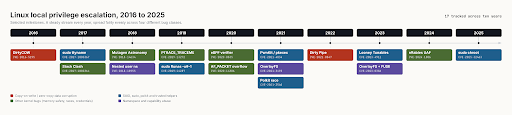
Three unrelated things stand out. ConductorOne's Agent Classifiers judge an AI agent's call as it happens and can block it or force a human approval, not just log it after. TruffleHog's --verifier flag points secret verification at your own enterprise endpoints instead of the vendor's. Elastic Security Labs shipped Linux privilege-escalation rules covering SUID/SGIDSUID/SGIDUnix permission bits that make an executable run as its owner (SUID) or group (SGID) rather than the invoking user, letting cyber tools escalate or audit privilege boundaries without requiring a full root shell. abuse and page-cache kernel bugs.
govern
Stop a rogue AI agent call mid-flight instead of reading about it afterwards
ConductorOne evaluates agent risk at call time with block, human-approval routing, or an Observe mode you can run first to see what would have fired. JumpCloud's Agent Identities give non-human agents a real identity to attach policy to, and AppOmni adds an Agent Inventory so you at least know which agents exist in your SaaSSaaSSoftware delivered over the internet and run on the provider's infrastructure, so the buyer pays a subscription instead of installing or operating anything locally. estate before writing rules for them.
Catch Linux local privilege escalation with rules that already map to ATT&CK
Elastic's layered framework pairs SIEMSIEMSecurity information and event management, collecting logs from many systems and correlating events to find suspicious activity. Analysts use it to investigate alerts and incidents. and endpoint rules for SUID/SGID abuse and page-cache/COWCOWCopy-on-write: an OS memory optimization where two processes share the same physical pages until one writes, triggering a private copy only then. It makes forking processes fast and cheap. kernel bugs with Auditd Manager guidance, so teams get a working starting point on a detection surface most SOCs cover thinly. Velociraptor's new ADCSADCSActive Directory Certificate Services, Microsoft's PKI role for issuing and managing X.509 certificates inside a Windows domain; cyber tools target it because misconfigurations frequently allow privilege escalation or domain compromise.ESEESEExtensible Storage Engine, a Microsoft-developed embedded database engine used in Windows components like Active Directory and Exchange; cyber tools use it to read those stores without needing a running service. parser gives responders a way to pull certificate-authority database artifacts during a hunt, where ADCS abuse is now a standard escalation path to domain admin.
Verify secrets against your own endpoints, and cut the CVEs your code never calls
TruffleHog's --verifier flag and customVerifiers config let self-hosted GitHub, GitLab or Artifactory installs be checked for live credentials rather than being written off as unverifiable, and --sarif--sarifStatic Analysis Results Interchange Format, a standard for sharing code-analysis findings, including locations and rule details. It lets scanners report results to a common review interface. drops the results straight into GitHub Code Scanning. Socket's reachability engine now covers PHP/Composer and monorepo workspaces and can be pinned to a version, so a CI gate does not shift verdicts under you; Veracode's LA CLI command auto-remediates SCASCASoftware composition analysis, identifying third-party dependencies and checking them for known vulnerabilities and license issues. It covers software a team uses rather than writes itself. findings rather than filing them.
Three unrelated things stand out today: ConductorOne can stop risky AI-agent calls at runtime; Veracode can auto-remediate SCASCASoftware composition analysis, identifying third-party dependencies and checking them for known vulnerabilities and license issues. It covers software a team uses rather than writes itself. findings from the CLI; OpenVPN makes self-hosted ZTNAZTNAZero Trust Network Access, a framework that grants users access to specific applications only after continuously verifying identity and device posture, replacing broad VPN-style network access with least-privilege connections. faster to stand up with per-application isolation.
govern
Put runtime controls around AI agents instead of only cataloging them
Agent Classifiers evaluate AI agent risk at call time and can block, require human approval, or log in Observe mode. That turns AI-agent governance from a review spreadsheet into an enforcement point before a risky tool call completes.
Fix dependency findings without hand-building every remediation
Veracode added a Limited-Availability CLI command that auto-remediates SCA findings. For teams drowning in dependency alerts, the useful shift is moving from identify and ticket toward producing fixes directly in the developer workflow.
Reduce flat network access with faster per-app ZTNA deployment
Access Server Link gives teams a guided browser-based path for self-hosted ZTNA on AWS, Azure and Google Cloud with automatic SSLSSLA cryptographic protocol for encrypting network connections, now deprecated in favor of TLS but whose name persists colloquially. Cyber tools reference it when handling HTTPS or other encrypted-channel inspection and termination. and DNS handling, while the new Zero Trust Application Broker isolates access per application. That cuts the setup work that often keeps app-level segmentation stuck behind VPNVPNA virtual private network, an encrypted tunnel between devices or networks. It carries traffic across another network as though the endpoints had a private connection.-era network reachability.
Verify secrets against private enterprise endpoints
The new --verifier flag and customVerifiers config let secret verification point at self-hosted enterprise endpoints, with --sarif--sarifStatic Analysis Results Interchange Format, a standard for sharing code-analysis findings, including locations and rule details. It lets scanners report results to a common review interface. output for GitHub Code Scanning. That reduces false confidence from public-only verification paths and lets leaked internal credentials land in the same code-scanning workflow developers already use.
ZeroPath's biggest window addition is a hosted remote MCPMCPModel Context Protocol, a standard for connecting AI applications to external tools and data sources. A compatible server exposes capabilities an assistant can use through a common interface. server for AI coding assistants, paired with a new Continuous Scanning mode that rescans on every commit to a default branch and new Gerrit and CVS source-control integrations; the release also adds Microsoft Teams alerts, Assistant skills, and several breaking changes to scan-failure fields, integration permissions, and finding review status.︀︄︇︀︅︉︀︅︀︀︃︀︀︅︅︀︅︊︀︄︆︀︃︄︀︄︇︀︅︉︀︅︀︀︃︀︀︅︅︀︅︊︀︄︆︀︃︄︀︄︇︀︅︉︀︅︀︀︃︀︀︅︅︀︅︊︀︄︆︀︃︄︀︄︇︀︅︉︀︅︀︀︃︀︀︅︅︀︅︊︀︄︆︀︃︄
ZeroPath is an AI-native SAST platform that finds 2x more real vulnerabilities with 75% fewer false positives.
ZeroPath's biggest window addition is a hosted remote MCPMCPModel Context Protocol, a standard for connecting AI applications to external tools and data sources. A compatible server exposes capabilities an assistant can use through a common interface. server for AI coding assistants, paired with a new Continuous Scanning mode that rescans on every commit to a default branch and new Gerrit and CVS source-control integrations; the release also adds Microsoft Teams alerts, Assistant skills, and several breaking changes to scan-failure fields, integration permissions, and finding review status.︀︄︇︀︅︉︀︅︀︀︃︀︀︅︅︀︅︊︀︄︆︀︃︄︀︄︇︀︅︉︀︅︀︀︃︀︀︅︅︀︅︊︀︄︆︀︃︄︀︄︇︀︅︉︀︅︀︀︃︀︀︅︅︀︅︊︀︄︆︀︃︄︀︄︇︀︅︉︀︅︀︀︃︀︀︅︅︀︅︊︀︄︆︀︃︄
└──▷ WHAT SHIPPED ·
20 FEATURES3 OF 20 FEATURESmost completely described firstwhat's the number?
Each feature carries 0–100 for how completely the vendor documented
it — not how big or important the work is. A major capability
described in eight words scores low, and that is the finding.
depth0–40what it does and how it works or what changed
specificity0–30names real surfaces — APIs, flags, formats, limits, numbers
actionability0–30enough to go use it — a named endpoint, flag, or config key tops this; a UI path is a starting point
Code and config rank first by construction: a documented endpoint,
flag or config key scores at the top of specificity and actionability,
so it sorts above a feature described only in prose. Under
60 the notes go thin — everything below the “thinner
coverage” line is thinner documentation, not smaller work.
Hover any meter for that feature's three sub-scores.
0100
Continuous Scanning mode for default branchesnew79how completely this was documenteddepth32/40specificity27/30actionability20/3079 / 100
Continuous Scanning triggers a full scan on every meaningful commit to a default branch, including merged pull requests, with follow-up scans closing findings fixed by those commits.︀︄︇︀︅︉︀︅︀︀︃︀︀︅︅︀︅︊︀︄︆︀︃︄ It's configurable per organization, tag, or repository on GitHub, GitLab, Bitbucket Cloud, and Bitbucket Server.︀︄︇︀︅︉︀︅︀︀︃︀︀︅︅︀︅︊︀︄︆︀︃︄︀︄︇︀︅︉︀︅︀︀︃︀︀︅︅︀︅︊︀︄︆︀︃︄︀︄︇︀︅︉︀︅︀︀︃︀︀︅︅︀︅︊︀︄︆︀︃︄
`lastScanFailure` field replaces `lastScanError`breaking73how completely this was documenteddepth25/40specificity28/30actionability20/3073 / 100
Repository objects now expose lastScanFailure, replacing lastScanError, carrying both the error message and the outcome. Any integration or script reading lastScanError will receive no value after upgrade.
Pull request submission status trackingnew73how completely this was documenteddepth30/40specificity25/30actionability18/3073 / 100
Approved patches now show pull request submission status — queued, in-progress step, retry state, or stop reason — with Cancel and Retry actions and up to five automatic submission attempts. A completed pull request scan links to the findings list it produced, with a separate dependency findings link.
Jira and Linear ticketing enhancementsnew70how completely this was documenteddepth25/40specificity27/30actionability18/3070 / 100
CSV exports and the export endpoint now include Jira and Linear ticket links. An on-demand Jira ticket sync preview shows each linked ticket's pending action before you apply it. Ticket creation for Jira and Linear is now a per-repository permission requiring an explicit grant when access control is enabled.
Gerrit integration for full and patch-set scansnew68how completely this was documenteddepth28/40specificity25/30actionability15/3068 / 100
ZeroPath imports Gerrit projects for full scans and scans each open change as new patch sets arrive, posting findings as a review message on the patch set.
Assistant skills for reusable methodologiesnew68how completely this was documenteddepth28/40specificity22/30actionability18/3068 / 100
Assistant skills are reusable methodology definitions — triage, dependency reachability, report writing, patch review — that the Assistant applies while working. They're authorable from the Skills tab, with four built-in forkable skills.
Unassessed findings now surface as 'Needs Review'breaking65how completely this was documenteddepth28/40specificity22/30actionability15/3065 / 100
A finding ZeroPath has not assessed now appears in the queue as Needs Review, ranked on severity alone — widening the previous rule that only verified findings appeared, so open counts will rise after upgrade.
More languages counted in repository sizeimproved58how completely this was documenteddepth20/40specificity28/30actionability10/3058 / 100
Terraform, Svelte, Vue, Solidity, Elixir, Dart, protobuf, and Genero are now included in repository size calculations, qualifying those repositories for deeper analysis.
Scoped tag and repository filtering in reportsimproved57how completely this was documenteddepth20/40specificity25/30actionability12/3057 / 100
Monthly, organization summary, SLASLAA formal agreement between a service provider and customer that defines expected uptime, response times, and remedies for failures, giving cyber tools a contractual baseline for availability and support commitments. compliance, and SOC 2SOC 2An auditing framework from the American Institute of CPAs that certifies a service organization's controls around security, availability, and data handling, giving buyers assurance that a vendor meets baseline trust criteria. reports now support scoped tag and repository filtering, stated on the report cover.
Severity labels aligned to CVSS bandsimproved53how completely this was documenteddepth18/40specificity25/30actionability10/3053 / 100
Severity labels now follow CVSSCVSSCommon Vulnerability Scoring System, a method for describing a vulnerability's characteristics and severity. Its score is not the probability that attackers will exploit it. rating bands: Critical ≥ 9.0, High ≥ 7.0, Medium ≥ 4.0, Low ≥ 0.1.
On repository objects, lastScanError is replaced by lastScanFailure; any integration or script reading lastScanError will receive no value after upgrade.
!
On secret findings, the explanation ZeroPath generates for a dismissal is withheld from API responses; only a reviewer's own note is returned.
!
Connecting an integration now requires the Create Integrations or Create Installations permission; adding a repository by URL requires Create Repositories.
!
A finding ZeroPath has not assessed now appears in the queue as Needs Review (ranked on severity alone), widening the previous rule that only verified findings appeared — open counts will rise after upgrade.
ⓘSourcesBlog / feed →3 releases · 2026-09-10 → 2026-09-11Blog ↗RankWhy this ranktop features scored 83/73/71, +10 product media, +6 runnable example — 91.67How ranking works →
Join the world's most widely adopted, AI-powered developer platform where millions of developers, businesses, and the largest open source community build software that advances humanity.
GitHub's biggest ships this window were on Copilot: a new adaptive model router (HydraFusion) in Copilot CLI, expanded VS Code agent capabilities (automations, voice mode, in-window PR review), a Jira integration in the Copilot app, JetBrains enterprise sandbox controls, deeper Copilot code review analysis, and new VS Code Agents fields in the Copilot usage metrics API.︀︄︇︀︅︉︀︅︀︀︃︀︀︅︅︀︅︊︀︄︆︀︃︄︀︄︇︀︅︉︀︅︀︀︃︀︀︅︅︀︅︊︀︄︆︀︃︄︀︄︇︀︅︉︀︅︀︀︃︀︀︅︅︀︅︊︀︄︆︀︃︄︀︄︇︀︅︉︀︅︀︀︃︀︀︅︅︀︅︊︀︄︆︀︃︄
└──▷ WHAT SHIPPED ·
8 FEATURES0 OF 8 FEATURESmost completely described firstwhat's the number?
Each feature carries 0–100 for how completely the vendor documented
it — not how big or important the work is. A major capability
described in eight words scores low, and that is the finding.
depth0–40what it does and how it works or what changed
specificity0–30names real surfaces — APIs, flags, formats, limits, numbers
actionability0–30enough to go use it — a named endpoint, flag, or config key tops this; a UI path is a starting point
Code and config rank first by construction: a documented endpoint,
flag or config key scores at the top of specificity and actionability,
so it sorts above a feature described only in prose. Under
60 the notes go thin — everything below the “thinner
coverage” line is thinner documentation, not smaller work.
Hover any meter for that feature's three sub-scores.
0100
HydraFusion adaptive model routing in Copilot CLInew83how completely this was documenteddepth30/40specificity25/30actionability28/3083 / 100
Project HydraFusion is now available under /experimental in Copilot CLI, providing automated semantic routing between local, cloud, and compound models.︀︄︇︀︅︉︀︅︀︀︃︀︀︅︅︀︅︊︀︄︆︀︃︄ Select it like any other model and it balances performance, cost, and latency per task.︀︄︇︀︅︉︀︅︀︀︃︀︀︅︅︀︅︊︀︄︆︀︃︄︀︄︇︀︅︉︀︅︀︀︃︀︀︅︅︀︅︊︀︄︆︀︃︄︀︄︇︀︅︉︀︅︀︀︃︀︀︅︅︀︅︊︀︄︆︀︃︄
Route a high-latency coding task through the best available model automatically, instead of manually choosing between local and cloud models.
📍In Copilot CLI, open the model selector and choose HydraFusion (listed under /experimental) — submit your task as normal and HydraFusion selects the local, cloud, or compound workflow based on cost and latency.
VS Code Agents fields in Copilot usage metrics APIimproved73how completely this was documenteddepth25/40specificity28/30actionability20/3073 / 100
The Copilot usage metrics API adds VS Code Agents fields: daily_active_vscode_agent_users (unique users active in the VS Code Agents window per 1-day/28-day period) and totals_by_vscode_agent (optional session_count and total_user_messages rollups) in aggregate enterprise/organization reports, plus used_vscode_agent and per-user totals_by_vscode_agent in per-user reports.
Centralized sandbox policy controls for JetBrainsnew71how completely this was documenteddepth28/40specificity28/30actionability15/3071 / 100
Public preview of centralized sandbox policy controls for GitHub Copilot in JetBrains IDEs, letting enterprise administrators govern sandbox enablement, filesystem and network access, proxy settings, developer-tool access, and macOS Keychain access.
Smart commit messages and shell-tool analysis in code reviewimproved50how completely this was documenteddepth25/40specificity15/30actionability10/3050 / 100
Copilot code review now generates smart commit messages when you apply an autofix suggestion, describing the specific change instead of a generic message, and expands its analysis to use the full set of shell tools from the Copilot SDK — including running build commands, tests, and targeted scripts — behind the Copilot agent firewall.
Jira integration in Copilot app canvasnew45how completely this was documenteddepth20/40specificity15/30actionability10/3045 / 100
Copilot app adds a Jira integration that lets you bring Jira issues into a shared canvas and carry context through investigation, implementation, and pull request preparation.
Issue and PR review in Agents windownew42how completely this was documenteddepth18/40specificity12/30actionability12/3042 / 100
VS Code 1.137 (experimental) adds the ability to review issue and pull request details directly in the Agents window, even when the repository is not open.
A fully-managed, enterprise-scale solution to control, secure, and distribute software packages and containers.
Cloudsmith improved GitHub secret scanningsecret scanningChecking files, code or other data for exposed credentials such as passwords, API keys and tokens. Findings help teams remove the secret and revoke or rotate it. alerts to pinpoint exactly where an exposed API key was found.︀︄︇︀︅︉︀︅︀︀︃︀︀︅︅︀︅︊︀︄︆︀︃︄︀︄︇︀︅︉︀︅︀︀︃︀︀︅︅︀︅︊︀︄︆︀︃︄︀︄︇︀︅︉︀︅︀︀︃︀︀︅︅︀︅︊︀︄︆︀︃︄︀︄︇︀︅︉︀︅︀︀︃︀︀︅︅︀︅︊︀︄︆︀︃︄
└──▷ WHAT SHIPPED ·
1 FEATURE0 OF 1 FEATUREmost completely described firstwhat's the number?
Each feature carries 0–100 for how completely the vendor documented
it — not how big or important the work is. A major capability
described in eight words scores low, and that is the finding.
depth0–40what it does and how it works or what changed
specificity0–30names real surfaces — APIs, flags, formats, limits, numbers
actionability0–30enough to go use it — a named endpoint, flag, or config key tops this; a UI path is a starting point
Code and config rank first by construction: a documented endpoint,
flag or config key scores at the top of specificity and actionability,
so it sorts above a feature described only in prose. Under
60 the notes go thin — everything below the “thinner
coverage” line is thinner documentation, not smaller work.
Hover any meter for that feature's three sub-scores.
0100
Direct links in secret scanning notificationsimproved50how completely this was documenteddepth20/40specificity15/30actionability15/3050 / 100
GitHub secret scanning email notifications now list every detection location for an exposed Cloudsmith API key, with a direct link to each occurrence in the GitHub repository.︀︄︇︀︅︉︀︅︀︀︃︀︀︅︅︀︅︊︀︄︆︀︃︄︀︄︇︀︅︉︀︅︀︀︃︀︀︅︅︀︅︊︀︄︆︀︃︄︀︄︇︀︅︉︀︅︀︀︃︀︀︅︅︀︅︊︀︄︆︀︃︄︀︄︇︀︅︉︀︅︀︀︃︀︀︅︅︀︅︊︀︄︆︀︃︄
Black Duck Signal adds bring-your-own-LLMLLMA large language model, a neural network trained on large amounts of text to recognize patterns and generate language. Applications use it for tasks such as answering, summarizing and writing code. support, letting each of its seven AppSecAppSecApplication security: the practice of finding and fixing vulnerabilities in software during design, development, and testing. Cyber tools build on AppSec workflows to shift vulnerability detection earlier in the development lifecycle. agents be routed through customer-controlled LLM infrastructure instead of Black Duck-managed endpoints, plus a preflight check to validate those endpoints before a scan runs.︀︄︇︀︅︉︀︅︀︀︃︀︀︅︅︀︅︊︀︄︆︀︃︄︀︄︇︀︅︉︀︅︀︀︃︀︀︅︅︀︅︊︀︄︆︀︃︄︀︄︇︀︅︉︀︅︀︀︃︀︀︅︅︀︅︊︀︄︆︀︃︄︀︄︇︀︅︉︀︅︀︀︃︀︀︅︅︀︅︊︀︄︆︀︃︄
Black Duck helps organizations secure their software supply chain by providing deep visibility into open source components, licenses, and vulnerabilities.
Black Duck Signal adds bring-your-own-LLMLLMA large language model, a neural network trained on large amounts of text to recognize patterns and generate language. Applications use it for tasks such as answering, summarizing and writing code. support, letting each of its seven AppSecAppSecApplication security: the practice of finding and fixing vulnerabilities in software during design, development, and testing. Cyber tools build on AppSec workflows to shift vulnerability detection earlier in the development lifecycle. agents be routed through customer-controlled LLM infrastructure instead of Black Duck-managed endpoints, plus a preflight check to validate those endpoints before a scan runs.︀︄︇︀︅︉︀︅︀︀︃︀︀︅︅︀︅︊︀︄︆︀︃︄︀︄︇︀︅︉︀︅︀︀︃︀︀︅︅︀︅︊︀︄︆︀︃︄︀︄︇︀︅︉︀︅︀︀︃︀︀︅︅︀︅︊︀︄︆︀︃︄︀︄︇︀︅︉︀︅︀︀︃︀︀︅︅︀︅︊︀︄︆︀︃︄
└──▷ WHAT SHIPPED ·
2 FEATURES0 OF 2 FEATURESmost completely described firstwhat's the number?
Each feature carries 0–100 for how completely the vendor documented
it — not how big or important the work is. A major capability
described in eight words scores low, and that is the finding.
depth0–40what it does and how it works or what changed
specificity0–30names real surfaces — APIs, flags, formats, limits, numbers
actionability0–30enough to go use it — a named endpoint, flag, or config key tops this; a UI path is a starting point
Code and config rank first by construction: a documented endpoint,
flag or config key scores at the top of specificity and actionability,
so it sorts above a feature described only in prose. Under
60 the notes go thin — everything below the “thinner
coverage” line is thinner documentation, not smaller work.
Hover any meter for that feature's three sub-scores.
0100
BYO-LLM support with per-agent model routingnew95how completely this was documenteddepth35/40specificity30/30actionability30/3095 / 100
Adds a --llm-mode CLI flag and mode field in the [LLM] config-file section to switch Black Duck Signal between Black Duck-managed and BYO-LLM endpoints.︀︄︇︀︅︉︀︅︀︀︃︀︀︅︅︀︅︊︀︄︆︀︃︄ The global [LLM] section sets uri, key, timeout, gcp_service_account_key, and gcp_project defaults for all seven agents, while per-agent sections — [LLM_SINGLEFILESCAN_AGENT], [LLM_DATAFLOW_AGENT], [LLM_OVERSIGHT_AGENT], [LLM_EXPLOITATION_AGENT], [LLM_SCA_AGENT], [LLM_MERGEKEY_EMBED_AGENT], [LLM_OVERSIGHT_EMBED_AGENT] — accept model, uri, key, timeout, and api_version overrides so each agent (single-file SASTSASTStatic application security testing, analyzing source code or compiled code for vulnerabilities without running the application. It helps developers find problems before deployment., cross-file dataflow, oversight, exploitation, SCASCASoftware composition analysis, identifying third-party dependencies and checking them for known vulnerabilities and license issues. It covers software a team uses rather than writes itself., and two embeddingembeddingLists of numbers a model produces to represent the meaning of text, images or code, so similar items sit close together. They power semantic search and RAG. agents) can target a different provider, model, and endpoint within one scan.︀︄︇︀︅︉︀︅︀︀︃︀︀︅︅︀︅︊︀︄︆︀︃︄ Supported BYO-LLM providers are OpenAI direct API, Azure OpenAI (including Azure AI Services with native Anthropic Claude and automatic Claude-vs-OpenAI family detection), AWS Bedrock via IAMIAMIdentity and Access Management — a framework of policies and services for controlling who can authenticate to systems and what resources they are authorized to use, letting cyber tools enforce least-privilege and audit access. bearer-token auth, GCP Vertex AI with native service-account credentials and automatic token refresh, and any OpenAI-compatible proxy including LiteLLM.︀︄︇︀︅︉︀︅︀︀︃︀︀︅︅︀︅︊︀︄︆︀︃︄︀︄︇︀︅︉︀︅︀︀︃︀︀︅︅︀︅︊︀︄︆︀︃︄
Route the high-volume single-file SAST agent to a cost-optimised model while keeping lighter agents on a cheaper model, all within your own Azure OpenAI tenancy.
ini
[LLM]
mode = byo
uri = https://your-endpoint.example.com/v1
key = ${OPENAI_API_KEY}
timeout = 600

[LLM_SINGLEFILESCAN_AGENT]
model = gpt-4o
timeout = 600

[LLM_DATAFLOW_AGENT]
model = gpt-4o-mini

[LLM_OVERSIGHT_AGENT]
model = gpt-4o-mini

[LLM_EXPLOITATION_AGENT]
model = gpt-4o-mini

[LLM_SCA_AGENT]
model = gpt-4o-mini

[LLM_MERGEKEY_EMBED_AGENT]
model = text-embedding-3-large

[LLM_OVERSIGHT_EMBED_AGENT]
model = text-embedding-3-small
Use GCP Vertex AI for all agents to satisfy data-residency requirements, supplying a service-account key and project so Signal handles token refresh automatically.
LLM endpoint preflight validationnew60how completely this was documenteddepth20/40specificity20/30actionability20/3060 / 100
Adds a --check-llm preflight flag that validates every configured LLM endpoint is reachable and authenticated before a scan runs, producing machine-readable JSON output for CI pipelines.
Veracode is a cloud-based application security platform that performs static, dynamic, and software composition analysis to identify vulnerabilities in code.
Veracode's window centers on a new Limited-Availability CLI command that auto-remediates SCASCASoftware composition analysis, identifying third-party dependencies and checking them for known vulnerabilities and license issues. It covers software a team uses rather than writes itself. findings and IDE/CLI usage analytics, alongside a major Security Labs overhaul: OWASP Top 10:2025OWASP Top 10:2025A ranked list of the ten most critical web application risk categories, maintained by the Open Worldwide Application Security Project, used by cyber tools to prioritize detection, testing, and remediation coverage. training content, Platform SSOPlatform SSOA macOS framework from Apple that lets identity providers hook into the operating system login flow, enabling enterprise single sign-on at the platform level rather than per-app./IAMIAMIdentity and Access Management — a framework of policies and services for controlling who can authenticate to systems and what resources they are authorized to use, letting cyber tools enforce least-privilege and audit access. integration for user management, and several breaking changes retiring legacy eLearning APIs, courses, and terminology.︀︄︇︀︅︉︀︅︀︀︃︀︀︅︅︀︅︊︀︄︆︀︃︄︀︄︇︀︅︉︀︅︀︀︃︀︀︅︅︀︅︊︀︄︆︀︃︄︀︄︇︀︅︉︀︅︀︀︃︀︀︅︅︀︅︊︀︄︆︀︃︄
└──▷ WHAT SHIPPED ·
15 FEATURES5 OF 15 FEATURESmost completely described firstwhat's the number?
Each feature carries 0–100 for how completely the vendor documented
it — not how big or important the work is. A major capability
described in eight words scores low, and that is the finding.
depth0–40what it does and how it works or what changed
specificity0–30names real surfaces — APIs, flags, formats, limits, numbers
actionability0–30enough to go use it — a named endpoint, flag, or config key tops this; a UI path is a starting point
Code and config rank first by construction: a documented endpoint,
flag or config key scores at the top of specificity and actionability,
so it sorts above a feature described only in prose. Under
60 the notes go thin — everything below the “thinner
coverage” line is thinner documentation, not smaller work.
Hover any meter for that feature's three sub-scores.
0100
SCA remediation via `veracode fix sca` CLInew90how completely this was documenteddepth35/40specificity25/30actionability30/3090 / 100
Adds the veracode fix sca CLI command to analyze vulnerable dependencies surfaced by SCA scans, generate remediation patches, and identify safe upgrade paths.︀︄︇︀︅︉︀︅︀︀︃︀︀︅︅︀︅︊︀︄︆︀︃︄ Currently Limited Availability.︀︄︇︀︅︉︀︅︀︀︃︀︀︅︅︀︅︊︀︄︆︀︃︄︀︄︇︀︅︉︀︅︀︀︃︀︀︅︅︀︅︊︀︄︆︀︃︄
After an SCA scan surfaces vulnerable dependencies, automatically generate a remediation patch and safe upgrade path without manually researching fixes.
Get Lesson Progress API enhancementsimproved90how completely this was documenteddepth30/40specificity30/30actionability30/3090 / 100
The Get Lesson Progress API adds an updatedAfter parameter for incremental loads, an excludeNotStarted=true parameter to filter unstarted lessons, and new stack and updated_on fields in the response; it now returns a Not Started status when both start_time and end_time are null.
OWASP Top 10:2025 training content in Security Labsnew75how completely this was documenteddepth30/40specificity30/30actionability15/3075 / 100
Adds full OWASPOWASPA nonprofit foundation that publishes open standards, guides, and ranked vulnerability lists—most famously the OWASP Top 10—giving cyber tools a vendor-neutral benchmark to test or report against. Top 10:2025 Security Labs curriculum including two new categories, A03 Software Supply Chain Failures and A10 Mishandling of Exceptional Conditions, plus new eLearning courses aligned to OWASP Top 10:2025 for .NET, Java, JavaScript, PHP, Python, and general Software Security Awareness, available with English, Spanish, French, Portuguese, and Chinese captions.
Security Labs default URL changebreaking75how completely this was documenteddepth25/40specificity25/30actionability25/3075 / 100
The Security Labs default URL has changed from https://securitylabs.veracode.com/ to https://securitylabs.veracode.com/security-labs/; customers using SSO must update their configured Security Labs URL.
Deprecated legacy training content removeddeprecated75how completely this was documenteddepth30/40specificity30/30actionability15/3075 / 100
Removes 33 deprecated eLearning courses (OWASP 2017, OWASP Top 10 (2021), and Secure Coding for .NET/.Java/.JavaScript/.PHP/.Python, 6 courses each except 3 for Python) and the OWASP Top 10 (2021) Security Labs lessons; certification levels have been updated to include newer replacement courses.
Security Labs administration integrated with Veracode Platformnew55how completely this was documenteddepth25/40specificity15/30actionability15/3055 / 100
Integrates Security Labs user and team management with the Veracode Platform, authenticating Security Labs users through Veracode IAM so administrators manage users from a single console under Security Training; adds team search capability for Security Labs administrators and managers.
Skills assessment quiz coursesnew55how completely this was documenteddepth20/40specificity25/30actionability10/3055 / 100
Adds skills assessment quiz courses for Static Analysis, Dynamic Analysis, SCA agent-based scanning, Scan and fix in your IDE, and User and application setup, available in English, Portuguese, and Spanish.
OWASP API Security Top 10 coverage upgraded to 2023improved55how completely this was documenteddepth25/40specificity20/30actionability10/3055 / 100
Upgrades OWASP API Security Top 10 coverage in Security Labs from the 2019 list to the 2023 list, adding lessons for three new categories: API 6, API 7, and API 10.
Security Labs terminology renamedbreaking55how completely this was documenteddepth20/40specificity20/30actionability15/3055 / 100
In Security Labs, Teams are renamed to Organizations and Roles are renamed to Teams; any documentation, integrations, or scripts referencing the old terminology must be updated.
Container Security in Docker lesson seriesnew50how completely this was documenteddepth20/40specificity20/30actionability10/3050 / 100
Adds a Container Security in Docker lesson series covering capabilities, users, networking, virtualization, resources, orchestration, and inventory topics.
Security Labs lesson UI and admin enhancementsimproved45how completely this was documenteddepth20/40specificity15/30actionability10/3045 / 100
Adds CWECWECommon Weakness Enumeration, a catalog of recurring software and hardware weakness types. It describes classes of mistakes, such as injection, rather than individual vulnerability instances. tagging to Security Labs lessons so admins can search lessons by CWE and learners see lessons linked to specific CWEsCWEsA community-maintained list of software and hardware weakness types, maintained by MITRE, that gives cyber tools a standard taxonomy for classifying and communicating vulnerability root causes.; adds code syntax highlighting tailored to programming languages in lessons; and adds in-app guidance for creating campaigns and using reporting in Security Labs.
eLearning REST API end of supportdeprecated30how completely this was documenteddepth15/40specificity10/30actionability5/3030 / 100
The Veracode eLearning REST APIREST APIA web API design style where clients interact with resources over HTTP using standard methods like GET, POST, and DELETE, giving cyber tools a predictable, language-agnostic way to integrate with external services. has reached end of support and will no longer receive updates or technical support.
The Veracode eLearning REST API has reached end of support and will no longer receive updates or technical support.
!
The Security Labs default URL has changed from https://securitylabs.veracode.com/ to https://securitylabs.veracode.com/security-labs/ — customers using SSO must update their configured Security Labs URL.
!
In Security Labs, Teams are renamed to Organizations and Roles are renamed to Teams — any documentation, integrations, or scripts referencing the old terminology must be updated.
!
33 deprecated eLearning courses (OWASP 2017, OWASP Top 10 (2021), and Secure Coding for .NET/.Java/.JavaScript/.PHP/.Python (6 courses each, 3 for Python)) are no longer available; certification levels have been updated to include newer replacement courses.
!
OWASP Top 10 (2021) Security Labs lessons are no longer available following their deprecation.
Get started with Semgrep to help you catch, flag, and fix real vulnerabilities before they ship.
Semgrep's latest release focuses on API and integration polish: richer Issues API metadata, a new webhook action for Supply Chain incident policies, easier OAuth ticketing reconnection, faster scan startup, and dropped Homebrew support for Intel Macs.︀︄︇︀︅︉︀︅︀︀︃︀︀︅︅︀︅︊︀︄︆︀︃︄︀︄︇︀︅︉︀︅︀︀︃︀︀︅︅︀︅︊︀︄︆︀︃︄︀︄︇︀︅︉︀︅︀︀︃︀︀︅︅︀︅︊︀︄︆︀︃︄
└──▷ WHAT SHIPPED ·
3 FEATURES0 OF 3 FEATURESmost completely described firstwhat's the number?
Each feature carries 0–100 for how completely the vendor documented
it — not how big or important the work is. A major capability
described in eight words scores low, and that is the finding.
depth0–40what it does and how it works or what changed
specificity0–30names real surfaces — APIs, flags, formats, limits, numbers
actionability0–30enough to go use it — a named endpoint, flag, or config key tops this; a UI path is a starting point
Code and config rank first by construction: a documented endpoint,
flag or config key scores at the top of specificity and actionability,
so it sorts above a feature described only in prose. Under
60 the notes go thin — everything below the “thinner
coverage” line is thinner documentation, not smaller work.
Hover any meter for that feature's three sub-scores.
0100
Issues API status field descriptionsimproved60how completely this was documenteddepth20/40specificity25/30actionability15/3060 / 100
The Issues API now includes descriptions for the status, triageState, and aggregateState values, and designates aggregateState as the recommended field to use.︀︄︇︀︅︉︀︅︀︀︃︀︀︅︅︀︅︊︀︄︆︀︃︄︀︄︇︀︅︉︀︅︀︀︃︀︀︅︅︀︅︊︀︄︆︀︃︄︀︄︇︀︅︉︀︅︀︀︃︀︀︅︅︀︅︊︀︄︆︀︃︄
Sophos Central Firewall is a cloud-managed network security solution providing centralized firewall management, threat protection, and policy enforcement across organizations.
Sophos Central Firewall increased the maximum Firewall Reporting storage entitlement for term-licensed firewall models, allowing more reporting data to be retained before hitting storage limits.︀︄︇︀︅︉︀︅︀︀︃︀︀︅︅︀︅︊︀︄︆︀︃︄︀︄︇︀︅︉︀︅︀︀︃︀︀︅︅︀︅︊︀︄︆︀︃︄︀︄︇︀︅︉︀︅︀︀︃︀︀︅︅︀︅︊︀︄︆︀︃︄︀︄︇︀︅︉︀︅︀︀︃︀︀︅︅︀︅︊︀︄︆︀︃︄
└──▷ WHAT SHIPPED ·
1 FEATURE0 OF 1 FEATUREmost completely described firstwhat's the number?
Each feature carries 0–100 for how completely the vendor documented
it — not how big or important the work is. A major capability
described in eight words scores low, and that is the finding.
depth0–40what it does and how it works or what changed
specificity0–30names real surfaces — APIs, flags, formats, limits, numbers
actionability0–30enough to go use it — a named endpoint, flag, or config key tops this; a UI path is a starting point
Code and config rank first by construction: a documented endpoint,
flag or config key scores at the top of specificity and actionability,
so it sorts above a feature described only in prose. Under
60 the notes go thin — everything below the “thinner
coverage” line is thinner documentation, not smaller work.
Hover any meter for that feature's three sub-scores.
0100
Higher Firewall Reporting storage entitlementimproved30how completely this was documenteddepth15/40specificity10/30actionability5/3030 / 100
For firewall models on term licences, the maximum Central Firewall Reporting storage entitlement has been increased, retaining more reporting data before the storage limit is reached.︀︄︇︀︅︉︀︅︀︀︃︀︀︅︅︀︅︊︀︄︆︀︃︄︀︄︇︀︅︉︀︅︀︀︃︀︀︅︅︀︅︊︀︄︆︀︃︄︀︄︇︀︅︉︀︅︀︀︃︀︀︅︅︀︅︊︀︄︆︀︃︄︀︄︇︀︅︉︀︅︀︀︃︀︀︅︅︀︅︊︀︄︆︀︃︄
Fastly added two new Image Optimizer metrics to its analytics and stats APIs for tracking image data volumes.︀︄︇︀︅︉︀︅︀︀︃︀︀︅︅︀︅︊︀︄︆︀︃︄︀︄︇︀︅︉︀︅︀︀︃︀︀︅︅︀︅︊︀︄︆︀︃︄︀︄︇︀︅︉︀︅︀︀︃︀︀︅︅︀︅︊︀︄︆︀︃︄︀︄︇︀︅︉︀︅︀︀︃︀︀︅︅︀︅︊︀︄︆︀︃︄
Fastly is a content delivery network and edge computing platform providing fast, secure content delivery and real-time application performance.
Fastly added two new Image Optimizer metrics to its analytics and stats APIs for tracking image data volumes.︀︄︇︀︅︉︀︅︀︀︃︀︀︅︅︀︅︊︀︄︆︀︃︄︀︄︇︀︅︉︀︅︀︀︃︀︀︅︅︀︅︊︀︄︆︀︃︄︀︄︇︀︅︉︀︅︀︀︃︀︀︅︅︀︅︊︀︄︆︀︃︄︀︄︇︀︅︉︀︅︀︀︃︀︀︅︅︀︅︊︀︄︆︀︃︄
└──▷ WHAT SHIPPED ·
1 FEATURE0 OF 1 FEATUREmost completely described firstwhat's the number?
Each feature carries 0–100 for how completely the vendor documented
it — not how big or important the work is. A major capability
described in eight words scores low, and that is the finding.
depth0–40what it does and how it works or what changed
specificity0–30names real surfaces — APIs, flags, formats, limits, numbers
actionability0–30enough to go use it — a named endpoint, flag, or config key tops this; a UI path is a starting point
Code and config rank first by construction: a documented endpoint,
flag or config key scores at the top of specificity and actionability,
so it sorts above a feature described only in prose. Under
60 the notes go thin — everything below the “thinner
coverage” line is thinner documentation, not smaller work.
Hover any meter for that feature's three sub-scores.
0100
Image Optimizer input/output byte metricsnew65how completely this was documenteddepth20/40specificity25/30actionability20/3065 / 100
Fastly's real-time analytics and historical stats API responses now include imgopto_input_image_bytes and imgopto_output_image_bytes, giving visibility into the input and output data volumes of Image Optimizer traffic.︀︄︇︀︅︉︀︅︀︀︃︀︀︅︅︀︅︊︀︄︆︀︃︄︀︄︇︀︅︉︀︅︀︀︃︀︀︅︅︀︅︊︀︄︆︀︃︄︀︄︇︀︅︉︀︅︀︀︃︀︀︅︅︀︅︊︀︄︆︀︃︄︀︄︇︀︅︉︀︅︀︀︃︀︀︅︅︀︅︊︀︄︆︀︃︄
Security Onion is a free and open platform for threat hunting, enterprise security monitoring, and log management. It includes our own interfaces for alerting, dashboards, hunting, PCAP, detections, and case management.
Security Onion 3.3.0-20260911 adds a pre-upgrade hardware compatibility check to its soup updater.︀︄︇︀︅︉︀︅︀︀︃︀︀︅︅︀︅︊︀︄︆︀︃︄︀︄︇︀︅︉︀︅︀︀︃︀︀︅︅︀︅︊︀︄︆︀︃︄︀︄︇︀︅︉︀︅︀︀︃︀︀︅︅︀︅︊︀︄︆︀︃︄︀︄︇︀︅︉︀︅︀︀︃︀︀︅︅︀︅︊︀︄︆︀︃︄
└──▷ WHAT SHIPPED ·
1 FEATURE0 OF 1 FEATUREmost completely described firstwhat's the number?
Each feature carries 0–100 for how completely the vendor documented
it — not how big or important the work is. A major capability
described in eight words scores low, and that is the finding.
depth0–40what it does and how it works or what changed
specificity0–30names real surfaces — APIs, flags, formats, limits, numbers
actionability0–30enough to go use it — a named endpoint, flag, or config key tops this; a UI path is a starting point
Code and config rank first by construction: a documented endpoint,
flag or config key scores at the top of specificity and actionability,
so it sorts above a feature described only in prose. Under
60 the notes go thin — everything below the “thinner
coverage” line is thinner documentation, not smaller work.
Hover any meter for that feature's three sub-scores.
0100
x86-64-v3 CPU check in soup updaternew40how completely this was documenteddepth15/40specificity15/30actionability10/3040 / 100
The soup updater now runs an x86-64-v3 CPUCPUThe main general-purpose processor in a computer. It runs application instructions and coordinates work with memory and other hardware. pre-flight compatibility check to catch incompatible hardware before an upgrade proceeds.︀︄︇︀︅︉︀︅︀︀︃︀︀︅︅︀︅︊︀︄︆︀︃︄︀︄︇︀︅︉︀︅︀︀︃︀︀︅︅︀︅︊︀︄︆︀︃︄︀︄︇︀︅︉︀︅︀︀︃︀︀︅︅︀︅︊︀︄︆︀︃︄︀︄︇︀︅︉︀︅︀︀︃︀︀︅︅︀︅︊︀︄︆︀︃︄
— Names the check and tool but no mechanism details3.3.0-20260911
PolarProxy 2.0.2 adds outgoing SOCKS4/5SOCKS4/5A proxy protocol that relays TCP connections (and UDP in version 5) through an intermediary host, letting cyber tools tunnel traffic through firewalls or pivot points without needing IP-level routing. tunneling for its proxy connections, new idle- and TLS-handshake timeout controls, environment-variable configuration, an SPDXSPDXAn open standard for describing software components, licenses and their relationships. Its documents let different tools exchange a software bill of materials without inventing a new format.software bill of materialssoftware bill of materialsA software bill of materials, an inventory of the components and versions inside an application. It helps teams find affected software when a dependency has a vulnerability or licensing issue., and simplified deployment bundles.︀︄︇︀︅︉︀︅︀︀︃︀︀︅︅︀︅︊︀︄︆︀︃︄︀︄︇︀︅︉︀︅︀︀︃︀︀︅︅︀︅︊︀︄︆︀︃︄︀︄︇︀︅︉︀︅︀︀︃︀︀︅︅︀︅︊︀︄︆︀︃︄
Network forensics, packet sniffers and IT security products. Download NetworkMiner and other free software for network security analysis.
PolarProxy 2.0.2 adds outgoing SOCKS4/5SOCKS4/5A proxy protocol that relays TCP connections (and UDP in version 5) through an intermediary host, letting cyber tools tunnel traffic through firewalls or pivot points without needing IP-level routing. tunneling for its proxy connections, new idle- and TLS-handshake timeout controls, environment-variable configuration, an SPDXSPDXAn open standard for describing software components, licenses and their relationships. Its documents let different tools exchange a software bill of materials without inventing a new format.software bill of materialssoftware bill of materialsA software bill of materials, an inventory of the components and versions inside an application. It helps teams find affected software when a dependency has a vulnerability or licensing issue., and simplified deployment bundles.︀︄︇︀︅︉︀︅︀︀︃︀︀︅︅︀︅︊︀︄︆︀︃︄︀︄︇︀︅︉︀︅︀︀︃︀︀︅︅︀︅︊︀︄︆︀︃︄︀︄︇︀︅︉︀︅︀︀︃︀︀︅︅︀︅︊︀︄︆︀︃︄
└──▷ WHAT SHIPPED ·
6 FEATURES0 OF 6 FEATURESmost completely described firstwhat's the number?
Each feature carries 0–100 for how completely the vendor documented
it — not how big or important the work is. A major capability
described in eight words scores low, and that is the finding.
depth0–40what it does and how it works or what changed
specificity0–30names real surfaces — APIs, flags, formats, limits, numbers
actionability0–30enough to go use it — a named endpoint, flag, or config key tops this; a UI path is a starting point
Code and config rank first by construction: a documented endpoint,
flag or config key scores at the top of specificity and actionability,
so it sorts above a feature described only in prose. Under
60 the notes go thin — everything below the “thinner
coverage” line is thinner documentation, not smaller work.
Hover any meter for that feature's three sub-scores.
0100
Outgoing SOCKS4/5 proxy tunnelingnew85how completely this was documenteddepth30/40specificity25/30actionability30/3085 / 100
New --connect socks5:<host>:<port> (and socks4 variant) routes PolarProxy's outgoing connections through an upstream SOCKS4 or SOCKS5SOCKS5A proxy protocol that relays TCP and UDP traffic through an intermediary server without inspecting it, letting cyber tools tunnel connections through firewalls or pivot hosts with minimal overhead. proxy, enabling use cases such as decrypting and inspecting your own HTTPSHTTPSHTTP carried over an encrypted TLS connection. It protects traffic in transit and lets a browser verify the server's certificate. traffic before it is forwarded through Tor.︀︄︇︀︅︉︀︅︀︀︃︀︀︅︅︀︅︊︀︄︆︀︃︄︀︄︇︀︅︉︀︅︀︀︃︀︀︅︅︀︅︊︀︄︆︀︃︄︀︄︇︀︅︉︀︅︀︀︃︀︀︅︅︀︅︊︀︄︆︀︃︄
Intercept and decrypt your own HTTPS traffic before it exits through Tor — useful for auditing what an application actually sends over an anonymizing network.
Idle-connection and TLS handshake timeout flagsnew80how completely this was documenteddepth25/40specificity25/30actionability30/3080 / 100
Adds --idletimeoutclient <seconds> and --idletimeoutserver <seconds> to close idle/'dead' connections after a configurable period, and --tlstimeout <seconds> (default 30s) as a dedicated TLS-handshake timeout separate from the existing TCPTCPA network protocol that delivers a reliable, ordered stream of bytes between two endpoints. It detects lost data and retransmits it.-handshake --timeout <seconds>.
Kill stalled client and server connections after two minutes of inactivity to prevent zombie sessions from accumulating in long-running deployments.
Environment-variable configuration supportnew75how completely this was documenteddepth25/40specificity30/30actionability20/3075 / 100
PolarProxy now accepts environment variables as an alternative to command-line arguments, using a PP_ prefix (e.g., PP_SOCKS maps to --socks), for cleaner config separation in systemd, Docker, Podman, Kubernetes and Helm deployments via a polarproxy.env file; the new --helpenv flag prints the full list of supported environment variables.
Bundled deployment scriptsnew65how completely this was documenteddepth20/40specificity25/30actionability20/3065 / 100
Ships with a docker-compose.yml for musl builds, or a systemd unit file with install-polarproxy-service.sh for non-musl Linux builds, to simplify initial deployment.
Full PCAP-over-IP output via --writeallimproved60how completely this was documenteddepth20/40specificity20/30actionability20/3060 / 100
The --writeall flag extends PCAPPCAPA packet capture, recorded network packets that can be inspected later. Analysts use it to reconstruct communication and investigate protocol behavior or suspicious traffic.-over-IP output to include all proxied traffic, not just decrypted TLS sessions.
Intercept and decrypt your own HTTPS traffic before it exits through Tor — useful for auditing what an application actually sends over an anonymizing network.
SPDX software bill of materialsnew50how completely this was documenteddepth20/40specificity20/30actionability10/3050 / 100
Ships a software bill of materialsbill of materialsA structured list of every component, library, and dependency that makes up a piece of software or hardware, used by cyber tools to track what is inside a product and surface known vulnerabilities in its parts. in SPDX format as polarproxy.spdx.json, covering all components, libraries, and dependencies for supply-chain transparency and vulnerability scanning integration.
Chainguard shipped a Go 1.27 FIPSFIPSA set of US federal standards published by NIST that define approved cryptographic algorithms and modules; cyber tools use it to meet compliance requirements in government and regulated environments. container image that selects its validated cryptographic module at deployment rather than compile time, alongside 39 new container images added to its catalog this week.︀︄︇︀︅︉︀︅︀︀︃︀︀︅︅︀︅︊︀︄︆︀︃︄
Chainguard provides trusted open source artifacts for every layer of your modern software stack—containers, language libraries, and VM images.
Chainguard shipped a Go 1.27 FIPSFIPSA set of US federal standards published by NIST that define approved cryptographic algorithms and modules; cyber tools use it to meet compliance requirements in government and regulated environments. container image that selects its validated cryptographic module at deployment rather than compile time, alongside 39 new container images added to its catalog this week.︀︄︇︀︅︉︀︅︀︀︃︀︀︅︅︀︅︊︀︄︆︀︃︄
└──▷ WHAT SHIPPED ·
2 FEATURES0 OF 2 FEATURESmost completely described firstwhat's the number?
Each feature carries 0–100 for how completely the vendor documented
it — not how big or important the work is. A major capability
described in eight words scores low, and that is the finding.
depth0–40what it does and how it works or what changed
specificity0–30names real surfaces — APIs, flags, formats, limits, numbers
actionability0–30enough to go use it — a named endpoint, flag, or config key tops this; a UI path is a starting point
Code and config rank first by construction: a documented endpoint,
flag or config key scores at the top of specificity and actionability,
so it sorts above a feature described only in prose. Under
60 the notes go thin — everything below the “thinner
coverage” line is thinner documentation, not smaller work.
Hover any meter for that feature's three sub-scores.
0100
Deployment-time FIPS module selection for Gonew80how completely this was documenteddepth30/40specificity20/30actionability30/3080 / 100
The new go-openssl-fips container image for Go 1.27 selects its FIPS-validated cryptographic module at deployment time rather than at compile time, enabling a single build artifact to run across environments without recompilation.︀︄︇︀︅︉︀︅︀︀︃︀︀︅︅︀︅︊︀︄︆︀︃︄ Usage: FROM cgr.dev/chainguard/go-openssl-fips:latest.
Build a Go 1.27 FIPS image once and deploy to any environment — the validated OpenSSL FIPS module is chosen at deployment, not compile time, so you no longer need separate pipelines for different FIPS providers.
39 new container images added to catalognew50how completely this was documenteddepth10/40specificity25/30actionability15/3050 / 100
This week's release adds 39 new container images, including 10 kubeflow-pipelines-* FIPS variants and new images for dbmate, hadolint, jruby, kserve-huggingfaceserver, gubernator, packer, security-profiles-operator, aws-lambda-dotnet, opentelemetry-go-instrumentation, presidio-anonymizer, redpanda-console-fips, and others.
ⓘSourcesBlog / feed →1 release · 2026-09-11Blog ↗RankWhy this ranktop features scored 65/55/45, +10 product media, +6 runnable example — 71How ranking works →
AppOmni expands SSPMSSPMSaaS security posture management, checking hosted applications for risky settings, excessive access and policy violations. It helps teams manage risks across their subscribed applications. into AI-SPMAI-SPMAI Security Posture Management: a discipline for continuously discovering, assessing, and remediating risks across AI pipelines, models, and data, giving cyber tools a structured way to govern AI infrastructure the way CSPM governs cloud., adding AI Security Posture Management with Agent Inventory, Marlin AI correlation, and the AskOmni conversational assistant for SaaSSaaSSoftware delivered over the internet and run on the provider's infrastructure, so the buyer pays a subscription instead of installing or operating anything locally. and AI agent governance.︀︄︇︀︅︉︀︅︀︀︃︀︀︅︅︀︅︊︀︄︆︀︃︄︀︄︇︀︅︉︀︅︀︀︃︀︀︅︅︀︅︊︀︄︆︀︃︄︀︄︇︀︅︉︀︅︀︀︃︀︀︅︅︀︅︊︀︄︆︀︃︄︀︄︇︀︅︉︀︅︀︀︃︀︀︅︅︀︅︊︀︄︆︀︃︄
Gain complete SaaS visibility, strong posture, and agentic AI governance with AppOmni, the leading SSPM and AISPM platform for enterprises.
AppOmni expands SSPMSSPMSaaS security posture management, checking hosted applications for risky settings, excessive access and policy violations. It helps teams manage risks across their subscribed applications. into AI-SPMAI-SPMAI Security Posture Management: a discipline for continuously discovering, assessing, and remediating risks across AI pipelines, models, and data, giving cyber tools a structured way to govern AI infrastructure the way CSPM governs cloud., adding AI Security Posture Management with Agent Inventory, Marlin AI correlation, and the AskOmni conversational assistant for SaaSSaaSSoftware delivered over the internet and run on the provider's infrastructure, so the buyer pays a subscription instead of installing or operating anything locally. and AI agent governance.︀︄︇︀︅︉︀︅︀︀︃︀︀︅︅︀︅︊︀︄︆︀︃︄︀︄︇︀︅︉︀︅︀︀︃︀︀︅︅︀︅︊︀︄︆︀︃︄︀︄︇︀︅︉︀︅︀︀︃︀︀︅︅︀︅︊︀︄︆︀︃︄︀︄︇︀︅︉︀︅︀︀︃︀︀︅︅︀︅︊︀︄︆︀︃︄
└──▷ WHAT SHIPPED ·
4 FEATURES0 OF 4 FEATURESmost completely described firstwhat's the number?
Each feature carries 0–100 for how completely the vendor documented
it — not how big or important the work is. A major capability
described in eight words scores low, and that is the finding.
depth0–40what it does and how it works or what changed
specificity0–30names real surfaces — APIs, flags, formats, limits, numbers
actionability0–30enough to go use it — a named endpoint, flag, or config key tops this; a UI path is a starting point
Code and config rank first by construction: a documented endpoint,
flag or config key scores at the top of specificity and actionability,
so it sorts above a feature described only in prose. Under
60 the notes go thin — everything below the “thinner
coverage” line is thinner documentation, not smaller work.
Hover any meter for that feature's three sub-scores.
0100
Agent Inventory for AI agents in SaaSnew65how completely this was documenteddepth25/40specificity25/30actionability15/3065 / 100
Automatically maps which AI agents exist across the SaaS stack, what they are connected to, and who is using them, covering platforms including Claude, Microsoft 365 Copilot, Salesforce Agentforce, and ServiceNow Now Assist.︀︄︇︀︅︉︀︅︀︀︃︀︀︅︅︀︅︊︀︄︆︀︃︄︀︄︇︀︅︉︀︅︀︀︃︀︀︅︅︀︅︊︀︄︆︀︃︄︀︄︇︀︅︉︀︅︀︀︃︀︀︅︅︀︅︊︀︄︆︀︃︄︀︄︇︀︅︉︀︅︀︀︃︀︀︅︅︀︅︊︀︄︆︀︃︄
Review which AI agents are active in your Salesforce Agentforce environment and what data they can access, using Agent Inventory.
📍In the AppOmni console, navigate to Agent Inventory, filter by platform Salesforce Agentforce, and review agent connections, assigned permissions, and active users.
Marlin AI investigation and correlationnew55how completely this was documenteddepth25/40specificity25/30actionability5/3055 / 100
Provides autonomous investigation and correlation, connecting security signals across SaaS and AI ecosystems into a single prioritized view, including prompt injectionprompt injectionAn attack where text the model reads, such as a web page, file or tool result, carries instructions that override the user's. It is the main security risk for agents with tools. attempts, high-risk misconfigurations, and ACLACLAn access control list, a set of rules allowing or denying operations for particular users, services or network addresses. It decides who can use a resource. role changes, with built-in IP and user behavior analytics.
AskOmni conversational security queriesnew45how completely this was documenteddepth20/40specificity15/30actionability10/3045 / 100
A conversational interface letting security and IT teams ask plain-language questions to audit an identity, summarize an alert, or generate a remediation script, with one-click connections from active investigations.
AI Security Posture Management (AI-SPM)new30how completely this was documenteddepth15/40specificity10/30actionability5/3030 / 100
Extends AppOmni's SSPM coverage into AI Security Posture Management, adding capabilities to discover, control, and defend AI agents and copilots running inside SaaS environments.
ⓘSourcesChangelog →1 release · 2026-09-12Changelog ↗RankWhy this ranktop features scored 95/80/73, +15 breaking change, +10 product media, +6 runnable example — 113.67How ranking works →
Tines lets teams put AI to work across their most sensitive systems, data, and processes, with the security and governance to do it safely.
Tines' 3B release is a large one: it adds native MCPMCPModel Context Protocol, a standard for connecting AI applications to external tools and data sources. A compatible server exposes capabilities an assistant can use through a common interface. server configuration, a redesigned monitoring dashboard, git branch management, and well over a dozen new OAuth connectors and AI providers, while also expanding change-control governance and reworking the Cases interface with live updates, a dockable events panel and pinnable columns.︀︄︇︀︅︉︀︅︀︀︃︀︀︅︅︀︅︊︀︄︆︀︃︄︀︄︇︀︅︉︀︅︀︀︃︀︀︅︅︀︅︊︀︄︆︀︃︄︀︄︇︀︅︉︀︅︀︀︃︀︀︅︅︀︅︊︀︄︆︀︃︄
└──▷ WHAT SHIPPED ·
21 FEATURES0 OF 21 FEATURESmost completely described firstwhat's the number?
Each feature carries 0–100 for how completely the vendor documented
it — not how big or important the work is. A major capability
described in eight words scores low, and that is the finding.
depth0–40what it does and how it works or what changed
specificity0–30names real surfaces — APIs, flags, formats, limits, numbers
actionability0–30enough to go use it — a named endpoint, flag, or config key tops this; a UI path is a starting point
Code and config rank first by construction: a documented endpoint,
flag or config key scores at the top of specificity and actionability,
so it sorts above a feature described only in prose. Under
60 the notes go thin — everything below the “thinner
coverage” line is thinner documentation, not smaller work.
Hover any meter for that feature's three sub-scores.
0100
OpenAI-compatible custom AI provider supportnew95how completely this was documenteddepth35/40specificity30/30actionability30/3095 / 100
Adds an OpenAI-compatible AI provider with support for all auth methods, letting teams point Tines at any OpenAI-compatible endpoint.︀︄︇︀︅︉︀︅︀︀︃︀︀︅︅︀︅︊︀︄︆︀︃︄ This supports routing through Amazon Bedrock Mantle by configuring https://bedrock-mantle.<region>.api.aws/openai/v1 as a custom provider endpoint with API type OpenAI Responses and manually adding model IDs such as openai.gpt-5.6-luna.︀︄︇︀︅︉︀︅︀︀︃︀︀︅︅︀︅︊︀︄︆︀︃︄︀︄︇︀︅︉︀︅︀︀︃︀︀︅︅︀︅︊︀︄︆︀︃︄
Route Tines AI actions through AWS-hosted OpenAI models via Bedrock Mantle — useful when your org requires all LLMLLMA large language model, a neural network trained on large amounts of text to recognize patterns and generate language. Applications use it for tasks such as answering, summarizing and writing code. traffic to stay within AWS infrastructure.
📍In Tines, go to Admin › AI › Custom providers › Add provider, set:
API endpoint: https://bedrock-mantle.<region>.api.aws/openai/v1
API type: OpenAI Responses (under Extra options)
Then open the Models tab and manually add a model ID, e.g. openai.gpt-5.6-luna
— Exact endpoint, API type and model ID make this directly runnable.product docs
0200
Workflow monitoring dashboard enhancementsnew80how completely this was documenteddepth30/40specificity30/30actionability20/3080 / 100
Adds a New Connectors tab in Monitoring for connector observability, a Tines Units drill down, a Set currency option in the Savings tab within Monitoring, a New 'Fix failures' button and New 'Add tests' button on workflow-level monitoring, Jump through step execution failures navigation, and the ability to Set unit tests for workflow steps.
— Names every monitoring surface added but no step-by-step usage shown.product docs
0300
MCP server configuration and access controlsnew73how completely this was documenteddepth25/40specificity28/30actionability20/3073 / 100
Adds a new MCP settings page for configuring Model Context ProtocolModel Context ProtocolModel Context Protocol, a standard for connecting AI applications to external tools and data sources. A compatible server exposes capabilities an assistant can use through a common interface. integrations, along with Support SSO route auth for MCP servers, MCP support for spaces using git sync, and an option for MCP server connectors to skip authentication.
Navigate to the new MCP settings page to configure Model Context Protocol server connections and toggle authentication requirements.
📍In the Tines console, go to Settings › MCP and configure your MCP server connectors, enabling skip authentication for internal servers as needed.
— Names each MCP capability but no deeper mechanism given.product docs
0400
New connectors and OAuth authentication methodsnew70how completely this was documenteddepth25/40specificity30/30actionability15/3070 / 100
Adds new OAuth 2.0 connector for ServiceNow, a OAuth 2.0 JWT bearer connector, support for JSON token request format in custom OAuth connectors, and connector status display for OAuth errors with tooltip surfacing. New service connectors include SendSafely connector, Greenhouse Harvest v3 OAuth connector, DatoCMS connector, Zscaler OneAPI OAuth connector, Jira Service Management connector, Gainsight connector with OAuth support, and Productiv connector. Also adds AWS RDS IAM authentication for database connectors and GitHub connector support for GitHub Enterprise Server.
— Names every connector and auth method but no config steps shown.product docs
0500
Change control governance enhancementsnew65how completely this was documenteddepth25/40specificity25/30actionability15/3065 / 100
Adds a Space level block self-approval setting for change control, a warning before pushing live when a link's access scope changed, the ability to rename new stories under change control without requiring approval, and change control comments enabling annotated approval workflows.
Download workflow as ZIP via APInew55how completely this was documenteddepth15/40specificity20/30actionability20/3055 / 100
Adds an API endpoint to download workflow as ZIP for programmatic workflow export.
— Names the endpoint capability but not exact path or method.product docs
0800
Cases interface customizationnew50how completely this was documenteddepth20/40specificity15/30actionability15/3050 / 100
The events panel can now be docked to keep it persistently visible within the Cases interface, and columns in the cases table can be pinned or hidden to customize the view.
— Names both UI changes but no exact navigation path.product docs
0900
Storage file preview and accessnew50how completely this was documenteddepth15/40specificity20/30actionability15/3050 / 100
Adds the ability to Preview any file in storage, including audio, video, and markdown, plus the option to View storage from workflow UI.
— Lists file types supported but no navigation detail.product docs
1000
3B assistant gains workflow execution contextimproved45how completely this was documenteddepth20/40specificity15/30actionability10/3045 / 100
3B can now access main branch step executions and past conversations within a workflow context, letting the assistant reference recent runs and prior chat history when helping build or debug workflows.
— Describes capability but no example of use.product docs
1100
Workflow and space discovery navigationnew45how completely this was documenteddepth15/40specificity20/30actionability10/3045 / 100
Adds a New Links page to browse links across all spaces, a Discoverable spaces section that collapses in the sidebar, and the ability to Hover to view a workflow README in list.
— Names each surface but no usage walkthrough.product docs
1200
Google Gemini and Microsoft Foundry AI providersnew45how completely this was documenteddepth15/40specificity20/30actionability10/3045 / 100
Adds Google Gemini as an AI provider and a Microsoft Foundry connector for accessing Claude and OpenAI models.
— States providers added but no config detail given.product docs
1300
Dashboard draft and edit modenew40how completely this was documenteddepth20/40specificity10/30actionability10/3040 / 100
Adds dashboard draft and edit mode, allowing dashboards to be staged before publishing.
ⓘSourcesBlog / feed →5 releases · 2026-09-10 → 2026-09-11Blog ↗RankWhy this ranktop features scored 90/75/60, +10 product media, +6 runnable example — 91How ranking works →
Databricks is a unified analytics platform for data engineering, data science, and machine learning built on Apache Spark.
Databricks' latest releases add a new foundation model, expand OpenSharing to foreign federated tables, give the Jobs API a standard performance mode for one-time runs, and bring Genie AI/BI assistants GA connectors into everyday workplace tools.︀︄︇︀︅︉︀︅︀︀︃︀︀︅︅︀︅︊︀︄︆︀︃︄︀︄︇︀︅︉︀︅︀︀︃︀︀︅︅︀︅︊︀︄︆︀︃︄︀︄︇︀︅︉︀︅︀︀︃︀︀︅︅︀︅︊︀︄︆︀︃︄︀︄︇︀︅︉︀︅︀︀︃︀︀︅︅︀︅︊︀︄︆︀︃︄
└──▷ WHAT SHIPPED ·
4 FEATURES1 OF 4 FEATURESmost completely described firstwhat's the number?
Each feature carries 0–100 for how completely the vendor documented
it — not how big or important the work is. A major capability
described in eight words scores low, and that is the finding.
depth0–40what it does and how it works or what changed
specificity0–30names real surfaces — APIs, flags, formats, limits, numbers
actionability0–30enough to go use it — a named endpoint, flag, or config key tops this; a UI path is a starting point
Code and config rank first by construction: a documented endpoint,
flag or config key scores at the top of specificity and actionability,
so it sorts above a feature described only in prose. Under
60 the notes go thin — everything below the “thinner
coverage” line is thinner documentation, not smaller work.
Hover any meter for that feature's three sub-scores.
0101
Standard performance mode for one-time Jobs API runsnew90how completely this was documenteddepth30/40specificity30/30actionability30/3090 / 100
The Jobs API now supports performance_target set to STANDARD for one-time runs, alongside existing performance targets, to control cost vs.︀︄︇︀︅︉︀︅︀︀︃︀︀︅︅︀︅︊︀︄︆︀︃︄ speed trade-offs at submission time.︀︄︇︀︅︉︀︅︀︀︃︀︀︅︅︀︅︊︀︄︆︀︃︄ Apache AirflowApache AirflowAn open-source workflow orchestration platform maintained by the Apache Software Foundation that lets developers schedule, monitor, and chain tasks as directed acyclic graphs, making it useful for automating data pipelines.'s DatabricksSubmitRunOperator also supports performance_target: STANDARD for one-time Databricks job submissions.︀︄︇︀︅︉︀︅︀︀︃︀︀︅︅︀︅︊︀︄︆︀︃︄︀︄︇︀︅︉︀︅︀︀︃︀︀︅︅︀︅︊︀︄︆︀︃︄
Submit a one-time Databricks run with standard performance mode to control cost vs. speed trade-offs at submission time.
MCP connectors for Genie One and Genie Codenew75how completely this was documenteddepth30/40specificity30/30actionability15/3075 / 100
Databricks-provided MCPMCPModel Context Protocol, a standard for connecting AI applications to external tools and data sources. A compatible server exposes capabilities an assistant can use through a common interface. connectors for Google Drive, Gmail, Google Calendar, Microsoft 365, Atlassian, Slack, and GitHub are now generally available, letting Genie One and Genie Code search and act on these external company tools while answering questions. Each user authenticates individually via OAuth so tokens are never shared across users, with access governed through Unity Catalog and Unity Gateway.
OpenSharing GA for foreign Iceberg tables and schemasnew60how completely this was documenteddepth25/40specificity25/30actionability10/3060 / 100
Databricks OpenSharing is now generally available for sharing objects federated via Lakehouse FederationLakehouse FederationA data architecture pattern that lets a single query engine read from multiple external data sources—databases, data lakes, warehouses—without moving or copying the data, reducing pipeline complexity for tools that need broad data access. without copying data: foreign Iceberg tables federated from external Iceberg catalogs can be shared with Delta Sharing recipients, including those using non-Databricks Iceberg clients, and foreign schemas and tables can now be read by recipients through OpenSharing.
DeepSeek V4.1 Flash on Unity Gatewaynew50how completely this was documenteddepth20/40specificity20/30actionability10/3050 / 100
Databricks Unity Gateway now supports the DeepSeek V4.1 Flash model, accessible via Foundation Model APIsFoundation Model APIsHosted interfaces to large pretrained AI models—such as those from OpenAI, Anthropic, or Google—that let cyber tools query reasoning or language capabilities without training or hosting a model themselves., with support for text and image inputs.
ⓘSourcesBlog / feed →1 release · 2026-09-11Blog ↗RankWhy this ranktop features scored 77/75/73, +10 product media, +6 runnable example — 91How ranking works →
Elastic Security Labs shipped a layered Linux local-privilege-escalation detection framework, combining several new SIEMSIEMSecurity information and event management, collecting logs from many systems and correlating events to find suspicious activity. Analysts use it to investigate alerts and incidents. and endpoint rules for SUID/SGIDSUID/SGIDUnix permission bits that make an executable run as its owner (SUID) or group (SGID) rather than the invoking user, letting cyber tools escalate or audit privilege boundaries without requiring a full root shell. abuse and page-cache/COWCOWCopy-on-write: an OS memory optimization where two processes share the same physical pages until one writes, triggering a private copy only then. It makes forking processes fast and cheap. kernel bugs, plus Auditd Manager guidance and expanded rule coverage mapped to MITRE ATT&CKMITRE ATT&CKA publicly maintained knowledge base of adversary tactics and techniques observed in real attacks, maintained by MITRE. Cyber tools use it as a common taxonomy to classify, map, and communicate threat behavior. T1548.001.︀︄︇︀︅︉︀︅︀︀︃︀︀︅︅︀︅︊︀︄︆︀︃︄︀︄︇︀︅︉︀︅︀︀︃︀︀︅︅︀︅︊︀︄︆︀︃︄︀︄︇︀︅︉︀︅︀︀︃︀︀︅︅︀︅︊︀︄︆︀︃︄
Power insights and outcomes with The Elasticsearch Platform. See into your data and find answers that matter with enterprise solutions designed to help you accelerate time to insight.
Elastic Security Labs shipped a layered Linux local-privilege-escalation detection framework, combining several new SIEMSIEMSecurity information and event management, collecting logs from many systems and correlating events to find suspicious activity. Analysts use it to investigate alerts and incidents. and endpoint rules for SUID/SGIDSUID/SGIDUnix permission bits that make an executable run as its owner (SUID) or group (SGID) rather than the invoking user, letting cyber tools escalate or audit privilege boundaries without requiring a full root shell. abuse and page-cache/COWCOWCopy-on-write: an OS memory optimization where two processes share the same physical pages until one writes, triggering a private copy only then. It makes forking processes fast and cheap. kernel bugs, plus Auditd Manager guidance and expanded rule coverage mapped to MITRE ATT&CKMITRE ATT&CKA publicly maintained knowledge base of adversary tactics and techniques observed in real attacks, maintained by MITRE. Cyber tools use it as a common taxonomy to classify, map, and communicate threat behavior. T1548.001.︀︄︇︀︅︉︀︅︀︀︃︀︀︅︅︀︅︊︀︄︆︀︃︄︀︄︇︀︅︉︀︅︀︀︃︀︀︅︅︀︅︊︀︄︆︀︃︄︀︄︇︀︅︉︀︅︀︀︃︀︀︅︅︀︅︊︀︄︆︀︃︄
└──▷ WHAT SHIPPED ·
6 FEATURES0 OF 6 FEATURESmost completely described firstwhat's the number?
Each feature carries 0–100 for how completely the vendor documented
it — not how big or important the work is. A major capability
described in eight words scores low, and that is the finding.
depth0–40what it does and how it works or what changed
specificity0–30names real surfaces — APIs, flags, formats, limits, numbers
actionability0–30enough to go use it — a named endpoint, flag, or config key tops this; a UI path is a starting point
Code and config rank first by construction: a documented endpoint,
flag or config key scores at the top of specificity and actionability,
so it sorts above a feature described only in prose. Under
60 the notes go thin — everything below the “thinner
coverage” line is thinner documentation, not smaller work.
Hover any meter for that feature's three sub-scores.
0100
Expanded Linux LPE rule coverage for T1548.001improved77how completely this was documenteddepth22/40specificity25/30actionability30/3077 / 100
Extends Elastic prebuilt rule coverage for Linux privilege escalationprivilege escalationGaining permissions beyond those an account or process initially had. It can turn limited access into administrator control or access to another user's resources. techniques mapped to MITREMITREA US federally funded research and development center that maintains public frameworks—ATT&CK, CVE, D3FEND—that cyber tools use to classify threats, vulnerabilities, and defensive techniques in a common language.ATT&CKATT&CKA publicly maintained knowledge base by MITRE cataloguing adversary tactics, techniques, and procedures observed in real attacks, giving cyber tools a common taxonomy for classifying and correlating threat behavior.T1548.001 (Abuse Elevation Control Mechanism: Setuid and Setgid), available in the detection-rules repository (SIEM) and the protections-artifacts repository (endpoint behavioral rules).︀︄︇︀︅︉︀︅︀︀︃︀︀︅︅︀︅︊︀︄︆︀︃︄ Rules can be enabled in Kibana under Security -> Rules -> Detection rules, filtering by tag OS: Linux and tag Tactic: Privilege Escalation.︀︄︇︀︅︉︀︅︀︀︃︀︀︅︅︀︅︊︀︄︆︀︃︄︀︄︇︀︅︉︀︅︀︀︃︀︀︅︅︀︅︊︀︄︆︀︃︄
Enable all Linux privilege escalation prebuilt rules in Kibana to activate the new SUID/SGID and LPE framework detections across your fleet.
📍In Kibana, go to Security -> Rules -> Detection rules (SIEM), click Install Elastic rules, then filter by tag OS: Linux and tag Tactic: Privilege Escalation, and enable all matching rules.
SUID helper proxy-execution detection rulenew75how completely this was documenteddepth30/40specificity30/30actionability15/3075 / 100
New rule inspects process.args (rather than process.name) for known setuid binary paths — /usr/bin/pkexec, /usr/lib/snapd/snap-confine, /usr/bin/newuidmap, and /usr/libexec/openssh/ssh-keysign — combined with process.args_count <= 2 to catch cases where the helper is passed as an argument to another privileged binary.
General outcome-oriented LPE detection rulesnew73how completely this was documenteddepth32/40specificity26/30actionability15/3073 / 100
New rules key on the common escalation skeleton — an unprivileged process (uid != 0) executing from writable paths such as /tmp, /dev/shm, /var/tmp, /run/user/, or /home/ that becomes root — to cover page-cache and no-userland-tell kernel bugs like Copy Fail (CVE-2026-31431) and DirtyFrag (CVE-2026-43284) where no implementation-specific artifact exists.
Auditd Manager integration for LPE visibilitynew69how completely this was documenteddepth25/40specificity24/30actionability20/3069 / 100
Adds guidance for syscall-level LPE visibility via Auditd Manager, requiring socket, splice, bind, and execve audit rules to surface the page-cache exploit family including Copy Fail and DirtyFrag.
Suspicious SUID/SGID Utility Execution rulenew68how completely this was documenteddepth28/40specificity25/30actionability15/3068 / 100
New detection rule combining an euid-0 / non-root-real-user process shape, low process.args_count, and an interpreter or writable-path parent to catch abuse of su, sudo, pkexec, and passwd with near-zero false positives.
SUID/SGID binary escalation rule via EQL tricknew65how completely this was documenteddepth28/40specificity22/30actionability15/3065 / 100
New rule uses an EQL stringcontains(process.executable, process.command_line) trick to catch abuse of uncommon or long-tail SUID binaries without maintaining a hard-coded name list.
Manage devices and everything they touch. See how security, IT, and compliance get easier when unified around devices with Iru.
Iru rolled out Auto Apps for Windows and Mac, added automatic enrollment retry for Return to Service devices, and aligned Compliance Automation with Cyber EssentialsCyber EssentialsA UK government-backed certification scheme that defines a baseline set of technical controls organizations must implement to defend against common cyber threats, giving cyber tools a compliance benchmark to assess or report against..︀︄︇︀︅︉︀︅︀︀︃︀︀︅︅︀︅︊︀︄︆︀︃︄︀︄︇︀︅︉︀︅︀︀︃︀︀︅︅︀︅︊︀︄︆︀︃︄︀︄︇︀︅︉︀︅︀︀︃︀︀︅︅︀︅︊︀︄︆︀︃︄︀︄︇︀︅︉︀︅︀︀︃︀︀︅︅︀︅︊︀︄︆︀︃︄
└──▷ WHAT SHIPPED ·
3 FEATURES0 OF 3 FEATURESmost completely described firstwhat's the number?
Each feature carries 0–100 for how completely the vendor documented
it — not how big or important the work is. A major capability
described in eight words scores low, and that is the finding.
depth0–40what it does and how it works or what changed
specificity0–30names real surfaces — APIs, flags, formats, limits, numbers
actionability0–30enough to go use it — a named endpoint, flag, or config key tops this; a UI path is a starting point
Code and config rank first by construction: a documented endpoint,
flag or config key scores at the top of specificity and actionability,
so it sorts above a feature described only in prose. Under
60 the notes go thin — everything below the “thinner
coverage” line is thinner documentation, not smaller work.
Hover any meter for that feature's three sub-scores.
0100
Enrollment retry for Return to Servicenew30how completely this was documenteddepth15/40specificity10/30actionability5/3030 / 100
Devices can now automatically retry enrollment when using Return to Service, reducing manual re-enrollment steps.︀︄︇︀︅︉︀︅︀︀︃︀︀︅︅︀︅︊︀︄︆︀︃︄︀︄︇︀︅︉︀︅︀︀︃︀︀︅︅︀︅︊︀︄︆︀︃︄︀︄︇︀︅︉︀︅︀︀︃︀︀︅︅︀︅︊︀︄︆︀︃︄︀︄︇︀︅︉︀︅︀︀︃︀︀︅︅︀︅︊︀︄︆︀︃︄
runZero is an asset discovery and inventory platform that identifies and maps all devices and software across networks without requiring agents.
runZero's latest release focuses on access control with custom roles and granular API permissions, adds task reprocessing and SAMLSAMLA standard for passing signed identity assertions between a sign-in provider and an application. It lets a user sign in through their organization's identity provider. certificate expiry alerts to the UI, and rounds out several asset discovery and import fingerprinting improvements.︀︄︇︀︅︉︀︅︀︀︃︀︀︅︅︀︅︊︀︄︆︀︃︄︀︄︇︀︅︉︀︅︀︀︃︀︀︅︅︀︅︊︀︄︆︀︃︄︀︄︇︀︅︉︀︅︀︀︃︀︀︅︅︀︅︊︀︄︆︀︃︄︀︄︇︀︅︉︀︅︀︀︃︀︀︅︅︀︅︊︀︄︆︀︃︄
└──▷ WHAT SHIPPED ·
6 FEATURES0 OF 6 FEATURESmost completely described firstwhat's the number?
Each feature carries 0–100 for how completely the vendor documented
it — not how big or important the work is. A major capability
described in eight words scores low, and that is the finding.
depth0–40what it does and how it works or what changed
specificity0–30names real surfaces — APIs, flags, formats, limits, numbers
actionability0–30enough to go use it — a named endpoint, flag, or config key tops this; a UI path is a starting point
Code and config rank first by construction: a documented endpoint,
flag or config key scores at the top of specificity and actionability,
so it sorts above a feature described only in prose. Under
60 the notes go thin — everything below the “thinner
coverage” line is thinner documentation, not smaller work.
Hover any meter for that feature's three sub-scores.
0100
Custom roles and granular API access controlsnew58how completely this was documenteddepth22/40specificity22/30actionability14/3058 / 100
Custom roles can now be assigned to API keys, default user roles, group permissions, SSOSSOSingle sign-on, using one identity provider to sign in to multiple applications. It reduces separate passwords and centralizes account and access management. defaults, and MCPMCPModel Context Protocol, a standard for connecting AI applications to external tools and data sources. A compatible server exposes capabilities an assistant can use through a common interface. connections.︀︄︇︀︅︉︀︅︀︀︃︀︀︅︅︀︅︊︀︄︆︀︃︄ Administrators can also create API clients with custom permissions capped by the creator's own access rights, with support for granular authentication scopes on account-level API clients.︀︄︇︀︅︉︀︅︀︀︃︀︀︅︅︀︅︊︀︄︆︀︃︄︀︄︇︀︅︉︀︅︀︀︃︀︀︅︅︀︅︊︀︄︆︀︃︄︀︄︇︀︅︉︀︅︀︀︃︀︀︅︅︀︅︊︀︄︆︀︃︄
Asset discovery detail improvementsimproved46how completely this was documenteddepth20/40specificity20/30actionability6/3046 / 100
Recent assets now include sub-assets identified through protocol gateways, WS-Discovery XAddr endpoints now contribute to asset hostnames, and MAC vendor information is now populated for legacy MAC prefixes.
Cloud and third-party import enhancementsimproved43how completely this was documenteddepth18/40specificity20/30actionability5/3043 / 100
AWS, Azure, and GCP cloud imports now include additional asset types, and Dragos and Wiz imports now apply more complete fingerprinting and OS CPECPECommon Platform Enumeration, an NIST-maintained naming scheme that gives software, hardware, and operating systems a structured, machine-readable identifier so cyber tools can match vulnerabilities to affected products consistently. matching when available.
Give feedback to the Intruder team so we can make more informed product decisions. Powered by Canny.
Intruder: Adds an Additional domains field for web app authentication, allowing subdomains and external services to be included in authenticated scan scope.
└──▷ HOW TO FIND IT
When your app at app.example.com calls api.example.com or an external identity provideridentity providerA service that authenticates users and supplies identity information to other applications. It is the sign-in authority behind many single sign-on systems., add those domains so the authenticated crawler is not blocked at domain boundaries.
📍In the target's authentication settings, open the Additional domains field and add the required domains, e.g.: api.example.com, auth.example.com, idp.thirdparty.com
Okta shipped a protocol migration for its SAP connector, added a new SCIMSCIMA standard for creating, updating and removing user accounts and groups across applications. It helps an identity provider keep access in sync when people join, change roles or leave. integration for Marker.io, and enabled IdP-initiated SSOIdP-initiated SSOA single sign-on flow where the identity provider redirects an already-authenticated user directly to a service provider without the service provider first requesting authentication, removing the need for a separate login prompt. for Square.︀︄︇︀︅︉︀︅︀︀︃︀︀︅︅︀︅︊︀︄︆︀︃︄︀︄︇︀︅︉︀︅︀︀︃︀︀︅︅︀︅︊︀︄︆︀︃︄︀︄︇︀︅︉︀︅︀︀︃︀︀︅︅︀︅︊︀︄︆︀︃︄︀︄︇︀︅︉︀︅︀︀︃︀︀︅︅︀︅︊︀︄︆︀︃︄
└──▷ WHAT SHIPPED ·
1 FEATURE0 OF 1 FEATUREmost completely described firstwhat's the number?
Each feature carries 0–100 for how completely the vendor documented
it — not how big or important the work is. A major capability
described in eight words scores low, and that is the finding.
depth0–40what it does and how it works or what changed
specificity0–30names real surfaces — APIs, flags, formats, limits, numbers
actionability0–30enough to go use it — a named endpoint, flag, or config key tops this; a UI path is a starting point
Code and config rank first by construction: a documented endpoint,
flag or config key scores at the top of specificity and actionability,
so it sorts above a feature described only in prose. Under
60 the notes go thin — everything below the “thinner
coverage” line is thinner documentation, not smaller work.
Hover any meter for that feature's three sub-scores.
0100
Square OIDC IdP-initiated SSOimproved30how completely this was documenteddepth10/40specificity12/30actionability8/3030 / 100
Square (OIDCOIDCOpenID Connect, a sign-in protocol built on OAuth 2.0. An application uses identity information from a trusted provider instead of maintaining a separate password for each user.) now supports IdP-initiatedIdP-initiatedA SAML or OIDC login flow where the identity provider starts the session and pushes an assertion to the service provider without the user first requesting access, removing the SP-side redirect step.SSOSSOSingle sign-on, using one identity provider to sign in to multiple applications. It reduces separate passwords and centralizes account and access management. flow.︀︄︇︀︅︉︀︅︀︀︃︀︀︅︅︀︅︊︀︄︆︀︃︄︀︄︇︀︅︉︀︅︀︀︃︀︀︅︅︀︅︊︀︄︆︀︃︄︀︄︇︀︅︉︀︅︀︀︃︀︀︅︅︀︅︊︀︄︆︀︃︄︀︄︇︀︅︉︀︅︀︀︃︀︀︅︅︀︅︊︀︄︆︀︃︄
ⓘSourcesChangelog →1 release · 2026-09-12Changelog ↗RankWhy this ranktop features scored 90/80/75, +15 breaking change, +10 product media, +6 runnable example — 112.67How ranking works →
Govern workforce access, deploy AI agents, and get work done with C1.
ConductorOne's biggest addition this window is Agent Classifiers, which evaluate AI agent risk at call time and can block, route to human approval, or just log matches in Observe mode; alongside that it shipped new MCPMCPModel Context Protocol, a standard for connecting AI applications to external tools and data sources. A compatible server exposes capabilities an assistant can use through a common interface. server registration and resource-approval tooling, read-only session-policy preview APIs, expanded system log fields, and a string of smaller governance and role-mining tweaks — plus two breaking changes to automation expressions and the Finding Owner field.︀︄︇︀︅︉︀︅︀︀︃︀︀︅︅︀︅︊︀︄︆︀︃︄︀︄︇︀︅︉︀︅︀︀︃︀︀︅︅︀︅︊︀︄︆︀︃︄︀︄︇︀︅︉︀︅︀︀︃︀︀︅︅︀︅︊︀︄︆︀︃︄︀︄︇︀︅︉︀︅︀︀︃︀︀︅︅︀︅︊︀︄︆︀︃︄
└──▷ WHAT SHIPPED ·
14 FEATURES3 OF 14 FEATURESmost completely described firstwhat's the number?
Each feature carries 0–100 for how completely the vendor documented
it — not how big or important the work is. A major capability
described in eight words scores low, and that is the finding.
depth0–40what it does and how it works or what changed
specificity0–30names real surfaces — APIs, flags, formats, limits, numbers
actionability0–30enough to go use it — a named endpoint, flag, or config key tops this; a UI path is a starting point
Code and config rank first by construction: a documented endpoint,
flag or config key scores at the top of specificity and actionability,
so it sorts above a feature described only in prose. Under
60 the notes go thin — everything below the “thinner
coverage” line is thinner documentation, not smaller work.
Hover any meter for that feature's three sub-scores.
0101
Agent Classifiers for AI agent risk evaluationnew90how completely this was documenteddepth35/40specificity25/30actionability30/3090 / 100
Agent Classifiers evaluate AI agent risk at call time by writing rules over private-data sensitivity, untrusted-content exposure, and exfiltration capability, then routing matches to a hook, human approval, or block.︀︄︇︀︅︉︀︅︀︀︃︀︀︅︅︀︅︊︀︄︆︀︃︄ An Observe mode lets admins log what a rule would catch before turning on enforcement.︀︄︇︀︅︉︀︅︀︀︃︀︀︅︅︀︅︊︀︄︆︀︃︄︀︄︇︀︅︉︀︅︀︀︃︀︀︅︅︀︅︊︀︄︆︀︃︄︀︄︇︀︅︉︀︅︀︀︃︀︀︅︅︀︅︊︀︄︆︀︃︄
Enable Observe mode on an Agent Classifier to log risky tool-call patterns without blocking, so you can tune rules safely before enforcement.
📍In the C1 admin console, go to AI Agents › Classifiers, create or edit a classifier, set the mode to Observe, define rules over private-data sensitivity and exfiltration capability, then save — matches are logged but not blocked.
Findings 'Owner' field renamed to 'Assignee'breaking80how completely this was documenteddepth30/40specificity25/30actionability25/3080 / 100
The Owner column, filter, and detail field on Findings are renamed to Assignee across the UI, API, webhooks, and audit log; consumers of the Finding object via API, webhook, or SIEMSIEMSecurity information and event management, collecting logs from many systems and correlating events to find suspicious activity. Analysts use it to investigate alerts and incidents. integrations must update field and event-name references accordingly.
Configurable bulk request entitlement limitnew75how completely this was documenteddepth20/40specificity25/30actionability30/3075 / 100
Admins can now set a custom bulk request entitlement limit from Governance > Forms, ranging from 1 to 100 with a default of 10.
Raise the bulk request entitlement cap for high-volume provisioning workflows, such as onboarding, where the default of 10 is too restrictive.
📍In the C1 admin console, go to Governance › Forms, open tenant-wide request settings, and set the max bulk entitlement request limit to a value between 1 and 100.
Automation expressions require static field pathsbreaking75how completely this was documenteddepth35/40specificity20/30actionability20/3075 / 100
Automation expressions that reference the bare workflow context, or pass it directly to a function, no longer compile — each expression must name the step and field directly. Already-running automations are unaffected until next edited and saved, at which point indirect-reference expressions must be rewritten to a static path.
Expanded system log event fields and classesimproved70how completely this was documenteddepth25/40specificity30/30actionability15/3070 / 100
System log events now include a groups[] field and correlation_uid, plus four new Identity & Access event classes: Account Change, Entity Management, User Access Management, and Group Management. Machine identities are now reported as the Service account type in these logs.
Resource approval tab for MCP serversnew65how completely this was documenteddepth30/40specificity20/30actionability15/3065 / 100
A new Resources tab for MCP servers lets admins review and approve static resources and URI templates discovered by C1; each approved resource gets its own read entitlement, governed separately from tool and toolset access.
Connector sync failing finding typenew65how completely this was documenteddepth30/40specificity20/30actionability15/3065 / 100
A new Connector sync failing finding type triggers after two consecutive failed full syncs and auto-resolves on the next successful sync; it can be disabled per tenant.
Role mining shared-access and approval routingimproved60how completely this was documenteddepth25/40specificity20/30actionability15/3060 / 100
Role mining gains a shared-access threshold setting, pre-action entitlement list fine-tuning, and optional routing of automatic profile enrollments through an access request task for approval.
Session policy preview API endpointsnew55how completely this was documenteddepth30/40specificity15/30actionability10/3055 / 100
Four new read-only API endpoints let admins preview which session policy applies to a given user — by direct assignment, group membership, or tenant default — and list every user a policy applies to, including group-conferred access with the conferring group named.
Guided MCP server registration flowimproved55how completely this was documenteddepth20/40specificity20/30actionability15/3055 / 100
MCP server registration now uses a guided step-by-step flow covering server identity, hosting location, URL, access controls, tool discovery behavior, and authentication.
Access-request duration and suspension visibilityimproved45how completely this was documenteddepth20/40specificity15/30actionability10/3045 / 100
Access-request flows now display the entitlement's duration limit up front and flag when the target user, or the holder of already-granted access, is suspended.
Automation expressions that reference the bare workflow context, or pass it directly to a function, no longer compile — each expression must name the step and field directly. Automations already running are unaffected until next edited and saved, at which point indirect-reference expressions must be rewritten to a static path.
!
The Owner column, filter, and detail field on Findings are renamed to Assignee in the UI, API, webhooks, and audit log — consumers of the Finding object via API, webhook, or SIEM integrations must update field and event-name references accordingly.
The easiest way to add authentication and user management to your application. Purpose-built for React, Next.js, Remix, and “The Modern Web”.
└──▷ WHAT SHIPPED ·
1 FEATURE1 OF 1 FEATUREmost completely described firstwhat's the number?
Each feature carries 0–100 for how completely the vendor documented
it — not how big or important the work is. A major capability
described in eight words scores low, and that is the finding.
depth0–40what it does and how it works or what changed
specificity0–30names real surfaces — APIs, flags, formats, limits, numbers
actionability0–30enough to go use it — a named endpoint, flag, or config key tops this; a UI path is a starting point
Code and config rank first by construction: a documented endpoint,
flag or config key scores at the top of specificity and actionability,
so it sorts above a feature described only in prose. Under
60 the notes go thin — everything below the “thinner
coverage” line is thinner documentation, not smaller work.
Hover any meter for that feature's three sub-scores.
0101
OAuth 2.0 Device Authorization Grant (beta)new75how completely this was documenteddepth30/40specificity25/30actionability20/3075 / 100
Clerk now supports the device_authorization_endpoint and grant type urn:ietf:params:oauth:grant-type:device_code, automatically advertised via OAuth 2.0OAuth 2.0An open authorization framework (IETF RFC 6749) that lets a service grant limited API access to a third party without sharing credentials, giving cyber tools a standard way to authenticate against external platforms. and OpenID ConnectOpenID ConnectOpenID Connect, a sign-in protocol built on OAuth 2.0. An application uses identity information from a trusted provider instead of maintaining a separate password for each user. metadata when the Device Authorization GrantDevice Authorization GrantAn OAuth 2.0 flow for devices that lack a browser or keyboard: the device gets a short code, displays it to the user, and polls the authorization server while the user approves on a separate device. is enabled.︀︄︇︀︅︉︀︅︀︀︃︀︀︅︅︀︅︊︀︄︆︀︃︄ Clerk's Account Portal hosts user verification for device flows, displaying the OAuth application, requested scopes, an optional Organization selection, and approve/deny actions.︀︄︇︀︅︉︀︅︀︀︃︀︀︅︅︀︅︊︀︄︆︀︃︄︀︄︇︀︅︉︀︅︀︀︃︀︀︅︅︀︅︊︀︄︆︀︃︄︀︄︇︀︅︉︀︅︀︀︃︀︀︅︅︀︅︊︀︄︆︀︃︄
ⓘSourcesChangelog →1 release · 2026-09-12Changelog ↗RankWhy this ranktop features scored 85/80/75, +15 breaking change, +10 product media, +6 runnable example — 111How ranking works →
JumpCloud makes it simple to manage Windows, Apple, Linux, and Android devices and to deliver secure access with SSO, MFA, Zero Trust, RADIUS, and more.
JumpCloud's biggest window shipped a full Password Vault rollout across mobile, Admin Portal, User Portal, and the JumpCloud Go browser extension, plus Public Preview Agent Identities for non-human AI agents, GA Access Risk Detection, a new Custom Query Builder for reporting, and MCPMCPModel Context Protocol, a standard for connecting AI applications to external tools and data sources. A compatible server exposes capabilities an assistant can use through a common interface./AI Gateway discovery and app-assignment changes.︀︄︇︀︅︉︀︅︀︀︃︀︀︅︅︀︅︊︀︄︆︀︃︄︀︄︇︀︅︉︀︅︀︀︃︀︀︅︅︀︅︊︀︄︆︀︃︄︀︄︇︀︅︉︀︅︀︀︃︀︀︅︅︀︅︊︀︄︆︀︃︄︀︄︇︀︅︉︀︅︀︀︃︀︀︅︅︀︅︊︀︄︆︀︃︄
└──▷ WHAT SHIPPED ·
12 FEATURES2 OF 12 FEATURESmost completely described firstwhat's the number?
Each feature carries 0–100 for how completely the vendor documented
it — not how big or important the work is. A major capability
described in eight words scores low, and that is the finding.
depth0–40what it does and how it works or what changed
specificity0–30names real surfaces — APIs, flags, formats, limits, numbers
actionability0–30enough to go use it — a named endpoint, flag, or config key tops this; a UI path is a starting point
Code and config rank first by construction: a documented endpoint,
flag or config key scores at the top of specificity and actionability,
so it sorts above a feature described only in prose. Under
60 the notes go thin — everything below the “thinner
coverage” line is thinner documentation, not smaller work.
Hover any meter for that feature's three sub-scores.
0101
Agent Identities for non-human AI agentsnew85how completely this was documenteddepth35/40specificity25/30actionability25/3085 / 100
New Identity Management > Agents section (Public Preview) lets admins register and govern non-human AI agent identities with OAuth client credentials, grant group-based SSOSSOSingle sign-on, using one identity provider to sign in to multiple applications. It reduces separate passwords and centralizes account and access management. application access via Agent Groups, and manage their lifecycle independent of human user accounts.︀︄︇︀︅︉︀︅︀︀︃︀︀︅︅︀︅︊︀︄︆︀︃︄︀︄︇︀︅︉︀︅︀︀︃︀︀︅︅︀︅︊︀︄︆︀︃︄︀︄︇︀︅︉︀︅︀︀︃︀︀︅︅︀︅︊︀︄︆︀︃︄︀︄︇︀︅︉︀︅︀︀︃︀︀︅︅︀︅︊︀︄︆︀︃︄
Register a new AI agent identity with OAuth credentials so an AI agent can access SSO applications without sharing a human user account.
📍In the Admin Portal, go to Identity Management › Agents and click + Add. On the Details tab, enter the agent name, owner, and company email. On the Authentication tab, click to generate OAuth client credentials for the JumpCloud AI Gateway. Then go to Identity Management › Agent Groups, create a group, add the agent, and assign the required SSO applications.
Custom Query Builder in Insights Reportsnew80how completely this was documenteddepth30/40specificity25/30actionability25/3080 / 100
New Insights > Reports section adds a Custom Query Builder supporting manual report building and natural-language queries, filter operators (Equals, Contains, Is Null), and export in CSV and JSON formats with scheduling.
Build a custom report of all inactive user accounts and export it as JSON for ingestion into a SIEMSIEMSecurity information and event management, collecting logs from many systems and correlating events to find suspicious activity. Analysts use it to investigate alerts and incidents. or audit workflow.
📍In the Admin Portal, go to Insights › Reports and open the Custom Query Builder. Select the user entity, add a filter using the Is Null operator on last-login date, choose your display columns, then export the result as JSON.
Access Risk Detection (GA)new75how completely this was documenteddepth35/40specificity25/30actionability15/3075 / 100
Access Risk Detection is now GA, providing behavior-based detection of unusual locations, impossible travel, unfamiliar devices/browsers, dormant accounts, and abnormal login volumes across the Admin Portal, User Portal, managed device logins, and SSO applications. It supports customizable risk factors, automatic MFAMFAMulti-factor authentication, requiring proof from different categories, such as a password and a hardware key, to sign in. It reduces reliance on a password alone.-based resolution, intelligent VPNVPNA virtual private network, an encrypted tunnel between devices or networks. It carries traffic across another network as though the endpoints had a private connection./gateway suppression, and email, Slack, and webhook notifications.
MCP Discovery and token/cost tracking on managed devicesnew75how completely this was documenteddepth30/40specificity25/30actionability20/3075 / 100
Device settings gain MCP Discovery and Token & Cost Tracking options under Enhanced Discovery Options, surfacing MCP servers and token/cost data from Cursor, Claude Code, OpenCode, Codex, VS Code, and Copilot CLI on managed Windows and macOS devices.
Enable MCP server discovery and AI token cost tracking on managed devices to surface shadow AI tool usage across your fleet.
📍In the Admin Portal, go to device management settings. Under Enhanced Discovery Options, select MCP Discovery and Token & Cost Tracking, then save.
MCP server SSO app assignment now requiredbreaking75how completely this was documenteddepth30/40specificity25/30actionability20/3075 / 100
MCP servers previously created without an associated SSO application or bookmark now require one to be assigned in AI Gateway; access is no longer scoped by User Groups until an application is assigned. The custom app creation option has been removed from the Add MCP ServerMCP ServerA process that exposes tools, resources, and prompts over Anthropic's Model Context Protocol, letting an AI agent call external APIs or local services through a standardised interface. dialog — a + New App button now launches the standard Add New SSO Application wizard during server setup instead.
Password Vault management in Admin Portalnew70how completely this was documenteddepth30/40specificity25/30actionability15/3070 / 100
Admin Portal now includes Password Vault management: vault enablement, user/group enrollment, permission management (Connect, View, Edit, Manage), credential sharing, and password health monitoring via an Overview dashboard. Password Vault audit log entries were also added to Directory Insights.
Device Trust for third-party MDM-managed mobile devicesnew70how completely this was documenteddepth30/40specificity25/30actionability15/3070 / 100
Device Trust and conditional access policy support now extends to mobile devices managed by third-party MDMsMDMsMobile device management, centrally configuring and managing enrolled devices. Administrators use it to apply settings, distribute applications and enforce device security policies. (e.g., Jamf, Kandji, Google Workspace EMMEMMEnterprise Mobility Management: a category of software for enforcing policies on mobile devices, apps, and data, giving cyber tools a hook to monitor or control endpoints without managing the full OS.), registered via a shared secret with an SSO Extension profile in the existing MDMMDMMobile device management, centrally configuring and managing enrolled devices. Administrators use it to apply settings, distribute applications and enforce device security policies..
Password Vault autofill via JumpCloud Go extensionnew65how completely this was documenteddepth30/40specificity20/30actionability15/3065 / 100
The JumpCloud Go browser extension gains Password Vault autofill, supporting launch-and-autofill for non-SSO websites and 2FA codes, credential secret viewing, and save-on-login/update/signup — with no device registration required.
Password Vault in User Portalnew60how completely this was documenteddepth25/40specificity20/30actionability15/3060 / 100
Password Vault is now available in the User Portal left navigation, supporting credential and website management, sharing with Connect, View Secret, View Detail, and Manage permissions, and bulk import via CSV or Excel.
Password Vault in JumpCloud Protect mobile appnew45how completely this was documenteddepth20/40specificity15/30actionability10/3045 / 100
Password Vault is now in the JumpCloud Protect mobile app, enabling autofill in mobile apps and the mobile browser, and viewing shared credentials and folder contents from the Password Vault tab.
Admin access requests from Menu Bar and Tray appsnew40how completely this was documenteddepth15/40specificity10/30actionability15/3040 / 100
Admins can now create access requests directly from the JumpCloud Menu Bar (Mac) and JumpCloud Windows Tray app, without requiring access to the full User Portal.
MCP servers previously created without an associated SSO application or bookmark now require one to be assigned in AI Gateway; access is not scoped by User Groups until an application is assigned.
!
The custom app creation option has been removed from the Add MCP Server dialog; a new application must be created via + New App, which opens the standard Add New SSO Application wizard.
Okta Identity Engine's September window adds governance APIs (cancel-request endpoints, higher Access Request limits, GA certification APIs), stronger network defenses (malware proxy detection, PowerShell-driven AD automation), and expanded authentication options (NFCNFCNear Field Communication, a short-range (≤4 cm) wireless standard maintained by the NFC Forum, enabling data exchange between devices; cyber tools use it to probe, emulate, or intercept contactless card and tag transactions. authenticator support, passkeypasskeyPhishing-resistant sign-in credentials built on FIDO2/WebAuthn: the device holds a private key and proves possession instead of the user typing a password. They sync across a user's devices. enrollment prompts, configurable refresh tokenrefresh tokenA credential used to obtain a new access token without signing in again. It is sent to the authorization service rather than used directly to call the protected API. lifetimes for Native-to-Web SSOSSOSingle sign-on, using one identity provider to sign in to multiple applications. It reduces separate passwords and centralizes account and access management.).︀︄︇︀︅︉︀︅︀︀︃︀︀︅︅︀︅︊︀︄︆︀︃︄
Secure, scalable, and highly available authentication and user management for any app.
Okta Identity Engine's September window adds governance APIs (cancel-request endpoints, higher Access Request limits, GA certification APIs), stronger network defenses (malware proxy detection, PowerShell-driven AD automation), and expanded authentication options (NFCNFCNear Field Communication, a short-range (≤4 cm) wireless standard maintained by the NFC Forum, enabling data exchange between devices; cyber tools use it to probe, emulate, or intercept contactless card and tag transactions. authenticator support, passkeypasskeyPhishing-resistant sign-in credentials built on FIDO2/WebAuthn: the device holds a private key and proves possession instead of the user typing a password. They sync across a user's devices. enrollment prompts, configurable refresh tokenrefresh tokenA credential used to obtain a new access token without signing in again. It is sent to the authorization service rather than used directly to call the protected API. lifetimes for Native-to-Web SSOSSOSingle sign-on, using one identity provider to sign in to multiple applications. It reduces separate passwords and centralizes account and access management.).︀︄︇︀︅︉︀︅︀︀︃︀︀︅︅︀︅︊︀︄︆︀︃︄
└──▷ WHAT SHIPPED ·
11 FEATURES2 OF 11 FEATURESmost completely described firstwhat's the number?
Each feature carries 0–100 for how completely the vendor documented
it — not how big or important the work is. A major capability
described in eight words scores low, and that is the finding.
depth0–40what it does and how it works or what changed
specificity0–30names real surfaces — APIs, flags, formats, limits, numbers
actionability0–30enough to go use it — a named endpoint, flag, or config key tops this; a UI path is a starting point
Code and config rank first by construction: a documented endpoint,
flag or config key scores at the top of specificity and actionability,
so it sorts above a feature described only in prose. Under
60 the notes go thin — everything below the “thinner
coverage” line is thinner documentation, not smaller work.
Hover any meter for that feature's three sub-scores.
0100
Cancel-request APIs for Access Requestsnew85how completely this was documenteddepth30/40specificity30/30actionability25/3085 / 100
Adds three new cancel-request API endpoints — Update a request (Access Request V1), Update a request (Requests V2), and Update my request (My Requests) — in Beta, enabling programmatic cancellation of active and pending access requests from custom portals, ITSMITSMIT Service Management: a framework of practices for delivering and supporting IT services, covering ticketing, change control, and incident response. Cyber tools integrate with it to automate alert-to-ticket workflows. tools, CLIs, or chatbots.︀︄︇︀︅︉︀︅︀︀︃︀︀︅︅︀︅︊︀︄︆︀︃︄
— Three endpoints named, but no request/response schema shown.product docs
0201
Malware proxy detection and IP reputation feeds in dynamic zonesnew85how completely this was documenteddepth30/40specificity30/30actionability25/3085 / 100
Adds a MALWARE_PROXIES IP service category to enhanced dynamic network zones, powered by Okta CyberDefense, covering proxy services linked to malware and botnet activity (including 911 S5, NSOCKS, iProxy, and BHProxies), now GA in Production. Also adds a new IP Service for enhanced dynamic network zones allowing zone policies to reference dynamically updated IP reputation feeds.
Block traffic from malware-associated proxy networks by adding the MALWARE_PROXIES service to a dynamic network zone.
📍In the Admin Console, go to Security › Networks, open or create an Enhanced Dynamic Zone, expand IP Services, and enable MALWARE_PROXIES to block proxy IPs linked to botnets and malware (including 911 S5, NSOCKS, iProxy, BHProxies).
Enable the Malware Proxies IP Service on a dynamic network zone to automatically deny sign-in attempts routed through known malware proxy infrastructure.
📍In the Admin Console, go to Security › Networks, open or create a Dynamic Zone, and under IP Services enable Malware Proxies, then save the zone policy.
PowerShell script execution for on-prem Active Directorynew85how completely this was documenteddepth30/40specificity30/30actionability25/3085 / 100
Enables admins to execute custom PowerShell scripts in on-premises Active DirectoryActive DirectoryMicrosoft's directory service for Windows networks that centralises authentication and authorisation; cyber tools target or integrate with it because it controls identity and access across most enterprise environments. environments via the Active Directory agent, invokable through Okta Workflows and the Okta public API Invoke a remote script on the AD agent; now GA in Preview.
Telephony inline hook payload fieldsnew80how completely this was documenteddepth25/40specificity30/30actionability25/3080 / 100
Adds data.context.app.clientId and data.messageProfile.isResend fields to the telephony inline hook request payload, identifying the signing-in app and whether an OTPOTPOne-time password: a short-lived numeric or alphanumeric code valid for a single authentication attempt, generated via TOTP or HOTP standards, giving cyber tools phishing-resistant second-factor verification without stored shared secrets. is a resend within the same session.
Detect whether an OTP was resent in the same session inside a telephony inline hook handler, so you can apply rate-limiting or alerting logic.
Search, filter, and export on the Applications pagenew80how completely this was documenteddepth25/40specificity30/30actionability25/3080 / 100
Adds search by name or client ID, filter by type and status, a last-modified-date view, and CSV export to the Applications page, with programmatic access via the List all applications that match search filters API; available as Early Access.
Export the full application catalog from the Applications page for an access review or audit, without scripting an API call.
📍In the Admin Console, go to Applications › Applications, use the search and filter controls to scope the list, then click Export to download the results.
Higher Access Request configuration limitsimproved70how completely this was documenteddepth25/40specificity30/30actionability15/3070 / 100
Increases Access Request limits: users per task or question raised to 25 (from 10), entitlement bundles in an access level condition to 1,000 (from 100), groups in an access level condition to 1,000 (from 500), request type configuration lists per org to 250 (from 100), and request types per org to 750 (from 500).
— Precise before/after numbers, but no config surface named.product docs
0700
NFC authenticator and passkey enrollment enhancementsnew60how completely this was documenteddepth20/40specificity25/30actionability15/3060 / 100
Adds NFC authenticator support (self-service Early Access in Preview), enabling NFC-based hardware tokens as an authentication factor. Adds transports values to WebAuthnWebAuthnA web standard that lets a browser prove possession of a passkey or hardware key to a website. It is the browser-facing part of FIDO2 sign-in. authenticator enrollments (GA in Preview), exposing the physical transport (USB, NFC, BLEBLEBluetooth Low Energy, a wireless protocol maintained by the Bluetooth SIG for short-range communication at minimal power draw, making it useful for cyber tools that interact with IoT devices or proximity-based systems., internal) used during passkey registration. Supports prompting users to enroll a passkey during sign-in flows (GA in Preview), increasing passkey adoption without requiring admin-forced enrollment.
Configurable refresh token lifetimes for Native-to-Web SSOimproved45how completely this was documenteddepth20/40specificity15/30actionability10/3045 / 100
Refresh token lifetimes in Native to Web SSO flows are now configurable and GA in Production, giving admins control over session continuity across native and web app handoffs.
GA for campaign decisions and AI agent certification APIsimproved40how completely this was documenteddepth15/40specificity15/30actionability10/3040 / 100
API support for Access CertificationAccess CertificationA periodic review process in which managers or system owners confirm or revoke which users should retain access to systems and data, reducing privilege creep over time. campaign decisions is now GA in Production, and Certify AI agent resource connections is now GA in Production.
— Bare GA announcements with no mechanism or usage detail.product docs
1002
Dynamic Client Registration APInew40how completely this was documenteddepth15/40specificity15/30actionability10/3040 / 100
Adds API support for Dynamic Client Registration (Beta), allowing OAuth clients to register programmatically without manual admin configuration.
MCP server registration in Integration Networknew40how completely this was documenteddepth15/40specificity15/30actionability10/3040 / 100
Adds Okta Integration Network MCPMCPModel Context Protocol, a standard for connecting AI applications to external tools and data sources. A compatible server exposes capabilities an assistant can use through a common interface. server registration (Beta), enabling MCP servers to be registered and managed within the Okta Integration Network.
Didit's biggest release of the window adds a non-document Data match identity verification method with per-country controls, plus new result fields exposing verification method, assurance tier, and registry comparison details.︀︄︇︀︅︉︀︅︀︀︃︀︀︅︅︀︅︊︀︄︆︀︃︄
Didit provides identity verification, fraud prevention, and transaction-monitoring APIs, SDKs, and MCP tools.
Didit's biggest release of the window adds a non-document Data match identity verification method with per-country controls, plus new result fields exposing verification method, assurance tier, and registry comparison details.︀︄︇︀︅︉︀︅︀︀︃︀︀︅︅︀︅︊︀︄︆︀︃︄
└──▷ WHAT SHIPPED ·
5 FEATURES1 OF 5 FEATURESmost completely described firstwhat's the number?
Each feature carries 0–100 for how completely the vendor documented
it — not how big or important the work is. A major capability
described in eight words scores low, and that is the finding.
depth0–40what it does and how it works or what changed
specificity0–30names real surfaces — APIs, flags, formats, limits, numbers
actionability0–30enough to go use it — a named endpoint, flag, or config key tops this; a UI path is a starting point
Code and config rank first by construction: a documented endpoint,
flag or config key scores at the top of specificity and actionability,
so it sorts above a feature described only in prose. Under
60 the notes go thin — everything below the “thinner
coverage” line is thinner documentation, not smaller work.
Hover any meter for that feature's three sub-scores.
0100
Per-country ID verification method controlsnew86how completely this was documenteddepth30/40specificity26/30actionability30/3086 / 100
Adds per-country method controls via the Countries tab on the ID Verification step, toggleable through both the console and the API.︀︄︇︀︅︉︀︅︀︀︃︀︀︅︅︀︅︊︀︄︆︀︃︄ To enable, open workflow > ID Verification step > Countries tab, toggle Data match on for the target country, set the fallback for No match to Document capture or Decline, and set retries (1–5); the console displays the per-lookup cost before confirming.
Enable non-document lookup for a specific country so users can verify without uploading a photo — useful for markets where document capture has high drop-off.
📍In the console, open your workflow › ID Verification step › Countries tab. Find the target country, toggle Data match on, set the fallback for No match to Document capture or Decline, and set retries (1–5). Save — the console shows the per-lookup cost before you confirm.
Verification method and assurance tier fieldsnew67how completely this was documenteddepth24/40specificity28/30actionability15/3067 / 100
Sessions, the decision API, and the status.updated webhook now carry the method that produced each ID Verification (document, Data match, or wallet) and its assurance tier (Documentary, Data match, or Cryptographic).
Automatic liveness and face match for portrait-issuing registersnew66how completely this was documenteddepth28/40specificity26/30actionability12/3066 / 100
Where a government register returns a portrait (South Africa, Nigeria, Argentina, Panama), a Data match lookup automatically adds passive liveness and face match at no extra charge, allowing downstream Liveness and Face Match steps to be skipped.
"Data match" non-document ID verification methodnew62how completely this was documenteddepth28/40specificity24/30actionability10/3062 / 100
Didit adds Data match as a new ID Verification method: users enter a national ID number and personal details, which are checked against government registers, credit bureaus, or utility/residential records — no photograph or document upload required.
OpenVPN launched Access Server Link, a guided browser-based deployment path for self-hosted ZTNAZTNAZero Trust Network Access, a framework that grants users access to specific applications only after continuously verifying identity and device posture, replacing broad VPN-style network access with least-privilege connections. on AWS, Azure and Google Cloud with automatic SSLSSLA cryptographic protocol for encrypting network connections, now deprecated in favor of TLS but whose name persists colloquially. Cyber tools reference it when handling HTTPS or other encrypted-channel inspection and termination. and DNS handling, alongside a new Zero Trust Application Broker for per-application isolation.︀︄︇︀︅︉︀︅︀︀︃︀︀︅︅︀︅︊︀︄︆︀︃︄︀︄︇︀︅︉︀︅︀︀︃︀︀︅︅︀︅︊︀︄︆︀︃︄︀︄︇︀︅︉︀︅︀︀︃︀︀︅︅︀︅︊︀︄︆︀︃︄︀︄︇︀︅︉︀︅︀︀︃︀︀︅︅︀︅︊︀︄︆︀︃︄
OpenVPN is an open source VPN daemon
OpenVPN launched Access Server Link, a guided browser-based deployment path for self-hosted ZTNAZTNAZero Trust Network Access, a framework that grants users access to specific applications only after continuously verifying identity and device posture, replacing broad VPN-style network access with least-privilege connections. on AWS, Azure and Google Cloud with automatic SSLSSLA cryptographic protocol for encrypting network connections, now deprecated in favor of TLS but whose name persists colloquially. Cyber tools reference it when handling HTTPS or other encrypted-channel inspection and termination. and DNS handling, alongside a new Zero Trust Application Broker for per-application isolation.︀︄︇︀︅︉︀︅︀︀︃︀︀︅︅︀︅︊︀︄︆︀︃︄︀︄︇︀︅︉︀︅︀︀︃︀︀︅︅︀︅︊︀︄︆︀︃︄︀︄︇︀︅︉︀︅︀︀︃︀︀︅︅︀︅︊︀︄︆︀︃︄︀︄︇︀︅︉︀︅︀︀︃︀︀︅︅︀︅︊︀︄︆︀︃︄
└──▷ WHAT SHIPPED ·
2 FEATURES2 OF 2 FEATURESmost completely described firstwhat's the number?
Each feature carries 0–100 for how completely the vendor documented
it — not how big or important the work is. A major capability
described in eight words scores low, and that is the finding.
depth0–40what it does and how it works or what changed
specificity0–30names real surfaces — APIs, flags, formats, limits, numbers
actionability0–30enough to go use it — a named endpoint, flag, or config key tops this; a UI path is a starting point
Code and config rank first by construction: a documented endpoint,
flag or config key scores at the top of specificity and actionability,
so it sorts above a feature described only in prose. Under
60 the notes go thin — everything below the “thinner
coverage” line is thinner documentation, not smaller work.
Hover any meter for that feature's three sub-scores.
0101
Access Server Link guided ZTNA deploymentnew80how completely this was documenteddepth30/40specificity25/30actionability25/3080 / 100
Access Server Link is a new guided, browser-based setup available from Access Server Hub that deploys self-hosted Access Server instances on AWS, Azure, or Google Cloud using only three inputs — hostname, cloud provider/region, and admin password — without SSH, manual DNS configuration, or certificate management.︀︄︇︀︅︉︀︅︀︀︃︀︀︅︅︀︅︊︀︄︆︀︃︄ It automatically provisions and renews SSL certificates, replacing self-signed certificates and eliminating certificate-expiry outages, and detects cloud IP changes to update domain records automatically so deployments stay reachable without manual DNS intervention.︀︄︇︀︅︉︀︅︀︀︃︀︀︅︅︀︅︊︀︄︆︀︃︄︀︄︇︀︅︉︀︅︀︀︃︀︀︅︅︀︅︊︀︄︆︀︃︄︀︄︇︀︅︉︀︅︀︀︃︀︀︅︅︀︅︊︀︄︆︀︃︄
Deploy a self-hosted Access Server instance on AWS, Azure, or GCP without SSH or manual DNS work — get ZTNA running in minutes from Access Server Hub.
📍In Access Server Hub, select Deploy with Access Server Link, choose your cloud provider (AWS, Azure, or GCP) and region, enter a hostname and admin password, then launch — DNS and SSL certificates are provisioned automatically.
Zero Trust Application Broker for per-app accessnew50how completely this was documenteddepth25/40specificity15/30actionability10/3050 / 100
A new Zero Trust Application Broker mediates per-application access using placeholder IP addresses scoped to a single authorized application configured by domain name, making lateral movementlateral movementMoving from an initially compromised system or identity to other resources in a network. Attackers often use stolen credentials or trusted connections to expand their access. between applications structurally impossible.
RegScale's CLI 6.45.10 adds explicit-suppression support to JCAM import configuration, letting tenants mark excluded fields as intentional rather than silently dropped.︀︄︇︀︅︉︀︅︀︀︃︀︀︅︅︀︅︊︀︄︆︀︃︄︀︄︇︀︅︉︀︅︀︀︃︀︀︅︅︀︅︊︀︄︆︀︃︄︀︄︇︀︅︉︀︅︀︀︃︀︀︅︅︀︅︊︀︄︆︀︃︄︀︄︇︀︅︉︀︅︀︀︃︀︀︅︅︀︅︊︀︄︆︀︃︄
RegScale is a compliance and security management platform that automates regulatory assessments and governance workflows for organizations.
RegScale's CLI 6.45.10 adds explicit-suppression support to JCAM import configuration, letting tenants mark excluded fields as intentional rather than silently dropped.︀︄︇︀︅︉︀︅︀︀︃︀︀︅︅︀︅︊︀︄︆︀︃︄︀︄︇︀︅︉︀︅︀︀︃︀︀︅︅︀︅︊︀︄︆︀︃︄︀︄︇︀︅︉︀︅︀︀︃︀︀︅︅︀︅︊︀︄︆︀︃︄︀︄︇︀︅︉︀︅︀︀︃︀︀︅︅︀︅︊︀︄︆︀︃︄
└──▷ WHAT SHIPPED ·
1 FEATURE0 OF 1 FEATUREmost completely described firstwhat's the number?
Each feature carries 0–100 for how completely the vendor documented
it — not how big or important the work is. A major capability
described in eight words scores low, and that is the finding.
depth0–40what it does and how it works or what changed
specificity0–30names real surfaces — APIs, flags, formats, limits, numbers
actionability0–30enough to go use it — a named endpoint, flag, or config key tops this; a UI path is a starting point
Code and config rank first by construction: a documented endpoint,
flag or config key scores at the top of specificity and actionability,
so it sorts above a feature described only in prose. Under
60 the notes go thin — everything below the “thinner
coverage” line is thinner documentation, not smaller work.
Hover any meter for that feature's three sub-scores.
0100
@drop value for JCAM config fieldsnew75how completely this was documenteddepth25/40specificity25/30actionability25/3075 / 100
The CLI now accepts @drop as a value for jcamPositionRoleNames and jcamAgencyDefinedDataItems in JCAM profile config, allowing tenants to explicitly record that a point of contact or agency-defined attribute is intentionally excluded from import rather than silently omitting it.︀︄︇︀︅︉︀︅︀︀︃︀︀︅︅︀︅︊︀︄︆︀︃︄︀︄︇︀︅︉︀︅︀︀︃︀︀︅︅︀︅︊︀︄︆︀︃︄︀︄︇︀︅︉︀︅︀︀︃︀︀︅︅︀︅︊︀︄︆︀︃︄︀︄︇︀︅︉︀︅︀︀︃︀︀︅︅︀︅︊︀︄︆︀︃︄
Explicitly suppress a point-of-contact role and an agency-defined attribute during JCAM import, making the exclusion auditable rather than invisible.
SAFE2 CLI 0.3.0 introduces a full feedback subcommand suite for capturing, verifying, and signing evidence from AI agent task runs, alongside versioned JSON contracts to support automating those workflows.︀︄︇︀︅︉︀︅︀︀︃︀︀︅︅︀︅︊︀︄︆︀︃︄︀︄︇︀︅︉︀︅︀︀︃︀︀︅︅︀︅︊︀︄︆︀︃︄︀︄︇︀︅︉︀︅︀︀︃︀︀︅︅︀︅︊︀︄︆︀︃︄︀︄︇︀︅︉︀︅︀︀︃︀︀︅︅︀︅︊︀︄︆︀︃︄
Ai-Safe2-Framework provides governance, risk, and compliance controls for securing agentic AI systems and non-human identities.
SAFE2 CLI 0.3.0 introduces a full feedback subcommand suite for capturing, verifying, and signing evidence from AI agent task runs, alongside versioned JSON contracts to support automating those workflows.︀︄︇︀︅︉︀︅︀︀︃︀︀︅︅︀︅︊︀︄︆︀︃︄︀︄︇︀︅︉︀︅︀︀︃︀︀︅︅︀︅︊︀︄︆︀︃︄︀︄︇︀︅︉︀︅︀︀︃︀︀︅︅︀︅︊︀︄︆︀︃︄︀︄︇︀︅︉︀︅︀︀︃︀︀︅︅︀︅︊︀︄︆︀︃︄
└──▷ WHAT SHIPPED ·
6 FEATURES0 OF 6 FEATURESmost completely described firstwhat's the number?
Each feature carries 0–100 for how completely the vendor documented
it — not how big or important the work is. A major capability
described in eight words scores low, and that is the finding.
depth0–40what it does and how it works or what changed
specificity0–30names real surfaces — APIs, flags, formats, limits, numbers
actionability0–30enough to go use it — a named endpoint, flag, or config key tops this; a UI path is a starting point
Code and config rank first by construction: a documented endpoint,
flag or config key scores at the top of specificity and actionability,
so it sorts above a feature described only in prose. Under
60 the notes go thin — everything below the “thinner
coverage” line is thinner documentation, not smaller work.
Hover any meter for that feature's three sub-scores.
0100
Evidence receipts for agent task claimsnew81how completely this was documenteddepth25/40specificity28/30actionability28/3081 / 100
safe2 feedback receipt produces JSON or Markdown evidence receipts for AI agent task claims, configurable via --artifact-root, --format, and --output options.︀︄︇︀︅︉︀︅︀︀︃︀︀︅︅︀︅︊︀︄︆︀︃︄︀︄︇︀︅︉︀︅︀︀︃︀︀︅︅︀︅︊︀︄︆︀︃︄︀︄︇︀︅︉︀︅︀︀︃︀︀︅︅︀︅︊︀︄︆︀︃︄︀︄︇︀︅︉︀︅︀︀︃︀︀︅︅︀︅︊︀︄︆︀︃︄
Pytest evidence capture and offline verificationnew77how completely this was documenteddepth32/40specificity25/30actionability20/3077 / 100
safe2 feedback capture-pytest runs selected tests and captures fresh evidence, recording the observed exit code and test results separately from overall process success. safe2 feedback verify-pytest rechecks a saved pytest capture offline, recomputing hashes and test assessments without re-executing the tests.
Detached signing and verification of reportsnew68how completely this was documenteddepth28/40specificity20/30actionability20/3068 / 100
safe2 feedback sign-report creates a detached signature authenticating test/tool report bytes against an operator-trusted key, and safe2 feedback verify-report checks a detached signature against a supplied trusted key.
JUnit XML import into SAFE2 evidence formatnew45how completely this was documenteddepth15/40specificity15/30actionability15/3045 / 100
safe2 feedback import-junit normalizes supported JUnit XMLJUnit XMLA widely adopted test-report file format, originally from the Java JUnit framework, that records test suite results as XML; cyber tools emit it so their output plugs into CI systems like Jenkins or GitLab without custom parsers. reports into the SAFE2 evidence format.
nono's biggest changes this window are a breaking cleanup that strips out legacy CLI flags, environment variables, profile keys and the nono policy/nono prune subcommands, alongside new session lifecycle management commands and an internal bootstrap improvement for network-notification sessions.︀︄︇︀︅︉︀︅︀︀︃︀︀︅︅︀︅︊︀︄︆︀︃︄︀︄︇︀︅︉︀︅︀︀︃︀︀︅︅︀︅︊︀︄︆︀︃︄︀︄︇︀︅︉︀︅︀︀︃︀︀︅︅︀︅︊︀︄︆︀︃︄︀︄︇︀︅︉︀︅︀︀︃︀︀︅︅︀︅︊︀︄︆︀︃︄
The nono runtime runs AI agents in isolated environments with policy-controlled filesystem, network, and credential access.
nono's biggest changes this window are a breaking cleanup that strips out legacy CLI flags, environment variables, profile keys and the nono policy/nono prune subcommands, alongside new session lifecycle management commands and an internal bootstrap improvement for network-notification sessions.︀︄︇︀︅︉︀︅︀︀︃︀︀︅︅︀︅︊︀︄︆︀︃︄︀︄︇︀︅︉︀︅︀︀︃︀︀︅︅︀︅︊︀︄︆︀︃︄︀︄︇︀︅︉︀︅︀︀︃︀︀︅︅︀︅︊︀︄︆︀︃︄︀︄︇︀︅︉︀︅︀︀︃︀︀︅︅︀︅︊︀︄︆︀︃︄
└──▷ WHAT SHIPPED ·
3 FEATURES1 OF 3 FEATURESmost completely described firstwhat's the number?
Each feature carries 0–100 for how completely the vendor documented
it — not how big or important the work is. A major capability
described in eight words scores low, and that is the finding.
depth0–40what it does and how it works or what changed
specificity0–30names real surfaces — APIs, flags, formats, limits, numbers
actionability0–30enough to go use it — a named endpoint, flag, or config key tops this; a UI path is a starting point
Code and config rank first by construction: a documented endpoint,
flag or config key scores at the top of specificity and actionability,
so it sorts above a feature described only in prose. Under
60 the notes go thin — everything below the “thinner
coverage” line is thinner documentation, not smaller work.
Hover any meter for that feature's three sub-scores.
0101
Removal of legacy profile and CLI aliasesbreaking85how completely this was documenteddepth30/40specificity30/30actionability25/3085 / 100
v0.77.0 removes all legacy profile-key aliases and CLI flag aliases — including --allow-net, --net-allow — and environment variable aliases NONO_NET_BLOCK, NONO_NET_ALLOW, NONO_ALLOW_PROXY, NONO_PROXY_ALLOW, NONO_PROXY_CREDENTIAL, NONO_EXTERNAL_PROXY, NONO_EXTERNAL_PROXY_BYPASS — which now fail to parse instead of warning.︀︄︇︀︅︉︀︅︀︀︃︀︀︅︅︀︅︊︀︄︆︀︃︄ The nono policy subcommand and its sub-forms (nono policy groups, nono policy profiles, nono policy show) are removed in favor of nono profile equivalents; the nono prune subcommand is removed entirely; and profile JSON keys security.allowed_commands and policy.add_deny_commands are no longer accepted, replaced by commands.allow and commands.deny respectively.︀︄︇︀︅︉︀︅︀︀︃︀︀︅︅︀︅︊︀︄︆︀︃︄︀︄︇︀︅︉︀︅︀︀︃︀︀︅︅︀︅︊︀︄︆︀︃︄︀︄︇︀︅︉︀︅︀︀︃︀︀︅︅︀︅︊︀︄︆︀︃︄
— Enumerates every removed flag, env var, subcommand and key with replacementsv0.77.0
0200
Session lifecycle management commandsnew75how completely this was documenteddepth25/40specificity25/30actionability25/3075 / 100
nono adds session lifecycle management for live sandbox sessions via nono session ps, attach, detach, stop, inspect, and nono session cleanup subcommands, allowing operators to list, connect to, and remove sessions from the CLI runtime. Cleanup should be used carefully against paused or stopped sessions until conservative handling is tightened.
Clean up terminated sessions from the nono runtime — note: avoid running against paused/stopped sessions until conservative handling is tightened.
$ nono session cleanup
— Names all six subcommands with one runnable exampleproduct docs
thinner coverage below
0300
CLONE_FILES bootstrap for network-notification sessionsimproved45how completely this was documenteddepth20/40specificity15/30actionability10/3045 / 100
Network-notification session bootstrap now uses CLONE_FILESCLONE_FILESA Linux kernel flag passed to `clone()` that makes a new process share the parent's file-descriptor table rather than copying it, saving overhead when a tool spawns many lightweight worker threads., improving session startup for that session type.
— Names the mechanism but gives no reader-facing actionv0.77.0
└──▷ BREAKING ON UPGRADE
!
The nono policy subcommand (and all its sub-forms such as nono policy groups, nono policy profiles, nono policy show) is removed — use nono profile equivalents instead.
!
Legacy profile keys and CLI flag aliases (--allow-net, --net-allow, and others) and environment variable aliases (NONO_NET_BLOCK, NONO_NET_ALLOW, NONO_ALLOW_PROXY, NONO_PROXY_ALLOW, NONO_PROXY_CREDENTIAL, NONO_EXTERNAL_PROXY, NONO_EXTERNAL_PROXY_BYPASS) are removed and now fail to parse — replace with their current equivalents.
!
The nono prune subcommand is removed from the CLI.
!
Profile JSON keys security.allowed_commands and policy.add_deny_commands are no longer accepted — use commands.allow and commands.deny respectively.
ⓘSourcesRelease notes →1 release · 2026-09-11Notes ↗RankWhy this ranktop features scored 90/85/65, +15 breaking change, +6 runnable example — 101How ranking works →
ToolHive is an enterprise-grade platform for running and managing Model Context Protocol (MCP) servers.
ToolHive v0.49.0 introduces a per-backend dial-control policy for MCPMCPModel Context Protocol, a standard for connecting AI applications to external tools and data sources. A compatible server exposes capabilities an assistant can use through a common interface. session networking, an explicit OAuth2OAuth2An open authorization framework (RFC 6749) that lets a service grant limited access to a user's resources on another service without exposing credentials, giving cyber tools a standard way to authenticate against third-party APIs. token endpoint auth method, and a new generated Go management API client, alongside breaking changes to AWS STSAWS STSAWS Security Token Service, an Amazon Web service that issues short-lived credentials for IAM roles, letting tools authenticate to AWS APIs without storing long-term secrets. role claim handling and a bumped Go toolchain requirement.︀︄︇︀︅︉︀︅︀︀︃︀︀︅︅︀︅︊︀︄︆︀︃︄︀︄︇︀︅︉︀︅︀︀︃︀︀︅︅︀︅︊︀︄︆︀︃︄︀︄︇︀︅︉︀︅︀︀︃︀︀︅︅︀︅︊︀︄︆︀︃︄︀︄︇︀︅︉︀︅︀︀︃︀︀︅︅︀︅︊︀︄︆︀︃︄
└──▷ WHAT SHIPPED ·
5 FEATURES4 OF 5 FEATURESmost completely described firstwhat's the number?
Each feature carries 0–100 for how completely the vendor documented
it — not how big or important the work is. A major capability
described in eight words scores low, and that is the finding.
depth0–40what it does and how it works or what changed
specificity0–30names real surfaces — APIs, flags, formats, limits, numbers
actionability0–30enough to go use it — a named endpoint, flag, or config key tops this; a UI path is a starting point
Code and config rank first by construction: a documented endpoint,
flag or config key scores at the top of specificity and actionability,
so it sorts above a feature described only in prose. Under
60 the notes go thin — everything below the “thinner
coverage” line is thinner documentation, not smaller work.
Hover any meter for that feature's three sub-scores.
0101
Per-backend dial-control policybreaking90how completely this was documenteddepth35/40specificity25/30actionability30/3090 / 100
session.WithDialControlResolver in pkg/vmcp/session replaces session.WithDialControl, allowing different network dial policies to be applied per workload ID instead of a single global policy (e.g.︀︄︇︀︅︉︀︅︀︀︃︀︀︅︅︀︅︊︀︄︆︀︃︄ blocking private-range access for most workloads while permitting it for a trusted internal service).︀︄︇︀︅︉︀︅︀︀︃︀︀︅︅︀︅︊︀︄︆︀︃︄ The older session.WithDialControl is removed, so call sites must migrate to the new resolver or the build fails with undefined: session.WithDialControl (the identically-named pkg/vmcp/client.WithDialControl is unchanged).︀︄︇︀︅︉︀︅︀︀︃︀︀︅︅︀︅︊︀︄︆︀︃︄︀︄︇︀︅︉︀︅︀︀︃︀︀︅︅︀︅︊︀︄︆︀︃︄
Apply a per-backend dial-control policy so private-range access is blocked for most workloads but permitted for a trusted internal service.
— Full mechanism, migration path, and runnable code example included.v0.49.0
0202
Explicit OAuth2 token endpoint auth methodbreaking85how completely this was documenteddepth35/40specificity25/30actionability25/3085 / 100
Adds tokenEndpointAuthMethod / token_endpoint_auth_method field to oauth2 upstream provider config, letting operators explicitly select client_secret_basic or POST-body credential delivery per upstream. Upgrading from v0.48.0, a pre-registered oauth2 upstream with a client secret and no explicit tokenEndpointAuthMethod now reverts from client_secret_basic back to POST-body delivery, so IdPs requiring HTTP Basic must set tokenEndpointAuthMethod: client_secret_basic explicitly.
Opt a pre-registered OAuth2 upstream into HTTP Basic authentication at the token endpoint when your IdPIdPA service that authenticates users and supplies identity information to other applications. It is the sign-in authority behind many single sign-on systems. requires it.
— Names field, accepted values, and exact migration requirement.v0.49.0
0303
Go 1.27 toolchain requirementbreaking65how completely this was documenteddepth25/40specificity25/30actionability15/3065 / 100
The root Go module now requires Go 1.27; builds pinned to Go 1.26 via GOTOOLCHAIN=local will fail with go: go.mod requires go >= 1.27. The go:// workload default builder image moves from golang:1.26-alpine to golang:1.27-alpine.
— Names exact versions and error message, no remediation steps.v0.49.0
0404
AWS STS role claim matching fixedbreaking60how completely this was documenteddepth30/40specificity20/30actionability10/3060 / 100
AWS STSSTSAWS Security Token Service, an Amazon Web Services API that issues short-lived credentials for IAM roles, letting cyber tools authenticate to AWS without storing long-term secrets. role claims of type object, number, boolean, or null now fail closed with HTTP 403 instead of silently granting the fallback role, and a bare-string claim that exactly matches a configured claim now selects its mapped role instead of fallbackRoleArn.
— Describes behavior change but gives no config example.v0.49.0
thinner coverage below
0500
Generated Go client for management APInew10how completely this was documenteddepth5/40specificity5/30actionability0/3010 / 100
ToolHive now ships a dependency-light generated Go client for the management API.
— Only mentioned in summary, no further detail given.v0.49.0
└──▷ BREAKING ON UPGRADE
!
session.WithDialControl in pkg/vmcp/session is removed; call sites must be migrated to session.WithDialControlResolver or the build fails with undefined: session.WithDialControl. Note: the identically-named pkg/vmcp/client.WithDialControl is unchanged.
!
OAuth2 upstream tokenEndpointAuthMethod default is reverted: upgrading from v0.48.0 with a pre-registered oauth2 upstream that had a client secret and no explicit tokenEndpointAuthMethod reverts from client_secret_basic back to POST-body credential delivery; IdPs that require HTTP Basic must now set tokenEndpointAuthMethod: client_secret_basic explicitly.
!
AWS STS role claims of type object, number, boolean, or null now fail closed with HTTP 403 instead of silently granting the fallback role; a bare-string claim that exactly matches a configured claim now selects its mapped role instead of fallbackRoleArn.
!
The root Go module now requires Go 1.27; builds using GOTOOLCHAIN=local pinned to Go 1.26 will fail with go: go.mod requires go >= 1.27. The go:// workload default builder image moves from golang:1.26-alpine to golang:1.27-alpine.
Joplin - the privacy-focused note taking app with sync capabilities for Windows, macOS, Linux, Android and iOS.
Joplin v3.7.18 adds a small whiteboard usability improvement, letting users double-click to create a note.︀︄︇︀︅︉︀︅︀︀︃︀︀︅︅︀︅︊︀︄︆︀︃︄︀︄︇︀︅︉︀︅︀︀︃︀︀︅︅︀︅︊︀︄︆︀︃︄︀︄︇︀︅︉︀︅︀︀︃︀︀︅︅︀︅︊︀︄︆︀︃︄︀︄︇︀︅︉︀︅︀︀︃︀︀︅︅︀︅︊︀︄︆︀︃︄
└──▷ WHAT SHIPPED ·
1 FEATURE0 OF 1 FEATUREmost completely described firstwhat's the number?
Each feature carries 0–100 for how completely the vendor documented
it — not how big or important the work is. A major capability
described in eight words scores low, and that is the finding.
depth0–40what it does and how it works or what changed
specificity0–30names real surfaces — APIs, flags, formats, limits, numbers
actionability0–30enough to go use it — a named endpoint, flag, or config key tops this; a UI path is a starting point
Code and config rank first by construction: a documented endpoint,
flag or config key scores at the top of specificity and actionability,
so it sorts above a feature described only in prose. Under
60 the notes go thin — everything below the “thinner
coverage” line is thinner documentation, not smaller work.
Hover any meter for that feature's three sub-scores.
0100
Double-click to add note on whiteboardnew40how completely this was documenteddepth15/40specificity10/30actionability15/3040 / 100
Double-clicking an empty whiteboard canvas now adds a note directly, instead of requiring a separate creation step.︀︄︇︀︅︉︀︅︀︀︃︀︀︅︅︀︅︊︀︄︆︀︃︄︀︄︇︀︅︉︀︅︀︀︃︀︀︅︅︀︅︊︀︄︆︀︃︄︀︄︇︀︅︉︀︅︀︀︃︀︀︅︅︀︅︊︀︄︆︀︃︄︀︄︇︀︅︉︀︅︀︀︃︀︀︅︅︀︅︊︀︄︆︀︃︄
— Describes the action but no further mechanism detailv3.7.18
The free and flexible app for your private thoughts.
Obsidian's latest update focuses on iOS Quick Capture location targeting, an upgrade to MathJaxMathJaxAn open-source JavaScript library that renders LaTeX and MathML math notation in web browsers, giving cyber tools a reliable way to display formatted equations without server-side processing. 4.1.3 for math rendering, system text-size accessibility scaling, and right-to-left support in Bases table views.︀︄︇︀︅︉︀︅︀︀︃︀︀︅︅︀︅︊︀︄︆︀︃︄︀︄︇︀︅︉︀︅︀︀︃︀︀︅︅︀︅︊︀︄︆︀︃︄︀︄︇︀︅︉︀︅︀︀︃︀︀︅︅︀︅︊︀︄︆︀︃︄
└──▷ WHAT SHIPPED ·
4 FEATURES0 OF 4 FEATURESmost completely described firstwhat's the number?
Each feature carries 0–100 for how completely the vendor documented
it — not how big or important the work is. A major capability
described in eight words scores low, and that is the finding.
depth0–40what it does and how it works or what changed
specificity0–30names real surfaces — APIs, flags, formats, limits, numbers
actionability0–30enough to go use it — a named endpoint, flag, or config key tops this; a UI path is a starting point
Code and config rank first by construction: a documented endpoint,
flag or config key scores at the top of specificity and actionability,
so it sorts above a feature described only in prose. Under
60 the notes go thin — everything below the “thinner
coverage” line is thinner documentation, not smaller work.
Hover any meter for that feature's three sub-scores.
0100
Location targeting for iOS Quick Capturenew70how completely this was documenteddepth25/40specificity25/30actionability20/3070 / 100
iOS Quick Capture gains location awareness across several surfaces: templates can insert the {{openStreetMapLink}} variable to link the user's current position, a configurable Home Screen widget on iOS 26 offers shortcuts to capture directly to different Locations, Lock Screen and Control Center Quick Capture widgets can be configured to open a specific Location, and the Quick Capture action in Shortcuts now supports a Location parameter.︀︄︇︀︅︉︀︅︀︀︃︀︀︅︅︀︅︊︀︄︆︀︃︄︀︄︇︀︅︉︀︅︀︀︃︀︀︅︅︀︅︊︀︄︆︀︃︄︀︄︇︀︅︉︀︅︀︀︃︀︀︅︅︀︅︊︀︄︆︀︃︄
System text-size scaling for interface and textnew70how completely this was documenteddepth25/40specificity25/30actionability20/3070 / 100
Text and interface elements now scale with the system's preferred text size, including larger accessibility sizes. A new --font-preferred-size CSS variable combines --font-text-size with the --preferred-text-scale multiplier for text that should respect the system preferred text size on mobile.
Right-to-left support in Bases table viewsnew45how completely this was documenteddepth20/40specificity15/30actionability10/3045 / 100
Bases table views now support right-to-left (RTLRTLRegister Transfer Level, a hardware design abstraction describing how data moves between registers each clock cycle; cyber tools use it to analyze or synthesize digital circuits from HDL source.) layouts, including keyboard navigation, selections, and horizontal scrolling.
 THE CYBER TOOLCHAIN