The Cyber Toolchain — issue 074, September 14, 2026
THE CYBER TOOLCHAIN
NO. 074
Tail
THE DAILY RELEASE FIREHOSE
PUBLISHED SEPTEMBER 14, 2026 · EVERY DAY
EDITIONStail|grep|head|ls|diff|uniq
The daily firehose — everything the toolchain shipped today, already filtered.
We read every release from the 1309 tools on our watchlist at the source — GitHub and GitLab release notes, vendor release pages and changelogs, project blogs and feeds, vendor press releases, and the source code behind the tag. Bug-fix-only releases and non-product newsroom noise are dropped; what's left is summarized down to the new capability, how to try it, and any screenshots or videos the release itself published. Every entry links to the sources it was built from.
READ AS
Focus:What features shipped and what problems they solve, plus launches, packaging and where the market is moving.
Leaves out:Command-line flags, API-only deltas, usage examples, and releases that are only refinements.
Focus:New security controls, new APIs, and product improvements you can put to work, plus anything an upgrade breaks.
Leaves out:Launch and marketing news, governance, pricing, and documentation changes with no operational effect.
Focus:Dashboards, reporting, and anything you can quantify: metrics, coverage, risk scores, compliance impact, vendor moves.
Leaves out:Settings, flags, API and command-line detail, library bumps, and minor releases with no reporting or posture angle.
Focus:API, SDK and MCP changes, new libraries, breaking changes in what you import, and cyber tooling.
Leaves out:Governance, SOC operations, and vendor launches with no developer surface.
AMOUNT
DETAIL
ORDER
This issue came out before editions were ranked, so it shows the Standard edition in issue order.
What stands out across today's releases, grouped by what it lets you do. Every tool named links to its entry below.
Three unrelated things stand out. Endor Labs now flags unpinned dependencies as Potentially Affected for malware, closing the blind spot where a floating version range could resolve to a poisoned package. Cloudflare's Passive DLPDLPData Loss Prevention: a category of controls that inspect and block sensitive data from leaving an organisation via email, web, or removable media, giving cyber tools a policy enforcement layer over data in motion and at rest. shows you where sensitive data actually flows before you write a blocking policy. ALEAPP and iLEAPP take raw and E01E01A forensic disk image format that stores a drive's contents in segmented files with built-in checksums and metadata, widely used in digital forensics because it supports compression and chain-of-custody verification. images directly, skipping the extraction step.
protect
Catch malicious packages you can't prove you didn't pull
Endor Labs classifies unpinned dependencies as Potentially Affected rather than clean, with policy parameters to tune the noise — the gap where a caret range silently resolves to a compromised release. OSVOSVOpen Source Vulnerabilities, a vulnerability database and schema maintained by Google that gives cyber tools a machine-readable, cross-ecosystem format for querying and sharing CVE-style advisories.-Scanner now reads Git dependencies natively as pkg:git PURLs, so vendored and source-pinned code stops being invisible to the scan, and Cloudsmith exports vulnerability and malicious-package findings as JSON for downstream tracking.
See what sensitive data is moving before you block any of it
Passive Detection profiles matches across Gateway traffic without enforcing, so a DLP rollout starts from measured flows instead of a guess. The usual failure — turning on a policy and breaking a business workflow nobody documented — becomes a report you read first.
Parse a phone image without staging an extraction first
Both now ingest raw disk images and E01 acquisitions directly (-t raw in ALEAPP) and parse F2FSF2FSA Linux filesystem developed by Samsung, optimized for NAND flash storage by reducing write amplification and managing erase cycles efficiently, making it attractive for tools running on flash-based devices., the filesystem on much modern Android. That removes a mount-and-export step per device and keeps the acquisition as the working artifact, alongside new app coverage including Blink, MEGA, Garmin Connect and Tutanota.
ⓘSourcesChangelog →1 release · 2026-09-14Changelog ↗RankWhy this ranktop features scored 75/65/65, +15 breaking change, +6 runnable example — 89.33How ranking works →
ZeroPath is an AI-native SAST platform that finds 2x more real vulnerabilities with 75% fewer false positives.
ZeroPath's latest release centers on syncing GitHub and Bitbucket repository permissions into its own 39-permission model, alongside new MCPMCPModel Context Protocol, a standard for connecting AI applications to external tools and data sources. A compatible server exposes capabilities an assistant can use through a common interface. support for AI coding assistants, Microsoft Teams notifications, continuous scanning, and a set of breaking API and permission changes.︀︄︇︀︅︉︀︅︀︀︃︀︀︅︅︀︅︊︀︄︆︀︃︄︀︄︇︀︅︉︀︅︀︀︃︀︀︅︅︀︅︊︀︄︆︀︃︄︀︄︇︀︅︉︀︅︀︀︃︀︀︅︅︀︅︊︀︄︆︀︃︄︀︄︇︀︅︉︀︅︀︀︃︀︀︅︅︀︅︊︀︄︆︀︃︄
└──▷ WHAT SHIPPED ·
3 FEATURES2 OF 3 FEATURESmost completely described firstwhat's the number?
Each feature carries 0–100 for how completely the vendor documented
it — not how big or important the work is. A major capability
described in eight words scores low, and that is the finding.
depth0–40what it does and how it works or what changed
specificity0–30names real surfaces — APIs, flags, formats, limits, numbers
actionability0–30enough to go use it — a named endpoint, flag, or config key tops this; a UI path is a starting point
Code and config rank first by construction: a documented endpoint,
flag or config key scores at the top of specificity and actionability,
so it sorts above a feature described only in prose. Under
60 the notes go thin — everything below the “thinner
coverage” line is thinner documentation, not smaller work.
Hover any meter for that feature's three sub-scores.
0101
Access sync and permission import from GitHub and Bitbucketnew75how completely this was documenteddepth35/40specificity30/30actionability10/3075 / 100
ZeroPath now imports repository permissions from GitHub (five roles, including direct collaborators) and Bitbucket (Cloud workspace groups and Server project groups), mapping provider roles onto ZeroPath's own model of 39 permissions across 10 groups.︀︄︇︀︅︉︀︅︀︀︃︀︀︅︅︀︅︊︀︄︆︀︃︄︀︄︇︀︅︉︀︅︀︀︃︀︀︅︅︀︅︊︀︄︆︀︃︄︀︄︇︀︅︉︀︅︀︀︃︀︀︅︅︀︅︊︀︄︆︀︃︄︀︄︇︀︅︉︀︅︀︀︃︀︀︅︅︀︅︊︀︄︆︀︃︄
Microsoft Teams notification channelnew65how completely this was documenteddepth20/40specificity20/30actionability25/3065 / 100
Scan notifications and vulnerability alerts can be routed to a Microsoft Teams channel via an Incoming Webhook connector, without an Azure AD app registration; the webhook URL is added under Settings -> Connections -> Notifications, with rules to select which events (scan complete, new vulnerability, SLASLAA formal agreement between a service provider and customer that defines expected uptime, response times, and remedies for failures, giving cyber tools a contractual baseline for availability and support commitments. breach) reach that channel.
Route scan notifications and vulnerability alerts to a Microsoft Teams channel without an Azure AD app registration.
📍In Microsoft Teams:
1. Open the channel you want to receive alerts -> Manage channel -> Connectors -> Incoming Webhook -> Configure.
2. Copy the generated webhook URL.
In ZeroPath:
3. Go to Settings -> Connections -> Notifications.
4. Add a new Microsoft Teams channel and paste the webhook URL.
5. Configure notification rules to select which events (scan complete, new vulnerability, SLA breach) reach that channel.
Granular permissions for integrations, repositories and ticketingbreaking65how completely this was documenteddepth20/40specificity30/30actionability15/3065 / 100
Connecting an integration now requires the Create Integrations or Create Installations permission, adding a repository by URL requires Create Repositories, and creating Jira and Linear tickets is now a per-repository permission that organizations using access control must explicitly grant.
On repository objects, lastScanError is replaced by lastScanFailure; any API consumer reading lastScanError will receive no value.
!
Eleven measurements on the security posture endpoint now return no value where there is nothing to measure — consumers must treat these fields as optional.
!
On secret findings, the dismissal explanation generated by ZeroPath is withheld from the API response; only a reviewer's own note is returned.
!
Connecting an integration now requires the Create Integrations or Create Installations permission; adding a repository by URL requires Create Repositories.
!
Creating Jira and Linear tickets is now a per-repository permission; organizations using access control must explicitly grant it.
Veracode is a cloud-based application security platform that performs static, dynamic, and software composition analysis to identify vulnerabilities in code.
Veracode added automated SCASCASoftware composition analysis, identifying third-party dependencies and checking them for known vulnerabilities and license issues. It covers software a team uses rather than writes itself. remediation via a new fix command and ended support for its legacy eLearning REST APIREST APIA web API design style where clients interact with resources over HTTP using standard methods like GET, POST, and DELETE, giving cyber tools a predictable, language-agnostic way to integrate with external services..︀︄︇︀︅︉︀︅︀︀︃︀︀︅︅︀︅︊︀︄︆︀︃︄︀︄︇︀︅︉︀︅︀︀︃︀︀︅︅︀︅︊︀︄︆︀︃︄︀︄︇︀︅︉︀︅︀︀︃︀︀︅︅︀︅︊︀︄︆︀︃︄︀︄︇︀︅︉︀︅︀︀︃︀︀︅︅︀︅︊︀︄︆︀︃︄
└──▷ WHAT SHIPPED ·
1 FEATURE1 OF 1 FEATUREmost completely described firstwhat's the number?
Each feature carries 0–100 for how completely the vendor documented
it — not how big or important the work is. A major capability
described in eight words scores low, and that is the finding.
depth0–40what it does and how it works or what changed
specificity0–30names real surfaces — APIs, flags, formats, limits, numbers
actionability0–30enough to go use it — a named endpoint, flag, or config key tops this; a UI path is a starting point
Code and config rank first by construction: a documented endpoint,
flag or config key scores at the top of specificity and actionability,
so it sorts above a feature described only in prose. Under
60 the notes go thin — everything below the “thinner
coverage” line is thinner documentation, not smaller work.
Hover any meter for that feature's three sub-scores.
0101
Automated SCA vulnerability remediation patchesnew73how completely this was documenteddepth25/40specificity18/30actionability30/3073 / 100
After a software composition analysissoftware composition analysisSoftware composition analysis, identifying third-party dependencies and checking them for known vulnerabilities and license issues. It covers software a team uses rather than writes itself. scan, Veracode can automatically generate a remediation patch for a vulnerable dependency identified in your project, triggered via veracode fix sca.︀︄︇︀︅︉︀︅︀︀︃︀︀︅︅︀︅︊︀︄︆︀︃︄︀︄︇︀︅︉︀︅︀︀︃︀︀︅︅︀︅︊︀︄︆︀︃︄︀︄︇︀︅︉︀︅︀︀︃︀︀︅︅︀︅︊︀︄︆︀︃︄︀︄︇︀︅︉︀︅︀︀︃︀︀︅︅︀︅︊︀︄︆︀︃︄
After an SCA scan, automatically generate a remediation patch for a vulnerable dependency identified in your project.
Get started with Semgrep to help you catch, flag, and fix real vulnerabilities before they ship.
└──▷ WHAT SHIPPED ·
1 FEATURE1 OF 1 FEATUREmost completely described firstwhat's the number?
Each feature carries 0–100 for how completely the vendor documented
it — not how big or important the work is. A major capability
described in eight words scores low, and that is the finding.
depth0–40what it does and how it works or what changed
specificity0–30names real surfaces — APIs, flags, formats, limits, numbers
actionability0–30enough to go use it — a named endpoint, flag, or config key tops this; a UI path is a starting point
Code and config rank first by construction: a documented endpoint,
flag or config key scores at the top of specificity and actionability,
so it sorts above a feature described only in prose. Under
60 the notes go thin — everything below the “thinner
coverage” line is thinner documentation, not smaller work.
Hover any meter for that feature's three sub-scores.
0101
General availability of Autofixnew50how completely this was documenteddepth20/40specificity15/30actionability15/3050 / 100
Autofix is now generally available for all customers, running on demand per finding via the finding page or via the API.︀︄︇︀︅︉︀︅︀︀︃︀︀︅︅︀︅︊︀︄︆︀︃︄︀︄︇︀︅︉︀︅︀︀︃︀︀︅︅︀︅︊︀︄︆︀︃︄︀︄︇︀︅︉︀︅︀︀︃︀︀︅︅︀︅︊︀︄︆︀︃︄︀︄︇︀︅︉︀︅︀︀︃︀︀︅︅︀︅︊︀︄︆︀︃︄
ⓘSourcesBlog / feed →2 releases · 2026-09-14Blog ↗RankWhy this ranktop features scored 55/33, +10 product media, +6 runnable example — 60How ranking works →
Cloudsmith added two web app features this window: JSON export of vulnerability and malicious package findings, and per-package audit logs.︀︄︇︀︅︉︀︅︀︀︃︀︀︅︅︀︅︊︀︄︆︀︃︄︀︄︇︀︅︉︀︅︀︀︃︀︀︅︅︀︅︊︀︄︆︀︃︄︀︄︇︀︅︉︀︅︀︀︃︀︀︅︅︀︅︊︀︄︆︀︃︄
A fully-managed, enterprise-scale solution to control, secure, and distribute software packages and containers.
Cloudsmith added two web app features this window: JSON export of vulnerability and malicious package findings, and per-package audit logs.︀︄︇︀︅︉︀︅︀︀︃︀︀︅︅︀︅︊︀︄︆︀︃︄︀︄︇︀︅︉︀︅︀︀︃︀︀︅︅︀︅︊︀︄︆︀︃︄︀︄︇︀︅︉︀︅︀︀︃︀︀︅︅︀︅︊︀︄︆︀︃︄
└──▷ WHAT SHIPPED ·
2 FEATURES0 OF 2 FEATURESmost completely described firstwhat's the number?
Each feature carries 0–100 for how completely the vendor documented
it — not how big or important the work is. A major capability
described in eight words scores low, and that is the finding.
depth0–40what it does and how it works or what changed
specificity0–30names real surfaces — APIs, flags, formats, limits, numbers
actionability0–30enough to go use it — a named endpoint, flag, or config key tops this; a UI path is a starting point
Code and config rank first by construction: a documented endpoint,
flag or config key scores at the top of specificity and actionability,
so it sorts above a feature described only in prose. Under
60 the notes go thin — everything below the “thinner
coverage” line is thinner documentation, not smaller work.
Hover any meter for that feature's three sub-scores.
0100
Export vulnerability findings as JSONnew55how completely this was documenteddepth20/40specificity15/30actionability20/3055 / 100
Cloudsmith now lets you export vulnerability and malicious package findings as a JSON file directly from the Cloudsmith web app, useful for offline analysis or compliance reporting.︀︄︇︀︅︉︀︅︀︀︃︀︀︅︅︀︅︊︀︄︆︀︃︄ In the web app, navigate to your repository's vulnerability findings view and select the option to export findings as a JSON file, or use the Download vulnerability data option on a package's Overview tab.︀︄︇︀︅︉︀︅︀︀︃︀︀︅︅︀︅︊︀︄︆︀︃︄︀︄︇︀︅︉︀︅︀︀︃︀︀︅︅︀︅︊︀︄︆︀︃︄
Download a snapshot of all vulnerability and malicious package findings for offline analysis or compliance reporting.
📍In the Cloudsmith web app, navigate to your repository's vulnerability findings view and select the option to export findings as a JSON file.
Dependency-Track is a software composition analysis platform that identifies and monitors vulnerabilities in application dependencies and third-party components.
Dependency-Track 4.14.4 adds support for ingesting and processing SBOMsSBOMsA software bill of materials, an inventory of the components and versions inside an application. It helps teams find affected software when a dependency has a vulnerability or licensing issue. in the CycloneDX 1.7CycloneDX 1.7An OWASP-maintained Software Bill of Materials standard and schema; version 1.7 adds attestations and evidence fields, giving cyber tools a richer, machine-readable format for expressing supply-chain trust claims. schema.︀︄︇︀︅︉︀︅︀︀︃︀︀︅︅︀︅︊︀︄︆︀︃︄︀︄︇︀︅︉︀︅︀︀︃︀︀︅︅︀︅︊︀︄︆︀︃︄
└──▷ WHAT SHIPPED ·
1 FEATURE0 OF 1 FEATUREmost completely described firstwhat's the number?
Each feature carries 0–100 for how completely the vendor documented
it — not how big or important the work is. A major capability
described in eight words scores low, and that is the finding.
depth0–40what it does and how it works or what changed
specificity0–30names real surfaces — APIs, flags, formats, limits, numbers
actionability0–30enough to go use it — a named endpoint, flag, or config key tops this; a UI path is a starting point
Code and config rank first by construction: a documented endpoint,
flag or config key scores at the top of specificity and actionability,
so it sorts above a feature described only in prose. Under
60 the notes go thin — everything below the “thinner
coverage” line is thinner documentation, not smaller work.
Hover any meter for that feature's three sub-scores.
0100
CycloneDX 1.7 SBOM supportnew40how completely this was documenteddepth15/40specificity15/30actionability10/3040 / 100
Dependency-Track can now ingest and process SBOMs using the new CycloneDXCycloneDXAn open standard for describing software components and their dependencies, vulnerabilities and other supply-chain information. Tools use it to exchange bills of materials and related evidence. 1.7 schema version.︀︄︇︀︅︉︀︅︀︀︃︀︀︅︅︀︅︊︀︄︆︀︃︄︀︄︇︀︅︉︀︅︀︀︃︀︀︅︅︀︅︊︀︄︆︀︃︄
— Names the schema version but no mechanism or scope details.4.14.4
Codacy introduced Codacy Skills, splitting the offering into a local Analysis CLI Skill for pre-commit scanning and a cloud-backed Code Review Skill for pull request review, both distributed as Claude Code plugins under the Agent Skills standard.︀︄︇︀︅︉︀︅︀︀︃︀︀︅︅︀︅︊︀︄︆︀︃︄
Documentation homepage for the Codacy automated code review tool.
Codacy introduced Codacy Skills, splitting the offering into a local Analysis CLI Skill for pre-commit scanning and a cloud-backed Code Review Skill for pull request review, both distributed as Claude Code plugins under the Agent Skills standard.︀︄︇︀︅︉︀︅︀︀︃︀︀︅︅︀︅︊︀︄︆︀︃︄
└──▷ WHAT SHIPPED ·
2 FEATURES0 OF 2 FEATURESmost completely described firstwhat's the number?
Each feature carries 0–100 for how completely the vendor documented
it — not how big or important the work is. A major capability
described in eight words scores low, and that is the finding.
depth0–40what it does and how it works or what changed
specificity0–30names real surfaces — APIs, flags, formats, limits, numbers
actionability0–30enough to go use it — a named endpoint, flag, or config key tops this; a UI path is a starting point
Code and config rank first by construction: a documented endpoint,
flag or config key scores at the top of specificity and actionability,
so it sorts above a feature described only in prose. Under
60 the notes go thin — everything below the “thinner
coverage” line is thinner documentation, not smaller work.
Hover any meter for that feature's three sub-scores.
0100
Analysis CLI Skill for local pre-commit scanningnew85how completely this was documenteddepth30/40specificity25/30actionability30/3085 / 100
Installable via npm i -g @codacy/analysis-cli and claude plugin install codacy-skills@codacy (with claude plugin marketplace add codacy/codacy-skills to add the marketplace), this skill lets AI agents — Claude Code, OpenAI Codex, GitHub Copilot — run Codacy static analysis locally before a commit, with no Codacy account required.︀︄︇︀︅︉︀︅︀︀︃︀︀︅︅︀︅︊︀︄︆︀︃︄ Analysis can be scoped to specific files, staged changes, a branch, or an open pull request via @codacy/analysis-cli, and when connected to a Codacy account it syncs local rulesets so checks match the standards enforced at the merge gate. It follows the Agent Skills standard, so it works across multiple coding agents, not just Claude Code.
Install the Analysis CLI and Codacy Skills plugin into Claude Code to enable pre-commit scanning with no account needed.
$ npm i -g @codacy/analysis-cli
claude plugin marketplace add codacy/codacy-skills
claude plugin install codacy-skills@codacy
Code Review Skill for cloud PR reviewsnew65how completely this was documenteddepth20/40specificity20/30actionability25/3065 / 100
Installed via npm install -g @codacy/codacy-cloud-cli and authenticated with codacy login, the Code Review Skill reviews an open pull request against quality gates, coverage, and cloud analysis results.
Install the Cloud CLI and authenticate to enable the Code Review Skill, which reviews an open PR against quality gates, coverage, and cloud analysis.
ALEAPP v2026.4.0 adds direct raw/E01E01A forensic disk image format that stores a drive's contents in segmented files with built-in checksums and metadata, widely used in digital forensics because it supports compression and chain-of-custody verification. disk image ingestion via a new -t raw flag, F2FSF2FSA Linux filesystem developed by Samsung, optimized for NAND flash storage by reducing write amplification and managing erase cycles efficiently, making it attractive for tools running on flash-based devices. filesystem parsing support, and expanded Android app artifact coverage — full Blink camera/doorbell parsing, MEGA cloud storage caches, and newly named support for Kwai, Avast Cleanup, and YouCam Perfect.︀︄︇︀︅︉︀︅︀︀︃︀︀︅︅︀︅︊︀︄︆︀︃︄︀︄︇︀︅︉︀︅︀︀︃︀︀︅︅︀︅︊︀︄︆︀︃︄︀︄︇︀︅︉︀︅︀︀︃︀︀︅︅︀︅︊︀︄︆︀︃︄︀︄︇︀︅︉︀︅︀︀︃︀︀︅︅︀︅︊︀︄︆︀︃︄
Android Logs Events And Protobuf Parser
ALEAPP v2026.4.0 adds direct raw/E01E01A forensic disk image format that stores a drive's contents in segmented files with built-in checksums and metadata, widely used in digital forensics because it supports compression and chain-of-custody verification. disk image ingestion via a new -t raw flag, F2FSF2FSA Linux filesystem developed by Samsung, optimized for NAND flash storage by reducing write amplification and managing erase cycles efficiently, making it attractive for tools running on flash-based devices. filesystem parsing support, and expanded Android app artifact coverage — full Blink camera/doorbell parsing, MEGA cloud storage caches, and newly named support for Kwai, Avast Cleanup, and YouCam Perfect.︀︄︇︀︅︉︀︅︀︀︃︀︀︅︅︀︅︊︀︄︆︀︃︄︀︄︇︀︅︉︀︅︀︀︃︀︀︅︅︀︅︊︀︄︆︀︃︄︀︄︇︀︅︉︀︅︀︀︃︀︀︅︅︀︅︊︀︄︆︀︃︄︀︄︇︀︅︉︀︅︀︀︃︀︀︅︅︀︅︊︀︄︆︀︃︄
└──▷ WHAT SHIPPED ·
5 FEATURES0 OF 5 FEATURESmost completely described firstwhat's the number?
Each feature carries 0–100 for how completely the vendor documented
it — not how big or important the work is. A major capability
described in eight words scores low, and that is the finding.
depth0–40what it does and how it works or what changed
specificity0–30names real surfaces — APIs, flags, formats, limits, numbers
actionability0–30enough to go use it — a named endpoint, flag, or config key tops this; a UI path is a starting point
Code and config rank first by construction: a documented endpoint,
flag or config key scores at the top of specificity and actionability,
so it sorts above a feature described only in prose. Under
60 the notes go thin — everything below the “thinner
coverage” line is thinner documentation, not smaller work.
Hover any meter for that feature's three sub-scores.
0100
Raw/E01 image input via -t raw flagnew85how completely this was documenteddepth30/40specificity25/30actionability30/3085 / 100
Adds the -t raw flag to read raw disk images and E01 acquisitions directly, enabling forensic analysis without prior extraction.︀︄︇︀︅︉︀︅︀︀︃︀︀︅︅︀︅︊︀︄︆︀︃︄ Example usage: python aleapp.py -t raw -i <path_to_image.E01> -o <path_for_report_output>.︀︄︇︀︅︉︀︅︀︀︃︀︀︅︅︀︅︊︀︄︆︀︃︄︀︄︇︀︅︉︀︅︀︀︃︀︀︅︅︀︅︊︀︄︆︀︃︄︀︄︇︀︅︉︀︅︀︀︃︀︀︅︅︀︅︊︀︄︆︀︃︄
Parse a raw disk image or E01 acquisition directly without extracting it first — useful when working with full-device forensic captures.
$ python aleapp.py -t raw -i <path_to_image.E01> -o <path_for_report_output>
— Names exact flag and includes a runnable command.v2026.4.0
0200
Blink camera/doorbell artifact parsingnew65how completely this was documenteddepth30/40specificity25/30actionability10/3065 / 100
Adds full Blink camera/doorbell artifact support for Android, covering Camera Information, Camera Entitlements, Syncmodule Information, Syncmodule Entitlements, and Network Information, all parsed from the BlinkRoom database.
— Lists five specific artifact categories and the source database.v2026.4.0
thinner coverage below
0300
F2FS filesystem supportnew40how completely this was documenteddepth20/40specificity15/30actionability5/3040 / 100
Adds F2FS filesystem support via re-vendored qnxprobe, allowing ALEAPP to parse Android devices formatted with F2FS.
— Names the underlying library but gives no usage command.v2026.4.0
0400
MEGA cloud storage artifact supportnew30how completely this was documenteddepth15/40specificity10/30actionability5/3030 / 100
Adds MEGA cloud storage node cache and media caches support for Android.
— Brief description with no further mechanism given.v2026.4.0
0500
New app coverage: Kwai, Avast Cleanup, YouCam Perfectnew15how completely this was documenteddepth5/40specificity10/30actionability0/3015 / 100
Adds new Android app coverage for Kwai, Avast Cleanup, and YouCam Perfect, named in the release summary but without artifact-level detail in this window.
— Only named in summary; no artifact or mechanism detail provided.v2026.4.0
iLEAPP v2026.4.0 adds direct CLI parsing of raw disk images and E01E01A forensic disk image format that stores a drive's contents in segmented files with built-in checksums and metadata, widely used in digital forensics because it supports compression and chain-of-custody verification. acquisitions with new F2FSF2FSA Linux filesystem developed by Samsung, optimized for NAND flash storage by reducing write amplification and managing erase cycles efficiently, making it attractive for tools running on flash-based devices. filesystem support, plus new artifact coverage for Garmin Connect, Tutanota, MEGA, and expanded SMSSMSShort Message Service, the protocol built into cellular networks for sending text messages between phones; cyber tools use it for alerting, two-factor authentication delivery, or phishing simulation over mobile channels./WhatsApp/WiFi/KMLKMLAn XML-based file format maintained by the OGC for storing geographic data such as points, paths, and polygons. Cyber tools use it to visualize location-based intelligence on maps. reporting.︀︄︇︀︅︉︀︅︀︀︃︀︀︅︅︀︅︊︀︄︆︀︃︄︀︄︇︀︅︉︀︅︀︀︃︀︀︅︅︀︅︊︀︄︆︀︃︄︀︄︇︀︅︉︀︅︀︀︃︀︀︅︅︀︅︊︀︄︆︀︃︄︀︄︇︀︅︉︀︅︀︀︃︀︀︅︅︀︅︊︀︄︆︀︃︄
iOS Logs, Events, And Plist Parser
iLEAPP v2026.4.0 adds direct CLI parsing of raw disk images and E01E01A forensic disk image format that stores a drive's contents in segmented files with built-in checksums and metadata, widely used in digital forensics because it supports compression and chain-of-custody verification. acquisitions with new F2FSF2FSA Linux filesystem developed by Samsung, optimized for NAND flash storage by reducing write amplification and managing erase cycles efficiently, making it attractive for tools running on flash-based devices. filesystem support, plus new artifact coverage for Garmin Connect, Tutanota, MEGA, and expanded SMSSMSShort Message Service, the protocol built into cellular networks for sending text messages between phones; cyber tools use it for alerting, two-factor authentication delivery, or phishing simulation over mobile channels./WhatsApp/WiFi/KMLKMLAn XML-based file format maintained by the OGC for storing geographic data such as points, paths, and polygons. Cyber tools use it to visualize location-based intelligence on maps. reporting.︀︄︇︀︅︉︀︅︀︀︃︀︀︅︅︀︅︊︀︄︆︀︃︄︀︄︇︀︅︉︀︅︀︀︃︀︀︅︅︀︅︊︀︄︆︀︃︄︀︄︇︀︅︉︀︅︀︀︃︀︀︅︅︀︅︊︀︄︆︀︃︄︀︄︇︀︅︉︀︅︀︀︃︀︀︅︅︀︅︊︀︄︆︀︃︄
└──▷ WHAT SHIPPED ·
7 FEATURES0 OF 7 FEATURESmost completely described firstwhat's the number?
Each feature carries 0–100 for how completely the vendor documented
it — not how big or important the work is. A major capability
described in eight words scores low, and that is the finding.
depth0–40what it does and how it works or what changed
specificity0–30names real surfaces — APIs, flags, formats, limits, numbers
actionability0–30enough to go use it — a named endpoint, flag, or config key tops this; a UI path is a starting point
Code and config rank first by construction: a documented endpoint,
flag or config key scores at the top of specificity and actionability,
so it sorts above a feature described only in prose. Under
60 the notes go thin — everything below the “thinner
coverage” line is thinner documentation, not smaller work.
Hover any meter for that feature's three sub-scores.
0100
Raw disk image and E01 input typenew75how completely this was documenteddepth25/40specificity25/30actionability25/3075 / 100
Adds -t raw input type to parse raw disk images and E01 acquisitions directly from the CLI.︀︄︇︀︅︉︀︅︀︀︃︀︀︅︅︀︅︊︀︄︆︀︃︄︀︄︇︀︅︉︀︅︀︀︃︀︀︅︅︀︅︊︀︄︆︀︃︄︀︄︇︀︅︉︀︅︀︀︃︀︀︅︅︀︅︊︀︄︆︀︃︄︀︄︇︀︅︉︀︅︀︀︃︀︀︅︅︀︅︊︀︄︆︀︃︄
— Names exact CLI flag and supported formatsv2026.4.0
0200
SMS preview attachment and metadata reportingnew70how completely this was documenteddepth25/40specificity30/30actionability15/3070 / 100
Adds the apple_sms_preview_ktx_atx artifact (SMS & iMessage category) to surface Apple SMS preview attachments stored as ATX containers with .ktx extensions under com.apple.MobileSMS/Previews/Attachments/, and adds a Shared Name column to the Apple SMS Preview Cache artifact reporting contact card and location share titles from companion plists.
— Names artifact key, path, extension and new columnv2026.4.0
0300
F2FS filesystem support for raw imagesnew65how completely this was documenteddepth25/40specificity25/30actionability15/3065 / 100
Adds F2FS filesystem support via re-vendored qnxprobe 1.28/1.29, enabling raw image parsing of F2FS volumes.
— Names library versions but not invocationv2026.4.0
thinner coverage below
0400
New artifacts for Garmin Connect, Tutanota, and MEGAnew45how completely this was documenteddepth15/40specificity20/30actionability10/3045 / 100
Adds full artifact coverage for Garmin Connect on iOS, including the Move IQ activity series, plus new artifact coverage for Tutanota and for MEGA cloud storage.
— Names apps but no schema or fields givenv2026.4.0
0500
WiFi geotag linking in Known Networks artifactimproved30how completely this was documenteddepth15/40specificity10/30actionability5/3030 / 100
Links WiFi network store geotags to their networks through recorded relationships in the WiFi Known Networks artifact.
— Names artifact but not the relationship mechanismv2026.4.0
0600
Timestamp-based KML placemark namingimproved30how completely this was documenteddepth15/40specificity10/30actionability5/3030 / 100
Names KML placemarks by timestamp in two location artifacts for clearer geographic reporting.
— Two artifacts affected but not identifiedv2026.4.0
0700
Expanded WhatsApp call record parsingimproved20how completely this was documenteddepth10/40specificity5/30actionability5/3020 / 100
Expands WhatsApp call record parsing to include additional call record fields on iOS.
MVT's latest release focuses on forensic accuracy and robustness: bugreport analysis now respects device timezones, IOCIOCAn indicator of compromise, an observable clue that may point to malicious activity, such as a suspicious file hash or domain. It is evidence to investigate, rather than proof by itself. loading is deferred for efficiency, and corrupted sysdiagnose archives fail gracefully instead of silently aborting.︀︄︇︀︅︉︀︅︀︀︃︀︀︅︅︀︅︊︀︄︆︀︃︄︀︄︇︀︅︉︀︅︀︀︃︀︀︅︅︀︅︊︀︄︆︀︃︄︀︄︇︀︅︉︀︅︀︀︃︀︀︅︅︀︅︊︀︄︆︀︃︄
MVT (Mobile Verification Toolkit) helps with conducting forensics of mobile devices in order to find signs of a potential compromise.
MVT's latest release focuses on forensic accuracy and robustness: bugreport analysis now respects device timezones, IOCIOCAn indicator of compromise, an observable clue that may point to malicious activity, such as a suspicious file hash or domain. It is evidence to investigate, rather than proof by itself. loading is deferred for efficiency, and corrupted sysdiagnose archives fail gracefully instead of silently aborting.︀︄︇︀︅︉︀︅︀︀︃︀︀︅︅︀︅︊︀︄︆︀︃︄︀︄︇︀︅︉︀︅︀︀︃︀︀︅︅︀︅︊︀︄︆︀︃︄︀︄︇︀︅︉︀︅︀︀︃︀︀︅︅︀︅︊︀︄︆︀︃︄
└──▷ WHAT SHIPPED ·
3 FEATURES0 OF 3 FEATURESmost completely described firstwhat's the number?
Each feature carries 0–100 for how completely the vendor documented
it — not how big or important the work is. A major capability
described in eight words scores low, and that is the finding.
depth0–40what it does and how it works or what changed
specificity0–30names real surfaces — APIs, flags, formats, limits, numbers
actionability0–30enough to go use it — a named endpoint, flag, or config key tops this; a UI path is a starting point
Code and config rank first by construction: a documented endpoint,
flag or config key scores at the top of specificity and actionability,
so it sorts above a feature described only in prose. Under
60 the notes go thin — everything below the “thinner
coverage” line is thinner documentation, not smaller work.
Hover any meter for that feature's three sub-scores.
0100
Timezone-aware bugreport timestamp analysisnew86how completely this was documenteddepth32/40specificity26/30actionability28/3086 / 100
Adds --timezone/-t option to mvt-android check-bugreport, accepting an IANA timezone name (e.g.︀︄︇︀︅︉︀︅︀︀︃︀︀︅︅︀︅︊︀︄︆︀︃︄ Europe/Paris), so bugreport file timestamps are interpreted in the device's wall-clock zone rather than the analysing machine's timezone.︀︄︇︀︅︉︀︅︀︀︃︀︀︅︅︀︅︊︀︄︆︀︃︄ If not specified, it falls back to reading persist.sys.timezone from the bugreport's SYSTEM PROPERTIES section automatically.︀︄︇︀︅︉︀︅︀︀︃︀︀︅︅︀︅︊︀︄︆︀︃︄
Analyse a bugreport from a device known to be in a specific timezone when persist.sys.timezone is absent or unreliable in the archive.
— Full mechanism, fallback behaviour, and runnable command given.v2026.9.14
0200
Graceful handling of corrupted sysdiagnose archivesimproved62how completely this was documenteddepth28/40specificity24/30actionability10/3062 / 100
Unreadable or truncated sysdiagnose archives now trigger a critical-level log message and a clean exit code 1, instead of a silent 'Aborted!'. This is achieved by catching tarfile.ReadError, EOFError, zlib.error, and OSError.
— Names exact exceptions and exit behaviour, but no user command.v2026.9.14
thinner coverage below
0300
Deferred STIX IOC loadingimproved48how completely this was documenteddepth22/40specificity18/30actionability8/3048 / 100
mvt-android and mvt-ios subcommands that list modules or reject invalid paths no longer parse IOC files unnecessarily, since STIXSTIXStructured Threat Information Expression, a standard format for describing threats, indicators and their relationships. It helps organizations exchange threat intelligence in a usable form. indicator loading is now deferred until first use.
— Explains behaviour change but no direct user action.v2026.9.14
Clavister Knowledge Base is a technical documentation repository providing security solutions, product information, and support resources.
Clavister NetWall gained the ability to act as a DNS-over-TLSDNS-over-TLSA protocol that wraps DNS queries inside a TLS connection on port 853, preventing eavesdroppers from reading or tampering with hostname lookups. Cyber tools use it to keep reconnaissance and C2 traffic from leaking in plaintext. (DoTDoTDNS over TLS: an IETF standard (RFC 7858) that wraps DNS queries in a TLS session on port 853, preventing eavesdropping and tampering that plain UDP DNS allows.) gateway.︀︄︇︀︅︉︀︅︀︀︃︀︀︅︅︀︅︊︀︄︆︀︃︄
└──▷ WHAT SHIPPED ·
1 FEATURE0 OF 1 FEATUREmost completely described firstwhat's the number?
Each feature carries 0–100 for how completely the vendor documented
it — not how big or important the work is. A major capability
described in eight words scores low, and that is the finding.
depth0–40what it does and how it works or what changed
specificity0–30names real surfaces — APIs, flags, formats, limits, numbers
actionability0–30enough to go use it — a named endpoint, flag, or config key tops this; a UI path is a starting point
Code and config rank first by construction: a documented endpoint,
flag or config key scores at the top of specificity and actionability,
so it sorts above a feature described only in prose. Under
60 the notes go thin — everything below the “thinner
coverage” line is thinner documentation, not smaller work.
Hover any meter for that feature's three sub-scores.
0100
DNS-over-TLS gateway support in NetWallnew45how completely this was documenteddepth15/40specificity15/30actionability15/3045 / 100
NetWall can now terminate DNS-over-TLS (DoT) connections by configuring the cOS Core TLS functionality within an IP Policy.︀︄︇︀︅︉︀︅︀︀︃︀︀︅︅︀︅︊︀︄︆︀︃︄
Trend Vision One is Trend Micro's cloud-based XDR platform providing unified security visibility and threat detection across endpoints, networks, and cloud environments.
Trend Vision One shipped faster device posture reporting for its Windows Zero Trust Secure Access module and expanded ChatGPT traffic inspection with an updated Prompt Scan engine on the On-Premises Gateway.︀︄︇︀︅︉︀︅︀︀︃︀︀︅︅︀︅︊︀︄︆︀︃︄︀︄︇︀︅︉︀︅︀︀︃︀︀︅︅︀︅︊︀︄︆︀︃︄︀︄︇︀︅︉︀︅︀︀︃︀︀︅︅︀︅︊︀︄︆︀︃︄︀︄︇︀︅︉︀︅︀︀︃︀︀︅︅︀︅︊︀︄︆︀︃︄
└──▷ WHAT SHIPPED ·
2 FEATURES0 OF 2 FEATURESmost completely described firstwhat's the number?
Each feature carries 0–100 for how completely the vendor documented
it — not how big or important the work is. A major capability
described in eight words scores low, and that is the finding.
depth0–40what it does and how it works or what changed
specificity0–30names real surfaces — APIs, flags, formats, limits, numbers
actionability0–30enough to go use it — a named endpoint, flag, or config key tops this; a UI path is a starting point
Code and config rank first by construction: a documented endpoint,
flag or config key scores at the top of specificity and actionability,
so it sorts above a feature described only in prose. Under
60 the notes go thin — everything below the “thinner
coverage” line is thinner documentation, not smaller work.
Hover any meter for that feature's three sub-scores.
0100
Faster device posture reporting intervalimproved40how completely this was documenteddepth20/40specificity15/30actionability5/3040 / 100
The Zero Trust Secure Access Module for Windows reduces the device posture reporting interval from 5 minutes to 2 minutes, enabling faster detection of posture changes.︀︄︇︀︅︉︀︅︀︀︃︀︀︅︅︀︅︊︀︄︆︀︃︄︀︄︇︀︅︉︀︅︀︀︃︀︀︅︅︀︅︊︀︄︆︀︃︄︀︄︇︀︅︉︀︅︀︀︃︀︀︅︅︀︅︊︀︄︆︀︃︄︀︄︇︀︅︉︀︅︀︀︃︀︀︅︅︀︅︊︀︄︆︀︃︄
ChatGPT unauthenticated traffic inspection and Prompt Scan updatenew40how completely this was documenteddepth20/40specificity15/30actionability5/3040 / 100
The Zero Trust Secure Access On-Premises Gateway adds support for ChatGPT unauthenticated traffic inspection, covering sessions where users have not signed into ChatGPT, and adopts the latest Prompt Scan engine to improve detection accuracy for prompt injectionprompt injectionAn attack where text the model reads, such as a web page, file or tool result, carries instructions that override the user's. It is the main security risk for agents with tools. and harmful prompts.
OpenCTI added support for custom map tile sources and improved reliability for deployments behind load balancers.︀︄︇︀︅︉︀︅︀︀︃︀︀︅︅︀︅︊︀︄︆︀︃︄
└──▷ WHAT SHIPPED ·
2 FEATURES0 OF 2 FEATURESmost completely described firstwhat's the number?
Each feature carries 0–100 for how completely the vendor documented
it — not how big or important the work is. A major capability
described in eight words scores low, and that is the finding.
depth0–40what it does and how it works or what changed
specificity0–30names real surfaces — APIs, flags, formats, limits, numbers
actionability0–30enough to go use it — a named endpoint, flag, or config key tops this; a UI path is a starting point
Code and config rank first by construction: a documented endpoint,
flag or config key scores at the top of specificity and actionability,
so it sorts above a feature described only in prose. Under
60 the notes go thin — everything below the “thinner
coverage” line is thinner documentation, not smaller work.
Hover any meter for that feature's three sub-scores.
0100
Custom PMTiles map sourcenew60how completely this was documenteddepth25/40specificity20/30actionability15/3060 / 100
Admins can upload a custom PMTilesPMTilesA single-file archive format for storing map tiles, maintained by Protomaps, that lets cyber tools serve interactive maps from static storage without a tile server. file as the map source; it is stored in S3-compatibleS3-compatibleAn object-storage API that mirrors Amazon S3's HTTP interface, so any client or cyber tool written for AWS S3 works unchanged against any compliant storage backend. storage (Silo or any S3-compatible storage) and replaces the previous file on upload, becoming active immediately with no extra steps.︀︄︇︀︅︉︀︅︀︀︃︀︀︅︅︀︅︊︀︄︆︀︃︄
— Names storage mechanism and upload behavior but no exact config path.product docs
thinner coverage below
0200
Configurable keep-alive and headers timeoutimproved45how completely this was documenteddepth20/40specificity15/30actionability10/3045 / 100
Adds configurable keep-alive and headers timeout settings for deployments behind a load balancer (ALBALBAWS Application Load Balancer, a managed Layer 7 load balancer from Amazon that routes HTTP/HTTPS traffic by host, path, or header, giving tools flexible ingress control without managing their own proxy./ECSECSElastic Common Schema, an open specification maintained by Elastic that defines a standard field naming convention for log and event data, letting cyber tools share and correlate records without per-source field mapping.), addressing intermittent 502 errors.
— Describes purpose and target setup but no exact setting names.7.260914.0
Give feedback to the Intruder team so we can make more informed product decisions. Powered by Canny.
Intruder adds Additional Domains configuration for authenticated web app scans, enabling subdomain and cross-domain coverage.︀︄︇︀︅︉︀︅︀︀︃︀︀︅︅︀︅︊︀︄︆︀︃︄
└──▷ HOW TO FIND IT
Include an API subdomain and an external identity provideridentity providerA service that authenticates users and supplies identity information to other applications. It is the sign-in authority behind many single sign-on systems. in an authenticated scan so the crawler can follow full application flows without hitting domain boundaries.
📍In the Intruder console, open your web app target and go to Authentication settings. Locate the Additional domains field and add entries such as api.example.com and auth.example.com, then save and re-run the scan.
Adds an Additional domains field when setting up or editing authentication for a web app target, allowing trusted subdomains (e.g.︀︄︇︀︅︉︀︅︀︀︃︀︀︅︅︀︅︊︀︄︆︀︃︄ api.example.com, auth.example.com) and external services (identity providersidentity providersA service that authenticates users and supplies identity information to other applications. It is the sign-in authority behind many single sign-on systems., CDNs, third-party APIs) to be included in authenticated scan scope.
OSV-Scanner v2.6.0 adds an experimental-plugins flag for extra file-type extractors, native Git dependency detection via pkg:git PURLspkg:git PURLsPackage URLs (PURLs) with a `git` type, a community-maintained scheme for uniquely identifying software packages by source; the `git` variant pins a dependency to a specific repository and commit rather than a registry release., and a multi-arch container image, alongside smaller improvements to SPDXSPDXAn open standard for describing software components, licenses and their relationships. Its documents let different tools exchange a software bill of materials without inventing a new format. output and gRPCgRPCAn open-source remote procedure call framework from Google that uses HTTP/2 and Protocol Buffers to let services call each other's functions across a network, giving tools low-latency, strongly typed inter-process communication. retry handling.︀︄︇︀︅︉︀︅︀︀︃︀︀︅︅︀︅︊︀︄︆︀︃︄︀︄︇︀︅︉︀︅︀︀︃︀︀︅︅︀︅︊︀︄︆︀︃︄︀︄︇︀︅︉︀︅︀︀︃︀︀︅︅︀︅︊︀︄︆︀︃︄︀︄︇︀︅︉︀︅︀︀︃︀︀︅︅︀︅︊︀︄︆︀︃︄
Vulnerability scanner written in Go which uses the data provided by https://osv.dev
OSV-Scanner v2.6.0 adds an experimental-plugins flag for extra file-type extractors, native Git dependency detection via pkg:git PURLspkg:git PURLsPackage URLs (PURLs) with a `git` type, a community-maintained scheme for uniquely identifying software packages by source; the `git` variant pins a dependency to a specific repository and commit rather than a registry release., and a multi-arch container image, alongside smaller improvements to SPDXSPDXAn open standard for describing software components, licenses and their relationships. Its documents let different tools exchange a software bill of materials without inventing a new format. output and gRPCgRPCAn open-source remote procedure call framework from Google that uses HTTP/2 and Protocol Buffers to let services call each other's functions across a network, giving tools low-latency, strongly typed inter-process communication. retry handling.︀︄︇︀︅︉︀︅︀︀︃︀︀︅︅︀︅︊︀︄︆︀︃︄︀︄︇︀︅︉︀︅︀︀︃︀︀︅︅︀︅︊︀︄︆︀︃︄︀︄︇︀︅︉︀︅︀︀︃︀︀︅︅︀︅︊︀︄︆︀︃︄︀︄︇︀︅︉︀︅︀︀︃︀︀︅︅︀︅︊︀︄︆︀︃︄
└──▷ WHAT SHIPPED ·
5 FEATURES0 OF 5 FEATURESmost completely described firstwhat's the number?
Each feature carries 0–100 for how completely the vendor documented
it — not how big or important the work is. A major capability
described in eight words scores low, and that is the finding.
depth0–40what it does and how it works or what changed
specificity0–30names real surfaces — APIs, flags, formats, limits, numbers
actionability0–30enough to go use it — a named endpoint, flag, or config key tops this; a UI path is a starting point
Code and config rank first by construction: a documented endpoint,
flag or config key scores at the top of specificity and actionability,
so it sorts above a feature described only in prose. Under
60 the notes go thin — everything below the “thinner
coverage” line is thinner documentation, not smaller work.
Hover any meter for that feature's three sub-scores.
0100
Experimental extractor plugins flagnew77how completely this was documenteddepth25/40specificity22/30actionability30/3077 / 100
The --experimental-plugins flag enables additional file-type extractors that are not on by default; supported extractor names are documented in the Supported Inventory Types doc.︀︄︇︀︅︉︀︅︀︀︃︀︀︅︅︀︅︊︀︄︆︀︃︄ Example: osv-scanner scan source --experimental-plugins -r /path/to/your/dir.︀︄︇︀︅︉︀︅︀︀︃︀︀︅︅︀︅︊︀︄︆︀︃︄︀︄︇︀︅︉︀︅︀︀︃︀︀︅︅︀︅︊︀︄︆︀︃︄︀︄︇︀︅︉︀︅︀︀︃︀︀︅︅︀︅︊︀︄︆︀︃︄
Scan a directory using experimental extractors to cover newly supported file types not yet enabled by default.
— Runnable command given but new extractor names not listedv2.6.0
0200
Git-pinned dependency detection with pkg:git PURLsnew60how completely this was documenteddepth25/40specificity25/30actionability10/3060 / 100
OSV-Scanner now extracts Git repository URLs and supports local OSV tag matching for Git-based dependencies, typing them as pkg:git PURLs. This applies to JavaScript lockfiles including package-lock.json, yarn.lock, pnpm-lock.yaml, and bun.lock.
— Names lockfiles and PURL type but gives no commandv2.6.0
thinner coverage below
0300
SPDX output retains unversioned packagesimproved40how completely this was documenteddepth20/40specificity15/30actionability5/3040 / 100
SPDX output now retains packages that lack a version or PURLPURLA Package URL — a community-maintained spec for identifying software packages across ecosystems (npm, PyPI, Maven, etc.) with a single, consistent string, letting cyber tools pinpoint exact dependencies unambiguously., and merges related packages based on lineage relationships.
— Describes behaviour change but no example or flagv2.6.0
0400
Multi-arch container image for scanner actionnew30how completely this was documenteddepth10/40specificity15/30actionability5/3030 / 100
Publishes a multi-arch (linux/arm64) container image for osv-scanner-action.
Didit's latest release enriches session results for digital-ID-wallet verifications with credential detail, adds a billing-rate preview to console lookup switches, and exposes per-country configuration for non-document ID lookup with retry and fallback controls.︀︄︇︀︅︉︀︅︀︀︃︀︀︅︅︀︅︊︀︄︆︀︃︄
Didit provides identity verification, fraud prevention, and transaction-monitoring APIs, SDKs, and MCP tools.
Didit's latest release enriches session results for digital-ID-wallet verifications with credential detail, adds a billing-rate preview to console lookup switches, and exposes per-country configuration for non-document ID lookup with retry and fallback controls.︀︄︇︀︅︉︀︅︀︀︃︀︀︅︅︀︅︊︀︄︆︀︃︄
└──▷ WHAT SHIPPED ·
3 FEATURES0 OF 3 FEATURESmost completely described firstwhat's the number?
Each feature carries 0–100 for how completely the vendor documented
it — not how big or important the work is. A major capability
described in eight words scores low, and that is the finding.
depth0–40what it does and how it works or what changed
specificity0–30names real surfaces — APIs, flags, formats, limits, numbers
actionability0–30enough to go use it — a named endpoint, flag, or config key tops this; a UI path is a starting point
Code and config rank first by construction: a documented endpoint,
flag or config key scores at the top of specificity and actionability,
so it sorts above a feature described only in prose. Under
60 the notes go thin — everything below the “thinner
coverage” line is thinner documentation, not smaller work.
Hover any meter for that feature's three sub-scores.
0100
Per-country non-document lookup configurationnew92how completely this was documenteddepth35/40specificity27/30actionability30/3092 / 100
Non-document lookup can be enabled per country in the ID Verification step, letting users verify with just their national ID number instead of uploading a document.︀︄︇︀︅︉︀︅︀︀︃︀︀︅︅︀︅︊︀︄︆︀︃︄ In the Didit console, open your workflow, select the ID Verification step, go to the Countries tab, choose the target country, and toggle the non-document lookup method on; set the retry count (1–5) and choose a fallback action for each failure mode (partial match, no match, no source response).
Enable non-document lookup for a specific country so users can verify with just their national ID number instead of uploading a document — useful for markets where lookup sources have high coverage.
📍In the Didit console, open your workflow, select the ID Verification step, go to the Countries tab, choose the target country, and toggle the non-document lookup method on. Set the retry count (1–5) and choose a fallback action for each failure mode (partial match, no match, no source response).
Credential details in wallet verification resultsnew42how completely this was documenteddepth22/40specificity15/30actionability5/3042 / 100
Session results for digital-ID-wallet verifications now include credential details: the wallet used, its issuing authority, the level of assurance asserted, and whether the signature checked out.
Cost preview for console lookup switchesnew33how completely this was documenteddepth15/40specificity10/30actionability8/3033 / 100
The Didit console now shows a cost preview when configuring lookup switches: each lookup switch displays its billing rate before the configuration is saved.
ConductorOne replaced its single Product digest view with per-section overview dashboards across the admin nav, added a configurable bulk-request cap, and shipped role mining, access graph, and anomaly-detection UI improvements — alongside two breaking changes to automation expression syntax and the Findings Owner field.︀︄︇︀︅︉︀︅︀︀︃︀︀︅︅︀︅︊︀︄︆︀︃︄︀︄︇︀︅︉︀︅︀︀︃︀︀︅︅︀︅︊︀︄︆︀︃︄︀︄︇︀︅︉︀︅︀︀︃︀︀︅︅︀︅︊︀︄︆︀︃︄
Govern workforce access, deploy AI agents, and get work done with C1.
ConductorOne replaced its single Product digest view with per-section overview dashboards across the admin nav, added a configurable bulk-request cap, and shipped role mining, access graph, and anomaly-detection UI improvements — alongside two breaking changes to automation expression syntax and the Findings Owner field.︀︄︇︀︅︉︀︅︀︀︃︀︀︅︅︀︅︊︀︄︆︀︃︄︀︄︇︀︅︉︀︅︀︀︃︀︀︅︅︀︅︊︀︄︆︀︃︄︀︄︇︀︅︉︀︅︀︀︃︀︀︅︅︀︅︊︀︄︆︀︃︄
└──▷ WHAT SHIPPED ·
3 FEATURES0 OF 3 FEATURESmost completely described firstwhat's the number?
Each feature carries 0–100 for how completely the vendor documented
it — not how big or important the work is. A major capability
described in eight words scores low, and that is the finding.
depth0–40what it does and how it works or what changed
specificity0–30names real surfaces — APIs, flags, formats, limits, numbers
actionability0–30enough to go use it — a named endpoint, flag, or config key tops this; a UI path is a starting point
Code and config rank first by construction: a documented endpoint,
flag or config key scores at the top of specificity and actionability,
so it sorts above a feature described only in prose. Under
60 the notes go thin — everything below the “thinner
coverage” line is thinner documentation, not smaller work.
Hover any meter for that feature's three sub-scores.
0100
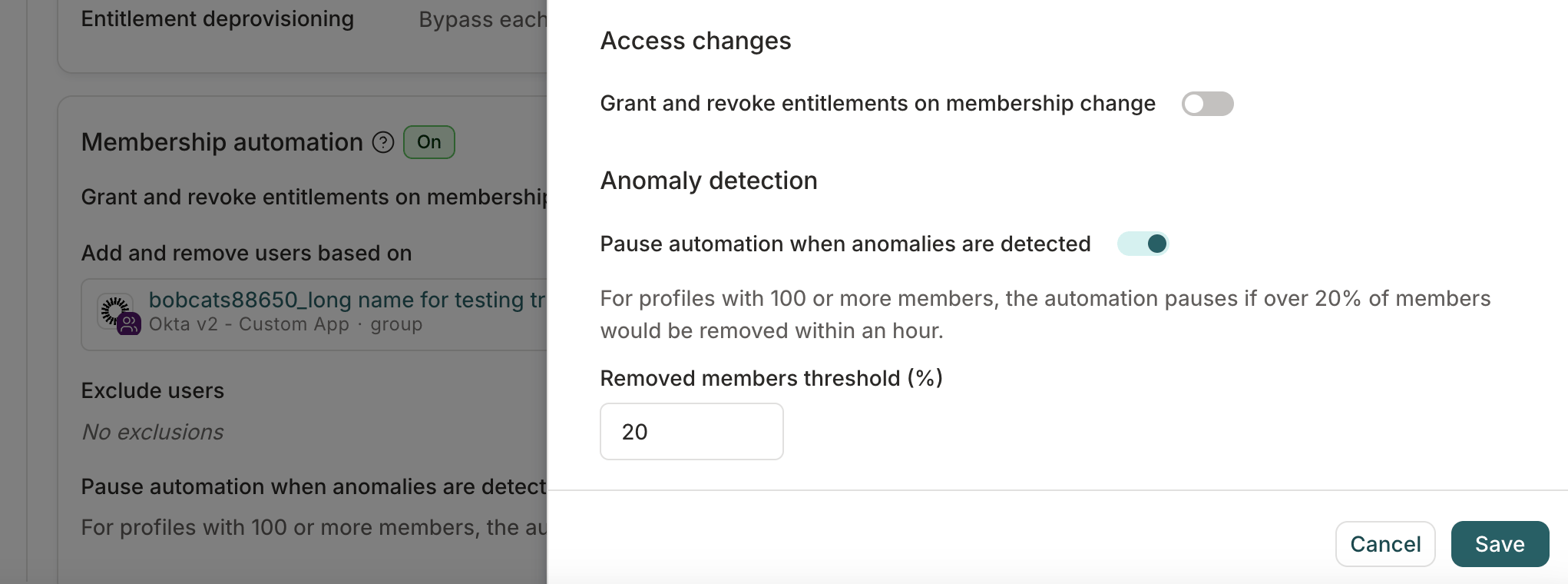
Anomaly detection pause for membership automationnew60how completely this was documenteddepth25/40specificity20/30actionability15/3060 / 100
The membership automation edit drawer adds an Anomaly detection section with a Pause automation when anomalies are detected toggle and a view of removed members, allowing automations to halt when unusual membership changes occur.︀︄︇︀︅︉︀︅︀︀︃︀︀︅︅︀︅︊︀︄︆︀︃︄︀︄︇︀︅︉︀︅︀︀︃︀︀︅︅︀︅︊︀︄︆︀︃︄︀︄︇︀︅︉︀︅︀︀︃︀︀︅︅︀︅︊︀︄︆︀︃︄
Per-section overview dashboards across admin navnew45how completely this was documenteddepth20/40specificity15/30actionability10/3045 / 100
Adds dedicated overview dashboards to each major admin nav section, such as Identities & NHINHIA non-human identity, an account or credential used by software or a device rather than a person. Service accounts, workload identities and automation tokens need their own permissions and lifecycle controls. (with tabs and stat tiles for human users, service accounts, secrets, agents, and NHI counts), replacing the single Product digest view that previously aggregated this information.
Automation expressions that reference the bare workflow context, or pass it directly to a function, no longer compile — expressions must name the step and field directly. Any automation using an indirect-reference expression will fail to save on next edit until rewritten to a static path.
!
The Owner column, filter, detail field, API field, and audit-log event names on Findings are renamed to Assignee — integrations consuming the Finding object via API, webhook, or SIEMSIEMSecurity information and event management, collecting logs from many systems and correlating events to find suspicious activity. Analysts use it to investigate alerts and incidents. audit log must update to the new field and event names.
ⓘSourcesChangelog →1 release · 2026-09-14Changelog ↗RankWhy this ranktop features scored 70/65, +15 breaking change, +10 product media, +6 runnable example — 98.5How ranking works →
JumpCloud makes it simple to manage Windows, Apple, Linux, and Android devices and to deliver secure access with SSO, MFA, Zero Trust, RADIUS, and more.
JumpCloud expanded its AI Gateway with MCPMCPModel Context Protocol, a standard for connecting AI applications to external tools and data sources. A compatible server exposes capabilities an assistant can use through a common interface. server connection status tracking, a guided Add MCP ServerMCP ServerA process that exposes tools, resources, and prompts over Anthropic's Model Context Protocol, letting an AI agent call external APIs or local services through a standardised interface. workflow, and mandatory app-based access scoping (with related breaking changes), while also adding AI agent identity registration, device-level MCP discovery with token/cost tracking, and a Custom Query Builder for compliance reporting.︀︄︇︀︅︉︀︅︀︀︃︀︀︅︅︀︅︊︀︄︆︀︃︄︀︄︇︀︅︉︀︅︀︀︃︀︀︅︅︀︅︊︀︄︆︀︃︄︀︄︇︀︅︉︀︅︀︀︃︀︀︅︅︀︅︊︀︄︆︀︃︄︀︄︇︀︅︉︀︅︀︀︃︀︀︅︅︀︅︊︀︄︆︀︃︄
└──▷ WHAT SHIPPED ·
2 FEATURES2 OF 2 FEATURESmost completely described firstwhat's the number?
Each feature carries 0–100 for how completely the vendor documented
it — not how big or important the work is. A major capability
described in eight words scores low, and that is the finding.
depth0–40what it does and how it works or what changed
specificity0–30names real surfaces — APIs, flags, formats, limits, numbers
actionability0–30enough to go use it — a named endpoint, flag, or config key tops this; a UI path is a starting point
Code and config rank first by construction: a documented endpoint,
flag or config key scores at the top of specificity and actionability,
so it sorts above a feature described only in prose. Under
60 the notes go thin — everything below the “thinner
coverage” line is thinner documentation, not smaller work.
Hover any meter for that feature's three sub-scores.
0101
AI agent identity registration with OAuth credentialsnew70how completely this was documenteddepth25/40specificity20/30actionability25/3070 / 100
Admins can register an AI agent identity under Identity Management > Agents, filling in name, owner, and company email, then generating OAuth client credentials on the Authentication tab so the agent can authenticate to JumpCloud resources, including the AI Gateway, independently of a human account.︀︄︇︀︅︉︀︅︀︀︃︀︀︅︅︀︅︊︀︄︆︀︃︄︀︄︇︀︅︉︀︅︀︀︃︀︀︅︅︀︅︊︀︄︆︀︃︄︀︄︇︀︅︉︀︅︀︀︃︀︀︅︅︀︅︊︀︄︆︀︃︄︀︄︇︀︅︉︀︅︀︀︃︀︀︅︅︀︅︊︀︄︆︀︃︄
Register an AI agent identity and configure OAuth credentials so an AI agent can authenticate to JumpCloud resources independently of any human account.
📍In the Admin Portal, go to Identity Management › Agents and click + Add. Fill in the agent name, owner, and company email on the Details tab, then open the Authentication tab and generate OAuth client credentials for the JumpCloud AI Gateway.
MCP connection status and Add MCP Server workflownew65how completely this was documenteddepth25/40specificity25/30actionability15/3065 / 100
The AI & SaaS ManagementSaaS ManagementA category of software that tracks, governs, and optimises an organisation's portfolio of SaaS subscriptions, covering spend, access, and licence utilisation from a single control plane. Applications tab now shows an MCP Connection Status column with values Discovered, Connected, and Not Available, and a new Add MCP Server workflow lets admins connect discovered MCP servers to AI Gateway without leaving the applications view.
MCP servers previously created without an associated SSOSSOSingle sign-on, using one identity provider to sign in to multiple applications. It reduces separate passwords and centralizes account and access management. application or bookmark must now have one assigned in AI Gateway; access is not scoped by User Groups until an application is assigned.
!
The custom app creation option has been removed from the Add MCP Server dialog; admins must use + New App to open the standard Add New SSO Application wizard when creating an app during server setup.
1Password's browser extension now fully supports passkeyspasskeysPhishing-resistant sign-in credentials built on FIDO2/WebAuthn: the device holds a private key and proves possession instead of the user typing a password. They sync across a user's devices., and Watchtower can identify existing logins that are eligible to be upgraded to one.︀︄︇︀︅︉︀︅︀︀︃︀︀︅︅︀︅︊︀︄︆︀︃︄︀︄︇︀︅︉︀︅︀︀︃︀︀︅︅︀︅︊︀︄︆︀︃︄
All the latest releases from the 1Password team
1Password's browser extension now fully supports passkeyspasskeysPhishing-resistant sign-in credentials built on FIDO2/WebAuthn: the device holds a private key and proves possession instead of the user typing a password. They sync across a user's devices., and Watchtower can identify existing logins that are eligible to be upgraded to one.︀︄︇︀︅︉︀︅︀︀︃︀︀︅︅︀︅︊︀︄︆︀︃︄︀︄︇︀︅︉︀︅︀︀︃︀︀︅︅︀︅︊︀︄︆︀︃︄
└──▷ WHAT SHIPPED ·
1 FEATURE0 OF 1 FEATUREmost completely described firstwhat's the number?
Each feature carries 0–100 for how completely the vendor documented
it — not how big or important the work is. A major capability
described in eight words scores low, and that is the finding.
depth0–40what it does and how it works or what changed
specificity0–30names real surfaces — APIs, flags, formats, limits, numbers
actionability0–30enough to go use it — a named endpoint, flag, or config key tops this; a UI path is a starting point
Code and config rank first by construction: a documented endpoint,
flag or config key scores at the top of specificity and actionability,
so it sorts above a feature described only in prose. Under
60 the notes go thin — everything below the “thinner
coverage” line is thinner documentation, not smaller work.
Hover any meter for that feature's three sub-scores.
0100
Passkey support with Watchtower upgrade alertsnew60how completely this was documenteddepth25/40specificity15/30actionability20/3060 / 100
The 1Password browser extension now ships full passkeypasskeyPhishing-resistant sign-in credentials built on FIDO2/WebAuthn: the device holds a private key and proves possession instead of the user typing a password. They sync across a user's devices. support, letting users create and save passkeys for sites directly from the extension.︀︄︇︀︅︉︀︅︀︀︃︀︀︅︅︀︅︊︀︄︆︀︃︄ Watchtower has been updated to flag logins that can be upgraded to a passkey, so users can find and switch eligible accounts without manually checking each site.︀︄︇︀︅︉︀︅︀︀︃︀︀︅︅︀︅︊︀︄︆︀︃︄
Find which of your saved logins can be hardened by switching to a passkey, without manually checking each site.
📍In 1Password, open Watchtower. Review the new passkey upgrade alerts — each flagged login identifies an account where you can replace your password with a passkey. Select a login and follow the prompt to create and save the passkey for that site.
Zscaler launched Zero Trust Exchange Agentic Operations, a new AI-driven operational layer pairing a hosted MCPMCPModel Context Protocol, a standard for connecting AI applications to external tools and data sources. A compatible server exposes capabilities an assistant can use through a common interface. server with the native ZAgent assistant, alongside OAuth 2.1OAuth 2.1A consolidated draft of the OAuth authorization framework that merges OAuth 2.0 with its most important security BCP updates, dropping unsafe flows so tools can delegate user access without handling credentials directly.-based governance controls for connecting and auditing third-party and custom AI agents.︀︄︇︀︅︉︀︅︀︀︃︀︀︅︅︀︅︊︀︄︆︀︃︄
Zscaler is a cloud-based security platform that inspects and filters internet traffic to protect organizations from cyber threats.
Zscaler launched Zero Trust Exchange Agentic Operations, a new AI-driven operational layer pairing a hosted MCPMCPModel Context Protocol, a standard for connecting AI applications to external tools and data sources. A compatible server exposes capabilities an assistant can use through a common interface. server with the native ZAgent assistant, alongside OAuth 2.1OAuth 2.1A consolidated draft of the OAuth authorization framework that merges OAuth 2.0 with its most important security BCP updates, dropping unsafe flows so tools can delegate user access without handling credentials directly.-based governance controls for connecting and auditing third-party and custom AI agents.︀︄︇︀︅︉︀︅︀︀︃︀︀︅︅︀︅︊︀︄︆︀︃︄
└──▷ WHAT SHIPPED ·
2 FEATURES2 OF 2 FEATURESmost completely described firstwhat's the number?
Each feature carries 0–100 for how completely the vendor documented
it — not how big or important the work is. A major capability
described in eight words scores low, and that is the finding.
depth0–40what it does and how it works or what changed
specificity0–30names real surfaces — APIs, flags, formats, limits, numbers
actionability0–30enough to go use it — a named endpoint, flag, or config key tops this; a UI path is a starting point
Code and config rank first by construction: a documented endpoint,
flag or config key scores at the top of specificity and actionability,
so it sorts above a feature described only in prose. Under
60 the notes go thin — everything below the “thinner
coverage” line is thinner documentation, not smaller work.
Hover any meter for that feature's three sub-scores.
0101
Zero Trust Exchange Agentic Operations with ZAgentnew70how completely this was documenteddepth30/40specificity20/30actionability20/3070 / 100
Introduces Zero Trust Exchange Agentic Operations, a new hosted operational layer exposing intent-based tools and skills to first-party and third-party AI agents via a hosted Model Context ProtocolModel Context ProtocolModel Context Protocol, a standard for connecting AI applications to external tools and data sources. A compatible server exposes capabilities an assistant can use through a common interface. (MCP) server.︀︄︇︀︅︉︀︅︀︀︃︀︀︅︅︀︅︊︀︄︆︀︃︄ Includes ZAgent, Zscaler's native agentic experience within the Experience Center, letting administrators describe objectives in natural language and receive coordinated responses from specialized Zscaler agents and skills.
Investigate why a user cannot reach a business-critical application using ZAgent in the Experience Center, without manually navigating multiple consoles or logs.
📍In the Experience Center, open ZAgent and type: 'Why can't [user] reach the finance application?' — ZAgent routes the request to the appropriate Zscaler agents and skills, gathers context, and returns a likely cause and recommended remediation.
— Names MCP server and ZAgent with a worked example, but no config/API detail2026-09-14-ddbcce12
0202
OAuth-based agent authorization and governancenew70how completely this was documenteddepth30/40specificity25/30actionability15/3070 / 100
Supports connecting approved commercial AI clients (Claude, ChatGPT) and custom customer-built agents through an OAuth 2OAuth 2An open authorization framework (RFC 6749) that lets a service grant limited access to a user's resources on another service without exposing credentials, giving cyber tools a standard way to authenticate against third-party APIs..1 authorization flow, with per-user role-scoped consent and revocation. An Agentic Operations Gateway handles routing, identity, authorization, approval controls, and auditing for all agent interactions, with client registration and token lifecycle events recorded in Zscaler audit logs. Super Administrators can review and revoke authorization grants across the entire organization from a central view.
— Names OAuth 2.1, clients, and audit logging but no exact command or endpoint2026-09-14-ddbcce12
CISO Assistant is a one-stop-shop GRC platform for Risk Management, AppSec, Compliance & Audit, TPRM, BIA, Privacy, and Reporting. It supports 200+ global frameworks with automatic control mapping, including ISO 27001, NIST CSF, SOC 2, CIS, PCI DSS, NIS2, DORA, GDPR, HIPAA, CMMC, and more.
CISO Assistant v4.0.3 gives admins the ability to enforce a single date format across all users on an instance.︀︄︇︀︅︉︀︅︀︀︃︀︀︅︅︀︅︊︀︄︆︀︃︄︀︄︇︀︅︉︀︅︀︀︃︀︀︅︅︀︅︊︀︄︆︀︃︄︀︄︇︀︅︉︀︅︀︀︃︀︀︅︅︀︅︊︀︄︆︀︃︄︀︄︇︀︅︉︀︅︀︀︃︀︀︅︅︀︅︊︀︄︆︀︃︄
└──▷ WHAT SHIPPED ·
1 FEATURE0 OF 1 FEATUREmost completely described firstwhat's the number?
Each feature carries 0–100 for how completely the vendor documented
it — not how big or important the work is. A major capability
described in eight words scores low, and that is the finding.
depth0–40what it does and how it works or what changed
specificity0–30names real surfaces — APIs, flags, formats, limits, numbers
actionability0–30enough to go use it — a named endpoint, flag, or config key tops this; a UI path is a starting point
Code and config rank first by construction: a documented endpoint,
flag or config key scores at the top of specificity and actionability,
so it sorts above a feature described only in prose. Under
60 the notes go thin — everything below the “thinner
coverage” line is thinner documentation, not smaller work.
Hover any meter for that feature's three sub-scores.
0100
Admin-enforced date format settingnew33how completely this was documenteddepth15/40specificity8/30actionability10/3033 / 100
Admins can now force a single date format to apply for all users across the instance, standardizing how dates are displayed platform-wide.︀︄︇︀︅︉︀︅︀︀︃︀︀︅︅︀︅︊︀︄︆︀︃︄︀︄︇︀︅︉︀︅︀︀︃︀︀︅︅︀︅︊︀︄︆︀︃︄︀︄︇︀︅︉︀︅︀︀︃︀︀︅︅︀︅︊︀︄︆︀︃︄︀︄︇︀︅︉︀︅︀︀︃︀︀︅︅︀︅︊︀︄︆︀︃︄
— States the change but no config key or UI path givenv4.0.3
ⓘSourcesBlog / feed →1 release · 2026-09-13Blog ↗RankWhy this ranktop features scored 80/55/30, +15 breaking change, +6 runnable example — 76How ranking works →
RegScale's CLI added three new integration subcommands for third-party security data ingestion, deprecated the CSAM subcommand in favor of JCAM, and improved JCAM configuration checks with empty-role detection alongside new CLI-based service account management.︀︄︇︀︅︉︀︅︀︀︃︀︀︅︅︀︅︊︀︄︆︀︃︄︀︄︇︀︅︉︀︅︀︀︃︀︀︅︅︀︅︊︀︄︆︀︃︄︀︄︇︀︅︉︀︅︀︀︃︀︀︅︅︀︅︊︀︄︆︀︃︄︀︄︇︀︅︉︀︅︀︀︃︀︀︅︅︀︅︊︀︄︆︀︃︄
RegScale is a compliance management platform that automates regulatory assessments, documentation, and audit workflows for organizations.
RegScale's CLI added three new integration subcommands for third-party security data ingestion, deprecated the CSAM subcommand in favor of JCAM, and improved JCAM configuration checks with empty-role detection alongside new CLI-based service account management.︀︄︇︀︅︉︀︅︀︀︃︀︀︅︅︀︅︊︀︄︆︀︃︄︀︄︇︀︅︉︀︅︀︀︃︀︀︅︅︀︅︊︀︄︆︀︃︄︀︄︇︀︅︉︀︅︀︀︃︀︀︅︅︀︅︊︀︄︆︀︃︄︀︄︇︀︅︉︀︅︀︀︃︀︀︅︅︀︅︊︀︄︆︀︃︄
└──▷ WHAT SHIPPED ·
3 FEATURES0 OF 3 FEATURESmost completely described firstwhat's the number?
Each feature carries 0–100 for how completely the vendor documented
it — not how big or important the work is. A major capability
described in eight words scores low, and that is the finding.
depth0–40what it does and how it works or what changed
specificity0–30names real surfaces — APIs, flags, formats, limits, numbers
actionability0–30enough to go use it — a named endpoint, flag, or config key tops this; a UI path is a starting point
Code and config rank first by construction: a documented endpoint,
flag or config key scores at the top of specificity and actionability,
so it sorts above a feature described only in prose. Under
60 the notes go thin — everything below the “thinner
coverage” line is thinner documentation, not smaller work.
Hover any meter for that feature's three sub-scores.
0100
Empty-role detection in jcam check_configimproved80how completely this was documenteddepth30/40specificity25/30actionability25/3080 / 100
regscale jcam check_config now detects any role declared in jcamSystemRoles that matches no point-of-contact position in any JCAM system in scope, surfacing roles that would be created empty before they are built.︀︄︇︀︅︉︀︅︀︀︃︀︀︅︅︀︅︊︀︄︆︀︃︄︀︄︇︀︅︉︀︅︀︀︃︀︀︅︅︀︅︊︀︄︆︀︃︄︀︄︇︀︅︉︀︅︀︀︃︀︀︅︅︀︅︊︀︄︆︀︃︄︀︄︇︀︅︉︀︅︀︀︃︀︀︅︅︀︅︊︀︄︆︀︃︄
Catch unmatched roles in your JCAM configuration before provisioning, so no empty roles are created in scope.
New integration subcommands: archer, ibm, veracodenew55how completely this was documenteddepth15/40specificity25/30actionability15/3055 / 100
Adds archer subcommand for RSARSAThe oldest widely used public-key algorithm, for both encryption and signatures, with security resting on factoring large numbers. A large quantum computer would break it. Archer bidirectional integration, including login and sync commands, ibm subcommand for IBM AppScan file processing, and veracode subcommand to process Veracode export files.
— Names three subcommands but no flags or file formats detailed.product docs
0300
Service account management from the CLInew30how completely this was documenteddepth10/40specificity10/30actionability10/3030 / 100
Adds ability to create and manage RegScale service accounts from the CLI.
 THE CYBER TOOLCHAIN