The Cyber Toolchain — issue 085, September 25, 2026
THE CYBER TOOLCHAIN
NO. 085
Tail
THE DAILY RELEASE FIREHOSE
PUBLISHED SEPTEMBER 25, 2026 · EVERY DAY
EDITIONStail|grep|head|ls|diff|uniq
The daily firehose — everything the toolchain shipped today, already filtered.
We read every release from the 1325 tools on our watchlist at the source — GitHub and GitLab release notes, vendor release pages and changelogs, project blogs and feeds, vendor press releases, and the source code behind the tag. Bug-fix-only releases and non-product newsroom noise are dropped; what's left is summarized down to the new capability, how to try it, and any screenshots or videos the release itself published. Every entry links to the sources it was built from.
READ AS
Focus:What features shipped and what problems they solve, plus launches, packaging and where the market is moving.
Leaves out:Command-line flags, API-only deltas, usage examples, and releases that are only refinements.
Focus:New security controls, new APIs, and product improvements you can put to work, plus anything an upgrade breaks.
Leaves out:Launch and marketing news, governance, pricing, and documentation changes with no operational effect.
Focus:Dashboards, reporting, and anything you can quantify: metrics, coverage, risk scores, compliance impact, vendor moves.
Leaves out:Settings, flags, API and command-line detail, library bumps, and minor releases with no reporting or posture angle.
Focus:API, SDK and MCP changes, new libraries, breaking changes in what you import, and cyber tooling.
Leaves out:Governance, SOC operations, and vendor launches with no developer surface.
AMOUNT
DETAIL
ORDER
This issue came out before editions were ranked, so it shows the Standard edition in issue order.
What stands out across today's releases, grouped by what it lets you do. Every tool named links to its entry below.
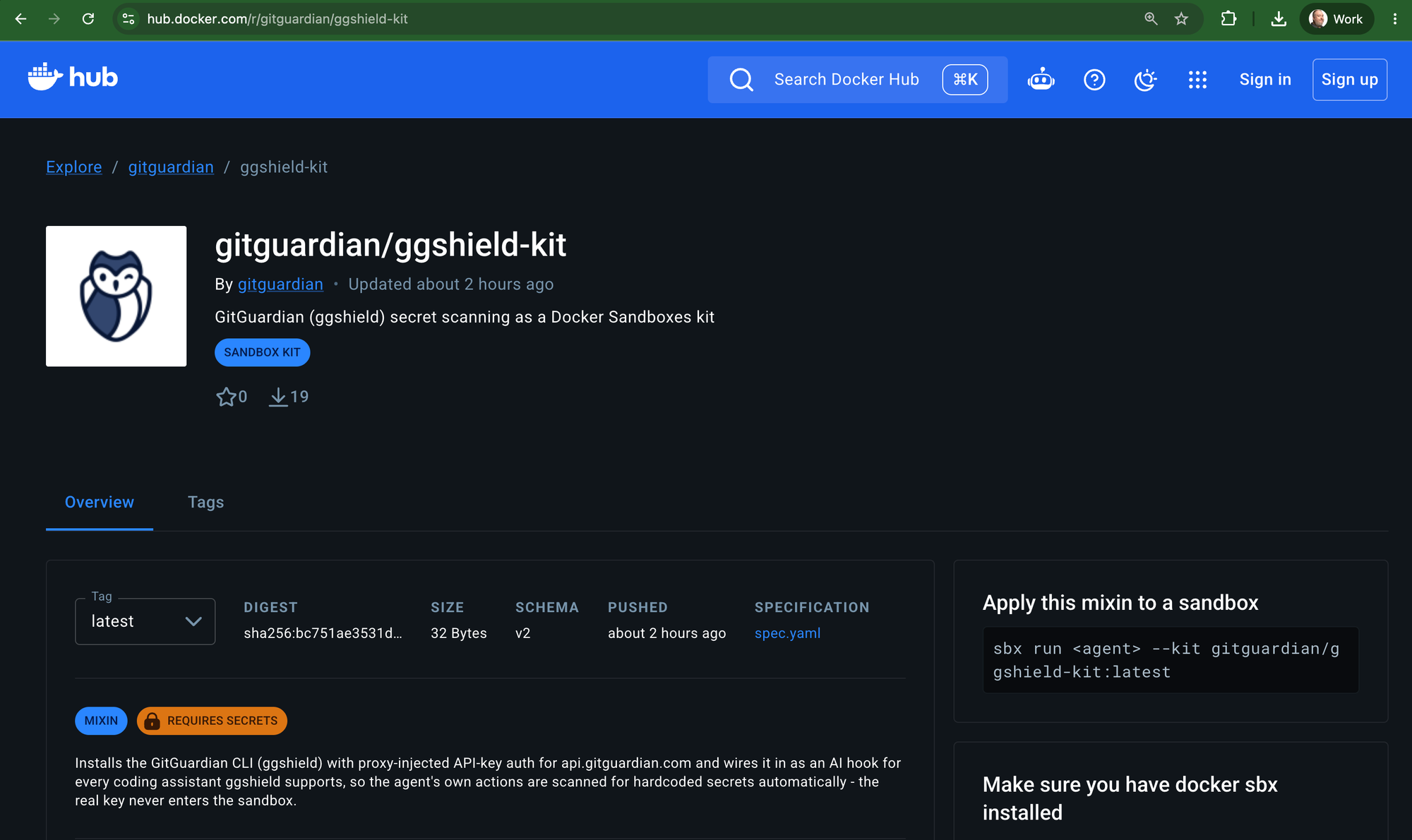
Three unrelated things stand out. GitGuardian's Sandbox Mixin Kit keeps API credentials off agent sandboxes and blocks secrets before they reach the model. TruffleHog added thirteen new scan sources, so CI, Jira, Slack and S3 stop being blind spots. Dalfox v3 finally emits SARIFSARIFStatic Analysis Results Interchange Format, a standard for sharing code-analysis findings, including locations and rule details. It lets scanners report results to a common review interface. with confidence and CWECWECommon Weakness Enumeration, a catalog of recurring software and hardware weakness types. It describes classes of mistakes, such as injection, rather than individual vulnerability instances. fields, making XSSXSSCross-site scripting, an attack that runs malicious script in another user's browser through a trusted site. It can steal data or perform actions using the user's session. findings CI-gradeable.
protect
Stop secrets leaking out of AI coding agents without trusting the agent
GitGuardian's Mixin Kit auto-installs ggshield and wires hooks into Claude Code, Codex, Cursor and Copilot sandboxes so credentials never sit inside the sandbox the agent controls, and secrets are caught before they reach a model or tool call. Docker's Sandbox Kit Specification v3 pushes the same idea upstream by declaring an agent's authority as reviewable OCIOCIOpen Container Initiative standard, maintained by the Linux Foundation, defining the image format and runtime spec that container tools share so images built once run anywhere OCI-compliant. config rather than something you infer from runtime behaviour.
Find leaked credentials in the systems you were not scanning
Thirteen new sources — Buildkite, CircleCI, Jenkins, Azure Repos, Bitbucket, Jira, Confluence, Slack, Postman, Google Drive, Google Cloud Storage, Docker registries, AWS S3 — move secret scanningsecret scanningChecking files, code or other data for exposed credentials such as passwords, API keys and tokens. Findings help teams remove the secret and revoke or rotate it. past the git history that everyone already covers into the ticket threads and chat channels where keys actually get pasted. A live-credential analyzer and on-demand reverification cut the triage cost of asking whether a hit is still valid.
Gate a build on XSS findings instead of reading a scanner's console output
Dalfox v3 emits SARIF alongside JSON/JSONLJSONLA text format where each line is a self-contained, valid JSON object, making it easy to stream, append, and process large datasets line by line without parsing a full JSON array into memory./TOMLTOMLA configuration file format designed to be minimal and readable, mapping unambiguously to a hash table; cyber tools use it as a structured alternative to YAML or INI for config files. with confidence and CWE fields, which is what a pipeline needs to rank and suppress rather than just print; resumable state-file scans mean a long crawl that dies mid-run picks up instead of restarting. HawkScan 6.5.0 re-verifies authentication mid-scan, which prevents the common silent failure where a session expires partway through and the rest of the scan quietly tests a login page.
Hand first-pass alert triage to an agent that runs inside the playbook you already built
SecOpsSecOpsThe practice of merging security and IT operations teams so that threat detection, response, and infrastructure management share the same workflows, giving cyber tools a single pipeline from alert to remediation. embeds a Gemini Triage and Investigation Agent directly into SOARSOARSecurity orchestration, automation and response, coordinating incident workflows across tools. Playbooks can gather evidence, assign work or carry out approved response actions. playbooks rather than as a side console, so the enrichment and initial verdict happen where the case workflow already lives. Dreadnode and others shipped inline approve/reject on held tool calls — the control that makes agent-driven action safe to leave running, since a human blocks the one step that matters instead of supervising the whole session.
Three unrelated things stand out today: Google SecOpsSecOpsThe practice of merging security and IT operations teams so that threat detection, response, and infrastructure management share the same workflows, giving cyber tools a single pipeline from alert to remediation. put Gemini triage and investigation inside SOARSOARSecurity orchestration, automation and response, coordinating incident workflows across tools. Playbooks can gather evidence, assign work or carry out approved response actions. playbooks, so alert work can start where cases already run; Docker Sandboxes moved agent work to managed cloud sandboxes without handing it the laptop; Dalfox made long XSSXSSCross-site scripting, an attack that runs malicious script in another user's browser through a trusted site. It can steal data or perform actions using the user's session. testing more automatable and resumable.
respond
Start investigations inside the playbook instead of copying context into a separate AI workflow
The Triage and Investigation Agent is embedded directly into SOAR playbooks. That matters because enrichment, hypothesis-building, and next-step guidance can happen in the same case workflow analysts already use, instead of requiring a side-channel prompt-and-paste loop.
Run coding agents in governed sandboxes instead of on a developer laptop
Docker Sandboxes added managed Cloud Sandboxes behind --cloud, lifecycle controls, network policy, a secrets store, and sbx move; GitGuardian SaaSSaaSSoftware delivered over the internet and billed by subscription, hosted and operated by the vendor so the buyer skips installation and infrastructure management. added hooks that keep API credentials off the sandbox and block secrets before they reach models or tools. Together, they reduce the blast radius of agent execution and remove the habit of giving local credentials to untrusted automation.
Make XSS scanning easier to resume, integrate, and trust in CI output
Dalfox added structured JSON/JSONLJSONLA text format where each line is a self-contained, valid JSON object, making it easy to stream, append, and process large datasets line by line without parsing a full JSON array into memory./TOMLTOMLA configuration file format designed to be minimal and readable, mapping unambiguously to a hash table; cyber tools use it as a structured alternative to YAML or INI for config files./SARIFSARIFStatic Analysis Results Interchange Format, a standard for sharing code-analysis findings, including locations and rule details. It lets scanners report results to a common review interface. output with confidence and CWECWECommon Weakness Enumeration, a catalog of recurring software and hardware weakness types. It describes classes of mistakes, such as injection, rather than individual vulnerability instances. fields, managed out-of-band blind-XSS detection, richer parameter mining, and resumable state-file scans; StackHawk added mid-scan authentication re-verification. The practical gain is fewer abandoned or unauthenticated scans, and findings that can move into defect and vulnerability workflows without hand-normalizing scanner output.
Put approval and audit points in front of AI and MCP tool use
ConductorOne added a public REST APIREST APIA web API design style where clients interact with resources over HTTP using standard methods like GET, POST, and DELETE, giving cyber tools a predictable, language-agnostic way to integrate with external services. for AI governance, Terraform resources for MCPMCPModel Context Protocol, a standard for connecting AI applications to external tools and data sources. A compatible server exposes capabilities an assistant can use through a common interface. sources, and wider change-history tracking; bytebase added MCP access-policy controls with refusal auditing. Teams get a way to treat agent-access paths like managed access paths: declared, reviewed, and evidenced, rather than hidden in local configs or ad hoc tokens.
Dreadnode's biggest window items are inline approve/reject controls for held tool calls in web chat and Workflows moving into open beta with CLI/SDK/UI pipelines and Slack integration, backed by a major agentic red-teaming probe expansion and broad startup-latency work that cuts agent cold-start time by 93%.︀︄︇︀︅︉︀︅︀︀︃︀︀︅︅︀︅︊︀︄︆︀︃︄︀︄︇︀︅︉︀︅︀︀︃︀︀︅︅︀︅︊︀︄︆︀︃︄
Documentation for the Dreadnode AI security platform — self-hosting guides, platform concepts, SDK reference, and CLI documentation.
Dreadnode's biggest window items are inline approve/reject controls for held tool calls in web chat and Workflows moving into open beta with CLI/SDK/UI pipelines and Slack integration, backed by a major agentic red-teaming probe expansion and broad startup-latency work that cuts agent cold-start time by 93%.︀︄︇︀︅︉︀︅︀︀︃︀︀︅︅︀︅︊︀︄︆︀︃︄︀︄︇︀︅︉︀︅︀︀︃︀︀︅︅︀︅︊︀︄︆︀︃︄
└──▷ WHAT SHIPPED ·
17 FEATURES0 OF 17 FEATURESmost completely described firstwhat's the number?
Each feature carries 0–100 for how completely the vendor documented
it — not how big or important the work is. A major capability
described in eight words scores low, and that is the finding.
depth0–40what it does and how it works or what changed
specificity0–30names real surfaces — APIs, flags, formats, limits, numbers
actionability0–30enough to go use it — a named endpoint, flag, or config key tops this; a UI path is a starting point
Code and config rank first by construction: a documented endpoint,
flag or config key scores at the top of specificity and actionability,
so it sorts above a feature described only in prose. Under
60 the notes go thin — everything below the “thinner
coverage” line is thinner documentation, not smaller work.
Hover any meter for that feature's three sub-scores.
0100
Agentic red-teaming probe expansionnew85how completely this was documenteddepth35/40specificity30/30actionability20/3085 / 100
Adds generate_attack support for agentic-probes 2026 attacks in the ai-red-teaming agent, including transforms for argument injection, deserializationdeserializationTurning stored or transmitted data back into objects a program can use. Unsafe handling of untrusted data can allow unexpected behavior or code execution. payloads, RAGRAGRetrieval-augmented generation: looking up relevant documents and adding them to the prompt before the model answers. It grounds responses in private or current data without retraining. poisoning, and covert channels, plus matching evidence-gated scorers.︀︄︇︀︅︉︀︅︀︀︃︀︀︅︅︀︅︊︀︄︆︀︃︄ Eight new agentic red-teaming probe families cover tool-misuse RCERCERemote code execution, the ability to run attacker-chosen code on another system through a vulnerability. Its impact depends on the permissions and access that code receives., advanced exfiltration, MINJA memory poisoning, MCPMCPModel Context Protocol, a standard for connecting AI applications to external tools and data sources. A compatible server exposes capabilities an assistant can use through a common interface. line-jumping, RAG optimization attacks, and indirect prompt injectionindirect prompt injectionAn attack where text the model reads, such as a web page, file or tool result, carries instructions that override the user's. It is the main security risk for agents with tools. via the new IterInject attack loop, alongside a new provisionable multiagent sandbox target agentic-probes-sandbox for evaluating them.︀︄︇︀︅︉︀︅︀︀︃︀︀︅︅︀︅︊︀︄︆︀︃︄
Explicit autonomy step budgetsnew85how completely this was documenteddepth25/40specificity30/30actionability30/3085 / 100
Adds --max-steps N with --print for explicit autonomy budgets; unattended workflows (dn --auto, /auto, /background, --print, guard sessions, and web chat Auto/Background) now default to 100 steps.
Cap an unattended red-team workflow at a specific step count to bound runaway autonomous execution.
Startup and latency performance improvementsimproved75how completely this was documenteddepth35/40specificity30/30actionability10/3075 / 100
Agent cold-start is 93% faster — median agent construction drops from ~5s to ~0.3s by deferring heavy imports (pandas, numpy, pyarrow, Optuna) until actually used. E2B sandbox pre-warming bakes server, LiteLLM, agent graph, and first-turn imports into the E2B runtime snapshot, eliminating the largest filesystem-load costs at startup. Trace storage uploads now run in a background pool so the first chat turn no longer waits on credential fetching or object uploads, and SDK scope validation now runs reads concurrently with exponential backoff and an 8-second shared deadline, reducing validation latency.
Workflows in open betanew75how completely this was documenteddepth30/40specificity25/30actionability20/3075 / 100
Introduces Workflows in open beta: define, run, and inspect multi-step agent pipelines from the CLI, SDK, and a new Workflows section in the UI, with project-scoped catalog, stable graphs, an inline CLI guide, and model selection at run time. SDK 2.0.47 adds model selection for local workflow runs.
Inline tool-call approvals and policy statusnew70how completely this was documenteddepth30/40specificity25/30actionability15/3070 / 100
Held tool calls now appear inline in the conversation transcript with full arguments, the policy reason, and Approve / Reject buttons, replacing the previous generic input card. Transcript headers also show tool policy state (active, disabled, failed, awaiting approval, or not recorded) for both live and past sessions.
TUI runtime log switchingnew70how completely this was documenteddepth25/40specificity20/30actionability25/3070 / 100
Press F5 then Tab in the TUITUIA text-based user interface that runs inside a terminal, using characters and ANSI escape codes to render menus, panes, and widgets without a graphical desktop, letting cyber tools ship rich interactivity with no GUI dependency. console to switch between local process logs and the connected runtime's server logs, with retained history up to 2,000 entries, level filtering, copy, and save.
Slack integration for agent sessionsnew70how completely this was documenteddepth25/40specificity20/30actionability25/3070 / 100
Org owners connect a workspace via Settings → Integrations, then @mention an agent to stream a full session in-thread with stop support and a direct link back to the session in Agents → Sessions.
Connect your Dreadnode org to Slack so your team can trigger and watch agent sessions without leaving their chat workspace.
📍In the Dreadnode UI, go to Settings → Integrations and connect your Slack workspace. Once connected, @mention the agent in any channel to stream a full session in-thread. Use the link posted in-thread to open the session in Agents → Sessions.
Runtime capability health inspectionnew65how completely this was documenteddepth25/40specificity20/30actionability20/3065 / 100
Adds a runtime_info built-in tool agents can call to inspect which capabilities are loaded, enabled, and healthy — including failed loads and component health — without exposing raw config or credentials. SDK 2.0.47 adds this runtime capability health inspection for agents.
Tool catalog in Agent Policiesnew55how completely this was documenteddepth20/40specificity20/30actionability15/3055 / 100
Adds a browsable Tool catalog in Agent Policies with searchable metadata, copyable IDs, schema fingerprints, and collapsible input schemas for every visible tool and its revision history.
New /beta workbench information architecturenew55how completely this was documenteddepth20/40specificity20/30actionability15/3055 / 100
Adds a new workbench at /beta with a new information architecture across project shell, Hub catalogs (Capabilities, Environments, Datasets, Models), Agent Outputs, and Sessions.
Workflow run page and listing enhancementsimproved55how completely this was documenteddepth20/40specificity20/30actionability15/3055 / 100
The workflow run page has a new header, node panel, transcript view, and graph direction controls. Associated workflow runs now also appear inline on the Workflows page with status, duration, and run ID.
Organization avatarsnew55how completely this was documenteddepth20/40specificity20/30actionability15/3055 / 100
Owners can set an organization avatar in Settings by choosing one of five color presets, uploading a PNG, JPEG, or SVG, or falling back to the org name initial.
Unread release-notes badgenew35how completely this was documenteddepth15/40specificity10/30actionability10/3035 / 100
Adds an unread badge on the sidebar account button showing how many release notes have not been seen yet, clearing automatically when Release Notes is opened in Account Settings.
Dreadnode adds inline tool-call approvals, eight new agentic probe families, a browsable Tool catalog, and TUITUIA text-based user interface that runs inside a terminal, using characters and ANSI escape codes to render menus, panes, and widgets without a graphical desktop, letting cyber tools ship rich interactivity with no GUI dependency. runtime log switching.︀︄︇︀︅︉︀︅︀︀︃︀︀︅︅︀︅︊︀︄︆︀︃︄
└──▷ TRY IT
Cap an unattended red-team workflow at a specific step count to bound runaway autonomous execution.
$ dn --print--max-steps 50
Adds generate_attack support for agentic-probes 2026 attacks in the ai-red-teaming agent, including transforms for argument injection, deserializationdeserializationTurning stored or transmitted data back into objects a program can use. Unsafe handling of untrusted data can allow unexpected behavior or code execution. payloads, RAGRAGRetrieval-augmented generation: looking up relevant documents and adding them to the prompt before the model answers. It grounds responses in private or current data without retraining. poisoning, and covert channels, plus matching evidence-gated scorers.︀︄︇︀︅︉︀︅︀︀︃︀︀︅︅︀︅︊︀︄︆︀︃︄
Adds eight new agentic red-teaming probe families to the SDK: evidence-gated scorers and transforms covering tool-misuse RCERCERemote code execution, the ability to run attacker-chosen code on another system through a vulnerability. Its impact depends on the permissions and access that code receives., advanced exfiltration, MINJA memory poisoning, MCPMCPModel Context Protocol, a standard for connecting AI applications to external tools and data sources. A compatible server exposes capabilities an assistant can use through a common interface. line-jumping, RAG optimization attacks, and indirect prompt injectionindirect prompt injectionAn attack where text the model reads, such as a web page, file or tool result, carries instructions that override the user's. It is the main security risk for agents with tools. via the new IterInject attack loop.
Adds a new provisionable multiagent sandbox target agentic-probes-sandbox for 2026 agentic-probe evaluation families.
Press F5 then Tab in the TUI console to switch between local process logs and the connected runtime's server logs, with retained history up to 2,000 entries, level filtering, copy, and save.
Adds a browsable Tool catalog in Agent Policies with searchable metadata, copyable IDs, schema fingerprints, and collapsible input schemas for every visible tool and its revision history.
+14 moreshow less
Held tool calls now appear inline in the conversation transcript with full arguments, the policy reason, and Approve / Reject buttons, replacing the previous generic input card.
Adds a new workbench at /beta with a new information architecture across project shell, Hub catalogs (Capabilities, Environments, Datasets, Models), Agent Outputs, and Sessions.
Capability tools, hooks, and workers can now use standard package-relative imports instead of relying on flat module names.
The capability detail page now shows a workflow graph of how the capability's steps connect.
Adds an unread badge on the sidebar account button showing how many release notes have not been seen yet, clearing automatically when Release Notes is opened in Account Settings.
Adds --max-steps N with --print for explicit autonomy budgets; unattended workflows (dn --auto, /auto, /background, --print, guard sessions, and web chat Auto/Background) now default to 100 steps.
SDK 2.0.47 adds runtime capability health inspection for agents, and model selection for local workflow runs.
Transcript headers now show tool policy state (active, disabled, failed, awaiting approval, or not recorded) for both live and past sessions.
Associated workflow runs now appear inline on the Workflows page with status, duration, and run ID.
Agent cold-start is 93% faster — median agent construction drops from ~5 s to ~0.3 s by deferring heavy imports (pandas, numpy, pyarrow, Optuna) until actually used.
E2B sandbox pre-warming bakes server, LiteLLM, agent graph, and first-turn imports into the E2B runtime snapshot, eliminating the largest filesystem-load costs at startup.
Trace storage uploads now run in a background pool so the first chat turn no longer waits on credential fetching or object uploads before issuing the first model request.
SDK scope validation now runs reads concurrently with exponential backoff and an 8-second shared deadline, reducing validation latency.
The workflow run page has a new header, node panel, transcript view, and graph direction controls.
Adds generate_attack support for agentic-probes 2026 attacks in the ai-red-teaming agent, including transforms for argument injection, deserializationdeserializationTurning stored or transmitted data back into objects a program can use. Unsafe handling of untrusted data can allow unexpected behavior or code execution. payloads, RAGRAGRetrieval-augmented generation: looking up relevant documents and adding them to the prompt before the model answers. It grounds responses in private or current data without retraining. poisoning, and covert channels, plus matching evidence-gated scorers.︀︄︇︀︅︉︀︅︀︀︃︀︀︅︅︀︅︊︀︄︆︀︃︄
Adds eight new agentic red-teaming probe families to the SDK: evidence-gated scorers and transforms covering tool-misuse RCERCERemote code execution, the ability to run attacker-chosen code on another system through a vulnerability. Its impact depends on the permissions and access that code receives., advanced exfiltration, MINJA memory poisoning, MCPMCPModel Context Protocol, a standard for connecting AI applications to external tools and data sources. A compatible server exposes capabilities an assistant can use through a common interface. line-jumping, RAG optimization attacks, and indirect prompt injectionindirect prompt injectionAn attack where text the model reads, such as a web page, file or tool result, carries instructions that override the user's. It is the main security risk for agents with tools. via the new IterInject attack loop.
Adds a new provisionable multiagent sandbox target agentic-probes-sandbox for 2026 agentic-probe evaluation families.
Press F5 then Tab in the TUI console to switch between local process logs and the connected runtime's server logs, with retained history up to 2,000 entries, level filtering, copy, and save.
Adds a browsable Tool catalog in Agent Policies with searchable metadata, copyable IDs, schema fingerprints, and collapsible input schemas for every visible tool and its revision history.
+5 moreshow less
Adds a new workbench at /beta with a new information architecture across project shell, Hub catalogs (Capabilities, Environments, Datasets, Models), Agent Outputs, and Sessions.
The capability detail page now shows a workflow graph of how the capability's steps connect.
Adds an unread badge on the sidebar account button showing how many release notes have not been seen yet, clearing automatically when Release Notes is opened in Account Settings.
SDK 2.0.47 adds runtime capability health inspection for agents, and model selection for local workflow runs.
Transcript headers now show tool policy state (active, disabled, failed, awaiting approval, or not recorded) for both live and past sessions.
Dreadnode Workflows enter open beta with CLI/SDK/UI pipelines, Slack integration, and a built-in agent runtime health tool.︀︄︇︀︅︉︀︅︀︀︃︀︀︅︅︀︅︊︀︄︆︀︃︄
└──▷ HOW TO FIND IT
Connect your Dreadnode org to Slack so your team can trigger and watch agent sessions without leaving their chat workspace.
📍In the Dreadnode UI, go to Settings → Integrations and connect your Slack workspace. Once connected, @mention the agent in any channel to stream a full session in-thread. Use the link posted in-thread to open the session in Agents → Sessions.
Adds a runtime_info built-in tool agents can call to inspect which capabilities are loaded, enabled, and healthy — including failed loads and component health — without exposing raw config or credentials.︀︄︇︀︅︉︀︅︀︀︃︀︀︅︅︀︅︊︀︄︆︀︃︄
Introduces Workflows in open beta: define, run, and inspect multi-step agent pipelines from the CLI, SDK, and a new Workflows section in the UI, with project-scoped catalog, stable graphs, inline CLI guide, and model selection at run time.
Adds Slack integration: org owners connect a workspace via Settings → Integrations, then @mention an agent to stream a full session in-thread with stop support and a direct link back to the session in Agents → Sessions.
Adds a memory creation panel and form on the Memories page so memories can be created directly from the UI.
Adds organization avatars: owners can set an avatar in Settings by choosing one of five color presets, uploading a PNG, JPEG, or SVG, or falling back to the org name initial.
5 details in Everything
└──▷ BREAKING ON UPGRADE
!The SDK now requires websockets 15.0.1 or later; environments running websockets 14.x will fail at fastmcp initialization.
GitGuardian Detection Engine scans code repositories to identify and alert on exposed secrets, credentials, and sensitive data.
GitGuardian's Detection Engine added ten new secret detectors and eight new analyzers, expanded validation for Splunk, Artifactory, Salesforce, and Scaleway credentials, and shipped two breaking changes to existing detectors.︀︄︇︀︅︉︀︅︀︀︃︀︀︅︅︀︅︊︀︄︆︀︃︄︀︄︇︀︅︉︀︅︀︀︃︀︀︅︅︀︅︊︀︄︆︀︃︄
└──▷ WHAT SHIPPED ·
7 FEATURES1 OF 7 FEATURESmost completely described firstwhat's the number?
Each feature carries 0–100 for how completely the vendor documented
it — not how big or important the work is. A major capability
described in eight words scores low, and that is the finding.
depth0–40what it does and how it works or what changed
specificity0–30names real surfaces — APIs, flags, formats, limits, numbers
actionability0–30enough to go use it — a named endpoint, flag, or config key tops this; a UI path is a starting point
Code and config rank first by construction: a documented endpoint,
flag or config key scores at the top of specificity and actionability,
so it sorts above a feature described only in prose. Under
60 the notes go thin — everything below the “thinner
coverage” line is thinner documentation, not smaller work.
Hover any meter for that feature's three sub-scores.
0100
Salesforce OAuth2 Keys validation now uses instance-specific token endpointimproved70how completely this was documenteddepth30/40specificity25/30actionability15/3070 / 100
Expands the Salesforce OAuth2OAuth2An open authorization framework (RFC 6749) that lets a service grant limited access to a user's resources on another service without exposing credentials, giving cyber tools a standard way to authenticate against third-party APIs. Keys detector to capture the Salesforce instance host and validate credentials against that instance's OAuth token endpoint (production or sandbox) instead of the token introspection endpoint; returns failed_to_check when no host is found.︀︄︇︀︅︉︀︅︀︀︃︀︀︅︅︀︅︊︀︄︆︀︃︄︀︄︇︀︅︉︀︅︀︀︃︀︀︅︅︀︅︊︀︄︆︀︃︄
Ten new secret detectors addednew63how completely this was documenteddepth25/40specificity28/30actionability10/3063 / 100
Adds detectors for Brightcove OAuth credentials, Infor ION API Gateway OAuth client credentials (capturing the authorization host and token endpoint when present), generic Sanctum tokens, Telnyx API keys, Bifrost virtual keys (matched alone or together with the URL of the Bifrost deployment), Bitbucket HTTP access tokensaccess tokensA credential that authorizes a client to use a service or API. It usually has limited permissions and a lifetime; anyone holding it may be able to use those permissions. with the BBDC- prefix, Jira Data Center personal access tokenspersonal access tokensA personal access token, a credential used by scripts and integrations instead of a user's password. Its permissions and expiry depend on the service issuing it., MetaApi cloud tokens, Appwrite instance encryption keys, and APIclub API keys.
Scaleway Token detector catches additional env var namesimproved60how completely this was documenteddepth25/40specificity25/30actionability10/3060 / 100
Expands the Scaleway Token detector to catch SCW_SECRET_KEY and SCALEWAY_SECRET_KEY assignments, including when the word scaleway is absent from the document.
Figma analyzer reports folders:read scope replacing projects:readbreaking60how completely this was documenteddepth25/40specificity20/30actionability15/3060 / 100
Updates the Figma personal access tokenpersonal access tokenA personal access token, a credential used by scripts and integrations instead of a user's password. Its permissions and expiry depend on the service issuing it. analyzer to report the folders:read scope, which replaces the deprecated projects:read scope; workflows filtering on projects:read scope results will need to be updated.
Eight new secret analyzers addednew58how completely this was documenteddepth22/40specificity26/30actionability10/3058 / 100
Adds analyzers for AWS Cognito OAuth credentials with host, Alibaba Cloud IAMIAMIdentity and Access Management — a framework of policies and services for controlling who can authenticate to systems and what resources they are authorized to use, letting cyber tools enforce least-privilege and audit access. secrets, Databricks access tokens with hostname, PyPI API tokens, Contentful Content Management API keys, DigitalOcean personal access tokens v1, DigitalOcean tokens, and DigitalOcean OAuth application tokens v1.
Custom host support for Splunk and Artifactory token checkersimproved50how completely this was documenteddepth20/40specificity20/30actionability10/3050 / 100
Adds a checker for Splunk authentication tokens with custom host support, where the Splunk Authentication Token detector now also matches an optional Splunk host alongside the token, and a checker for Artifactory reference tokens with custom host support.
The generic_database_assignment_attached_port detector has been merged into generic_database_assignment; any rules, suppressions, or integrations referencing generic_database_assignment_attached_port by name will no longer match.
!
The Figma personal access tokenaccess tokenA credential that authorizes a client to use a service or API. It usually has limited permissions and a lifetime; anyone holding it may be able to use those permissions. analyzer now reports the folders:read scope in place of the deprecated projects:read scope; workflows filtering on projects:read scope results will need to be updated.
GitGuardian ships 10 new detectors, 8 new analyzers, and expanded validation for Splunk, Salesforce, Artifactory, and more.︀︄︇︀︅︉︀︅︀︀︃︀︀︅︅︀︅︊︀︄︆︀︃︄
Adds a new detector for Brightcove OAuth credentials.︀︄︇︀︅︉︀︅︀︀︃︀︀︅︅︀︅︊︀︄︆︀︃︄
Adds a new detector for Infor ION API Gateway OAuth client credentials, capturing the authorization host and token endpoint when present.
Adds a new detector for generic Sanctum tokens.
Adds a new detector for Telnyx API keys with the KEY prefix.
Adds a new detector for Bifrost virtual keys, matched alone or together with the URL of the Bifrost deployment.
+20 moreshow less
Adds a new detector for Bitbucket HTTP access tokensaccess tokensA credential that authorizes a client to use a service or API. It usually has limited permissions and a lifetime; anyone holding it may be able to use those permissions. with the BBDC- prefix.
Adds a new detector for Jira Data Center personal access tokenspersonal access tokensA personal access token, a credential used by scripts and integrations instead of a user's password. Its permissions and expiry depend on the service issuing it..
Adds a new detector for MetaApi cloud tokens.
Adds a new detector for Appwrite instance encryption keys.
Adds a new detector for APIclub API keys.
Adds a new analyzer for AWS Cognito OAuth credentials with host.
Adds a new secret analyzer for Alibaba Cloud IAMIAMIdentity and Access Management — a framework of policies and services for controlling who can authenticate to systems and what resources they are authorized to use, letting cyber tools enforce least-privilege and audit access..
Adds a new analyzer for Databricks access tokenaccess tokenA credential that authorizes a client to use a service or API. It usually has limited permissions and a lifetime; anyone holding it may be able to use those permissions. with hostname.
Adds a secret analyzer for PyPI API tokens.
Adds a secret analyzer for Contentful Content Management API keys.
Adds a new analyzer for DigitalOcean personal access tokens v1.
Adds a new analyzer for DigitalOcean tokens.
Adds a new analyzer for DigitalOcean OAuth application tokens v1.
Adds a new checker for Splunk authentication tokens with custom host support; the Splunk Authentication Token detector now also matches an optional Splunk host alongside the token.
Adds a checker for Artifactory reference tokens with custom host support.
Expands the Salesforce OAuth2OAuth2An open authorization framework (RFC 6749) that lets a service grant limited access to a user's resources on another service without exposing credentials, giving cyber tools a standard way to authenticate against third-party APIs. Keys detector to capture the Salesforce instance host and validates credentials against that instance's OAuth token endpoint (production or sandbox) instead of the token introspection endpoint; returns failed_to_check when no host is found.
Expands the Scaleway Token detector to catch SCW_SECRET_KEY and SCALEWAY_SECRET_KEY assignments, including when the word scaleway is absent from the document.
Expands the Username Password detector to match Spanish, Portuguese, French, and Turkish username/password assignment keywords.
Merges the generic_database_assignment_attached_port detector into the generic_database_assignment detector.
Updates the Figma personal access tokenpersonal access tokenA personal access token, a credential used by scripts and integrations instead of a user's password. Its permissions and expiry depend on the service issuing it. analyzer to report the folders:read scope, which replaces the deprecated projects:read scope.
Adds a new detector for Brightcove OAuth credentials.︀︄︇︀︅︉︀︅︀︀︃︀︀︅︅︀︅︊︀︄︆︀︃︄
Adds a new detector for Infor ION API Gateway OAuth client credentials, capturing the authorization host and token endpoint when present.
Adds a new detector for generic Sanctum tokens.
Adds a new detector for Telnyx API keys with the KEY prefix.
Adds a new detector for Bifrost virtual keys, matched alone or together with the URL of the Bifrost deployment.
+15 moreshow less
Adds a new detector for Bitbucket HTTP access tokensaccess tokensA credential that authorizes a client to use a service or API. It usually has limited permissions and a lifetime; anyone holding it may be able to use those permissions. with the BBDC- prefix.
Adds a new detector for Jira Data Center personal access tokenspersonal access tokensA personal access token, a credential used by scripts and integrations instead of a user's password. Its permissions and expiry depend on the service issuing it..
Adds a new detector for MetaApi cloud tokens.
Adds a new detector for Appwrite instance encryption keys.
Adds a new detector for APIclub API keys.
Adds a new analyzer for AWS Cognito OAuth credentials with host.
Adds a new secret analyzer for Alibaba Cloud IAMIAMIdentity and Access Management — a framework of policies and services for controlling who can authenticate to systems and what resources they are authorized to use, letting cyber tools enforce least-privilege and audit access..
Adds a new analyzer for Databricks access tokenaccess tokenA credential that authorizes a client to use a service or API. It usually has limited permissions and a lifetime; anyone holding it may be able to use those permissions. with hostname.
Adds a secret analyzer for PyPI API tokens.
Adds a secret analyzer for Contentful Content Management API keys.
Adds a new analyzer for DigitalOcean personal access tokens v1.
Adds a new analyzer for DigitalOcean tokens.
Adds a new analyzer for DigitalOcean OAuth application tokens v1.
Adds a new checker for Splunk authentication tokens with custom host support; the Splunk Authentication Token detector now also matches an optional Splunk host alongside the token.
Adds a checker for Artifactory reference tokens with custom host support.
5 more in Everything
└──▷ BREAKING ON UPGRADE
!The generic_database_assignment_attached_port detector has been merged into generic_database_assignment; any rules, suppressions, or integrations referencing generic_database_assignment_attached_port by name will no longer match.
!The Figma personal access token analyzer now reports the folders:read scope in place of the deprecated projects:read scope; workflows filtering on projects:read scope results will need to be updated.
GitGuardian shipped a Docker Sandbox Mixin Kit that auto-installs ggshield and wires AI agent hooks into Claude Code, Codex, Cursor, and GitHub Copilot sandboxes, keeping API credentials off the sandbox and blocking secrets before they reach models or tools.︀︄︇︀︅︉︀︅︀︀︃︀︀︅︅︀︅︊︀︄︆︀︃︄
GitGuardian SaaS is a cloud-based security platform that detects and prevents secrets leakage in git repositories and source code.
GitGuardian shipped a Docker Sandbox Mixin Kit that auto-installs ggshield and wires AI agent hooks into Claude Code, Codex, Cursor, and GitHub Copilot sandboxes, keeping API credentials off the sandbox and blocking secrets before they reach models or tools.︀︄︇︀︅︉︀︅︀︀︃︀︀︅︅︀︅︊︀︄︆︀︃︄
└──▷ WHAT SHIPPED ·
2 FEATURES0 OF 2 FEATURESmost completely described firstwhat's the number?
Each feature carries 0–100 for how completely the vendor documented
it — not how big or important the work is. A major capability
described in eight words scores low, and that is the finding.
depth0–40what it does and how it works or what changed
specificity0–30names real surfaces — APIs, flags, formats, limits, numbers
actionability0–30enough to go use it — a named endpoint, flag, or config key tops this; a UI path is a starting point
Code and config rank first by construction: a documented endpoint,
flag or config key scores at the top of specificity and actionability,
so it sorts above a feature described only in prose. Under
60 the notes go thin — everything below the “thinner
coverage” line is thinner documentation, not smaller work.
Hover any meter for that feature's three sub-scores.
0100
Docker Sandbox Mixin Kit for AI coding agentsnew88how completely this was documenteddepth30/40specificity28/30actionability30/3088 / 100
GitGuardian publishes a Docker Sandbox Mixin Kit on Docker Hub and GitHub that automatically installs ggshield and configures agentic AI hooks when a sandbox starts, requiring no manual setup, and covers Claude Code, Codex, Cursor, and VS Code with GitHub Copilot as supported coding assistants.︀︄︇︀︅︉︀︅︀︀︃︀︀︅︅︀︅︊︀︄︆︀︃︄ The kit adds sbx secret set gitguardian to supply a GitGuardian API key through Docker's host-side credential proxy, keeping the real token outside the sandbox microVM, and can be stacked with other kits by passing additional --kits <targeted mixin> arguments to sbx.
Store your GitGuardian API key securely outside the sandbox before launching, so the credential never lands inside the agent microVM.
AI agent hooks for secrets detectionnew64how completely this was documenteddepth30/40specificity22/30actionability12/3064 / 100
Adds a prompt-submission hook via ggshield that scans a developer's prompt for secrets and blocks it before it reaches the AI model, a pre-tool-use hook that scans file reads, shell commands, and MCPMCPModel Context Protocol, a standard for connecting AI applications to external tools and data sources. A compatible server exposes capabilities an assistant can use through a common interface. calls before execution and blocks the action when a secret is detected, and a post-tool-use hook that scans tool output and sends a desktop notification when a secret appears in the result.
GitGuardian publishes a Docker Sandbox Mixin Kit that auto-installs ggshield AI hooks for Claude Code, Codex, Cursor, and GitHub Copilot agents.︀︄︇︀︅︉︀︅︀︀︃︀︀︅︅︀︅︊︀︄︆︀︃︄
└──▷ TRY IT
Store your GitGuardian API key securely outside the sandbox before launching, so the credential never lands inside the agent microVM.
$ sbx secret set gitguardian
Adds sbx secret set gitguardian to supply a GitGuardian API key through Docker's host-side credential proxy, keeping the real token outside the sandbox microVM.︀︄︇︀︅︉︀︅︀︀︃︀︀︅︅︀︅︊︀︄︆︀︃︄
Publishes a Docker Sandbox Mixin Kit on Docker Hub and GitHub that automatically installs ggshield and configures agentic AI hooks when a sandbox starts, requiring no manual setup.
Adds a prompt-submission hook via ggshield that scans a developer's prompt for secrets and blocks it before it reaches the AI model.
Adds a pre-tool-use hook via ggshield that scans file reads, shell commands, and MCPMCPModel Context Protocol, a standard for connecting AI applications to external tools and data sources. A compatible server exposes capabilities an assistant can use through a common interface. calls before execution and blocks the action when a secret is detected.
Adds a post-tool-use hook via ggshield that scans tool output and sends a desktop notification when a secret appears in the result.
+2 moreshow less
Supports stacking the GitGuardian mixin with other kits by passing additional --kits <targeted mixin> arguments to sbx.
Covers Claude Code, Codex, Cursor, and VS Code with GitHub Copilot as supported coding assistants in the mixin kit.
HawkScan 6.5.0 adds mid-scan authentication re-verification, hardens the one-line CLI installer with version pinning and checksum verification, and fixes a tech-flags bug that silently re-enabled unrelated scan flags.︀︄︇︀︅︉︀︅︀︀︃︀︀︅︅︀︅︊︀︄︆︀︃︄︀︄︇︀︅︉︀︅︀︀︃︀︀︅︅︀︅︊︀︄︆︀︃︄
StackHawk is an application security tool built for developers. Automated scanning for the entire dev pipeline combined with continuous documentation and remediation.
HawkScan 6.5.0 adds mid-scan authentication re-verification, hardens the one-line CLI installer with version pinning and checksum verification, and fixes a tech-flags bug that silently re-enabled unrelated scan flags.︀︄︇︀︅︉︀︅︀︀︃︀︀︅︅︀︅︊︀︄︆︀︃︄︀︄︇︀︅︉︀︅︀︀︃︀︀︅︅︀︅︊︀︄︆︀︃︄
└──▷ WHAT SHIPPED ·
2 FEATURES0 OF 2 FEATURESmost completely described firstwhat's the number?
Each feature carries 0–100 for how completely the vendor documented
it — not how big or important the work is. A major capability
described in eight words scores low, and that is the finding.
depth0–40what it does and how it works or what changed
specificity0–30names real surfaces — APIs, flags, formats, limits, numbers
actionability0–30enough to go use it — a named endpoint, flag, or config key tops this; a UI path is a starting point
Code and config rank first by construction: a documented endpoint,
flag or config key scores at the top of specificity and actionability,
so it sorts above a feature described only in prose. Under
60 the notes go thin — everything below the “thinner
coverage” line is thinner documentation, not smaller work.
Hover any meter for that feature's three sub-scores.
0100
Mid-scan authentication re-verificationnew91how completely this was documenteddepth35/40specificity28/30actionability28/3091 / 100
A new app.authentication.sessionVerification config block polls authentication.testPath during a scan to detect logout, with tunable pollFrequency (default 15), activeScanPollFrequency (default 5), and maxUnauthenticatedRequestPercent (default 5); if too much of the scan ran unauthenticated it now finishes with a coverage warning instead of silently returning a thin result.︀︄︇︀︅︉︀︅︀︀︃︀︀︅︅︀︅︊︀︄︆︀︃︄︀︄︇︀︅︉︀︅︀︀︃︀︀︅︅︀︅︊︀︄︆︀︃︄
Enable mid-scan session re-authentication so HawkScan detects and recovers from logout during an active scan, tightening the check cadence during attack phases.
CLI installer version pinning and checksum verificationnew81how completely this was documenteddepth25/40specificity28/30actionability28/3081 / 100
The one-line installer (curl -sSf https://download.stackhawk.com/hawk/install.sh | sh) gains HAWK_INSTALL_VERSION and HAWK_INSTALL_DIR environment variables plus SHA-256SHA-256A cryptographic hash function that turns data into a fixed 256-bit fingerprint. It is used to check integrity; hashing does not encrypt the original data. verification against the published manifest; HAWK_INSTALL_DIR defaults to ~/.hawk/bin.
Pin the CLI installer to a specific version in CI so the pipeline is reproducible and does not silently pick up a newer release.
$ HAWK_INSTALL_VERSION=6.5.0 HAWK_INSTALL_DIR=/usr/local/bin curl -sSf https://download.stackhawk.com/hawk/install.sh | sh
HawkScan 6.5.0 adds mid-scan session verification, org-wide secret resolution, and a one-line CLI installer with version pinning.︀︄︇︀︅︉︀︅︀︀︃︀︀︅︅︀︅︊︀︄︆︀︃︄
└──▷ USE IT
Enable mid-scan session re-authentication so HawkScan detects and recovers from logout during an active scan, tightening the check cadence during attack phases.
Pin the CLI installer to a specific version in CI so the pipeline is reproducible and does not silently pick up a newer release.
$ HAWK_INSTALL_VERSION=6.5.0 HAWK_INSTALL_DIR=/usr/local/bin curl -sSf https://download.stackhawk.com/hawk/install.sh | sh
Adds app.authentication.sessionVerification config block to re-check authentication mid-scan by polling authentication.testPath, with tunable pollFrequency (default 15), activeScanPollFrequency (default 5), and maxUnauthenticatedRequestPercent (default 5); a scan that spent too much time logged out finishes with a coverage warning instead of a quietly thin result.︀︄︇︀︅︉︀︅︀︀︃︀︀︅︅︀︅︊︀︄︆︀︃︄
Adds HAWK_INSTALL_VERSION and HAWK_INSTALL_DIR environment variables to the one-line curl -sSf https://download.stackhawk.com/hawk/install.sh | sh installer, with SHA-256SHA-256A cryptographic hash function that turns data into a fixed 256-bit fingerprint. It is used to check integrity; hashing does not encrypt the original data. verification against the published manifest; HAWK_INSTALL_DIR defaults to ~/.hawk/bin.
Fixes hawk op app tech-flags set so naming one technology flag no longer silently re-enables all other 34 flags; the command now reads current flags, merges the requested change, and writes the result.
Adds app.authentication.sessionVerification config block to re-check authentication mid-scan by polling authentication.testPath, with tunable pollFrequency (default 15), activeScanPollFrequency (default 5), and maxUnauthenticatedRequestPercent (default 5); a scan that spent too much time logged out finishes with a coverage warning instead of a quietly thin result.︀︄︇︀︅︉︀︅︀︀︃︀︀︅︅︀︅︊︀︄︆︀︃︄
Adds HAWK_INSTALL_VERSION and HAWK_INSTALL_DIR environment variables to the one-line curl -sSf https://download.stackhawk.com/hawk/install.sh | sh installer, with SHA-256SHA-256A cryptographic hash function that turns data into a fixed 256-bit fingerprint. It is used to check integrity; hashing does not encrypt the original data. verification against the published manifest; HAWK_INSTALL_DIR defaults to ~/.hawk/bin.
Get started with Semgrep to help you catch, flag, and fix real vulnerabilities before they ship.
Semgrep Guardian now reports scan status in AI coding agents, and Agentic Workflows issues are exportable as CSV via UI and public API.︀︄︇︀︅︉︀︅︀︀︃︀︀︅︅︀︅︊︀︄︆︀︃︄
Semgrep Guardian now reports status — setup confirmation, scan summaries, sign-in requirements, and server errors — directly inside AI coding agent turns.
GitHub's biggest ships this window are CodeQL 2.27.1 (new queries, Kotlin 2.4.20 support, and expanded C/C++, Go and Rust data-flow models), a new enterprise-wide default policy for Copilot GA features, and proof-of-presence re-authentication for high-impact actions on Entra IDEntra IDMicrosoft's cloud-based identity and access management service, formerly Azure Active Directory, used by cyber tools to authenticate users and enforce access policies in Microsoft 365 and Azure environments. EMU enterprises.︀︄︇︀︅︉︀︅︀︀︃︀︀︅︅︀︅︊︀︄︆︀︃︄
Join the world's most widely adopted, AI-powered developer platform where millions of developers, businesses, and the largest open source community build software that advances humanity.
GitHub's biggest ships this window are CodeQL 2.27.1 (new queries, Kotlin 2.4.20 support, and expanded C/C++, Go and Rust data-flow models), a new enterprise-wide default policy for Copilot GA features, and proof-of-presence re-authentication for high-impact actions on Entra IDEntra IDMicrosoft's cloud-based identity and access management service, formerly Azure Active Directory, used by cyber tools to authenticate users and enforce access policies in Microsoft 365 and Azure environments. EMU enterprises.︀︄︇︀︅︉︀︅︀︀︃︀︀︅︅︀︅︊︀︄︆︀︃︄
└──▷ WHAT SHIPPED ·
7 FEATURES2 OF 7 FEATURESmost completely described firstwhat's the number?
Each feature carries 0–100 for how completely the vendor documented
it — not how big or important the work is. A major capability
described in eight words scores low, and that is the finding.
depth0–40what it does and how it works or what changed
specificity0–30names real surfaces — APIs, flags, formats, limits, numbers
actionability0–30enough to go use it — a named endpoint, flag, or config key tops this; a UI path is a starting point
Code and config rank first by construction: a documented endpoint,
flag or config key scores at the top of specificity and actionability,
so it sorts above a feature described only in prose. Under
60 the notes go thin — everything below the “thinner
coverage” line is thinner documentation, not smaller work.
Hover any meter for that feature's three sub-scores.
0100
Default policy for new Copilot featuresnew88how completely this was documenteddepth35/40specificity28/30actionability25/3088 / 100
Copilot Business and Enterprise admins can set a global Default policy for new features under AI Controls > Copilot > Features & clients, with options Enabled, Disabled, and Let organizations decide, controlling whether current and future eligible Copilot features are available to users by default.︀︄︇︀︅︉︀︅︀︀︃︀︀︅︅︀︅︊︀︄︆︀︃︄ The policy also extends to the Copilot Code Review policy on the Agents page and the MCPMCPModel Context Protocol, a standard for connecting AI applications to external tools and data sources. A compatible server exposes capabilities an assistant can use through a common interface. servers in Copilot policy. Starting October 22, any Copilot feature left Unconfigured at the enterprise level will automatically follow this global default, which may change feature availability for users without an explicit administrator decision.
Prevent all future GA Copilot features from being silently enabled for your enterprise users until an admin explicitly approves them.
📍In GitHub, go to your enterprise settings › AI Controls › Copilot › Features & clients (https://github.com/enterprises/YOUR-ENTERPRISE-SLUG/ai-controls/copilot/features), then under Default policy for new features select Disabled.
Data flow model expansions for C/C++, Go, and Rustimproved80how completely this was documenteddepth35/40specificity30/30actionability15/3080 / 100
CodeQL 2.27.1 improves taint tracking with new flow models: taint flow for boost::asio::ip::basic_resolver::resolve, flow summaries for BloombergLP::bdlbb::Blob, and flow summaries for the google::protobuf::MessageLite C++ API. It adds Go 1.27 standard-library models including bytes.CutLast, database/sql.ConvertAssign, database/sql/driver.RowsColumnScanner.ScanColumn, net/url.URL.Clone, net/url.Values.Clone, strings.CutLast, and the new encoding/json/jsontext package, and expands existing Go strings models covering Clone, Cut, CutPrefix, CutSuffix, Fields, FieldsFunc, Join, Builder, Reader, and Replacer. It also adds Rust models for core::fmt::Write, improving detection of tainted data written to formatted output buffers.
Query accuracy refinements for Fastify, ASP.NET Core, and Actionsimproved75how completely this was documenteddepth30/40specificity30/30actionability15/3075 / 100
The js/missing-rate-limiting query now attributes routes correctly for Fastify servers configured through chainable methods such as fastify().withTypeProvider() and fastify().setValidatorCompiler(...). The cs/web/missing-token-validation query now recognizes ASP.NET Core's AutoValidateAntiforgeryTokenAttribute when registered as a global MVC filter through AddControllersWithViews and related methods. The actions/unpinned-tag query no longer flags actions pinned by a structurally valid .github/workflows/actions.lock entry for the enclosing workflow.
New CodeQL queries for C++ and C#new73how completely this was documenteddepth25/40specificity28/30actionability20/3073 / 100
CodeQL 2.27.1 adds the cpp/ambiguous-assignment-of-comparison query, which flags expressions that assign a comparison result to a variable and then use that assignment as a truth value, and the cs/linq/missed-firstordefault query, which identifies foreach loops that can be rewritten using LINQ's FirstOrDefault method.
Proof-of-presence re-authentication for high-impact actionsnew65how completely this was documenteddepth30/40specificity25/30actionability10/3065 / 100
GitHub Enterprise Cloud adds proof-of-presence challenges before high-impact actions for Entra ID EMU enterprises, supporting two requirement levels — re-authentication (password-level IdPIdPA service that authenticates users and supplies identity information to other applications. It is the sign-in authority behind many single sign-on systems. sign-in) and MFAMFAMulti-factor authentication, requiring proof from different categories, such as a password and a hardware key, to sign in. It reduces reliance on a password alone. (authenticator app or biometric as configured in Entra ID) — with custom IdP policies governing which actions trigger which level. After a successful challenge, the verified session stays elevated for two hours in the same browser session, matching the existing sudo mode session model.
Private NuGet registry replacement for dependency downloadsimproved60how completely this was documenteddepth20/40specificity25/30actionability15/3060 / 100
Private NuGetNuGetMicrosoft's package manager for .NET, hosting a public registry of reusable libraries so tools can pull in dependencies without bundling or manually maintaining third-party code. registries with the Replaces base option enabled in the organization-level private registry configuration now replace default NuGet feeds whenever CodeQL downloads dependencies.
Starting October 22, any Copilot feature left Unconfigured at the enterprise level will automatically follow the new global default policy (Enabled, Disabled, or Let organizations decide), which may change feature availability for users without an explicit administrator decision.
CodeQL 2.27.1 adds new C/C++ and C# queries, Kotlin 2.4.20 support, and expanded data flow models for Go, Rust, and JS.︀︄︇︀︅︉︀︅︀︀︃︀︀︅︅︀︅︊︀︄︆︀︃︄
Adds the cpp/ambiguous-assignment-of-comparison query to detect expressions that assign a comparison result to a variable and use the assignment as a truth value.︀︄︇︀︅︉︀︅︀︀︃︀︀︅︅︀︅︊︀︄︆︀︃︄
Adds the cs/linq/missed-firstordefault query to identify foreach loops that can be rewritten with LINQ's FirstOrDefault method.
Supports Kotlin 2.4.20 in CodeQL's Java/Kotlin analysis.
Adds taint flow models for boost::asio::ip::basic_resolver::resolve, flow summaries for BloombergLP::bdlbb::Blob, and flow summaries for the google::protobuf::MessageLite C++ API, improving C/C++ taint tracking.
Adds data flow models for Go 1.27 standard-library APIs including bytes.CutLast, database/sql.ConvertAssign, database/sql/driver.RowsColumnScanner.ScanColumn, net/url.URL.Clone, net/url.Values.Clone, strings.CutLast, and the new encoding/json/jsontext package.
+6 moreshow less
Expands data flow models for Go's strings package, covering Clone, Cut, CutPrefix, CutSuffix, Fields, FieldsFunc, Join, Builder, Reader, and Replacer APIs.
Adds data flow models for Rust's core::fmt::Write, improving detection of vulnerabilities where tainted data is written to formatted output buffers.
Recognizes Fastify servers configured through chainable methods such as fastify().withTypeProvider() and fastify().setValidatorCompiler(...), improving route attribution for queries like js/missing-rate-limiting.
The cs/web/missing-token-validation query now recognizes ASP.NET Core's AutoValidateAntiforgeryTokenAttribute when registered as a global MVC filter through AddControllersWithViews and related methods.
The actions/unpinned-tag query no longer flags actions pinned by a structurally valid .github/workflows/actions.lock entry for the enclosing workflow.
Private NuGetNuGetMicrosoft's package manager for .NET, hosting a public registry of reusable libraries so tools can pull in dependencies without bundling or manually maintaining third-party code. registries with the Replaces base option enabled in the organization-level private registry configuration now replace default NuGet feeds whenever CodeQL downloads dependencies.
Adds the cpp/ambiguous-assignment-of-comparison query to detect expressions that assign a comparison result to a variable and use the assignment as a truth value.︀︄︇︀︅︉︀︅︀︀︃︀︀︅︅︀︅︊︀︄︆︀︃︄
Adds the cs/linq/missed-firstordefault query to identify foreach loops that can be rewritten with LINQ's FirstOrDefault method.
GitHub Copilot admins can now set a global default policy for all new GA features under AI Controls.︀︄︇︀︅︉︀︅︀︀︃︀︀︅︅︀︅︊︀︄︆︀︃︄
└──▷ HOW TO FIND IT
Prevent all future GA Copilot features from being silently enabled for your enterprise users until an admin explicitly approves them.
📍In GitHub, go to your enterprise settings › AI Controls › Copilot › Features & clients (https://github.com/enterprises/YOUR-ENTERPRISE-SLUG/ai-controls/copilot/features), then under Default policy for new features select Disabled.
Adds a Default policy for new features setting under the AI Controls > Copilot > Features & clients admin page, with options Enabled, Disabled, and Let organizations decide, controlling whether current and future eligible Copilot features are available to users by default.︀︄︇︀︅︉︀︅︀︀︃︀︀︅︅︀︅︊︀︄︆︀︃︄
Extends the global default policy to cover the Copilot Code Review policy on the Agents page and the MCPMCPModel Context Protocol, a standard for connecting AI applications to external tools and data sources. A compatible server exposes capabilities an assistant can use through a common interface. servers in Copilot policy, in addition to features managed on the Features & clients page.
Adds a Default policy for new features setting under the AI Controls > Copilot > Features & clients admin page, with options Enabled, Disabled, and Let organizations decide, controlling whether current and future eligible Copilot features are available to users by default.︀︄︇︀︅︉︀︅︀︀︃︀︀︅︅︀︅︊︀︄︆︀︃︄
1 more in Everything
└──▷ BREAKING ON UPGRADE
!Starting October 22, any Copilot feature left Unconfigured at the enterprise level will automatically follow the new global default policy (Enabled, Disabled, or Let organizations decide), which may change feature availability for users without an explicit administrator decision.
GitHub Enterprise Cloud adds proof-of-presence re-authentication before high-impact actions for Entra IDEntra IDMicrosoft's cloud-based identity and access management service, formerly Azure Active Directory, used by cyber tools to authenticate users and enforce access policies in Microsoft 365 and Azure environments. EMU enterprises.︀︄︇︀︅︉︀︅︀︀︃︀︀︅︅︀︅︊︀︄︆︀︃︄
Supports two proof-of-presence requirement levels — re-authentication (password-level IdPIdPA service that authenticates users and supplies identity information to other applications. It is the sign-in authority behind many single sign-on systems. sign-in) and MFAMFAMulti-factor authentication, requiring proof from different categories, such as a password and a hardware key, to sign in. It reduces reliance on a password alone. (authenticator app or biometric as configured in Entra ID) — allowing enterprises to set custom IdP policies governing which actions trigger which level.︀︄︇︀︅︉︀︅︀︀︃︀︀︅︅︀︅︊︀︄︆︀︃︄
After a successful proof-of-presence challenge, the verified session remains elevated for two hours in the same browser session, matching the existing sudo mode session model.
Supports two proof-of-presence requirement levels — re-authentication (password-level IdPIdPA service that authenticates users and supplies identity information to other applications. It is the sign-in authority behind many single sign-on systems. sign-in) and MFAMFAMulti-factor authentication, requiring proof from different categories, such as a password and a hardware key, to sign in. It reduces reliance on a password alone. (authenticator app or biometric as configured in Entra ID) — allowing enterprises to set custom IdP policies governing which actions trigger which level.︀︄︇︀︅︉︀︅︀︀︃︀︀︅︅︀︅︊︀︄︆︀︃︄
The intelligent orchestration platform for DevSecOps, enabling teams and agents to ship trusted software at enterprise scale.
GitLab 19.4 ships a broad new MCPMCPModel Context Protocol, a standard for connecting AI applications to external tools and data sources. A compatible server exposes capabilities an assistant can use through a common interface. server toolset spanning CI/CD, merge requests, repositories, projects, work items, and vulnerabilities, plus a new merge-request-created trigger for the Duo Agent Platform, while GitLab 19.1 deprecates the stuck_or_timeout_failure value for retry:when in favor of more specific reasons.︀︄︇︀︅︉︀︅︀︀︃︀︀︅︅︀︅︊︀︄︆︀︃︄︀︄︇︀︅︉︀︅︀︀︃︀︀︅︅︀︅︊︀︄︆︀︃︄
└──▷ WHAT SHIPPED ·
9 FEATURES3 OF 9 FEATURESmost completely described firstwhat's the number?
Each feature carries 0–100 for how completely the vendor documented
it — not how big or important the work is. A major capability
described in eight words scores low, and that is the finding.
depth0–40what it does and how it works or what changed
specificity0–30names real surfaces — APIs, flags, formats, limits, numbers
actionability0–30enough to go use it — a named endpoint, flag, or config key tops this; a UI path is a starting point
Code and config rank first by construction: a documented endpoint,
flag or config key scores at the top of specificity and actionability,
so it sorts above a feature described only in prose. Under
60 the notes go thin — everything below the “thinner
coverage” line is thinner documentation, not smaller work.
Hover any meter for that feature's three sub-scores.
0101
Merge request MCP toolsetnew90how completely this was documenteddepth35/40specificity30/30actionability25/3090 / 100
Adds save_merge_request to open and update merge requests, get_merge_request to return diffs, conflicts, or approvals via the include param (diffs default to stats-level detail unless detail: full_patch is passed), list_merge_requests scoped to group level, save_merge_request_review covering the full review flow (line-level or summary comments, replying in or resolving discussions, submitting a full review, triggering a Duo review, approving or unapproving), and accept_merge_request which merges immediately by default, waits for checks with strategy: merge_when_checks_pass, or adds to a merge train with add_to_merge_train_when_checks_pass.︀︄︇︀︅︉︀︅︀︀︃︀︀︅︅︀︅︊︀︄︆︀︃︄︀︄︇︀︅︉︀︅︀︀︃︀︀︅︅︀︅︊︀︄︆︀︃︄
CI/CD pipeline and job MCP toolsnew85how completely this was documenteddepth30/40specificity30/30actionability25/3085 / 100
Adds save_pipeline MCP tool to run, retry, cancel, or rename a CI/CD pipeline, and get_job MCP tool that returns a job by default; passing include: ['log'] streams the job trace paginated via byte_offset and byte_limit (512 KB per page) so an agent can fetch and diagnose a failed build log directly.
Created trigger for merge requests in Duo Agent Platformnew80how completely this was documenteddepth30/40specificity25/30actionability25/3080 / 100
Adds Created as a new trigger action for merge requests, configurable under AI > Triggers in a project, firing when someone opens an MR once GitLab generates the diff. Requires Premium or Ultimate with Duo Agent Platform enabled.
Enable a first-pass agent review the moment a merge request is opened by wiring the Created trigger in your project.
📍In your project, go to AI › Triggers, select Merge request as the event, choose Created as the action, and save the flow.
Vulnerability management MCP tools (Ultimate)new76how completely this was documenteddepth30/40specificity28/30actionability18/3076 / 100
Adds list_vulnerabilities (Ultimate) to list project vulnerabilities filterable by severity and report type with cursor pagination, get_vulnerability (Ultimate) to return full details for a single vulnerability by ID, and save_vulnerability (Ultimate) consolidating dismiss, confirm, revert to detected, update severity, and create a linked issue into one tool.
Deprecation of stuck_or_timeout_failure retry reasondeprecated70how completely this was documenteddepth25/40specificity25/30actionability20/3070 / 100
Deprecates the stuck_or_timeout_failure value for retry:when in GitLab 19.1; existing jobs retain it for historical data only, and new jobs will not trigger retries on this reason unless the more specific replacement reasons are also configured.
— Names exact config key and value with migration behaviorproduct docs
0603
Work item MCP tools superseding issue toolsnew65how completely this was documenteddepth25/40specificity25/30actionability15/3065 / 100
Adds get_work_item, list_work_items, and save_work_item MCP tools covering single-item reads, group/project-scoped search, and create-or-update for any supported work item type, superseding the older get_issue and create_issue tools.
Repository exploration MCP toolsnew55how completely this was documenteddepth15/40specificity25/30actionability15/3055 / 100
Adds list_repository_tree, list_branches, list_tags, list_releases, list_commits, get_commit, add_commit, and fork_repository MCP tools for repository exploration and direct interaction with history.
Unified note MCP toolnew52how completely this was documenteddepth20/40specificity20/30actionability12/3052 / 100
Adds save_note MCP tool to comment on a work item or merge request and reply in an existing thread, superseding the separate create_merge_request_note and create_workitem_note tools.
Project and user MCP toolsnew47how completely this was documenteddepth15/40specificity20/30actionability12/3047 / 100
Adds get_project, list_projects, list_project_members, and get_user MCP tools for reading project details, member roles, and user information for assignment and mentions.
The stuck_or_timeout_failure value for retry:when is deprecated in GitLab 19.1 and preserved for historical data only; new jobs will not trigger retries on this reason unless the more specific replacement reasons are also configured.
GitLab 19.4 adds CI/CD, merge request, vulnerability, and project MCPMCPModel Context Protocol, a standard for connecting AI applications to external tools and data sources. A compatible server exposes capabilities an assistant can use through a common interface. server tools plus a new merge-request-created trigger for agentic flows.︀︄︇︀︅︉︀︅︀︀︃︀︀︅︅︀︅︊︀︄︆︀︃︄
└──▷ HOW TO FIND IT
Enable a first-pass agent review the moment a merge request is opened by wiring the Created trigger in your project.
📍In your project, go to AI › Triggers, select Merge request as the event, choose Created as the action, and save the flow.
Adds save_pipeline MCP tool to run, retry, cancel, or rename a CI/CD pipeline.︀︄︇︀︅︉︀︅︀︀︃︀︀︅︅︀︅︊︀︄︆︀︃︄
Adds get_job MCP tool that returns a job by default; passing include: ['log'] streams the job trace paginated via byte_offset and byte_limit (512 KB per page) so an agent can fetch and diagnose a failed build log directly.
Adds save_merge_request MCP tool to open and update merge requests.
Adds get_merge_request MCP tool that returns diffs, conflicts, or approvals via the include param, with diffs defaulting to stats-level detail unless detail: full_patch is passed for full patch text.
Adds list_merge_requests MCP tool scoped to group level.
+10 moreshow less
Adds save_merge_request_review MCP tool covering the full review flow: posting line-level or summary comments, replying in or resolving discussions, submitting a full review, triggering a Duo review, and approving or unapproving.
Adds accept_merge_request MCP tool that merges immediately by default, or waits for checks when passed strategy: merge_when_checks_pass, or adds to a merge train with add_to_merge_train_when_checks_pass.
Adds list_repository_tree, list_branches, list_tags, list_releases, list_commits, get_commit, add_commit, and fork_repository MCP tools for repository exploration and direct interaction with history.
Adds get_project, list_projects, list_project_members, and get_user MCP tools for reading project details, member roles, and user information for assignment and mentions.
Adds get_work_item, list_work_items, and save_work_item MCP tools covering single-item reads, group/project-scoped search, and create-or-update for any supported work item type (superseding get_issue and create_issue).
Adds save_note MCP tool to comment on a work item or merge request and reply in an existing thread (supersedes create_merge_request_note and create_workitem_note).
Adds list_vulnerabilities MCP tool (Ultimate) to list project vulnerabilities filterable by severity and report type with cursor pagination.
Adds get_vulnerability MCP tool (Ultimate) to return full details for a single vulnerability by ID.
Adds save_vulnerability MCP tool (Ultimate) consolidating dismiss, confirm, revert to detected, update severity, and create a linked issue into one tool.
Adds Created as a new trigger action for merge requests, configurable under AI > Triggers in a project, firing when someone opens an MR once GitLab generates the diff (requires Premium or Ultimate with Duo Agent Platform enabled).
LavaMoat's v19/v2/v3 wave reworks the policy generation pipeline — splitting generatePolicy() from disk writes via a new writePolicy export, expanding the LavaMoatPolicy.include schema with location-based includes, and adopting @endo/parser-pipeline for module parsing — alongside smaller extensions to harden script configs and policy overrides.︀︄︇︀︅︉︀︅︀︀︃︀︀︅︅︀︅︊︀︄︆︀︃︄
└──▷ WHAT SHIPPED ·
4 FEATURES0 OF 4 FEATURESmost completely described firstwhat's the number?
Each feature carries 0–100 for how completely the vendor documented
it — not how big or important the work is. A major capability
described in eight words scores low, and that is the finding.
depth0–40what it does and how it works or what changed
specificity0–30names real surfaces — APIs, flags, formats, limits, numbers
actionability0–30enough to go use it — a named endpoint, flag, or config key tops this; a UI path is a starting point
Code and config rank first by construction: a documented endpoint,
flag or config key scores at the top of specificity and actionability,
so it sorts above a feature described only in prose. Under
60 the notes go thin — everything below the “thinner
coverage” line is thinner documentation, not smaller work.
Hover any meter for that feature's three sub-scores.
0100
generatePolicy/writePolicy split and parser-pipeline adoptionbreaking93how completely this was documenteddepth35/40specificity28/30actionability30/3093 / 100
@lavamoat/node's generatePolicy() is split into separate generate and write steps: it now resolves with { policy: LavaMoatPolicy, hasWarnings: boolean } instead of a bare LavaMoatPolicy, and no longer accepts write or writableFs options.︀︄︇︀︅︉︀︅︀︀︃︀︀︅︅︀︅︊︀︄︆︀︃︄ A new writePolicy export from @lavamoat/node writes the policy to disk separately. @lavamoat/node also switches to @endo/parser-pipeline for module parsing. Migration requires destructuring policy from the result and calling writePolicy explicitly.
Generate a policy and check for warnings before writing it to disk — required migration pattern after the generatePolicy() API change.
javascript
import { generatePolicy, writePolicy } from '@lavamoat/node';

const { policy, hasWarnings } = await generatePolicy({ projectRoot: '.' });
if (hasWarnings) console.warn('Policy generated with warnings');
await writePolicy({ policy, policyPath: './lavamoat/node/policy.json' });
Expanded LavaMoatPolicy.include with location-based includesbreaking50how completely this was documenteddepth22/40specificity18/30actionability10/3050 / 100
LavaMoatPolicy.include in the LavaMoat policy type definitions and in lavamoat-core and @lavamoat/node is expanded to support a wider set of values, including location-based includes for policy configuration. This is a breaking schema change: existing code typed against the old LavaMoatPolicy.include definition may no longer type-check, and existing policy files using the previous include format may need updating.
The shape of LavaMoatPolicy.include has changed — existing code typed against the old LavaMoatPolicy.include definition may no longer type-check and will require updates.
!
generatePolicy() in @lavamoat/node now resolves with { policy: LavaMoatPolicy, hasWarnings: boolean } instead of a bare LavaMoatPolicy; callers must destructure policy from the result.
!
generatePolicy() in @lavamoat/node no longer accepts write or writableFs options and no longer writes policy to disk; use the new writePolicy import from @lavamoat/node instead.
!
generatePolicy() now resolves with { policy: LavaMoatPolicy, hasWarnings: boolean } instead of a bare LavaMoatPolicy — callers must destructure policy from the resolved object.
!
generatePolicy() no longer accepts write or writableFs options and no longer writes policy to disk; use writePolicy imported from @lavamoat/node instead.
!
generatePolicy() in @lavamoat/node now resolves with { policy: LavaMoatPolicy, hasWarnings: boolean } instead of a bare LavaMoatPolicy — callers must destructure policy from the result.
!
generatePolicy() no longer accepts write or writableFs options and will not write policy to disk; migrate to writePolicy imported from @lavamoat/node.
!
LavaMoatPolicy.include has an expanded schema — existing policy files using the previous include format may need to be updated.
LavaMoat types v2.0.0 expands LavaMoatPolicy.include with a breaking change to its shape.︀︄︇︀︅︉︀︅︀︀︃︀︀︅︅︀︅︊︀︄︆︀︃︄
└──▷ GET THIS VERSION
$ git clone --branch types-v2.0.0 https://github.com/LavaMoat/LavaMoat.git
# already have the repo? check out this version:$ git checkout types-v2.0.0
Expands LavaMoatPolicy.include to support a wider set of values in the LavaMoat policy type definitions.︀︄︇︀︅︉︀︅︀︀︃︀︀︅︅︀︅︊︀︄︆︀︃︄
1 detail in Everything
└──▷ BREAKING ON UPGRADE
!The shape of LavaMoatPolicy.include has changed — existing code typed against the old LavaMoatPolicy.include definition may no longer type-check and will require updates.
LavaMoat react-native-lockdown v3.0.0 adopts @endo/parser-pipeline and splits generatePolicy() into separate generate and write steps︀︄︇︀︅︉︀︅︀︀︃︀︀︅︅︀︅︊︀︄︆︀︃︄
└──▷ GET THIS VERSION
$ git clone --branch react-native-lockdown-v3.0.0 https://github.com/LavaMoat/LavaMoat.git
# already have the repo? check out this version:$ git checkout react-native-lockdown-v3.0.0
Adds writePolicy export from @lavamoat/node to write a policy to disk, separate from generatePolicy().︀︄︇︀︅︉︀︅︀︀︃︀︀︅︅︀︅︊︀︄︆︀︃︄
Switches @lavamoat/node to use @endo/parser-pipeline for module parsing.
Adds writePolicy export from @lavamoat/node to write a policy to disk, separate from generatePolicy().︀︄︇︀︅︉︀︅︀︀︃︀︀︅︅︀︅︊︀︄︆︀︃︄
1 more in Everything
└──▷ BREAKING ON UPGRADE
!generatePolicy() in @lavamoat/node now resolves with { policy: LavaMoatPolicy, hasWarnings: boolean } instead of a bare LavaMoatPolicy; callers must destructure policy from the result.
!generatePolicy() in @lavamoat/node no longer accepts write or writableFs options and no longer writes policy to disk; use the new writePolicy import from @lavamoat/node instead.
LavaMoat Node 2.0 adds location-based policy includes, a new writePolicy export, and switches to @endo/parser-pipeline.︀︄︇︀︅︉︀︅︀︀︃︀︀︅︅︀︅︊︀︄︆︀︃︄
└──▷ GET THIS VERSION
$ git clone --branch node-v2.0.0 https://github.com/LavaMoat/LavaMoat.git
# already have the repo? check out this version:$ git checkout node-v2.0.0
└──▷ BREAKING ON UPGRADE
!generatePolicy() now resolves with { policy: LavaMoatPolicy, hasWarnings: boolean } instead of a bare LavaMoatPolicy — callers must destructure policy from the resolved object.
!generatePolicy() no longer accepts write or writableFs options and no longer writes policy to disk; use writePolicy imported from @lavamoat/node instead.
$ git clone --branch harden-v0.8.0 https://github.com/LavaMoat/LavaMoat.git
# already have the repo? check out this version:$ git checkout harden-v0.8.0
Extends script configs in the harden package, expanding the configuration surface available for controlling how scripts are hardened.︀︄︇︀︅︉︀︅︀︀︃︀︀︅︅︀︅︊︀︄︆︀︃︄
$ git clone --branch lavamoat-core-v19.0.0 https://github.com/LavaMoat/LavaMoat.git
# already have the repo? check out this version:$ git checkout lavamoat-core-v19.0.0
└──▷ USE IT
Generate a policy and check for warnings before writing it to disk — required migration pattern after the generatePolicy() API change.
javascript
import { generatePolicy, writePolicy } from '@lavamoat/node';

const { policy, hasWarnings } = await generatePolicy({ projectRoot: '.' });
if (hasWarnings) console.warn('Policy generated with warnings');
await writePolicy({ policy, policyPath: './lavamoat/node/policy.json' });
└──▷ BREAKING ON UPGRADE
!generatePolicy() in @lavamoat/node now resolves with { policy: LavaMoatPolicy, hasWarnings: boolean } instead of a bare LavaMoatPolicy — callers must destructure policy from the result.
!generatePolicy() no longer accepts write or writableFs options and will not write policy to disk; migrate to writePolicy imported from @lavamoat/node.
!LavaMoatPolicy.include has an expanded schema — existing policy files using the previous include format may need to be updated.
sbomify's v26.9.0 wave touched both the platform and its CI action: a new /api/v2/ API replacing the deprecated v1 surface, full SPDX 3SPDX 3An open standard from the Linux Foundation for expressing software bill-of-materials data, letting cyber tools exchange dependency, license, and vulnerability metadata in a machine-readable, interoperable format. validation and automatic conversion, a Kubernetes Helm chart, native TeamCity/Jenkins/CircleCI/Travis CI support in the action, and a rebuilt findings/vulnerability backend with Trust Center certification badges.︀︄︇︀︅︉︀︅︀︀︃︀︀︅︅︀︅︊︀︄︆︀︃︄
sbomify is a product security artifact hub and a trust center.
sbomify's v26.9.0 wave touched both the platform and its CI action: a new /api/v2/ API replacing the deprecated v1 surface, full SPDX 3SPDX 3An open standard from the Linux Foundation for expressing software bill-of-materials data, letting cyber tools exchange dependency, license, and vulnerability metadata in a machine-readable, interoperable format. validation and automatic conversion, a Kubernetes Helm chart, native TeamCity/Jenkins/CircleCI/Travis CI support in the action, and a rebuilt findings/vulnerability backend with Trust Center certification badges.︀︄︇︀︅︉︀︅︀︀︃︀︀︅︅︀︅︊︀︄︆︀︃︄
└──▷ WHAT SHIPPED ·
16 FEATURES0 OF 16 FEATURESmost completely described firstwhat's the number?
Each feature carries 0–100 for how completely the vendor documented
it — not how big or important the work is. A major capability
described in eight words scores low, and that is the finding.
depth0–40what it does and how it works or what changed
specificity0–30names real surfaces — APIs, flags, formats, limits, numbers
actionability0–30enough to go use it — a named endpoint, flag, or config key tops this; a UI path is a starting point
Code and config rank first by construction: a documented endpoint,
flag or config key scores at the top of specificity and actionability,
so it sorts above a feature described only in prose. Under
60 the notes go thin — everything below the “thinner
coverage” line is thinner documentation, not smaller work.
Hover any meter for that feature's three sub-scores.
0100
Helm chart for Kubernetes deploymentnew95how completely this was documenteddepth35/40specificity30/30actionability30/3095 / 100
Ships a Helm chart at charts/sbomify deploying Caddy, gunicorn/uvicorn, Dramatiq workers, a cron scheduler, and a pre-traffic migration job; supports workload identityworkload identityAn identity assigned to software, such as a service or container, rather than a person. It lets the workload authenticate and receive permissions without sharing a user's credentials. on AWS and GCP to eliminate static object-storage credentials.︀︄︇︀︅︉︀︅︀︀︃︀︀︅︅︀︅︊︀︄︆︀︃︄
Deploy sbomify to Kubernetes with a real backing database and object storage, without bundling ephemeral in-chart services.
Document publishing from sbomify-action pipelinesnew90how completely this was documenteddepth30/40specificity30/30actionability30/3090 / 100
Adds DOCUMENT_FILE, DOCUMENT_TYPE, DOCUMENT_VERSION, DOCUMENT_NAME, and DOCUMENT_COMPLIANCE_SUBCATEGORY env vars to publish arbitrary documents (pentest reports, compliance PDFs, NDAs) directly from a pipeline without manual upload.
Upload a signed pentest report from a GitHub ActionsGitHub ActionsGitHub's built-in CI/CD system that runs automated workflows triggered by repository events, letting cyber tools automate testing, building, and releasing without managing separate pipeline infrastructure. pipeline so it appears in the platform Trust Center without manual hand-off.
Configurable SBOM upload size limitnew90how completely this was documenteddepth30/40specificity30/30actionability30/3090 / 100
Adds DATA_UPLOAD_MAX_MEMORY_SIZE_MB config key to set the SBOM upload size ceiling, defaulting to 100 MB and enforced at the point stated rather than silently rejected by the framework.
Raise the SBOM upload ceiling beyond the default 100 MB for environments ingesting very large Yocto image SBOMsSBOMsA software bill of materials, an inventory of the components and versions inside an application. It helps teams find affected software when a dependency has a vulnerability or licensing issue..
Native CI platform support in sbomify-actionnew85how completely this was documenteddepth35/40specificity30/30actionability20/3085 / 100
Adds native support for TeamCity (teamcity, priority 40), Jenkins (jenkins, priority 50), CircleCI (circleci, priority 60), and Travis CI (travis, priority 70) via a new CIPlatform abstraction for accurate VCSVCSVersion control system: software that tracks changes to files over time, letting teams collaborate and roll back mistakes. Cyber tools use it to manage source code, configs, and signatures.provenanceprovenanceEvidence recording where a software artifact came from and how it was built, including its source and build process. It helps a consumer check that the artifact matches a trusted build. (branch, repo URL, ref). On Jenkins it reads CHANGE_BRANCH in preference to BRANCH_NAME for PR builds; on Travis CI it reads TRAVIS_PULL_REQUEST_BRANCH in preference to TRAVIS_BRANCH; CircleCI builds now read CIRCLE_TAG and CIRCLE_PROJECT_REPONAME so VERSION_FROM_RELEASE_TAG and NORMALIZE_VERSION work on tag-triggered jobs.
SPDX 3 schema validation and version handlingimproved80how completely this was documenteddepth35/40specificity30/30actionability15/3080 / 100
sbomify-action adds SPDXSPDXAn open standard for describing software components, licenses and their relationships. Its documents let different tools exchange a software bill of materials without inventing a new format. 3.0 JSON-schema validation using the bundled 3.0.1 schema so SPDX 3 documents are no longer silently passed to upload without a check, and SPDX 3.1 documents receive an explicit unsupported error naming accepted versions instead of silence. On the platform, uploads are validated against the official SPDX 3.0.1 schema, naming validation failures rather than a generic parse error; SPDX 3.0/3.0.0 documents are left intentionally lenient, and SPDX 3.1 receives an explicit refusal naming accepted versions (2.2, 2.3, 3.0.x).
API v2 launch replacing v1new80how completely this was documenteddepth30/40specificity30/30actionability20/3080 / 100
Launches /api/v2/ with renamed resource paths (artifacts instead of sboms, workspaces instead of teams) to replace the deprecated /api/v1/ surface, and exposes security advisory create/read/delete and workspace plugin enable/disable over the API, previously only reachable through the UI.
Container image WORKDIR defaultimproved75how completely this was documenteddepth20/40specificity25/30actionability30/3075 / 100
Adds WORKDIR /workspace to the container image so docker run -v "$PWD:/workspace" … ghcr.io/sbomify/sbomify-action:v26.9.0 is a complete invocation with no -w flag required.
Run sbomify-action on any CI system (Jenkins, CircleCI, Travis, etc.) as a container — WORKDIR /workspace means no -w flag is needed.
Consistent API error codesimproved65how completely this was documenteddepth30/40specificity25/30actionability10/3065 / 100
All API error responses now carry an error_code field; previously around two hundred responses returned null, and thirty-four server-side errors returned HTTP 400 instead of 500.
Vulnerability visibility toggle on Trust Centerimproved65how completely this was documenteddepth30/40specificity20/30actionability15/3065 / 100
Adds a workspace toggle for vulnerability posture visibility on public Trust Center release pages, which previously exposed severity counts and all findings by ID, package, and version to anyone with the link with no opt-in.
Findings storage rebuilt for filteringimproved65how completely this was documenteddepth30/40specificity25/30actionability10/3065 / 100
Stores findings in a dedicated database table enabling server-side search, severity, VEXVEXA machine-readable statement from a vendor saying whether a CVE in a component actually affects their product. It is how a scanner is told to stop flagging a vulnerability that is not reachable. state, and KEVKEVCISA's Known Exploited Vulnerabilities catalog, a list of vulnerabilities with evidence of exploitation in real attacks. It helps teams prioritize fixes for problems attackers already use. filtering and pagination — replacing in-process Python aggregation over raw scan JSON blobs.
ISO 27001 and SOC 2 certification badgesnew65how completely this was documenteddepth25/40specificity25/30actionability15/3065 / 100
Adds ISOISOA widely adopted international standards body that publishes technical specifications; cyber tools cite ISO standards to signal compliance with recognized benchmarks for quality, security, or interoperability. 27001 and SOC 2SOC 2An auditing framework from the American Institute of CPAs that certifies a service organization's controls around security, availability, and data handling, giving buyers assurance that a vendor meets baseline trust criteria. Type I / Type II certification badge display to Trust Center workspaces, earned only when a file-backed document is attached to a published company-wide component.
Automatic SPDX 3 to scanner-format conversionnew60how completely this was documenteddepth25/40specificity25/30actionability10/3060 / 100
Automatically converts SPDX 3 SBOMs to a scanner-readable format for osv-scanner and Dependency Track rather than returning a skip instructing the user to run syft convert manually.
CSAF 2.0 discovery documentsnew60how completely this was documenteddepth25/40specificity25/30actionability10/3060 / 100
Serves the three CSAF 2.0CSAF 2.0An OASIS open standard for machine-readable vulnerability advisories, defining a JSON schema that lets vendors publish and consumers automate ingestion of patch and disclosure data at scale. discovery documents and populates the security.txtCSAFCSAFAn OASIS open standard for distributing machine-readable vulnerability advisories, letting cyber tools automate ingestion and correlation of vendor-issued security disclosures at scale. field derived from the workspace's own domain, making CSAF publications machine-discoverable for the first time.
Relative audit trail pathsimproved50how completely this was documenteddepth20/40specificity20/30actionability10/3050 / 100
Audit trail paths under the working directory are now recorded relative to it (e.g. src/requirements.txt) rather than as absolute paths exposing the build machine's directory layout and username.
sbomify-action v26.9.0 adds TeamCity/Jenkins/CircleCI/Travis CI support, document publishing via DOCUMENT_FILE, and SPDX 3SPDX 3An open standard from the Linux Foundation for expressing software bill-of-materials data, letting cyber tools exchange dependency, license, and vulnerability metadata in a machine-readable, interoperable format. round-trip fidelity.︀︄︇︀︅︉︀︅︀︀︃︀︀︅︅︀︅︊︀︄︆︀︃︄
└──▷ USE IT
Upload a signed pentest report from a GitHub ActionsGitHub ActionsGitHub's built-in CI/CD system that runs automated workflows triggered by repository events, letting cyber tools automate testing, building, and releasing without managing separate pipeline infrastructure. pipeline so it appears in the platform Trust Center without manual hand-off.
Adds DOCUMENT_FILE, DOCUMENT_TYPE, DOCUMENT_VERSION, DOCUMENT_NAME, and DOCUMENT_COMPLIANCE_SUBCATEGORY env vars to publish arbitrary documents (pentest reports, compliance PDFs, NDAs) directly from a pipeline without manual upload.︀︄︇︀︅︉︀︅︀︀︃︀︀︅︅︀︅︊︀︄︆︀︃︄
Adds native CI platform support for TeamCity (teamcity, priority 40), Jenkins (jenkins, priority 50), CircleCI (circleci, priority 60), and Travis CI (travis, priority 70) via a new CIPlatform abstraction, enabling accurate VCSVCSVersion control system: software that tracks changes to files over time, letting teams collaborate and roll back mistakes. Cyber tools use it to manage source code, configs, and signatures.provenanceprovenanceEvidence recording where a software artifact came from and how it was built, including its source and build process. It helps a consumer check that the artifact matches a trusted build. (branch, repo URL, ref) in SBOMsSBOMsA software bill of materials, an inventory of the components and versions inside an application. It helps teams find affected software when a dependency has a vulnerability or licensing issue. produced on those systems.
On Jenkins, reads CHANGE_BRANCH in preference to BRANCH_NAME for PR builds; on Travis CI reads TRAVIS_PULL_REQUEST_BRANCH in preference to TRAVIS_BRANCH, so the SBOM ref is the source branch rather than the merge target or job name.
CircleCI builds now read CIRCLE_TAG and CIRCLE_PROJECT_REPONAME so VERSION_FROM_RELEASE_TAG and NORMALIZE_VERSION work correctly on tag-triggered jobs.
Adds SPDXSPDXAn open standard for describing software components, licenses and their relationships. Its documents let different tools exchange a software bill of materials without inventing a new format. 3.0 JSON-schema validation using the bundled 3.0.1 schema, so SPDX 3 documents are no longer silently passed to upload without a schema check.
+3 moreshow less
Adds a WORKDIR /workspace to the container image so docker run -v "$PWD:/workspace" … ghcr.io/sbomify/sbomify-action:v26.9.0 is a complete invocation with no -w flag required.
SPDX 3.1 documents now receive an explicit unsupported error naming accepted versions instead of 'could not detect spdx spec version' or silence.
Audit trail paths under the working directory are now recorded relative to it (e.g. src/requirements.txt) rather than as absolute paths exposing the build machine's directory layout and username.
Adds DOCUMENT_FILE, DOCUMENT_TYPE, DOCUMENT_VERSION, DOCUMENT_NAME, and DOCUMENT_COMPLIANCE_SUBCATEGORY env vars to publish arbitrary documents (pentest reports, compliance PDFs, NDAs) directly from a pipeline without manual upload.︀︄︇︀︅︉︀︅︀︀︃︀︀︅︅︀︅︊︀︄︆︀︃︄
Adds native CI platform support for TeamCity (teamcity, priority 40), Jenkins (jenkins, priority 50), CircleCI (circleci, priority 60), and Travis CI (travis, priority 70) via a new CIPlatform abstraction, enabling accurate VCSVCSVersion control system: software that tracks changes to files over time, letting teams collaborate and roll back mistakes. Cyber tools use it to manage source code, configs, and signatures.provenanceprovenanceEvidence recording where a software artifact came from and how it was built, including its source and build process. It helps a consumer check that the artifact matches a trusted build. (branch, repo URL, ref) in SBOMsSBOMsA software bill of materials, an inventory of the components and versions inside an application. It helps teams find affected software when a dependency has a vulnerability or licensing issue. produced on those systems.
On Jenkins, reads CHANGE_BRANCH in preference to BRANCH_NAME for PR builds; on Travis CI reads TRAVIS_PULL_REQUEST_BRANCH in preference to TRAVIS_BRANCH, so the SBOM ref is the source branch rather than the merge target or job name.
Adds SPDXSPDXAn open standard for describing software components, licenses and their relationships. Its documents let different tools exchange a software bill of materials without inventing a new format. 3.0 JSON-schema validation using the bundled 3.0.1 schema, so SPDX 3 documents are no longer silently passed to upload without a schema check.
sbomify: Adds DATA_UPLOAD_MAX_MEMORY_SIZE_MB config key to set the SBOM upload size ceiling, defaulting to 100 MB and enforced at the point stated rather than silently rejected by the framework.︀︄︇︀︅︉︀︅︀︀︃︀︀︅︅︀︅︊︀︄︆︀︃︄
└──▷ TRY IT
Deploy sbomify to Kubernetes with a real backing database and object storage, without bundling ephemeral in-chart services.
Raise the SBOM upload ceiling beyond the default 100 MB for environments ingesting very large Yocto image SBOMsSBOMsA software bill of materials, an inventory of the components and versions inside an application. It helps teams find affected software when a dependency has a vulnerability or licensing issue..
.env
DATA_UPLOAD_MAX_MEMORY_SIZE_MB=200
Launches /api/v2/ with renamed resource paths (artifacts instead of sboms, workspaces instead of teams, one path per resource) to replace the deprecated /api/v1/ surface.
Exposes security advisory create/read/delete and workspace plugin enable/disable over the API, previously only reachable through the UI.
Ships a Helm chart at charts/sbomify in the repository, deploying Caddy, gunicorn/uvicorn, Dramatiq workers, a cron scheduler, and a pre-traffic migration job; supports workload identityworkload identityAn identity assigned to software, such as a service or container, rather than a person. It lets the workload authenticate and receive permissions without sharing a user's credentials. on AWS and GCP to eliminate static object-storage credentials.
Validates SPDX 3SPDX 3An open standard from the Linux Foundation for expressing software bill-of-materials data, letting cyber tools exchange dependency, license, and vulnerability metadata in a machine-readable, interoperable format..0.1 documents against the official SPDX 3.0.1 schema on upload, naming validation failures rather than surfacing a generic parse error; SPDX 3.0/3.0.0 documents are left intentionally lenient, and SPDX 3.1 receives an explicit refusal naming accepted versions (2.2, 2.3, 3.0.x).
Automatically converts SPDXSPDXAn open standard for describing software components, licenses and their relationships. Its documents let different tools exchange a software bill of materials without inventing a new format. 3 SBOMs to a scanner-readable format for osv-scanner and Dependency Track rather than returning a skip instructing the user to run syft convert manually.
+8 moreshow less
Serves the three CSAF 2.0CSAF 2.0An OASIS open standard for machine-readable vulnerability advisories, defining a JSON schema that lets vendors publish and consumers automate ingestion of patch and disclosure data at scale. discovery documents and populates the security.txtCSAFCSAFAn OASIS open standard for distributing machine-readable vulnerability advisories, letting cyber tools automate ingestion and correlation of vendor-issued security disclosures at scale. field derived from the workspace's own domain, making CSAF publications machine-discoverable for the first time.
Adds a workspace toggle for vulnerability posture visibility on public Trust Center release pages, which previously exposed severity counts and all findings by ID, package, and version to anyone with the link with no opt-in.
Stores findings in a dedicated database table enabling server-side search, severity, VEXVEXA machine-readable statement from a vendor saying whether a CVE in a component actually affects their product. It is how a scanner is told to stop flagging a vulnerability that is not reachable. state, and KEVKEVCISA's Known Exploited Vulnerabilities catalog, a list of vulnerabilities with evidence of exploitation in real attacks. It helps teams prioritize fixes for problems attackers already use. filtering and pagination — replacing in-process Python aggregation over raw scan JSON blobs.
Enables triage directly from the vulnerabilities panel with a user-chosen row count, replacing a multi-page, unfiltered five-at-a-time workflow.
Activates the CISA 2026 Minimum Elements scoring plugin (replacing the 2021 NTIA elements), which had been implemented but never registered and therefore had never run for any user.
Adds ISOISOA widely adopted international standards body that publishes technical specifications; cyber tools cite ISO standards to signal compliance with recognized benchmarks for quality, security, or interoperability. 27001 and SOC 2SOC 2An auditing framework from the American Institute of CPAs that certifies a service organization's controls around security, availability, and data handling, giving buyers assurance that a vendor meets baseline trust criteria. Type I / Type II certification badge display to Trust Center workspaces, earned only when a file-backed document is attached to a published company-wide component.
All API error responses now carry an error_code field; previously around two hundred responses returned null, and thirty-four server-side errors returned HTTP 400 instead of 500.
Every /api/v1/ response now includes an RFC 9745 Deprecation header, and v1 operations are struck through in /api/v1/docs.
Launches /api/v2/ with renamed resource paths (artifacts instead of sboms, workspaces instead of teams, one path per resource) to replace the deprecated /api/v1/ surface.
Exposes security advisory create/read/delete and workspace plugin enable/disable over the API, previously only reachable through the UI.
Ships a Helm chart at charts/sbomify in the repository, deploying Caddy, gunicorn/uvicorn, Dramatiq workers, a cron scheduler, and a pre-traffic migration job; supports workload identityworkload identityAn identity assigned to software, such as a service or container, rather than a person. It lets the workload authenticate and receive permissions without sharing a user's credentials. on AWS and GCP to eliminate static object-storage credentials.
Serves the three CSAF 2.0CSAF 2.0An OASIS open standard for machine-readable vulnerability advisories, defining a JSON schema that lets vendors publish and consumers automate ingestion of patch and disclosure data at scale. discovery documents and populates the security.txtCSAFCSAFAn OASIS open standard for distributing machine-readable vulnerability advisories, letting cyber tools automate ingestion and correlation of vendor-issued security disclosures at scale. field derived from the workspace's own domain, making CSAF publications machine-discoverable for the first time.
Adds a workspace toggle for vulnerability posture visibility on public Trust Center release pages, which previously exposed severity counts and all findings by ID, package, and version to anyone with the link with no opt-in.
+3 moreshow less
Stores findings in a dedicated database table enabling server-side search, severity, VEXVEXA machine-readable statement from a vendor saying whether a CVE in a component actually affects their product. It is how a scanner is told to stop flagging a vulnerability that is not reachable. state, and KEVKEVCISA's Known Exploited Vulnerabilities catalog, a list of vulnerabilities with evidence of exploitation in real attacks. It helps teams prioritize fixes for problems attackers already use. filtering and pagination — replacing in-process Python aggregation over raw scan JSON blobs.
Activates the CISA 2026 Minimum Elements scoring plugin (replacing the 2021 NTIA elements), which had been implemented but never registered and therefore had never run for any user.
Adds ISOISOA widely adopted international standards body that publishes technical specifications; cyber tools cite ISO standards to signal compliance with recognized benchmarks for quality, security, or interoperability. 27001 and SOC 2SOC 2An auditing framework from the American Institute of CPAs that certifies a service organization's controls around security, availability, and data handling, giving buyers assurance that a vendor meets baseline trust criteria. Type I / Type II certification badge display to Trust Center workspaces, earned only when a file-backed document is attached to a published company-wide component.
Acunetix 360 scans web applications and APIs to identify security vulnerabilities through automated testing.
Acunetix 360 added a PolyShell security check for an Adobe Commerce/Magento RCERCERemote code execution, the ability to run attacker-chosen code on another system through a vulnerability. Its impact depends on the permissions and access that code receives. flaw, along with secrets support in custom authentication scripts and extended scan data retention.︀︄︇︀︅︉︀︅︀︀︃︀︀︅︅︀︅︊︀︄︆︀︃︄
└──▷ WHAT SHIPPED ·
3 FEATURES0 OF 3 FEATURESmost completely described firstwhat's the number?
Each feature carries 0–100 for how completely the vendor documented
it — not how big or important the work is. A major capability
described in eight words scores low, and that is the finding.
depth0–40what it does and how it works or what changed
specificity0–30names real surfaces — APIs, flags, formats, limits, numbers
actionability0–30enough to go use it — a named endpoint, flag, or config key tops this; a UI path is a starting point
Code and config rank first by construction: a documented endpoint,
flag or config key scores at the top of specificity and actionability,
so it sorts above a feature described only in prose. Under
60 the notes go thin — everything below the “thinner
coverage” line is thinner documentation, not smaller work.
Hover any meter for that feature's three sub-scores.
0100
PolyShell check for Adobe Commerce/Magento RCEnew65how completely this was documenteddepth30/40specificity25/30actionability10/3065 / 100
Adds a PolyShell security check (APSB25-94) that identifies Adobe Commerce and Magento installations where the unauthenticated guest-cart REST APIREST APIA web API design style where clients interact with resources over HTTP using standard methods like GET, POST, and DELETE, giving cyber tools a predictable, language-agnostic way to integrate with external services. allows attackers to upload PHP polyglot files, bypass image validation, and achieve remote code executionremote code executionRemote code execution, the ability to run attacker-chosen code on another system through a vulnerability. Its impact depends on the permissions and access that code receives..︀︄︇︀︅︉︀︅︀︀︃︀︀︅︅︀︅︊︀︄︆︀︃︄
DataDome protects web, mobile, and API applications by detecting and blocking bot and fraud traffic.
DataDome's Varnish module now supports Varnish 8.︀︄︇︀︅︉︀︅︀︀︃︀︀︅︅︀︅︊︀︄︆︀︃︄
└──▷ WHAT SHIPPED ·
1 FEATURE0 OF 1 FEATUREmost completely described firstwhat's the number?
Each feature carries 0–100 for how completely the vendor documented
it — not how big or important the work is. A major capability
described in eight words scores low, and that is the finding.
depth0–40what it does and how it works or what changed
specificity0–30names real surfaces — APIs, flags, formats, limits, numbers
actionability0–30enough to go use it — a named endpoint, flag, or config key tops this; a UI path is a starting point
Code and config rank first by construction: a documented endpoint,
flag or config key scores at the top of specificity and actionability,
so it sorts above a feature described only in prose. Under
60 the notes go thin — everything below the “thinner
coverage” line is thinner documentation, not smaller work.
Hover any meter for that feature's three sub-scores.
0100
Varnish 8 support in Varnish modulenew35how completely this was documenteddepth10/40specificity15/30actionability10/3035 / 100
The DataDome Varnish module 3.6.0 adds support for Varnish 8.︀︄︇︀︅︉︀︅︀︀︃︀︀︅︅︀︅︊︀︄︆︀︃︄
Continuous API Security Assurance â observe, detect, and protect your APIs.
Levo shipped broader default test coverage in levo test, OTPOTPOne-time password: a short-lived numeric or alphanumeric code valid for a single authentication attempt, generated via TOTP or HOTP standards, giving cyber tools phishing-resistant second-factor verification without stored shared secrets.-aware web app scanning, and a one-click WSO2 API Gateway push, alongside API inventory endpoint merging, AI-assisted vulnerability triage, and several reporting and UI improvements.︀︄︇︀︅︉︀︅︀︀︃︀︀︅︅︀︅︊︀︄︆︀︃︄
└──▷ WHAT SHIPPED ·
9 FEATURES0 OF 9 FEATURESmost completely described firstwhat's the number?
Each feature carries 0–100 for how completely the vendor documented
it — not how big or important the work is. A major capability
described in eight words scores low, and that is the finding.
depth0–40what it does and how it works or what changed
specificity0–30names real surfaces — APIs, flags, formats, limits, numbers
actionability0–30enough to go use it — a named endpoint, flag, or config key tops this; a UI path is a starting point
Code and config rank first by construction: a documented endpoint,
flag or config key scores at the top of specificity and actionability,
so it sorts above a feature described only in prose. Under
60 the notes go thin — everything below the “thinner
coverage” line is thinner documentation, not smaller work.
Hover any meter for that feature's three sub-scores.
0100
Full test category coverage by defaultimproved60how completely this was documenteddepth25/40specificity15/30actionability20/3060 / 100
Default levo test runs now execute every test category instead of a subset, making a standard test run materially more complete without extra configuration.︀︄︇︀︅︉︀︅︀︀︃︀︀︅︅︀︅︊︀︄︆︀︃︄
OTP support in web app scansnew40how completely this was documenteddepth20/40specificity10/30actionability10/3040 / 100
Web app scans can now prompt for a one-time code (OTP) mid-scan, enabling authenticated scanning of MFAMFAMulti-factor authentication, requiring proof from different categories, such as a password and a hardware key, to sign in. It reduces reliance on a password alone.-protected applications.
Levo 1.2.135.3 adds full test-category coverage by default, OTPOTPOne-time password: a short-lived numeric or alphanumeric code valid for a single authentication attempt, generated via TOTP or HOTP standards, giving cyber tools phishing-resistant second-factor verification without stored shared secrets. support in web scans, endpoint merging, and API Surface report filters.︀︄︇︀︅︉︀︅︀︀︃︀︀︅︅︀︅︊︀︄︆︀︃︄
Default levo test runs now cover every test category instead of a subset, making a standard test run materially more complete without extra configuration.︀︄︇︀︅︉︀︅︀︀︃︀︀︅︅︀︅︊︀︄︆︀︃︄
Web app scans can now prompt for a one-time code (OTP) mid-scan, enabling authenticated scanning of MFAMFAMulti-factor authentication, requiring proof from different categories, such as a password and a hardware key, to sign in. It reduces reliance on a password alone.-protected applications.
Duplicate API endpoints can now be merged into a single canonical endpoint in the API inventory.
Inactive APIs can now be excluded from API Surface reports.
The API Surface report gains new columns and filters requested by teams.
Default levo test runs now cover every test category instead of a subset, making a standard test run materially more complete without extra configuration.︀︄︇︀︅︉︀︅︀︀︃︀︀︅︅︀︅︊︀︄︆︀︃︄
Web app scans can now prompt for a one-time code (OTP) mid-scan, enabling authenticated scanning of MFAMFAMulti-factor authentication, requiring proof from different categories, such as a password and a hardware key, to sign in. It reduces reliance on a password alone.-protected applications.
Duplicate API endpoints can now be merged into a single canonical endpoint in the API inventory.
Inactive APIs can now be excluded from API Surface reports.
Levo 1.2.135.2 adds WSO2 API Gateway integration, full-screen Service Graph, AI triage, and DASTDASTDynamic application security testing, probing a running application from the outside for vulnerabilities. It checks behavior exposed through the application's interfaces. second-factor support.︀︄︇︀︅︉︀︅︀︀︃︀︀︅︅︀︅︊︀︄︆︀︃︄
Adds one-click push of endpoints to WSO2 API Gateway from the Levo platform.︀︄︇︀︅︉︀︅︀︀︃︀︀︅︅︀︅︊︀︄︆︀︃︄
Adds a dedicated full-screen page for the Service Graph.
Adds AI-assisted triage directly from the vulnerability view.
Adds a redesigned PDF report format for scan results.
Reports tests that could not run as skipped rather than failed, reducing noise in security testing results.
Adds one-click push of endpoints to WSO2 API Gateway from the Levo platform.︀︄︇︀︅︉︀︅︀︀︃︀︀︅︅︀︅︊︀︄︆︀︃︄
Adds a dedicated full-screen page for the Service Graph.
Adds AI-assisted triage directly from the vulnerability view.
Try professional password recovery, data decryption, mobile and cloud forensic tools from a manufacturer with 30+ years of expertise, providing tools and training to law enforcement, financial and intelligence agencies.
ElcomSoft's iOS Forensic Toolkit 10.11 extends bootloader-level, low-level extraction to new Apple hardware, pushing past the A11-chip generation barrier for the first time.︀︄︇︀︅︉︀︅︀︀︃︀︀︅︅︀︅︊︀︄︆︀︃︄︀︄︇︀︅︉︀︅︀︀︃︀︀︅︅︀︅︊︀︄︆︀︃︄
└──▷ WHAT SHIPPED ·
1 FEATURE0 OF 1 FEATUREmost completely described firstwhat's the number?
Each feature carries 0–100 for how completely the vendor documented
it — not how big or important the work is. A major capability
described in eight words scores low, and that is the finding.
depth0–40what it does and how it works or what changed
specificity0–30names real surfaces — APIs, flags, formats, limits, numbers
actionability0–30enough to go use it — a named endpoint, flag, or config key tops this; a UI path is a starting point
Code and config rank first by construction: a documented endpoint,
flag or config key scores at the top of specificity and actionability,
so it sorts above a feature described only in prose. Under
60 the notes go thin — everything below the “thinner
coverage” line is thinner documentation, not smaller work.
Hover any meter for that feature's three sub-scores.
0100
Bootloader-level extraction for Apple Watch and Apple TVnew55how completely this was documenteddepth25/40specificity20/30actionability10/3055 / 100
iOS Forensic Toolkit 10.11 adds bootloader-level extraction for Apple Watch Series 4 and Series 5 and for Apple TV 4K 2nd Generation, each producing a full file system image and decrypted keychain.︀︄︇︀︅︉︀︅︀︀︃︀︀︅︅︀︅︊︀︄︆︀︃︄ This extends low-level extraction support beyond the A11 generation of Apple silicon for the first time.︀︄︇︀︅︉︀︅︀︀︃︀︀︅︅︀︅︊︀︄︆︀︃︄
iOS Forensic Toolkit 10.11 adds bootloader-level extraction for Apple Watch Series 4/5 and Apple TV 4K 2nd Gen, yielding full file system images and decrypted keychains.︀︄︇︀︅︉︀︅︀︀︃︀︀︅︅︀︅︊︀︄︆︀︃︄
Adds bootloader-level extraction for Apple Watch Series 4 and Series 5, producing a full file system image and decrypted keychain.︀︄︇︀︅︉︀︅︀︀︃︀︀︅︅︀︅︊︀︄︆︀︃︄
Adds bootloader-level extraction for Apple TV 4K 2nd Generation, producing a full file system image and decrypted keychain.
Extends low-level extraction support beyond the A11 generation of Apple silicon for the first time.
Adds bootloader-level extraction for Apple Watch Series 4 and Series 5, producing a full file system image and decrypted keychain.︀︄︇︀︅︉︀︅︀︀︃︀︀︅︅︀︅︊︀︄︆︀︃︄
Adds bootloader-level extraction for Apple TV 4K 2nd Generation, producing a full file system image and decrypted keychain.
libewf 20140817 adds FUSE3FUSE3A Linux FUSE library (version 3) maintained by the libfuse project that lets userspace programs implement filesystems without kernel code, giving cyber tools a way to mount custom or virtual filesystems safely. mounting, support for the L01 format, and updates to the multi-threaded ewftools-mt, alongside a build system change moving setuptools configuration into pyproject.toml.︀︄︇︀︅︉︀︅︀︀︃︀︀︅︅︀︅︊︀︄︆︀︃︄︀︄︇︀︅︉︀︅︀︀︃︀︀︅︅︀︅︊︀︄︆︀︃︄
└──▷ WHAT SHIPPED ·
4 FEATURES0 OF 4 FEATURESmost completely described firstwhat's the number?
Each feature carries 0–100 for how completely the vendor documented
it — not how big or important the work is. A major capability
described in eight words scores low, and that is the finding.
depth0–40what it does and how it works or what changed
specificity0–30names real surfaces — APIs, flags, formats, limits, numbers
actionability0–30enough to go use it — a named endpoint, flag, or config key tops this; a UI path is a starting point
Code and config rank first by construction: a documented endpoint,
flag or config key scores at the top of specificity and actionability,
so it sorts above a feature described only in prose. Under
60 the notes go thin — everything below the “thinner
coverage” line is thinner documentation, not smaller work.
Hover any meter for that feature's three sub-scores.
0100
Setuptools config moved to pyproject.tomlimproved40how completely this was documenteddepth10/40specificity15/30actionability15/3040 / 100
Moves setuptools configuration into pyproject.toml.︀︄︇︀︅︉︀︅︀︀︃︀︀︅︅︀︅︊︀︄︆︀︃︄︀︄︇︀︅︉︀︅︀︀︃︀︀︅︅︀︅︊︀︄︆︀︃︄
— Names the exact config file but no further build detail.20140817
0200
FUSE3 mount supportnew25how completely this was documenteddepth10/40specificity10/30actionability5/3025 / 100
libewf 20140817 adds fuse3 support, allowing EWF images to be mounted via FUSE3.
— Only named as added; no mechanism or usage detail given.20140817
0300
L01 format supportnew25how completely this was documenteddepth10/40specificity10/30actionability5/3025 / 100
libewf 20140817 adds support for the L01 format.
— Format named but no details on scope or usage.20140817
0400
ewftools-mt changesimproved21how completely this was documenteddepth8/40specificity8/30actionability5/3021 / 100
libewf 20140817 includes changes to ewftools-mt, the multi-threaded ewftools variant.
— Mentioned only by name with no specifics on the changes.20140817
libewf 20140817 adds fuse3fuse3A Linux FUSE library (version 3) maintained by the libfuse project that lets userspace programs implement filesystems without kernel code, giving cyber tools a way to mount custom or virtual filesystems safely. support, L01 format support, and ewftools-mt changes︀︄︇︀︅︉︀︅︀︀︃︀︀︅︅︀︅︊︀︄︆︀︃︄
└──▷ GET THIS VERSION
$ git clone --branch 20140817 https://github.com/libyal/libewf-legacy.git
# already have the repo? check out this version:$ git checkout 20140817
Moves setuptools configuration into pyproject.toml.︀︄︇︀︅︉︀︅︀︀︃︀︀︅︅︀︅︊︀︄︆︀︃︄
CHIPSEC 2.0.9 broadens platform coverage with an ACPI NVSACPI NVSA region of system RAM that the BIOS/UEFI firmware marks as non-volatile storage, preserved across sleep states so firmware and OS can share persistent data across power transitions. fallback for SBREG_BAR discovery and delivers a cluster of fixes to UEFIUEFIA firmware specification maintained by the UEFI Forum that replaces legacy BIOS, defining how an OS and hardware initialize at boot. Cyber tools target or hook it to inspect pre-OS execution environments. firmware decoding accuracy and diagnostics.︀︄︇︀︅︉︀︅︀︀︃︀︀︅︅︀︅︊︀︄︆︀︃︄︀︄︇︀︅︉︀︅︀︀︃︀︀︅︅︀︅︊︀︄︆︀︃︄
└──▷ WHAT SHIPPED ·
2 FEATURES0 OF 2 FEATURESmost completely described firstwhat's the number?
Each feature carries 0–100 for how completely the vendor documented
it — not how big or important the work is. A major capability
described in eight words scores low, and that is the finding.
depth0–40what it does and how it works or what changed
specificity0–30names real surfaces — APIs, flags, formats, limits, numbers
actionability0–30enough to go use it — a named endpoint, flag, or config key tops this; a UI path is a starting point
Code and config rank first by construction: a documented endpoint,
flag or config key scores at the top of specificity and actionability,
so it sorts above a feature described only in prose. Under
60 the notes go thin — everything below the “thinner
coverage” line is thinner documentation, not smaller work.
Hover any meter for that feature's three sub-scores.
0100
UEFI decode accuracy and diagnosticsimproved71how completely this was documenteddepth30/40specificity26/30actionability15/3071 / 100
The uefi decode command gains missing UEFI section-type decoders per the PI and UEFI specifications, including correct handling of EFI_SECTION_DISPOSABLE (type 0x03) and fixed DEPEX opcode decoding to PI 1.9.︀︄︇︀︅︉︀︅︀︀︃︀︀︅︅︀︅︊︀︄︆︀︃︄ Output writing was changed from the set_log_file() redirect pattern to direct file I/O for .lst artifacts, eliminating log-file conflicts where NVRAM output clobbered the .UEFI.lst handler, and parse warning messages now include offset and GUID context so users can trace which firmware module triggered each warning.︀︄︇︀︅︉︀︅︀︀︃︀︀︅︅︀︅︊︀︄︆︀︃︄
CHIPSEC 2.0.9 improves UEFIUEFIA firmware specification maintained by the UEFI Forum that replaces legacy BIOS, defining how an OS and hardware initialize at boot. Cyber tools target or hook it to inspect pre-OS execution environments. firmware decode with new section decoders and adds an ACPI NVSACPI NVSA region of system RAM that the BIOS/UEFI firmware marks as non-volatile storage, preserved across sleep states so firmware and OS can share persistent data across power transitions. fallback for SBREG_BAR discovery.︀︄︇︀︅︉︀︅︀︀︃︀︀︅︅︀︅︊︀︄︆︀︃︄
└──▷ GET THIS VERSION
$ git clone --branch 2.0.9 https://github.com/chipsec/chipsec.git
# already have the repo? check out this version:$ git checkout 2.0.9
Adds an ACPI NVS fallback for SBREG_BAR discovery, broadening platform coverage when the primary P2SB unhide path is unavailable.︀︄︇︀︅︉︀︅︀︀︃︀︀︅︅︀︅︊︀︄︆︀︃︄
Adds missing UEFI section-type decoders per the PI and UEFI specifications, including correct handling of EFI_SECTION_DISPOSABLE (type 0x03) and fixed DEPEX opcode decoding to PI 1.9.
Improves uefi decode output by replacing the set_log_file() redirect pattern with direct file I/O for .lst artifacts, eliminating log-file conflicts where NVRAM output clobbered the .UEFI.lst handler.
Adds offset and GUID context to UEFI parse warning messages so users can trace which firmware module triggered each warning.
Adds an ACPI NVS fallback for SBREG_BAR discovery, broadening platform coverage when the primary P2SB unhide path is unavailable.︀︄︇︀︅︉︀︅︀︀︃︀︀︅︅︀︅︊︀︄︆︀︃︄
Finite State Platform is a software supply chain security tool that analyzes firmware and software artifacts for vulnerabilities and compliance issues.
Finite State added automatic resolution of CVE findings when a Linux distro package already includes a vendor-authored patch, backed by advisory evidence in the audit trail.︀︄︇︀︅︉︀︅︀︀︃︀︀︅︅︀︅︊︀︄︆︀︃︄︀︄︇︀︅︉︀︅︀︀︃︀︀︅︅︀︅︊︀︄︆︀︃︄
└──▷ WHAT SHIPPED ·
1 FEATURE0 OF 1 FEATUREmost completely described firstwhat's the number?
Each feature carries 0–100 for how completely the vendor documented
it — not how big or important the work is. A major capability
described in eight words scores low, and that is the finding.
depth0–40what it does and how it works or what changed
specificity0–30names real surfaces — APIs, flags, formats, limits, numbers
actionability0–30enough to go use it — a named endpoint, flag, or config key tops this; a UI path is a starting point
Code and config rank first by construction: a documented endpoint,
flag or config key scores at the top of specificity and actionability,
so it sorts above a feature described only in prose. Under
60 the notes go thin — everything below the “thinner
coverage” line is thinner documentation, not smaller work.
Hover any meter for that feature's three sub-scores.
0100
Automatic resolution for vendor-authored distro patchesnew60how completely this was documenteddepth25/40specificity25/30actionability10/3060 / 100
Finite State now auto-resolves findings when a Linux distro package already contains a vendor-authored CVE patch, recording advisory evidence in the audit trail.︀︄︇︀︅︉︀︅︀︀︃︀︀︅︅︀︅︊︀︄︆︀︃︄ It supports vendor-patch recognition for Debian, Ubuntu, Alpine, Wolfi, Chainguard, MinimOS, Red Hat Enterprise Linux, AlmaLinux, Rocky Linux, and openSUSE Leap packages.︀︄︇︀︅︉︀︅︀︀︃︀︀︅︅︀︅︊︀︄︆︀︃︄
Finite State now auto-resolves findings when a Linux distro package already contains a vendor-authored CVE patch, with advisory evidence in the audit trail.︀︄︇︀︅︉︀︅︀︀︃︀︀︅︅︀︅︊︀︄︆︀︃︄
Supports vendor-patch recognition for Debian, Ubuntu, Alpine, Wolfi, Chainguard, MinimOS, Red Hat Enterprise Linux, AlmaLinux, Rocky Linux, and openSUSE Leap packages.︀︄︇︀︅︉︀︅︀︀︃︀︀︅︅︀︅︊︀︄︆︀︃︄
Frida 17.19.0 adds PlayStation 5 platform support and a barebone WinNT ARM64ARM64A 64-bit CPU architecture from ARM Holdings, used in mobile chips, Apple Silicon, and cloud servers; cyber tools target it to run natively on those platforms instead of relying on emulation. agent to its release assets.︀︄︇︀︅︉︀︅︀︀︃︀︀︅︅︀︅︊︀︄︆︀︃︄
└──▷ WHAT SHIPPED ·
2 FEATURES0 OF 2 FEATURESmost completely described firstwhat's the number?
Each feature carries 0–100 for how completely the vendor documented
it — not how big or important the work is. A major capability
described in eight words scores low, and that is the finding.
depth0–40what it does and how it works or what changed
specificity0–30names real surfaces — APIs, flags, formats, limits, numbers
actionability0–30enough to go use it — a named endpoint, flag, or config key tops this; a UI path is a starting point
Code and config rank first by construction: a documented endpoint,
flag or config key scores at the top of specificity and actionability,
so it sorts above a feature described only in prose. Under
60 the notes go thin — everything below the “thinner
coverage” line is thinner documentation, not smaller work.
Hover any meter for that feature's three sub-scores.
0100
PS5 platform supportnew35how completely this was documenteddepth10/40specificity15/30actionability10/3035 / 100
Frida now ships prebuilt binaries for the PlayStation 5 (PS5) platform.︀︄︇︀︅︉︀︅︀︀︃︀︀︅︅︀︅︊︀︄︆︀︃︄
— Names platform but no setup or usage detail17.19.0
0200
Barebone WinNT ARM64 agentnew35how completely this was documenteddepth10/40specificity15/30actionability10/3035 / 100
A barebone WinNT ARM64 agent is now included among the CI-shipped release assets.
— Names asset but not its capabilities or use17.19.0
Frida 17.19.0 ships PS5 support and adds a barebone WinNT ARM64ARM64A 64-bit CPU architecture from ARM Holdings, used in mobile chips, Apple Silicon, and cloud servers; cyber tools target it to run natively on those platforms instead of relying on emulation. agent︀︄︇︀︅︉︀︅︀︀︃︀︀︅︅︀︅︊︀︄︆︀︃︄
└──▷ GET THIS VERSION
$ git clone --branch 17.19.0 https://github.com/frida/frida.git
# already have the repo? check out this version:$ git checkout 17.19.0
Adds prebuilt Frida binaries for the PlayStation 5 (PS5) platform.︀︄︇︀︅︉︀︅︀︀︃︀︀︅︅︀︅︊︀︄︆︀︃︄
Adds a barebone WinNT ARM64 agent, now included in CI-shipped assets.
Network forensics, packet sniffers and IT security products. Download NetworkMiner and other free software for network security analysis.
NetreSec introduced FlowCarp, a statistical protocol classification tool for PCAPPCAPA packet capture, recorded network packets that can be inspected later. Analysts use it to reconstruct communication and investigate protocol behavior or suspicious traffic. files, adding commands to build and apply custom C2 detection models plus a public demo API covering 600+ protocols.︀︄︇︀︅︉︀︅︀︀︃︀︀︅︅︀︅︊︀︄︆︀︃︄
└──▷ WHAT SHIPPED ·
1 FEATURE1 OF 1 FEATUREmost completely described firstwhat's the number?
Each feature carries 0–100 for how completely the vendor documented
it — not how big or important the work is. A major capability
described in eight words scores low, and that is the finding.
depth0–40what it does and how it works or what changed
specificity0–30names real surfaces — APIs, flags, formats, limits, numbers
actionability0–30enough to go use it — a named endpoint, flag, or config key tops this; a UI path is a starting point
Code and config rank first by construction: a documented endpoint,
flag or config key scores at the top of specificity and actionability,
so it sorts above a feature described only in prose. Under
60 the notes go thin — everything below the “thinner
coverage” line is thinner documentation, not smaller work.
Hover any meter for that feature's three sub-scores.
0101
FlowCarp demo classification APInew75how completely this was documenteddepth20/40specificity25/30actionability30/3075 / 100
A public demo API at demo.flowcarp.com performs statistical C2 protocol classification on submitted PCAP files, supporting identification across 600+ protocols without running a local FlowCarp instance, e.g.︀︄︇︀︅︉︀︅︀︀︃︀︀︅︅︀︅︊︀︄︆︀︃︄ curl --data-binary @dump.pcap https://demo.flowcarp.com | jq.
Submit a PCAP to the demo server for instant protocol identification across 600+ protocols without standing up a local FlowCarp instance.
FlowCarp adds statistical C2 protocol classification for PCAPPCAPA packet capture, recorded network packets that can be inspected later. Analysts use it to reconstruct communication and investigate protocol behavior or suspicious traffic. files, with a demo API at demo.flowcarp.com supporting 600+ protocols.︀︄︇︀︅︉︀︅︀︀︃︀︀︅︅︀︅︊︀︄︆︀︃︄
└──▷ TRY IT
Build a custom model for a newly discovered C2 protocol using sandbox capture sessions, so FlowCarp can recognise it in future PCAPsPCAPsA packet capture, recorded network packets that can be inspected later. Analysts use it to reconstruct communication and investigate protocol behavior or suspicious traffic..
Adds flowcarp --input <pcap> --output model:<Label>:<MALICIOUS|BENIGN>:<file>.fcp to build a custom statistical protocol model from example traffic captures.︀︄︇︀︅︉︀︅︀︀︃︀︀︅︅︀︅︊︀︄︆︀︃︄
Adds flowcarp --model <file>.fcp --input <pcap> --output - to classify traffic in a new PCAP against a previously built protocol model.
A framework for secure and scalable network traffic analysis - https://netcap.io
Netcap v0.9.13 adds a DNP3DNP3A serial and TCP/IP communication protocol used in industrial control systems, especially power grids and water utilities, to let control software poll and command field devices like sensors and switches. point-map flag for resolving field-device names during capture, rewrites the DNP3 decoder for ICSICSIndustrial Control Systems — hardware and software that monitor and control physical processes like power grids, pipelines, and manufacturing lines, making them a target for cyber tools focused on operational technology environments. traffic, and moves several protocol decoders to per-message timestamping.︀︄︇︀︅︉︀︅︀︀︃︀︀︅︅︀︅︊︀︄︆︀︃︄︀︄︇︀︅︉︀︅︀︀︃︀︀︅︅︀︅︊︀︄︆︀︃︄
└──▷ WHAT SHIPPED ·
6 FEATURES0 OF 6 FEATURESmost completely described firstwhat's the number?
Each feature carries 0–100 for how completely the vendor documented
it — not how big or important the work is. A major capability
described in eight words scores low, and that is the finding.
depth0–40what it does and how it works or what changed
specificity0–30names real surfaces — APIs, flags, formats, limits, numbers
actionability0–30enough to go use it — a named endpoint, flag, or config key tops this; a UI path is a starting point
Code and config rank first by construction: a documented endpoint,
flag or config key scores at the top of specificity and actionability,
so it sorts above a feature described only in prose. Under
60 the notes go thin — everything below the “thinner
coverage” line is thinner documentation, not smaller work.
Hover any meter for that feature's three sub-scores.
0100
DNP3 point map flag for capturenew90how completely this was documenteddepth30/40specificity30/30actionability30/3090 / 100
net capture gains a --dnp3-point-map flag (env NC_DNP3_POINT_MAP) accepting a CSV of outstation, group, index, and name to resolve raw DNP3 point indexes to human-readable labels, useful for correlating alerts to specific field devices in OT networks.︀︄︇︀︅︉︀︅︀︀︃︀︀︅︅︀︅︊︀︄︆︀︃︄︀︄︇︀︅︉︀︅︀︀︃︀︀︅︅︀︅︊︀︄︆︀︃︄
Resolve raw DNP3 point indexes to named tags during capture of an OT network PCAPPCAPA packet capture, recorded network packets that can be inspected later. Analysts use it to reconstruct communication and investigate protocol behavior or suspicious traffic. — useful when correlating alerts to specific field devices.
$ net capture -read ot-traffic.pcap --dnp3-point-map points.csv
Do the same on a live interface with the point map supplied via environment variable, e.g. in a containerised sensor deployment.
$ NC_DNP3_POINT_MAP=/etc/netcap/points.csv sudo net capture -iface eth0
— Named flag and env var with two runnable command examples.v0.9.13
0200
Per-message timestamps for FTP, IMAP, IRC, HTTP, and IEC 62351improved60how completely this was documenteddepth30/40specificity20/30actionability10/3060 / 100
FTPFTPA decades-old TCP-based protocol for transferring files between a client and server, using separate control and data connections; cyber tools target or support it because it often transmits credentials in plaintext., IMAP, and IRC messages are now timestamped from the individual packet that carried them rather than from the connection; HTTP requests and responses are likewise timestamped individually rather than once per connection; and IEC 62351 records now get their own per-record timestamp and traffic direction across all four decoding paths.
— Clear before/after per protocol but no configurable surface.v0.9.13
thinner coverage below
0300
Full decoder listing in util -decodersimproved50how completely this was documenteddepth15/40specificity20/30actionability15/3050 / 100
util -decoders now reports every stream decoder, covering all 40+ registered decoders instead of a partial list.
— Names the command and count but no example run.v0.9.13
0400
Rewritten DNP3 decoder for ICS trafficimproved45how completely this was documenteddepth25/40specificity15/30actionability5/3045 / 100
The DNP3 decoder was rewritten to produce only the frames and objects actually present in captured traffic, improving accuracy for ICS/OT traffic analysis.
— States the behavior change but gives no numbers or example.v0.9.13
0500
Decoder selection based on evidence strengthimproved40how completely this was documenteddepth25/40specificity10/30actionability5/3040 / 100
Decoder selection now picks the decoder that required the most evidence to match traffic, rather than the one bound to the lowest port number.
— Describes the mechanism change but no user-facing control.v0.9.13
0600
Full TACACS+ and SSH signature validationimproved35how completely this was documenteddepth15/40specificity15/30actionability5/3035 / 100
Netcap now validates full TACACS+ and SSH signatures including confusable edge cases.
— Brief statement with no mechanism or example given.v0.9.13
Netcap v0.9.13 adds a DNP3DNP3A serial and TCP/IP communication protocol used in industrial control systems, especially power grids and water utilities, to let control software poll and command field devices like sensors and switches. point-map flag, per-message timestamps, and a fully rewritten DNP3 decoder for ICSICSIndustrial Control Systems — hardware and software that monitor and control physical processes like power grids, pipelines, and manufacturing lines, making them a target for cyber tools focused on operational technology environments. traffic.︀︄︇︀︅︉︀︅︀︀︃︀︀︅︅︀︅︊︀︄︆︀︃︄
└──▷ GET THIS VERSION
$ git clone --branch v0.9.13 https://github.com/dreadl0ck/netcap.git
# already have the repo? check out this version:$ git checkout v0.9.13
└──▷ TRY IT
Resolve raw DNP3 point indexes to named tags during capture of an OT network PCAPPCAPA packet capture, recorded network packets that can be inspected later. Analysts use it to reconstruct communication and investigate protocol behavior or suspicious traffic. — useful when correlating alerts to specific field devices.
$ net capture -read ot-traffic.pcap --dnp3-point-map points.csv
Do the same on a live interface with the point map supplied via environment variable, e.g. in a containerised sensor deployment.
$ NC_DNP3_POINT_MAP=/etc/netcap/points.csv sudo net capture -iface eth0
Adds --dnp3-point-map flag (env NC_DNP3_POINT_MAP) to net capture, accepting a CSV of outstation, group, index, and name to resolve DNP3 point indexes to human-readable labels.︀︄︇︀︅︉︀︅︀︀︃︀︀︅︅︀︅︊︀︄︆︀︃︄
Adds util -decoders now reports every stream decoder, covering all 40+ registered decoders instead of a partial list.
Timestamps each FTPFTPA decades-old TCP-based protocol for transferring files between a client and server, using separate control and data connections; cyber tools target or support it because it often transmits credentials in plaintext., IMAP, and IRC message from the individual packet that carried it, rather than from the connection.
Timestamps each HTTP request and response individually, rather than once per connection.
Gives IEC 62351 records their own per-record timestamp and traffic direction across all four decoding paths.
+3 moreshow less
Rewrites the DNP3 decoder to produce only frames and objects actually present in captured traffic.
Improves decoder selection to pick the decoder that required the most evidence rather than the one bound to the lowest port number.
Validates full TACACS+ and SSH signatures including confusable edge cases.
Adds --dnp3-point-map flag (env NC_DNP3_POINT_MAP) to net capture, accepting a CSV of outstation, group, index, and name to resolve DNP3 point indexes to human-readable labels.︀︄︇︀︅︉︀︅︀︀︃︀︀︅︅︀︅︊︀︄︆︀︃︄
Sophos Switch is a network orchestration platform enabling centralized management and security policy enforcement across switching infrastructure.
Sophos Switch now surfaces switch names as the primary identifier across management pages and lets admins search by name.︀︄︇︀︅︉︀︅︀︀︃︀︀︅︅︀︅︊︀︄︆︀︃︄︀︄︇︀︅︉︀︅︀︀︃︀︀︅︅︀︅︊︀︄︆︀︃︄
└──▷ WHAT SHIPPED ·
1 FEATURE0 OF 1 FEATUREmost completely described firstwhat's the number?
Each feature carries 0–100 for how completely the vendor documented
it — not how big or important the work is. A major capability
described in eight words scores low, and that is the finding.
depth0–40what it does and how it works or what changed
specificity0–30names real surfaces — APIs, flags, formats, limits, numbers
actionability0–30enough to go use it — a named endpoint, flag, or config key tops this; a UI path is a starting point
Code and config rank first by construction: a documented endpoint,
flag or config key scores at the top of specificity and actionability,
so it sorts above a feature described only in prose. Under
60 the notes go thin — everything below the “thinner
coverage” line is thinner documentation, not smaller work.
Hover any meter for that feature's three sub-scores.
0100
Switch name as primary identifier and search keyimproved50how completely this was documenteddepth20/40specificity15/30actionability15/3050 / 100
Switch names are now shown as the primary identifier on the switch, site, and stack management pages in Sophos Central, making it easier to identify switches at a glance.︀︄︇︀︅︉︀︅︀︀︃︀︀︅︅︀︅︊︀︄︆︀︃︄ The search box on these same pages now supports searching by switch name in addition to existing search criteria.︀︄︇︀︅︉︀︅︀︀︃︀︀︅︅︀︅︊︀︄︆︀︃︄
Sophos Switch now displays switch names as the primary identifier and supports name-based search on management pages.︀︄︇︀︅︉︀︅︀︀︃︀︀︅︅︀︅︊︀︄︆︀︃︄
Switch names are now shown as the primary identifier on the switch, site, and stack management pages in Sophos Central, making it easier to identify switches at a glance.︀︄︇︀︅︉︀︅︀︀︃︀︀︅︅︀︅︊︀︄︆︀︃︄
The search box on switch, site, and stack management pages now supports searching by switch name in addition to existing search criteria.
Switch names are now shown as the primary identifier on the switch, site, and stack management pages in Sophos Central, making it easier to identify switches at a glance.︀︄︇︀︅︉︀︅︀︀︃︀︀︅︅︀︅︊︀︄︆︀︃︄
Sublime Security expanded Link Exclusions so they can match on more than just domain, giving analysts finer-grained control over which links skip inspection.︀︄︇︀︅︉︀︅︀︀︃︀︀︅︅︀︅︊︀︄︆︀︃︄︀︄︇︀︅︉︀︅︀︀︃︀︀︅︅︀︅︊︀︄︆︀︃︄
Sublime Security is a cloud email security platform that detects and remediates advanced threats using AI-powered analysis.
Sublime Security expanded Link Exclusions so they can match on more than just domain, giving analysts finer-grained control over which links skip inspection.︀︄︇︀︅︉︀︅︀︀︃︀︀︅︅︀︅︊︀︄︆︀︃︄︀︄︇︀︅︉︀︅︀︀︃︀︀︅︅︀︅︊︀︄︆︀︃︄
└──▷ WHAT SHIPPED ·
1 FEATURE0 OF 1 FEATUREmost completely described firstwhat's the number?
Each feature carries 0–100 for how completely the vendor documented
it — not how big or important the work is. A major capability
described in eight words scores low, and that is the finding.
depth0–40what it does and how it works or what changed
specificity0–30names real surfaces — APIs, flags, formats, limits, numbers
actionability0–30enough to go use it — a named endpoint, flag, or config key tops this; a UI path is a starting point
Code and config rank first by construction: a documented endpoint,
flag or config key scores at the top of specificity and actionability,
so it sorts above a feature described only in prose. Under
60 the notes go thin — everything below the “thinner
coverage” line is thinner documentation, not smaller work.
Hover any meter for that feature's three sub-scores.
0100
Expanded matching criteria for Link Exclusionsimproved86how completely this was documenteddepth30/40specificity28/30actionability28/3086 / 100
Link Exclusions can now match on path, query params, display text, scheme, or subdomain, not just domain.︀︄︇︀︅︉︀︅︀︀︃︀︀︅︅︀︅︊︀︄︆︀︃︄ Create one via Exclusions > Create with Scope set to Link, using expressions like strings.icontains(href_url.path, "/unsubscribe") and href.url.domain.root_domain == "acme.com" to skip analysis of matching links (e.g., unsubscribe links from a specific domain).︀︄︇︀︅︉︀︅︀︀︃︀︀︅︅︀︅︊︀︄︆︀︃︄
Skip analysis of unsubscribe links from a specific domain so they never trigger link-inspection rules.
📍In the Sublime Security console, go to Exclusions › Create, set Scope to Link, and enter the expression: strings.icontains(href_url.path, "/unsubscribe") and href.url.domain.root_domain == acme.com
Link Exclusions now match on path, query params, display text, scheme, or subdomain — not just domain.︀︄︇︀︅︉︀︅︀︀︃︀︀︅︅︀︅︊︀︄︆︀︃︄
└──▷ HOW TO FIND IT
Skip analysis of unsubscribe links from a specific domain so they never trigger link-inspection rules.
📍In the Sublime Security console, go to Exclusions › Create, set Scope to Link, and enter the expression: strings.icontains(href_url.path, "/unsubscribe") and href.url.domain.root_domain == acme.com
Adds Link Exclusion scope via Exclusions > Create with Scope set to Link, supporting expressions like strings.icontains(href_url.path, "/unsubscribe") and href.url.domain.root_domain == "acme.com".︀︄︇︀︅︉︀︅︀︀︃︀︀︅︅︀︅︊︀︄︆︀︃︄
Chainguard's biggest move this window is a new Skills Registry and full chainctl skills CLI suite for uploading, hardening, and distributing AI agent skills, alongside a Sovereign Artifacts beta storing Containers and Libraries in an EU region, several new container images, and a breaking default-user change in the sonar-scanner-cli image.︀︄︇︀︅︉︀︅︀︀︃︀︀︅︅︀︅︊︀︄︆︀︃︄︀︄︇︀︅︉︀︅︀︀︃︀︀︅︅︀︅︊︀︄︆︀︃︄
Chainguard provides trusted open source artifacts for every layer of your modern software stack—containers, language libraries, and VM images.
Chainguard's biggest move this window is a new Skills Registry and full chainctl skills CLI suite for uploading, hardening, and distributing AI agent skills, alongside a Sovereign Artifacts beta storing Containers and Libraries in an EU region, several new container images, and a breaking default-user change in the sonar-scanner-cli image.︀︄︇︀︅︉︀︅︀︀︃︀︀︅︅︀︅︊︀︄︆︀︃︄︀︄︇︀︅︉︀︅︀︀︃︀︀︅︅︀︅︊︀︄︆︀︃︄
└──▷ WHAT SHIPPED ·
8 FEATURES7 OF 8 FEATURESmost completely described firstwhat's the number?
Each feature carries 0–100 for how completely the vendor documented
it — not how big or important the work is. A major capability
described in eight words scores low, and that is the finding.
depth0–40what it does and how it works or what changed
specificity0–30names real surfaces — APIs, flags, formats, limits, numbers
actionability0–30enough to go use it — a named endpoint, flag, or config key tops this; a UI path is a starting point
Code and config rank first by construction: a documented endpoint,
flag or config key scores at the top of specificity and actionability,
so it sorts above a feature described only in prose. Under
60 the notes go thin — everything below the “thinner
coverage” line is thinner documentation, not smaller work.
Hover any meter for that feature's three sub-scores.
0101
Skill hardening via chainctl skills harden and statusnew98how completely this was documenteddepth38/40specificity30/30actionability30/3098 / 100
chainctl skills harden uploads a local skill directory or an existing uploads-registry artifact, submits it for server-side hardening, and downloads the hardened result along with a HARDENING.md findings report (e.g.︀︄︇︀︅︉︀︅︀︀︃︀︀︅︅︀︅︊︀︄︆︀︃︄ to ./hardened/<name>/).︀︄︇︀︅︉︀︅︀︀︃︀︀︅︅︀︅︊︀︄︆︀︃︄ It supports four input forms — positional path, --folder, an uploads.cgr.dev reference, or --digest with --name — plus --wait and --timeout to block until completion and -o id to return only the job ID for deferred checks. chainctl skills status --id <job-id> --wait --timeout tracks an in-progress hardening job using its 64-character job ID and can resume waiting for the result; hardened artifacts are published under a per-user namespace path skills.cgr.dev/<org-uidp>/users/<user-namespace>/<skill-name>@sha256:<digest>.
Harden a local skill directory and wait for the server-side result in one step — ideal for CI pipelines where you want to block until the hardened artifact and HARDENING.md report are ready.
— Full mechanism, flags, paths and runnable commands givenproduct docs
0202
Skill lifecycle management commands in chainctl skillsnew85how completely this was documenteddepth30/40specificity30/30actionability25/3085 / 100
Additional chainctl skills subcommands round out the skill lifecycle: chainctl skills push <name> --group <org> --tag <version> uploads a skill to uploads.cgr.dev; chainctl skills describe inspects a full artifact reference (upload or hardened) by registry path, or a hardened ref to retrieve its install name; chainctl skills pull downloads a hardened artifact by exact reference into a local directory; chainctl skills install detects local agents and deploys a hardened skill, reporting the placement location; chainctl skills validate checks a skill directory's structure locally before submitting for hardening; chainctl skills uninstall <install-name> removes an installed skill from the local machine; chainctl skills versions <hardened-repo> lists available tags for a published hardened skill; and chainctl skills delete <hardened-repo>:<tag> removes a specific published version from the hardened registry.
Browse all hardened skills across user-namespace folders, then install and invoke a specific hardened result in Claude Code.
— Every subcommand named with its purposeproduct docs
0303
chainctl skills list filtering and traversalnew83how completely this was documenteddepth28/40specificity30/30actionability25/3083 / 100
chainctl skills list gained a --recursive (-r) flag to traverse nested user-namespace folders and show all hardened skills with full paths in the NAME column, and a --source flag with values skills (hardened registry at skills.cgr.dev), uploads (original uploads at uploads.cgr.dev), or all (both registries labeled by source).
List all hardened skills across every user namespace in your organization, including version-tagged and digest-only artifacts, to find a completed hardening result.
$ chainctl skills list --group your-organization --source skills --recursive
— Exact flags and values with a runnable exampleproduct docs
0404
sonar-scanner-cli default non-root user changebreaking83how completely this was documenteddepth28/40specificity25/30actionability30/3083 / 100
Starting October 12, the sonar-scanner-cli container image changes its default behavior to run as a non-root user, moving scanner output to /tmp/.scannerwork. Teams can temporarily restore the old root behavior with docker run --user 0 cgr.dev/chainguard/sonar-scanner-cli, or preserve the previous output path by setting -Dsonar.working.directory=<project>/.scannerwork.
Temporarily restore the previous sonar-scanner-cli non-root behavior after the October 12 default-user change, while you migrate pipelines to read report-task.txt from /tmp/.scannerwork.
$ docker run --user 0 cgr.dev/chainguard/sonar-scanner-cli
Migrate a Kubernetes deployment of sonar-scanner-cli to read scanner output from the new /tmp/.scannerwork path, or explicitly preserve the old path by setting the working directory flag.
$ docker run cgr.dev/chainguard/sonar-scanner-cli -Dsonar.working.directory=<project>/.scannerwork
Chainguard Skills Registry service launchnew65how completely this was documenteddepth25/40specificity25/30actionability15/3065 / 100
Chainguard introduced the Skills Registry, a hosted service for publishing, hardening, and distributing agent skills scoped to an organization, using uploads.cgr.dev for original uploads and skills.cgr.dev for hardened, published results, with both public and private registries served at skills.cgr.dev/<your-org>/.
Upload a local agent skill, submit it for hardening, and wait up to 30 minutes for a signed, hardened result — the typical first-time workflow for a new org skill.
Upload an agent skill and submit it for hardening so the secured version is published to your org-scoped registry path.
$ chainctl skills harden
— Names registry paths but overlaps with harden/status mechanismproduct docs
thinner coverage below
0606
Agent Skills entitlement and terms commandsnew58how completely this was documenteddepth18/40specificity20/30actionability20/3058 / 100
chainctl skills entitlements create and chainctl skills accept-terms enable the Agent Skills service for an organization, and chainctl skills entitlements list checks whether an organization already has a Skills entitlement.
— Named commands but no further mechanism describedproduct docs
0707
Sovereign Artifacts EU data-residency betanew53how completely this was documenteddepth25/40specificity20/30actionability8/3053 / 100
Chainguard launched a beta of Sovereign Artifacts for enrolled customers, storing Chainguard Containers and Libraries artifact bytes in an EU region, with automatic backfill of existing artifacts and roughly 30% faster pulls from Europe.
Chainguard adds EU data-residency beta for Containers and Libraries, plus 26+ new container images including FIPSFIPSA set of US federal standards published by NIST that define approved cryptographic algorithms and modules; cyber tools use it to meet compliance requirements in government and regulated environments. variants.︀︄︇︀︅︉︀︅︀︀︃︀︀︅︅︀︅︊︀︄︆︀︃︄
└──▷ TRY IT
Temporarily restore the previous sonar-scanner-cli non-root behavior after the October 12 default-user change, while you migrate pipelines to read report-task.txt from /tmp/.scannerwork.
$ docker run --user 0 cgr.dev/chainguard/sonar-scanner-cli
Migrate a Kubernetes deployment of sonar-scanner-cli to read scanner output from the new /tmp/.scannerwork path, or explicitly preserve the old path by setting the working directory flag.
$ docker run cgr.dev/chainguard/sonar-scanner-cli -Dsonar.working.directory=<project>/.scannerwork
Launches Sovereign Artifacts beta for enrolled customers, storing Chainguard Containers and Libraries artifact bytes in an EU region with automatic backfill of existing artifacts and ~30% faster pulls from Europe.︀︄︇︀︅︉︀︅︀︀︃︀︀︅︅︀︅︊︀︄︆︀︃︄
Upwind is a runtime-powered CNAPP that protects cloud workloads by combining posture, detection and response, and identity security with real-time runtime context.
Upwind rebuilt its Configurations experience around live, continuous compliance scoring with a new Score Journey view for prioritizing fixes by impact, alongside changes to how findings and frameworks are organized.︀︄︇︀︅︉︀︅︀︀︃︀︀︅︅︀︅︊︀︄︆︀︃︄︀︄︇︀︅︉︀︅︀︀︃︀︀︅︅︀︅︊︀︄︆︀︃︄
└──▷ WHAT SHIPPED ·
3 FEATURES0 OF 3 FEATURESmost completely described firstwhat's the number?
Each feature carries 0–100 for how completely the vendor documented
it — not how big or important the work is. A major capability
described in eight words scores low, and that is the finding.
depth0–40what it does and how it works or what changed
specificity0–30names real surfaces — APIs, flags, formats, limits, numbers
actionability0–30enough to go use it — a named endpoint, flag, or config key tops this; a UI path is a starting point
Code and config rank first by construction: a documented endpoint,
flag or config key scores at the top of specificity and actionability,
so it sorts above a feature described only in prose. Under
60 the notes go thin — everything below the “thinner
coverage” line is thinner documentation, not smaller work.
Hover any meter for that feature's three sub-scores.
0100
Live compliance scoring across frameworks and cloudsnew75how completely this was documenteddepth30/40specificity30/30actionability15/3075 / 100
Adds continuous, live compliance scoring evaluated against multiple frameworks simultaneously, including CISCISA nonprofit that publishes consensus-based configuration benchmarks and controls for hardening operating systems, cloud environments, and software; cyber tools use it as a ready-made compliance baseline., NIST, ISOISOA widely adopted international standards body that publishes technical specifications; cyber tools cite ISO standards to signal compliance with recognized benchmarks for quality, security, or interoperability., EU AI ActEU AI ActEU regulation that classifies AI systems by risk level and imposes compliance obligations—documentation, transparency, human oversight—on developers and deployers, shaping how AI-based cyber tools are built and sold in Europe., and ISO/IEC 42001, across AWS, Azure, Google Cloud, Oracle Cloud, Kubernetes, and on-premises environments.︀︄︇︀︅︉︀︅︀︀︃︀︀︅︅︀︅︊︀︄︆︀︃︄ Each cloud account is scored separately so compliance gaps are connected to a specific environment and responsible team rather than surfaced only as an organization-wide number.︀︄︇︀︅︉︀︅︀︀︃︀︀︅︅︀︅︊︀︄︆︀︃︄
When preparing for an ISO audit, navigate to the Configurations experience to view a live compliance score filtered to your ISO framework and share the view directly with auditors without exporting a spreadsheet.
📍In Upwind, go to Configurations › select the ISO framework › filter by the relevant cloud account › share the view with stakeholders.
Score Journey remediation prioritizationnew75how completely this was documenteddepth30/40specificity25/30actionability20/3075 / 100
Score Journey shows, for each finding, how much remediating it would improve the overall compliance score, how many resources it affects, and a difficulty rating from Easy to Hard, so teams can prioritize fixes by impact.
Use Score Journey to identify the highest-impact, lowest-effort fixes before a compliance review — sort findings by potential score improvement and difficulty to build a defensible remediation plan.
📍In Upwind, go to Configurations › Score Journey › sort findings by Score Impact descending, then filter by difficulty Easy to identify quick wins.
Findings separation and versioned framework libraryimproved38how completely this was documenteddepth18/40specificity15/30actionability5/3038 / 100
Separates configuration findings from security issues so teams can distinguish policy gaps from active risks, and maintains a versioned, continuously updated framework library — including recent additions such as ISO/IEC 42001 and the EU AI Act — displaying each framework's version and latest update date.
Upwind rebuilds its Configurations experience with live compliance scoring, per-account breakdowns, and a Score Journey to prioritize fixes by impact.︀︄︇︀︅︉︀︅︀︀︃︀︀︅︅︀︅︊︀︄︆︀︃︄
└──▷ HOW TO FIND IT
When preparing for an ISOISOA widely adopted international standards body that publishes technical specifications; cyber tools cite ISO standards to signal compliance with recognized benchmarks for quality, security, or interoperability. audit, navigate to the Configurations experience to view a live compliance score filtered to your ISO framework and share the view directly with auditors without exporting a spreadsheet.
📍In Upwind, go to Configurations › select the ISO framework › filter by the relevant cloud account › share the view with stakeholders.
Use Score Journey to identify the highest-impact, lowest-effort fixes before a compliance review — sort findings by potential score improvement and difficulty to build a defensible remediation plan.
📍In Upwind, go to Configurations › Score Journey › sort findings by Score Impact descending, then filter by difficulty Easy to identify quick wins.
Adds continuous, live compliance scoring evaluated against multiple frameworks simultaneously, including CISCISA nonprofit that publishes consensus-based configuration benchmarks and controls for hardening operating systems, cloud environments, and software; cyber tools use it as a ready-made compliance baseline., NIST, ISO, EU AI ActEU AI ActEU regulation that classifies AI systems by risk level and imposes compliance obligations—documentation, transparency, human oversight—on developers and deployers, shaping how AI-based cyber tools are built and sold in Europe., and ISO/IEC 42001, across AWS, Azure, Google Cloud, Oracle Cloud, Kubernetes, and on-premises environments.︀︄︇︀︅︉︀︅︀︀︃︀︀︅︅︀︅︊︀︄︆︀︃︄
Introduces Score Journey, which shows for each finding how much remediating it would improve the overall compliance score, how many resources it affects, and a difficulty rating from Easy to Hard.
Scores each cloud account separately so every compliance gap is connected to a specific environment and responsible team rather than surfaced only as an organization-wide number.
Separates configuration findings from security issues so teams can distinguish policy gaps from active risks.
Maintains a versioned, continuously updated framework library — including recent additions such as ISO/IEC 42001 and the EU AI Act — displaying each framework's version and latest update date.
Adds continuous, live compliance scoring evaluated against multiple frameworks simultaneously, including CISCISA nonprofit that publishes consensus-based configuration benchmarks and controls for hardening operating systems, cloud environments, and software; cyber tools use it as a ready-made compliance baseline., NIST, ISO, EU AI ActEU AI ActEU regulation that classifies AI systems by risk level and imposes compliance obligations—documentation, transparency, human oversight—on developers and deployers, shaping how AI-based cyber tools are built and sold in Europe., and ISO/IEC 42001, across AWS, Azure, Google Cloud, Oracle Cloud, Kubernetes, and on-premises environments.︀︄︇︀︅︉︀︅︀︀︃︀︀︅︅︀︅︊︀︄︆︀︃︄
Introduces Score Journey, which shows for each finding how much remediating it would improve the overall compliance score, how many resources it affects, and a difficulty rating from Easy to Hard.
Scores each cloud account separately so every compliance gap is connected to a specific environment and responsible team rather than surfaced only as an organization-wide number.
Separates configuration findings from security issues so teams can distinguish policy gaps from active risks.
Tenzir is a data pipeline engine for security teams that collects, transforms, enriches, and routes telemetry.
Tenzir's v6.18.0/v1.40.0 release adds Azure managed identity support for Key Vault and introduces parallel processing across transforms and sources in the Tenzir Node.︀︄︇︀︅︉︀︅︀︀︃︀︀︅︅︀︅︊︀︄︆︀︃︄︀︄︇︀︅︉︀︅︀︀︃︀︀︅︅︀︅︊︀︄︆︀︃︄
└──▷ WHAT SHIPPED ·
1 FEATURE0 OF 1 FEATUREmost completely described firstwhat's the number?
Each feature carries 0–100 for how completely the vendor documented
it — not how big or important the work is. A major capability
described in eight words scores low, and that is the finding.
depth0–40what it does and how it works or what changed
specificity0–30names real surfaces — APIs, flags, formats, limits, numbers
actionability0–30enough to go use it — a named endpoint, flag, or config key tops this; a UI path is a starting point
Code and config rank first by construction: a documented endpoint,
flag or config key scores at the top of specificity and actionability,
so it sorts above a feature described only in prose. Under
60 the notes go thin — everything below the “thinner
coverage” line is thinner documentation, not smaller work.
Hover any meter for that feature's three sub-scores.
0100
Parallel processing across transforms and sourcesimproved30how completely this was documenteddepth15/40specificity10/30actionability5/3030 / 100
Enables parallel processing across transforms and sources in the Tenzir Node.︀︄︇︀︅︉︀︅︀︀︃︀︀︅︅︀︅︊︀︄︆︀︃︄︀︄︇︀︅︉︀︅︀︀︃︀︀︅︅︀︅︊︀︄︆︀︃︄
Meet your business challenges head on with AI and cloud computing services from Google, including security, data management, and hybrid & multi-cloud.
Google SecOps shipped a major Gemini-powered agent framework — the Triage and Investigation Agent embedded directly into SOARSOARSecurity orchestration, automation and response, coordinating incident workflows across tools. Playbooks can gather evidence, assign work or carry out approved response actions. playbooks — alongside the launch of Google Unified Security with Chrome Enterprise Premium and multi-cloud CDIR, plus a wave of preview features spanning GoogleSQLGoogleSQLGoogle's SQL dialect used in BigQuery and Spanner, offering standard SQL with extensions for nested data and analytic functions; tools build on it to query large datasets without a custom query language. search, case-level playbooks, and a new Detection Engineering Agent.︀︄︇︀︅︉︀︅︀︀︃︀︀︅︅︀︅︊︀︄︆︀︃︄
└──▷ WHAT SHIPPED ·
26 FEATURES6 OF 26 FEATURESmost completely described firstwhat's the number?
Each feature carries 0–100 for how completely the vendor documented
it — not how big or important the work is. A major capability
described in eight words scores low, and that is the finding.
depth0–40what it does and how it works or what changed
specificity0–30names real surfaces — APIs, flags, formats, limits, numbers
actionability0–30enough to go use it — a named endpoint, flag, or config key tops this; a UI path is a starting point
Code and config rank first by construction: a documented endpoint,
flag or config key scores at the top of specificity and actionability,
so it sorts above a feature described only in prose. Under
60 the notes go thin — everything below the “thinner
coverage” line is thinner documentation, not smaller work.
Hover any meter for that feature's three sub-scores.
0101
Triage and Investigation Agent (TIN) for autonomous alert triagenew98how completely this was documenteddepth38/40specificity30/30actionability30/3098 / 100
TIN autonomously analyzes incoming security alerts, executes an investigation plan, and delivers a structured true-positive/false-positive verdict with findings and a summarized explanation; investigation volume and token usage are visible in the curated TIN dashboard.︀︄︇︀︅︉︀︅︀︀︃︀︀︅︅︀︅︊︀︄︆︀︃︄ Agentic Automation embeds TIN as the first supported AI agent directly into SOAR playbooks as a discrete step alongside deterministic automation, pausing the playbook asynchronously while the agent works without occupying the execution queue. Agent step results expose verdict and confidence_level fields in the Expression Builder for conditional branching (remediation, auto-close, or manual review), and findings surface in the Gemini Investigations side drawer and AI Agent step results within Case Overview, tracked through three states: Not Run, Running, and Completed.
Investigate an alert hands-free: let the Triage and Investigation Agent determine whether an alert is a true or false positive, then review its findings and explanation in the TIN dashboard.
📍In the Google SecOps console, open an alert and select Investigate with Triage and Investigation Agent. Once the agent completes its plan, navigate to the TIN dashboard to review investigation volume, token usage, and the structured verdict.
Add a TIN agent step to a phishing-alert playbook and branch automatically on verdict — routing confirmed threats to isolation and high-confidence false positives to auto-close, to reduce analyst noise.
📍1. Go to Response › Playbooks and open your phishing alert playbook.
2. In the Step Selection panel, expand the AI Agents category and drag the TIN agent step onto the canvas.
3. In the configuration panel, set Action type to Automatic and enable Retry on failure.
4. Under Error Handling (If step fails), select Skip to the next step so the workflow continues even if the alert type is unsupported.
5. Drag a Flow block (Conditional) after the AI Agent step, open the Placeholder menu, select the AI Agent step results, and use the Expression Builder to evaluate the verdict field.
6. Wire the True Positive branch to an Isolate Host action and the False Positive (High Confidence) branch (confidence_level = high) to a Close Alert action.
Opt in the TIN agent for your tenant so automatic investigations trigger on supported SIEMSIEMSecurity information and event management, collecting logs from many systems and correlating events to find suspicious activity. Analysts use it to investigate alerts and incidents. detection engine alerts without manual intervention.
📍1. Open any case in Case Overview.
2. Open the Gemini Investigations side drawer.
3. Navigate to the settings of the Gemini investigation side menu.
4. Locate the Triage and Investigation Agent (TIN) integration and toggle it on for your tenant.
— Full mechanism, named fields, and runnable playbook configuration stepsproduct docs
0200
Cloud Detection, Investigation, and Response (CDIR) across multi-cloudnew90how completely this was documenteddepth35/40specificity30/30actionability25/3090 / 100
CDIR integrates Security Command Center Enterprise with Google SecOps for unified case management, SIEM log searching, and SOAR workflows across Google Cloud, AWS, and Azure. It adds Cloud Asset Inventory collection from Google Cloud, AWS, and Azure into the Google SecOps Entity Graph, enriching alerts with asset context such as region, owner, and metadata tags; CDIR Curated Detections driven by Cloud Threat Intelligence (including detection types like SCC Enhanced Privilege Escalation) automatically map to Google SecOps cases; Security Command Center connects to AWS for configuration and resource data, with Azure connection support in preview; and SIEM log searching supports natural-language, YARA-LYARA-LA rule language developed by Google for Chronicle that extends YARA syntax to express multi-event, time-windowed detections over log data rather than single-file pattern matching., or raw log search against ingested Google Cloud audit logs, AWS CloudTrailCloudTrailAWS service that records API calls and account activity across an AWS environment, giving cyber tools an audit log to detect anomalous or malicious actions., GuardDuty events, and Azure AD activity logs.
Activate multi-cloud CDIR so SOCSOCA security operations center, the team or function that monitors threats, investigates alerts and coordinates incident response. Its work can be internal, outsourced or shared. analysts can investigate privilege escalationprivilege escalationGaining permissions beyond those an account or process initially had. It can turn limited access into administrator control or access to another user's resources. and lateral movementlateral movementMoving from an initially compromised system or identity to other resources in a network. Attackers often use stolen credentials or trusted connections to expand their access. across Google Cloud, AWS, and Azure within a single Google SecOps instance.
📍1. Activate the Enterprise Tier of SCC-E using your existing Google SecOps instance.
2. Validate Security Command Center Detection Services are enabled.
3. Connect Security Command Center to AWS (and optionally Azure, currently in Preview).
4. Ingest Google Cloud logs, AWS logs, and Azure logs into Google SecOps.
5. Enable the CDIR Curated Detections.
— Many named surfaces across clouds with setup stepsproduct docs
0300
GCP organization ID enrichment for ingested logsnew80how completely this was documenteddepth25/40specificity25/30actionability30/3080 / 100
Google SecOps auto-enriches direct-ingestion logs with the source GCP organization ID under metadata.base_labels.ingestion_kv_labels, letting analysts scope UDM Search results to a single org in multi-org environments via ingestion_kv_labels["gcp_organization_id"] = "<YOUR_GCP_ORGANIZATION_ID>".
Filter UDM Search to a specific GCP organization in a multi-org environment, scoping investigation or detection results to only that org's logs.
Chrome Enterprise Premium integration in Google SecOpsnew80how completely this was documenteddepth30/40specificity25/30actionability25/3080 / 100
Chrome Enterprise Premium (CEP) integrates with Google SecOps for browser-sourced threat visibility, with curated detections enriched by Safe Browsing and Google Threat Intelligence (GTI). Dedicated dashboards surface Chrome security events and anomalies, and native playbook orchestration enables automated Chrome Enterprise response actions — blocking malicious URLs, blocking extensions, and quarantining devices — directly from Google SecOps.
Enable Chrome Enterprise Premium threat detections and browser telemetry ingestion into Google SecOps to catch malicious extensions, phishing, and credential theft originating from the browser.
📍1. Configure the Chrome Enterprise Premium Reporting Connector to send data to Google SecOps.
2. Connect Chrome Enterprise Premium to Google SecOps.
3. Enable Chrome Enterprise Threats Curated Detections.
— Named enrichment sources and concrete response actions with setup stepsproduct docs
0500
Customizable schedules for multi-event rules (GA)improved80how completely this was documenteddepth32/40specificity28/30actionability20/3080 / 100
Customizable schedules for multi-event rules reach General Availability, with configurable first-run delay offsets from 1 minute to 48 hours, automated true-up runs at 4 hours and optionally 30 hours, and migration of legacy rules from the Rules Dashboard; custom roles need the chronicle.rules.modifyRules and chronicle.ruleDeployments.updateIAMIAMIdentity and Access Management — a framework of policies and services for controlling who can authenticate to systems and what resources they are authorized to use, letting cyber tools enforce least-privilege and audit access. permissions.
— Exact timings and IAM permissions named, migration path notedproduct docs
0600
Gemini pane for in-product documentation Q&Anew65how completely this was documenteddepth25/40specificity20/30actionability20/3065 / 100
An in-product Gemini pane answers natural-language questions about Google SecOps by summarizing relevant documentation and linking to related pages. Responses are grounded via Google Search, surfacing a Google G icon, search query chips, and citations for verification, and individual or all chat sessions can be removed via Delete chat and Delete all chat sessions controls.
Ask the Gemini pane how to investigate user logins without leaving the SecOps console.
📍1. In Google SecOps, open the Gemini pane.
2. Enter the prompt: How do I investigate user logins
3. Review the generated summary and follow any linked documentation pages for deeper context.
— Mechanism and controls named, example prompt givenproduct docs
0702
Legacy Mandiant and open-source IOC feeds retireddeprecated65how completely this was documenteddepth20/40specificity25/30actionability20/3065 / 100
After March 18, 2027, the MANDIANT_ACTIVE_BREACH_IOC, MANDIANT_FUSION_IOC, and OPEN_SOURCE_INTEL_IOC feeds will be removed; customers must migrate to the GTI_IOC feed before that date.
— Exact feed names, deadline, and replacement namedproduct docs
0803
AI Protection and Model Armor in Security Command Center Enterprisenew63how completely this was documenteddepth28/40specificity25/30actionability10/3063 / 100
AI Protection within Security Command Center Enterprise (SCC-E) provides discovery of AI inventory (models, datasets, applications), virtual red teaming for attack pathattack pathA possible sequence of steps an attacker could take to reach a valuable target. It connects weaknesses, permissions and reachable systems rather than treating each finding separately. analysis, and detection and response for AI-specific threats including LLMLLMA large language model, a neural network trained on large amounts of text to recognize patterns and generate language. Applications use it for tasks such as answering, summarizing and writing code. hijacking, data poisoning, and exfiltration. Model Armor adds model-agnostic prompt and response screening protecting against data loss and offensive content across Google and third-party AI models on multiple clouds.
— Named capabilities and threat types but no setup stepsproduct docs
0900
User Preferences dialognew60how completely this was documenteddepth20/40specificity15/30actionability25/3060 / 100
A new User Preferences dialog, reached via the user avatar menu, configures time zone, date/time format, notification settings (including email delivery), and accessibility options such as feedback message duration.
Tune notification delivery so alerts reach you by email and set your local time zone to avoid timestamp confusion in investigations.
📍1. Click your user avatar (top-right).
2. Select User preferences.
3. Under Localization, set Time Zone and Date/Time Format to match your region.
4. Under Notifications, click the User Notifications toggle to ON, select the desired notification types, and choose email or both for delivery.
5. Under Accessibility, set the feedback message duration to your preference.
— Exact UI navigation path given but limited mechanism depthproduct docs
1004
chronicle.readonly OAuth scope loses write permissionsbreaking60how completely this was documenteddepth20/40specificity20/30actionability20/3060 / 100
Effective January 25, 2027, write permissions will be removed from the chronicle.readonly OAuth scope; any workflow using chronicle.readonly for write operations must be updated to use the chronicle OAuth scope.
— Exact scopes and deadline given, clear migration stepproduct docs
thinner coverage below
1100
Natural-language search building in Gemini panenew55how completely this was documenteddepth20/40specificity15/30actionability20/3055 / 100
The Gemini pane and natural-language prompt support in the search field let practitioners build, edit, run, and iterate on searches — adjusting scope, time range, and filters — without writing queries manually.
Refine an investigation search interactively — expand the time window and add filters — using natural language instead of editing UDM query syntax.
📍In the Google SecOps search field or Gemini pane, enter: 'Show authentication failures for user jsmith in the last 7 days, filtered to events originating outside the US.' Use the Gemini pane to iteratively adjust scope or add additional filters.
— Example prompt given but mechanism described only brieflyproduct docs
1200
GoogleSQL query support in Search (preview)new55how completely this was documenteddepth20/40specificity20/30actionability15/3055 / 100
Search now supports GoogleSQL queries (public preview) using both declarative SQL and Piped SQL syntax to query UDM events, entity graphs, detection rules, and case management telemetry tables.
— Names syntaxes and query targets, no runnable exampleproduct docs
1300
Self-service Bindplane Enterprise license download (preview)new55how completely this was documenteddepth15/40specificity20/30actionability20/3055 / 100
Enterprise Plus and Google Unified Security customers can download a Bindplane Enterprise license (preview) directly from SIEM Settings > Collection Agents.
Investigation Management UI: side-by-side view and resizable panelsimproved53how completely this was documenteddepth20/40specificity18/30actionability15/3053 / 100
The revamped Investigation Management experience adds a Side-by-side view layout (public preview) to the Alerts & Detections tab, showing alert metadata and Gemini insights in an adjacent pane, plus resizable Case preview and Alert and detection preview side panels adjustable via mouse or keyboard shortcuts.
— Names exact tab and panels, UI path is a clear starting pointproduct docs
1500
Case-level playbooks and reaction triggers (preview)new52how completely this was documenteddepth22/40specificity18/30actionability12/3052 / 100
Case playbooks (preview) let playbooks and manual actions run across an entire case container rather than individual alerts, while reaction triggers (preview) automatically fire playbooks in response to real-time case or alert updates such as changes to assignee, tags, alert priority, or newly added entities.
— Mechanism described, no exact UI or config pathproduct docs
1600
Relative time filter operators: Past, Previous, Currentnew50how completely this was documenteddepth18/40specificity20/30actionability12/3050 / 100
Three distinct relative time filter operators — Past, Previous, and Current (public preview) — eliminate ambiguity between rolling windows and calendar-aligned periods across dashboards and Search.
— Named operators and purpose, no example of useproduct docs
1705
Detection Engineering Agent (preview)new48how completely this was documenteddepth20/40specificity18/30actionability10/3048 / 100
An AI assistant accessible via Model Context ProtocolModel Context ProtocolModel Context Protocol, a standard for connecting AI applications to external tools and data sources. A compatible server exposes capabilities an assistant can use through a common interface. (MCPMCPModel Context Protocol, a standard for connecting AI applications to external tools and data sources. A compatible server exposes capabilities an assistant can use through a common interface.) tools that extracts threat intelligence and drafts YARA-L detection rules, in public preview.
— Names protocol and function, no walkthrough givenproduct docs
1800
Grok filter `match_all` optionimproved45how completely this was documenteddepth15/40specificity15/30actionability15/3045 / 100
Parser syntax's Grok filter gains a match_all option that extracts all non-overlapping pattern occurrences in a field instead of only the first match.
— Names exact option and behaviour change, no exampleproduct docs
1906
Event simulation for detection coverage testing (preview)new45how completely this was documenteddepth22/40specificity15/30actionability8/3045 / 100
Event simulation (public preview) programmatically delivers threat sequences into the live ingestion pipeline to evaluate full-funnel detection coverage, from UDM normalization through multi-event correlation.
— Mechanism described, no concrete command or configproduct docs
2000
Unroll processor in Data Processing Pipelinesnew43how completely this was documenteddepth18/40specificity15/30actionability10/3043 / 100
The new Unroll processor splits log entries containing arrays or slices into multiple discrete log events before parsing and ingestion.
— Named processor and behaviour, no configuration exampleproduct docs
2100
Mandiant Frontline Threats rule packs in Content Hubnew42how completely this was documenteddepth12/40specificity20/30actionability10/3042 / 100
Adds Curated Detections rule packs: Mandiant Frontline Threats for Linux, Mandiant Frontline Threats for MacOS, and Mandiant Frontline Threats for Google Cloud.
— Names exact rule packs, no further mechanismproduct docs
2200
Natural-language YARA-L rule generationnew35how completely this was documenteddepth15/40specificity10/30actionability10/3035 / 100
Practitioners can describe detection logic in plain text via a Gemini prompt and receive a ready-to-use YARA-L rule.
— Described only in one sentence, no example or stepsproduct docs
2300
Gemini-assisted playbook creation and editingnew33how completely this was documenteddepth15/40specificity10/30actionability8/3033 / 100
Analysts can create and modify SOAR playbooks using natural-language prompts via Gemini assistance.
— One-line capability, no steps or example givenproduct docs
2400
Operations feed in Emerging Threats Centernew32how completely this was documenteddepth15/40specificity12/30actionability5/3032 / 100
Adds Operations in the Emerging Threats Center feed, providing granular threat intelligence from frontline investigations scoped to individual organizations, alongside the existing global Campaigns.
— Brief description, no usage detailproduct docs
2500
Gemini threat intelligence assistantnew30how completely this was documenteddepth15/40specificity10/30actionability5/3030 / 100
Gemini-powered threat intelligence assistance answers general security domain questions and provides summaries about threat actors, IOCsIOCsAn indicator of compromise, an observable clue that may point to malicious activity, such as a suspicious file hash or domain. It is evidence to investigate, rather than proof by itself., and other threat intelligence topics.
— Prose-only description, no named surface or exampleproduct docs
2600
AI-generated case summary widgetnew25how completely this was documenteddepth12/40specificity8/30actionability5/3025 / 100
A Gemini case summary widget presents an AI-generated summary of a case along with suggested remediation steps.
— Thin one-line description, no mechanism or exampleproduct docs
└──▷ ALSO FROM THESE RELEASES
└──▷ BREAKING ON UPGRADE
!
Effective January 25, 2027, write permissions will be removed from the chronicle.readonly OAuth scope; any workflow using chronicle.readonly for write operations must be updated to use the chronicle OAuth scope.
!
After March 18, 2027, the MANDIANT_ACTIVE_BREACH_IOC, MANDIANT_FUSION_IOC, and OPEN_SOURCE_INTEL_IOC feeds will be removed; migrate to the GTI_IOC feed before that date.
Google SecOps auto-enriches direct-ingestion logs with the source GCP organization ID under metadata.base_labels.ingestion_kv_labels.︀︄︇︀︅︉︀︅︀︀︃︀︀︅︅︀︅︊︀︄︆︀︃︄
└──▷ HOW TO FIND IT
Filter UDM Search to a specific GCP organization in a multi-org environment, scoping investigation or detection results to only that org's logs.
Databricks is a unified analytics platform for data engineering, data science, and machine learning built on Apache Spark.
Databricks shipped automatic sensitive-data classification in Unity Catalog, GA key-value tagging across dashboards/notebooks/apps/Genie Agents, GA metric-view sharing via OpenSharing, and Beta ABACABACAttribute-based access control, where rules evaluate facts about the user, resource and request. Access can depend on conditions such as department, data sensitivity or device status. enforcement for time-travel queries, alongside a round of AI/BI dashboard, Genie Agents, and Genie One usability enhancements.︀︄︇︀︅︉︀︅︀︀︃︀︀︅︅︀︅︊︀︄︆︀︃︄
└──▷ WHAT SHIPPED ·
9 FEATURES0 OF 9 FEATURESmost completely described firstwhat's the number?
Each feature carries 0–100 for how completely the vendor documented
it — not how big or important the work is. A major capability
described in eight words scores low, and that is the finding.
depth0–40what it does and how it works or what changed
specificity0–30names real surfaces — APIs, flags, formats, limits, numbers
actionability0–30enough to go use it — a named endpoint, flag, or config key tops this; a UI path is a starting point
Code and config rank first by construction: a documented endpoint,
flag or config key scores at the top of specificity and actionability,
so it sorts above a feature described only in prose. Under
60 the notes go thin — everything below the “thinner
coverage” line is thinner documentation, not smaller work.
Hover any meter for that feature's three sub-scores.
0100
Per-widget dashboard filter overridenew70how completely this was documenteddepth25/40specificity20/30actionability25/3070 / 100
Dashboard widgets can be configured to ignore selected dashboard-level filters while those filters continue to apply to the rest of the page, via the widget's settings panel Ignore filters option.︀︄︇︀︅︉︀︅︀︀︃︀︀︅︅︀︅︊︀︄︆︀︃︄
Prevent a KPI widget from being affected by page-level date or region filters so it always shows the full baseline metric.
📍In the dashboard editor, select the widget you want to isolate, open its settings panel, and enable Ignore filters so the widget displays unfiltered data while all other widgets on the page continue to respond to dashboard filters.
Genie Agents monitoring column picker and page-level citationsnew70how completely this was documenteddepth25/40specificity25/30actionability20/3070 / 100
Genie Agents' Monitor tab gains a column picker on the agent monitoring table to choose which columns are displayed, and (Beta) page-level citations so that when an agent answers using content from an attached volume file, the citation points to the specific page of the source file.
Narrow the monitoring table to only the columns relevant to your team's triage workflow.
📍In the Genie Agent, go to Monitor tab › agent monitoring table › column picker, then select or deselect the columns you want to display.
Metric view sharing via OpenSharing (GA)new70how completely this was documenteddepth25/40specificity25/30actionability20/3070 / 100
Metric views can now be included in a share via OpenSharing and queried with MEASURE(...) on serverless compute; this capability is now generally available.
ABAC enforcement on time travel queriesnew65how completely this was documenteddepth25/40specificity25/30actionability15/3065 / 100
Starting with Databricks Runtime 19 (Beta), ABAC row filter and column mask policies are now enforced on Unity Catalog managed tables when using time travel queries.
Dataset results table and metric view preview grid enhancementsnew55how completely this was documenteddepth20/40specificity25/30actionability10/3055 / 100
The dataset results table and metric view preview grid gain column pinning and formatting, a search box, a column explorer, natural-language filtering, and a selection details panel.
Tags for dashboards, notebooks, apps, and Genie Agents (GA)new50how completely this was documenteddepth20/40specificity20/30actionability10/3050 / 100
Governed and ungoverned key-value tags can now be applied to dashboards, notebooks, Databricks apps, and Genie Agents to organize and categorize workspace assets; this capability is now generally available.
Genie One chat pinning and MCP write actionsnew50how completely this was documenteddepth20/40specificity20/30actionability10/3050 / 100
Genie One lets you pin a chat to keep it at the top of the sidebar, and (Beta) supports MCPMCPModel Context Protocol, a standard for connecting AI applications to external tools and data sources. A compatible server exposes capabilities an assistant can use through a common interface. write actions in the Genie One mobile app, enabling write operations from connected external tools.
Databricks AI/BI dashboards gain column pinning, natural-language filtering, LOD expressionsLOD expressionsA formula language used in Tableau for computing aggregations at a specified level of detail, independent of the view's granularity, giving cyber tools precise control over how metrics are scoped and grouped., and per-widget filter overrides.︀︄︇︀︅︉︀︅︀︀︃︀︀︅︅︀︅︊︀︄︆︀︃︄
└──▷ HOW TO FIND IT
Prevent a KPI widget from being affected by page-level date or region filters so it always shows the full baseline metric.
📍In the dashboard editor, select the widget you want to isolate, open its settings panel, and enable Ignore filters so the widget displays unfiltered data while all other widgets on the page continue to respond to dashboard filters.
Adds column pinning and formatting, search, a column explorer, natural-language filtering, and a selection details panel to the dataset results table and metric view preview grid.︀︄︇︀︅︉︀︅︀︀︃︀︀︅︅︀︅︊︀︄︆︀︃︄
Adds include-style level of detail (LOD) expressions to the metric view editor.
Enables configuring a dashboard widget to ignore selected dashboard filters while those filters continue to apply to the rest of the page.
Adds column pinning and formatting, search, a column explorer, natural-language filtering, and a selection details panel to the dataset results table and metric view preview grid.︀︄︇︀︅︉︀︅︀︀︃︀︀︅︅︀︅︊︀︄︆︀︃︄
Enables configuring a dashboard widget to ignore selected dashboard filters while those filters continue to apply to the rest of the page.
Genie Agents gains column picker for monitoring table and page-level citations for volume file answers.︀︄︇︀︅︉︀︅︀︀︃︀︀︅︅︀︅︊︀︄︆︀︃︄
└──▷ HOW TO FIND IT
Narrow the monitoring table to only the columns relevant to your team's triage workflow.
📍In the Genie Agent, go to Monitor tab › agent monitoring table › column picker, then select or deselect the columns you want to display.
Adds a column picker to the agent monitoring table on the Monitor tab, letting you choose which columns are displayed.︀︄︇︀︅︉︀︅︀︀︃︀︀︅︅︀︅︊︀︄︆︀︃︄
Adds page-level citations (Beta) so that when a Genie Agent answers using content from an attached volume file, citations point to the specific page of the source file.
Genie One adds chat pinning and MCPMCPModel Context Protocol, a standard for connecting AI applications to external tools and data sources. A compatible server exposes capabilities an assistant can use through a common interface. write actions in the mobile app (Beta).︀︄︇︀︅︉︀︅︀︀︃︀︀︅︅︀︅︊︀︄︆︀︃︄
Adds the ability to pin a chat to keep it at the top of the Genie One sidebar.︀︄︇︀︅︉︀︅︀︀︃︀︀︅︅︀︅︊︀︄︆︀︃︄
Adds MCP write actions support in the Genie One mobile app (Beta), enabling write operations from connected external tools.
Databricks Runtime 19 adds ABACABACAttribute-based access control, where rules evaluate facts about the user, resource and request. Access can depend on conditions such as department, data sensitivity or device status. row filter and column mask enforcement for Unity Catalog time travel queries (Beta).︀︄︇︀︅︉︀︅︀︀︃︀︀︅︅︀︅︊︀︄︆︀︃︄
Sumo Logic is a cloud-based platform for monitoring, logging, and analyzing applications and infrastructure data in real-time.
Sumo Logic added a Data Volume skill to Mobot, its Platform Optimization Agent, letting users ask natural-language questions about ingest volume and billing instead of writing manual queries.︀︄︇︀︅︉︀︅︀︀︃︀︀︅︅︀︅︊︀︄︆︀︃︄
└──▷ WHAT SHIPPED ·
1 FEATURE0 OF 1 FEATUREmost completely described firstwhat's the number?
Each feature carries 0–100 for how completely the vendor documented
it — not how big or important the work is. A major capability
described in eight words scores low, and that is the finding.
depth0–40what it does and how it works or what changed
specificity0–30names real surfaces — APIs, flags, formats, limits, numbers
actionability0–30enough to go use it — a named endpoint, flag, or config key tops this; a UI path is a starting point
Code and config rank first by construction: a documented endpoint,
flag or config key scores at the top of specificity and actionability,
so it sorts above a feature described only in prose. Under
60 the notes go thin — everything below the “thinner
coverage” line is thinner documentation, not smaller work.
Hover any meter for that feature's three sub-scores.
0100
Data Volume skill in Mobot agentnew65how completely this was documenteddepth25/40specificity20/30actionability20/3065 / 100
Mobot's Platform Optimization Agent gains a Data Volume skill that answers natural-language questions about ingest volume, tier usage, source-category breakdowns, and spend attribution.︀︄︇︀︅︉︀︅︀︀︃︀︀︅︅︀︅︊︀︄︆︀︃︄ It is available to all users with no opt-in required.
Ask Mobot to surface your noisiest sources so you can prioritize ingestion cost reduction.
📍In Mobot, type: What are my top 10 source categories by daily ingest volume?
Reconcile tier usage for finance reporting without writing a manual query.
📍In Mobot, type: How much data went to the Infrequent tier last month?
Mobot gains a Data Volume skill to answer natural-language ingest and billing questions without manual queries.︀︄︇︀︅︉︀︅︀︀︃︀︀︅︅︀︅︊︀︄︆︀︃︄
└──▷ HOW TO FIND IT
Ask Mobot to surface your noisiest sources so you can prioritize ingestion cost reduction.
📍In Mobot, type: What are my top 10 source categories by daily ingest volume?
Reconcile tier usage for finance reporting without writing a manual query.
📍In Mobot, type: How much data went to the Infrequent tier last month?
Adds the Data Volume skill to Mobot's Platform Optimization Agent, enabling natural-language questions about ingest volume, tier usage, source-category breakdowns, and spend attribution — available to all users with no opt-in required.︀︄︇︀︅︉︀︅︀︀︃︀︀︅︅︀︅︊︀︄︆︀︃︄
Tines lets teams put AI to work across their most sensitive systems, data, and processes, with the security and governance to do it safely.
Tines added case management capabilities directly in the storyboard, letting teams track cases with change control, create cases visually, and use formulas for case details.︀︄︇︀︅︉︀︅︀︀︃︀︀︅︅︀︅︊︀︄︆︀︃︄
└──▷ WHAT SHIPPED ·
1 FEATURE0 OF 1 FEATUREmost completely described firstwhat's the number?
Each feature carries 0–100 for how completely the vendor documented
it — not how big or important the work is. A major capability
described in eight words scores low, and that is the finding.
depth0–40what it does and how it works or what changed
specificity0–30names real surfaces — APIs, flags, formats, limits, numbers
actionability0–30enough to go use it — a named endpoint, flag, or config key tops this; a UI path is a starting point
Code and config rank first by construction: a documented endpoint,
flag or config key scores at the top of specificity and actionability,
so it sorts above a feature described only in prose. Under
60 the notes go thin — everything below the “thinner
coverage” line is thinner documentation, not smaller work.
Hover any meter for that feature's three sub-scores.
0100
Case tracking and creation in storyboardnew50how completely this was documenteddepth20/40specificity15/30actionability15/3050 / 100
Tines now enables tracking cases with change control directly in the storyboard, adds formula support for case details, and enables visual case creation in the storyboard.︀︄︇︀︅︉︀︅︀︀︃︀︀︅︅︀︅︊︀︄︆︀︃︄
— Names case tracking, formulas, and visual creation but no exact config or API surface.changelog-20260925-c9c47f7f
Give feedback to the Huntress team so we can make more informed product decisions. Powered by Canny.
Huntress shipped granular control over policy rollouts and antivirus configuration, plus new detections for macOS quarantine-bypass techniques and a legacy Screen Sharing exploit, alongside tools to cut Unsecured Credentials alert noise and two new Exchange Online controls.︀︄︇︀︅︉︀︅︀︀︃︀︀︅︅︀︅︊︀︄︆︀︃︄
└──▷ WHAT SHIPPED ·
6 FEATURES0 OF 6 FEATURESmost completely described firstwhat's the number?
Each feature carries 0–100 for how completely the vendor documented
it — not how big or important the work is. A major capability
described in eight words scores low, and that is the finding.
depth0–40what it does and how it works or what changed
specificity0–30names real surfaces — APIs, flags, formats, limits, numbers
actionability0–30enough to go use it — a named endpoint, flag, or config key tops this; a UI path is a starting point
Code and config rank first by construction: a documented endpoint,
flag or config key scores at the top of specificity and actionability,
so it sorts above a feature described only in prose. Under
60 the notes go thin — everything below the “thinner
coverage” line is thinner documentation, not smaller work.
Hover any meter for that feature's three sub-scores.
0100
Network and archive file scan toggles for Defendernew82how completely this was documenteddepth22/40specificity30/30actionability30/3082 / 100
Adds Network File Scanning and Archive File Scanning toggles for Microsoft Defender in Managed Antivirus, found under EDR > Managed Antivirus > Defender Configuration > Scans; these settings were previously fixed to Huntress defaults and are now configurable per policy.︀︄︇︀︅︉︀︅︀︀︃︀︀︅︅︀︅︊︀︄︆︀︃︄
Enable Archive File Scanning and disable Network File Scanning in Microsoft Defender for a specific policy to ensure malware inside ZIPs and RARs is caught without the performance overhead of scanning mapped drives.
📍In the Huntress console, go to EDR › Managed Antivirus › Defender Configuration › Scans. Set Network File Scanning to off and confirm Archive File Scanning is on, then save the configuration.
Modified Deployments for policy library rolloutnew75how completely this was documenteddepth30/40specificity25/30actionability20/3075 / 100
Adds Modified Deployments, an org-level setting in Managed ISPMISPMIdentity Security Posture Management: a discipline for continuously discovering, assessing, and remediating identity-related risks across users, accounts, and entitlements, giving cyber tools a unified view of identity exposure. that lets admins hand-pick which security controls (low, medium, or high impact) from the Huntress policy library roll out and on which days; new controls added to the library trigger a notification but are held until explicitly approved, supporting compliance and change control requirements.
Switch an org from automatic Managed Deployments to Modified Deployments so no new controls roll out without explicit approval — suitable before a compliance audit or major change freeze.
📍In the Huntress console, go to your organization settings and select Modified Deployments. Choose the impact levels (low, medium, or high) you want available, then set the deployment schedule days. New library controls will notify you but will not deploy until you approve each one.
Credential Files dashboard and allowlistingnew73how completely this was documenteddepth28/40specificity25/30actionability20/3073 / 100
Adds a new Credential Files page under the Process Insights dashboard in Managed EDREDREndpoint detection and response, monitoring computers for suspicious behavior and providing investigation and response controls, such as isolating a device. to view and manage every file triggering an Unsecured Credentials report in one place; adds a preview mode showing which files would generate an Incident Report before reporting is enabled; and adds allowlisting so reviewed and accepted files are excluded from future Unsecured Credentials Incident Reports.
Audit noisy Unsecured Credentials alerts before re-enabling reporting — review flagged files and allowlist accepted ones to keep Incident Reports focused.
📍In the Huntress console, go to Managed EDR › Process Insights › Credential Files. Review the listed files, select those you have accepted, and choose Allowlist to exclude them. Then enable Unsecured Credential Incident Reports.
Re-enable Unsecured Credentials reporting for an org that turned it off due to noise, using the new preview and allowlist to scope reports to genuinely risky files first.
📍In the Huntress console, navigate to Process Insights › Credential Files. Use the preview mode to review which files would generate Incident Reports without turning reporting on. Allowlist any files you have reviewed and accepted, then enable Incident Report generation once the list is scoped to real risks.
Exchange Online controls against Shadow Workflowsnew60how completely this was documenteddepth20/40specificity25/30actionability15/3060 / 100
Adds two new Microsoft Exchange Online controls against Shadow Workflows: Ensure Direct Send is disabled and 'Tenant Allow/Block list should contain zero entries in the allow list'; both are available for manual scheduling but excluded from automatic Managed Deployments rollout.
Last Logged-In User field for macOS endpointsimproved55how completely this was documenteddepth20/40specificity20/30actionability15/3055 / 100
Extends the Last Logged-In User field on the agent overview page to macOS endpoints (previously Windows-only), reflecting the most recent interactive console/GUIGUIA graphical user interface, controls such as windows, buttons and menus. It lets people use software visually rather than entering commands. login; the field populates on Agent v0.14.196 or later.
Detection for Screen Sharing pre-auth exploitnew45how completely this was documenteddepth20/40specificity20/30actionability5/3045 / 100
Adds a detection for Screen Sharing sessions that attach to a root user session via a legacy authentication handshake — the signature of a pre-auth flaw in Apple's Screen Sharing service disclosed July 2026; requires Agent v0.14.196.
Huntress: Adds Network File Scanning and Archive File Scanning toggles for Microsoft Defender in Managed Antivirus, found under EDR > Managed Antivirus > Defender Configuration > Scans; previously fixed to Huntress defaults.
└──▷ HOW TO FIND IT
Switch an org from automatic Managed Deployments to Modified Deployments so no new controls roll out without explicit approval — suitable before a compliance audit or major change freeze.
📍In the Huntress console, go to your organization settings and select Modified Deployments. Choose the impact levels (low, medium, or high) you want available, then set the deployment schedule days. New library controls will notify you but will not deploy until you approve each one.
Re-enable Unsecured Credentials reporting for an org that turned it off due to noise, using the new preview and allowlist to scope reports to genuinely risky files first.
📍In the Huntress console, navigate to Process Insights › Credential Files. Use the preview mode to review which files would generate Incident Reports without turning reporting on. Allowlist any files you have reviewed and accepted, then enable Incident Report generation once the list is scoped to real risks.
Enable Archive File Scanning and disable Network File Scanning in Microsoft Defender for a specific policy to ensure malware inside ZIPs and RARs is caught without the performance overhead of scanning mapped drives.
📍In the Huntress console, go to EDR › Managed Antivirus › Defender Configuration › Scans. Set Network File Scanning to off and confirm Archive File Scanning is on, then save the configuration.
Adds a detection for Screen Sharing sessions that attach to a root user session via a legacy authentication handshake — the signature of a pre-auth flaw in Apple's Screen Sharing service disclosed July 2026; requires Agent v0.14.196.
Adds three macOS quarantine-attribute-strip detections (requires Agent v0.14.196): quarantine removed from a file in a common malware staging folder by a script or shell; quarantine removed from a file on a mounted disk image; a fake installer mounted and a quarantine strip on the same machine within five minutes.
Extends the Last Logged-In User field on the agent overview page to macOS endpoints (previously Windows-only), reflecting the most recent interactive console/GUIGUIA graphical user interface, controls such as windows, buttons and menus. It lets people use software visually rather than entering commands. login; populates on Agent v0.14.196 or later.
Adds two new Microsoft Exchange Online controls against Shadow Workflows — Ensure Direct Send is disabled and 'Tenant Allow/Block list should contain zero entries in the allow list' — available for manual scheduling but excluded from automatic Managed Deployments rollout.
Adds a detection for Screen Sharing sessions that attach to a root user session via a legacy authentication handshake — the signature of a pre-auth flaw in Apple's Screen Sharing service disclosed July 2026; requires Agent v0.14.196.
Adds three macOS quarantine-attribute-strip detections (requires Agent v0.14.196): quarantine removed from a file in a common malware staging folder by a script or shell; quarantine removed from a file on a mounted disk image; a fake installer mounted and a quarantine strip on the same machine within five minutes.
Huntress Managed ISPMISPMIdentity Security Posture Management: a discipline for continuously discovering, assessing, and remediating identity-related risks across users, accounts, and entitlements, giving cyber tools a unified view of identity exposure. adds Modified Deployments, letting orgs hand-pick security controls and approval gates before anything rolls out.︀︄︇︀︅︉︀︅︀︀︃︀︀︅︅︀︅︊︀︄︆︀︃︄
Adds Modified Deployments, an org-level setting in Managed ISPM that lets you hand-pick which security controls (low, medium, or high impact) from the Huntress policy library roll out and on which days, with no changes deployed until explicitly approved.︀︄︇︀︅︉︀︅︀︀︃︀︀︅︅︀︅︊︀︄︆︀︃︄
New controls added by Huntress to the policy library trigger a notification under Modified Deployments but are held until you approve them, supporting strict compliance and change control requirements.
Huntress Unsecured Credentials gets a new Credential Files dashboard, pre-enable preview, and allowlisting to cut alert noise.︀︄︇︀︅︉︀︅︀︀︃︀︀︅︅︀︅︊︀︄︆︀︃︄
└──▷ HOW TO FIND IT
Audit noisy Unsecured Credentials alerts before re-enabling reporting — review flagged files and allowlist accepted ones to keep Incident Reports focused.
📍In the Huntress console, go to Managed EDR › Process Insights › Credential Files. Review the listed files, select those you have accepted, and choose Allowlist to exclude them. Then enable Unsecured Credential Incident Reports.
Adds a new Credential Files page under the Process Insights dashboard in Managed EDREDREndpoint detection and response, monitoring computers for suspicious behavior and providing investigation and response controls, such as isolating a device. to view and manage every file triggering an Unsecured Credentials report in one place.︀︄︇︀︅︉︀︅︀︀︃︀︀︅︅︀︅︊︀︄︆︀︃︄
Enables preview of which Credential Files would generate an Incident Report before turning Unsecured Credential reporting on.
Adds allowlisting for Credential Files so reviewed and accepted files are excluded from future Unsecured Credentials Incident Reports.
Microsoft Defender is built-in antivirus and threat protection software for Windows that detects and removes malware and security threats.
Microsoft Defender adds AI-generated email detonation summaries powered by Microsoft Security Copilot to speed up SOCSOCA security operations center, the team or function that monitors threats, investigates alerts and coordinates incident response. Its work can be internal, outsourced or shared. investigations.︀︄︇︀︅︉︀︅︀︀︃︀︀︅︅︀︅︊︀︄︆︀︃︄︀︄︇︀︅︉︀︅︀︀︃︀︀︅︅︀︅︊︀︄︆︀︃︄
└──▷ WHAT SHIPPED ·
1 FEATURE0 OF 1 FEATUREmost completely described firstwhat's the number?
Each feature carries 0–100 for how completely the vendor documented
it — not how big or important the work is. A major capability
described in eight words scores low, and that is the finding.
depth0–40what it does and how it works or what changed
specificity0–30names real surfaces — APIs, flags, formats, limits, numbers
actionability0–30enough to go use it — a named endpoint, flag, or config key tops this; a UI path is a starting point
Code and config rank first by construction: a documented endpoint,
flag or config key scores at the top of specificity and actionability,
so it sorts above a feature described only in prose. Under
60 the notes go thin — everything below the “thinner
coverage” line is thinner documentation, not smaller work.
Hover any meter for that feature's three sub-scores.
0100
AI email detonation summaries via Security Copilotnew45how completely this was documenteddepth20/40specificity15/30actionability10/3045 / 100
Defender now delivers an email detonation summary powered by Microsoft Security Copilot that provides AI-generated explanations of URL and file sandboxingsandboxingRunning code inside a restricted environment that limits what it can access or change. The isolation reduces the impact of mistakes or untrusted code, depending on the sandbox's controls. results, intended to accelerate email investigation and hunting.︀︄︇︀︅︉︀︅︀︀︃︀︀︅︅︀︅︊︀︄︆︀︃︄︀︄︇︀︅︉︀︅︀︀︃︀︀︅︅︀︅︊︀︄︆︀︃︄
— Describes purpose and benefit but no exact UI path or config.2026-09-24-e947d3e1
Microsoft Defender adds AI-generated email detonation summaries via Microsoft Security Copilot for faster SOCSOCA security operations center, the team or function that monitors threats, investigates alerts and coordinates incident response. Its work can be internal, outsourced or shared. investigations.︀︄︇︀︅︉︀︅︀︀︃︀︀︅︅︀︅︊︀︄︆︀︃︄
Manage devices and everything they touch. See how security, IT, and compliance get easier when unified around devices with Iru.
Iru extended device vulnerability management to Windows, added OS update status visibility for Windows devices, and gave admins control over enrollment invite email addresses for Iru Identity.︀︄︇︀︅︉︀︅︀︀︃︀︀︅︅︀︅︊︀︄︆︀︃︄︀︄︇︀︅︉︀︅︀︀︃︀︀︅︅︀︅︊︀︄︆︀︃︄
└──▷ WHAT SHIPPED ·
3 FEATURES0 OF 3 FEATURESmost completely described firstwhat's the number?
Each feature carries 0–100 for how completely the vendor documented
it — not how big or important the work is. A major capability
described in eight words scores low, and that is the finding.
depth0–40what it does and how it works or what changed
specificity0–30names real surfaces — APIs, flags, formats, limits, numbers
actionability0–30enough to go use it — a named endpoint, flag, or config key tops this; a UI path is a starting point
Code and config rank first by construction: a documented endpoint,
flag or config key scores at the top of specificity and actionability,
so it sorts above a feature described only in prose. Under
60 the notes go thin — everything below the “thinner
coverage” line is thinner documentation, not smaller work.
Hover any meter for that feature's three sub-scores.
0100
Vulnerability Management and Response on Windowsnew40how completely this was documenteddepth15/40specificity15/30actionability10/3040 / 100
Iru now supports deploying Vulnerability Management and Response on Windows devices.︀︄︇︀︅︉︀︅︀︀︃︀︀︅︅︀︅︊︀︄︆︀︃︄︀︄︇︀︅︉︀︅︀︀︃︀︀︅︅︀︅︊︀︄︆︀︃︄
Cribl Stream is a data processing platform that routes, transforms, and enriches data from multiple sources to destinations in real-time.
Cribl Stream ships a new Databricks Zerobus Destination that streams telemetry directly into Delta TablesDelta TablesAn open-source storage format maintained by the Linux Foundation that layers ACID transactions and versioned history onto Parquet files, letting tools query, update, and time-travel through large datasets reliably. over gRPCgRPCAn open-source remote procedure call framework from Google that uses HTTP/2 and Protocol Buffers to let services call each other's functions across a network, giving tools low-latency, strongly typed inter-process communication., skipping the usual object-storage staging step.︀︄︇︀︅︉︀︅︀︀︃︀︀︅︅︀︅︊︀︄︆︀︃︄︀︄︇︀︅︉︀︅︀︀︃︀︀︅︅︀︅︊︀︄︆︀︃︄
└──▷ WHAT SHIPPED ·
1 FEATURE0 OF 1 FEATUREmost completely described firstwhat's the number?
Each feature carries 0–100 for how completely the vendor documented
it — not how big or important the work is. A major capability
described in eight words scores low, and that is the finding.
depth0–40what it does and how it works or what changed
specificity0–30names real surfaces — APIs, flags, formats, limits, numbers
actionability0–30enough to go use it — a named endpoint, flag, or config key tops this; a UI path is a starting point
Code and config rank first by construction: a documented endpoint,
flag or config key scores at the top of specificity and actionability,
so it sorts above a feature described only in prose. Under
60 the notes go thin — everything below the “thinner
coverage” line is thinner documentation, not smaller work.
Hover any meter for that feature's three sub-scores.
0100
Databricks Zerobus Destination for Delta Tablesnew85how completely this was documenteddepth35/40specificity28/30actionability22/3085 / 100
A new Databricks Zerobus Destination routes events from Cribl Stream pipelines directly into Databricks Delta Tables via Databricks Zerobus Ingest over gRPC using JSON records, eliminating the need for an intermediate S3/Blob staging bucket and a separate ingestion job.︀︄︇︀︅︉︀︅︀︀︃︀︀︅︅︀︅︊︀︄︆︀︃︄ It supports catalog.schema.table targeting so different telemetry streams can be routed to specific Unity Catalog Delta Tables from within existing pipeline configuration, and uses Databricks service-principal authentication scoped to a Unity Catalog table to align with existing governance policies.︀︄︇︀︅︉︀︅︀︀︃︀︀︅︅︀︅︊︀︄︆︀︃︄ The destination exposes connection testing and metrics (throughput, errors, insertion latency) in the Stream operating experience, plus batching and flush controls to tune delivery throughput and latency for high-volume workloads.
— Names auth model, targeting scheme and controls but no UI path or exact flag names.2026-09-24-9fc12d57
Cribl Stream adds a Databricks Zerobus Destination to route telemetry directly into Delta TablesDelta TablesAn open-source storage format maintained by the Linux Foundation that layers ACID transactions and versioned history onto Parquet files, letting tools query, update, and time-travel through large datasets reliably. via gRPCgRPCAn open-source remote procedure call framework from Google that uses HTTP/2 and Protocol Buffers to let services call each other's functions across a network, giving tools low-latency, strongly typed inter-process communication. without intermediate object storage.︀︄︇︀︅︉︀︅︀︀︃︀︀︅︅︀︅︊︀︄︆︀︃︄
Adds the Databricks Zerobus Destination, routing events from Cribl Stream pipelines directly into Databricks Delta Tables via Databricks Zerobus Ingest over gRPC with JSON records, eliminating the need for an intermediate S3/Blob staging bucket and separate ingestion job.︀︄︇︀︅︉︀︅︀︀︃︀︀︅︅︀︅︊︀︄︆︀︃︄
Supports catalog.schema.table targeting so operators can route different telemetry streams to specific Unity Catalog Delta Tables from within existing Stream pipeline configuration.
Supports Databricks service-principal authentication scoped to a Unity Catalog table, aligning data movement with existing Databricks governance policies.
Exposes connection testing and destination metrics (throughput, errors, insertion latency) for the new Databricks destination inside the Cribl Stream operating experience.
Provides batching and flush controls on the Databricks Zerobus Destination to let operators tune delivery throughput and latency for high-volume enterprise telemetry workloads.
runZero is an asset discovery and inventory platform that identifies and maps all devices on networks without requiring agents.
runZero's latest release adds OCSF 1.9.0OCSF 1.9.0An open schema standard, maintained by the OCSF community under CISA and industry backing, that defines a common event format for security telemetry so cyber tools can share and ingest logs without custom normalization. and CycloneDXCycloneDXAn open standard for describing software components and their dependencies, vulnerabilities and other supply-chain information. Tools use it to exchange bills of materials and related evidence.CBOMCBOMA structured inventory of cryptographic assets — algorithms, keys, certificates, and protocols — used in a system, modeled after the Software Bill of Materials concept to help teams audit and manage cryptographic risk. exports to the asset inventory, API-based vulnerability suppression, OAuth support for its MCPMCPModel Context Protocol, a standard for connecting AI applications to external tools and data sources. A compatible server exposes capabilities an assistant can use through a common interface. service, and a broad set of role/permission and custom-scripting improvements alongside numerous smaller UI refinements.︀︄︇︀︅︉︀︅︀︀︃︀︀︅︅︀︅︊︀︄︆︀︃︄
└──▷ WHAT SHIPPED ·
16 FEATURES0 OF 16 FEATURESmost completely described firstwhat's the number?
Each feature carries 0–100 for how completely the vendor documented
it — not how big or important the work is. A major capability
described in eight words scores low, and that is the finding.
depth0–40what it does and how it works or what changed
specificity0–30names real surfaces — APIs, flags, formats, limits, numbers
actionability0–30enough to go use it — a named endpoint, flag, or config key tops this; a UI path is a starting point
Code and config rank first by construction: a documented endpoint,
flag or config key scores at the top of specificity and actionability,
so it sorts above a feature described only in prose. Under
60 the notes go thin — everything below the “thinner
coverage” line is thinner documentation, not smaller work.
Hover any meter for that feature's three sub-scores.
0100
OCSF 1.9.0 export for asset inventorynew85how completely this was documenteddepth35/40specificity30/30actionability20/3085 / 100
Adds OCSF 1.9.0 export to the asset inventory, exporting assets as Device Inventory Info events and observed services as Live Evidence Info events, accessible via the inventory export menu and the Export API; unmapped fields appear under the event's unmapped object.︀︄︇︀︅︉︀︅︀︀︃︀︀︅︅︀︅︊︀︄︆︀︃︄
Custom roles and permission scoping for API keys and MCPnew65how completely this was documenteddepth25/40specificity25/30actionability15/3065 / 100
Enables assigning custom roles to API keys, default user roles, group permissions, SSOSSOSingle sign-on, using one identity provider to sign in to multiple applications. It reduces separate passwords and centralizes account and access management. defaults, and MCP connections. Users can create API clients with custom permissions capped by their own access rights, and account-level API clients now support granular authentication scopes in addition to roles. The Annotator role has also been added to the list of default roles selectable in SSO settings.
Custom integration scripting enhancementsimproved60how completely this was documenteddepth25/40specificity20/30actionability15/3060 / 100
Scripts can now run in console instances in addition to Explorers and the CLI. Users can author and test custom integration scripts in-product using an AI model of choice, and scripts now support settings shared across protocols such as HTTP and TLS. Users can also submit scripts for inclusion as native runZero sources.
CycloneDX CBOM exportnew40how completely this was documenteddepth15/40specificity15/30actionability10/3040 / 100
Adds a Cryptographic Bill of MaterialsBill of MaterialsA structured list of every component, library, and dependency that makes up a piece of software or hardware, used by cyber tools to track what is inside a product and surface known vulnerabilities in its parts. (CBOM) export in CycloneDX JSON format along with a detailed report.
Dashboards usage column in query librarynew40how completely this was documenteddepth15/40specificity10/30actionability15/3040 / 100
Adds the Dashboards column to the query library, showing how many personal dashboards use a saved query and whether it is also used on other dashboards.
AI-generated content labeling for EU compliancenew40how completely this was documenteddepth20/40specificity15/30actionability5/3040 / 100
runZero now labels AI Threads and AI Artifacts as AI-generated following EU guidance, embeddingembeddingLists of numbers a model produces to represent the meaning of text, images or code, so similar items sit close together. They power semantic search and RAG. the label in exported reports, downloaded files, and generated custom-integration scripts.
Promiscuous ARP probe toggle for scansnew35how completely this was documenteddepth10/40specificity10/30actionability15/3035 / 100
Adds a configuration option on the scan page to toggle the promiscuous ARPARPA network protocol that maps IP addresses to MAC addresses on a local Ethernet segment, letting tools resolve layer-3 targets to layer-2 hardware addresses for packet crafting or host discovery. probe.
runZero adds OCSF 1.9.0OCSF 1.9.0An open schema standard, maintained by the OCSF community under CISA and industry backing, that defines a common event format for security telemetry so cyber tools can share and ingest logs without custom normalization. and CycloneDXCycloneDXAn open standard for describing software components and their dependencies, vulnerabilities and other supply-chain information. Tools use it to exchange bills of materials and related evidence.CBOMCBOMA structured inventory of cryptographic assets — algorithms, keys, certificates, and protocols — used in a system, modeled after the Software Bill of Materials concept to help teams audit and manage cryptographic risk. exports, API vulnerability suppression, OAuth for MCPMCPModel Context Protocol, a standard for connecting AI applications to external tools and data sources. A compatible server exposes capabilities an assistant can use through a common interface., and custom-role API keys.︀︄︇︀︅︉︀︅︀︀︃︀︀︅︅︀︅︊︀︄︆︀︃︄
Adds OCSF 1.9.0 export to the asset inventory, exporting assets as Device Inventory Info events and observed services as Live Evidence Info events via the inventory export menu and the Export API; unmapped fields appear under the event's unmapped object.︀︄︇︀︅︉︀︅︀︀︃︀︀︅︅︀︅︊︀︄︆︀︃︄
Adds a Cryptographic Bill of MaterialsBill of MaterialsA structured list of every component, library, and dependency that makes up a piece of software or hardware, used by cyber tools to track what is inside a product and surface known vulnerabilities in its parts. (CBOM) export in CycloneDX JSON format along with a detailed report.
Adds API support for suppressing and unsuppressing vulnerabilities, vulnerability groups, and findings.
Adds OAuth support to the MCP service, including using Export Tokens and Organization Keys as OAuth Client Secrets in addition to API Clients.
Enables assigning custom roles to API keys, default user roles, group permissions, SSOSSOSingle sign-on, using one identity provider to sign in to multiple applications. It reduces separate passwords and centralizes account and access management. defaults, and MCP connections.
+17 moreshow less
Allows users to create API clients with custom permissions capped by their own access rights; account-level API clients now support granular authentication scopes in addition to roles.
Adds a configuration option on the scan page to toggle the promiscuous ARPARPA network protocol that maps IP addresses to MAC addresses on a local Ethernet segment, letting tools resolve layer-3 targets to layer-2 hardware addresses for packet crafting or host discovery. probe.
Adds Mermaid-based charting and diagram support to the AI Threads feature.
Allows scripts to run in console instances in addition to Explorers and the CLI.
Allows authoring and testing of custom integration scripts in-product using an AI model of choice.
Scripts now support settings shared across protocols such as HTTP and TLS.
Users can now submit scripts for inclusion as native runZero sources.
Adds the Annotator role to the list of default roles selectable in SSO settings.
Adds the Dashboards column to the query library, showing how many personal dashboards use a saved query and whether it is also used on other dashboards.
Allows users to reprocess tasks directly from the user interface.
Allows users to close an Issue from the Issue Details page.
Users can now share standard reports through the External Reporting feature.
Users can now sort Findings by name.
Task summaries now indicate when a task involved more than 1,000 asset changes.
WS-Discovery XAddr endpoints now contribute to asset hostnames.
The reports page now displays a paginated list of all analysis task-based reports with search and delete capabilities.
runZero now labels AI Threads and AI Artifacts as AI-generated following EU guidance, embeddingembeddingLists of numbers a model produces to represent the meaning of text, images or code, so similar items sit close together. They power semantic search and RAG. the label in exported reports, downloaded files, and generated custom-integration scripts.
Adds OCSF 1.9.0 export to the asset inventory, exporting assets as Device Inventory Info events and observed services as Live Evidence Info events via the inventory export menu and the Export API; unmapped fields appear under the event's unmapped object.︀︄︇︀︅︉︀︅︀︀︃︀︀︅︅︀︅︊︀︄︆︀︃︄
Adds a Cryptographic Bill of MaterialsBill of MaterialsA structured list of every component, library, and dependency that makes up a piece of software or hardware, used by cyber tools to track what is inside a product and surface known vulnerabilities in its parts. (CBOM) export in CycloneDX JSON format along with a detailed report.
Adds API support for suppressing and unsuppressing vulnerabilities, vulnerability groups, and findings.
Adds OAuth support to the MCP service, including using Export Tokens and Organization Keys as OAuth Client Secrets in addition to API Clients.
Adds a configuration option on the scan page to toggle the promiscuous ARPARPA network protocol that maps IP addresses to MAC addresses on a local Ethernet segment, letting tools resolve layer-3 targets to layer-2 hardware addresses for packet crafting or host discovery. probe.
+6 moreshow less
Allows authoring and testing of custom integration scripts in-product using an AI model of choice.
Users can now submit scripts for inclusion as native runZero sources.
Allows users to reprocess tasks directly from the user interface.
Allows users to close an Issue from the Issue Details page.
Users can now share standard reports through the External Reporting feature.
runZero now labels AI Threads and AI Artifacts as AI-generated following EU guidance, embeddingembeddingLists of numbers a model produces to represent the meaning of text, images or code, so similar items sit close together. They power semantic search and RAG. the label in exported reports, downloaded files, and generated custom-integration scripts.
Okta 2026.09.0 introduces unified identity management for AI agents alongside MCPMCPModel Context Protocol, a standard for connecting AI applications to external tools and data sources. A compatible server exposes capabilities an assistant can use through a common interface. server registration via Dynamic Client Registration and the OINOINOpen Invention Network, a non-profit patent consortium that acquires patents and licenses them royalty-free to members, shielding Linux and related open-source software from patent litigation. catalog, plus malware-proxy network detection, an NFCNFCNear Field Communication, a short-range (≤4 cm) wireless standard maintained by the NFC Forum, enabling data exchange between devices; cyber tools use it to probe, emulate, or intercept contactless card and tag transactions. authenticator for shared workstations, Linux support for Okta Verify, and a low-code sign-in customizer.︀︄︇︀︅︉︀︅︀︀︃︀︀︅︅︀︅︊︀︄︆︀︃︄︀︄︇︀︅︉︀︅︀︀︃︀︀︅︅︀︅︊︀︄︆︀︃︄
└──▷ WHAT SHIPPED ·
16 FEATURES1 OF 16 FEATURESmost completely described firstwhat's the number?
Each feature carries 0–100 for how completely the vendor documented
it — not how big or important the work is. A major capability
described in eight words scores low, and that is the finding.
depth0–40what it does and how it works or what changed
specificity0–30names real surfaces — APIs, flags, formats, limits, numbers
actionability0–30enough to go use it — a named endpoint, flag, or config key tops this; a UI path is a starting point
Code and config rank first by construction: a documented endpoint,
flag or config key scores at the top of specificity and actionability,
so it sorts above a feature described only in prose. Under
60 the notes go thin — everything below the “thinner
coverage” line is thinner documentation, not smaller work.
Hover any meter for that feature's three sub-scores.
0101
New IP service categories in Enhanced Dynamic Network Zonesnew90how completely this was documenteddepth30/40specificity30/30actionability30/3090 / 100
Adds a REMOTE_DESKTOP IP service category, letting admins include or exclude remote-desktop traffic in global session and app sign-in policies, and adds a MALWARE_PROXIES IP service category, powered by Okta CyberDefense, covering proxy services tied to malware and botnet activity (911 S5, NSOCKS, iProxy, BHProxies, and others).︀︄︇︀︅︉︀︅︀︀︃︀︀︅︅︀︅︊︀︄︆︀︃︄︀︄︇︀︅︉︀︅︀︀︃︀︀︅︅︀︅︊︀︄︆︀︃︄
Block access for sessions originating from known malware proxy networks by excluding MALWARE_PROXIES traffic in a global session policy.
📍In the Admin Console, go to Security › Networks › Enhanced Dynamic Network Zones, create or edit a zone, add the MALWARE_PROXIES IP service category to the Exclude list, then reference that zone in your Global Session Policy rule to deny access.
Block or step-up remote-desktop sessions by tagging REMOTE_DESKTOP traffic in an Enhanced Dynamic Network Zone and referencing it in an app sign-in policy.
📍In the Admin Console, go to Security › Networks › Enhanced Dynamic Network Zones, create or edit a zone, add the REMOTE_DESKTOP IP service category to the Exclude list, then apply that zone to an app sign-in policy rule to deny or require step-up for remote desktop traffic.
MCP server registration via DCR, OIN catalog, and tool discoveryimproved70how completely this was documenteddepth30/40specificity25/30actionability15/3070 / 100
Supports Dynamic Client Registration (DCR) when manually registering an MCP server — Okta automatically registers a client with the provider and populates credentials; enables adding MCP servers directly from an Okta Integration Network (OIN) catalog entry without entering connection details manually; adds tool discovery letting admins test credentials and browse available tools at registration time; and improves the MCP server registration UI with updated scope handling and tool visibility.
Failed WebAuthn enrollment logging in System Lognew70how completely this was documenteddepth25/40specificity30/30actionability15/3070 / 100
Logs failed WebAuthnWebAuthnA web standard that lets a browser prove possession of a passkey or hardware key to a website. It is the browser-facing part of FIDO2 sign-in. (FIDO2FIDO2The open standard behind passkeys and hardware security keys, where a website checks a signature from the user's device instead of a password. Because the key is bound to the site, phishing pages cannot use it.) enrollment attempts in the System Log using the user.mfa.factor.activate event, with debug data including AAGUIDAAGUIDA 128-bit identifier embedded in a FIDO2/WebAuthn authenticator that identifies the make and model of the device, letting relying parties enforce authenticator policy without tracking individual users., isBackupEligible, and matched authenticator groups.
Entitlement import safeguards per appnew65how completely this was documenteddepth30/40specificity20/30actionability15/3065 / 100
Adds entitlement import safeguards per app, configurable with percentage-based or absolute count thresholds to prevent accidental role or license removal on user unassignment, with an optional block on imports that modify or delete entitlement schemas.
Okta Integration Wizard for custom app integrationsnew60how completely this was documenteddepth25/40specificity25/30actionability10/3060 / 100
Introduces the Okta Integration Wizard (OIW) for creating and deploying custom app integrations with SSOSSOSingle sign-on, using one identity provider to sign in to multiple applications. It reduces separate passwords and centralizes account and access management., SCIMSCIMA standard for creating, updating and removing user accounts and groups across applications. It helps an identity provider keep access in sync when people join, change roles or leave., Entitlement Management, Universal Logout, API service integration, and custom API Integration Actions — usable as a template for multiple app instances.
Higher Access Request limitsimproved60how completely this was documenteddepth20/40specificity30/30actionability10/3060 / 100
Increases Access Request limits: users per task or question to 25 (from 10), entitlement bundles in an access level condition to 1,000 (from 100), groups in an access level condition to 1,000 (from 500), request type configuration lists per org to 250 (from 100), and request types per org to 750 (from 500).
NFC authenticator for shared Windows workstationsnew55how completely this was documenteddepth25/40specificity20/30actionability10/3055 / 100
Introduces the NFC authenticator for frontline workers on Windows shared workstations — users tap an NFC badge and enter a PIN to satisfy MFAMFAMulti-factor authentication, requiring proof from different categories, such as a password and a hardware key, to sign in. It reduces reliance on a password alone. without a phone, password, or shared account.
Low-code sign-in customizationnew55how completely this was documenteddepth25/40specificity20/30actionability10/3055 / 100
Adds Low-Code Sign In Customization, letting admins modify text, colors, and images in the Sign-In Widget and Interstitial authentication using a JSON templating language with syntax highlighting and suggestions, without editing code.
High availability and incremental import for Generic Databases connectorimproved55how completely this was documenteddepth25/40specificity20/30actionability10/3055 / 100
Adds On-prem Connector for Generic Databases support for high availability by assigning multiple Okta On-Premises SCIM Agents to a single app instance, and adds incremental import support that retrieves only users and entitlement assignments changed since the last successful import.
Provisioning support for WordPress, Ivanti, Chef, Vercel, Sophosnew50how completely this was documenteddepth15/40specificity25/30actionability10/3050 / 100
Adds provisioning support for WordPress, Ivanti, Progress Chef, Vercel, and Sophos Cloud integrations.
Unified identity management for AI agentsnew45how completely this was documenteddepth20/40specificity15/30actionability10/3045 / 100
Adds unified identity management for AI agents: admins can set an external identifier for uniqueness, configure creation and matching criteria for imported agents, and preview agents before registration.
Email alerts for AD/LDAP agent disruptionnew45how completely this was documenteddepth15/40specificity15/30actionability15/3045 / 100
Adds email notifications for Active DirectoryActive DirectoryMicrosoft's directory service for Windows networks that centralises authentication and authorisation; cyber tools target or integrate with it because it controls identity and access across most enterprise environments. and LDAPLDAPA protocol for querying and modifying directory services, standardized under RFC 4511, commonly used to look up users, groups, and attributes in corporate identity stores like Active Directory. agent disruption and recovery, configurable in the Admin Console.
Okta 2026.09.0 adds AI agent identity management, MCPMCPModel Context Protocol, a standard for connecting AI applications to external tools and data sources. A compatible server exposes capabilities an assistant can use through a common interface. server DCR and OINOINOpen Invention Network, a non-profit patent consortium that acquires patents and licenses them royalty-free to members, shielding Linux and related open-source software from patent litigation. catalog, NFCNFCNear Field Communication, a short-range (≤4 cm) wireless standard maintained by the NFC Forum, enabling data exchange between devices; cyber tools use it to probe, emulate, or intercept contactless card and tag transactions. authenticator, Linux Okta Verify, malware proxy detection, and a low-code sign-in customizer.︀︄︇︀︅︉︀︅︀︀︃︀︀︅︅︀︅︊︀︄︆︀︃︄
└──▷ HOW TO FIND IT
Block access for sessions originating from known malware proxy networks by excluding MALWARE_PROXIES traffic in a global session policy.
📍In the Admin Console, go to Security › Networks › Enhanced Dynamic Network Zones, create or edit a zone, add the MALWARE_PROXIES IP service category to the Exclude list, then reference that zone in your Global Session Policy rule to deny access.
Block or step-up remote-desktop sessions by tagging REMOTE_DESKTOP traffic in an Enhanced Dynamic Network Zone and referencing it in an app sign-in policy.
📍In the Admin Console, go to Security › Networks › Enhanced Dynamic Network Zones, create or edit a zone, add the REMOTE_DESKTOP IP service category to the Exclude list, then apply that zone to an app sign-in policy rule to deny or require step-up for remote desktop traffic.
Adds a REMOTE_DESKTOP IP service category to Enhanced Dynamic Network Zones, letting admins include or exclude remote-desktop traffic in global session and app sign-in policies.︀︄︇︀︅︉︀︅︀︀︃︀︀︅︅︀︅︊︀︄︆︀︃︄
Adds a MALWARE_PROXIES IP service category to Enhanced Dynamic Network Zones, powered by Okta CyberDefense, covering proxy services tied to malware and botnet activity (911 S5, NSOCKS, iProxy, BHProxies, and others).
Supports Dynamic Client Registration (DCR) when manually registering an MCP server — Okta automatically registers a client with the provider and populates credentials.
Enables adding MCP servers directly from the Okta Integration Network (OIN) catalog entry, without entering connection details manually.
Logs failed WebAuthnWebAuthnA web standard that lets a browser prove possession of a passkey or hardware key to a website. It is the browser-facing part of FIDO2 sign-in. (FIDO2FIDO2The open standard behind passkeys and hardware security keys, where a website checks a signature from the user's device instead of a password. Because the key is bound to the site, phishing pages cannot use it.) enrollment attempts in the System Log using the user.mfa.factor.activate event, with debug data including AAGUIDAAGUIDA 128-bit identifier embedded in a FIDO2/WebAuthn authenticator that identifies the make and model of the device, letting relying parties enforce authenticator policy without tracking individual users., isBackupEligible, and matched authenticator groups.
+16 moreshow less
Adds tool discovery for MCP server registration, letting admins test credentials and browse available tools at registration time.
Introduces the NFC authenticator for frontline workers on Windows shared workstations — users tap an NFC badge and enter a PIN to satisfy MFAMFAMulti-factor authentication, requiring proof from different categories, such as a password and a hardware key, to sign in. It reduces reliance on a password alone. without a phone, password, or shared account.
Adds unified identity management for AI agents: admins can now set an external identifier for uniqueness, configure creation and matching criteria for imported agents, and preview agents before registration.
Adds entitlement import safeguards per app, configurable with percentage-based or absolute count thresholds to prevent accidental role or license removal on user unassignment, with an optional block on imports that modify or delete entitlement schemas.
Introduces the Okta Integration Wizard (OIW) for creating and deploying custom app integrations with SSOSSOSingle sign-on, using one identity provider to sign in to multiple applications. It reduces separate passwords and centralizes account and access management., SCIMSCIMA standard for creating, updating and removing user accounts and groups across applications. It helps an identity provider keep access in sync when people join, change roles or leave., Entitlement Management, Universal Logout, API service integration, and custom API Integration Actions — usable as a template for multiple app instances.
Extends Okta Verify support to Linux desktop devices (Ubuntu 24.04 and 26.04) with phishing-resistant hardware-backed Okta FastPass authentication.
Adds Low-Code Sign In Customization, letting admins modify text, colors, and images in the Sign-In Widget and Interstitial authentication using a JSON templating language with syntax highlighting and suggestions, without editing code.
Adds Desktop MFA Factor Discovery for Windows, showing users only their enrolled MFA factors instead of all available factors.
Adds provisioning support for WordPress, Ivanti, Progress Chef, Vercel, and Sophos Cloud integrations.
Adds email notifications for Active DirectoryActive DirectoryMicrosoft's directory service for Windows networks that centralises authentication and authorisation; cyber tools target or integrate with it because it controls identity and access across most enterprise environments. and LDAPLDAPA protocol for querying and modifying directory services, standardized under RFC 4511, commonly used to look up users, groups, and attributes in corporate identity stores like Active Directory. agent disruption and recovery, configurable in the Admin Console.
Adds On-prem Connector for Generic Databases support for high availability by assigning multiple Okta On-Premises SCIM Agents to a single app instance.
Adds incremental import support for the On-prem Connector for Generic Databases, retrieving only users and entitlement assignments changed since the last successful import.
Adds filtering by app type and status, search by name or client ID, last-modified-date view, and CSV export to the Applications page.
Increases Access Request limits: users per task or question to 25 (from 10), entitlement bundles in an access level condition to 1,000 (from 100), groups in an access level condition to 1,000 (from 500), request type configuration lists per org to 250 (from 100), and request types per org to 750 (from 500).
Increases the maximum realm assignments per profile source from 30 to 100.
Improves MCP server registration UI with updated scope handling and tool visibility.
Adds a REMOTE_DESKTOP IP service category to Enhanced Dynamic Network Zones, letting admins include or exclude remote-desktop traffic in global session and app sign-in policies.︀︄︇︀︅︉︀︅︀︀︃︀︀︅︅︀︅︊︀︄︆︀︃︄
Adds a MALWARE_PROXIES IP service category to Enhanced Dynamic Network Zones, powered by Okta CyberDefense, covering proxy services tied to malware and botnet activity (911 S5, NSOCKS, iProxy, BHProxies, and others).
Enables adding MCP servers directly from the Okta Integration Network (OIN) catalog entry, without entering connection details manually.
Adds tool discovery for MCP server registration, letting admins test credentials and browse available tools at registration time.
Introduces the NFC authenticator for frontline workers on Windows shared workstations — users tap an NFC badge and enter a PIN to satisfy MFAMFAMulti-factor authentication, requiring proof from different categories, such as a password and a hardware key, to sign in. It reduces reliance on a password alone. without a phone, password, or shared account.
+8 moreshow less
Adds entitlement import safeguards per app, configurable with percentage-based or absolute count thresholds to prevent accidental role or license removal on user unassignment, with an optional block on imports that modify or delete entitlement schemas.
Introduces the Okta Integration Wizard (OIW) for creating and deploying custom app integrations with SSOSSOSingle sign-on, using one identity provider to sign in to multiple applications. It reduces separate passwords and centralizes account and access management., SCIMSCIMA standard for creating, updating and removing user accounts and groups across applications. It helps an identity provider keep access in sync when people join, change roles or leave., Entitlement Management, Universal Logout, API service integration, and custom API Integration Actions — usable as a template for multiple app instances.
Extends Okta Verify support to Linux desktop devices (Ubuntu 24.04 and 26.04) with phishing-resistant hardware-backed Okta FastPass authentication.
Adds Low-Code Sign In Customization, letting admins modify text, colors, and images in the Sign-In Widget and Interstitial authentication using a JSON templating language with syntax highlighting and suggestions, without editing code.
Adds provisioning support for WordPress, Ivanti, Progress Chef, Vercel, and Sophos Cloud integrations.
Adds email notifications for Active DirectoryActive DirectoryMicrosoft's directory service for Windows networks that centralises authentication and authorisation; cyber tools target or integrate with it because it controls identity and access across most enterprise environments. and LDAPLDAPA protocol for querying and modifying directory services, standardized under RFC 4511, commonly used to look up users, groups, and attributes in corporate identity stores like Active Directory. agent disruption and recovery, configurable in the Admin Console.
Adds On-prem Connector for Generic Databases support for high availability by assigning multiple Okta On-Premises SCIM Agents to a single app instance.
Adds incremental import support for the On-prem Connector for Generic Databases, retrieving only users and entitlement assignments changed since the last successful import.
Explore iDenfy documentation for identity verification (KYC), business verification (KYB), AML screening, fraud prevention, and more.
iDenfy's Sprint 135 release adds Bank Card Verification, a Blocklist API endpoint, and field-level filtering on the KYBKYBKnow Your Business — a regulatory compliance process for verifying the legal identity, ownership, and legitimacy of a business entity, used by cyber tools to screen counterparties or customers against fraud and sanctions risk. company endpoint, alongside CSV, branding, and capture-flow refinements and an iOS SDK update that raises the minimum deployment target to iOS 15.︀︄︇︀︅︉︀︅︀︀︃︀︀︅︅︀︅︊︀︄︆︀︃︄︀︄︇︀︅︉︀︅︀︀︃︀︀︅︅︀︅︊︀︄︆︀︃︄
└──▷ WHAT SHIPPED ·
9 FEATURES2 OF 9 FEATURESmost completely described firstwhat's the number?
Each feature carries 0–100 for how completely the vendor documented
it — not how big or important the work is. A major capability
described in eight words scores low, and that is the finding.
depth0–40what it does and how it works or what changed
specificity0–30names real surfaces — APIs, flags, formats, limits, numbers
actionability0–30enough to go use it — a named endpoint, flag, or config key tops this; a UI path is a starting point
Code and config rank first by construction: a documented endpoint,
flag or config key scores at the top of specificity and actionability,
so it sorts above a feature described only in prose. Under
60 the notes go thin — everything below the “thinner
coverage” line is thinner documentation, not smaller work.
Hover any meter for that feature's three sub-scores.
0100
Field selection for KYB company endpointnew85how completely this was documenteddepth30/40specificity25/30actionability30/3085 / 100
A new fields parameter on the KYB company endpoint lets callers request only the data fields they need (e.g.︀︄︇︀︅︉︀︅︀︀︃︀︀︅︅︀︅︊︀︄︆︀︃︄ name, registrationNumber, directors), reducing response payload.︀︄︇︀︅︉︀︅︀︀︃︀︀︅︅︀︅︊︀︄︆︀︃︄
Fetch only specific KYB company fields to avoid processing unnecessary data in your integration.
$ curl -X GET 'https://api.idenfy.com/kyb/company?fields=name,registrationNumber,directors' -H 'Authorization: Bearer <token>'
Original-language columns in KYC CSV reportsnew50how completely this was documenteddepth20/40specificity20/30actionability10/3050 / 100
KYCKYCKnow Your Customer — a regulatory requirement that financial services verify the identity of their users before granting access, used by cyber tools handling payments or financial data to stay compliant. CSV reports gain an Original language data section that exports document field values in their native script as separate columns.
Branding logo uploads and auto-prefill from websiteimproved45how completely this was documenteddepth20/40specificity15/30actionability10/3045 / 100
Branding configuration now supports PNG logo uploads, and the branding theme can be prefilled automatically from your website, pulling in colors and logo without manual palette configuration.
iDenfy Sprint 135 adds Bank Card Verification, a Blocklist API endpoint, KYBKYBKnow Your Business — a regulatory compliance process for verifying the legal identity, ownership, and legitimacy of a business entity, used by cyber tools to screen counterparties or customers against fraud and sanctions risk.fields filtering, CSV native-script columns, and PNG logo uploads.︀︄︇︀︅︉︀︅︀︀︃︀︀︅︅︀︅︊︀︄︆︀︃︄
└──▷ TRY IT
Fetch only specific KYB company fields to avoid processing unnecessary data in your integration.
$ curl -X GET 'https://api.idenfy.com/kyb/company?fields=name,registrationNumber,directors' -H 'Authorization: Bearer <token>'
New fields parameter on the KYB company endpoint lets callers request only the data fields they need, reducing response payload.︀︄︇︀︅︉︀︅︀︀︃︀︀︅︅︀︅︊︀︄︆︀︃︄
KYCKYCKnow Your Customer — a regulatory requirement that financial services verify the identity of their users before granting access, used by cyber tools handling payments or financial data to stay compliant. CSV reports gain an Original language data section that exports document field values in their native script as separate columns.
New Bank Card Verification capability added to the verification product suite.
New KYB shared identity verification across companies, enabling cross-company identity reuse within KYB flows.
PNG logo uploads now supported for branding configuration.
+4 moreshow less
Branding theme can be prefilled automatically from your website, pulling in colors and logo without manual palette configuration.
Document capture adds real-time framing feedback during the capture flow.
Injection detection extended experimentally to images captured outside the iDenfy capture flow.
iOS SDK 9.2.2 adds a recommended document badge and iOS 27 support.
New fields parameter on the KYB company endpoint lets callers request only the data fields they need, reducing response payload.︀︄︇︀︅︉︀︅︀︀︃︀︀︅︅︀︅︊︀︄︆︀︃︄
New Bank Card Verification capability added to the verification product suite.
New KYB shared identity verification across companies, enabling cross-company identity reuse within KYB flows.
6 more in Everything
└──▷ BREAKING ON UPGRADE
!iOS minimum deployment target raised to iOS 15 as of iOS SDK 9.2.2.
Didit provides identity verification, fraud prevention, and transaction-monitoring APIs, SDKs, and MCP tools.
Didit's Web SDK gained native camera-control options, bringing it to parity with the native SDKs.︀︄︇︀︅︉︀︅︀︀︃︀︀︅︅︀︅︊︀︄︆︀︃︄︀︄︇︀︅︉︀︅︀︀︃︀︀︅︅︀︅︊︀︄︆︀︃︄
└──▷ WHAT SHIPPED ·
1 FEATURE0 OF 1 FEATUREmost completely described firstwhat's the number?
Each feature carries 0–100 for how completely the vendor documented
it — not how big or important the work is. A major capability
described in eight words scores low, and that is the finding.
depth0–40what it does and how it works or what changed
specificity0–30names real surfaces — APIs, flags, formats, limits, numbers
actionability0–30enough to go use it — a named endpoint, flag, or config key tops this; a UI path is a starting point
Code and config rank first by construction: a documented endpoint,
flag or config key scores at the top of specificity and actionability,
so it sorts above a feature described only in prose. Under
60 the notes go thin — everything below the “thinner
coverage” line is thinner documentation, not smaller work.
Hover any meter for that feature's three sub-scores.
0100
Camera-control options in Web SDKnew78how completely this was documenteddepth25/40specificity28/30actionability25/3078 / 100
Web SDK 0.4.0 adds defaultDocumentCamera, defaultLivenessCamera, showDocumentCameraSwitchButton, and showLivenessCameraSwitchButton options, bringing camera-control parity with the native SDKs.︀︄︇︀︅︉︀︅︀︀︃︀︀︅︅︀︅︊︀︄︆︀︃︄ The same behaviour can be applied via matching URL query parameters (e.g.︀︄︇︀︅︉︀︅︀︀︃︀︀︅︅︀︅︊︀︄︆︀︃︄ liveness_camera=back and liveness_camera_switch=false) when opening the verification URL directly without the SDK.
Apply the same rear-camera, no-switcher behaviour when opening the verification URL directly without the SDK.
Adds defaultDocumentCamera, defaultLivenessCamera, showDocumentCameraSwitchButton, and showLivenessCameraSwitchButton options to the Web SDK, bringing camera-control parity with the native SDKs.︀︄︇︀︅︉︀︅︀︀︃︀︀︅︅︀︅︊︀︄︆︀︃︄
Govern workforce access, deploy AI agents, and get work done with C1.
ConductorOne's window is dominated by breaking changes — split secrets deletion from credential revocation, removed a spend-remedy status endpoint, and tightened MCPMCPModel Context Protocol, a standard for connecting AI applications to external tools and data sources. A compatible server exposes capabilities an assistant can use through a common interface. toolset access and revoke-criteria matching — alongside new EU data residency, a public REST APIREST APIA web API design style where clients interact with resources over HTTP using standard methods like GET, POST, and DELETE, giving cyber tools a predictable, language-agnostic way to integrate with external services. for AI governance, TerraformTerraformAn open-source infrastructure-as-code tool by HashiCorp that provisions cloud and on-premises resources through declarative configuration files, letting cyber tools automate and version-control their deployment environments. resources for MCP sources, and wider change-history tracking.︀︄︇︀︅︉︀︅︀︀︃︀︀︅︅︀︅︊︀︄︆︀︃︄︀︄︇︀︅︉︀︅︀︀︃︀︀︅︅︀︅︊︀︄︆︀︃︄
└──▷ WHAT SHIPPED ·
18 FEATURES8 OF 18 FEATURESmost completely described firstwhat's the number?
Each feature carries 0–100 for how completely the vendor documented
it — not how big or important the work is. A major capability
described in eight words scores low, and that is the finding.
depth0–40what it does and how it works or what changed
specificity0–30names real surfaces — APIs, flags, formats, limits, numbers
actionability0–30enough to go use it — a named endpoint, flag, or config key tops this; a UI path is a starting point
Code and config rank first by construction: a documented endpoint,
flag or config key scores at the top of specificity and actionability,
so it sorts above a feature described only in prose. Under
60 the notes go thin — everything below the “thinner
coverage” line is thinner documentation, not smaller work.
Hover any meter for that feature's three sub-scores.
0101
Secrets deletion split from credential revocationbreaking90how completely this was documenteddepth30/40specificity30/30actionability30/3090 / 100
DELETE /api/v1/secrets/{vault_id} now only deletes the secret and no longer also revokes its credential; use the new POST /api/v1/app-secrets-admin/revoke to queue a credential revoke separately.︀︄︇︀︅︉︀︅︀︀︃︀︀︅︅︀︅︊︀︄︆︀︃︄ Service SDKs rename Revoke to Delete to match, so callers that relied on one call must now issue both.︀︄︇︀︅︉︀︅︀︀︃︀︀︅︅︀︅︊︀︄︆︀︃︄
Revoke a credential after deleting a shared secret — two calls are now required where one used to suffice.
Task API changes: spend-remedy status endpoint removedbreaking75how completely this was documenteddepth25/40specificity30/30actionability20/3075 / 100
GET /api/v1/tasks/{task_id}/spend-remedy-status has been removed — migrate to the task APIs. JS/TS clients must now handle spend-control revision values as strings, and integrations with a closed list of task action types must handle the new TYPE_SPEND_REMEDY = 7 value.
EU data residency instancenew65how completely this was documenteddepth25/40specificity25/30actionability15/3065 / 100
Introduces an EU data residency instance with region-scoped login, redirect URIs, API and webhook endpoints, MCP server, and CLI configuration, selected at domain registration.
Change history and justification trackingnew60how completely this was documenteddepth20/40specificity25/30actionability15/3060 / 100
Adds a Change history icon to connectors, policies, entitlement routing rules, SSOSSOSingle sign-on, using one identity provider to sign in to multiple applications. It reduces separate passwords and centralizes account and access management. and branding settings, and AI Gateway spend controls, showing a before-and-after timeline per field. Connectors can now also require a justification whenever their configuration changes, captured alongside that change history.
Revoke criteria no longer matches by resource-type name alonebreaking50how completely this was documenteddepth20/40specificity15/30actionability15/3050 / 100
A revoke criteria scoped only by a legacy resource-type name now fails the automation step closed instead of silently matching every app sharing that name; teams must re-scope any automation still relying on name-only matching.
Reviewer justification in access-review revoke ticketsimproved40how completely this was documenteddepth15/40specificity15/30actionability10/3040 / 100
Access-review revoke tasks now automatically include the reviewer's justification in ticketing system output, with new template variables available for custom templates.
Unified guided setup for MCP integrationsimproved35how completely this was documenteddepth15/40specificity10/30actionability10/3035 / 100
Registered MCP integrations — both catalog and external — now share a single guided setup flow covering connection, access, tool approval, and authentication.
A revoke criteria scoped only by a legacy resource-type name now fails the automation step closed instead of silently matching every app sharing that name — re-scope any automation still relying on name-only matching.
!
DELETE /api/v1/secrets/{vault_id} now deletes only the secret and no longer also revokes its credential; use the new POST /api/v1/app-secrets-admin/revoke to queue a credential revoke separately. Service SDKs rename Revoke to Delete to match.
!
GET /api/v1/tasks/{task_id}/spend-remedy-status has been removed — migrate to the task APIs. JS/TS clients must handle spend-control revision values as strings, and integrations with a closed list of task action types must handle the new TYPE_SPEND_REMEDY = 7.
ConductorOne adds EU data residency, AI task diagnostics, public REST APIREST APIA web API design style where clients interact with resources over HTTP using standard methods like GET, POST, and DELETE, giving cyber tools a predictable, language-agnostic way to integrate with external services. for AI governance, and new MCPMCPModel Context Protocol, a standard for connecting AI applications to external tools and data sources. A compatible server exposes capabilities an assistant can use through a common interface. Terraform resources alongside breaking API changes.︀︄︇︀︅︉︀︅︀︀︃︀︀︅︅︀︅︊︀︄︆︀︃︄
└──▷ TRY IT
Revoke a credential after deleting a shared secret — two calls are now required where one used to suffice.
Save a C1AI reporting conversation so your team can revisit and refresh the same query without re-prompting.
📍In the ConductorOne console, open C1AI and ask your reporting question, then select Save report, give it a name and description, and find it later under Platform › Reporting where you can refresh it or edit it with the Report assistant.
Adds POST /api/v1/app-secrets-admin/revoke to queue a credential revoke separately from secret deletion, after DELETE /api/v1/secrets/{vault_id} is scoped to delete-only.︀︄︇︀︅︉︀︅︀︀︃︀︀︅︅︀︅︊︀︄︆︀︃︄
Exposes classifiers, tool gates, classifier bindings, templates, and the agent classifier policy through the public REST API for AI governance management.
Adds Terraform resources for hosted and external MCP sources, covering details, authentication, and tool enablement policy via C1's Terraform provider.
Introduces an EU data residency instance with region-scoped login, redirect URIs, API and webhook endpoints, MCP server, and CLI configuration — selected at domain registration.
Adds a Set assignee step to Transformation rules so findings can be auto-assigned to a specific person (manual assignment takes precedence).
+14 moreshow less
Adds Platform > Reporting page where saved C1AI reports can be refreshed, edited with the Report assistant, or inspected for data sources.
MCP access now requires an explicit toolset grant on the server — app membership or admin role alone no longer implies access.
Adds a Change history icon to connectors, policies, entitlement routing rules, SSOSSOSingle sign-on, using one identity provider to sign in to multiple applications. It reduces separate passwords and centralizes account and access management. and branding settings, and AI Gateway spend controls, showing a before-and-after timeline per field.
Connectors can now require a justification whenever their configuration changes, captured alongside change history.
Super Admins can now ask C1AI to diagnose a stuck, failed, or waiting task, tracing approvals, provisioning, access-profile origin, and connector handoff.
Access-review revoke tasks now automatically include the reviewer's justification in ticketing system output, with new template variables available for custom templates.
Adds Apps and Entitlements tabs to the My resources page alongside existing groups, vaults, credential stores, and secrets.
Registered MCP integrations — catalog and external — now share a single guided setup flow for connection, access, tool approval, and authentication.
Campaigns can now include users with pending account invitations instead of silently dropping them.
Customer agents connected to the C1 MCP endpoint can now discover and converse with c1aw agents, with admin session management.
Conflict monitors now support groups of very different sizes (e.g., 90 and 11) as long as the total stays under 1024.
Request forms configured on entitlements now render and submit directly in the Slack modal for the C1 app for Slack.
Adds a Resource description column to access-review tables, showing custom descriptions or connector-synced metadata as a fallback.
Introduces TYPE_SPEND_REMEDY = 7 as a new task action type value in the task APIs.
Adds POST /api/v1/app-secrets-admin/revoke to queue a credential revoke separately from secret deletion, after DELETE /api/v1/secrets/{vault_id} is scoped to delete-only.︀︄︇︀︅︉︀︅︀︀︃︀︀︅︅︀︅︊︀︄︆︀︃︄
Exposes classifiers, tool gates, classifier bindings, templates, and the agent classifier policy through the public REST API for AI governance management.
Adds Terraform resources for hosted and external MCP sources, covering details, authentication, and tool enablement policy via C1's Terraform provider.
Introduces an EU data residency instance with region-scoped login, redirect URIs, API and webhook endpoints, MCP server, and CLI configuration — selected at domain registration.
Adds Platform > Reporting page where saved C1AI reports can be refreshed, edited with the Report assistant, or inspected for data sources.
+6 moreshow less
Adds a Change history icon to connectors, policies, entitlement routing rules, SSOSSOSingle sign-on, using one identity provider to sign in to multiple applications. It reduces separate passwords and centralizes account and access management. and branding settings, and AI Gateway spend controls, showing a before-and-after timeline per field.
Connectors can now require a justification whenever their configuration changes, captured alongside change history.
Super Admins can now ask C1AI to diagnose a stuck, failed, or waiting task, tracing approvals, provisioning, access-profile origin, and connector handoff.
Customer agents connected to the C1 MCP endpoint can now discover and converse with c1aw agents, with admin session management.
Adds a Resource description column to access-review tables, showing custom descriptions or connector-synced metadata as a fallback.
Introduces TYPE_SPEND_REMEDY = 7 as a new task action type value in the task APIs.
8 more in Everything
└──▷ BREAKING ON UPGRADE
!A revoke criteria scoped only by a legacy resource-type name now fails the automation step closed instead of silently matching every app sharing that name — re-scope any automation still relying on name-only matching.
!DELETE /api/v1/secrets/{vault_id} now deletes only the secret and no longer also revokes its credential; use the new POST /api/v1/app-secrets-admin/revoke to queue a credential revoke separately. Service SDKs rename Revoke to Delete to match.
!GET /api/v1/tasks/{task_id}/spend-remedy-status has been removed — migrate to the task APIs. JS/TS clients must handle spend-control revision values as strings, and integrations with a closed list of task action types must handle the new TYPE_SPEND_REMEDY = 7.
Secure users, AI agents, and more with Auth0, an easy-to-implement, scalable, and adaptable authentication and authorization platform.
Auth0 launched the Identity Conversion Suite — combining Anonymous Sessions for pre-auth user tracking and Experiment Center for auth-flow A/B testing — alongside a new organization member access-level model and the My Organization API for embeddable member management and bulk invitations.︀︄︇︀︅︉︀︅︀︀︃︀︀︅︅︀︅︊︀︄︆︀︃︄
└──▷ WHAT SHIPPED ·
4 FEATURES0 OF 4 FEATURESmost completely described firstwhat's the number?
Each feature carries 0–100 for how completely the vendor documented
it — not how big or important the work is. A major capability
described in eight words scores low, and that is the finding.
depth0–40what it does and how it works or what changed
specificity0–30names real surfaces — APIs, flags, formats, limits, numbers
actionability0–30enough to go use it — a named endpoint, flag, or config key tops this; a UI path is a starting point
Code and config rank first by construction: a documented endpoint,
flag or config key scores at the top of specificity and actionability,
so it sorts above a feature described only in prose. Under
60 the notes go thin — everything below the “thinner
coverage” line is thinner documentation, not smaller work.
Hover any meter for that feature's three sub-scores.
0100
Custom user ID assignment via pre-user-registration actionnew90how completely this was documenteddepth30/40specificity30/30actionability30/3090 / 100
Using the onExecutePreUserRegistration action with api.user.setUserId(crypto.randomUUID()), developers can assign a UUIDUUIDA universally unique identifier, usually a 128-bit value used to identify an object across systems. It is designed to make independently generated identifiers unlikely to collide.-based custom user ID at signup to keep identity consistent with an existing system, without building a self-hosted signup page.︀︄︇︀︅︉︀︅︀︀︃︀︀︅︅︀︅︊︀︄︆︀︃︄
Assign a UUID-based custom user ID at signup to keep identity consistent with an existing system, without building a self-hosted signup page.
Member access levels for organizationsnew65how completely this was documenteddepth30/40specificity25/30actionability10/3065 / 100
Adds a member access level model (none, readonly, limited, full) that computes each member's permissions automatically from their organization connection access levels.
Experiment Center for auth flow A/B testingnew50how completely this was documenteddepth25/40specificity20/30actionability5/3050 / 100
Also part of the Identity Conversion Suite, Experiment Center enables A/B tests and gradual rollouts on authentication flow changes — such as new sign-up fields, passkeyspasskeysPhishing-resistant sign-in credentials built on FIDO2/WebAuthn: the device holds a private key and proves possession instead of the user typing a password. They sync across a user's devices., or MFAMFAMulti-factor authentication, requiring proof from different categories, such as a password and a hardware key, to sign in. It reduces reliance on a password alone. rules — targeting a slice of traffic before full rollout.
— Describes behavior but no concrete surface to act on.product docs
0400
Anonymous Sessions for pre-auth user trackingnew45how completely this was documenteddepth25/40specificity15/30actionability5/3045 / 100
Part of the new Identity Conversion Suite bundle, Anonymous Sessions tracks and manages users from their first pre-authentication interaction and carries that activity forward to their authenticated profile upon sign-up or login.
— Explains mechanism but no config or API surface named.product docs
Auth0: Adds a member access level model (none, readonly, limited, full) that computes each member's permissions automatically from their organization connection access levels.
└──▷ USE IT
Assign a UUIDUUIDA universally unique identifier, usually a 128-bit value used to identify an object across systems. It is designed to make independently generated identifiers unlikely to collide.-based custom user ID at signup to keep identity consistent with an existing system, without building a self-hosted signup page.
JumpCloud makes it simple to manage Windows, Apple, Linux, and Android devices and to deliver secure access with SSO, MFA, Zero Trust, RADIUS, and more.
JumpCloud's September 2026 release centers on a new unified Patch Management dashboard with a Windows Device Patch Report and bulk remediation, plus AI Assistant knowledge base uploads, configurable OAuth client authentication for agent integrations, and early moves into Android policy expansion and AI Gateway analytics.︀︄︇︀︅︉︀︅︀︀︃︀︀︅︅︀︅︊︀︄︆︀︃︄︀︄︇︀︅︉︀︅︀︀︃︀︀︅︅︀︅︊︀︄︆︀︃︄
└──▷ WHAT SHIPPED ·
4 FEATURES1 OF 4 FEATURESmost completely described firstwhat's the number?
Each feature carries 0–100 for how completely the vendor documented
it — not how big or important the work is. A major capability
described in eight words scores low, and that is the finding.
depth0–40what it does and how it works or what changed
specificity0–30names real surfaces — APIs, flags, formats, limits, numbers
actionability0–30enough to go use it — a named endpoint, flag, or config key tops this; a UI path is a starting point
Code and config rank first by construction: a documented endpoint,
flag or config key scores at the top of specificity and actionability,
so it sorts above a feature described only in prose. Under
60 the notes go thin — everything below the “thinner
coverage” line is thinner documentation, not smaller work.
Hover any meter for that feature's three sub-scores.
0101
OAuth client authentication type for agent integrationsnew95how completely this was documenteddepth35/40specificity30/30actionability30/3095 / 100
Adds a configurable OAuth client authentication type for agent credentials in the Authentication tab — Client secret basic (credentials sent in the authorization header, the default) or Client secret post (credentials sent in the request body) — to match external platforms such as Amazon Bedrock AgentCore.︀︄︇︀︅︉︀︅︀︀︃︀︀︅︅︀︅︊︀︄︆︀︃︄︀︄︇︀︅︉︀︅︀︀︃︀︀︅︅︀︅︊︀︄︆︀︃︄
Switch an agent integration to send OAuth credentials in the request body to satisfy Amazon Bedrock AgentCore's token endpoint requirements.
📍In the Admin Portal, open the agent › Authentication tab › Client Authentication Type and select Client secret post (sends client ID and secret in the request body) instead of the default Client secret basic.
Device Patch Report for Windowsnew70how completely this was documenteddepth30/40specificity25/30actionability15/3070 / 100
Adds a Device Patch Report (Windows) in the Admin Portal showing per-device Installed, Pending, and Failed status for each KB, with a preview of up to 500 rows and full CSV export.
JumpCloud adds unified Patch Management dashboards, Android policy expansion, AI knowledge base uploads, and AI Gateway analytics in September 2026.︀︄︇︀︅︉︀︅︀︀︃︀︀︅︅︀︅︊︀︄︆︀︃︄
└──▷ HOW TO FIND IT
Upload an internal runbook so AI Assistant can answer org-specific questions about your incident response process without exposing data to a shared model.
📍In the Admin Portal, navigate to AI Assistant › Knowledge Base and select Upload File. Choose a PDF, TXT, DOCX, or MD file up to 10 MB. Repeat for up to 25 files per org. Once uploaded, AI Assistant will cite the source document when its responses draw on your content.
Switch an agent integration to send OAuth credentials in the request body to satisfy Amazon Bedrock AgentCore's token endpoint requirements.
📍In the Admin Portal, open the agent › Authentication tab › Client Authentication Type and select Client secret post (sends client ID and secret in the request body) instead of the default Client secret basic.
Replace a deployed custom Windows EXE in the Private Repository without reassigning device groups, and confirm successful installation via exit code.
📍In the Admin Portal, go to the application's Details tab › Update Version, upload the new EXE via Upload File, enter the install success exit code, then save. JumpCloud deploys the update to all devices already associated with the application.
Adds bulk remediation in the Windows Patch dashboard to install missing critical patches or non-compliant device updates immediately or on the policy schedule.
Adds a Device Patch Report (Windows) in the Admin Portal showing per-device Installed, Pending, and Failed status for each KB, with preview of up to 500 rows and full CSV export.
Adds a unified Patch Management dashboard in the Admin Portal with an Overview tab for cross-platform Windows and Apple patch compliance, plus dedicated Apple and Windows tabs switchable from one page.
Adds configurable OAuth client authentication type for agent credentials in the Authentication tab — Client secret basic (credentials in authorization header, default) or Client secret post (credentials in request body) — to match external platforms such as Amazon Bedrock AgentCore.
Ping Identity's PingOne and PingOne Advanced Identity Cloud window centers on early-access identity verification upgrades (NFCNFCNear Field Communication, a short-range (≤4 cm) wireless standard maintained by the NFC Forum, enabling data exchange between devices; cyber tools use it to probe, emulate, or intercept contactless card and tag transactions. document reading, Recognize auto-enrollment), new outbound group sync provisioning, custom client IDs for imported OIDCOIDCOpenID Connect, a sign-in protocol built on OAuth 2.0. An application uses identity information from a trusted provider instead of maintaining a separate password for each user. apps, AI-agent bot detection enhancements, and a round of admin console UI refreshes, alongside a REST User-Agent override and the ThreatMetrix-to-LexisNexis DDP node rename.︀︄︇︀︅︉︀︅︀︀︃︀︀︅︅︀︅︊︀︄︆︀︃︄︀︄︇︀︅︉︀︅︀︀︃︀︀︅︅︀︅︊︀︄︆︀︃︄
Read docs, explore use cases, learn best practices
Ping Identity's PingOne and PingOne Advanced Identity Cloud window centers on early-access identity verification upgrades (NFCNFCNear Field Communication, a short-range (≤4 cm) wireless standard maintained by the NFC Forum, enabling data exchange between devices; cyber tools use it to probe, emulate, or intercept contactless card and tag transactions. document reading, Recognize auto-enrollment), new outbound group sync provisioning, custom client IDs for imported OIDCOIDCOpenID Connect, a sign-in protocol built on OAuth 2.0. An application uses identity information from a trusted provider instead of maintaining a separate password for each user. apps, AI-agent bot detection enhancements, and a round of admin console UI refreshes, alongside a REST User-Agent override and the ThreatMetrix-to-LexisNexis DDP node rename.︀︄︇︀︅︉︀︅︀︀︃︀︀︅︅︀︅︊︀︄︆︀︃︄︀︄︇︀︅︉︀︅︀︀︃︀︀︅︅︀︅︊︀︄︆︀︃︄
└──▷ WHAT SHIPPED ·
8 FEATURES3 OF 8 FEATURESmost completely described firstwhat's the number?
Each feature carries 0–100 for how completely the vendor documented
it — not how big or important the work is. A major capability
described in eight words scores low, and that is the finding.
depth0–40what it does and how it works or what changed
specificity0–30names real surfaces — APIs, flags, formats, limits, numbers
actionability0–30enough to go use it — a named endpoint, flag, or config key tops this; a UI path is a starting point
Code and config rank first by construction: a documented endpoint,
flag or config key scores at the top of specificity and actionability,
so it sorts above a feature described only in prose. Under
60 the notes go thin — everything below the “thinner
coverage” line is thinner documentation, not smaller work.
Hover any meter for that feature's three sub-scores.
0101
Outbound group sync provisioning for external appsnew78how completely this was documenteddepth30/40specificity28/30actionability20/3078 / 100
Adds an Outbound Name field (defaulting to the CN part of the group name) and a Group Settings / Sync Status tab under the Provisioning tab, enabling outbound group sync provisioning of external groups to third-party applications such as AWS.︀︄︇︀︅︉︀︅︀︀︃︀︀︅︅︀︅︊︀︄︆︀︃︄︀︄︇︀︅︉︀︅︀︀︃︀︀︅︅︀︅︊︀︄︆︀︃︄
— Names exact new UI field and tabs; no API endpoint given.product docs
0200
Custom outbound User-Agent for REST service callsnew75how completely this was documenteddepth25/40specificity25/30actionability25/3075 / 100
The userAgent property can be set in an external REST service call configuration to override the default outbound User-Agent header, useful when a third-party API enforces a particular User-Agent string.
Override the default outbound user agent for a specific external REST service call by setting the userAgent property, useful when a third-party API enforces a particular User-Agent string.
AI agent (CUA) detection in Protect Bot Detectionimproved73how completely this was documenteddepth30/40specificity28/30actionability15/3073 / 100
Enhances the PingOne Protect Bot Detection predictor with new rules to identify specific computer-using agent (CUA) types, giving granular visibility into AI-driven activity; requires Protect (Signals) SDK for Web v5.6.10 and, for some workforce flows, PingID Device Trust agent v1.2 or later. Also releases PingID Device Trust agent v1.2 with improved data collection and Protect (Signals) SDK for Web v5.6.11.
— Names exact SDK/agent versions and dependency requirements.product docs
0400
Custom client ID and secret for imported OIDC appsnew60how completely this was documenteddepth25/40specificity20/30actionability15/3060 / 100
Enables setting a custom client ID and client secret via the PingOne API when importing OIDC-based applications and custom resources from solutions such as PingFederate or third-party tools — applies only to newly imported resources, not existing ones.
— Names API capability and scope limit but no endpoint.product docs
thinner coverage below
0502
NFC-based identity document verification in PingOne Verifynew55how completely this was documenteddepth25/40specificity20/30actionability10/3055 / 100
PingOne Verify adds NFC verification (early access), letting users read secure NFC chips on government-issued IDs and passports via their mobile device for contactless identity document verification.
— Explains mechanism but no setup or API detail.product docs
0600
UI refresh for environment creation, overview, and auditimproved55how completely this was documenteddepth25/40specificity20/30actionability10/3055 / 100
Updates the environment creation workflow with a modern, simplified, license-driven UI that restricts service and product selection to what's included in the customer's agreement and distinguishes paid from trial environments; updates the environment Overview page UI with a new look providing quick access to environment settings and resources; and updates the Audit UI with a more modern, intuitive experience and a simplified time zone selector.
— Describes three UI changes but no navigation paths.product docs
0703
ThreatMetrix nodes renamed to LexisNexis DDPbreaking50how completely this was documenteddepth20/40specificity15/30actionability15/3050 / 100
The ThreatMetrix nodes are renamed to LexisNexis Dynamic Decision Platform (DDP) nodes; any journeys or configurations referencing ThreatMetrix node names will need to be updated.
PingOne Recognize auto-enrollment from Verifynew30how completely this was documenteddepth15/40specificity10/30actionability5/3030 / 100
Adds PingOne Recognize auto-enrollment from PingOne Verify (early access), enabling automatic device recognition enrollment during a Verify flow.
— Brief early-access mention, no setup detail.product docs
└──▷ BREAKING ON UPGRADE
!
The ThreatMetrix nodes are renamed to LexisNexis Dynamic Decision Platform (DDP) nodes — any journeys or configurations referencing ThreatMetrix node names will need to be updated.
Override the default outbound user agent for a specific external REST service call by setting the userAgent property, useful when a third-party API enforces a particular User-Agent string.
json
{
  "userAgent": "MyCompanyIntegration/1.0"
}
└──▷ BREAKING ON UPGRADE
!The ThreatMetrix nodes are renamed to LexisNexis Dynamic Decision Platform (DDP) nodes — any journeys or configurations referencing ThreatMetrix node names will need to be updated.
SailPoint is an identity governance and access management platform that automates user provisioning, access reviews, and compliance across enterprise systems.
SailPoint's biggest move this window is migrating IdentityIQ to a Jakarta EE 10Jakarta EE 10A vendor-neutral specification for enterprise Java applications, maintained by the Eclipse Foundation, that standardizes APIs for web services, persistence, and messaging so tools can run portably across compliant application servers. foundation for self-hosted deployments, alongside extending Identity Graph to all Business+ tenants at no extra cost; it also added native DSPMDSPMData security posture management, locating sensitive data and checking how it is protected and who can reach it. It helps teams prioritize risks around their data stores. classification imports, self-service SaaSSaaSSoftware delivered over the internet and billed by subscription, hosted and operated by the vendor so the buyer skips installation and infrastructure management. connector log downloads, and richer workflow version history.︀︄︇︀︅︉︀︅︀︀︃︀︀︅︅︀︅︊︀︄︆︀︃︄︀︄︇︀︅︉︀︅︀︀︃︀︀︅︅︀︅︊︀︄︆︀︃︄
└──▷ WHAT SHIPPED ·
5 FEATURES1 OF 5 FEATURESmost completely described firstwhat's the number?
Each feature carries 0–100 for how completely the vendor documented
it — not how big or important the work is. A major capability
described in eight words scores low, and that is the finding.
depth0–40what it does and how it works or what changed
specificity0–30names real surfaces — APIs, flags, formats, limits, numbers
actionability0–30enough to go use it — a named endpoint, flag, or config key tops this; a UI path is a starting point
Code and config rank first by construction: a documented endpoint,
flag or config key scores at the top of specificity and actionability,
so it sorts above a feature described only in prose. Under
60 the notes go thin — everything below the “thinner
coverage” line is thinner documentation, not smaller work.
Hover any meter for that feature's three sub-scores.
0101
IdentityIQ 9.0 migration to Jakarta EE 10breaking80how completely this was documenteddepth35/40specificity30/30actionability15/3080 / 100
IdentityIQ 9.0 moves to Jakarta EE 10 as its application-server foundation, adding support for Apache Tomcat 10.1.40, Tomcat 11.0.6, JBoss EAP, and WebSphere Liberty LTS runtimes.︀︄︇︀︅︉︀︅︀︀︃︀︀︅︅︀︅︊︀︄︆︀︃︄ It introduces an Upgrade Pre-Check Utility that inventories Java EE customizations and generates proposed Jakarta EE updates for review and testing, and consolidates future capabilities (Metadata Campaigns, time-based access controls, modernized application definitions) onto this single forward release line.︀︄︇︀︅︉︀︅︀︀︃︀︀︅︅︀︅︊︀︄︆︀︃︄ Breaking: Apache Tomcat 9.0.x features APR/native connectors and Tomcat Native 1.3.x will not be included in the upcoming Tomcat 9.1.x stream, so installations relying on these must audit their configuration before moving to 9.1.x.
Data classification import in Data Access Securitynew80how completely this was documenteddepth35/40specificity30/30actionability15/3080 / 100
Adds a Classification Label Import wizard in Data Access Security to onboard Microsoft Purview, Cyera, or BigID as data classification sources, or upload a CSV, eliminating duplicate classification runs. Supports scheduled imports so labels stay current, configurable per application, and each application can run either the native classification engine or import results from a third-party DSPM vendor. Configuration lives under Compliance → Data Classification → Classification Import in the SailPoint ISC console.
Bring Purview classification labels into ISC entitlements so your access reviews reflect actual data sensitivity — without re-running classification.
📍In the SailPoint ISC console:
1. Go to Data Access Security and onboard your data source application.
2. Select Import data classification during application setup.
3. Run discovery and permission collection.
4. Navigate to Compliance › Data Classification › Classification Import and configure Microsoft Purview as the vendor with a scheduled import cadence.
SaaS connector log download in ISC UInew70how completely this was documenteddepth30/40specificity25/30actionability15/3070 / 100
Adds a log download section at Admin → Sources → Source Details → Advanced → Logging, letting administrators download connector-scoped log snapshots covering ~24 hours of history without CLI access or a support case. Debug log level changes are reflected in downloaded snapshots, so admins can enable debug mode and re-download to capture more detail during an incident.
Troubleshoot a SaaS connector connectivity failure without opening a support case or using the CLI.
📍1. In the ISC admin console, go to Admin → Sources → <your SaaS source> → Source Details → Advanced → Logging.
2. Enable Debug log level.
3. Reproduce or wait for the connectivity failure.
4. Click Download to retrieve the connector-scoped log snapshot (up to ~24 hours of history).
5. Review the log for error details; if the snapshot is still insufficient, escalate to SailPoint support.
Identity Graph availability for Business+ tenantsnew65how completely this was documenteddepth30/40specificity20/30actionability15/3065 / 100
Identity Graph (previously available as Observability & Insights) is extended to all Business+ customers at no additional charge, with no licensing, configuration, or implementation required. It provides unified interactive visibility across humans, non-humans, and agents, visualizes agent-human relationships, and flags overpermissioned identities by comparing access side-by-side; it's reached from the Identity Graph icon on the MySailPoint homepage.
Navigate to Identity Graph from the MySailPoint homepage to immediately visualize a user's full access landscape and assess blast radius after a suspected compromise.
📍1. Log in to your MySailPoint homepage.
2. Click the Identity Graph icon (red circle on the left sidebar).
3. Search for the suspected compromised identity.
4. Review the blast radius view to see all access paths, entitlements, and connected agents.
5. Use Direct action controls within the graph to remediate access without leaving the view.
Workflow version history comparisonimproved60how completely this was documenteddepth25/40specificity20/30actionability15/3060 / 100
The workflow History tab lets admins open any history row to view event details such as Workflow Update, Version Created, or Version Forked, and follow a version-oriented event to compare two workflow versions side-by-side, including across forks.
Audit who changed a specific workflow step and what version that change produced, without digging through Admin Activity logs.
📍1. Open the NERM Classic Admin console and navigate to the workflow you want to audit.
2. Select the History tab.
3. In the search box, enter the step label or step ID you are investigating.
4. Click a Version Created or Workflow Update row to open event details and confirm the actor, timestamp, and affected step.
5. From a version-oriented row, click through to open a side-by-side comparison of the before and after versions.
Apache Tomcat 9.0.x features APR/native connectors and Tomcat Native 1.3.x will not be included in the upcoming Tomcat 9.1.x stream; installations relying on these must audit their configuration before moving to 9.1.x.
SailPoint Data Access Security gains native integration with Microsoft Purview, Cyera, and BigID to import data classification labels via a new wizard.︀︄︇︀︅︉︀︅︀︀︃︀︀︅︅︀︅︊︀︄︆︀︃︄
└──▷ HOW TO FIND IT
Bring Purview classification labels into ISC entitlements so your access reviews reflect actual data sensitivity — without re-running classification.
📍In the SailPoint ISC console:
1. Go to Data Access Security and onboard your data source application.
2. Select Import data classification during application setup.
3. Run discovery and permission collection.
4. Navigate to Compliance › Data Classification › Classification Import and configure Microsoft Purview as the vendor with a scheduled import cadence.
Adds a Classification Label Import wizard in Data Access Security to onboard Microsoft Purview, Cyera, or BigID as data classification sources, or upload a CSV, eliminating duplicate classification runs.︀︄︇︀︅︉︀︅︀︀︃︀︀︅︅︀︅︊︀︄︆︀︃︄
Supports scheduled imports so classification labels stay current without manual re-runs, configurable per application in Data Access Security.
Enables each Data Access Security application to run either the native classification engine or import results from a third-party DSPMDSPMData security posture management, locating sensitive data and checking how it is protected and who can reach it. It helps teams prioritize risks around their data stores. vendor (Purview, Cyera, BigID).
Exposes classification import configuration under Compliance → Data Classification → Classification Import in the SailPoint ISC console.
SailPoint ISC admins can now download SaaSSaaSSoftware delivered over the internet and billed by subscription, hosted and operated by the vendor so the buyer skips installation and infrastructure management. connector log snapshots directly from the UI without CLI access or a support case.︀︄︇︀︅︉︀︅︀︀︃︀︀︅︅︀︅︊︀︄︆︀︃︄
└──▷ HOW TO FIND IT
Troubleshoot a SaaS connector connectivity failure without opening a support case or using the CLI.
📍1. In the ISC admin console, go to Admin → Sources → <your SaaS source> → Source Details → Advanced → Logging.
2. Enable Debug log level.
3. Reproduce or wait for the connectivity failure.
4. Click Download to retrieve the connector-scoped log snapshot (up to ~24 hours of history).
5. Review the log for error details; if the snapshot is still insufficient, escalate to SailPoint support.
Adds a log download section in the SaaS connector UI at Admin → Sources → Source Details → Advanced → Logging, letting administrators download connector-scoped log snapshots covering ~24 hours of history.︀︄︇︀︅︉︀︅︀︀︃︀︀︅︅︀︅︊︀︄︆︀︃︄
Debug log level changes are reflected in downloaded snapshots, so admins can enable debug mode and re-download to capture more detail during an incident.
Adds a log download section in the SaaS connector UI at Admin → Sources → Source Details → Advanced → Logging, letting administrators download connector-scoped log snapshots covering ~24 hours of history.︀︄︇︀︅︉︀︅︀︀︃︀︀︅︅︀︅︊︀︄︆︀︃︄
SailPoint: Enables opening any history row to view event details such as Workflow Update, Version Created, or Version Forked.
└──▷ HOW TO FIND IT
Audit who changed a specific workflow step and what version that change produced, without digging through Admin Activity logs.
📍1. Open the NERM Classic Admin console and navigate to the workflow you want to audit.
2. Select the History tab.
3. In the search box, enter the step label or step ID you are investigating.
4. Click a Version Created or Workflow Update row to open event details and confirm the actor, timestamp, and affected step.
5. From a version-oriented row, click through to open a side-by-side comparison of the before and after versions.
Enables following a version-oriented event to compare two workflow versions side-by-side, including across forks.
IdentityIQ 9.0 migrates to Jakarta EE 10Jakarta EE 10A vendor-neutral specification for enterprise Java applications, maintained by the Eclipse Foundation, that standardizes APIs for web services, persistence, and messaging so tools can run portably across compliant application servers., enabling support for Tomcat 10.1/11.0, JBoss EAP, and WebSphere Liberty LTS runtimes.︀︄︇︀︅︉︀︅︀︀︃︀︀︅︅︀︅︊︀︄︆︀︃︄
Supports Jakarta EE 10 as the new application-server foundation, enabling IdentityIQ to run on current LTS runtimes: Apache Tomcat 10.1.40, Tomcat 11.0.6, JBoss EAP, and WebSphere Liberty.︀︄︇︀︅︉︀︅︀︀︃︀︀︅︅︀︅︊︀︄︆︀︃︄
Introduces the IdentityIQ 9.0 Upgrade Pre-Check Utility, which inventories Java EE customizations and generates proposed Jakarta EE updates for team review and testing.
Delivers a single forward IdentityIQ release line, consolidating all future capabilities — including Metadata Campaigns, time-based access controls, and modernized application definitions — onto the Jakarta EE 10 stack.
Supports Jakarta EE 10 as the new application-server foundation, enabling IdentityIQ to run on current LTS runtimes: Apache Tomcat 10.1.40, Tomcat 11.0.6, JBoss EAP, and WebSphere Liberty.︀︄︇︀︅︉︀︅︀︀︃︀︀︅︅︀︅︊︀︄︆︀︃︄
Introduces the IdentityIQ 9.0 Upgrade Pre-Check Utility, which inventories Java EE customizations and generates proposed Jakarta EE updates for team review and testing.
1 more in Everything
└──▷ BREAKING ON UPGRADE
!Apache Tomcat 9.0.x features APR/native connectors and Tomcat Native 1.3.x will not be included in the upcoming Tomcat 9.1.x stream; installations relying on these must audit their configuration before moving to 9.1.x.
SailPoint: Enables unified visibility across all identity types — humans, non-humans, and agents — in a single interactive graph view.
└──▷ HOW TO FIND IT
Navigate to Identity Graph from the MySailPoint homepage to immediately visualize a user's full access landscape and assess blast radius after a suspected compromise.
📍1. Log in to your MySailPoint homepage.
2. Click the Identity Graph icon (red circle on the left sidebar).
3. Search for the suspected compromised identity.
4. Review the blast radius view to see all access paths, entitlements, and connected agents.
5. Use Direct action controls within the graph to remediate access without leaving the view.
Visualizes agent-human relationships and flags overpermissioned identities by comparing access side-by-side.
Extends Identity Graph (previously available as Observability & Insights) to all Business+ customers at no additional charge, with no licensing, configuration, or implementation required.
Extends Identity Graph (previously available as Observability & Insights) to all Business+ customers at no additional charge, with no licensing, configuration, or implementation required.
Microsoft Entra is Azure's identity and access management platform enabling secure authentication, authorization, and conditional access for cloud and hybrid environments.
Microsoft Entra's Global Secure Access now integrates with Microsoft Purview to enforce data-security policies at the network layer, blocking sensitive data from reaching shadow AI tools.︀︄︇︀︅︉︀︅︀︀︃︀︀︅︅︀︅︊︀︄︆︀︃︄︀︄︇︀︅︉︀︅︀︀︃︀︀︅︅︀︅︊︀︄︆︀︃︄
└──▷ WHAT SHIPPED ·
1 FEATURE1 OF 1 FEATUREmost completely described firstwhat's the number?
Each feature carries 0–100 for how completely the vendor documented
it — not how big or important the work is. A major capability
described in eight words scores low, and that is the finding.
depth0–40what it does and how it works or what changed
specificity0–30names real surfaces — APIs, flags, formats, limits, numbers
actionability0–30enough to go use it — a named endpoint, flag, or config key tops this; a UI path is a starting point
Code and config rank first by construction: a documented endpoint,
flag or config key scores at the top of specificity and actionability,
so it sorts above a feature described only in prose. Under
60 the notes go thin — everything below the “thinner
coverage” line is thinner documentation, not smaller work.
Hover any meter for that feature's three sub-scores.
0101
Purview integration with Global Secure Accessnew53how completely this was documenteddepth25/40specificity18/30actionability10/3053 / 100
Generally available integration between Microsoft Purview and Microsoft Entra Global Secure Access enforces context-aware classification and data-loss policies at the network layer, blocking sensitive files and text from being uploaded to unsanctioned AI tools in real time.︀︄︇︀︅︉︀︅︀︀︃︀︀︅︅︀︅︊︀︄︆︀︃︄ Coverage extends to both human traffic and on-behalf-of (OBO) agentic traffic.︀︄︇︀︅︉︀︅︀︀︃︀︀︅︅︀︅︊︀︄︆︀︃︄
— Explains mechanism and scope but no config/UI path given2026-09-24-f3e05cbd
Microsoft Purview and Entra Global Secure Access now GA: enforce data-security policies at the network layer to block sensitive data from reaching shadow AI.︀︄︇︀︅︉︀︅︀︀︃︀︀︅︅︀︅︊︀︄︆︀︃︄
Clerk shipped multi-IdPIdPA service that authenticates users and supplies identity information to other applications. It is the sign-in authority behind many single sign-on systems. enterprise SSOSSOSingle sign-on, using one identity provider to sign in to multiple applications. It reduces separate passwords and centralizes account and access management. per Organization, made Client ID Metadata DocumentsClient ID Metadata DocumentsOAuth 2.0 documents hosted at a client's own URL that declare its identity and redirect URIs, letting authorization servers fetch and verify client metadata without manual registration. generally available, and added SMSSMSShort Message Service, the protocol built into cellular networks for sending text messages between phones; cyber tools use it for alerting, two-factor authentication delivery, or phishing simulation over mobile channels. delivery event logging with a dedicated logs view.︀︄︇︀︅︉︀︅︀︀︃︀︀︅︅︀︅︊︀︄︆︀︃︄
The easiest way to add authentication and user management to your application. Purpose-built for React, Next.js, Remix, and “The Modern Web”.
Clerk shipped multi-IdPIdPA service that authenticates users and supplies identity information to other applications. It is the sign-in authority behind many single sign-on systems. enterprise SSOSSOSingle sign-on, using one identity provider to sign in to multiple applications. It reduces separate passwords and centralizes account and access management. per Organization, made Client ID Metadata DocumentsClient ID Metadata DocumentsOAuth 2.0 documents hosted at a client's own URL that declare its identity and redirect URIs, letting authorization servers fetch and verify client metadata without manual registration. generally available, and added SMSSMSShort Message Service, the protocol built into cellular networks for sending text messages between phones; cyber tools use it for alerting, two-factor authentication delivery, or phishing simulation over mobile channels. delivery event logging with a dedicated logs view.︀︄︇︀︅︉︀︅︀︀︃︀︀︅︅︀︅︊︀︄︆︀︃︄
└──▷ WHAT SHIPPED ·
3 FEATURES0 OF 3 FEATURESmost completely described firstwhat's the number?
Each feature carries 0–100 for how completely the vendor documented
it — not how big or important the work is. A major capability
described in eight words scores low, and that is the finding.
depth0–40what it does and how it works or what changed
specificity0–30names real surfaces — APIs, flags, formats, limits, numbers
actionability0–30enough to go use it — a named endpoint, flag, or config key tops this; a UI path is a starting point
Code and config rank first by construction: a documented endpoint,
flag or config key scores at the top of specificity and actionability,
so it sorts above a feature described only in prose. Under
60 the notes go thin — everything below the “thinner
coverage” line is thinner documentation, not smaller work.
Hover any meter for that feature's three sub-scores.
0100
Client ID Metadata Documents GAnew85how completely this was documenteddepth30/40specificity30/30actionability25/3085 / 100
Enables the Publish CIMD support toggle in the OAuth applications settings page under Client onboarding, with a Client admission control (Pre-registered clients only) and per-client scope management via the Applications tab — making Client ID Metadata Documents generally available for all applications.︀︄︇︀︅︉︀︅︀︀︃︀︀︅︅︀︅︊︀︄︆︀︃︄
Allow MCPMCPModel Context Protocol, a standard for connecting AI applications to external tools and data sources. A compatible server exposes capabilities an assistant can use through a common interface. or other public OAuth clients to authenticate using a URL as their client_id without pre-registering a secret, then restrict flows to only reviewed clients.
📍In the Clerk Dashboard, go to OAuth applications settings › Client onboarding, enable Publish CIMD support, then set Client admission to Pre-registered clients only and add trusted client ID URLs from the Applications tab.
Multiple enterprise connections per Organizationimproved80how completely this was documenteddepth35/40specificity25/30actionability20/3080 / 100
Removes the one-enterprise-connection-per-Organization limit across the Clerk Dashboard and Backend API, allowing multiple SAMLSAMLA standard for passing signed identity assertions between a sign-in provider and an application. It lets a user sign in through their organization's identity provider. or OIDCOIDCOpenID Connect, a sign-in protocol built on OAuth 2.0. An application uses identity information from a trusted provider instead of maintaining a separate password for each user. connections — each with its own domain, protocol, and Directory Sync — on a single Organization. Supports multi-directory membership resolution: a user's active status and Organization membership are recalculated across all enabled directories, with deactivation or membership removal triggered only when every managing directory has deprovisioned them.
Federate a post-acquisition org whose employees sign in through two separate IdPs by adding a second SAML or OIDC connection to the same Organization.
📍In the Clerk Dashboard, go to the SSO connections page, select the target Organization, and add a second enterprise connection with its own domain and Directory Sync configuration.
SMS delivery event logsnew80how completely this was documenteddepth35/40specificity30/30actionability15/3080 / 100
Adds SMS delivery event logging with five normalized event types — sms.accepted, sms.delivered, sms.failed, sms.undeliverable, and sms.unconfirmed — each carrying a reason field (e.g. invalid_phone_number, destination_unreachable, rate_limited) and full trace linking across a message's lifecycle. A dedicated SMS logs view, filterable by event type or destination phone number, is available on all plans as part of Application Logs.
Clerk adds multi-IdPIdPA service that authenticates users and supplies identity information to other applications. It is the sign-in authority behind many single sign-on systems. enterprise SSOSSOSingle sign-on, using one identity provider to sign in to multiple applications. It reduces separate passwords and centralizes account and access management. per Organization, GA Client ID Metadata DocumentsClient ID Metadata DocumentsOAuth 2.0 documents hosted at a client's own URL that declare its identity and redirect URIs, letting authorization servers fetch and verify client metadata without manual registration., and SMSSMSShort Message Service, the protocol built into cellular networks for sending text messages between phones; cyber tools use it for alerting, two-factor authentication delivery, or phishing simulation over mobile channels. delivery event logs︀︄︇︀︅︉︀︅︀︀︃︀︀︅︅︀︅︊︀︄︆︀︃︄
└──▷ HOW TO FIND IT
Allow MCPMCPModel Context Protocol, a standard for connecting AI applications to external tools and data sources. A compatible server exposes capabilities an assistant can use through a common interface. or other public OAuth clients to authenticate using a URL as their client_id without pre-registering a secret, then restrict flows to only reviewed clients.
📍In the Clerk Dashboard, go to OAuth applications settings › Client onboarding, enable Publish CIMD support, then set Client admission to Pre-registered clients only and add trusted client ID URLs from the Applications tab.
Federate a post-acquisition org whose employees sign in through two separate IdPs by adding a second SAMLSAMLA standard for passing signed identity assertions between a sign-in provider and an application. It lets a user sign in through their organization's identity provider. or OIDCOIDCOpenID Connect, a sign-in protocol built on OAuth 2.0. An application uses identity information from a trusted provider instead of maintaining a separate password for each user. connection to the same Organization.
📍In the Clerk Dashboard, go to the SSO connections page, select the target Organization, and add a second enterprise connection with its own domain and Directory Sync configuration.
Enables Publish CIMD support toggle in the OAuth applications settings page under Client onboarding, with a Client admission control (Pre-registered clients only) and per-client scope management via the Applications tab — making Client ID Metadata Documents generally available for all applications.︀︄︇︀︅︉︀︅︀︀︃︀︀︅︅︀︅︊︀︄︆︀︃︄
Adds SMS delivery event logging with five normalized event types — sms.accepted, sms.delivered, sms.failed, sms.undeliverable, and sms.unconfirmed — each carrying a reason field (e.g. invalid_phone_number, destination_unreachable, rate_limited) and full trace linking across a message's lifecycle.
Adds a dedicated SMS logs view filterable by event type (e.g. sms.failed) or destination phone number, available on all plans as part of Application Logs.
Removes the one-enterprise-connection-per-Organization limit across the Clerk Dashboard and Backend API, allowing multiple SAML or OIDC connections — each with its own domain, protocol, and Directory Sync — on a single Organization.
Supports multi-directory membership resolution: a user's active status and Organization membership are recalculated across all enabled directories, with deactivation or membership removal triggered only when every managing directory has deprovisioned them.
Enables Publish CIMD support toggle in the OAuth applications settings page under Client onboarding, with a Client admission control (Pre-registered clients only) and per-client scope management via the Applications tab — making Client ID Metadata Documents generally available for all applications.︀︄︇︀︅︉︀︅︀︀︃︀︀︅︅︀︅︊︀︄︆︀︃︄
Adds SMS delivery event logging with five normalized event types — sms.accepted, sms.delivered, sms.failed, sms.undeliverable, and sms.unconfirmed — each carrying a reason field (e.g. invalid_phone_number, destination_unreachable, rate_limited) and full trace linking across a message's lifecycle.
Adds a dedicated SMS logs view filterable by event type (e.g. sms.failed) or destination phone number, available on all plans as part of Application Logs.
Supports multi-directory membership resolution: a user's active status and Organization membership are recalculated across all enabled directories, with deactivation or membership removal triggered only when every managing directory has deprovisioned them.
Clerk Organizations can now link multiple SAMLSAMLA standard for passing signed identity assertions between a sign-in provider and an application. It lets a user sign in through their organization's identity provider. or OIDCOIDCOpenID Connect, a sign-in protocol built on OAuth 2.0. An application uses identity information from a trusted provider instead of maintaining a separate password for each user. enterprise connections, enabling multi-directory user provisioning.︀︄︇︀︅︉︀︅︀︀︃︀︀︅︅︀︅︊︀︄︆︀︃︄
Supports linking multiple SAML or OIDC enterprise connections to a single Organization, allowing more than one directory to provision the same user.︀︄︇︀︅︉︀︅︀︀︃︀︀︅︅︀︅︊︀︄︆︀︃︄
Aembit shipped new credential automation across Kubernetes, GitHub ActionsGitHub ActionsGitHub's built-in CI/CD system that runs automated workflows triggered by repository events, letting cyber tools automate testing, building, and releasing without managing separate pipeline infrastructure., and SAMLSAMLA standard for passing signed identity assertions between a sign-in provider and an application. It lets a user sign in through their organization's identity provider.-based OAuth flows, including automatic mTLSmTLSMutual TLS, an encrypted connection where both client and server present certificates to prove their identity. It helps services verify who they are communicating with. certificate issuance for workloads via its Secrets Operator.︀︄︇︀︅︉︀︅︀︀︃︀︀︅︅︀︅︊︀︄︆︀︃︄
Aembit is IAM for agentic AI and workloads. Enable secretless access and real-time policy enforcement across any environment to protect data and accelerate AI adoption.
Aembit shipped new credential automation across Kubernetes, GitHub ActionsGitHub ActionsGitHub's built-in CI/CD system that runs automated workflows triggered by repository events, letting cyber tools automate testing, building, and releasing without managing separate pipeline infrastructure., and SAMLSAMLA standard for passing signed identity assertions between a sign-in provider and an application. It lets a user sign in through their organization's identity provider.-based OAuth flows, including automatic mTLSmTLSMutual TLS, an encrypted connection where both client and server present certificates to prove their identity. It helps services verify who they are communicating with. certificate issuance for workloads via its Secrets Operator.︀︄︇︀︅︉︀︅︀︀︃︀︀︅︅︀︅︊︀︄︆︀︃︄
└──▷ WHAT SHIPPED ·
2 FEATURES2 OF 2 FEATURESmost completely described firstwhat's the number?
Each feature carries 0–100 for how completely the vendor documented
it — not how big or important the work is. A major capability
described in eight words scores low, and that is the finding.
depth0–40what it does and how it works or what changed
specificity0–30names real surfaces — APIs, flags, formats, limits, numbers
actionability0–30enough to go use it — a named endpoint, flag, or config key tops this; a UI path is a starting point
Code and config rank first by construction: a documented endpoint,
flag or config key scores at the top of specificity and actionability,
so it sorts above a feature described only in prose. Under
60 the notes go thin — everything below the “thinner
coverage” line is thinner documentation, not smaller work.
Hover any meter for that feature's three sub-scores.
0101
mTLS certificate issuance via Secrets Operatorbreaking95how completely this was documenteddepth35/40specificity30/30actionability30/3095 / 100
The Secrets Operator can issue mTLS certificates to a Kubernetes workload without the private key ever leaving the cluster, using credentialType: X509Svid; generation, signing, and renewal are handled automatically, writing a kubernetes.io/tls Secret instead of the generic Secret type used by other credential types.︀︄︇︀︅︉︀︅︀︀︃︀︀︅︅︀︅︊︀︄︆︀︃︄ Switching an AembitSecretRefreshSchedule to or from credentialType: X509Svid deletes and recreates the target Kubernetes Secret, a breaking change for existing schedules.
Issue mTLS certificates to a Kubernetes workload without the private key ever leaving the cluster — Secrets Operator handles generation, signing, and renewal automatically.
SAML attribute mapping into OAuth 2.0 credentialsnew60how completely this was documenteddepth20/40specificity25/30actionability15/3060 / 100
A SAML user's identity can now be bound into an OAuth 2.0OAuth 2.0An open authorization framework (IETF RFC 6749) that lets a service grant limited API access to a third party without sharing credentials, giving cyber tools a standard way to authenticate against external platforms. credential by reading their NameID or a group attribute directly from the SAML assertion, configured as a dynamic claim in the Tenant UI's OAuth 2.0 Authorization Code Credential Provider form using values like ${saml.response.subject.nameId} or ${saml.response.attributes['groups']}.
Bind a SAML user's identity into an OAuth 2OAuth 2An open authorization framework (RFC 6749) that lets a service grant limited access to a user's resources on another service without exposing credentials, giving cyber tools a standard way to authenticate against third-party APIs..0 credential by reading their NameID and a group attribute directly from the SAML assertion.
📍In the Aembit Tenant UI, open the OAuth 2.0 Authorization Code Credential Provider form, add a dynamic claim, and set its value to ${saml.response.subject.nameId} or ${saml.response.attributes['groups']}.
Switching an AembitSecretRefreshSchedule to or from credentialType: X509Svid deletes and recreates the target Kubernetes Secret (X509Svid writes a kubernetes.io/tls Secret; all other credential types write a generic Secret).
Issue mTLSmTLSMutual TLS, an encrypted connection where both client and server present certificates to prove their identity. It helps services verify who they are communicating with. certificates to a Kubernetes workload without the private key ever leaving the cluster — Secrets Operator handles generation, signing, and renewal automatically.
yaml
credentialType: X509Svid
Let a GitHub-hosted Actions runner pick a specific IAMIAMIdentity and Access Management — a framework of policies and services for controlling who can authenticate to systems and what resources they are authorized to use, letting cyber tools enforce least-privilege and audit access. role when an Access Policy holds multiple AWS STSAWS STSAWS Security Token Service, an Amazon Web service that issues short-lived credentials for IAM roles, letting tools authenticate to AWS APIs without storing long-term secrets. Federation Credential Providers.
Bind a SAMLSAMLA standard for passing signed identity assertions between a sign-in provider and an application. It lets a user sign in through their organization's identity provider. user's identity into an OAuth 2.0OAuth 2.0An open authorization framework (IETF RFC 6749) that lets a service grant limited API access to a third party without sharing credentials, giving cyber tools a standard way to authenticate against external platforms. credential by reading their NameID and a group attribute directly from the SAML assertion.
📍In the Aembit Tenant UI, open the OAuth 2.0 Authorization Code Credential Provider form, add a dynamic claim, and set its value to ${saml.response.subject.nameId} or ${saml.response.attributes['groups']}.
└──▷ BREAKING ON UPGRADE
!Switching an AembitSecretRefreshSchedule to or from credentialType: X509Svid deletes and recreates the target Kubernetes Secret (X509Svid writes a kubernetes.io/tls Secret; all other credential types write a generic Secret).
1Password's CLI beta cuts down on repeated authorization prompts for scripted/agent use on macOS and speeds up commands for Environments accounts.︀︄︇︀︅︉︀︅︀︀︃︀︀︅︅︀︅︊︀︄︆︀︃︄
└──▷ WHAT SHIPPED ·
2 FEATURES0 OF 2 FEATURESmost completely described firstwhat's the number?
Each feature carries 0–100 for how completely the vendor documented
it — not how big or important the work is. A major capability
described in eight words scores low, and that is the finding.
depth0–40what it does and how it works or what changed
specificity0–30names real surfaces — APIs, flags, formats, limits, numbers
actionability0–30enough to go use it — a named endpoint, flag, or config key tops this; a UI path is a starting point
Code and config rank first by construction: a documented endpoint,
flag or config key scores at the top of specificity and actionability,
so it sorts above a feature described only in prose. Under
60 the notes go thin — everything below the “thinner
coverage” line is thinner documentation, not smaller work.
Hover any meter for that feature's three sub-scores.
0100
Shared desktop app auth session for CLI on macOSimproved40how completely this was documenteddepth20/40specificity10/30actionability10/3040 / 100
On macOS, successive CLI invocations by coding agents or scripts now share a single desktop app authorization session instead of prompting for each command, reducing repeated auth prompts.︀︄︇︀︅︉︀︅︀︀︃︀︀︅︅︀︅︊︀︄︆︀︃︄
1Password CLI 2.40.0-beta.02 reduces repeated auth prompts on macOS and speeds up Environments account commands.︀︄︇︀︅︉︀︅︀︀︃︀︀︅︅︀︅︊︀︄︆︀︃︄
On macOS, successive CLI invocations by coding agents or scripts now share a single desktop app authorization session instead of prompting for each command.︀︄︇︀︅︉︀︅︀︀︃︀︀︅︅︀︅︊︀︄︆︀︃︄
CLI commands run faster for accounts using 1Password Environments.
On macOS, successive CLI invocations by coding agents or scripts now share a single desktop app authorization session instead of prompting for each command.︀︄︇︀︅︉︀︅︀︀︃︀︀︅︅︀︅︊︀︄︆︀︃︄
Give feedback to the DNSFilter team so we can make more informed product decisions. Powered by Canny.
└──▷ WHAT SHIPPED ·
2 FEATURES1 OF 2 FEATURESmost completely described firstwhat's the number?
Each feature carries 0–100 for how completely the vendor documented
it — not how big or important the work is. A major capability
described in eight words scores low, and that is the finding.
depth0–40what it does and how it works or what changed
specificity0–30names real surfaces — APIs, flags, formats, limits, numbers
actionability0–30enough to go use it — a named endpoint, flag, or config key tops this; a UI path is a starting point
Code and config rank first by construction: a documented endpoint,
flag or config key scores at the top of specificity and actionability,
so it sorts above a feature described only in prose. Under
60 the notes go thin — everything below the “thinner
coverage” line is thinner documentation, not smaller work.
Hover any meter for that feature's three sub-scores.
0100
DNS-over-HTTPS fallback for remote workersnew80how completely this was documenteddepth25/40specificity25/30actionability30/3080 / 100
Setting ENABLE_DOH_FALLBACK=true in dns_agent.conf enables DNS-over-HTTPSDNS-over-HTTPSA protocol that tunnels DNS queries inside encrypted HTTPS requests, hiding lookups from network observers. Cyber tools use it to evade DNS-based monitoring or filtering. fallback so filtering stays enforced for remote workers whose VPNVPNA virtual private network, an encrypted tunnel between devices or networks. It carries traffic across another network as though the endpoints had a private connection. tunnel blocks DNS-over-TLSDNS-over-TLSA protocol that wraps DNS queries inside a TLS connection on port 853, preventing eavesdroppers from reading or tampering with hostname lookups. Cyber tools use it to keep reconnaissance and C2 traffic from leaking in plaintext. (port 853).︀︄︇︀︅︉︀︅︀︀︃︀︀︅︅︀︅︊︀︄︆︀︃︄︀︄︇︀︅︉︀︅︀︀︃︀︀︅︅︀︅︊︀︄︆︀︃︄
Enable DNS-over-HTTPSHTTPSHTTP carried over an encrypted TLS connection. It protects traffic in transit and lets a browser verify the server's certificate. fallback so filtering stays enforced for remote workers whose VPN tunnel blocks DNS-over-TLS (port 853).
New DNSFilter Root CA G1 certificate checkbreaking75how completely this was documenteddepth30/40specificity25/30actionability20/3075 / 100
v2.4.6 checks for the new DNSFilter Root CA G1 certificate; devices without the updated Combined_Certificates.mobileconfig profile will display a Fix Installation Issues prompt in the menu bar after upgrading, and the new profile must be pushed via MDMMDMMobile device management, centrally configuring and managing enrolled devices. Administrators use it to apply settings, distribute applications and enforce device security policies. to clear it.
The macOS Roaming Client now requires macOS 13 Ventura or later; devices running macOS 12 or earlier will not run v2.4.6.
!
v2.4.6 checks for the new DNSFilter Root CA G1 certificate; devices without the updated Combined_Certificates.mobileconfig profile will display a Fix Installation Issues prompt in the menu bar after upgrading and must have the new profile pushed via MDM to clear it.
Enable DNS-over-HTTPSDNS-over-HTTPSA protocol that tunnels DNS queries inside encrypted HTTPS requests, hiding lookups from network observers. Cyber tools use it to evade DNS-based monitoring or filtering. fallback so filtering stays enforced for remote workers whose VPNVPNA virtual private network, an encrypted tunnel between devices or networks. It carries traffic across another network as though the endpoints had a private connection. tunnel blocks DNS-over-TLSDNS-over-TLSA protocol that wraps DNS queries inside a TLS connection on port 853, preventing eavesdroppers from reading or tampering with hostname lookups. Cyber tools use it to keep reconnaissance and C2 traffic from leaking in plaintext. (port 853).
dns_agent.conf
ENABLE_DOH_FALLBACK=true
└──▷ BREAKING ON UPGRADE
!The macOS Roaming Client now requires macOS 13 Ventura or later; devices running macOS 12 or earlier will not run v2.4.6.
!v2.4.6 checks for the new DNSFilter Root CA G1 certificate; devices without the updated Combined_Certificates.mobileconfig profile will display a Fix Installation Issues prompt in the menu bar after upgrading and must have the new profile pushed via MDMMDMMobile device management, centrally configuring and managing enrolled devices. Administrators use it to apply settings, distribute applications and enforce device security policies. to clear it.
Replace your VPN with Firezone, an open-source zero trust access platform built on WireGuard®. Connect users to anything, anywhere.
Firezone this window added recognition of a new device-attestation certificate claim, exposed gateway lifecycle management via its own binary, and improved Android connectivity recovery after sleep.︀︄︇︀︅︉︀︅︀︀︃︀︀︅︅︀︅︊︀︄︆︀︃︄
└──▷ WHAT SHIPPED ·
1 FEATURE0 OF 1 FEATUREmost completely described firstwhat's the number?
Each feature carries 0–100 for how completely the vendor documented
it — not how big or important the work is. A major capability
described in eight words scores low, and that is the finding.
depth0–40what it does and how it works or what changed
specificity0–30names real surfaces — APIs, flags, formats, limits, numbers
actionability0–30enough to go use it — a named endpoint, flag, or config key tops this; a UI path is a starting point
Code and config rank first by construction: a documented endpoint,
flag or config key scores at the top of specificity and actionability,
so it sorts above a feature described only in prose. Under
60 the notes go thin — everything below the “thinner
coverage” line is thinner documentation, not smaller work.
Hover any meter for that feature's three sub-scores.
0100
Resume-from-sleep connectivity restoration on Androidimproved23how completely this was documenteddepth10/40specificity8/30actionability5/3023 / 100
Firezone Android improves restoration of connectivity when the device resumes from sleep.︀︄︇︀︅︉︀︅︀︀︃︀︀︅︅︀︅︊︀︄︆︀︃︄
Firezone Android 1.5.15 adds iru-id SAN claim support in device attestation and improves resume-from-sleep connectivity restoration.︀︄︇︀︅︉︀︅︀︀︃︀︀︅︅︀︅︊︀︄︆︀︃︄
Recognizes iru-id SAN claims in device attestation certificates as an alias for kandji-id.︀︄︇︀︅︉︀︅︀︀︃︀︀︅︅︀︅︊︀︄︆︀︃︄
Identity-based access for users, services, and AI agents that deploys in minutes, scales to every resource, and finally lets you retire your VPN.
Twingate added an AI Usage Overview to DNS filtering, letting admins track AI service activity across devices and export per-device usage data for policy and license reviews.︀︄︇︀︅︉︀︅︀︀︃︀︀︅︅︀︅︊︀︄︆︀︃︄
└──▷ WHAT SHIPPED ·
1 FEATURE0 OF 1 FEATUREmost completely described firstwhat's the number?
Each feature carries 0–100 for how completely the vendor documented
it — not how big or important the work is. A major capability
described in eight words scores low, and that is the finding.
depth0–40what it does and how it works or what changed
specificity0–30names real surfaces — APIs, flags, formats, limits, numbers
actionability0–30enough to go use it — a named endpoint, flag, or config key tops this; a UI path is a starting point
Code and config rank first by construction: a documented endpoint,
flag or config key scores at the top of specificity and actionability,
so it sorts above a feature described only in prose. Under
60 the notes go thin — everything below the “thinner
coverage” line is thinner documentation, not smaller work.
Hover any meter for that feature's three sub-scores.
0100
AI Usage Overview in DNS filteringnew72how completely this was documenteddepth25/40specificity22/30actionability25/3072 / 100
A new AI Usage Overview section in DNS Filtering surfaces which AI services appear in device DNS activity, letting admins expand any AI service to view its matched domains.︀︄︇︀︅︉︀︅︀︀︃︀︀︅︅︀︅︊︀︄︆︀︃︄ It supports a per-device CSV export (via Export CSV) to support policy discussions and license reviews.
Identify which AI services employees are accessing and export a per-device breakdown to CSV for license review or policy discussions.
📍In the Twingate console, go to DNS Filtering › AI Usage Overview, expand any AI service to view its matched domains, then select Export CSV to download the per-device activity report.
Twingate DNS filtering gains an AI Usage Overview section to track AI service activity across devices, with per-device CSV export.︀︄︇︀︅︉︀︅︀︀︃︀︀︅︅︀︅︊︀︄︆︀︃︄
└──▷ HOW TO FIND IT
Identify which AI services employees are accessing and export a per-device breakdown to CSV for license review or policy discussions.
📍In the Twingate console, go to DNS Filtering › AI Usage Overview, expand any AI service to view its matched domains, then select Export CSV to download the per-device activity report.
Adds an AI Usage Overview section to DNS filtering that surfaces which AI services appear in device DNS activity, with per-device CSV export for policy and license review follow-up.︀︄︇︀︅︉︀︅︀︀︃︀︀︅︅︀︅︊︀︄︆︀︃︄
The easiest, most secure way to use WireGuard and 2FA.
Tailscale's tailnet now supports subscribing to network events for routing notifications, along with smarter binary handling and finer control over log verbosity.︀︄︇︀︅︉︀︅︀︀︃︀︀︅︅︀︅︊︀︄︆︀︃︄
└──▷ WHAT SHIPPED ·
3 FEATURES0 OF 3 FEATURESmost completely described firstwhat's the number?
Each feature carries 0–100 for how completely the vendor documented
it — not how big or important the work is. A major capability
described in eight words scores low, and that is the finding.
depth0–40what it does and how it works or what changed
specificity0–30names real surfaces — APIs, flags, formats, limits, numbers
actionability0–30enough to go use it — a named endpoint, flag, or config key tops this; a UI path is a starting point
Code and config rank first by construction: a documented endpoint,
flag or config key scores at the top of specificity and actionability,
so it sorts above a feature described only in prose. Under
60 the notes go thin — everything below the “thinner
coverage” line is thinner documentation, not smaller work.
Hover any meter for that feature's three sub-scores.
0100
Ungrouped log output modenew65how completely this was documenteddepth20/40specificity20/30actionability25/3065 / 100
A log-mode=ungrouped config option suppresses verbose grouped log output, useful for container deployments where logs need to stay parseable by a downstream log aggregator.︀︄︇︀︅︉︀︅︀︀︃︀︀︅︅︀︅︊︀︄︆︀︃︄
Suppress verbose grouped log output in a container deployment to keep logs parseable by a downstream log aggregator.
env
log-mode=ungrouped
— Names exact config value but lacks broader documentation of other log-mode options.changelog-20260925-234c8f4a
thinner coverage below
0200
Skip redundant binary downloads on Linuximproved40how completely this was documenteddepth20/40specificity15/30actionability5/3040 / 100
Tailscale skips re-downloading binaries on Linux when a file with a matching SHA already exists, avoiding unnecessary network transfer during updates.
Tailnet event subscriptions for notificationsnew30how completely this was documenteddepth15/40specificity10/30actionability5/3030 / 100
Tailscale now supports subscribing to tailnet events and routing notifications through an integration or app, though the exact mechanism and supported integrations are not detailed.
Ubiq shipped Apache AirflowApache AirflowAn open-source workflow orchestration platform maintained by the Apache Software Foundation that lets developers schedule, monitor, and chain tasks as directed acyclic graphs, making it useful for automating data pipelines. encrypt/decrypt operators, a new Rust SDK (Beta), a Kong API gateway tokenization plugin, and Grafana Loki as a new SIEMSIEMSecurity information and event management, collecting logs from many systems and correlating events to find suspicious activity. Analysts use it to investigate alerts and incidents. destination, alongside broad dataset type expansion (integers, dates, tokens, generic strings) across its C, JavaScript/Node.js, Python, PHP, and .NET libraries, plus consolidation of IDPIDPA service that authenticates users and supplies identity information to other applications. It is the sign-in authority behind many single sign-on systems./SCIMSCIMA standard for creating, updating and removing user accounts and groups across applications. It helps an identity provider keep access in sync when people join, change roles or leave. integrations and Access Graph and Security History improvements.︀︄︇︀︅︉︀︅︀︀︃︀︀︅︅︀︅︊︀︄︆︀︃︄
Learn how Ubiq discovers sensitive data, maps identity-to-data access, and enforces protection policies across applications, databases, APIs, and AI.
Ubiq shipped Apache AirflowApache AirflowAn open-source workflow orchestration platform maintained by the Apache Software Foundation that lets developers schedule, monitor, and chain tasks as directed acyclic graphs, making it useful for automating data pipelines. encrypt/decrypt operators, a new Rust SDK (Beta), a Kong API gateway tokenization plugin, and Grafana Loki as a new SIEMSIEMSecurity information and event management, collecting logs from many systems and correlating events to find suspicious activity. Analysts use it to investigate alerts and incidents. destination, alongside broad dataset type expansion (integers, dates, tokens, generic strings) across its C, JavaScript/Node.js, Python, PHP, and .NET libraries, plus consolidation of IDPIDPA service that authenticates users and supplies identity information to other applications. It is the sign-in authority behind many single sign-on systems./SCIMSCIMA standard for creating, updating and removing user accounts and groups across applications. It helps an identity provider keep access in sync when people join, change roles or leave. integrations and Access Graph and Security History improvements.︀︄︇︀︅︉︀︅︀︀︃︀︀︅︅︀︅︊︀︄︆︀︃︄
└──▷ WHAT SHIPPED ·
14 FEATURES0 OF 14 FEATURESmost completely described firstwhat's the number?
Each feature carries 0–100 for how completely the vendor documented
it — not how big or important the work is. A major capability
described in eight words scores low, and that is the finding.
depth0–40what it does and how it works or what changed
specificity0–30names real surfaces — APIs, flags, formats, limits, numbers
actionability0–30enough to go use it — a named endpoint, flag, or config key tops this; a UI path is a starting point
Code and config rank first by construction: a documented endpoint,
flag or config key scores at the top of specificity and actionability,
so it sorts above a feature described only in prose. Under
60 the notes go thin — everything below the “thinner
coverage” line is thinner documentation, not smaller work.
Hover any meter for that feature's three sub-scores.
0100
JavaScript/Node.js structured encryption API expansionnew95how completely this was documenteddepth35/40specificity30/30actionability30/3095 / 100
Expands dataset type support in the Node.js 2.4.0 library to include int32, int64, date, datetime, token (64/128-byte), and generic strings with Base32, Base64, or no encoding, and adds the corresponding JavaScript async API: EncryptNumberAsync/DecryptNumberAsync and encryptNumberForSearchAsync for int32 (range -99,999,999 to 99,999,999) and int64 (range -9,999,999,999,999,999 to 9,999,999,999,999,999); EncryptDateTimeAsync/DecryptDateTimeAsync/encryptDateTimeForSearchAsync (plaintext range 1653-02-10 to 2286-11-20 UTC); EncryptDateAsync/DecryptDateAsync/encryptDateForSearchAsync; Token dataset EncryptAsync/DecryptAsync/encryptForSearchAsync for 64 or 128 character base62 tokens; and generic string EncryptAsync/DecryptAsync/encryptForSearchAsync with base32/base64 encoding and configurable padding.︀︄︇︀︅︉︀︅︀︀︃︀︀︅︅︀︅︊︀︄︆︀︃︄ Also adds buildStructuredAsync on CryptographyBuilder via withCredentialsObject and withConfigurationObject, UbiqFactory.createCredentialsWithIdp(<username>, <password>, <host>) for IDP-based credentials, UbiqFactory.readConfigurationFromFile(configurationFile), and addReportingUserDefinedMetadata to attach a JSON string (max 1024 characters) to usage records.
Encrypt and search over an integer field in a database without revealing plaintext values — useful for encrypted PIIPIIPersonally Identifiable Information — data that can identify a specific individual, such as names, email addresses, or SSNs. Cyber tools flag or redact it to limit exposure and meet privacy regulations. lookups on numeric identifiers.
Authenticate using an Identity Provider instead of static API keys, for orgs managing credentials through SSOSSOSingle sign-on, using one identity provider to sign in to multiple applications. It reduces separate passwords and centralizes account and access management./IDP.
Encrypt/decrypt operators for Apache Airflownew80how completely this was documenteddepth25/40specificity25/30actionability30/3080 / 100
Adds UbiqEncryptOperator and UbiqDecryptOperator for Apache Airflow DAGs, letting pipeline tasks encrypt and decrypt named dataset columns (e.g. SSN, Birthdate) in place without touching non-sensitive fields, using credentials loaded via ubiq_security.configCredentials(config_file=..., profile=...).
Encrypt sensitive columns (SSN, Birthdate) pulled from BigQueryBigQueryA serverless, cloud-hosted analytical database from Google that runs SQL queries across massive datasets without managing infrastructure, giving cyber tools scalable storage and fast querying over large volumes of log or event data. in a DAGDAGA directed acyclic graph — a data structure of nodes connected by one-way edges with no cycles — used by tools to model task pipelines or data flows where execution order and dependencies must be enforced without loops., then decrypt them in a downstream task — without touching non-sensitive columns.
Go key-number retrieval functionsnew80how completely this was documenteddepth25/40specificity25/30actionability30/3080 / 100
Adds CipherAndKeyNumber, GetCurrentKeyNumber, and GetKeyNumber functions to the Go library to retrieve the key number used to produce a ciphertext without decrypting it, useful for auditing key rotation coverage across a dataset.
Inspect which encryption key version was used to produce a ciphertext — without decrypting — to audit key rotation coverage across a dataset.
Dataset type expansion in C, PHP, Python and .NET librariesnew75how completely this was documenteddepth30/40specificity30/30actionability15/3075 / 100
Expands dataset type support to int32, int64, date, datetime, token (64/128-byte), and generic strings with Base32, Base64, or no encoding across the C 2.3.0.0, PHP 2.1.0, Python 2.4.0, and .NET 2.4.2 libraries. C 2.3.0.0 also adds support for the dataset creation wizard and lets date/datetime datasets accept input character sets other than 0-9; .NET 2.4.2 raises a clear error when a string method is called on an integer, date, or datetime dataset. Also publishes a new structured dataset type reference covering Date & Time, Date, Integer, Token, Formatted String, and Generic String types with their options and supported ranges.
Grafana Loki as a SIEM destinationnew70how completely this was documenteddepth25/40specificity20/30actionability25/3070 / 100
Adds Grafana Loki as a SIEM destination for Ubiq activity and usage events, for enterprise customers (previously Splunk only), configured from Settings > Integrations by adding a Loki connection with endpoint and credentials after Ubiq support enables the feature flag.
Enable Grafana Loki as a SIEM destination so Ubiq activity events flow into your existing Loki stack alongside Splunk.
📍In the Ubiq console, go to Settings › Integrations, select Grafana Loki, enter your Loki endpoint and credentials, then save. Contact Ubiq support to enable the feature flag for your enterprise account.
Enable Grafana Loki as a SIEM destination for Ubiq activity events so SOCSOCA security operations center, the team or function that monitors threats, investigates alerts and coordinates incident response. Its work can be internal, outsourced or shared. dashboards receive tokenization audit trails alongside other log streams.
📍1. Contact Ubiq support to enable Grafana Loki for your enterprise account.
2. In the Ubiq dashboard, go to Settings › Integrations.
3. Add a new Grafana Loki connection and supply your Loki endpoint and credentials.
4. Save and verify events appear in your Loki data source.
Rust SDK (Beta)new65how completely this was documenteddepth20/40specificity25/30actionability20/3065 / 100
Adds a new Ubiq Rust SDK (Beta), published on crates.io as ubiq-rust, supporting structured and unstructured encryption, integer and date/time datasets, encrypt_for_search, and key zeroization.
Add the ubiq-rust crate to a Rust project to start encrypting data with the new beta SDK, including search-compatible encryption.
toml
ubiq-rust = "1.0.0"
Bootstrap a new Go project using the Rust SDK to encrypt a sensitive field with encrypt_for_search, enabling ciphertext lookups across a dataset.
IDP and SCIM integration consolidationnew55how completely this was documenteddepth20/40specificity20/30actionability15/3055 / 100
Consolidates IDP and SIEM connections onto a single Integrations page, adding support for self-signed IDPs, SCIM provisioning, and direct IDP-group-to-Access-Group mapping, all configurable from that one page.
PHP bulk key/config prefetchimproved50how completely this was documenteddepth20/40specificity20/30actionability10/3050 / 100
Adds bulk prefetch of dataset configuration and encryption keys in a single call in the PHP 2.1.0 library, reducing first-use latency for many datasets.
.NET structured encryption uses BITLEN per updated NIST FF1improved50how completely this was documenteddepth25/40specificity20/30actionability5/3050 / 100
Updates structured encryption in the .NET library to use the BITLEN function in place of LOG, per NIST FF1 updated recommendations.
Kong API gateway tokenization pluginnew45how completely this was documenteddepth20/40specificity15/30actionability10/3045 / 100
Adds a new Ubiq plugin for the Kong API gateway providing field-level tokenization and detokenization of JSON request and response bodies with no application code changes.
Access Graph extended to IDP groups with bidirectional filteringimproved45how completely this was documenteddepth20/40specificity15/30actionability10/3045 / 100
Extends the Access Graph to include IDP groups and enables bidirectional filtering so access can be traced from either an identity or a dataset.
Security History event attribution and SCIM failure loggingimproved40how completely this was documenteddepth20/40specificity15/30actionability5/3040 / 100
Adds attribution of Security History events to the IDP identity that performed them, and records SCIM sync and attribute-mapping failures as events.
Dataset Management dropdown search and length displayimproved40how completely this was documenteddepth15/40specificity15/30actionability10/3040 / 100
Adds search and multi-select to the Dataset Association dropdown in Dataset Management; generic string datasets now display their maximum input length.
New Airflow and Self-Signed IDP library guidesnew25how completely this was documenteddepth10/40specificity10/30actionability5/3025 / 100
Adds new library guides for Apache Airflow and Self-Signed IDP authentication, alongside updated guides for Go, Java, Node.js, PHP, C/C++, BigQuery, and Snowflake.
Ubiq Security: Adds new Ubiq encrypt and decrypt operators for Apache AirflowApache AirflowAn open-source workflow orchestration platform maintained by the Apache Software Foundation that lets developers schedule, monitor, and chain tasks as directed acyclic graphs, making it useful for automating data pipelines. DAGs to protect data in pipeline tasks.
└──▷ USE IT
Inspect which encryption key version was used to produce a ciphertext — without decrypting — to audit key rotation coverage across a dataset.
Add the ubiq-rust crate to a Rust project to start encrypting data with the new beta SDK, including search-compatible encryption.
Cargo.toml
ubiq-rust = "1.0.0"
Enable Grafana Loki as a SIEMSIEMSecurity information and event management, collecting logs from many systems and correlating events to find suspicious activity. Analysts use it to investigate alerts and incidents. destination so Ubiq activity events flow into your existing Loki stack alongside Splunk.
📍In the Ubiq console, go to Settings › Integrations, select Grafana Loki, enter your Loki endpoint and credentials, then save. Contact Ubiq support to enable the feature flag for your enterprise account.
Consolidates IDPIDPA service that authenticates users and supplies identity information to other applications. It is the sign-in authority behind many single sign-on systems. and SIEM connections onto a single Integrations page, adding support for self-signed IDPs, direct IDP-group-to-Access-Group mapping, and new Apache Airflow and Self-Signed IDP authentication library guides.
Adds bulk prefetch of dataset configuration and encryption keys in a single call in the PHP 2.1.0 library, reducing first-use latency.
Publishes a new structured dataset type reference covering Date & Time, Date, Integer, Token, Formatted String, and Generic String types with options and supported ranges.
Publishes a new structured dataset type reference covering Date & Time, Date, Integer, Token, Formatted String, and Generic String types with options and supported ranges.
Ubiq adds Rust SDK, Kong gateway plugin, Airflow operators, Grafana Loki SIEMSIEMSecurity information and event management, collecting logs from many systems and correlating events to find suspicious activity. Analysts use it to investigate alerts and incidents., and new dataset types across C, Node.js, Python, PHP, .NET, and Go libraries.︀︄︇︀︅︉︀︅︀︀︃︀︀︅︅︀︅︊︀︄︆︀︃︄
└──▷ USE IT
Inspect the key number used to produce a ciphertext in Go without performing a full decryption — useful for key rotation audits.
go
keyNum, err := ubiq.GetKeyNumber(ciphertext)
if err != nil {
    log.Fatal(err)
}
fmt.Printf("Encrypted with key number: %d\n", keyNum)
Bootstrap a new Go project using the Rust SDK to encrypt a sensitive field with encrypt_for_search, enabling ciphertext lookups across a dataset.
Cargo.toml
# Cargo.toml
[dependencies]
ubiq-rust = "1.0.0"
Enable Grafana Loki as a SIEM destination for Ubiq activity events so SOCSOCA security operations center, the team or function that monitors threats, investigates alerts and coordinates incident response. Its work can be internal, outsourced or shared. dashboards receive tokenization audit trails alongside other log streams.
📍1. Contact Ubiq support to enable Grafana Loki for your enterprise account.
2. In the Ubiq dashboard, go to Settings › Integrations.
3. Add a new Grafana Loki connection and supply your Loki endpoint and credentials.
4. Save and verify events appear in your Loki data source.
Adds CipherAndKeyNumber, GetCurrentKeyNumber, and GetKeyNumber functions to the Go library to retrieve the key number behind a ciphertext without decrypting it.︀︄︇︀︅︉︀︅︀︀︃︀︀︅︅︀︅︊︀︄︆︀︃︄
Adds new Ubiq Rust SDK (Beta), available on crates.io as ubiq-rust, supporting structured and unstructured encryption, integer and date/time datasets, encrypt_for_search, and key zeroization.
Adds a new Ubiq plugin for the Kong API gateway providing field-level tokenization and detokenization of JSON request and response bodies with no application code changes.
Adds Grafana Loki as a SIEM destination for Ubiq activity and usage events (enterprise customers; previously Splunk only).
Expands dataset type support in the C 2.3.0.0 library to include int32, int64, date, datetime, token (64/128-byte), and generic strings with Base32, Base64, or no encoding, including support for the dataset creation wizard.
+11 moreshow less
Expands dataset type support in the Node.js 2.4.0 library to include int32, int64, date, datetime, token (64/128-byte), and generic strings with Base32, Base64, or no encoding.
Expands dataset type support in the Python 2.4.0 library to include int32, int64, date, datetime, token (64/128-byte), and generic strings with Base32, Base64, or no encoding.
Expands dataset type support in the PHP 2.1.0 library to include int32, int64, date, datetime, token (64/128-byte), and generic strings with Base32, Base64, or no encoding; also prefetches dataset configuration and encryption keys for many datasets in a single call to reduce first-use latency.
Expands dataset type support in the .NET 2.4.2 library to include int32, int64, date, datetime, token (64/128-byte), and generic strings with Base32, Base64, or no encoding, with a clear error when a string method is called on an integer, date, or datetime dataset.
Enables date and datetime datasets to work with input character sets other than 0-9 in the C library and platform.
Updates structured encryption in the .NET library to use the BITLEN function in place of LOG per NIST FF1 updated recommendations.
Adds IDPIDPA service that authenticates users and supplies identity information to other applications. It is the sign-in authority behind many single sign-on systems. group-to-Access-Group mapping, SCIMSCIMA standard for creating, updating and removing user accounts and groups across applications. It helps an identity provider keep access in sync when people join, change roles or leave. provisioning, and self-signed IDP support, all configurable from a unified Integrations page.
Extends the Access Graph to include IDP groups and enables bidirectional filtering so access can be traced from either an identity or a dataset.
Adds attribution of Security History events to the IDP identity that performed them, and records SCIM sync and attribute-mapping failures as events.
Adds search and multi-select to the Dataset Association dropdown in Dataset Management; generic string datasets now display their maximum input length.
Adds new library guides for Apache AirflowApache AirflowAn open-source workflow orchestration platform maintained by the Apache Software Foundation that lets developers schedule, monitor, and chain tasks as directed acyclic graphs, making it useful for automating data pipelines. and Self-Signed IDP authentication alongside updated guides for Go, Java, Node.js, PHP, C/C++, BigQueryBigQueryA serverless, cloud-hosted analytical database from Google that runs SQL queries across massive datasets without managing infrastructure, giving cyber tools scalable storage and fast querying over large volumes of log or event data., and Snowflake.
Adds CipherAndKeyNumber, GetCurrentKeyNumber, and GetKeyNumber functions to the Go library to retrieve the key number behind a ciphertext without decrypting it.︀︄︇︀︅︉︀︅︀︀︃︀︀︅︅︀︅︊︀︄︆︀︃︄
Adds new Ubiq Rust SDK (Beta), available on crates.io as ubiq-rust, supporting structured and unstructured encryption, integer and date/time datasets, encrypt_for_search, and key zeroization.
Adds a new Ubiq plugin for the Kong API gateway providing field-level tokenization and detokenization of JSON request and response bodies with no application code changes.
Adds Grafana Loki as a SIEM destination for Ubiq activity and usage events (enterprise customers; previously Splunk only).
Adds new library guides for Apache AirflowApache AirflowAn open-source workflow orchestration platform maintained by the Apache Software Foundation that lets developers schedule, monitor, and chain tasks as directed acyclic graphs, making it useful for automating data pipelines. and Self-Signed IDP authentication alongside updated guides for Go, Java, Node.js, PHP, C/C++, BigQueryBigQueryA serverless, cloud-hosted analytical database from Google that runs SQL queries across massive datasets without managing infrastructure, giving cyber tools scalable storage and fast querying over large volumes of log or event data., and Snowflake.
SandboxAQ AQtive Guard is a quantum-safe cryptography platform protecting applications against current and future quantum computing threats.
SandboxAQ AQtive Guard added RHELRHELRed Hat Enterprise Linux, a commercially supported Linux distribution maintained by Red Hat, chosen by cyber tools for its long support lifecycle, certified hardware compatibility, and enterprise deployment prevalence. 10 as a supported deployment target for its on-premises packages.︀︄︇︀︅︉︀︅︀︀︃︀︀︅︅︀︅︊︀︄︆︀︃︄︀︄︇︀︅︉︀︅︀︀︃︀︀︅︅︀︅︊︀︄︆︀︃︄
└──▷ WHAT SHIPPED ·
1 FEATURE0 OF 1 FEATUREmost completely described firstwhat's the number?
Each feature carries 0–100 for how completely the vendor documented
it — not how big or important the work is. A major capability
described in eight words scores low, and that is the finding.
depth0–40what it does and how it works or what changed
specificity0–30names real surfaces — APIs, flags, formats, limits, numbers
actionability0–30enough to go use it — a named endpoint, flag, or config key tops this; a UI path is a starting point
Code and config rank first by construction: a documented endpoint,
flag or config key scores at the top of specificity and actionability,
so it sorts above a feature described only in prose. Under
60 the notes go thin — everything below the “thinner
coverage” line is thinner documentation, not smaller work.
Hover any meter for that feature's three sub-scores.
0100
RHEL 10 support for on-premises packagesnew35how completely this was documenteddepth10/40specificity15/30actionability10/3035 / 100
AQtive Guard on-premises packages can now be deployed on RHEL 10.︀︄︇︀︅︉︀︅︀︀︃︀︀︅︅︀︅︊︀︄︆︀︃︄︀︄︇︀︅︉︀︅︀︀︃︀︀︅︅︀︅︊︀︄︆︀︃︄
AQtive Guard on-premises packages now available for RHELRHELRed Hat Enterprise Linux, a commercially supported Linux distribution maintained by Red Hat, chosen by cyber tools for its long support lifecycle, certified hardware compatibility, and enterprise deployment prevalence. 10.︀︄︇︀︅︉︀︅︀︀︃︀︀︅︅︀︅︊︀︄︆︀︃︄
The leading data and AI security platform that proactively reduces risk, enforces policies, and stops active threats with our AI-native automation.
Varonis expanded infrastructure-as-code deployment options for its Private Cloud Data Collector, added private networking and connectivity validation for Snowflake, and broadened SaaSSaaSSoftware delivered over the internet and billed by subscription, hosted and operated by the vendor so the buyer skips installation and infrastructure management. coverage with GitHub Enterprise Cloud monitoring, deeper Confluence and Jira access analysis, and more flexible on-demand scan scheduling.︀︄︇︀︅︉︀︅︀︀︃︀︀︅︅︀︅︊︀︄︆︀︃︄︀︄︇︀︅︉︀︅︀︀︃︀︀︅︅︀︅︊︀︄︆︀︃︄
└──▷ WHAT SHIPPED ·
6 FEATURES5 OF 6 FEATURESmost completely described firstwhat's the number?
Each feature carries 0–100 for how completely the vendor documented
it — not how big or important the work is. A major capability
described in eight words scores low, and that is the finding.
depth0–40what it does and how it works or what changed
specificity0–30names real surfaces — APIs, flags, formats, limits, numbers
actionability0–30enough to go use it — a named endpoint, flag, or config key tops this; a UI path is a starting point
Code and config rank first by construction: a documented endpoint,
flag or config key scores at the top of specificity and actionability,
so it sorts above a feature described only in prose. Under
60 the notes go thin — everything below the “thinner
coverage” line is thinner documentation, not smaller work.
Hover any meter for that feature's three sub-scores.
0101
Private networking for Snowflake integrationnew70how completely this was documenteddepth30/40specificity25/30actionability15/3070 / 100
Snowflake integrations can be configured to use AWS PrivateLinkAWS PrivateLinkAn AWS networking feature that exposes a service over a private VPC endpoint rather than the public internet, letting tools move data between accounts or to AWS services without traffic ever leaving Amazon's backbone. or Azure Private LinkPrivate LinkAn AWS networking feature that exposes a service over a private endpoint inside a VPC, so traffic never traverses the public internet, giving cyber tools a way to integrate with cloud services without opening public routes. directly from the Varonis integration wizard, with self-service endpoint URL generation and connectivity validation.︀︄︇︀︅︉︀︅︀︀︃︀︀︅︅︀︅︊︀︄︆︀︃︄︀︄︇︀︅︉︀︅︀︀︃︀︀︅︅︀︅︊︀︄︆︀︃︄
Private Cloud Data Collector deployment and secrets managementnew65how completely this was documenteddepth25/40specificity25/30actionability15/3065 / 100
The Varonis Private Cloud Data Collector can now be deployed to AWS ECSAWS ECSAmazon's managed container orchestration service that runs Docker containers on clusters of EC2 instances or Fargate, letting tools offload scheduling, scaling, and infrastructure management to AWS. using Terraform, enabling infrastructure-as-code management of collector environments. Collectors can also be configured to use AWS Secrets Manager, Azure Key Vault, or HashiCorp Vault for customer-managed secret storage.
Confluence historical version sensitive-content analysisnew50how completely this was documenteddepth25/40specificity15/30actionability10/3050 / 100
Varonis analyzes historical versions of Confluence pages for sensitive content, automatically tagging pages that contain sensitive data in prior versions.
Varonis: Deploy the Varonis Private Cloud Data Collector to AWS ECSAWS ECSAmazon's managed container orchestration service that runs Docker containers on clusters of EC2 instances or Fargate, letting tools offload scheduling, scaling, and infrastructure management to AWS. using TerraformTerraformAn open-source infrastructure-as-code tool by HashiCorp that provisions cloud and on-premises resources through declarative configuration files, letting cyber tools automate and version-control their deployment environments., enabling infrastructure-as-code management of collector environments.︀︄︇︀︅︉︀︅︀︀︃︀︀︅︅︀︅︊︀︄︆︀︃︄
Configure Private Cloud Data Collectors to use AWS Secrets Manager, Azure Key Vault, or HashiCorp Vault for customer-managed secret storage.
Configure Snowflake integrations that use AWS PrivateLinkAWS PrivateLinkAn AWS networking feature that exposes a service over a private VPC endpoint rather than the public internet, letting tools move data between accounts or to AWS services without traffic ever leaving Amazon's backbone. or Azure Private LinkPrivate LinkAn AWS networking feature that exposes a service over a private endpoint inside a VPC, so traffic never traverses the public internet, giving cyber tools a way to integrate with cloud services without opening public routes. directly from the Varonis integration wizard, with self-service endpoint URL generation and connectivity validation.
Monitor GitHub Enterprise Cloud via a GitHub App with least-privilege permissions and enterprise-wide coverage.
Analyze historical versions of Confluence pages for sensitive content, with automatic tagging of pages that contain sensitive data in prior versions.
Track access to Jira issues, comments, attachments, and worklogs to identify overexposed or broadly accessible resources.
+1 moreshow less
Choose between a Prioritized Scan for faster results or a standard queued rescan when scheduling on-demand scans.
Configure Private Cloud Data Collectors to use AWS Secrets Manager, Azure Key Vault, or HashiCorp Vault for customer-managed secret storage.
Monitor GitHub Enterprise Cloud via a GitHub App with least-privilege permissions and enterprise-wide coverage.
Analyze historical versions of Confluence pages for sensitive content, with automatic tagging of pages that contain sensitive data in prior versions.
Track access to Jira issues, comments, attachments, and worklogs to identify overexposed or broadly accessible resources.
Database governance built for humans and agents — controlling changes and access across every major database.
Bytebase 3.23.0 adds MCPMCPModel Context Protocol, a standard for connecting AI applications to external tools and data sources. A compatible server exposes capabilities an assistant can use through a common interface. access-policy controls with refusal auditing, OIDCOIDCOpenID Connect, a sign-in protocol built on OAuth 2.0. An application uses identity information from a trusted provider instead of maintaining a separate password for each user.-based workload identityworkload identityAn identity assigned to software, such as a service or container, rather than a person. It lets the workload authenticate and receive permissions without sharing a user's credentials. support for the TerraformTerraformAn open-source infrastructure-as-code tool by HashiCorp that provisions cloud and on-premises resources through declarative configuration files, letting cyber tools automate and version-control their deployment environments. provider, inline plan-review comments, and a multi-engine query-plan visualizer in SQL Editor, alongside a large set of breaking API and permission changes.︀︄︇︀︅︉︀︅︀︀︃︀︀︅︅︀︅︊︀︄︆︀︃︄︀︄︇︀︅︉︀︅︀︀︃︀︀︅︅︀︅︊︀︄︆︀︃︄
└──▷ WHAT SHIPPED ·
15 FEATURES0 OF 15 FEATURESmost completely described firstwhat's the number?
Each feature carries 0–100 for how completely the vendor documented
it — not how big or important the work is. A major capability
described in eight words scores low, and that is the finding.
depth0–40what it does and how it works or what changed
specificity0–30names real surfaces — APIs, flags, formats, limits, numbers
actionability0–30enough to go use it — a named endpoint, flag, or config key tops this; a UI path is a starting point
Code and config rank first by construction: a documented endpoint,
flag or config key scores at the top of specificity and actionability,
so it sorts above a feature described only in prose. Under
60 the notes go thin — everything below the “thinner
coverage” line is thinner documentation, not smaller work.
Hover any meter for that feature's three sub-scores.
0100
OIDC workload identity auth for Terraform providerbreaking95how completely this was documenteddepth35/40specificity30/30actionability30/3095 / 100
The Terraform provider can now authenticate as a workload identity instead of a long-lived service account key, via new provider fields workload_identity_email, workload_identity_token, and workload_identity_token_file.︀︄︇︀︅︉︀︅︀︀︃︀︀︅︅︀︅︊︀︄︆︀︃︄ The bytebase_workload_identity resource gains provider_type = "OIDC" and an optional jwks_url so any OIDC issuer (not just GitHub/GitLab) can be used, but now requires issuer_url, allowed_audiences, and subject_pattern on every resource.︀︄︇︀︅︉︀︅︀︀︃︀︀︅︅︀︅︊︀︄︆︀︃︄ Existing GitHub/GitLab workload identitiesworkload identitiesAn identity assigned to software, such as a service or container, rather than a person. It lets the workload authenticate and receive permissions without sharing a user's credentials. whose subject_pattern matches every repo/project (e.g. *, repo:*, project_path:*) stop authenticating until narrowed, and pipelines requesting an audience not in allowed_audiences stop authenticating.
Authenticate the Terraform provider as a workload identity (e.g. from GitHub ActionsGitHub ActionsGitHub's built-in CI/CD system that runs automated workflows triggered by repository events, letting cyber tools automate testing, building, and releasing without managing separate pipeline infrastructure.) instead of a long-lived service account key.
Register any OIDC provider (e.g. HashiCorp Vault, Azure AD) as a Bytebase workload identity when the issuer does not publish a standard discovery document.
— Names exact fields, resource, and breaking migration requirements.3.23.0
0200
MCP settings endpoint and client token refreshbreaking85how completely this was documenteddepth30/40specificity30/30actionability25/3085 / 100
GET /v1/mcp/info (WorkspaceService.GetMCPInfo) is removed; MCP settings now come from GET /v1/actuator/info (ActuatorService.GetActuatorInfo), which requires authentication and drops the modes, methods, engines, and data_masking_available fields with no replacement. MCP clients connected before 3.22.0 cannot refresh their tokens and fail with invalid_grant once their current access tokenaccess tokenA credential that authorizes a client to use a service or API. It usually has limited permissions and a lifetime; anyone holding it may be able to use those permissions. expires; the server must be removed and re-added in each client.
Query the new MCP settings endpoint (requires authentication) after removing the now-deleted GET /v1/mcp/info call.
— Exact endpoints, removed fields, and remediation step named.3.23.0
0300
MCP access policy control and refusal auditingnew83how completely this was documenteddepth30/40specificity28/30actionability25/3083 / 100
Adds MCP access policy control under Integration > MCP > Access policy with three levels — Disabled, Read-only, and Read-write — applied immediately to already-connected clients. New workspaces now default to Read-only (workspaces that never set a policy stay Read-write). Requests refused by permission checks or blocked by the MCP access policy are now recorded in the audit log as WARNING, and enabling Enable audit logging to stdout (self-hosted) streams every refusal to stdout.
Audit log `user` field renamed to `actor`breaking78how completely this was documenteddepth25/40specificity28/30actionability25/3078 / 100
The audit-log user field is renamed actor in the API and exports, with values now typed as users/{email}, serviceAccounts/{email}, or workloadIdentities/{email}; filters like user == 'users/bb@bytebase.com' must be updated to actor == 'users/bb@bytebase.com'.
— Exact field name, value formats, and filter migration given.3.23.0
0500
Query-plan visualizer in SQL Editornew78how completely this was documenteddepth30/40specificity28/30actionability20/3078 / 100
SQL Editor's result pane gains a query-plan visualizer with text, diagram, grid, and summary views for PostgreSQL, SQL Server, and Spanner, including EXPLAIN FORMAT JSON, XML, YAML, and ANALYZE on PostgreSQL. The query API's mssql_explain_format field is renamed explain_format to support the visualizer across engines, breaking integrations that used the old field name.
— Names engines, view formats, and renamed field, but no walkthrough.3.23.0
0600
DML permission required for data-modifying PostgreSQL queriesbreaking70how completely this was documenteddepth25/40specificity25/30actionability20/3070 / 100
PostgreSQL queries in SQL Editor that modify data — including SELECT with a data-modifying WITH clause and EXPLAIN ANALYZE of a write — now require DML permission; bb.sql.select alone is no longer sufficient.
— Names permission and exact query patterns affected.3.23.0
0700
Access control for Oracle database link queriesbreaking70how completely this was documenteddepth25/40specificity25/30actionability20/3070 / 100
Oracle database link queries (schema.table@link) in SQL Editor, export, or MCP now require the same grant as querying the linked database directly; links to unmanaged or external instances are refused before the query runs.
— Names query syntax, surfaces affected, and refusal behavior.3.23.0
0800
API pagination, atomicity, and validation changesbreaking70how completely this was documenteddepth25/40specificity25/30actionability20/3070 / 100
ListTaskRuns is now paginated, so callers that assumed a single full response must page through results. The four BatchGet API methods are now all-or-nothing, returning an error instead of partial results when part of a request fails. Update API methods now reject requests whose body disagrees with update_mask. The login-page restriction endpoint is renamed, and listing identity providersidentity providersA service that authenticates users and supplies identity information to other applications. It is the sign-in authority behind many single sign-on systems. now requires authentication.
— Names several endpoints and their new required behavior.3.23.0
0900
Pod annotations via Helm valuenew65how completely this was documenteddepth15/40specificity25/30actionability25/3065 / 100
Adds bytebase.podAnnotations Helm value to set pod annotations on the Bytebase pod (self-hosted), for example for Prometheus scraping.
— Exact Helm key and example use case given.3.23.0
thinner coverage below
1000
Inline SQL line comments on plansnew50how completely this was documenteddepth20/40specificity15/30actionability15/3050 / 100
The Plan detail editor now supports inline comments on specific SQL lines, with thread replies, Resolve/Reopen actions, an open-thread counter, and thread navigation.
— Describes what and where, no config or API named.3.23.0
1100
Block self-approval of last-edited plansnew50how completely this was documenteddepth20/40specificity15/30actionability15/3050 / 100
New project setting Allow approval by the person who last changed the plan lets teams prevent the person who last edited a plan from approving their own change.
— Names exact setting; no further mechanism given.3.23.0
1200
Chat history for SQL Editor AI assistantnew50how completely this was documenteddepth20/40specificity20/30actionability10/3050 / 100
SQL Editor's AI assistant now keeps chat history — the last 20 conversations per workspace and user — with inline-editable conversation titles.
— Gives a concrete limit but no config or command.3.23.0
1300
Skip metadata lock check for gh-ost migrationsnew40how completely this was documenteddepth10/40specificity15/30actionability15/3040 / 100
Adds a Skip metadata lock check opt-in option to MySQL gh-ost migrations.
— Names the option but not its effect or mechanism.3.23.0
1400
Approval rules and risk levels for OceanBasenew35how completely this was documenteddepth10/40specificity15/30actionability10/3035 / 100
Enables statement.sql_type approval rules and risk levels for OceanBase changes.
— Names the field but gives no further detail.3.23.0
1500
Service accounts blocked from web console sign-inbreaking25how completely this was documenteddepth10/40specificity10/30actionability5/3025 / 100
Service accounts can no longer sign in to the Bytebase web console.
— States the change with no mechanism or migration path.3.23.0
└──▷ BREAKING ON UPGRADE
!
GET /v1/mcp/info (WorkspaceService.GetMCPInfo) is removed; read mcpSetting from GET /v1/actuator/info (ActuatorService.GetActuatorInfo) instead. The modes, methods, engines, and data_masking_available fields have no replacement.
!
The audit-log user field is renamed actor in the API and exports; update filters from user == 'users/bb@bytebase.com' to actor == 'users/bb@bytebase.com'.
!
mssql_explain_format is renamed explain_format in the query API; integrations using the old field name will break.
!
bytebase_workload_identity in the Terraform provider now requires issuer_url, allowed_audiences, and subject_pattern; existing resources missing these fields will fail to apply.
!
Existing GitHub and GitLab workload identities whose subject pattern matches every repository or project (e.g. *, repo:*, project_path:*) stop authenticating until narrowed to at least the owner or group.
!
Workload identity pipelines requesting an audience not on the identity's allowed list stop authenticating; the audience must be added to the list or the pipeline must request an allowed audience.
!
New workspaces default to MCP access policy Read-only; workspaces that have never set a policy remain Read-write until an admin explicitly sets one.
!
MCP clients connected before 3.22.0 cannot refresh their tokens and will fail with invalid_grant once the current access token expires; the server must be removed and re-added in each client.
!
PostgreSQL queries in SQL Editor that use a data-modifying WITH clause or EXPLAIN ANALYZE on a write now require DML permission; bb.sql.select alone is no longer sufficient.
!
Oracle database link queries (schema.table@link) now require the same grant as querying the linked database directly; links to unmanaged or external instances are refused.
!
Service accounts can no longer sign in to the Bytebase web console.
!
ListTaskRuns is now paginated; callers that assumed a single full response must be updated to page through results.
!
The four BatchGet API methods are now all-or-nothing; a request that partially fails now returns an error instead of partial results.
!
Update API methods now reject requests whose body disagrees with update_mask.
!
The login-page restriction endpoint is renamed; callers using the old name will break.
!
Listing identity providers now requires authentication; unauthenticated calls will be rejected.
Bytebase 3.23.0 adds MCPMCPModel Context Protocol, a standard for connecting AI applications to external tools and data sources. A compatible server exposes capabilities an assistant can use through a common interface. access policies, inline plan-review comments, any-OIDCOIDCOpenID Connect, a sign-in protocol built on OAuth 2.0. An application uses identity information from a trusted provider instead of maintaining a separate password for each user.workload identitiesworkload identitiesAn identity assigned to software, such as a service or container, rather than a person. It lets the workload authenticate and receive permissions without sharing a user's credentials., and a query-plan visualizer in SQL Editor.︀︄︇︀︅︉︀︅︀︀︃︀︀︅︅︀︅︊︀︄︆︀︃︄
└──▷ GET THIS VERSION
$ git clone --branch 3.23.0 https://github.com/bytebase/bytebase.git
# already have the repo? check out this version:$ git checkout 3.23.0
└──▷ USE IT
Authenticate the Terraform provider as a workload identityworkload identityAn identity assigned to software, such as a service or container, rather than a person. It lets the workload authenticate and receive permissions without sharing a user's credentials. (e.g. from GitHub ActionsGitHub ActionsGitHub's built-in CI/CD system that runs automated workflows triggered by repository events, letting cyber tools automate testing, building, and releasing without managing separate pipeline infrastructure.) instead of a long-lived service account key.
Register any OIDC provider (e.g. HashiCorp Vault, Azure AD) as a Bytebase workload identity when the issuer does not publish a standard discovery document.
Adds workload_identity_email, workload_identity_token, and workload_identity_token_file provider fields so the Terraform provider can authenticate as a workload identity instead of a service account key.︀︄︇︀︅︉︀︅︀︀︃︀︀︅︅︀︅︊︀︄︆︀︃︄
Adds provider_type = "OIDC" and optional jwks_url to bytebase_workload_identity in the Terraform provider, enabling any OIDC issuer as a workload identity.
Adds GET /v1/actuator/info (ActuatorService.GetActuatorInfo) as the new source for MCP settings, replacing the removed GET /v1/mcp/info.
Renames the audit-log user field to actor in the API and exports, with values now typed as users/{email}, serviceAccounts/{email}, or workloadIdentities/{email}.
Replaces mssql_explain_format with explain_format in the query API for the inline query-plan visualizer.
+12 moreshow less
Adds MCP access policy control under Integration > MCP > Access policy with three levels: Disabled, Read-only, and Read-write; applies to already-connected clients immediately.
Adds inline comments on specific SQL lines in the Plan detail editor, with thread replies, Resolve/Reopen actions, an open-thread counter, and thread navigation.
Supports any OIDC issuer for workload identities, with an optional JWKSJWKSA JSON Web Key Set, a published collection of cryptographic keys. Applications use it to find the public key needed to verify a token's signature. URL for issuers that do not publish a discovery document.
Adds audit-log recording of requests refused by permission checks or blocked by the MCP access policy, written as WARNING; enables stdout logging of every refusal when Enable audit logging to stdout is on (self-hosted).
Adds a query-plan visualizer in the SQL Editor result pane (text, diagram, grid, or summary) for PostgreSQL, SQL Server, and Spanner, including EXPLAIN FORMAT JSON, XML, YAML, and ANALYZE on PostgreSQL.
Adds project setting Allow approval by the person who last changed the plan to prevent the last plan editor from approving their own change.
Adds bytebase.podAnnotations Helm value to set pod annotations on the Bytebase pod (self-hosted), for example for Prometheus scraping.
Adds Skip metadata lock check opt-in option to MySQL gh-ost migrations.
Requires DML permission (bb.sql.select alone is no longer sufficient) for data-modifying PostgreSQL queries in SQL Editor, including SELECT with a data-modifying WITH clause and EXPLAIN ANALYZE of a write.
Requires access to the linked database for Oracle database link queries (schema.table@link) in SQL Editor, export, or MCP; links to unmanaged or external instances are refused before the query runs.
Enables statement.sql_type approval rules and risk levels for OceanBase changes.
Adds SQL Editor AI assistant chat history (last 20 conversations per workspace and user) with inline-editable conversation titles.
Adds workload_identity_email, workload_identity_token, and workload_identity_token_file provider fields so the Terraform provider can authenticate as a workload identity instead of a service account key.︀︄︇︀︅︉︀︅︀︀︃︀︀︅︅︀︅︊︀︄︆︀︃︄
Adds GET /v1/actuator/info (ActuatorService.GetActuatorInfo) as the new source for MCP settings, replacing the removed GET /v1/mcp/info.
Adds MCP access policy control under Integration > MCP > Access policy with three levels: Disabled, Read-only, and Read-write; applies to already-connected clients immediately.
Adds inline comments on specific SQL lines in the Plan detail editor, with thread replies, Resolve/Reopen actions, an open-thread counter, and thread navigation.
Adds a query-plan visualizer in the SQL Editor result pane (text, diagram, grid, or summary) for PostgreSQL, SQL Server, and Spanner, including EXPLAIN FORMAT JSON, XML, YAML, and ANALYZE on PostgreSQL.
+3 moreshow less
Adds project setting Allow approval by the person who last changed the plan to prevent the last plan editor from approving their own change.
Adds bytebase.podAnnotations Helm value to set pod annotations on the Bytebase pod (self-hosted), for example for Prometheus scraping.
Adds Skip metadata lock check opt-in option to MySQL gh-ost migrations.
9 more in Everything
└──▷ BREAKING ON UPGRADE
!GET /v1/mcp/info (WorkspaceService.GetMCPInfo) is removed; read mcpSetting from GET /v1/actuator/info (ActuatorService.GetActuatorInfo) instead. The modes, methods, engines, and data_masking_available fields have no replacement.
!The audit-log user field is renamed actor in the API and exports; update filters from user == 'users/bb@bytebase.com' to actor == 'users/bb@bytebase.com'.
!mssql_explain_format is renamed explain_format in the query API; integrations using the old field name will break.
!bytebase_workload_identity in the Terraform provider now requires issuer_url, allowed_audiences, and subject_pattern; existing resources missing these fields will fail to apply.
!Existing GitHub and GitLab workload identities whose subject pattern matches every repository or project (e.g. *, repo:*, project_path:*) stop authenticating until narrowed to at least the owner or group.
!Workload identity pipelines requesting an audience not on the identity's allowed list stop authenticating; the audience must be added to the list or the pipeline must request an allowed audience.
!New workspaces default to MCP access policy Read-only; workspaces that have never set a policy remain Read-write until an admin explicitly sets one.
!MCP clients connected before 3.22.0 cannot refresh their tokens and will fail with invalid_grant once the current access tokenaccess tokenA credential that authorizes a client to use a service or API. It usually has limited permissions and a lifetime; anyone holding it may be able to use those permissions. expires; the server must be removed and re-added in each client.
!PostgreSQL queries in SQL Editor that use a data-modifying WITH clause or EXPLAIN ANALYZE on a write now require DML permission; bb.sql.select alone is no longer sufficient.
!Oracle database link queries (schema.table@link) now require the same grant as querying the linked database directly; links to unmanaged or external instances are refused.
!Service accounts can no longer sign in to the Bytebase web console.
!ListTaskRuns is now paginated; callers that assumed a single full response must be updated to page through results.
!The four BatchGet API methods are now all-or-nothing; a request that partially fails now returns an error instead of partial results.
!Update API methods now reject requests whose body disagrees with update_mask.
!The login-page restriction endpoint is renamed; callers using the old name will break.
!Listing identity providersidentity providersA service that authenticates users and supplies identity information to other applications. It is the sign-in authority behind many single sign-on systems. now requires authentication; unauthenticated calls will be rejected.
Microsoft Purview is a unified data governance platform that discovers, classifies, and manages data across organizations.
Microsoft Purview's September 2026 update centers on GA network-layer DLPDLPData Loss Prevention: a category of controls that inspect and block sensitive data from leaving an organisation via email, web, or removable media, giving cyber tools a policy enforcement layer over data in motion and at rest. to block sensitive data from reaching unsanctioned AI tools, alongside eDiscoveryeDiscoveryA legal process for identifying, collecting, and producing electronically stored information in response to litigation or investigation; cyber tools integrate with it to extract and preserve forensic evidence in legally defensible formats. support for SharePoint embedded containers, granular SharePoint archiving and permanent Priority Cleanup in Data Lifecycle Management, and scale/audit improvements to auto-labeling policies.︀︄︇︀︅︉︀︅︀︀︃︀︀︅︅︀︅︊︀︄︆︀︃︄︀︄︇︀︅︉︀︅︀︀︃︀︀︅︅︀︅︊︀︄︆︀︃︄
└──▷ WHAT SHIPPED ·
6 FEATURES4 OF 6 FEATURESmost completely described firstwhat's the number?
Each feature carries 0–100 for how completely the vendor documented
it — not how big or important the work is. A major capability
described in eight words scores low, and that is the finding.
depth0–40what it does and how it works or what changed
specificity0–30names real surfaces — APIs, flags, formats, limits, numbers
actionability0–30enough to go use it — a named endpoint, flag, or config key tops this; a UI path is a starting point
Code and config rank first by construction: a documented endpoint,
flag or config key scores at the top of specificity and actionability,
so it sorts above a feature described only in prose. Under
60 the notes go thin — everything below the “thinner
coverage” line is thinner documentation, not smaller work.
Hover any meter for that feature's three sub-scores.
0101
Network-layer DLP for shadow AI via Global Secure Accessnew65how completely this was documenteddepth30/40specificity25/30actionability10/3065 / 100
Network-layer data loss prevention via Microsoft Purview and Microsoft Entra Global Secure Access is now generally available, enforcing context-aware classification policies at the network layer to block sensitive files and text from reaching unsanctioned AI tools.︀︄︇︀︅︉︀︅︀︀︃︀︀︅︅︀︅︊︀︄︆︀︃︄ Coverage extends to both human traffic and on-behalf-of (OBO) agentic traffic.︀︄︇︀︅︉︀︅︀︀︃︀︀︅︅︀︅︊︀︄︆︀︃︄
eDiscovery support for SharePoint embedded containersnew65how completely this was documenteddepth30/40specificity25/30actionability10/3065 / 100
Microsoft Purview eDiscovery now supports search, hold, review, and export of content in user-owned SharePoint embedded containers, covering apps like Microsoft Loop, Copilot Pages, Copilot Notebooks, and Outlook newsletters mapped to a user, without requiring the container URL from a SharePoint administrator.
Selective SharePoint content archiving in Data Lifecycle Managementnew65how completely this was documenteddepth30/40specificity20/30actionability15/3065 / 100
Administrators in Microsoft Purview Data Lifecycle Management can now archive inactive SharePoint content at the individual-content level without archiving the entire site. Archived content stays subject to retention, legal hold, and eDiscovery, while being removed from Microsoft 365 Copilot indexing until reactivated.
Archive inactive SharePoint content site-selectively to drop it from Copilot indexing while keeping it under retention and legal hold.
📍In the Microsoft Purview compliance portal, go to Data Lifecycle Management › SharePoint archiving, select the target content (not the full site), apply the archive action, and confirm the content remains discoverable in eDiscovery but excluded from Microsoft 365 Copilot indexing until reactivated.
Priority Cleanup for permanent content deletionnew65how completely this was documenteddepth30/40specificity20/30actionability15/3065 / 100
Priority Cleanup in Microsoft Purview Data Lifecycle Management permanently deletes approved content — including stale Teams recordings and transcripts — removing it from eDiscovery, SharePoint search, and Microsoft 365 Copilot indexing.
Remove stale Teams recordings from Copilot indexing and eDiscovery to reduce AI data sprawl in regulated environments.
📍In the Microsoft Purview compliance portal, go to Data Lifecycle Management › Priority Cleanup, create a new cleanup policy targeting Teams recordings and transcripts, obtain approval, and execute to permanently delete the content from SharePoint search, eDiscovery, and Microsoft 365 Copilot.
Auto-labeling policy scale and audit improvementsimproved65how completely this was documenteddepth30/40specificity25/30actionability10/3065 / 100
Purview auto-labeling policy simulations now scale to support up to 20 million items and up to 50,000 sites through adaptive scopes. Administrators can also edit an auto-labeling policy without re-running simulation, and new audit insights and reporting show policy coverage and processing activity.
— Numeric limits named but no command or navigation given2026-09-24-b5f8a874
thinner coverage below
0600
HTML conversion option in eDiscovery exportnew30how completely this was documenteddepth15/40specificity10/30actionability5/3030 / 100
eDiscovery export gains an optional HTML conversion to produce a more human-readable version of content for downstream legal tools.
Purview gains network-layer DLPDLPData Loss Prevention: a category of controls that inspect and block sensitive data from leaving an organisation via email, web, or removable media, giving cyber tools a policy enforcement layer over data in motion and at rest. for shadow AI, eDiscoveryeDiscoveryA legal process for identifying, collecting, and producing electronically stored information in response to litigation or investigation; cyber tools integrate with it to extract and preserve forensic evidence in legally defensible formats. for Copilot content, selective SharePoint archiving, and Priority Cleanup.︀︄︇︀︅︉︀︅︀︀︃︀︀︅︅︀︅︊︀︄︆︀︃︄
└──▷ HOW TO FIND IT
Remove stale Teams recordings from Copilot indexing and eDiscovery to reduce AI data sprawl in regulated environments.
📍In the Microsoft Purview compliance portal, go to Data Lifecycle Management › Priority Cleanup, create a new cleanup policy targeting Teams recordings and transcripts, obtain approval, and execute to permanently delete the content from SharePoint search, eDiscovery, and Microsoft 365 Copilot.
Archive inactive SharePoint content site-selectively to drop it from Copilot indexing while keeping it under retention and legal hold.
📍In the Microsoft Purview compliance portal, go to Data Lifecycle Management › SharePoint archiving, select the target content (not the full site), apply the archive action, and confirm the content remains discoverable in eDiscovery but excluded from Microsoft 365 Copilot indexing until reactivated.
Adds network-layer data loss prevention via Microsoft Purview and Microsoft Entra Global Secure Access (now generally available), enforcing context-aware classification policies at the network layer to block sensitive files and text from reaching unsanctioned AI tools, covering both human and on-behalf-of (OBO) agentic traffic.︀︄︇︀︅︉︀︅︀︀︃︀︀︅︅︀︅︊︀︄︆︀︃︄
Extends Microsoft Purview eDiscovery to support search, hold, review, and export of content in user-owned SharePoint embedded containers, enabling investigators to find content from Microsoft Loop, Copilot Pages, Copilot Notebooks, Outlook newsletters, and other apps mapped to a user without needing the container URL from a SharePoint administrator.
Adds an optional HTML conversion in eDiscovery export to produce a more human-readable version of content for downstream legal tools.
Enables administrators in Microsoft Purview Data Lifecycle Management to archive inactive SharePoint content at the individual-content level without archiving the entire site, keeping archived content subject to retention, legal hold, and eDiscovery while removing it from Microsoft 365 Copilot indexing until reactivated.
Adds Priority Cleanup in Microsoft Purview Data Lifecycle Management to permanently delete approved content — including stale Teams recordings and transcripts — removing it from eDiscovery, SharePoint search, and Microsoft 365 Copilot indexing.
+3 moreshow less
Scales Purview auto-labeling policy simulations to support up to 20 million items and up to 50,000 sites through adaptive scopes.
Allows administrators to edit an auto-labeling policy without re-running simulation.
Adds audit insights and reporting for auto-labeling policies, showing policy coverage and processing activity.
Adds network-layer data loss prevention via Microsoft Purview and Microsoft Entra Global Secure Access (now generally available), enforcing context-aware classification policies at the network layer to block sensitive files and text from reaching unsanctioned AI tools, covering both human and on-behalf-of (OBO) agentic traffic.︀︄︇︀︅︉︀︅︀︀︃︀︀︅︅︀︅︊︀︄︆︀︃︄
Extends Microsoft Purview eDiscovery to support search, hold, review, and export of content in user-owned SharePoint embedded containers, enabling investigators to find content from Microsoft Loop, Copilot Pages, Copilot Notebooks, Outlook newsletters, and other apps mapped to a user without needing the container URL from a SharePoint administrator.
Adds an optional HTML conversion in eDiscovery export to produce a more human-readable version of content for downstream legal tools.
Enables administrators in Microsoft Purview Data Lifecycle Management to archive inactive SharePoint content at the individual-content level without archiving the entire site, keeping archived content subject to retention, legal hold, and eDiscovery while removing it from Microsoft 365 Copilot indexing until reactivated.
Adds Priority Cleanup in Microsoft Purview Data Lifecycle Management to permanently delete approved content — including stale Teams recordings and transcripts — removing it from eDiscovery, SharePoint search, and Microsoft 365 Copilot indexing.
DigiCert CertCentral is a centralized platform for managing SSL/TLS certificates, automating certificate lifecycle, and ensuring compliance across organizations.
DigiCert CertCentral shipped automated domain revalidation via a persistent DNS TXTDNS TXTA DNS record type that stores arbitrary text strings in a domain's zone data, often used by cyber tools to exfiltrate data, verify domain ownership, or publish policy information like SPF and DMARC. record, moved TLS certificate issuance to new G5 root hierarchies by default, and tightened domain validation to require Multi-Perspective Issuance Corroboration (MPICMPICMulti-Perspective Issuance Corroboration, a CA/Browser Forum requirement that certificate authorities verify domain control from multiple network vantage points to reduce BGP hijack and DNS manipulation risks during certificate issuance.) from six remote network perspectives — alongside UI updates for certificate validity period selection and common name/SAN replacement.︀︄︇︀︅︉︀︅︀︀︃︀︀︅︅︀︅︊︀︄︆︀︃︄︀︄︇︀︅︉︀︅︀︀︃︀︀︅︅︀︅︊︀︄︆︀︃︄
└──▷ WHAT SHIPPED ·
2 FEATURES0 OF 2 FEATURESmost completely described firstwhat's the number?
Each feature carries 0–100 for how completely the vendor documented
it — not how big or important the work is. A major capability
described in eight words scores low, and that is the finding.
depth0–40what it does and how it works or what changed
specificity0–30names real surfaces — APIs, flags, formats, limits, numbers
actionability0–30enough to go use it — a named endpoint, flag, or config key tops this; a UI path is a starting point
Code and config rank first by construction: a documented endpoint,
flag or config key scores at the top of specificity and actionability,
so it sorts above a feature described only in prose. Under
60 the notes go thin — everything below the “thinner
coverage” line is thinner documentation, not smaller work.
Hover any meter for that feature's three sub-scores.
0100
Certificate validity period selection with custom optionsnew30how completely this was documenteddepth10/40specificity15/30actionability5/3030 / 100
A validity period selection screen offers five options when ordering a certificate: 1 year, 2 years, 3 years, a custom expiration date, or a custom length.︀︄︇︀︅︉︀︅︀︀︃︀︀︅︅︀︅︊︀︄︆︀︃︄︀︄︇︀︅︉︀︅︀︀︃︀︀︅︅︀︅︊︀︄︆︀︃︄
Replace common name and SANs on a certificateimproved15how completely this was documenteddepth5/40specificity5/30actionability5/3015 / 100
CertCentral includes a UI flow for replacing the common name and SANs on a certificate, though the specific mechanism is not described beyond the interface screenshot.
TLS certificate issuance now defaults to the G5 root hierarchies (DigiCert TLS RSA4096 Root G5 and DigiCert TLS ECC P384 Root G5); customers managing trust stores, hard-coding root or intermediate CA certificate trust, or pinning root or intermediate CA certificates must update their configurations or face service disruptions.
!
MPIC now requires six remote network perspectives and four corroborations per domain query; customers restricting DNS queries or website traffic by IP address, region, query volume, or rate must verify their configurations support MPIC traffic from six remote perspectives.
Set up the Persistent DNS TXTDNS TXTA DNS record type that stores arbitrary text strings in a domain's zone data, often used by cyber tools to exfiltrate data, verify domain ownership, or publish policy information like SPF and DMARC. record so CertCentral can automatically revalidate your domain every five days without manual intervention.
📍In CertCentral, go to Domains, select your domain, choose Persistent DNS TXT Record as the DCV method, add the displayed TXT record to your DNS zone, and submit for initial validation. Leave the record in place permanently — CertCentral will revalidate the domain on its five-day cycle automatically.
└──▷ BREAKING ON UPGRADE
!TLS certificate issuance now defaults to the G5 root hierarchies (DigiCert TLS RSA4096 Root G5 and DigiCert TLS ECC P384 Root G5); customers managing trust stores, hard-coding root or intermediate CA certificate trust, or pinning root or intermediate CA certificates must update their configurations or face service disruptions.
!MPICMPICMulti-Perspective Issuance Corroboration, a CA/Browser Forum requirement that certificate authorities verify domain control from multiple network vantage points to reduce BGP hijack and DNS manipulation risks during certificate issuance. now requires six remote network perspectives and four corroborations per domain query; customers restricting DNS queries or website traffic by IP address, region, query volume, or rate must verify their configurations support MPIC traffic from six remote perspectives.
Runlayer is an MCP gateway that enforces identity-mapped permissions and detects threats across the agents and MCP servers employees use.
Runlayer's biggest changes this window tighten agent governance and infrastructure: AI Watch Enforce now blocks unauthorized MCPMCPModel Context Protocol, a standard for connecting AI applications to external tools and data sources. A compatible server exposes capabilities an assistant can use through a common interface. launchers, Shadow AI data access is restricted to reviewers, and the Terraform ECSECSElastic Common Schema, an open specification maintained by Elastic that defines a standard field naming convention for log and event data, letting cyber tools share and correlate records without per-source field mapping. module gains per-role Aurora alarms, GPUGPUA graphics processing unit, a processor that performs many calculations in parallel. AI workloads use GPUs to speed up model training and inference. autoscaling, an authenticated sandbox egress proxy, and trusted-CA injection.︀︄︇︀︅︉︀︅︀︀︃︀︀︅︅︀︅︊︀︄︆︀︃︄ Alongside these, agents gained a Figma MCP connector, a Google AI Studio provider, inline tool-call approvals, and finer-grained Slack messaging and monitoring controls.
└──▷ WHAT SHIPPED ·
28 FEATURES1 OF 28 FEATURESmost completely described firstwhat's the number?
Each feature carries 0–100 for how completely the vendor documented
it — not how big or important the work is. A major capability
described in eight words scores low, and that is the finding.
depth0–40what it does and how it works or what changed
specificity0–30names real surfaces — APIs, flags, formats, limits, numbers
actionability0–30enough to go use it — a named endpoint, flag, or config key tops this; a UI path is a starting point
Code and config rank first by construction: a documented endpoint,
flag or config key scores at the top of specificity and actionability,
so it sorts above a feature described only in prose. Under
60 the notes go thin — everything below the “thinner
coverage” line is thinner documentation, not smaller work.
Hover any meter for that feature's three sub-scores.
0100
Aurora CPU/ACU alarm thresholds in Terraform ECS modulenew95how completely this was documenteddepth40/40specificity30/30actionability25/3095 / 100
Adds rds_writer_cpu_utilization_threshold to fire a writer-cpu CloudWatch alarm when Aurora WRITER CPUUtilization exceeds the threshold for 3 consecutive 5-minute periods, evaluated on the Role = WRITER dimension rather than the cluster average; rds_reader_cpu_utilization_threshold to fire a per-instance reader-cpu alarm gated on AuroraReplicaLag so it tracks role swaps on failover and avoids masking a saturated reader behind an idle one; and rds_writer_acu_utilization_threshold to fire a writer-acu alarm when Aurora Serverless v2 ACUUtilization hits or exceeds the threshold for 6 consecutive 5-minute periods, only created when database_config.min_capacity < max_capacity.︀︄︇︀︅︉︀︅︀︀︃︀︀︅︅︀︅︊︀︄︆︀︃︄
Set per-role Aurora CPUCPUThe main general-purpose processor in a computer. It runs application instructions and coordinates work with memory and other hardware. thresholds so writer and reader alarms fire independently — useful when a pinned writer saturates while an idle replica would mask a cluster-average alarm.
— Names every alarm input with exact thresholds and gating conditions.product docs
0200
GPU utilization autoscaling for ToolGuard fleetbreaking90how completely this was documenteddepth40/40specificity30/30actionability20/3090 / 100
Adds a second target-tracking autoscaling policy on the RunlayerToolGuard/GPUUtilization CloudWatch metric (target 60%, Environment dimension, Average statistic), complementing the existing CPU policy so the fleet scales on whichever signal is higher; metric publishing frequency was accelerated from every 5 minutes to every 60 seconds for finer-grained decisions, alongside a 900-second scale-in cooldown. Predictive scaling is automatically disabled in unsupported regions with a plan warning, and terraform plan now warns if container_insights = "enabled" is not paired with the GPU policy. Upgrading changes the ToolGuard launch template on every GPU profile and triggers an ASG rolling instance refresh, replacing hosts and restarting tasks (each restart reloads the model), so expect a capacity dip per replacement batch.
— Names exact metric, dimensions, statistic, and rollout impact.product docs
0300
`aiwatch config show` CLI commandnew90how completely this was documenteddepth30/40specificity30/30actionability30/3090 / 100
Adds aiwatch config show command, displaying managed org API keys as a prefix (e.g. rl_org_Ab1C2d3...) and enrollment keys as prefix plus last four characters, to confirm which key a device is using without exposing the full secret.
Verify which org API key or enrollment key AI Watch is using on a managed device without exposing the full secret.
$ aiwatch config show
Confirm which org API key or enrollment key AI Watch is using on a managed device before troubleshooting enrollment issues.
AI Watch Enforce MCP launcher validationbreaking85how completely this was documenteddepth35/40specificity30/30actionability20/3085 / 100
AI Watch Enforce now treats a local runlayer run MCP launcher as Runlayer-managed only when its --host points at your Runlayer deployment and names an active connector; launchers without --host, aimed at another host, or naming an unknown/disabled connector (or carrying unsupported options) are blocked, and can no longer be allowlisted from the Shadow AI activity view.
ToolGuard health-check grace period inputnew85how completely this was documenteddepth30/40specificity30/30actionability25/3085 / 100
Adds runlayer_tool_guard_health_check_grace_period_seconds input (accepting 0–2147483647) to override the ECS health-check grace period for the ToolGuard service, defaulting to 900 seconds to cover GRID driver install and model load.
Pin the ToolGuard ECS health-check grace period to int32 max as a stopgap when ECS loops on task replacement due to /health returning 503 during worker-recycle drain.
— Exact input name, range, and default explained.product docs
0600
Authenticated sandbox egress proxynew85how completely this was documenteddepth30/40specificity30/30actionability25/3085 / 100
Adds sandbox_egress_mode Terraform variable (values proxy and proxy_only) and sandbox_egress_proxy_egress_ports / sandbox_egress_proxy_image_uri variables to route ECS sandbox internet traffic through an authenticated egress proxy enforcing per-agent network access policies.
Roll out the authenticated egress proxy in stages to enforce per-agent network access policies on sandbox internet traffic.
— Names exact variables and values, with a staged-rollout example.product docs
0700
Trusted CA bundle injection via `trusted_ca_pem`new80how completely this was documenteddepth30/40specificity25/30actionability25/3080 / 100
Adds trusted_ca_pem input accepting a PEM bundle of additional trusted CA certificates, merged with the image public roots for backend, shared worker, and MCP execution worker HTTPSHTTPSHTTP carried over an encrypted TLS connection. It protects traffic in transit and lets a browser verify the server's certificate. clients; private keys are rejected.
Inject a private CA bundle so backend and worker HTTPS clients trust an internal PKIPKIA framework of policies, roles, and cryptographic standards for issuing and managing digital certificates that bind public keys to identities, letting tools verify authenticity and encrypt communications without pre-shared secrets. without rebuilding the container image.
— Exact config key with usage examples for private CA trust.product docs
0800
OpenAI models on Amazon Bedrock supportnew75how completely this was documenteddepth30/40specificity30/30actionability15/3075 / 100
Adds agents-on-Amazon-Bedrock support for OpenAI models, including gpt-6 Astra and global./us./eu.-prefixed OpenAI model IDs; a bare openai.gpt-6… ID is automatically served under its global. inference profile.
Per-agent Slack sending controlsnew75how completely this was documenteddepth25/40specificity25/30actionability25/3075 / 100
Adds Direct messages to people and Channel posts switches (both default off) under Sending in an agent's Slack settings to control whether the agent can initiate DMs or post to channels.
Lock down an agent so it only responds to channel mentions and thread follow-ups, preventing users from bypassing audit trails via direct messages.
📍In the agent's Slack settings, go to Inbound messaging controls and turn off Direct messages to the agent and Replies. Under Sending, confirm Direct messages to people and Channel posts are set to off.
— Exact toggle names, defaults, and location given.product docs
1000
Artifacts sharing settings and inline displayimproved70how completely this was documenteddepth30/40specificity25/30actionability15/3070 / 100
Artifacts an agent creates with the Runlayer MCP create_artifact tool now follow that agent's Artifact sharing setting. Artifacts (interactive apps, images, videos, documents) are surfaced inline in agent chat directly under the agent's answer and can be opened full-page from the caption, and interactive HTML Artifact previews are now supported inside Slack using existing Runlayer permissions (requires embeds enabled for the workspace's Runlayer app).
JumpCloud MDM deployment for AI Watchnew70how completely this was documenteddepth30/40specificity25/30actionability15/3070 / 100
Deploys AI Watch to macOS (.pkg) and Windows (.msi) through JumpCloud Private Repo, launched from the MDMMDMMobile device management, centrally configuring and managing enrolled devices. Administrators use it to apply settings, distribute applications and enforce device security policies. configuration wizard with pre-filled configuration profiles and Private Repo Command Line Options for the signed MSI; each package bundles Detect, endpoint modes, and Sessions in one install per OS.
— Names package formats and deployment path but no exact command.1.28.780 (2026-09-24)
1200
Sessions tab run visibility improvementsimproved70how completely this was documenteddepth30/40specificity25/30actionability15/3070 / 100
Adds a Slack badge on an agent's Sessions tab linking directly to the Slack message or thread that started a given run; run details for Slack channel monitor-triggered runs now show the channel, the message reacted to, and why it matched the monitor's condition; and the agent run panel on the Sessions tab now leads with live status, elapsed time, cost, and failure reason alongside the Retry action.
— Names UI elements added but no exact navigation path beyond Sessions tab.1.28.780 (2026-09-24)
1300
`enable_channels=[]` parameter for MCP agent creationnew70how completely this was documenteddepth20/40specificity25/30actionability25/3070 / 100
Supports enable_channels=[] parameter when creating an agent through MCP to skip Slack setup.
Skip Slack setup when programmatically creating an agent via MCP so it is immediately usable without requiring Slack connector access.
Minimum AWS provider version requirementbreaking65how completely this was documenteddepth20/40specificity25/30actionability20/3065 / 100
The Terraform ECS module now requires AWS provider >= 6.64.0, < 7.0.0 for alarm warm-up used by ToolGuard registration monitoring; the dependency lock file must be updated before running terraform plan.
— Exact version bounds and required upgrade step given.product docs
1500
Google AI Studio provider for Gemini modelsnew65how completely this was documenteddepth25/40specificity20/30actionability20/3065 / 100
Adds a dedicated Google AI Studio provider so agents can run on Google Gemini models — configure via Settings → AI Providers with your Gemini API key and model IDs.
Add the Google AI Studio provider so agents can be backed by Gemini models.
📍In Runlayer, go to Settings → AI Providers, select Google AI Studio, paste your Gemini API key, and enter the model IDs you want available to agents.
MS Teams `MS_TEAMS_APP_URL` immutabilitybreaking60how completely this was documenteddepth20/40specificity25/30actionability15/3060 / 100
MS_TEAMS_APP_URL (the domain name) is effectively immutable after agents are provisioned — changing it orphans existing Azure Bot resources until each is deleted and recreated.
Enable Microsoft Teams integration by supplying all five required environment values to the ECS module.
— Names the exact variable and describes the consequence of changing it.product docs
1700
Inline tool-call approval decisions in agent chatsnew60how completely this was documenteddepth25/40specificity20/30actionability15/3060 / 100
Enables inline approve/deny of agent tool-call approval requests directly in Agent Playground, Runlayer Assistant, and Home Build, with the agent continuing in the same conversation after the decision.
Slack channel monitor reply-only-when-useful behaviorbreaking60how completely this was documenteddepth30/40specificity20/30actionability10/3060 / 100
Slack channel monitors now reply only when the agent has something useful to add, with silent runs still appearing in activity; the previous reply-behavior setting was removed with no option to restore the prior post-every-run behavior.
AI Watch client config backupsnew55how completely this was documenteddepth25/40specificity20/30actionability10/3055 / 100
Adds AI Watch client config backups for all supported clients (Cursor, VS Code, Codex, Gemini CLI, and others), retaining only the 5 most recent backups per file.
Recommended scanner settings for 39 more connectorsnew55how completely this was documenteddepth20/40specificity20/30actionability15/3055 / 100
Adds recommended per-tool security scanner settings for 39 more connectors, reviewable and applicable via a dialog on the connector page after adding it from the catalog.
Dedicated security group for tunnel VPC endpointsnew50how completely this was documenteddepth20/40specificity20/30actionability10/3050 / 100
Adds a dedicated security group input for ECRECRAmazon Elastic Container Registry, AWS's managed service for storing and distributing Docker and OCI container images, giving cyber tools a private, IAM-gated registry without self-hosting infrastructure. API, ECR DKR, CloudWatch Logs, and Secrets Manager interface endpoint ENIs used by tunnel tasks when connecting through an existing VPCVPCA logically isolated virtual network inside a public cloud provider's infrastructure, letting tools deploy resources with private addressing, controlled routing, and firewall rules without managing physical hardware..
— Endpoints named but exact input variable name not given.product docs
2200
Figma remote MCP server integrationnew45how completely this was documenteddepth20/40specificity15/30actionability10/3045 / 100
Adds Figma's remote MCP server to the catalog, now generally available, with OAuth app registration and per-user Figma account connection.
Browser extension for AI web chat monitoringnew25how completely this was documenteddepth10/40specificity10/30actionability5/3025 / 100
Adds a browser extension to monitor and protect AI web chats in Chrome, Edge, and Firefox.
— Only a one-line summary with no mechanism or setup detail.product docs
└──▷ BREAKING ON UPGRADE
!
AI Watch Enforce now blocks MCP launchers whose --host does not point at your Runlayer deployment, names an unknown or disabled connector, or carries unsupported options — and these launchers can no longer be allowlisted from the Shadow AI activity view.
!
Saved Shadow AI skill and plugin files are now restricted to resource managers and security or analytics reviewers; organization-wide Shadow AI REST APIsREST APIsA convention for building HTTP-based interfaces where resources are addressed by URL and manipulated with standard verbs like GET, POST, and DELETE, giving cyber tools a predictable way to integrate with external services. and MCP tools now require organization-wide audit log access.
!
The module now requires AWS provider >= 6.64.0, < 7.0.0; any older AWS provider version pinned in your dependency lock file must be upgraded before running terraform plan.
!
Upgrading changes the ToolGuard launch template on every GPU profile and triggers an ASG rolling instance refresh, replacing hosts and restarting tasks (each restart reloads the model); expect a capacity dip per replacement batch.
!
MS_TEAMS_APP_URL (the domain name) is effectively immutable after agents are provisioned — changing it orphans existing Azure Bot resources until each is deleted and recreated.
!
The reply-behavior setting for Slack channel monitors is removed; monitors now only reply when the agent has something useful to add, with no option to restore the previous post-every-run behavior.
!
AI Watch Enforce no longer allows runlayer run MCP launchers without --host, aimed at another host, naming an unknown or disabled connector, or carrying unsupported options — and they can no longer be allowlisted from the Shadow AI activity view.
Runlayer: Adds Figma's remote MCPMCPModel Context Protocol, a standard for connecting AI applications to external tools and data sources. A compatible server exposes capabilities an assistant can use through a common interface. server to the catalog (now generally available), with OAuth app registration and per-user Figma account connection.
└──▷ TRY IT
Verify which org API key or enrollment key AI Watch is using on a managed device without exposing the full secret.
$ aiwatch config show
Adds create_artifact tool behavior alignment: artifacts an agent creates with the Runlayer MCP create_artifact tool now follow that agent's Artifact sharing setting.
Adds agents-on-Amazon-Bedrock support for OpenAI models (gpt-6 Astra and global./us./eu.-prefixed OpenAI model IDs); a bare openai.gpt-6… ID is automatically served under its global. inference profile.
Adds Top spenders drilldown linking to a searchable, paginated view of every user's model spend or token usage.
Adds AI Watch client config backups for all supported clients (Cursor, VS Code, Codex, Gemini CLI, and others), retaining only the 5 most recent backups per file.
4 more in Everything
└──▷ BREAKING ON UPGRADE
!AI Watch Enforce now blocks MCP launchers whose --host does not point at your Runlayer deployment, names an unknown or disabled connector, or carries unsupported options — and these launchers can no longer be allowlisted from the Shadow AI activity view.
!Saved Shadow AI skill and plugin files are now restricted to resource managers and security or analytics reviewers; organization-wide Shadow AI REST APIsREST APIsA convention for building HTTP-based interfaces where resources are addressed by URL and manipulated with standard verbs like GET, POST, and DELETE, giving cyber tools a predictable way to integrate with external services. and MCP tools now require organization-wide audit log access.
Runlayer 1.28.780 adds Google AI Studio, JumpCloud MDMMDMMobile device management, centrally configuring and managing enrolled devices. Administrators use it to apply settings, distribute applications and enforce device security policies. deployment, on-demand agent tools, and inline approval decisions in agent chats.︀︄︇︀︅︉︀︅︀︀︃︀︀︅︅︀︅︊︀︄︆︀︃︄
└──▷ TRY IT
Confirm which org API key or enrollment key AI Watch is using on a managed device before troubleshooting enrollment issues.
$ aiwatch config show
Skip Slack setup when programmatically creating an agent via MCPMCPModel Context Protocol, a standard for connecting AI applications to external tools and data sources. A compatible server exposes capabilities an assistant can use through a common interface. so it is immediately usable without requiring Slack connector access.
$ enable_channels=[]
Add the Google AI Studio provider so agents can be backed by Gemini models.
📍In Runlayer, go to Settings → AI Providers, select Google AI Studio, paste your Gemini API key, and enter the model IDs you want available to agents.
Adds aiwatch config show command, displaying managed org API keys as a prefix (e.g.︀︄︇︀︅︉︀︅︀︀︃︀︀︅︅︀︅︊︀︄︆︀︃︄ rl_org_Ab1C2d3...) and enrollment keys as prefix plus last four characters, to confirm which key a device is using.
Deploys AI Watch to macOS and Windows through JumpCloud from the MDM configuration wizard, with pre-filled configuration profiles and Private Repo Command Line Options for the signed MSI.
AI Watch Enforce now treats a local runlayer run MCP launcher as Runlayer-managed only when its --host points at your Runlayer deployment and names an active connector; launchers without --host, aimed at another host, or naming an unknown/disabled connector are blocked.
Adds a dedicated Google AI Studio provider so agents can run on Google Gemini models — configure via Settings → AI Providers with your Gemini API key and model IDs.
Enables inline approve/deny of agent tool-call approval requests directly in Agent Playground, Runlayer Assistant, and Home Build, with the agent continuing in the same conversation after the decision.
+12 moreshow less
Pi agents discover connector tools on demand, keeping unused tool definitions out of the model's context.
Supports interactive HTML Artifact previews inside Slack using existing Runlayer permissions (requires embeds enabled for the workspace's Runlayer app).
Surfaces artifacts (interactive apps, images, videos, documents) inline in agent chat directly under the agent's answer, openable full-page from the caption.
Adds a Slack badge on an agent's Sessions tab that links directly to the Slack message or thread that started a given run.
Allows deleting a skill even when agents use it, with a confirmation dialog listing the affected agents.
Slack channel monitors now reply only when the agent has something useful to add, with silent runs still appearing in activity.
Run details for Slack channel monitor-triggered runs now show the channel, the message reacted to, and why it matched the monitor's condition.
Adds recommended per-tool security scanner settings for 39 more connectors, reviewable and applicable via a dialog on the connector page after adding from the catalog.
Every agent account now has an accountable owner shown in the account summary, with the creator set as owner by default.
Supports enable_channels=[] parameter when creating an agent through MCP to skip Slack setup.
Adds persistent, named Runlayer Assistant sessions resumable from History as you navigate Runlayer.
Agent run panel on the Sessions tab now leads with live status, elapsed time, cost, and failure reason alongside the Retry action.
Adds aiwatch config show command, displaying managed org API keys as a prefix (e.g.︀︄︇︀︅︉︀︅︀︀︃︀︀︅︅︀︅︊︀︄︆︀︃︄ rl_org_Ab1C2d3...) and enrollment keys as prefix plus last four characters, to confirm which key a device is using.
Deploys AI Watch to macOS and Windows through JumpCloud from the MDM configuration wizard, with pre-filled configuration profiles and Private Repo Command Line Options for the signed MSI.
Adds a dedicated Google AI Studio provider so agents can run on Google Gemini models — configure via Settings → AI Providers with your Gemini API key and model IDs.
Enables inline approve/deny of agent tool-call approval requests directly in Agent Playground, Runlayer Assistant, and Home Build, with the agent continuing in the same conversation after the decision.
Supports interactive HTML Artifact previews inside Slack using existing Runlayer permissions (requires embeds enabled for the workspace's Runlayer app).
+5 moreshow less
Adds a Slack badge on an agent's Sessions tab that links directly to the Slack message or thread that started a given run.
Run details for Slack channel monitor-triggered runs now show the channel, the message reacted to, and why it matched the monitor's condition.
Every agent account now has an accountable owner shown in the account summary, with the creator set as owner by default.
Supports enable_channels=[] parameter when creating an agent through MCP to skip Slack setup.
Adds persistent, named Runlayer Assistant sessions resumable from History as you navigate Runlayer.
7 more in Everything
└──▷ BREAKING ON UPGRADE
!The reply-behavior setting for Slack channel monitors is removed; monitors now only reply when the agent has something useful to add, with no option to restore the previous post-every-run behavior.
!AI Watch Enforce no longer allows runlayer run MCP launchers without --host, aimed at another host, naming an unknown or disabled connector, or carrying unsupported options — and they can no longer be allowlisted from the Shadow AI activity view.
Docker Sandboxes isolates applications in lightweight containers, providing secure, reproducible environments for development and deployment.
Docker Sandboxes shipped Cloud Sandboxes — managed cloud compute for agents behind a new --cloud flag, with its own lifecycle commands, network policy, secrets store, environment files, and templates — plus a sbx move command to shift work between laptop and cloud, a centralized MCPMCPModel Context Protocol, a standard for connecting AI applications to external tools and data sources. A compatible server exposes capabilities an assistant can use through a common interface. gateway, and the open Sandbox Kit Specification v3 for declaring agent authority as reviewable OCIOCIOpen Container Initiative standard, maintained by the Linux Foundation, defining the image format and runtime spec that container tools share so images built once run anywhere OCI-compliant. config.︀︄︇︀︅︉︀︅︀︀︃︀︀︅︅︀︅︊︀︄︆︀︃︄︀︄︇︀︅︉︀︅︀︀︃︀︀︅︅︀︅︊︀︄︆︀︃︄
└──▷ WHAT SHIPPED ·
13 FEATURES4 OF 13 FEATURESmost completely described firstwhat's the number?
Each feature carries 0–100 for how completely the vendor documented
it — not how big or important the work is. A major capability
described in eight words scores low, and that is the finding.
depth0–40what it does and how it works or what changed
specificity0–30names real surfaces — APIs, flags, formats, limits, numbers
actionability0–30enough to go use it — a named endpoint, flag, or config key tops this; a UI path is a starting point
Code and config rank first by construction: a documented endpoint,
flag or config key scores at the top of specificity and actionability,
so it sorts above a feature described only in prose. Under
60 the notes go thin — everything below the “thinner
coverage” line is thinner documentation, not smaller work.
Hover any meter for that feature's three sub-scores.
0101
Cloud Sandboxes lifecycle via `--cloud` flagnew98how completely this was documenteddepth38/40specificity30/30actionability30/3098 / 100
Adds a global --cloud flag (sbx v0.45.0+) routing commands to Docker-managed cloud infrastructure instead of local execution, plus sbx login to authenticate against a Docker Agentic Platform subscription.︀︄︇︀︅︉︀︅︀︀︃︀︀︅︅︀︅︊︀︄︆︀︃︄ Lifecycle is managed with sbx --cloud create, sbx --cloud run (flags --name, --new, --detached, --cpus, --memory, --platform, --ttl, --on-timeout with values stop/restart/delete, --env, --allow-network), sbx --cloud attach <sandbox-name>, sbx --cloud exec, sbx --cloud stop, sbx --cloud rm --force, sbx --cloud ls, and sbx --cloud diagnose (checks CLI health, sign-in, and cloud API connectivity without a local daemon).︀︄︇︀︅︉︀︅︀︀︃︀︀︅︅︀︅︊︀︄︆︀︃︄ Access includes SSH via sbx --cloud setup ssh / ssh <sandbox-id>@sbx_cloud with --detach-keys (default Ctrl+\), file transfer via sbx --cloud cp, and port exposure via sbx --cloud ports <sandbox> --publish/--unpublish returning a public HTTPSHTTPSHTTP carried over an encrypted TLS connection. It protects traffic in transit and lets a browser verify the server's certificate. URL. Sandboxes default to 2 CPUsCPUsThe main general-purpose processor in a computer. It runs application instructions and coordinates work with memory and other hardware./4 GiB with named T-shirt sizes (micro through xl) on linux/amd64 or linux/arm64, expire after one hour by default, and can be extended with sbx --cloud ttl +<duration> up to a 24-hour cap.
Run a long-running agent task unattended in a cloud sandbox with 4 CPUs and 8 GiB RAMRAMWorking memory that holds programs and data while a computer is running. Its contents usually disappear when power is removed., then clean up automatically — useful in CI pipelines.
$ sbx --cloud create --name ci-task --cpus 4 --memory 8g --ttl 2h --on-timeout delete claude
sbx --cloud exec ci-task make test
sbx --cloud rm --force ci-task
Expose a web service running inside a cloud sandbox to get a public HTTPS URL for sharing or webhook testing.
Cloud environment files (`sbx --cloud env`)new95how completely this was documenteddepth35/40specificity30/30actionability30/3095 / 100
Adds sbx --cloud env <file> to manage cloud sandboxes from a .sbxenv.yaml file supporting agents, kits, environment variables, CPUCPUThe main general-purpose processor in a computer. It runs application instructions and coordinates work with memory and other hardware./memory limits, and provider credentials (a subset of local config fields). sbx --cloud env plan <file> previews a configuration including inherited cloud credentials before provisioning; sbx --cloud env run --detached <file> creates a sandbox without attaching; sbx --cloud env rm <file> tears down a sandbox and removes only the secrets it provisioned. A snapshot: true credential entry resolves a host command or vault reference once and stores it as a literal secret, preventing dynamic refresh, and DOCKER_ACCESS_TOKEN scopes cloud environment state to a specific Docker identity.
Preview a cloud sandbox plan and then launch it detached — useful in CI where you want approval before provisioning and no interactive terminal.
$ sbx --cloud env plan ./cloud.sbxenv.yaml
sbx --cloud env run --detached ./cloud.sbxenv.yaml
Define a cloud sandbox environment file with resource limits and a project-scoped environment variable, then run a command inside it.
yaml
# cloud.sbxenv.yaml
project: cloud-project
memory: 4g
env:
  PROJECT_NAME: example
Clean up a cloud sandbox and its provisioned secrets when an unattended run is complete.
$ sbx --cloud env rm ./cloud.sbxenv.yaml
— Names config file, subcommands and env var fullyproduct docs
0300
Cloud network policy (`sbx --cloud policy`)new95how completely this was documenteddepth35/40specificity30/30actionability30/3095 / 100
Adds sbx --cloud policy init to set an account-scoped outbound default (allow-all, balanced, deny-all), with --sandbox <sandbox> to scope deny-all to one sandbox. sbx --cloud policy allow network <host:port> (optionally --sandbox <sandbox>) creates allow rules; sbx --cloud policy ls/ls <sandbox> inspects policy documents; sbx --cloud policy log <sandbox> reviews enforcement decisions; sbx --cloud policy rm network --resource <host:port> --sandbox <sandbox> removes rules; sbx --cloud policy reset --force restores the platform default. The cloud-only policy store applies deny rules over allow across account and sandbox scopes, but rejects local governance profiles and the --protocol option, and does not support L7 (HTTP method/path) filtering like local sandboxes do.
Lock down all outbound traffic for your cloud sandboxes by default, then carve out only the endpoints your AI agent actually needs.
— Full command set, scopes, and precedence rules namedproduct docs
0400
Cloud secrets store (`sbx --cloud secret`)new95how completely this was documenteddepth35/40specificity30/30actionability30/3095 / 100
Adds sbx --cloud secret set <service> to store API keys/tokens for built-in services (anthropic, cursor, droid, github, google, groq, mistral, nebius, openai, openrouter, xai), including an --oauth flow for openai/Codex. --sandbox <name> scopes a credential to one sandbox, taking precedence over the account-scoped default. sbx --cloud secret set-custom --name --host --env --header --format injects arbitrary credentials for non-built-in services via cloud proxy header injection; sbx --cloud secret ls lists metadata without exposing values; sbx --cloud secret rm <service> --sandbox <name> --host <host> --force removes credentials non-interactively. This is a separate cloud-only secret store from the local sbx secret store, and the underlying Cloud Sandboxes secrets proxy injects keys per-request so agents never hold the actual value.
Store an Anthropic API key in the cloud secret store, then launch a Claude Code agent in a named cloud sandbox — keeping credentials out of the sandbox filesystem.
$ sbx --cloud secret set anthropic
sbx --cloud run claude --name cloud-project
Inject a custom API credential for a non-built-in service so the cloud proxy sets the Authorization header on all requests to that host.
Scope an OpenAI API key to a single sandbox so it takes precedence over any account-scoped credential, then remove it without an interactive prompt in CI.
$ sbx --cloud secret set openai --sandbox cloud-project
# later, in a cleanup script:
sbx --cloud secret rm openai --sandbox cloud-project --force
Store a cloud-scoped Anthropic API key before launching an agent — local credentials are not shared with cloud sandboxes.
`sbx move` for local/cloud snapshot transfernew95how completely this was documenteddepth35/40specificity30/30actionability30/3095 / 100
sbx move <sandbox> --to cloud transfers a local sandbox filesystem snapshot to create a new cloud sandbox; sbx move <sandbox> --to local does the reverse. --name sets the destination name prefix (cloud appends a unique suffix); --ttl sets destination expiration (default typically one hour); --on-timeout stop/delete controls expiration behavior; --force skips confirmation when local workspace mounts or network restrictions are present; --platform linux/amd64/linux/arm64 and a pre-transfer compatibility check verify destination support before transfer. sbx cp moves files separately when workspace mounts or cloud volumes aren't carried by the move, and sbx move <sandbox-name> --cloud --force migrates a local sandbox to the cloud backend.
Move a local sandbox to the cloud with a 2-hour TTLTTLTime to live, a limit on how long data remains valid or how far a packet can travel. Caches use a time limit; IP packets use a hop limit. and stop-on-expiry so work is preserved rather than deleted.
Pull a cloud sandbox back to local for offline work, then verify both environments and check port bindings on the new local copy.
$ sbx move cloud-project --to local --name local-copy && sbx --cloud ls && sbx ports local-copy
Migrate a local sandbox to the cloud backend for a workflow that needs cloud compute; confirm or force through the prompt when running in CI with no terminal.
$ sbx move <sandbox-name> --cloud--force
Copy files out of a cloud sandbox that has no host mount, before removing the source after a move.
Sandbox templates: save, export, import, and run from imagesnew95how completely this was documenteddepth35/40specificity30/30actionability30/3095 / 100
sbx template save <sandbox-name> <name:tag> snapshots a sandbox's filesystem as a reusable template image in the local image store; --output <file>.tar exports it as a tar; sbx template load <file>.tar imports a tar directly, bypassing any registry; sbx template ls lists and sbx template rm <name:tag> deletes saved templates. -t/--template on sbx run launches a sandbox from a saved or registry-hosted template (e.g. sbx run -t my-template:v1 claude), and sbx secret set --registry <registry> --password-stdin stores pull credentials for private registries (GHCRGHCRGitHub Container Registry, GitHub's hosted service for storing and distributing OCI-compatible container images, giving cyber tools a versioned, access-controlled image store tied directly to a GitHub repository., ECRECRAmazon Elastic Container Registry, AWS's managed service for storing and distributing Docker and OCI container images, giving cyber tools a private, IAM-gated registry without self-hosting infrastructure., ACR, self-hosted Nexus) beforehand; cached layers persist across sandbox creation/deletion until sbx reset. Cloud sandboxes have a counterpart, sbx --cloud template save with --template/--image-ref, to capture a running cloud sandbox as a reusable cloud template.
Snapshot a configured sandbox as a reusable template, then spin up a fresh sandbox from it — ideal for sharing a pre-tooled environment across a team.
$ sbx template save my-sandbox my-template:v1
sbx run -t my-template:v1 claude
Export a template to a tar and load it on another machine that has no registry access, then launch a sandbox from it.
$ # On the source machine
sbx template save my-sandbox my-template:v1 --output my-template.tar

# On the target machine
sbx template load my-template.tar
sbx run -t my-template:v1 claude
Store credentials for a private GitHub Container Registry image before pulling it as a template, so the pull is authenticated rather than anonymous.
$ gh auth token | sbx secret set --registry ghcr.io --password-stdin
sbx run --template ghcr.io/my-org/my-template:v1 claude
— Full subcommand set and registry flow namedproduct docs
0702
Sandbox Kit Specification v3new95how completely this was documenteddepth40/40specificity30/30actionability25/3095 / 100
Introduces the open source (Apache 2.0, docker/sandbox-kit-spec) OCI-native Kit format declaring exactly what authority a sandbox agent may exercise, stored in a single OCI manifest annotation (vnd.docker.sandbox.kit.descriptor) so Kits build with docker buildx build, pull with docker pull, and are pinnable by digest. Two kinds compose at launch — a workload Kit (root filesystem) and any number of mixin Kits (CLI, network rule, or credential overlays) — using versioned capability types like com.docker.sandbox/network-policy@2 (explicit allow/deny rules scoped to hosts, methods, paths, deny taking precedence, e.g. blocking DELETE /repos/**) and com.docker.sandbox/credential@1 (proxyManaged: true injects real tokens into named-domain requests while exposing only a sentinel in the sandbox). A kind: set descriptor runs build-time coherence checks across a Kit collection, and authority-diff gating auto-applies updates within a normalized grant set but requires explicit approval for any widening, including removing a deny rule. Two conformance suites verify artifact and runtime compliance.
Run a sandboxed agent with the GitHub CLI mixin to give it scoped GitHub access defined by the Kit's network-policy and credential declarations.
$ cd examples
sbx run ./hello --kit ./gh
Author a mixin Kit that allows most GitHub API methods but explicitly denies DELETE on /repos/**, keeping a token that can open PRs from deleting repositories.
Centralized MCP gateway and server managementnew71how completely this was documenteddepth28/40specificity25/30actionability18/3071 / 100
Adds sbx --cloud mcp load <server-name> --sandbox <sandbox> to connect a Docker Agentic Platform MCP server into a running cloud sandbox, and sbx --cloud mcp ls (account-wide) / sbx --cloud mcp ls <sandbox> to list servers reported by cloud sandbox gateways. A centralized MCP gateway lets agents running in cloud, locally, or in other clients (e.g. ChatGPT desktop) share one set of connected MCP servers (Jira, Linear, Grafana, incident.io, or any streamable HTTP endpoint).
Experimental persistent volumes for cloud sandboxesnew69how completely this was documenteddepth22/40specificity22/30actionability25/3069 / 100
Adds sbx --cloud volume create and a --volume <name>:<path> flag at sandbox creation for experimental persistent volumes that snapshot on sandbox exit, useful for caching dependencies across runs.
Create a persistent volume for dependency caching and mount it into a new cloud sandbox so repeated runs skip reinstalling packages.
— Flags named but marked experimental with little mechanismproduct docs
1000
OpenCode: GitHub Copilot models and model switchingnew67how completely this was documenteddepth25/40specificity22/30actionability20/3067 / 100
Supports GitHub Copilot models in OpenCode by configuring a GitHub credential, with no separate device login required inside the sandbox; sbx run --model selects a local model or inference endpoint, and the model's supported thinking levels are available as OpenCode variants cycled with Ctrl+T.
— Names flag and shortcut, no worked exampleproduct docs
1103
Kits: pre-built agent images for Cloud Sandboxesnew60how completely this was documenteddepth20/40specificity20/30actionability20/3060 / 100
Introduces Kits — pre-configured, pre-built sandbox images for leading coding agents (Claude Code, Codex, Copilot, Antigravity, Open Code, Hermes) — launchable with a single sbx --cloud run <kit> command; requires sbx version 0.45.1 or later.
Launch a Claude Code agent in the cloud before leaving for the day so it keeps running overnight without your laptop.
Local and cloud sandboxes fully separatedbreaking57how completely this was documenteddepth22/40specificity20/30actionability15/3057 / 100
Local and cloud sandboxes maintain fully separate resources — secrets, templates, volumes, and network policy — with independent stores (sbx secret vs sbx --cloud secret, sbx ls vs sbx --cloud ls showing independent lists), and local-only flags are rejected rather than silently ignored when used with --cloud. Existing local workflows must be reconfigured before moving to cloud.
Local and cloud sandboxes maintain separate secrets, templates, and network policies — existing local workflows must be reconfigured before moving to cloud.
Docker Sandbox Kit Specification v3 introduces OCIOCIOpen Container Initiative standard, maintained by the Linux Foundation, defining the image format and runtime spec that container tools share so images built once run anywhere OCI-compliant.-native Kit format for declaring agent authority as versioned, reviewable config︀︄︇︀︅︉︀︅︀︀︃︀︀︅︅︀︅︊︀︄︆︀︃︄
└──▷ TRY IT
Run a sandboxed agent with the GitHub CLI mixin to give it scoped GitHub access defined by the Kit's network-policy and credential declarations.
$ cd examples
sbx run ./hello --kit ./gh
Author a mixin Kit that allows most GitHub API methods but explicitly denies DELETE on /repos/**, keeping a token that can open PRs from deleting repositories.
Introduces the Docker Sandbox Kit Specification v3, open source under Apache 2.0 at docker/sandbox-kit-spec, defining a portable OCI image format for declaring exactly what authority a sandbox agent may exercise.︀︄︇︀︅︉︀︅︀︀︃︀︀︅︅︀︅︊︀︄︆︀︃︄
Stores all Kit declarations in a single OCI manifest annotation (vnd.docker.sandbox.kit.descriptor), so Kits build with docker buildx build, pull with docker pull, and are pinnable by digest.
Supports two Kit kinds: a workload Kit (supplies the root filesystem) and a mixin Kit (an overlay adding a CLI, network rule, or credential binding), composed at launch with one workload and any number of mixins.
Defines versioned capability types — including com.docker.sandbox/network-policy@2 and com.docker.sandbox/credential@1 — each with a normative page describing what a conforming runtime must enforce.
Network-policy capabilities support explicit allow and deny rules scoped to hosts, methods, and paths, with deny taking precedence, so a mixin can permit most of an API while blocking specific destructive operations (e.g. DELETE /repos/**).
+4 moreshow less
Credential capabilities support proxyManaged: true mode, where the runtime injects the real token into requests to named domains and exposes only a sentinel inside the sandbox.
A kind: set descriptor names a collection of Kits and runs coherence checks at build time, merging them into one ordinary Kit so incoherence is caught at the author's build, not at a user's launch.
Adds authority-diff gating: every descriptor reduces to a normalized grant set; a runtime may auto-apply updates that stay within the recorded set, but any widening — including removing a deny rule — stops and requires explicit approval.
Ships two conformance suites: one that judges whether an artifact is a conforming Kit, and one that verifies whether a runtime implements the specification's normative requirements.
Docker Sandboxes adds Cloud Sandboxes: managed microVM compute in the cloud with sbx --cloud run and sbx move --to cloud.︀︄︇︀︅︉︀︅︀︀︃︀︀︅︅︀︅︊︀︄︆︀︃︄
└──▷ TRY IT
Launch a Claude Code agent in the cloud before leaving for the day so it keeps running overnight without your laptop.
$ sbx --cloud run claude
Hand off a long-running refactor you started locally to cloud compute so you can close your laptop without interrupting the agent.
$ sbx move my-project --to cloud
Adds sbx --cloud run <kit> to launch a sandbox on Docker-managed cloud compute, with size options from Micro (1 vCPU / 2 GiB, $0.07/hr) to XL (16 vCPU / 32 GiB, $1.12/hr) and sessions up to 24 hours.︀︄︇︀︅︉︀︅︀︀︃︀︀︅︅︀︅︊︀︄︆︀︃︄
Introduces Kits: pre-configured, pre-built sandbox images for leading coding agents (Claude Code, Codex, Copilot, Antigravity, Open Code, Hermes), launchable with a single sbx --cloud run <kit> command.
Adds a centralized MCPMCPModel Context Protocol, a standard for connecting AI applications to external tools and data sources. A compatible server exposes capabilities an assistant can use through a common interface. gateway so agents running in cloud, locally, or in other clients (e.g. ChatGPT desktop) can share a single set of connected MCP servers (Jira, Linear, Grafana, incident.io, or any streamable HTTP endpoint).
Adds a Cloud Sandboxes secrets proxy that injects stored keys or tokens per-request so agents never hold the actual secret value.
Adds network policies that define which endpoints agents can reach, configurable once and applied across all cloud sandboxes.
+2 moreshow less
Adds a web console for spinning up and managing Cloud Sandboxes without the CLI, including Kit selection and a Run button.
Requires sbx version 0.45.1 or later for cloud sandbox support.
7 details in Everything
└──▷ BREAKING ON UPGRADE
!Local and cloud sandboxes maintain separate secrets, templates, and network policies — existing local workflows must be reconfigured before moving to cloud.
Ai-Safe2-Framework provides governance, risk, and compliance controls for securing agentic AI systems and non-human identities.
AI SAFE² CLI 0.8.0 introduces evidence-bound remediation planning for AISM assessments, adding a source-template command and a planning command with machine-readable contracts, human decision gates, and safety guarantees.︀︄︇︀︅︉︀︅︀︀︃︀︀︅︅︀︅︊︀︄︆︀︃︄︀︄︇︀︅︉︀︅︀︀︃︀︀︅︅︀︅︊︀︄︆︀︃︄
└──▷ WHAT SHIPPED ·
2 FEATURES0 OF 2 FEATURESmost completely described firstwhat's the number?
Each feature carries 0–100 for how completely the vendor documented
it — not how big or important the work is. A major capability
described in eight words scores low, and that is the finding.
depth0–40what it does and how it works or what changed
specificity0–30names real surfaces — APIs, flags, formats, limits, numbers
actionability0–30enough to go use it — a named endpoint, flag, or config key tops this; a UI path is a starting point
Code and config rank first by construction: a documented endpoint,
flag or config key scores at the top of specificity and actionability,
so it sorts above a feature described only in prose. Under
60 the notes go thin — everything below the “thinner
coverage” line is thinner documentation, not smaller work.
Hover any meter for that feature's three sub-scores.
0100
Remediation planning command with decision gates and safety checksnew98how completely this was documenteddepth38/40specificity30/30actionability30/3098 / 100
safe2 aism plan validates a proposed implementation path and produces canonical JSON in the aism-remediation-plan-v1 output contract plus a human-readable decision card.︀︄︇︀︅︉︀︅︀︀︃︀︀︅︅︀︅︊︀︄︆︀︃︄ The --previous flag preserves action history across reassessments and detects completed actions that regress or disappear; --strict returns a failing exit code unless the plan reaches the ready_for_human_decision gate.︀︄︇︀︅︉︀︅︀︀︃︀︀︅︅︀︅︊︀︄︆︀︃︄ Every plan carries a three-state human decision gate (hold, review, ready_for_human_decision) with remediation_authorized and conformance_claim fixed to false, alongside cycle detection and required dependency ordering for remediation action graphs, calendar-date validation for residual-risk reviews, and safe paired-output handling that removes a partial plan if decision-card creation fails.
— Command, flags, output contract, and safety mechanisms all named.2026-09-24_CLI_0.8.0
0200
Remediation source template command and contractnew81how completely this was documenteddepth28/40specificity25/30actionability28/3081 / 100
safe2 aism remediation-init creates a remediation source template bound to the exact assessment, system identity, and assessment scope. It conforms to the new aism-remediation-source-v1 versioned input contract, which defines actions, evidence, assumptions, alternatives, ownership, and accepted risk.
— Names command and contract; scope of what it binds to is described.2026-09-24_CLI_0.8.0
AI SAFE² CLI 0.8.0 adds evidence-bound AISM remediation planning with human decision gates and machine-readable output contracts.︀︄︇︀︅︉︀︅︀︀︃︀︀︅︅︀︅︊︀︄︆︀︃︄
└──▷ GET THIS VERSION
$ git clone --branch 2026-09-24_CLI_0.8.0 https://github.com/CyberStrategyInstitute/ai-safe2-framework.git
# already have the repo? check out this version:$ git checkout 2026-09-24_CLI_0.8.0
Adds safe2 aism remediation-init command to create a remediation source template bound to the exact assessment, system identity, and assessment scope.︀︄︇︀︅︉︀︅︀︀︃︀︀︅︅︀︅︊︀︄︆︀︃︄
Adds safe2 aism plan command to validate a proposed implementation path and produce canonical JSON (aism-remediation-plan-v1) plus a human-readable decision card.
Adds --previous flag to safe2 aism plan to preserve action history across reassessments and detect completed actions that regress or disappear.
Adds --strict flag to safe2 aism plan to return a failing exit code unless the plan reaches the ready_for_human_decision gate.
Introduces aism-remediation-source-v1 as the versioned input contract defining actions, evidence, assumptions, alternatives, ownership, and accepted risk.
+5 moreshow less
Introduces aism-remediation-plan-v1 as the strict machine-readable output contract for integrations, agents, CI pipelines, and governance systems.
Adds a three-state human decision gate (hold, review, ready_for_human_decision) to every produced remediation plan, with remediation_authorized and conformance_claim fixed to false.
Adds cycle detection and required dependency ordering for remediation action graphs.
Adds calendar-date validation for residual-risk reviews within remediation plans.
Adds safe paired-output handling that removes a partial plan if decision-card creation fails.
The free and flexible app for your private thoughts.
Obsidian's latest update adds a way to view files outside your vault, deeper OS integration, Kanban folder-grouping improvements, and removes the fuzzy-search file-count ceiling, while a font-size storage change breaks sync for that setting.︀︄︇︀︅︉︀︅︀︀︃︀︀︅︅︀︅︊︀︄︆︀︃︄︀︄︇︀︅︉︀︅︀︀︃︀︀︅︅︀︅︊︀︄︆︀︃︄
└──▷ WHAT SHIPPED ·
6 FEATURES0 OF 6 FEATURESmost completely described firstwhat's the number?
Each feature carries 0–100 for how completely the vendor documented
it — not how big or important the work is. A major capability
described in eight words scores low, and that is the finding.
depth0–40what it does and how it works or what changed
specificity0–30names real surfaces — APIs, flags, formats, limits, numbers
actionability0–30enough to go use it — a named endpoint, flag, or config key tops this; a UI path is a starting point
Code and config rank first by construction: a documented endpoint,
flag or config key scores at the top of specificity and actionability,
so it sorts above a feature described only in prose. Under
60 the notes go thin — everything below the “thinner
coverage” line is thinner documentation, not smaller work.
Hover any meter for that feature's three sub-scores.
0100
Open file from outside the vaultnew70how completely this was documenteddepth25/40specificity20/30actionability25/3070 / 100
A new Open file from outside the vault... command lets you pick and view any file on your computer via the system file picker without adding it to your vault.︀︄︇︀︅︉︀︅︀︀︃︀︀︅︅︀︅︊︀︄︆︀︃︄ This is Desktop only.︀︄︇︀︅︉︀︅︀︀︃︀︀︅︅︀︅︊︀︄︆︀︃︄
Open a Markdown incident-report file that lives outside your vault — useful when triaging files dropped into a shared folder that is not part of any vault.
📍In Obsidian, open the Command Palette and run 'Open file from outside the vault...', then navigate to the target file in the system file picker.
Kanban folder-grouping improvementsimproved65how completely this was documenteddepth25/40specificity25/30actionability15/3065 / 100
When a Kanban view is grouped by file.folder, cards can now be moved between folder columns, and creating a note in a column now places it in the corresponding folder.
Fuzzy matching in link suggestions and quick switcherimproved65how completely this was documenteddepth25/40specificity25/30actionability15/3065 / 100
Fuzzy matching in editor link suggestions ([[) and the quick switcher is now always used, removing the previous 10,000-file vault limit that forced a simplified matching algorithm.
Base font size is no longer stored in appearance.json and will not sync via Obsidian Sync; each device now holds its own value in local storage, so synced vaults will lose a shared font-size setting on upgrade.
Obsidian: Adds the Open file from outside the vault... command, letting you pick and view any file on your computer without adding it to your vault (Desktop only).︀︄︇︀︅︉︀︅︀︀︃︀︀︅︅︀︅︊︀︄︆︀︃︄
└──▷ HOW TO FIND IT
Open a Markdown incident-report file that lives outside your vault — useful when triaging files dropped into a shared folder that is not part of any vault.
📍In Obsidian, open the Command Palette and run 'Open file from outside the vault...', then navigate to the target file in the system file picker.
Obsidian now registers in the OS Open with menu and can be set as the default app for Markdown files (requires latest installer).
Kanban: cards can now be moved between folder columns when the view is grouped by file.folder.
Kanban: creating a note in a column now places it in the corresponding folder when the view is grouped by file.folder.
iOS 27: adds support for extra large Quick Capture and View Note home-screen widgets.
Fuzzy matching in editor link suggestions ([[) and the quick switcher is now always used, removing the 10,000-file vault limit that previously forced a simplified algorithm.
+2 moreshow less
Base font size is no longer saved to appearance.json and is instead stored in device local storage, so it no longer syncs via Obsidian Sync.
All in-app links now route to the localized version of the Obsidian website.
Obsidian now registers in the OS Open with menu and can be set as the default app for Markdown files (requires latest installer).
iOS 27: adds support for extra large Quick Capture and View Note home-screen widgets.
5 more in Everything
└──▷ BREAKING ON UPGRADE
!Base font size is no longer stored in appearance.json and will not sync via Obsidian Sync; each device now holds its own value in local storage, so synced vaults will lose a shared font-size setting on upgrade.
OpenSSL 4.1 Beta adds DTLS 1.3DTLS 1.3A UDP-based variant of TLS 1.3, standardized by the IETF, that adds record-layer sequencing and retransmission to handle packet loss, giving tools encrypted low-latency channels without TCP overhead. and RFC 8701RFC 8701An IETF specification that reserves specific TLS and QUIC extension values as "GREASE" placeholders, letting implementations send random reserved values to ensure peers tolerate unknown extensions without breaking.GREASEGREASEA TLS extension mechanism (RFC 8701) maintained by the IETF that injects reserved dummy values into handshakes to keep implementations from rejecting unknown extensions, ensuring future protocol additions deploy cleanly. support, hardware-optimized post-quantumpost-quantumCryptography designed to stay secure against a large quantum computer, which could break today's RSA and elliptic-curve keys. NIST standardized the first algorithms in 2024 as ML-KEM, ML-DSA and SLH-DSA. crypto operations, and a handful of breaking changes to Configure options, Windows build targets, and the tsget utility.︀︄︇︀︅︉︀︅︀︀︃︀︀︅︅︀︅︊︀︄︆︀︃︄︀︄︇︀︅︉︀︅︀︀︃︀︀︅︅︀︅︊︀︄︆︀︃︄
└──▷ WHAT SHIPPED ·
9 FEATURES6 OF 9 FEATURESmost completely described firstwhat's the number?
Each feature carries 0–100 for how completely the vendor documented
it — not how big or important the work is. A major capability
described in eight words scores low, and that is the finding.
depth0–40what it does and how it works or what changed
specificity0–30names real surfaces — APIs, flags, formats, limits, numbers
actionability0–30enough to go use it — a named endpoint, flag, or config key tops this; a UI path is a starting point
Code and config rank first by construction: a documented endpoint,
flag or config key scores at the top of specificity and actionability,
so it sorts above a feature described only in prose. Under
60 the notes go thin — everything below the “thinner
coverage” line is thinner documentation, not smaller work.
Hover any meter for that feature's three sub-scores.
0101
Configure drops no-ecdsa/no-ecdh in favor of no-ecbreaking70how completely this was documenteddepth25/40specificity25/30actionability20/3070 / 100
Removes the no-ecdsa and no-ecdh options from Configure; scripts or build systems using them will break.︀︄︇︀︅︉︀︅︀︀︃︀︀︅︅︀︅︊︀︄︆︀︃︄ Use no-ec instead to disable elliptic curve support.︀︄︇︀︅︉︀︅︀︀︃︀︀︅︅︀︅︊︀︄︆︀︃︄
Hardware-optimized ML-DSA, ML-KEM and AES-CBC operationsimproved64how completely this was documenteddepth28/40specificity28/30actionability8/3064 / 100
Adds optimized ML-DSAML-DSANIST's main post-quantum digital signature standard (FIPS 204), formerly Dilithium. It is the planned replacement for RSA and ECDSA signatures on certificates and code. and ML-KEMML-KEMNIST's post-quantum key-exchange standard (FIPS 203), formerly Kyber. Two parties use it to agree on a shared secret, usually alongside X25519 in a hybrid TLS handshake. NTT operations on ppc64le; optimized ML-DSA operations on s390x and x86_64; AVX-512-optimized SHAKE x4 for ML-DSA on x86_64; and AVX-512 and VAES optimizations for AES-CBC decryption on x86_64.
DTLS 1.3 support (RFC 9147)new62how completely this was documenteddepth25/40specificity22/30actionability15/3062 / 100
Adds DTLSDTLSA variant of TLS adapted for UDP, standardized by the IETF, that adds handshake reliability and replay protection without sacrificing datagram semantics — letting cyber tools encrypt low-latency or connectionless traffic. 1.3 support per RFC 9147RFC 9147An IETF standard specifying DTLS 1.3, the datagram transport variant of TLS 1.3, giving tools encrypted, low-latency communication over UDP without the overhead of a TCP connection., with usage details documented in the ossl-guide-dtlsv13(7) manual page. Also adds DTLS support in the SSL listener API.
tsget requires Net::Curl::Easybreaking62how completely this was documenteddepth22/40specificity22/30actionability18/3062 / 100
Changes the tsget utility to use Net::Curl::Easy (Net-Curl CPANCPANThe Comprehensive Perl Archive Network, a public repository of reusable Perl modules maintained by the Perl community, giving cyber tools instant access to thousands of tested libraries without reinventing common functionality. distribution) instead of the abandoned WWW::Curl::Easy; install Net::Curl::Easy before upgrading.
IKEV2 KDF supportnew20how completely this was documenteddepth10/40specificity10/30actionability0/3020 / 100
Adds support for IKEV2 KDFIKEV2 KDFThe key derivation function specified in IKEv2 (RFC 7296), used to stretch shared secrets into keying material for IPsec tunnels, giving cyber tools a standard way to generate session keys during VPN negotiation..
The no-ecdsa and no-ecdh options are removed from Configure; scripts or build systems using them will break — use no-ec instead.
!
The VC-WIN64I (Windows-on-Itanium) and VC-CE (Windows CE) build targets are removed from Configurations.
!
tsget now requires Net::Curl::Easy (Net-Curl CPAN distribution); the previously used WWW::Curl::Easy is no longer supported — install Net::Curl::Easy before upgrading.
OpenSSL 4.1 Beta adds DTLS 1.3DTLS 1.3A UDP-based variant of TLS 1.3, standardized by the IETF, that adds record-layer sequencing and retransmission to handle packet loss, giving tools encrypted low-latency channels without TCP overhead., RFC 8701RFC 8701An IETF specification that reserves specific TLS and QUIC extension values as "GREASE" placeholders, letting implementations send random reserved values to ensure peers tolerate unknown extensions without breaking.GREASEGREASEA TLS extension mechanism (RFC 8701) maintained by the IETF that injects reserved dummy values into handshakes to keep implementations from rejecting unknown extensions, ensuring future protocol additions deploy cleanly., IKEV2 KDFIKEV2 KDFThe key derivation function specified in IKEv2 (RFC 7296), used to stretch shared secrets into keying material for IPsec tunnels, giving cyber tools a standard way to generate session keys during VPN negotiation., and ML-DSAML-DSANIST's main post-quantum digital signature standard (FIPS 204), formerly Dilithium. It is the planned replacement for RSA and ECDSA signatures on certificates and code./ML-KEM hardware optimizations︀︄︇︀︅︉︀︅︀︀︃︀︀︅︅︀︅︊︀︄︆︀︃︄
Drops no-ecdsa and no-ecdh options from Configure; use no-ec instead to disable elliptic curve support.︀︄︇︀︅︉︀︅︀︀︃︀︀︅︅︀︅︊︀︄︆︀︃︄
Adds DTLSDTLSA variant of TLS adapted for UDP, standardized by the IETF, that adds handshake reliability and replay protection without sacrificing datagram semantics — letting cyber tools encrypt low-latency or connectionless traffic. 1.3 support (RFC 9147RFC 9147An IETF standard specifying DTLS 1.3, the datagram transport variant of TLS 1.3, giving tools encrypted, low-latency communication over UDP without the overhead of a TCP connection.); see the ossl-guide-dtlsv13(7) manual page for usage details.
Adds DTLS support in the SSL listener API.
Adds support for RFC 8701 GREASE (Generate Random Extensions And Sustain Extensibility).
Adds support for IKEV2 KDF.
+4 moreshow less
Adds VC-WIN32-MSVC2013 and VC-WIN64A-MSVC2013 build targets for C99 bridging on MSVC 2013.
Adds optimized ML-DSA and ML-KEMML-KEMNIST's post-quantum key-exchange standard (FIPS 203), formerly Kyber. Two parties use it to agree on a shared secret, usually alongside X25519 in a hybrid TLS handshake. NTT operations on ppc64le; optimized ML-DSA operations on s390x and x86_64; AVX-512-optimized SHAKE x4 for ML-DSA on x86_64; AVX-512 and VAES optimizations for AES-CBC decryption on x86_64.
Adds initial support for the Elbrus2000 (e2k) architecture.
Changes tsget utility to use Net::Curl::Easy (Net-Curl CPANCPANThe Comprehensive Perl Archive Network, a public repository of reusable Perl modules maintained by the Perl community, giving cyber tools instant access to thousands of tested libraries without reinventing common functionality. distribution) instead of the abandoned WWW::Curl::Easy.
Drops no-ecdsa and no-ecdh options from Configure; use no-ec instead to disable elliptic curve support.︀︄︇︀︅︉︀︅︀︀︃︀︀︅︅︀︅︊︀︄︆︀︃︄
Adds DTLSDTLSA variant of TLS adapted for UDP, standardized by the IETF, that adds handshake reliability and replay protection without sacrificing datagram semantics — letting cyber tools encrypt low-latency or connectionless traffic. 1.3 support (RFC 9147RFC 9147An IETF standard specifying DTLS 1.3, the datagram transport variant of TLS 1.3, giving tools encrypted, low-latency communication over UDP without the overhead of a TCP connection.); see the ossl-guide-dtlsv13(7) manual page for usage details.
Adds DTLS support in the SSL listener API.
Adds support for RFC 8701 GREASE (Generate Random Extensions And Sustain Extensibility).
Adds support for IKEV2 KDF.
+2 moreshow less
Adds VC-WIN32-MSVC2013 and VC-WIN64A-MSVC2013 build targets for C99 bridging on MSVC 2013.
Adds initial support for the Elbrus2000 (e2k) architecture.
2 more in Everything
└──▷ BREAKING ON UPGRADE
!The no-ecdsa and no-ecdh options are removed from Configure; scripts or build systems using them will break — use no-ec instead.
!The VC-WIN64I (Windows-on-Itanium) and VC-CE (Windows CE) build targets are removed from Configurations.
!tsget now requires Net::Curl::Easy (Net-Curl CPAN distribution); the previously used WWW::Curl::Easy is no longer supported — install Net::Curl::Easy before upgrading.
Cloudflare's biggest ship this window is MCPMCPModel Context Protocol, a standard for connecting AI applications to external tools and data sources. A compatible server exposes capabilities an assistant can use through a common interface. server portals reaching general availability with a full set of logging, auth, and routing controls, alongside four new Workers AI models, a new Gateway Traffic Destination selector, DNSSECDNSSECA set of DNS extensions, maintained by the IETF, that add cryptographic signatures to DNS records so resolvers can verify responses have not been tampered with in transit. sentinel support in 1.1.1.1, and smaller updates across R2, Mesh, Images, and Worker previews.︀︄︇︀︅︉︀︅︀︀︃︀︀︅︅︀︅︊︀︄︆︀︃︄
Connect, protect, and build everywhere.
Cloudflare's biggest ship this window is MCPMCPModel Context Protocol, a standard for connecting AI applications to external tools and data sources. A compatible server exposes capabilities an assistant can use through a common interface. server portals reaching general availability with a full set of logging, auth, and routing controls, alongside four new Workers AI models, a new Gateway Traffic Destination selector, DNSSECDNSSECA set of DNS extensions, maintained by the IETF, that add cryptographic signatures to DNS records so resolvers can verify responses have not been tampered with in transit. sentinel support in 1.1.1.1, and smaller updates across R2, Mesh, Images, and Worker previews.︀︄︇︀︅︉︀︅︀︀︃︀︀︅︅︀︅︊︀︄︆︀︃︄
└──▷ WHAT SHIPPED ·
9 FEATURES1 OF 9 FEATURESmost completely described firstwhat's the number?
Each feature carries 0–100 for how completely the vendor documented
it — not how big or important the work is. A major capability
described in eight words scores low, and that is the finding.
depth0–40what it does and how it works or what changed
specificity0–30names real surfaces — APIs, flags, formats, limits, numbers
actionability0–30enough to go use it — a named endpoint, flag, or config key tops this; a UI path is a starting point
Code and config rank first by construction: a documented endpoint,
flag or config key scores at the top of specificity and actionability,
so it sorts above a feature described only in prose. Under
60 the notes go thin — everything below the “thinner
coverage” line is thinner documentation, not smaller work.
Hover any meter for that feature's three sub-scores.
0100
DNSSEC root key sentinel support in 1.1.1.1new85how completely this was documenteddepth30/40specificity30/30actionability25/3085 / 100
1.1.1.1 now supports RFC 8509RFC 8509An IETF standards document specifying a mechanism for DNS resolvers to signal which root key signing keys they trust, letting operators detect mismatches during DNSSEC root key rollovers. root key trust anchor sentinels, letting users diagnose DNSSEC root key rollovers by querying sentinel names such as root-key-sentinel-is-ta-38696.dnstest.dev to verify whether the resolver trusts a DNSSEC root key like KSK-2024 (key tag 38696).︀︄︇︀︅︉︀︅︀︀︃︀︀︅︅︀︅︊︀︄︆︀︃︄
MCP server portals reach GA with new controlsnew80how completely this was documenteddepth35/40specificity30/30actionability15/3080 / 100
MCP server portals are now generally available to all Cloudflare customers, providing a single endpoint for approved Model Context ProtocolModel Context ProtocolModel Context Protocol, a standard for connecting AI applications to external tools and data sources. A compatible server exposes capabilities an assistant can use through a common interface. (MCP) servers with Access logging of tool, prompt, and resource activity. New capabilities include Logpush support to export portal activity to external storage or a SIEMSIEMSecurity information and event management, collecting logs from many systems and correlating events to find suspicious activity. Analysts use it to investigate alerts and incidents., Static OAuth client credentials for providers without Dynamic Client Registration, Service token authentication for autonomous agents and machine-to-machine access, Code Mode policies to control how portals reduce tool definitions and token use, Gateway routing for HTTP logging and DLPDLPData Loss Prevention: a category of controls that inspect and block sensitive data from leaving an organisation via email, web, or removable media, giving cyber tools a policy enforcement layer over data in motion and at rest. scanning, and Session management for reconnecting servers and changing authorizations from the portal.
New models added to Workers AI catalognew75how completely this was documenteddepth30/40specificity30/30actionability15/3075 / 100
Workers AI adds four new models: claude-opus-5.5 (Anthropic Claude Opus 5.5) with a 1 million token context windowcontext windowThe maximum amount of text, counted in tokens, a model can take in and produce in one request. Everything the model knows about the task has to fit inside it., 128K token max output, always-on adaptive thinking, and medium default effort level for long-running agentic coding and knowledge work; gpt-6-luna (OpenAI GPT-6 Luna), the most efficient GPT-6 variant for focused, high-volume tasks; gpt-6-sol (OpenAI GPT-6 Sol), the mid-tier GPT-6 variant for complex coding and agentic workflows; and grok-4.7 (xAI), a frontier reasoning model supporting text and image inputs, function callingfunction callingA model's ability to answer with a structured request to run a named function or API, which the application executes and returns. It is how agents take actions., structured outputsstructured outputsForcing a model's response to match a given format or JSON schema, so software can parse it reliably instead of hoping the text is well formed., and configurable reasoning effort levels (low, medium, high, xhigh).
— Exact model IDs and specs given, no call exampleproduct docs
0400
Worker Previews for pull requestsnew75how completely this was documenteddepth30/40specificity20/30actionability25/3075 / 100
Worker Previews give each pull request an isolated, production-like environment with its own code, configuration, URL, logs, errors, metrics, and traces, viewable from a Preview dropdown in the Worker dashboard.
Deploy a Worker Preview for an in-progress branch so reviewers can test against an isolated, production-like environment before merging.
Traffic Destination selector for Gateway policiesnew65how completely this was documenteddepth25/40specificity20/30actionability20/3065 / 100
Gateway Network (and HTTP) policies gain a Traffic Destination selector to match traffic based on its egress path, for example blocking traffic that exits via a specific destination or egress location. Configure it in the Cloudflare Zero Trust dashboard under Gateway > Policies > Network (or HTTP) by adding a selector and choosing Traffic Destination.
When you want a Gateway Network policy to match only traffic that exits via a specific destination type, use the new Traffic Destination selector to target that exit path.
📍In the Cloudflare Zero Trust dashboard, go to Gateway › Policies › Network (or HTTP), create or edit a policy, add a selector, and choose Traffic Destination to match traffic based on how it exits Cloudflare.
Route Gateway Network policy decisions based on egress path — for example, block traffic that exits via a specific egress location.
📍In the Cloudflare Zero Trust dashboard, go to Gateway › Policies › Network, create or edit a policy, add a selector, and choose Traffic Destination to match on how traffic exits Cloudflare.
— Exact UI navigation given but no API or flagproduct docs
0600
R2 bandwidth metrics page in dashboardnew65how completely this was documenteddepth25/40specificity25/30actionability15/3065 / 100
Adds a product-level Metrics page to the Cloudflare dashboard for R2, showing bandwidth usage split by object upload and download across all buckets or per bucket, also exposed via the GraphQL Analytics API.
Durable Object name search limit raised to 128 charactersimproved60how completely this was documenteddepth20/40specificity25/30actionability15/3060 / 100
Durable Object name search in the Cloudflare dashboard now accepts up to 128 characters, up from 20, applying to the Metrics tab object filter and Data Studio object search.
Guided onboarding for Cloudflare Mesh participantsnew45how completely this was documenteddepth20/40specificity15/30actionability10/3045 / 100
Cloudflare Mesh adds guided onboarding for participants, including node deployment setup, client installers, organization name lookup, and a unified participant management table.
— Lists onboarding steps but no exact commandsproduct docs
0900
Account-level transformation analytics for Imagesnew25how completely this was documenteddepth10/40specificity10/30actionability5/3025 / 100
Cloudflare Images adds account-level transformation analytics, giving visibility into image transformation usage across an account.
— Bare description, no metrics or navigation namedproduct docs
Cloudflare: Adds Logpush support for MCPMCPModel Context Protocol, a standard for connecting AI applications to external tools and data sources. A compatible server exposes capabilities an assistant can use through a common interface. server portals, enabling export of portal activity to external storage or a SIEMSIEMSecurity information and event management, collecting logs from many systems and correlating events to find suspicious activity. Analysts use it to investigate alerts and incidents. system.
└──▷ TRY IT
Deploy a Worker Preview for an in-progress branch so reviewers can test against an isolated, production-like environment before merging.
$ npx wrangler preview
Adds Static OAuth client credentials support to MCP server portals for providers that do not support Dynamic Client Registration.
Adds Service token authentication to MCP server portals for autonomous agents and machine-to-machine access.
Adds Code Mode policies to MCP server portals to control how portals reduce tool definitions and token use.
MCP server portals are now generally available to all Cloudflare customers, providing a single endpoint for approved Model Context ProtocolModel Context ProtocolModel Context Protocol, a standard for connecting AI applications to external tools and data sources. A compatible server exposes capabilities an assistant can use through a common interface. (MCP) servers with Access logging of tool, prompt, and resource activity.
Adds a product-level Metrics page to the Cloudflare dashboard for R2, showing bandwidth usage split by object upload and download across all buckets or per bucket, also exposed via the GraphQL Analytics API.
+5 moreshow less
Adds Worker Previews, giving each pull request an isolated, production-like environment with its own code, configuration, URL, logs, errors, metrics, and traces.
Durable Object name search in the Cloudflare dashboard now accepts up to 128 characters, up from 20, applying to the Metrics tab object filter and Data Studio object search.
1.1.1.1 adds RFC 8509RFC 8509An IETF standards document specifying a mechanism for DNS resolvers to signal which root key signing keys they trust, letting operators detect mismatches during DNSSEC root key rollovers. root key trust anchor sentinel support, allowing queries to sentinel names (e.g., root-key-sentinel-is-ta-38696.dnstest.dev) to verify whether the resolver trusts a DNSSECDNSSECA set of DNS extensions, maintained by the IETF, that add cryptographic signatures to DNS records so resolvers can verify responses have not been tampered with in transit. root key such as KSK-2024 (key tag 38696).
Adds Gateway routing to MCP server portals for HTTP logging and data loss prevention (DLPDLPData Loss Prevention: a category of controls that inspect and block sensitive data from leaving an organisation via email, web, or removable media, giving cyber tools a policy enforcement layer over data in motion and at rest.) scanning.
Adds Session management to MCP server portals for reconnecting servers and changing authorizations from the portal.
MCP server portals are now generally available to all Cloudflare customers, providing a single endpoint for approved Model Context ProtocolModel Context ProtocolModel Context Protocol, a standard for connecting AI applications to external tools and data sources. A compatible server exposes capabilities an assistant can use through a common interface. (MCP) servers with Access logging of tool, prompt, and resource activity.
Adds a product-level Metrics page to the Cloudflare dashboard for R2, showing bandwidth usage split by object upload and download across all buckets or per bucket, also exposed via the GraphQL Analytics API.
Adds Worker Previews, giving each pull request an isolated, production-like environment with its own code, configuration, URL, logs, errors, metrics, and traces.
1.1.1.1 adds RFC 8509RFC 8509An IETF standards document specifying a mechanism for DNS resolvers to signal which root key signing keys they trust, letting operators detect mismatches during DNSSEC root key rollovers. root key trust anchor sentinel support, allowing queries to sentinel names (e.g., root-key-sentinel-is-ta-38696.dnstest.dev) to verify whether the resolver trusts a DNSSECDNSSECA set of DNS extensions, maintained by the IETF, that add cryptographic signatures to DNS records so resolvers can verify responses have not been tampered with in transit. root key such as KSK-2024 (key tag 38696).
Vigolium - High-fidelity vulnerability scanner fusing agentic AI with native speed, modularity, and precision
Vigolium v0.5.1 deepens its Anthropic integration with new reasoning-effort control, a reworked token-limit config, Claude 5 pricing, adaptive thinking, prompt caching, and clearer skill tool visibility.︀︄︇︀︅︉︀︅︀︀︃︀︀︅︅︀︅︊︀︄︆︀︃︄︀︄︇︀︅︉︀︅︀︀︃︀︀︅︅︀︅︊︀︄︆︀︃︄
└──▷ WHAT SHIPPED ·
6 FEATURES0 OF 6 FEATURESmost completely described firstwhat's the number?
Each feature carries 0–100 for how completely the vendor documented
it — not how big or important the work is. A major capability
described in eight words scores low, and that is the finding.
depth0–40what it does and how it works or what changed
specificity0–30names real surfaces — APIs, flags, formats, limits, numbers
actionability0–30enough to go use it — a named endpoint, flag, or config key tops this; a UI path is a starting point
Code and config rank first by construction: a documented endpoint,
flag or config key scores at the top of specificity and actionability,
so it sorts above a feature described only in prose. Under
60 the notes go thin — everything below the “thinner
coverage” line is thinner documentation, not smaller work.
Hover any meter for that feature's three sub-scores.
0100
agent.olium.max_tokens config keybreaking85how completely this was documenteddepth30/40specificity25/30actionability30/3085 / 100
Adds agent.olium.max_tokens config key, defaulting to 0 (provider default, 64000 on Anthropic); oversized values are ignored.︀︄︇︀︅︉︀︅︀︀︃︀︀︅︅︀︅︊︀︄︆︀︃︄ This is a breaking change: previously set oversized values are silently ignored on upgrade.︀︄︇︀︅︉︀︅︀︀︃︀︀︅︅︀︅︊︀︄︆︀︃︄
Cap token usage at the provider default rather than a hard limit, letting Anthropic apply its 64k ceiling automatically.
yaml
agent.olium.max_tokens: 0
— Named key, default, and concrete provider ceiling givenv0.5.1
0200
Reasoning effort control for Anthropicnew75how completely this was documenteddepth25/40specificity20/30actionability30/3075 / 100
Adds reasoning_effort: max for Anthropic, extending effort-level control to every provider that supports it.
Push Anthropic models to their highest reasoning depth for complex audit runs that benefit from extended chain-of-thoughtchain-of-thoughtIntermediate reasoning a model writes out before its final answer. Reasoning models generate it automatically and it is often billed as extra output tokens..
yaml
reasoning_effort: max
— Exact config value given, mechanism and scope clearv0.5.1
thinner coverage below
0300
Skill allowed-tools visibilityimproved45how completely this was documenteddepth20/40specificity15/30actionability10/3045 / 100
Surfaces skill allowed-tools to the model, with warnings for tools the run does not expose.
— Names the field but no config path or examplev0.5.1
0400
Conversation-tail prompt cachingnew40how completely this was documenteddepth20/40specificity15/30actionability5/3040 / 100
Adds conversation-tail prompt caching on Anthropic, reducing input cost on long agent loops.
— Mechanism and benefit named but no config surfacev0.5.1
0500
Claude 5 family pricingnew30how completely this was documenteddepth10/40specificity15/30actionability5/3030 / 100
Adds Claude 5 family pricing (Fable 5.1/5, Opus 5.5/5, Sonnet 5) in audit cost estimates.
— Names model tiers but no mechanism or usage detailv0.5.1
0600
Adaptive thinking for Claude 4.6+new20how completely this was documenteddepth10/40specificity10/30actionability0/3020 / 100
Enables adaptive thinking for Claude 4.6+ models.
— Bare statement, no behavior or config explainedv0.5.1
└──▷ BREAKING ON UPGRADE
!
agent.olium.max_tokens now defaults to 0 (provider default); previously set oversized values are silently ignored on upgrade.
vigolium v0.5.1 adds Claude 5 pricing, reasoning_effort: max, adaptive thinking, and prompt caching for Anthropic models.︀︄︇︀︅︉︀︅︀︀︃︀︀︅︅︀︅︊︀︄︆︀︃︄
└──▷ GET THIS VERSION
$ git clone --branch v0.5.1 https://github.com/vigolium/vigolium.git
# already have the repo? check out this version:$ git checkout v0.5.1
└──▷ USE IT
Cap token usage at the provider default rather than a hard limit, letting Anthropic apply its 64k ceiling automatically.
yaml
agent.olium.max_tokens: 0
Push Anthropic models to their highest reasoning depth for complex audit runs that benefit from extended chain-of-thoughtchain-of-thoughtIntermediate reasoning a model writes out before its final answer. Reasoning models generate it automatically and it is often billed as extra output tokens..
yaml
reasoning_effort: max
Adds reasoning_effort: max for Anthropic, extending effort-level control to every provider that supports it.︀︄︇︀︅︉︀︅︀︀︃︀︀︅︅︀︅︊︀︄︆︀︃︄
Adds agent.olium.max_tokens config key, defaulting to 0 (provider default, 64000 on Anthropic); oversized values are ignored.
Adds Claude 5 family pricing (Fable 5.1/5, Opus 5.5/5, Sonnet 5) in audit cost estimates.
Enables adaptive thinking for Claude 4.6+ models.
Adds conversation-tail prompt caching on Anthropic, reducing input cost on long agent loops.
+1 moreshow less
Surfaces skill allowed-tools to the model, with warnings for tools the run does not expose.
Adds reasoning_effort: max for Anthropic, extending effort-level control to every provider that supports it.︀︄︇︀︅︉︀︅︀︀︃︀︀︅︅︀︅︊︀︄︆︀︃︄
Adds agent.olium.max_tokens config key, defaulting to 0 (provider default, 64000 on Anthropic); oversized values are ignored.
Enables adaptive thinking for Claude 4.6+ models.
Adds conversation-tail prompt caching on Anthropic, reducing input cost on long agent loops.
2 more in Everything
└──▷ BREAKING ON UPGRADE
!agent.olium.max_tokens now defaults to 0 (provider default); previously set oversized values are silently ignored on upgrade.
 THE CYBER TOOLCHAIN