PAGES
Subscribe Get it delivered — five to ten releases we picked each morning from the tools you run, with every release in the issue on the web. Compare plans →

The Cyber Toolchain — issue 092, October 2, 2026

THE CYBER TOOLCHAIN NO. 092
Tail
THE DAILY RELEASE FIREHOSE
PUBLISHED OCTOBER 2, 2026 · EVERY DAY
EDITIONS tail grep head ls diff uniq

The daily firehose — everything the toolchain shipped today, already filtered.

We read every release from the 1326 tools on our watchlist at the source — GitHub and GitLab release notes, vendor release pages and changelogs, project blogs and feeds, vendor press releases, and the source code behind the tag. Bug-fix-only releases and non-product newsroom noise are dropped; what's left is summarized down to the new capability, how to try it, and any screenshots or videos the release itself published. Every entry links to the sources it was built from.

VIEW
ISSUE VIEW scroll
INFORMATION DENSITY everything
ISSUE WIDTH reading width
Do you prefer scroll?
ADDITIONAL FILTERS
$ tct list   # 45 tools matched

What stands out across today's releases, grouped by what it lets you do. Every tool named links to its entry below.

Three unrelated things stand out. Metasploit Pro adds a native KerberosKerberosA network authentication protocol that uses tickets issued by a trusted service. Users and services can prove their identities without sending a password to each application. relay chain with AD CSAD CSActive Directory Certificate Services, Microsoft's PKI role for issuing and managing X.509 certificates inside a Windows domain; cyber tools target it because misconfigurations frequently allow privilege escalation or domain compromise. ESC8ESC8An Active Directory privilege escalation path where an attacker abuses the Web Enrollment interface of a Microsoft Certificate Authority to coerce NTLM authentication and relay it to obtain a certificate for a privileged account. and IPv6IPv6The current version of the Internet Protocol, standardized by the IETF, using 128-bit addresses to replace the exhausted IPv4 space. Cyber tools target it because modern networks run dual-stack or IPv6-only. DNS coercion, so red teams can run a path defenders rarely test. Watcher ships a subdomain-takeover engine that catches dangling DNS before someone else claims it. Snyk's Snyk API & Web brings DASTDASTDynamic application security testing, probing a running application from the outside for vulnerabilities. It checks behavior exposed through the application's interfaces. to running web and API targets.

  • protect

    Find the AD and DNS footholds before an attacker does

    Metasploit Pro's native Kerberos authentication relay with AD CS ESC8 and IPv6 DNS-takeover coercion turns a chain that previously meant stitching together separate tools into one supported module, and SharpHound v2.17.0's collection of Active DirectoryActive DirectoryMicrosoft's directory service for Windows networks that centralises authentication and authorisation; cyber tools target or integrate with it because it controls identity and access across most enterprise environments. Sites ACLsACLsAn access control list, a set of rules allowing or denying operations for particular users, services or network addresses. It decides who can use a resource. lets BloodHoundBloodHoundAn open-source graph analysis tool maintained by SpecterOps that maps Active Directory and Azure privilege relationships, letting attackers and defenders find shortest attack paths to high-value targets. draw site-level paths that were invisible to the graph before. Watcher v3.6.0's takeover detection engine, merged with dnstwistdnstwistAn open-source command-line tool that generates permutations of a domain name—typos, homoglyphs, additions—then checks which ones are registered or live, helping analysts find phishing or brand-abuse domains. and Certificate TransparencyCertificate TransparencyA public, append-only log system maintained by various operators (Google runs several) that records every TLS certificate issued, letting anyone audit CAs for misissued or rogue certificates. results into one DNS threats table, means dangling CNAMEs get caught by the same review that covers lookalike domains.

    Metasploit Pro · sharphound · Watcher

  • protect

    Scan the AI runtimes and data warehouses nobody had coverage for

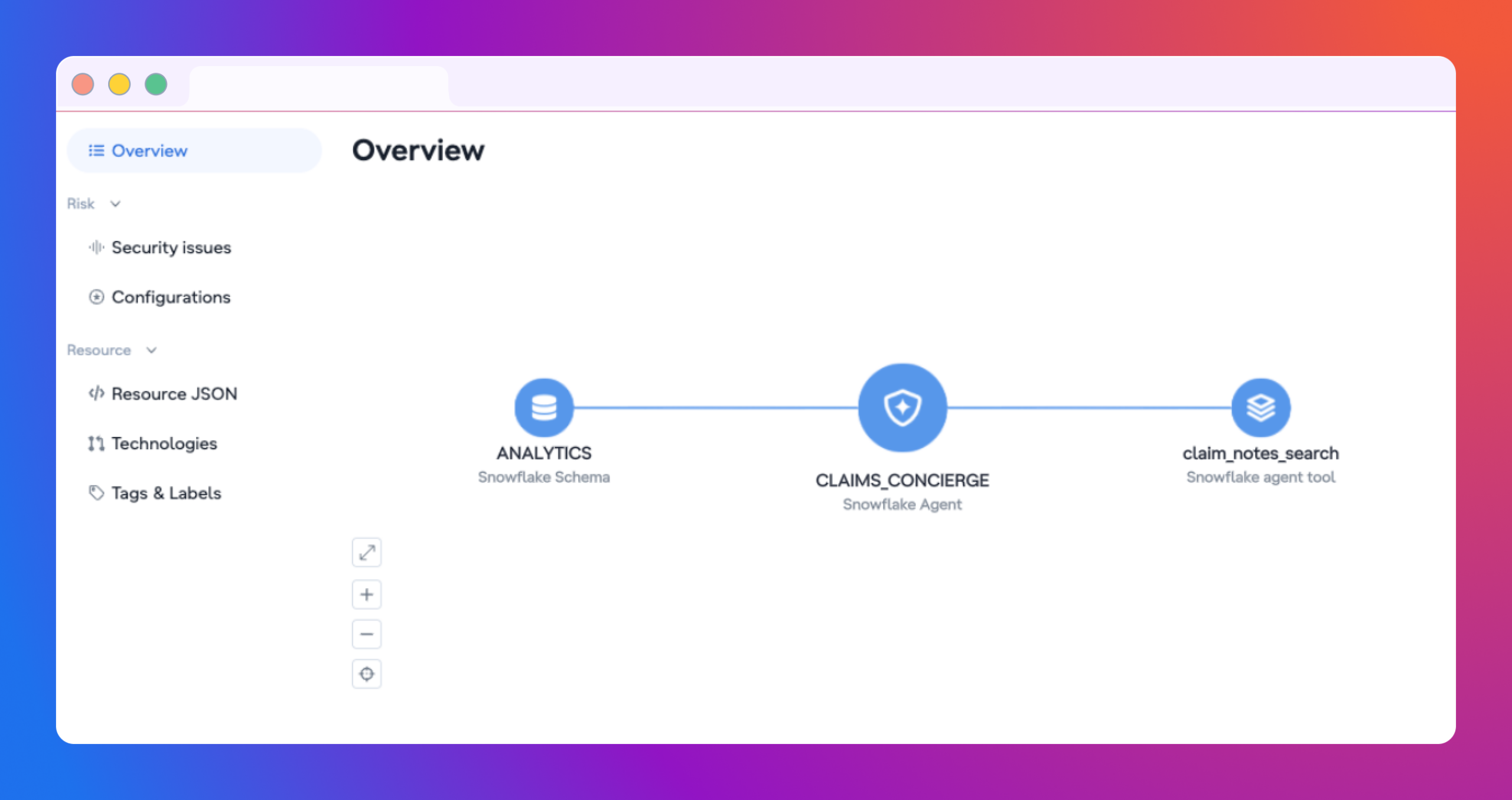
    Plerion now runs vulnerability, secret, and SBOMSBOMA software bill of materials, an inventory of the components and versions inside an application. It helps teams find affected software when a dependency has a vulnerability or licensing issue. scanning inside Amazon Bedrock AgentCore runtimes with ten new AWS checks, and Upwind's Snowflake Security applies CIS Snowflake BenchmarkCIS Snowflake BenchmarkA configuration baseline published by the Center for Internet Security that specifies hardening settings for Snowflake cloud data warehouse environments, giving cyber tools a vetted standard to audit against. posture checks while tracing access from database roles through to the backing cloud storage — the hop where warehouse grants quietly become object-store exposure. Snyk API & Web adds DAST against live web and API targets, covering the runtime behaviour that SCASCASoftware composition analysis, identifying third-party dependencies and checking them for known vulnerabilities and license issues. It covers software a team uses rather than writes itself. and SASTSASTStatic application security testing, analyzing source code or compiled code for vulnerabilities without running the application. It helps developers find problems before deployment. never see.

    Plerion · Upwind · Snyk

Offensive Security
◆  Reconnaissance & OSINT

SpecterOps SharpHound

Sources Release notes → v2.17.0 Notes Rank Why this rank top features scored 80, +6 runnable example — 86 How ranking works →

C# Data Collector for BloodHound

SharpHound v2.17.0 adds a new Site collection method for enumerating Active DirectoryActive DirectoryMicrosoft's directory service for Windows networks that centralises authentication and authorisation; cyber tools target or integrate with it because it controls identity and access across most enterprise environments. Sites ACLsACLsAn access control list, a set of rules allowing or denying operations for particular users, services or network addresses. It decides who can use a resource. and site data.

└──▷ GET THIS VERSION
$ git clone --branch v2.17.0 https://github.com/SpecterOps/SharpHound.git
# already have the repo? check out this version:
$ git checkout v2.17.0
Was this useful?

Nmap

Sources Commits → changes since 2026-09-11 Code

Nmap - the Network Mapper. Github mirror of official SVN repository.

Nmap gains NSE execution time and memory limits, plus upgraded libpcaplibpcapA C library, maintained by the tcpdump project, that provides a portable API for capturing and filtering raw network packets, sparing cyber tools from writing platform-specific packet-capture code. 1.10.7, pcre2pcre2A widely used open-source regular expression library maintained by Philip Hazel, offering Perl-compatible pattern matching; cyber tools use it for fast, expressive text and binary pattern searches. 10.48, Lua 5.4.9, and libdnetlibdnetA portable C library for low-level network access, covering raw sockets, ARP tables, routing, and interface configuration. Cyber tools use it to manipulate packets and network state without writing platform-specific code. 1.18.2.⁠︀︄︇︀︅︉︀︅︀︀︃︀︀︅︅︀︅︊︀︄︆︀︃︄⁠

  • Upgrades bundled libraries to libpcap 1.10.7, pcre2 10.48, Lua 5.4.9, and libdnet 1.18.2.⁠︀︄︇︀︅︉︀︅︀︀︃︀︀︅︅︀︅︊︀︄︆︀︃︄⁠
  • Ncat in listen mode now forwards termination signals (SIGINT, SIGTERM, SIGHUP, SIGQUIT) only to child processes started for connections when -k and cmdexec are both in effect, instead of the entire process group.
  • Upgrades bundled libraries to libpcap 1.10.7, pcre2 10.48, Lua 5.4.9, and libdnet 1.18.2.⁠︀︄︇︀︅︉︀︅︀︀︃︀︀︅︅︀︅︊︀︄︆︀︃︄⁠

1 more in Everything

Was this useful?

OpenOSINT

Sources Release notes → v2.30.0 Notes Rank Why this rank top features scored 70, +6 runnable example — 76 How ranking works →

OpenOSINT v2.30.0 adds a zero-install way to launch its browser Web UI directly via uvx.⁠︀︄︇︀︅︉︀︅︀︀︃︀︀︅︅︀︅︊︀︄︆︀︃︄⁠⁠︀︄︇︀︅︉︀︅︀︀︃︀︀︅︅︀︅︊︀︄︆︀︃︄⁠

AI-powered OSINT agent with interactive REPL, MCP server, and CLI. 20 tools.

OpenOSINT v2.30.0 adds a zero-install way to launch its browser Web UI directly via uvx.⁠︀︄︇︀︅︉︀︅︀︀︃︀︀︅︅︀︅︊︀︄︆︀︃︄⁠⁠︀︄︇︀︅︉︀︅︀︀︃︀︀︅︅︀︅︊︀︄︆︀︃︄⁠

└──▷ WHAT SHIPPED · 1 FEATURE 0 OF 1 FEATURE most completely described first
what's the number?

Each feature carries 0–100 for how completely the vendor documented it — not how big or important the work is. A major capability described in eight words scores low, and that is the finding.

  • depth0–40 what it does and how it works or what changed
  • specificity0–30 names real surfaces — APIs, flags, formats, limits, numbers
  • actionability0–30 enough to go use it — a named endpoint, flag, or config key tops this; a UI path is a starting point

Code and config rank first by construction: a documented endpoint, flag or config key scores at the top of specificity and actionability, so it sorts above a feature described only in prose. Under 60 the notes go thin — everything below the “thinner coverage” line is thinner documentation, not smaller work. Hover any meter for that feature's three sub-scores.

01 00
One-command Web UI launch via uvx Not checked yet new 70

The uvx openosint web command launches the browser Web UI as a zero-install, one-command option that requires no prior pip install or virtual environment setup.⁠︀︄︇︀︅︉︀︅︀︀︃︀︀︅︅︀︅︊︀︄︆︀︃︄⁠⁠︀︄︇︀︅︉︀︅︀︀︃︀︀︅︅︀︅︊︀︄︆︀︃︄⁠

Spin up the OpenOSINT Web UI instantly on any machine with uvx — no pip install or virtual environment required.
$ uvx openosint web
— Exact runnable command given, but mechanism beyond launch unexplained v2.30.0
v2.30.0 Notes LatestStable

OpenOSINT v2.30.0 adds one-command launch of the browser Web UI via uvx openosint web.⁠︀︄︇︀︅︉︀︅︀︀︃︀︀︅︅︀︅︊︀︄︆︀︃︄⁠

└──▷ GET THIS VERSION
$ git clone --branch v2.30.0 https://github.com/OpenOSINT/OpenOSINT.git
# already have the repo? check out this version:
$ git checkout v2.30.0
└──▷ TRY IT
Spin up the OpenOSINT Web UI instantly on any machine with uvx — no pip install or virtual environment required.
$ uvx openosint web
Was this useful?
◆  Hacking Hardware

Great Scott Gadgets Cynthion

Sources Vendor store → sold out · Oct 1, 2026 Store

A USB test instrument.

  • Cynthion with aluminum enclosure (cynthion-enclosure) sold out at shop.hak5.org on 1 Oct 2026.⁠︀︄︇︀︅︉︀︅︀︀︃︀︀︅︅︀︅︊︀︄︆︀︃︄⁠ Not checked yet
Was this useful?

Great Scott Gadgets GreatFET One

Sources Vendor store → sold out · Oct 1, 2026 Store

GreatFET firmware and host software.

  • GreatFET One (greatfet-one) sold out at shop.hak5.org on 1 Oct 2026.⁠︀︄︇︀︅︉︀︅︀︀︃︀︀︅︅︀︅︊︀︄︆︀︃︄⁠ Not checked yet
Was this useful?

Great Scott Gadgets HackRF One

Sources Vendor store → sold out · Oct 1, 2026 Store

A low cost software radio platform.

  • HackRF One with ANT500 antenna (hackrf-one-ant500) sold out at shop.hak5.org on 1 Oct 2026.⁠︀︄︇︀︅︉︀︅︀︀︃︀︀︅︅︀︅︊︀︄︆︀︃︄⁠ Not checked yet
Was this useful?

O.MG / Hak5 O.MG Cable

Sources Vendor store → sold out · Oct 1, 2026 Store

A hand-made USB cable with a WiFi-controlled implant hidden inside that injects keystrokes, so red teams can emulate sophisticated physical attacks.

  • Basic, USB-A to USB-C (Black TPE) (omg-cable-basic-usba-usbc-black) sold out at shop.hak5.org on 1 Oct 2026.⁠︀︄︇︀︅︉︀︅︀︀︃︀︀︅︅︀︅︊︀︄︆︀︃︄⁠ Not checked yet
Was this useful?

Hak5 Shark Jack Display

Sources Vendor store → sold out · Oct 1, 2026 Store

Jack into a network and instantly run advanced recon, exfiltration, attack and automation payloads.

  • Cyb3rpunk Clear, single (sjd-cyb3rpunk-single) sold out at shop.hak5.org on 1 Oct 2026.⁠︀︄︇︀︅︉︀︅︀︀︃︀︀︅︅︀︅︊︀︄︆︀︃︄⁠
  • Cyb3rpunk Clear, Pro Bundle (sjd-cyb3rpunk-pro) sold out at shop.hak5.org on 1 Oct 2026.
Was this useful?

Hak5 WiFi Pineapple

Sources Vendor store → sold out · Oct 1, 2026 Store

The leading rogue access point and WiFi pentest toolkit (Mark VII and Enterprise firmware).

  • Mark VII+AC (wifi-pineapple-mk7-ac) sold out at shop.hak5.org on 1 Oct 2026.⁠︀︄︇︀︅︉︀︅︀︀︃︀︀︅︅︀︅︊︀︄︆︀︃︄⁠
Was this useful?

Great Scott Gadgets YARD Stick One

Sources Vendor store → sold out · Oct 1, 2026 Store

A USB sub-1 GHz digital wireless transceiver that runs rfcat firmware, used to test garage doors, remote keyless entry, sensors and other low-speed radio systems.

  • YARD Stick One with ANT500 antenna (yard-stick-one-ant500) sold out at shop.hak5.org on 1 Oct 2026.⁠︀︄︇︀︅︉︀︅︀︀︃︀︀︅︅︀︅︊︀︄︆︀︃︄⁠ Not checked yet
Was this useful?
◆  Exploitation & C2

Rapid7 Metasploit Pro

Sources Release page → October 1, 2026: 5.1.0-2026093001 Notes Rank Why this rank top features scored 90/86/75, +15 breaking change, +6 runnable example — 104.67 How ranking works →

Metasploit Pro is a commercial penetration testing platform for identifying, exploiting, and validating security vulnerabilities in systems.

Metasploit Pro 5.1.0 ships 41 new modules headlined by a native KerberosKerberosA network authentication protocol that uses tickets issued by a trusted service. Users and services can prove their identities without sending a password to each application. authentication relay attack chain with AD CSAD CSActive Directory Certificate Services, Microsoft's PKI role for issuing and managing X.509 certificates inside a Windows domain; cyber tools target it because misconfigurations frequently allow privilege escalation or domain compromise. ESC8 exploitation and IPv6 DNS-takeover coercion, alongside Windows AArch64AArch64The 64-bit execution state of the ARM architecture, defined by Arm Ltd., offering a wider register file and cleaner instruction set than 32-bit ARM; cyber tools target it to run natively on ARM-based servers, phones, and embedded devices. and MIPSMIPSA RISC processor architecture originally developed at Stanford and commercialized by MIPS Technologies, widely used in embedded and network devices; cyber tools target it to analyze or exploit routers, cameras, and similar hardware. payload support, an OPC-UAOPC-UAAn open, platform-neutral communication protocol for industrial automation systems, maintained by the OPC Foundation, giving cyber tools a standardized way to read and monitor data from PLCs, sensors, and SCADA equipment. scanner, and a breaking change requiring authentication on JSON RPC by default.⁠︀︄︇︀︅︉︀︅︀︀︃︀︀︅︅︀︅︊︀︄︆︀︃︄⁠

└──▷ WHAT SHIPPED · 15 FEATURES 2 OF 15 FEATURES most completely described first
what's the number?

Each feature carries 0–100 for how completely the vendor documented it — not how big or important the work is. A major capability described in eight words scores low, and that is the finding.

  • depth0–40 what it does and how it works or what changed
  • specificity0–30 names real surfaces — APIs, flags, formats, limits, numbers
  • actionability0–30 enough to go use it — a named endpoint, flag, or config key tops this; a UI path is a starting point

Code and config rank first by construction: a documented endpoint, flag or config key scores at the top of specificity and actionability, so it sorts above a feature described only in prose. Under 60 the notes go thin — everything below the “thinner coverage” line is thinner documentation, not smaller work. Hover any meter for that feature's three sub-scores.

01 01
Kerberos authentication relay attack chain Not checked yet new 90

Introduces native Kerberos authentication relay capabilities to the framework's relay stack, including the new esc8_kerberos auxiliary module for exploiting AD CS Web Enrollment (ESC8ESC8An Active Directory privilege escalation path where an attacker abuses the Web Enrollment interface of a Microsoft Certificate Authority to coerce NTLM authentication and relay it to obtain a certificate for a privileged account.).⁠︀︄︇︀︅︉︀︅︀︀︃︀︀︅︅︀︅︊︀︄︆︀︃︄⁠ Adds auxiliary/spoof/ipv6/ipv6_ra_dns_takeover and auxiliary/spoof/dhcp/dhcpv6_dns_takeover modules to enable native IPv6IPv6The current version of the Internet Protocol, standardized by the IETF, using 128-bit addresses to replace the exhausted IPv4 space. Cyber tools target it because modern networks run dual-stack or IPv6-only. DNS-takeover coercion as part of the relay attack chain, KerberosTicketTrace support in auxiliary/admin/kerberos/forge_ticket, and Rex::Proto::Gss::KerberosToken as a shared low-level implementation for handling Kerberos tokens carried by GSS-API and SPNEGO.

— Full module names and mechanism given, but no runnable example. October 1, 2026: 5.1.0-2026093001
02 00
SessionType option for WinRM login scanner Not checked yet improved 86

Adds SessionType option to auxiliary/scanner/winrm/winrm_login to create a cmd-backed shell, a PSRP-backed PowerShell session, or automatically fall back to PowerShell when cmd shell creation is denied.

On a WinRMWinRMA Windows-native remote management protocol from Microsoft, implementing the WS-Management standard, that lets tools execute commands and access data on remote Windows hosts over HTTP or HTTPS. login attempt, automatically fall back to a PowerShell session when cmd shell creation is denied — useful against hardened Windows targets.
$ use auxiliary/scanner/winrm/winrm_login
set RHOSTS 192.168.1.50
set USERNAME administrator
set PASSWORD P@ssw0rd
set SessionType powershell
run
— Exact flag, behavior, and runnable example provided. October 1, 2026: 5.1.0-2026093001
03 00
OPC-UA server scanner module Not checked yet new 75

Adds auxiliary/scanner/scada/opcua_enum, a scanner module that detects OPC-UA servers speaking the OPC-UA TCPTCPA network protocol that delivers a reliable, ordered stream of bytes between two endpoints. It detects lost data and retransmits it. binary transport (opc.tcp://).

Scan an ICSICSIndustrial Control Systems — hardware and software that monitor and control physical processes like power grids, pipelines, and manufacturing lines, making them a target for cyber tools focused on operational technology environments. network segment for OPC-UA servers exposing the binary TCP transport to enumerate exposed industrial control endpoints.
$ use auxiliary/scanner/scada/opcua_enum
set RHOSTS 10.10.20.0/24
run
— Module path, protocol, and example given. October 1, 2026: 5.1.0-2026093001
04 00
ZoomEye search module updated to v2 API Not checked yet improved 65

Updates the ZoomEye search module to support the ZoomEye v2 API, adds a three-attempt retry limit, and caps results per page at 10.

— Concrete limits named, but no module path or example. October 1, 2026: 5.1.0-2026093001
05 02
JSON RPC requires authentication by default Not checked yet breaking 60

Updates JSON RPCRPCRemote Procedure Call, a protocol that lets a program execute a function on another machine as if it were local, giving cyber tools a structured way to communicate across processes or hosts without managing raw sockets. support to now require authentication by default, either via the database with user credentials or an auth token; existing unauthenticated JSON RPC clients will be rejected on upgrade.

— Clear behavior change but no config key or migration steps. October 1, 2026: 5.1.0-2026093001
06 00
SPIP date-column SQL injection module Not checked yet new 60

Adds auxiliary/scanner/http/spip_annee_sqli, which exploits a blind SQL injectionSQL injectionAn attack that makes an application treat untrusted input as part of a database command. It can expose or modify data by changing what the query does. in SPIP's date column escaping logic.

— Named module path but no usage example. October 1, 2026: 5.1.0-2026093001
thinner coverage below
07 00
Windows AArch64 payload and psexec support Not checked yet new 55

Adds Windows AArch64 staged shell payloads and extends windows/smb/psexec to work with AArch64 targets.

— Names target module but not specific payload names. October 1, 2026: 5.1.0-2026093001
08 00
msfconsole startup and CLI additions Not checked yet improved 50

Adds MSFLOGO=nyan-cat.txt environment variable support to msfconsole for selecting the nyan cat banner, a new command-line flag to print the count of modules, and improves msfconsole start-up performance.

— Env var named but new flag and performance gain unspecified. October 1, 2026: 5.1.0-2026093001
09 00
Inductive Automation Ignition fingerprint module Not checked yet new 45

Adds an auxiliary scanner module that fingerprints Inductive Automation Ignition gateways across all major version families by probing unauthenticated info endpoints.

— Names product and method but not module path. October 1, 2026: 5.1.0-2026093001
10 00
Linux x64 sandbox evasion module Not checked yet new 40

Adds a Linux x64 sandbox-evasion module that performs runtime environment checks and aborts execution when a likely sandbox or VM is detected.

— Explains mechanism but omits module path. October 1, 2026: 5.1.0-2026093001
11 00
MIPS exec payload additions Not checked yet improved 40

Adds a MIPS64 exec payload, updates the MIPSEL and MIPSBE exec payloads, and adds prepends for all three.

— Names architectures but not payload paths or usage. October 1, 2026: 5.1.0-2026093001
12 00
Writable check in Windows post mixin Not checked yet new 40

Adds support to the post mixin for Windows sessions to run the .writable? method.

— Names method but no usage context given. October 1, 2026: 5.1.0-2026093001
13 00
Reverse handler port fingerprint scanner Not checked yet new 35

Adds a scanner module that enumerates ports on a host to determine whether each is a Metasploit reverse handler and what kind of shell it expects.

— Describes function but omits module path. October 1, 2026: 5.1.0-2026093001
14 00
Persistence modules switched to create_process Not checked yet improved 35

Updates persistence modules to use create_process instead of cmd_exec.

— Names mechanism change but not affected modules. October 1, 2026: 5.1.0-2026093001
15 00
Persistence module for Kate Not checked yet new 25

Adds a multi-platform persistence module for Kate.

— No module path, platforms, or mechanism named. October 1, 2026: 5.1.0-2026093001
└──▷ BREAKING ON UPGRADE
  • !
    JSON RPC now requires authentication by default (via database credentials or auth token); existing unauthenticated JSON RPC clients will be rejected on upgrade.
October 1, 2026: 5.1.0-2026093001 Notes LatestStable

Metasploit Pro 5.1.0-2026093001 adds 41 new modules including OPC-UAOPC-UAAn open, platform-neutral communication protocol for industrial automation systems, maintained by the OPC Foundation, giving cyber tools a standardized way to read and monitor data from PLCs, sensors, and SCADA equipment., KerberosKerberosA network authentication protocol that uses tickets issued by a trusted service. Users and services can prove their identities without sending a password to each application. relay, IPv6IPv6The current version of the Internet Protocol, standardized by the IETF, using 128-bit addresses to replace the exhausted IPv4 space. Cyber tools target it because modern networks run dual-stack or IPv6-only. DNS-takeover, and Windows AArch64AArch64The 64-bit execution state of the ARM architecture, defined by Arm Ltd., offering a wider register file and cleaner instruction set than 32-bit ARM; cyber tools target it to run natively on ARM-based servers, phones, and embedded devices. payloads.⁠︀︄︇︀︅︉︀︅︀︀︃︀︀︅︅︀︅︊︀︄︆︀︃︄⁠

└──▷ TRY IT
Scan an ICSICSIndustrial Control Systems — hardware and software that monitor and control physical processes like power grids, pipelines, and manufacturing lines, making them a target for cyber tools focused on operational technology environments. network segment for OPC-UA servers exposing the binary TCPTCPA network protocol that delivers a reliable, ordered stream of bytes between two endpoints. It detects lost data and retransmits it. transport to enumerate exposed industrial control endpoints.
$ use auxiliary/scanner/scada/opcua_enum
set RHOSTS 10.10.20.0/24
run
On a WinRMWinRMA Windows-native remote management protocol from Microsoft, implementing the WS-Management standard, that lets tools execute commands and access data on remote Windows hosts over HTTP or HTTPS. login attempt, automatically fall back to a PowerShell session when cmd shell creation is denied — useful against hardened Windows targets.
$ use auxiliary/scanner/winrm/winrm_login
set RHOSTS 192.168.1.50
set USERNAME administrator
set PASSWORD P@ssw0rd
set SessionType powershell
run
  • Adds auxiliary/scanner/scada/opcua_enum, a scanner module that detects OPC-UA servers speaking the OPC-UA TCP binary transport (opc.tcp://).⁠︀︄︇︀︅︉︀︅︀︀︃︀︀︅︅︀︅︊︀︄︆︀︃︄⁠ Not checked yet
  • Adds SessionType option to auxiliary/scanner/winrm/winrm_login to create a cmd-backed shell, a PSRP-backed PowerShell session, or automatically fall back to PowerShell when cmd shell creation is denied.
  • Adds MSFLOGO=nyan-cat.txt environment variable support to msfconsole for selecting the nyan cat banner.
  • Adds a new command-line flag to msfconsole to print the count of modules.
  • Updates JSON RPCRPCRemote Procedure Call, a protocol that lets a program execute a function on another machine as if it were local, giving cyber tools a structured way to communicate across processes or hosts without managing raw sockets. support to now require authentication by default, either via the database with user credentials or an auth token.
+16 more show less
  • Introduces native Kerberos authentication relay capabilities to the framework's relay stack, including the new esc8_kerberos auxiliary module for exploiting AD CSAD CSActive Directory Certificate Services, Microsoft's PKI role for issuing and managing X.509 certificates inside a Windows domain; cyber tools target it because misconfigurations frequently allow privilege escalation or domain compromise. Web Enrollment (ESC8ESC8An Active Directory privilege escalation path where an attacker abuses the Web Enrollment interface of a Microsoft Certificate Authority to coerce NTLM authentication and relay it to obtain a certificate for a privileged account.).
  • Adds auxiliary/spoof/ipv6/ipv6_ra_dns_takeover and auxiliary/spoof/dhcp/dhcpv6_dns_takeover modules to enable native IPv6 DNS-takeover coercion as part of a Kerberos authentication relay attack chain.
  • Adds KerberosTicketTrace support to the auxiliary/admin/kerberos/forge_ticket module.
  • Introduces Rex::Proto::Gss::KerberosToken as a shared low-level implementation for handling Kerberos tokens carried by GSS-API and SPNEGO.
  • Adds Windows AArch64 staged shell payloads.
  • Extends windows/smb/psexec to work with AArch64 targets.
  • Adds a MIPS64 exec payload, updates the MIPSEL and MIPSBE exec payloads, and adds prepends for all three.
  • Adds a multi-platform persistence module for Kate.
  • Adds a scanner module that enumerates ports on a host to determine whether each is a Metasploit reverse handler and what kind of shell it expects.
  • Adds an auxiliary scanner module that fingerprints Inductive Automation Ignition gateways across all major version families by probing unauthenticated info endpoints.
  • Adds a Linux x64 sandbox-evasion module that performs runtime environment checks and aborts execution when a likely sandbox or VM is detected.
  • Adds auxiliary/scanner/http/spip_annee_sqli, which exploits a blind SQL injectionSQL injectionAn attack that makes an application treat untrusted input as part of a database command. It can expose or modify data by changing what the query does. in SPIP's date column escaping logic.
  • Updates the ZoomEye search module to support the ZoomEye v2 API, adds a three-attempt retry limit, and caps results per page at 10.
  • Adds support to the post mixin for Windows sessions to run the .writable? method.
  • Updates persistence modules to use create_process instead of cmd_exec. Not checked yet
  • Improves start-up performance of msfconsole.
  • Adds auxiliary/scanner/scada/opcua_enum, a scanner module that detects OPC-UA servers speaking the OPC-UA TCP binary transport (opc.tcp://).⁠︀︄︇︀︅︉︀︅︀︀︃︀︀︅︅︀︅︊︀︄︆︀︃︄⁠ Not checked yet
  • Introduces native Kerberos authentication relay capabilities to the framework's relay stack, including the new esc8_kerberos auxiliary module for exploiting AD CSAD CSActive Directory Certificate Services, Microsoft's PKI role for issuing and managing X.509 certificates inside a Windows domain; cyber tools target it because misconfigurations frequently allow privilege escalation or domain compromise. Web Enrollment (ESC8ESC8An Active Directory privilege escalation path where an attacker abuses the Web Enrollment interface of a Microsoft Certificate Authority to coerce NTLM authentication and relay it to obtain a certificate for a privileged account.).
  • Adds auxiliary/spoof/ipv6/ipv6_ra_dns_takeover and auxiliary/spoof/dhcp/dhcpv6_dns_takeover modules to enable native IPv6 DNS-takeover coercion as part of a Kerberos authentication relay attack chain.
  • Introduces Rex::Proto::Gss::KerberosToken as a shared low-level implementation for handling Kerberos tokens carried by GSS-API and SPNEGO.
  • Adds Windows AArch64 staged shell payloads.
+5 more show less
  • Adds a multi-platform persistence module for Kate.
  • Adds a scanner module that enumerates ports on a host to determine whether each is a Metasploit reverse handler and what kind of shell it expects.
  • Adds an auxiliary scanner module that fingerprints Inductive Automation Ignition gateways across all major version families by probing unauthenticated info endpoints.
  • Adds a Linux x64 sandbox-evasion module that performs runtime environment checks and aborts execution when a likely sandbox or VM is detected.
  • Adds auxiliary/scanner/http/spip_annee_sqli, which exploits a blind SQL injectionSQL injectionAn attack that makes an application treat untrusted input as part of a database command. It can expose or modify data by changing what the query does. in SPIP's date column escaping logic.

11 more in Everything

└──▷ BREAKING ON UPGRADE
  • !JSON RPC now requires authentication by default (via database credentials or auth token); existing unauthenticated JSON RPC clients will be rejected on upgrade.
Was this useful?
Application Security
◆  Code Security

Snyk

Sources Blog / feed →Product docs → changelog · Oct 2, 2026 Docs Blog Rank Why this rank top features scored 85/60, +6 runnable example — 78.5 How ranking works →

Snyk shipped a packaged ADSADSAlternate Data Streams: an NTFS feature that lets a file carry hidden secondary data blobs under the same path, giving cyber tools a place to stash metadata or detect covert storage by malware. agent installer for macOS and Windows that removes custom wrapper scripts, alongside Snyk API & Web, a new DASTDASTDynamic application security testing, probing a running application from the outside for vulnerabilities. It checks behavior exposed through the application's interfaces. scanning capability for web and API targets.⁠︀︄︇︀︅︉︀︅︀︀︃︀︀︅︅︀︅︊︀︄︆︀︃︄⁠⁠︀︄︇︀︅︉︀︅︀︀︃︀︀︅︅︀︅︊︀︄︆︀︃︄⁠

The official changelog for the Snyk AI Trust Platform. Discover what's new in our security intelligence, AI-powered tools, and latest product enhancements.

Snyk shipped a packaged ADSADSAlternate Data Streams: an NTFS feature that lets a file carry hidden secondary data blobs under the same path, giving cyber tools a place to stash metadata or detect covert storage by malware. agent installer for macOS and Windows that removes custom wrapper scripts, alongside Snyk API & Web, a new DASTDASTDynamic application security testing, probing a running application from the outside for vulnerabilities. It checks behavior exposed through the application's interfaces. scanning capability for web and API targets.⁠︀︄︇︀︅︉︀︅︀︀︃︀︀︅︅︀︅︊︀︄︆︀︃︄⁠⁠︀︄︇︀︅︉︀︅︀︀︃︀︀︅︅︀︅︊︀︄︆︀︃︄⁠

└──▷ WHAT SHIPPED · 2 FEATURES 2 OF 2 FEATURES most completely described first
what's the number?

Each feature carries 0–100 for how completely the vendor documented it — not how big or important the work is. A major capability described in eight words scores low, and that is the finding.

  • depth0–40 what it does and how it works or what changed
  • specificity0–30 names real surfaces — APIs, flags, formats, limits, numbers
  • actionability0–30 enough to go use it — a named endpoint, flag, or config key tops this; a UI path is a starting point

Code and config rank first by construction: a documented endpoint, flag or config key scores at the top of specificity and actionability, so it sorts above a feature described only in prose. Under 60 the notes go thin — everything below the “thinner coverage” line is thinner documentation, not smaller work. Hover any meter for that feature's three sub-scores.

01 01
Packaged ADS installer for macOS and Windows Not checked yet new 85

Snyk now offers signed macOS .pkg and Windows .msi installers for the ADS (Agent Supply ChainSupply ChainThe network of vendors, dependencies, and build processes that produce and deliver software; cyber tools target it because a compromise anywhere upstream can silently backdoor every downstream consumer. Security) agent, downloadable from the Settings page in Evo, removing the need to wrap a downloaded file in a custom script.⁠︀︄︇︀︅︉︀︅︀︀︃︀︀︅︅︀︅︊︀︄︆︀︃︄⁠ The installer registers a scheduled job on the host machine so Agent Supply Chain Security scans run on their own schedule without requiring MDMMDMMobile device management, centrally configuring and managing enrolled devices. Administrators use it to apply settings, distribute applications and enforce device security policies..⁠︀︄︇︀︅︉︀︅︀︀︃︀︀︅︅︀︅︊︀︄︆︀︃︄⁠

Deploy the ADS agent on a macOS developer machine without MDM by using the new signed installer and your Tenant ID and push key.
📍In Evo, open Settings, choose your products, and select Save & Publish. Choose macOS and your architecture, then select Download ADS Installer. Install the .pkg, then run the installer with your Tenant ID and push key.
— Names exact installer formats and gives a full install walkthrough. 2026-10-02-ca10b44a
02 02
Snyk API & Web DAST scanning Not checked yet new 60

Introduces Snyk API & Web, a new dynamic application security testingdynamic application security testingDynamic application security testing, probing a running application from the outside for vulnerabilities. It checks behavior exposed through the application's interfaces. (DAST) scanning capability supporting web targets and API targets defined via Postman Collection, RAML, or Bruno Collection in OpenCollection format. Authentication methods include basic auth, login form, login sequence, two-factor authentication, OpenAPIOpenAPIA vendor-neutral specification for describing REST APIs in a machine-readable format, maintained by the OpenAPI Initiative. Cyber tools use it to auto-generate clients, documentation, and validation from a single source of truth., Postman, GraphQL, and mutual TLSmutual TLSMutual TLS, an encrypted connection where both client and server present certificates to prove their identity. It helps services verify who they are communicating with..

— Lists target formats and auth methods but no setup steps given. 2026-10-02-ca10b44a
changelog · Oct 2, 2026 Docs Blog LatestStable

Snyk adds signed macOS .pkg and Windows .msi ADSADSAlternate Data Streams: an NTFS feature that lets a file carry hidden secondary data blobs under the same path, giving cyber tools a place to stash metadata or detect covert storage by malware. installers plus a new Snyk API & Web DASTDASTDynamic application security testing, probing a running application from the outside for vulnerabilities. It checks behavior exposed through the application's interfaces. scanning capability.⁠︀︄︇︀︅︉︀︅︀︀︃︀︀︅︅︀︅︊︀︄︆︀︃︄⁠

└──▷ HOW TO FIND IT
Deploy the ADS agent on a macOS developer machine without MDMMDMMobile device management, centrally configuring and managing enrolled devices. Administrators use it to apply settings, distribute applications and enforce device security policies. by using the new signed installer and your Tenant ID and push key.
📍In Evo, open Settings, choose your products, and select Save & Publish. Choose macOS and your architecture, then select Download ADS Installer. Install the .pkg, then run the installer with your Tenant ID and push key.
  • Adds signed macOS .pkg and Windows .msi packaged installers for the ADS (Agent Supply ChainSupply ChainThe network of vendors, dependencies, and build processes that produce and deliver software; cyber tools target it because a compromise anywhere upstream can silently backdoor every downstream consumer. Security) agent, downloadable from the Settings page in Evo, eliminating the need to wrap a downloaded file in a custom script.⁠︀︄︇︀︅︉︀︅︀︀︃︀︀︅︅︀︅︊︀︄︆︀︃︄⁠
  • The ADS installer registers a scheduled job on the host machine so Agent Supply Chain Security scans run on their own schedule without requiring MDM.
  • Introduces Snyk API & Web, a new dynamic application security testingdynamic application security testingDynamic application security testing, probing a running application from the outside for vulnerabilities. It checks behavior exposed through the application's interfaces. (DAST) scanning capability supporting web targets, API targets (Postman Collection, RAML, Bruno Collection in OpenCollection format), and authentication methods including basic auth, login form, login sequence, two-factor authentication, OpenAPIOpenAPIA vendor-neutral specification for describing REST APIs in a machine-readable format, maintained by the OpenAPI Initiative. Cyber tools use it to auto-generate clients, documentation, and validation from a single source of truth., Postman, GraphQL, and mutual TLSmutual TLSMutual TLS, an encrypted connection where both client and server present certificates to prove their identity. It helps services verify who they are communicating with..
  • Adds signed macOS .pkg and Windows .msi packaged installers for the ADS (Agent Supply ChainSupply ChainThe network of vendors, dependencies, and build processes that produce and deliver software; cyber tools target it because a compromise anywhere upstream can silently backdoor every downstream consumer. Security) agent, downloadable from the Settings page in Evo, eliminating the need to wrap a downloaded file in a custom script.⁠︀︄︇︀︅︉︀︅︀︀︃︀︀︅︅︀︅︊︀︄︆︀︃︄⁠
  • Introduces Snyk API & Web, a new dynamic application security testingdynamic application security testingDynamic application security testing, probing a running application from the outside for vulnerabilities. It checks behavior exposed through the application's interfaces. (DAST) scanning capability supporting web targets, API targets (Postman Collection, RAML, Bruno Collection in OpenCollection format), and authentication methods including basic auth, login form, login sequence, two-factor authentication, OpenAPIOpenAPIA vendor-neutral specification for describing REST APIs in a machine-readable format, maintained by the OpenAPI Initiative. Cyber tools use it to auto-generate clients, documentation, and validation from a single source of truth., Postman, GraphQL, and mutual TLSmutual TLSMutual TLS, an encrypted connection where both client and server present certificates to prove their identity. It helps services verify who they are communicating with..

1 more in Everything

Was this useful?

GitHub

Sources Blog / feed → Confidential comments on repository security advisories (2026-10-02) Blog Rank Why this rank top features scored 98/96/91, +15 breaking change, +10 product media, +6 runnable example — 126 How ranking works →

GitHub is a web-based platform for version control and collaborative software development using Git repositories.

GitHub's biggest moves this window were on the Copilot agent side — computer use for desktop automation and code-defined dynamic workflows for multi-agent orchestration — alongside a push to harden private vulnerability reporting (structured forms, CWECWECommon Weakness Enumeration, a catalog of recurring software and hardware weakness types. It describes classes of mistakes, such as injection, rather than individual vulnerability instances. enforcement, rate limits) and confidential advisory comments, plus a unified retention policy for Actions checks, runs, and statuses.⁠︀︄︇︀︅︉︀︅︀︀︃︀︀︅︅︀︅︊︀︄︆︀︃︄⁠

└──▷ WHAT SHIPPED · 12 FEATURES 3 OF 12 FEATURES most completely described first
what's the number?

Each feature carries 0–100 for how completely the vendor documented it — not how big or important the work is. A major capability described in eight words scores low, and that is the finding.

  • depth0–40 what it does and how it works or what changed
  • specificity0–30 names real surfaces — APIs, flags, formats, limits, numbers
  • actionability0–30 enough to go use it — a named endpoint, flag, or config key tops this; a UI path is a starting point

Code and config rank first by construction: a documented endpoint, flag or config key scores at the top of specificity and actionability, so it sorts above a feature described only in prose. Under 60 the notes go thin — everything below the “thinner coverage” line is thinner documentation, not smaller work. Hover any meter for that feature's three sub-scores.

01 01
Structured, enforceable forms for private vulnerability reports Not checked yet breaking 98

Maintainers can add .github/VULNERABILITY_REPORT.yml (placed in an org or account's .github repo to apply it org-wide) to define a custom structured report form, with fields supporting min_length validation.⁠︀︄︇︀︅︉︀︅︀︀︃︀︀︅︅︀︅︊︀︄︆︀︃︄⁠ A new REST APIREST APIA web API design style where clients interact with resources over HTTP using standard methods like GET, POST, and DELETE, giving cyber tools a predictable, language-agnostic way to integrate with external services. endpoint returns the form a repository enforces and surfaces it in error responses when API submissions don't match it. The default form now requires summary, details, a proof of concept (minimum 150 characters), and impact; reporters can check an 'I used AI assistance to find or write up this report' box; repos can require a CWE before submission (Settings > Advanced Security > Private vulnerability reporting, enforceable via org/enterprise policy); and repos with a SECURITY.md now show a banner linking to it before submission.

Enforce a structured vulnerability report form with minimum detail requirements across all repositories in your organization.
yaml
# .github/VULNERABILITY_REPORT.yml in your org's .github repo
name: Vulnerability Report
description: Report a security vulnerability
body:
  - type: textarea
    id: summary
    attributes:
      label: Summary
    validations:
      required: true
      min_length: 50
  - type: textarea
    id: details
    attributes:
      label: Details
    validations:
      required: true
      min_length: 100
  - type: textarea
    id: poc
    attributes:
      label: Proof of Concept
    validations:
      required: true
      min_length: 150
  - type: textarea
    id: impact
    attributes:
      label: Impact
    validations:
      required: true
Require reporters to assign a CWE before submitting, and enforce the setting across your organization via policy.
📍In the repository, go to Settings › Advanced Security › Private vulnerability reporting and enable the option to require a CWE. Organization and enterprise owners can then enforce this setting via a policy applied across all repositories.
— Named config file, endpoint, and validation fields with a runnable example. Structured forms for private vulnerability r…
02 02
Computer use for desktop app automation in Copilot Not checked yet new 96

Copilot gains computer use Public preview letting it interact with desktop applications — clicking controls, entering text, pressing keys, scrolling, dragging, and navigating workflows — including legacy or GUIGUIA graphical user interface, controls such as windows, buttons and menus. It lets people use software visually rather than entering commands.-only software with no API, CLI, or MCPMCPModel Context Protocol, a standard for connecting AI applications to external tools and data sources. A compatible server exposes capabilities an assistant can use through a common interface. integration. It's controlled in Copilot CLI via /computer on, /computer show, and /computer off, and in the GitHub Copilot app on macOS and Windows via Settings > Computer Use > Enable Computer Use, with per-app approval controls and the ability to review or reset always-allowed apps. On macOS it walks users through granting Accessibility and Screen Recording permissions, and organizations can disable computer use across managed devices.

Enable computer use in Copilot CLI so Copilot can automate a GUI-only desktop workflow — for example, moving data through a legacy expense-report app with no API.
$ /computer on
Check whether computer use is active in the current Copilot CLI session, or turn it off after finishing an automated workflow.
$ /computer show
/computer off
Enable Computer Use from the GitHub Copilot app UI on macOS or Windows when you prefer not to use the CLI.
📍Open the GitHub Copilot app › Settings › Computer Use › turn on Enable Computer Use. On macOS, follow the prompted steps to grant Accessibility and Screen Recording permissions.
— Exact CLI commands, UI path, and permission steps all given. GitHub Copilot can now interact with desktop…
03 03
Dynamic workflows for multi-agent orchestration in Copilot Not checked yet new 91

Dynamic workflows enable code-defined, multi-agent orchestration across Copilot CLI (via --experimental flag or /experimental on in an interactive session), the GitHub Copilot app (no setup required), and the GitHub Copilot SDK (programmatic access to Copilot's extensibility APIs). They support pause-and-resume checkpoints for reviewing intermediate findings before continuing a long or expensive run, and parallel sub-agent execution for tasks like reviewing many pull-request files or sweeping a large codebase across directories simultaneously. Built-in Copilot authoring guidance lets practitioners ask Copilot to write a workflow for them, or ask 'What dynamic workflows are available?' to discover existing ones.

Enable dynamic workflows in Copilot CLI to orchestrate a multi-agent incident investigation across logs and telemetry.
$ gh copilot --experimental
Turn on experimental features mid-session and discover existing dynamic workflows without restarting the CLI.
$ /experimental on
What dynamic workflows are available?
Have Copilot author a reusable release-check workflow that pauses for human review before resuming.
📍Ask Copilot: 'Create a dynamic workflow that runs release checks, asks one agent to assess failures, and pauses at a checkpoint for me to review before resuming.'
— Exact CLI flags and discovery commands given across CLI, app, and SDK. Dynamic workflows in Copilot CLI and the Cop…
04 00
Unified retention for checks, runs, and statuses in Actions Not checked yet breaking 82

The existing Actions retention setting — labeled Check, workflow run, status, artifact and log retention in the UI — now also cleans up checks, workflow runs, and statuses created by GitHub Actions and third-party applications, in addition to artifacts and logs. Public repository retention for these is capped at a maximum of 90 days, configurable under Settings > Actions > General. Data older than the configured period is automatically deleted and cannot be restored once removed.

Review or update your repository's unified retention period so checks, runs, and statuses are kept as long as your audit or compliance workflow requires.
📍In the repository, go to Settings › Actions › General, then locate 'Check, workflow run, status, artifact and log retention' and set the desired number of days (max 90 for public repositories).
— Exact setting label, path, and 90-day cap given. Actions retention now covers checks, runs, a…
05 00
Rate limits for private vulnerability reports Not checked yet new 77

Private vulnerability reporting now enforces daily per-user rate limits, showing a try again later message to reporters who exceed them (comments on existing advisories are unaffected). Repository administrators can set a custom daily overall reporting limit and add trusted reporters to an allow list so they're never rate limited, both configurable under Settings > Advanced Security > Private vulnerability reporting.

Add a trusted security researcher to the allow list so their reports are never blocked by rate limits.
📍1. Go to your repository on GitHub. 2. Click Settings › Advanced Security. 3. Click Settings next to Private vulnerability reporting. 4. Under the allow list section, add the trusted reporter's GitHub account. 5. Save changes.
Set a custom daily reporting cap for your repository to throttle bulk submissions while still accepting legitimate reports.
📍1. Go to your repository on GitHub. 2. Click Settings › Advanced Security. 3. Click Settings next to Private vulnerability reporting. 4. Enter your desired daily overall reporting limit. 5. Save changes.
— Exact settings path and behavior given, no numeric default limit stated. Rate limits for private vulnerability report…
06 00
Confidential comments on security advisories Not checked yet new 74

Repository security advisories now support confidential comments, visible only to maintainers with write access and returned via the GraphQL API (not the REST API). Confidential comments are marked in the advisory timeline, comment views are logged in the audit log, and access follows write permissions — losing write access removes the ability to read existing confidential comments. Post one by selecting Confidential below the comment box before submitting; the setting cannot be changed afterward.

Post a confidential internal note on an advisory — e.g. to record investigation details without exposing them to the reporter or invited collaborators.
📍In the security advisory, type your comment, select Confidential below the comment box, then click Submit. The comment will appear with a confidential marker visible only to maintainers with write access.
— Full mechanism, permissions model and steps given, no API name beyond GraphQL/REST. Confidential comments on repository security…
07 00
Dev Container support for agent sessions Not checked yet new 69

Adds a Use Dev Container option in the Agents window to start agent sessions inside a project's Dev ContainerDev ContainerA Docker-based development environment defined in a JSON config file, standardized by Microsoft, that lets a project ship its exact toolchain so any contributor's editor or CI system gets an identical workspace., working on local, SSH, Tunnel, and WSLWSLWindows Subsystem for Linux, a Microsoft-built compatibility layer that lets a Linux environment run directly on Windows without a virtual machine, giving cyber tools access to Linux binaries, filesystems, and syscalls on a Windows host. hosts.

Run an agent session inside your project's Dev Container so it has access to the exact toolchain and dependencies defined in your devcontainer config.
📍In the Agents window, open the menu for your local or remote folder and select Use Dev Container to launch the agent session inside the configured container (works on SSH, Tunnel, and WSL hosts).
— Named option and supported hosts with a runnable example. GitHub Copilot in VS Code, September 2026 re…
08 00
Scheduled automations for agent tasks Not checked yet new 68

Copilot in VS Code adds automations to schedule recurring agent tasks on an hourly, daily, or weekly cadence, or run them on demand from a template or custom prompt Preview, configured via New Automation in the Agents window.

Run a nightly dependency-audit prompt against your repo without manual intervention.
📍In the Agents window, select New Automation, choose a daily schedule, and enter your prompt (or pick a template) to have Copilot run the task automatically each day.
— Cadence options and exact UI steps given. GitHub Copilot in VS Code, September 2026 re…
09 00
Agent merge for pull request completion Not checked yet new 68

Agent merge Preview lets the agent handle review feedback, failed checks, merge conflicts, and workflow reruns within an active session, enabled via Enable agent merge in the Agents window.

Hand off post-PR-creation chores to the agent so you can focus on the next task instead of babysitting CI.
📍In the Agents window, open an active agent session, then select Enable agent merge to let the agent automatically respond to review feedback, resolve merge conflicts, rerun failed checks, and merge the pull request when ready.
— Clear scope and exact toggle to enable it. GitHub Copilot in VS Code, September 2026 re…
thinner coverage below
10 00
Pull request creation from agent sessions Not checked yet new 53

Copilot, Claude, or Codex agent sessions in the Agents window can now create pull requests directly, with title/description editing and draft or merge options.

— UI location and options named but no step-by-step example. GitHub Copilot in VS Code, September 2026 re…
11 00
Session and chat navigation improvements in Copilot for VS Code Not checked yet new 52

Adds Mark as Done suggestions with automatic cleanup to keep completed sessions organized Preview; application badge support Preview to surface new results, input requests, and PR checks on the dock, launcher, or taskbar; a hierarchical sessions list view so agents can branch new chats or sessions while navigating back to the source chat; an Add Context entry-point with URL-paste support in the new-session input to attach a GitHub issue or pull request to any chat; the ability to continue a general Copilot quick chat (started without a workspace) by attaching a local folder mid-conversation; and the ability to pick up a Codex conversation from the ChatGPT app inside VS Code to continue work on a codebase without copying context or files.

— Six named UX additions but no step-by-step usage given. GitHub Copilot in VS Code, September 2026 re…
12 00
HydraFusion automatic model selection in Copilot Not checked yet new 30

Adds a HydraFusion model-picker option Research preview that automatically selects models and workflows for coding tasks.

— Named feature but described in a single thin sentence. GitHub Copilot in VS Code, September 2026 re…
└──▷ BREAKING ON UPGRADE
  • !
    If you add a custom VULNERABILITY_REPORT.yml form, reports submitted through the REST API must match it — API submissions that do not match will receive an error.
  • !
    Checks, workflow runs, and statuses older than the configured retention period are now automatically deleted — including those created by third-party applications. Data already removed before this change cannot be restored.
Confidential comments on repository security advisories (2026-10-02) Blog LatestStable

GitHub security advisories gain confidential comments — visible only to write-access maintainers, logged in the audit log, and available via GraphQL.⁠︀︄︇︀︅︉︀︅︀︀︃︀︀︅︅︀︅︊︀︄︆︀︃︄⁠

└──▷ HOW TO FIND IT
Post a confidential internal note on an advisory — e.g. to record investigation details without exposing them to the reporter or invited collaborators.
📍In the security advisory, type your comment, select Confidential below the comment box, then click Submit. The comment will appear with a confidential marker visible only to maintainers with write access.
  • Adds confidential comments to repository security advisories, accessible in the GraphQL API but not returned by the REST APIREST APIA web API design style where clients interact with resources over HTTP using standard methods like GET, POST, and DELETE, giving cyber tools a predictable, language-agnostic way to integrate with external services..⁠︀︄︇︀︅︉︀︅︀︀︃︀︀︅︅︀︅︊︀︄︆︀︃︄⁠
  • Confidential comments are clearly marked in the advisory timeline and views are recorded in the audit log.
  • Access to confidential comments follows repository write permissions — if someone loses write access, they can no longer read existing confidential comments.
  • Post a confidential comment by selecting Confidential below the comment box before posting; the setting cannot be changed after posting.

4 details in Everything

Rate limits for private vulnerability reports (2026-10-01) Blog Stable

GitHub adds daily rate limits, custom caps, and allow-lists to private vulnerability reporting to block bulk submissions.⁠︀︄︇︀︅︉︀︅︀︀︃︀︀︅︅︀︅︊︀︄︆︀︃︄⁠

└──▷ HOW TO FIND IT
Add a trusted security researcher to the allow list so their reports are never blocked by rate limits.
📍1. Go to your repository on GitHub. 2. Click Settings › Advanced Security. 3. Click Settings next to Private vulnerability reporting. 4. Under the allow list section, add the trusted reporter's GitHub account. 5. Save changes.
Set a custom daily reporting cap for your repository to throttle bulk submissions while still accepting legitimate reports.
📍1. Go to your repository on GitHub. 2. Click Settings › Advanced Security. 3. Click Settings next to Private vulnerability reporting. 4. Enter your desired daily overall reporting limit. 5. Save changes.
  • Applies daily per-user rate limits to new private vulnerability reports, with reporters who hit the limit shown a try again later message; limits do not affect comments on existing advisories.⁠︀︄︇︀︅︉︀︅︀︀︃︀︀︅︅︀︅︊︀︄︆︀︃︄⁠
  • Lets repository administrators set a custom daily overall reporting limit for their repository via the Advanced Security settings.
  • Lets repository administrators add trusted reporters to an allow list so they are never rate limited, configurable under repository Settings > Advanced Security > Private vulnerability reporting.

3 details in Everything

Structured forms for private vulnerability reports (2026-10-01) Blog Stable

GitHub adds structured, customizable forms for private vulnerability reports, with CWECWECommon Weakness Enumeration, a catalog of recurring software and hardware weakness types. It describes classes of mistakes, such as injection, rather than individual vulnerability instances. enforcement, AI-disclosure, and a new API endpoint.⁠︀︄︇︀︅︉︀︅︀︀︃︀︀︅︅︀︅︊︀︄︆︀︃︄⁠

└──▷ USE IT
Enforce a structured vulnerability report form with minimum detail requirements across all repositories in your organization.
.github/VULNERABILITY_REPORT.yml
# .github/VULNERABILITY_REPORT.yml in your org's .github repo
name: Vulnerability Report
description: Report a security vulnerability
body:
  - type: textarea
    id: summary
    attributes:
      label: Summary
    validations:
      required: true
      min_length: 50
  - type: textarea
    id: details
    attributes:
      label: Details
    validations:
      required: true
      min_length: 100
  - type: textarea
    id: poc
    attributes:
      label: Proof of Concept
    validations:
      required: true
      min_length: 150
  - type: textarea
    id: impact
    attributes:
      label: Impact
    validations:
      required: true
Require reporters to assign a CWE before submitting, and enforce the setting across your organization via policy.
📍In the repository, go to Settings › Advanced Security › Private vulnerability reporting and enable the option to require a CWE. Organization and enterprise owners can then enforce this setting via a policy applied across all repositories.
  • Adds .github/VULNERABILITY_REPORT.yml to configure a custom structured form for private vulnerability reports; place the file in your org or account's .github repository to apply it across all repos you own.⁠︀︄︇︀︅︉︀︅︀︀︃︀︀︅︅︀︅︊︀︄︆︀︃︄⁠
  • Form fields support min_length (issue form syntax) so maintainers can enforce a minimum level of detail per field.
  • Adds a new REST APIREST APIA web API design style where clients interact with resources over HTTP using standard methods like GET, POST, and DELETE, giving cyber tools a predictable, language-agnostic way to integrate with external services. endpoint that returns the form a repository enforces, surfaced in error responses when an API submission does not match the custom form.
  • Default structured form now requires four fields from reporters: summary, details, proof of concept (minimum 150 characters), and impact.
  • Enables a 'I used AI assistance to find or write up this report' disclosure checkbox for reporters.
+2 more show less
  • Allows requiring reporters to assign a CWE before submission, configurable from Settings > Advanced Security > Private vulnerability reporting, with enforcement available to organization and enterprise owners via policy.
  • Repositories with a SECURITY.md security policy now show reporters a banner linking to it before they submit a private vulnerability report.
  • Adds .github/VULNERABILITY_REPORT.yml to configure a custom structured form for private vulnerability reports; place the file in your org or account's .github repository to apply it across all repos you own.⁠︀︄︇︀︅︉︀︅︀︀︃︀︀︅︅︀︅︊︀︄︆︀︃︄⁠
  • Form fields support min_length (issue form syntax) so maintainers can enforce a minimum level of detail per field.
  • Adds a new REST APIREST APIA web API design style where clients interact with resources over HTTP using standard methods like GET, POST, and DELETE, giving cyber tools a predictable, language-agnostic way to integrate with external services. endpoint that returns the form a repository enforces, surfaced in error responses when an API submission does not match the custom form.
  • Enables a 'I used AI assistance to find or write up this report' disclosure checkbox for reporters.
  • Allows requiring reporters to assign a CWE before submission, configurable from Settings > Advanced Security > Private vulnerability reporting, with enforcement available to organization and enterprise owners via policy.

2 more in Everything

└──▷ BREAKING ON UPGRADE
  • !If you add a custom VULNERABILITY_REPORT.yml form, reports submitted through the REST API must match it — API submissions that do not match will receive an error.
GitHub Copilot can now interact with desktop apps with computer use (2026-10-01) Blog Stable

GitHub Copilot gains computer use in public preview, letting it click, type, and navigate desktop apps on macOS and Windows.⁠︀︄︇︀︅︉︀︅︀︀︃︀︀︅︅︀︅︊︀︄︆︀︃︄⁠

└──▷ TRY IT
Enable computer use in Copilot CLI so Copilot can automate a GUIGUIA graphical user interface, controls such as windows, buttons and menus. It lets people use software visually rather than entering commands.-only desktop workflow — for example, moving data through a legacy expense-report app with no API.
$ /computer on
Check whether computer use is active in the current Copilot CLI session, or turn it off after finishing an automated workflow.
$ /computer show
/computer off
Enable Computer Use from the GitHub Copilot app UI on macOS or Windows when you prefer not to use the CLI.
📍Open the GitHub Copilot app › Settings › Computer Use › turn on Enable Computer Use. On macOS, follow the prompted steps to grant Accessibility and Screen Recording permissions.
  • Adds /computer on in Copilot CLI to enable computer use, /computer show to check its status, and /computer off to disable it.⁠︀︄︇︀︅︉︀︅︀︀︃︀︀︅︅︀︅︊︀︄︆︀︃︄⁠
  • Adds Computer Use public preview in GitHub Copilot CLI and the GitHub Copilot app on macOS and Windows, letting Copilot interact with desktop applications — clicking controls, entering text, pressing keys, scrolling, dragging, and navigating workflows — including legacy and GUI-only software with no API, CLI, or MCPMCPModel Context Protocol, a standard for connecting AI applications to external tools and data sources. A compatible server exposes capabilities an assistant can use through a common interface. integration.
  • Adds a Computer Use settings panel in the GitHub Copilot app (Settings > Computer Use > Enable Computer Use) with per-app approval controls and the ability to review or reset always-allowed apps. Not checked yet
  • On macOS, guides users through required Accessibility and Screen Recording permissions as part of the computer use setup flow.
  • Supports organization-managed settings to disable computer use across managed devices.

5 details in Everything

GitHub Copilot in VS Code, September 2026 releases (2026-10-01) Blog Stable

Copilot in VS Code gains scheduled automations, agent merge, PR creation from sessions, and HydraFusion multi-model orchestration.⁠︀︄︇︀︅︉︀︅︀︀︃︀︀︅︅︀︅︊︀︄︆︀︃︄⁠

└──▷ HOW TO FIND IT
Hand off post-PR-creation chores to the agent so you can focus on the next task instead of babysitting CI.
📍In the Agents window, open an active agent session, then select Enable agent merge to let the agent automatically respond to review feedback, resolve merge conflicts, rerun failed checks, and merge the pull request when ready.
Run a nightly dependency-audit prompt against your repo without manual intervention.
📍In the Agents window, select New Automation, choose a daily schedule, and enter your prompt (or pick a template) to have Copilot run the task automatically each day.
Run an agent session inside your project's Dev ContainerDev ContainerA Docker-based development environment defined in a JSON config file, standardized by Microsoft, that lets a project ship its exact toolchain so any contributor's editor or CI system gets an identical workspace. so it has access to the exact toolchain and dependencies defined in your devcontainer config.
📍In the Agents window, open the menu for your local or remote folder and select Use Dev Container to launch the agent session inside the configured container (works on SSH, Tunnel, and WSL hosts).
  • Adds HydraFusion model-picker option Research preview to automatically select models and workflows for coding tasks.⁠︀︄︇︀︅︉︀︅︀︀︃︀︀︅︅︀︅︊︀︄︆︀︃︄⁠
  • Adds automations to schedule recurring agent tasks on an hourly, daily, or weekly cadence, or run them on demand from a template or custom prompt Preview.
  • Adds agent merge in active sessions Preview to let the agent handle review feedback, failed checks, merge conflicts, and workflow reruns.
  • Adds pull request creation directly from Copilot, Claude, or Codex agent sessions in the Agents window, with title/description editing, draft and merge options.
  • Adds Mark as Done suggestions and automatic cleanup to keep completed sessions organized Preview.
+6 more show less
  • Adds application badge support Preview to surface new results, input requests, and PR checks on the dock, launcher, or taskbar.
  • Adds Use Dev Container option in the Agents window to start agent sessions inside a project's Dev Container on local, SSH, Tunnel, and WSLWSLWindows Subsystem for Linux, a Microsoft-built compatibility layer that lets a Linux environment run directly on Windows without a virtual machine, giving cyber tools access to Linux binaries, filesystems, and syscalls on a Windows host. hosts.
  • Enables continuing a general Copilot quick chat (started without a workspace) by attaching a local folder mid-conversation.
  • Enables picking up a Codex conversation from the ChatGPT app inside VS Code to continue work on a codebase without copying context or files.
  • Adds hierarchical sessions list view so agents can create new chats or sessions and users can navigate back to the source chat via a navigation link.
  • Adds Add Context entry-point and URL-paste support in the new-session input to attach a GitHub issue or pull request to any chat.
  • Adds HydraFusion model-picker option Research preview to automatically select models and workflows for coding tasks.⁠︀︄︇︀︅︉︀︅︀︀︃︀︀︅︅︀︅︊︀︄︆︀︃︄⁠
  • Adds automations to schedule recurring agent tasks on an hourly, daily, or weekly cadence, or run them on demand from a template or custom prompt Preview.
  • Adds agent merge in active sessions Preview to let the agent handle review feedback, failed checks, merge conflicts, and workflow reruns.
  • Adds pull request creation directly from Copilot, Claude, or Codex agent sessions in the Agents window, with title/description editing, draft and merge options.
  • Adds Mark as Done suggestions and automatic cleanup to keep completed sessions organized Preview.
+4 more show less
  • Adds application badge support Preview to surface new results, input requests, and PR checks on the dock, launcher, or taskbar.
  • Adds Use Dev Container option in the Agents window to start agent sessions inside a project's Dev Container on local, SSH, Tunnel, and WSLWSLWindows Subsystem for Linux, a Microsoft-built compatibility layer that lets a Linux environment run directly on Windows without a virtual machine, giving cyber tools access to Linux binaries, filesystems, and syscalls on a Windows host. hosts.
  • Enables picking up a Codex conversation from the ChatGPT app inside VS Code to continue work on a codebase without copying context or files.
  • Adds hierarchical sessions list view so agents can create new chats or sessions and users can navigate back to the source chat via a navigation link.

2 more in Everything

Actions retention now covers checks, runs, and statuses (2026-10-01) Blog Stable

GitHub Actions retention now governs checks, workflow runs, and statuses alongside artifacts and logs.⁠︀︄︇︀︅︉︀︅︀︀︃︀︀︅︅︀︅︊︀︄︆︀︃︄⁠

└──▷ HOW TO FIND IT
Review or update your repository's unified retention period so checks, runs, and statuses are kept as long as your audit or compliance workflow requires.
📍In the repository, go to Settings › Actions › General, then locate 'Check, workflow run, status, artifact and log retention' and set the desired number of days (max 90 for public repositories).
  • Extends the existing Actions retention setting — labeled Check, workflow run, status, artifact and log retention in the UI — to also clean up checks, workflow runs, and statuses created by GitHub Actions and third-party applications.⁠︀︄︇︀︅︉︀︅︀︀︃︀︀︅︅︀︅︊︀︄︆︀︃︄⁠
  • Caps public repository retention for checks, workflow runs, and statuses at a maximum of 90 days.
  • Extends the existing Actions retention setting — labeled Check, workflow run, status, artifact and log retention in the UI — to also clean up checks, workflow runs, and statuses created by GitHub Actions and third-party applications.⁠︀︄︇︀︅︉︀︅︀︀︃︀︀︅︅︀︅︊︀︄︆︀︃︄⁠

1 more in Everything

└──▷ BREAKING ON UPGRADE
  • !Checks, workflow runs, and statuses older than the configured retention period are now automatically deleted — including those created by third-party applications. Data already removed before this change cannot be restored.
Dynamic workflows in Copilot CLI and the Copilot app (2026-10-01) Blog Stable

GitHub Copilot gains dynamic workflows — code-defined, multi-agent orchestration now in CLI, app, and SDK.⁠︀︄︇︀︅︉︀︅︀︀︃︀︀︅︅︀︅︊︀︄︆︀︃︄⁠

└──▷ TRY IT
Enable dynamic workflows in Copilot CLI to orchestrate a multi-agent incident investigation across logs and telemetry.
$ gh copilot --experimental
Turn on experimental features mid-session and discover existing dynamic workflows without restarting the CLI.
$ /experimental on
What dynamic workflows are available?
Have Copilot author a reusable release-check workflow that pauses for human review before resuming.
📍Ask Copilot: 'Create a dynamic workflow that runs release checks, asks one agent to assess failures, and pauses at a checkpoint for me to review before resuming.'
  • Enables dynamic workflows in the Copilot CLI via the --experimental command-line option or /experimental on in an interactive session, allowing code-defined multi-agent orchestration.⁠︀︄︇︀︅︉︀︅︀︀︃︀︀︅︅︀︅︊︀︄︆︀︃︄⁠
  • Adds dynamic workflows to the GitHub Copilot app with no setup required, supporting parallel agent execution, checkpoints, and structured result passing.
  • Introduces dynamic workflows in the GitHub Copilot SDK, giving extension authors programmatic access to Copilot's extensibility APIs for multi-step, multi-agent processes.
  • Supports pause-and-resume checkpoints in dynamic workflows, letting practitioners review intermediate findings before continuing a long or expensive run.
  • Supports parallel sub-agent execution within a dynamic workflow, enabling tasks like reviewing many pull-request files or sweeping a large codebase across directories simultaneously.
+1 more show less
  • Includes built-in Copilot authoring guidance so practitioners can ask Copilot to write a dynamic workflow entirely for them, or use 'What dynamic workflows are available?' to discover existing ones.

6 details in Everything

Was this useful?

Cloudsmith

Sources Blog / feed → Trace downloads through connected repositories in client log exports (2026-10-01) Blog Rank Why this rank top features scored 55 — 55 How ranking works →

A fully-managed, enterprise-scale solution to control, secure, and distribute software packages and containers.

Cloudsmith added a new traceability field to client log exports, letting teams follow package downloads across connected repositories.⁠︀︄︇︀︅︉︀︅︀︀︃︀︀︅︅︀︅︊︀︄︆︀︃︄⁠⁠︀︄︇︀︅︉︀︅︀︀︃︀︀︅︅︀︅︊︀︄︆︀︃︄⁠

└──▷ WHAT SHIPPED · 1 FEATURE 0 OF 1 FEATURE most completely described first
what's the number?

Each feature carries 0–100 for how completely the vendor documented it — not how big or important the work is. A major capability described in eight words scores low, and that is the finding.

  • depth0–40 what it does and how it works or what changed
  • specificity0–30 names real surfaces — APIs, flags, formats, limits, numbers
  • actionability0–30 enough to go use it — a named endpoint, flag, or config key tops this; a UI path is a starting point

Code and config rank first by construction: a documented endpoint, flag or config key scores at the top of specificity and actionability, so it sorts above a feature described only in prose. Under 60 the notes go thin — everything below the “thinner coverage” line is thinner documentation, not smaller work. Hover any meter for that feature's three sub-scores.

01 00
Connected repository tracing in client log exports Not checked yet new 55

Client log exports now include a connected_repositories field listing every connected repository a package was served through, allowing downloads to be traced back to their origin repository.⁠︀︄︇︀︅︉︀︅︀︀︃︀︀︅︅︀︅︊︀︄︆︀︃︄⁠⁠︀︄︇︀︅︉︀︅︀︀︃︀︀︅︅︀︅︊︀︄︆︀︃︄⁠

— Names the exact field but no usage example or endpoint. Trace downloads through connected repositori…
Trace downloads through connected repositories in client log exports (2026-10-01) Blog LatestStable

Client log exports gain a connected_repositories field to trace package downloads through the serving repository chain.⁠︀︄︇︀︅︉︀︅︀︀︃︀︀︅︅︀︅︊︀︄︆︀︃︄⁠

Was this useful?
◆  Web Application Security

Invicti

Sources Blog / feed → Release 20261001 (2026-10-01) Blog Rank Why this rank top features scored 72/55/55, +15 breaking change, +10 product media, +6 runnable example — 91.67 How ranking works →

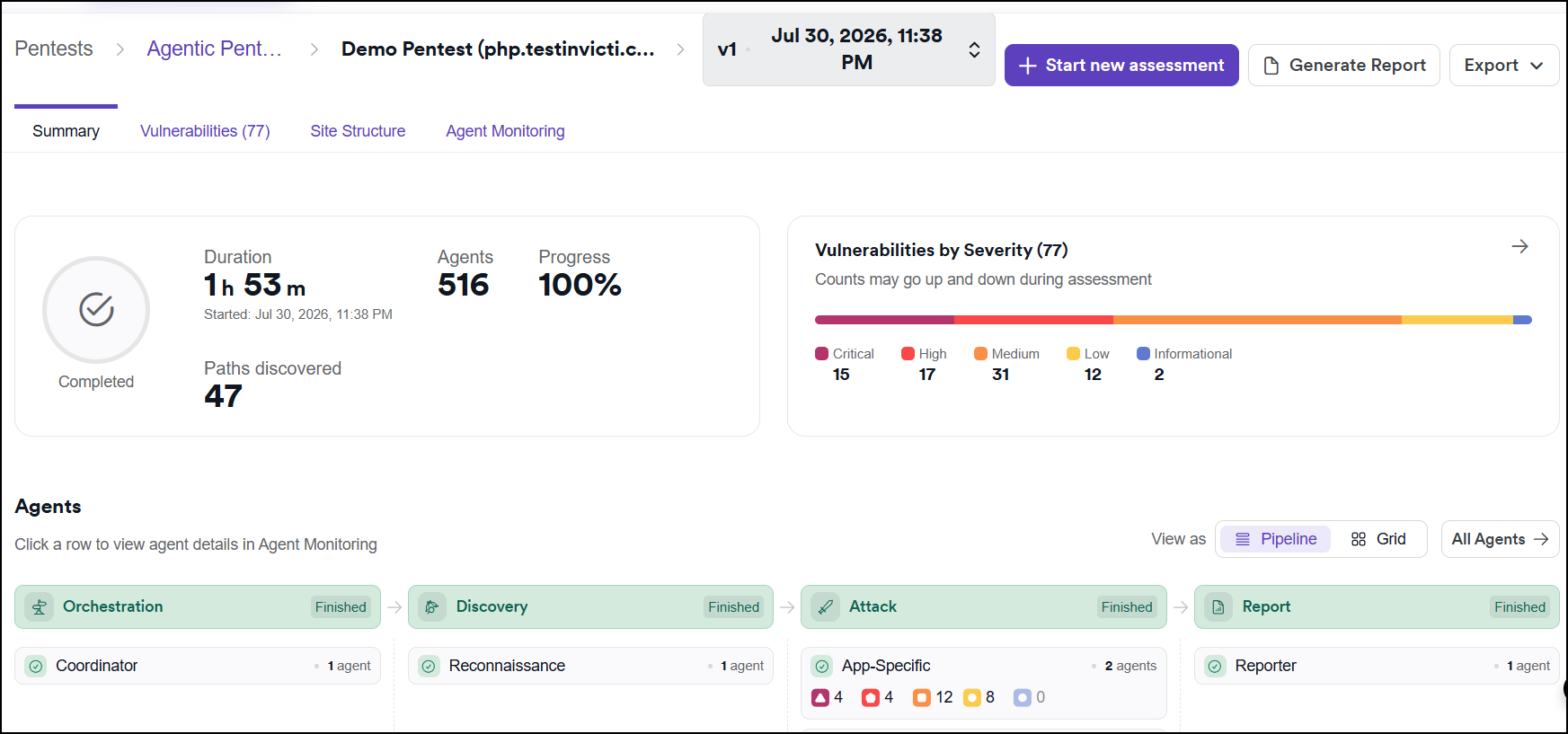
Invicti's latest releases centered on agentic pentesting: a new AI credit usage ledger with billing changes, HTML report downloads, agent log archives, and broadened agentic detection and agent behavior across Recon, Octo, and time-based confirmation.⁠︀︄︇︀︅︉︀︅︀︀︃︀︀︅︅︀︅︊︀︄︆︀︃︄⁠⁠︀︄︇︀︅︉︀︅︀︀︃︀︀︅︅︀︅︊︀︄︆︀︃︄⁠

Official documentation for Invicti AppSec Platform, Invicti Platform, and Invicti Enterprise — web application security testing, DAST, API security, and vulnerability management.

Invicti's latest releases centered on agentic pentesting: a new AI credit usage ledger with billing changes, HTML report downloads, agent log archives, and broadened agentic detection and agent behavior across Recon, Octo, and time-based confirmation.⁠︀︄︇︀︅︉︀︅︀︀︃︀︀︅︅︀︅︊︀︄︆︀︃︄⁠⁠︀︄︇︀︅︉︀︅︀︀︃︀︀︅︅︀︅︊︀︄︆︀︃︄⁠

└──▷ WHAT SHIPPED · 13 FEATURES 0 OF 13 FEATURES most completely described first
what's the number?

Each feature carries 0–100 for how completely the vendor documented it — not how big or important the work is. A major capability described in eight words scores low, and that is the finding.

  • depth0–40 what it does and how it works or what changed
  • specificity0–30 names real surfaces — APIs, flags, formats, limits, numbers
  • actionability0–30 enough to go use it — a named endpoint, flag, or config key tops this; a UI path is a starting point

Code and config rank first by construction: a documented endpoint, flag or config key scores at the top of specificity and actionability, so it sorts above a feature described only in prose. Under 60 the notes go thin — everything below the “thinner coverage” line is thinner documentation, not smaller work. Hover any meter for that feature's three sub-scores.

01 00
AI credit usage ledger and billing rules Not checked yet breaking 72

Adds an AI Credit Usage section under the Pentests nav item showing every credit addition, deduction, pending reservation, and current available balance in a transaction ledger, plus real-time credit consumption on the Summary tab with zero credit charge for failed assessments and pro-rated charges for canceled ones.⁠︀︄︇︀︅︉︀︅︀︀︃︀︀︅︅︀︅︊︀︄︆︀︃︄⁠ Credit values are now expressed as whole numbers instead of decimals, and unused credits now expire at the end of the subscription term.⁠︀︄︇︀︅︉︀︅︀︀︃︀︀︅︅︀︅︊︀︄︆︀︃︄⁠

Review pending and committed AI credits before starting a new agentic pentest to ensure sufficient balance.
📍In the Invicti Platform, go to Pentests › AI Credit Usage to view the full transaction ledger, including pending reservations for in-progress assessments and your current available balance.
Review credit spend and committed balance before starting a new Agentic Pentest assessment to avoid surprises.
📍In the platform UI, go to Pentests › AI Credit Usage to see every credit addition, deduction, and pending reservation alongside your current available balance.
— Names exact nav path and billing mechanics, including the breaking rounding/expiry change Release 20261001 (2026-10-01)
thinner coverage below
02 00
Agent scan log download and retention Not checked yet new 55

Enables downloading scanner logs and raw agent traces as a single compressed archive per assessment, for investigating a finding or sharing diagnostics with Invicti Support, and adds a configurable retention period and storage location for internal agent scan logs.

Download raw scanner logs and agent traces after an assessment to investigate a finding or share diagnostics with Invicti Support.
📍In the Invicti Platform, open the completed assessment, then select the option to download the scanner logs and agent traces as a single compressed archive.
Download raw agent traces after an assessment completes to investigate a finding in depth or share diagnostics with Invicti Support.
📍In the platform UI, open the completed assessment, then select Download scanner logs and agent traces to save a single compressed archive to your machine.
— Exact download steps given but retention config location/values unspecified Release 20261001 (2026-10-01)
03 00
Expanded agentic vulnerability detection techniques Not checked yet improved 55

Expands agentic detection coverage to include Ruby deserializationdeserializationTurning stored or transmitted data back into objects a program can use. Unsafe handling of untrusted data can allow unexpected behavior or code execution. vulnerabilities, additional JWTJWTAn open standard (RFC 7519) for encoding claims as a signed, optionally encrypted JSON object passed between parties. Cyber tools use it to verify identity and permissions without querying a central session store. authentication bypass techniques, and path-traversal bypasses against simple blocklist filters, plus more accurate login-field identification in the credential brute-force agent.

— Names specific vuln classes and agents but no steps to invoke Release 20261001 (2026-10-01)
04 00
Sitemap agent visibility Not checked yet improved 50

Adds agent columns to the CSV sitemap export, listing which agents tested each endpoint, and now surfaces findings from scan-wide agents at the specific path covered rather than at the site root.

— Names CSV export and behavior change, no exact navigation given Release 20261001 (2026-10-01)
05 00
Recon agent scope and source ingestion Not checked yet improved 50

The Recon agent now respects excluded paths, preventing discovery or probing of excluded assessment paths, and ingests README files and architecture diagrams inside uploaded source code archives to broaden attack-surface discovery.

— Two concrete behavior changes named, no configuration steps given Release 20261001 (2026-10-01)
06 00
Scan CLI authentication error handling Not checked yet improved 50

Scan CLI now distinguishes a rejected API token as a credential error, separate from target or scan errors, and automatically retries requests that receive a temporary authentication error.

— Names Scan CLI and specific error types, no exact command shown Release 20261001 (2026-10-01)
07 00
Octo scope enforcement and false-positive triage Not checked yet improved 45

Octo now blocks attack-agent requests that fall outside the target scope and configuration settings, and automatically marks DASTDASTDynamic application security testing, probing a running application from the outside for vulnerabilities. It checks behavior exposed through the application's interfaces. findings as false positives when agentic analysis confirms they are false positives.

— Describes two concrete behavior changes but no usage path Release 20261001 (2026-10-01)
08 00
Multi-round time-based vulnerability confirmation Not checked yet improved 45

Time-based vulnerability confirmation now runs multiple rounds with varied delay values, including per-round timing evidence in finding reports.

— Explains mechanism but no concrete numbers or configuration Release 20261001 (2026-10-01)
09 00
Agentic Pentest management in platform UI Not checked yet new 45

Adds management of Agentic Pentests directly from the platform UI, with findings flowing into the same pipeline as standard DAST scans.

— States integration with DAST pipeline but no navigation detail product docs
10 00
HTML format for assessment reports Not checked yet new 40

Enables downloading assessment reports in HTML format for browser viewing or stakeholder sharing.

Download an HTML assessment report to share agentic pentest results with stakeholders who need a portable, browser-ready document.
📍In the Invicti Platform, open the completed assessment and choose the HTML format option to download the report, then open it in any browser or attach it to a stakeholder communication.
— Clear download steps given, but no further mechanism detail Release 20261001 (2026-10-01)
11 00
Included Agents field populates immediately Not checked yet improved 30

The Included Agents field now shows configured agents immediately when an assessment starts, instead of appearing empty.

— Names the exact field but is a minor UI fix product docs
12 00
Attack agent input prioritization Not checked yet improved 25

Attack agents now prioritize the most relevant inputs first to maximize coverage within time and credit limits.

— Describes behavior change only, no concrete mechanism or scope Release 20261001 (2026-10-01)
13 00
Clearer API source upload size limit messaging Not checked yet improved 15

Adds clearer messaging about maximum file size limits for API source uploads.

— Vague wording with no stated limit or location product docs
└──▷ ALSO FROM THESE RELEASES
└──▷ BREAKING ON UPGRADE
  • !
    Unused credits now expire at the end of your subscription term.
  • !
    Credit values are now whole numbers; decimal credit values are no longer used.
Release 20261001 (2026-10-01) Blog LatestStable

Invicti adds AI credit ledger, HTML/log-archive downloads, and expanded agentic vuln detection in Release 20261001.⁠︀︄︇︀︅︉︀︅︀︀︃︀︀︅︅︀︅︊︀︄︆︀︃︄⁠

└──▷ HOW TO FIND IT
Review pending and committed AI credits before starting a new agentic pentest to ensure sufficient balance.
📍In the Invicti Platform, go to Pentests › AI Credit Usage to view the full transaction ledger, including pending reservations for in-progress assessments and your current available balance.
Download raw scanner logs and agent traces after an assessment to investigate a finding or share diagnostics with Invicti Support.
📍In the Invicti Platform, open the completed assessment, then select the option to download the scanner logs and agent traces as a single compressed archive.
Download an HTML assessment report to share agentic pentest results with stakeholders who need a portable, browser-ready document.
📍In the Invicti Platform, open the completed assessment and choose the HTML format option to download the report, then open it in any browser or attach it to a stakeholder communication.
  • Adds an AI Credit Usage section under the Pentests nav item showing every credit addition, deduction, pending reservation, and current available balance in a transaction ledger.⁠︀︄︇︀︅︉︀︅︀︀︃︀︀︅︅︀︅︊︀︄︆︀︃︄⁠
  • Adds real-time credit consumption to the Summary tab, showing credits used per assessment, with zero credit charge for failed assessments and pro-rated charges for canceled ones.
  • Enables downloading assessment reports in HTML format for browser viewing or stakeholder sharing.
  • Enables downloading scanner logs and raw agent traces as a single compressed archive per assessment.
  • Adds configurable retention period and storage location for internal agent scan logs.
+13 more show less
  • Adds agent columns to the CSV sitemap export, listing which agents tested each endpoint.
  • Expands agentic detection coverage to include Ruby deserializationdeserializationTurning stored or transmitted data back into objects a program can use. Unsafe handling of untrusted data can allow unexpected behavior or code execution. vulnerabilities, additional JWTJWTAn open standard (RFC 7519) for encoding claims as a signed, optionally encrypted JSON object passed between parties. Cyber tools use it to verify identity and permissions without querying a central session store. authentication bypass techniques, and path-traversal bypasses against simple blocklist filters, plus more accurate login-field identification in the credential brute-force agent.
  • Scan CLI now distinguishes a rejected API token as a credential error, separate from target or scan errors.
  • Scan CLI now automatically retries requests that receive a temporary authentication error.
  • Sitemap now surfaces findings from scan-wide agents at the specific path covered rather than at the site root.
  • The Recon agent now respects excluded paths, preventing discovery or probing of excluded assessment paths.
  • The Recon agent now ingests README files and architecture diagrams inside uploaded source code archives to broaden attack-surface discovery.
  • Octo now blocks attack-agent requests that fall outside the target scope and configuration settings.
  • Octo now automatically marks DASTDASTDynamic application security testing, probing a running application from the outside for vulnerabilities. It checks behavior exposed through the application's interfaces. findings as false positives when agentic analysis confirms they are false positives.
  • Time-based vulnerability confirmation now runs multiple rounds with varied delay values, including per-round timing evidence in finding reports.
  • Attack agents now prioritize the most relevant inputs first to maximize coverage within time and credit limits.
  • Credit values are now expressed as whole numbers instead of decimals.
  • Unused credits now expire at the end of the subscription term.
  • Adds an AI Credit Usage section under the Pentests nav item showing every credit addition, deduction, pending reservation, and current available balance in a transaction ledger.⁠︀︄︇︀︅︉︀︅︀︀︃︀︀︅︅︀︅︊︀︄︆︀︃︄⁠
  • Enables downloading assessment reports in HTML format for browser viewing or stakeholder sharing.
  • Enables downloading scanner logs and raw agent traces as a single compressed archive per assessment.
  • Adds configurable retention period and storage location for internal agent scan logs.
  • Unused credits now expire at the end of the subscription term.

13 more in Everything

Was this useful?

DataDome

Sources Blog / feed → Fraud SDK Go v2.1.0 (2026-10-02) Blog Rank Why this rank top features scored 70/45 — 57.5 How ranking works →

DataDome protects web, mobile, and API applications by detecting and blocking bot and fraud traffic.

DataDome shipped SDK-level updates: an optional event-time field in the Fraud SDK for Go, and Swift Package Manager support plus an iOS privacy manifest in the Flutter Dio SDK.⁠︀︄︇︀︅︉︀︅︀︀︃︀︀︅︅︀︅︊︀︄︆︀︃︄⁠

└──▷ WHAT SHIPPED · 2 FEATURES 0 OF 2 FEATURES most completely described first
what's the number?

Each feature carries 0–100 for how completely the vendor documented it — not how big or important the work is. A major capability described in eight words scores low, and that is the finding.

  • depth0–40 what it does and how it works or what changed
  • specificity0–30 names real surfaces — APIs, flags, formats, limits, numbers
  • actionability0–30 enough to go use it — a named endpoint, flag, or config key tops this; a UI path is a starting point

Code and config rank first by construction: a documented endpoint, flag or config key scores at the top of specificity and actionability, so it sorts above a feature described only in prose. Under 60 the notes go thin — everything below the “thinner coverage” line is thinner documentation, not smaller work. Hover any meter for that feature's three sub-scores.

01 00
Swift Package Manager support and iOS privacy manifest Not checked yet new 70

Flutter Dio SDK 3.5.0 adds Swift Package Manager (SPM) support for iOS native dependencies alongside existing CocoaPods support; apps on Flutter 3.44+ with SPM enabled resolve the plugin via SPM automatically.⁠︀︄︇︀︅︉︀︅︀︀︃︀︀︅︅︀︅︊︀︄︆︀︃︄⁠ It also adds an iOS privacy manifest file PrivacyInfo.xcprivacy to the plugin.

— Names file, version threshold and dependency mechanism Flutter Dio SDK 3.5.0 (2026-10-02)
thinner coverage below
02 00
eventDate field in Fraud SDK Go Not checked yet new 45

The Fraud SDK Go module v2.1.0 adds an optional eventDate field to the payload to specify the effective event time.

— Names exact field but no further mechanism detail Fraud SDK Go v2.1.0 (2026-10-02)
Fraud SDK Go v2.1.0 (2026-10-02) Blog LatestStable

DataDome Fraud SDK Go v2.1.0 adds optional eventDate field for setting effective event time in payloads.⁠︀︄︇︀︅︉︀︅︀︀︃︀︀︅︅︀︅︊︀︄︆︀︃︄⁠

Flutter Dio SDK 3.5.0 (2026-10-02) Blog Stable

DataDome Flutter Dio SDK 3.5.0 adds Swift Package Manager support for iOS and an iOS privacy manifest.⁠︀︄︇︀︅︉︀︅︀︀︃︀︀︅︅︀︅︊︀︄︆︀︃︄⁠

  • Adds Swift Package Manager (SPM) support for iOS native dependencies alongside existing CocoaPods support; apps on Flutter 3.44+ with SPM enabled resolve the plugin via SPM automatically.⁠︀︄︇︀︅︉︀︅︀︀︃︀︀︅︅︀︅︊︀︄︆︀︃︄⁠
  • Adds an iOS privacy manifest (PrivacyInfo.xcprivacy) to the plugin.

2 details in Everything

Was this useful?
Reverse Engineering, Malware & Forensics
◆  Digital Forensics & Incident Response

ALEAPP

Sources Release notes →Source code → v2026.4.3 Notes Code Rank Why this rank top features scored 77/72/68, +6 runnable example — 78.33 How ranking works →

ALEAPP v2026.4.3 adds new SwiftKey keyboard artifact parsing, extends Telegram decryption to layer 227, and upgrades the raw image staging engine to fix several file-content extraction bugs.⁠︀︄︇︀︅︉︀︅︀︀︃︀︀︅︅︀︅︊︀︄︆︀︃︄⁠⁠︀︄︇︀︅︉︀︅︀︀︃︀︀︅︅︀︅︊︀︄︆︀︃︄⁠

Android Logs Events And Protobuf Parser

ALEAPP v2026.4.3 adds new SwiftKey keyboard artifact parsing, extends Telegram decryption to layer 227, and upgrades the raw image staging engine to fix several file-content extraction bugs.⁠︀︄︇︀︅︉︀︅︀︀︃︀︀︅︅︀︅︊︀︄︆︀︃︄⁠⁠︀︄︇︀︅︉︀︅︀︀︃︀︀︅︅︀︅︊︀︄︆︀︃︄⁠

└──▷ WHAT SHIPPED · 3 FEATURES 0 OF 3 FEATURES most completely described first
what's the number?

Each feature carries 0–100 for how completely the vendor documented it — not how big or important the work is. A major capability described in eight words scores low, and that is the finding.

  • depth0–40 what it does and how it works or what changed
  • specificity0–30 names real surfaces — APIs, flags, formats, limits, numbers
  • actionability0–30 enough to go use it — a named endpoint, flag, or config key tops this; a UI path is a starting point

Code and config rank first by construction: a documented endpoint, flag or config key scores at the top of specificity and actionability, so it sorts above a feature described only in prose. Under 60 the notes go thin — everything below the “thinner coverage” line is thinner documentation, not smaller work. Hover any meter for that feature's three sub-scores.

01 00
qnxprobe 1.57 raw image staging fixes Not checked yet improved 77

Updates qnxprobe to 1.57 for -t raw acquisitions, now correctly staging OneDrive Files On-Demand placeholders (instead of zeros), XPRESS-compressed files (via Windows Overlay Filter) as their decompressed content, and NTFSNTFSThe default file system format for Windows, developed by Microsoft, storing files with rich metadata and access controls; cyber tools target it to parse artifacts like timestamps, alternate data streams, and the MFT.-compressed files with early-ending compression units at their full length.⁠︀︄︇︀︅︉︀︅︀︀︃︀︀︅︅︀︅︊︀︄︆︀︃︄⁠⁠︀︄︇︀︅︉︀︅︀︀︃︀︀︅︅︀︅︊︀︄︆︀︃︄⁠

Parse a raw Android disk image to extract SwiftKey language model artifacts, including Terms by App to see per-app typing history.
$ python aleapp.py -t raw -i <path_to_image.img> -o <path_for_report_output>
— Names version, flag and three concrete bug fixes with a usable command v2026.4.3
02 00
SwiftKey language model artifacts Not checked yet new 72

Adds four new artifact parsers derived from dynamic.lm files: Models, Terms, Term Sequences, and Terms by App. Covers both the Samsung Keyboard path (app_SwiftKey) and the standalone SwiftKey app path, surfacing per-app typing history.

Parse a raw Android disk image to extract SwiftKey language model artifacts, including Terms by App to see per-app typing history.
$ python aleapp.py -t raw -i <path_to_image.img> -o <path_for_report_output>
— Names exact artifact types and file paths, has a runnable example v2026.4.3
03 00
Telegram layer 227 decryption support Not checked yet improved 68

Supports Telegram layer 227, including sender rank and guest peer fields on older constructors 0x3ae56482 and 0x95ef6f2b, seventeen older message classes including secret chat ones, service message sender reporting, and table preservation when a single record cannot be walked.

— Detailed mechanism and constructors but no direct usage example v2026.4.3
v2026.4.3 Notes Code LatestStable

ALEAPP v2026.4.3 adds SwiftKey language model artifacts, Telegram layer 227 support, and improved raw NTFSNTFSThe default file system format for Windows, developed by Microsoft, storing files with rich metadata and access controls; cyber tools target it to parse artifacts like timestamps, alternate data streams, and the MFT. image staging⁠︀︄︇︀︅︉︀︅︀︀︃︀︀︅︅︀︅︊︀︄︆︀︃︄⁠

└──▷ GET THIS VERSION
$ git clone --branch v2026.4.3 https://github.com/abrignoni/ALEAPP.git
# already have the repo? check out this version:
$ git checkout v2026.4.3
└──▷ TRY IT
Parse a raw Android disk image to extract SwiftKey language model artifacts, including Terms by App to see per-app typing history.
$ python aleapp.py -t raw -i <path_to_image.img> -o <path_for_report_output>
  • Adds four SwiftKey language model artifacts from dynamic.lm files — Models, Terms, Term Sequences, and Terms by App — covering both the Samsung Keyboard (app_SwiftKey) and SwiftKey app paths.⁠︀︄︇︀︅︉︀︅︀︀︃︀︀︅︅︀︅︊︀︄︆︀︃︄⁠
  • Supports Telegram layer 227, including sender rank and guest peer fields on older constructors (0x3ae56482, 0x95ef6f2b), seventeen older message classes (including secret chat ones), service message sender reporting, and table preservation when a single record cannot be walked.
  • Updates qnxprobe to 1.57 for -t raw acquisitions, now correctly staging OneDrive Files On-Demand placeholders (instead of zeros), XPRESS-compressed files (via Windows Overlay Filter) as their content, and NTFS-compressed files with early-ending compression units at their full length.
  • Adds four SwiftKey language model artifacts from dynamic.lm files — Models, Terms, Term Sequences, and Terms by App — covering both the Samsung Keyboard (app_SwiftKey) and SwiftKey app paths.⁠︀︄︇︀︅︉︀︅︀︀︃︀︀︅︅︀︅︊︀︄︆︀︃︄⁠

2 more in Everything

Was this useful?

iLEAPP

Sources Release notes →Source code → v2026.4.4 Notes Code Rank Why this rank top features scored 90/80/80 — 83.33 How ranking works →

iLEAPP v2026.4.4 adds new Safari history-tag and knowledgeC location-activity artifacts, extends sysdiagnose and Session message parsing, and upgrades raw acquisition support via qnxprobe 1.57 to cover more filesystem and compression formats.⁠︀︄︇︀︅︉︀︅︀︀︃︀︀︅︅︀︅︊︀︄︆︀︃︄⁠⁠︀︄︇︀︅︉︀︅︀︀︃︀︀︅︅︀︅︊︀︄︆︀︃︄⁠

iOS Logs, Events, And Plist Parser

iLEAPP v2026.4.4 adds new Safari history-tag and knowledgeC location-activity artifacts, extends sysdiagnose and Session message parsing, and upgrades raw acquisition support via qnxprobe 1.57 to cover more filesystem and compression formats.⁠︀︄︇︀︅︉︀︅︀︀︃︀︀︅︅︀︅︊︀︄︆︀︃︄⁠⁠︀︄︇︀︅︉︀︅︀︀︃︀︀︅︅︀︅︊︀︄︆︀︃︄⁠

└──▷ WHAT SHIPPED · 5 FEATURES 0 OF 5 FEATURES most completely described first
what's the number?

Each feature carries 0–100 for how completely the vendor documented it — not how big or important the work is. A major capability described in eight words scores low, and that is the finding.

  • depth0–40 what it does and how it works or what changed
  • specificity0–30 names real surfaces — APIs, flags, formats, limits, numbers
  • actionability0–30 enough to go use it — a named endpoint, flag, or config key tops this; a UI path is a starting point

Code and config rank first by construction: a documented endpoint, flag or config key scores at the top of specificity and actionability, so it sorts above a feature described only in prose. Under 60 the notes go thin — everything below the “thinner coverage” line is thinner documentation, not smaller work. Hover any meter for that feature's three sub-scores.

01 00
Raw acquisition parsing via qnxprobe 1.57 Not checked yet improved 90

Updates -t raw acquisition reading via qnxprobe 1.57: adds JFFS2 compressed with OpenWrt's LZMA, UBI/UBIFS with bit errors, two adjacent JFFS2 partitions read as two separate filesystems, U-Boot environment and Belkin NVRM stores listed as single-file volumes (uboot-env.bin / nvram.bin), correct staging of OneDrive Files On-Demand placeholders, XPRESS-compressed NTFSNTFSThe default file system format for Windows, developed by Microsoft, storing files with rich metadata and access controls; cyber tools target it to parse artifacts like timestamps, alternate data streams, and the MFT. files, and NTFS-compressed files with early-ending compression units.⁠︀︄︇︀︅︉︀︅︀︀︃︀︀︅︅︀︅︊︀︄︆︀︃︄⁠⁠︀︄︇︀︅︉︀︅︀︀︃︀︀︅︅︀︅︊︀︄︆︀︃︄⁠

— Names flag, version, and exact filesystem/file names v2026.4.4
02 00
Safari history tags artifact and new History columns Not checked yet new 80

Adds a Safari Browser - History Tags artifact with one row per tag-to-history-item link and one row per unlinked tag, and adds Tags, Tag Identifiers, and Profile Name columns to the existing Safari Browser - History artifact, with the profile name read from SafariTabs.db.

— Names artifact, new columns and source database v2026.4.4
03 00
knowledgeC Location Activity artifact Not checked yet new 80

Adds a knowledgeC Location Activity artifact for the /app/locationActivity stream, surfacing place name, address, coordinates, activity UUIDUUIDA universally unique identifier, usually a 128-bit value used to identify an object across systems. It is designed to make independently generated identifiers unlikely to collide., bundle ID, and the other coordinate pairs in the compressed payload with per-pair distances.

— Names stream path and exact surfaced fields v2026.4.4
04 00
Session messaging parsing improvements Not checked yet improved 70

Extends Session contact parsing to databases written by older Session versions that lack the lastKnownClientVersion column, and links Session 2.14.2 attachments named by a hash of the download URL.

— Names column and version but no UI path v2026.4.4
05 00
Sysdiagnose Wi-Fi status artifact and TCC parsing Not checked yet new 60

Adds a Sysdiagnose - Wifi Status artifact and extends TCC app-permission parsing to read from a sysdiagnose archive packed inside an extraction.

— Names artifact and source but little mechanism detail v2026.4.4
v2026.4.4 Notes Code LatestStable

iLEAPP v2026.4.4 adds Safari history tags, knowledgeC location activity, sysdiagnose Wi-Fi status, and broader flash-dump parsing via qnxprobe 1.57.⁠︀︄︇︀︅︉︀︅︀︀︃︀︀︅︅︀︅︊︀︄︆︀︃︄⁠

└──▷ GET THIS VERSION
$ git clone --branch v2026.4.4 https://github.com/abrignoni/iLEAPP.git
# already have the repo? check out this version:
$ git checkout v2026.4.4
  • Adds a Safari Browser - History Tags artifact with one row per tag-to-history-item link and one row per unlinked tag, and adds Tags, Tag Identifiers, and Profile Name columns to the existing Safari Browser - History artifact (profile name read from SafariTabs.db).⁠︀︄︇︀︅︉︀︅︀︀︃︀︀︅︅︀︅︊︀︄︆︀︃︄⁠
  • Adds a knowledgeC Location Activity artifact for the /app/locationActivity stream, surfacing place name, address, coordinates, activity UUIDUUIDA universally unique identifier, usually a 128-bit value used to identify an object across systems. It is designed to make independently generated identifiers unlikely to collide., bundle ID, and the other coordinate pairs in the compressed payload with per-pair distances.
  • Adds a Sysdiagnose - Wifi Status artifact and extends TCC app-permission parsing to read from a sysdiagnose archive packed inside an extraction.
  • Extends Session contact parsing to databases written by older Session versions that lack the lastKnownClientVersion column, and links Session 2.14.2 attachments named by a hash of the download URL.
  • Updates -t raw acquisition reading via qnxprobe 1.57: adds JFFS2 compressed with OpenWrt's LZMA, UBI/UBIFS with bit errors, two adjacent JFFS2 partitions read as two separate filesystems, U-Boot environment and Belkin NVRM stores listed as single-file volumes (uboot-env.bin / nvram.bin), correct staging of OneDrive Files On-Demand placeholders, XPRESS-compressed NTFSNTFSThe default file system format for Windows, developed by Microsoft, storing files with rich metadata and access controls; cyber tools target it to parse artifacts like timestamps, alternate data streams, and the MFT. files, and NTFS-compressed files with early-ending compression units.
  • Adds a Safari Browser - History Tags artifact with one row per tag-to-history-item link and one row per unlinked tag, and adds Tags, Tag Identifiers, and Profile Name columns to the existing Safari Browser - History artifact (profile name read from SafariTabs.db).⁠︀︄︇︀︅︉︀︅︀︀︃︀︀︅︅︀︅︊︀︄︆︀︃︄⁠
  • Adds a knowledgeC Location Activity artifact for the /app/locationActivity stream, surfacing place name, address, coordinates, activity UUIDUUIDA universally unique identifier, usually a 128-bit value used to identify an object across systems. It is designed to make independently generated identifiers unlikely to collide., bundle ID, and the other coordinate pairs in the compressed payload with per-pair distances.
  • Adds a Sysdiagnose - Wifi Status artifact and extends TCC app-permission parsing to read from a sysdiagnose archive packed inside an extraction.

2 more in Everything

Was this useful?
◆  Reverse Engineering

Finite State Platform

Sources Blog / feed → October 1, 2026 - CycloneDX VEX menu, Files downloads, and SBOM export errors (2026-10-01) Blog Rank Why this rank top features scored 81/68, +6 runnable example — 80.5 How ranking works →

Finite State Platform added CycloneDX VEXCycloneDX VEXA CycloneDX-format document that records which known vulnerabilities in a software bill of materials actually affect a given product, letting cyber tools automate triage by filtering out irrelevant CVEs. export support with a new public API endpoint, and introduced Version Rescan for re-running scans while preserving prior results.⁠︀︄︇︀︅︉︀︅︀︀︃︀︀︅︅︀︅︊︀︄︆︀︃︄⁠⁠︀︄︇︀︅︉︀︅︀︀︃︀︀︅︅︀︅︊︀︄︆︀︃︄⁠

Finite State Platform is a software supply chain security tool that analyzes firmware and software composition to identify vulnerabilities and compliance risks.

Finite State Platform added CycloneDX VEXCycloneDX VEXA CycloneDX-format document that records which known vulnerabilities in a software bill of materials actually affect a given product, letting cyber tools automate triage by filtering out irrelevant CVEs. export support with a new public API endpoint, and introduced Version Rescan for re-running scans while preserving prior results.⁠︀︄︇︀︅︉︀︅︀︀︃︀︀︅︅︀︅︊︀︄︆︀︃︄⁠⁠︀︄︇︀︅︉︀︅︀︀︃︀︀︅︅︀︅︊︀︄︆︀︃︄⁠

└──▷ WHAT SHIPPED · 2 FEATURES 0 OF 2 FEATURES most completely described first
what's the number?

Each feature carries 0–100 for how completely the vendor documented it — not how big or important the work is. A major capability described in eight words scores low, and that is the finding.

  • depth0–40 what it does and how it works or what changed
  • specificity0–30 names real surfaces — APIs, flags, formats, limits, numbers
  • actionability0–30 enough to go use it — a named endpoint, flag, or config key tops this; a UI path is a starting point

Code and config rank first by construction: a documented endpoint, flag or config key scores at the top of specificity and actionability, so it sorts above a feature described only in prose. Under 60 the notes go thin — everything below the “thinner coverage” line is thinner documentation, not smaller work. Hover any meter for that feature's three sub-scores.

01 00
CycloneDX VEX downloads and API endpoint Not checked yet new 81

Adds a GET /public/v0/vex/cyclonedx/{projectVersionId} endpoint to retrieve CycloneDXCycloneDXAn open standard for describing software components and their dependencies, vulnerabilities and other supply-chain information. Tools use it to exchange bills of materials and related evidence. VEXVEXA machine-readable statement from a vendor saying whether a CVE in a component actually affects their product. It is how a scanner is told to stop flagging a vulnerability that is not reachable. data for a project version, plus two new options in the Generate SBOMSBOMA software bill of materials, an inventory of the components and versions inside an application. It helps teams find affected software when a dependency has a vulnerability or licensing issue. menu on a Version: CycloneDX VEX (vulnerabilities only) and CycloneDX VEX (triaged only).⁠︀︄︇︀︅︉︀︅︀︀︃︀︀︅︅︀︅︊︀︄︆︀︃︄⁠⁠︀︄︇︀︅︉︀︅︀︀︃︀︀︅︅︀︅︊︀︄︆︀︃︄⁠

Pull a CycloneDX VEX document for a specific project version to feed into a downstream vulnerability management pipeline.
$ curl -X GET 'https://platform.finitestate.io/public/v0/vex/cyclonedx/{projectVersionId}' -H 'Authorization: Bearer <token>'
Download a triaged-only CycloneDX VEX file from the platform UI when you only want to share externally vetted, triaged vulnerability data.
📍In the platform, open a Version, click Generate SBOM, select CycloneDX VEX (triaged only), and click Download.
— Names exact endpoint and both download options with usage examples October 1, 2026 - CycloneDX VEX menu, Files …
02 00
Version Rescan Not checked yet new 68

A new Rescan action on a Version confirms and checkpoints the current Version, starts a new Version under the original name, and re-runs the scan from the stored file; for binary scans, analysts can choose which analyses to run while prior results remain accessible on the checkpoint Version.

Re-run a binary scan on an existing Version after updating analysis settings, without losing the original scan results.
📍In the Finite State Platform, navigate to the Version you want to re-scan, select Rescan, choose which analyses to run for the binary scan, then confirm — the current Version is checkpointed and a new Version scan starts under the original name.
— Explains mechanism and workflow but no API/config surface named September 30, 2026 - Version Rescan (2026-09…
October 1, 2026 - CycloneDX VEX menu, Files downloads, and SBOM export errors (2026-10-01) Blog LatestStable

Finite State adds CycloneDX VEXCycloneDX VEXA CycloneDX-format document that records which known vulnerabilities in a software bill of materials actually affect a given product, letting cyber tools automate triage by filtering out irrelevant CVEs. downloads to the Generate SBOMSBOMA software bill of materials, an inventory of the components and versions inside an application. It helps teams find affected software when a dependency has a vulnerability or licensing issue. menu, backed by a new GET /public/v0/vex/cyclonedx/{projectVersionId} endpoint.⁠︀︄︇︀︅︉︀︅︀︀︃︀︀︅︅︀︅︊︀︄︆︀︃︄⁠

└──▷ TRY IT
Pull a CycloneDX VEX document for a specific project version to feed into a downstream vulnerability management pipeline.
$ curl -X GET 'https://platform.finitestate.io/public/v0/vex/cyclonedx/{projectVersionId}' -H 'Authorization: Bearer <token>'
Download a triaged-only CycloneDX VEX file from the platform UI when you only want to share externally vetted, triaged vulnerability data.
📍In the platform, open a Version, click Generate SBOM, select CycloneDX VEX (triaged only), and click Download.
  • Adds GET /public/v0/vex/cyclonedx/{projectVersionId} endpoint to retrieve CycloneDX VEX data for a project version.⁠︀︄︇︀︅︉︀︅︀︀︃︀︀︅︅︀︅︊︀︄︆︀︃︄⁠
  • Adds CycloneDX VEX (vulnerabilities only) and CycloneDX VEX (triaged only) download options to the Generate SBOM menu on a Version.
  • Adds GET /public/v0/vex/cyclonedx/{projectVersionId} endpoint to retrieve CycloneDX VEX data for a project version.⁠︀︄︇︀︅︉︀︅︀︀︃︀︀︅︅︀︅︊︀︄︆︀︃︄⁠

1 more in Everything

September 30, 2026 - Version Rescan (2026-09-30) Blog Stable

Finite State Platform adds Version Rescan, letting analysts re-run a scan from the stored file while checkpointing prior results.⁠︀︄︇︀︅︉︀︅︀︀︃︀︀︅︅︀︅︊︀︄︆︀︃︄⁠

└──▷ HOW TO FIND IT
Re-run a binary scan on an existing Version after updating analysis settings, without losing the original scan results.
📍In the Finite State Platform, navigate to the Version you want to re-scan, select Rescan, choose which analyses to run for the binary scan, then confirm — the current Version is checkpointed and a new Version scan starts under the original name.
Was this useful?
Network Security
◆  Firewalls & Network Defense

Acalvio Technologies Acalvio

Sources Press release → announced · Sep 12, 2026 Press Rank Why this rank top features scored 70/60/60 — 63.33 How ranking works →

Acalvio is a deception technology platform that deploys decoys and honeypots to detect advanced threats and insider attacks.

Acalvio shipped two new product lines in this window: an agentless ITDRITDRIdentity Threat Detection and Response: a discipline focused on detecting and responding to attacks that abuse identity systems such as Active Directory or IAM platforms, giving cyber tools visibility into credential-based intrusions. SaaSSaaSSoftware delivered over the internet and billed by subscription, hosted and operated by the vendor so the buyer skips installation and infrastructure management. offering (ShadowPlex Identity Protection and Advanced Threat Defense) for identity attack-surface mapping and honeytoken-based detection, and the broader ShadowPlex distributed deception platform with its FluidDeception decoy engine, Shadow Networks adversary engagement, and DeceptionFarms management layer.⁠︀︄︇︀︅︉︀︅︀︀︃︀︀︅︅︀︅︊︀︄︆︀︃︄⁠⁠︀︄︇︀︅︉︀︅︀︀︃︀︀︅︅︀︅︊︀︄︆︀︃︄⁠

└──▷ WHAT SHIPPED · 8 FEATURES 8 OF 8 FEATURES most completely described first
what's the number?

Each feature carries 0–100 for how completely the vendor documented it — not how big or important the work is. A major capability described in eight words scores low, and that is the finding.

  • depth0–40 what it does and how it works or what changed
  • specificity0–30 names real surfaces — APIs, flags, formats, limits, numbers
  • actionability0–30 enough to go use it — a named endpoint, flag, or config key tops this; a UI path is a starting point

Code and config rank first by construction: a documented endpoint, flag or config key scores at the top of specificity and actionability, so it sorts above a feature described only in prose. Under 60 the notes go thin — everything below the “thinner coverage” line is thinner documentation, not smaller work. Hover any meter for that feature's three sub-scores.

01 01
EDR, SIEM, SOAR, NAC and Splunk Adaptive Response integrations Not checked yet new 70

Acalvio integrates with EDREDREndpoint detection and response, monitoring computers for suspicious behavior and providing investigation and response controls, such as isolating a device., SIEMSIEMSecurity information and event management, collecting logs from many systems and correlating events to find suspicious activity. Analysts use it to investigate alerts and incidents., SOARSOARSecurity orchestration, automation and response, coordinating incident workflows across tools. Playbooks can gather evidence, assign work or carry out approved response actions., and NAC solutions to automate deception deployment, detect decoy credential use, and trigger real-time automated responses.⁠︀︄︇︀︅︉︀︅︀︀︃︀︀︅︅︀︅︊︀︄︆︀︃︄⁠ It also ships pre-built integration with major SIEM systems for threat intelligence delivery, including Adaptive Response in Splunk Enterprise Security, which lets responders dynamically deploy deceptions directly from Splunk.⁠︀︄︇︀︅︉︀︅︀︀︃︀︀︅︅︀︅︊︀︄︆︀︃︄⁠

— Names specific integration surfaces including a concrete Splunk feature launch-20260912-2ca2065alaunch-20260912-6708abca
02 02
ShadowPlex Identity Protection attack-surface mapping Not checked yet new 60

ShadowPlex Identity Protection maps the identity attack surfaceattack surfaceThe exposed systems, interfaces and access points an attacker could try to use. It includes internet-facing services as well as identities, software and other reachable resources. across Microsoft Active DirectoryActive DirectoryMicrosoft's directory service for Windows networks that centralises authentication and authorisation; cyber tools target or integrate with it because it controls identity and access across most enterprise environments., Azure Active Directory, and endpoint credential caches to surface misconfigurations, attack pathsattack pathsA possible sequence of steps an attacker could take to reach a valuable target. It connects weaknesses, permissions and reachable systems rather than treating each finding separately., cached credentials, and lateral movementlateral movementMoving from an initially compromised system or identity to other resources in a network. Attackers often use stolen credentials or trusted connections to expand their access. links.

— Names mapped surfaces but no usage path given launch-20260912-2ca2065a
03 03
DeceptionFarms management via ProjectionPoints Not checked yet new 60

DeceptionFarms manage distributed deceptions across network topologies using ProjectionPoints, eliminating the need for trunk or span port access.

— Names concrete mechanism ProjectionPoints and prior limitation removed launch-20260912-6708abca
thinner coverage below
04 04
ShadowPlex Advanced Threat Defense honey accounts and tokens Not checked yet new 55

ShadowPlex Advanced Threat Defense automatically generates honey accounts blended into Active Directory and disperses honey tokens across the enterprise network to detect credential theft and lateral movement.

— Explains mechanism but no concrete setup steps launch-20260912-2ca2065a
05 05
Agentless SaaS deployment on cloud marketplaces Not checked yet new 50

ShadowPlex Identity Protection and Advanced Threat Defense deploy as an agentless SaaS solution available on the Amazon Web Services, Microsoft Azure, and Google Cloud Platform marketplaces.

— Names exact marketplaces, a clear starting point launch-20260912-2ca2065a
06 06
FluidDeception decoy generation engine Not checked yet new 45

FluidDeception is a data-science-driven engine that automatically generates realistic, non-fingerprintable decoys, lures, baits, and breadcrumbs blended into the real network.

— Describes mechanism but no usage guidance launch-20260912-6708abca
07 07
ShadowPlex distributed deception platform launch Not checked yet new 30

Acalvio introduces ShadowPlex, a distributed deception platform supporting on-premises, private cloud, and public cloud deployment for breach and insider-threat detection.

— High-level launch description with no mechanism launch-20260912-6708abca
08 08
Shadow Networks adversary engagement Not checked yet new 30

Shadow Networks provide adversary engagement to capture TTPsTTPsTactics, techniques and procedures, the goals, methods and specific behaviors used by an attacker. They describe how an attack works, rather than only the files or addresses it leaves behind. (Tools, Techniques, and Processes) and inform response.

— Brief functional description, no operational detail launch-20260912-6708abca
announced · Sep 12, 2026 Press

Acalvio launches agentless SaaSSaaSSoftware delivered over the internet and billed by subscription, hosted and operated by the vendor so the buyer skips installation and infrastructure management.-based ITDRITDRIdentity Threat Detection and Response: a discipline focused on detecting and responding to attacks that abuse identity systems such as Active Directory or IAM platforms, giving cyber tools visibility into credential-based intrusions. solution combining identity attack surfaceattack surfaceThe exposed systems, interfaces and access points an attacker could try to use. It includes internet-facing services as well as identities, software and other reachable resources. mapping and Active Defense deception.⁠︀︄︇︀︅︉︀︅︀︀︃︀︀︅︅︀︅︊︀︄︆︀︃︄⁠

  • Adds ShadowPlex Identity Protection, which maps identity attack surface across Microsoft Active DirectoryActive DirectoryMicrosoft's directory service for Windows networks that centralises authentication and authorisation; cyber tools target or integrate with it because it controls identity and access across most enterprise environments., Azure Active Directory, and endpoint credential caches to surface misconfigurations, attack pathsattack pathsA possible sequence of steps an attacker could take to reach a valuable target. It connects weaknesses, permissions and reachable systems rather than treating each finding separately., cached credentials, and lateral movementlateral movementMoving from an initially compromised system or identity to other resources in a network. Attackers often use stolen credentials or trusted connections to expand their access. links.⁠︀︄︇︀︅︉︀︅︀︀︃︀︀︅︅︀︅︊︀︄︆︀︃︄⁠
  • Adds ShadowPlex Advanced Threat Defense, which automatically generates honey accounts blended into Active Directory and disperses honey tokens across the enterprise network to detect credential theft and lateral movement.
  • Integrates with EDREDREndpoint detection and response, monitoring computers for suspicious behavior and providing investigation and response controls, such as isolating a device., SIEMSIEMSecurity information and event management, collecting logs from many systems and correlating events to find suspicious activity. Analysts use it to investigate alerts and incidents., SOARSOARSecurity orchestration, automation and response, coordinating incident workflows across tools. Playbooks can gather evidence, assign work or carry out approved response actions., and NAC solutions to automate deception deployment, detect decoy credential use, and trigger real-time automated responses.
  • Deploys as an agentless SaaS solution available on Amazon Web Services, Microsoft Azure, and Google Cloud Platform marketplaces. Not checked yet

4 details in Everything

announced · Sep 12, 2026 Press

Acalvio launches ShadowPlex, a distributed deception platform with automated decoy deployment, Shadow Networks engagement, and Splunk ES integration.⁠︀︄︇︀︅︉︀︅︀︀︃︀︀︅︅︀︅︊︀︄︆︀︃︄⁠

  • Introduces ShadowPlex, a distributed deception platform supporting on-premises, private cloud, and public cloud deployment for breach and insider-threat detection.⁠︀︄︇︀︅︉︀︅︀︀︃︀︀︅︅︀︅︊︀︄︆︀︃︄⁠
  • Includes FluidDeception, a data-science-driven engine that automatically generates realistic, non-fingerprintable decoys, lures, baits, and breadcrumbs blended into the real network.
  • Provides Shadow Networks for adversary engagement to capture TTPsTTPsTactics, techniques and procedures, the goals, methods and specific behaviors used by an attacker. They describe how an attack works, rather than only the files or addresses it leaves behind. (Tools, Techniques, and Processes) and inform response.
  • Introduces DeceptionFarms to manage distributed deceptions across network topologies using ProjectionPoints, eliminating the need for trunk or span port access. Not checked yet
  • Ships pre-built integration with major SIEMSIEMSecurity information and event management, collecting logs from many systems and correlating events to find suspicious activity. Analysts use it to investigate alerts and incidents. systems for threat intelligence delivery, including Adaptive Response in Splunk Enterprise Security to dynamically deploy deceptions from Splunk.

5 details in Everything

Was this useful?

Fastly

Sources Blog / feed → Fastly Terraform Provider 9.8.0 (2026-10-01) Blog Rank Why this rank top features scored 70 — 70 How ranking works →

Fastly's Terraform Provider 9.8.0 adds new resources for managing Domain Management routing configurations.⁠︀︄︇︀︅︉︀︅︀︀︃︀︀︅︅︀︅︊︀︄︆︀︃︄⁠

Fastly's edge cloud platform delivers faster, safer, and more scalable sites and apps to customers. Elevate your edge CDN, video delivery, security, and more.

Fastly's Terraform Provider 9.8.0 adds new resources for managing Domain Management routing configurations.⁠︀︄︇︀︅︉︀︅︀︀︃︀︀︅︅︀︅︊︀︄︆︀︃︄⁠

└──▷ WHAT SHIPPED · 1 FEATURE 0 OF 1 FEATURE most completely described first
what's the number?

Each feature carries 0–100 for how completely the vendor documented it — not how big or important the work is. A major capability described in eight words scores low, and that is the finding.

  • depth0–40 what it does and how it works or what changed
  • specificity0–30 names real surfaces — APIs, flags, formats, limits, numbers
  • actionability0–30 enough to go use it — a named endpoint, flag, or config key tops this; a UI path is a starting point

Code and config rank first by construction: a documented endpoint, flag or config key scores at the top of specificity and actionability, so it sorts above a feature described only in prose. Under 60 the notes go thin — everything below the “thinner coverage” line is thinner documentation, not smaller work. Hover any meter for that feature's three sub-scores.

01 00
Terraform resources for Domain Management routing Not checked yet new 70

New fastly_routing_config and fastly_routing_config_domain_link Terraform resources let users manage Domain Management routing configs with automatic versioning, and link those configs to domains.⁠︀︄︇︀︅︉︀︅︀︀︃︀︀︅︅︀︅︊︀︄︆︀︃︄⁠

— Names exact resource types but no usage example Fastly Terraform Provider 9.8.0 (2026-10-01)
Fastly Terraform Provider 9.8.0 (2026-10-01) Blog LatestStable

Fastly Terraform Provider 9.8.0 adds fastly_routing_config and fastly_routing_config_domain_link resources for Domain Management routing configs.⁠︀︄︇︀︅︉︀︅︀︀︃︀︀︅︅︀︅︊︀︄︆︀︃︄⁠

Was this useful?
Cloud & Container Security
◆  Cloud Security Posture

Cloud Custodian

Sources Release notes →Source code → 0.9.53.0 Notes Code Rank Why this rank top features scored 80/68/58, +15 breaking change, +6 runnable example — 89.67 How ranking works →

Cloud Custodian 0.9.53 adds a --vars-file flag for runtime policy variable injection, expands coverage with 23 new AWS/GCP/K8sK8sShorthand for Kubernetes, the open-source container orchestration system originally from Google; cyber tools use it to deploy, scale, and manage containerized workloads across clusters. resource types spanning IoTIoTA collective label for internet-connected physical devices — sensors, cameras, routers, appliances — that tools target because they run embedded firmware with limited patching and broad network exposure., Amazon Q Business, S3 Tables, S3 file systems and SSM, adds new Azure Machine Learning and network security group actions, and standardizes dynamic tagging across clouds, while removing the rename-tag action from aws.cloudwatch-dashboard.⁠︀︄︇︀︅︉︀︅︀︀︃︀︀︅︅︀︅︊︀︄︆︀︃︄⁠⁠︀︄︇︀︅︉︀︅︀︀︃︀︀︅︅︀︅︊︀︄︆︀︃︄⁠

Rules engine for cloud security, cost optimization, and governance, DSL in yaml for policies to query, filter, and take actions on resources

Cloud Custodian 0.9.53 adds a --vars-file flag for runtime policy variable injection, expands coverage with 23 new AWS/GCP/K8sK8sShorthand for Kubernetes, the open-source container orchestration system originally from Google; cyber tools use it to deploy, scale, and manage containerized workloads across clusters. resource types spanning IoTIoTA collective label for internet-connected physical devices — sensors, cameras, routers, appliances — that tools target because they run embedded firmware with limited patching and broad network exposure., Amazon Q Business, S3 Tables, S3 file systems and SSM, adds new Azure Machine Learning and network security group actions, and standardizes dynamic tagging across clouds, while removing the rename-tag action from aws.cloudwatch-dashboard.⁠︀︄︇︀︅︉︀︅︀︀︃︀︀︅︅︀︅︊︀︄︆︀︃︄⁠⁠︀︄︇︀︅︉︀︅︀︀︃︀︀︅︅︀︅︊︀︄︆︀︃︄⁠

└──▷ WHAT SHIPPED · 22 FEATURES 0 OF 22 FEATURES most completely described first
what's the number?

Each feature carries 0–100 for how completely the vendor documented it — not how big or important the work is. A major capability described in eight words scores low, and that is the finding.

  • depth0–40 what it does and how it works or what changed
  • specificity0–30 names real surfaces — APIs, flags, formats, limits, numbers
  • actionability0–30 enough to go use it — a named endpoint, flag, or config key tops this; a UI path is a starting point

Code and config rank first by construction: a documented endpoint, flag or config key scores at the top of specificity and actionability, so it sorts above a feature described only in prose. Under 60 the notes go thin — everything below the “thinner coverage” line is thinner documentation, not smaller work. Hover any meter for that feature's three sub-scores.

01 00
Runtime variable injection via vars-file Not checked yet new 80

Adds --vars-file parameter to custodian run to inject variables into policy expansion at runtime without modifying policy files, e.g.⁠︀︄︇︀︅︉︀︅︀︀︃︀︀︅︅︀︅︊︀︄︆︀︃︄⁠ custodian run --vars-file vars.json -s out policy.yml.⁠︀︄︇︀︅︉︀︅︀︀︃︀︀︅︅︀︅︊︀︄︆︀︃︄⁠

Inject environment-specific variables (e.g. account IDs, tag values) into a policy at run time without editing the YAML file.
$ custodian run --vars-file vars.json -s out policy.yml
— Runnable command and clear mechanism given. 0.9.53.0
02 00
Tag management for ops-item and ssm-managed-instance Not checked yet new 68

Adds auto-tag-user, copy-related-tag, mark-for-op, remove-tag, and tag actions plus a marked-for-op filter to aws.ops-item and aws.ssm-managed-instance.

— Enumerates all actions and filter with target resources. 0.9.53.0
thinner coverage below
03 00
IoT resource coverage expansion Not checked yet new 58

Adds aws.iot-certificate, aws.iot-ota-update, and aws.iot-policy resource types, expanding IoT coverage, plus an iot-logging filter on aws.account for account-level IoT logging inspection.

— Names resources and filter but no deeper behavior. 0.9.53.0
04 00
API Gateway v2 route resource with auth filtering Not checked yet new 57

Adds aws.apigwv2-route resource type with authorization type filtering for API Gateway v2 routes.

— Includes a filtering mechanism beyond bare name. 0.9.53.0
05 00
SSM resource types with tagging support Not checked yet new 55

Adds aws.ssm-association, aws.ssm-maintenance-window, and aws.ssm-patch-baseline resource types with tagging support.

— Names resource types and tagging support, scope unclear. 0.9.53.0
06 00
Amazon Q Business resource types Not checked yet new 53

Adds aws.qbusiness-application, aws.qbusiness-data-accessor, aws.qbusiness-data-source, aws.qbusiness-index, and aws.qbusiness-plugin resource types for Amazon Q Business.

— Lists resource types but no mechanism detail. 0.9.53.0
07 00
Azure Machine Learning lifecycle actions Not checked yet new 52

Adds archive action to azure.machine-learning-data-container and cancel action to azure.machine-learning-job.

— Names both actions and their targets. 0.9.53.0
08 00
Standardized dynamic tagging across clouds Not checked yet improved 52

Standardizes dynamic tagging support across AWS, Azure, and GCP, including default-value with no key pattern on Azure and GCP.

— Names config pattern but scope of standardization vague. 0.9.53.0
09 00
Bedrock custom model deployments filter Not checked yet new 50

Adds deployments filter to aws.bedrock-custom-model for filtering by model deployments.

— Names filter and its purpose. 0.9.53.0
10 00
DSQL cluster consecutive backups filter Not checked yet new 50

Adds consecutive-aws-backups filter to aws.dsql-cluster.

— Names filter, no further mechanism. 0.9.53.0
11 00
Removed rename-tag action from CloudWatch dashboard Not checked yet breaking 50

The rename-tag action is removed from aws.cloudwatch-dashboard.

— Clear removal named but no migration path given. 0.9.53.0
12 00
K8s custom resource dynamic CRD discovery Not checked yet new 45

Adds k8s.custom-resource resource type for dynamic CRDCRDA Kubernetes extension that adds a new object type to the cluster, so a tool's configuration is stored, validated and versioned by Kubernetes itself rather than in a file beside it. discovery.

— Names behavior (dynamic discovery) with resource type. 0.9.53.0
13 00
GCP Workspace user resource for MFA reporting Not checked yet new 43

Adds gcp.workspace-user resource type for Google Workspace MFAMFAMulti-factor authentication, requiring proof from different categories, such as a password and a hardware key, to sign in. It reduces reliance on a password alone. reporting.

— States purpose but no further mechanism. 0.9.53.0
14 00
S3 file system resource types Not checked yet new 42

Adds aws.s3files-access-point, aws.s3files-file-system, and aws.s3files-mount-target resource types for S3 file system resources.

— Bare resource type names, no mechanism. 0.9.53.0
15 00
S3 Tables resource types Not checked yet new 40

Adds aws.s3-table and aws.s3-table-bucket resource types for S3 Tables.

— Bare resource type names, no mechanism. 0.9.53.0
16 00
Audit mode for GCP Dataproc clusters Not checked yet new 40

Adds audit mode support to gcp.dataproc-clusters.

— Names feature, mechanism unspecified. 0.9.53.0
17 00
Parent-scoped dimensions in Azure metric filter Not checked yet improved 40

Extends Azure metric filter to support parent-scoped dimensions.

— Describes extension without usage detail. 0.9.53.0
18 00
RDS global cluster resource type Not checked yet new 35

Adds aws.rds-global-cluster resource type for managing RDS global clusters.

— Bare resource type name only. 0.9.53.0
19 00
AIOps investigation group resource type Not checked yet new 35

Adds aws.aiops-investigation-group resource type for managing AWS AIOpsAIOpsA practice that applies machine learning and data analytics to IT operations data—logs, metrics, events—so that cyber tools can automate anomaly detection, correlate alerts, and reduce noise at scale. investigation groups.

— Bare resource type name only. 0.9.53.0
20 00
EventBridge event connection resource type Not checked yet new 35

Adds aws.event-connection resource type for EventBridgeEventBridgeAWS's managed event bus service that routes events between cloud services, SaaS apps, and custom code using rules and targets, letting tools react to state changes without polling or managing message infrastructure. event connections.

— Bare resource type name only. 0.9.53.0
21 00
GCP Vertex AI metadata artifact resource type Not checked yet new 35

Adds gcp.vertex-ai-metadata-store-artifact resource type.

— Bare resource type name only. 0.9.53.0
22 00
Remove-rules action for Azure NSGs Not checked yet new 35

Adds remove-rules action to azure.networksecuritygroup.

— Bare action name only. 0.9.53.0
└──▷ BREAKING ON UPGRADE
  • !
    The rename-tag action is removed from aws.cloudwatch-dashboard.
0.9.53.0 Notes Code LatestStable

Cloud Custodian 0.9.53 adds 23 new AWS/GCP/K8sK8sShorthand for Kubernetes, the open-source container orchestration system originally from Google; cyber tools use it to deploy, scale, and manage containerized workloads across clusters. resource types, a --vars-file CLI flag, and new Azure ML/NSGNSGA Network Security Group is an Azure resource that filters inbound and outbound traffic to cloud resources using configurable allow/deny rules, giving cyber tools a policy layer to inspect or enforce network access control. actions.⁠︀︄︇︀︅︉︀︅︀︀︃︀︀︅︅︀︅︊︀︄︆︀︃︄⁠

└──▷ GET THIS VERSION
$ git clone --branch 0.9.53.0 https://github.com/cloud-custodian/cloud-custodian.git
# already have the repo? check out this version:
$ git checkout 0.9.53.0
└──▷ TRY IT
Inject environment-specific variables (e.g. account IDs, tag values) into a policy at run time without editing the YAML file.
$ custodian run --vars-file vars.json -s out policy.yml
  • Adds --vars-file parameter to custodian run to inject variables into policy expansion at runtime without modifying policy files.⁠︀︄︇︀︅︉︀︅︀︀︃︀︀︅︅︀︅︊︀︄︆︀︃︄⁠
  • Adds aws.aiops-investigation-group resource type for managing AWS AIOpsAIOpsA practice that applies machine learning and data analytics to IT operations data—logs, metrics, events—so that cyber tools can automate anomaly detection, correlate alerts, and reduce noise at scale. investigation groups.
  • Adds aws.apigwv2-route resource type with authorization type filtering for API Gateway v2 routes.
  • Adds aws.event-connection resource type for EventBridgeEventBridgeAWS's managed event bus service that routes events between cloud services, SaaS apps, and custom code using rules and targets, letting tools react to state changes without polling or managing message infrastructure. event connections.
  • Adds aws.iot-certificate, aws.iot-ota-update, and aws.iot-policy resource types, expanding IoTIoTA collective label for internet-connected physical devices — sensors, cameras, routers, appliances — that tools target because they run embedded firmware with limited patching and broad network exposure. coverage.
+18 more show less
  • Adds aws.qbusiness-application, aws.qbusiness-data-accessor, aws.qbusiness-data-source, aws.qbusiness-index, and aws.qbusiness-plugin resource types for Amazon Q Business.
  • Adds aws.rds-global-cluster resource type for managing RDS global clusters.
  • Adds aws.s3-table and aws.s3-table-bucket resource types for S3 Tables.
  • Adds aws.s3files-access-point, aws.s3files-file-system, and aws.s3files-mount-target resource types for S3 file system resources.
  • Adds aws.ssm-association, aws.ssm-maintenance-window, and aws.ssm-patch-baseline resource types with tagging support.
  • Adds iot-logging filter to aws.account for account-level IoT logging inspection.
  • Adds deployments filter to aws.bedrock-custom-model for filtering by model deployments.
  • Adds consecutive-aws-backups filter to aws.dsql-cluster.
  • Adds auto-tag-user, copy-related-tag, mark-for-op, remove-tag, and tag actions plus marked-for-op filter to aws.ops-item and aws.ssm-managed-instance.
  • Adds gcp.vertex-ai-metadata-store-artifact resource type.
  • Adds gcp.workspace-user resource type for Google Workspace MFAMFAMulti-factor authentication, requiring proof from different categories, such as a password and a hardware key, to sign in. It reduces reliance on a password alone. reporting.
  • Adds audit mode support to gcp.dataproc-clusters.
  • Adds k8s.custom-resource resource type for dynamic CRDCRDA Kubernetes extension that adds a new object type to the cluster, so a tool's configuration is stored, validated and versioned by Kubernetes itself rather than in a file beside it. discovery.
  • Adds archive action to azure.machine-learning-data-container.
  • Adds cancel action to azure.machine-learning-job.
  • Adds remove-rules action to azure.networksecuritygroup.
  • Extends Azure metric filter to support parent-scoped dimensions.
  • Standardizes dynamic tagging support across AWS, Azure, and GCP, including default-value with no key pattern on Azure and GCP.
  • Adds --vars-file parameter to custodian run to inject variables into policy expansion at runtime without modifying policy files.⁠︀︄︇︀︅︉︀︅︀︀︃︀︀︅︅︀︅︊︀︄︆︀︃︄⁠
  • Adds aws.aiops-investigation-group resource type for managing AWS AIOpsAIOpsA practice that applies machine learning and data analytics to IT operations data—logs, metrics, events—so that cyber tools can automate anomaly detection, correlate alerts, and reduce noise at scale. investigation groups.
  • Adds aws.apigwv2-route resource type with authorization type filtering for API Gateway v2 routes.
  • Adds aws.event-connection resource type for EventBridgeEventBridgeAWS's managed event bus service that routes events between cloud services, SaaS apps, and custom code using rules and targets, letting tools react to state changes without polling or managing message infrastructure. event connections.
  • Adds aws.iot-certificate, aws.iot-ota-update, and aws.iot-policy resource types, expanding IoTIoTA collective label for internet-connected physical devices — sensors, cameras, routers, appliances — that tools target because they run embedded firmware with limited patching and broad network exposure. coverage.
+9 more show less
  • Adds aws.qbusiness-application, aws.qbusiness-data-accessor, aws.qbusiness-data-source, aws.qbusiness-index, and aws.qbusiness-plugin resource types for Amazon Q Business.
  • Adds aws.rds-global-cluster resource type for managing RDS global clusters.
  • Adds aws.s3-table and aws.s3-table-bucket resource types for S3 Tables.
  • Adds aws.s3files-access-point, aws.s3files-file-system, and aws.s3files-mount-target resource types for S3 file system resources.
  • Adds aws.ssm-association, aws.ssm-maintenance-window, and aws.ssm-patch-baseline resource types with tagging support.
  • Adds iot-logging filter to aws.account for account-level IoT logging inspection.
  • Adds gcp.vertex-ai-metadata-store-artifact resource type.
  • Adds gcp.workspace-user resource type for Google Workspace MFAMFAMulti-factor authentication, requiring proof from different categories, such as a password and a hardware key, to sign in. It reduces reliance on a password alone. reporting.
  • Adds k8s.custom-resource resource type for dynamic CRDCRDA Kubernetes extension that adds a new object type to the cluster, so a tool's configuration is stored, validated and versioned by Kubernetes itself rather than in a file beside it. discovery.

9 more in Everything

└──▷ BREAKING ON UPGRADE
  • !The rename-tag action is removed from aws.cloudwatch-dashboard.
Was this useful?

Sysdig Secure

Sources Blog / feed → Secure SaaS - October 01, 2026 Blog Rank Why this rank top features scored 82, +10 product media, +6 runnable example — 98 How ranking works →

Sysdig Secure introduces a Technical Preview Supply ChainSupply ChainThe network of vendors, dependencies, and build processes that produce and deliver software; cyber tools target it because a compromise anywhere upstream can silently backdoor every downstream consumer. Findings page that surfaces license and end-of-life issues across the pipeline, registry, and runtime.⁠︀︄︇︀︅︉︀︅︀︀︃︀︀︅︅︀︅︊︀︄︆︀︃︄⁠⁠︀︄︇︀︅︉︀︅︀︀︃︀︀︅︅︀︅︊︀︄︆︀︃︄⁠

Sysdig Secure is a container security platform providing runtime threat detection, forensics, and compliance monitoring for cloud-native environments.

Sysdig Secure introduces a Technical Preview Supply ChainSupply ChainThe network of vendors, dependencies, and build processes that produce and deliver software; cyber tools target it because a compromise anywhere upstream can silently backdoor every downstream consumer. Findings page that surfaces license and end-of-life issues across the pipeline, registry, and runtime.⁠︀︄︇︀︅︉︀︅︀︀︃︀︀︅︅︀︅︊︀︄︆︀︃︄⁠⁠︀︄︇︀︅︉︀︅︀︀︃︀︀︅︅︀︅︊︀︄︆︀︃︄⁠

└──▷ WHAT SHIPPED · 1 FEATURE 0 OF 1 FEATURE most completely described first
what's the number?

Each feature carries 0–100 for how completely the vendor documented it — not how big or important the work is. A major capability described in eight words scores low, and that is the finding.

  • depth0–40 what it does and how it works or what changed
  • specificity0–30 names real surfaces — APIs, flags, formats, limits, numbers
  • actionability0–30 enough to go use it — a named endpoint, flag, or config key tops this; a UI path is a starting point

Code and config rank first by construction: a documented endpoint, flag or config key scores at the top of specificity and actionability, so it sorts above a feature described only in prose. Under 60 the notes go thin — everything below the “thinner coverage” line is thinner documentation, not smaller work. Hover any meter for that feature's three sub-scores.

01 00
Supply Chain Findings page (Technical Preview) Not checked yet new 82

Adds the Attack Surface > Supply Chain Findings page Technical preview listing license and end-of-life findings across pipeline, registry, and runtime resources, with filtering by severity, stage, finding type, license category, or license name, and grouping by package, image, or runtime resource.⁠︀︄︇︀︅︉︀︅︀︀︃︀︀︅︅︀︅︊︀︄︆︀︃︄⁠ A new Supply Chain Findings tab is also added to the Resource Details drawer and the Component Details drawer, surfacing the same findings in context.⁠︀︄︇︀︅︉︀︅︀︀︃︀︀︅︅︀︅︊︀︄︆︀︃︄⁠

Review license and end-of-life supply chain findings for runtime resources, grouped by image, to prioritize remediation in production.
📍In Sysdig Secure, go to Attack Surface › Supply Chain Findings. Set the Stage filter to runtime, the Finding Type filter to end-of-life, then use the Group By control to group by image.
— Names exact UI path, filters, and groupings; Technical Preview scope noted Secure SaaS - October 01, 2026
Secure SaaS - October 01, 2026 Blog LatestStable

Sysdig Secure adds a Supply ChainSupply ChainThe network of vendors, dependencies, and build processes that produce and deliver software; cyber tools target it because a compromise anywhere upstream can silently backdoor every downstream consumer. Findings page Technical preview surfacing license and end-of-life issues across pipeline, registry, and runtime.⁠︀︄︇︀︅︉︀︅︀︀︃︀︀︅︅︀︅︊︀︄︆︀︃︄⁠

└──▷ HOW TO FIND IT
Review license and end-of-life supply chain findings for runtime resources, grouped by image, to prioritize remediation in production.
📍In Sysdig Secure, go to Attack Surface › Supply Chain Findings. Set the Stage filter to runtime, the Finding Type filter to end-of-life, then use the Group By control to group by image.
  • Adds the Attack Surface > Supply Chain Findings page Technical preview listing license and end-of-life findings across pipeline, registry, and runtime resources, with filtering by severity, stage, finding type, license category, or license name, and grouping by package, image, or runtime resource.⁠︀︄︇︀︅︉︀︅︀︀︃︀︀︅︅︀︅︊︀︄︆︀︃︄⁠
  • Adds a Supply Chain Findings tab to the Resource Details drawer and the Component Details drawer. Not checked yet

2 details in Everything

Was this useful?
◆  CNAPP

Upwind

Sources Blog / feed → Upwind Now Secures Snowflake from AI Down to the Storage Underneath It (2026-10-01) Blog Rank Why this rank top features scored 81/67/58, +10 product media, +6 runnable example — 84.67 How ranking works →

Upwind launches Snowflake Security, a new CNAPPCNAPPA cloud-native application protection platform that combines checks across cloud configuration, workloads and development. It helps teams connect risks that separate tools might report apart. module that inventories Snowflake assets and AI workloads, applies CIS Snowflake BenchmarkCIS Snowflake BenchmarkA configuration baseline published by the Center for Internet Security that specifies hardening settings for Snowflake cloud data warehouse environments, giving cyber tools a vetted standard to audit against. posture checks, traces access graphs from database roles to backing cloud storage, and flags risky token policy changes in real time.⁠︀︄︇︀︅︉︀︅︀︀︃︀︀︅︅︀︅︊︀︄︆︀︃︄⁠⁠︀︄︇︀︅︉︀︅︀︀︃︀︀︅︅︀︅︊︀︄︆︀︃︄⁠

Upwind is a runtime-powered CNAPP that protects cloud workloads by combining posture, detection and response, and identity security with real-time runtime context.

Upwind launches Snowflake Security, a new CNAPPCNAPPA cloud-native application protection platform that combines checks across cloud configuration, workloads and development. It helps teams connect risks that separate tools might report apart. module that inventories Snowflake assets and AI workloads, applies CIS Snowflake BenchmarkCIS Snowflake BenchmarkA configuration baseline published by the Center for Internet Security that specifies hardening settings for Snowflake cloud data warehouse environments, giving cyber tools a vetted standard to audit against. posture checks, traces access graphs from database roles to backing cloud storage, and flags risky token policy changes in real time.⁠︀︄︇︀︅︉︀︅︀︀︃︀︀︅︅︀︅︊︀︄︆︀︃︄⁠⁠︀︄︇︀︅︉︀︅︀︀︃︀︀︅︅︀︅︊︀︄︆︀︃︄⁠

└──▷ WHAT SHIPPED · 5 FEATURES 0 OF 5 FEATURES most completely described first
what's the number?

Each feature carries 0–100 for how completely the vendor documented it — not how big or important the work is. A major capability described in eight words scores low, and that is the finding.

  • depth0–40 what it does and how it works or what changed
  • specificity0–30 names real surfaces — APIs, flags, formats, limits, numbers
  • actionability0–30 enough to go use it — a named endpoint, flag, or config key tops this; a UI path is a starting point

Code and config rank first by construction: a documented endpoint, flag or config key scores at the top of specificity and actionability, so it sorts above a feature described only in prose. Under 60 the notes go thin — everything below the “thinner coverage” line is thinner documentation, not smaller work. Hover any meter for that feature's three sub-scores.

01 00
Snowflake asset inventory in Data sources Not checked yet new 81

Adds a Snowflake Security integration under Data sources in the Upwind console, covering account-level asset inventory across warehouses, compute pools, users, account roles, network policies, database roles, secrets, network rules, stages, and external volumes.⁠︀︄︇︀︅︉︀︅︀︀︃︀︀︅︅︀︅︊︀︄︆︀︃︄⁠ Connect a Snowflake account via Data sources > Snowflake to begin asset discovery.⁠︀︄︇︀︅︉︀︅︀︀︃︀︀︅︅︀︅︊︀︄︆︀︃︄⁠

Connect a Snowflake account to start receiving posture findings and AI asset inventory in the Upwind console.
📍In the Upwind console, go to Data sources › Snowflake and add your Snowflake account to begin asset discovery and posture checks.
— Names exact UI path and full list of inventoried asset types Upwind Now Secures Snowflake from AI Down to…
02 00
Cross-environment graph traversal to cloud storage Not checked yet new 67

Adds cross-environment graph traversal that resolves Snowflake stages and external volumes to backing object storage buckets, storage integrations to assumed cloud roles, and network policies to cloud network topology — tracing a database role grant all the way to the bucket it exposes.

— Explains traversal mechanism end-to-end but no direct action step Upwind Now Secures Snowflake from AI Down to…
thinner coverage below
03 00
AI asset inventory within Snowflake schemas Not checked yet new 58

Adds AI asset inventory within Snowflake schemas, covering foundation and custom models, agents, Cortex Search services, dynamic tables, notebooks, and MCPMCPModel Context Protocol, a standard for connecting AI applications to external tools and data sources. A compatible server exposes capabilities an assistant can use through a common interface. servers, nested by schema with role and user resolution.

— Lists asset types but no navigation or command given Upwind Now Secures Snowflake from AI Down to…
04 00
CIS Snowflake Benchmark posture checks Not checked yet new 53

Adds posture checks mapped to the CISCISA nonprofit that publishes consensus-based configuration benchmarks and controls for hardening operating systems, cloud environments, and software; cyber tools use it as a ready-made compliance baseline. Snowflake Benchmark, covering privileges on account and database roles, authentication and network posture, AI asset access, and storage behind stages and external volumes.

— Names the benchmark and check areas but no runnable step Upwind Now Secures Snowflake from AI Down to…
05 00
Token policy change monitoring Not checked yet new 47

Adds continuous monitoring for account-level token policy changes that remove the network-policy requirement from programmatic access tokensaccess tokensA credential that authorizes a client to use a service or API. It usually has limited permissions and a lifetime; anyone holding it may be able to use those permissions., reported at the moment the setting changes rather than at audit time.

— Describes the specific policy change detected but no usage path Upwind Now Secures Snowflake from AI Down to…
Upwind Now Secures Snowflake from AI Down to the Storage Underneath It (2026-10-01) Blog LatestStable

Upwind adds Snowflake Security: asset inventory, CIS Snowflake BenchmarkCIS Snowflake BenchmarkA configuration baseline published by the Center for Internet Security that specifies hardening settings for Snowflake cloud data warehouse environments, giving cyber tools a vetted standard to audit against. posture checks, and graph traversal from roles to cloud storage.⁠︀︄︇︀︅︉︀︅︀︀︃︀︀︅︅︀︅︊︀︄︆︀︃︄⁠

└──▷ HOW TO FIND IT
Connect a Snowflake account to start receiving posture findings and AI asset inventory in the Upwind console.
📍In the Upwind console, go to Data sources › Snowflake and add your Snowflake account to begin asset discovery and posture checks.
  • Adds Snowflake Security integration under Data sources in the Upwind console, covering account-level asset inventory across warehouses, compute pools, users, account roles, network policies, database roles, secrets, network rules, stages, and external volumes.⁠︀︄︇︀︅︉︀︅︀︀︃︀︀︅︅︀︅︊︀︄︆︀︃︄⁠
  • Adds AI asset inventory within Snowflake schemas, covering foundation and custom models, agents, Cortex Search services, dynamic tables, notebooks, and MCPMCPModel Context Protocol, a standard for connecting AI applications to external tools and data sources. A compatible server exposes capabilities an assistant can use through a common interface. servers, nested by schema with role and user resolution.
  • Adds posture checks mapped to the CISCISA nonprofit that publishes consensus-based configuration benchmarks and controls for hardening operating systems, cloud environments, and software; cyber tools use it as a ready-made compliance baseline. Snowflake Benchmark, covering privileges on account and database roles, authentication and network posture, AI asset access, and storage behind stages and external volumes. Not checked yet
  • Adds cross-environment graph traversal that resolves Snowflake stages and external volumes to backing object storage buckets, storage integrations to assumed cloud roles, and network policies to cloud network topology — tracing a database role grant all the way to the bucket it exposes.
  • Adds continuous monitoring for account-level token policy changes that remove the network-policy requirement from programmatic access tokensaccess tokensA credential that authorizes a client to use a service or API. It usually has limited permissions and a lifetime; anyone holding it may be able to use those permissions., reported at the moment the setting changes rather than at audit time.

5 details in Everything

Was this useful?

Plerion

Sources Release page → AgentCore runtimes get workload scanning: Notes Rank Why this rank top features scored 90/63/58 — 70.33 How ranking works →

Plerion added vulnerability, secret, and SBOMSBOMA software bill of materials, an inventory of the components and versions inside an application. It helps teams find affected software when a dependency has a vulnerability or licensing issue. scanning for Amazon Bedrock AgentCore runtimes, backed by ten new AWS security checks and a Bucket ABACABACAttribute-based access control, where rules evaluate facts about the user, resource and request. Access can depend on conditions such as department, data sensitivity or device status. tagging path to extend coverage to code-zip runtimes.⁠︀︄︇︀︅︉︀︅︀︀︃︀︀︅︅︀︅︊︀︄︆︀︃︄⁠⁠︀︄︇︀︅︉︀︅︀︀︃︀︀︅︅︀︅︊︀︄︆︀︃︄⁠

Plerion is a cloud security platform that discovers and manages vulnerabilities and misconfigurations across infrastructure.

Plerion added vulnerability, secret, and SBOMSBOMA software bill of materials, an inventory of the components and versions inside an application. It helps teams find affected software when a dependency has a vulnerability or licensing issue. scanning for Amazon Bedrock AgentCore runtimes, backed by ten new AWS security checks and a Bucket ABACABACAttribute-based access control, where rules evaluate facts about the user, resource and request. Access can depend on conditions such as department, data sensitivity or device status. tagging path to extend coverage to code-zip runtimes.⁠︀︄︇︀︅︉︀︅︀︀︃︀︀︅︅︀︅︊︀︄︆︀︃︄⁠⁠︀︄︇︀︅︉︀︅︀︀︃︀︀︅︅︀︅︊︀︄︆︀︃︄⁠

└──▷ WHAT SHIPPED · 3 FEATURES 0 OF 3 FEATURES most completely described first
what's the number?

Each feature carries 0–100 for how completely the vendor documented it — not how big or important the work is. A major capability described in eight words scores low, and that is the finding.

  • depth0–40 what it does and how it works or what changed
  • specificity0–30 names real surfaces — APIs, flags, formats, limits, numbers
  • actionability0–30 enough to go use it — a named endpoint, flag, or config key tops this; a UI path is a starting point

Code and config rank first by construction: a documented endpoint, flag or config key scores at the top of specificity and actionability, so it sorts above a feature described only in prose. Under 60 the notes go thin — everything below the “thinner coverage” line is thinner documentation, not smaller work. Hover any meter for that feature's three sub-scores.

01 00
Code-zip AgentCore runtime scanning via Bucket ABAC Not checked yet new 90

Code-zip AgentCore runtimes can now be scanned like Lambda functions by turning on Bucket ABAC for the S3 bucket holding the zip and tagging it PlerionAccess: Granted.⁠︀︄︇︀︅︉︀︅︀︀︃︀︀︅︅︀︅︊︀︄︆︀︃︄⁠⁠︀︄︇︀︅︉︀︅︀︀︃︀︀︅︅︀︅︊︀︄︆︀︃︄⁠

— Exact config steps with named setting and tag value given AgentCore runtimes get workload scanning:
02 00
AgentCore runtime workload scanning Not checked yet new 63

Plerion now scans Amazon Bedrock AgentCore runtimes that run a container image for vulnerabilities, sensitive data, and SBOM, surfacing results on the runtime's asset page. Scanning is activated automatically when Lambda scanning is already enabled for the integration.

— Mechanism and trigger explained, but no exact UI path given AgentCore runtimes get workload scanning:
thinner coverage below
03 00
Ten new AgentCore vulnerability and secret checks Not checked yet new 58

Adds ten new AWS checks PLERION-AWS-1185 through PLERION-AWS-1194 covering low/medium/high/critical image vulnerabilities, low/medium/high/critical secret exposure, exploitable vulnerabilities, and known-exploited vulnerabilities for AgentCore runtime images.

— Named check IDs but automatic, no user action required AgentCore runtimes get workload scanning:
AgentCore runtimes get workload scanning: Notes LatestStable

Plerion now scans Amazon Bedrock AgentCore runtime container images for vulnerabilities, secrets, and SBOMSBOMA software bill of materials, an inventory of the components and versions inside an application. It helps teams find affected software when a dependency has a vulnerability or licensing issue..⁠︀︄︇︀︅︉︀︅︀︀︃︀︀︅︅︀︅︊︀︄︆︀︃︄⁠

  • Adds vulnerability, sensitive-data, and SBOM scanning for Amazon Bedrock AgentCore runtimes that run a container image, with results on the runtime's asset page — activated automatically when Lambda scanning is on for the integration.⁠︀︄︇︀︅︉︀︅︀︀︃︀︀︅︅︀︅︊︀︄︆︀︃︄⁠
  • Adds ten new AWS checks (PLERION-AWS-1185 through PLERION-AWS-1194) covering low/medium/high/critical image vulnerabilities, low/medium/high/critical secret exposure, exploitable vulnerabilities, and known-exploited vulnerabilities for AgentCore runtime images.
  • Enables code-zip AgentCore runtimes to be scanned like Lambda functions by turning on Bucket ABACABACAttribute-based access control, where rules evaluate facts about the user, resource and request. Access can depend on conditions such as department, data sensitivity or device status. for the S3 bucket holding the zip and tagging it PlerionAccess: Granted.

3 details in Everything

Was this useful?
◆  Container & Image Security

Anchore syft

Sources Release notes → v1.54.0 Notes Rank Why this rank top features scored 50/40 — 45 How ranking works →

CLI tool and library for generating a Software Bill of Materials from container images and filesystems

Syft v1.54.0 adds Perl ecosystem support for SBOMSBOMA software bill of materials, an inventory of the components and versions inside an application. It helps teams find affected software when a dependency has a vulnerability or licensing issue. generation and extends container scanning to daemonless Podman.⁠︀︄︇︀︅︉︀︅︀︀︃︀︀︅︅︀︅︊︀︄︆︀︃︄⁠⁠︀︄︇︀︅︉︀︅︀︀︃︀︀︅︅︀︅︊︀︄︆︀︃︄⁠

└──▷ WHAT SHIPPED · 2 FEATURES 0 OF 2 FEATURES most completely described first
what's the number?

Each feature carries 0–100 for how completely the vendor documented it — not how big or important the work is. A major capability described in eight words scores low, and that is the finding.

  • depth0–40 what it does and how it works or what changed
  • specificity0–30 names real surfaces — APIs, flags, formats, limits, numbers
  • actionability0–30 enough to go use it — a named endpoint, flag, or config key tops this; a UI path is a starting point

Code and config rank first by construction: a documented endpoint, flag or config key scores at the top of specificity and actionability, so it sorts above a feature described only in prose. Under 60 the notes go thin — everything below the “thinner coverage” line is thinner documentation, not smaller work. Hover any meter for that feature's three sub-scores.

01 00
Perl (CPAN) ecosystem cataloging Not checked yet new 50

Syft adds a new package cataloger for the Perl ecosystem (CPANCPANThe Comprehensive Perl Archive Network, a public repository of reusable Perl modules maintained by the Perl community, giving cyber tools instant access to thousands of tested libraries without reinventing common functionality.), enabling SBOM generation for Perl projects, and also reports the Perl interpreter itself as a CPAN package in generated SBOMsSBOMsA software bill of materials, an inventory of the components and versions inside an application. It helps teams find affected software when a dependency has a vulnerability or licensing issue..⁠︀︄︇︀︅︉︀︅︀︀︃︀︀︅︅︀︅︊︀︄︆︀︃︄⁠⁠︀︄︇︀︅︉︀︅︀︀︃︀︀︅︅︀︅︊︀︄︆︀︃︄⁠

— Names ecosystem and package type but no commands or formats v1.54.0
02 00
Non-daemon Podman scanning support Not checked yet new 40

Syft now supports scanning container images via non-daemon Podman, i.e. daemonless mode.

— States capability but no flags or usage steps v1.54.0
v1.54.0 Notes LatestStable

syft v1.54.0 adds a Perl ecosystem cataloger, reports the Perl interpreter as a CPANCPANThe Comprehensive Perl Archive Network, a public repository of reusable Perl modules maintained by the Perl community, giving cyber tools instant access to thousands of tested libraries without reinventing common functionality. package, and supports non-daemon Podman analysis.⁠︀︄︇︀︅︉︀︅︀︀︃︀︀︅︅︀︅︊︀︄︆︀︃︄⁠

└──▷ GET THIS VERSION
$ git clone --branch v1.54.0 https://github.com/anchore/syft.git
# already have the repo? check out this version:
$ git checkout v1.54.0
  • Adds a new package cataloger for the Perl ecosystem (CPAN), enabling SBOMSBOMA software bill of materials, an inventory of the components and versions inside an application. It helps teams find affected software when a dependency has a vulnerability or licensing issue. generation for Perl projects.⁠︀︄︇︀︅︉︀︅︀︀︃︀︀︅︅︀︅︊︀︄︆︀︃︄⁠
  • Reports the Perl interpreter itself as a CPAN package in generated SBOMsSBOMsA software bill of materials, an inventory of the components and versions inside an application. It helps teams find affected software when a dependency has a vulnerability or licensing issue..
  • Supports scanning container images via non-daemon Podman (daemonless mode).
  • Adds a new package cataloger for the Perl ecosystem (CPAN), enabling SBOMSBOMA software bill of materials, an inventory of the components and versions inside an application. It helps teams find affected software when a dependency has a vulnerability or licensing issue. generation for Perl projects.⁠︀︄︇︀︅︉︀︅︀︀︃︀︀︅︅︀︅︊︀︄︆︀︃︄⁠
  • Supports scanning container images via non-daemon Podman (daemonless mode).

1 more in Everything

Was this useful?

Google distroless

Sources Commits → changes since 2026-09-10 Code

Language focused docker images, minus the operating system.

Distroless adds a Dart example using the base-nossl image and requires Dart 3.9 for the dart build CLI.⁠︀︄︇︀︅︉︀︅︀︀︃︀︀︅︅︀︅︊︀︄︆︀︃︄⁠

  • Adds a Dart example (examples/dart/bin/hello.dart) demonstrating a distroless container built with the base-nossl image.⁠︀︄︇︀︅︉︀︅︀︀︃︀︀︅︅︀︅︊︀︄︆︀︃︄⁠
  • Requires Dart 3.9 for the dart build CLI when building distroless Dart images.
  • Adds a Dart example (examples/dart/bin/hello.dart) demonstrating a distroless container built with the base-nossl image.⁠︀︄︇︀︅︉︀︅︀︀︃︀︀︅︅︀︅︊︀︄︆︀︃︄⁠

1 more in Everything

Was this useful?
Detection & Response
◆  Threat Intelligence

Watcher

Sources Release notes → v3.6.0 Notes Rank Why this rank top features scored 90/90/90, +15 breaking change, +6 runnable example — 111 How ranking works →

Watcher - Open Source AI-powered Cyber Threat Intelligence & Hunting Platform. Developed with Django & React JS.

Unified DNS Threats Monitored table via /api/dns_finder/threats_monitored/, per-row triage workflow, and a first Kubernetes Helm chart under kubernetes/watcher/.

└──▷ GET THIS VERSION
$ git clone --branch v3.6.0 https://github.com/thalesgroup-cert/Watcher.git
# already have the repo? check out this version:
$ git checkout v3.6.0
  • New detectionNew /api/dns_finder/threats_monitored/ endpoint serves a unified table merging dnstwist typosquats, Certificate TransparencyCertificate TransparencyA public, append-only log system maintained by various operators (Google runs several) that records every TLS certificate issued, letting anyone audit CAs for misissued or rogue certificates. keyword hits, and Subdomain Takeover findings in one view, with a Source filter (sub-filters: Fuzzer, Corporate Keyword, Provider) to narrow by origin. Not checked yet
  • New Helm chart under kubernetes/watcher/ deploys Watcher, SearxNG, and CertStreamCertStreamA real-time feed of SSL/TLS certificates logged to Certificate Transparency logs, maintained by Calidog Security, giving cyber tools instant visibility into newly issued certificates for domain monitoring or phishing detection. with an optional Bitnami MySQL subchart, Ingress, migration Job, and secrets; settings available in kubernetes/watcher/values.yaml.
  • Unified triage status (Pending, Suspected, Confirmed, Resolved, False Positive) is now editable per-row across all three threat sources from a dropdown with no confirmation modal. Not checked yet
  • Comments of up to 300 characters can be added to any finding via the Edit modal.
  • Corporate proxy configured via HTTP_PROXY / HTTPS_PROXY in deployment/.env is now honoured by the Watcher backend; add internal service hostnames to NO_PROXY in deployment/.env to bypass the proxy for them.

5 details in Everything

└──▷ BREAKING ON UPGRADE
  • !In /api/dns_finder/alert/, the status field is now a string (pending, suspected, confirmed, resolved, false_positive) instead of true/false — any external script or integration that reads or writes this field must be updated.
  • !The database schema and data migrations applied by make migrate are not reversible — back up the database with make backup before upgrading.
  • !The Watcher backend now reads HTTP_PROXY / HTTPS_PROXY from deployment/.env — if Watcher previously reached internal services (TheHive, MISP, SMTPSMTPThe application-layer protocol used to send email between servers and from clients to servers; cyber tools use it to relay alerts, phishing simulations, or exfiltrated data over standard mail infrastructure. relay, etc.) directly, add their hostnames to NO_PROXY in deployment/.env before running make up or those calls will be routed through the corporate proxy.
Was this useful?

OpenCTI

Sources Release notes → 7.261002.0 Notes Rank Why this rank top features scored 88/78/30, +6 runnable example — 71.33 How ranking works →

OpenCTI shipped a cluster-wide usage-metrics manager with PrometheusPrometheusAn open-source monitoring system maintained by the CNCF that scrapes and stores time-series metrics, giving cyber tools a standard way to expose and query operational data. export, new SMTPSMTPThe application-layer protocol used to send email between servers and from clients to servers; cyber tools use it to relay alerts, phishing simulations, or exfiltrated data over standard mail infrastructure. connection/greeting timeout controls, and several UI improvements including chatbot quota visibility, 1-click investigation duplication, and a split alerts/triggers notifications page.⁠︀︄︇︀︅︉︀︅︀︀︃︀︀︅︅︀︅︊︀︄︆︀︃︄⁠

Open Cyber Threat Intelligence Platform

OpenCTI shipped a cluster-wide usage-metrics manager with PrometheusPrometheusAn open-source monitoring system maintained by the CNCF that scrapes and stores time-series metrics, giving cyber tools a standard way to expose and query operational data. export, new SMTPSMTPThe application-layer protocol used to send email between servers and from clients to servers; cyber tools use it to relay alerts, phishing simulations, or exfiltrated data over standard mail infrastructure. connection/greeting timeout controls, and several UI improvements including chatbot quota visibility, 1-click investigation duplication, and a split alerts/triggers notifications page.⁠︀︄︇︀︅︉︀︅︀︀︃︀︀︅︅︀︅︊︀︄︆︀︃︄⁠

└──▷ WHAT SHIPPED · 6 FEATURES 0 OF 6 FEATURES most completely described first
what's the number?

Each feature carries 0–100 for how completely the vendor documented it — not how big or important the work is. A major capability described in eight words scores low, and that is the finding.

  • depth0–40 what it does and how it works or what changed
  • specificity0–30 names real surfaces — APIs, flags, formats, limits, numbers
  • actionability0–30 enough to go use it — a named endpoint, flag, or config key tops this; a UI path is a starting point

Code and config rank first by construction: a documented endpoint, flag or config key scores at the top of specificity and actionability, so it sorts above a feature described only in prose. Under 60 the notes go thin — everything below the “thinner coverage” line is thinner documentation, not smaller work. Hover any meter for that feature's three sub-scores.

01 00
Cluster-wide usage metrics manager Not checked yet new 88

A dedicated usage-metrics manager computes cluster-wide platform metrics once per interval and shares results via Redis so every node reports a consistent value; enable it with PLATFORM_USAGE_METRICS_MANAGER__ENABLED=true.⁠︀︄︇︀︅︉︀︅︀︀︃︀︀︅︅︀︅︊︀︄︆︀︃︄⁠ It is disabled by default (metrics then report as null and are not exported to Prometheus) and includes a new s3_used_size metric reporting total platform file storage (imports, exports, embedded, support, template-generated, and draft files) summed from indexed sizes rather than by listing the S3/MinIO bucket directly.

Enable cluster-wide usage metrics collection so all nodes report a consistent, platform-wide figure rather than per-node observations.
env
PLATFORM_USAGE_METRICS_MANAGER__ENABLED=true
— Names env var, metric, Redis sharing and Prometheus behaviour product docs
02 00
SMTP connection and greeting timeouts Not checked yet new 78

New config keys smtp:connection_timeout / SMTP__CONNECTION_TIMEOUT cap the TCPTCPA network protocol that delivers a reliable, ordered stream of bytes between two endpoints. It detects lost data and retransmits it. connection wait to the SMTP server, and smtp:greeting_timeout / SMTP__GREETING_TIMEOUT caps the wait for the server greeting after connection opens, both specified in milliseconds.

Prevent SMTP hangs in high-latency environments by capping both the TCP connect and greeting phases.
yaml
smtp:
  connection_timeout: 5000
  greeting_timeout: 10000
— Exact config keys and env vars with units and example product docs
thinner coverage below
03 00
Chatbot quota and feedback visibility Not checked yet improved 30

The embedded chatbot UI now shows quota, prompts, and persisted message feedback.

— Names what changed but no mechanism or location 7.261002.0
04 00
Split alerts and triggers in notifications Not checked yet improved 30

The notifications page now splits alerts and triggers into separate sections.

— Names the page and change but no further detail 7.261002.0
05 00
Stored filter remapping on user merge Not checked yet improved 30

When users are merged, user references held in stored filters are now remapped to the surviving user.

— Explains mechanism but no scope or commands given 7.261002.0
06 00
1-click investigation duplication Not checked yet new 20

Investigations can now be duplicated with a single click.

— Bare description, no UI path or limits given 7.261002.0
7.261002.0 Notes LatestStable

OpenCTI 7.261002.0 adds chatbot quota visibility, 1-click investigation duplication, and a unified alerts/triggers notifications page.⁠︀︄︇︀︅︉︀︅︀︀︃︀︀︅︅︀︅︊︀︄︆︀︃︄⁠

└──▷ GET THIS VERSION
$ git clone --branch 7.261002.0 https://github.com/OpenCTI-Platform/opencti.git
# already have the repo? check out this version:
$ git checkout 7.261002.0
  • Shows quota, prompts, and persisted message feedback in the embedded chatbot UI.⁠︀︄︇︀︅︉︀︅︀︀︃︀︀︅︅︀︅︊︀︄︆︀︃︄⁠
  • Enables 1-click duplication of investigations.
  • Splits alerts and triggers into separate sections within the notifications page.
  • Remaps user references held in stored filters when users are merged.
  • Shows quota, prompts, and persisted message feedback in the embedded chatbot UI.⁠︀︄︇︀︅︉︀︅︀︀︃︀︀︅︅︀︅︊︀︄︆︀︃︄⁠
  • Enables 1-click duplication of investigations.

2 more in Everything

Was this useful?
◆  Security Data Pipeline

Cribl Stream

Sources Blog / feed → changelog · Oct 1, 2026 Blog Rank Why this rank top features scored 65 — 65 How ranking works →

Cribl Stream adds the Gigamon Network Observability App, bringing deep-packet-inspection network metadata from Gigamon into Cribl Search, Lake, and dashboards.⁠︀︄︇︀︅︉︀︅︀︀︃︀︀︅︅︀︅︊︀︄︆︀︃︄⁠⁠︀︄︇︀︅︉︀︅︀︀︃︀︀︅︅︀︅︊︀︄︆︀︃︄⁠

Cribl Stream is a data processing platform that routes, transforms, and enriches data from multiple sources to destinations in real-time.

Cribl Stream adds the Gigamon Network Observability App, bringing deep-packet-inspection network metadata from Gigamon into Cribl Search, Lake, and dashboards.⁠︀︄︇︀︅︉︀︅︀︀︃︀︀︅︅︀︅︊︀︄︆︀︃︄⁠⁠︀︄︇︀︅︉︀︅︀︀︃︀︀︅︅︀︅︊︀︄︆︀︃︄⁠

└──▷ WHAT SHIPPED · 1 FEATURE 0 OF 1 FEATURE most completely described first
what's the number?

Each feature carries 0–100 for how completely the vendor documented it — not how big or important the work is. A major capability described in eight words scores low, and that is the finding.

  • depth0–40 what it does and how it works or what changed
  • specificity0–30 names real surfaces — APIs, flags, formats, limits, numbers
  • actionability0–30 enough to go use it — a named endpoint, flag, or config key tops this; a UI path is a starting point

Code and config rank first by construction: a documented endpoint, flag or config key scores at the top of specificity and actionability, so it sorts above a feature described only in prose. Under 60 the notes go thin — everything below the “thinner coverage” line is thinner documentation, not smaller work. Hover any meter for that feature's three sub-scores.

01 00
Gigamon Network Observability App integration Not checked yet new 65

A new app, available in the Cribl Marketplace, integrates Gigamon Application Metadata Intelligence (AMI) network-derived telemetry into Cribl workflows.⁠︀︄︇︀︅︉︀︅︀︀︃︀︀︅︅︀︅︊︀︄︆︀︃︄⁠ It ships prebuilt parsing, normalization, dashboards, saved searches, and investigation workflows for this telemetry, and lets teams retain rich AMI datasets in Cribl Lake while selectively routing subsets to SIEMSIEMSecurity information and event management, collecting logs from many systems and correlating events to find suspicious activity. Analysts use it to investigate alerts and incidents., observability, and other analytics platforms per use case.⁠︀︄︇︀︅︉︀︅︀︀︃︀︀︅︅︀︅︊︀︄︆︀︃︄⁠ Telemetry surfaced through Cribl Search includes DNS activity, TLS sessions, HTTP transactions, database interactions, and file operations alongside firewall, identity, and cloud telemetry, and extends visibility to unmanaged devices (IoTIoTA collective label for internet-connected physical devices — sensors, cameras, routers, appliances — that tools target because they run embedded firmware with limited patching and broad network exposure., OT, appliances) via Gigamon's agent-independent deep packet inspection across Layer 4 through Layer 7Layer 7The application layer of the OSI model, where protocols like HTTP, DNS, and TLS operate; cyber tools targeting it can inspect or manipulate traffic by meaning, not just packets. traffic.

— Describes app, data sources, and workflows but no config/API specifics 2026-10-01-bd595565
changelog · Oct 1, 2026 Blog LatestStable

Cribl launches the Gigamon Network Observability App, bringing deep-packet-inspection network metadata into Cribl Search, Lake, and dashboards.⁠︀︄︇︀︅︉︀︅︀︀︃︀︀︅︅︀︅︊︀︄︆︀︃︄⁠

  • Adds the Gigamon Network Observability App for Cribl, available in the Cribl Marketplace, integrating Gigamon Application Metadata Intelligence (AMI) network-derived telemetry into Cribl workflows.⁠︀︄︇︀︅︉︀︅︀︀︃︀︀︅︅︀︅︊︀︄︆︀︃︄⁠
  • Provides prebuilt parsing, normalization, dashboards, saved searches, and investigation workflows designed around Gigamon AMI network telemetry inside Cribl.
  • Enables retention of rich AMI datasets in Cribl Lake while selectively routing subsets to SIEMSIEMSecurity information and event management, collecting logs from many systems and correlating events to find suspicious activity. Analysts use it to investigate alerts and incidents., observability, and other analytics platforms based on per-use-case needs.
  • Surfaces Gigamon network-derived telemetry — covering DNS activity, TLS sessions, HTTP transactions, database interactions, and file operations — through Cribl Search alongside firewall, identity, and cloud telemetry.
  • Extends network-derived telemetry visibility to unmanaged devices such as IoTIoTA collective label for internet-connected physical devices — sensors, cameras, routers, appliances — that tools target because they run embedded firmware with limited patching and broad network exposure., OT, and appliances by using Gigamon's agent-independent deep packet inspection across Layer 4 through Layer 7Layer 7The application layer of the OSI model, where protocols like HTTP, DNS, and TLS operate; cyber tools targeting it can inspect or manipulate traffic by meaning, not just packets. traffic.

5 details in Everything

Was this useful?
◆  SIEM

Databricks

Sources Blog / feed → Dashboard enhancements and bug fixes (2026-10-01) Blog Stable Rank Why this rank top features scored 95/70/65, +15 breaking change, +10 product media, +6 runnable example — 107.67 How ranking works →

Databricks is a unified analytics platform for data engineering, data science, and machine learning built on Apache Spark.

Databricks AI/BI dashboards gain SQL dataset materialization Beta, multi-table data source selection, and Genie Code image widget authoring.⁠︀︄︇︀︅︉︀︅︀︀︃︀︀︅︅︀︅︊︀︄︆︀︃︄⁠

  • Extends dashboard materialization Beta to cover SQL datasets in addition to local metric views.⁠︀︄︇︀︅︉︀︅︀︀︃︀︀︅︅︀︅︊︀︄︆︀︃︄⁠ Not checked yet
  • Allows selecting multiple tables simultaneously in the Add data source picker when building a dashboard data model.
  • Promotes numeric window measures to general availability in the low-code metric view UI.
  • Embedded dashboards can now show, collapse, or hide global filters by default.
  • Scheduled emails now preserve attachments that fit within the size limit instead of dropping all attachments when the combined image and PDF exceed it.
+3 more show less
  • Genie Code can use images stored in your workspace as image widgets, not only uploaded files.
  • Genie Code can create dashboard materializations on request Beta. Not checked yet
  • Dashboard canvas stays visible while Genie Code builds datasets step by step.
  • Extends dashboard materialization Beta to cover SQL datasets in addition to local metric views.⁠︀︄︇︀︅︉︀︅︀︀︃︀︀︅︅︀︅︊︀︄︆︀︃︄⁠ Not checked yet
  • Allows selecting multiple tables simultaneously in the Add data source picker when building a dashboard data model.
  • Genie Code can create dashboard materializations on request Beta. Not checked yet

5 more in Everything

5 more releases in this issue · 2026-09-30 → 2026-10-01
Genie One enhancements (2026-10-01) Blog Stable

Genie One gains .txt file uploads, streaming responses, chat download, and personalized sample questions.⁠︀︄︇︀︅︉︀︅︀︀︃︀︀︅︅︀︅︊︀︄︆︀︃︄⁠

└──▷ HOW TO FIND IT
Download a Genie One chat session to share or archive a conversation with your team.
📍In Genie One, open the sidebar and select Manage chats, then choose the chat you want and select Download.
  • Supports uploading plaintext .txt files to a Genie One conversation, in addition to previously supported file types.⁠︀︄︇︀︅︉︀︅︀︀︃︀︀︅︅︀︅︊︀︄︆︀︃︄⁠
  • Streams Genie One responses in real time as they are generated, so answers appear progressively rather than all at once.
  • Enables downloading a Genie One chat via the Manage chats sidebar.
  • Displays personalized sample questions beneath the search bar on the Genie One homepage.

4 details in Everything

LTAP Direct Writes is generally available (2026-10-01) Blog Stable

Databricks Lakebase: LTAP Direct Writes is GA, accelerating initial loads and full refreshes by bypassing the compute endpoint.⁠︀︄︇︀︅︉︀︅︀︀︃︀︀︅︅︀︅︊︀︄︆︀︃︄⁠

└──▷ HOW TO FIND IT
Opt in a new synced table to LTAP Direct Writes to avoid large initial loads competing with live queries on your compute endpoint.
📍When creating a synced table in the Lakebase UI: go to Synchronization settings and select LTAP Direct Writes. This option is available for Lakebase projects running Postgres 16, 17, or 18.
Schedule automatic data refresh in the Databricks Excel Add-in (Public Preview) (2026-10-01) Blog LatestStable

Databricks Excel Add-in gains scheduled automatic data refresh Public preview with interval and calendar options.⁠︀︄︇︀︅︉︀︅︀︀︃︀︀︅︅︀︅︊︀︄︆︀︃︄⁠

Control spreadsheet writeback with a workspace admin setting (2026-09-30) Blog Stable

Workspace admins can now gate Excel and Google Sheets writeback via the Allow spreadsheet writeback security setting.⁠︀︄︇︀︅︉︀︅︀︀︃︀︀︅︅︀︅︊︀︄︆︀︃︄⁠

└──▷ BREAKING ON UPGRADE
  • !Excel and Google Sheets writeback now requires a workspace admin to explicitly enable the Allow spreadsheet writeback security setting — existing writeback workflows will stop working until the setting is enabled.
Salesforce Data 360 file sharing will soon be available by default for workspaces with the compliance security profile enabled (2026-09-30) Blog Stable

Salesforce Data 360 file sharing connector becomes available by default for compliance security profile workspaces, enabling federated queries on Databricks compute.

Was this useful?

Exaforce

Sources Press release → announced · Oct 1, 2026 Press Rank Why this rank top features scored 55/50/45 — 50 How ranking works →

Exaforce runs AI Exabots that detect, triage, investigate and respond to threats across cloud, SaaS, identity, endpoint and code on a real-time knowledge graph.

Exaforce launches an agentic managed SOCSOCA security operations center, the team or function that monitors threats, investigates alerts and coordinates incident response. Its work can be internal, outsourced or shared. service in Japan with autonomous Exabot AI agents for triage, investigation, automated response, and natural-language data querying.

  • New supported platformLaunches CTC-MSS AI SOC Service powered by Exaforce, a managed security service built on the Exaforce Agentic SOC platform and delivered by ITOCHU Techno-Solutions for enterprise customers in Japan. Not checked yet
  • Introduces Exabots — task-specific AI agents that autonomously handle detection, triage, investigation, and response, closing false positives with supporting evidence so only fully investigated, verified threats escalate to customer teams.
  • Enables automated response actions (such as resetting a password or revoking a session) configurable by ITOCHU Techno-Solutions per customer, rather than only sending notifications.
  • Provides natural-language investigation, allowing customer teams to query their own security data without learning complex query languages.
  • Operates the Exaforce real-time Data Platform as a SIEMSIEMSecurity information and event management, collecting logs from many systems and correlating events to find suspicious activity. Analysts use it to investigate alerts and incidents., correlating identity, device/asset, log, configuration, and metadata sources into a real-time context graph for AI agent use.
+1 more show less
  • Delivers 24/7 autonomous investigation and containment, including overnight and weekend alert handling without queuing until the next business day.

6 details in Everything

Was this useful?
◆  Endpoint Security (EDR/XDR)

Iru

Sources Release page → Iru now supports Windows 11 26H2 Notes LatestStable Rank Why this rank top features scored 60/58, +6 runnable example — 65 How ranking works →

Iru is a device-centric platform that unifies security, IT, and compliance around devices and everything they touch.

Iru adds Windows 11 26H2 enrollment support and a new Managed OS Library Item targeting that release.⁠︀︄︇︀︅︉︀︅︀︀︃︀︀︅︅︀︅︊︀︄︆︀︃︄⁠

  • Supports enrolling devices running Windows 11 26H2 into Iru so teams can onboard new and upgraded hardware immediately.⁠︀︄︇︀︅︉︀︅︀︀︃︀︀︅︅︀︅︊︀︄︆︀︃︄⁠
  • Adds a new Managed OS Library Item for Windows 11 26H2, allowing IT teams to set 26H2 as the target version and keep devices on a consistent OS.
  • Supports enrolling devices running Windows 11 26H2 into Iru so teams can onboard new and upgraded hardware immediately.⁠︀︄︇︀︅︉︀︅︀︀︃︀︀︅︅︀︅︊︀︄︆︀︃︄⁠

1 more in Everything

2 more releases in this issue · 2026-10-01 → 2026-10-02
Auto App: Microsoft 365 Copilot Notes Stable

Iru adds Microsoft 365 Copilot as a new Auto App in its catalog.⁠︀︄︇︀︅︉︀︅︀︀︃︀︀︅︅︀︅︊︀︄︆︀︃︄⁠

Was this useful?
Exposure & Vulnerability Management
◆  Vulnerability & Exposure Management

Tenable Nessus

Sources Release page → Tenable Nessus10.12.5 (2026-10-01) Notes Rank Why this rank top features scored 75/35, +15 breaking change — 70 How ranking works →

Tenable Nessus is a vulnerability scanner that identifies security weaknesses, misconfigurations, and compliance issues across networks and systems.

Manual plugin updates now require a valid Tenable signature file before archives are extracted or loaded; applies to Nessus and Nessus Manager only.

  • Manual plugin updates for Tenable Nessus and Tenable Nessus Manager now require a signature file to process plugin updates (does not affect Tenable Security Center plugin updates, Nessus Manager agent plugin updates, or Nessus application updates).

1 detail in Everything

└──▷ BREAKING ON UPGRADE
  • !Manual plugin updates for Tenable Nessus and Tenable Nessus Manager now require a valid signature file — plugin archives without one will no longer be extracted or loaded. Tenable Security Center plugin updates, Nessus Manager agent plugin updates, and Nessus application updates are not affected.
Was this useful?
◆  Vulnerability & Exposure Management

Axonius

Sources Blog / feed → Axonius Release Notes 9.0.8 (2026-09-24) Blog Rank Why this rank top features scored 90/80/80, +15 breaking change, +6 runnable example — 104.33 How ranking works →

Axonius is a cybersecurity platform that discovers, manages, and protects all devices and software across an organization's IT infrastructure.

Axonius 9.0.8 introduces cross-environment Network Connections visibility, six new adapters (ARCON PAMPAMBrokering administrator sessions through a gateway instead of handing out standing credentials. Access is granted for one session, to one target, and recorded., CyberArk Certificate Manager - SaaSSaaSSoftware delivered over the internet and billed by subscription, hosted and operated by the vendor so the buyer skips installation and infrastructure management., LinkShadow, ONESOURCE, Tencent Cloud EdgeOne, Zadara zCompute), ServiceNow ticketing for Recommended Actions, and expanded CVE filtering in Static Analysis Enrichment, alongside several breaking adapter changes (Exabeam Cloud, A10 Control, Bishop Fox, DefectDojo, CrowdStrike Falcon) that require reconfiguration.⁠︀︄︇︀︅︉︀︅︀︀︃︀︀︅︅︀︅︊︀︄︆︀︃︄⁠⁠︀︄︇︀︅︉︀︅︀︀︃︀︀︅︅︀︅︊︀︄︆︀︃︄⁠

└──▷ WHAT SHIPPED · 26 FEATURES 6 OF 26 FEATURES most completely described first
what's the number?

Each feature carries 0–100 for how completely the vendor documented it — not how big or important the work is. A major capability described in eight words scores low, and that is the finding.

  • depth0–40 what it does and how it works or what changed
  • specificity0–30 names real surfaces — APIs, flags, formats, limits, numbers
  • actionability0–30 enough to go use it — a named endpoint, flag, or config key tops this; a UI path is a starting point

Code and config rank first by construction: a documented endpoint, flag or config key scores at the top of specificity and actionability, so it sorts above a feature described only in prose. Under 60 the notes go thin — everything below the “thinner coverage” line is thinner documentation, not smaller work. Hover any meter for that feature's three sub-scores.

01 00
Expanded CVE filtering in Static Analysis Enrichment Not checked yet new 90

Adds three filters to Static Analysis Enrichment Settings: Exclude CVEs without specific affected versions (default On for new customers, Off for existing), Exclude CVEs published on or before [date] (default date 2015-12-31 for new customers), and Exclude devices matching this query to remove matched devices from static analysis scope entirely.⁠︀︄︇︀︅︉︀︅︀︀︃︀︀︅︅︀︅︊︀︄︆︀︃︄⁠⁠︀︄︇︀︅︉︀︅︀︀︃︀︀︅︅︀︅︊︀︄︆︀︃︄⁠

Exclude aged and version-unbound CVEs from static analysis to reduce noise across your device inventory — navigate to Static Analysis Enrichment Settings and enable the two date and version filters.
📍In the Axonius console, go to Settings › Exposures › Static Analysis Enrichment Settings, enable Exclude CVEs without specific affected versions and 'Exclude CVEs published on or before [date]', set the date cutoff (e.g., 2015-12-31), then save.
— Named config keys, defaults, and walkthrough steps given Axonius Release Notes 9.0.8 (2026-09-24)
02 01
Alerts as Incidents settings group for CrowdStrike Falcon Not checked yet breaking 80

Adds Alerts as Incidents settings group to the CrowdStrike Falcon adapter, replacing the standalone Fetch Alerts as Incidents toggle with a group that includes a fetch toggle and an Alert statuses to fetch selector; existing adapter configurations referencing the old standalone setting must be reconfigured.

— Named setting group and required migration Axonius Release Notes 9.0.8 (2026-09-24)
03 00
Network Connections page and device tab Not checked yet new 80

Introduces a new Network Connections page and per-device Network Connections tab for visibility into communication patterns across IT and OT environments, including protocols, ports, inbound/outbound connections, and cumulative connection counts.

Investigate unexpected lateral movementlateral movementMoving from an initially compromised system or identity to other resources in a network. Attackers often use stolen credentials or trusted connections to expand their access. between OT and IT devices by reviewing the new Network Connections page for risky cross-segment traffic.
📍In the Axonius console, go to Cyber-Physical Assets › Network Connections to see the environment-wide connection map, then open a specific device's asset profile and select the Network Connections tab to trace inbound and outbound sessions by protocol and port.
— Exact navigation path given in example Axonius Release Notes 9.0.8 (2026-09-24)
04 02
Bishop Fox adapter stops creating Device assets from DNS Not checked yet breaking 80

The Bishop Fox adapter no longer creates Device assets from DNS records — the Devices from Domains, Devices from Subdomains, and Devices from Targets settings have been removed; existing connections are automatically upgraded to the corresponding URLs from Domains, URLs from Subdomains, or URLs from Targets settings.

— Names removed and replacement settings Axonius Release Notes 9.0.8 (2026-09-24)
05 00
Checkmarx One adapter scan and application data Not checked yet new 75

Adds Fetch Scan Ids, Fetch SAST Results, and Fetch API Security Results advanced settings to the Checkmarx One adapter for optional retrieval of SASTSASTStatic application security testing, analyzing source code or compiled code for vulnerabilities without running the application. It helps developers find problems before deployment. results and API Security risks from the last completed scan per project; the adapter now also fetches Business Applications.

— Named advanced settings, no example Axonius Release Notes 9.0.8 (2026-09-24)
06 03
Required /api/v2 suffix for A10 Control adapter Not checked yet breaking 75

The A10 Control adapter now requires the /api/v2 suffix in the Host Name or IP Address connection setting (e.g., https://a10control.example.com/api/v2); existing connections using the old format will break.

— Exact required URL format given Axonius Release Notes 9.0.8 (2026-09-24)
07 00
Application settings and user data in Akamai adapter Not checked yet new 74

Adds Fetch Application Settings advanced setting to the Akamai Application Security adapter to retrieve application settings including account lock state and registration completion, and adds support for fetching Users assets including email, role, team, lock state, and registration state.

— Named setting and fetched user fields Axonius Release Notes 9.0.8 (2026-09-24)
08 00
OAuth 2.0 client credentials for file-based adapters Not checked yet new 74

Adds support for OAuth 2.0OAuth 2.0An open authorization framework (IETF RFC 6749) that lets a service grant limited API access to a third party without sharing credentials, giving cyber tools a standard way to authenticate against external platforms. client credentials authentication to Custom Files and other file-based adapters when using URL/FTPFTPA decades-old TCP-based protocol for transferring files between a client and server, using separate control and data connections; cyber tools target or support it because it often transmits credentials in plaintext. as the file source, sending an Authorization: Bearer header automatically before each fetch cycle.

— Names auth mechanism and header used Axonius Release Notes 9.0.8 (2026-09-24)
09 00
Expanded asset coverage in Cisco Meraki adapter Not checked yet new 73

Adds support in Cisco Meraki adapter for fetching client SaaS application data, Meraki organizations as Accounts assets, networks and VLANs as Networks assets, and appliance NAT rules (port forwarding, 1:1 NAT, 1:Many NAT) as Cisco Meraki NAT Rule Firewall assets.

— Names each new asset type and mechanism Axonius Release Notes 9.0.8 (2026-09-24)
10 00
Project Resources enrichment in Digital Ocean adapter Not checked yet new 71

Adds Project Resources advanced setting to the Digital Ocean adapter to enrich Droplets, Load Balancers, and Kubernetes Clusters assets with their DigitalOcean Project ID and Project Name.

— Named setting and enriched fields Axonius Release Notes 9.0.8 (2026-09-24)
11 04
Rule-based enrichment limit and removed settings in Exabeam Cloud Not checked yet breaking 71

Adds option to limit rule-event enrichment to specific Rule IDs in the Exabeam Cloud adapter. The Maximum devices per API call and Number of days to advanced settings have been removed — existing configurations using these settings must be updated.

— Names removed settings requiring migration Axonius Release Notes 9.0.8 (2026-09-24)
12 00
ServiceNow destination for Recommended Actions tickets Not checked yet new 70

Adds ServiceNow as a supported destination in the Recommended Actions ticket creation template flow, enabling automatic routing to assigned remediation owners via the same out-of-the-box template mechanism used for Jira.

Restrict Recommended Actions ticket creation to ServiceNow so remediation owners receive auto-routed tickets without manual intervention.
📍In the Axonius console, go to Exposures › Recommended Actions, open a template ticket flow, select ServiceNow as the ticketing destination, map the remediation owner to the configured ServiceNow connection, then save the template.
— Exact UI steps for configuration given Axonius Release Notes 9.0.8 (2026-09-24)
13 00
Six new adapters across PAM, certificates, NDR, tax and cloud Not checked yet new 70

Adds ARCON PAM adapter (Users and Devices), CyberArk Certificate Manager - SaaS adapter (Certificates, Devices, Users), LinkShadow adapter (Devices and Users), ONESOURCE adapter (Users and Groups), Tencent Cloud EdgeOne adapter (Domains & URLs, Compute Services, Load Balancers, Network/Firewall Rules), and Zadara zCompute adapter (Devices, Compute Images, Disks, Network/Firewall Rules).

— Names each adapter and asset types fetched Axonius Release Notes 9.0.8 (2026-09-24)
14 05
DefectDojo findings reclassified as Application Resources Not checked yet breaking 70

DefectDojo findings are now parsed as Application Resources instead of Application Services — existing queries, dashboards, and reports targeting Application Services must be updated to target Application Resources.

— Clear migration guidance given Axonius Release Notes 9.0.8 (2026-09-24)
15 06
Reduced default worker count for Network Routes enrichment Not checked yet breaking 68

The default number of parallel workers for Network Routes enrichment is reduced from 10 to 2; environments relying on the previous default throughput will need to explicitly set a higher value (up to 15) if needed.

— Exact before/after numbers and remediation given Axonius Release Notes 9.0.8 (2026-09-24)
16 00
Fetch pending status in Adapter Fetch History Not checked yet improved 65

Adds a Fetch pending status and Queued At column to Adapter Fetch History for connections queued and waiting for an available worker, with Terminate Fetch now also cancelling connections in Fetch pending status.

— Named status and column, no example Axonius Release Notes 9.0.8 (2026-09-24)
17 00
Multiple CyberArk Vault instances in Enterprise Password Manager Not checked yet new 65

Adds support for configuring multiple CyberArk Vault instances in the Enterprise Password Manager, each with its own domain, port, Application ID, and API Prefix settings.

— Names config fields, no example Axonius Release Notes 9.0.8 (2026-09-24)
18 00
AD/LDAP static role support in HashiCorp Vault integration Not checked yet new 62

Adds Active Directory / LDAP - Static Role secret engine type support to HashiCorp Vault integration for retrieving current passwords for LDAPLDAPA protocol for querying and modifying directory services, standardized under RFC 4511, commonly used to look up users, groups, and attributes in corporate identity stores like Active Directory. static roles.

— Named secret engine type, no example Axonius Release Notes 9.0.8 (2026-09-24)
19 00
Device tag fetching in Cisco Catalyst Center adapter Not checked yet new 62

Adds option to fetch tags assigned to network devices in the Cisco Catalyst Center adapter, supporting Category: Value format as key-value tags and unformatted tag names as key-only tags.

— Names tag format support Axonius Release Notes 9.0.8 (2026-09-24)
20 00
Column Views role permissions in Adapters area Not checked yet new 60

Adds Column Views - View and Column Views - Add role permissions to control access to column views in the Adapters area; predefined Admin and Owner roles have both enabled by default after upgrade.

— Named permissions but no usage example Axonius Release Notes 9.0.8 (2026-09-24)
21 00
Email security grades in BitSight adapter Not checked yet new 60

Adds option to fetch email security grades (DMARC Grade, SPFSPFAn email authentication standard that lets a domain owner publish, via DNS, which mail servers are authorized to send on its behalf, so receiving servers can reject spoofed senders. Grade, DKIMDKIMAn email authentication standard that lets a sending mail server cryptographically sign outgoing messages so receiving servers can verify the signature was not forged or tampered with in transit. Grade) for domains in the BitSight Security Ratings adapter.

— Names exact grade fields Axonius Release Notes 9.0.8 (2026-09-24)
thinner coverage below
22 00
Application Settings fetch in Dynatrace adapter Not checked yet new 59

Adds option to fetch Dynatrace Application Settings, including IP allowlist, user account status, group permission, and platform-token status.

— Names fetched fields, no example Axonius Release Notes 9.0.8 (2026-09-24)
23 00
Configurable email response link expiration Not checked yet new 55

Adds configurable email response link expiration under General GUIGUIA graphical user interface, controls such as windows, buttons and menus. It lets people use software visually rather than entering commands. Settings, with a default of 24 hours and a maximum of 120 hours.

— Exact defaults given, no example Axonius Release Notes 9.0.8 (2026-09-24)
24 00
Optional credentials in Cisco ISE connection config Not checked yet improved 48

Adds option to make Username and Password fields optional in Cisco ISE connection configuration when pxGrid is enabled without credentials.

— Thin description of config condition Axonius Release Notes 9.0.8 (2026-09-24)
25 00
Invoices as Expenses in Bill adapter Not checked yet new 48

Adds option to fetch Invoices as Expenses in the Bill adapter, in addition to the existing Bills as Expenses fetch.

— Thin, single setting description Axonius Release Notes 9.0.8 (2026-09-24)
26 00
Vulnerability status filter in CrowdStrike Falcon Discover Not checked yet new 42

Adds option to filter fetched vulnerabilities by status in the CrowdStrike Falcon Discover adapter.

— Thin, no exact field name given Axonius Release Notes 9.0.8 (2026-09-24)
└──▷ BREAKING ON UPGRADE
  • !
    The Maximum devices per API call and Number of days to advanced settings have been removed from the Exabeam Cloud adapter — existing configurations using these settings must be updated.
  • !
    The A10 Control adapter now requires the /api/v2 suffix in the Host Name or IP Address connection setting (e.g., https://a10control.example.com/api/v2); existing connections using the old format will break.
  • !
    The Bishop Fox adapter no longer creates Device assets from DNS records — the Devices from Domains, Devices from Subdomains, and Devices from Targets settings have been removed; existing connections are automatically upgraded to the corresponding URLs from Domains, URLs from Subdomains, or URLs from Targets settings.
  • !
    DefectDojo findings are now parsed as Application Resources instead of Application Services — existing queries, dashboards, and reports targeting Application Services must be updated to target Application Resources.
  • !
    The default number of parallel workers for Network Routes enrichment is reduced from 10 to 2; environments relying on the previous default throughput will need to explicitly set a higher value (up to 15) if needed.
  • !
    The CrowdStrike Falcon standalone Fetch Alerts as Incidents advanced setting has been replaced by the Alerts as Incidents settings group — existing adapter configurations referencing the old standalone setting must be reconfigured.
Axonius Release Notes 9.0.8 (2026-09-24) Blog LatestStable

Axonius 9.0.8 adds Network Connections visibility, six new adapters, ServiceNow template ticketing, and expanded static analysis CVE filtering.⁠︀︄︇︀︅︉︀︅︀︀︃︀︀︅︅︀︅︊︀︄︆︀︃︄⁠

└──▷ HOW TO FIND IT
Exclude aged and version-unbound CVEs from static analysis to reduce noise across your device inventory — navigate to Static Analysis Enrichment Settings and enable the two date and version filters.
📍In the Axonius console, go to Settings › Exposures › Static Analysis Enrichment Settings, enable Exclude CVEs without specific affected versions and 'Exclude CVEs published on or before [date]', set the date cutoff (e.g., 2015-12-31), then save.
Investigate unexpected lateral movementlateral movementMoving from an initially compromised system or identity to other resources in a network. Attackers often use stolen credentials or trusted connections to expand their access. between OT and IT devices by reviewing the new Network Connections page for risky cross-segment traffic.
📍In the Axonius console, go to Cyber-Physical Assets › Network Connections to see the environment-wide connection map, then open a specific device's asset profile and select the Network Connections tab to trace inbound and outbound sessions by protocol and port.
Restrict Recommended Actions ticket creation to ServiceNow so remediation owners receive auto-routed tickets without manual intervention.
📍In the Axonius console, go to Exposures › Recommended Actions, open a template ticket flow, select ServiceNow as the ticketing destination, map the remediation owner to the configured ServiceNow connection, then save the template.
  • Adds three new filtering options to Static Analysis Enrichment Settings: Exclude CVEs without specific affected versions (default On for new customers, Off for existing), Exclude CVEs published on or before [date] (default date 2015-12-31 for new customers), and Exclude devices matching this query to remove matched devices from static analysis scope entirely.⁠︀︄︇︀︅︉︀︅︀︀︃︀︀︅︅︀︅︊︀︄︆︀︃︄⁠ Not checked yet
  • Adds Column Views - View and Column Views - Add role permissions to control access to column views in the Adapters area; predefined Admin and Owner roles have both enabled by default after upgrade. Not checked yet
  • Adds a Fetch pending status and Queued At column to Adapter Fetch History for connections queued and waiting for an available worker, with Terminate Fetch now also cancelling connections in Fetch pending status.
  • Adds Alerts as Incidents settings group to the CrowdStrike Falcon adapter, replacing the standalone Fetch Alerts as Incidents toggle with a group that includes a fetch toggle and an Alert statuses to fetch selector. Not checked yet
  • Adds Fetch Scan Ids, Fetch SAST Results, and Fetch API Security Results advanced settings to the Checkmarx One adapter for optional retrieval of SASTSASTStatic application security testing, analyzing source code or compiled code for vulnerabilities without running the application. It helps developers find problems before deployment. results and API Security risks from the last completed scan per project.
+24 more show less
  • Adds Project Resources advanced setting to the Digital Ocean adapter to enrich Droplets, Load Balancers, and Kubernetes Clusters assets with their DigitalOcean Project ID and Project Name.
  • Adds Fetch Application Settings advanced setting to the Akamai Application Security adapter to retrieve application settings including account lock state and registration completion.
  • Adds Active Directory / LDAP - Static Role secret engine type support to HashiCorp Vault integration for retrieving current passwords for LDAPLDAPA protocol for querying and modifying directory services, standardized under RFC 4511, commonly used to look up users, groups, and attributes in corporate identity stores like Active Directory. static roles.
  • Introduces a new Network Connections page and per-device Network Connections tab for visibility into communication patterns across IT and OT environments, including protocols, ports, inbound/outbound connections, and cumulative connection counts.
  • Adds ServiceNow as a supported destination in the Recommended Actions ticket creation template flow, enabling automatic routing to assigned remediation owners via the same out-of-the-box template mechanism used for Jira.
  • Adds ARCON PAMPAMBrokering administrator sessions through a gateway instead of handing out standing credentials. Access is granted for one session, to one target, and recorded. adapter, fetching Users and Devices from ARCON Privileged Access ManagementPrivileged Access ManagementBrokering administrator sessions through a gateway instead of handing out standing credentials. Access is granted for one session, to one target, and recorded..
  • Adds CyberArk Certificate Manager - SaaSSaaSSoftware delivered over the internet and billed by subscription, hosted and operated by the vendor so the buyer skips installation and infrastructure management. adapter, fetching Certificates, Devices, and Users from CyberArk's certificate lifecycle management platform.
  • Adds LinkShadow adapter, fetching Devices and Users from the LinkShadow network detection and responsenetwork detection and responseNetwork detection and response, analyzing network activity to find threats and support investigation. It focuses on communication patterns and suspicious traffic across systems. platform.
  • Adds ONESOURCE adapter, fetching Users and Groups from the Thomson Reuters ONESOURCE tax compliance platform.
  • Adds Tencent Cloud EdgeOne adapter, fetching Domains & URLs, Compute Services, Load Balancers, and Network/Firewall Rules from the Tencent Cloud edge security acceleration platform.
  • Adds Zadara zCompute adapter, fetching Devices, Compute Images, Disks, and Network/Firewall Rules from the Zadara zCompute cloud compute platform.
  • Adds support for configuring multiple CyberArk Vault instances in the Enterprise Password Manager, each with its own domain, port, Application ID, and API Prefix settings.
  • Adds configurable email response link expiration under General GUIGUIA graphical user interface, controls such as windows, buttons and menus. It lets people use software visually rather than entering commands. Settings, with a default of 24 hours and a maximum of 120 hours.
  • Adds support for OAuth 2.0OAuth 2.0An open authorization framework (IETF RFC 6749) that lets a service grant limited API access to a third party without sharing credentials, giving cyber tools a standard way to authenticate against external platforms. client credentials authentication to Custom Files and other file-based adapters when using URL/FTPFTPA decades-old TCP-based protocol for transferring files between a client and server, using separate control and data connections; cyber tools target or support it because it often transmits credentials in plaintext. as the file source, sending an Authorization: Bearer header automatically before each fetch cycle.
  • Adds support for fetching Users assets from Akamai Application Security, including email, role, team, lock state, and registration state.
  • Adds option to fetch email security grades (DMARC Grade, SPFSPFAn email authentication standard that lets a domain owner publish, via DNS, which mail servers are authorized to send on its behalf, so receiving servers can reject spoofed senders. Grade, DKIMDKIMAn email authentication standard that lets a sending mail server cryptographically sign outgoing messages so receiving servers can verify the signature was not forged or tampered with in transit. Grade) for domains in the BitSight Security Ratings adapter.
  • Adds option to fetch tags assigned to network devices in the Cisco Catalyst Center adapter, supporting Category: Value format as key-value tags and unformatted tag names as key-only tags.
  • Adds option to make Username and Password fields optional in Cisco ISE connection configuration when pxGrid is enabled without credentials.
  • Adds support in Cisco Meraki adapter for fetching client SaaS application data, Meraki organizations as Accounts assets, networks and VLANs as Networks assets, and appliance NAT rules (port forwarding, 1:1 NAT, 1:Many NAT) as Cisco Meraki NAT Rule Firewall assets.
  • Adds option to filter fetched vulnerabilities by status in the CrowdStrike Falcon Discover adapter.
  • Adds option to limit rule-event enrichment to specific Rule IDs in the Exabeam Cloud adapter.
  • Adds option to fetch Dynatrace Application Settings, including IP allowlist, user account status, group permission, and platform-token status.
  • Adds option to fetch Invoices as Expenses in the Bill adapter, in addition to the existing Bills as Expenses fetch.
  • Checkmarx One adapter now fetches Business Applications.
  • Adds three new filtering options to Static Analysis Enrichment Settings: Exclude CVEs without specific affected versions (default On for new customers, Off for existing), Exclude CVEs published on or before [date] (default date 2015-12-31 for new customers), and Exclude devices matching this query to remove matched devices from static analysis scope entirely.⁠︀︄︇︀︅︉︀︅︀︀︃︀︀︅︅︀︅︊︀︄︆︀︃︄⁠ Not checked yet
  • Adds Column Views - View and Column Views - Add role permissions to control access to column views in the Adapters area; predefined Admin and Owner roles have both enabled by default after upgrade. Not checked yet
  • Introduces a new Network Connections page and per-device Network Connections tab for visibility into communication patterns across IT and OT environments, including protocols, ports, inbound/outbound connections, and cumulative connection counts.
  • Adds ARCON PAMPAMBrokering administrator sessions through a gateway instead of handing out standing credentials. Access is granted for one session, to one target, and recorded. adapter, fetching Users and Devices from ARCON Privileged Access ManagementPrivileged Access ManagementBrokering administrator sessions through a gateway instead of handing out standing credentials. Access is granted for one session, to one target, and recorded..
  • Adds CyberArk Certificate Manager - SaaSSaaSSoftware delivered over the internet and billed by subscription, hosted and operated by the vendor so the buyer skips installation and infrastructure management. adapter, fetching Certificates, Devices, and Users from CyberArk's certificate lifecycle management platform.
+4 more show less
  • Adds LinkShadow adapter, fetching Devices and Users from the LinkShadow network detection and responsenetwork detection and responseNetwork detection and response, analyzing network activity to find threats and support investigation. It focuses on communication patterns and suspicious traffic across systems. platform.
  • Adds ONESOURCE adapter, fetching Users and Groups from the Thomson Reuters ONESOURCE tax compliance platform.
  • Adds Tencent Cloud EdgeOne adapter, fetching Domains & URLs, Compute Services, Load Balancers, and Network/Firewall Rules from the Tencent Cloud edge security acceleration platform.
  • Adds Zadara zCompute adapter, fetching Devices, Compute Images, Disks, and Network/Firewall Rules from the Zadara zCompute cloud compute platform.

20 more in Everything

└──▷ BREAKING ON UPGRADE
  • !The Maximum devices per API call and Number of days to advanced settings have been removed from the Exabeam Cloud adapter — existing configurations using these settings must be updated.
  • !The A10 Control adapter now requires the /api/v2 suffix in the Host Name or IP Address connection setting (e.g., https://a10control.example.com/api/v2); existing connections using the old format will break.
  • !The Bishop Fox adapter no longer creates Device assets from DNS records — the Devices from Domains, Devices from Subdomains, and Devices from Targets settings have been removed; existing connections are automatically upgraded to the corresponding URLs from Domains, URLs from Subdomains, or URLs from Targets settings.
  • !DefectDojo findings are now parsed as Application Resources instead of Application Services — existing queries, dashboards, and reports targeting Application Services must be updated to target Application Resources.
  • !The default number of parallel workers for Network Routes enrichment is reduced from 10 to 2; environments relying on the previous default throughput will need to explicitly set a higher value (up to 15) if needed.
  • !The CrowdStrike Falcon standalone Fetch Alerts as Incidents advanced setting has been replaced by the Alerts as Incidents settings group — existing adapter configurations referencing the old standalone setting must be reconfigured.
Was this useful?
Identity, Access & Data Protection
◆  Identity & Access Management

Didit

Sources Release page → updated · Oct 2, 2026 Notes Rank Why this rank top features scored 85/85/85, +15 breaking change, +6 runnable example — 106 How ranking works →

Didit provides identity verification, fraud prevention, and transaction-monitoring APIs, SDKs, and MCP tools.

Didit's biggest shipment this window is production digital ID wallet verification across six European schemes, paired with new KYBKYBKnow Your Business — a regulatory compliance process for verifying the legal identity, ownership, and legitimacy of a business entity, used by cyber tools to screen counterparties or customers against fraud and sanctions risk. ownership-tier and AMLAMLAnti-Money Laundering: a set of laws, regulations, and procedures that financial institutions must follow to detect and report suspicious financial activity; cyber tools use it to automate transaction monitoring and compliance workflows.-monitoring APIs, five new MCPMCPModel Context Protocol, a standard for connecting AI applications to external tools and data sources. A compatible server exposes capabilities an assistant can use through a common interface. tools, and a wide set of workflow, SDK, and document-coverage improvements — alongside a breaking webhook-signature change.⁠︀︄︇︀︅︉︀︅︀︀︃︀︀︅︅︀︅︊︀︄︆︀︃︄⁠

└──▷ WHAT SHIPPED · 29 FEATURES 1 OF 29 FEATURES most completely described first
what's the number?

Each feature carries 0–100 for how completely the vendor documented it — not how big or important the work is. A major capability described in eight words scores low, and that is the finding.

  • depth0–40 what it does and how it works or what changed
  • specificity0–30 names real surfaces — APIs, flags, formats, limits, numbers
  • actionability0–30 enough to go use it — a named endpoint, flag, or config key tops this; a UI path is a starting point

Code and config rank first by construction: a documented endpoint, flag or config key scores at the top of specificity and actionability, so it sorts above a feature described only in prose. Under 60 the notes go thin — everything below the “thinner coverage” line is thinner documentation, not smaller work. Hover any meter for that feature's three sub-scores.

01 00
KYB ownership data tiers and endpoints Not checked yet new 85

Adds POST /v3/kyb/shareholders/ and POST /v3/kyb/ubo/ endpoints for standalone business ownership data, with the response naming the tier requested and the tier delivered (falling back to Lite when ownership data is unavailable).⁠︀︄︇︀︅︉︀︅︀︀︃︀︀︅︅︀︅︊︀︄︆︀︃︄⁠ Also introduces selectable KYB data tiers — Lite, Shareholders, or UBOs — per country in the KYB Registry Check step and in one-off checks, with price shown before selection.

— Endpoints and tiers named; pricing mechanism not detailed snapshot-20261002
02 00
AML monitoring API with batch and dry-run support Not checked yet new 85

Adds POST /v3/users/aml-monitoring/ and POST /v3/businesses/aml-monitoring/ to turn ongoing AML monitoring on or off for up to 1,000 profiles at a time, with a dry-run estimate mode and background job support for large batches.

— Endpoints, limit, and modes all named snapshot-20261002
03 00
New Didit MCP tools Not checked yet new 85

Adds didit_session_explain_decision to trace why a session ended Approved, Declined or In Review; didit_session_webhooks to list a session's webhook deliveries and optionally wait for the first one; didit_session_webhook_resend to resend a specific delivery; didit_workflow_build_graph to turn a plain feature list (with countries named exactly) into a complete, validated workflow graph; and didit_workflow_get_kyb_registry_catalog to return registry tiers and prices per country.

— Five tools named with exact purpose each snapshot-20261002
04 00
Sandbox AML hit simulation Not checked yet new 81

Adds a sandbox_scenario parameter on POST /v3/aml/ to simulate an AML hit in sandbox without an end-user session, so teams can validate alert-handling workflows before going live.

Simulate an AML hit in sandbox to validate your alert-handling workflow before going live
$ curl -X POST https://api.didit.me/v3/aml/ \
  -H 'Authorization: Bearer <token>' \
  -H 'Content-Type: application/json' \
  -d '{"vendor_data": "test-user-42", "sandbox_scenario": "hit"}'
— Endpoint, parameter, and runnable curl example given snapshot-20261002
05 00
Camera control options for kiosk and operator flows Not checked yet new 80

Adds defaultDocumentCamera, defaultLivenessCamera, showDocumentCameraSwitchButton and showLivenessCameraSwitchButton options to the JavaScript SDK for kiosk and operator-facing camera control, also available as query parameters liveness_camera=back and liveness_camera_switch=false.

— Exact flags and query params named snapshot-20261002
06 00
Branded session-history PDF endpoint Not checked yet new 73

Adds GET /v3/users/{vendor_data}/generate-pdf/ to return a branded PDF of a user's 20 most recent completed sessions.

Retrieve a user's branded session history PDF via API to attach to a compliance record or audit package
$ curl -X GET 'https://api.didit.me/v3/users/<vendor_data>/generate-pdf/' \
  -H 'Authorization: Bearer <token>' \
  --output session-history.pdf
— Exact endpoint and usage example provided snapshot-20261002
07 00
Digital ID wallet verification in production Not checked yet new 68

Introduces digital ID wallet verification in production for MitID (Denmark), Finnish Trust Network (Finland), Smart-ID (Estonia, Latvia, Lithuania, Belgium), Mobile-ID (Estonia, Lithuania), and BankID Sweden.

— Schemes and countries named, no integration steps snapshot-20261002
08 00
Terminal node visibility in decision API Not checked yet new 65

Exposes workflow_terminal_node_id on the decision API with include=events to surface which branch path and terminal node ended a session.

— Field and query param named, no usage sample snapshot-20261002
09 00
New ID Verification warnings for missing back side and covered fields Not checked yet new 65

Adds a DOCUMENT_BACK_SIDE_NOT_AVAILABLE informational warning to ID Verification results when only a front side could be collected, and a covered-critical-field warning that fires when a document's number or another critical field is obscured, configurable and available on the standalone ID Verification API.

— Two warning conditions named, no config detail snapshot-20261002
10 01
Webhook signature verification migration Not checked yet breaking 65

X-Signature-Simple is deprecated — webhooks must now be verified with X-Signature-V2.

— Exact header names given, no migration timeline snapshot-20261002
11 00
Transaction submission in web SDK Not checked yet new 64

Adds submitTransaction() to the web SDK for submitting transactions for monitoring using a scoped transaction token, with automatic device intelligence collection.

— Method and mechanism named, no code sample snapshot-20261002
12 00
Skip liveness and face match after database lookup Not checked yet new 62

Adds a per-country skip_liveness_and_face_match switch (on by default) to control whether liveness and face-match steps run after a database lookup.

— Exact config key and default named snapshot-20261002
thinner coverage below
13 00
Expanded document type and country coverage Not checked yet new 58

Adds support for Police ID cards from Argentina, Brunei, Colombia, and the Philippines; Alberta driving licence and ID card (2026) with barcode validation; Moldova driving licence (2026); NYC Identification Card (2019); and back-side capture for Brazilian state driving licences, Thai driving licences, and Canadian passport Page B.

— Many documents named, no API change involved snapshot-20261002
14 00
Document liveness scores in decision API Not checked yet improved 57

Adds document_liveness scores (portrait replacement, printed copy, screen replay) to every decision API result, even when no warning fired.

— Field and sub-scores named, no example shown snapshot-20261002
15 00
Contradiction detection in workflow editor Not checked yet new 57

Adds contradiction detection to the workflow editor: branches whose condition contradicts their destination node get a warning badge on the canvas and in the graph-validation API.

— API referenced loosely, no endpoint given snapshot-20261002
16 00
Document-subtype branch routing in workflow editor Not checked yet new 55

Adds branch-on-document-subtype routing in the workflow editor to route sessions on exact document subtypes (e.g. national ID card vs. residence permit).

— Mechanism named with example, UI-only snapshot-20261002
17 00
Liveness video analysis can decline sessions and flag virtualized devices Not checked yet improved 55

Enables liveness video analysis to decline a session (not only report), and flags liveness captures from emulated or virtualized devices as an actionable risk.

— Behavior change explained, no config name given snapshot-20261002
18 00
Transaction Monitoring rule library additions Not checked yet new 55

Adds iGaming rule presets (bonus abuse, chip dumping, and others) to the Transaction Monitoring rules library, and current-value velocity filters to Transaction Monitoring rule conditions.

— Presets and filter type named, no config keys snapshot-20261002
19 00
Didit Copilot skills and undo Not checked yet new 55

Adds Didit Copilot slash skills — typing "/" in the composer browses page-specific action templates — and undo for Copilot workflow edits, where a change card lists what changed and Undo reverts it.

— Two UI mechanisms named, grouped under Copilot snapshot-20261002
20 00
Per-country source selection for non-document lookups Not checked yet new 55

Adds source selection per country in the Countries tab for non-document lookups where multiple sources exist, including Argentina without selfie and Brazil with verified selfie.

— Examples named, no API or config key snapshot-20261002
21 00
Face Search toggle per workflow step Not checked yet new 53

Adds a face_search_enabled switch on the Rules tabs for Liveness and Age Estimation steps to disable Face Search per workflow.

— Config switch named; little mechanism beyond that snapshot-20261002
22 00
Detected codes field for documents Not checked yet new 53

Adds a detected_codes field to Proof of Address and Document AI results, returning QR codes and barcodes found on the document.

— Field named with scope, no example snapshot-20261002
23 00
Same-face-different-document control Not checked yet new 50

Adds a Same face, different document control to configure what happens when a face already approved on another identity document reappears.

— Control named, mechanism brief snapshot-20261002
24 00
AML screening of persons named in Document AI output Not checked yet new 50

Adds AML screening of any person named by an earlier Document AI step (e.g. from a tax certificate or articles of incorporation).

— Mechanism and example given, no API name snapshot-20261002
25 00
Wallet-ownership check in web SDK Not checked yet new 48

Adds wallet-ownership check support to the web SDK: when a transaction requires a wallet-ownership check, the SDK runs it and reports completion via callback.

— Mechanism described loosely, no API name snapshot-20261002
26 00
On-demand wallet screening check Not checked yet new 48

Adds wallet screening as a single on-demand console check (now labelled Wallet Verification & Screening) without requiring a full session.

— UI label named, limited mechanism snapshot-20261002
27 00
SMS sender name customization Not checked yet new 48

Adds SMSSMSShort Message Service, the protocol built into cellular networks for sending text messages between phones; cyber tools use it for alerting, two-factor authentication delivery, or phishing simulation over mobile channels. sender name customization via the new SMS tab in Customization, with live preview.

— UI path named, minor feature snapshot-20261002
28 00
Expired-document resubmission emails Not checked yet new 45

Adds expired-document resubmission emails that specify the document expired, customizable via the Texts tab.

— UI path named, thin mechanism snapshot-20261002
29 00
Additional SDK modal languages Not checked yet new 38

Adds four additional modal languages to the web SDK: Bosnian, Kazakh, Kyrgyz, and Albanian.

— Thin addition, just a language list snapshot-20261002
└──▷ BREAKING ON UPGRADE
  • !
    X-Signature-Simple is deprecated — webhooks must now be verified with X-Signature-V2
updated · Oct 2, 2026 Notes LatestStable

Didit adds digital ID wallets, KYBKYBKnow Your Business — a regulatory compliance process for verifying the legal identity, ownership, and legitimacy of a business entity, used by cyber tools to screen counterparties or customers against fraud and sanctions risk. data tiers, AMLAMLAnti-Money Laundering: a set of laws, regulations, and procedures that financial institutions must follow to detect and report suspicious financial activity; cyber tools use it to automate transaction monitoring and compliance workflows. monitoring APIs, MCPMCPModel Context Protocol, a standard for connecting AI applications to external tools and data sources. A compatible server exposes capabilities an assistant can use through a common interface. tools, and expanded workflow controls⁠︀︄︇︀︅︉︀︅︀︀︃︀︀︅︅︀︅︊︀︄︆︀︃︄⁠

└──▷ TRY IT
Retrieve a user's branded session history PDF via API to attach to a compliance record or audit package
$ curl -X GET 'https://api.didit.me/v3/users/<vendor_data>/generate-pdf/' \
  -H 'Authorization: Bearer <token>' \
  --output session-history.pdf
Simulate an AML hit in sandbox to validate your alert-handling workflow before going live
$ curl -X POST https://api.didit.me/v3/aml/ \
  -H 'Authorization: Bearer <token>' \
  -H 'Content-Type: application/json' \
  -d '{"vendor_data": "test-user-42", "sandbox_scenario": "hit"}'
  • Adds POST /v3/kyb/shareholders/ and POST /v3/kyb/ubo/ endpoints for standalone business ownership data; response names the tier requested and the tier delivered, with Lite as fallback when ownership data is unavailable⁠︀︄︇︀︅︉︀︅︀︀︃︀︀︅︅︀︅︊︀︄︆︀︃︄⁠
  • Adds POST /v3/users/aml-monitoring/ and POST /v3/businesses/aml-monitoring/ to turn ongoing AML monitoring on or off for up to 1,000 profiles at a time, with a dry-run estimate mode and background job support for large batches
  • Adds GET /v3/users/{vendor_data}/generate-pdf/ to return a branded PDF of a user's 20 most recent completed sessions Not checked yet
  • Adds sandbox_scenario parameter on POST /v3/aml/ to simulate an AML hit in sandbox without an end-user session
  • Adds face_search_enabled switch on the Rules tabs for Liveness and Age Estimation steps to disable Face Search per workflow
+33 more show less
  • Exposes workflow_terminal_node_id on the decision API with include=events to surface which branch path and terminal node ended a session
  • Adds document_liveness scores (portrait replacement, printed copy, screen replay) to every decision API result, even when no warning fired
  • Adds detected_codes field to Proof of Address and Document AI results, returning QR codes and barcodes found on the document
  • Adds DOCUMENT_BACK_SIDE_NOT_AVAILABLE informational warning to ID Verification results when only a front side could be collected
  • Adds submitTransaction() to the web SDK for submitting transactions for monitoring using a scoped transaction token, with automatic device intelligence collection
  • Adds defaultDocumentCamera, defaultLivenessCamera, showDocumentCameraSwitchButton and showLivenessCameraSwitchButton options to the JavaScript SDK for kiosk and operator-facing camera control; also available as query parameters liveness_camera=back and liveness_camera_switch=false
  • Adds didit_session_explain_decision MCP tool to trace why a session ended Approved, Declined or In Review
  • Adds didit_session_webhooks MCP tool to list a session's webhook deliveries and optionally wait for the first one, and didit_session_webhook_resend to resend a specific delivery
  • Adds didit_workflow_build_graph MCP tool to turn a plain feature list (with countries named exactly) into a complete, validated workflow graph
  • Adds didit_workflow_get_kyb_registry_catalog MCP tool to return registry tiers and prices per country
  • Adds per-country skip_liveness_and_face_match switch (on by default) to control whether liveness and face-match steps run after a database lookup Not checked yet
  • Introduces digital ID wallet verification in production: MitID (Denmark), Finnish Trust Network (Finland), Smart-ID (Estonia, Latvia, Lithuania, Belgium), Mobile-ID (Estonia, Lithuania), and BankID Sweden
  • Adds KYB data tiers — Lite, Shareholders, or UBOs — selectable per country in the KYB Registry Check step and in one-off checks, with price shown before selection
  • Adds branch-on-document-subtype routing in the workflow editor to route sessions on exact document subtypes (e.g. national ID card vs. residence permit)
  • Adds contradiction detection to the workflow editor: branches whose condition contradicts their destination node get a warning badge on the canvas and in the graph-validation API
  • Enables liveness video analysis to decline a session (not only report), and flags liveness captures from emulated or virtualized devices as an actionable risk
  • Adds a Same face, different document control to configure what happens when a face already approved on another identity document reappears
  • Adds covered-critical-field warning: a document whose number or another critical field is obscured raises a configurable warning, including on the standalone ID Verification API
  • Adds wallet screening as a single on-demand console check (now labelled Wallet Verification & Screening) without requiring a full session
  • Adds AML screening of any person named by an earlier Document AI step (e.g. from a tax certificate or articles of incorporation)
  • Adds iGaming rule presets (bonus abuse, chip dumping, and others) to the Transaction Monitoring rules library
  • Adds current-value velocity filters to Transaction Monitoring rule conditions
  • Adds SMSSMSShort Message Service, the protocol built into cellular networks for sending text messages between phones; cyber tools use it for alerting, two-factor authentication delivery, or phishing simulation over mobile channels. sender name customization via the new SMS tab in Customization, with live preview
  • Adds Didit Copilot slash skills: type '/' in the composer to browse page-specific action templates
  • Adds undo for Copilot workflow edits: a change card lists what changed and Undo reverts it
  • Adds wallet-ownership check support to the web SDK: when a transaction requires a wallet-ownership check, the SDK runs it and reports completion via callback
  • Adds four additional modal languages to the web SDK: Bosnian, Kazakh, Kyrgyz, and Albanian
  • Adds webhook delivery listing and resend capability from the Didit MCP
  • Adds source selection per country in the Countries tab for non-document lookups where multiple sources exist (including Argentina without selfie and Brazil with verified selfie) Not checked yet
  • Adds support for Police ID cards from Argentina, Brunei, Colombia, and the Philippines
  • Adds Alberta driving licence and ID card (2026) with barcode validation, Moldova driving licence (2026), and NYC Identification Card (2019)
  • Adds back-side capture for Brazilian state driving licences, Thai driving licences, and Canadian passport Page B
  • Adds expired-document resubmission emails that specify the document expired, customizable via the Texts tab
  • Adds POST /v3/kyb/shareholders/ and POST /v3/kyb/ubo/ endpoints for standalone business ownership data; response names the tier requested and the tier delivered, with Lite as fallback when ownership data is unavailable⁠︀︄︇︀︅︉︀︅︀︀︃︀︀︅︅︀︅︊︀︄︆︀︃︄⁠
  • Adds POST /v3/users/aml-monitoring/ and POST /v3/businesses/aml-monitoring/ to turn ongoing AML monitoring on or off for up to 1,000 profiles at a time, with a dry-run estimate mode and background job support for large batches
  • Adds GET /v3/users/{vendor_data}/generate-pdf/ to return a branded PDF of a user's 20 most recent completed sessions Not checked yet
  • Adds sandbox_scenario parameter on POST /v3/aml/ to simulate an AML hit in sandbox without an end-user session
  • Adds face_search_enabled switch on the Rules tabs for Liveness and Age Estimation steps to disable Face Search per workflow
+29 more show less
  • Exposes workflow_terminal_node_id on the decision API with include=events to surface which branch path and terminal node ended a session
  • Adds document_liveness scores (portrait replacement, printed copy, screen replay) to every decision API result, even when no warning fired
  • Adds detected_codes field to Proof of Address and Document AI results, returning QR codes and barcodes found on the document
  • Adds DOCUMENT_BACK_SIDE_NOT_AVAILABLE informational warning to ID Verification results when only a front side could be collected
  • Adds submitTransaction() to the web SDK for submitting transactions for monitoring using a scoped transaction token, with automatic device intelligence collection
  • Adds defaultDocumentCamera, defaultLivenessCamera, showDocumentCameraSwitchButton and showLivenessCameraSwitchButton options to the JavaScript SDK for kiosk and operator-facing camera control; also available as query parameters liveness_camera=back and liveness_camera_switch=false
  • Adds didit_session_explain_decision MCP tool to trace why a session ended Approved, Declined or In Review
  • Adds didit_session_webhooks MCP tool to list a session's webhook deliveries and optionally wait for the first one, and didit_session_webhook_resend to resend a specific delivery
  • Adds didit_workflow_build_graph MCP tool to turn a plain feature list (with countries named exactly) into a complete, validated workflow graph
  • Adds didit_workflow_get_kyb_registry_catalog MCP tool to return registry tiers and prices per country
  • Adds per-country skip_liveness_and_face_match switch (on by default) to control whether liveness and face-match steps run after a database lookup Not checked yet
  • Introduces digital ID wallet verification in production: MitID (Denmark), Finnish Trust Network (Finland), Smart-ID (Estonia, Latvia, Lithuania, Belgium), Mobile-ID (Estonia, Lithuania), and BankID Sweden
  • Adds KYB data tiers — Lite, Shareholders, or UBOs — selectable per country in the KYB Registry Check step and in one-off checks, with price shown before selection
  • Adds branch-on-document-subtype routing in the workflow editor to route sessions on exact document subtypes (e.g. national ID card vs. residence permit)
  • Adds contradiction detection to the workflow editor: branches whose condition contradicts their destination node get a warning badge on the canvas and in the graph-validation API
  • Adds a Same face, different document control to configure what happens when a face already approved on another identity document reappears
  • Adds covered-critical-field warning: a document whose number or another critical field is obscured raises a configurable warning, including on the standalone ID Verification API
  • Adds wallet screening as a single on-demand console check (now labelled Wallet Verification & Screening) without requiring a full session
  • Adds AML screening of any person named by an earlier Document AI step (e.g. from a tax certificate or articles of incorporation)
  • Adds iGaming rule presets (bonus abuse, chip dumping, and others) to the Transaction Monitoring rules library
  • Adds SMSSMSShort Message Service, the protocol built into cellular networks for sending text messages between phones; cyber tools use it for alerting, two-factor authentication delivery, or phishing simulation over mobile channels. sender name customization via the new SMS tab in Customization, with live preview
  • Adds Didit Copilot slash skills: type '/' in the composer to browse page-specific action templates
  • Adds undo for Copilot workflow edits: a change card lists what changed and Undo reverts it
  • Adds wallet-ownership check support to the web SDK: when a transaction requires a wallet-ownership check, the SDK runs it and reports completion via callback
  • Adds webhook delivery listing and resend capability from the Didit MCP
  • Adds source selection per country in the Countries tab for non-document lookups where multiple sources exist (including Argentina without selfie and Brazil with verified selfie) Not checked yet
  • Adds support for Police ID cards from Argentina, Brunei, Colombia, and the Philippines
  • Adds Alberta driving licence and ID card (2026) with barcode validation, Moldova driving licence (2026), and NYC Identification Card (2019)
  • Adds expired-document resubmission emails that specify the document expired, customizable via the Texts tab

4 more in Everything

└──▷ BREAKING ON UPGRADE
  • !X-Signature-Simple is deprecated — webhooks must now be verified with X-Signature-V2
Was this useful?

JumpCloud

Sources Blog / feed → Roles Based Access Release Notes 2025 (Preview) (2026-10-01) Blog Rank Why this rank top features scored 78/73/45, +15 breaking change, +6 runnable example — 86.33 How ranking works →

JumpCloud expanded its AI Gateway with a dozen new third-party integrations and overhauled custom admin role permissions, adding CRUDCRUDThe four basic database operations — Create, Read, Update, Delete — used as shorthand for any system that manages persistent data records, giving cyber tools a standard model for interacting with stored information.-level granularity while renaming and restructuring several role scopes.⁠︀︄︇︀︅︉︀︅︀︀︃︀︀︅︅︀︅︊︀︄︆︀︃︄⁠⁠︀︄︇︀︅︉︀︅︀︀︃︀︀︅︅︀︅︊︀︄︆︀︃︄⁠

JumpCloud makes it simple to manage Windows, Apple, Linux, and Android devices and to deliver secure access with SSO, MFA, Zero Trust, RADIUS, and more.

JumpCloud expanded its AI Gateway with a dozen new third-party integrations and overhauled custom admin role permissions, adding CRUDCRUDThe four basic database operations — Create, Read, Update, Delete — used as shorthand for any system that manages persistent data records, giving cyber tools a standard model for interacting with stored information.-level granularity while renaming and restructuring several role scopes.⁠︀︄︇︀︅︉︀︅︀︀︃︀︀︅︅︀︅︊︀︄︆︀︃︄⁠⁠︀︄︇︀︅︉︀︅︀︀︃︀︀︅︅︀︅︊︀︄︆︀︃︄⁠

└──▷ WHAT SHIPPED · 3 FEATURES 1 OF 3 FEATURES most completely described first
what's the number?

Each feature carries 0–100 for how completely the vendor documented it — not how big or important the work is. A major capability described in eight words scores low, and that is the finding.

  • depth0–40 what it does and how it works or what changed
  • specificity0–30 names real surfaces — APIs, flags, formats, limits, numbers
  • actionability0–30 enough to go use it — a named endpoint, flag, or config key tops this; a UI path is a starting point

Code and config rank first by construction: a documented endpoint, flag or config key scores at the top of specificity and actionability, so it sorts above a feature described only in prose. Under 60 the notes go thin — everything below the “thinner coverage” line is thinner documentation, not smaller work. Hover any meter for that feature's three sub-scores.

01 01
RBAC scope renaming and reorganization Not checked yet breaking 78

JumpCloud renamed several custom role scopes: Policy Management became Access Management, System Management became Devices, and Authentication Policies became Conditional Access Policies and IP Lists.⁠︀︄︇︀︅︉︀︅︀︀︃︀︀︅︅︀︅︊︀︄︆︀︃︄⁠ Identity Management was split to host only user-related scopes, with Directory Management and Group Management moved into a new Directory and Groups Management category; SaaSSaaSSoftware delivered over the internet and billed by subscription, hosted and operated by the vendor so the buyer skips installation and infrastructure management. Applications and Asset Management moved under a new SaaS and Asset Management category; RADIUSRADIUSA networking protocol for centralised authentication, authorisation, and accounting of users connecting to a network, maintained under IETF standards. Cyber tools use it to integrate with existing enterprise identity infrastructure. Authentication moved under Access Management; Application Templates were folded into the Applications scope; and all User Portal-related APIs and operations moved under the Multi-Factor Authentication scope.⁠︀︄︇︀︅︉︀︅︀︀︃︀︀︅︅︀︅︊︀︄︆︀︃︄⁠ Existing custom roles or documentation referencing the old scope names must be updated, and role assignments tied to the moved scopes should be reviewed.

— Names every renamed/moved scope and migration impact, no exact config path Roles Based Access Release Notes 2025 (Previ…
02 00
CRUD permissions for Identity and Application Management Not checked yet new 73

Custom admin roles now support full CRUD operations plus a No Access permission level for the Identity Management and Application Management scopes, enabling more granular separation between read-only and full-edit admin access for users and applications. Admins can configure this via Roles > Custom Roles > (select role) > Permissions, setting Identity Management and Application Management independently.

Configure a custom admin role with granular CRUD vs. read-only separation for user management and application management after the new scope split.
📍In the JumpCloud Admin Portal, go to Roles › Custom Roles › (select or create a role) › Permissions, then set Identity Management to the desired CRUD level and Application Management to No Access or a specific CRUD level as appropriate for that admin.
— Explains mechanism and gives UI steps, but no API/flag names Roles Based Access Release Notes 2025 (Previ…
thinner coverage below
03 00
AI Gateway third-party integrations Not checked yet new 45

JumpCloud's AI Gateway gained 12 new configurable integrations: Airtable, Attio, BigQueryBigQueryA serverless, cloud-hosted analytical database from Google that runs SQL queries across massive datasets without managing infrastructure, giving cyber tools scalable storage and fast querying over large volumes of log or event data., Calendly, Databricks, Granola, Lucid, monday.com, PagerDuty, PayPal, Shopify, and Stripe.

— Names all 12 integrations but no setup detail product docs
└──▷ BREAKING ON UPGRADE
  • !
    The Policy Management scope is renamed to Access Management — any custom roles or documentation referencing Policy Management must be updated.
  • !
    The System Management scope is renamed to Devices — any custom roles or documentation referencing System Management must be updated.
  • !
    The Authentication Policies scope is renamed to Conditional Access Policies and IP Lists — any custom roles or documentation referencing Authentication Policies must be updated.
  • !
    Identity Management no longer bundles all identity-related scopes; Directory and Groups Management is now a separate scope requiring explicit assignment in custom roles.
  • !
    Directory Management and Group Management scopes have moved under Directory and Groups Management — existing role assignments may need to be reviewed.
  • !
    SaaS Applications and Asset Management scopes have moved under SaaS and Asset Management — existing role assignments may need to be reviewed.
  • !
    RADIUS Authentication has moved under Access Management — existing role assignments scoped to its previous location may need to be updated.
  • !
    User Portal APIs and operations are now under the Multi-Factor Authentication scope — roles that previously controlled User Portal access may need reassignment.
Roles Based Access Release Notes 2025 (Preview) (2026-10-01) Blog LatestStable

JumpCloud RBACRBACRole-based access control, where permissions are assigned to roles such as reader or administrator and users receive those roles. It makes access easier to manage than individual permission lists. gains CRUDCRUDThe four basic database operations — Create, Read, Update, Delete — used as shorthand for any system that manages persistent data records, giving cyber tools a standard model for interacting with stored information.-level permissions for Identity Management and Application Management, plus major scope reorganization.⁠︀︄︇︀︅︉︀︅︀︀︃︀︀︅︅︀︅︊︀︄︆︀︃︄⁠

└──▷ HOW TO FIND IT
Configure a custom admin role with granular CRUD vs. read-only separation for user management and application management after the new scope split.
📍In the JumpCloud Admin Portal, go to Roles › Custom Roles › (select or create a role) › Permissions, then set Identity Management to the desired CRUD level and Application Management to No Access or a specific CRUD level as appropriate for that admin.
  • Adds CRUD operations and No Access permission to the Identity Management and Application Management scopes, enabling more granular admin permissions for users and applications.⁠︀︄︇︀︅︉︀︅︀︀︃︀︀︅︅︀︅︊︀︄︆︀︃︄⁠ Not checked yet
  • Renames Policy Management to Access Management, System Management to Devices, and Authentication Policies to Conditional Access Policies and IP Lists. Not checked yet
  • Splits Identity Management so it hosts user-related scopes only, with Directory and Groups Management now available as a separate scope.
  • Moves Directory Management and Group Management scopes under a unified Directory and Groups Management permissions category. Not checked yet
  • Moves SaaSSaaSSoftware delivered over the internet and billed by subscription, hosted and operated by the vendor so the buyer skips installation and infrastructure management. Applications and Asset Management scopes under a new SaaS and Asset Management permissions category.
+3 more show less
  • Moves RADIUSRADIUSA networking protocol for centralised authentication, authorisation, and accounting of users connecting to a network, maintained under IETF standards. Cyber tools use it to integrate with existing enterprise identity infrastructure. Authentication under Access Management.
  • Includes Application Templates in the Applications scope. Not checked yet
  • Includes all User Portal-related APIs and operations under the Multi-Factor Authentication scope.
  • Adds CRUD operations and No Access permission to the Identity Management and Application Management scopes, enabling more granular admin permissions for users and applications.⁠︀︄︇︀︅︉︀︅︀︀︃︀︀︅︅︀︅︊︀︄︆︀︃︄⁠ Not checked yet

7 more in Everything

└──▷ BREAKING ON UPGRADE
  • !The Policy Management scope is renamed to Access Management — any custom roles or documentation referencing Policy Management must be updated.
  • !The System Management scope is renamed to Devices — any custom roles or documentation referencing System Management must be updated.
  • !The Authentication Policies scope is renamed to Conditional Access Policies and IP Lists — any custom roles or documentation referencing Authentication Policies must be updated.
  • !Identity Management no longer bundles all identity-related scopes; Directory and Groups Management is now a separate scope requiring explicit assignment in custom roles.
  • !Directory Management and Group Management scopes have moved under Directory and Groups Management — existing role assignments may need to be reviewed.
  • !SaaS Applications and Asset Management scopes have moved under SaaS and Asset Management — existing role assignments may need to be reviewed.
  • !RADIUS Authentication has moved under Access Management — existing role assignments scoped to its previous location may need to be updated.
  • !User Portal APIs and operations are now under the Multi-Factor Authentication scope — roles that previously controlled User Portal access may need reassignment.
Was this useful?

Yubico

Sources Blog / feed → Hardware root of trust in a digital world: Verifying identity across every layer of the enterprise (2026-10-01) Blog Rank Why this rank top features scored 40/30 — 35 How ranking works →

Yubico manufactures hardware security keys and authentication devices that provide strong two-factor and multi-factor authentication for secure access.

Yubico shipped YubiKey 5.8 with improvements to passkeypasskeyPhishing-resistant sign-in credentials built on FIDO2/WebAuthn: the device holds a private key and proves possession instead of the user typing a password. They sync across a user's devices. support and FIDO2FIDO2The open standard behind passkeys and hardware security keys, where a website checks a signature from the user's device instead of a password. Because the key is bound to the site, phishing pages cannot use it. performance, and expanded its Works with YubiKey catalog with six new integrations.⁠︀︄︇︀︅︉︀︅︀︀︃︀︀︅︅︀︅︊︀︄︆︀︃︄⁠⁠︀︄︇︀︅︉︀︅︀︀︃︀︀︅︅︀︅︊︀︄︆︀︃︄⁠

└──▷ WHAT SHIPPED · 2 FEATURES 0 OF 2 FEATURES most completely described first
what's the number?

Each feature carries 0–100 for how completely the vendor documented it — not how big or important the work is. A major capability described in eight words scores low, and that is the finding.

  • depth0–40 what it does and how it works or what changed
  • specificity0–30 names real surfaces — APIs, flags, formats, limits, numbers
  • actionability0–30 enough to go use it — a named endpoint, flag, or config key tops this; a UI path is a starting point

Code and config rank first by construction: a documented endpoint, flag or config key scores at the top of specificity and actionability, so it sorts above a feature described only in prose. Under 60 the notes go thin — everything below the “thinner coverage” line is thinner documentation, not smaller work. Hover any meter for that feature's three sub-scores.

01 00
Six new Works with YubiKey integrations Not checked yet new 40

The Works with YubiKey catalog adds six new integrations: T.⁠︀︄︇︀︅︉︀︅︀︀︃︀︀︅︅︀︅︊︀︄︆︀︃︄⁠ Rowe Price, ISEC7 Mail, OpenConf, Kakuremi, Epovest, and ArkWarden.⁠︀︄︇︀︅︉︀︅︀︀︃︀︀︅︅︀︅︊︀︄︆︀︃︄⁠

— Names all six integrations but no setup detail given. Hardware root of trust in a digital world: V…
02 00
YubiKey 5.8 passkey and FIDO2 improvements Not checked yet improved 30

YubiKey 5.8 strengthens passkey support, enhances FIDO2 performance, and improves cryptographic operations.

— No mechanism or concrete metrics given for the improvements. Hardware root of trust in a digital world: V…
Hardware root of trust in a digital world: Verifying identity across every layer of the enterprise (2026-10-01) Blog LatestStable

YubiKey 5.8 strengthens passkeypasskeyPhishing-resistant sign-in credentials built on FIDO2/WebAuthn: the device holds a private key and proves possession instead of the user typing a password. They sync across a user's devices. support and FIDO2FIDO2The open standard behind passkeys and hardware security keys, where a website checks a signature from the user's device instead of a password. Because the key is bound to the site, phishing pages cannot use it. performance; six new Works with YubiKey integrations added.⁠︀︄︇︀︅︉︀︅︀︀︃︀︀︅︅︀︅︊︀︄︆︀︃︄⁠

  • YubiKey 5.8 strengthens passkey support, enhances FIDO2 performance, and improves cryptographic operations.⁠︀︄︇︀︅︉︀︅︀︀︃︀︀︅︅︀︅︊︀︄︆︀︃︄⁠
  • Adds six new Works with YubiKey catalog integrations: T. Rowe Price, ISEC7 Mail, OpenConf, Kakuremi, Epovest, and ArkWarden.

2 details in Everything

Was this useful?

iDenfy

Sources Release page → updated · Oct 2, 2026 Notes Rank Why this rank top features scored 80/65/50, +6 runnable example — 71 How ranking works →

Explore iDenfy documentation for identity verification (KYC), business verification (KYB), AML screening, fraud prevention, and more.

Adds MCPMCPModel Context Protocol, a standard for connecting AI applications to external tools and data sources. A compatible server exposes capabilities an assistant can use through a common interface. support for AI assistants with scoped consent, a new Explore products menu, iFrame camera-fail fallback to a new tab, and Shopify age-estimation billing.

  • New integrationAdds MCP integration so Claude and Claude Code can connect to iDenfy with a consent screen controlling data-area access. Not checked yet
  • Adds a new Explore products menu surfacing iDenfy products not yet active on the account.
  • Updated compliance frameworkAdds iFrame fallback to a new browser tab when the camera fails during a verification flow.
  • New integrationEnables Shopify merchants to sign up for and pay for age estimation directly inside Shopify.

4 details in Everything

Was this useful?
Governance, Risk & Compliance
◆  Compliance Automation & Trust Management

Compyl

Sources Release page → Sep 30th, 2026 Notes Rank Why this rank top features scored 80/70/70, +10 product media, +6 runnable example — 89.33 How ranking works →

Compyl shipped the ability to cancel integration syncs mid-run, expanded its ServiceNow CMDBCMDBA Configuration Management Database: a repository that stores records of IT assets and the relationships between them, giving cyber tools a single authoritative source for infrastructure context. connector to new asset types, added endpoint validation to the GoDaddy integration, and made SSOSSOSingle sign-on, using one identity provider to sign in to multiple applications. It reduces separate passwords and centralizes account and access management. provider changes take effect without a restart.⁠︀︄︇︀︅︉︀︅︀︀︃︀︀︅︅︀︅︊︀︄︆︀︃︄⁠⁠︀︄︇︀︅︉︀︅︀︀︃︀︀︅︅︀︅︊︀︄︆︀︃︄⁠

Compyl is the AI-powered GRC platform that maps one control library to SOC 2, ISO 27001, HIPAA, PCI DSS and 70+ frameworks, so you stay audit-ready year-round.

Compyl shipped the ability to cancel integration syncs mid-run, expanded its ServiceNow CMDBCMDBA Configuration Management Database: a repository that stores records of IT assets and the relationships between them, giving cyber tools a single authoritative source for infrastructure context. connector to new asset types, added endpoint validation to the GoDaddy integration, and made SSOSSOSingle sign-on, using one identity provider to sign in to multiple applications. It reduces separate passwords and centralizes account and access management. provider changes take effect without a restart.⁠︀︄︇︀︅︉︀︅︀︀︃︀︀︅︅︀︅︊︀︄︆︀︃︄⁠⁠︀︄︇︀︅︉︀︅︀︀︃︀︀︅︅︀︅︊︀︄︆︀︃︄⁠

└──▷ WHAT SHIPPED · 4 FEATURES 0 OF 4 FEATURES most completely described first
what's the number?

Each feature carries 0–100 for how completely the vendor documented it — not how big or important the work is. A major capability described in eight words scores low, and that is the finding.

  • depth0–40 what it does and how it works or what changed
  • specificity0–30 names real surfaces — APIs, flags, formats, limits, numbers
  • actionability0–30 enough to go use it — a named endpoint, flag, or config key tops this; a UI path is a starting point

Code and config rank first by construction: a documented endpoint, flag or config key scores at the top of specificity and actionability, so it sorts above a feature described only in prose. Under 60 the notes go thin — everything below the “thinner coverage” line is thinner documentation, not smaller work. Hover any meter for that feature's three sub-scores.

01 00
Cancel a running or queued integration sync Not checked yet new 80

Adds the ability to cancel an integration sync directly: a queued sync stops immediately, a running sync stops cleanly at its next saved step, and cancelled syncs are marked as Cancelled so a new sync can start right away.⁠︀︄︇︀︅︉︀︅︀︀︃︀︀︅︅︀︅︊︀︄︆︀︃︄⁠ The cancellation record shows the identity of the person who requested it.⁠︀︄︇︀︅︉︀︅︀︀︃︀︀︅︅︀︅︊︀︄︆︀︃︄⁠

When a runaway or misconfigured integration sync is consuming resources, cancel it from the UI so a corrected sync can start immediately.
📍In Compyl, go to Integrations › Sync History, locate the queued or running sync, and click Cancel Sync. The record will be marked as Cancelled and will show the identity of the person who requested the cancellation.
— Clear mechanism and exact UI steps given. Sep 30th, 2026
02 00
ServiceNow CMDB connector adds Business Applications and Servers Not checked yet improved 70

Extends the ServiceNow CMDB connector to support Business Applications, Service Instances, Servers, and their relationships, including custom compliance fields like System ID and PCIPCIA hardware bus standard that connects peripheral devices to a computer's motherboard; cyber tools targeting hardware-level forensics or memory analysis use it to access device registers and DMA regions directly./SOX tags.

— Names specific objects and fields but no setup steps. Sep 30th, 2026
03 00
Endpoint validation for the GoDaddy integration Not checked yet new 70

Adds endpoint validation to the GoDaddy integration, letting you individually review and toggle Domains, Orders, and Subscriptions during setup.

When setting up the GoDaddy integration, use endpoint validation to selectively enable only the asset types your programme needs.
📍In Compyl, go to Integrations › GoDaddy › Setup, then use the endpoint validation screen to individually toggle Domains, Orders, and Subscriptions on or off before completing the connection.
— Names toggleable asset types with exact UI navigation. Sep 30th, 2026
thinner coverage below
04 00
Immediate SSO provider changes without restart Not checked yet improved 40

Enables SSO provider changes to take effect immediately at the next sign-in, with no application restart required.

— Describes behaviour but no named surface or steps. Sep 30th, 2026
└──▷ ALSO FROM THESE RELEASES
Sep 30th, 2026 Notes LatestStable

Compyl adds integration sync cancellation, ServiceNow Business Application/Server support, and GoDaddy endpoint validation.⁠︀︄︇︀︅︉︀︅︀︀︃︀︀︅︅︀︅︊︀︄︆︀︃︄⁠

└──▷ HOW TO FIND IT
When a runaway or misconfigured integration sync is consuming resources, cancel it from the UI so a corrected sync can start immediately.
📍In Compyl, go to Integrations › Sync History, locate the queued or running sync, and click Cancel Sync. The record will be marked as Cancelled and will show the identity of the person who requested the cancellation.
When setting up the GoDaddy integration, use endpoint validation to selectively enable only the asset types your programme needs.
📍In Compyl, go to Integrations › GoDaddy › Setup, then use the endpoint validation screen to individually toggle Domains, Orders, and Subscriptions on or off before completing the connection.
  • Adds the ability to cancel an integration sync directly: a queued sync stops immediately, a running sync stops cleanly at its next saved step, and cancelled syncs are marked as Cancelled so a new sync can start right away.⁠︀︄︇︀︅︉︀︅︀︀︃︀︀︅︅︀︅︊︀︄︆︀︃︄⁠
  • Enables SSOSSOSingle sign-on, using one identity provider to sign in to multiple applications. It reduces separate passwords and centralizes account and access management. provider changes to take effect immediately at the next sign-in, with no application restart required.
  • Extends the ServiceNow CMDBCMDBA Configuration Management Database: a repository that stores records of IT assets and the relationships between them, giving cyber tools a single authoritative source for infrastructure context. connector to support Business Applications, Service Instances, Servers, and their relationships, including custom compliance fields like System ID and PCIPCIA hardware bus standard that connects peripheral devices to a computer's motherboard; cyber tools targeting hardware-level forensics or memory analysis use it to access device registers and DMA regions directly./SOX tags.
  • Adds endpoint validation to the GoDaddy integration, letting you individually review and toggle Domains, Orders, and Subscriptions during setup.
  • Adds the ability to cancel an integration sync directly: a queued sync stops immediately, a running sync stops cleanly at its next saved step, and cancelled syncs are marked as Cancelled so a new sync can start right away.⁠︀︄︇︀︅︉︀︅︀︀︃︀︀︅︅︀︅︊︀︄︆︀︃︄⁠

3 more in Everything

Was this useful?
Agent
◆  MCP Servers & Tooling

Runlayer

Sources Blog / feed → 1.28.979 (2026-10-02) Blog Rank Why this rank top features scored 85/83/83, +15 breaking change, +6 runnable example — 104.67 How ranking works →

Runlayer is an MCP gateway that enforces identity-mapped permissions and detects threats across the agents and MCP servers employees use.

Runlayer's biggest window items are organization-wide LLMLLMA large language model, a neural network trained on large amounts of text to recognize patterns and generate language. Applications use it for tasks such as answering, summarizing and writing code. budget enforcement that now blocks agent runs and virtual keys, a finer-grained invisible-character threat taxonomy with per-category actions, and a wave of deployment configuration additions (self-hosted Rev decision model, OpenTelemetryOpenTelemetryAn open standard and set of tools for collecting traces, metrics and logs from applications. It lets services export observability data without tying instrumentation to one monitoring vendor. sidecars, extraEnv injection) spanning both the Terraform ECSECSElastic Common Schema, an open specification maintained by Elastic that defines a standard field naming convention for log and event data, letting cyber tools share and correlate records without per-source field mapping. module and the Kubernetes Operator.⁠︀︄︇︀︅︉︀︅︀︀︃︀︀︅︅︀︅︊︀︄︆︀︃︄⁠ Also shipped: PagerDuty-triggered agents, AgentGuard Monitor mode, Claude.ai chat imports via Compliance Access Keys, expanded MCPMCPModel Context Protocol, a standard for connecting AI applications to external tools and data sources. A compatible server exposes capabilities an assistant can use through a common interface. management tools, and a default-on agent browsing policy change.

└──▷ WHAT SHIPPED · 25 FEATURES 2 OF 25 FEATURES most completely described first
what's the number?

Each feature carries 0–100 for how completely the vendor documented it — not how big or important the work is. A major capability described in eight words scores low, and that is the finding.

  • depth0–40 what it does and how it works or what changed
  • specificity0–30 names real surfaces — APIs, flags, formats, limits, numbers
  • actionability0–30 enough to go use it — a named endpoint, flag, or config key tops this; a UI path is a starting point

Code and config rank first by construction: a documented endpoint, flag or config key scores at the top of specificity and actionability, so it sorts above a feature described only in prose. Under 60 the notes go thin — everything below the “thinner coverage” line is thinner documentation, not smaller work. Hover any meter for that feature's three sub-scores.

01 00
Invisible character detection split into per-category actions Not checked yet breaking 85

Invisible character detection now splits into distinct categories — ANSI colour codes, Hidden characters, Control characters, Isolated zero-width characters, C1 control characters, and Encoded hidden text — each independently configurable as Allow, Alert, Mask, or Block globally and overridden per connector, client, local-tool family, or tool.⁠︀︄︇︀︅︉︀︅︀︀︃︀︀︅︅︀︅︊︀︄︆︀︃︄⁠ ANSI colour codes is allowed by default so colourised output from tools like git, lefthook, and pytest stops triggering hidden-character events; three strict categories (Isolated zero-width characters, C1 control characters, Encoded hidden text, covering Unicode tags, invisible operators, unbalanced bidi isolates, and dense zero-width sequences) are opt-in and allowed by default. Concealing sequences, bidi overrides, and zero-width runs are consolidated under Hidden characters, which cannot be switched off. Incidents report the firing category, and terminal-noise events now group under CONTROL_CHARS instead of HIDDEN_CHARS, so prior dismissals do not transfer.

— Named categories and actions but no config example shown 1.28.944 (2026-10-01)
02 00
OpenTelemetry sidecar support for ECS and Kubernetes Not checked yet new 83

Runlayer adds OpenTelemetry sidecar support to both deployment surfaces. On ECS, the otel_collector block (with export_endpoint) forwards telemetry to a customer-owned OTLPOTLPOpenTelemetry Protocol, a standard way to send traces, metrics and logs between applications, collectors and monitoring systems. It lets telemetry move across compatible tools. gRPCgRPCAn open-source remote procedure call framework from Google that uses HTTP/2 and Protocol Buffers to let services call each other's functions across a network, giving tools low-latency, strongly typed inter-process communication. endpoint, runlayer_obs_otel_enabled toggles it, FLOW_TRACE_COLLECTION_ENABLED (defaults to runlayer_obs_otel_enabled) decouples backend flow-metric generation from export transport, and FLOW_TRACE_ADAPTIVE_SAMPLING_ENABLED enables adaptive sampling on hot-path flow traces as an independent cost lever. On Kubernetes, observability.otlp.endpoints configures the sidecar, and sidecar health metrics (export queue depth, send failures, receiver refusals) are exported only to endpoints named runlayer-* using protocol: http.

Attach an OTel CollectorOTel CollectorAn OpenTelemetry vendor-neutral agent, maintained by the CNCF, that receives, processes, and exports telemetry data (traces, metrics, logs) so tools avoid coupling to a specific observability backend. sidecar to backend and worker tasks to forward telemetry to a customer-owned OTLP gRPC endpoint, while decoupling flow-trace collection from export transport.
hcl
otel_collector = {
  enabled         = true
  export_endpoint = "grpc://otel.internal.example.com:4317"
}
runlayer_obs_otel_enabled          = true
FLOW_TRACE_COLLECTION_ENABLED      = true
FLOW_TRACE_ADAPTIVE_SAMPLING_ENABLED = true
Configure the OTLP endpoint so the OpenTelemetry sidecar exports its health metrics only to the Runlayer-monitored endpoint.
yaml
observability:
  otlp:
    endpoints:
      - name: runlayer-telemetry
        protocol: http
        url: http://<otlp-collector-host>:4318
Expose OTelOTelAn open standard and set of tools for collecting traces, metrics and logs from applications. It lets services export observability data without tying instrumentation to one monitoring vendor. collector sidecar health metrics so Runlayer can monitor your Kubernetes deployment's telemetry pipeline — endpoint name must start with runlayer- and use HTTP.
yaml
endpoints:
  - name: runlayer-otel-health
    protocol: http
    port: 8888
— Named config blocks and env vars for both deployment paths 1.28.943 (2026-10-01)
03 00
Claude.ai chat import via Compliance Access Keys Not checked yet new 83

Import Claude.ai chats by pasting an Anthropic sk-ant-api01-… Compliance Access Key (scoped read:compliance_user_data) into Runlayer under Settings → Claude.ai Web (expand Claude.ai Web under Web clients), continuing imports after Anthropic's September 22 listing change. Optional Anthropic organization ID filtering (UUIDUUIDA universally unique identifier, usually a 128-bit value used to identify an object across systems. It is designed to make independently generated identifiers unlikely to collide. or org_… form) limits which organizations' chats are pulled. A beta extends import to Claude Science, Claude for Microsoft 365, and Claude in Chrome — sources Runlayer hooks cannot capture — using the same Compliance Access Key, requires UUID-form org IDs, and must be enabled by the Runlayer account team.

— Exact scope, key format and settings path given 1.28.979 (2026-10-02)
04 00
Expanded MCP management tools Not checked yet new 81

Runlayer's MCP tool surface gains rl_session_id on list_audit_logs to pull a single session's activity without paging the full audit window; update_agent_schedule, update_agent_trigger, and update_agent_webhook to edit existing schedules, triggers, and webhooks in place; group_by=actor on get_agent_token_usage, which rolls everyone past the top 30 into an Other actors row so per-person spend always totals to the org; list_agents filtering by drafts, tags, disabled status, team, and All Workspace with sorting by name, last used, or run count; and a new list_teams tool.

Pull audit logs for a single agent session in MCP without paging the full audit window.
$ list_audit_logs(rl_session_id="sess_abc123")
Break down per-person token spend across the full org, including a catch-all row for users outside the top 30.
$ get_agent_token_usage(group_by="actor")
— Named tools and params with runnable call examples 1.28.943 (2026-10-01)1.28.979 (2026-10-02)
05 00
Terraform ECS module tagging and env-var scoping inputs Not checked yet new 78

The Terraform ECS module gains additional_tags (string map, default {}) to apply deployment metadata tags to directly managed workload resources, with resource identity tags taking precedence and the aws-apn-id tag requiring the format pc:<Marketplace product code> without replacing a provider default_tags value; additional_backend_only_env_vars to scope non-sensitive environment variables exclusively to the backend service task (excluding worker, consumers, and backend migration task), e.g. ECS_TASK_PROTECTION_ENABLED; and sandbox_egress_proxy_keep_nat_gateway to retain the module-created AgentCore consumer VPCVPCA logically isolated virtual network inside a public cloud provider's infrastructure, letting tools deploy resources with private addressing, controlled routing, and firewall rules without managing physical hardware. NAT gateway in sandbox_egress_mode = 'proxy_only', keeping proxy tasks behind a stable NAT Elastic IP.

Keep a stable NAT Elastic IP for sandbox egress in proxy_only mode so third-party allowlists don't break when proxy tasks are replaced.
hcl
sandbox_egress_mode                  = "proxy_only"
sandbox_egress_proxy_keep_nat_gateway = true
Scope a per-service environment variable to the backend task only, without leaking it to the worker or consumers.
hcl
additional_backend_only_env_vars = {
  ECS_TASK_PROTECTION_ENABLED = "true"
}
Tag all Runlayer-managed workload resources with environment and team metadata for cost attribution and audit.
hcl
additional_tags = {
  environment = "production"
  team        = "platform"
}
— Exact input names, defaults and precedence rules given product docs
06 01
Procedures now require an agent sandbox runtime Not checked yet breaking 70

The procedures_validator Terraform input is deprecated and ignored: validation now runs in the agent sandbox and requires enable_runlayer_agents with the AgentCore runtime, with terraform plan warning on the old input before it stops working in the next major module version. Creating or validating a Procedure without an agent runtime now returns 503 instead of succeeding.

— Deprecated input and exact failure code named, migration path clear 1.28.979 (2026-10-02)
07 00
extraEnv injection for Kubernetes Operator and CRD Not checked yet new 65

The Helm extraEnv config key appends environment variables to every backend-image workload, rejecting (rather than silently overriding) any name the operator already sets, while RunlayerInstance.spec.extraEnv does the same at the CRDCRDA Kubernetes extension that adds a new object type to the cluster, so a tool's configuration is stored, validated and versioned by Kubernetes itself rather than in a file beside it. level for backend, worker, migration job, and consumer workloads for settings with no dedicated field.

Inject deployment-wide environment variables into every backend-image workload without risking silent overrides of operator-managed names.
yaml
extraEnv:
  - name: MY_CUSTOM_VAR
    value: "my-value"
  - name: ANOTHER_VAR
    value: "another-value"
Inject a custom environment variable (e.g. an internal API base URL) into all Runlayer backend workloads when the CRD has no dedicated field for it.
yaml
spec:
  extraEnv:
    - name: INTERNAL_API_BASE
      value: "https://internal.example.com"
— Two exact config surfaces named with runnable examples 1.28.943 (2026-10-01)
08 00
Interactive chat cards and artifact previews, including Slack/Teams Not checked yet new 65

Agents can request approvals or connector sign-ins through interactive inline decision cards answered directly in the chat, with the conversation continuing from the choice. Agents can also display private artifact previews (generated reports or visuals) visible only to the recipient, which expire unless saved via Save artifact. Both card types and previews are now available in Slack and Microsoft Teams with inline button responses that keep the agent continuing in the same thread.

— Mechanism and platforms named, no config surface 1.28.979 (2026-10-02)
09 00
File attachment support in playground and Slack Not checked yet new 65

The agent playground supports attaching images, PDFs, Office documents, and text files via paperclip, paste, or drag and drop. Slack agents additionally support .zip, .mp4, and .mov attachments up to 100 MB, which land in the agent's workspace for unpacking or inspection.

— File types and size limit named, UI entry point given 1.28.979 (2026-10-02)
10 00
Agent failure analysis workflow Not checked yet new 60

Agent runs can be marked Pass or Fail with a note from the run drawer; Analyze failures on the Evals tab groups failing notes into categories and lets a user launch an offline eval from any category.

— Named UI entry points give a clear starting place 1.28.979 (2026-10-02)
11 00
Skill Usage & edits panel Not checked yet new 60

A new panel shows skill uses, unique users, and edits over 7, 30, or 90 days with edit markers on the usage chart, full edit history with diff links, and top users.

— Named metrics and time windows, UI location implied 1.28.979 (2026-10-02)
12 02
Agent browsing enabled by default via network policy Not checked yet breaking 60

Web browsing is now enabled by default for all agents, with access governed entirely by the agent's network access policy rather than a per-agent toggle. The per-agent Web browsing toggle is removed, along with the enable_web_fetch API field and Terraform field.

— Removed fields named, migration path implied 1.28.943 (2026-10-01)
thinner coverage below
13 00
Instruction-change tracking in agent chat Not checked yet new 55

When an agent changes its own instructions, the chat shows a diff with an Undo button to restore the previous version.

— Clear mechanism and UI control named 1.28.979 (2026-10-02)
14 00
Org LLM budget enforcement extends to agent runs and virtual keys Not checked yet improved 50

The organization usage rule's total budget now counts spend from agent runs and virtual keys, not only devices, so the LLM gateway halts both when the budget is exhausted until an admin raises it.

— Clear mechanism but no exact config surface named 1.28.933 (2026-10-01)
15 00
AgentGuard Monitor mode Not checked yet new 50

AgentGuard can now run in Monitor mode, scoring sessions from devices in AI Watch Monitor mode and surfacing detections as alerts without ever blocking tool calls.

— Behaviour explained but no configuration path given 1.28.979 (2026-10-02)
16 00
Claude Code subagent token usage tracking Not checked yet new 50

Claude Code subagent token usage now appears on Sessions and the Usage page, attributed to the parent session and priced per model; it requires the updated Runlayer CLI / AI Watch hook.

— Named requirement but no exact command or version 1.28.979 (2026-10-02)
17 00
Confusion matrix and labelling-confidence warning for eval scorers Not checked yet new 50

Comparative scorers on eval runs now show a per-scorer confusion matrix and a labelling-confidence warning, indicating how often each scorer's verdicts match human labels.

— Mechanism explained, no exact navigation given 1.28.943 (2026-10-01)
18 00
PagerDuty triggers for agents Not checked yet new 45

Agents can now start when a PagerDuty incident is triggered, acknowledged, reassigned, or has its priority changed.

— Trigger conditions named, no setup steps shown 1.28.979 (2026-10-02)
19 00
Session status and failure drill-through in Analytics Not checked yet improved 45

Open sessions now show Running while events arrive and Idle with the last-activity time once quiet. The Top erroring agents card in Analytics is clickable, opening the agent's Sessions tab filtered to failed runs, and Sessions gained a new Status filter.

— UI behaviour described, no exact navigation path 1.28.979 (2026-10-02)
20 00
Analytics grouping by department and person Not checked yet new 45

ROI artifacts can be grouped by department or individual, showing which outputs an agent run produced and allowing drill-into-spend.

— Feature named, mechanism thin 1.28.979 (2026-10-02)
21 00
Duplicate GitHub skill URL detection Not checked yet new 45

Importing a skill from a URL already present in the workspace flags it on the review step and offers Update from source instead of creating a second copy.

— Mechanism named, no exact UI path 1.28.979 (2026-10-02)
22 00
SkillGuard engine for skill security scanning Not checked yet improved 40

SkillGuard is now the engine behind skill security scanning, with findings that highlight the specific source lines the model flagged.

— Engine named but scope of scanning not detailed 1.28.943 (2026-10-01)
23 00
Most/Least toggle on Top active accounts card Not checked yet new 40

The Top active accounts card on Analytics → Overview gains a Most / Least toggle, letting admins surface users with the fewest actions in a selected range.

— Exact UI location named, limited mechanism 1.28.943 (2026-10-01)
24 00
AI output analytics enabled for all workspaces Not checked yet improved 35

The Output view in Analytics is now enabled for all workspaces without requiring admin activation.

— Thin rollout note, no new mechanism described 1.28.943 (2026-10-01)
25 00
Model cost filtering by provider Not checked yet improved 25

Detailed usage calculations can now be filtered by model provider, showing the matching row count.

— Thin one-line description, no location or example 1.28.979 (2026-10-02)
└──▷ BREAKING ON UPGRADE
  • !
    The procedures_validator input to the Terraform ECS module is deprecated and ignored; procedure validation now runs in the agent sandbox and requires enable_runlayer_agents with the AgentCore runtime. Setting procedures_validator causes terraform plan to warn; it will stop working in the next major module version.
  • !
    If you run both the local Claude Code hook and Anthropic inference hooks, reported Claude Code spend may decrease because turns previously counted once per feed are now deduplicated.
  • !
    Creating or validating a Procedure without an agent runtime (with AgentCore) now returns 503 instead of succeeding.
  • !
    Terminal-noise incidents are now grouped under CONTROL_CHARS instead of HIDDEN_CHARS; prior dismissals of those incidents do not transfer to the new grouping.
  • !
    The per-agent Web browsing toggle is removed; web access is now controlled entirely by the agent's network access policy.
  • !
    The enable_web_fetch API field and Terraform field are removed.
  • !
    OpenTelemetry collector sidecar health metrics are exported ONLY to endpoints named runlayer-* using protocol: http; endpoints with any other name never receive these metrics.
1.28.979 (2026-10-02) Blog LatestStable

Runlayer 1.28.979 adds PagerDuty triggers, AgentGuard Monitor mode, MCPMCPModel Context Protocol, a standard for connecting AI applications to external tools and data sources. A compatible server exposes capabilities an assistant can use through a common interface. session filtering, inline agent cards in Slack/Teams, and agent failure analysis.⁠︀︄︇︀︅︉︀︅︀︀︃︀︀︅︅︀︅︊︀︄︆︀︃︄⁠

└──▷ TRY IT
Pull audit logs for a single agent session in MCP without paging the full audit window.
$ list_audit_logs(rl_session_id="sess_abc123")
Break down per-person token spend across the full org, including a catch-all row for users outside the top 30.
$ get_agent_token_usage(group_by="actor")
  • Adds rl_session_id parameter to list_audit_logs MCP tool so agents can retrieve a single session's activity without paging the full audit window.⁠︀︄︇︀︅︉︀︅︀︀︃︀︀︅︅︀︅︊︀︄︆︀︃︄⁠
  • Adds update_agent_schedule, update_agent_trigger, and update_agent_webhook MCP tools to edit existing schedules, triggers, and webhooks in place without deleting and recreating them.
  • Adds group_by=actor support to get_agent_token_usage MCP tool, now returning an Other actors row for everyone past the top 30 so per-person spend always totals to the org.
  • Adds PagerDuty triggers: agents can now start when a PagerDuty incident is triggered, acknowledged, reassigned, or has its priority changed.
  • Adds AgentGuard in Monitor mode: scores sessions from devices in AI Watch Monitor mode and surfaces detections as alerts without ever blocking tool calls. Not checked yet
+15 more show less
  • Adds agent failure analysis: mark agent runs Pass or Fail with a note from the run drawer, then use Analyze failures on the Evals tab to group failing notes into categories and launch an offline eval from any category.
  • Adds interactive inline decision cards in agent chats: agents can request approvals or connector sign-ins through cards answered inline, with the conversation continuing from the choice.
  • Adds private artifact previews in chat: agents can display generated reports or visuals visible only to the recipient, expiring unless saved via Save artifact. Not checked yet
  • Adds agent cards and artifact previews in Slack and Microsoft Teams, with inline button responses that keep the agent continuing in the same thread.
  • Adds file attachment support in the agent playground: attach images, PDFs, Office documents, and text files via paperclip, paste, or drag and drop.
  • Adds support for .zip, .mp4, and .mov file attachments in Slack agents (up to 100 MB), landing files in the agent's workspace for unpacking or inspection.
  • Adds Claude Code subagent token usage to Sessions and the Usage page, attributed to the parent session and priced per model; requires the updated Runlayer CLI / AI Watch hook.
  • Adds Running vs Idle status to open sessions: sessions show Running while events arrive and Idle with last-activity time once quiet.
  • Adds Top erroring agents drill-through in Analytics: clicking an agent opens its Sessions tab filtered to failed runs, and Sessions gains a new Status filter.
  • Adds analytics grouping by department and person: group ROI artifacts by department or individual, see which outputs an agent run produced, and drill into spend.
  • Adds instruction-change tracking in agent chat: when an agent changes its own instructions the chat shows a diff with an Undo button to restore the previous version. Not checked yet
  • Adds Skill Usage & edits panel: shows uses, unique users, and edits over 7, 30, or 90 days with edit markers on the usage chart, full edit history with diff links, and top users.
  • Adds Claude.ai compliance imports via read:compliance_user_data scope on a claude.ai Compliance Access Key, continuing imports after Anthropic's September 22 listing change. Not checked yet
  • Adds model cost filtering by provider in detailed usage calculations, showing the matching row count.
  • Adds duplicate GitHub skill URL detection: importing a skill from a URL already in the workspace flags it on the review step and offers Update from source instead of creating a second copy.
  • Adds rl_session_id parameter to list_audit_logs MCP tool so agents can retrieve a single session's activity without paging the full audit window.⁠︀︄︇︀︅︉︀︅︀︀︃︀︀︅︅︀︅︊︀︄︆︀︃︄⁠
  • Adds update_agent_schedule, update_agent_trigger, and update_agent_webhook MCP tools to edit existing schedules, triggers, and webhooks in place without deleting and recreating them.
  • Adds PagerDuty triggers: agents can now start when a PagerDuty incident is triggered, acknowledged, reassigned, or has its priority changed.
  • Adds AgentGuard in Monitor mode: scores sessions from devices in AI Watch Monitor mode and surfaces detections as alerts without ever blocking tool calls. Not checked yet
  • Adds agent failure analysis: mark agent runs Pass or Fail with a note from the run drawer, then use Analyze failures on the Evals tab to group failing notes into categories and launch an offline eval from any category.
+8 more show less
  • Adds interactive inline decision cards in agent chats: agents can request approvals or connector sign-ins through cards answered inline, with the conversation continuing from the choice.
  • Adds private artifact previews in chat: agents can display generated reports or visuals visible only to the recipient, expiring unless saved via Save artifact. Not checked yet
  • Adds agent cards and artifact previews in Slack and Microsoft Teams, with inline button responses that keep the agent continuing in the same thread.
  • Adds file attachment support in the agent playground: attach images, PDFs, Office documents, and text files via paperclip, paste, or drag and drop.
  • Adds Running vs Idle status to open sessions: sessions show Running while events arrive and Idle with last-activity time once quiet.
  • Adds instruction-change tracking in agent chat: when an agent changes its own instructions the chat shows a diff with an Undo button to restore the previous version. Not checked yet
  • Adds Skill Usage & edits panel: shows uses, unique users, and edits over 7, 30, or 90 days with edit markers on the usage chart, full edit history with diff links, and top users.
  • Adds Claude.ai compliance imports via read:compliance_user_data scope on a claude.ai Compliance Access Key, continuing imports after Anthropic's September 22 listing change. Not checked yet

7 more in Everything

└──▷ BREAKING ON UPGRADE
  • !The procedures_validator input to the Terraform ECSECSElastic Common Schema, an open specification maintained by Elastic that defines a standard field naming convention for log and event data, letting cyber tools share and correlate records without per-source field mapping. module is deprecated and ignored; procedure validation now runs in the agent sandbox and requires enable_runlayer_agents with the AgentCore runtime. Setting procedures_validator causes terraform plan to warn; it will stop working in the next major module version.
  • !If you run both the local Claude Code hook and Anthropic inference hooks, reported Claude Code spend may decrease because turns previously counted once per feed are now deduplicated.
1.28.944 (2026-10-01) Blog Stable

Runlayer 1.28.944 splits invisible character detection into per-category actions — Allow, Alert, Mask, or Block — with fine-grained overrides.⁠︀︄︇︀︅︉︀︅︀︀︃︀︀︅︅︀︅︊︀︄︆︀︃︄⁠

  • Splits invisible character detection into distinct categories — ANSI colour codes, Hidden characters, Control characters, Isolated zero-width characters, C1 control characters, and Encoded hidden text — each with its own action (Allow, Alert, Mask, or Block) configurable globally and overridden per connector, client, local-tool family, or tool.⁠︀︄︇︀︅︉︀︅︀︀︃︀︀︅︅︀︅︊︀︄︆︀︃︄⁠ Not checked yet
  • Adds an ANSI colour codes category (allowed by default) so colourised output from tools like git, lefthook, and pytest no longer triggers hidden-character events.
  • Adds three opt-in strict categories for connectors whose output should never carry invisible text: Isolated zero-width characters, C1 control characters, and Encoded hidden text (covering Unicode tags, invisible operators, unbalanced bidi isolates, and dense zero-width sequences), all allowed by default until explicitly enabled.
  • Concealing sequences (SGR conceal, background colours, OSC hyperlinks and clipboard writes), bidi overrides, and zero-width runs are consolidated under a Hidden characters category that cannot be switched off.
  • Incidents now report the specific category that fired and group terminal-noise events under CONTROL_CHARS instead of HIDDEN_CHARS, so prior dismissals of terminal-noise incidents do not transfer.
  • Splits invisible character detection into distinct categories — ANSI colour codes, Hidden characters, Control characters, Isolated zero-width characters, C1 control characters, and Encoded hidden text — each with its own action (Allow, Alert, Mask, or Block) configurable globally and overridden per connector, client, local-tool family, or tool.⁠︀︄︇︀︅︉︀︅︀︀︃︀︀︅︅︀︅︊︀︄︆︀︃︄⁠ Not checked yet
  • Adds an ANSI colour codes category (allowed by default) so colourised output from tools like git, lefthook, and pytest no longer triggers hidden-character events.
  • Adds three opt-in strict categories for connectors whose output should never carry invisible text: Isolated zero-width characters, C1 control characters, and Encoded hidden text (covering Unicode tags, invisible operators, unbalanced bidi isolates, and dense zero-width sequences), all allowed by default until explicitly enabled.
  • Concealing sequences (SGR conceal, background colours, OSC hyperlinks and clipboard writes), bidi overrides, and zero-width runs are consolidated under a Hidden characters category that cannot be switched off.

1 more in Everything

└──▷ BREAKING ON UPGRADE
  • !Terminal-noise incidents are now grouped under CONTROL_CHARS instead of HIDDEN_CHARS; prior dismissals of those incidents do not transfer to the new grouping.
1.28.943 (2026-10-01) Blog Stable

Runlayer 1.28.943 adds Kubernetes extraEnv injection, OTelOTelAn open standard and set of tools for collecting traces, metrics and logs from applications. It lets services export observability data without tying instrumentation to one monitoring vendor. sidecar health export, SkillGuard security scoring, and expanded MCPMCPModel Context Protocol, a standard for connecting AI applications to external tools and data sources. A compatible server exposes capabilities an assistant can use through a common interface. agent filtering.⁠︀︄︇︀︅︉︀︅︀︀︃︀︀︅︅︀︅︊︀︄︆︀︃︄⁠

└──▷ USE IT
Inject a custom environment variable (e.g. an internal API base URL) into all Runlayer backend workloads when the CRDCRDA Kubernetes extension that adds a new object type to the cluster, so a tool's configuration is stored, validated and versioned by Kubernetes itself rather than in a file beside it. has no dedicated field for it.
yaml
spec:
  extraEnv:
    - name: INTERNAL_API_BASE
      value: "https://internal.example.com"
Expose OTel collector sidecar health metrics so Runlayer can monitor your Kubernetes deployment's telemetry pipeline — endpoint name must start with runlayer- and use HTTP.
yaml
endpoints:
  - name: runlayer-otel-health
    protocol: http
    port: 8888
  • Adds RunlayerInstance.spec.extraEnv to the Kubernetes CRD to append environment variables to every backend-image workload (backend, worker, migration job, consumers) for settings the CRD has no dedicated field for.⁠︀︄︇︀︅︉︀︅︀︀︃︀︀︅︅︀︅︊︀︄︆︀︃︄⁠
  • Adds OpenTelemetryOpenTelemetryAn open standard and set of tools for collecting traces, metrics and logs from applications. It lets services export observability data without tying instrumentation to one monitoring vendor. collector sidecar health metric export to endpoints named runlayer-* (protocol: http) covering export queue depth, send failures, and receiver refusals — mirroring ECSECSElastic Common Schema, an open specification maintained by Elastic that defines a standard field naming convention for log and event data, letting cyber tools share and correlate records without per-source field mapping. telemetry monitoring for Kubernetes deployments.
  • Adds SkillGuard as the engine for skill security scanning, with findings that highlight the specific source lines the model flagged.
  • Expands list_agents in Runlayer MCP to filter by drafts, tags, disabled status, team, and All Workspace, and to sort by name, last used, or run count.
  • Adds a list_teams tool to Runlayer MCP.
+4 more show less
  • Enables AI output analytics (the Output view in Analytics) for all workspaces without requiring admin activation. Not checked yet
  • Adds a Most / Least toggle to the Top active accounts card on Analytics → Overview, letting admins surface users with the fewest actions in a selected range.
  • Adds per-scorer confusion matrix and labelling-confidence warning to comparative scorers on eval runs, showing how often each scorer's verdicts match human labels.
  • Enables agent browsing by default for all agents; web access is now governed by the agent's network access policy rather than a per-agent toggle.
  • Adds RunlayerInstance.spec.extraEnv to the Kubernetes CRD to append environment variables to every backend-image workload (backend, worker, migration job, consumers) for settings the CRD has no dedicated field for.⁠︀︄︇︀︅︉︀︅︀︀︃︀︀︅︅︀︅︊︀︄︆︀︃︄⁠
  • Adds OpenTelemetryOpenTelemetryAn open standard and set of tools for collecting traces, metrics and logs from applications. It lets services export observability data without tying instrumentation to one monitoring vendor. collector sidecar health metric export to endpoints named runlayer-* (protocol: http) covering export queue depth, send failures, and receiver refusals — mirroring ECSECSElastic Common Schema, an open specification maintained by Elastic that defines a standard field naming convention for log and event data, letting cyber tools share and correlate records without per-source field mapping. telemetry monitoring for Kubernetes deployments.
  • Adds a list_teams tool to Runlayer MCP.

6 more in Everything

└──▷ BREAKING ON UPGRADE
  • !The per-agent Web browsing toggle is removed; web access is now controlled entirely by the agent's network access policy.
  • !The enable_web_fetch API field and Terraform field are removed.
  • !OpenTelemetry collector sidecar health metrics are exported ONLY to endpoints named runlayer-* using protocol: http; endpoints with any other name never receive these metrics.
1.28.933 (2026-10-01) Blog Stable

Organization LLMLLMA large language model, a neural network trained on large amounts of text to recognize patterns and generate language. Applications use it for tasks such as answering, summarizing and writing code. budget enforcement now extends to agent runs and virtual keys, blocking both at the gateway when the limit is spent.⁠︀︄︇︀︅︉︀︅︀︀︃︀︀︅︅︀︅︊︀︄︆︀︃︄⁠

Was this useful?
Govern
◆  Model & Agent Protection

Giskard

Sources Release notes → v3.0.1 Notes Rank Why this rank top features scored 65/40/15, +6 runnable example — 46 How ranking works →

Giskard tests and evaluates LLM applications for performance, bias, and security issues.

Giskard shipped two small developer-experience improvements: simpler generator configuration and an internal agent code-quality gate, alongside mention of new SOM support for LLMLLMA large language model, a neural network trained on large amounts of text to recognize patterns and generate language. Applications use it for tasks such as answering, summarizing and writing code. judges.⁠︀︄︇︀︅︉︀︅︀︀︃︀︀︅︅︀︅︊︀︄︆︀︃︄⁠⁠︀︄︇︀︅︉︀︅︀︀︃︀︀︅︅︀︅︊︀︄︆︀︃︄⁠

└──▷ WHAT SHIPPED · 3 FEATURES 0 OF 3 FEATURES most completely described first
what's the number?

Each feature carries 0–100 for how completely the vendor documented it — not how big or important the work is. A major capability described in eight words scores low, and that is the finding.

  • depth0–40 what it does and how it works or what changed
  • specificity0–30 names real surfaces — APIs, flags, formats, limits, numbers
  • actionability0–30 enough to go use it — a named endpoint, flag, or config key tops this; a UI path is a starting point

Code and config rank first by construction: a documented endpoint, flag or config key scores at the top of specificity and actionability, so it sorts above a feature described only in prose. Under 60 the notes go thin — everything below the “thinner coverage” line is thinner documentation, not smaller work. Hover any meter for that feature's three sub-scores.

01 00
Plain model strings for set_default_generator Not checked yet improved 65

set_default_generator now accepts model strings directly (e.g.⁠︀︄︇︀︅︉︀︅︀︀︃︀︀︅︅︀︅︊︀︄︆︀︃︄⁠ set_default_generator('openai/gpt-4o-mini')), so callers can specify a generator by name without wrapping it in a generator object.⁠︀︄︇︀︅︉︀︅︀︀︃︀︀︅︅︀︅︊︀︄︆︀︃︄⁠

Set the default generator for checks using a plain model string instead of a generator object.
python
from giskard.checks import set_default_generator

set_default_generator('openai/gpt-4o-mini')
— Named function and runnable example given v3.0.1
thinner coverage below
02 00
Agent quality rails for code checks Not checked yet new 40

Adds a per-file lint/typecheck gate plus a uv guard, enforcing code quality checks when agent hooks execute.

— Names mechanism but no usage path given giskard-core/v1.0.2
03 00
SOM support for LLM judges Not checked yet new 15

Both v3.0.1 and giskard-core v1.0.2 mention adding SOM (Self-Organizing Map) support for LLM judges, though no further mechanism or usage detail is given.

— Only named in summary, no detail or example giskard-core/v1.0.2v3.0.1
v3.0.1 Notes LatestStable

Giskard v3.0.1 adds SOM support for judges and lets set_default_generator accept plain model strings.⁠︀︄︇︀︅︉︀︅︀︀︃︀︀︅︅︀︅︊︀︄︆︀︃︄⁠

└──▷ GET THIS VERSION
$ git clone --branch v3.0.1 https://github.com/Giskard-AI/giskard-oss.git
# already have the repo? check out this version:
$ git checkout v3.0.1
└──▷ USE IT
Set the default generator for checks using a plain model string instead of a generator object.
python
from giskard.checks import set_default_generator

set_default_generator('openai/gpt-4o-mini')
  • Allows set_default_generator to accept model strings directly, so callers can specify a generator by name without wrapping it in an object.⁠︀︄︇︀︅︉︀︅︀︀︃︀︀︅︅︀︅︊︀︄︆︀︃︄⁠

1 detail in Everything

giskard-core/v1.0.2 Notes Stable

Giskard core v1.0.2 adds SOM (Self-Organizing Map) support for LLMLLMA large language model, a neural network trained on large amounts of text to recognize patterns and generate language. Applications use it for tasks such as answering, summarizing and writing code. judges and a per-file lint/typecheck agent quality gate.⁠︀︄︇︀︅︉︀︅︀︀︃︀︀︅︅︀︅︊︀︄︆︀︃︄⁠

└──▷ GET THIS VERSION
$ git clone --branch giskard-core/v1.0.2 https://github.com/Giskard-AI/giskard-oss.git
# already have the repo? check out this version:
$ git checkout giskard-core/v1.0.2
  • Adds agent quality rails — a per-file lint/typecheck gate plus uv guard — enforcing code quality checks on agent hook execution.⁠︀︄︇︀︅︉︀︅︀︀︃︀︀︅︅︀︅︊︀︄︆︀︃︄⁠

1 detail in Everything

Was this useful?

Onyx Security

Sources Press release → announced · Oct 1, 2026 Press Rank Why this rank top features scored 67/60 — 63.5 How ranking works →

Onyx Security is a control plane that discovers, monitors and governs enterprise AI agents inline across browsers, coding assistants, cloud workloads and MCP servers.

Onyx Security launched a native integration with Anthropic's inference hooks, extending its Secure AI Control Plane to enforce runtime policy directly inside Claude Enterprise without agents or proxies.⁠︀︄︇︀︅︉︀︅︀︀︃︀︀︅︅︀︅︊︀︄︆︀︃︄⁠⁠︀︄︇︀︅︉︀︅︀︀︃︀︀︅︅︀︅︊︀︄︆︀︃︄⁠

└──▷ WHAT SHIPPED · 2 FEATURES 0 OF 2 FEATURES most completely described first
what's the number?

Each feature carries 0–100 for how completely the vendor documented it — not how big or important the work is. A major capability described in eight words scores low, and that is the finding.

  • depth0–40 what it does and how it works or what changed
  • specificity0–30 names real surfaces — APIs, flags, formats, limits, numbers
  • actionability0–30 enough to go use it — a named endpoint, flag, or config key tops this; a UI path is a starting point

Code and config rank first by construction: a documented endpoint, flag or config key scores at the top of specificity and actionability, so it sorts above a feature described only in prose. Under 60 the notes go thin — everything below the “thinner coverage” line is thinner documentation, not smaller work. Hover any meter for that feature's three sub-scores.

01 00
Anthropic inference hooks integration for Claude Enterprise Not checked yet new 67

Onyx AI Guard connects to Anthropic Claude Enterprise inference hooks so every prompt, tool-call response, and uploaded-file text is evaluated against enterprise AI security policies before reaching the model, returning a real-time allow-or-deny verdict at the inference boundary with no agent, proxy, or per-device installation required.⁠︀︄︇︀︅︉︀︅︀︀︃︀︀︅︅︀︅︊︀︄︆︀︃︄⁠ Coverage spans Claude, Claude Code, Cowork, and connected tools from a single integration, and the same policy layer already governing copilots, coding agents, SaaSSaaSSoftware delivered over the internet and billed by subscription, hosted and operated by the vendor so the buyer skips installation and infrastructure management. AI applications, MCPMCPModel Context Protocol, a standard for connecting AI applications to external tools and data sources. A compatible server exposes capabilities an assistant can use through a common interface. servers, and AI gateways now governs Claude without a separate Claude-specific policy model.⁠︀︄︇︀︅︉︀︅︀︀︃︀︀︅︅︀︅︊︀︄︆︀︃︄⁠

— Describes mechanism and scope but no config/API names given launch-20261001-a83126fd
02 00
Agent-aware policy enforcement at tool-call boundary Not checked yet new 60

Onyx runtime policies block sensitive or regulated data exposure, credentials and secrets, intellectual property leakage, prompt injectionprompt injectionAn attack where text the model reads, such as a web page, file or tool result, carries instructions that override the user's. It is the main security risk for agents with tools. and jailbreak attempts, and risky content from agent tool results or connector responses. Enforcement goes beyond prompt inspection by evaluating agent identity, permissions, session context, and the action being attempted at the tool-call boundary, allowing Onyx to block destructive operations, mask sensitive information, and restrict tools by policy.

— Explains enforcement logic in detail but no concrete config surface named launch-20261001-a83126fd
announced · Oct 1, 2026 Press

Onyx AI Guard integrates with Anthropic inference hooks to enforce enterprise AI security policy natively inside Claude Enterprise.⁠︀︄︇︀︅︉︀︅︀︀︃︀︀︅︅︀︅︊︀︄︆︀︃︄⁠

  • Connects Onyx AI Guard to Anthropic Claude Enterprise inference hooks, so every prompt, tool-call response, and uploaded-file text is evaluated against enterprise AI security policies before reaching the model.⁠︀︄︇︀︅︉︀︅︀︀︃︀︀︅︅︀︅︊︀︄︆︀︃︄⁠
  • Returns a real-time allow-or-deny verdict at the inference boundary with no agent, proxy, or per-device installation required — coverage extends across Claude, Claude Code, Cowork, and connected tools from a single integration.
  • Enforces Onyx runtime policies to block sensitive or regulated data exposure, credentials and secrets, intellectual property, prompt injectionprompt injectionAn attack where text the model reads, such as a web page, file or tool result, carries instructions that override the user's. It is the main security risk for agents with tools. and jailbreak attempts, and risky content from agent tool results or connector responses.
  • Extends Onyx's Secure AI Control Plane into Claude's native inference path, so the same policy layer governing copilots, coding agents, SaaSSaaSSoftware delivered over the internet and billed by subscription, hosted and operated by the vendor so the buyer skips installation and infrastructure management. AI applications, MCPMCPModel Context Protocol, a standard for connecting AI applications to external tools and data sources. A compatible server exposes capabilities an assistant can use through a common interface. servers, and AI gateways also governs Claude without a separate Claude-specific policy model.
  • Supports agent-aware enforcement beyond prompt inspection — evaluates agent identity, permissions, session context, and the action being attempted at the tool-call boundary, enabling Onyx to block destructive operations, mask sensitive information, and restrict tools by policy.
  • Connects Onyx AI Guard to Anthropic Claude Enterprise inference hooks, so every prompt, tool-call response, and uploaded-file text is evaluated against enterprise AI security policies before reaching the model.⁠︀︄︇︀︅︉︀︅︀︀︃︀︀︅︅︀︅︊︀︄︆︀︃︄⁠
  • Returns a real-time allow-or-deny verdict at the inference boundary with no agent, proxy, or per-device installation required — coverage extends across Claude, Claude Code, Cowork, and connected tools from a single integration.
  • Extends Onyx's Secure AI Control Plane into Claude's native inference path, so the same policy layer governing copilots, coding agents, SaaSSaaSSoftware delivered over the internet and billed by subscription, hosted and operated by the vendor so the buyer skips installation and infrastructure management. AI applications, MCPMCPModel Context Protocol, a standard for connecting AI applications to external tools and data sources. A compatible server exposes capabilities an assistant can use through a common interface. servers, and AI gateways also governs Claude without a separate Claude-specific policy model.

2 more in Everything

Was this useful?
Platforms & Utilities
◆  General Utilities & Libraries

Obsidian

Sources Blog / feed → Obsidian 1.14.4 Desktop (Early access) (2026-10-01) Blog Rank Why this rank top features scored 70/45/30, +6 runnable example — 54.33 How ranking works →

The free and flexible app for your private thoughts.

Obsidian's 1.14.4 early access desktop build focuses on small workflow refinements: kanban column hiding in Bases, smarter full-path search with folder exclusion, and broader support for externally opened files in the Outline and Outgoing Links views.⁠︀︄︇︀︅︉︀︅︀︀︃︀︀︅︅︀︅︊︀︄︆︀︃︄⁠⁠︀︄︇︀︅︉︀︅︀︀︃︀︀︅︅︀︅︊︀︄︆︀︃︄⁠

└──▷ WHAT SHIPPED · 0 FEATURES3 FEATURES 0 OF 3 FEATURES most completely described first
what's the number?

Each feature carries 0–100 for how completely the vendor documented it — not how big or important the work is. A major capability described in eight words scores low, and that is the finding.

  • depth0–40 what it does and how it works or what changed
  • specificity0–30 names real surfaces — APIs, flags, formats, limits, numbers
  • actionability0–30 enough to go use it — a named endpoint, flag, or config key tops this; a UI path is a starting point

Code and config rank first by construction: a documented endpoint, flag or config key scores at the top of specificity and actionability, so it sorts above a feature described only in prose. Under 60 the notes go thin — everything below the “thinner coverage” line is thinner documentation, not smaller work. Hover any meter for that feature's three sub-scores.

01 00
Full-path search with folder exclusion Not checked yet improved 70

Search in File Explorer, Bookmarks, Outline, and Sync views now matches the full path of each item rather than just the filename, and supports excluding a search term such as -Archive to hide a matching folder and all its contents from the results.⁠︀︄︇︀︅︉︀︅︀︀︃︀︀︅︅︀︅︊︀︄︆︀︃︄⁠⁠︀︄︇︀︅︉︀︅︀︀︃︀︀︅︅︀︅︊︀︄︆︀︃︄⁠

Filter out an entire folder hierarchy from File Explorer search results by prefixing the folder name with a minus sign.
📍In the File Explorer search box, type -Archive to hide the Archive folder and every file inside it from results.
— Names exact views and exclusion syntax with example Obsidian 1.14.4 Desktop (Early access) (2026…
thinner coverage below
02 00
Hide column in kanban views Not checked yet new 45

Adds a Hide column option to the right-click menu of a kanban column in Bases, letting users hide a column without deleting it.

Quickly hide a kanban column you don't need without deleting it — useful when organising sprint boards in Bases.
📍In a Bases kanban view, right-click any column header and choose Hide column.
— Clear UI action but no deeper mechanism given Obsidian 1.14.4 Desktop (Early access) (2026…
03 00
External file support in Outline and Outgoing Links Not checked yet improved 30

Enables the Outline and Outgoing Links views to work for files opened from outside the vault.

— States the change but no usage detail or mechanism Obsidian 1.14.4 Desktop (Early access) (2026…
Obsidian 1.14.4 Desktop (Early access) (2026-10-01) Blog Pre-release

Obsidian 1.14.4 adds Hide column to kanban right-click menus and extends full-path search with folder exclusion across Explorer, Bookmarks, Outline, and Sync views.⁠︀︄︇︀︅︉︀︅︀︀︃︀︀︅︅︀︅︊︀︄︆︀︃︄⁠

└──▷ HOW TO FIND IT
Quickly hide a kanban column you don't need without deleting it — useful when organising sprint boards in Bases.
📍In a Bases kanban view, right-click any column header and choose Hide column.
Filter out an entire folder hierarchy from File Explorer search results by prefixing the folder name with a minus sign.
📍In the File Explorer search box, type -Archive to hide the Archive folder and every file inside it from results.
  • Adds Hide column to the right-click menu of a kanban column in Bases.⁠︀︄︇︀︅︉︀︅︀︀︃︀︀︅︅︀︅︊︀︄︆︀︃︄⁠
  • Extends Search in File Explorer, Bookmarks, Outline, and Sync views to match the full path of each item.
  • Supports excluding a search term (e.g. -Archive) to hide a matching folder and all its contents.
  • Enables the Outline and Outgoing Links views to work for files opened from outside the vault.
  • Adds Hide column to the right-click menu of a kanban column in Bases.⁠︀︄︇︀︅︉︀︅︀︀︃︀︀︅︅︀︅︊︀︄︆︀︃︄⁠

3 more in Everything

Was this useful?
Infrastructure
◆  Internet Services

Cloudflare

Sources Blog / feed → WAF - Attack Signature Detection is now available in Early Access (2026-09-07) Blog Rank Why this rank top features scored 90/90/80, +10 product media, +6 runnable example — 102.67 How ranking works →

Connect, protect, and build everywhere.

Attack Signature Detection Early access adds passive WAFWAFA reverse proxy that inspects HTTP/HTTPS traffic and blocks requests matching known attack patterns such as SQL injection or XSS, sitting between clients and a web application to filter malicious input before it reaches the server. signature matching with review in Security Analytics and scoped Security Rules integration.

  • New detectionAdds Attack Signature Detection Early access, which evaluates requests against Cloudflare attack signatures and records matches without applying a mitigation action, so you can investigate detected traffic before deciding how to respond. Not checked yet
  • Surfaces matched signature references, categories, confidence levels, and request outcomes in Security Analytics > Attack Analysis for pre-mitigation review. Not checked yet
  • Enables use of Attack Signature Detection fields in Security Rules, combinable with request properties such as hostname, path, and HTTP method, to apply scoped mitigation after investigation. Not checked yet

3 details in Everything

Was this useful?
Saved in this browser. Sign in to sync your tools.