Plays4. PlaysWhat you can do nowTo doDoneDismissedDeadlinesSince you lookedChecking Plays…Plays could not be checked. This does not mean there is nothing to do.Plays are held while the actionability and safety checks are measured.Personal Plays are held until the measured rollout checks pass.Deadline reminders are held until the measured rollout checks pass.Sign in to see Plays for your saved tools.Personal Plays and Deadlines are included with Practitioner, Researcher and Business.Sign inSee plansRetrySave a tool in Your stack to see Plays for it.We have not checked every saved tool yet. There is no all-clear to report.No new action was found in the checked release sources. Checked as ofNo published Plays for this tool in the last 90 days. This is not an all-clear for the version you run.No Plays in this view.No dated Plays for your saved tools.Why it mattersDo thisBefore you startEstimated effortEffort has not been measured.Read the sourceSource evidenceAct before it breaksNot for meRemind me next weekHidden from To do until next week.That change was not saved. Try again.Keep my Play answers in my accountOptional: save Done, Not for me and reminders privately in your account. Your tools are matched in this browser. No answers are sent until you opt in.Erase my Play answersYour Play answers and private calendar link have been erased.Create a private calendar linkReplace calendar linkRevoke calendar linkAnyone with this link can read generic deadline events. It contains no tool names, versions or answers. Revoke it any time.Private calendar feedWithin 30 daysWithin 7 daysPast the published dateMore than 30 days awayAct byNo earlier visit saved for this tool.breakingtotal Plays since your last reviewReview this toolMark this tool reviewedReview dates stay in this browser. Opening this list does not mark a tool reviewed.Category moves this monthThere is not enough documented history to call a category move this month.Category history is unavailable. No monthly comparison can be made.Category moves are held until the measured rollout checks pass.The documented monthly history shows no category move.What we got wrongThere are too few reviewed Plays to report a correction rate.Play corrections have not been measured for this month.Plays reviewedcorrectedPublished in the last 90 days. Breaking changes come first.Saved tools are matched in this browser; your versions are not sent.Your Plays{count} PlaysWhat you can do with the tools you runRelease sources for {checked} of {total} saved tools checked; no new plays match this edition.Add your toolsRead the details on the webIn {count} daysWe corrected {wrong} of {count} reviewed Plays.
Summary
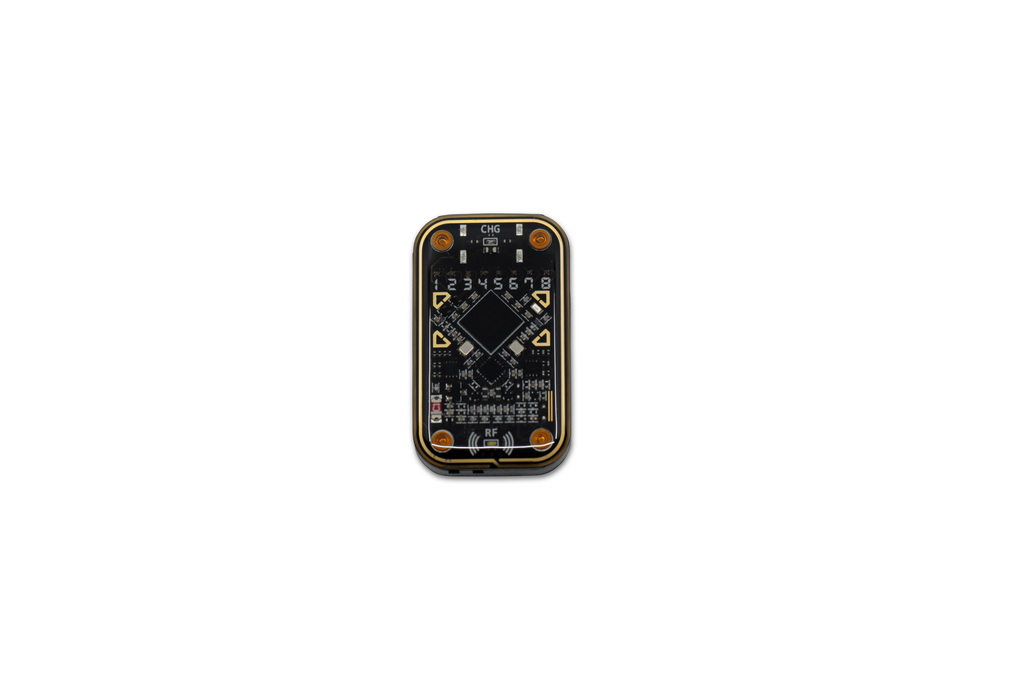
ChameleonUltra is an open-source RFID and NFCNFCNear Field Communication, a short-range (≤4 cm) wireless standard maintained by the NFC Forum, enabling data exchange between devices; cyber tools use it to probe, emulate, or intercept contactless card and tag transactions. research device, sold as physical hardware, for emulating, cloning, and analyzing contactless smart cards and tags including Mifare formats. It is driven from a command-line client, with companion GUIGUIA graphical user interface, controls such as windows, buttons and menus. It lets people use software visually rather than entering commands. and mobile apps built by the community for those who prefer not to work from the CLI, making it suited to physical penetration testers and RFID researchers who need to interact with card readers and access-control systems in the field rather than analyze traffic on a network. It sits in the hacking-hardware space alongside other card-emulation tools, distinguished by its open firmware and the ecosystem of compatible clients documented in its wiki. Launched in 2022, it is sold through a spread of authorized distributors across Europe, North America, and Asia, and supported by an active development and user community on Discord.
ChameleonUltra is an RFID research device for emulating, cloning, and analyzing contactless smart cards and tags.
Which access-control card is this, and can it be cloned onto the device?
reads the tag's UID and sector data over the air and reports the format detected, so the operator knows whether it matches a supported Mifare profile before attempting a clone
What is actually stored in the sectors of this card?
dumps the readable sectors of a scanned tag so the operator can inspect keys and data blocks directly instead of relying on the reader's behavior alone
Which slot on the device holds which cloned identity?
keeps multiple captured tags in separate slots that can be switched between, so an operator carrying several cloned credentials can confirm which one is loaded before presenting it
Did the firmware or client I'm using change how a card gets read?
community clients and the official CLI all talk to the same open firmware, so behavior differences between a GUI, mobile app, and CLI session point to a client-side issue rather than the hardware
A slip is called out here the day the vendor's own delivery estimate moves past the promised window.
A "coming" milestone is the vendor's own wording, read off the page it links to — never a date we inferred.
The open source ChameleonUltra repository (GPL-3.0) was created under the RFID Research Group GitHub organization.
Features
11 capabilities
· 3 backed by code, an API document or a real run
Built from ChameleonUltra's releases, docs, README and our own runs.
“Seen” marks the month we first spotted a release the vendor didn't date.
Group names and tags are our labels.
+RFID card emulation, cloning, and analysisshippedEmulates, clones, and analyzes contactless smart cards and RFID tags for research purposes.21 releases · 3 other sources · first seen Jun 2023▸
release
21 total
Adds hf 14a sniff parity checks to flag malformed frames during ISO 14443-4 sniffing sessions.︀︄︇︀︅︉︀︅︀︀︃︀︀︅︅︀︅︊︀︄︆︀︃︄
v2.3.0 · Oct 2026
· source
· release history
Adds configurable PRNG type for MF1 emulator via firmware settings
v2.2.0 · Jul 2026
· source
· release history
Adds T55xx clone and write capabilities
v2.2.0 · Jul 2026
· source
· release history
Adds hf mf autopwn command with key saving and card dump
v2.2.0 · Jul 2026
· source
· release history
Adds EM4x05/EM4x69 reader support (RTF gap protocol)
v2.2.0 · Jul 2026
· source
· release history
docs
ChameleonUltra is an RFID research device for emulating, cloning, and analyzing contactless smart cards and tags.
example
Capture raw frames from an ISO14443A card to analyze protocol behavior or collect nonces for crack attacks.$ chameleon-cli hf 14a sniff
v2.2.0 · Jul 2026
· source
Configure ISO14443A parameters to interact with cards that have non-standard or misconfigured settings.$ chameleon-cli hf 14a config --uid <target_uid> --sak 0x88
v2.2.0 · Jul 2026
· source
+Low-frequency (LF) card operationsverifiedPerforms read, write, and emulation operations on low-frequency RFID cards using the --lf subcommands.6 releases · 2 other sources · first seen Sep 2025▸
Also counts toward: Command-line interface
release
Drops double-precision sqrt from the FSK demodulation hot path, reducing LF processing overhead.
v2.3.0 · Oct 2026
· source
· release history
Adds DC-block FSK demodulation for improved weak-coupling robustness with HID and ioProx LF credentials.
v2.3.0 · Oct 2026
· source
· release history
Adds lf sniff for raw LF field ADC capture
v2.2.0 · Jul 2026
· source
· release history
Adds LF PAC/Stanley (125kHz) tag support
v2.2.0 · Jul 2026
· source
· release history
Adds Jablotron LF tag support (read, emulate, write to T55xx)
v2.2.0 · Jul 2026
· source
· release history
--lf subcommands for read, write t55xx, and emulate operations on LF cards
v2.1.0 · Sep 2025
· source
· release history
+Device hardware configurationshippedRetrieves and modifies low-level device settings including battery status, BLE connectivity keys and pairing state, button behavior, and factory reset functionality.7 releases · first seen Sep 2023▸
Also counts toward: Command-line interface
release
7 total
Adds long button press threshold as a configurable user setting.
v2.3.0 · Oct 2026
· source
· release history
Improves battery calibration and health reporting.
v2.3.0 · Oct 2026
· source
· release history
Added hw settings blekey command to get and set the BLE connect key
v2.0.0 · Sep 2023
· source
· release history
Added hw battery command to retrieve device battery information
v2.0.0 · Sep 2023
· source
· release history
Added hw ble bonds clear command to delete all stored BLE bonds
v2.0.0 · Sep 2023
· source
· release history
Added hf settings blepair command to get and set BLE pairing enable state
v2.0.0 · Sep 2023
· source
· release history
+Card cryptographic key managementverifiedConfigures and applies cryptographic keys (including 3DES and privacy encryption/MAC keys) for card operations, identified by OID and tag parameters.5 other sources · first seen Oct 2026▸
--new-key — New 16-byte 3DES key (cipher order).
v2.3.0 · Oct 2026
· command-line history
+MIFARE Classic key recovery attacksshippedExecutes nested and hardnested cryptographic attacks against MIFARE Classic keys, including support for specific static nested acquisition methods.3 releases · 1 other source · first seen Sep 2023▸
Also counts toward: Command-line interface
release
Integrates HardNested attack into hf mf autopwn
v2.2.0 · Jul 2026
· source
· release history
Complete implementation of the hardnested attack vector for Mifare Classic keys
v2.1.0 · Sep 2025
· source
· release history
Added hf mf nested support for the MF1_STATIC_NESTED_ACQUIRE attack method
v2.0.0 · Sep 2023
· source
· release history
example
Automatically attempt to recover keys from a Mifare Classic card using hf mf autopwn and save the results.$ chameleon-cli hf mf autopwn --save-keys
v2.2.0 · Jul 2026
· source
+Analog field generationverifiedGenerates analog RF fields for research and testing purposes.1 release · 1 other source · first seen Jul 2026▸
--duration — Threshold in milliseconds (200-65535)
v2.3.0 · Oct 2026
· command-line history
+ISO 14443-4 client integration supportshippedExposes low-level ISO 14443-4 handling so that external client integrations can consume it directly.1 release · first seen Oct 2026▸
release
Exports low-level ISO 14443-4 handling for use in client integrations.
v2.3.0 · Oct 2026
· source
· release history
+Analog-to-digital signal acquisitionshippedReads and captures analog signal data from the device hardware.1 release · first seen Jul 2026▸
+Intercom tag emulationshippedEmulates Electra intercom tags with automatic slot switching capabilities.1 release · first seen Jul 2026▸
release
Adds Electra intercom tag support with slot auto switch
v2.2.0 · Jul 2026
· source
· release history
+Low-frequency proxmark card supportshippedPerforms read, emulate, and clone operations on ioProx low-frequency cards.1 release · first seen Jul 2026▸
Also counts toward: Command-line interface
release
Adds ioProx support (read, emulate, clone) via lf io prox commands
v2.2.0 · Jul 2026
· source
· release history
+Automatic data handling and transfer optimizationshippedAutomatically detects file formats for card data loading and significantly increases upload/download speeds for MIFARE Classic card data.1 release · first seen Sep 2023▸
release
Added automatic file format detection in hf mf eload
v2.0.0 · Sep 2023
· source
· release history
Lines in monospace are the tool's own words: help text
parsed from its source, or an endpoint from its API document. Under
release, a line is our summary of a dated release. Under
docs, it is quoted from the tool's own documentation or
website. Each links back to the source it came from.
Command line
View
Source
No command matches.
load a captured run
composed command
No matchesTry a different search, or clear a filter to see more.
option surface across analysed releases
options at that releaseadded, per releaseremoved, per release
option
found in
since
description
No matchesTry a different search, or clear a filter to see more.
option changes per release — drag across the rail to set a range
→
Values are placeholders taken from each option’s declared default.
Nothing is executed here — the output shown is a recording of a run
that already happened.
Score card
Shipping velocityreleases a month, last 12 months
Documentation qualityrelease-notes rubric, 0–100
Breaking-change disciplinehow rarely a release breaks users, and notice given
Maintenance riskquiet time against its own cadence, maintainers
Innovation & surfacenew capabilities, API and MCP surface
Community health
Contributor trenddistinct committers, this year against last
Maintainer concentrationbus factor now against a year ago
Issue backlog trendissues closed per issue opened, 12 months
Responsivenessmedian time to a maintainer’s first reply
Nine scores for ChameleonUltra, each built from the releases, notes and API history this site tracks — and, on Researcher and Business, where it stands among every measured tool in its category and how that has moved.
Each score is 0–100 on a published rubric, derived from data this site already shows.
A dimension we cannot measure says so — it is never scored 0 and never enters a rank.
How this is scored
Shipping velocity — releases a month over the last 12 months, on a log scale where 16 a month scores 100. Needs 3 releases in the window.
Documentation quality — the release-notes rubric published on the analytics page, unchanged.
Breaking-change discipline — the share of releases carrying a breaking change (none scores 100, half or more scores 0). Only projects that label breaking changes are measured: a clean record cannot be told from an unlabelled one.
Maintenance risk — quiet time measured against the tool's own release cadence (quiet longer than 90 days and three typical gaps scores 0), plus the number of active maintainers and whether contributors are growing, where known. Higher is lower risk.
Innovation & surface — new capabilities in the feature ledger this year, API and MCP operations added, and the share of commits that are features: the mean of whichever we hold.
Community health (open-source tools only) — each is a direction, not a size: contributors this year against last, the bus factor now against a year ago, and issues closed per issue opened, where steady scores 50, doubled 100 and halved 0; plus the median time to a maintainer's first reply (an hour scores about 100, a month or more 0). A commercial card has no repository and carries none of the four.
Documented delivery (commercial tools) — when a vendor's documented new capabilities have slowed against its own baseline, that counts against the overall standing as heavily as two low dimensions. Steady delivery, or too little history to judge, leaves the standing alone; it is never a sixth score.
Open-source tools are scored on repository signals; commercial tools on their published changelog. Ranks compare tools within one category and one profile and need at least five measured peers; the overall standing needs three ranked dimensions. Best-in-breed or consolidator is a shape, not a quality, and is never scored.
Release-note detail over time
See how much detail ChameleonUltra puts in its release notes, quarter by quarter, and compare it with tracked tools in the same category. This history uses up to ten retained, reviewed notes per tool; sparse or blank older quarters may reflect that limit.
Issue, contributor and maintainer activity in RfidResearchGroup/ChameleonUltra, 2023-12 – 2026-11,
as of 2026-11-03. Twelve-month figures first; the trend lines run
the whole window.
Contributors32+8 vs prior 12 months
Maintainers9+10 joined · −7 left, last 12 months
Bus factor3committers behind half the commits
Community-filed100%of issues opened, last 12 months
Median time to close8.5 daysfirst maintainer reply 7.5 hours
Open backlog99of 222 issues ever filed
Issues opened / month9 · 0communitymaintainers
Open backlog99
Contributors / month0
Commits / month0
Starsnot measured
Issue themes, last 12 months
features 40%
other 60%
Counts from the project's public repository and git history; no individuals
are identified. Maintainers are the committers covering 80% of the last year's
commits. how we measure this
Libraries its release ships
What its latest release locks, checked against known advisories.
None of its release's images build from a lockfile we can read.
Add the badge to your README
Maintain this project? The badge links readers straight to this page, so they can
follow every release here.
 Choose a badge style and copy the code →