TheHive
v6.0.0 open-sourceThe section your link pointed to isn't on TheHive's page any more, so we've brought you to the top.
TheHive is a Security Incident Response Platform for SOCs, CSIRTs, and CERTs to investigate and mitigate security incidents.
POST /api/analyzers/run
{
  "observable": "...",
  "user": "analyst1",
  "org": "acme"
}
curl -X PUT /api/observable/{id}/type \
  -H 'Authorization: Bearer <token>' \
  -d '{"type": "new_type"}'
thehive copy-db --force
curl -X POST "http://thehive-host/api/case/_search" -H 'Content-Type: application/json' -d '{ "query": { "bool": { "must": [{"term": {"status": "open"}}], "filter": [{"terms": {"ttp": ["TA0008"]}] } } }, "size": 10 }'
curl -H 'Authorization: Bearer <API_KEY>' https://<hive>/api/v1/disk/usage
curl -X POST 'http://<host>:9000/api/case' \
  -H 'Authorization: Simple <token>' \
  -H 'Content-Type: application/json' \
  -d '{
    "title": "New Incident",
    "severity": 2,
    "tasks": [
      {
        "name": "Analysis",
        "description": "Initial triage"
      }
    ]
  }'
Map MISP `to_ids` fields to TheHive's `ioc` observable type during synchronization
Summary
TheHive was an open-source security incident response platform for case management, letting SOCSOCA security operations center, the team or function that monitors threats, investigates alerts and coordinates incident response. Its work can be internal, outsourced or shared. analysts and incident responders track alerts, cases, and observables through a shared workflow with role-based access controls and API-driven integrations with analyzers and other tools. It was self-hosted, deployed by security teams running their own infrastructure rather than consumed as SaaSSaaSSoftware delivered over the internet and run on the provider's infrastructure, so the buyer pays a subscription instead of installing or operating anything locally.. It sat in the SOARSOARSecurity orchestration, automation and response, coordinating incident workflows across tools. Playbooks can gather evidence, assign work or carry out approved response actions. category alongside case-management and alerting tools used to coordinate incident response. The project is no longer a viable choice for new adopters: its README states that versions 3 and 4 are no longer maintained or distributed, the GitHub repository was archived in December 2025, and development has moved to a commercial product from StrangeBee, with no commits to this codebase in the past year despite a history dating back to 2016 and 59 contributors.
TheHive is a Security Incident Response Platform for SOCs, CSIRTs, and CERTs to investigate and mitigate security incidents.
How TheHive helps
Where does an incident stand right now, and who is supposed to be acting on it next?
every case tracks its tasks, observables, and assigned owners in one record, so status and ownership are visible at a glance instead of scattered across tickets and chat
Which alerts are we about to miss our response window on?
SLA rules attached to alerts, cases, and tasks carry configurable warning thresholds and send breach notifications through the existing notification system before the deadline passes
Are we holding different clients to the right response times?
per-organization SLA rules let an MSSP assign a distinct set of response-time targets to each client, so breaches are judged against that client's own agreement rather than one global rule
Can I find a past mention of this indicator without knowing which case or task it was in?
global search reaches across comments and knowledge base pages as well as cases, alerts, tasks, and observables, so a search by indicator or keyword surfaces it regardless of which entity it was logged against
Which cases are actually breaching their tags or custom fields when I look across the board?
the dashboard table widget can display custom fields and tags next to the built-in fields, so a saved view can show breach-relevant attributes for every case at once without opening each one
Languages
Features
Built from TheHive's releases, docs, README and our own runs. “Seen” marks the month we first spotted a release the vendor didn't date. Group names and tags are our labels.
- TheHive covers 1 of the 8 investigation and response capabilities we track.
- TheHive covers 3 of the 11 logs and telemetry capabilities we track.
What TheHive offers you
- REST API4
- Self-hosted deployment1
No capabilities match.
Incident case management 6 features Investigation and response since 2016
Case management lifecycle shipped Manage case states and assignments including ownership changes, template selection during ingestion, custom fields for templates, task reopening, and case merging with duplicate consolidation.
Shared capability: Incident case management
release 15 total
-
Adds
mergefunctionality to combine cases, closing the newest as duplicated 4.1.0 · Mar 2021 · source · release history - Adds properties related to share for cases and alerts 4.0.1 · Nov 2020 · source · release history
- Adds bulk edit functionality for cases directly from the cases list view 4.0.0 · Jul 2020 · source · release history
-
Adds ability to include tasks during case creation via the
POST /api/caseAPI endpoint 4.0.0 · Jul 2020 · source · release history - Show case sharing information on main case overview page 4.0.0-RC3 · May 2020 · source · release history
- A (received) Shared Case is displayed as sender/owner 4.0.0-RC2 · May 2020 · source · release history
example
-
Use the UI to edit case statuses or tags for multiple selected cases simultaneously.
In the Cases view, select multiple rows and click 'Bulk Edit' in the toolbar.4.0.0 · Jul 2020 · source -
Create a new case and immediately attach initial investigation tasks in one API call.
curl -X POST 'http://<host>:9000/api/case' \ -H 'Authorization: Simple <token>' \ -H 'Content-Type: application/json' \ -d '{ "title": "New Incident", "severity": 2, "tasks": [ { "name": "Analysis",…4.0.0 · Jul 2020 · source -
Select a specific case template when ingesting alerts from MISP.
steps: During the MISP event import workflow, select your desired case template from the dropdown menu before confirmation.2.12.0 · Jul 2017 · source -
When merging two cases, duplicate tasks are now consolidated automatically.
Use the 'Merge Cases' action in TheHive to combine duplicate task entries.2.11.1 · May 2017 · source
Log attachment management verified Retrieve and delete file attachments associated with case log entries.
Shared capability: Incident case management
Also counts toward: REST API
release 10 total
-
Deprecated endpoint GET
/api/v1/log/{logId}/attachment/{attachmentId}/download(still works) v5.7.5 · Aug 2026 · source · release history -
Deprecated endpoint GET
/api/v1/log/{caseId}/attachment/{attachmentId} (still works) v5.7.5 · Aug 2026 · source · release history -
[feature]Add a dedicated permission to give access to TheHiveFS 4.0.2 · Nov 2020 · source · release history - Updates user settings view to give access to API key 4.0.1 · Nov 2020 · source · release history
- Allow users to be part of multiple organisations 4.0.0-RC3 · May 2020 · source · release history
- Authentication API returns user information in its response 4.0.0-RC3 · May 2020 · source · release history
api 7 total
-
DELETE /api/v1/log/{logId}/attachments/{attachmentId}· source · full API surface -
GET /api/v1/log/{caseId}/attachment/{attachmentId}· source · full API surface -
POST /api/v1/log/{logId}/attachments· source · full API surface -
DELETE /api/v1/log/{logId}· source · full API surface -
GET /api/v1/attachment/{attachmentId}/download· source · full API surface -
GET /api/v1/log/{logId}/attachment/{attachmentId}/download· source · full API surface
Export and import capabilities shipped Support exporting cases to MISP events with TLP tags, importing case templates via API, and generating package files for deployment.
Shared capability: Incident case management
Also counts toward: REST API
release
-
New endpoint GET
/api/v1/caseReportTemplate/{caseReportTemplateId}/export︀︄︇︀︅︉︀︅︀︀︃︀︀︅︅︀︅︊︀︄︆︀︃︄ v6.0.0 · Oct 2026 · source · release history -
New endpoint POST
/api/v1/caseReportTemplate/import v6.0.0 · Oct 2026 · source · release history - Adds an SSL bypass option for migration from TheHive 3. 4.1.19 · Apr 2022 · source · release history
- Improves the migration tool to accept older versions of TheHive, easing upgrade paths from legacy deployments 4.1.17 · Jan 2022 · source · release history
- Adds the ability to Import and Export Case Templates via API endpoints. 3.0.0 · Dec 2017 · source · release history
- Adds ability to export existing cases as MISP events through the UI/API 2.13.0 · Sep 2017 · source · release history
example
-
Migrate data from an older TheHive instance during an upgrade.
Run the built-in migration tool which now accepts legacy version inputs4.1.17 · Jan 2022 · source
Shared case management shipped Manage the sharing and viewing of cases between different organizations or users, including displaying ownership details and share properties.
Shared capability: Incident case management
release
- Adds properties related to share for cases and alerts 4.0.1 · Nov 2020 · source · release history
- Show case sharing information on main case overview page 4.0.0-RC3 · May 2020 · source · release history
- Allow users to be part of multiple organisations 4.0.0-RC3 · May 2020 · source · release history
- A (received) Shared Case is displayed as sender/owner 4.0.0-RC2 · May 2020 · source · release history
Case task urgency tracking shipped Distinguish urgent tasks from others using a dedicated field to highlight required actions.
Shared capability: Incident case management
release
-
Added
actionRequiredfield for tasks to distinguish urgent actions 4.0.3 · Dec 2020 · source · release history
Alert triage integration shipped Enable responders to tag and triage alerts directly from the response interface without leaving the context.
Shared capability: Incident case management
example
-
Use the Responder to triage an alert and tag it for further investigation without leaving the response context.
Steps: Open the Alert in TheHive UI > Click 'Respond' > Locate the Tags field in the responder panel > Enter or select desired tags > Submit response.3.3.0-RC6 · Mar 2019 · source
Log search 2 features Logs and telemetry since 2021
Observable filtering by parent object type shipped Allow users to filter observable lists based on the type of the object they belong to.
Shared capability: Log search
release
- Add queries to filter observables based on the type of object it belongs to 4.1.20 · May 2022 · source · release history
Object audit history shipped Retrieve the audit history for a specific object via a dedicated query capability.
Shared capability: Log search
release
- Adds the ability to retrieve the audit history for a specific object via a new query capability 4.1.15 · Dec 2021 · source · release history
Log retention management 1 feature Logs and telemetry since 2018
Log management shipped Manage system log files, including configuring rotation policies to control disk usage over time.
Shared capability: Log retention management
release
- Improves logging. 4.1.19 · Apr 2022 · source · release history
- Adds log rotation to reduce disk usage over time 3.0.10 · Jun 2018 · source · release history
example
-
Check disk usage metrics programmatically.
curl -H 'Authorization: Bearer <API_KEY>' https://<hive>/api/v1/disk/usage4.1.0 · Mar 2021 · source
Log enrichment 1 feature Logs and telemetry since 2017
Observable analysis integration shipped Integrate with external threat intelligence and analysis platforms like OTX and Cortex to analyze observables, including running analyzers in bulk and visualizing analysis status.
Shared capability: Log enrichment
release
- Providing output details for Responders 4.0.0-RC2 · May 2020 · source · release history
- Allows importing files directly from Cortex reports 3.4.0-RC1 · Jun 2019 · source · release history
-
Passes
caseIdto Cortex analyzer requests for better context 3.0.10 · Jun 2018 · source · release history - Add compatibility with Cortex 2 3.0.6 · Apr 2018 · source · release history
- Adds visual distinction between analyzed and non-analyzed observables in the UI 2.11.2 · May 2017 · source · release history
- Adds OTX (Open Threat Exchange) analyzer integration 2.10.0 · Feb 2017 · source · release history
example
-
Quickly identify which observables have already been processed by Cortex analyzers when viewing an alert.
In the case view, check the Observable list for visual cues distinguishing analyzed vs non-analyzed items.2.11.2 · May 2017 · source -
Bulk run analyzers on selected observables directly from the UI to accelerate triage.
1. Navigate to an Observable list in TheHive console. 2. Select multiple observables. 3. Choose 'Run all analyzers' from the context menu.2.10.2 · Apr 2017 · source
Other / not yet classified 20 features Features we have not matched to a capability yet. A suggested match is marked.
User management verified Create, update, delete, and set passwords for user accounts.
Also counts toward: REST API
release
-
Deprecated endpoint DELETE
/api/v1/user/{userId} (still works) v5.7.5 · Aug 2026 · source · release history -
Supports multiple Active Directory servers in
application.confconfiguration 2.13.0 · Sep 2017 · source · release history - Enables fine-grained user permissions for API access via group-based ACLs 2.13.0 · Sep 2017 · source · release history
- Adds basic authentication to the Stream API endpoint 2.13.0 · Sep 2017 · source · release history
- Allows changing the owner of an existing case via UI or API 2.10.0 · Feb 2017 · source · release history
api 14 total
-
POST /api/v1/user/{userId}/password/set· source · full API surface -
POST /api/v1/user· source · full API surface -
PATCH /api/v1/user/{userId}· source · full API surface -
DELETE /api/v1/user/{userId}/force· source · full API surface -
POST /api/v1/auth/totp/unset/{user}· source · full API surface -
DELETE /api/v1/user/{userId}/key· source · full API surface
UI/UX enhancements shipped Improve user interface performance, layout, and navigation including log browsing speed, dashboard sorting, pagination, autocomplete for tags, and case severity visibility.
release 18 total
- Displays case templates in alphabetic order in New case menu 4.1.3 · Apr 2021 · source · release history
-
Added
pollDurationconfiguration option for the UI Stream polling interval 4.0.3 · Dec 2020 · source · release history - Displays TheHive version on the login page 4.0.1 · Nov 2020 · source · release history
- Displays custom fields in the alert and case list views 4.0.1 · Nov 2020 · source · release history
- Revamps the statistics section in lists 4.0.1 · Nov 2020 · source · release history
- Replaces responder selection dropdown with a dedicated modal selector window in the UI 4.0.0 · Jul 2020 · source · release history
Dashboard table customization shipped Allow dashboard tables to display custom fields and tags alongside built-in fields.
release
-
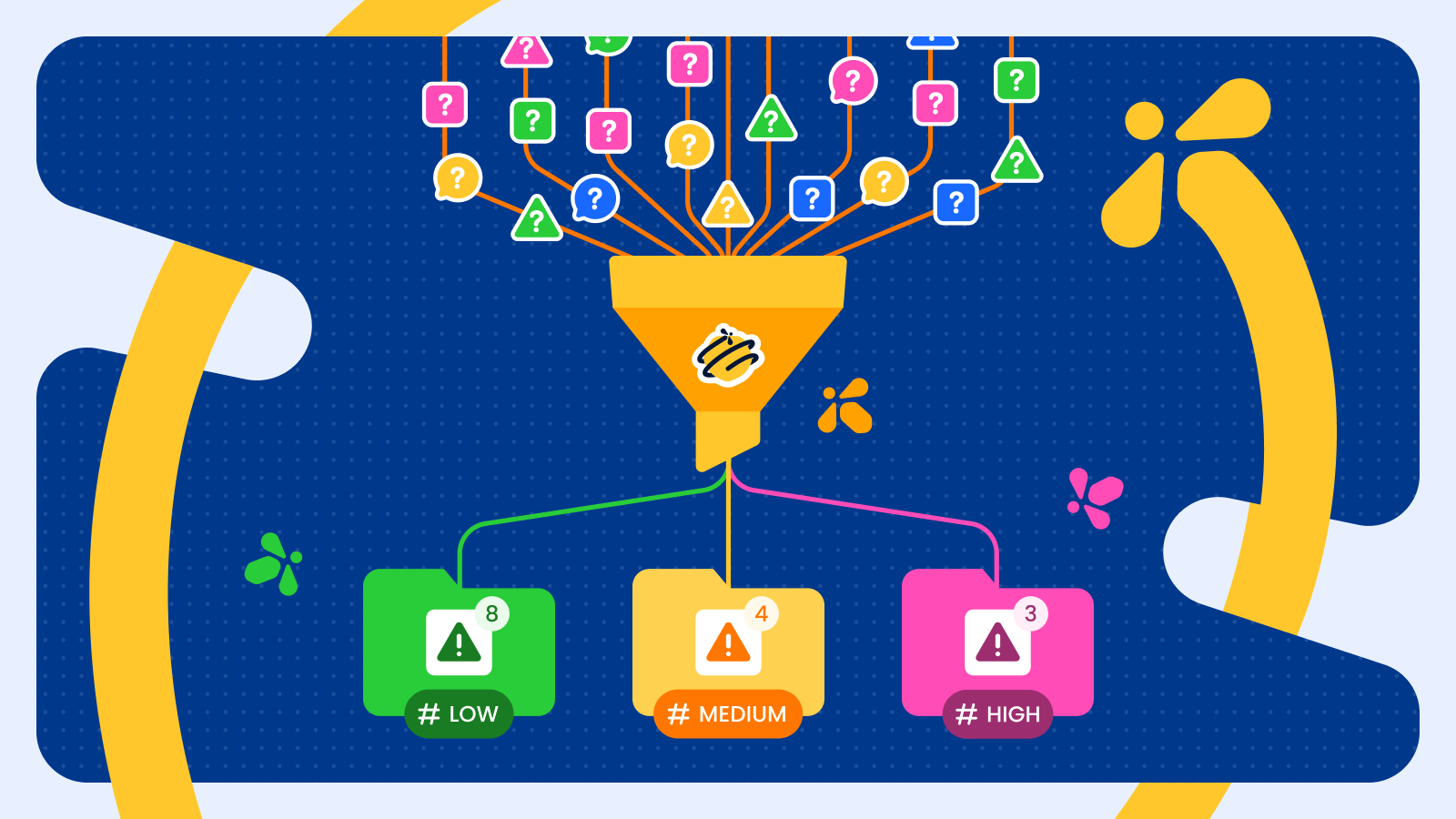
Extends the Table widget in Dashboards to display custom fields and tags alongside built-in fields.
 announced · Sep 2026
· source
· release history
-
Adds handling duration properties (
handlingDurationStart,handlingDurationEnd) to the Alert type 4.0.4 · Jan 2021 · source · release history - Shows case severity directly in list views 2.11.2 · May 2017 · source · release history
- Adds Description Field to Alert Preview Modal 2.11.2 · May 2017 · source · release history
- Sorts the list of report templates 2.11.0 · May 2017 · source · release history
- Adds pagination component at the top of all data lists 2.11.0 · May 2017 · source · release history
example
-
Review alert details before creation without navigating away from the preview screen.
In the Alert Preview Modal, locate and read the new Description Field.2.11.2 · May 2017 · source
Alert preview and inspection shipped Provide capabilities to review alert details, severity, and observable processing status directly within the preview interface without navigating away.
release
-
Adds
importDateproperty to the Alert type for tracking when alerts were imported 4.0.4 · Jan 2021 · source · release history - Merges Observable tags with existing observables during alert import into a case 3.4.0-RC2 · Jul 2019 · source · release history
- Calculates time for individual tasks 3.0.10 · Jun 2018 · source · release history
- Adds Description Field to Alert Preview Modal 2.11.2 · May 2017 · source · release history
example
-
View additional details about an alert without leaving the preview pane by hovering over the elements.
Hover over any element in the TheHive alert preview UI3.3.0-RC5 · Feb 2019 · source -
Quickly identify which observables have already been processed by Cortex analyzers when viewing an alert.
In the case view, check the Observable list for visual cues distinguishing analyzed vs non-analyzed items.2.11.2 · May 2017 · source -
Review alert details before creation without navigating away from the preview screen.
In the Alert Preview Modal, locate and read the new Description Field.2.11.2 · May 2017 · source
Alert grouping by observables shipped suggested Enable sorting and grouping of similar alerts based on their associated observables within the interface.
Suggested capability: Security event correlation. This is our guess, not confirmed.
release
- Enables sorting similar Alerts by their Observables within the interface 4.1.15 · Dec 2021 · source · release history
- Permits disabling case and alert similarity for specific observables 4.0.1 · Nov 2020 · source · release history
- TheHive 3.0.4 introduces OAuth2 single sign-on and improved MISP integration filtering capabilities for cyber tooling workflows. 3.0.4 · Mar 2018 · source · release history
Observable type management shipped Allow users to retrieve, modify, and reclassify existing observables by changing their type definitions.
Also counts toward: REST API
release
- Adds an API endpoint to change an observable from one type to another. 4.1.14 · Nov 2021 · source · release history
- Adds the ability to update the type of an existing observable 4.1.11 · Oct 2021 · source · release history
example
-
Use the new observable type change endpoint to reclassify data.
curl -X PUT /api/observable/{id}/type \ -H 'Authorization: Bearer <token>' \ -d '{"type": "new_type"}'4.1.14 · Nov 2021 · source
Enhanced MISP integration shipped suggested Expand MISP synchronization capabilities to support Event Tag associations alongside Attribute Tags.
Suggested capability: Log enrichment. This is our guess, not confirmed.
release
- Adds MISP synchronization capability to integrate with MISP platforms 3.5.0-RC1 · Sep 2020 · source · release history
-
Map MISP
to_idsfields to TheHive'siocobservable type during synchronization 3.4.1 · May 2020 · source · release history -
MISPintegration now supports Event Tag in addition to or instead of Attribute Tag for richer context association. 3.3.0-RC1 · Feb 2019 · source · release history
IOC sighting management shipped suggested Track and mark the sighting status of Indicators of Compromise (IOCs).
Suggested capability: Threat indicator matching. This is our guess, not confirmed.
release
- Adds visibility of sighted attributes for IOCs in the Alert artifact list 3.4.0-RC2 · Jul 2019 · source · release history
-
Introduces a
sightedflag for Indicators of Compromise (IOCs). 3.0.0 · Dec 2017 · source · release history
example
-
Configure MISP sync to preserve IoC status by mapping the correct field.
Map MISP `to_ids` fields to TheHive's `ioc` observable type during synchronization3.4.1 · May 2020 · source
SLA tracking and management shipped suggested Provide configurable Service Level Agreement rules with warning thresholds and breach notifications for alerts, cases, and tasks.
Suggested capability: Incident case management. This is our guess, not confirmed.
release
-
Supports per-organization SLA rules, letting MSSPs assign different response-time targets to each client organization.
announced · Sep 2026
· source
· release history
- Adds native SLA tracking for alerts, cases, and tasks, with per-entity-type rules, configurable warning thresholds, and breach notifications via the existing notification system.︀︄︇︀︅︉︀︅︀︀︃︀︀︅︅︀︅︊︀︄︆︀︃︄ announced · Sep 2026 · source · release history
User account settings shipped Allow users to view their API keys directly within the user settings interface without using the command line or external API calls.
release
- Updates user settings view to provide access to the API key 4.0.1 · Nov 2020 · source · release history
example
-
View your API key directly in the UI without using the command line or API calls.
Go to Settings > User Profile and look for the API Key field.4.0.1 · Nov 2020 · source
Metrics and monitoring export shipped Provide capability to export dashboard statistics and metrics for external consumption.
release
- The metrics module has been removed 3.4.0-RC1 · Jun 2019 · source · release history
- Adds Export Statistics/Metrics capability with the ability to download dashboard data. 3.0.0 · Dec 2017 · source · release history
Dashboard widget customization shipped Allow users to add custom text and explanatory widgets to dashboards for additional context.
release
- Dashboards now include a text widget for adding custom content 3.3.0-RC6 · Mar 2019 · source · release history
example
-
Customize a dashboard view by inserting explanatory text, instructions, or status updates using the new widget type.
Steps: Navigate to Dashboard > Click 'Add Widget' > Select 'Text' from the widget list > Enter desired content in the editor > Save widget.3.3.0-RC6 · Mar 2019 · source
Dynamic dashboards shipped suggested Update dashboard data automatically based on real-time case information.
Suggested capability: Incident case management. This is our guess, not confirmed.
release
- Adds support for multiline and multi-entity graphs in dashboards 3.0.2 · Mar 2018 · source · release history
- Enables dynamic dashboards that update automatically based on case data. 3.0.0 · Dec 2017 · source · release history
Global search expansion shipped suggested Extend global search capabilities to include comments and knowledge base pages in addition to standard entities.
Suggested capability: Log search. This is our guess, not confirmed.
release
-
Expands Global Search (introduced in 5.6) to cover comments and knowledge base pages in addition to existing entity types.
announced · Sep 2026
· source
· release history
Deployment and configuration flexibility shipped Support advanced deployment options including reverse proxy prefixes, environment file loading, and forced database copies.
example
-
Perform a database copy despite schema version mismatches by specifying the force option.
thehive copy-db --force4.1.7 · Jul 2021 · source
Notification management shipped Configure and manage system notification channels and notifiers, including adding support for external platform integrations like Cortex.
release
- Adds Cortex-related notifiers to the notification system 4.0.1 · Nov 2020 · source · release history
Deployment configuration shipped Support running the cyber tool behind a URL prefix using a custom root context for reverse proxy deployment.
release
- Allows TheHive to run behind a URL prefix using a custom root context 3.1.1 · Oct 2018 · source · release history
Connector health monitoring shipped Poll external connector status and display real-time health results in the user interface.
release
- Polls for connector status and displays the result in the UI 3.0.10 · Jun 2018 · source · release history
Task viewing persistence shipped Save and restore user interface preferences for task views across sessions.
release
- Persistence for task viewing options saves user UI preferences across sessions 2.10.2 · Apr 2017 · source · release history
File storage configuration documented Support configurable file storage backends including local filesystem for standalone deployments and shared solutions such as NFS or S3-compatible object storage for clustered environments.
Also counts toward: Self-hosted deployment
docs
- A file storage solution, which can be the local filesystem of the server hosting the application for standalone setups, or a shared storage back end such as NFS or an S3-compatible object storage service for clustered environments. Starting from version 5.1, TheHive no longer supports the Lucene back end for indexing. seen Oct 2026 · source
Lines in monospace are the tool's own words: help text
parsed from its source, or an endpoint from its API document. Under
release, a line is our summary of a dated release. Under
docs, it is quoted from the tool's own documentation or
website. Each links back to the source it came from.
Command line
No command matches.
| option | found in | since | description |
|---|
Values are placeholders taken from each option’s declared default. Nothing is executed here — the output shown is a recording of a run that already happened.
Screenshots
From the release notes, newest first. Click one to see it full size.Score card
-
Shipping velocity releases a month, last 12 months
-
Documentation quality release-notes rubric, 0–100
-
Breaking-change discipline how rarely a release breaks users, and notice given
-
Maintenance risk quiet time against its own cadence, maintainers
-
Innovation & surface new capabilities, API and MCP surface
- Community health
-
Contributor trend distinct committers, this year against last
-
Maintainer concentration bus factor now against a year ago
-
Issue backlog trend issues closed per issue opened, 12 months
-
Responsiveness median time to a maintainer’s first reply
Nine scores for TheHive, each built from the releases, notes and API history this site tracks — and, on Researcher and Business, where it stands among every measured tool in its category and how that has moved.
Score cards are part of every paid plan.
See plans → Already subscribed? Sign in →Trajectory
Blank means never measured; nothing here is a filled-in zero.
Peer standings are included with Researcher and Business. See how this tool ranks against its competitors, using data we don't publish anywhere else.
See plans →Each score is 0–100 on a published rubric, derived from data this site already shows. A dimension we cannot measure says so — it is never scored 0 and never enters a rank.
How this is scored
- Shipping velocity — releases a month over the last 12 months, on a log scale where 16 a month scores 100. Needs 3 releases in the window.
- Documentation quality — the release-notes rubric published on the analytics page, unchanged.
- Breaking-change discipline — the share of releases carrying a breaking change (none scores 100, half or more scores 0). Only projects that label breaking changes are measured: a clean record cannot be told from an unlabelled one.
- Maintenance risk — quiet time measured against the tool's own release cadence (quiet longer than 90 days and three typical gaps scores 0), plus the number of active maintainers and whether contributors are growing, where known. Higher is lower risk.
- Innovation & surface — new capabilities in the feature ledger this year, API and MCP operations added, and the share of commits that are features: the mean of whichever we hold.
- Community health (open-source tools only) — each is a direction, not a size: contributors this year against last, the bus factor now against a year ago, and issues closed per issue opened, where steady scores 50, doubled 100 and halved 0; plus the median time to a maintainer's first reply (an hour scores about 100, a month or more 0). A commercial card has no repository and carries none of the four.
- Documented delivery (commercial tools) — when a vendor's documented new capabilities have slowed against its own baseline, that counts against the overall standing as heavily as two low dimensions. Steady delivery, or too little history to judge, leaves the standing alone; it is never a sixth score.
- Open-source tools are scored on repository signals; commercial tools on their published changelog. Ranks compare tools within one category and one profile and need at least five measured peers; the overall standing needs three ranked dimensions. Best-in-breed or consolidator is a shape, not a quality, and is never scored.
Release-note detail over time
See how much detail TheHive puts in its release notes, quarter by quarter, and compare it with tracked tools in the same category. This history uses up to ten retained, reviewed notes per tool; sparse or blank older quarters may reflect that limit.
Checking release-note history…
Releases
55 entries
No entries match these filters.
- October 20261
- September 20262
- August 20261
- July 20221
- May 20221
- April 20221
- January 20221
- December 20212
- November 20212
- October 20211
- July 20212
- June 20212
- April 20212
- March 20213
- February 20211
- January 20211
- December 20201
- November 20202
- September 20201
- July 20201
- May 20204
- July 20191
- June 20191
- March 20191
- February 20193
- October 20181
- September 20181
- June 20181
- April 20182
- March 20182
- December 20171
- September 20171
- July 20171
- May 20173
- April 20171
- February 20171
- November 20161
Project health
Issue, contributor and maintainer activity in TheHive-Project/TheHive, 2023-10 – 2026-09, as of 2026-09-25. Twelve-month figures first; the trend lines run the whole window.
- Contributors 0 −2 vs prior 12 months
- Maintainers 0 +0 joined · −1 left, last 12 months
- Bus factor 0 committers behind half the commits
- Community-filed not measured of issues opened, last 12 months
- Median time to close not measured issues closed, last 12 months
- Open backlog 821 of 2,374 issues ever filed
- Issues opened / month 0 · 0 communitymaintainers
- Open backlog 821
- Contributors / month 0
- Commits / month 0
- Stars 3,950
Counts from the project's public repository and git history; no individuals are identified. Maintainers are the committers covering 80% of the last year's commits. how we measure this
Add the badge to your README
Maintain this project? The badge links readers straight to this page, so they can follow every release here.
 Choose a badge style and copy the code →