Omada Identity
29 October 2026 (2026-10-29) commercialThe section your link pointed to isn't on Omada Identity's page any more, so we've brought you to the top.
Omada Identity is an enterprise identity governance platform that manages user access, permissions, and compliance across IT systems.
EnableUseNewUISurvey: true
SurveyTemplateNameMapping:
  'My Access Review for Managers': 'Access review for managers'
curl -X POST https://<your-omada-host>/api/graphql \
  -H 'Omada-Client: my-siem-integration' \
  -H 'Content-Type: application/json' \
  -d '{"query": "{ identities { id name } }"}'
Summary
Omada Identity is a commercial identity governance platform that manages user access, provisioning, and compliance across IT systems. It runs as a cloud service or on-premises, with its Cloud Application Gateway component deployable on both Windows and Linux, and it exposes a Graph APIGraph APIMicrosoft's unified REST API for accessing data across Microsoft 365 services — mail, calendar, users, files — letting cyber tools query or monitor cloud environments through a single authenticated endpoint. that tracks requests by client for telemetry purposes. It is aimed at identity and access management teams and compliance owners who need to control who can reach which systems and prove it during audits, rather than at developers building authentication into an application. It sits in the identity-access category alongside other identity governance platforms, handling tasks like import scheduling, data warehousing for analytics, and connectivity to systems such as SAP HCM. Launched in 2000, it remains under active development, with 21 releases in the tracked window and its last release 19 days ago.
Omada Identity is an enterprise identity governance platform that manages user access, permissions, and compliance across IT systems.
How Omada Identity helps
Which of my employees have access they no longer need for their current role?
compares current access assignments against role and policy definitions and lists identities holding entitlements that fall outside what their role now justifies
Who approved a given user's access to a sensitive system, and when?
keeps the approval record tied to the identity and the access request, so the history can be pulled for a named user or system on demand
Which pending access requests are waiting on me or my team right now?
surfaces open approval tasks by owner so a reviewer can see everything queued against them
Can I show an auditor that access reviews actually happened for a given period?
retains the record of completed certifications and their outcomes, so compliance evidence can be produced for a specific system or timeframe
Which of my systems is a given identity's access actually coming from?
traces entitlements back through the connected downstream systems and identity data sources feeding the platform, showing where each access assignment originated
Did a recent change to a role or policy alter who qualifies for an entitlement?
re-evaluates identities against the updated role or policy definition and shows whose access assignment changed as a result
Languages
Features
Built from Omada Identity's releases, docs, README and our own runs. “Seen” marks the month we first spotted a release the vendor didn't date. Group names and tags are our labels.
What Omada Identity offers you
No capabilities match.
All capabilities 13 capabilities
Data integration service updates shipped Updates to core data processing components including import, lookup, reproject, identity merge/join, operational data store, and Rope adapter services.
release 9 total
-
Implements automatic merging of contexts generated with different identifier formats, using the latest Enterprise Server value as authoritative, and includes
ContextAssignmentandContextOwnerdata in migrations. 4 May 2026 (2026-05-04) · May 2026 · source · release history - Import service updates 29 January 2025 (2025-01-29) · Jan 2025 · source · release history
- Lookup service updates 29 January 2025 (2025-01-29) · Jan 2025 · source · release history
- Reproject component updates 29 January 2025 (2025-01-29) · Jan 2025 · source · release history
- Identity merge updates 29 January 2025 (2025-01-29) · Jan 2025 · source · release history
- Operational data store updates 29 January 2025 (2025-01-29) · Jan 2025 · source · release history
Omada Data Warehouse export shipped Custom contexts can be configured and exported to the Omada Data Warehouse.
release
- Adds Resource Status field to the Data Warehouse resource dimension, enabling filtering of deleted resources in reports and Omada Identity Analytics. 4 May 2026 (2026-05-04) · May 2026 · source · release history
docs
- Exporting custom contexts to ODW Explains how to configure and export custom contexts to the Omada Data Warehouse. docs update · Aug 2026 · source
- Tracking history of data objects (Omada Data Warehouse and Analytics) Explains how the history tracking feature transfers data object history from ODS to the Omada Data Warehouse (ODW), powering Analytics. seen Jul 2026 · source
example
-
Filter out deleted resources from analytics reports to ensure assignment data consistency.
In the Data Warehouse or Analytics query builder, filter on the new `Resource Status` field to exclude entries where status indicates deletion.4 May 2026 (2026-05-04) · May 2026 · source
Operations dashboard instance visibility shipped Displays instance IDs next to worker services in the Operations dashboard to help operators distinguish between customer-hosted and Omada-hosted Cloud Application Gateway instances.
release
- The System Heartbeats widget in the Operations dashboard now displays the instance ID next to each worker service, so administrators can distinguish between customer-hosted and Omada-hosted Cloud Application Gateway (CAG) instances when both send heartbeats.︀︄︇︀︅︉︀︅︀︀︃︀︀︅︅︀︅︊︀︄︆︀︃︄ 29 October 2026 (2026-10-29) · Oct 2026 · source · release history
- The System Heartbeats widget in the Operations dashboard now displays the instance ID next to each worker service, letting operators distinguish between customer-hosted and Omada-hosted Cloud Application Gateway instances.︀︄︇︀︅︉︀︅︀︀︃︀︀︅︅︀︅︊︀︄︆︀︃︄ 14th October 2026 (2026-10-15) · Oct 2026 · source · release history
Identity lifecycle tracking and detection shipped Updates to capabilities for detecting deleted identities and tracking identity history.
release
- Delete detection updates 29 January 2025 (2025-01-29) · Jan 2025 · source · release history
- History tracking updates 29 January 2025 (2025-01-29) · Jan 2025 · source · release history
Page descriptions and info icons in views documented Allows users to add page descriptions to views, which are displayed via an info icon next to the page title.
docs
-
Version: Omada Identity Cloud We've just released Omada Identity Cloud update! What's new? UX and UI â Add a page description to your views â Views now display an info icon next to the page title.
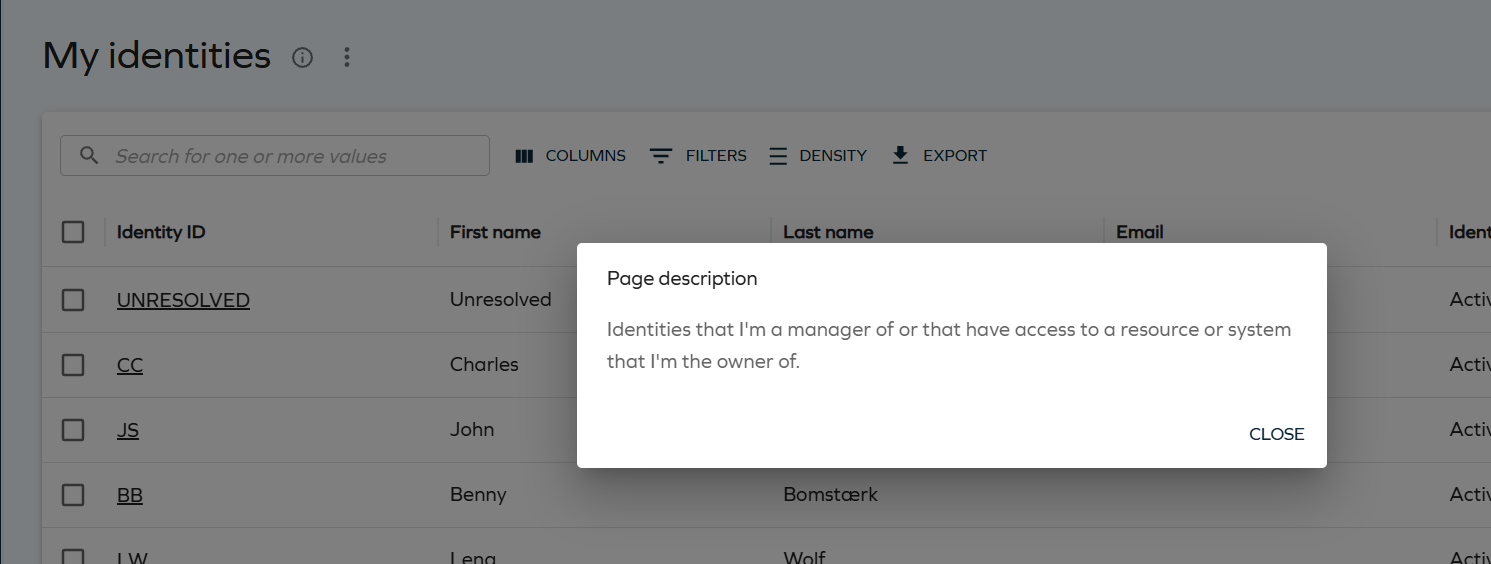 docs update · Sep 2026
· source
Client identification via request headers documented Allows clients to include an optional 'Omada-Client' header in API requests for telemetry tracking and attribution.
docs
- Request headers Omada-Client You can include the optional Omada-Client request header to identify the client making the request. The value provided is included in telemetry, so requests to the Graph API can be tracked and attributed to their originating client. docs update · Aug 2026 · source
Unified connectivity package management documented Eliminates the need for separate Connectivity Manager installations by providing all necessary packages directly within the environment.
docs
-
You no longer need to install additional connectivity packages using the Connectivity Manager. All connectivity packages are now available in your environment. Accept the disclaimer for each upload. Use the .ps1 file format. Ensure each file has a unique name. Keep file size below 1 MB.
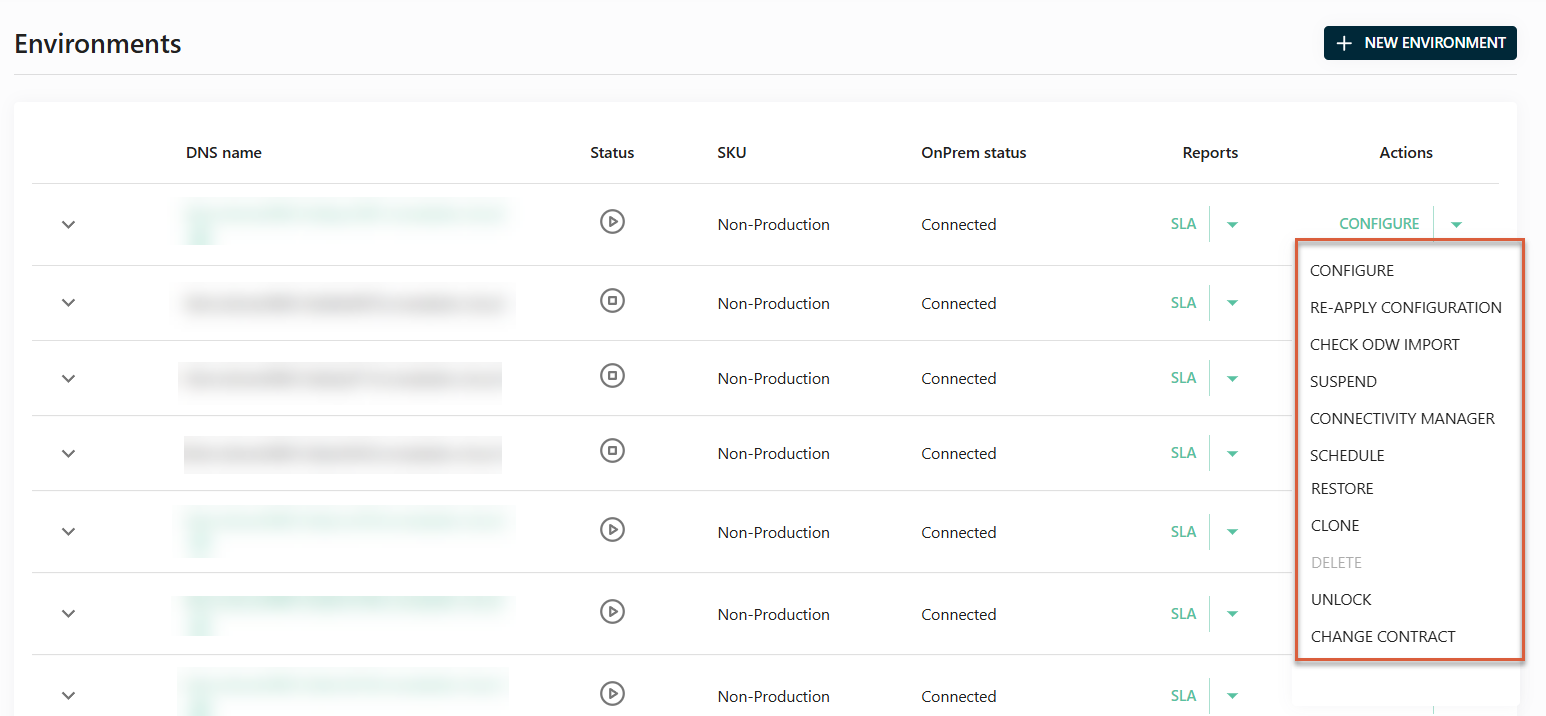 docs update · Aug 2026
· source
Cross-platform deployment documented The Cloud Application Gateway can be deployed on both Windows and Linux platforms.
docs
- Supported Deployment Platforms The Cloud Application Gateway solution supports deployment on both Windows and Linux. docs update · Jul 2026 · source
Flat file connector authentication and reliability shipped Support for keyboard-interactive authentication and auto-retry mechanisms for failed login attempts in flat file connectors.
release
-
Adds
keyboard-interactiveauthentication support and an auto-retry mechanism for failed login attempts in the flat file connector 10 November 2025 (2025-11-10) · Nov 2025 · source · release history
Terminated identity processing configuration shipped Configuration of default settings for including or excluding terminated identities in new deployments.
release
-
FilterTerminatedIdentitiessetting defaults tofalsefor new Horizons deployments to include terminated identities in processing 10 May 2025 (2025-05-10) · May 2025 · source · release history
Account join capability enhancements shipped Updates to the account join functionality via API.
release
- Account join API updates 29 January 2025 (2025-01-29) · Jan 2025 · source · release history
Dashboard field clarification documented Improves clarity in analytics dashboards by renaming system name fields to specify whether they refer to the account or resource system.
docs
-
Differentiation between account system name and resource system name We have improved the clarity of system name fields in Omada Identity Analytics dashboards: System name field has been renamed to Account system name across all Omada Identity Analytics dashboards to clarify that this field refers to the system…
 seen Aug 2026
· source
SAP HCM import threshold fix documented Resolves a bug where 24-hour import intervals were incorrectly interpreted as 24 days.
docs
- Initial rollout date: 12th October 2026 Estimated completion date: 16th October 2026 Import failing due to threshold violation We have fixed an issue where import thresholds configured with a 24-hour interval were misinterpreted as 24 days. seen Sep 2026 · source
Lines in monospace are the tool's own words: help text
parsed from its source, or an endpoint from its API document. Under
release, a line is our summary of a dated release. Under
docs, it is quoted from the tool's own documentation or
website. Each links back to the source it came from.
Screenshots
From the release notes, newest first. Click one to see it full size.Score card
-
Shipping velocity releases a month, last 12 months
-
Documentation quality release-notes rubric, 0–100
-
Breaking-change discipline how rarely a release breaks users, and notice given
-
Maintenance risk quiet time against its own cadence, maintainers
-
Innovation & surface new capabilities, API and MCP surface
Five scores for Omada Identity, each built from the releases, notes and API history this site tracks — and, on Researcher and Business, where it stands among every measured tool in its category and how that has moved.
Score cards are part of every paid plan.
See plans → Already subscribed? Sign in →Trajectory
Blank means never measured; nothing here is a filled-in zero.
Peer standings are included with Researcher and Business. See how this tool ranks against its competitors, using data we don't publish anywhere else.
See plans →Each score is 0–100 on a published rubric, derived from data this site already shows. A dimension we cannot measure says so — it is never scored 0 and never enters a rank.
How this is scored
- Shipping velocity — releases a month over the last 12 months, on a log scale where 16 a month scores 100. Needs 3 releases in the window.
- Documentation quality — the release-notes rubric published on the analytics page, unchanged.
- Breaking-change discipline — the share of releases carrying a breaking change (none scores 100, half or more scores 0). Only projects that label breaking changes are measured: a clean record cannot be told from an unlabelled one.
- Maintenance risk — quiet time measured against the tool's own release cadence (quiet longer than 90 days and three typical gaps scores 0), plus the number of active maintainers and whether contributors are growing, where known. Higher is lower risk.
- Innovation & surface — new capabilities in the feature ledger this year, API and MCP operations added, and the share of commits that are features: the mean of whichever we hold.
- Community health (open-source tools only) — each is a direction, not a size: contributors this year against last, the bus factor now against a year ago, and issues closed per issue opened, where steady scores 50, doubled 100 and halved 0; plus the median time to a maintainer's first reply (an hour scores about 100, a month or more 0). A commercial card has no repository and carries none of the four.
- Documented delivery (commercial tools) — when a vendor's documented new capabilities have slowed against its own baseline, that counts against the overall standing as heavily as two low dimensions. Steady delivery, or too little history to judge, leaves the standing alone; it is never a sixth score.
- Open-source tools are scored on repository signals; commercial tools on their published changelog. Ranks compare tools within one category and one profile and need at least five measured peers; the overall standing needs three ranked dimensions. Best-in-breed or consolidator is a shape, not a quality, and is never scored.
Release-note detail over time
See how much detail Omada Identity puts in its release notes, quarter by quarter, and compare it with tracked tools in the same category. This history uses up to ten retained, reviewed notes per tool; sparse or blank older quarters may reflect that limit.
Checking release-note history…
Website history
omadaidentity.com, every changeOmada's home page and 40 more pages as they looked each month from August 2021 to October 2026: 52 renders, 7 changes of tagline or palette. Step through them, play them, or put any two months side by side.
Website history is included with Researcher and Business.
See plans → Already subscribed? Sign in →← → or h l a month · Shift a year · [ ] previous / next change · Space play · 1 2 3 page · T whole page · C compare · F full size
← → or h l the right month · Shift the left · S swap · W wipe · T whole page · Esc back
Rebranding timeline
Dates bound when a change appeared between captures. Possible rebrands are AI suggestions; a redesign alone does not establish a rebrand.
Releases
13 entries
No entries match these filters.
- October 20262
- September 20261
- August 20264
- July 20262
- May 20261
- November 20251
- May 20251
- January 20251
Add the badge to your README
Maintain this project? The badge links readers straight to this page, so they can follow every release here.
 Choose a badge style and copy the code →