Zanshin
Novidades do Zanshin | Setembro de 2026 commercialThe section your link pointed to isn't on Zanshin's page any more, so we've brought you to the top.
Summary
Zanshin is a commercial cloud security posture managementcloud security posture managementCloud security posture management, checking cloud resources for risky settings and policy violations. It helps teams find exposed services, overly broad permissions and other configuration gaps. platform that continuously monitors and assesses cloud infrastructure for vulnerabilities and misconfigurations. It is run as a service and is for compliance owners evaluating third-party risk. Its documentation positions it alongside governance assessment tooling. Users can configure questionnaires with weighted scoring and automatic recommendation thresholds, and reports can generate ISOISOA widely adopted international standards body that publishes technical specifications; cyber tools cite ISO standards to signal compliance with recognized benchmarks for quality, security, or interoperability. 27001 and PCI DSSPCI DSSThe Payment Card Industry Data Security Standard, security requirements for protecting payment account data. It covers organizations that store, process or transmit that data and relevant service providers. coverage details, with 10 releases in the window tracked and the last release occurring this week.
How Zanshin helps
Which of our suppliers are dragging down our third-party risk posture?
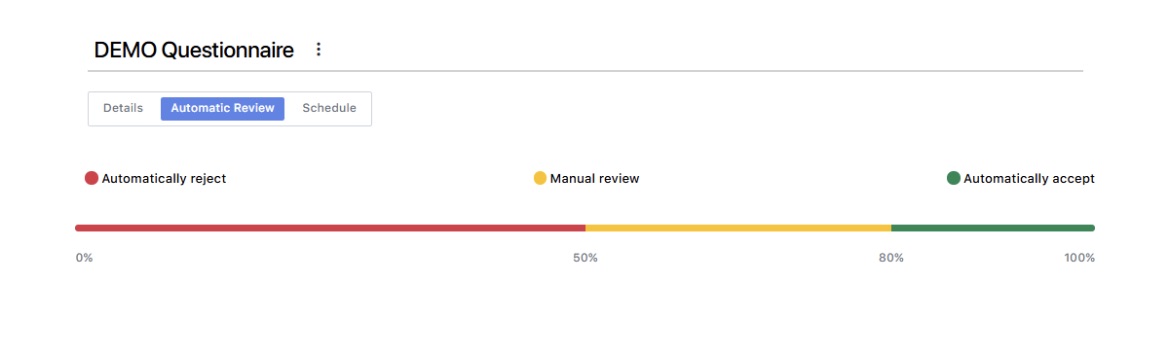
scores each vendor's self-assessment answers by configured severity weight and rolls them into an automatic Accept, Reject, or Request Clarification recommendation against the thresholds we defined
Which questionnaire answers still need a human to look at them before we can sign off?
flags free-text and evidence-file responses for mandatory review and withholds a final grade until a reviewer confirms or overrides the automated score
Which parts of a supplier's environment are we not actually watching?
lists unmonitored scan targets in a dedicated gap section of the third-party report, so blind spots in supply-chain visibility show up by name
Can we hand this supplier report to a partner who doesn't read English?
generates the same findings, including compliance coverage and environment gaps, fully in Portuguese
Are we covered for ISO 27001 and PCI DSS on this vendor?
displays coverage against both frameworks directly in the generated third-party report
Who do we actually contact at this vendor when something needs escalating?
organization profiles hold separate named contacts per department — security, compliance, legal — instead of one generic email
Languages
Features
Built from Zanshin's releases, docs, README and our own runs. “Seen” marks the month we first spotted a release the vendor didn't date. Group names and tags are our labels.
What Zanshin offers you
- Role-based access control2
- Web management console1
No capabilities match.
All capabilities 25 capabilities
Scan Target Type Expansion shipped Extends scan target support to include IBM Cloud, Bitdefender, CrowdStrike Falcon, Microsoft Defender for Endpoint, Digital Ocean, Trend Micro Vision One, SentinelOne Singularity, and Microsoft Intune.
release 15 total
-
Adds support for " Zoom Workplace " as a new environment type for continuous monitoring
 Novidades do Zanshin | Setembro de 2026 · Sep 2026
· source
· release history
- Adds ability to assign weights (Informativo to Crítico) to individual SAQ questions and precise score values to answers for automated final grade calculation Novidades do Zanshin | Setembro de 2026 · Sep 2026 · source · release history
- Adds monitoring support for Azure DevOps and JumpCloud Open Directory Platform environments Novidades do Zanshin | Maio de 2026 · May 2026 · source · release history
- Adds support for Azure DevOps and JumpCloud Open Directory Platform as monitorable environments Novidades do Zanshin | Maio de 2026 · May 2026 · source · release history
- Adds support for Okta Workforce Identity and Sophos Endpoint scan targets via the Scan Targets Dashboard under Identity and Access Management (IAM) and Security Tools sections respectively Novidades do Zanshin | Fevereiro de 2026 · Feb 2026 · source · release history
- New scan target integrations for Okta Workforce Identity and Sophos Endpoint, visible in the Scan Targets Dashboard under Identity and Access Management (IAM) and Security Tools respectively. Novidades do Zanshin | Fevereiro de 2026 · Feb 2026 · source · release history
example
-
Connect a Microsoft 365 tenant using the new automated integration flow.
In MINHA ORGANIZAÇÃO > Painel, click + in the Microsoft 365 box and follow step 4Novidades do Zanshin | Maio de 2026 · May 2026 · source -
Monitor new Azure DevOps environments for security posture.
In the Ambiente Dashboard, locate "Azure DevOps" under the SaaS section to register itNovidades do Zanshin | Maio de 2026 · May 2026 · source -
Adding Okta and Sophos endpoints as new scan targets for continuous monitoring via the Scan Targets Dashboard.
Access Scan Targets Dashboard, then select 'Okta Workforce Identity' under IAM and 'Sophos Endpoint' under Security Tools.Novidades do Zanshin | Fevereiro de 2026 · Feb 2026 · source -
Scan a Crowdstrike Falcon environment as a distinct target type in the Security Tools section.
Go to Scan Targets Dashboard > New Target > Security Tools > Crowdstrike FalconUpdates | May, 2025 · May 2025 · source
Domain Scan Target Configuration shipped Allows users to configure Domain Scan Targets with Managed or Background modes, control their visibility via removal requests or 'Why is this here?' explanations, and manage access permissions.
release 7 total
- Users can no longer directly remove a Domain Scan Target; they must submit a request handled by the Customer Success Team. Recent product updates | March/25 · Mar 2025 · source · release history
- Adds 'Why is this here?' option in the Scan Target list for Domain Scan Targets to explain visibility and initiate removal requests Recent product updates | March/25 · Mar 2025 · source · release history
- Adds the "Why is this here?" option in the Scan Target list for Domain Scan Targets to explain listing and initiate a removal request handled by Customer Success. Recent product updates | March/25 · Mar 2025 · source · release history
- Adds Managed Mode (recommended) and Background Mode to Domain Scan Targets, accessible on the Domain Scan Targets Details Page under the Settings tab. Recent product updates | March/25 · Mar 2025 · source · release history
- Adds Managed Mode to Domain Scan Targets for deeper insights, higher accuracy, and scan frequency control Recent product updates | March/25 · Mar 2025 · source · release history
- Adds Background Mode to Domain Scan Targets for broad overview with less resource-intensive checks Recent product updates | March/25 · Mar 2025 · source · release history
example
-
Find out why a Domain Scan Target is listed and request its removal.
In the Scan Target list, select "Why is this here?" next to the target to explain the listing and contact Customer Success for removal.Recent product updates | March/25 · Mar 2025 · source -
Check if your domain scan target is in Managed Mode and switch to Background Mode if needed for lower resource usage.
In Zanshin, navigate to the Domain Scan Targets Details Page > Settings tab to view or change the Mode.Recent product updates | March/25 · Mar 2025 · source
Third-party supplier reporting shipped Generates third-party supplier posture reports in Portuguese, including compliance coverage (ISO 27001, PCI DSS), unmonitored environment gaps, report generation timestamps, and a standardised file-naming convention.
release
-
Third-party reports can now be generated fully in Portuguese, removing language barriers when sharing findings with local suppliers and partners.
Novidades do Zanshin | Setembro de 2026 · Sep 2026
· source
· release history
- Third-party reports gain a dedicated Ambientes Ausentes (Missing Environments) section that surfaces unmonitored scan targets and gaps in supply-chain visibility. Novidades do Zanshin | Setembro de 2026 · Sep 2026 · source · release history
- Third-party reports include exact generation date/time for version control and an updated default file-naming convention. Novidades do Zanshin | Setembro de 2026 · Sep 2026 · source · release history
- Third-party reports now display ISO 27001 and PCI DSS compliance coverage alongside existing frameworks. Novidades do Zanshin | Setembro de 2026 · Sep 2026 · source · release history
- Business Impact level assignment available in bulk or individually for third parties, filterable in the Following Organizations List. Latest Product Updates | October, 2025 · Oct 2025 · source · release history
example
-
Review third-party supplier posture and share findings in Portuguese with local partners, including any unmonitored environment gaps and ISO 27001 / PCI DSS compliance status.
Navigate to the third-party report for the target supplier, select Portuguese as the report language, and export — the report will include the 'Ambientes Ausentes' section and ISO 27001 / PCI DSS…Novidades do Zanshin | Setembro de 2026 · Sep 2026 · source
Executive Risk Dashboards shipped Provides executive-level visualizations of third-party risk, including Sankey diagrams for score evolution, risk matrices, and consolidated compliance history.
release
- Adds the Minha Organização dashboard with historical scores, compliance trends, and alert benchmarks for executives Novidades do Zanshin | Maio de 2026 · May 2026 · source · release history
- Adds Minha Organização (My Organization) dashboard consolidating risk scores and compliance history for executives Novidades do Zanshin | Maio de 2026 · May 2026 · source · release history
- New Painel view under SEGUIDAS for executive risk overview, including a Third-Party Risk Matrix, Impact Distribution doughnut chart, Score Distribution, Score Evolution Sankey diagram, and Active Assessments summary. Novidades do Zanshin | Fevereiro de 2026 · Feb 2026 · source · release history
- Adds Seguidas > Painel dashboard for strategic third-party risk overview including Business Impact matrix, Score distribution, Sankey evolution diagram, and Active Assessments summary Novidades do Zanshin | Fevereiro de 2026 · Feb 2026 · source · release history
example
-
View consolidated risk scores and compliance trends across all monitored environments.
In the left menu, go to MINHA ORGANIZAÇÃO > PainelNovidades do Zanshin | Maio de 2026 · May 2026 · source -
Visualizing the evolution of third-party risk scores over time using the new Sankey diagram in the executive dashboard.
In SEGUIDAS > Painel, view the 'Evolução de Score' (Sankey Diagram) to track classification changes.Novidades do Zanshin | Fevereiro de 2026 · Feb 2026 · source
Organization Security Scoring shipped Calculates and displays an Organization Score (1.0-10.0 or A-F) based on active alerts, severity, recency, and asset density, with historical tracking.
release
-
Improves alert severity influence on overall scoring to ensure unresolved Critical/High alerts are not diluted by low-risk resources
Novidades do Zanshin | Setembro de 2026 · Sep 2026
· source
· release history
- Displays an Organization Score (1.0-10.0 numerical, A-F letter) on the My Organization Dashboard, Following Dashboard, Organizations List, and Organization Details pages. Recent Updates | April/25 · Apr 2025 · source · release history
- Adds Organization Score visible in the Following Dashboard, Organizations List, and Organization Details pages to assess security posture based on active alerts, severity, recency, and asset density. Recent Updates | April/25 · Apr 2025 · source · release history
example
-
Check the security posture of third-party organizations you follow.
Go to Following Dashboard > Organizations ListRecent Updates | April/25 · Apr 2025 · source -
View your own organization's score and the score distribution seen by followers.
Navigate to My Organization DashboardRecent Updates | April/25 · Apr 2025 · source
Scan Target and Follower Filtering shipped Enables filtering of organizations, alerts, and scan targets by name or tags (up to 10 items) across dashboards and lists.
release
- Adds filtering by Scan Target Tags or names (up to 10) in My Organization Dashboard and My Organization Alerts Updates | May, 2025 · May 2025 · source · release history
- Adds filter support for Scan Target Tags/names (up to 10 items) in My Organization Dashboard and Alerts Updates | May, 2025 · May 2025 · source · release history
- Adds filtering by Following Organization Tags or names (up to 10) in Following Alerts Dashboard and Following Organization Alerts Updates | May, 2025 · May 2025 · source · release history
- Adds filter support for Following Organization Tags/names (up to 10 items) in Following Alerts Dashboard and Following Organization Alerts Updates | May, 2025 · May 2025 · source · release history
example
-
Filter the Alerts list to show only alerts for specific scan targets.
My Organization Alerts > Filter by Scan Target Tags or Scan Target names (up to 10 items)Updates | May, 2025 · May 2025 · source
Self-Assessment Questionnaires (SAQs) shipped Enables vendor self-assessments with weighted scoring, configurable severity levels, automatic Accept/Reject/Request Clarification recommendations, partial-assessment flagging for human review, and a reviewer interface with manual score overrides.
release
-
Adds weighted scoring and auto-grading to Self-Assessment Questionnaires (SAQs), with configurable severity levels (Informativo to Crítico) per question and per answer, plus automatic Accept/Reject/Request Clarification recommendations against defined risk thresholds.
Novidades do Zanshin | Setembro de 2026 · Sep 2026
· source
· release history
- Introduces a partial-assessment engine that flags free-text or evidence-file answers requiring mandatory human review before a final grade is issued. Novidades do Zanshin | Setembro de 2026 · Sep 2026 · source · release history
- New reviewer interface for SAQ assessments includes a side navigation panel, auto-advance to next item, and manual override of automated scoring recommendations — accessible via SEGUIDAS > Questionários and SEGUIDAS > Avaliações. Novidades do Zanshin | Setembro de 2026 · Sep 2026 · source · release history
example
-
Configure a SAQ with risk-weighted scoring and automatic Accept/Reject thresholds to speed up vendor assessment reviews.
Go to 'SEGUIDAS' > 'Questionários', open or create a questionnaire, assign severity weights (Informativo through Crítico) to individual questions, set per-answer score values, and define acceptance…Novidades do Zanshin | Setembro de 2026 · Sep 2026 · source
Third-Party Report Localization and Detail Enhancements shipped Enables third-party posture reports in Portuguese with official ISO 27001 and PCI DSS compliance coverage, updated file naming conventions, timestamps, and sections highlighting unmonitored environments.
release
-
Adds support for generating Third-Party Reports entirely in Portuguese
Novidades do Zanshin | Setembro de 2026 · Sep 2026
· source
· release history
- Adds an " Ambientes Ausentes " section to third-party reports highlighting unmonitored environments or targets Novidades do Zanshin | Setembro de 2026 · Sep 2026 · source · release history
- Adds an Ambientes Ausentes section to third-party reports to highlight unmonitored environments or verification targets Novidades do Zanshin | Setembro de 2026 · Sep 2026 · source · release history
- Adds support for generating Third-Party Reports entirely in Portuguese Novidades do Zanshin | Setembro de 2026 · Sep 2026 · source · release history
Organisation profile management shipped Stores firmographic data (multiple legal IDs, employee count, revenue, NAICS codes) and multiple department-specific contacts under a centralised organisation profile hub.
release
-
The Configurações menu is replaced by a new Perfil hub (under MINHA ORGANIZAÇÃO > Perfil > Detalhes) supporting firmographic data: multiple legal IDs (CNPJ etc.), employee count, annual revenue, and NAICS sector codes, with address autocomplete and sector-code suggestions.
Novidades do Zanshin | Setembro de 2026 · Sep 2026
· source
· release history
- Organization profile supports multiple department-specific contacts (Security, Compliance, Legal, etc.) with individual names, emails, and phone numbers, replacing the single generic contact email. Novidades do Zanshin | Setembro de 2026 · Sep 2026 · source · release history
- Enables transparent Microsoft Defender security checks within existing Microsoft 365 scans without additional user configuration Updates | May, 2025 · May 2025 · source · release history
Organization Contact Profile Management shipped Expands the organization profile to support multiple department-specific contacts with detailed information for Security, Compliance, and Legal roles.
release
- Expands contact management to support multiple department-specific points of contact (Security, Compliance, Legal) with individual names, emails, and phone numbers Novidades do Zanshin | Setembro de 2026 · Sep 2026 · source · release history
-
Enables management of multiple categorized departmental contacts (Security, Compliance, Legal) with names, emails, and phone numbers
Novidades do Zanshin | Setembro de 2026 · Sep 2026
· source
· release history
example
-
Manage organization identity and department-specific contacts.
Go to MINHA ORGANIZAÇÃO > Perfil > Detalhes. Enter firmographic data (Legal IDs, employee count, revenue).Novidades do Zanshin | Setembro de 2026 · Sep 2026 · source
SAQ Scoring Logic Refinement shipped Improves self-assessment questionnaires with specific weight ranges for questions, precise score values for answers, and partial scoring identification to flag complex responses requiring human review.
release
-
Adds specific weight ranges (Informativo to Crítico) and precise score values to individual SAQ questions and answers, with automatic final score calculation
Novidades do Zanshin | Setembro de 2026 · Sep 2026
· source
· release history
- Adds partial scoring identification to flag complex responses (free text paragraphs, evidence files) requiring strict human review before final grade issuance Novidades do Zanshin | Setembro de 2026 · Sep 2026 · source · release history
- Adds ability to assign weights (Informativo to Crítico) to individual SAQ questions and precise score values to answers for automated final grade calculation Novidades do Zanshin | Setembro de 2026 · Sep 2026 · source · release history
AI-Assisted Evidence Review shipped Uses AI to automatically summarize PDF evidence attachments and identify matches or gaps during third-party assessment reviews.
release
- Adds Resumir with IA button in Avaliações > pendente de revisão to generate AI summaries of attached evidence files (PDF only) during SAQ review Novidades do Zanshin | Fevereiro de 2026 · Feb 2026 · source · release history
- New AI-powered Resumir with IA button in the Avaliações section to automatically analyze evidence attachments (PDF) for compliance questions, identifying matches and documentation gaps. Novidades do Zanshin | Fevereiro de 2026 · Feb 2026 · source · release history
example
-
Reviewing a third-party security assessment by clicking the Resumir with IA button on a pending question to automatically summarize PDF evidence.
In SEGUIDAS > Avaliações, click 'Resumir with IA' on a question requiring an attachment.Novidades do Zanshin | Fevereiro de 2026 · Feb 2026 · source
RBAC Management shipped Manages Role-Based Access Control via predefined and customized roles accessible in the Members section.
Also counts toward: Role-based access control, Web management console
release
- Adds Role-Based Access Control (RBAC) with predefined and customized roles accessible via the Roles tab in the Members section. Latest Product Updates | October, 2025 · Oct 2025 · source · release history
-
Roles tab in the
MY ORGANIZATION > Membersview enables Role-Based Access Control for user permissions. Latest Product Updates | October, 2025 · Oct 2025 · source · release history
example
-
Manage user permissions via the new RBAC interface in the UI.
Go to MY ORGANIZATION > Members > Roles tabLatest Product Updates | October, 2025 · Oct 2025 · source
Third-Party Business Impact Assignment shipped Allows assigning and filtering third parties by Business Impact levels for risk assessment.
release
- Business Impact level assignment available in bulk or individually for third parties, filterable in the Following Organizations List. Latest Product Updates | October, 2025 · Oct 2025 · source · release history
- Enables assignment of Business Impact levels to third parties, visible as filters in the Following Organizations List and Portfolio Dashboard. Latest Product Updates | October, 2025 · Oct 2025 · source · release history
example
-
Assign business impact values to third parties for risk filtering.
Select organizations in the Following Organizations List and choose Business Impact from the dropdownLatest Product Updates | October, 2025 · Oct 2025 · source
Scan Target Sharing and Visibility Controls shipped Provides granular control over scan target visibility through 'All Followers', 'Selected Followers', or 'Private' sharing types, and public data compliance reporting.
release
- Adds All Followers, Selected followers, and Private sharing types to new Scan Targets to control visibility across Following/Follower organizations Updates | May, 2025 · May 2025 · source · release history
- Adds visibility of Domain Scan Target findings to all licensed Organizations without explicit sharing Updates | May, 2025 · May 2025 · source · release history
example
-
Share a specific Scan Target only with selected follower organizations rather than all followers.
Create new Scan Target > Select sharing type: 'Selected followers' > Pick specific Follower OrganizationsUpdates | May, 2025 · May 2025 · source
SaaS environment monitoring shipped Monitors security configurations across SaaS environments (including Zoom Workplace) using minimum-permission read-only access, surfacing configuration issues continuously.
release
-
Adds Zoom Workplace as a new supported SaaS environment type, available under Painel de Ambientes > SaaS, monitored using minimum-permission read-only security-configuration access.
Novidades do Zanshin | Setembro de 2026 · Sep 2026
· source
· release history
example
-
Onboard Zoom Workplace for continuous security-configuration monitoring across your SaaS estate.
In the platform, go to 'Painel de Ambientes' > 'SaaS', locate 'Zoom Workplace', and follow the 'Zoom Workplace - Cadastro de Ambiente' setup guide to grant minimum required permissions.Novidades do Zanshin | Setembro de 2026 · Sep 2026 · source
Alert Rule Enhancements shipped Enhances detection logic for rules such as 'IP Address with bad reputation detected'.
release
- Introduces auto-detection alerts for unshared relevant environments not explicitly registered Novidades do Zanshin | Maio de 2026 · May 2026 · source · release history
- Enhances the IP Address with bad reputation detected Rule detection logic Updates | May, 2025 · May 2025 · source · release history
PCI DSS v4.0.1 Compliance Support shipped Adds specific support for PCI DSS v4.0.1 compliance reporting across organization profiles and third-party assessments.
release
- Adds support for PCI DSS v4.0.1 compliance reporting in Minha Organização and Seguidas > Compliance Novidades do Zanshin | Fevereiro de 2026 · Feb 2026 · source · release history
- Full support for PCI DSS v4.0.1 compliance reporting within the Compliance panel for both the organization and monitored third parties. Novidades do Zanshin | Fevereiro de 2026 · Feb 2026 · source · release history
Public Third-Party Score Visibility shipped Displays historical security scores based exclusively on public scan targets in a dedicated panel within organization details.
release
- Adds public third-party score view on the Organization Details > Painel tab showing historical scores based solely on public scan targets Novidades do Zanshin | Fevereiro de 2026 · Feb 2026 · source · release history
- New public third-party score view in the Organization Details Painel tab, showing historical scores based exclusively on public scan targets alongside full monitor history. Novidades do Zanshin | Fevereiro de 2026 · Feb 2026 · source · release history
SAQ History Tracking shipped Allows viewing complete history of assessment answers, comments, and status changes via a 'See history' toggle.
release
-
Historical view toggle
'See history'added to questionnaires and questions to reveal full assessment answer/comment history. Latest Product Updates | October, 2025 · Oct 2025 · source · release history - Adds historical information view for SAQs, showing answer/comment history per question and status changes via the See history toggle. Latest Product Updates | October, 2025 · Oct 2025 · source · release history
Notifications Center shipped Delivers in-platform, action-oriented alerts scoped to the active Organisation and filtered by RBAC permissions, with configurable retention for read and unread alerts.
Shared capability: Role-based access control
Also counts toward: Role-based access control
release
-
Introduces an in-platform Notifications Center (bell icon, top-right) delivering clickable, action-oriented alerts scoped to the active Organization and filtered by RBAC permissions; unread alerts persist for 30 days, read alerts are retained for 7 days.
Novidades do Zanshin | Setembro de 2026 · Sep 2026
· source
· release history
Self-Assessment Report Generation shipped Generates Self-Assessment Reports from completed questionnaires.
release
- Introduces new Generate Report functionality for Third-Party assessments and Self-Assessment Report generation from questionnaires. Latest Product Updates | October, 2025 · Oct 2025 · source · release history
Compliance Report Generation shipped Generates reports aligned with CIS Controls 8.1, NIST CSF v2.0, and ISO 27001:2022.
release
- Generate compliance reports aligned with CIS Controls 8.1, NIST CSF v2.0, and ISO 27001:2022. Latest Enhancements and Updates | September/25 · Sep 2025 · source · release history
Assessment Relationship Modes shipped Introduces Anonymous Mode and Cooperative Mode options for third-party assessment relationships.
release
- Adds Anonymous Mode and Cooperative Mode relationship options for third-party assessments Pre-Contract Due Dilligence · Jun 2025 · source · release history
Pre-Contract Due Diligence shipped Supports vendor security posture assessment via one-time or continuous monitoring prior to contract signing.
release
- Adds Pre-Contract Due Diligence feature to assess vendor security posture via one-time assessment or continuous monitoring Pre-Contract Due Dilligence · Jun 2025 · source · release history
Lines in monospace are the tool's own words: help text
parsed from its source, or an endpoint from its API document. Under
release, a line is our summary of a dated release. Under
docs, it is quoted from the tool's own documentation or
website. Each links back to the source it came from.
Screenshots
From the release notes, newest first. Click one to see it full size.Score card
-
Shipping velocity releases a month, last 12 months
-
Documentation quality release-notes rubric, 0–100
-
Breaking-change discipline how rarely a release breaks users, and notice given
-
Maintenance risk quiet time against its own cadence, maintainers
-
Innovation & surface new capabilities, API and MCP surface
Five scores for Zanshin, each built from the releases, notes and API history this site tracks — and, on Researcher and Business, where it stands among every measured tool in its category and how that has moved.
Score cards are part of every paid plan.
See plans → Already subscribed? Sign in →Trajectory
Blank means never measured; nothing here is a filled-in zero.
Peer standings are included with Researcher and Business. See how this tool ranks against its competitors, using data we don't publish anywhere else.
See plans →Each score is 0–100 on a published rubric, derived from data this site already shows. A dimension we cannot measure says so — it is never scored 0 and never enters a rank.
How this is scored
- Shipping velocity — releases a month over the last 12 months, on a log scale where 16 a month scores 100. Needs 3 releases in the window.
- Documentation quality — the release-notes rubric published on the analytics page, unchanged.
- Breaking-change discipline — the share of releases carrying a breaking change (none scores 100, half or more scores 0). Only projects that label breaking changes are measured: a clean record cannot be told from an unlabelled one.
- Maintenance risk — quiet time measured against the tool's own release cadence (quiet longer than 90 days and three typical gaps scores 0), plus the number of active maintainers and whether contributors are growing, where known. Higher is lower risk.
- Innovation & surface — new capabilities in the feature ledger this year, API and MCP operations added, and the share of commits that are features: the mean of whichever we hold.
- Community health (open-source tools only) — each is a direction, not a size: contributors this year against last, the bus factor now against a year ago, and issues closed per issue opened, where steady scores 50, doubled 100 and halved 0; plus the median time to a maintainer's first reply (an hour scores about 100, a month or more 0). A commercial card has no repository and carries none of the four.
- Documented delivery (commercial tools) — when a vendor's documented new capabilities have slowed against its own baseline, that counts against the overall standing as heavily as two low dimensions. Steady delivery, or too little history to judge, leaves the standing alone; it is never a sixth score.
- Open-source tools are scored on repository signals; commercial tools on their published changelog. Ranks compare tools within one category and one profile and need at least five measured peers; the overall standing needs three ranked dimensions. Best-in-breed or consolidator is a shape, not a quality, and is never scored.
Release-note detail over time
See how much detail Zanshin puts in its release notes, quarter by quarter, and compare it with tracked tools in the same category. This history uses up to ten retained, reviewed notes per tool; sparse or blank older quarters may reflect that limit.
Checking release-note history…
Website history
tenchisecurity.com, every changeTenchi Security's home page and 24 more pages as they looked each month from September 2021 to October 2026: 35 renders, 3 changes of tagline or palette. Step through them, play them, or put any two months side by side.
Website history is included with Researcher and Business.
See plans → Already subscribed? Sign in →← → or h l a month · Shift a year · [ ] previous / next change · Space play · 1 2 3 page · T whole page · C compare · F full size
← → or h l the right month · Shift the left · S swap · W wipe · T whole page · Esc back
Rebranding timeline
Dates bound when a change appeared between captures. Possible rebrands are AI suggestions; a redesign alone does not establish a rebrand.
Releases
10 entries
No entries match these filters.
- September 20262
- May 20261
- February 20261
- October 20251
- September 20251
- June 20251
- May 20251
- April 20251
- March 20251
Add the badge to your README
Maintain this project? The badge links readers straight to this page, so they can follow every release here.
 Choose a badge style and copy the code →