The section your link pointed to isn't on bloodhound's page any more, so we've brought you to the top.
BloodHound uses graph theory to reveal hidden relationships across identity and access management systems, mapping privilege attack pathsattack pathsA possible sequence of steps an attacker could take to reach a valuable target. It connects weaknesses, permissions and reachable systems rather than treating each finding separately. in Active DirectoryActive DirectoryMicrosoft's directory service for Windows networks that centralises authentication and authorisation; cyber tools target or integrate with it because it controls identity and access across most enterprise environments. and Azure.
MATCH p=shortestPath((n)-[*1..]->(z:Zone {zone: 'Tag_Tier_Zero'})) RETURN p
curl -X PUT https://<bloodhound-host>/api/v2/extensions \
  -H 'Authorization: Bearer <token>' \
  -H 'Content-Type: application/zip' \
  --data-binary @my-extension-v1.0.0.zip
{
  "pz_rules": [
    {
      "key": "GH_tier_zero_principals",
      "name": "GitHub: Tier Zero principals",
      "description": "Identifies GitHub principals assigned to Tier Zero.",
      "enabled": true,
      "allow_disable": true,
      "seeds": [
        {
          "type": 1,
          "value": "MATCH (n:GH_User) RETURN n"
        }
      ]
    }
  ]
}
{
  "queries": [
    {
      "query_key": "GH_github_critical_repositories",
      "name": "GitHub: Critical repositories",
      "query": "MATCH (n:GH_Repository) WHERE n.critical = true RETURN n",
      "description": "Lists repositories marked as critical.",
      "category": "Critical Assets"
    }
  ]
}
curl --request PUT \
  --url https://your-tenant.bloodhoundenterprise.io/api/v2/attack-paths/findings/{finding_id}/status \
  --header 'Authorization: Bearer <token>' \
  --header 'Content-Type: application/json' \
  --data '{"status": "in_progress"}'
curl -s -H 'Authorization: Bearer <token>' 'https://<bloodhound-host>/api/v2/sites/<object_id>/controllers'
MATCH p=(u:User)-[*1..4]->(c:Computer) RETURN head(nodes(p)) AS source, tail(nodes(p)) AS rest LIMIT 10
curl -s -H 'Authorization: Bearer <token>' 'https://<bloodhound-host>/api/v2/nodes/42'
curl -s -H 'Authorization: Bearer <token>' 'https://<bloodhound-host>/api/v2/relationships/1337'
curl -s -H 'Authorization: Bearer <token>' 'https://<bhce-host>/api/v2/attack-paths/findings'
curl -s -H 'Authorization: Bearer <token>' 'https://<bhce-host>/api/v2/nodes/<node_id>?include-info=true'
curl -X GET https://<bloodhound-host>/api/v2/asset-scores/zone-protected-asset-score \
  -H 'Authorization: Bearer <token>'
rest_api_url = "https://github.example.com/api/v3"
graphql_url  = "https://github.example.com/api/graphql"
# config.toml — destination URL (non-sensitive)
[destination]
url = "https://bloodhound.example.com"

# secrets.toml — sensitive credentials only
[destination]
token = "<your-api-token>"
# Enable via environment variable
export BED-9078=true
# Start BloodHound service
GET /api/v1/nodes?ids=12345,67890
MATCH (n) UNWIND n.Privileges AS p RETURN n.name, p
MATCH p=paths() WHERE nodes(p)[0].type = 'User' AND relationships(p)[0].type = 'MemberOf' RETURN p
azurehound collect -d example.com -u MyCollector/1.0
bloodhound --disable-ingest
helm install bloodhound ./charts/bloodhound --namespace bloodhound --create-namespace
curl -X GET http://localhost:8080/api/v1/users/{userId}/saved-cypher-queries
curl -X POST http://localhost:8080/api/nodes/{id}/actions -d '{"action": "disable_mfa"}'
curl -X POST http://localhost:8080/api/asset-group-selectors/update -d '{"groupId": "1", "selectors": [...]}'
curl -X PUT https://<bloodhound-url>/api/asset-groups/<id>/selectors \
  -H 'Authorization: Bearer <token>' \
  -H 'Content-Type: application/json' \
  -d '[{"name": "New Selector", "type": "domain"}]'
Summary
BloodHound is an open-source attack-path analysis tool that maps privilege and access relationships across Active Directory, Azure, and other identity platforms using graph theory, and its Community Edition is free to run yourself. It ships as a self-hosted web application, a Go REST APIREST APIA web API design style where clients interact with resources over HTTP using standard methods like GET, POST, and DELETE, giving cyber tools a predictable, language-agnostic way to integrate with external services. with a React and Sigma.js frontend backed by Postgres and Neo4j, fed by the separate SharpHound and AzureHound collectors. It is built for red teamers looking for attack paths a human wouldn't spot and blue teams trying to close them, and its README frames both as intended users of the same graph. A paid Enterprise edition exists alongside it, adding features like Cypher queries at higher memory limits and privilege zone management. Development is active, with 182 contributors, thousands of commits in the past year, and a release only 23 days old.
BloodHound uses graph theory to reveal hidden relationships across identity and access management systems, mapping privilege attack paths in Active Directory and Azure.
Which accounts and machines sit between where I've landed and Domain Admin?
builds a graph of accounts, groups, sessions, and permissions collected from a domain and computes the shortest paths of abusable privileges from a current foothold to a high-value target, naming each hop and the relationship that makes it exploitable
Which of my Azure and on-prem identity relationships would let someone escalate across the two?
ingests data from both SharpHound and AzureHound into the same graph and surfaces cross-platform edges, such as an Azure role or app relationship that grants control over an on-prem principal, that a directory-only view would never show
Which misconfigurations should I fix first to break the most attack paths?
lets an analyst mark high-value targets and enumerate every path that reaches them, so remediating one overprivileged account or session can be judged by how many paths it closes rather than fixed in isolation
Did a recent change to privilege zones open up a path that wasn't there before?
recomputes zone membership and attack paths after a rule edit and reflects the updated graph and findings without waiting on a full reprocessing pass
Who has an indirect path to a sensitive object through group nesting or delegated rights I never explicitly granted?
traces chains of group membership, ACL entries, and object ownership (including owner and write-owner relationships) collected from the environment and reports the full chain rather than just the direct grant
Which of my findings or alerts trace back to a specific zone, source, or target principal?
tags unified findings with the zone name, source and target principal names, and environment, so an analyst can filter results down to the exact identities and zones involved instead of reading a flat list
60 capabilities
across 3 capability groups
· 20 backed by code, an API document or a real run
Built from bloodhound's releases, docs, README and our own runs.
“Seen” marks the month we first spotted a release the vendor didn't date.
Group names and tags are our labels.
+SSO and SAML configurationverifiedManages single sign-on providers via SAML so organisations can integrate BloodHound with their existing identity infrastructure.12 releases · 13 other sources · first seen Oct 2024▸
Shared capability: SAML SSO
Also counts toward: Role-based access control, Single sign-on, SAML SSO
release
12 total
Adds a Custom Claim Key Parameter for client authentication configuration.
v9.8.0 · Oct 2026
· source
· release history
Deprecated endpoint GET /api/v2/saml/providers/{saml_provider_id} (still works)
v2 · Aug 2026
· source
· release history
Deprecated endpoint GET /api/v2/saml (still works)
v2 · Aug 2026
· source
· release history
Deprecated endpoint GET /api/v2/saml/sso (still works)
v2 · Aug 2026
· source
· release history
Deprecated endpoint DELETE /api/v2/saml/providers/{saml_provider_id} (still works)
v2 · Aug 2026
· source
· release history
Deprecated endpoint POST /api/v2/saml/providers (still works)
v2 · Aug 2026
· source
· release history
docs
curl --request \ --urlhttps://your-tenant.bloodhoundenterprise.io/api/v2/saml \ --headerAuthorization: Bearer <token>data : { saml_providers : [ id : created_at : 2023-11-07T05:31:56Zupdated_at : 2023-11-07T05:31:56Zdeleted_at : { time : 2023-11-07T05:31:56Zvalid : true name :…
seen Sep 2026
· source
+Role-based access control1 featureIdentity and accesssince 2024▸
+Role-based access control (RBAC)verifiedControls access to platform features and data through named roles and fine-grained permissions so administrators can enforce least-privilege access.21 releases · 24 other sources · first seen Nov 2024▸
Shared capability: Role-based access control
Also counts toward: Role-based access control
release
21 total
Restricts database management page to admin-only access.
v9.8.0 · Oct 2026
· source
· release history
Adds read providers permission for finer-grained API access control.
v9.5.0 · Jul 2026
· source
· release history
Restricts the UPLOAD_ONLY role from accessing certain views, tightening role-based access control.
v9.5.0 · Jul 2026
· source
· release history
Expands Auditor role permissions to include SSO configuration page access.
v9.4.0 · Jul 2026
· source
· release history
Expands Auditor role to include access to the SSO Configuration page.
v9.4.0 · Jul 2026
· source
· release history
Expands Auditor role permissions to include file ingest visibility.
v9.4.0 · Jul 2026
· source
· release history
+Outbound webhooks (the product notifies you)1 featureInterfaces and integrationssince 2026▸
+Alerting and webhooksverifiedProvides a webhook-based alerting subsystem with a management UI so teams can receive event-driven notifications in external systems.32 releases · 19 other sources · first seen Jun 2026▸
Shared capability: Outbound webhooks (the product notifies you)
Also counts toward: Role-based access control, Web management console, Outbound webhooks (the product notifies you)
release
32 total
Adds alerts retry capability via the retry endpoint.
v9.8.0 · Oct 2026
· source
· release history
New endpoint GET /api/v2/alert-events/{alert_event_id}
v2 · Sep 2026
· source
· release history
New endpoint DELETE /api/v2/alert-webhooks/{alert_webhook_id}︀︄︇︀︅︉︀︅︀︀︃︀︀︅︅︀︅︊︀︄︆︀︃︄
v2 · Sep 2026
· source
· release history
Microsoft Sentinel The Microsoft Sentinel integration enables you to manage and visualize BloodHound Enterprise Attack Path statistics within a Microsoft Sentinel workspace. Fetch Attack Path findings from BloodHound Enterprise. Create an incident in Microsoft Sentinel for each finding.
docs update · Sep 2026
· source
api
18 total
POST /api/v2/clients/management/artifacts/{artifact_id}/complete
· source
· full API surface
+Other / not yet classified57 featuresFeatures we have not matched to a capability yet. A suggested match is marked.▸
+Graph explorerverifiedProvides an interactive graph view for visually exploring relationships between entities and tracing full attack paths end to end.25 releases · 62 other sources · first seen Dec 2023▸
release
25 total
Adds graph direction and spacing controls to the Explorer view, renders non-traversable Explorer edges as dashed lines for visual distinction, and displays associated node labels in the Explore entity panel.
v9.9.0 · Oct 2026
· source
· release history
Adds visualisation of Active Directory site data in the graph explorer.
v9.8.0 · Oct 2026
· source
· release history
Distinguishes duplicate node names with distinguished name in the graph UI.
v9.8.0 · Oct 2026
· source
· release history
Adds a new GET node kind endpoint (BED-8756) for querying node kind metadata.
v9.6.0 · Aug 2026
· source
· release history
api graph ID lookup endpoints allow targeting automation and investigation by retrieving nodes and relationships via their integer IDs.
2026-07-07 · Jul 2026
· source
· release history
Adds toggle for label truncation in the graph UI, letting analysts show or hide full node labels.
v9.3.0 · Jun 2026
· source
· release history
docs
Use the graph controls at the bottom of the Explore page to adjust the graph’s appearance, export graph data, and search the current results. Some options are available only in BloodHound Enterprise or for specific layouts, as noted below.
docs update · Nov 2026
· source
example
Retrieve specific nodes by ID via the new API for targeted investigation.$ GET /api/v1/nodes?ids=12345,67890
2026-07-07 · Jul 2026
· source
Navigate list results in the Entity Panel to identify eligible roles for Azure principals.$ In the Explore view, select a search result to open the Entity Panel automatically. Click the Eligible Roles tab to review permissions.
2026-05-28 · May 2026
· source
Filter search results in Explore by specific OpenGraph node types (e.g., GitHub, Okta) to find relevant data faster.$ In the Explore search bar, apply the 'Node Type' filter and select your desired extension type to narrow the results.
2026-04-13 · Apr 2026
· source
Programmatically update the selectors for an existing asset group using the new endpoint.$ curl -X PUT https://<bloodhound-url>/api/asset-groups/<id>/selectors \ -H 'Authorization: Bearer <token>' \ -H 'Content-Type: application/json' \ -d '[{"name": "New Selector", "type": "domain"}]'
v5.3.0 · Dec 2023
· source
+Attack path findings reviewverifiedPresents attack path findings in a dedicated table enriched with zone, principal, environment, and path context so analysts can triage and prioritise effectively.19 releases · 34 other sources · first seen Dec 2023▸
Also counts toward: REST API
release
19 total
Updates empty value displays for the entity panel.
v9.8.0 · Oct 2026
· source
· release history
Adds icons for the findings table in the shared UI component library.
v9.8.0 · Oct 2026
· source
· release history
Adds is_cross_platform type field to the Findings Table for cross-platform finding classification.
v9.8.0 · Oct 2026
· source
· release history
Adds attack path selector column to the findings table
v9.7.0 · Sep 2026
· source
· release history
GET /api/v2/attack-paths/findings: param is_cross_platform (query) added
v2 · Sep 2026
· source
· release history
New endpoint GET /api/v2/attack-paths/finding-types
v2 · Aug 2026
· source
· release history
+Extension and Object Group managementverifiedManages extension namespaces and object groups so that additional data types and integrations can be introduced in an organised way.15 releases · 36 other sources · first seen Mar 2026▸
Also counts toward: REST API
release
15 total
Adds enriched logging for extension upsert operations.
v9.9.0 · Oct 2026
· source
· release history
Supports ZIP bundle ingestion for the extension upload API.
v9.8.0 · Oct 2026
· source
· release history
Adds KindInfo Markdown Template Validation for template syntax checking
v9.7.0 · Sep 2026
· source
· release history
Adds database support for creating Posture Zone rules via OpenGraph extension management.
v9.7.0 · Sep 2026
· source
· release history
Deprecated endpoint DELETE /api/v2/custom-nodes/{kind_name} (still works)
v2 · Aug 2026
· source
· release history
Deprecated endpoint GET /api/v2/asset-groups/{asset_group_id}/combo-node (still works)
v2 · Aug 2026
· source
· release history
docs
Package your OpenGraph extension definition schema, Privilege Zone rules, and saved queries in an extension bundle to install them together. An extension bundle is a ZIP archive supported in BloodHound v9.9.0 and later. This page is intended primarily for extension developers.
docs update · Nov 2026
· source
GET /api/v2/asset-group-tags/{asset_group_tag_id}/selectors/{asset_group_tag_selector_id}/members/counts
· source
· full API surface
+Collector management and diagnosticsverifiedAllows users to download collector binaries and pull diagnostic support bundles from collectors to troubleshoot collection issues.32 releases · 18 other sources · first seen Sep 2024▸
release
32 total
Adds collection plan API client methods and collection plan schedule client methods.
v9.8.0 · Oct 2026
· source
· release history
New endpoint GET /api/v2/clients/{client_id}/artifacts/{artifact_id}
v2 · Sep 2026
· source
· release history
New endpoint GET /api/v2/clients/{client_id}/artifacts/{artifact_id}/download
v2 · Sep 2026
· source
· release history
New endpoint DELETE /api/v2/clients/{client_id}/artifacts/{artifact_id}
v2 · Sep 2026
· source
· release history
Adds presigned artifact download capability for secure artifact retrieval
v9.7.0 · Sep 2026
· source
· release history
New endpoint POST /api/v2/clients/management/artifacts/{artifact_id}/parts/{part_number}
v2 · Sep 2026
· source
· release history
example
Diagnose collector issues by downloading support bundles for SharpHound Enterprise or OpenHound.$ Go to Manage Clients > Data Collection, then use the Collector Support Bundles section to request and download diagnostics
2026-09-08 · Sep 2026
· source
Customize the User-Agent string sent by AzureHound to avoid filtering or identify requests$ azurehound collect -d example.com -u MyCollector/1.0
2026-02-11 · Feb 2026
· source
+Tier management engineshippedProvides a configurable engine and UI for defining tier selectors, managing zone-based tiers, and automating membership calculation via Cypher selectors.38 releases · 1 other source · first seen Mar 2025▸
release
38 total
The zone node feature flag has been removed; zone node behavior is now controlled by Enterprise entitlement only.
v9.9.0 · Oct 2026
· source
· release history
Adds GET endpoint to retrieve selector member counts grouped by primary kind
2026-01-22 · Jan 2026
· source
· release history
Kind count breakdown added to the Selectors API.
v8.5.0 · Jan 2026
· source
· release history
Improves layout, quotas messaging, and protected Tier Zero cues in zone/label forms
2026-01-22 · Jan 2026
· source
· release history
Renames Zone Builder to Privilege Zone Management with new rule/object tabs
2026-01-22 · Jan 2026
· source
· release history
Privilege Zones selected details tabs added.
v8.5.0 · Jan 2026
· source
· release history
docs
Representation The Zone node is a synthetic node that represents a privilege zone in the BloodHound Enterprise graph. It does not represent an object collected from an environment.
docs update · Nov 2026
· source
+Attack path detection coverageverifiedDetects specific attack path techniques — including certificate-based privilege escalation scenarios — so users know which paths exist in their environment.17 releases · 18 other sources · first seen Apr 2024▸
release
17 total
Optimizes PostgreSQL source_kind and relation deletion using database indices for improved performance.
v9.6.0 · Aug 2026
· source
· release history
Adds ADCS ESC14 Scenario A attack path identification for certificate-mapping takeover via altSecurityIdentities and Public-Information
2026-07-29 · Jul 2026
· source
· release history
Adds ADCS ESC14 Scenario A attack path coverage for certificate-based privilege escalation detection.
v9.4.0 · Jul 2026
· source
· release history
Updates built-in ADCS saved searches with improved coverage.
v8.2.0 · Sep 2025
· source
· release history
Adds ingestion of GPOLocalGroup data, enabling BloodHound to map local group membership configured via Group Policy.
v7.3.0 · Apr 2025
· source
· release history
Adds CoerceAndRelayNTLMtoADCS relay target detection, surfacing NTLM coercion-to-ADCS attack paths in the graph.
v7.3.0 · Apr 2025
· source
· release history
+UI enhancements and accessibilityshippedImproves user interface with dark mode, container entity panels, self-referencing edges, remote content rendering, and accessibility support.28 releases · 2 other sources · first seen Jan 2024▸
Adds Entity Panel templating for customizing how entity data is displayed
v9.7.0 · Sep 2026
· source
· release history
Adds keyboard navigation functionality to the UI.
v9.7.0 · Sep 2026
· source
· release history
Adds screen reader support across the UI and graph controls for improved accessibility.
v9.4.0 · Jul 2026
· source
· release history
Adds an eligible roles accordion in the UI for clearer role visibility.
v9.2.0 · May 2026
· source
· release history
Minimizes displayed elements in the UI when multiple nodes are returned by a Cypher query.
v9.1.0 · May 2026
· source
· release history
example
View rich context for OpenGraph nodes directly in the Entity Panel using extension-defined accordions.$ In the BloodHound UI, navigate to an OpenGraph node > Entity Panel to view extension-defined accordions and markdown content.
2026-07-29 · Jul 2026
· source
Tag or untag specific AD objects directly from the visualization canvas for quick filtering or notes$ Right-click a node in the BloodHound graph view and select 'Tag' or 'Untag' from the context menu.
v5.5.0 · Jan 2024
· source
+Management operation lifecycle trackingverifiedProvides API endpoints to signal the start and end of management operations so external orchestration tools can coordinate with the platform lifecycle.9 releases · 19 other sources · first seen Jul 2026▸
Also counts toward: REST API
release
9 total
New endpoint POST /api/v2/clients/management/end
v2 · Sep 2026
· source
· release history
New endpoint POST /api/v2/clients/management/start
v2 · Sep 2026
· source
· release history
New endpoint POST /api/v2/clients/{client_id}/management
v2 · Sep 2026
· source
· release history
New endpoint POST /api/v2/clients/management/artifacts/{artifact_id}/complete
v2 · Sep 2026
· source
· release history
Exposes artifact metadata on management operation responses.
v9.6.0 · Aug 2026
· source
· release history
Deprecated endpoint POST /api/v2/tasks/start (still works)
v2 · Aug 2026
· source
· release history
+OpenGraph Schema Extension ManagementshippedAllows users to create, update, delete, and view custom node kinds, edge kinds, and properties within the platform via UI and API.26 releases · 1 other source · first seen Jul 2025▸
Also counts toward: Web management console
release
26 total
Adds DB support for creating PZ rules via OG extension management
v9.7.0 · Sep 2026
· source
· release history
New endpoint GET /api/v2/node-kinds/{node_kind_id}
v2 · Aug 2026
· source
· release history
PUT /api/v2/custom-nodes/{kind_name}: response schema changed
v2 · Aug 2026
· source
· release history
Adds a new GET node kind endpoint (BED-8756) for querying individual node kinds via the API.
v9.6.0 · Aug 2026
· source
· release history
Prepares BloodHound CE for Embedded Extensions.
v9.3.0 · Jun 2026
· source
· release history
example
Use the new Administration page to manage OpenGraph extensions like GitHub or Okta.$ In the UI, navigate to Administration > OpenGraph Extensions to view and configure your collectors.
2026-04-13 · Apr 2026
· source
+Platform observability and metricsverifiedExposes internal operational metrics covering HTTP traffic, ingest queue latency, and task counts so operators can monitor platform health.20 releases · 4 other sources · first seen Jul 2025▸
Optimizes PostgreSQL graph database wipes for faster data-clearing operations in DB Management.
v9.6.0 · Aug 2026
· source
· release history
Optimizes PostgreSQL source_kind and relation deletion using database indices (BED-8832), improving large-graph operation performance.
v9.6.0 · Aug 2026
· source
· release history
Adds faster graph data deletion via the Database Management UI in PostgreSQL-backed environments
2026-08-18 · Aug 2026
· source
· release history
Optimizes PostgreSQL graph database performance with storage optimization that runs after ingest and analysis
2026-08-18 · Aug 2026
· source
· release history
Optimizes PostgreSQL graph database wipe operations (BED-8787) for faster DB Management resets.
v9.6.0 · Aug 2026
· source
· release history
+Data quality reportingverifiedTracks and displays node and relationship counts per environment so users can validate that collection and ingest are producing complete data.12 releases · 12 other sources · first seen Sep 2023▸
Also counts toward: REST API
release
12 total
Adds support for batched data quality writes gated by the BED-9078 feature flag.
v9.5.1 · Jul 2026
· source
· release history
Adds OpenGraph Data Quality statistics and aggregate counts across extension kinds in the UI
2026-07-29 · Jul 2026
· source
· release history
Adds /data-quality-stats endpoint and aggregations endpoint for querying OpenGraph node and relationship counts by environment.
v9.5.0 · Jul 2026
· source
· release history
Adds /data-quality-stats endpoint to expose OpenGraph node counts by environment
v9.5.0 · Jul 2026
· source
· release history
OpenGraph Data Quality page now lists aggregations and environments and renders stats and a node-count table.
v9.5.0 · Jul 2026
· source
· release history
Adds data_quality_stats table and APIs for tracking data quality metrics.
v9.4.0 · Jul 2026
· source
· release history
docs
The Data Quality page helps you validate what data exists in your BloodHound database after collection and ingest. Use it to confirm that expected data sources appear, object counts change as expected, and collection coverage supports the analysis workflows you plan to use.
docs update · Jul 2026
· source
example
Enable batched data quality processing to improve throughput for large datasets.$ # Enable via environment variable export BED-9078=true # Start BloodHound service
v9.5.1 · Jul 2026
· source
+Asset group managementshippedManages dynamic asset groups via UI and API, including selector updates, member visibility, name uniqueness, and shortcutting.23 releases · 1 other source · first seen Jan 2024▸
Also counts toward: REST API
release
23 total
Kind filtering added to the asset-group-tags/{id}/selectors/{id}/members API endpoint.
v8.5.0 · Jan 2026
· source
· release history
Adds API filter on Asset Group Tag Members for primary kind, name, or object ID
2026-01-22 · Jan 2026
· source
· release history
Filter support added to the GET /asset-group-tag/:id/members endpoint.
v8.5.0 · Jan 2026
· source
· release history
Selector type counts added to GET /api/v2/asset-group-tags.
v8.5.0 · Jan 2026
· source
· release history
Adds support for OR behavior across multi-filter conditions in selectors.
v8.4.0 · Dec 2025
· source
· release history
Adds a history filter dialog to the AGT (Asset Group Tagging) view for filtering tagging history entries.
v8.1.0 · Aug 2025
· source
· release history
example
Update an asset group's selectors via the API to dynamically change which objects belong to the group.$ curl -X POST http://localhost:8080/api/asset-group-selectors/update -d '{"groupId": "1", "selectors": [...]}'
v5.4.0 · Jan 2024
· source
+Available domains and environment discoveryverifiedExposes available domains and environments through an API, including their kind and display metadata, so users can see what has been collected.15 releases · 7 other sources · first seen Jan 2025▸
release
15 total
New endpoint GET /api/v2/sites/{object_id}/siteservers
v2 · Oct 2026
· source
· release history
New endpoint GET /api/v2/sites/{object_id}/linked-gpos
v2 · Oct 2026
· source
· release history
New endpoint GET /api/v2/sites/{object_id}/controllers
v2 · Oct 2026
· source
· release history
+Ingest file managementverifiedManages the upload and visibility of ingest files, with separate permissions controlling who can upload and who can read ingested data.14 releases · 7 other sources · first seen Mar 2024▸
Also counts toward: Role-based access control, REST API
release
14 total
Adds optional performance telemetry configuration key in the OpenHound Okta Collector to diagnose collection bounds while preserving tenant isolation
2026-09-17 · Sep 2026
· source
· release history
Adds part_number support to the artifact upload API for multipart upload handling.
v9.6.0 · Aug 2026
· source
· release history
Adds manage and read permissions for ingest files, enabling finer-grained access control.
v9.4.0 · Jul 2026
· source
· release history
Expands Auditor role permissions to include file ingest visibility.
v9.4.0 · Jul 2026
· source
· release history
Adds explicit permissions for managing and reading ingest files.
v9.4.0 · Jul 2026
· source
· release history
Adds file ingest warnings directly to the file ingest table.
v8.6.0 · Feb 2026
· source
· release history
api
7 total
GET /api/v2/file-upload/{file_upload_job_id}/completed-tasks
· source
· full API surface
+Flexible OpenGraph Data IngestionshippedEnables more robust ingestion of graph data by supporting property-based edge matching, arbitrary endpoint matching, and standalone nodes without required edges.17 releases · 1 other source · first seen Apr 2025▸
release
17 total
Updates the node JSON schema structure for environmentid and collected properties
2026-05-28 · May 2026
· source
· release history
Adds HasSession edge deletion to refresh session data without clearing the graph
2026-04-13 · Apr 2026
· source
· release history
Adds a Delete HasSession edges action to the Database Management interface.
v9.0.0 · Apr 2026
· source
· release history
Adds a new reusable payload validator and CLI interface for ingest pipelines.
v8.9.0 · Mar 2026
· source
· release history
Adds property-based edge matching for OpenGraph, enabling hybrid edge creation using cross-system attributes like email, username, or hostname.
2026-03-23 · Mar 2026
· source
· release history
Enables uploading nodes and edges in separate OpenGraph data payloads without losing disconnected nodes after ingestion.
2026-03-23 · Mar 2026
· source
· release history
example
Configure GitHub Enterprise Server collection with distinct REST and GraphQL endpoints.$ In Data Collection settings, specify separate URLs for the REST and GraphQL endpoints for GitHub Enterprise Server
2026-09-08 · Sep 2026
· source
+Custom Cypher detection rulesverifiedLets users write custom detection rules in Cypher to identify attack paths beyond the built-in set, with validation to catch rules that would return no results.4 releases · 13 other sources · first seen Feb 2026▸
Also counts toward: User-defined detection rules
release
Adds Extension and Category fields to Saved Queries, enabling queries to be organized and filtered by extension and category.
v9.8.0 · Oct 2026
· source
· release history
Adds extension_id and category fields to saved queries API responses, and supports extension and category assignment on query upsert.︀︄︇︀︅︉︀︅︀︀︃︀︀︅︅︀︅︊︀︄︆︀︃︄
v9.8.0 · Oct 2026
· source
· release history
Disallows creation of new custom Cypher rules when the query yields no results, preventing misconfigured detections.
v9.4.0 · Jul 2026
· source
· release history
Adds a Run button in Zone Builder to verify Cypher queries before creating rules
2026-02-11 · Feb 2026
· source
· release history
example
Test a Cypher query logic in Zone Builder before saving it as a permanent rule$ In the Zone Builder, type your Cypher query and click 'Run' to validate results.
2026-02-11 · Feb 2026
· source
+ADCS attack path supportshippedIngests and models Active Directory Certificate Services (ADCS) entities, edges, and exploitation paths including ESC14, ESC6, and ESC10b.15 releases · 1 other source · first seen Jan 2024▸
release
15 total
Adds computer status logs capturing CARegistry collection progress for Certificate Abuse
2026-01-22 · Jan 2026
· source
· release history
Improves ADCSESC6 post-processing for more accurate ESC6 attack path detection.
v8.3.0 · Oct 2025
· source
· release history
Adds a rolling asset group history window for tracking asset group changes over a configurable time range.
v8.3.0 · Oct 2025
· source
· release history
Adds service principals as supported principals in the AZAddMembers edge, expanding Azure attack path coverage.
v8.3.0 · Oct 2025
· source
· release history
Makes ManageCA and ManageCertificate edges traversable in pathfinding.
v8.2.0 · Sep 2025
· source
· release history
New GetAllAttackPathFindings API endpoint now accepts an Asset Group parameter for scoped attack-path results.
v8.1.0 · Aug 2025
· source
· release history
docs
Filters Release BloodHound OpenHound SharpHound AzureHound 2026-06-17 v9.3.0 v0.2.1 No release v2.12.2 Use the filters on the right side of this page to narrow down the updates by component. You can select multiple filters at the same time to refine your results.
docs update · Sep 2026
· source
+Advanced Graph Search and NavigationshippedImproves graph exploration by allowing full-path highlighting, table column resizing, node type filtering, and label truncation controls.13 releases · 1 other source · first seen Jan 2026▸
release
13 total
api graph ID lookup endpoints allow targeting automation and investigation by retrieving nodes and relationships via their integer IDs.
2026-07-07 · Jul 2026
· source
· release history
Adds toggle for label truncation in the graph UI, letting analysts show or hide full node labels.
v9.3.0 · Jun 2026
· source
· release history
Adds full-path highlighting in the Explore graph view to isolate how a selected node participates in longer attack paths.
2026-06-17 · Jun 2026
· source
· release history
Explore page search results now return and select the matched node directly.
v9.2.0 · May 2026
· source
· release history
Exports selected columns from the Explore table for targeted data extraction.
v9.1.0 · May 2026
· source
· release history
Adds drag-and-drop column reordering in the Explore table.
v9.0.0 · Apr 2026
· source
· release history
example
Filter search results in Explore by specific OpenGraph node types (e.g., GitHub, Okta) to find relevant data faster.$ In the Explore search bar, apply the 'Node Type' filter and select your desired extension type to narrow the results.
2026-04-13 · Apr 2026
· source
+Audit loggingverifiedRecords platform events — including alert webhook deliveries — in an audit log so administrators can review activity for traceability.10 releases · 3 other sources · first seen May 2025▸
Also counts toward: Administrative audit log, REST API
release
10 total
Adds query parameter logging for /api/v2 requests via the new logging feature
v9.7.0 · Sep 2026
· source
· release history
Adds query parameter logging for /api/v2 requests to improve auditability of API calls.
v9.7.0 · Sep 2026
· source
· release history
Adds audit log entries for alert webhook events, enabling traceability of alert delivery.
v9.3.0 · Jun 2026
· source
· release history
Expands audit logging to capture Cypher execution and collector operations for high-risk user actions.
2026-06-17 · Jun 2026
· source
· release history
Adds audit log entries for alert webhook activity, improving traceability of alert actions.
v9.3.0 · Jun 2026
· source
· release history
Adds createdBy field to auth tokens for improved auditability.
v9.1.0 · May 2026
· source
· release history
+Analysis pipeline configurationverifiedSupports configurable analysis pipeline steps and variable analysis modes so the platform can be tuned to different processing needs.5 releases · 8 other sources · first seen Oct 2024▸
Also counts toward: REST API
release
Introduces Variable Analysis Mode pipeline steps for more flexible analysis configurations.
v9.4.0 · Jul 2026
· source
· release history
Allows the analysis.scheduled parameter to be updated directly from the UI, removing the need for manual config changes.
v8.7.0 · Mar 2026
· source
· release history
Reworks Local Group post-processing logic.
v8.6.0 · Feb 2026
· source
· release history
Adds an Analyze Now button for on-demand graph analysis.
v8.1.0 · Aug 2025
· source
· release history
New Scheduled Analysis feature, allowing graph analysis to be triggered automatically on a schedule.
v6.1.0 · Oct 2024
· source
· release history
example
Enable variable analysis mode in the Zone Builder to speed up graph updates.$ In the Zone Builder UI, switch to 'Variable Analysis' mode and save the rule to skip post-processing.
2026-07-07 · Jul 2026
· source
+Kerberos and ACL attack path detectionshippedAdds detection for Kerberos TGT coercion, GMSA/MSA exclusions, Write gPLink abuse, and generic ACL edges against ADCS nodes.13 releases · first seen Sep 2024▸
release
13 total
Reworks Citrix CanRDP analysis logic for more accurate privilege path detection.
v8.4.0 · Dec 2025
· source
· release history
Expands the AdminSDHolderProtected property into ProtectAdminGroups graph relationships for richer AdminSDHolder visibility.
v8.3.0 · Oct 2025
· source
· release history
Adds the GPO Status property with human-readable resolution to Group Policy Object nodes.
v8.3.0 · Oct 2025
· source
· release history
Adds ACL inheritance pathfinding and a dropdown UI for visualizing ACL inheritance chains.
v8.0.0 · Jul 2025
· source
· release history
Adds an Incoming Forest Trust Builders selector for cross-forest trust analysis.
v8.0.0 · Jul 2025
· source
· release history
+Findings table triageshippedProvides a dedicated findings table interface for prioritizing, filtering by severity, and managing attack path findings at scale.11 releases · 1 other source · first seen Jul 2025▸
Also counts toward: REST API
release
11 total
Adds CSV export from the findings table.
v9.9.0 · Oct 2026
· source
· release history
Adds an attack path selector to the findings table.
v9.7.0 · Sep 2026
· source
· release history
Adds a new Finding Types endpoint for the Findings Table to retrieve available finding type classifications.
v9.6.0 · Aug 2026
· source
· release history
Adds Findings Table (beta) to the Attack Paths page for triaging attack path findings at scale
2026-08-18 · Aug 2026
· source
· release history
Adds a findings table severity filter, enabling practitioners to narrow the Findings Table by severity level.
v9.6.0 · Aug 2026
· source
· release history
Adds a Findings Table severity filter (BED-8619) for scoping findings views by severity level.
v9.6.0 · Aug 2026
· source
· release history
docs
Update finding status curl --request PUT \ --urlhttps://your-tenant.bloodhoundenterprise.io/api/v2/attack-paths/findings/{finding_id}/status \ --headerAuthorization: Bearer <token> \ --headerContent-Type: application/json \ --data '{}' import requests url =…
docs update · Nov 2026
· source
+Cypher query enhancementsshippedExtends Cypher capabilities with parameter parsing, negative numbers, ESC2 pre-defined queries, and client-side permission hooks.11 releases · 1 other source · first seen May 2024▸
release
11 total
Supports chaining multiple query parts in a single Cypher multi-part query
2026-05-28 · May 2026
· source
· release history
Adds nodes(), relationships(), startNode(), and endNode clauses to Cypher queries for relationship and node filtering
2026-05-28 · May 2026
· source
· release history
Adds head() and tail() functions for navigating list values returned by Cypher
2026-05-28 · May 2026
· source
· release history
Allows direct access to the pgx connection pool for advanced integrations.
v9.2.0 · May 2026
· source
· release history
Adds UNWIND support to expand list values into rows in Cypher expressions
2026-05-28 · May 2026
· source
· release history
Adds sorting capabilities for Cypher query results in RETURN and WITH clauses
2026-05-28 · May 2026
· source
· release history
example
Expand a list of privileges into individual rows for further processing in Cypher.$ MATCH (n) UNWIND n.Privileges AS p RETURN n.name, p
2026-05-28 · May 2026
· source
+Platform administration and configurationshippedEnables management of SSO provider lifecycles via UI/API, data quality metrics, and asset group permissions.10 releases · 2 other sources · first seen Nov 2024▸
Also counts toward: REST API
release
10 total
Supports IAM RDS authentication in database connection pooling.
v9.1.0 · May 2026
· source
· release history
Adds support account display filtering in the Users management UI.
v9.0.0 · Apr 2026
· source
· release history
Container image base updated to Debian 12.
v8.9.0 · Mar 2026
· source
· release history
New DisableTimeoutLimit property added to application configuration.
v8.5.0 · Jan 2026
· source
· release history
Adds a stale clients parameter for client management.
v8.2.0 · Sep 2025
· source
· release history
Adds new config option to enable or disable user analytics collection.
v8.2.0 · Sep 2025
· source
· release history
+Posture monitoringverifiedSurfaces attack surface visibility and allows tracking security posture over time using date-range selectors and dedicated API endpoints.10 releases · 1 other source · first seen Nov 2024▸
Also counts toward: REST API
release
10 total
Adds zone protected asset score endpoint support in the JSClient
v9.7.0 · Sep 2026
· source
· release history
New endpoint GET /api/v2/asset-scores/zone-protected-asset-score
v2 · Sep 2026
· source
· release history
Updates the JS client to support the Zone Protected Asset score endpoint.
v9.7.0 · Sep 2026
· source
· release history
Posture Zone rule creation now preserves sample results and query when switching rule types.
v9.4.0 · Jul 2026
· source
· release history
Adds posture rounding clarity improvements to the Posture page.
v9.0.0 · Apr 2026
· source
· release history
Adds time picker for custom date ranges in Posture views
2026-01-22 · Jan 2026
· source
· release history
+NTLM relay attack path supportshippedDetects and models NTLM relay attack paths, including coercion to SMB, LDAP(S), and ADCS targets, with new edge types and post-processing logic.10 releases · first seen Feb 2025▸
release
10 total
Promotes NTLM attack path analysis to general availability (GA).
v7.3.0 · Apr 2025
· source
· release history
Adds CoerceAndRelayNTLMtoADCS relay target detection, surfacing NTLM coercion-to-ADCS attack paths in the graph.
v7.3.0 · Apr 2025
· source
· release history
Adds CoerceAndRelayNTLMToSMB composition-to-relay-targets attack path, showing SMB relay chains in pathfinding.
v7.2.0 · Mar 2025
· source
· release history
Removes self-relay from SMB and LDAP(S) relay attack path logic, reducing false-positive paths.
v7.2.0 · Mar 2025
· source
· release history
Adds plumbing for CA Enrollment Endpoints (CoerceToADCS) attack path edges.
v7.2.0 · Mar 2025
· source
· release history
Adds ingestion support for NTLM relay data to populate new NTLM relay edges.
v7.1.0 · Mar 2025
· source
· release history
+Azure role-based attack path analysisshippedPost-processes Azure AddSecret edges from roles rather than principals to enable role-based privilege escalation path detection.8 releases · 1 other source · first seen May 2024▸
release
8 total
Adds workflow, runner, and oidc collection capabilities to the OpenHound GitHub Collector to model effective permissions and job interception paths
2026-09-17 · Sep 2026
· source
· release history
Enables deploy-key metadata collection in the OpenHound GitHub Collector for repository identity correlation
2026-09-17 · Sep 2026
· source
· release history
Adds support for connecting normal GitHub teams to matching SCIM groups in Enterprise Managed User (EMU) organizations
2026-09-08 · Sep 2026
· source
· release history
Expands OpenHound GitHub collector to support GitHub Enterprise SSO, SCIM, and environment data collection
2026-08-04 · Aug 2026
· source
· release history
Reworks OpenHound Okta collector role assignments and resource sets for better parity with OktaHound
2026-08-04 · Aug 2026
· source
· release history
Implements AZAddOwner relationship detection for Azure attack path analysis.
v9.1.0 · May 2026
· source
· release history
docs
npm npmHound npmHound is a BloodHound OpenGraph collector for the npm supply chain. It maps npm maintainers, the packages they hold publish rights over, and the packages that depend on those packages, so that a maintainer account compromise can be pathfound through its full downstream blast radius.
docs update · Aug 2026
· source
+Graph performance optimizationsshippedImproves query stability and speed through default result limits, pruning TTLs, DCSync shortcutting, and SharpHound collector updates.9 releases · first seen Aug 2024▸
release
9 total
Enables PostgreSQL graph storage optimization by default and adds diagnostic logs (BED-9170).
v9.6.0 · Aug 2026
· source
· release history
Optimizes LIMIT clause evaluation on PostgreSQL backends to be near-instantaneous
2026-05-28 · May 2026
· source
· release history
Bumps SharpHound bundled collector to v2.7.2.
v8.2.0 · Sep 2025
· source
· release history
Implements bidirectional BFS for shortest-path (SP/ASP) queries on PostgreSQL backends, improving performance for large environments.
v7.2.0 · Mar 2025
· source
· release history
Adds support for prune TTLs and moves the reconciliation feature flag to parameters, enabling data lifecycle management.
v6.0.0 · Sep 2024
· source
· release history
+Azure environment supportshippedEnables role-based attack path analysis and supports Entra devices with unsupported operating systems as graph nodes.8 releases · first seen Aug 2024▸
Adds AZFederatedIdentityCredential node type and AZAuthenticatesTo edge to represent Azure Federated Identity Credentials collected by SharpHound/AzureHound.
2026-03-23 · Mar 2026
· source
· release history
Adds Last Logon Timestamp as a property on Entra ID (AzureAD) User nodes.
v8.6.0 · Feb 2026
· source
· release history
Updates AzureHound region options to remove deprecated Azure Germany
2026-01-22 · Jan 2026
· source
· release history
Adds KindAZRoleEligibilityScheduleInstance to Azure converters for richer PIM data ingestion.
v7.6.0 · Jul 2025
· source
· release history
+Saved query persistenceshippedAllows users to persist and retrieve custom Cypher queries server-side, including management via API endpoints.6 releases · first seen Oct 2023▸
Also counts toward: REST API
release
Adds extension as a valid scope value for the list queries endpoint, enabling retrieval of extension-based saved queries.
v9.9.0 · Oct 2026
· source
· release history
Adds saved query sharing: queries can be set to public and shared with specific users.
v8.2.0 · Sep 2025
· source
· release history
Persists saved query filters across sessions.
v8.2.0 · Sep 2025
· source
· release history
Adds delete confirmation modal for saved queries.
v8.2.0 · Sep 2025
· source
· release history
GET and POST /saved-queries endpoints let you persist and retrieve user Cypher queries server-side.
v5.1.0 · Oct 2023
· source
· release history
DELETE /saved-queries/<id> allows removal of stored Cypher queries.
v5.1.0 · Oct 2023
· source
· release history
+Multi-destination pathfindingshippedAllows users to define and reorder multiple destination nodes for attack path analysis using drag-and-drop controls.6 releases · first seen Mar 2025▸
release
Adds multi-destination pathfinding with drag-and-drop reordering in the explore graph controls
v9.7.0 · Sep 2026
· source
· release history
Adds multi-destination pathfinding with drag-and-drop reordering in the Explore graph.
v9.7.0 · Sep 2026
· source
· release history
Adds up to three destination nodes support for pathfinding queries in the Explore UI
2026-09-08 · Sep 2026
· source
· release history
Adds OpenGraph nodes to the shortest-path endpoint, enabling cross-graph pathfinding.
v8.6.0 · Feb 2026
· source
· release history
Adds DCFor edge type to the pathfinding relationship filter.
v8.2.0 · Sep 2025
· source
· release history
Adds LimitedRights edges to the pathfinding filter options.
v7.2.0 · Mar 2025
· source
· release history
+User API key managementshippedAllows users to create and manage their own API keys via the user profile interface.6 releases · first seen Sep 2023▸
release
Adds API key expiration support, including expiration parameters and table columns showing expiry status for all keys.
v9.0.0 · Apr 2026
· source
· release history
Adds an API-level check enforcing constraints on removal of API keys.
v8.7.0 · Mar 2026
· source
· release history
Adds API key disablement support in the auth middleware, allowing API keys to be disabled without deletion.
v8.7.0 · Mar 2026
· source
· release history
Adds a new app configuration field to disable API keys globally.
v8.6.0 · Feb 2026
· source
· release history
Adds client type field to the Client API.
v8.2.0 · Sep 2025
· source
· release history
Adds feat: add api key mgmt to user profile to allow users to manage their API keys directly from the My Profile page.
v5.0.9 · Sep 2023
· source
· release history
+Raw Object ID handlingverifiedControls how raw Object IDs are handled and searched, enforcing compatible collector versions when this behaviour is enabled.4 releases · 1 other source · first seen Jul 2026▸
release
The use_raw_object_id flag now requires OpenHound (OH) version >v0.3.0.
v9.9.0 · Oct 2026
· source
· release history
Adds use_raw_object_ids feature flag to enable case-sensitive search and reject older Azurehound versions
v9.5.0 · Jul 2026
· source
· release history
Rejects older AzureHound collector versions when the use_raw_object_id flag is enabled.
v9.5.0 · Jul 2026
· source
· release history
Adds use_raw_object_id feature flag to control raw Object ID handling and case-sensitive search behavior.
v9.5.0 · Jul 2026
· source
· release history
+Authentication and session managementshippedConfigures authentication session TTLs, enforces current password for updates, and adds FedRAMP compliance flags.5 releases · first seen Feb 2024▸
release
Deletes all auth tokens on startup to enforce clean session state.
v8.7.0 · Mar 2026
· source
· release history
Adds Integrated Windows Authentication (IWA) support in the frontend.
v8.6.0 · Feb 2026
· source
· release history
Adds backend redirect logic to send users back to the UI with a meaningful error when SSO login fails.
v6.4.0 · Jan 2025
· source
· release history
Add FedRAMP EULA feature flag by BED-4391
v5.11.0 · Jun 2024
· source
· release history
feat: configurable auth session TTL allows administrators to set custom authentication session lifetimes via configuration
v5.6.0 · Feb 2024
· source
· release history
+Scheduled Analysis Configuration UIshippedAllows users to configure and update scheduled analysis parameters directly through the user interface.5 releases · first seen Feb 2026▸
release
Allows the analysis.scheduled parameter to be updated directly from the UI, removing the need for manual config changes.
v8.7.0 · Mar 2026
· source
· release history
Enables cancellation of a queued analysis run from the Scheduled Analysis interface.
v8.7.0 · Mar 2026
· source
· release history
Adds a new scheduled_analysis_configuration feature flag to gate scheduled analysis configuration controls.
v8.7.0 · Mar 2026
· source
· release history
Adds scheduled analysis as a user-updatable parameter.
v8.6.0 · Feb 2026
· source
· release history
Supports an Analyze Now trigger for scheduled analysis.
v8.6.0 · Feb 2026
· source
· release history
+Cypher Query Enhancements for Node/Edge FilteringshippedExtends Cypher capabilities with new clauses for filtering nodes and relationships, and supports query result limit removal.3 releases · 1 other source · first seen Apr 2026▸
release
Adds is_null and is_not_null query parameters to API endpoints for null-aware filtering.︀︄︇︀︅︉︀︅︀︀︃︀︀︅︅︀︅︊︀︄︆︀︃︄
v9.9.0 · Oct 2026
· source
· release history
Adds nodes(), relationships(), startNode(), and endNode clauses to Cypher queries for relationship and node filtering
2026-05-28 · May 2026
· source
· release history
New timeout limit checkbox in the Explore UI to remove query result limits for large graph queries.
v9.0.0 · Apr 2026
· source
· release history
example
Filter paths by specific node types and relationship directions using new Cypher clauses.$ MATCH p=paths() WHERE nodes(p)[0].type = 'User' AND relationships(p)[0].type = 'MemberOf' RETURN p
2026-05-28 · May 2026
· source
+Ingestion improvements and error handlingshippedAdds JSON streaming for large uploads, Zip file support, and partial failure details to improve robustness of data ingestion.4 releases · first seen Mar 2024▸
release
The legacy ingest parser, its types, and its schemas have been removed and replaced with CHOW-based streaming validation — any integrations relying on the legacy ingest format will break.
v9.9.0 · Oct 2026
· source
· release history
Adds a new scheduled_analysis_configuration feature flag to gate scheduled analysis configuration controls.
v8.7.0 · Mar 2026
· source
· release history
Adds Zip file upload support for import workflows
v5.8.0 · Mar 2024
· source
· release history
+Saved query management extensionsshippedEnhances saved query capabilities with sharing, description fields, and refined permission scopes for read-only access.4 releases · first seen Aug 2024▸
Also counts toward: Role-based access control
release
Surfaces extension-based saved queries in the UI, with extension-sourced saved queries made read-only (non-modifiable).
v9.9.0 · Oct 2026
· source
· release history
Cleans up Cypher saved queries with category and subcategory organization.
v9.1.0 · May 2026
· source
· release history
Grants SavedQueriesRead permission to the ReadOnly role, allowing read-only users to access saved queries.
v6.0.0 · Sep 2024
· source
· release history
Adds a description field to Saved Cypher queries for better organization and documentation.
v5.14.0 · Aug 2024
· source
· release history
+Accessibility (a11y) supportshippedProvides screen reader support and improved focus styling across graph controls and admin pages so the platform meets accessibility standards.4 releases · first seen Dec 2024▸
release
Navigation sidebar now auto-expands and auto-contracts when resizing at the responsive breakpoint.
v9.8.0 · Oct 2026
· source
· release history
Improved focus styling across the UI for accessibility.
v9.5.0 · Jul 2026
· source
· release history
Adds screen reader and accessibility (a11y) support across graph controls and admin pages.
v9.4.0 · Jul 2026
· source
· release history
Enables the updated Posture page with a new date-range selector and supporting API implementation for tracking security posture over time.
v6.3.0 · Dec 2024
· source
· release history
+Graph mutation capabilitiesverifiedAllows users to execute Cypher mutations including MERGE operations and context menu actions on graph nodes for remediation or enumeration.3 releases · 1 other source · first seen May 2024▸
release
Adds Eligible Roles display and automatic node selection from search results to the Explore workflow via the Entity Panel
2026-05-28 · May 2026
· source
· release history
Adds the MERGE clause to supported Cypher queries for graph mutation operations.
v5.10.0 · May 2024
· source
· release history
Adds audit logs that record all graph mutation attempts by users for security tracking.
v5.10.0 · May 2024
· source
· release history
+MCP-powered agent integrationverifiedExposes platform capabilities to AI agents via an MCP integration so users can build agent-powered experiences on top of BloodHound data.4 other sources · first seen Jul 2026▸
Also counts toward: REST API
docs
Webinar: Designing MCP Experiences Agents Can Actually Use Building MCP-powered experiences isn’t just about connecting tools, it’s about creating interfaces that agents can effectively understand, navigate, and reason through.
docs update · Jul 2026
· source
+Graph export in JSON formatshippedEnables exporting the graph data structure as a JSON file for programmatic consumption.4 releases · first seen Oct 2023▸
Also counts toward: JSON data export
release
Adds ?include-info parameter to the v2/relationships API to fetch entity metadata alongside relationships
v9.5.0 · Jul 2026
· source
· release history
Generates timestamped filenames for graph exports.
v9.0.0 · Apr 2026
· source
· release history
Supports Export Graph data functionality via deep linking.
v7.2.0 · Mar 2025
· source
· release history
Graph export now supports the JSON format, enabling programmatic graph consumption.
v5.1.0 · Oct 2023
· source
· release history
+Just-in-time (JIT) access integrationshippedIntegrates with Teleport to enable just-in-time privileged access workflows directly from the platform.4 releases · first seen Apr 2026▸
release
JIT Teleport Configuration support added, enabling just-in-time access integration via Teleport.
v9.3.0 · Jun 2026
· source
· release history
Introduces JIT Teleport configuration support.
v9.3.0 · Jun 2026
· source
· release history
Adds auth token login support for Just-in-Time (JIT) access workflows.
v9.1.0 · May 2026
· source
· release history
Adds a configurable redirect URL for JIT provisioning flows.
v9.0.0 · Apr 2026
· source
· release history
+OpenHound Collector Framework SupportshippedSupports the OpenHound collector framework for ingesting data from GitHub, Jamf, and Okta into the graph.4 releases · first seen Apr 2026▸
release
Adds GitHub Enterprise SSO support for OpenHound data collection.
2026-06-17 · Jun 2026
· source
· release history
Enables API client authentication for the OpenHound Jamf collector.
2026-06-17 · Jun 2026
· source
· release history
Adds OpenHound data collector framework with support for GitHub, Jamf, and Okta OpenGraph extensions
2026-04-13 · Apr 2026
· source
· release history
Adds OpenGraph Collector Platform (OpenHound) as a recognized client type in the UI and Collector Downloads page.
v9.0.0 · Apr 2026
· source
· release history
+API Key Expiration and ManagementshippedAdds support for setting expiration dates on API keys and disabling them without deletion, along with UI columns to track their status.3 releases · first seen Mar 2026▸
release
Adds API key expiration support, including expiration parameters and table columns showing expiry status for all keys.
v9.0.0 · Apr 2026
· source
· release history
Adds an Expiration column to the API Tokens management UI.
v8.9.0 · Mar 2026
· source
· release history
Adds API key disablement support in the auth middleware, allowing API keys to be disabled without deletion.
v8.7.0 · Mar 2026
· source
· release history
+Identity provider integrationshippedSupports OpenID Connect alongside SAML for authentication, including unified administration and instant redirect capabilities.3 releases · first seen Sep 2024▸
Also counts toward: REST API, OIDC SSO
release
Adds OIDC provider support with login and callback handlers, enabling OpenID Connect as an authentication method alongside SAML.
v6.2.0 · Nov 2024
· source
· release history
New API endpoint to list OIDC providers, with backward-compatible unified ListAuthProviders endpoint covering both SAML and OIDC.
v6.2.0 · Nov 2024
· source
· release history
Introduces a feature flag for the OIDC initiative, laying groundwork for OpenID Connect authentication.
v6.0.0 · Sep 2024
· source
· release history
+Secret store and experiment storage configurationshippedAllows operators to configure a secret store for jobs and a storage backend for experiments as platform-level infrastructure settings.2 releases · first seen Oct 2026▸
release
Adds experiment storage configuration option.
v9.9.0 · Oct 2026
· source
· release history
Adds secret store config for jobs (BED-9852).
v9.9.0 · Oct 2026
· source
· release history
+Jira integrationdocumentedAutomatically synchronises attack path findings to Jira Cloud issues via an Atlassian Forge app so remediation tasks are tracked alongside other engineering work.2 other sources · first seen Jul 2026▸
Jira The BloodHound Enterprise Jira integration is a Jira Cloud app built on Atlassian Forge that automatically synchronizes BloodHound Enterprise Attack Path findings to Jira issues for remediation tracking.
docs update · Jul 2026
· source
+Cypher query memory limitsshippedMonitors and terminates Cypher queries that exceed a configured memory threshold to prevent resource exhaustion.2 releases · first seen Sep 2023▸
release
BloodHound Enterprise Cypher queries can now handle higher memory limits.
2026-07-07 · Jul 2026
· source
· release history
Adds memory threshold monitoring that exits Cypher queries exceeding the configured memory limit.
v5.0.9 · Sep 2023
· source
· release history
+Azure Federated Identity Credential SupportshippedAdds support for modeling Azure Federated Identity Credentials as nodes and their authentication relationships.2 releases · first seen Mar 2026▸
release
Adds AZFederatedIdentityCredential node type and AZAuthenticatesTo edge to represent Azure Federated Identity Credentials collected by SharpHound/AzureHound.
2026-03-23 · Mar 2026
· source
· release history
Adds support for Federated Identity Credentials as a new Azure node/relationship type.
v8.9.0 · Mar 2026
· source
· release history
+Monitoring and observability extensionsshippedExposes live datapipe status, server version, and FedRAMP EULA flags to enhance operational visibility.2 releases · first seen Jun 2024▸
release
Adds Status and DataCollected filters to the Finished Jobs table.
v8.2.0 · Sep 2025
· source
· release history
Add FedRAMP EULA feature flag by BED-4391
v5.11.0 · Jun 2024
· source
· release history
+Analysis profile managementshippedProvides API endpoints for creating and updating analysis job profiles to configure how analysis runs are defined and executed.1 release · first seen Oct 2026▸
Also counts toward: REST API
release
Adds profiles create endpoint (BED-9573) and profiles update endpoint (BED-9574) to the jobs API.
v9.9.0 · Oct 2026
· source
· release history
+AI agent attack path mappingdocumentedMaps potential Indirect Prompt Injection (IPI) attack paths in AI agent environments such as Claude Code and Codex.1 other source · first seen Oct 2026▸
docs
AI Agent Security Agent-Hound Agent-Hound maps potential Indirect Prompt Injection (IPI) attack paths in AI agent environments such as Claude Code and Codex.
docs update · Oct 2026
· source
+OpenGraph Entity Context ExpansionshippedEnriches node data in the UI with extension-defined accordions and markdown content for richer contextual information.1 other source · first seen Jul 2026▸
example
View rich context for OpenGraph nodes directly in the Entity Panel using extension-defined accordions.$ In the BloodHound UI, navigate to an OpenGraph node > Entity Panel to view extension-defined accordions and markdown content.
2026-07-29 · Jul 2026
· source
+ESC10b attack path analysisshippedAdds specific edge composition logic for ESC10b attacks to support detailed ADCS exploitation analysis.1 release · first seen Mar 2024▸
release
Adds ESC10b edge composition logic for attack path analysis
v5.7.0 · Mar 2024
· source
· release history
+Authenticated feature flag endpointsshippedEnforces authentication on feature flag API endpoints to secure configuration data.1 release · first seen Oct 2023▸
release
The feature-flag endpoint now requires authentication.
v5.1.0 · Oct 2023
· source
· release history
+API response compressionshippedReduces bandwidth usage by applying gzip compression to API responses.1 release · first seen Sep 2023▸
release
Adds feat: add gzip compression support to reduce bandwidth usage for API responses.
v5.0.9 · Sep 2023
· source
· release history
Lines in monospace are the tool's own words: help text
parsed from its source, or an endpoint from its API document. Under
release, a line is our summary of a dated release. Under
docs, it is quoted from the tool's own documentation or
website. Each links back to the source it came from.
Command line
View
Source
No command matches.
load a captured run
composed command
No matchesTry a different search, or clear a filter to see more.
option surface across analysed releases
options at that releaseadded, per releaseremoved, per release
option
found in
since
description
No matchesTry a different search, or clear a filter to see more.
option changes per release — drag across the rail to set a range
→
Values are placeholders taken from each option’s declared default.
Nothing is executed here — the output shown is a recording of a run
that already happened.
Screenshots
From the release notes, newest first. Click one to see it full size.
Breaking-change disciplinehow rarely a release breaks users, and notice given
Maintenance riskquiet time against its own cadence, maintainers
Innovation & surfacenew capabilities, API and MCP surface
Community health
Contributor trenddistinct committers, this year against last
Maintainer concentrationbus factor now against a year ago
Issue backlog trendissues closed per issue opened, 12 months
Responsivenessmedian time to a maintainer’s first reply
Nine scores for bloodhound, each built from the releases, notes and API history this site tracks — and, on Researcher and Business, where it stands among every measured tool in its category and how that has moved.
Each score is 0–100 on a published rubric, derived from data this site already shows.
A dimension we cannot measure says so — it is never scored 0 and never enters a rank.
How this is scored
Shipping velocity — releases a month over the last 12 months, on a log scale where 16 a month scores 100. Needs 3 releases in the window.
Documentation quality — the release-notes rubric published on the analytics page, unchanged.
Breaking-change discipline — the share of releases carrying a breaking change (none scores 100, half or more scores 0). Only projects that label breaking changes are measured: a clean record cannot be told from an unlabelled one.
Maintenance risk — quiet time measured against the tool's own release cadence (quiet longer than 90 days and three typical gaps scores 0), plus the number of active maintainers and whether contributors are growing, where known. Higher is lower risk.
Innovation & surface — new capabilities in the feature ledger this year, API and MCP operations added, and the share of commits that are features: the mean of whichever we hold.
Community health (open-source tools only) — each is a direction, not a size: contributors this year against last, the bus factor now against a year ago, and issues closed per issue opened, where steady scores 50, doubled 100 and halved 0; plus the median time to a maintainer's first reply (an hour scores about 100, a month or more 0). A commercial card has no repository and carries none of the four.
Documented delivery (commercial tools) — when a vendor's documented new capabilities have slowed against its own baseline, that counts against the overall standing as heavily as two low dimensions. Steady delivery, or too little history to judge, leaves the standing alone; it is never a sixth score.
Open-source tools are scored on repository signals; commercial tools on their published changelog. Ranks compare tools within one category and one profile and need at least five measured peers; the overall standing needs three ranked dimensions. Best-in-breed or consolidator is a shape, not a quality, and is never scored.
Release-note detail over time
See how much detail bloodhound puts in its release notes, quarter by quarter, and compare it with tracked tools in the same category. This history uses up to ten retained, reviewed notes per tool; sparse or blank older quarters may reflect that limit.
SpecterOps's home page and 33 more pages as they looked each month from September 2021 to October 2026: 45 renders, 3 changes of tagline or palette. Step through them, play them, or put any two months side by side.
Website history is included with Researcher and Business.
What bloodhound connects to, runs on and detects, read from its release notes and docs. So far: 2 new supported platforms, 1 new integration, 1 updated detection.
Show
4 changes, tracked since Oct 8, 2026.
Oct 92026
newAgent-Hound integration for AI agent Indirect Prompt Injection path mapping
With Claude Code, Codex
Agent-Hound maps potential Indirect Prompt Injection (IPI) attack paths in AI agent environments such as Claude Code and Codex. It builds a graph from agent configuration, local source files, sensitive file locations, and connectivity checks, then produces OpenGraph JSON for BloodHound CE File Ingest.
With SiteServer, SiteSubnet, ServerIs, site-linked GPOs, Site ACLs
Active Directory Sites support
Analyze Sites, SiteServers, SiteSubnets, site-linked GPOs, ACLs, and
ServerIs
relationships in BloodHound.
Active Directory Sites collection
Collect Active Directory Sites, SiteServers, SiteSubnets, their mappings, site-linked GPOs, and Site ACLs with SharpHound v2.17.0.
Nothing first seen in this window. That doesn't mean bloodhound shipped nothing, only that we found no record of it.
Changes per month New Updated Retired
2026-10
4
How we count
Read from 9 of 104 release notes and docs updates we hold for bloodhound. "First seen" is the earliest note that names something; "last" is the latest. Our history may start partway through bloodhound's life, so an old integration can show a recent first-seen date.
Each change counts once: "added 40 checks" is one line, so the numbers measure how often coverage moves, not how big the catalogue is or how well it detects.
Releases
Show
Coverage in all entries
104 entries
No entries match these filters.
November 20265
October 20267
September 202617
August 20267
July 202612
June 20263
May 20264
April 20264
March 20264
February 20262
January 20263
December 20251
October 20251
September 20252
August 20251
July 20252
June 20251
May 20251
April 20252
March 20252
February 20251
January 20251
December 20241
November 20241
October 20241
September 20242
August 20242
July 20241
June 20241
May 20242
April 20241
March 20242
February 20241
January 20242
December 20231
October 20231
September 20232
Project health
Issue, contributor and maintainer activity in SpecterOps/BloodHound, 2023-10 – 2026-09,
as of 2026-09-25. Twelve-month figures first; the trend lines run
the whole window.
Contributors82+14 vs prior 12 months
Maintainers28+13 joined · −9 left, last 12 months
Bus factor12committers behind half the commits
Community-filed100%of issues opened, last 12 months
Median time to close133 daysfirst maintainer reply 13 days
Open backlog66of 286 issues ever filed
Issues opened / month2 · 0communitymaintainers
Open backlog66
Contributors / month35
Commits / month84
Stars3,407
Issue themes, last 12 months
bugs 56%
features 31%
docs 2%
other 11%
Counts from the project's public repository and git history; no individuals
are identified. Maintainers are the committers covering 80% of the last year's
commits. how we measure this
Articles
15 articles
· updated Nov 4, 2026
Where bloodhound turns up in what others publish: how-tos, attack reports that
name it, and incident write-ups. A row says why it is here and quotes where the
article names it; the link goes to the publisher.
Introduction BloodHound stores Active Directory relationships and attack paths as a Neo4j graph , normally explored through its interface or hand-written Cypher.
2 more quotes
BloodHound Community Edition with a Neo4j backend, reachable on the local web interface.
bloodhound-start BloodHound now serves its web UI at http://127.0.0.1:8080 with the default user admin and password admin.
BloodHound Community Edition (CE) is a powerful open-source tool used by penetration testers and red team operators to analyze Active Directory (AD) environments.
2 more quotes
This guide walks through every step: installation on Kali Linux, backend setup, data collection using multiple methods, and analysis inside the BloodHound UI.
Outputs JSON files (zip) that are imported into the BloodHound UI.
From the workstations, the red team leveraged a modified BloodHound 1 collector, customized to avoid static endpoint detection and response (EDR) signatures, to query and scrape Active Directory (AD) information.
2 more quotes
To do this, the team reviewed previously collected BloodHound data and identified a user account with access to an SBS web server that allowed Kerberos authentication.
Discovery Technique Title ID Use Account Discovery: Domain Account T1087.002 The red team used a BloodHound collector to query and scrape AD information, including AD users.
The actor then repeatedly installs and configures reconnaissance tools such as nmap and masscan, along with BloodHound, NetExec, Responder, and Impacket for targeting AD environments, all within the same command history.
For years, defenders have relied on identifying the signatures and behaviors of off-the-shelf offensive tooling, like BloodHound, PowerSploit, or Cobalt Strike.
These tools included recon and attack tool GraphSpy, open source tool Bloodhound, the TeamFiltration framework used for enumeration and exfiltration, and more.
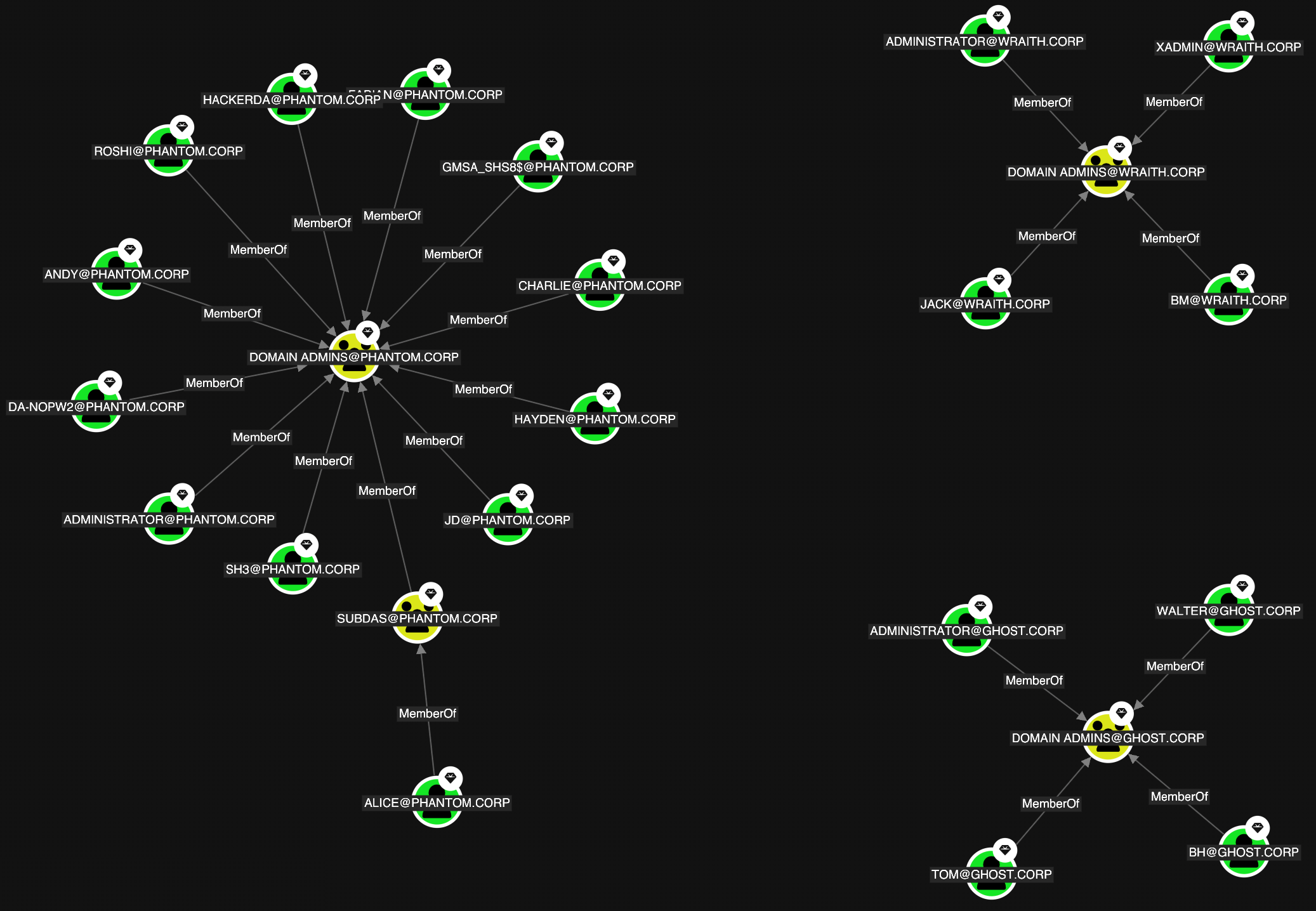 docs update · Nov 2026
· source
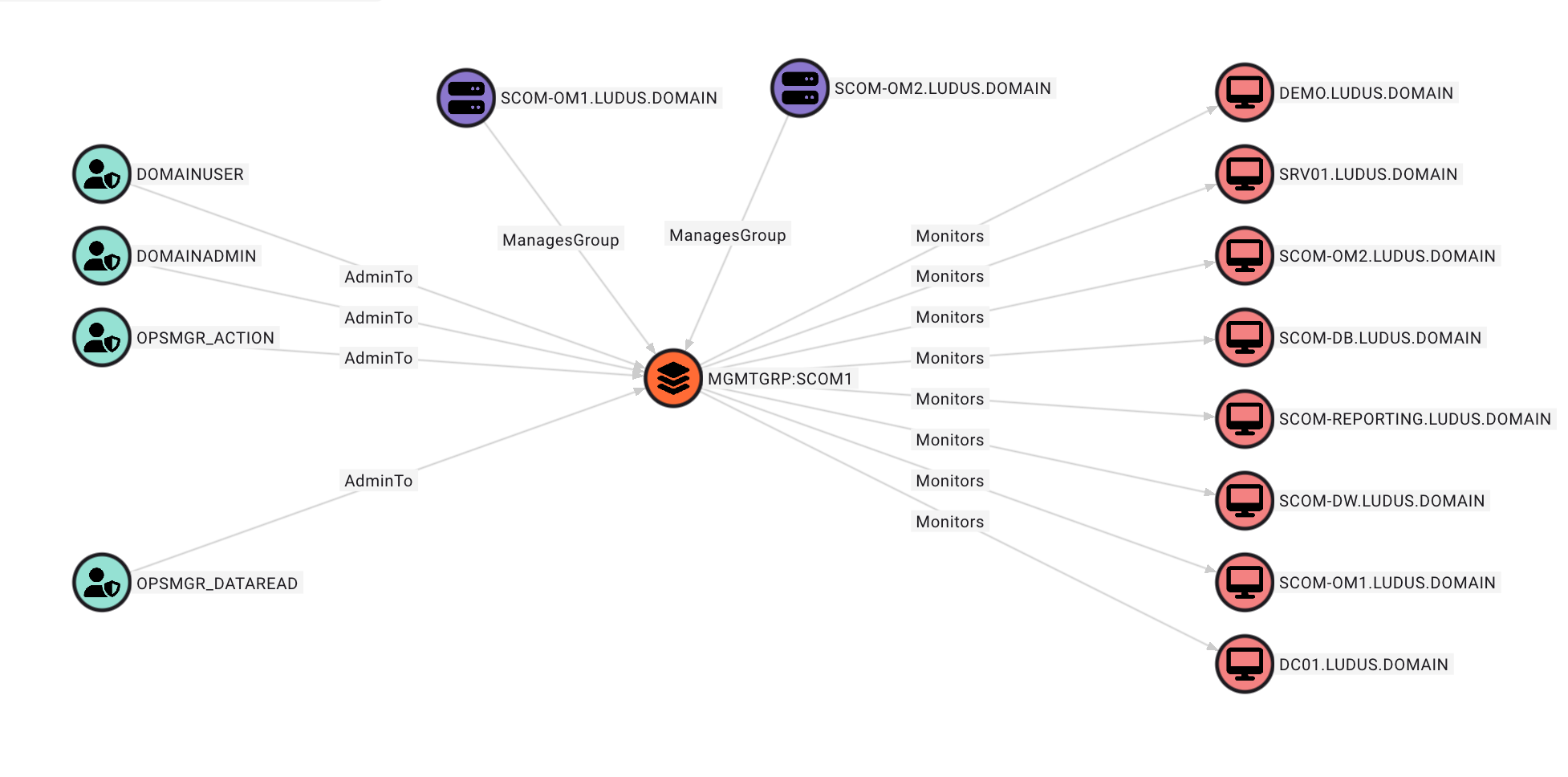 docs update · Aug 2026
· source
 Choose a badge style and copy the code →