NETRESEC
CapLoader 2.2 Released (2026-10-19) commercialThe section your link pointed to isn't on NETRESEC's page any more, so we've brought you to the top.
Netresec is a network forensics, packet sniffers and IT security products. Download NetworkMiner and other free software for network security analysis.
flowcarp --input xyz.pcap --output model:MalwareXYZ:MALICIOUS:malwarexyz.fcp
flowcarp --model malwarexyz.fcp --input new.pcap --output -
curl --data-binary @dump.pcap https://demo.flowcarp.com | jq
flowcarp --input xyz.pcap --output model:MalwareXYZ:MALICIOUS:malwarexyz.fcp
flowcarp --model malwarexyz.fcp --input new.pcap --output -
curl --data-binary @dump.pcap https://demo.flowcarp.com | jq
flowcarp --input xyz.pcap --output model:MalwareXYZ:MALICIOUS:malwarexyz.fcp
flowcarp --model malwarexyz.fcp --input new.pcap --output -
curl --data-binary @dump.pcap https://demo.flowcarp.com | jq
flowcarp --input xyz.pcap --output model:MalwareXYZ:MALICIOUS:malwarexyz.fcp
flowcarp --model malwarexyz.fcp --input new.pcap --output -
flowcarp --input xyz.pcap --output model:MalwareXYZ:MALICIOUS:malwarexyz.fcp
flowcarp --model malwarexyz.fcp --input new.pcap --output -
curl --data-binary @dump.pcap https://demo.flowcarp.com | jq
flowcarp --input xyz.pcap --output model:MalwareXYZ:MALICIOUS:malwarexyz.fcp
flowcarp --model malwarexyz.fcp --input new.pcap --output -
curl --data-binary @dump.pcap https://demo.flowcarp.com | jq
flowcarp --input xyz.pcap --output model:MalwareXYZ:MALICIOUS:malwarexyz.fcp
curl --data-binary @dump.pcap https://demo.flowcarp.com | jq
flowcarp --model malwarexyz.fcp --input new.pcap --output -
flowcarp --input xyz.pcap --output model:MalwareXYZ:MALICIOUS:malwarexyz.fcp
flowcarp --model malwarexyz.fcp --input new.pcap --output -
curl --data-binary @dump.pcap https://demo.flowcarp.com | jq
flowcarp --input xyz.pcap --output model:MalwareXYZ:MALICIOUS:malwarexyz.fcp
flowcarp --model malwarexyz.fcp --input new.pcap --output -
curl --data-binary @dump.pcap https://demo.flowcarp.com | jq
flowcarp --input xyz.pcap --output model:MalwareXYZ:MALICIOUS:malwarexyz.fcp
curl --data-binary @dump.pcap https://demo.flowcarp.com | jq
flowcarp --model malwarexyz.fcp --input new.pcap --output -
flowcarp --input xyz.pcap --output model:MalwareXYZ:MALICIOUS:malwarexyz.fcp
flowcarp --model malwarexyz.fcp --input new.pcap --output -
curl --data-binary @dump.pcap https://demo.flowcarp.com | jq
flowcarp --input xyz.pcap --output model:MalwareXYZ:MALICIOUS:malwarexyz.fcp
flowcarp --model malwarexyz.fcp --input new.pcap --output -
curl --data-binary @dump.pcap https://demo.flowcarp.com | jq
polarproxy --idletimeoutclient 60 --idletimeoutserver 120
polarproxy --helpenv
PolarProxy --socks 1080 --connect socks5:127.0.0.1:9050 --nontls allow --pcapoverip 57012 --writeall
PolarProxy --socks 1080 --idletimeoutclient 120 --idletimeoutserver 120 --tlstimeout 30
PolarProxy --socks 1080 --connect socks5:127.0.0.1:9050 --nontls allow --pcapoverip 57012 --writeall
PolarProxy --socks 1080 --timeout 30 --tlstimeout 30 --idletimeoutclient 120 --idletimeoutserver 120
PolarProxy --socks 1080 --connect socks5:127.0.0.1:9050 --nontls allow --pcapoverip 57012 --writeall
PolarProxy --socks 1080 --idletimeoutclient 120 --idletimeoutserver 120 --tlstimeout 30
PolarProxy --socks 1080 --connect socks5:127.0.0.1:9050 --nontls allow --pcapoverip 57012 --writeall
PolarProxy --socks 1080 --tlstimeout 10 --idletimeoutserver 120 --idletimeoutclient 120
PolarProxy --socks 1080 --connect socks5:127.0.0.1:9050 --nontls allow --pcapoverip 57012 --writeall
PolarProxy --socks 1080 --idletimeoutclient 120 --idletimeoutserver 300
polarproxy --idletimeoutclient 60 --idletimeoutserver 120
polarproxy --keyfile /etc/polarproxy/license.key
PolarProxy --socks 1080 --connect socks5:127.0.0.1:9050 --nontls allow --pcapoverip 57012 --writeall
# polarproxy.env
PP_SOCKS=1080
PP_PCAPOVERIP=57012
PP_IDLETIMEOUTCLIENT=120
PP_IDLETIMEOUTSERVER=120
PolarProxy --helpenv
PolarProxy --socks 1080 --connect socks5:127.0.0.1:9050 --nontls allow --pcapoverip 57012 --writeall
PP_SOCKS=1080
PP_CONNECT=socks5:127.0.0.1:9050
PP_IDLETIMEOUTCLIENT=120
PP_IDLETIMEOUTSERVER=120
PP_NONTLS=allow
PolarProxy --helpenv
curl --data-binary @suspicious.pcap https://demo.flowcarp.com
curl --data-binary @suspicious.pcap https://demo.flowcarp.com
Summary
NETRESEC is a commercial network forensics and traffic-analysis suite distributed as a set of desktop and command-line tools rather than a single hosted platform, so teams run pieces like NetworkMiner on Windows for packet sniffing and PCAPPCAPA packet capture, recorded network packets that can be inspected later. Analysts use it to reconstruct communication and investigate protocol behavior or suspicious traffic. parsing, CapLoader for sifting large PCAP files into flows, and PolarProxy as a self-hosted TLS inspection proxy, deployable via Docker, systemd, or Kubernetes with config supplied through environment variables. It is aimed at incident responders, malware analysts, and network security monitoring teams rather than general IT staff, and PolarProxy in particular targets those decrypting sandboxed malware traffic. Its own documentation positions tools like CapLoader as feeding into analysts' existing Wireshark or NetworkMiner workflows rather than replacing them. Active since 2010, with 14 tracked releases and the latest only 12 days old, the project is clearly maintained.
Netresec is a network forensics, packet sniffers and IT security products. Download NetworkMiner and other free software for network security analysis.
How NETRESEC helps
Which flows in this huge capture actually matter, and how do I get them into a real analyzer?
opens the PCAP as a filterable list of TCP/UDP flows, lets you select the ones of interest, and sends them straight to Wireshark or NetworkMiner with a click, instead of loading the whole capture into a packet-level tool
What is this sandboxed malware sample actually saying once it's inside its TLS session?
PolarProxy sits transparently in front of the sample's connections, decrypts and re-encrypts the TLS, and writes the cleartext to a PCAP file for review afterward
Which hosts, sessions, and files were exchanged on this network without me putting a probe inline?
NetworkMiner passively sniffs live traffic or parses an existing PCAP to surface operating systems, sessions, hostnames, open ports, and reassembled files and certificates
Does this capture contain traffic from a RAT that hides its C2 behind DoH and doesn't use TLS on its command channel?
FlowCarp applies a statistical detection model against the flows in an uploaded PCAP and returns a JSON alert when the traffic matches the RAT's known port-443 non-TLS C2 behavior, flagging DoH lookups to public resolvers as a precursor signal
Which IPs and domains should I be alerting on for a known C2 infrastructure right now?
the vendor's research blog lists confirmed C2 server IPs and associated domains tied to a tracked malware family, usable directly as network indicators of compromise
Can I check a suspicious capture for known malware C2 traffic without installing anything locally?
a hosted demo endpoint accepts a raw PCAP upload and returns a JSON verdict on whether the tracked RAT's traffic is present
Languages
Features
Built from NETRESEC's releases, docs, README and our own runs. “Seen” marks the month we first spotted a release the vendor didn't date. Group names and tags are our labels.
- NETRESEC covers 7 of the 34 network analysis capabilities we track.
- NETRESEC covers 1 of the 5 network observation capabilities we track.
- NETRESEC covers 1 of the 5 supply chain security capabilities we track.
What NETRESEC offers you
- Command-line interface3
- JSON data export2
- ML-based detection2
- Self-hosted deployment1
No capabilities match.
Intrusion detection and rules 3 features Network analysis since 2026
CNCMachineRMS C2 detection shipped Provides statistical detection models and network IOCs for identifying CNCMachineR RAT traffic on TCP port 443 without requiring TLS decryption.
Shared capability: Intrusion detection and rules
release
- FlowCarp can generate alerts and integrate with existing monitoring workflows, providing a complementary detection layer alongside traditional IDS rules and port-based detections. Stop Feeding the SOC Garbage (2026-10-06) · Oct 2026 · source · release history
-
Adds
flowcarp --model <file>.fcp --input <pcap> --output -to classify traffic in a new PCAP against a previously built protocol model. changelog · Sep 2026 · source · release history - Introduces FlowCarp statistical protocol classification as a malware-family identification layer, distinguishing C2 traffic by packet sizes, timing, message-length distributions, request/response behavior, and protocol structure — covering 600+ protocols on the commercial license. changelog · Sep 2026 · source · release history
-
Adds
flowcarp --model <file>.fcp --input <pcap> --output -to classify traffic in a new PCAP against a previously built custom model. Unmasking Malware Families (2026-09-21) · Sep 2026 · source · release history -
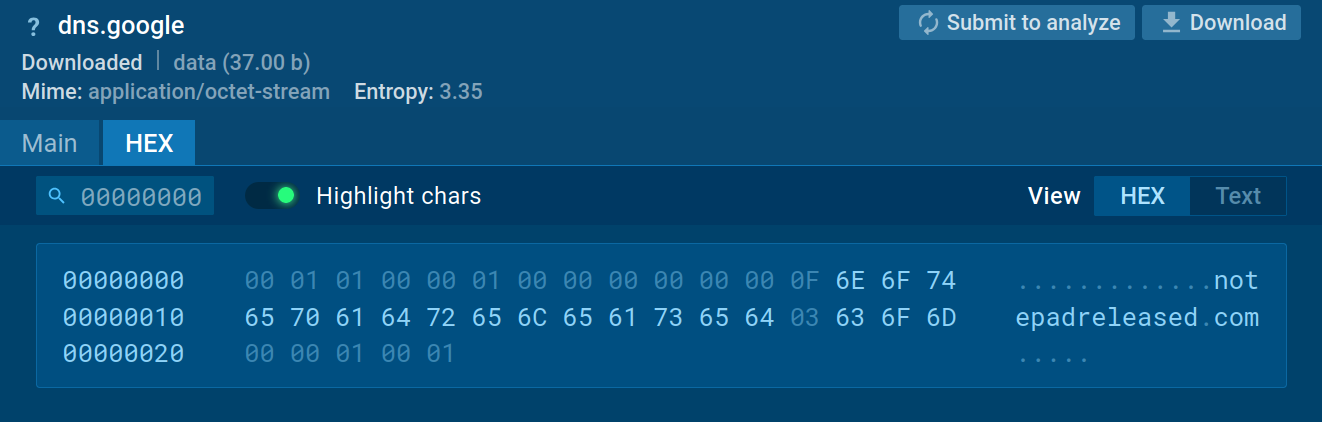
Adds a statistical detection model for the CNCMachineRMS binary C2 protocol to FlowCarp, enabling identification of this RAT's traffic on TCP port 443 without TLS decryption.
 CNCMachineRMS C2 Protocol (2026-08-21) · Aug 2026
· source
· release history
-
Documents four confirmed CNCMachineRMS C2 server IPs —
89.110.110.119:443,85.158.110.78:443,89.124.79.98:443,144.124.242.171:443— and two associated domains (notepadreleased[.]com,triotmelon[.]com) as actionable network IOCs. CNCMachineRMS C2 Protocol (2026-08-21) · Aug 2026 · source · release history
docs
- identifies application-layer protocols in network traffic by analyzing how connections behave, not just which ports they use. It can help analysts classify unknown traffic and identify malware C2 protocols. seen Sep 2026 · source
- CNCMachineRMS C2 Protocol This post describes the binary command-and-control (C2) protocol used by CNCMachineRMS, a recently identified remote access trojan (RAT). We cover how the protocol was discovered, how its infrastructure was identified, and how network defenders can detect it. seen Aug 2026 · source
- Friday, 21 August 2026 14:45:00 (UTC/GMT) CNCMachineRMS C2 Protocol This post describes the binary command-and-control (C2) protocol used by CNCMachineRMS, a recently identified remote access trojan (RAT). seen Aug 2026 · source
example 8 total
-
Classify traffic in a newly captured PCAP against a previously built protocol model to identify C2 activity.
flowcarp --model malwarexyz.fcp --input new.pcap --output -changelog · Sep 2026 · source -
Classify traffic in a new sandbox PCAP against the custom model to confirm which samples use the same C2 protocol.
flowcarp --model malwarexyz.fcp --input new.pcap --output -changelog · Sep 2026 · source -
Classify flows in a newly captured PCAP against a previously trained custom C2 protocol model.
flowcarp --model malwarexyz.fcp --input new.pcap --output -changelog · Sep 2026 · source -
Validate a newly built protocol model against captures from additional sandbox executions to confirm generalization.
flowcarp --model malwarexyz.fcp --input new.pcap --output -changelog · Sep 2026 · source -
Classify traffic in a new PCAP against your custom model to confirm C2 protocol matches across different samples or sandbox runs.
flowcarp --model malwarexyz.fcp --input new.pcap --output -changelog · Sep 2026 · source -
Classify traffic from a new sandbox capture against your custom protocol model to confirm C2 family attribution.
flowcarp --model malwarexyz.fcp --input new.pcap --output -Unmasking Malware Families (2026-09-21) · Sep 2026 · source
FlowCarp protocol identification engine shipped Classifies application-layer protocols — including proprietary, encrypted, obfuscated, and C2 protocols — by analyzing statistical characteristics of network flows, complementing traditional IDS signatures and port-based detections.
Shared capability: Intrusion detection and rules
Also counts toward: ML-based detection
release
-
FlowCarp detection model for
win.atlas_ratupdated to cover both the older SFuck and newer BFuck C2 protocol variants. changelog · Oct 2026 · source · release history - Introduces FlowCarp, a protocol-identification engine that classifies application-layer protocols — including proprietary, encrypted, obfuscated, and C2 protocols — by analyzing statistical characteristics of network flows rather than static IDS signatures or protocol parsers.︀︄︇︀︅︉︀︅︀︀︃︀︀︅︅︀︅︊︀︄︆︀︃︄ Stop Feeding the SOC Garbage (2026-10-06) · Oct 2026 · source · release history
- FlowCarp can generate alerts and integrate with existing monitoring workflows, providing a complementary detection layer alongside traditional IDS rules and port-based detections. Stop Feeding the SOC Garbage (2026-10-06) · Oct 2026 · source · release history
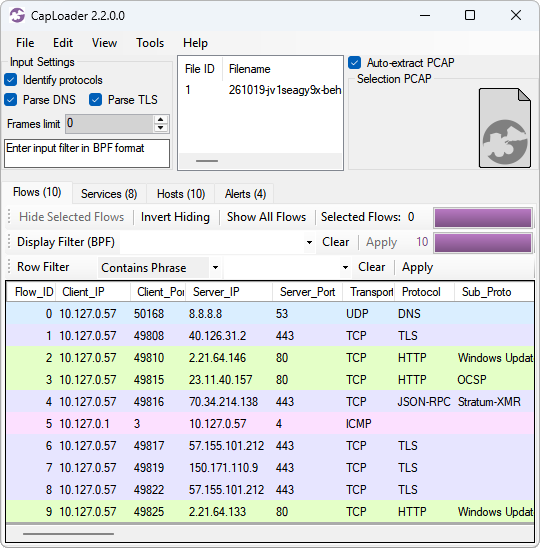
CapLoader abused infrastructure detection shipped Provides built-in detections for IPFS services, port forwarding services, abused web hosting and cloud storage, VPN/proxy/tunnel protocols, blockchain RPC nodes, paste bin domains, and bulletproof/scanner/VPN ASNs.
Shared capability: Intrusion detection and rules
release
-
Expands built-in detections to cover IPFS services and gateways, port forwarding services, abused web hosting and cloud storage, VPN/proxy/tunnel protocols, blockchain RPC nodes, paste bin domains, and bulletproof/scanner/VPN ASNs.
 CapLoader 2.2 Released (2026-10-19) · Oct 2026
· source
· release history
Protocol dissection (decoding packets) 2 features Network analysis since 2026
NetworkMiner RADIUS protocol parsing shipped Parses RADIUS authentication traffic to extract usernames, passwords, IP addresses, messages, and RADIUS-specific identifiers from captured network traffic.
Shared capability: Protocol dissection (decoding packets)
release
- Adds a RADIUS protocol parser that extracts usernames, passwords (encrypted or hashed), IP addresses, messages, and RADIUS-specific identifiers from captured traffic.︀︄︇︀︅︉︀︅︀︀︃︀︀︅︅︀︅︊︀︄︆︀︃︄ NetworkMiner 3.2 Released (2026-10-07) · Oct 2026 · source · release history
docs
- Erik Hjelmvik Wednesday, 07 October 2026 11:30:00 (UTC/GMT) NetworkMiner 3.2 Released NetworkMiner 3.2 parses RADIUS authentication data and extracts more details from the OT/ICS protocols UMAS and IEC-104. docs update · Oct 2026 · source
- from FTP , HTTP, HTTP/2 Credential extraction from COTP, FTP , HTTP, HTTP/2, IMAP, IRC, Kerberos , LPD, , POP3, RADIUS , SMB, SMTP SNMP , SOCKS and TDS. docs update · Oct 2026 · source
NetworkMiner protocol parser improvements shipped Improves existing parsers for HTTP, SIP, and DNS to extract additional data into the UI tabs, and fixes file-reassembly issues.
Shared capability: Protocol dissection (decoding packets)
release
- Improves HTTP, SIP, and DNS parsers to extract additional data into the UI tabs. NetworkMiner 3.2 Released (2026-10-07) · Oct 2026 · source · release history
docs
- NetworkMiner 3.2 Released NetworkMiner 3.2 parses RADIUS authentication data and extracts more details from the OT/ICS protocols UMAS and IEC-104. The release also improves several existing protocol parsers and fixes file-reassembly issues, helping analysts extract more information from captured network traffic. docs update · Oct 2026 · source
Network traffic analysis 2 features Network observation since 2026
FlowCarp demo server shipped Hosts a public demo instance accepting raw PCAP uploads to check for CNCMachineRMS C2 traffic and return JSON alerts.
Shared capability: Network traffic analysis
Also counts toward: JSON data export
release
-
Exposes a free demo web service at
https://demo.flowcarp.comaccepting raw PCAP uploads viacurl --data-binaryand returning a JSON response with detected flows, protocols, and alerts. changelog · Sep 2026 · source · release history -
Exposes a demo REST endpoint at
https://demo.flowcarp.comaccepting raw PCAP via HTTP POST and returning a JSON response of detected flows, protocols, and alerts. Unmasking Malware Families (2026-09-21) · Sep 2026 · source · release history - Supports detection of more than 600 protocols on the hosted demo service, with the ability to add custom protocol models from user-supplied example traffic. Unmasking Malware Families (2026-09-21) · Sep 2026 · source · release history
-
Exposes the FlowCarp demo server at
https://demo.flowcarp.comaccepting raw PCAP uploads viacurl --data-binaryand returning JSON alerts when CNCMachineRMS traffic is detected.
CNCMachineRMS C2 Protocol (2026-08-21) · Aug 2026
· source
· release history
example 9 total
-
Submit a PCAP to the free demo server to quickly identify protocols and C2 families across 600+ models without a local install.
curl --data-binary @dump.pcap https://demo.flowcarp.com | jqchangelog · Sep 2026 · source -
Submit a PCAP to the demo server for instant protocol identification across 600+ protocols without standing up a local FlowCarp instance.
curl --data-binary @dump.pcap https://demo.flowcarp.com | jqchangelog · Sep 2026 · source -
Quickly identify protocols and C2 alerts in a PCAP using the free demo service without standing up a local FlowCarp instance.
curl --data-binary @dump.pcap https://demo.flowcarp.com | jqchangelog · Sep 2026 · source -
Quickly triage a suspicious PCAP against 600+ known protocols via the free demo API and filter results with jq during incident response.
curl --data-binary @dump.pcap https://demo.flowcarp.com | jqchangelog · Sep 2026 · source -
Quickly identify C2 protocols in a PCAP during incident response without standing up a local FlowCarp instance.
curl --data-binary @dump.pcap https://demo.flowcarp.com | jqchangelog · Sep 2026 · source -
Submit a PCAP to the free demo server during triage to instantly identify C2 protocols across 600+ known families without a local FlowCarp install.
curl --data-binary @dump.pcap https://demo.flowcarp.com | jqchangelog · Sep 2026 · source
NetworkMiner Browsers tab documented Provides a Browsers tab in NetworkMiner Professional that surfaces browser-related data extracted from captured network traffic.
Shared capability: Network traffic analysis
docs
- NETRESEC » Blog » Video Browsers tab in NetworkMiner Professional # NetworkMiner Professional # Tutorial The Browsers tab is a unique feature only available in NetworkMiner Professional. seen Oct 2026 · source
Packet capture (live and offline) 1 feature Network analysis since 2026
PolarProxy PCAP capture extension shipped Extends PCAP-over-IP output to include all proxied traffic, not just decrypted TLS sessions.
Shared capability: Packet capture (live and offline)
release
-
Adds
--writeallflag to extend PCAP-over-IP output to include all proxied traffic, not only decrypted TLS sessions. changelog · Sep 2026 · source · release history -
Adds
--writeallflag to extend PCAP-over-IP output to include all proxied traffic, not just decrypted TLS. PolarProxy 2.0.2 Released (2026-09-08) · Sep 2026 · source · release history - Prioritizes accurate PCAP output by rate-limiting proxied traffic if the real-time PCAP-over-IP consumer falls behind, preserving every decrypted packet for forensic analysis 2.0.1 · Jun 2026 · source · release history
Capture filtering (BPF) 1 feature Network analysis since 2026
CapLoader BPF filter syntax feedback shipped Provides color and tooltip feedback in BPF filter boxes to warn users about possible syntax mistakes.
Shared capability: Capture filtering (BPF)
release
-
Adds color and tooltip feedback in BPF filter boxes to warn about possible syntax mistakes.
CapLoader 2.2 Released (2026-10-19) · Oct 2026
· source
· release history
File extraction from traffic 1 feature Network analysis
NetworkMiner Files tab documented Provides a Files tab in NetworkMiner for viewing and accessing files reassembled from captured network traffic.
Shared capability: File extraction from traffic
docs
- NETRESEC » Blog » Video Files tab in NetworkMiner Professional # NetworkMiner Professional # Tutorial The PCAP file analyzed in this video is pwned-se_150312_outgoing.pcap, which is a snippet of the 4.4 GB Hands-on Network Forensics dataset from FIRST 2015 (slides). seen Oct 2026 · source
Network anomaly detection 1 feature Network analysis since 2026
Custom statistical protocol models shipped Allows users to build and apply custom statistical detection models for network protocols using PCAP files via the CLI.
Shared capability: Network anomaly detection
Also counts toward: Command-line interface, ML-based detection
release 10 total
- FlowCarp protocol models can be built from example traffic captures alone, without requiring a formal protocol specification. Stop Feeding the SOC Garbage (2026-10-06) · Oct 2026 · source · release history
-
Adds
flowcarp --input <pcap> --output model:<Label>:<MALICIOUS|BENIGN>:<file>.fcpto build a custom statistical protocol model from example traffic captures.︀︄︇︀︅︉︀︅︀︀︃︀︀︅︅︀︅︊︀︄︆︀︃︄ changelog · Sep 2026 · source · release history -
Adds
flowcarp --output model:<label>:<tag>:<file>.fcpsyntax to train and save a custom protocol model from example capture files, enabling detection of proprietary or novel C2 protocols without hand-written signatures. changelog · Sep 2026 · source · release history -
Adds
--input,--output, and--modelflags to theflowcarpCLI for building and applying custom statistical protocol models from PCAP files.︀︄︇︀︅︉︀︅︀︀︃︀︀︅︅︀︅︊︀︄︆︀︃︄︀︄︇︀︅︉︀︅︀︀︃︀︀︅︅︀︅︊︀︄︆︀︃︄ Unmasking Malware Families (2026-09-21) · Sep 2026 · source · release history -
Adds
--output model:<Label>:<Severity>:<filename>to save a custom protocol model with specific metadata labels. Unmasking Malware Families (2026-09-21) · Sep 2026 · source · release history -
Adds
flowcarp --input <pcap> --output model:<label>:<class>:<file>.fcpto train a new protocol model from example C2 capture sessions. Unmasking Malware Families (2026-09-21) · Sep 2026 · source · release history
docs
- FlowCarp identifies application-layer protocols in network traffic by analyzing how connections behave, not just which ports they use. It can help analysts classify unknown traffic and identify malware C2 protocols. Unmasking Malware Families Identifying malware families is hard. seen Sep 2026 · source
example 8 total
-
Build a custom C2 protocol model from sandbox-captured sessions so FlowCarp can recognize that malware family in future PCAPs.
flowcarp --input xyz.pcap --output model:MalwareXYZ:MALICIOUS:malwarexyz.fcpchangelog · Sep 2026 · source -
Build a custom model for a newly discovered C2 protocol using sandbox capture sessions, so FlowCarp can recognise it in future PCAPs.
flowcarp --input xyz.pcap --output model:MalwareXYZ:MALICIOUS:malwarexyz.fcpchangelog · Sep 2026 · source -
Train a custom model from sandbox-captured C2 sessions so FlowCarp can recognize a new malware family in future captures.
flowcarp --input xyz.pcap --output model:MalwareXYZ:MALICIOUS:malwarexyz.fcpchangelog · Sep 2026 · source -
Train a custom C2 protocol model from sandbox PCAPs of a newly discovered malware family, then classify an unknown capture against it.
flowcarp --input xyz.pcap --output model:MalwareXYZ:MALICIOUS:malwarexyz.fcp flowcarp --model malwarexyz.fcp --input new.pcap --output -changelog · Sep 2026 · source -
Train a custom detection model from sandbox PCAP captures of an unknown C2 protocol so FlowCarp can recognize it in future traffic.
flowcarp --input xyz.pcap --output model:MalwareXYZ:MALICIOUS:malwarexyz.fcpchangelog · Sep 2026 · source -
Train a custom protocol model from sandbox C2 captures so FlowCarp can recognize a previously unknown malware family in future PCAPs.
flowcarp --input xyz.pcap --output model:MalwareXYZ:MALICIOUS:malwarexyz.fcpchangelog · Sep 2026 · source
New protocol support (added dissectors) 1 feature Network analysis since 2026
NetworkMiner OT/ICS protocol parsing shipped Extracts details from OT/ICS protocols including UMAS and IEC-104, with support for IEC-104 command IDs such as C_RC_TA_1 for monitoring step changes in power-grid control systems.
Shared capability: New protocol support (added dissectors)
release
-
Adds support for IEC-104 command ID 60 (
C_RC_TA_1) — 'Regulating step command with time tag CP56Time2a' — for monitoring step changes in European and Asian power-grid control systems. NetworkMiner 3.2 Released (2026-10-07) · Oct 2026 · source · release history
docs
- NetworkMiner 3.2 Released NetworkMiner 3.2 parses RADIUS authentication data and extracts more details from the OT/ICS protocols UMAS and IEC-104. The release also improves several existing protocol parsers and fixes file-reassembly issues, helping analysts extract more information from captured network traffic. docs update · Oct 2026 · source
SBOM generation 1 feature Supply chain security since 2026
PolarProxy SBOM distribution shipped Ships a Software Bill of Materials in SPDX format for supply-chain transparency and vulnerability scanning.
Shared capability: SBOM generation
Also counts toward: JSON data export
release
-
Ships with a software bill of materials (SBOM) in SPDX format as
polarproxy.spdx.json, covering all components, libraries, and dependencies for supply-chain transparency and vulnerability scanning integration. changelog · Sep 2026 · source · release history -
Ships with a software bill of materials in SPDX format named
polarproxy.spdx.jsonPolarProxy 2.0.2 Released (2026-09-08) · Sep 2026 · source · release history -
Ships a
polarproxy.spdx.jsonSBOM in SPDX format, listing all components, libraries, and dependencies for supply-chain transparency and vulnerability-scanner integration. PolarProxy 2.0.2 Released (2026-09-08) · Sep 2026 · source · release history
Other / not yet classified 9 features Features we have not matched to a capability yet. A suggested match is marked.
PolarProxy environment variable configuration shipped Supports using environment variables with the PP_ prefix as an alternative to command-line arguments for cleaner deployment configurations.
release
-
Supports environment variables as an alternative to command-line arguments, using uppercase names with the
PP_prefix (e.g.,PP_SOCKSmaps to--socks). changelog · Sep 2026 · source · release history -
Bundles a
docker-compose.yml(musl builds) or asystemdunit file withinstall-polarproxy-service.sh(non-musl Linux builds) to simplify initial deployment. changelog · Sep 2026 · source · release history -
Adds
--helpenvflag to print a full list of supported environment variables. changelog · Sep 2026 · source · release history -
Supports environment variables with the
PP_prefix (e.g.PP_SOCKSmaps to--socks) as an alternative to command-line arguments, enabling clean config/app separation for systemd, Docker, Podman, Kubernetes, and Helm deployments. PolarProxy 2.0.2 Released (2026-09-08) · Sep 2026 · source · release history -
Adds
--helpenvflag to print all supported environment variables. PolarProxy 2.0.2 Released (2026-09-08) · Sep 2026 · source · release history -
Adds
PP_<FLAG>environment variables as an alternative to command-line arguments for configuration PolarProxy 2.0.2 Released (2026-09-08) · Sep 2026 · source · release history
example
-
Run PolarProxy in Docker with idle-timeout and SOCKS settings supplied via environment variables instead of command-line flags, keeping secrets out of process arguments.
PP_SOCKS=1080 PP_CONNECT=socks5:127.0.0.1:9050 PP_IDLETIMEOUTCLIENT=120 PP_IDLETIMEOUTSERVER=120 PP_NONTLS=allowPolarProxy 2.0.2 Released (2026-09-08) · Sep 2026 · source -
Deploy using environment variables instead of CLI args for cleaner container orchestration.
PP_SOCKS=1080 PP_CONNECT=socks5:127.0.0.1:9050 PolarProxyPolarProxy 2.0.2 Released (2026-09-08) · Sep 2026 · source
Suricata rule distribution shipped Publishes detection signatures and actionable IOCs for known malware C2 traffic to a public repository for integration into cyber tooling.
release
-
Publishes all four Suricata rules to the Netresec Suricata GitHub repo at
https://github.com/Netresec/Suricata. changelog · Oct 2026 · source · release history -
Documents AtlasRAT JA3/JA3S fingerprints (
e26606c572e55d499b0676e9095e3df8/f98a4985f829b6513fbeccf5b751b458) and certificate thumbprint (a66308a1fb09c8345228ca00335e633b2dabde53) as actionable IOCs. changelog · Oct 2026 · source · release history -
Adds Suricata rule
sid:1471108to detect AtlasRAT self-signed X.509 certificate impersonatingupdate.microsoft.com. changelog · Oct 2026 · source · release history -
Adds Suricata rule
sid:1471107to detect AtlasRAT TLS C2 handshake on TCP port 443. changelog · Oct 2026 · source · release history -
Adds Suricata rule
sid:1471106to detect AtlasRAT loader BFuck C2 check-in (|42 46 75 63 6b 00 00 00|ontcp-pkt). changelog · Oct 2026 · source · release history -
Adds Suricata rule
sid:1471105to detect AtlasRAT loader SFuck C2 check-in (|53 46 75 63 6b 00 00 00|ontcp-pkt).︀︄︇︀︅︉︀︅︀︀︃︀︀︅︅︀︅︊︀︄︆︀︃︄ changelog · Oct 2026 · source · release history
docs
- Detecting AtlasRAT C2 Around May 2026 Atlas RAT began using a new variant of its command-and-control (C2) protocol. Earlier versions started with a distinctive byte sequence: 53 46 75 63 6b 00 00 00 In ASCII, that is SFuck followed by three null bytes. docs update · Oct 2026 · source
PolarProxy idle connection timeouts shipped Provides configurable timeout flags to close idle or stalled connections on the client and server sides.
Also counts toward: Command-line interface
release
-
Adds
--idletimeoutclient <seconds>and--idletimeoutserver <seconds>flags to close idle dead connections on the client and server sides respectively. changelog · Sep 2026 · source · release history -
Adds
--idletimeoutclient <seconds>and--idletimeoutserver <seconds>flags to close idle (dead) connections after a configurable period; complements the existing--timeout <seconds>(TCP handshake) and new--tlstimeout <seconds>(TLS handshake) flags. changelog · Sep 2026 · source · release history -
Adds
--idletimeoutclient <seconds>and--idletimeoutserver <seconds>flags to close idle dead connections on the client or server side; complements existing--timeout <seconds>(TCP handshake) and--tlstimeout <seconds>(TLS handshake) flags. PolarProxy 2.0.2 Released (2026-09-08) · Sep 2026 · source · release history -
Adds
--timeout,--tlstimeout,--idletimeoutclient, and--idletimeoutserverflags for connection idle and handshake timeouts PolarProxy 2.0.2 Released (2026-09-08) · Sep 2026 · source · release history
example
-
Prevent zombie connections in long-running deployments by dropping clients and servers that go silent for more than two minutes.
PolarProxy --socks 1080 --idletimeoutclient 120 --idletimeoutserver 120 --tlstimeout 30changelog · Sep 2026 · source -
Kill lingering zombie connections in long-running proxy sessions by enforcing idle timeouts on both sides of the connection.
PolarProxy --socks 1080 --timeout 30 --tlstimeout 30 --idletimeoutclient 120 --idletimeoutserver 120changelog · Sep 2026 · source -
Close idle client connections after 60 seconds to prevent zombie states.
PolarProxy --idletimeoutclient 60PolarProxy 2.0.2 Released (2026-09-08) · Sep 2026 · source
Malware family classification updates documented Documents corrections to malware family classifications, such as the confirmation that zgRAT is the same family as PureLogs Stealer and not PureRAT, with corresponding Emerging Threats rule updates.
docs
-
UPDATE 2026-10-05 Representatives from Proofpoint have affirmed that zgRAT should be considered to be the same malware family as PureLogs Stealer. They have also concluded that zgRAT is not the same malware family as PureRAT.
docs update · Oct 2026
· source
- UPDATE 2026-10-05 Representatives from Proofpoint have confirmed that zgRAT should be considered to be the same malware family as PureLogs Stealer. They have also concluded that zgRAT is not the same malware family as PureRAT. Emerging Threats rule 2035595 has since been updated to identify PureRAT rather than zgRAT. docs update · Oct 2026 · source
- UPDATE 2026-10-05 Representatives from Proofpoint have affirmed that zgRAT should be considered to be the same malware family as PureLogs Stealer. They have also concluded that zgRAT is not the same malware family as PureRAT. Emerging Threats rule 2035595 has since been updated to identify PureRAT rather than zgRAT. docs update · Oct 2026 · source
- UPDATE 2026-10-05 Representatives from Proofpoint have affirmed that zgRAT should be considered to be the same malware family as PureLogs Stealer. They have also concluded that zgRAT is not the same malware family as PureRAT. Emerging Threats rule 2035595 has since been updated to identify PureRAT r[...] docs update · Oct 2026 · source
- UPDATE 2026-10-05 Representatives from Proofpoint have affirmed that zgRAT should be considered to be the same malware family as PureLogs Stealer. They have also concluded that zgRAT is not the same malware family as PureRAT. Emerging Threats rule 2035595 has since been updated to identify PureRAT r[...] docs update · Oct 2026 · source
- UPDATE 2026-10-05 Representatives from Proofpoint have confirmed that zgRAT should be considered to be the same malware family as PureLogs Stealer. They have also concluded that zgRAT is not the same malware family as PureRAT. docs update · Oct 2026 · source
PolarProxy SOCKS proxy support shipped Enables tunneling outgoing proxied connections through upstream SOCKS4 or SOCKS5 proxy servers.
Also counts toward: Command-line interface
release
-
Adds
--tlstimeout <seconds>for a dedicated TLS-handshake timeout, separate from the existing TCP-handshake--timeout; default is 30 seconds. changelog · Sep 2026 · source · release history -
Adds
--connect socks5:<host>:<port>(andsocks4) to route PolarProxy's outgoing connections through an upstream SOCKS4 or SOCKS5 proxy, enabling use cases such as inspecting HTTPS traffic before forwarding it through Tor.︀︄︇︀︅︉︀︅︀︀︃︀︀︅︅︀︅︊︀︄︆︀︃︄ changelog · Sep 2026 · source · release history -
Supports environment variables as an alternative to command-line arguments; variables use the
PP_prefix (e.g.,PP_SOCKSmaps to--socks), enabling clean config separation for systemd, Docker, Podman, Kubernetes, and Helm deployments via apolarproxy.envfile. changelog · Sep 2026 · source · release history -
Adds
--connect socks5:<host>:<port>(andsocks4) to tunnel outgoing connections through an upstream SOCKS4 or SOCKS5 proxy server, enabling use cases such as routing decrypted TLS inspection traffic through Tor. PolarProxy 2.0.2 Released (2026-09-08) · Sep 2026 · source · release history -
Adds
--connectCLI argument to tunnel outgoing connections through a SOCKS proxy (SOCKS4/5) PolarProxy 2.0.2 Released (2026-09-08) · Sep 2026 · source · release history
PolarProxy deployment simplification shipped Bundles docker-compose.yml or systemd unit files along with installation scripts to simplify initial service deployment.
Also counts toward: Self-hosted deployment
release
-
Bundles a
docker-compose.yml(musl builds) or asystemdunit file withinstall-polarproxy-service.sh(non-musl Linux builds) to simplify initial deployment. changelog · Sep 2026 · source · release history -
Ships a
docker-compose.yml(musl builds) or systemd unit file withinstall-polarproxy-service.sh(non-musl Linux builds) to simplify deployment alongside apolarproxy.envconfiguration file. PolarProxy 2.0.2 Released (2026-09-08) · Sep 2026 · source · release history - Reduces CPU and memory use by caching less data through a major overhaul of the data-flow logic to support more simultaneous sessions 2.0.1 · Jun 2026 · source · release history
CapLoader flow transcript navigation shipped suggested Enables keyboard navigation between flow transcripts using arrow keys with pre-fetching, and allows opening transcripts for selected flows from any tab.
Suggested capability: Network flow analysis. This is our guess, not confirmed.
release
-
Enables keyboard navigation between flow transcripts using the arrow keys, with pre-fetching of the next Flow Index for faster loading.
CapLoader 2.2 Released (2026-10-19) · Oct 2026
· source
· release history
- Pressing Enter on any tab now opens the transcript for the selected flow(s), not only from the Flows tab. CapLoader 2.2 Released (2026-10-19) · Oct 2026 · source · release history
CapLoader alert-based row coloring shipped suggested Colors each flow, service, and host by the highest-severity alert associated with it using the AlertSeverity color scheme.
Suggested capability: Display filtering. This is our guess, not confirmed.
release
-
Adds the
AlertSeverityrow color scheme, coloring each flow, service, and host by the highest-severity alert associated with it.︀︄︇︀︅︉︀︅︀︀︃︀︀︅︅︀︅︊︀︄︆︀︃︄
CapLoader 2.2 Released (2026-10-19) · Oct 2026
· source
· release history
CapLoader external blocklist integration shipped suggested Supports external blocklists from IFIN, GAYINT, and Spamhaus as alert sources within CapLoader.
Suggested capability: Rule source management and updates. This is our guess, not confirmed.
release
-
Adds support for external blocklists from IFIN, GAYINT, and Spamhaus as alert sources.
CapLoader 2.2 Released (2026-10-19) · Oct 2026
· source
· release history
Lines in monospace are the tool's own words: help text
parsed from its source, or an endpoint from its API document. Under
release, a line is our summary of a dated release. Under
docs, it is quoted from the tool's own documentation or
website. Each links back to the source it came from.
Command line
13 commands for NETRESEC, each with where it came from. This tool has no source analysis yet, so there is no option reference and no captured run beside them.
No command matches.
Screenshots
From the release notes, newest first. Click one to see it full size.Media
Videos from the release notes, newest first. They play right here.Score card
-
Shipping velocity releases a month, last 12 months
-
Documentation quality release-notes rubric, 0–100
-
Breaking-change discipline how rarely a release breaks users, and notice given
-
Maintenance risk quiet time against its own cadence, maintainers
-
Innovation & surface new capabilities, API and MCP surface
Five scores for NETRESEC, each built from the releases, notes and API history this site tracks — and, on Researcher and Business, where it stands among every measured tool in its category and how that has moved.
Score cards are part of every paid plan.
See plans → Already subscribed? Sign in →Trajectory
Blank means never measured; nothing here is a filled-in zero.
Peer standings are included with Researcher and Business. See how this tool ranks against its competitors, using data we don't publish anywhere else.
See plans →Each score is 0–100 on a published rubric, derived from data this site already shows. A dimension we cannot measure says so — it is never scored 0 and never enters a rank.
How this is scored
- Shipping velocity — releases a month over the last 12 months, on a log scale where 16 a month scores 100. Needs 3 releases in the window.
- Documentation quality — the release-notes rubric published on the analytics page, unchanged.
- Breaking-change discipline — the share of releases carrying a breaking change (none scores 100, half or more scores 0). Only projects that label breaking changes are measured: a clean record cannot be told from an unlabelled one.
- Maintenance risk — quiet time measured against the tool's own release cadence (quiet longer than 90 days and three typical gaps scores 0), plus the number of active maintainers and whether contributors are growing, where known. Higher is lower risk.
- Innovation & surface — new capabilities in the feature ledger this year, API and MCP operations added, and the share of commits that are features: the mean of whichever we hold.
- Community health (open-source tools only) — each is a direction, not a size: contributors this year against last, the bus factor now against a year ago, and issues closed per issue opened, where steady scores 50, doubled 100 and halved 0; plus the median time to a maintainer's first reply (an hour scores about 100, a month or more 0). A commercial card has no repository and carries none of the four.
- Documented delivery (commercial tools) — when a vendor's documented new capabilities have slowed against its own baseline, that counts against the overall standing as heavily as two low dimensions. Steady delivery, or too little history to judge, leaves the standing alone; it is never a sixth score.
- Open-source tools are scored on repository signals; commercial tools on their published changelog. Ranks compare tools within one category and one profile and need at least five measured peers; the overall standing needs three ranked dimensions. Best-in-breed or consolidator is a shape, not a quality, and is never scored.
Release-note detail over time
See how much detail NETRESEC puts in its release notes, quarter by quarter, and compare it with tracked tools in the same category. This history uses up to ten retained, reviewed notes per tool; sparse or blank older quarters may reflect that limit.
Checking release-note history…
Website history
netresec.com, every changeNETRESEC's home page as it looked each month from August 2021 to October 2026: 12 renders, 0 changes of tagline or palette. Step through them, play them, or put any two months side by side.
Website history is included with Researcher and Business.
See plans → Already subscribed? Sign in →← → or h l a month · Shift a year · [ ] previous / next change · Space play · 1 2 3 page · T whole page · C compare · F full size
← → or h l the right month · Shift the left · S swap · W wipe · T whole page · Esc back
Rebranding timeline
Dates bound when a change appeared between captures. Possible rebrands are AI suggestions; a redesign alone does not establish a rebrand.
Coverage
Missing something? Tell us
What NETRESEC connects to, runs on and detects, read from its release notes and docs. So far: 10 new detections, 9 updated detections, 2 new integrations.
21 changes, tracked since Oct 5, 2026.
-
Oct 202026
new Abuse-oriented infrastructure detections
No new names. Restates the 7 already listed.
New alert types include: IPFS services and gateways Port forwarding services Abused web hosting and cloud storage services VPN, proxy and tunnel protocols Blockchain RPC nodes Paste bin domains Bulletproof, scanner and VPN ASNs
-
Oct 202026
new External blocklist support from IFIN, GAYINT, and Spamhaus
CapLoader's alerting has been expanded with built-in detections for online services and infrastructure that are commonly abused, along with support for external blocklists from IFIN GAYINT and Spamhaus
-
Oct 202026
new Alerts for services and infrastructure that may be abused
CapLoader 2.2 adds new alerts for services and infrastructure that may be abused
-
Oct 192026
new Abuse-focused infrastructure alert detections
Adds IPFS services and gateways, Port forwarding services, Abused web hosting and cloud storage services, VPN, proxy and tunnel protocols, Blockchain RPC nodes, Paste bin domains, Bulletproof, scanner and VPN ASNs. 7 in all.
New alert types include: IPFS services and gateways Port forwarding services Abused web hosting and cloud storage services VPN, proxy and tunnel protocols Blockchain RPC nodes Paste bin domains Bulletproof, scanner and VPN ASNs
-
Oct 192026
new External blocklist support
With IFIN, GAYINT, Spamhaus
support for external blocklists from IFIN , GAYINT and Spamhaus
-
Oct 122026
updated AtlasRAT C2 detection
Around May 2026 Atlas RAT began using a new variant of its command-and-control (C2) protocol. Earlier versions started with a distinctive byte sequence: 53 46 75 63 6b 00 00 00 In ASCII, that is SFuck followed by three null bytes. The newer traffic starts with BFuck, also followed by three null byte[...]
-
Oct 122026
new Atlas RAT BFuck C2 check-in detection (Suricata)
With win.atlas_rat, Silver Fox, Void Arachne, TA4922, SwimSnake, UTG-Q-1000
alert tcp-pkt $HOME_NET any -> $EXTERNAL_NET any (msg:"Atlas RAT loader BFuck checkin"; flow:to_server; content:" · 42 46 75 63 6b 00 00 00 · "; startswith; metadata: malware_family win.atlas_rat; classtype:trojan-activity; reference:url,https://netresec.com/?b=26A6cc8; sid:1471106; rev:1;)
-
Oct 122026
new Atlas RAT SFuck C2 check-in detection (Suricata)
With win.atlas_rat
alert tcp-pkt $HOME_NET any -> $EXTERNAL_NET any (msg:"Atlas RAT loader SFuck checkin"; flow:to_server; content:" · 53 46 75 63 6b 00 00 00 · "; startswith; metadata: malware_family win.atlas_rat; classtype:trojan-activity; reference:url,https://netresec.com/?b=26A6cc8; sid:1471105; rev:1;)
-
Oct 122026
new Atlas RAT TLS handshake detection (Suricata)
With win.atlas_rat
alert tcp-pkt $HOME_NET any -> $EXTERNAL_NET 443 (msg:"Atlas RAT TLS handshake"; flow:established,to_server; content:" · 00 00 0c 00 3d 00 35 00 9c 00 3c 00 2f 00 ff 01 00 00 10 00 0d 00 04 00 02 04 01 00 16 00 00 00 17 00 00 · "; offset:43; metadata: malware_family win.atlas_rat; classtype:trojan-activity; reference:url,https://netresec.com/?b=26A6cc8; sid:1471107; rev:1;)
-
Oct 122026
new Atlas RAT fake Microsoft X.509 certificate detection (Suricata)
With win.atlas_rat, update.microsoft.com, a66308a1fb09c8345228ca00335e633b2dabde53
alert tls $EXTERNAL_NET 443 -> $HOME_NET any (msg:"Atlas RAT fake Microsoft certificate"; flow:established,to_client; content:" · 03 7d 30 82 03 79 30 82 02 61 a0 03 02 01 02 02 14 64 72 4e 8c f1 71 88 bc ff e5 19 0b 69 e0 cb 52 6d 38 9a df 30 0d 06 09 2a 86 48 86 f7 0d 01 01 0b 05 00 30 4c 31 1d 30 1b 06 03 55 04 03 0c 14 75 70 64 61 74 65 2e 6d 69 63 72 6f 73 6f 66 74 2e 63 6f 6d · "; offset:12; depth:107; classtype:trojan-activity; reference:url,https://netresec.com/?b=26A6cc8; sid:1471108; rev:1;)
-
Oct 122026
updated FlowCarp Atlas RAT detection model updated to cover BFuck variant and TLS C2
With win.atlas_rat
The updated model now includes examples of both variants. Because FlowCarp analyzes more than just the initial check-in sequence, we expect it to reliably detect Atlas RAT traffic even if that sequence changes again.
-
Oct 82026
new RADIUS protocol parser
NetworkMiner now includes a parser for the authentication and authorization protocol RADIUS. The parser extracts usernames, passwords (encrypted or hashed), IP addresses, messages and various RADIUS-specific identifiers.
-
Oct 82026
updated UMAS parser: Read Physical Address and Write Physical Address command support
With Schneider Modicon PLC
NetworkMiner can now extract data from UMAS commands 'Read Physical Address' and 'Write Physical Address'. This addition enables analysts to determine not only if data stored in memory of a Schneider Modicon PLC has been modified, but also what changed.
-
Oct 82026
updated IEC-104 command ID 60 (C_RC_TA_1) support
With IEC 60870-5-104
In this release we've added support for IEC-104 command ID 60 (C_RC_TA_1) 'Regulating step command with time tag CP56Time2a', which is used to increase or decrease a data-point by one.
-
Oct 62026
new FlowCarp statistical protocol detection
With application-layer protocols, malware command-and-control (C2) traffic
FlowCarp can identify both legitimate and malicious protocols, including protocols used for malware command-and-control (C2) traffic. It can also generate alerts and integrate with existing monitoring workflows.
-
Oct 62026
updated Emerging Threats rule 2035595 updated to distinguish PureRAT from PureLogs Stealer / zgRAT
Emerging Threats rule 2035595 has since been updated to identify PureRAT r[...]
-
Oct 62026
new FlowCarp statistical protocol identification
FlowCarp takes a different approach. It identifies application-layer protocols by analyzing statistical characteristics of network traffic and comparing them with models of known protocols. This does not require a formal protocol specification. A protocol model can be created from example traffic, including traffic from a protocol that is difficult to express as a conventional IDS signature. FlowCarp can identify both legitimate and malicious protocols, including protocols used for malware command-and-control (C2) traffic.
-
Oct 52026
updated Emerging Threats rule 2035595 updated to identify PureRAT instead of zgRAT
With PureLogs Stealer
Emerging Threats rule 2035595 has since been updated to identify PureRAT rather than zgRAT.
-
Oct 52026
updated Emerging Threats rule 2035595 updated to identify PureRAT
With zgRAT, PureLogs Stealer
Emerging Threats rule 2035595 has since been updated to identify PureRAT
-
Oct 52026
updated Emerging Threats rule 2035595 updated to reflect zgRAT / PureRAT / PureLogs Stealer family classification
Representatives from Proofpoint have confirmed that zgRAT should be considered to be the same malware family as PureLogs Stealer. They have also concluded that zgRAT is not the same malware family as PureRAT. Emerging Threats rule 2035595 has since been updated to identify PureRAT[...]
-
Oct 52026
updated Emerging Threats rule 2035595 updated to reflect zgRAT / PureRAT / PureLogs Stealer family classification
Emerging Threats rule 2035595 has since been updated to identify PureRAT[...]
Endpoint & network security 1
Other 2
Nothing first seen in this window. That doesn't mean NETRESEC shipped nothing, only that we found no record of it.
How we count
Read from 20 of 48 release notes and docs updates we hold for NETRESEC. "First seen" is the earliest note that names something; "last" is the latest. Our history may start partway through NETRESEC's life, so an old integration can show a recent first-seen date.
Each change counts once: "added 40 checks" is one line, so the numbers measure how often coverage moves, not how big the catalogue is or how well it detects.
Releases
48 entries
No entries match these filters.
- October 202623
- September 202622
- August 20262
- June 20261
Add the badge to your README
Maintain this project? The badge links readers straight to this page, so they can follow every release here.
 Choose a badge style and copy the code →