GitGuardian SaaS
api-docs-dbcff7cc4c0f commercialThe section your link pointed to isn't on GitGuardian SaaS's page any more, so we've brought you to the top.
GitGuardian SaaS is a secrets detection and security platform that scans code repositories to prevent sensitive data leaks and policy violations.
curl -H 'Authorization: Token <PAT>' \
  https://api.gitguardian.com/v1/occurrences/secrets/<occurrence_id>/content
curl -X PATCH \
  -H 'Authorization: Token <PAT>' \
  -H 'Content-Type: application/json' \
  -d '{"incident_mode": "creates_incidents"}' \
  https://api.gitguardian.com/v1/nhi/policies/<policy_name>
ggshield machine report --background
scan:
  resources:
    background:
      mode: auto
ggshield machine dashboard
ggshield machine report --background
scan:
  resources:
    background:
      mode: auto
ggshield machine dashboard
curl -X DELETE 'https://api.gitguardian.com/v1/incidents/secrets/8821/destination-tickets/PROJ-42?resource_type=secret-incidents' \
  -H 'Authorization: Token <your_api_token>'
curl -G 'https://api.gitguardian.com/v1/nhi/identities' \
  -H 'Authorization: Token <your_api_token>' \
  --data-urlencode 'env__in=production' \
  --data-urlencode 'policy__in=long_lived_secret' \
  --data-urlencode 'risk_criticality__in=critical'
curl 'https://api.gitguardian.com/v1/nhi/identities/arn%3Aaws%3Aiam%3A%3A123456789012%3Auser%2Fci-deployer/locations' \
  -H 'Authorization: Token <your_api_token>'
curl -X POST https://api.gitguardian.com/v1/check-runs/{check_run_id}/skip \
  -H 'Authorization: Token <your_api_token>' \
  -H 'Content-Type: application/json' \
  -d '{"reason": "<skip_reason>"}'
curl -X GET 'https://api.gitguardian.com/v1/check-runs?incident_id=<incident_id>' \
  -H 'Authorization: Token <your_api_token>'
curl -s -H 'Authorization: Token <manager-token>' 'https://api.gitguardian.com/v1/check-runs?incident_id=3759'
curl -s -X POST -H 'Authorization: Token <manager-token>' -H 'Content-Type: application/json' -d '{"reason": "false_positive"}' 'https://api.gitguardian.com/v1/check-runs/42/skip'
[check]
enabled = false
curl -s -H 'Authorization: Token <api_key>' 'https://api.gitguardian.com/v1/nhi/identities/{identity_id}/owners'
curl -s -X POST -H 'Authorization: Token <api_key>' -H 'Content-Type: application/json' -d '{"owner_id": "<owner_id>"}' 'https://api.gitguardian.com/v1/nhi/identities/{identity_id}/owners'
curl -s -X DELETE -H 'Authorization: Token <api_key>' 'https://api.gitguardian.com/v1/nhi/identities/{identity_id}/owners/{owner_id}'
[check]
enabled = false
curl -X POST 'https://api.gitguardian.com/v1/incidents/secrets/42/check-presence' \
  -H 'Authorization: Token <your-api-token>'
curl -G 'https://api.gitguardian.com/v1/incidents' \
  -H 'Authorization: Token <your-api-token>' \
  --data-urlencode 'source_monitoring_status__all=deleted,archived'
curl -s -X POST 'https://api.gitguardian.com/v1/incidents/secrets/42/check-presence' \
  -H 'Authorization: Token <your_api_token>'
curl -s -X POST 'https://api.gitguardian.com/v1/secret-observability/identities/1234/owners' \
  -H 'Authorization: Token <your_api_token>' \
  -H 'Content-Type: application/json' \
  -d '{"owners": [{"email": "alice@example.com"}, {"email": "bob@example.com"}]}'
curl -s 'https://api.gitguardian.com/v1/incidents/secrets?source_monitoring_status__in=archived,unreachable' \
  -H 'Authorization: Token <your_api_token>'
api_timeout: 120
curl -X POST 'https://api.gitguardian.com/v1/incidents/secrets/42/check-presence' \
  -H 'Authorization: Token <your_api_token>'
curl -X POST 'https://api.gitguardian.com/v1/secret-observability/identities/1234/owners' \
  -H 'Authorization: Token <your_api_token>' \
  -H 'Content-Type: application/json' \
  -d '{"owners": [{"email": "alice@example.com"}]}'
curl -G 'https://api.gitguardian.com/v1/incidents/secrets' \
  -H 'Authorization: Token <your_api_token>' \
  --data-urlencode 'source_monitoring_status__all=archived,deleted_on_remote'
api_timeout: 120
curl -s -X POST https://api.gitguardian.com/v1/incidents/secrets/42/check-presence \
  -H 'Authorization: Token <your_api_token>'
curl -s -X POST https://api.gitguardian.com/v1/secret-observability/identities/99/owners \
  -H 'Authorization: Token <manager_api_token>' \
  -H 'Content-Type: application/json' \
  -d '{"owners": [{"email": "alice@example.com"}]}'
curl -s 'https://api.gitguardian.com/v1/incidents/secrets?source_monitoring_status__nin=archived,deleted_on_remote' \
  -H 'Authorization: Token <your_api_token>'
api_timeout: 120
curl -H 'Authorization: Token <your-pat>' \
  'https://api.gitguardian.com/v1/occurrences/secrets/42/content'
curl -H 'Authorization: Token <your-pat>' \
  'https://api.gitguardian.com/v1/scans?active_or_updated_since=2025-09-22T10:00:00Z'
curl -H 'Authorization: Token <your-pat>' \
  'https://api.gitguardian.com/v1/scans/<scan_id>'
api_timeout: 120
api_timeout: 120
curl -s -H 'Authorization: Token <your_api_key>' https://api.gitguardian.com/v1/detector-custom-hosts | jq '.[] | {detector: .detector_name, default: .checker_default_base_url, custom: [.custom_hosts[].base_url]}'
while true; do
  resp=$(curl -s -H 'Authorization: Token <your_api_key>' "https://api.gitguardian.com/v1/historical-scans/<scan_id>/progress")
  report_status=$(echo "$resp" | jq -r '.report_status')
  echo "report_status: $report_status"
  if [ "$report_status" = "done" ] || [ "$report_status" = "unavailable" ]; then
    echo "$resp" | jq '{duration_seconds, pending_seconds, outcome_by_reason}'
    break
  fi
  sleep 5
done
curl -s -H 'Authorization: Token <your_api_token>' https://api.gitguardian.com/v1/detector-custom-hosts
curl -s -H 'Authorization: Token <your_api_key>' https://api.gitguardian.com/v1/detector-custom-hosts | jq '.'
api_timeout: 120
ggshield machine setup
sbx secret set gitguardian
curl -s -H 'Authorization: Token <your_api_token>' https://api.gitguardian.com/v1/detector-custom-hosts
curl -s -H 'Authorization: Token <your_api_key>' https://api.gitguardian.com/v1/detector-custom-hosts
curl -s -H 'Authorization: Token <your_api_token>' https://api.gitguardian.com/v1/detector-custom-hosts | jq '.[] | {detector: .detector_name, default: .checker_default_base_url, custom: [.custom_hosts[].base_url]}'
curl -H 'Authorization: Token <your_api_token>' https://api.gitguardian.com/v1/detector-custom-hosts
ggshield machine setup
ggshield ai discover --history
ggshield machine setup
ggshield ai discover --history
ggshield auth logout
ggshield auth login --scopes honeytokens:write
ggshield machine setup
ggshield machine setup --no-honeytokens
ggshield machine doctor
ggshield machine setup
ggshield ai discover --history
curl -s -H 'Authorization: Token <api_key>' 'https://api.gitguardian.com/v1/incidents/secrets/42/locations?monitored=true&number_of_mentions_min=2&ordering=-number_of_mentions'
curl -s -H 'Authorization: Token <api_key>' 'https://api.gitguardian.com/v1/scans/<scan_id>/live-progress'
curl -s -H 'Authorization: Token <api_key>' 'https://api.gitguardian.com/v1/sources/5523/locations?search=settings.py&code_fix_request_status=created'
ggshield honeytoken plant
curl -X PATCH https://api.gitguardian.com/v1/sources/custom/<source_id> \
  -H 'Authorization: Token <api_key>' \
  -H 'Content-Type: application/json' \
  -d '{"use_only_detectors_with_validators": true}'
ggshield honeytoken plant
ggshield honeytoken plant
celeryWorkers:
  public-monitoring:
    enabled: true
mcpServer:
  enabled: true
celeryWorkers:
  public-monitoring:
    enabled: true
mcpServer:
  enabled: true
curl -s -H 'Authorization: Token <your_api_token>' 'https://api.gitguardian.com/v1/incidents/<incident_id>/activity' | jq .
/plugin install ggshield
ggshield install -t claude-code
GET /audit-log?user_id=<USER_ID>&date_from=<DATE>&date_to=<DATE>
ggshield auth login
Summary
GitGuardian SaaS is a commercial secrets-detection platform that scans code repositories, CI/CD pipelines, and non-code sources such as Confluence, Jira, Slack, and Microsoft Teams for hardcoded and exposed credentials, run as a hosted service (with a self-hosted option for those who need it) alongside a companion CLI for local scanning. It is built for application security and platform teams responsible for remediating leaked secrets across a growing perimeter, and it plugs into existing workflows through Jira, ServiceNow, Slack, and Teams notifiers with severity- and risk-based filtering to cut noise. Its NHI GovernanceNHI GovernanceThe policies, controls, and lifecycle management applied to Non-Human Identities — service accounts, API keys, tokens, and certificates — to enforce least-privilege access and reduce credential sprawl across systems. and Honeytoken products extend it beyond detection into non-human identitynon-human identityA non-human identity, an account or credential used by software or a device rather than a person. Service accounts, workload identities and automation tokens need their own permissions and lifecycle controls. posture and intrusion decoys, a broader scope than plain secrets scanners. Launched in 2017 and still shipping actively, with 22 releases tracked and the last one 24 days ago, it shows a steady release cadence rather than a stalled project.
GitGuardian SaaS is a secrets detection and security platform that scans code repositories to prevent sensitive data leaks and policy violations.
How GitGuardian SaaS helps
Which of my repositories, pipelines, or chat and ticketing tools have hardcoded credentials sitting in them right now?
scans code repositories, CI/CD pipelines, and non-code sources like Confluence, Jira, Slack, and Microsoft Teams, and lists every hardcoded or exposed secret it finds as an incident
Which of these flagged secrets are actually worth someone's time?
scores each incident by severity and validity and, for non-code sources, runs an LLM-based model that auto-tags a share of generic findings as false positives before they reach the dashboard
Has anyone tried to break into our systems using a decoy credential?
seeds honeytokens across sensitive assets and raises an alert the moment one is accessed, giving an early signal separate from ordinary secret detection
What is the state of our non-human identities across our infrastructure?
gives observability into service accounts, API keys, and other non-human identities and reports on their security posture, not just individual leaked strings
Did a secret get introduced on this pull request, or was it already sitting on the target branch?
check runs can be scoped to skip merge commits so only secrets newly added on the PR branch are flagged, and oversized PRs are scanned via cloning instead of failing silently against API limits
Is a connected source quietly failing to feed us data?
tracks per-source health (monitored, unreachable, archived, deleted) and auto-pauses and resumes ingestion, surfacing which sources need attention instead of going silent
Languages
Features
Built from GitGuardian SaaS's releases, docs, README and our own runs. “Seen” marks the month we first spotted a release the vendor didn't date. Group names and tags are our labels.
- GitGuardian SaaS covers 2 of the 2 secrets and credential hygiene capabilities we track.
- GitGuardian SaaS covers 1 of the 5 supply chain security capabilities we track.
What GitGuardian SaaS offers you
- Command-line interface7
- Ticketing integration7
- CI/CD pipeline integration6
- REST API6
- Scheduled jobs3
- Outbound webhooks (the product notifies you)2
- Air-gapped deployment1
- CSV data export1
- ML-based detection1
- Role-based access control1
- SaaS deployment1
- Scripting language support1
- Self-hosted deployment1
- Web management console1
No capabilities match.
Secret scanning 3 features Secrets and credential hygiene since 2021
S3 Secret Scanning shipped Scans AWS S3 buckets for secrets in objects and archives, using OIDC for authentication and integrating findings into standard incident workflows.
Shared capability: Secret scanning
Also counts toward: Ticketing integration
release 12 total
-
Extends S3 secret scanning into supported ZIP and
tar.gzarchives, surfacing credentials stored inside compressed objects that are not directly visible in the S3 console. announced · Aug 2026
· source
· release history
- Routes S3 findings into existing GitGuardian incident workflows, enabling triage, ownership assignment, and remediation alongside secrets found in other sources. announced · Aug 2026 · source · release history
- Adds AWS S3 bucket scanning to GitGuardian's monitored perimeter, performing historical scans of accumulated objects — including backups, CI/CD logs, and Terraform state files — to surface exposed credentials as incidents. announced · Aug 2026 · source · release history
-
New AWS S3 bucket scanning integration: connects via OIDC-assumed read-only IAM role (no long-lived keys), lets you select individual buckets and assign them to teams, scans objects and contents of archives (e.g.
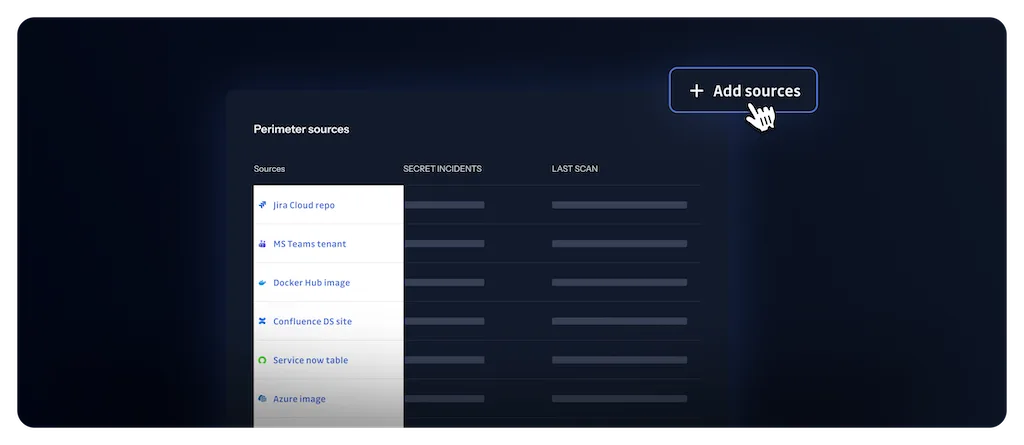 changelog · Aug 2026
· source
· release history
- Allows individual bucket selection and team assignment in the integration settings page Scan your AWS S3 buckets for secrets (2026-08-25) · Aug 2026 · source · release history
- Historical (on-demand) scans are available now; recurrent scanning of new and modified objects is coming soon. Scan your AWS S3 buckets for secrets (2026-08-25) · Aug 2026 · source · release history
example
-
When onboarding S3 to your monitored perimeter to surface years of credential debt in backup, CI/CD, and infrastructure buckets.
In GitGuardian, go to Perimeter > Sources > AWS S3, select the buckets you want monitored, and trigger a historical scan to analyze existing objects for exposed credentials.announced · Aug 2026 · source -
Connect an AWS S3 bucket for secret scanning without handing over long-lived keys — set up the OIDC provider and scoped IAM role, then register the account in GitGuardian.
In the GitGuardian dashboard, go to Integrations > AWS S3 and follow the three-step setup: (1) create the OIDC provider in AWS, (2) create a read-only IAM role scoped to the buckets you want…changelog · Aug 2026 · source -
Scan a specific S3 bucket for secrets using the new OIDC-integrated workflow
In the GitGuardian console, go to Integrations > AWS S3, enter your AWS Account ID and IAM Role Name, select 'my-backup-bucket' from the list, assign it to the 'Security Team', and click 'Trigger…Scan your AWS S3 buckets for secrets (2026-08-25) · Aug 2026 · source -
Connect an AWS account so GitGuardian can scan S3 buckets without handing over long-lived keys.
In GitGuardian, go to Integrations > AWS S3, then follow the three-step setup: create the OIDC provider in AWS, create a read-only IAM role scoped to the buckets you want monitored, and register your…Scan your AWS S3 buckets for secrets (2026-08-25) · Aug 2026 · source
Local secret scanning shipped Lets developers scan a file, directory, or git repository history for hardcoded secrets directly from the command line.
Shared capability: Secret scanning
Also counts toward: Command-line interface
release
-
Adds
api_timeoutconfig key andGITGUARDIAN_API_TIMEOUTenvironment variable to override the previously fixed 60-second API timeout for large scans.︀︄︇︀︅︉︀︅︀︀︃︀︀︅︅︀︅︊︀︄︆︀︃︄
changelog · Oct 2026
· source
· release history
-
Adds
external_idfield to the API source payload to represent the VCS id of a source November 28, 2022 · Nov 2022 · source · release history -
Add instruction page on how to configure
ggshieldwith each CI/CD tool. June 30, 2021 · Jun 2021 · source · release history - Extends CI/CD support to include Drone.io and Azure Pipelines May 26, 2021 · May 2021 · source · release history
- Adds support for Azure pipelines in CI/CD integration May 26, 2021 · May 2021 · source · release history
- Adds support for drone.io in CI/CD integration May 26, 2021 · May 2021 · source · release history
docs
- Git is optional. and use it only for the git pre-commit and pre-push hooks; on a machine without git that step is skipped with a warning, and doctor reports it as skipped without failing. seen Oct 2026 · source
- Take GitGuardian’s secrets detection engine to the command line with ggshield, the GitGuardian CLI application. Detect and prevent 600+ types of hardcoded secrets (API keys, certificates, database connection URLs) before pushing code, with ggshield. seen Aug 2026 · source
example
-
Scan a single file for hardcoded secrets.
ggshield secret scan path my_repo/my_file.py -
Scan a local or remote git repo's history.
ggshield secret scan repo <path-or-url> -
Recursively scan a directory.
ggshield secret scan path --recursive my_repo/ -
Scan a range of commits.
ggshield secret scan commit-range HEAD~3..HEAD
ggshield VS Code extension shipped Provides a VS Code extension for the ggshield CLI that enables automatic secret scanning on file save and in-IDE remediation guidance.
Shared capability: Secret scanning
release
- Release of GitGuardian CLI (ggshield) as a VS Code extension with automatic scanning upon file save October 7, 2024 · Oct 2024 · source · release history
- Adds GitGuardian CLI (ggshield) as a VS Code extension with automatic file scanning on save and in-IDE remediation guidance October 7, 2024 · Oct 2024 · source · release history
Secrets management 2 features Secrets and credential hygiene since 2023
Harbor container registry scanning shipped Connects self-hosted Harbor instances to GitGuardian secrets scanning, covering all layers of tagged images, Dockerfiles, and image metadata environment variables, with both historical and incremental scanning, selective or full-instance repository coverage, health monitoring with secret rotation support, and air-gapped instance support via GitGuardian Bridge.
Shared capability: Secrets management
Also counts toward: Air-gapped deployment, Self-hosted deployment
release 11 total
-
Navigate to
Settings > Integrations > Sourcesand click Install next to Harbor in the Container registries section to configure the integration. Scan your Harbor container registry for secrets (2026-10-09) · Oct 2026 · source · release history - Uses a Harbor robot account with Repository (List, Pull) and Artifact (List, Read) permissions only — read-only, scoped, and revocable at any time. Scan your Harbor container registry for secrets (2026-10-09) · Oct 2026 · source · release history
- Performs both historical scanning of existing images and incremental scanning of newly pushed images. Scan your Harbor container registry for secrets (2026-10-09) · Oct 2026 · source · release history
- Supports scanning Harbor instances not reachable from the internet via GitGuardian Bridge. Scan your Harbor container registry for secrets (2026-10-09) · Oct 2026 · source · release history
- Flags unhealthy installations (expired robot accounts, lost permissions, or unreachable instances) and supports rotating the robot account secret without reinstalling. Scan your Harbor container registry for secrets (2026-10-09) · Oct 2026 · source · release history
- Allows selecting specific Harbor repositories or monitoring the entire instance with automatic inclusion of new repositories. Scan your Harbor container registry for secrets (2026-10-09) · Oct 2026 · source · release history
docs
-
: October 9, 2026 Harbor is where many teams keep the images they ship to production, on their own infrastructure and often behind their own firewall. Those images regularly carry what nobody meant to ship: a database password in an ENV directive, a cloud key copied into a config file, a token left in a build layer.
docs update · Oct 2026
· source
example
-
Connect a self-hosted Harbor instance to GitGuardian secrets scanning so every image layer is checked for credentials before they reach production.
In Harbor, create a system-level robot account with Repository (List, Pull) and Artifact (List, Read) permissions.Scan your Harbor container registry for secrets (2026-10-09) · Oct 2026 · source
Privileged Access Manager integration for secret rotation shipped Integrates with CyberArk Platform Vault to automate the rotation of leaked credentials detected by the tool.
Shared capability: Secrets management
Also counts toward: SaaS deployment
release
-
Adds
CyberArkas a new integration option in GitGuardian SaaS to manage secrets and automate secret rotation. April 16, 2024 · Apr 2024 · source · release history - GitGuardian SaaS extends its secret management capabilities by integrating with CyberArk's Platform Vault. April 16, 2024 · Apr 2024 · source · release history
example
-
Connect your privileged access manager to automatically rotate leaked credentials detected by GitGuardian.
In the settings, select 'Integrations' > 'Secrets Management', choose 'CyberArk', and configure the connection details.April 16, 2024 · Apr 2024 · source
Dependency scanning 2 features Supply chain security since 2024
SCA dependency support expansion shipped Expands Software Composition Analysis scanning to include PHP and .NET dependencies, adding modification date tracking and dedicated filters for SCA incidents.
Shared capability: Dependency scanning
Also counts toward: Scripting language support
release 8 total
-
Enables
.NETSCA scanning for C#, F#, and Visual Basic dependencies July 15, 2024 · Jul 2024 · source · release history -
Introduces
.NET Supportin SCA for scanning C#, F#, and Visual Basic dependencies July 15, 2024 · Jul 2024 · source · release history - SCA incidents now include the last modification date of dependency files, along with a dedicated filter to view them. April 15, 2024 · Apr 2024 · source · release history
- SCA incidents now include the last modification date of dependency files, with a dedicated filter available. April 15, 2024 · Apr 2024 · source · release history
- Adds Support for PHP dependencies in the Software Composition Analysis (SCA) scanner March 25, 2024 · Mar 2024 · source · release history
- Includes the EPSS score in SCA incident details along with a dedicated filter March 25, 2024 · Mar 2024 · source · release history
Enhanced incident filtering and pagination shipped Adds 'First detected' date fields and filters to incidents, includes modification dates for SCA incidents, and allows controlling pagination density in the occurrences table.
Shared capability: Dependency scanning
release
- Adds the First detected date field to incident details and the associated filter in the Secret incident dashboard. February 26, 2024 · Feb 2024 · source · release history
- Adds a First detected date field in incident details and an associated filter in the Secret incident dashboard. February 26, 2024 · Feb 2024 · source · release history
Outbound webhooks (the product notifies you) 1 feature Interfaces and integrations since 2022
Smart Notifiers and alert filtering shipped Lets users configure per-channel filtering rules so that alerts sent to Slack, Teams, email, or webhooks match the severity and type of incidents each audience cares about.
Shared capability: Outbound webhooks (the product notifies you)
Also counts toward: Outbound webhooks (the product notifies you)
release 25 total
- Risk score filtering is no longer available for notifications on public incidents because agent analysis arrives asynchronously. GitGuardian agents tell you which Public Monitoring incidents are actually yours (2026-08-27) · Aug 2026 · source · release history
- Adds severity and risk score information to incident notifications in Slack and Microsoft Teams. ServiceNow Integration: Event Group Selection, Public Monitoring & Honeytoken Support (2026-06-30) · Jun 2026 · source · release history
-
configrules for Smart Notifiers allow filtering notifications by severity, ML risk score, validity, secret type, or GitGuardian tag for custom webhook, Slack, Microsoft Teams, and email channels. Smart Notifiers - filter alerts, tickets, and emails by incident criteria (2026-06-19) · Jun 2026 · source · release history - Adds Smart Notifiers: per-channel filtering rules for webhooks, Slack, and Microsoft Teams alerts based on severity, ML risk score, validity, secret type, or GitGuardian tag across internal and public monitoring. Smart Notifiers - filter alerts, tickets, and emails by incident criteria (2026-06-19) · Jun 2026 · source · release history
- Enables email alerting to filter public monitoring incidents by severity. Smart Notifiers - filter alerts, tickets, and emails by incident criteria (2026-06-19) · Jun 2026 · source · release history
- Microsoft Teams notifications now include Public Monitoring incidents alongside internal monitoring alerts Enhanced Microsoft Teams Notifications - Public Monitoring, Internal Monitoring & Honeytoken Alerts (2026-04-29) · Apr 2026 · source · release history
example
-
Route only high-severity, valid secrets to a Slack channel — eliminating noise from informational or unverified incidents.
In the console, go to Alerting & Notifications > Slack notifier settings, then add a filter rule: set Severity to 'High' or 'Critical' and Validity to 'Valid'.Smart Notifiers - filter alerts, tickets, and emails by incident criteria (2026-06-19) · Jun 2026 · source -
Configure a new custom webhook integration for event-based notifications.
steps: In the GitGuardian SaaS console, navigate to Settings > Integrations and select 'Custom Webhook' to configure the new event-based integration.December 13, 2022 · Dec 2022 · source -
Configure webhook to trigger only on specific detection events rather than generic alerts
In the dashboard, go to Settings > Webhooks and enable event-based alerting for 'secret_detected'June 27, 2022 · Jun 2022 · source
Other / not yet classified 91 features Features we have not matched to a capability yet. A suggested match is marked.
Detector and validity checker library shipped Provides a growing library of built-in detectors and validity checkers covering a wide range of services and credential types.
release 68 total
- Expands validity checks to 501 secret types (up from 432), adding coverage for Elastic, Datadog, Langfuse, Sumo Logic, Gitea, and Azure Container Registry. Scan developer machines with less noise, and clean up what you find (2026-10-27) · Oct 2026 · source · release history
- Merges validity verdicts from vaulted or Kubernetes secrets with any matching secret incident, always keeping the most recent verdict. Check validity and permissions of your vaulted secrets, from inside your network (2026-10-15) · Oct 2026 · source · release history
- Displays Most Common Secret Types breakdown to understand frequently appearing secret categories in the perimeter. Analytics Overview - Executive Bird's-Eye View of Security Posture · Dec 2025 · source · release history
- Incident UI now displays ML-enriched secret identities (e.g., Redis Identifiers, AWS Access Key) instead of generic detector names like Generic High Entropy Secret. Secret Enricher - From Generic to Actionable · Dec 2025 · source · release history
- Incident API responses include enriched secret names for programmatic access. Secret Enricher - From Generic to Actionable · Dec 2025 · source · release history
-
Added
GitLab OAuth Application Tokento the secrets detection engine (v2.129) December 23, 2024 · Dec 2024 · source · release history
docs 10 total
- October 13, 2026 Version 2.174.0 adds ten new detectors, covering Lago API keys, Composio project and organization API keys, Codex API keys, CARTO Basemaps API keys, Google Chat incoming webhook URLs, SFTP credentials, HubSpot CLI personal access keys, AmneziaWG VPN private keys and Kubernetes kubeconfig bearer… docs update · Oct 2026 · source
- September 28, 2026 This release adds new detectors for Ory API keys, Kong Konnect personal access tokens, AppSignal API keys, PostHog OAuth access and refresh tokens, Datadog service access tokens, NinzaSMS API keys, TypeSafe AI API keys, and Mistral AI's new prefixed API key format. seen Oct 2026 · source
- Custom Hosts List detector custom hosts Bob Smith Custom Hosts Retrieve the declared custom hosts of services that secrets are checked against. List detector custom hosts List the custom hosts configured on the workspace, grouped by secret detector. Only secret detectors that support custom hosts are returned. api-docs-e88e8519d038 · Sep 2026 · source
- September 14, 2026 This release ships ten new detectors, including Brightcove OAuth credentials, Infor ION API credentials, Telnyx API keys, Bifrost virtual keys, Jira Data Center personal access tokens, and a generic Sanctum token detector. docs update · Sep 2026 · source
- Custom Hosts List detector custom hosts Custom Hosts Retrieve the declared custom hosts of services that secrets are checked against. List detector custom hosts List the custom hosts configured on the workspace, grouped by secret detector. Only secret detectors that support custom hosts are returned. api-docs-9a01e0949b3e · Sep 2026 · source
- August 31, 2026 This release brings improved n8n instance detection for the n8n API Key and n8n MCP Access Token detectors, along with better recall for Hashicorp Vault AppRole Authentication credentials. Three checkers were fixed: Scaleway Token, Workato API Key and Open VSX Access Token. seen Sep 2026 · source
example
-
Audit which custom host URLs (e.g. self-hosted GitLab instances) are registered for each secret detector in your workspace.
curl -H 'Authorization: Token <your_api_token>' https://api.gitguardian.com/v1/detector-custom-hostsapi-docs-9a01e0949b3e · Sep 2026 · source -
Detect Sourcegraph tokens in your codebase during CI checks now that detection is supported.
Run your standard GitGuardian scan; the engine automatically applies new `Sourcegraph Token` and `Cohere API Key` detectors.November 15, 2023 · Nov 2023 · source
Perimeter source management shipped Gives administrators a management view of all perimeter sources with status indicators, bulk operations, saveable filtered views, and a historical scan tab.
release 38 total
-
The Health filter on the perimeter sources table is replaced by Has open incidents; existing saved views are migrated automatically.
changelog · Oct 2026
· source
· release history
- The Health filter on the perimeter sources table is replaced by the Has open incidents filter; saved views are migrated automatically. changelog · Oct 2026 · source · release history
- The Health filter on the perimeter sources table is replaced by Has open incidents; saved views using the old filter are migrated automatically. changelog · Oct 2026 · source · release history
- Introduces a per-account setting to automatically remove archived sources from team perimeters. changelog · Oct 2026 · source · release history
- Introduces a per-account setting to keep team access to unmonitored sources and their existing incidents instead of removing them from team perimeters. changelog · Oct 2026 · source · release history
- Perimeter bulk actions now gray out inapplicable actions with a tooltip explanation, and show a confirmation listing skipped sources when monitoring, unmonitoring, or scanning more than 30 sources. changelog · Oct 2026 · source · release history
docs
- : September 28, 2026 Is every source monitored? Has every source been scanned? Does every source have an owner? The perimeter page now answers these questions at the top, with the Coverage Hub. docs update · Sep 2026 · source
-
Use your to: Measure how well GitGuardian covers your perimeter, with the Coverage Hub Find the sources at risk: sources with open incidents, and sources that are unmonitored, unreachable, or not scanned Act on many sources at once with bulk actions Set the visibility criticality , and of your sources The Coverage Hub…
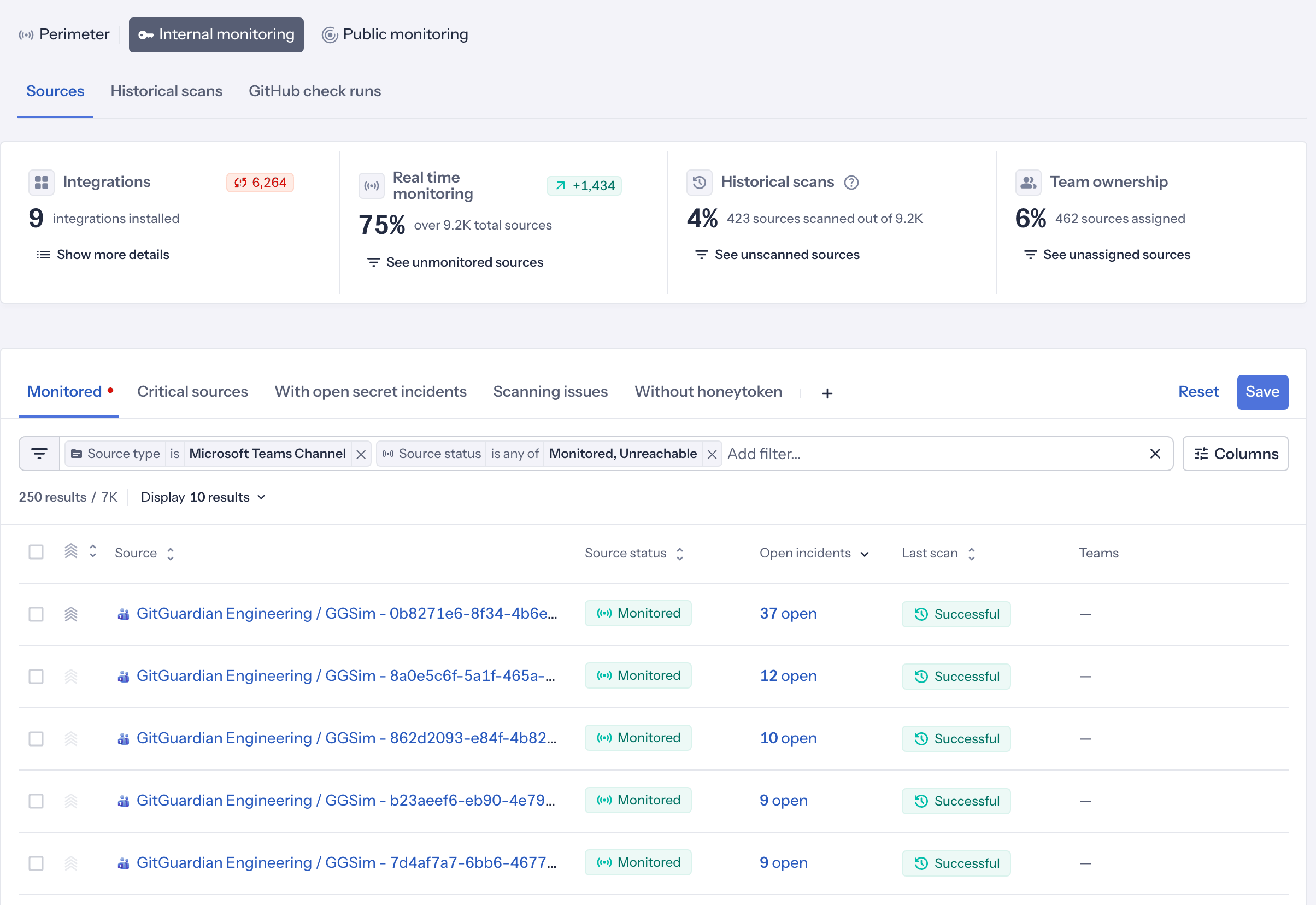 docs update · Sep 2026
· source
-
Team perimeter , Managers can remove sources from all team perimeters automatically, based on their status . When a source leaves a team perimeter, the members of that team lose access to the source and its incidents. Managers keep access to these sources and their incidents.
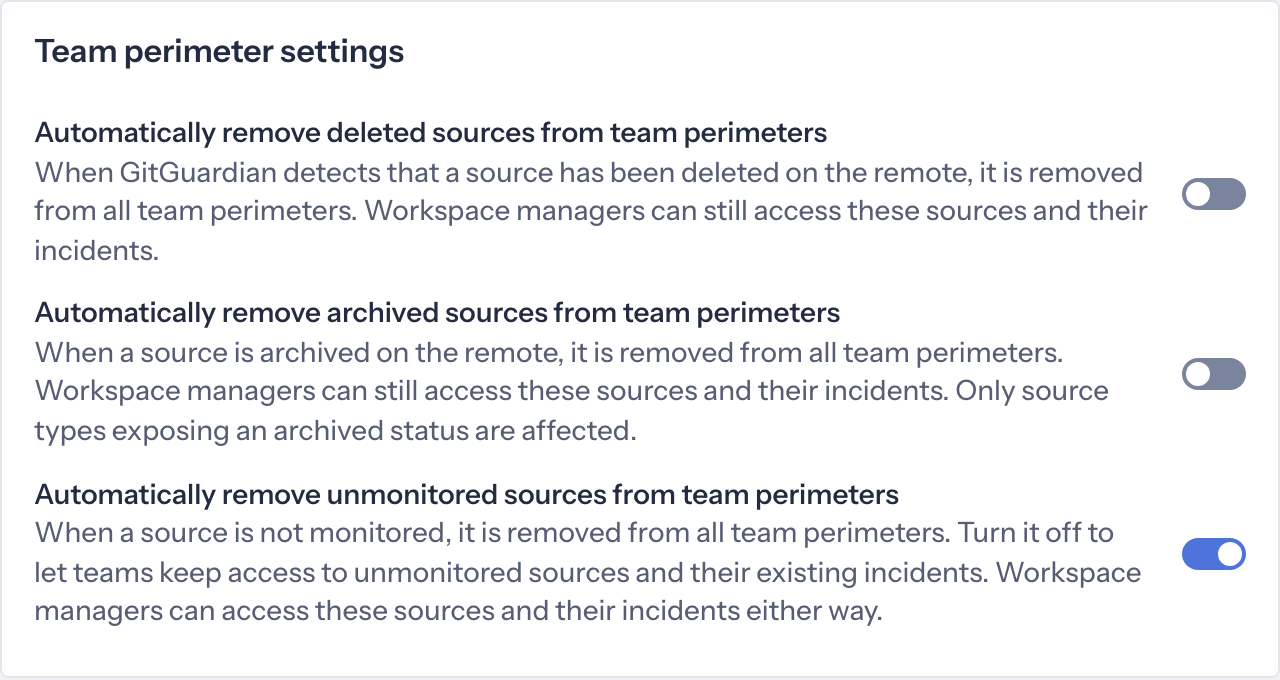 docs update · Sep 2026
· source
example
-
Identify all sources not yet assigned to a team and bulk-assign them to close ownership gaps.
In the perimeter page, click the 'Owned by a team' card action to filter the sources table to unassigned sources, select all, then choose a bulk action to assign them.Spot your uncovered assets. Close your blindspot in one click! (2026-09-28) · Sep 2026 · source -
List all secret locations in a specific source that match a filepath pattern, to hand off an exact file list to the owning team.
curl -s -H 'Authorization: Token <api_key>' 'https://api.gitguardian.com/v1/sources/5523/locations?search=settings.py&code_fix_request_status=created'api-docs-983de2edf972 · Aug 2026 · source -
Bulk-unmonitor a set of deprecated sources and remove them from all team assignments in one operation.
On the perimeter page, select the sources you want to remove from monitoring, then choose Unmonitor from the bulk actions menu. Confirm the popup that appears when more than 30 sources are selected.changelog · Jul 2026 · source -
Filter the perimeter view to show only sources that are currently unreachable.
In the Perimeter page, use the source status filter to select `Unreachable`.Mention members and teams in incident notes (2026-07-20) · Jul 2026 · source -
Bulk assign a team to multiple monitored sources from the perimeter view.
Select sources on the Perimeter page and click `Assign team`.Mention members and teams in incident notes (2026-07-20) · Jul 2026 · source -
Filter the Perimeter dashboard to show only assets with failed or warning scan statuses.
In the Perimeter UI, use the 'Last Scan Status' filter dropdown to select 'Failure' or 'Warning'.February 9, 2022 · Feb 2022 · source
Incident filtering and search shipped Lets users filter and search incidents by closure reason, source status, or secret value to quickly locate relevant findings.
release 27 total
-
Adds
source_monitoring_status__ninquery parameter to exclude secret incidents where all sources fall within the specified monitoring status buckets (e.g.archived). api-docs-41a58f79d912 · Oct 2026 · source · release history -
Adds
source_monitoring_status__inquery parameter to secret incident list endpoints to keep only incidents with at least one source in the given comma-separated monitoring status buckets (e.g.archived,unreachable); requires themonitoring-statusfeature on the workspace. api-docs-41a58f79d912 · Oct 2026 · source · release history -
Adds
source_monitoring_status__allquery parameter to keep only secret incidents whose every source is in the given monitoring status buckets (e.g.archived,deleted_on_remote). api-docs-41a58f79d912 · Oct 2026 · source · release history -
Adds
POST /v1/incidents/secrets/{incident_id}/check-presenceto trigger an asynchronous presence check on a private secret incident, confirming whether occurrences still exist on their sources.︀︄︇︀︅︉︀︅︀︀︃︀︀︅︅︀︅︊︀︄︆︀︃︄ api-docs-41a58f79d912 · Oct 2026 · source · release history - Incidents page now filters by closure reason via the UI filter options. Smart Notifiers - filter alerts, tickets, and emails by incident criteria (2026-06-19) · Jun 2026 · source · release history
- Increases character limit for secret value search on the incidents page to support longer secrets such as large JWTs. Smart Notifiers - filter alerts, tickets, and emails by incident criteria (2026-06-19) · Jun 2026 · source · release history
example 13 total
-
List only secret incidents that have at least one source still actively monitored but archived, to triage stale exposure.
curl -s 'https://api.gitguardian.com/v1/incidents/secrets?source_monitoring_status__in=archived,unreachable' \ -H 'Authorization: Token <your_api_token>'api-docs-41a58f79d912 · Oct 2026 · source -
Filter the incident list to surface only incidents whose sources are fully gone (archived or deleted on remote), helping triage what no longer needs active remediation.
curl -G 'https://api.gitguardian.com/v1/incidents/secrets' \ -H 'Authorization: Token <your_api_token>' \ --data-urlencode 'source_monitoring_status__all=archived,deleted_on_remote'api-docs-41a58f79d912 · Oct 2026 · source -
Trigger a live presence re-check on a private secret incident to confirm whether the leaked credential is still present in its source repos.
curl -X POST 'https://api.gitguardian.com/v1/incidents/secrets/42/check-presence' \ -H 'Authorization: Token <your_api_token>'api-docs-41a58f79d912 · Oct 2026 · source -
Trigger a fresh presence check on a private secret incident to confirm whether leaked credentials still exist in source — useful after a rotation to validate remediation.
curl -s -X POST 'https://api.gitguardian.com/v1/incidents/secrets/42/check-presence' \ -H 'Authorization: Token <your_api_token>'api-docs-41a58f79d912 · Oct 2026 · source -
Find all secret incidents where every source has been archived or deleted remotely — useful for bulk-closing stale incidents that no longer need active monitoring.
curl -s -G 'https://api.gitguardian.com/v1/incidents/secrets' \ -H 'Authorization: Token <your_api_token>' \ --data-urlencode 'source_monitoring_status__all=archived,deleted_on_remote'api-docs-41a58f79d912 · Oct 2026 · source -
Narrow an incident triage pipeline to secrets still reachable in real time by excluding those whose sources are entirely archived or deleted.
curl -s 'https://api.gitguardian.com/v1/incidents/secrets?source_monitoring_status__nin=archived,deleted_on_remote' \ -H 'Authorization: Token <your_api_token>'api-docs-41a58f79d912 · Oct 2026 · source
Non-Human Identity (NHI) Governance shipped Provides comprehensive observability and lifecycle management for Non-Human Identities across environments like CI/CD pipelines and Kubernetes clusters.
Also counts toward: CI/CD pipeline integration
release 27 total
-
List all NHI policies and their current
incident_modevalues (hidden,tag_only, orcreates_incidents) viaGET /v1/nhi/policies— requires full NHI governance activation. api-docs-dbcff7cc4c0f · Oct 2026 · source · release history -
Retrieve a single NHI policy and its
incident_modeandis_incident_mode_fixedfields viaGET /v1/nhi/policies/{policy_name}. api-docs-dbcff7cc4c0f · Oct 2026 · source · release history -
Adds
GET /v1/nhi/sourcesto list sources sending NHI data to GitGuardian (secrets managers, Kubernetes clusters, CI systems, cloud providers, endpoints), filterable bytype,is_vault, andfull_path. api-docs-cce17ae86794 · Oct 2026 · source · release history -
Adds
GET /v1/nhi/identitiesto list non-human identities (NHIs) in the workspace, with filters includingsource__in,env__in,policy__in,risk_criticality__in,validity__in,principal_type__in,owner_id__in,vault_source_id__in,consumer_source_id__in,endpoint_source_id__in,… api-docs-cce17ae86794 · Oct 2026 · source · release history -
Adds
GET /v1/nhi/identities/{identity_id}to retrieve a single non-human identity with its permissions and a summary of its secrets. api-docs-cce17ae86794 · Oct 2026 · source · release history -
Adds
full_pathquery parameter to NHI Sources endpoint for exact, case-sensitive source lookup, preferred over free-text search for single-source retrieval. api-docs-cce17ae86794 · Oct 2026 · source · release history
docs
- : AWS access keys stored in a secrets manager, Vault, or Kubernetes are now linked to their AWS IAM identity in the identity map. docs update · Sep 2026 · source
- Enhance vault metadata collection Collect and restitute the full metadata set around every vaulted secret — last used, custom tags, rotation status, expiry — so environment attribution, staleness and ownership work at scale. seen Aug 2026 · source
example 7 total
-
Switch an NHI policy from tagging-only to full incident creation so breaches start appearing in your incident queue once NHI promotion is active.
curl -X PATCH \ -H 'Authorization: Token <PAT>' \ -H 'Content-Type: application/json' \ -d '{"incident_mode": "creates_incidents"}' \ https://api.gitguardian.com/v1/nhi/policies/<policy_name>api-docs-dbcff7cc4c0f · Oct 2026 · source -
List all NHIs in production that breach the
long_lived_secretpolicy and carry critical risk, to prioritise remediation.curl -G 'https://api.gitguardian.com/v1/nhi/identities' \ -H 'Authorization: Token <your_api_token>' \ --data-urlencode 'env__in=production' \ --data-urlencode 'policy__in=long_lived_secret' \…api-docs-cce17ae86794 · Oct 2026 · source -
Retrieve all locations where a specific NHI holds a secret — useful for tracing blast radius before rotating credentials.
curl 'https://api.gitguardian.com/v1/nhi/identities/arn%3Aaws%3Aiam%3A%3A123456789012%3Auser%2Fci-deployer/locations' \ -H 'Authorization: Token <your_api_token>'api-docs-cce17ae86794 · Oct 2026 · source -
List all owners of a non-human identity to audit accountability for a service account or API key.
curl -s -H 'Authorization: Token <api_key>' 'https://api.gitguardian.com/v1/nhi/identities/{identity_id}/owners'api-docs-5b2c2350cba5 · Oct 2026 · source -
Assign an owner to a non-human identity so the responsible team member is tracked for remediation workflows.
curl -s -X POST -H 'Authorization: Token <api_key>' -H 'Content-Type: application/json' -d '{"owner_id": "<owner_id>"}' 'https://api.gitguardian.com/v1/nhi/identities/{identity_id}/owners'api-docs-5b2c2350cba5 · Oct 2026 · source -
After upgrading to ggscout 0.34.1, run a fetch-and-send to populate validity verdicts, then filter the NHI inventory to immediately see all invalid credentials still sitting in vaults or Kubernetes clusters.
In NHI Governance → Identities, open the Validity filter and select 'Invalid' to list revoked credentials across vaults, CI variables, and Kubernetes clusters.Check validity and permissions of your vaulted secrets, from inside your network (2026-10-15) · Oct 2026 · source
Honeytoken endpoint protection shipped Plants fake AWS credentials on developer endpoints via the CLI and shows fleet-wide coverage and unprotected endpoints in a dashboard so teams can detect credential-stealing malware.
Also counts toward: Command-line interface
release 22 total
-
Honeytoken planting is now supported on Windows endpoints.
changelog · Oct 2026
· source
· release history
-
Endpoint Protection scopes are no longer granted by default during
ggshield auth login— users must explicitly opt in via the new single card, so existing automation that relied on those scopes being pre-selected will need to re-authenticate.
Sync your GitHub teams, members, and perimeters automatically (2026-10-29) · Oct 2026
· source
· release history
-
Scope Endpoint Protection permissions more narrowly: the
ggshield auth loginauthorization page now groups Endpoint Protection scopes in a single opt-in card, no longer granted by default. Sync your GitHub teams, members, and perimeters automatically (2026-10-29) · Oct 2026 · source · release history - Extends Honeytoken planting support to Windows endpoints. Catch secrets leaked in public Docker Hub images (2026-10-21) · Oct 2026 · source · release history
- Adds a built-in Valid saved view to the Endpoint Protection discovered secrets page, listing all secrets currently checked as valid. changelog · Oct 2026 · source · release history
- Adds a built-in Valid saved view on the Endpoint Protection discovered secrets page, available to all users. Check validity and permissions of your vaulted secrets, from inside your network (2026-10-15) · Oct 2026 · source · release history
docs
-
plants a decoy AWS credential in the file credential-harvesting malware reads first, so any use of it raises an alert naming the compromised endpoint. A coverage card in the Endpoints dashboard tracks the share of your fleet that is protected. Requires Endpoint Protection, Honeytoken, and ClickHouse on your instance.
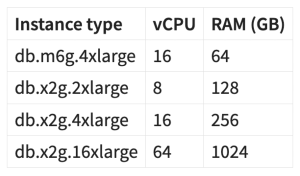 seen Sep 2026
· source
- Running the script will automatically log you in and enroll your endpoint to the workspace. You will be prompted to confirm the token scopes ggshield will use to interact with the GitGuardian API. seen Sep 2026 · source
- Protect endpoints with Honeytokens Plant honeytokens on developer machines so that credential harvesting malware trips a tripwire instead of walking away with real keys. seen Aug 2026 · source
- : August 10, 2026 Credential stealers do not hunt around a developer machine, they go straight for the handful of files where developers keep their secrets. docs update · Aug 2026 · source
- Alongside that inventory, honeytoken protection adds intrusion detection to the same deployment. It plants a decoy credential where credential harvesters look first, so you are alerted the moment one of your machines is compromised. seen Aug 2026 · source
example
-
Plant a honeytoken on a developer machine to detect credential-harvesting malware the moment it reads the credential file.
ggshield honeytoken plantchangelog · Aug 2026 · source -
Plant a decoy credential on a developer machine to detect if malware accesses local secrets.
ggshield honeytoken plantCatch credential stealers on your endpoint fleet (2026-08-10) · Aug 2026 · source -
Plant a honeytoken decoy credential on a developer machine — run once per endpoint via MDM job or manually to activate tripwire detection.
ggshield honeytoken plantCatch credential stealers on your endpoint fleet (2026-08-10) · Aug 2026 · source
GitHub Check Runs management shipped Provides a single dashboard to view, filter, re-run, or skip GitHub check runs and navigate directly to linked incidents without leaving GitGuardian.
Also counts toward: Web management console
release 22 total
-
Exposes check run response fields including
repository_full_name,commit_sha,pull_requests,github_status,github_conclusion,head_branch, andbase_branchfor rich filtering and automation. api-docs-6756f12bc87c · Oct 2026 · source · release history -
Adds
POST /v1/check-runs/{check_run_id}/skipendpoint to programmatically skip a blocking GitHub check run, tagging its incidents and occurrences withCHECK_RUN_SKIP_*and logging activity — even when the Skip buttons are disabled in workspace settings. api-docs-6756f12bc87c · Oct 2026 · source · release history -
Adds
GET /v1/check-runsendpoint to list GitHub check runs GitGuardian ran on pull requests, filterable byincident_idto surface runs that reported a specific secret incident.︀︄︇︀︅︉︀︅︀︀︃︀︀︅︅︀︅︊︀︄︆︀︃︄ api-docs-6756f12bc87c · Oct 2026 · source · release history -
On-demand Jira Cloud scans launched from the dashboard or the public API now queue ahead of recurrent and system scans; public API launches using a service account token on AWS S3 and version control sources now count as on-demand scans.
changelog · Oct 2026
· source
· release history
- New dedicated GitHub Check Runs page in the dashboard lets security teams browse all check run statuses, filter by repository/status/date, view KPI metrics, re-run or skip checks, and jump directly to linked incidents — without leaving GitGuardian. changelog · Jul 2026 · source · release history
- Navigate from a check run directly to linked incidents when secrets are detected, enabling faster remediation. Track your GitHub check runs from the dashboard (2026-07-28) · Jul 2026 · source · release history
docs
- GitHub Check Runs List GitHub check runs Skip a GitHub check run GitHub Check Runs Act on the GitHub check runs that GitGuardian runs on pull requests. List GitHub check runs List the GitHub check runs that GitGuardian ran on pull requests, from the most recent to the oldest. api-docs-6756f12bc87c · Oct 2026 · source
- : July 28, 2026 GitHub check runs now have a dedicated page in the GitGuardian dashboard. Until now, check run results lived only in the GitHub UI, making it hard to answer questions like "did this pull request get scanned?" or "why did this check fail?" without digging through GitHub. docs update · Jul 2026 · source
example
-
Find all blocking check runs tied to a known secret incident so you can review before unblocking a PR.
curl -s -H 'Authorization: Token <manager-token>' 'https://api.gitguardian.com/v1/check-runs?incident_id=3759'api-docs-6756f12bc87c · Oct 2026 · source -
Programmatically skip a blocking check run marked as a false positive, so the PR can merge even when workspace Skip buttons are disabled.
curl -s -X POST -H 'Authorization: Token <manager-token>' -H 'Content-Type: application/json' -d '{"reason": "false_positive"}' 'https://api.gitguardian.com/v1/check-runs/42/skip'api-docs-6756f12bc87c · Oct 2026 · source -
Jump straight to remediation when a check run catches a secret, without switching to GitHub.
In the dashboard, go to Perimeter > GitHub check runs. Find the check run with detected secrets, then click the linked incident to open the incident details and begin remediation.Track your GitHub check runs from the dashboard (2026-07-28) · Jul 2026 · source -
Audit scan coverage and unblock a stuck pull request by finding and re-running a failed check run without leaving GitGuardian.
In the dashboard, go to Perimeter > GitHub check runs. Filter by repository and set Status to 'Failed', locate the run for the relevant commit SHA, then click Re-run.Track your GitHub check runs from the dashboard (2026-07-28) · Jul 2026 · source -
Audit scan coverage and re-run failed GitHub checks without leaving the dashboard.
In the GitGuardian dashboard, navigate to Perimeter > GitHub check runs. Filter by status 'Failed', select a run, and click 'Re-run'.Track your GitHub check runs from the dashboard (2026-07-28) · Jul 2026 · source
Incident severity triage shipped Adds a severity field to incidents to assist users in prioritizing and triaging findings.
release 26 total
- The custom validity status applies to the secret itself, so every incident tied to that secret reflects the status. Set your own validity status on a secret (2026-08-14) · Aug 2026 · source · release history
- Admin NHI policy breaches automatically bumped one severity level higher (capped at critical) Flag admin and overprivileged NHIs across AWS, Entra, and Okta · Apr 2026 · source · release history
-
Added GET
/v1/severity-rulesendpoint to list severity rules programmatically Secret scanning for AI coding tools · Apr 2026 · source · release history - Introduces automatic risk criticality scoring to surface high-impact threats like leaked credentials and orphaned accounts Unified Identity Governance for Entra & AWS IAM · Jan 2026 · source · release history
- Adds a 0–100 risk score to incidents based on secret type, validity, detection context, and exposure patterns. Risk score - ML-powered incident prioritization · Dec 2025 · source · release history
- Displays severity levels, source information, and occurrence data directly within the unified identity graph interface for both internal and public monitoring incidents Graph Enhancement and HasMySecretLeaked Integration · Oct 2025 · source · release history
example
-
Restrict incident visibility so that only relevant team members and developers can see the git patch details.
In the Workspace Settings > Incident Details section, enable 'Restricted Visibility' for git patches.October 16, 2023 · Oct 2023 · source
Public Monitoring Agents Analysis shipped Automatically labels every analyzed public incident with a company-relevance verdict (Related, Unclear, or Unrelated), updates incident risk scoring based on relevance, surfaces the reasoning and investigation details on an Analysis tab, and organizes the incident list into saved views by verdict.
release 16 total
- Routes Docker Hub incidents through existing notifications, integrations, and agents analysis, matching the workflow for GitHub incidents. Catch secrets leaked in public Docker Hub images (2026-10-21) · Oct 2026 · source · release history
-
Adds a new Public Monitoring agents page showing how agents classified incidents as Related, Unclear, or Not related, with counts linking to matching incidents.
changelog · Oct 2026
· source
· release history
-
Adds an Analysis tab on public incidents showing the company-relevance verdict (Related, Uncertain, or Unrelated), the reasoning behind it, and an Investigation details section tracing how the incident moved through triage.︀︄︇︀︅︉︀︅︀︀︃︀︀︅︅︀︅︊︀︄︆︀︃︄
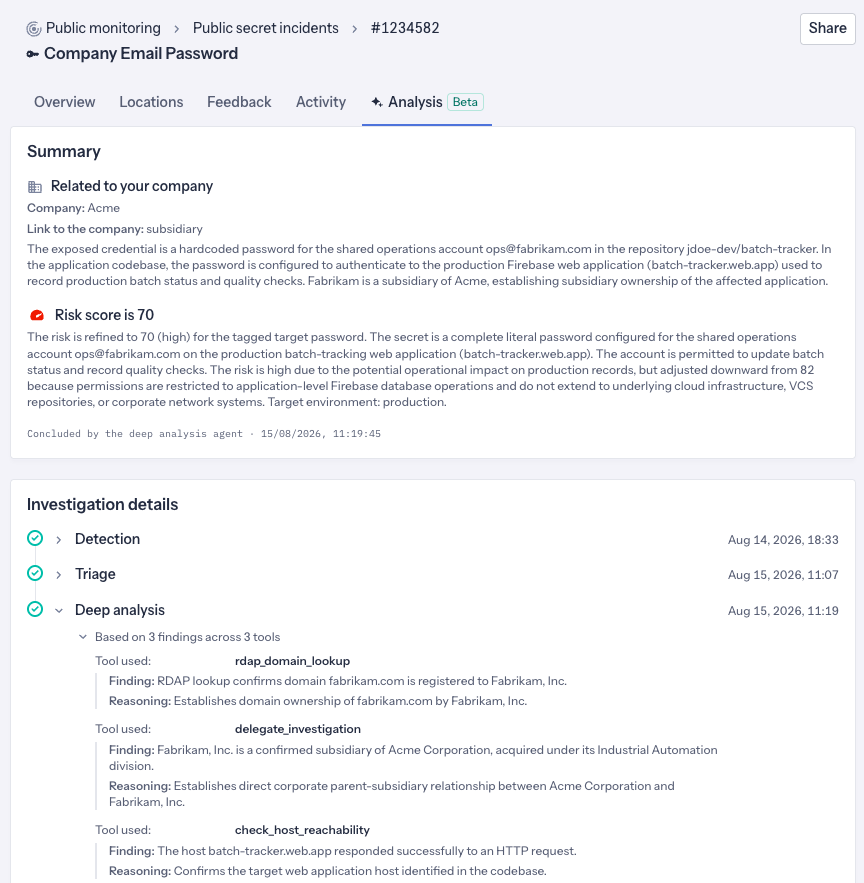 announced · Oct 2026
· source
· release history
- Introduces Agents Analysis, which automatically labels every analyzed public incident with a Company-related verdict and is enabled automatically for all customers using Public Monitoring. announced · Oct 2026 · source · release history
- Updates agent-generated risk scoring so that company-relevance (not just the secret's own characteristics) drives incident score, with Unrelated incidents receiving a score of zero and unanalyzed incidents carrying no score. announced · Oct 2026 · source · release history
- Adds thumbs-up/thumbs-down feedback controls with optional comments on the Analysis tab, letting analysts signal when company attribution is correct or incorrect. announced · Oct 2026 · source · release history
docs
- False positive detection, incident risk scoring, secret enrichment, and similar issues grouping. seen Oct 2026 · source
- Full agent analysis coverage on public incidents Public incidents that the agents skipped are analysed, closing the remaining coverage gaps so company attribution and risk scores are present on every incident. docs update · Sep 2026 · source
- : August 27, 2026 On public sources, the hard question is rarely whether something is a secret. It is whether it is yours . A leak that matches your perimeter can just as easily be a developer's personal side project, a contractor's repository, or someone entirely unrelated who happens to use the same technologies. docs update · Sep 2026 · source
example
-
After reviewing an incident where Agents Analysis reached the wrong company-attribution conclusion, submit a thumbs-down with a comment so GitGuardian can improve attribution accuracy for your organization over time.
In Public Monitoring, open an incident > click the 'Analysis' tab > click the thumbs-down icon > optionally type a comment explaining the misattribution > submit.announced · Oct 2026 · source -
Review the AI-generated reasoning for a public incident before deciding whether to escalate a credential rotation to your engineering team.
In the Public Secrets Monitoring incident list, open an incident, then select the 'Analysis' tab to see the triage agent reasoning, the deep analysis verdict (Related / Uncertain / Unrelated), and…announced · Sep 2026 · source -
Triage public leaks by company relevance — filter to only incidents the AI agents flagged as Related to your company so your team works the leaks most likely to be yours first.
In the GitGuardian dashboard, open Public Monitoring > Incidents, then use the Company-related filter and select 'Related'.changelog · Aug 2026 · source
Programmatic API token management shipped Provides API endpoints to create and rotate API tokens programmatically, supporting automated credential management workflows.
Also counts toward: REST API
release 16 total
- Documents all API token permissions in the public API documentation, including eleven previously granted but undocumented permissions. Check validity and permissions of your vaulted secrets, from inside your network (2026-10-15) · Oct 2026 · source · release history
-
Adds ability to create Personal Access Tokens (PATs) and Service Account Tokens (SATs) programmatically via the API for automated token rotation workflows; tokens created via the API must have a finite TTL.
changelog · Aug 2026
· source
· release history
- Adds Public API endpoints to create Personal Access Tokens (PATs) and Service Account Tokens (SATs) programmatically, enabling automated token rotation workflows; tokens created via the API must have a finite TTL. Catch credential stealers on your endpoint fleet (2026-08-10) · Aug 2026 · source · release history
- Public API now supports creating Personal Access Tokens (PATs) and Service Account Tokens (SATs) with finite TTL via code for automated rotation. Catch credential stealers on your endpoint fleet (2026-08-10) · Aug 2026 · source · release history
-
Rejects creation when the
nameis already used by an active token of the same type, when the workspace has reached its active-token limit, or when the requestedlifetimeexceeds the workspace policy maximum. api-docs-7c9d3e1aa9a9 · Aug 2026 · source · release history - Requires no particular scope on the calling token — any valid token can call this endpoint, making it self-service for both members and service accounts. api-docs-7c9d3e1aa9a9 · Aug 2026 · source · release history
docs
- ggshield Authentication at Scale Give every endpoint its own ggshield credential: the fleet-wide SAT becomes an enrollment token, exchanged once per machine for a unique, individually revocable token so ggshield deploys silently and detection works with no developer login. seen Sep 2026 · source
- Create an API token. Create an API token. Create a new personal access token or service account token in the workspace. Unlike the other API token endpoints, this one requires no particular scope: any valid token can call it. What a token is allowed to create is bounded by its own type and its own scopes instead. api-docs-7c9d3e1aa9a9 · Aug 2026 · source
example
-
Authenticate the ggshield CLI for a new machine or environment reset.
ggshield auth loginJune 1, 2022 · Jun 2022 · source
Incident activity log via Public API shipped Exposes the full activity log of an incident via API so it can be consumed by automation, SIEMs, or monitoring pipelines.
Also counts toward: REST API
release 14 total
-
Retrieve the clear-text content of a private secret occurrence, including secret match positions, via
GET /v1/occurrences/secrets/{occurrence_id}/content— requires a PAT (service account tokens are refused) and the workspace setting 'Enable API endpoints to retrieve detected secrets and occurrence content in clear… api-docs-dbcff7cc4c0f · Oct 2026 · source · release history -
Retrieve the stored content of an occurrence of an internal or public incident in clear text via new Public API endpoints, subject to the same requirements as secret access.
Sync your GitHub teams, members, and perimeters automatically (2026-10-29) · Oct 2026
· source
· release history
-
Adds
POST /v1/public-incidents/secrets/{incident_id}/check-presenceto trigger an asynchronous presence check on a public secret incident. api-docs-41a58f79d912 · Oct 2026 · source · release history -
Extends the
secret valueandvalidityAPI endpoints to cover secrets found through Public Monitoring, not only Internal Monitoring.
changelog · Oct 2026
· source
· release history
-
Adds
GET /v1/public-incidents/secrets/{incident_id}/occurrences/{occurrence_id}/contentto retrieve the same stored content for occurrences of public incidents, with the same PAT and scope requirements. api-docs-93f0b74f7cdd · Sep 2026 · source · release history -
Adds
GET /v1/occurrences/secrets/{occurrence_id}/contentto retrieve the file content and secret match positions GitGuardian stored for a private occurrence, requiring a PAT withread:incidentandsecrets:readscopes.︀︄︇︀︅︉︀︅︀︀︃︀︀︅︅︀︅︊︀︄︆︀︃︄ api-docs-93f0b74f7cdd · Sep 2026 · source · release history
docs
- Get the content of an occurrence Get the content of a public occurrence List scans Retrieve a scan nhi_source Get the content of an occurrence Retrieve the file content GitGuardian stored for an occurrence, together with the position of each secret match inside it. api-docs-93f0b74f7cdd · Sep 2026 · source
example
-
Pull the exact diff content of a triaged occurrence — including where the secret sits — so you can pipe it into a remediation script without opening the dashboard.
curl -H 'Authorization: Token <PAT>' \ https://api.gitguardian.com/v1/occurrences/secrets/<occurrence_id>/contentapi-docs-dbcff7cc4c0f · Oct 2026 · source -
Fetch the exact file content and secret match positions for a known private occurrence — what a reviewer sees in the dashboard — via the API for automated triage pipelines.
curl -H 'Authorization: Token <your-pat>' \ 'https://api.gitguardian.com/v1/occurrences/secrets/42/content'api-docs-93f0b74f7cdd · Sep 2026 · source -
Retrieve the activity log for a specific secret incident via the Public API to feed into an automation or SIEM workflow.
curl -s -H 'Authorization: Token <your_api_token>' 'https://api.gitguardian.com/v1/incidents/<incident_id>/activity' | jq .ServiceNow Integration: Event Group Selection, Public Monitoring & Honeytoken Support (2026-06-30) · Jun 2026 · source
Source health management shipped Automatically pauses and resumes ingestion when a monitored source becomes unreachable, and surfaces recovery steps for each affected platform.
release 17 total
- Adds a red badge on the Coverage Hub to count sources GitGuardian cannot reach, with a Show more details view listing integrations and flagging unreachable ones. Spot your uncovered assets. Close your blindspot in one click! (2026-09-28) · Sep 2026 · source · release history
-
Sources health management for GitHub now pauses real-time ingestion and historical scans on unreachable GitHub sources, auto-resumes on recovery, and surfaces an actionable recovery step.
changelog · Aug 2026
· source
· release history
- Adds source health management for GitHub, pausing ingestion/scans on unreachable sources and auto-resuming upon recovery. GitGuardian agents tell you which Public Monitoring incidents are actually yours (2026-08-27) · Aug 2026 · source · release history
-
ggshieldlaunches an Azure DevOps extension allowing organization-wide secret scanning pipelines via a single pipeline decorator. Catch credential stealers on your endpoint fleet (2026-08-10) · Aug 2026 · source · release history - Sources health management extended to Bitbucket Cloud and Bitbucket Data Center: GitGuardian now auto-pauses ingestion on unreachable sources, auto-resumes on recovery, and surfaces actionable recovery steps. Track your GitHub check runs from the dashboard (2026-07-28) · Jul 2026 · source · release history
- Extends source health management (auto-pause, auto-resume, and recovery guidance) to ServiceNow, JFrog Container Registry, JFrog Package Registry, and Microsoft OneDrive sources. Mention members and teams in incident notes (2026-07-20) · Jul 2026 · source · release history
example
-
Surface integrations with unreachable sources so you can restore monitoring coverage before secrets go undetected.
In the perimeter page, look for the red badge on the Coverage Hub, then click 'Show more details' to see which integrations have unreachable sources and click the card action to filter the table to…Spot your uncovered assets. Close your blindspot in one click! (2026-09-28) · Sep 2026 · source
Infrastructure as Code (IaC) Security shipped Monitors, scans, and provides remediation analytics for Infrastructure as Code files and configurations, with support for pre-commit hooks, CI integration, and source criticality prioritization.
Also counts toward: CI/CD pipeline integration, Command-line interface
release 14 total
-
Adds
shifting leftmetrics available in IaC analytics to demonstrate the impact of ggshield’s use in CI. February 13, 2024 · Feb 2024 · source · release history - Adds Ignored tag in IaC Security for ggshield-ignored incidents January 9, 2024 · Jan 2024 · source · release history
- Adds Azure Repos integration to the IaC Security feature for monitoring infrastructure-as-code misconfigurations December 11, 2023 · Dec 2023 · source · release history
- Azure Repos integration now monitors repositories in real-time instead of polling November 27, 2023 · Nov 2023 · source · release history
-
Introduces a new parameter at the source level to prioritize Secret, SCA, and IaC incidents via
source_criticality. November 27, 2023 · Nov 2023 · source · release history -
New
source_criticalityparameter at the source level to prioritize Secret, SCA, and IaC incidents November 27, 2023 · Nov 2023 · source · release history
example
-
Demonstrate the security impact of using ggshield in CI by viewing shifting left metrics in IaC analytics.
In the console, go to IaC Analytics and check for the new shifting left metricsFebruary 13, 2024 · Feb 2024 · source -
Prioritize IaC incidents based on the criticality of the source infrastructure.
In the IaC Security tab, apply the 'Source Criticality' filter to highlight high-risk configurations.October 30, 2023 · Oct 2023 · source -
Access new IaC remediation analytics to understand infrastructure security risks.
Navigate to the IaC Security tab in the platform if you are part of the beta tester group.October 16, 2023 · Oct 2023 · source -
Scan Infrastructure as Code files using the new ggshield CLI subcommands for pre-commit hooks or CI integration.
ggshield iac pre-commitAugust 22, 2023 · Aug 2023 · source
Wiz integration shipped Daily syncs active secret incidents from version control sources into Wiz as native secret findings, carrying repository, file path, commit, detector, validity, severity, and a SHA-256 hash of the secret — never the raw value — with severity mapped directly between platforms.
Also counts toward: Scheduled jobs
release 14 total
-
Pausing or resuming the daily sync is available from the same
Settings > Integrations > Wizsettings page at any time.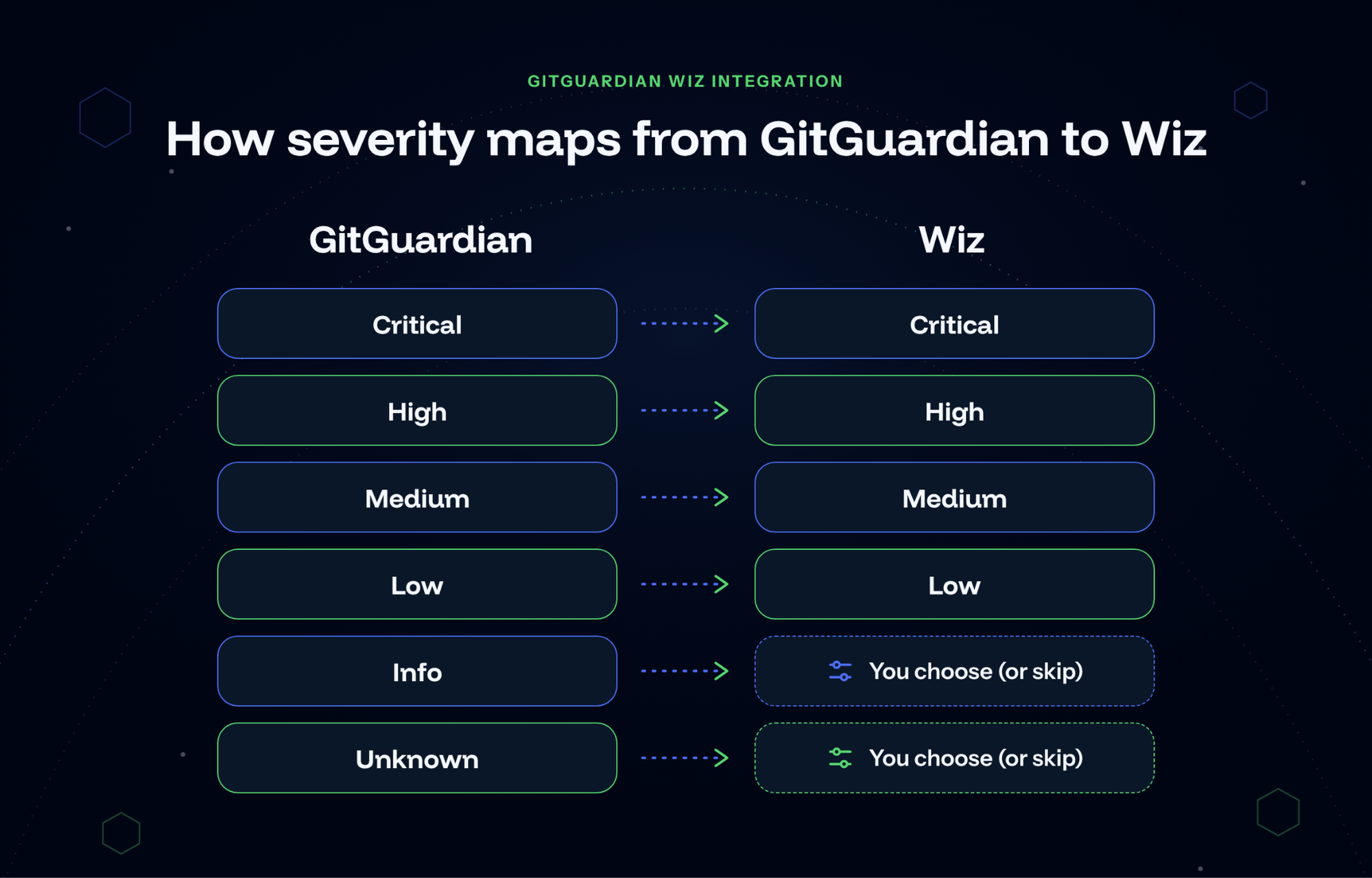 announced · Nov 2026
· source
· release history
- GitGuardian now syncs open secret incidents daily from GitHub, GitLab, Bitbucket, and Azure DevOps into Wiz as native secret findings, each carrying repository, file path, commit, detector, validity status, severity, and a link back to the GitGuardian incident. announced · Nov 2026 · source · release history
-
Configure the Wiz integration in GitGuardian at
Settings > Integrations > Wizby pasting the Client ID, Client secret, Authentication URL, and API endpoint URL that Wiz provides, then map Info and Unknown severities to Wiz equivalents.︀︄︇︀︅︉︀︅︀︀︃︀︀︅︅︀︅︊︀︄︆︀︃︄ announced · Nov 2026 · source · release history - Secret values never leave GitGuardian — Wiz receives only a SHA-256 hash of the value plus metadata. announced · Nov 2026 · source · release history
- Validity context is included in each Wiz finding so that live, still-working keys are surfaced ahead of inactive ones. announced · Nov 2026 · source · release history
-
Findings pushed to Wiz now include GitGuardian incident, occurrence, and source IDs in the finding's
originalObjectfield for use in Wiz workflows and the Wiz API.
changelog · Oct 2026
· source
· release history
docs
- : September 30, 2026 Secrets and cloud risk are the same story told in two tools. The leaked credential lives in GitGuardian, the resource it unlocks lives in Wiz, and the person who has to decide what to fix first is stuck comparing two consoles. docs update · Sep 2026 · source
example
-
Connect GitGuardian to Wiz so your cloud security team sees leaked secrets alongside cloud risk without leaving their tool.
In Wiz, open the GitGuardian integration page and copy the Client ID, Client secret, Authentication URL, and API endpoint URL.announced · Nov 2026 · source -
Enable the Wiz integration so GitGuardian begins pushing secret incidents into Wiz daily as native findings.
In the GitGuardian console, go to Settings > Integrations > Wiz and paste your Client ID, Client secret, Authentication URL, and API endpoint URL.Push your secret incidents to Wiz (2026-09-30) · Sep 2026 · source
ggshield machine scanning and reporting shipped Scans a developer's local machine environment for exposed secrets and reports findings back to the GitGuardian platform.
Also counts toward: CI/CD pipeline integration, Command-line interface, REST API, Scheduled jobs
release 8 total
-
Adds
--backgroundflag toggshield machine scanandggshield machine reportto run scans at low priority using 2–4 threads and one-tenth of normal memory (minimum 512 MB), suited for scheduled MDM jobs.︀︄︇︀︅︉︀︅︀︀︃︀︀︅︅︀︅︊︀︄︆︀︃︄ Scan developer machines with less noise, and clean up what you find (2026-10-27) · Oct 2026 · source · release history -
Adds
scan.resources.background.mode: autotomachine_scan.yamlto make background-priority scanning the default for every scan. Scan developer machines with less noise, and clean up what you find (2026-10-27) · Oct 2026 · source · release history -
Adds
GET /v1/scansto list historical scans in bulk — the same payload as the scan detail endpoint — supporting theactive_or_updated_sincequery parameter (ISO 8601) to efficiently poll only scans still running or updated since a given instant, sorted by-gg_created_atby default. api-docs-93f0b74f7cdd · Sep 2026 · source · release history -
Adds
GET /v1/scans/{scan_id}to retrieve a single scan's progress: element and byte counters plus the audit summary once available, enabling poll-until-complete workflows that distinguish scan completion from audit summary readiness. api-docs-93f0b74f7cdd · Sep 2026 · source · release history -
Adds
ggshield machine setupcommand to configure AI Hooks and git hooks for every detected AI agent on a machine in a single step. See all your AI agents across the fleet. Stop them leaking your secrets. (2026-09-07) · Sep 2026 · source · release history -
Adds the
ggshield machine setupcommand to configure hooks for detected AI agents on the local machine See all your AI agents across the fleet. Stop them leaking your secrets. (2026-09-07) · Sep 2026 · source · release history
docs
- ggshield machine submit submit sends the scan you just ran. To scan and send in one step — the shape you want for a scheduled job — use ggshield machine report . See Commands . docs update · Aug 2026 · source
example 8 total
-
Add to a scheduled MDM scan command so the scan runs at low priority without slowing developer machines.
ggshield machine report --background
changelog · Oct 2026
· source
-
Run a scheduled daily inventory scan at low priority so developer machines stay responsive during the MDM job.
ggshield machine report --backgroundScan developer machines with less noise, and clean up what you find (2026-10-27) · Oct 2026 · source -
Open the local remediation dashboard to see the Overview and start cleaning up findings grouped by AI agent or repository.
ggshield machine dashboardScan developer machines with less noise, and clean up what you find (2026-10-27) · Oct 2026 · source -
Poll for all scans that are still running or whose payload changed since a checkpoint timestamp, so a CI integration never misses a scan that finished or gained an audit summary between two polls.
curl -H 'Authorization: Token <your-pat>' \ 'https://api.gitguardian.com/v1/scans?active_or_updated_since=2025-09-22T10:00:00Z'api-docs-93f0b74f7cdd · Sep 2026 · source -
Retrieve a single scan's byte and element counters plus its audit summary to drive a poll-until-complete loop that waits for the audit report, not just scan completion.
curl -H 'Authorization: Token <your-pat>' \ 'https://api.gitguardian.com/v1/scans/<scan_id>'api-docs-93f0b74f7cdd · Sep 2026 · source -
Bootstrap AI Hook and git hook protection across all detected AI agents on a developer machine in one shot.
ggshield machine setupSee all your AI agents across the fleet. Stop them leaking your secrets. (2026-09-07) · Sep 2026 · source
NHI identity ownership management shipped Provides an API surface to assign, replace, list, and remove owners for Non-Human Identity identities, with dedicated scopes and suppression of future owner suggestions when an owner is removed.
Also counts toward: REST API
release 9 total
-
Adds
DELETE /v1/nhi/identities/{identity_id}/owners/{owner_id}endpoint to remove a specific owner from a non-human identity. api-docs-5b2c2350cba5 · Oct 2026 · source · release history -
Introduces NHI Governance / NHI Identity Owners as a new API surface area, requiring
nhi:ownership:readornhi:ownership:writescopes and Manager access level or above (or a service account token). api-docs-41a58f79d912 · Oct 2026 · source · release history -
Adds
DELETE /v1/secret-observability/identities/{identity_id}/owners/{owner_id}to remove a specific owner from an NHI identity and suppress future suggestions for that owner. api-docs-41a58f79d912 · Oct 2026 · source · release history -
Adds
POST /v1/secret-observability/identities/{identity_id}/owners/updateto replace all owners of an NHI identity atomically; an empty list removes all owners. api-docs-41a58f79d912 · Oct 2026 · source · release history -
Introduces NHI Governance and NHI Identity Owners as a new API surface area under
/v1/secret-observability/identities, withnhi:ownership:readandnhi:ownership:writescopes. api-docs-41a58f79d912 · Oct 2026 · source · release history -
Adds
GET /v1/secret-observability/identities/{identity_id}/ownersto list active NHI identity owners, including both GitGuardian-suggested and manually added owners (requires Manager access level or service account token). api-docs-41a58f79d912 · Oct 2026 · source · release history
docs
-
/v1/nhi/identities/{identity_id}/owners/v1/nhi/identities/{identity_id}/owners/v1/nhi/identities/{identity_id}/owners/v1/nhi/identities/{identity_id}/owners/v1/nhi/identities/{identity_id}/owners/update/v1/nhi/identities/{identity_id}/owners/update/v1/nhi/identities/{identity_id}/owners/{owner_id}… api-docs-5b2c2350cba5 · Oct 2026 · source - Request a new presence check for a secret incident Request a new presence check for a public secret incident NHI Governance NHI Identity Owners List owners of an identity Add owners to an identity Replace the owners of an identity Remove an owner from an identity source_monitoring_status__in… api-docs-41a58f79d912 · Oct 2026 · source
example
-
Remove a former owner from a non-human identity when team membership changes.
curl -s -X DELETE -H 'Authorization: Token <api_key>' 'https://api.gitguardian.com/v1/nhi/identities/{identity_id}/owners/{owner_id}'api-docs-5b2c2350cba5 · Oct 2026 · source -
Assign ownership of an NHI to two team members by email so they receive governance alerts for that identity.
curl -s -X POST 'https://api.gitguardian.com/v1/secret-observability/identities/1234/owners' \ -H 'Authorization: Token <your_api_token>' \ -H 'Content-Type: application/json' \ -d '{"owners":…api-docs-41a58f79d912 · Oct 2026 · source -
Assign an owner to an NHI identity so the responsible team member is accountable for rotating or revoking the credential.
curl -X POST 'https://api.gitguardian.com/v1/secret-observability/identities/1234/owners' \ -H 'Authorization: Token <your_api_token>' \ -H 'Content-Type: application/json' \ -d '{"owners":…api-docs-41a58f79d912 · Oct 2026 · source -
Assign an owner to a non-human identity so your team knows who is responsible for a service account's credentials.
curl -s -X POST 'https://api.gitguardian.com/v1/secret-observability/identities/123/owners' \ -H 'Authorization: Token <your_api_token>' \ -H 'Content-Type: application/json' \ -d '{"owners":…api-docs-41a58f79d912 · Oct 2026 · source -
Assign an owner to an NHI identity programmatically so your team can track who is responsible for a non-human credential.
curl -s -X POST https://api.gitguardian.com/v1/secret-observability/identities/99/owners \ -H 'Authorization: Token <manager_api_token>' \ -H 'Content-Type: application/json' \ -d '{"owners":…api-docs-41a58f79d912 · Oct 2026 · source
AI coding assistant secret withholding shipped Intercepts tool output containing secrets in AI coding assistants (Claude Code, Codex, Mistral Vibe, Amazon Kiro, Junie CLI) and replaces it with a safe message so the secret never reaches the model or session transcript.
Also counts toward: Command-line interface
release 10 total
-
Adds tool-output withholding on Claude Code, Codex, and Mistral Vibe:
ggshieldintercepts tool output containing secrets and replaces it with a safe message so the secret never reaches the model or session transcript.
changelog · Oct 2026
· source
· release history
-
Extends AI Hooks and
ggshield1.55.0+ to cover Amazon Kiro (IDE and CLI) and Junie CLI, blocking secrets in commands and file reads. changelog · Oct 2026 · source · release history -
Adds AI Hook behavior that withholds command output for Claude Code so the assistant reads the
ggshieldmessage instead, preventing secrets from reaching the model provider or session transcript AI Hooks keep leaked tool output away from the model (2026-09-25) · Sep 2026 · source · release history - Extends AI Hooks and the AI agents/MCP inventory to cover Amazon Kiro (IDE and CLI) and Junie CLI, blocking secrets in commands and file reads. AI Hooks keep leaked tool output away from the model (2026-09-25) · Sep 2026 · source · release history
- AI Hooks now withhold shell-command output containing secrets from the model context on Claude Code, Codex, and Mistral Vibe — the assistant receives only the ggshield message, keeping the secret out of the model session transcript. AI Hooks keep leaked tool output away from the model (2026-09-25) · Sep 2026 · source · release history
-
Adds a post-tool-use hook via
ggshieldthat scans tool output and sends a desktop notification when a secret appears in the result.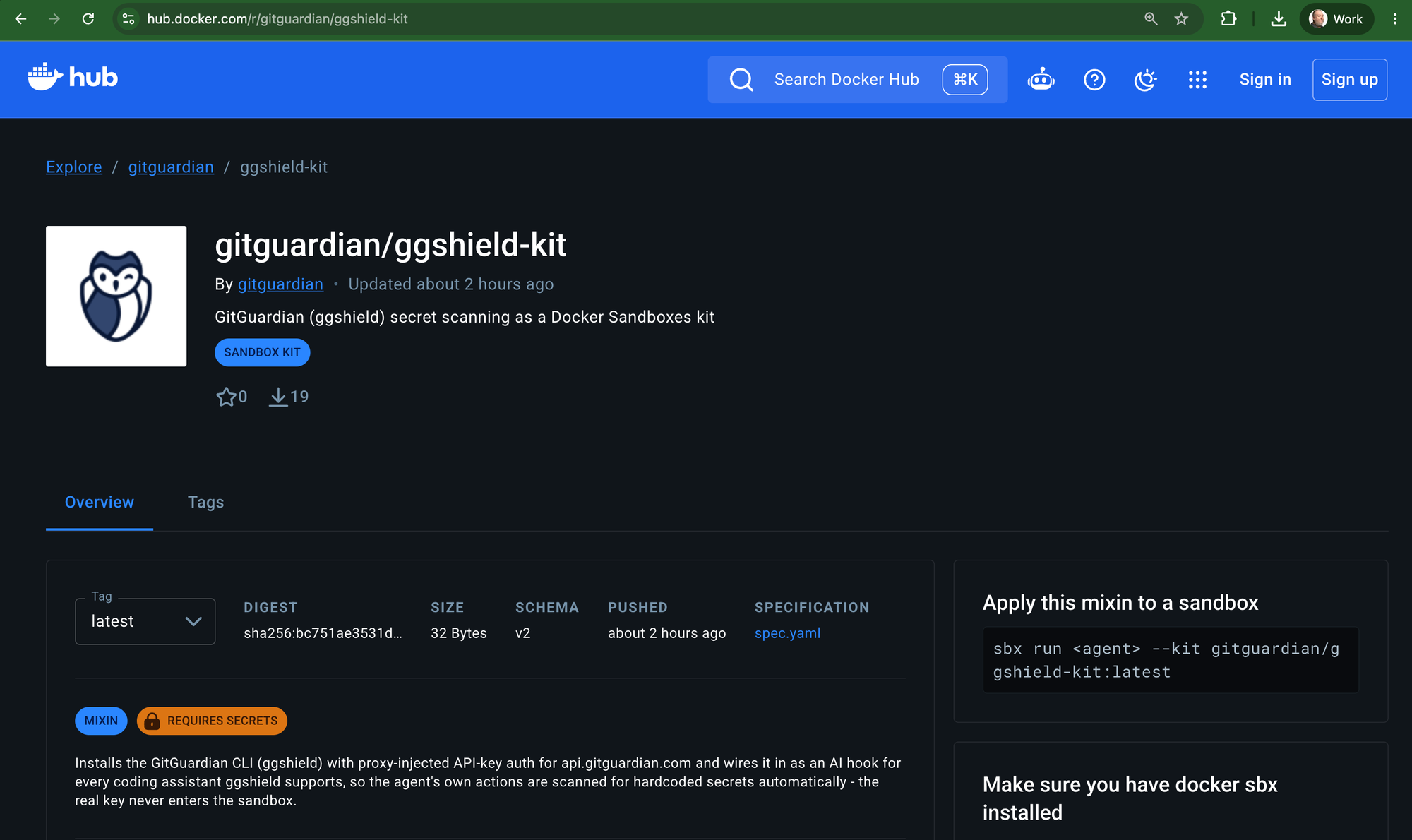 announced · Sep 2026
· source
· release history
docs
- : September 25, 2026 A shell command can return a credential nobody asked for. On Claude Code, Codex, and Mistral Vibe, now withhold that output: the assistant reads the message instead, so the secret stays out of the model and out of the session transcript for Claude Code. docs update · Sep 2026 · source
example
-
Bootstrap AI agent secret blocking across an entire developer machine — covers every detected agent (Codex, Cursor, Claude Code, etc.) plus git hooks in one step.
ggshield machine setupchangelog · Sep 2026 · source -
Install the agent skill so Claude Code can scan secrets when requested by the developer.
/plugin install ggshieldOpen-source agent skills - teach AI coding assistants to use ggshield (2026-05-21) · May 2026 · source -
Enable automatic scanning of all AI agent interactions by installing the ggshield hook for Claude Code.
ggshield install -t claude-codeOpen-source agent skills - teach AI coding assistants to use ggshield (2026-05-21) · May 2026 · source
ServiceNow integration shipped Creates and updates ServiceNow tickets from GitGuardian incidents, with granular event subscriptions and incident history posted as ticket comments.
Also counts toward: Ticketing integration
release 12 total
- New Notify when section enables granular event subscription: the New incident detected event creates the ticket, while additional selected events are posted as comments, keeping full incident history in one place. ServiceNow Integration: Event Group Selection, Public Monitoring & Honeytoken Support (2026-06-30) · Jun 2026 · source · release history
- Supports Honeytoken events in ServiceNow, bringing decoy-token alerts into the ticketing and remediation workflow. ServiceNow Integration: Event Group Selection, Public Monitoring & Honeytoken Support (2026-06-30) · Jun 2026 · source · release history
- Adds Notify when section in ServiceNow config to select which events flow into tickets: Internal monitoring, Public monitoring, or Honeytoken events ServiceNow Integration: Event Group Selection, Public Monitoring & Honeytoken Support (2026-06-30) · Jun 2026 · source · release history
- Supports Public Monitoring in ServiceNow, so secrets exposed on public sources flow into the same remediation workflow as internal incidents. ServiceNow Integration: Event Group Selection, Public Monitoring & Honeytoken Support (2026-06-30) · Jun 2026 · source · release history
- Adds Event Group Selection to the ServiceNow integration: choose to route Internal Monitoring, Public Monitoring, or Honeytoken incidents into ServiceNow tickets. ServiceNow Integration: Event Group Selection, Public Monitoring & Honeytoken Support (2026-06-30) · Jun 2026 · source · release history
- Creates ServiceNow tickets specifically for Honeytoken decoy alerts, bringing them into the remediation workflow ServiceNow Integration: Event Group Selection, Public Monitoring & Honeytoken Support (2026-06-30) · Jun 2026 · source · release history
example
-
Enable Honeytoken and Public Monitoring event routing in a new ServiceNow integration so decoy and perimeter alerts land in the same ticketing workflow as internal incidents.
In the GitGuardian dashboard, go to Integrations > ServiceNow > Configure, then under 'Event Groups' enable 'Public monitoring' and 'Honeytoken events'.ServiceNow Integration: Event Group Selection, Public Monitoring & Honeytoken Support (2026-06-30) · Jun 2026 · source
Personal Access Token support shipped Allows authentication and API usage via Personal Access Tokens in addition to Service Account tokens, with dedicated pages for monitoring active tokens.
release 10 total
-
Personal Access Tokens (PAT) and Service Account Tokens (SAT) now use an improved v2 format with
gg_pat_andgg_sat_prefixes Email Verification for Sensitive Actions (MFA) · Mar 2026 · source · release history - Adds customizable session duration setting in Authentication Settings for automatic dashboard logout JFrog Artifactory Package Registries: Secrets Hide in Your Packages Too · Mar 2026 · source · release history
- Enables credential-free, short-lived token-based access via OIDC for the new identity integrations Unified Identity Governance for Entra & AWS IAM · Jan 2026 · source · release history
- API endpoint enables managers of workspaces under the Business plan to enforce a maximum lifetime for personal access tokens generated on their workspace June 26, 2023 · Jun 2023 · source · release history
-
max_lifetimefor personal access tokens: Workspace managers under the Business plan can now enforce a maximum lifetime for personal access tokens generated on their workspace. June 26, 2023 · Jun 2023 · source · release history -
New API endpoints for
personal access tokensandservice accountsmanagement are available April 3, 2023 · Apr 2023 · source · release history
docs
-
external_provider_typeokta A valid API key with the secrets:read scope. Both personal access tokens and service account tokens are accepted. A valid API key with the secrets:write scope. Both personal access tokens and service account tokens are accepted. A valid API key with the secrets:write scope. api-docs-b91fddb85ba2 · Sep 2026 · source
example
-
Ensure Azure repository monitoring works correctly by updating the Personal Access Token scope.
In your Azure DevOps organization settings, update the Personal Access Token used by GitGuardian to include the `Graph:Read` scope.January 22, 2024 · Jan 2024 · source
On-demand incident presence recheck shipped Lets users trigger a fresh presence check on a private secret incident to confirm whether its occurrences still exist in the source repositories.
release 7 total
-
Trigger an on-demand secret validity check via
POST /v1/secrets/{secret_id}/validity/check; polllast_checked_atafterward to confirm the refreshed result — checks are rate-limited to one per secret per 5 minutes and skipped for secrets with a validity override or that GitGuardian cannot check. api-docs-dbcff7cc4c0f · Oct 2026 · source · release history -
New
GET /v1/sources/{source_id}/locationsendpoint lists all files in a single source that still hold any secret on the default branch, carrying the same per-match line positions, filters (number_of_mentions_min,number_of_mentions_max,code_fix_request_status,search), and sort options as the incident-level… api-docs-983de2edf972 · Aug 2026 · source · release history -
New
GET /v1/incidents/secrets/{incident_id}/locationsendpoint lists every file on a source's default branch that still holds a secret, with exact line positions, filterable bysource,number_of_mentions_min,number_of_mentions_max,code_fix_request_status(processing,created,error), andsearch… api-docs-983de2edf972 · Aug 2026 · source · release history - Manual triggering of validity checks for secret incidents September 20, 2021 · Sep 2021 · source · release history
- Updates the CSV report and API occurrence payload to include presence information for incidents September 20, 2021 · Sep 2021 · source · release history
- Adds presence information to incidents in the CSV report and the API occurrence payload September 20, 2021 · Sep 2021 · source · release history
docs
- Request a new presence check for a secret incident Request a new presence check for a public secret incident NHI Governance NHI Identity Owners List owners of an identity Add owners to an identity Replace the owners of an identity Remove an owner from an identity source_monitoring_status__in… api-docs-41a58f79d912 · Oct 2026 · source
example
-
Trigger a fresh presence check on a private secret incident to confirm whether its occurrences still exist in source repositories.
curl -s -X POST 'https://api.gitguardian.com/v1/incidents/secrets/42/check-presence' \ -H 'Authorization: Token <your_api_token>'api-docs-41a58f79d912 · Oct 2026 · source -
Poll a running historical scan for live progress counters and stop when
completedis returned, then fetch the audit summary fromaudit_url.curl -s -H 'Authorization: Token <api_key>' 'https://api.gitguardian.com/v1/scans/<scan_id>/live-progress'api-docs-983de2edf972 · Aug 2026 · source -
Find every file still exposing the secret for a given incident, scoped to actively monitored sources with more than one mention, to prioritize remediation.
curl -s -H 'Authorization: Token <api_key>' 'https://api.gitguardian.com/v1/incidents/secrets/42/locations?monitored=true&number_of_mentions_min=2&ordering=-number_of_mentions'api-docs-983de2edf972 · Aug 2026 · source
Custom Source (BYOS) validator-only scanning shipped Restricts custom source scans to detectors that can verify secret validity, reducing noise by dropping unverifiable matches early.
release
-
Adds in-network validity checks and permissions analysis to
ggscout(requires v0.34.1 or later), running after classification and before hashing so internal vaults, VPN-gated databases, and provider-restricted endpoints are reachable without allowlisting GitGuardian IPs, with a new[check] enabled = falseconfig…
changelog · Oct 2026
· source
· release history
- Adds optional author attribution for leaks detected through custom sources (BYOS), allowing an author email to be provided and returned when leaks are found. changelog · Oct 2026 · source · release history
- Updates the public API for creating or updating custom sources with a new Only use detectors with validators option to enable automated configuration. Set your own validity status on a secret (2026-08-14) · Aug 2026 · source · release history
- Public API now supports setting the Only use detectors with validators option when creating or updating custom sources, enabling fully automated source configuration. Set your own validity status on a secret (2026-08-14) · Aug 2026 · source · release history
-
Adds
use_only_detectors_with_validatorsfield to custom source create and update endpoints — whentrue, scans of that source retain only secrets whose detector supports validity checks; defaults tofalseon creation, omit to leave unchanged on update. api-docs-1c2e4c9efcfd · Aug 2026 · source · release history - Adds opt-in 'use only detectors with validators' option for Custom Source (BYOS) installs, dropping unverifiable matches before validity checks to reduce noise. Mention members and teams in incident notes (2026-07-20) · Jul 2026 · source · release history
docs
-
use_only_detectors_with_validatorsuse_only_detectors_with_validators When true, scans of this source only keep secrets whose detector supports validity checks. Omit to leave the current value unchanged on update; defaults to false on creation. api-docs-1c2e4c9efcfd · Aug 2026 · source
example
-
Opt out of validity and permissions checks on a specific ggscout deployment where outbound provider calls are not permitted.
[check] enabled = falsechangelog · Oct 2026 · source -
When creating or updating a custom source, restrict its scan results to secrets that can be actively validated — cutting noise from detectors that cannot confirm whether a secret is live.
curl -X PATCH https://api.gitguardian.com/v1/sources/custom/<source_id> \ -H 'Authorization: Token <api_key>' \ -H 'Content-Type: application/json' \ -d '{"use_only_detectors_with_validators": true}'api-docs-1c2e4c9efcfd · Aug 2026 · source -
Reduce false positives on a Custom Source install by restricting scans to detectors that can actually verify secret validity.
In the Custom Source install settings, enable the 'use only detectors with validators' option for the target source.changelog · Jul 2026 · source -
Reduce false positives on a Custom Source install by limiting scans to detectors that can verify secret validity.
In the console, go to the Custom Source install settings > enable 'use only detectors with validators' > save.Mention members and teams in incident notes (2026-07-20) · Jul 2026 · source
GitLab group hook installation with read-only tokens shipped Supports read-only tokens for GitLab group hook installations and provides manual webhook instructions when elevated permissions are not available.
release 8 total
-
System hooks integrations with a non-admin token now monitor projects in personal namespaces and in groups the service account reaches only through a project.
changelog · Oct 2026
· source
· release history
- Supports read-only tokens for GitLab group hook installations, with manual webhook creation instructions surfaced when needed. Smart Notifiers - filter alerts, tickets, and emails by incident criteria (2026-06-19) · Jun 2026 · source · release history
- CSV export for incidents now preserves applied filters instead of exporting all results. November 15, 2023 · Nov 2023 · source · release history
- Publicly leaked tag added to secret incidents for secrets found on public GitHub. September 28, 2023 · Sep 2023 · source · release history
- Adds the Publicly leaked tag to secret incidents that have been leaked outside of your perimeter on public GitHub September 28, 2023 · Sep 2023 · source · release history
- Sends an email notification to members when their role is updated. June 1, 2022 · Jun 2022 · source · release history
example
-
Export incident reports filtered by a specific project or time range without manually re-filtering after download.
In the Incidents view, apply your desired filters and click 'Export to CSV'.November 15, 2023 · Nov 2023 · source -
Filter incident list to identify secrets exposed on the public web for immediate remediation.
In the console, go to Incidents and filter by tag `Publicly leaked`September 28, 2023 · Sep 2023 · source -
Filter sources by their health status and last scan timestamp via the API.
curl -H "Authorization: Bearer $GG_API_KEY" https://api.gitguardian.com/v1/sources?health=healthy&last_scan=trueFebruary 21, 2022 · Feb 2022 · source
SCIM-based user deprovisioning shipped Automatically synchronizes user status in the cyber tool with an external Identity Provider (IdP) via SCIM, allowing for automatic deactivation or deletion of accounts upon user removal from the IdP.
release 10 total
-
Adds SSO/SCIM sign-in support when the identity provider does not supply first and last name, deriving these values from the user's email address.
changelog · Aug 2026
· source
· release history
-
Identity level: Adminbadge marks NHIs with admin permissions (AWS AdministratorAccess, Entra Global Administrator, Okta Super Admin) in inventory and detail views Flag admin and overprivileged NHIs across AWS, Entra, and Okta · Apr 2026 · source · release history - Enables One-click SAML SSO configuration via the Okta app catalog without custom SAML apps. GitGuardian Is Now on the Okta Integration Network · Mar 2026 · source · release history
- Supports both SP-initiated and IdP-initiated SSO flows from the GitGuardian dashboard or Okta portal. GitGuardian Is Now on the Okta Integration Network · Mar 2026 · source · release history
- Introduces Just-in-Time provisioning for new users on first login, independent of SCIM status. GitGuardian Is Now on the Okta Integration Network · Mar 2026 · source · release history
- Adds Okta-verified app integration on the Okta Integration Network for streamlined identity management. GitGuardian Is Now on the Okta Integration Network · Mar 2026 · source · release history
example
-
Automatically deactivate GitGuardian user accounts when users are removed from the corporate Identity Provider to maintain least privilege access.
Configure SCIM provisioning in your IdP (e.g., Okta, Azure AD) pointing to the GitGuardian SCIM endpoint provided in Platform User management settings.December 5, 2024 · Dec 2024 · source
Saved Views for incident filtering shipped Enables administrators to save complex filter combinations as named 'Saved Views' for quick access and recurring monitoring of specific incident sets.
release 9 total
- Adds a built-in Valid saved view on the Endpoint Protection discovered secrets page, available to all users. Check validity and permissions of your vaulted secrets, from inside your network (2026-10-15) · Oct 2026 · source · release history
-
Ships three pre-configured saved views covering company-related, unclear if company-related, and not company-related incidents, so teams open a pre-triaged queue instead of a flat incident list.
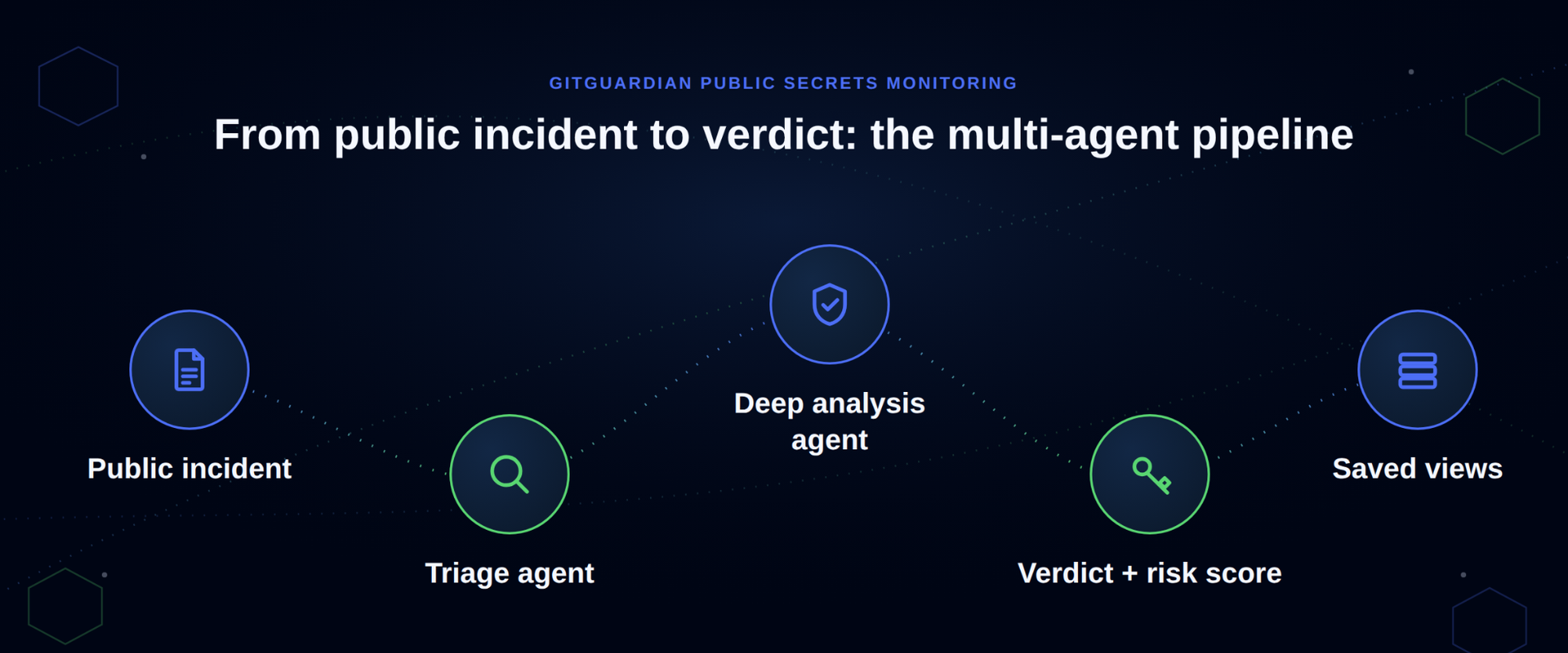 announced · Sep 2026
· source
· release history
-
Adds AI-agent analysis of public secret incidents, producing a Company-related verdict (Related, Uncertain, or Unrelated) available as a column, a filter, and three ready-made saved views — replacing the ML risk score on public incidents.
changelog · Aug 2026
· source
· release history
- Adds a Company-related verdict (Related, Uncertain, Unrelated) to public secret incidents, available as a column, filter, and saved views. GitGuardian agents tell you which Public Monitoring incidents are actually yours (2026-08-27) · Aug 2026 · source · release history
- Introduces default saved view Public exposure and dedicated column for filtering and viewing exposure details Publicly leaked tag and exposure detail in internal incidents · Mar 2026 · source · release history
- Updates the Critical saved view to show incidents with risk score above 80 Risk score - ML-powered incident prioritization · Dec 2025 · source · release history
example
-
Save a complex filter of high-risk secrets as a reusable view for quick monitoring.
Navigate to the Filters menu, configure your desired filters (e.g., severity > High), click 'Save as View', and name it 'Critical Secrets'.August 14, 2024 · Aug 2024 · source
Overview and analytics dashboards shipped Extends the analytics overview to include Non-Human Identity and Public Monitoring data alongside existing incident metrics.
release 9 total
-
Adds Company-related and Risk score columns to the Public Monitoring incident list by default.
announced · Oct 2026
· source
· release history
- Expands Overview analytics to include Non-Human Identity (NHI) and Public Monitoring data. Smart Notifiers - filter alerts, tickets, and emails by incident criteria (2026-06-19) · Jun 2026 · source · release history
-
Adds
POST /v1/scan/create-incidentsendpoint support for optionallocation.urlfield to link scanned documents back to their origin Email Verification for Sensitive Actions (MFA) · Mar 2026 · source · release history - Analytics period selector expanded to include Last 30/60/90 days and Previous month/quarter/year ranges. Night Owl Mode: Improved UI + Dark Theme · Feb 2026 · source · release history
- Introduces Top Risky Data Sources view to identify repositories generating the most critical and high-severity incidents. Analytics Overview - Executive Bird's-Eye View of Security Posture · Dec 2025 · source · release history
- Adds an analytics page to monitor IaC scanning usage (available in beta) January 9, 2023 · Jan 2023 · source · release history
example
-
When triaging a flood of public exposure alerts, open the Company-related saved view first to see only incidents Agents Analysis has confirmed as belonging to your org, then drill into the Analysis tab on any incident to review the reasoning and Investigation details before deciding on remediation.
In Public Monitoring, select the 'Company-related' saved view > open an incident > click the 'Analysis' tab to review the verdict (Related / Uncertain / Unrelated), the reasoning, and the…announced · Oct 2026 · source
AI Hooks Expansion shipped Extends AI agent secret blocking to cover prompt submission, pre-tool use, and post-tool use for Codex, Mistral Vibe, Amazon Kiro, and Junie CLI.
release 7 total
-
Adds
ggshield machine setupcommand in version 1.55.0 to configure AI Hooks for the newly supported Kiro and Junie agents AI Hooks keep leaked tool output away from the model (2026-09-25) · Sep 2026 · source · release history -
Adds
ggshield machine setupsubcommand to register AI Hooks for Kiro and Junie CLI in one step. AI Hooks keep leaked tool output away from the model (2026-09-25) · Sep 2026 · source · release history -
Adds a pre-tool-use hook via
ggshieldthat scans file reads, shell commands, and MCP calls before execution and blocks the action when a secret is detected.
announced · Sep 2026
· source
· release history
- Covers Claude Code, Codex, Cursor, and VS Code with GitHub Copilot as supported coding assistants in the mixin kit. announced · Sep 2026 · source · release history
-
Adds AI Hooks to block secrets at prompt submission, pre-tool use, and post-tool use for Codex and Mistral Vibe, alongside existing Claude Code, Cursor, Copilot CLI, and VS Code coverage.
changelog · Sep 2026
· source
· release history
- Adds AI Hooks coverage for Codex and Mistral Vibe, joining Claude Code, Cursor, Copilot CLI, and VS Code — scanning prompt submission, pre-tool use, and post-tool use, and blocking with a named secret and remediation hint. See all your AI agents across the fleet. Stop them leaking your secrets. (2026-09-07) · Sep 2026 · source · release history
example
-
Register AI Hooks for Kiro and Junie CLI on a developer workstation after upgrading to ggshield 1.55.0.
ggshield machine setupAI Hooks keep leaked tool output away from the model (2026-09-25) · Sep 2026 · source -
Install and configure AI Hooks for all detected agents on a developer machine.
ggshield machine setupSee all your AI agents across the fleet. Stop them leaking your secrets. (2026-09-07) · Sep 2026 · source -
Configure Cursor rules to expose the ggshield workflow for on-demand agent use.
Drop the provided skills into your .cursor/ directoryOpen-source agent skills - teach AI coding assistants to use ggshield (2026-05-21) · May 2026 · source
Secret detection for non-code sources shipped Detects generic passwords and high-entropy secrets in non-code sources like Confluence, Jira, Slack, and Teams, using an LLM filter to suppress false positives before they reach the dashboard.
release 8 total
- Adds Generic Password and Generic High Entropy Secret detection to non-code sources including Confluence, Jira, Slack, Microsoft Teams, and others — matching the coverage already available for VCS. Generic Detectors landing on your non-VCS sources, powered by the False Positive Remover (2026-07-07) · Jul 2026 · source · release history
- Extends the False Positive Remover (LLM-based model) to non-code source findings, automatically tagging 25–40% of generic findings as false positives before they surface in the dashboard. Generic Detectors landing on your non-VCS sources, powered by the False Positive Remover (2026-07-07) · Jul 2026 · source · release history
- File attachment scanning detects secrets hiding in file attachments dropped in channels and messages alongside text-based messages. GitGuardian now listed on the Slack Marketplace, packed with new capabilities! (2026-04-23) · Apr 2026 · source · release history
- Adds automatic scanning of file attachments shared within Microsoft Teams to detect hidden secrets MS Teams attachment scanning is here! · Sep 2025 · source · release history
- Adds hardcoded secret detection for Microsoft Teams, scanning both new activity and historical content. Secrets Detection in Microsoft Teams · May 2025 · source · release history
-
Adds
stepsto enable GitGuardian check runs on GitHub forked repositories for Business workspaces December 5, 2024 · Dec 2024 · source · release history
example
-
Review or toggle AI-powered false-positive filtering for non-code sources after it is enabled by default on Business accounts.
In the GitGuardian console, go to Settings > AI settings and confirm that AI features (including the False Positive Remover) are enabled for your non-code source integrations.Generic Detectors landing on your non-VCS sources, powered by the False Positive Remover (2026-07-07) · Jul 2026 · source -
Trigger an invitation API call without sending the email notification to reduce noise.
curl -X POST 'https://api.gitguardian.com/v1/invite' \ -H 'Authorization: Bearer $GG_API_KEY' \ -H 'Content-Type: application/json' \ -d '{ "email": "user@example.com", "send_email": false }'November 18, 2024 · Nov 2024 · source
Automated NHI Classification and Credential Unification shipped Runs the Secrets Detection Engine on values collected by ggscout to classify vaulted secrets against known detectors and groups sibling credential fields into single inventory entries.
release
-
Publishes a Docker Sandbox Mixin Kit on Docker Hub and GitHub that automatically installs
ggshieldand configures agentic AI hooks when a sandbox starts, requiring no manual setup.
announced · Sep 2026
· source
· release history
-
Groups multi-match credentials (e.g. PostgreSQL username, password, host, and port) as a single inventory entry rather than separate fields.
changelog · Sep 2026
· source
· release history
-
Enables
ggscoutv0.32.0+ to classify secrets in your NHI inventory against the same 550+ detectors used for code scanning, labeling them with a specificdetector,detector_type,secret_family,secret_category, andsecret_providerrather than just their name and path. Vaulted Secrets Now Classified by Value (2026-09-04) · Sep 2026 · source · release history - Ensures sibling fields of multi-match credentials (e.g., PostgreSQL username, password, host, port) are kept as a single unified inventory entry instead of four separate unknown secrets. Vaulted Secrets Now Classified by Value (2026-09-04) · Sep 2026 · source · release history
-
Runs the Secrets Detection Engine (550+ detectors, including multi-match detectors) on every value
ggscoutcollects from vaults, CI systems, and Kubernetes clusters, classifying each secret by its actual value rather than its name or path. Vaulted Secrets Now Classified by Value (2026-09-04) · Sep 2026 · source · release history - Groups sibling fields that form a single credential (e.g. PostgreSQL username, password, host, and port) into one inventory entry instead of four separate items. Vaulted Secrets Now Classified by Value (2026-09-04) · Sep 2026 · source · release history
docs
-
September 25, 2026 The ggscout minimum moves to 0.32.0, the first version that classifies collected secrets with the Secrets Detection Engine. The chart ships 0.32.0; upgrade any ggscout you run outside the cluster.
seen Sep 2026
· source
- Classifying collected values with the Secrets Detection Engine before hashing, using the same 600+ detectors as the rest of the platform : secrets never leave your infrastructure in clear text Accurate Classification : Collected values are classified with the Secrets Detection Engine before hashing, using the same… seen Sep 2026 · source
- : September 4, 2026 ggscout now runs the Secrets Detection Engine on every value it collects, so vaulted secrets are now classified against the same 550+ detectors used for code scanning, including multi-match detectors, so the NHI inventory can tell a real credential from a hostname, a feature flag, or a placeholder. docs update · Sep 2026 · source
Jira and ServiceNow ticket dissociation shipped Allows a Jira or ServiceNow ticket to be unlinked from an incident without deleting the external ticket.
Also counts toward: Command-line interface
release
-
Unlink a ticket from an incident using a new Public API endpoint.
Sync your GitHub teams, members, and perimeters automatically (2026-10-29) · Oct 2026
· source
· release history
-
Adds
DELETE /v1/incidents/secrets/{resource_id}/destination-tickets/{ticket_id}to unlink a Jira or ServiceNow ticket from a secret incident, public secret incident, or honeytoken without deleting the ticket on the external platform; usesresource_typequery parameter to select the resource… api-docs-cce17ae86794 · Oct 2026 · source · release history - Enables dissociation of a Jira or ServiceNow ticket from an incident directly on the incident detail page without deleting the external ticket. Smart Notifiers - filter alerts, tickets, and emails by incident criteria (2026-06-19) · Jun 2026 · source · release history
-
GitLab group hook integration now supports the
token_editionparameter for token management November 3, 2021 · Nov 2021 · source · release history -
Enables
GitLab.comintegration with support for multiple GitLab groups October 13, 2021 · Oct 2021 · source · release history
docs
-
Unlink a ticket from a secret incident, public incident or honeytoken NHI Identities List identities Retrieve an identity List the locations of an identity NHI Sources
full_pathUnlink a ticket from a secret incident, public incident or honeytoken Remove the link between a resource and a ticket previously created on… api-docs-cce17ae86794 · Oct 2026 · source
example
-
Unlink a stale Jira ticket from a secret incident after it was closed on the Jira side, without touching the Jira ticket itself.
curl -X DELETE 'https://api.gitguardian.com/v1/incidents/secrets/8821/destination-tickets/PROJ-42?resource_type=secret-incidents' \ -H 'Authorization: Token <your_api_token>'api-docs-cce17ae86794 · Oct 2026 · source -
Unlink a runaway or mistakenly created Jira ticket from an incident without deleting the external ticket.
In the console, open the incident detail page, locate the linked Jira ticket section, and click 'Dissociate ticket' to remove the association while keeping the Jira issue intact.Smart Notifiers - filter alerts, tickets, and emails by incident criteria (2026-06-19) · Jun 2026 · source
Docker secrets monitoring shipped Adds support for monitoring secrets within Docker images and configurations via platform integration.
Also counts toward: REST API
release
- Surfaces Docker Hub-specific context on every incident — publishing account, image and repository name, and the layer the secret was found in — instead of commit and author.︀︄︇︀︅︉︀︅︀︀︃︀︀︅︅︀︅︊︀︄︆︀︃︄ Catch secrets leaked in public Docker Hub images (2026-10-21) · Oct 2026 · source · release history
- Adds Secret detection for Azure Container Registry, Amazon Elastic Container Registry, Google Artifact Registry, JFrog Container Registry, and DockerHub container images. Detect hardcoded secrets in your Container Registries · Mar 2025 · source · release history
-
The
resolve_reasonfield has been removed from all custom webhook payloads, potentially breaking integrations that rely on its presence September 8, 2022 · Sep 2022 · source · release history -
Adds the
audit_logsendpoint to the Features API, requiring theaudit_logs:readscope for access July 11, 2022 · Jul 2022 · source · release history -
Adds
dockerintegration to the platform. July 27, 2021 · Jul 2021 · source · release history
docs
-
: October 21, 2026 Secrets also leak in container images: config files, tokens or credentials baked into image layers. Once the image is public on Docker Hub, anyone who pulls it gets them. GitGuardian Public Monitoring now covers Docker Hub, and checks newly published public images against your perimeter every day.
docs update · Oct 2026
· source
- Cloudsmith container registry Secret Scanning Add Cloudsmith to GitGuardian's supported container registries, so teams hosting Docker images there can monitor them for hardcoded secrets alongside their other sources. 18 docs update · Aug 2026 · source
example
-
Filter audit logs to only show events from a specific user or date range using the new query parameters.
GET /audit-log?user_id=<USER_ID>&date_from=<DATE>&date_to=<DATE>July 27, 2022 · Jul 2022 · source
NHI secret environment classification shipped Automatically classifies the environment of each secret discovered by NHI Governance based on its storage path, labels, or the environment declared in ggscout configuration, assigning values such as production or staging.
release
-
Surfaces validity results in the NHI inventory as a Validity column and filter with Valid and Invalid values, exposes token permission scopes (e.g.
changelog · Oct 2026
· source
· release history
-
Adds
[check] enabled = falseconfig key to opt out of in-network validity and permissions checks per ggscout deployment.︀︄︇︀︅︉︀︅︀︀︃︀︀︅︅︀︅︊︀︄︆︀︃︄ Check validity and permissions of your vaulted secrets, from inside your network (2026-10-15) · Oct 2026 · source · release history - Adds a Validity column and filter (Valid, Invalid, Unknown) for all secrets collected by ggscout, surfaces token permission scopes (e.g. Check validity and permissions of your vaulted secrets, from inside your network (2026-10-15) · Oct 2026 · source · release history
- Merges validity verdicts from vaulted or Kubernetes secrets with any matching secret incident, always keeping the most recent verdict. Check validity and permissions of your vaulted secrets, from inside your network (2026-10-15) · Oct 2026 · source · release history
docs
-
October 20, 2026 Kubernetes 1.36 is now supported. The chart ships ggscout 0.33.0, the version that sends Azure Key Vault, GitLab CI and Akeyless tags for environment classification; upgrade any ggscout you run outside the cluster to get them.
seen Oct 2026
· source
-
: October 7, 2026 NHI Governance now classifies the environment of each secret from where it lives and how it is tagged. A secret stored under vault/production/payments is production, a secret labeled
environment=stagingis staging, whatever the env declared for the whole source in your ggscout configuration. seen Oct 2026 · source
example
-
After upgrading to ggscout 0.34.1, run a fetch-and-send to populate validity verdicts, then filter the NHI inventory to immediately see all invalid credentials still sitting in vaults or Kubernetes clusters.
In NHI Governance → Identities, open the Validity filter and select 'Invalid' to list revoked credentials across vaults, CI variables, and Kubernetes clusters.Check validity and permissions of your vaulted secrets, from inside your network (2026-10-15) · Oct 2026 · source -
Disable in-network validity checks for a specific ggscout deployment that cannot reach external providers.
[check] enabled = falseCheck validity and permissions of your vaulted secrets, from inside your network (2026-10-15) · Oct 2026 · source
CLI API timeout configuration shipped Lets users set a persistent API timeout in ggshield config or via environment variable so that large or slow scans do not fail with read timeout errors in any environment, including CI pipelines.
Also counts toward: CI/CD pipeline integration
release
-
Adds
api_timeoutconfig key andGITGUARDIAN_API_TIMEOUTenvironment variable to override the previously fixed 60-second API timeout.︀︄︇︀︅︉︀︅︀︀︃︀︀︅︅︀︅︊︀︄︆︀︃︄ AI Hooks keep leaked tool output away from the model (2026-09-25) · Sep 2026 · source · release history -
Adds
api_timeoutconfig key andGITGUARDIAN_API_TIMEOUTenvironment variable toggshieldto allow custom API timeout values beyond the previous 60-second fixed limit AI Hooks keep leaked tool output away from the model (2026-09-25) · Sep 2026 · source · release history
example
-
Set a persistent API timeout in ggshield config so every scan in the environment respects the higher limit.
api_timeout: 120
changelog · Oct 2026
· source
-
Raise the API timeout when large scans fail with a read timeout error.
api_timeout: 120changelog · Oct 2026 · source -
Set the API timeout via environment variable in a CI pipeline where config files are not practical.
GITGUARDIAN_API_TIMEOUT=120 ggshield secret scan repo .changelog · Oct 2026 · source -
Persist a higher API timeout in ggshield config so every scan in the environment picks it up without an env-var prefix.
api_timeout: 120changelog · Oct 2026 · source -
Override the API timeout via environment variable in a CI pipeline where the config file is not available.
GITGUARDIAN_API_TIMEOUT=120 ggshield secret scan repo .AI Hooks keep leaked tool output away from the model (2026-09-25) · Sep 2026 · source -
Raise the API timeout when large scans are failing with read timeouts in CI or on slow networks.
api_timeout: 120AI Hooks keep leaked tool output away from the model (2026-09-25) · Sep 2026 · source
Jira Cloud integration and auto-resolve shipped Introduces a new Jira Cloud integration that automatically creates issues on incident trigger and supports auto-resolving incidents when linked Jira issues are closed.
Also counts toward: Ticketing integration
release 7 total
- Jira Cloud integration now uses scheduled recurrent scans instead of inbound webhooks for monitoring Open-source agent skills - teach AI coding assistants to use ggshield (2026-05-21) · May 2026 · source · release history
-
Microsoft Teams
configsupports granular subscription to specific event types (resolution, assignment, status changes, comments, access control, sharing) per channel Enhanced Microsoft Teams Notifications - Public Monitoring, Internal Monitoring & Honeytoken Alerts (2026-04-29) · Apr 2026 · source · release history - Managers can add specific sources to a team's perimeter via Settings > User management > Teams using the Add sources option in the perimeter section Control team access to any Internal Monitoring source type · Apr 2026 · source · release history
- Enables an auto-resolve feature that marks the incident as resolved in GitGuardian when the linked Jira issue is closed. April 10, 2024 · Apr 2024 · source · release history
- Introduces a new version of the Jira Cloud integration for issue tracking with automatic creation of Jira issues upon incident trigger. April 10, 2024 · Apr 2024 · source · release history
- Adds automatic creation of a Jira issue upon new incident trigger via the Jira Cloud integration April 10, 2024 · Apr 2024 · source · release history
example
-
Automatically track and resolve secrets detection incidents in Jira without manual intervention.
Steps: Navigate to Integrations > Jira Cloud in the GitGuardian dashboard. Configure the integration to select 'Auto-create issues' and enable 'Auto-resolve on closure'.April 10, 2024 · Apr 2024 · source
Bulk incident actions shipped Allows performing actions such as resolving, ignoring, assigning, or adding notes to multiple incidents at once from the UI.
release 8 total
- Adds a Similar Incidents section to the sidebar of any incident detail page to view grouped items and execute bulk actions for efficient remediation. ML-Powered Similar Incident Grouping - Combat Incident Fatigue! · Jan 2025 · source · release history
-
remediationworkflow is now fully customizable with the static step removed April 3, 2023 · Apr 2023 · source · release history -
remediation workflowis now 100% customizable with the removal of the final static step April 3, 2023 · Apr 2023 · source · release history -
The static step in the
remediationworkflow has been deleted, making the workflow fully customizable April 3, 2023 · Apr 2023 · source · release history - Incidents bulk actions now include the count of unaffected items July 27, 2022 · Jul 2022 · source · release history
- Enables bulk actions for Restricted users in the Incidents list January 24, 2022 · Jan 2022 · source · release history
Pull request scan size controls shipped Controls which pull requests are scanned by skipping oversized PRs or merge commits, protecting API rate limits while keeping detection focused on newly introduced secrets.
Also counts toward: CI/CD pipeline integration
release
- Enables scanning of oversized pull requests (>200 commits, >60,000 files, or >300,000 lines changed) via repository cloning on the Business plan, bypassing GitHub API rate limits. Mention members and teams in incident notes (2026-07-20) · Jul 2026 · source · release history
- GitHub check runs gain a new setting to skip merge commits in pull request checks. Smart Notifiers - filter alerts, tickets, and emails by incident criteria (2026-06-19) · Jun 2026 · source · release history
- Large GitHub pull requests can now be skipped based on a configured size limit to protect API rate limits. Smart Notifiers - filter alerts, tickets, and emails by incident criteria (2026-06-19) · Jun 2026 · source · release history
- GitHub check runs now skip scans on pull requests exceeding a configured size limit to protect the shared GitHub API rate limit. Smart Notifiers - filter alerts, tickets, and emails by incident criteria (2026-06-19) · Jun 2026 · source · release history
- New GitHub check run setting to skip merge commits in pull request scans, flagging only secrets introduced on the PR branch. Smart Notifiers - filter alerts, tickets, and emails by incident criteria (2026-06-19) · Jun 2026 · source · release history
- Implement incidents list endpoint on workspace incidents API June 14, 2021 · Jun 2021 · source · release history
example
-
Prevent false-positive check run failures caused by secrets merged in from the target branch during large PRs.
In the console, go to Integrations > GitHub > Check Runs settings and enable 'Skip merge commits' to restrict flagging to secrets introduced on the PR branch only.Smart Notifiers - filter alerts, tickets, and emails by incident criteria (2026-06-19) · Jun 2026 · source
Incident sharing via links shipped Enables sharing incident details with developers who do not have direct access to the workspace, including actions like resolving or ignoring false positives directly from the shared link.
release
- Adds option in GitHub Check Runs to include public share links for incident details Introducing AI Filters - It's time to have a conversation with your data! · Sep 2025 · source · release history
- Moves the public sharing toggle to a renamed Share modal (previously Grant access) for incident details. July 24, 2023 · Jul 2023 · source · release history
-
Introduces new API endpoints
/incidents/{id}/grant-accessand/incidents/{id}/revoke-accessfor managing incident permissions. November 14, 2021 · Nov 2021 · source · release history -
Introduces new
incident::shareAPI scope November 14, 2021 · Nov 2021 · source · release history - Ability to share an incident externally with developers who are not authenticated on the workspace April 6, 2021 · Apr 2021 · source · release history
example
-
Configure your workspace to automatically reopen incidents if they reoccur, rather than staying closed.
Navigate to Settings > Features > Regression and enable the optionNovember 30, 2021 · Nov 2021 · source -
Share incident details with a developer who does not have direct access to the workspace.
Open an incident and use the 'Share' option to send external visibilityApril 6, 2021 · Apr 2021 · source
User management filtering and sorting shipped Adds UI controls to filter, sort, and view detailed lists of workspace members and invitations, including specific incident-level access.
release
-
Introduces
team managementwithin a workspace for business workspaces with granular incident permissions:can view,can edit, andfull access. October 17, 2022 · Oct 2022 · source · release history - Adds granular incident permissions (can view, can edit, full access) for business workspaces October 17, 2022 · Oct 2022 · source · release history
- Adds a new endpoint to list workspace members having access to an incident. March 23, 2022 · Mar 2022 · source · release history
- Adds a new endpoint to list workspace members having access to an incident. March 23, 2022 · Mar 2022 · source · release history
- Adds filtering and sorting controls to the Members and Invitations tables January 24, 2022 · Jan 2022 · source · release history
example
-
Add context to a team for better organization of incidents and members.
steps: In the GitGuardian SaaS console, go to Settings > Teams, select your team, and use the new 'Description' field to add details.December 13, 2022 · Dec 2022 · source -
Sort team members by role or invitation date in the administration panel.
Navigate to Settings > Members, then click the column headers to sort and use the filter bar.January 24, 2022 · Jan 2022 · source
Custom file path exclusions shipped Provides the ability to configure and test a list of file paths to exclude from secrets monitoring.
release
-
Scans now skip additional folders of downloaded or generated files, including
pip-*,pytest-of-*, and_MEI*temp leftovers, NuGet and Scoop package caches, and Electron app caches.
changelog · Oct 2026
· source
· release history
-
Expands folder exclusions to skip build leftovers (
pip-*,pytest-of-*,_MEI*), Windows package caches (NuGet, Scoop), and Electron app caches, while still scanning credential-holding folders. Scan developer machines with less noise, and clean up what you find (2026-10-27) · Oct 2026 · source · release history - Adds repository-scoped filepath exclusions for secrets detection incidents. October 17, 2024 · Oct 2024 · source · release history
- Shows the count of new secret incidents that will be hidden by a new filepath exclusion rule during rule creation. June 4, 2024 · Jun 2024 · source · release history
-
Adds the ability to configure and test a
filepathexclusion list to stop monitoring specific paths May 26, 2021 · May 2021 · source · release history - Adds ability to configure filepaths to exclude from monitoring May 26, 2021 · May 2021 · source · release history
Historical Content Scanning shipped Enables manual and automatic scanning of past content in sources like Confluence Data Center, Microsoft Teams, and Bitbucket Cloud to uncover previously unscanned secret debt.
release
- Adds on-demand priority queuing for Jira Cloud historical scans launched from the dashboard or public API so they start ahead of recurrent and system scans, and counts public API historical scan launches made with a service account token as on-demand on AWS S3 and version control sources. Check validity and permissions of your vaulted secrets, from inside your network (2026-10-15) · Oct 2026 · source · release history
-
Adds live progress polling for historical scans, exposing
report_status(values:running,watching,done,unavailable) alongsidescan_status, with terminal fieldsduration_seconds,pending_seconds, andoutcome_by_reason(reasons:skipped,binary_file,too_large,failed,… api-docs-401357175309 · Sep 2026 · source · release history -
New beta
GET /v1/scans/{scan_id}/live-progressendpoint returns the live status (queued,in_progress,completed) and real-time counters (elements_scanned,elements_total,elements_skipped,elements_failed,data_downloaded_bytes,data_scanned_bytes) for a running historical scan, and includes an… api-docs-983de2edf972 · Aug 2026 · source · release history - Enables historical secret scanning for Confluence Data Center, surfacing secrets leaked in past content rather than only real-time detections. Historical Scanning now available for Confluence Data Center · Jun 2025 · source · release history
- Historical Scan UI adds new filters for failure reasons and last scan date September 9, 2024 · Sep 2024 · source · release history
example
-
Kick off a historical scan on high-risk buckets (backup archives, log stores) to surface secrets that have never been visible to code scanners.
In GitGuardian, go to Integrations > AWS S3 > your connected account, select the individual buckets to scan (e.g.Scan your AWS S3 buckets for secrets (2026-08-25) · Aug 2026 · source
Agent Inventory and Blast Radius Analysis shipped Invents agents and MCP servers on developer endpoints, reports hook coverage, and allows replaying agent transcripts to analyze blast radius after compromise.
release
-
Adds
--historyflag toggshield ai discoverto parse MCP tool calls from agent transcripts for post-compromise investigation. See all your AI agents across the fleet. Stop them leaking your secrets. (2026-09-07) · Sep 2026 · source · release history - Adds the AI Agents and MCP inventory showing endpoint-level details, hook coverage, and subscription type See all your AI agents across the fleet. Stop them leaking your secrets. (2026-09-07) · Sep 2026 · source · release history
- Adds AI agents and MCP inventory to Developer Endpoint Protection, reporting agents and MCP servers per endpoint, hook coverage, and whether an agent subscription is personal or company-owned. See all your AI agents across the fleet. Stop them leaking your secrets. (2026-09-07) · Sep 2026 · source · release history
-
Adds
--historyargument toggshield ai discoverto parse MCP tool calls from agent transcripts See all your AI agents across the fleet. Stop them leaking your secrets. (2026-09-07) · Sep 2026 · source · release history
example
-
Retrieve MCP tool calls from an agent's local transcripts to audit secret leakage vectors.
ggshield ai discover --historySee all your AI agents across the fleet. Stop them leaking your secrets. (2026-09-07) · Sep 2026 · source -
After a suspected compromise, reconstruct which MCP tools an agent called by replaying its transcript history.
ggshield ai discover --historySee all your AI agents across the fleet. Stop them leaking your secrets. (2026-09-07) · Sep 2026 · source
Jira Data Center integration shipped Adds support for Jira Data Center instances to enable real-time secret detection and honeytoken detection notifications.
Also counts toward: Ticketing integration
release
-
Adds automatic monitoring and automatic scan toggles for Jira Cloud, Jira Data Center, Confluence Cloud, Confluence Data Center, and Microsoft Teams — new spaces, projects, and channels are picked up without manual addition.
changelog · Aug 2026
· source
· release history
- GitGuardian Bridge now supports comprehensive integration with any self-hosted service in private networks, including GitHub Enterprise, GitLab, Jira Data Center, Confluence, Container registry, and custom sources, using flexible domain mapping. GitGuardian Bridge - Secure Access to All Your Self-Hosted Services · Oct 2025 · source · release history
- Enhances Jira Data Center integration to include leaker email addresses in incident creation for historical comment occurrences. Historical Scanning now available for Confluence Data Center · Jun 2025 · source · release history
- Enhances Jira Data Center integration to support User Picker (single user) custom fields in templates. ServiceNow secret scanning · Jan 2025 · source · release history
- Adds Jira Data Center integration to support real-time secret detection and honeytoken detection September 23, 2024 · Sep 2024 · source · release history
- Adds Jira Data Center integration for real-time secret detection and honeytoken detection September 23, 2024 · Sep 2024 · source · release history
Incident @mention notifications shipped Allows users to mention individuals or teams in incident notes to notify them by email and pull them into the remediation workflow.
release
-
Adds @mention support in incident notes and feedback — type @name or @team-name to notify individual members or entire teams via email, linked directly to the incident.
changelog · Jul 2026
· source
· release history
-
Adds
@mention capability in incident notes to notify members or teams directly Mention members and teams in incident notes (2026-07-20) · Jul 2026 · source · release history - Adds @mention support in incident notes and feedback — type @ to tag a member by @name or an entire team by @team-name, triggering email notifications that link directly to the incident. Mention members and teams in incident notes (2026-07-20) · Jul 2026 · source · release history
example
-
Loop in a teammate or team directly on an incident without leaving GitGuardian — they receive an email linking straight to the incident.
In any incident, open the Notes or Feedback panel, type @ and select a member (@name) or a team (@team-name) from the searchable list, then submit.changelog · Jul 2026 · source -
Loop in a teammate or an entire team on a critical incident without leaving GitGuardian.
In the console, open any incident > add a note or feedback > type @ and select a member (@name) or team (@team-name) from the searchable list.Mention members and teams in incident notes (2026-07-20) · Jul 2026 · source -
Notify a specific team in an incident note without leaving the platform.
In the incident note, type `@team-name` and select the team from the list.Mention members and teams in incident notes (2026-07-20) · Jul 2026 · source
Jira Notifier integration shipped Enriches Jira ticket descriptions with detector-specific remediation guidance to help assignees resolve incidents faster.
Also counts toward: Ticketing integration
release
- Adds remediation guidance content and detector-specific links as assignable metadata fields in the Jira Notifier integration ticket description template. Generic Detectors landing on your non-VCS sources, powered by the False Positive Remover (2026-07-07) · Jul 2026 · source · release history
- Adds filename and line number template options in Jira ticketing templates JFrog Artifactory Package Registries: Secrets Hide in Your Packages Too · Mar 2026 · source · release history
- Introduces the new Jira alerting integration for sending findings to Jira projects January 23, 2023 · Jan 2023 · source · release history
-
Implements
GET /workspaces/{workspace_id}/sourcesendpoint June 14, 2021 · Jun 2021 · source · release history -
Adds
severityfield to incidents for easier triaging June 14, 2021 · Jun 2021 · source · release history
example
-
Use dynamic variables to create a Jira ticket that includes the secret type and source name.
When configuring the Jira Integration in Settings > Integrations, use {secretType} and {sourceName} in Labels or Summary fields.GitGuardian now listed on the Slack Marketplace, packed with new capabilities! (2026-04-23) · Apr 2026 · source
Public Monitoring Expansion and Exposure Management shipped Expands public monitoring to cover Bitbucket Cloud, GitHub with correlated incident management, and specific internal systems, while unifying exposure indicators under a single tag and enabling targeted queries for discovery.
release
- Adds new Public exposure property with categories: Source is publicly visible, Has linked public incident, Found outside perimeter Publicly leaked tag and exposure detail in internal incidents · Mar 2026 · source · release history
- Unifies previously scattered exposure indicators under a new Publicly Leaked tag across Internal Monitoring, Public Monitoring, and NHI Governance modules Graph Enhancement and HasMySecretLeaked Integration · Oct 2025 · source · release history
- Enables targeted queries against domains, service names, and internal system references in public GitHub repositories “Explore” and find more company-related secrets! · Sep 2025 · source · release history
- New unified module extends secrets scanning to public GitHub with correlated incident management. Extend your security coverage with Public Monitoring · Jul 2025 · source · release history
- Enables secrets detection and real-time monitoring for Bitbucket Cloud repositories Bitbucket Cloud scanning, Microsoft Teams alerts & Jira issue tracking · Jan 2025 · source · release history
example
-
Monitor specific public channels instead of all of them during Slack setup.
During the Slack app installation flow, use 'Channel selection at setup time' to choose which public channels to monitor.GitGuardian now listed on the Slack Marketplace, packed with new capabilities! (2026-04-23) · Apr 2026 · source
Honeytoken automation and context management shipped Provides automated deployment jobs for honeytokens in GitLab, GitHub, and GitHub Enterprise Server, with support for dynamic context selection to enhance detection coverage.
Also counts toward: CI/CD pipeline integration
release
- The Honeytoken Labels API endpoint is removed; use the Custom Tags API instead. Attachment scanning now covers all Jira and Confluence variants! (2026-04-27) · Apr 2026 · source · release history
- Honeytoken Context creation strategies now support selecting only dynamic contexts for deployment jobs April 8, 2024 · Apr 2024 · source · release history
- Adds workflow actions in the GitHub/GitHub Enterprise integration settings to configure write permissions essential for Honeytoken deployment jobs March 4, 2024 · Mar 2024 · source · release history
- Adds GitHub/GitHub Enterprise Server integration settings with actions to configure write permissions for Honeytoken deployment jobs March 4, 2024 · Mar 2024 · source · release history
- Automated honeytoken deployment jobs for GitLab, GitHub, and GitHub Enterprise Server February 19, 2024 · Feb 2024 · source · release history
GitHub team sync and auto-team creation shipped Automatically creates GitGuardian teams from GitHub team memberships, with an opt-in to also group direct-access repository members who belong to no GitHub team, enabling full team ownership coverage.
release
-
GitGuardian adds GitHub team sync: enable team synchronization on your GitHub integration and GitGuardian mirrors your GitHub organization's teams, members, and repository ownership into your workspace, running every 24 hours or on demand via Sync now.
Sync your GitHub teams, members, and perimeters automatically (2026-10-29) · Oct 2026
· source
· release history
- Adds Group Push capability to sync Okta groups and memberships directly into GitGuardian teams. GitGuardian Is Now on the Okta Integration Network · Mar 2026 · source · release history
docs
-
Incident routing : playbook auto-assign to multiple users GitHub team sync: auto-create teams for direct access members Opt-in option in GitHub team sync to auto-create GitGuardian teams for GitHub users who belong to no GitHub team, grouped by the repositories they access directly, so customers can reach 100%…
docs update · Oct 2026
· source
example
-
Trigger or review GitHub team sync after enabling it, to immediately mirror your GitHub org's teams and members without waiting for the 24-hour cycle.
Open your GitHub integration settings, scroll to 'Team synchronization', click 'Add organization', select the organization to mirror, then click 'Sync now' to run an immediate sync and view results…Sync your GitHub teams, members, and perimeters automatically (2026-10-29) · Oct 2026 · source
GitLab instance-level configuration override shipped Allows workspace managers to specify a custom host for GitLab token validity checks at the instance level.
release
-
Validity checks no longer read custom hosts from environment variables or local config files; custom hosts are now sourced exclusively from your GitGuardian workspace.
changelog · Oct 2026
· source
· release history
- Validity checks now take custom hosts only from your GitGuardian workspace; environment variables and local config files that previously set custom hosts are no longer read. Scan developer machines with less noise, and clean up what you find (2026-10-27) · Oct 2026 · source · release history
-
Adds
GET /v1/detector-custom-hostsendpoint to list all custom hosts configured on a workspace, grouped by secret detector (e.g.︀︄︇︀︅︉︀︅︀︀︃︀︀︅︅︀︅︊︀︄︆︀︃︄gitlab_token), returning each detector'schecker_default_base_urlalongside any configuredcustom_hostsbase_urlentries. api-docs-9a01e0949b3e · Sep 2026 · source · release history - Allows business workspaces to specify a custom host for GitLab token validity checks August 14, 2024 · Aug 2024 · source · release history
Local machine remediation dashboard shipped Provides a local `ggshield machine dashboard` interface with an Overview page that groups findings by cleanup area (AI agents, repositories, history and logs) and guides remediation order, with support for redacting AI coding tool history including SQLite databases.
release
-
Open a cleanup overview with
ggshield machine dashboard, which now lands on an Overview page grouping findings by AI agents, repositories, and history and logs.
changelog · Oct 2026
· source
· release history
- Enables redaction of Codex and opencode history from the local dashboard, including their SQLite history databases. Scan developer machines with less noise, and clean up what you find (2026-10-27) · Oct 2026 · source · release history
-
Adds an Overview page to
ggshield machine dashboardthat lists one row per cleanup area (AI agents, repositories, history and logs) and guides remediation order: overprivileged secrets first, then history leaks, then secrets in daily use. Scan developer machines with less noise, and clean up what you find (2026-10-27) · Oct 2026 · source · release history
example
-
Open the local dashboard overview to start triaging and redacting secrets by AI agent or repository.
ggshield machine dashboardchangelog · Oct 2026 · source
Incident Playbook and Automation shipped Supports automated remediation workflows (playbooks) for public incidents, automatic Jira ticket assignment via email matching, and secret revocation actions directly from the incident view.
Also counts toward: Ticketing integration
release
- Adds Playbooks support for public secret incidents in Public Monitoring Playbooks extended to Public Monitoring · Nov 2025 · source · release history
- Added automatic Jira ticket assignment to incident authors via email matching for both Jira Cloud and Data Center. GitGuardian Bridge - Secure Access to All Your Self-Hosted Services · Oct 2025 · source · release history
- Enables in-platform secret revocation for supported providers (GitHub, GitLab, OpenAI) via a call-to-action in the incident detail view, which automatically resolves valid revocations and logs them in the incident timeline Seal the Leak - Instantly Revoke Secrets with GitGuardian! · Sep 2025 · source · release history
docs
-
Playbook: Auto-ignore public incidents unrelated to the company Add an opt-in Public Monitoring playbook that ignores incidents the agents rule Unrelated, with the reason Credential not related to the company, closed by GitGuardian Bot.
docs update · Sep 2026
· source
Docker Sandbox Automation shipped Provides a Docker Sandbox Mixin Kit that automatically installs ggshield and configures AI hooks in sandbox environments, with host-side credential proxy support.
Also counts toward: Command-line interface
release
-
Publishes a Docker Sandbox Mixin Kit on Docker Hub and GitHub that automatically installs
ggshieldand configures agentic AI hooks when a sandbox starts, requiring no manual setup.
announced · Sep 2026
· source
· release history
-
Adds
sbx secret set gitguardianto supply a GitGuardian API key through Docker's host-side credential proxy, keeping the real token outside the sandbox microVM.︀︄︇︀︅︉︀︅︀︀︃︀︀︅︅︀︅︊︀︄︆︀︃︄ announced · Sep 2026 · source · release history -
Supports stacking the GitGuardian mixin with other kits by passing additional
--kits <targeted mixin>arguments tosbx. announced · Sep 2026 · source · release history
example
-
Store your GitGuardian API key securely outside the sandbox before launching, so the credential never lands inside the agent microVM.
sbx secret set gitguardianannounced · Sep 2026 · source
Fine-grained GitHub personal access token support shipped Allows fine-grained GitHub personal access tokens to be used when monitoring private members of a GitHub organisation in the public perimeter.
release
-
Fine-grained GitHub personal access tokens can now be used to monitor private members of a GitHub organization (previously only classic tokens were supported).
changelog · Jul 2026
· source
· release history
- Enables fine-grained GitHub personal access tokens to monitor private members of a GitHub organization within the Public perimeter integration. Track your GitHub check runs from the dashboard (2026-07-28) · Jul 2026 · source · release history
- Fine-grained GitHub personal access tokens can now be used to monitor private members of a GitHub organization in the Public Perimeter (previously limited to classic tokens). Track your GitHub check runs from the dashboard (2026-07-28) · Jul 2026 · source · release history
example
-
Monitor private organization members using fine-grained tokens in the Public perimeter.
In Perimeter > Integrations > GitHub, select 'Public' perimeter type and configure a 'Fine-grained personal access token' to include private members.Track your GitHub check runs from the dashboard (2026-07-28) · Jul 2026 · source
Privacy mode for sensitive data shipped Allows obfuscation of secrets and other sensitive information within the user interface to prevent unauthorized viewing.
release
- Workspace-level Privacy Mode restricts plaintext secret visibility to managers or owners only Flag admin and overprivileged NHIs across AWS, Entra, and Okta · Apr 2026 · source · release history
- Public API now supports privacy mode to control secret content visibility in retrieved secrets Secret scanning for AI coding tools · Apr 2026 · source · release history
- Privacy mode can obfuscate secrets and other sensitive information in the GitGuardian UI April 8, 2024 · Apr 2024 · source · release history
- Privacy mode allows to obfuscate secrets and other sensitive information on the GitGuardian UI. April 8, 2024 · Apr 2024 · source · release history
Incident privacy and visibility controls shipped Restricts the visibility of sensitive incident data, such as git patch details, to only relevant teams and developers involved in the occurrence.
release
-
team perimeterconfiguration now scopes internal incident access for container registries, messaging (Slack, Microsoft Teams), documentation/file storage (Confluence, SharePoint Online, OneDrive), ticketing (Jira, ServiceNow), package registries, and Bring Your Own Sources Control team access to any Internal Monitoring source type · Apr 2026 · source · release history - Adds a workspace setting in Incident details to restrict git patch visibility to only the teams and developers involved with the occurrence October 16, 2023 · Oct 2023 · source · release history
docs
- (Business plans). Not available on public incidents if the agents analysis is enabled for the workspace. seen Aug 2026 · source
example
-
Restrict incident visibility so that only relevant team members and developers can see the git patch details.
In the Workspace Settings > Incident Details section, enable 'Restricted Visibility' for git patches.October 16, 2023 · Oct 2023 · source
Platform health check tracking and notification shipped Tracks last execution times for platform health checks and sends configurable email notifications when integration health checks fail.
Also counts toward: Scheduled jobs
release
- Sends email notifications when an integration health check fails, configurable via email preferences settings. June 4, 2024 · Jun 2024 · source · release history
- Health Check sends email notifications when an integration health check fails (must be enabled manually) June 4, 2024 · Jun 2024 · source · release history
- Introduces Platform Health Check tracking for last execution and last successful execution times with hourly periodic checks May 20, 2024 · May 2024 · source · release history
- Introduces tracking for last execution and last successful execution times in Platform Health Check. May 20, 2024 · May 2024 · source · release history
Secrets Manager Integration and Scanning shipped Monitors secrets stored in external secrets managers (AWS, Azure, HashiCorp, etc.) via the `ggscout` integration and provides detailed path information for detected secrets.
release
-
Adds
[check] enabled = falseconfig key to opt out of in-network validity and permissions checks per ggscout deployment.︀︄︇︀︅︉︀︅︀︀︃︀︀︅︅︀︅︊︀︄︆︀︃︄ Check validity and permissions of your vaulted secrets, from inside your network (2026-10-15) · Oct 2026 · source · release history -
Adds
ggscoutintegration with AWS Secrets Manager, HashiCorp Vault, Azure Key Vault, Google Secret Manager, Delinea, and Akeyless to sync secret incidents Leverage insights from your Secrets Managers · Feb 2025 · source · release history
example
-
Disable in-network validity checks for a specific ggscout deployment that cannot reach external providers.
[check] enabled = falseCheck validity and permissions of your vaulted secrets, from inside your network (2026-10-15) · Oct 2026 · source
Coverage Hub shipped Adds a Coverage Hub section to the Perimeter page with cards showing integration counts, real-time monitored share, successful scan share, and team ownership stats, letting users quickly identify gaps such as sources without team ownership.
release
- Coverage Hub is now available on the Perimeter page with four cards showing integration counts, real-time monitored share, successful scan share, and team ownership stats. Spot your uncovered assets. Close your blindspot in one click! (2026-09-28) · Sep 2026 · source · release history
example
-
Quickly identify sources without team ownership to assign responsibility.
In the Perimeter page, use the Team filter and select 'No team assigned'.Spot your uncovered assets. Close your blindspot in one click! (2026-09-28) · Sep 2026 · source -
View real-time metrics for monitoring, scanning, and ownership coverage across all integrations.
Open the Perimeter page to see the `Coverage Hub` cards.Spot your uncovered assets. Close your blindspot in one click! (2026-09-28) · Sep 2026 · source
Incident sharing permissions shipped Introduces a 'Viewer' role with read-only access to all incidents, supporting granular permission management for shared content.
Also counts toward: Role-based access control, REST API
release
-
Adds
external_provider_typefield (supporting"okta"as a valid value) to team-related API responses and requests, enabling identity-provider-aware team management via the API.︀︄︇︀︅︉︀︅︀︀︃︀︀︅︅︀︅︊︀︄︆︀︃︄ api-docs-b91fddb85ba2 · Sep 2026 · source · release history -
Adds per-team incident permission controls when promoting a user to Member, including bulk application and post-promotion editing of team rights.
changelog · Sep 2026
· source
· release history
- Adds a Viewer role with read-only access to all incidents March 9, 2021 · Mar 2021 · source · release history
IP allowlist for dashboard and API access shipped Restricts access to the cyber tool's dashboard and API endpoints to a list of specified IP addresses or ranges for Business accounts.
release
- Adds public API endpoint to retrieve GitGuardian's egress IP addresses in CIDR notation Red Hat Quay Integration: Your Enterprise Images, Under Watch · Mar 2026 · source · release history
- Platform IP allowlist restricts dashboard and API access to specified IPs for Business accounts. September 9, 2024 · Sep 2024 · source · release history
- Platform IP allowlist allows managers to restrict access to the dashboard and API by specified IP addresses or ranges (Business accounts only) September 9, 2024 · Sep 2024 · source · release history
Secret detection noise reduction via ML shipped Deploys an in-house machine learning model (`false_positive_remover`) to automatically identify and reduce false positives for generic secrets in Business and Enterprise accounts.
Also counts toward: ML-based detection
release
- False Positive Remover v2.5 improves detection of false positives in secret identifiers, file paths, variable names, and plugin versions; the vendor reports twice as many identified, varying by customer. GitGuardian Bridge - Secure Access to All Your Self-Hosted Services · Oct 2025 · source · release history
-
Adds
false_positive_removermachine learning model to reduce secrets detection noise for Business and Enterprise accounts July 29, 2024 · Jul 2024 · source · release history - Deploying an in-house machine learning model that halves secrets detection false positives for all Business and Enterprise accounts July 29, 2024 · Jul 2024 · source · release history
Secret pattern exclusion rules shipped Allows users to define specific patterns for secrets that should be hidden from incidents across all or selected repositories.
release
- Secret pattern exclusion allows users to define patterns to hide any secret matching the pattern defined, applicable to all or specific repositories. December 5, 2024 · Dec 2024 · source · release history
-
Adds
stepsto define secret pattern exclusion rules to hide secrets matching defined patterns from all or specific repositories December 5, 2024 · Dec 2024 · source · release history
example
-
Exclude false positive secrets from triggering incidents across a specific subset of repositories by defining exclusion patterns.
Navigate to Secret pattern exclusion settings and define the regex pattern to exclude, applying it to the target repositories.December 5, 2024 · Dec 2024 · source
GitLab Community Edition monitoring shipped Adds support for monitoring GitLab Community Edition repositories, including manual historical scan initiation and the ability to skip initial historical scans during setup.
release
- Adds manual launch option for historical scans via the new GitLab Community Edition integration July 29, 2024 · Jul 2024 · source · release history
- Adding GitLab Community Edition integration support with the ability to skip historical scans upon installation July 29, 2024 · Jul 2024 · source · release history
example
-
Skip scanning old commits when setting up GitGuardian for a GitLab CE repo to save time.
During GitGuardian SaaS integration setup for GitLab Community Edition, select 'Skip historical scan' and trigger it manually later.July 29, 2024 · Jul 2024 · source
Automated GitLab webhook restoration shipped Automatically reactivates disabled GitLab webhooks by sending a test payload to restore integration connectivity when errors occur.
release
- Automatically reactivates disabled GitLab webhooks by sending a test payload before triggering an error message. June 4, 2024 · Jun 2024 · source · release history
- GitLab integration now automatically reactivates disabled webhooks via test payload before erroring June 4, 2024 · Jun 2024 · source · release history
example
-
Automatically restore GitLab integration connectivity when the webhook stops working.
Ensure 'GitLab' integration is configured in the SaaS platform; the system now auto-sends a test payload upon detecting a disabled webhook.June 4, 2024 · Jun 2024 · source
Incident Reporting and Export shipped Exports secret incidents and occurrences to CSV with configurable formatting and additional contextual columns for data analysis.
Also counts toward: CSV data export
release
- Exposes incident tags in the All occurrences CSV report March 4, 2024 · Mar 2024 · source · release history
- Exporting CSV secret incidents now supports configurable separator (comma or tab) January 29, 2024 · Jan 2024 · source · release history
-
Adds
element_urlandauthor_namecolumns to the secret occurrence CSV report January 9, 2024 · Jan 2024 · source · release history
Background-priority scanning mode shipped Sets background-priority scanning as the permanent default for all ggshield scans so that machine scanning activity does not degrade system responsiveness.
example
-
Make low-priority background mode the default for all machine scans fleet-wide, so no per-command flag is needed.
scan:
  resources:
    background:
      mode: auto
changelog · Oct 2026
· source
-
Make background-priority scanning the permanent default so every scan — however triggered — leaves the machine responsive.
scan: resources: background: mode: autoScan developer machines with less noise, and clean up what you find (2026-10-27) · Oct 2026 · source
Developer feedback tracking shipped Tracks and filters incidents based on developer feedback status to identify false positives or unverified findings.
release
- Adds a new API endpoint allowing users to send their own validity status (valid/invalid) for secrets that GitGuardian cannot reach, which then drives filters, severity, and incident display. Set your own validity status on a secret (2026-08-14) · Aug 2026 · source · release history
- Adds developer feedback filter to the incidents table along with icons indicating feedback status May 5, 2021 · May 2021 · source · release history
Slack Interactive Messages shipped Allows interactive responses within Slack conversations to display incident details and perform quick actions like ignoring low-risk findings.
release
- Interactive messages (Beta) posts a threaded response directly in the original conversation with details about the finding and quick actions, including the ability to ignore low-risk incidents without leaving Slack. GitGuardian now listed on the Slack Marketplace, packed with new capabilities! (2026-04-23) · Apr 2026 · source · release history
- Channel selection at setup time allows users to choose which public channels to monitor during installation instead of the app automatically joining every public channel. GitGuardian now listed on the Slack Marketplace, packed with new capabilities! (2026-04-23) · Apr 2026 · source · release history
Internal Monitoring Analytics shipped Provides new analytics dashboards tracking Protect, Detect, Remediate, and Prevent dimensions for internal monitoring data.
release
-
Adds
Analytics > Overviewpage providing a unified KPI strip for Protect, Detect, Remediate, and Govern metrics including repository coverage, incident volume, remediation speed, and identity safeguards. Analytics Overview - Executive Bird's-Eye View of Security Posture · Dec 2025 · source · release history - Adds new Internal Monitoring analytics dashboards tracking Protect, Detect, Remediate, and Prevent dimensions via Count of sources, Most detected secrets, Top teams by incident count, Top sources by incident count, Median time to remediate, Total count of incidents avoided by GGShield, and GGShield scans… New Analytics - Gain Deeper Insights into Your Security Posture · Jul 2025 · source · release history
NHI Governance Signals and Metrics shipped Surfaces a Governance Signals view showing vaulted secrets and breached policies, alongside Critical Incident Trajectories charts to track incident volume changes over time.
release
- Surfaces Governance Signals view showing vaulted secrets and breached policies for NHI governance insights. Analytics Overview - Executive Bird's-Eye View of Security Posture · Dec 2025 · source · release history
- Adds Critical Incident Trajectories chart to track incident volume changes over time. Analytics Overview - Executive Bird's-Eye View of Security Posture · Dec 2025 · source · release history
Incident Visibility and Customization shipped Allows users to create fully customized incident views, apply custom tags for categorization, and configure email notifications to show only incidents involving themselves or all incidents.
release
- Adds ability to create fully customized Incident views displaying specific properties and exploring security data. Customize Your Incidents View for Enhanced Context Exploration · May 2025 · source · release history
- Adds All incidents (default) or Only incidents involving yourself options for email notifications Improve incident remediation with custom tags · Mar 2025 · source · release history
Incident Grouping and Analysis shipped Automatically groups related security incidents based on context to reduce noise, and provides a dedicated analyzer that gathers scopes, permissions, and ownership data to aid in prioritization.
release
- Adds Secrets Analyzer which automatically gathers scopes, permissions, ownership, and perimeter information for detected secrets to aid prioritization Prioritize faster with Secrets Analyzer · Apr 2025 · source · release history
- Introduces ML-Powered Similar Incident Grouping that automatically groups related security incidents (e.g., rotating tokens, QA credentials) based on context beyond just detector types. ML-Powered Similar Incident Grouping - Combat Incident Fatigue! · Jan 2025 · source · release history
Automated repository monitoring controls shipped Allows workspace managers to disable the automatic monitoring of newly added repositories during VCS integration setup.
release
- Adds Workspace Managers can now disable automatic repository monitoring in the VCS integration section to control new perimeter additions December 12, 2024 · Dec 2024 · source · release history
- Allows Workspace Managers to disable automatic repository monitoring during VCS integration setup December 12, 2024 · Dec 2024 · source · release history
Jira Cloud template selection for manual tickets shipped Provides a template selection dropdown when manually creating Jira Cloud issues from the cyber tool interface to streamline ticket creation.
Also counts toward: Ticketing integration
release
-
Adds
stepsfor a template selection dropdown when manually creating Jira Cloud issues via the integration December 5, 2024 · Dec 2024 · source · release history - Jira Cloud Issue tracking integration introduces a template selection dropdown for manual ticket creation. December 5, 2024 · Dec 2024 · source · release history
API email notification control shipped Adds a `send_email` parameter to Platform API endpoints that trigger notifications, allowing users to suppress email delivery.
release
-
Adds
send_email: true|falseparameter to Platform API endpoints that trigger email notifications (e.g., invitation creation) to control whether an email is sent November 18, 2024 · Nov 2024 · source · release history -
Adds
send_emailparameter to Platform API endpoints that trigger email notifications November 18, 2024 · Nov 2024 · source · release history
GitHub custom properties for check run configuration shipped Enables the use of GitHub's custom properties to override GitGuardian global configuration of check runs at the repository and organization levels.
release
- Adds GitHub's custom properties leveraged to override GitGuardian global configuration of check runs for repository and organization levels October 21, 2024 · Oct 2024 · source · release history
-
Adds
gh_custom_propertiessupport to leverage GitHub's custom properties for overriding GitGuardian global configuration of check runs at repository and organization levels October 21, 2024 · Oct 2024 · source · release history
Custom remediation messaging in CLI hooks shipped Allows users to configure custom remediation messages that are displayed to developers during pre-commit, pre-push, and pre-receive scanning stages via ggshield.
release
- Enables customization of remediation messages in ggshield pre-commit, pre-push, and pre-receive stages August 14, 2024 · Aug 2024 · source · release history
- Adds custom remediation message support in ggshield for pre-commit, pre-push, or pre-receive stages to provide developers with internal guidance. August 14, 2024 · Aug 2024 · source · release history
Remediation guidance updates shipped Enhances the 'how to remediate' section with detailed indications and blog links for specific secret types.
release
- Updates the how to remediate section with detailed indications and blog links May 26, 2021 · May 2021 · source · release history
example
-
Customize remediation guidance for developers when secrets are detected before they are pushed.
ggshield secret pre-commit --remediation-msg 'Please rotate credentials in Internal Vault: https://vault.internal'August 14, 2024 · Aug 2024 · source
Secrets detection playground shipped Provides a dedicated interface within the API section to test and validate secrets detection logic before deployment.
release
- Makes Quota, Service Account, and Secrets detection playground pages available in the API section. March 23, 2022 · Mar 2022 · source · release history
- Makes Secrets detection playground pages available in the API section. March 23, 2022 · Mar 2022 · source · release history
Incident share link expiration shipped Allows configuring Time To Live (TTL) expiration for shared incident links to limit access duration.
release
- Adds TTL (Time To Live) expiration to share incident links. July 27, 2021 · Jul 2021 · source · release history
- Enables adding a Time To Live (TTL) to the shared incident link July 27, 2021 · Jul 2021 · source · release history
Auto-healing playbook shipped Automatically sends incident share links to involved developers when a secret is found, streamlining remediation notifications.
release
- Adds Auto-healing playbook to automatically send incident share links to involved developers May 5, 2021 · May 2021 · source · release history
- Introduces Auto-healing playbook to automatically send incident share links to developers involved in a secret incident May 5, 2021 · May 2021 · source · release history
GitLab and Bitbucket Data Center support shipped Expands source monitoring capabilities to include GitLab group hooks with read-only tokens and Bitbucket Data Center instances.
release
- Adds Bitbucket Data Center support for secrets detection monitoring March 9, 2021 · Mar 2021 · source · release history
- Adds Bitbucket Data Center integration to monitor repositories for secrets detection March 9, 2021 · Mar 2021 · source · release history
Custom webhook headers shipped Allows configuring multiple custom HTTP headers (such as bearer tokens or routing headers) per custom webhook integration from its settings page.
Also counts toward: Outbound webhooks (the product notifies you)
release
-
Add a custom webhook integration that now accepts multiple custom headers (such as bearer tokens or routing headers) per webhook, configured from its settings page.︀︄︇︀︅︉︀︅︀︀︃︀︀︅︅︀︅︊︀︄︆︀︃︄
Sync your GitHub teams, members, and perimeters automatically (2026-10-29) · Oct 2026
· source
· release history
Docker Hub scanning shipped Scans Docker Hub images for secrets, surfacing publishing account, image, repository, and layer context, and routing findings through the standard notification, integration, and agents analysis workflows.
release
-
Docker Hub incidents now carry publishing account, image, repository, and layer context, and flow through the same notifications, integrations, and agents analysis as GitHub incidents.
changelog · Oct 2026
· source
· release history
GitGuardian Bridge dynamic host routing shipped Routes validity checks and secret analysis through GitGuardian Bridge for detectors where the host is read from the secret value itself, such as database connection strings, in addition to detectors with a statically configured custom host.
release
-
GitGuardian Bridge now routes validity checks and secret analysis for detectors where the host is read from the secret itself (such as database connection strings), whenever that host is mapped to a bridge — previously limited to detectors with a custom host configured.
Sync your GitHub teams, members, and perimeters automatically (2026-10-29) · Oct 2026
· source
· release history
IDE editor-history secret suppression shipped Suppresses findings from editor-history copies created by VS Code, Cursor, VSCodium, Windsurf, and JetBrains IDEs unless the detected secret is valid, reducing duplicate noise.
release
- Suppresses findings from VS Code, Cursor, VSCodium, Windsurf, and JetBrains IDE editor-history copies unless the secret in them is valid, reducing duplicate noise. Scan developer machines with less noise, and clean up what you find (2026-10-27) · Oct 2026 · source · release history
Plan and usage page shipped Displays a per-plan feature comparison grouped to match the pricing page, now reflecting the renamed Free, Growth, and Enterprise tiers.
release
-
GitGuardian plans are renamed to Free (Starter), Growth, and Enterprise, and the Plan and usage page now compares features per plan grouped as on the pricing page.
changelog · Oct 2026
· source
· release history
AWS Marketplace purchasing shipped Allows US customers to purchase GitGuardian through a dedicated AWS Marketplace seller account.
release
- Adds support for a second AWS Marketplace seller account (GitGuardian Inc., US entity) so US customers can transact through the US listing. ServiceNow Integration: Event Group Selection, Public Monitoring & Honeytoken Support (2026-06-30) · Jun 2026 · source · release history
Detector Re-enablement Guidance shipped Provides a filter in detector settings to help users re-enable detectors previously flagged as non-business.
release
- Introduces a Recommended for business filter in detector settings to help re-enable detectors previously flagged as non-business Risk score - ML-powered incident prioritization · Dec 2025 · source · release history
NHI Discovery Expansion via Airbyte shipped Enables connecting Airbyte workspaces to discover additional Non-Human Identities.
example
-
Connect a new Airbyte workspace to expand NHI discovery coverage.
Navigate to Settings > Integrations > Sources > NHI Governance and connect your Airbyte, Anthropic, N8n, OpenAI, CyberArk Secrets Manager Self Hosted, or Slack workspace.New NHI Integrations - Airbyte, Anthropic, N8n, OpenAI, CyberArk Self Hosted, an · Dec 2025 · source
Onboarding guidance shipped Provides an onboarding todo list to guide new users through initial setup steps within the UI.
release
- Introduces an onboarding todo list to guide new users through initial setup steps July 13, 2021 · Jul 2021 · source · release history
Unauthenticated GitHub App installation shipped Allows unauthenticated users to install the GitGuardian GitHub App directly from GitHub, simplifying initial setup.
release
- Unauthenticated users can now install the GitGuardian GitHub App directly from GitHub. July 13, 2021 · Jul 2021 · source · release history
Legacy Detector management shipped Identifies and displays deprecated detectors as disabled in settings to prevent their use in new scans.
release
- Displays deprecated detectors as disabled in settings May 5, 2021 · May 2021 · source · release history
Public Monitoring source exclusions documented Lets users define exclusion rules to hide findings from irrelevant public monitoring sources while scanning and monitoring continue uninterrupted.
docs
-
Public Monitoring — Source Exclusions Let customers hide findings from irrelevant sources through a unified exclusion-rule experience, while monitoring and scanning continue.
seen Oct 2026
· source
Lines in monospace are the tool's own words: help text
parsed from its source, or an endpoint from its API document. Under
release, a line is our summary of a dated release. Under
docs, it is quoted from the tool's own documentation or
website. Each links back to the source it came from.
Command line
24 commands for GitGuardian SaaS, each with where it came from. This tool has no source analysis yet, so there is no option reference and no captured run beside them.
No command matches.
Screenshots
From the release notes, newest first. Click one to see it full size.Score card
-
Shipping velocity releases a month, last 12 months
-
Documentation quality release-notes rubric, 0–100
-
Breaking-change discipline how rarely a release breaks users, and notice given
-
Maintenance risk quiet time against its own cadence, maintainers
-
Innovation & surface new capabilities, API and MCP surface
Five scores for GitGuardian SaaS, each built from the releases, notes and API history this site tracks — and, on Researcher and Business, where it stands among every measured tool in its category and how that has moved.
Score cards are part of every paid plan.
See plans → Already subscribed? Sign in →Trajectory
Blank means never measured; nothing here is a filled-in zero.
Peer standings are included with Researcher and Business. See how this tool ranks against its competitors, using data we don't publish anywhere else.
See plans →Each score is 0–100 on a published rubric, derived from data this site already shows. A dimension we cannot measure says so — it is never scored 0 and never enters a rank.
How this is scored
- Shipping velocity — releases a month over the last 12 months, on a log scale where 16 a month scores 100. Needs 3 releases in the window.
- Documentation quality — the release-notes rubric published on the analytics page, unchanged.
- Breaking-change discipline — the share of releases carrying a breaking change (none scores 100, half or more scores 0). Only projects that label breaking changes are measured: a clean record cannot be told from an unlabelled one.
- Maintenance risk — quiet time measured against the tool's own release cadence (quiet longer than 90 days and three typical gaps scores 0), plus the number of active maintainers and whether contributors are growing, where known. Higher is lower risk.
- Innovation & surface — new capabilities in the feature ledger this year, API and MCP operations added, and the share of commits that are features: the mean of whichever we hold.
- Community health (open-source tools only) — each is a direction, not a size: contributors this year against last, the bus factor now against a year ago, and issues closed per issue opened, where steady scores 50, doubled 100 and halved 0; plus the median time to a maintainer's first reply (an hour scores about 100, a month or more 0). A commercial card has no repository and carries none of the four.
- Documented delivery (commercial tools) — when a vendor's documented new capabilities have slowed against its own baseline, that counts against the overall standing as heavily as two low dimensions. Steady delivery, or too little history to judge, leaves the standing alone; it is never a sixth score.
- Open-source tools are scored on repository signals; commercial tools on their published changelog. Ranks compare tools within one category and one profile and need at least five measured peers; the overall standing needs three ranked dimensions. Best-in-breed or consolidator is a shape, not a quality, and is never scored.
Release-note detail over time
See how much detail GitGuardian SaaS puts in its release notes, quarter by quarter, and compare it with tracked tools in the same category. This history uses up to ten retained, reviewed notes per tool; sparse or blank older quarters may reflect that limit.
Checking release-note history…
Commercials
pricing & packaging history · GitGuardian vendor page42 readings of GitGuardian's pricing page since Sep 2021, with 10 relaunches of its plan lineup and 24 changes to what its plans include — each one dated, compared with the reading before it, and explained for someone buying the tool.
Pricing and packaging history is included with Researcher and Business. See how every vendor we track sells, and how that has changed over time, using data we don't publish anywhere else.
See plans → Already subscribed? Sign in →Plans by offering
Each offering on the pricing page links to its own page of plans, read at its latest capture.
Plan relaunches
Plans, prices and descriptions are quoted from the vendor's own pricing page as we read it on each date. A plan missing from a later reading is shown as no longer listed on the page — a statement about the page, not the product. Readings that failed to show any plans are left out rather than read as a change.
Website history
gitguardian.com, every changeGitGuardian's home page and 36 more pages as they looked each month from August 2021 to October 2026: 48 renders, 2 changes of tagline or palette. Step through them, play them, or put any two months side by side.
Website history is included with Researcher and Business.
See plans → Already subscribed? Sign in →← → or h l a month · Shift a year · [ ] previous / next change · Space play · 1 2 3 page · T whole page · C compare · F full size
← → or h l the right month · Shift the left · S swap · W wipe · T whole page · Esc back
Rebranding timeline
Dates bound when a change appeared between captures. Possible rebrands are AI suggestions; a redesign alone does not establish a rebrand.
Coverage
Missing something? Tell us
What GitGuardian SaaS connects to, runs on and detects, read from its release notes and docs. So far: 23 updated detections, 12 new detections, 2 new integrations, 1 retired detection.
38 changes, tracked since Sep 30, 2026.
-
Oct 222026
new Lago API Key detector
Add a new detector for Lago API keys.
-
Oct 222026
new Composio API Key detector
Add a new detector for Composio project API keys.
-
Oct 222026
new Composio Organization API Key detector
Add a new detector for Composio organization API keys.
-
Oct 222026
new Codex API Key detector
Add a new detector for Codex API keys.
-
Oct 222026
new CARTO Basemaps API Key detector
Add a new detector for CARTO Basemaps API keys.
-
Oct 222026
new Google Chat Webhook URL detector
Add a new detector for Google Chat incoming webhook URLs.
-
Oct 222026
new SFTP Credentials detector
With sftp_credentials_assignment
Added an sftp_credentials_assignment
-
Oct 222026
new HubSpot Personal Access Key detector
Add a new detector for HubSpot CLI personal access keys.
-
Oct 222026
new AmneziaWG Private Key detector
Add a new detector for AmneziaWG VPN private keys.
-
Oct 222026
new Kubernetes Kubeconfig Bearer Token detector
Add a new detector for Kubernetes bearer tokens stored in kubeconfig files.
-
Oct 222026
new GoCardless API access token analyzer
Add a new analyzer for GoCardless API access tokens.
-
Oct 222026
new Adobe refresh token analyzer
Add a new analyzer for Adobe refresh tokens.
-
Oct 222026
updated SMTP credentials validity checker enabled
Enable the SMTP credentials validity checker.
-
Oct 222026
updated FTP credentials checker handles secrets without a port
With ftp_credentials_assignment
The ftp_credentials_assignment checker now handles secrets without a port.
-
Oct 222026
updated Algolia monitoring checker extended to all keys with elevated permissions
The algolia_monitoring checker now validates all Algolia keys with more permissions than the default search key.
-
Oct 222026
updated Snowflake checker supports short account identifiers, hostnames and full URLs
With snowpark_api_credentials
The snowpark_api_credentials checker now supports short account identifiers, hostnames, and full Snowflake URLs.
-
Oct 222026
updated Azure Entra app secret detection extended to Microsoft national cloud sign-in hosts
The azure_entra_app_secret detector now detects credentials declared against Microsoft national cloud sign-in hosts.
-
Oct 222026
updated Azure Entra Access Token checker supports custom host
The Azure Entra Access Token checker now accepts a custom host.
-
Oct 222026
updated Azure Entra ID token checker supports proxy to custom hosts
Azure Entra ID token checker can now reach custom hosts through a proxy.
-
Oct 222026
updated Azure Active Directory API Keys checker supports custom host
The Azure Active Directory API Keys checker now accepts a custom host.
-
Oct 222026
updated GitHub Server-to-server Token detection extended to longer tokens with any scope count
With ghs_<app id>_<JWT>
GitHub Server-to-server Tokens in the ghs_<app id>_<JWT> format are now detected with any number of scopes, including longer tokens previously missed.
-
Oct 222026
updated Docker credentials detector updated to support new format
Update docker_credentials detector to support the new format.
-
Oct 222026
updated SSH password detector extended to expect scripts
The ssh_password detector now detects passwords sent in expect scripts after an SSH password prompt.
-
Oct 222026
updated MSSQL assignment detector extended to credentials without a port
The mssql_assignment detector now detects MSSQL credentials assigned without a port.
-
Oct 222026
updated AWS SES Keys checker gains timeout
The checker of the aws_ses_keys detector now has a timeout. This should reduce the number of times it gets killed by apikey-checker.
-
Oct 222026
updated GitLab Deploy Token checker supports proxy to custom hosts
GitLab Deploy Token checker can now reach custom hosts through a proxy.
-
Oct 222026
updated LiteLLM API key checker supports proxy to custom hosts
LiteLLM API key checker can now reach custom hosts through a proxy.
-
Oct 222026
updated Snyk checker extended to SNYK-US-02 region
With snyk_key_v2
The snyk_key_v2 checker now supports the SNYK-US-02 region.
-
Oct 222026
updated n8n API key and MCP access token checkers support hosts without scheme
The n8n API key checker now checks keys found with a host written without its scheme. : The n8n MCP access token checker now checks tokens found with a host written without its scheme.
-
Oct 222026
updated Gemfury detectors extended to credentials outside Gemfury repository URLs
Update Gemfury detectors to detect credentials outside Gemfury repository URLs.
-
Oct 222026
retired line_notify_token detector removed
the deprecated line_notify_token detector was removed.
-
Oct 222026
updated Postgres port-variant detectors merged into postgres_assignment
With postgres_assignment_attached_port, postgres_assignment_no_port
The detectors postgres_assignment_attached_port postgres_assignment_no_port have been merged into the postgres_assignment
-
Oct 222026
updated Azure Event Grid with-host detector merged into base detector
With azure_event_grid_access_key_with_host, azure_event_grid_access_key
The azure_event_grid_access_key_with_host detector has been merged into azure_event_grid_access_key.
-
Oct 222026
updated Grafana service account with-host detector merged into base detector
With grafana_service_account_token_with_host, grafana_service_account_token
The grafana_service_account_token_with_host detector has been merged into grafana_service_account_token.
-
Oct 222026
updated Kubernetes JWT with-host detector merged into base detector
The kubernetes_jwt_with_host detector has been merged into kubernetes_jwt.
-
Oct 222026
updated PlanetScale with-host detector merged into base detector
With planetscale_database_password_with_host_and_username, planetscale_database_password
The planetscale_database_password_with_host_and_username detector has been merged into planetscale_database_password.
-
Oct 92026
new Harbor container registry integration
Harbor joining Docker Hub, Amazon ECR, Azure Container Registry, Google Artifact Registry, JFrog Container Registry and Red Hat Quay, GitGuardian now covers seven container registries , so you get the same secrets detection wherever your images live.
-
Sep 302026
new Wiz integration for secret findings sync
GitGuardian now pushes your secret incidents to Wiz as native secret findings. Every day, your active incidents from version control sources land in Wiz with their detection context and a link back to GitGuardian.
Cloud platforms & services 1
Containers & orchestration 1
Nothing first seen in this window. That doesn't mean GitGuardian SaaS shipped nothing, only that we found no record of it.
How we count
Read from 14 of 244 release notes and docs updates we hold for GitGuardian SaaS. "First seen" is the earliest note that names something; "last" is the latest. Our history may start partway through GitGuardian SaaS's life, so an old integration can show a recent first-seen date.
Each change counts once: "added 40 checks" is one line, so the numbers measure how often coverage moves, not how big the catalogue is or how well it detects.
Releases
244 entries
No entries match these filters.
- November 20261
- October 202622
- September 202638
- August 202619
- July 202616
- June 20263
- May 20262
- April 20267
- March 20265
- February 20262
- January 20261
- December 20255
- November 20252
- October 20254
- September 20254
- August 20252
- July 20252
- June 20252
- May 20254
- April 20253
- March 20252
- February 20251
- January 20253
- December 20243
- November 20242
- October 20244
- September 20242
- August 20242
- July 20242
- June 20243
- May 20243
- April 20245
- March 20244
- February 20243
- January 20244
- December 20231
- November 20232
- October 20233
- September 20232
- August 20232
- July 20232
- June 20232
- May 20233
- April 20232
- January 20232
- December 20221
- November 20222
- October 20221
- September 20221
- August 20222
- July 20222
- June 20223
- May 20221
- April 20221
- March 20222
- February 20222
- January 20222
- November 20213
- October 20211
- September 20212
- August 20211
- July 20212
- June 20212
- May 20212
- April 20212
- March 20211
Add the badge to your README
Maintain this project? The badge links readers straight to this page, so they can follow every release here.
 Choose a badge style and copy the code →